
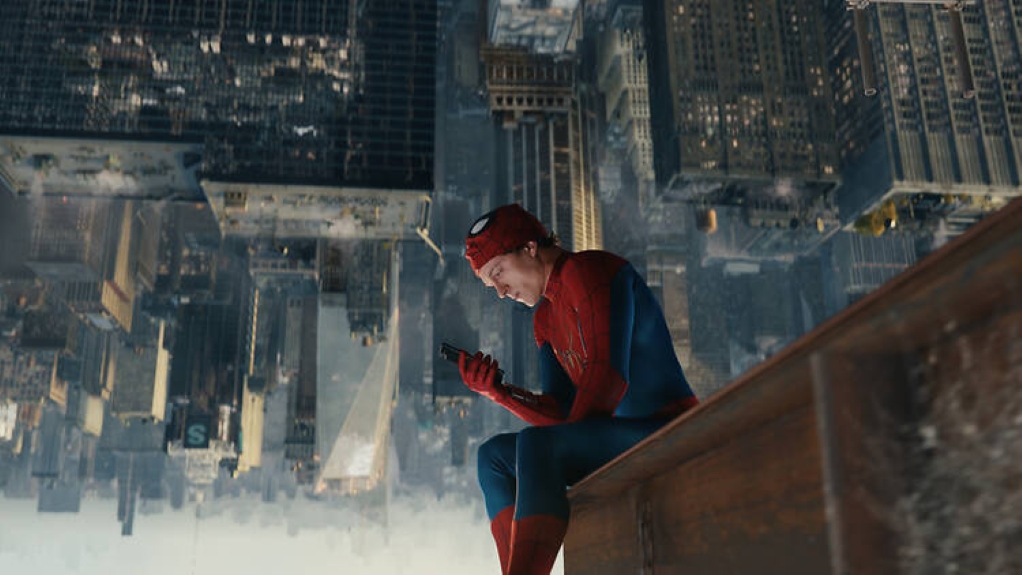
Tag: Sadie Sink

Spider-Man: Brand New Day (2026)

Spider-Man: Brand New Day (2026)

Charming and likeable Marvel action film with a genuine heart at its centre

Director: Destin Daniel Cretton

Cast: Tom Holland (Peter Parker/Spider-Man), Zendaya (MJ), Sadie Sink (Jean Grey), Jacob Batalon (Ned Leeds), Jon Bernthal (Frank Castle/Punisher), Florence Pugh (Yelena Belova/Black Widow), Tramell Tillman (Bill Metzger), Marisa Tomei (May Parker), Mark Ruffalo (Bruce Banner/Hulk), Michael Mando (Marc Gargan/Scorpion), Naomi Watts (EV), Oliva Booth-Ford (Sara Grey)
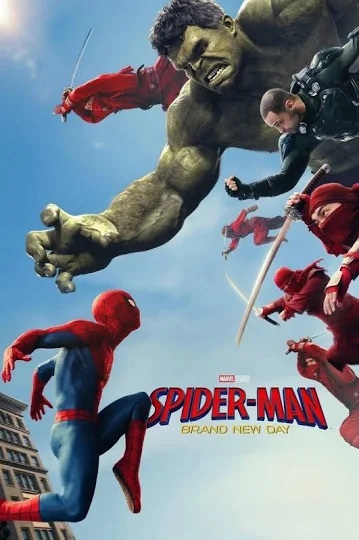
It’s been four years since Spider-Man: No Way Home and they’ve been tough for Peter Parker (Tom Holland). After the entire world were magically forced to forget him (in order, of course, to save the multiverse!), Parker has spent those years dedicated to the idea that with ‘great power comes great responsibility’. While also obsessively maintaining his anonymity to avoid anyone being put at risk by knowing him, his only contact with former girlfriend MJ (Zendaya) and best friend Ned (Jacob Batalon) via cyber-stalking. He’s terribly lonely beneath his wise-cracking cheeriness. Peter’s life starts to shake up when his spider powers begin to alarmingly mutate and grow in strength just as a mysterious antagonist (Sadie Sink) with the power to control minds and an agenda against the government Department of Damage Control pops up.

Spider-Man: Brand New Day is in many ways a very hard reset of the MCU’s Spider-Man. Before this, the friendly-neighbourhood spider-man was awash with friends who knew exactly who he was. He lived in comfort and had the backing of Tony Stark’s unlimited cheque book. Brand New Day takes him closer to the classic image: low on resources, lives in a beat-up apartment, fights crime on the streets of New York, has no friends and relies on his own ingenuity to build his equipment. It really is a Brand New Day.

It also gives a great opportunity for Tom Holland to flex his muscles (in more ways than one). Holland is as witty, charming, sweet and decent as ever, but his new isolated Spider-man is sadder, more maladjusted and awkward and (above all) deeply and desperately lonely. He talks endlessly to an AI companion, chats with friendly professionalism to cops he works with, dodges any chit-chat from his neighbours and seems to do nothing but fight crime. Holland is really good at showing the fractured, desperate loneliness Peter is feeling under his enthusiasm. These feelings come pouring out of him as he sits endlessly re-watching Ned’s Instagram live-streams or assures anyone who asks that he’s absolutely fine.

Spider-Man: Brand New Day is also very endearing because Holland and Zendaya are extremely likeable, very talented actors you easily invest in. It’s very hard in Brand New Day not to want Peter to tell MJ everything and for her memories to come flooding back, especially because Zendaya is very good at subtly implying MJ ‘knows’ something is missing in her life but can’t put her finger on it. Not surprisingly they have fabulous chemistry. When the film finally does bring them together, Holland’s sudden pained emotion followed his buttoned-up attempt to hide what he’s feeling is genuinely affecting, as is Zendaya’s polite, honest but uncertain responses.

The compellingly personal story between these highly likeable characters – who we have already followed across three movies – powers the movie’s emotional high spots. As does the equally affecting friendship between Peter and Ned. Perhaps’s Brand New Day’s best sequence just involves the three of these characters and a Lego set, a little touch of normality and simple joy that feels particularly affecting considering how much we’ve seen Peter’s loneliness. (It’s also rather nice that Brand New Day implies at points that the bonds of lifetime friendship may be the strongest love there is).

Brand New Day has a lovely beating heart, which means you can let go the fact it’s probably too long and some of its twists and turns are probably neither twisty or turny (in particular, one character is so clearly not what they seem you’ll be hard pressed not to mutter “that’s the villain” the second they appear). Daniel Dustin Cretton directs with zip, even if he fast cuts some of the action so quickly it actually makes it harder to appreciate the loving work that has clearly gone into the fight choreography.

However, like many of the best MCU films, the antagonist (I choose my words carefully) works because they are a neat commentary on the hero. While Peter – who even when visiting Florence Pugh’s Black Widow in a bath house still wears his facemask – lives in isolation repressing his feelings, Sadie Sink’s mind-controlling mystery character is revealed to be desperately searching for a lost loved one. While Peter feels terrified and stressed by his powers – his head throbbing with his super-senses and disgusted by his new found web-shooting skills – Sink revels in her growing strength. And, unlike Peter burying himself in duty, she is willing to put others at risk to heal herself.

Some of Brand New Day’s best sequences are set around Sink’s ability to ‘jump’ her mind from body-to-body within a 30-foot radius. A huge team of actors and dedicated choreographers play the dozens of people inhabited by Sink’s character, and the body language and physicality of these actors is so expertly done you always know, at any point, exactly who is being controlled in any crowd. Combine that with the jerky movements of people’s bodies as Sink’s mind ‘jumps’ in and out of them, and you’ve got some striking soft-psychological horror (especially as the ‘possessed’ have no memory of their actions) that reminded me of devil-possession drama Fallen.

Sadie Sink is very good as this mysterious character (although her name is now public knowledge), full of pain, loss and anger, desperately chasing a clue whose mysterious nature when revealed is chillingly effective. Brand New Day is also supported with a host of fine MCU cameos, especially Jon Bernthal’s Punisher a gruff, sweary, ends-justify-means contrast to Parker (especially as it hilariously points up Parker’s family-friendly refusal to say any naughty words) who, like our hero, is bottles up his loneliness under a moody exterior that doesn’t invite any questions.

Brand New Day really works however, because in Holland and Zendaya it has two very talented actors, playing hugely likeable characters, going through dilemmas that are very relatable, even if one of them can shoot webs from his wrists.  It’s that heart which makes Brand New Day so enjoyable. The stakes are winningly personal, which carries so much more impact than special effects laden nonsense. It’s even brave enough to make its final confrontation three people talking. And you get Spider-Man fighting Ninjas. What’s not to like?

The Whale (2022)

The Whale (2022)

Manipulative and sentimental, Aronofsky’s tear-jerker is dishonest and disingenuous

Director: Darren Aronofsky

Cast: Brendan Fraser (Charlie), Sadie Sink (Ellie Sarsfield), Hong Chau (Liz), Ty Simpkins (Thomas), Samantha Morton (Mary), Sathya Sridharan (Dan)

The Whale is the sort of film that is either going to bring you out in tears or hives. Me? Let’s just say I felt incredibly itchy as I sat through this naïve, sentimental and manipulative film. I hated its dishonesty and its disingenuousness. The only thing I felt move was my stomach.

Charlie (Brendan Fraser) is a morbidly obese, reclusive English professor who teaches online courses with the camera turned off. Nursed by Liz (Hong Chau), the sister of his deceased partner, Charlie has never processed his depression and guilt at his partner’s suicide. Now, facing death from congestive heart failure, his last wish is to finally bond with his daughter Ellie (Sadie Sink) whom he has not seen in the eight years since he left her and her mother (Samantha Morton). Ellie is now an angry, high-school drop-out teenager. But Charlie is sure he can see the good in her.

So much has been made about the morbid obesity of the film’s lead. The prosthetics coating Fraser in layers of fat are impressive. An opening montage shows Charlie struggling to move around the house. Picking something up off the floor is impossible and he has to lever himself out of the bed or into the shower. But the film is hugely pleased with itself that it dares to see a fat person as “one of us”. Aronofsky initially films him like a freak show monster – already patting himself on the back about how “humanising” it will be when we learn that obese people are just as capable of being at the heart of maudlin, self-pitying films as thin ones.

The Whale is adapted from a stage play. Not only does it really feel like it (it’s all set within Charlie’s apartment, with characters announcing their arrival in a neat four-act structure), it also sounds like it. The dialogue is forced, artificial and clumsy, making on-the-nose emotional points. Characters feel like narrative constructs. Sadie Sink’s Ellie is the sort of precocious-but-angry tear-away genius brat you never find in real life. Ty Simpkins’ hipster-turned-missionary is more a collection of quirks than a person. The script leans heavily on clumsy metaphors – a walk on the beach, bible quotes, Ellie’s childhood essay on Moby Dick – milked for all they are worth.

Worst of all, a film that prides itself on being about the power of honesty feels like a big, walloping lie. It lies about its characters and it lies about the real issues that drive them. Firstly, it never once touches on issues of mental health and addiction that have led Charlie to this state. Sure, we get a scene of him compulsively eating. But Liz, his “caring” nurse, brings him medicine and huge piles of food (a massive bucket of fried chicken, enormous sub sandwiches…). It’s like caring for an alcoholic by bringing him chicken soup and a huge bottle of whisky. How is this helping someone recognise and deal with an addiction? Which is what this level of over-eating is.

Worst of all the film treats this as a “charming friendship between two eccentrics”. It eventually touches on the fact they are both hurting from the suicide of Charlie’s partner Alan. But never once is the film brave enough to link their behaviour now to this act. Charlie failed to get Alan help, keeping him away from the world and others, believing that the isolated love of a single person would solve his depression. Liz repeats the same mistakes. She isolates Charlie, encourages him to eat, never challenges him to seek help or process his grief, and creates a safe environment for him to destroy himself. If he was a drug addict, what would we say about a carer who draws the curtains and encourages him to shoot up? We’d be calling her the villain of the piece.

That’s before we even dive into the film’s lack of honesty about Charlie. It’s sad to think of a character being so depressed he’s eaten himself to death. That’s awful – even if the film never wants to reflect on the emotional and psychological reasons for this (because that would be depressing in a film as desperate to be upbeat as this one). But by showing us Charlie at the end, full of regret and self-pity, the film white-washes his mistakes and selfishness. There are clear flaws in Charlie that contributed to this state – however much the film wants to present it as a terrible accident.

Charlie abandoned his family and made no contact with his daughter for years (he complains it was too difficult and tries to blame her mother), leaving her traumatised. The film loves its sentimental device of Charlie reading to himself Ellie’s childhood essay (which he knows by heart). But this is, basically, a selfish fantasy: an idea for Charlie to cling to that he was a good Dad and Ellie a kid with a future, radically different from the actual reality. Just like he never addresses why guilt and depression drove him to destroy himself, so he refuses to deal with the issues Ellie is facing now by simply not acknowledging that she has changed from his idealised version of her as the sweet, sensitive girl who knew Moby Dick was really about Melville’s unhappiness.

Instead, the film suggests her mother is the one who really failed. Charlie – who has spent about an hour in her company in eight years – would have donebetter. Just like Liz passing him chicken buckets, Charlie’s solution to solving his daughter’s problems is to smother her with love rather than get her to ask herself why she does and says the cruel things she does. How can the film not see he is repeating the same ghastly cycle again, encouraging a depressed, vulnerable person to stick her head in the sand and hope for the best? Well, he’s wrong. And the fact that the film doesn’t see this means it’s lying to itself as much as he is.

By the end you’ll be stuffed by sentiment, greased by the insistent score. Every single frame is like being walloped over the head while Aronofsky shouts “cry damn you”. The dreadful script is well acted, even if no-one ever makes these device-like characters feel like real people (except maybe Morton). Fraser is committed, a lovely chap and I’m very pleased he’s having “a moment”. But this is a simplistic character, that requires little of him other than to wear a fat suit and cry. He never once really delves into any complexity. It’s also true of Hong Chau, a collection of quirk and tears.

The Whale is a dreadful film, manipulative, artificial and full of naïve and dishonest emotions that avoids dealing with any complex or meaningful issues. Instead, it thinks it’s achieved something by making you see a fat person as a real person. There is almost nothing I can recommend about it.