Category: Films about gender

Some Like It Hot (1959)

Some Like It Hot header
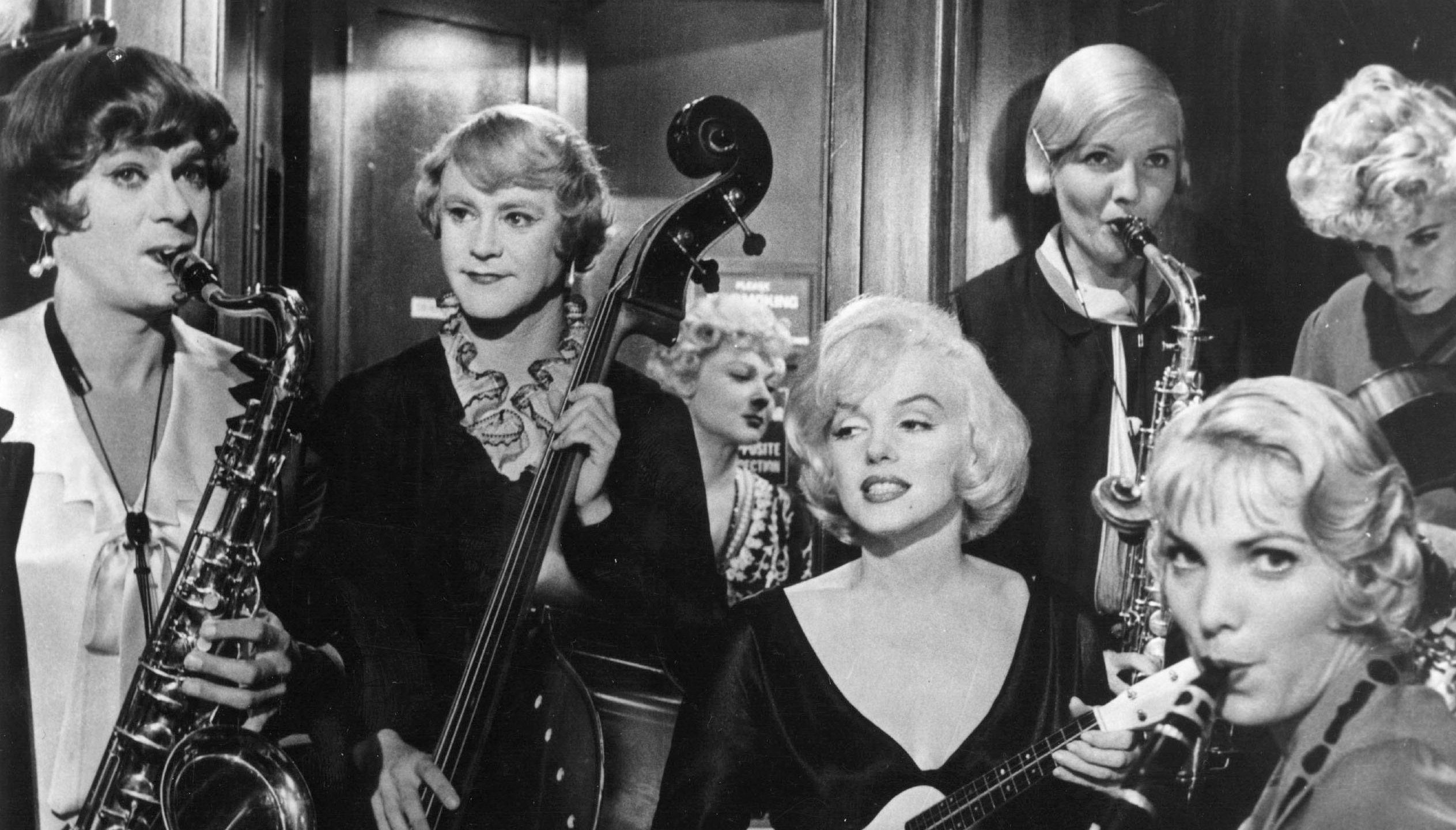
Tony Curtis, Jack Lemmon and Marilyn Monroe make comedy gold in Some Like It Hot

Director: Billy Wilder

Cast: Marilyn Monroe (Sugar “Kane” Kowalczyk), Tony Curtis (Joe/“Josephine/“Shell Oil Jnr”), Jack Lemmon (Jerry/“Daphne”), George Raft (“Spats” Colombo), Pat O’Brien (Agent Mulligan), Joe E Brown (Osgood Fielding III), Nehemiah Persoff (“Little Bonaparte”), Joan Shawlee (Sweet Sue), Dave Berry (Mr Bienstock), Grace Lee Whitney (Rosella), George E Stone (“Toothpick” Charlie)

It’s the funniest comedy that ever started in a hail of bullets. It’s the best chick flick to stare two men. It’s probably Billy Wilder’s sweetest comedy and it’s almost certainly its most beloved. They say Nobody’s Perfect, but you can be pretty sure this film gets as close to it as possible.

In 1929 in Prohibition Chicago, down-on-their-luck musicians saxophonist Joe (Tony Curtis) and double bass Jerry (Jack Lemmon) can’t get a break. First the speakeasy they are playing gets busted by the feds. They’ve lost all their money at the dog track. And, oh yeah, they accidentally witness gangster “Spats” (George Raft) eliminate his competition in a hail of bullets. They’ve got to get out of town incognito and quick – so what better option but joining an all-female band as “Josephine” and “Daphne”? Problem is, playing at a hotel in Florida, Joe and Jerry find themselves in all-sorts of romantic entanglements: Joe is wooing lead singer Sugar (Marilyn Monroe) in the guise of heir to an Oil fortune, while Jerry is wooed by smitten millionaire Osgood Fielding III (Joe E Brown). And if that’s not bad enough – guess which hotel the mob are having their annual convention at?

Wilder’s comedy is a fast-moving, brilliantly written (by Wilder and IAL Diamond) buddy comedy with a twist that dives into a whole world of gender and identity concepts that puts it way ahead of its time. Shot in luscious black-and-white (Wilder’s preferred style, and colour exposed all too strikingly the drag act look of Curtis and Lemmon), every scene has at a zinger and our heroes fall into one a string of madcap situation through misfortune and rank incompetence.

But the film’s real interest is in how far ahead of its time its gender awareness was. When they first appear disguised at the train station, the camera pans up their legs and behinds in just the way you would expect it to do (and indeed it does seconds later with Monroe) to ogle the women, only to reveal it’s the men striding their way down the platform. Both of them comment (and complain) on the objectification and unwanted physical attention (from slapped bums upwards) from men – “it’s like a red rag to a bull” Joe describes their feminine appearance, before he and Jerry complain they can’t wait to get back to being the bull again. It’s part of the fine tight-walk the film works, where the men are both men and women, victims and hypocrites, open-minded and conservative.

Dressing as women seems to give both of them a new perspective on things. Lothario Joe seems to gain a new sympathy for women – while at the same time, passing himself off as a millionaire to seduce Sugar with a string of lies – and comes to see himself as exactly the sort of lousy bum he probably has been. For Jerry the whole experience is a revelation. It’s part of as fascinating debate as to how much this film is aware of transgender and homosexual urges, and how much it’s just a very wittily delivered joke that’s so respectfully done it can be embraced by one and all. But for Jerry, the whole experience seems to redefine his own internal perception of himself.

It’s there from when he first glances Monroe at the train station: after tripping in his heels, he’s stunned when she works past, not by her looks, but by the ease she moves, his eyes not starring at her behind with lust (as Joe’s does) but with envious admiration. On the train he takes the blame for Sugar’s illicit bourbon – is it a sense of fellowship, or a bizarre way of making a pass at her? This leads to a slumber party in his bunk with the whole band, all in their nightwear – through which he constantly forces himself to remember he’s a boy (seemingly out of sexual excitement). But we very rarely see Jerry out of some layer of feminine disguise: and later confusion seems to abound during his courtship from Osgood, where he delights in the dancing, the jewels and the engagement and has to disappointingly remind himself that he’s a boy. After initial doubts Jerry finds a sort of freedom in dressing as a woman, that Joe never does.

How much is Some Like It Hot aware that it is playing around with fluid gender perceptions, and how much is it a stunningly well delivered joke? It’s not clear – and I doubt any film-maker in 1959 would even have the vocabulary to begin to conceive the sort of conversation the film provokes today.

But does it really matter when the jokes are this good and the performances so brilliant? Jack Lemmon is superb here, the sort of career-defining performance actors dream about. Anxious, fussy, slightly whiny, Jerry becomes the more playful, sassy Daphne – and what Lemmon does brilliantly is make both personalities fully-formed yet existing consistently within the same character. That’s not mentioning his verbal and physical comedic gifts and consistently perfect timing, his performance comedic but not a broad drag act. He makes Jerry/Daphne a living, breathing person anda comedic character, someone we can never imagine meeting in real life but also would not be surprised to sit down next to on a bus. This is skilful acting on another level.

Which is not to do down Tony Curtis, who is very funny as the lothario Joe uncomfortably squeezed into feminine attire. While Jerry comes to relish some of the accoutrements of ladies clothing, Joe is never as comfortable – for him it is practical solution. That doesn’t change Curtis’ hilarious comic timing – or his wicked Cary Grant impersonation (“No one talks like that!” Jerry complains) when taking on a third disguise as a Shell Oil heir, which also seems like a sly parody of Henry Fonda in The Lady Eve. Curtis’ comic timing is as faultless as Lemmon’s, and the two actors produce such a sparkling double act, it’s a shame they didn’t work together again.

As the third wheel, Monroe was never so radiant, culturally iconic and luminous than she was here. Reports are rife of the troubles she caused on set – the hours waiting for her to turn up, the lines she couldn’t or wouldn’t learn, the dozens and dozens of talks she demanded for the even the simplest scenes (this in particular drove Curtis – an instinctive actor whose performance declined with retakes – up the wall – it’s fun to spot how little they actually share the same shot during the film). Wilder later commented she was a terrible actor to work with – but a God-given talent up on the screen. Can’t argue with that, and she turns a character who, on paper, could be a dumb blonde joke into someone very sweet, endearing and lovable, who we never laugh at (Monroe is a generous enough performer to never worry about making it clear to the audience that she is smarter than her character is, or treat her with contempt).

Wilder brings it all together with his genius behind the camera. He cuts the film with superb comic timing – the intercutting between the seductions of Joe/Sugar and Jerry/Osgood are masterfully done – his sense of the momentum is spot-on and he is as skilled with flat-out farce as sophisticated word-play. That’s not to mention the wonder of the tone – he makes a concept that had the suits sweating in 1959, easy to swallow without ever once treating the idea as a revolting perversion, making it funny but never humiliating. The film’s sweetness is partly why its become so loved.

Possibly the funniest film ever made – and it’s also littered with gags about old-school gangster films, taking advantage of its inclusion in the cast of the likes of Raft and O’Brien enjoyably sending themselves up – it’s won a place in the hearts of film buffs and casual moviegoers for generations. And it’s going to continue to do so. With one of the greatest closing scenes ever, it’s always going to leave you wanting to come back for more.

Dog Day Afternoon (1975)

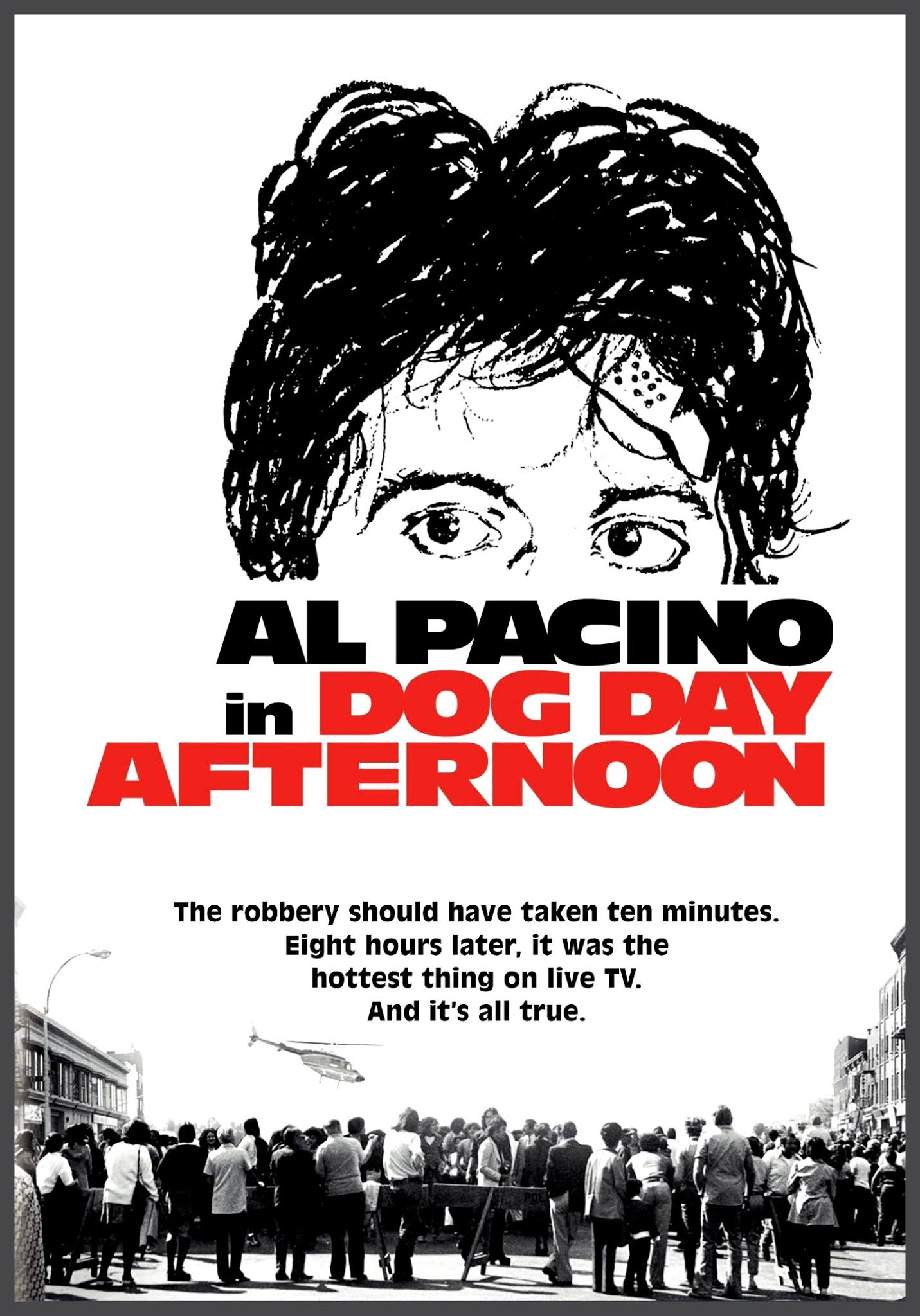
Al Pacino takes a bank hostage in Dog Day Afternoon

Director: Sidney Lumet

Cast: Al Pacino (Sonny Wortzik), John Cazale (Sal Naturile), Charles Durning (Sgt Eugene Moretti), Chris Sarandon (Leon Sharmer), James Broderick (Agent Sheldon), Lance Henriksen (Agent Murphy), Penelope Allen (Sylvia), Sully Boyer (Mulvaney), Susan Peretz (Angie Wortzik), Carol Kane (Jenny)

Perhaps only in the 70s could a failed bank robber have been turned over-night into a counter-culture folk-hero. It’s the subject of Sidney Lumet’s thrilling, heist-gone-wrong movie, set on one sweltering day in New York when Sonny Wortzik (Al Pacino) tried to rob a bank to fund the sex-change operation of his boyfriend Leon (Chris Sarandon). He ends up taking the co-operative bank staff hostage while a media and public firestorm takes place outside the bank, mixed in amongst an army of trigger-happy cops. And it’s all based on a true story.

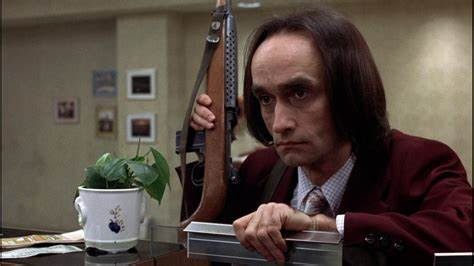
Sonny is far from your hardened criminal. He doesn’t want anyone to get hurt. He takes care of the hostages, who all become immensely fond of him and his less confident partner-in-crime Sal (John Cazale). When the police and media turn up, Sonny is outraged at the trigger-happy police presence and quickly wins the support of the crowd with his honesty, bluntness and quick wit. With the police incapable of controlling the situation, soon he is actively playing to the crowd, taking phone calls from the press in the bank. He becomes a counter-culture icon, sticking it to the man (his famous chant of “Attica!”, refers to the famous prison riots, where prisoners rioted to secure their rights).

It’s the key topic that fascinates Sidney Lumet, in this brilliantly frentic, edgy and dynamic film, that captures the tension in New York, where it felt like the careful balance between law and order could disintegrate any time. Lumet’s improvisational feel with the crowds, the edgy, raw performances – particularly from Pacino and Durning, both of whom are sensational – and the sense that anything could happen at any time. Dog Day Afternoon is about a city on the edge, combined with the ability of the media to turn regular people into stars. There was little faith in the authorities, and even a little bit of nose thumbing in their direction could sway the crowds.

At the centre of all this is Sonny, a fascinatingly flawed person, partly absorbed with being the centre of attention, part desperately trying to work out what his best move is among an increasingly narrowing number of options. Al Pacino nearly didn’t take the role, after suffering a near nervous collapse from the pressure of Godfather Part II – but, after committing to the film, he gave one of his most extraordinary performances of an era he and a small group of actors dominated.

Sonny feels increasingly trapped in his predicament. The robbery of the bank is hilariously cack-handed from the start – one of the robbers bails in minutes and has to be begged not to go home in the get-away car – and it becomes clear that for Sonny this is all a last desperate throw of the dice. Both of his relationships – with his first wife and his second marriage to Leon – are relationships on the brink of disaster, destabilised by Sonny’s desperate need for prove of love and affection. He’s a man uncertain in his own skin, smart enough to know the world isn’t fair, but not smart enough to know what to do with it. Fundamentally decent, but forced into illegal actions. Pacino delivers this with the expected fireworks, but when we see Sonny away from the public gaze, he’s a sad, broken-down, isolated man who genuinely doesn’t know where his life is going.

Dog Day Afternoon was radical at the time for how it deals with homosexuality. Neither Sonny nor Leon are presented – as might have been expected at the time – as limp-wristed or fey, but just regular guys who happen to want different things from life. Chris Sarandon (Oscar nominated) is strikingly tender, low-key and world-weary as a man resigned to what the world is throwing at him, from the emotional pressure of meeting Sonny’s needs for affection, to spending every day feeling trapped in his body and facing suspicious stares from all around him. Pacino presents Sonny as a masculine, dynamic figure whose sexuality is just part of his personality. It’s a film not afraid to acknowledge the love between men, and never considers this anything other than entirely normal – something extremely unlikely in 70s cinema. Indeed, you can see the mood of the time in the way the crowd changes once the motivations behind Sonny’s actions becomes clear. Hostility grows – through many gay rights activists quickly arrive to bolster the crowd. The films normalising of homosexuality, also serves as a critique for the assumptions and reduced options many identifying as gay had at the time.

Of course, this all makes the entire siege even more attractive to the media. The film is a neat satire of the way the press can turn events like this into entertainment. A pizza delivery guy, sent to feed the hostages, can barely contain his excitement, screaming “I’m a star!”. At least two hostages refuse offers to leave the siege – at least partly, it’s suggested, because there is nowhere better to be than at the centre of the show. Pacino’s electric playing to the crowd demonstrates how Sonny’s firecracker sense of the turmoil of the period – the violence of the authorities and the lack of justice for the regular guy – helps feed this. The media’s eagerness to sensationalise the events, do turn them from real life into entertainment – and the way so many characters and on-lookers yearn to be part of a real-life drama – is sharply critiqued, with truth and humanity sacrificed for prime-time ratings (ideas Lumet would explore even more deeply in his next film Network).

It’s also fascinating to watch the cack-handed police inexperience at handling sieges like this, from the lack of central control to the trigger-happy cops, to allowing public and the media to get within a few metres of the bank entrance. Charles Durning is superb as a frazzled police sergeant, out of his depth, unable to control his colleagues and totally lacking the calm and control needed for hostage negotiations. He’s replaced in the operation by FBI agent Sheldon – played with a chilling distance by James Broderick – who represents the other side of the law at the time: ruthless, cold and very ready to switch from negotiation to execution.

Sonny may look is in control of things, but it’s quickly clear no-one really is. Even Sonny feels this, Pacino delivering with a resigned calm a scene where Sonny asks one of the bank tellers to record his final will. Dog Day Afternoon is also a tragedy, with the real victim being Sal, Sonny’s partner in the robbery. He’s played with an almost childish innocence by John Cazale, as a not very-bright man completely out of his depth, whose idea of a foreign country to escape to is Wyoming (a hilarious piece of improvisation by Cazale). While Sonny is the public face of the situation – and someone law officials figure they can work with – Sal becomes a dangerous unknown quantity for them that they feel needs to be disposed with. An offer they openly make to Sonny, who furiously rejects it (but, tellingly perhaps, doesn’t tell Sal about).

Poor Sal sweetly chats with the staff. He quietly warns about the dangers of smoking. He sweats and timidly waits to be told what to do. He bravely tells Sonny that he is completely ready to shoot the hostages, while clearly having no idea about the emotional reality of doing this. He meekly follows instructions and is responds with panic to almost every situation. Cazale’s flawless performance turns him into the real victim here, completely unprepared in every way for the situation he is in (he whiningly complains about being called gay on the news, and is terrified at the idea of flying with the hostages to a foreign country, having never been in a plane before). It’s a wonderful personal tragedy that plays in the background of the film.

Lumet’s film has the dynamic vibe of a fly-on-the-wall documentary turned drama. Pacino is the perfect actor for this, his performance (Oscar-nominated) sensational, high-octane and demonstrative mixed with confused, vulnerable and eventually traumatised and guilt-ridden. The film brilliantly balances questions of politics, media and sexuality, offering seering critiques of attitudes around all three. Wrapped into a fire-cracker film, this is a brilliant piece of social commentary, personal tragedy and street theatre. Overlooked more than it deserved, it’s a masterpiece of 70s film making.

Dangerous Liaisons (1988)

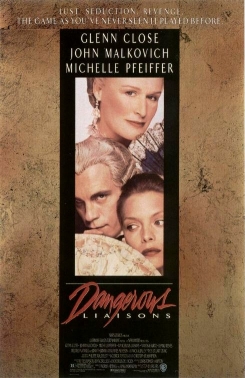
Glenn Close and John Malkovich play games of lust and sex in Dangerous Liaisons

Director: Stephen Frears

Cast: Glenn Close (Marquise Isabelle du Merteuil), John Malkovich (Vicomte Sébastian de Valmont), Michelle Pfeiffer (Madame Marie du Tourvel), Uma Thurman (Cécile de Volanges), Swoosie Kurtz (Madame de Volanges), Keanu Reeves (Raphael Danceny), Mildred Natwick (Madame du Rosemonde), Peter Capaldi (Azolan), Valerie Gogan (Julie)

Christopher Hampton’s adaptation of Pierre Choderlos de Laclos Les liaisons Dangereuses had been a stunning success in the West End and on Broadway – so a film adaptation of this lusciously set story of sex was inevitable. Stephen Frears’ film keeps the story grounded in its setting of pre-Revolutionary France, but deliberately encourages a modern looseness, even archness, from its actors that makes it feel grounded and modern.

The Marquise du Merteuil (Glenn Close) and Vicomte de Valmont (John Malkovich) are two French aristocrats who fill their time with seductions and sexual manipulation of other people, while conducting a dance of attraction around each other. Du Mertuil wants revenge against her ex-lover by getting Valmont to seduce the lover’s innocent intended bride Cécile de Volanges (Uma Thurman). But Valmont is more interested in setting himself the challenge of seducing the unimpeachable Madame du Tourvel (Michelle Pfeiffer) – du Merteuil so convinced the task will be impossible that she bets him if he seduces du Tourvel, she will sleep with him as well. These games of sexual manipulation develop with disastrous consequences for all involved, as unexpectedly real emotions of love and affection intrude on the heartlessness and contempt.

Frears’ film won three Oscars for its most striking elements: production design, costumes and Hampton’s script. Hampton’s script provides a series of striking scenes and tongue-lashing dialogue for its stars. Meanwhile the film looks marvellous, it’s use of French locations superb in creating the world of decadence that these characters move in, while the costumes are so strikingly, elaborately intricate they practically become characters themselves. The film opens and closes with scenes of dressing and de-dressing: the opening sequence shows Merteuil and Valmont being dressed in their elaborate finery, a sequence uncannily reminiscent of knights being dressed for war, ending with shots of their defiantly cold faces starring down the lens. The film bookends this with the film’s key survivor, brokenly wiping away from their made-up “public face” probably forever. It’s a film that uses the intricacy of the period, to strongly suggest modern, dynamic tones and emotions. 

The film is shot with a series of tight shots, intermixed with the odd long shot, that is designed to bring us in close with the film’s serial seductions and envy-powered clashes. This brings us straight into the middle of the events, giving them an immediacy and suddenness that makes this feel like anything but a traditional costume drama. Seductions have a steamy immediacy, while the growing moments of tension in the relationship between Mertuil and Valmont is similarly bought in close to us, to allow us to see the mix of emotions these two have for each other – both a deeply, unexpressed, love and a strange sense of loathing linked together with a possessive jealousy.

Frears makes marvellous use of mirrors in the film. These reflective surfaces appear in multiple shots and frequently expand the world, mirrors reflecting characters as others discuss them, or forcing into shot (usually between two other characters) the subject of conversations. They reveal (to the viewers) eavesdroppers hiding and, in one striking shot, as Valmont and Mertuil’s latest lover argue she is framed in reflection hanging above them on the wall mirror. There’s a reason why one of the film’s final sequences revolves around the smashing of a mirror in grief. 

The film’s modernism also stems from its use of very modern American actors – apeing the success of Milos Forman’s Amadeus – with everyone using their own accents. Glenn Close is superb as Mertueil, a woman projecting a cold, manipulative authority but does so to suppress and hide her own emotional vulnerability. Mertueil has convinced herself that she is a champion of her sex, but her every action seems to be motivated by finding indiscriminate revenge on all those who have found the sort of happiness she has been denied (or denied herself). Close lets little moments – wonderfully captured by the intimacy of Frears’ camerawork – where moments of micro-emotions and pain flash briefly across her face, only to be wiped away.

Malkovich is an unusual choice as Valmont – and his serpentine swagger and arch mannered style at first feels quite a disconnect with a character renowned as the most successful lover in France. But Malkovich’s eccentricity, his very oddity, in a way makes him believable as a man women would find intriguingly irresistible. Malkovich, while naturally perfect for the coldness of the character, is also highly skilled at expressing the slow, non-continuous growth of conscience and feeling in Valmont, as his feelings for Tourvel dance an uncertain line between manipulation and genuine feeling – and while his confused feelings for Mertuil alternate from possessive devotion to revulsion.

The whole cast respond well to Frears guidance, and his ability to draw relaxed performances from an odd selection of actors. Michelle Pfeiffer is particularly fine in a role that on paper could be very dull – the perfect, kind woman – but which she invest with such a seam of emotional truth and longing for deeper connections, combined with naked emotional honesty that she becomes the most compelling character in the film. Uma Thuman is very good as a naïve young girl, Kurtz and Natwick suitably arch as society bigwigs, Peter Capaldi creepily willing as a manipulative servant and even Keanu Reeves has a certain sweetness about him, even if he is at the height of his “Woah” dudeness.

The film’s principle problem is perhaps the very archness and coldness that makes it affecting. While it’s intriguing and intelligent, it is never perhaps as engaging as it should be and its characters are so jet-black, deceitful and cruel that it becomes hard at points to really invest in this chilling story of unpleasant people using other unpleasant people and manipulating innocent ones. It becomes a film easier to admire, perhaps carrying too much of the freezing chill of imperial French greed and selfishness. Come the denoument for all the skill it is played with the actors, it is hard to feel your emotions invested or your heart moved by any of the fates of the characters. Perhaps, in presenting a heartless world of selfishness and lies, it does its job too well.

Colette (2018)

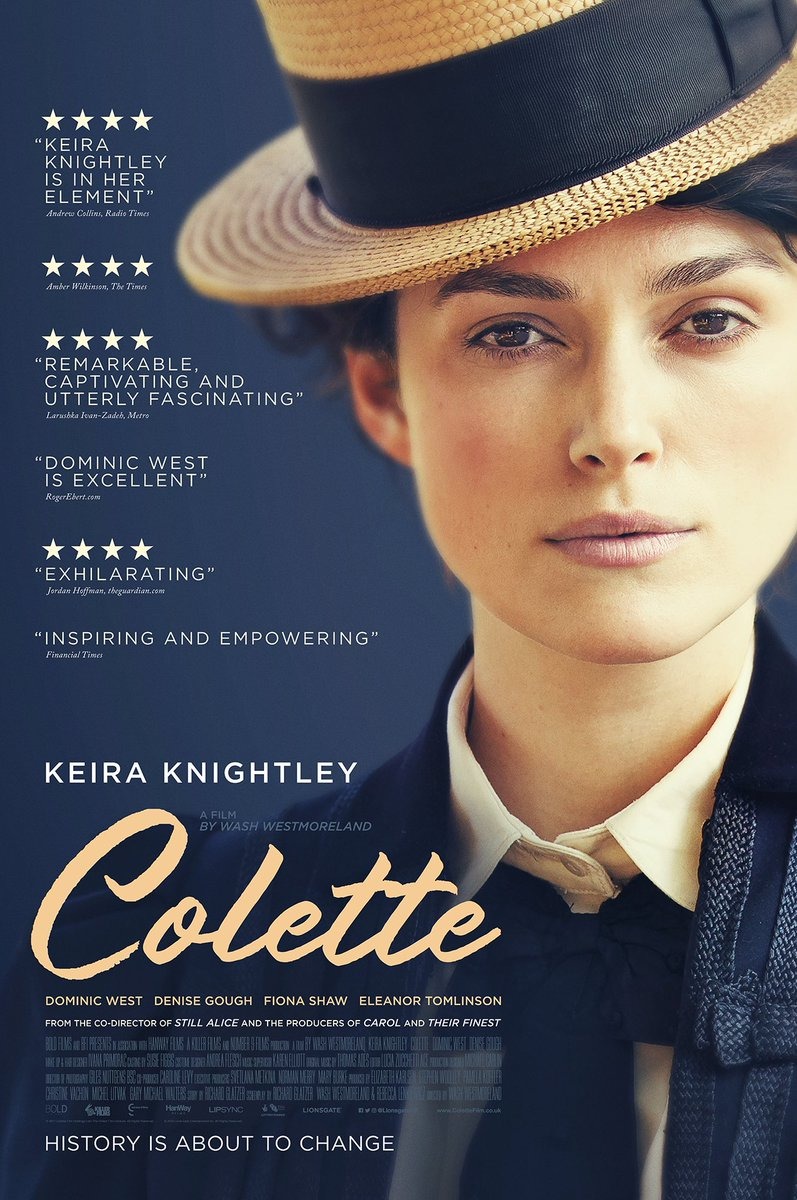
Keira Knightley tries her best in this light but safe biography Colette

Director: Wash Westmoreland

Cast: Keira Knightley (Gabrielle Colette), Dominic West (Henry Gauthier-Villars/Willy), Eleanor Tomlinson (Georgie Raoul-Duval), Aiysha Hart (Polaire), Fiona Shaw (Sido), Denise Gough (Missy), Robert Pugh (Jules), Rebecca Root (Rachilde), Julian Wadham (Ollendorff)

In the era of #metoo what could make for a more relevant storyline today than this biography of Gabrielle Colette (Kiera Knightley), a young woman who marries literary playboy Henry Gauthier-Villars (Dominic West) aka Willy. Henry brings her back to Paris, and reveals the secrets of his success – he is the front man for a host of ghostwriters, producing articles and even novels for the public. Colette writes a novel for the “factory”, based on her own childhood – Claudine àl’école – which Willy initially rejects but later publishes under his own name (after he has suggested revisions to improve its plot and general raunchiness). The book is a smash – and Willy is a sensation – as are the sequels, but the growing frustration Colette feels at her lack of recognition, combined with the growing sense of freedom she finds in their open marriage, starts to lead her to question what she wants from her own life.

Colette is a decent, rather middle-of-the-road and middlebrow literary biography, that dabbles with controversy and racy content, but essentially follows a fairly traditional structure of our hero finding her own voice. The most interesting thing about it, despite the obvious surface message of the woman exploited by a man, is to suggest that while Willy certainly profited from Colette’s work, he was also the primary driver in her development as a writer and that the two of them maintained a stable working partnership for years until events led to their collapse. 

Much has been made in particular of a scene where Willy locks Colette into a room to write – and there isn’t a single review that hasn’t mentioned it – but, in the context, it’s Colette who has failed to focus on the writing (which the pair have already been paid for), or wdo the work she has committed to do, much to Willy’s disappointment when he returns to the country home that the advance for the book has paid for. While her objections are at first furious she swiftly settles into writing in the room (and there is no suggestion that this event is any more than a single one-off, a shock tactic from Willy to get Colette creating again). This isn’t to say the film is suggesting that Colette shouldn’t have received all the credit and freedom from the start, but it does raise more interesting questions: yes Willy was taking advantage of her, but yes he also pushed her to achieve things she would never have done herself.

It’s all part of Dominic West’s superb performance as Willy, skilfully balancing a man who (until the final act of the film) is neither flat-out villain or misunderstood hero, but a man of shades of grey: flawed, selfish, lazy, thoughtless but also encouraging of his wife’s exploration of her own sexuality and creativity, supportive and capable of acts of charming sweetness and kindness. Westmoreland makes clear that for much of the marriage their relationship was functional and a good match, for all it was founded on the false sands of Colette being denied the public credit for her own work. Sure he spunks their money up the wall continuously, but he also helps her become an artist. 

For all the film’s workmanlike structure and obvious telling, this does make for a far more interesting version of the story than the straight “ogre-victim” story you might expect, even if it does start to get a bit bogged down in sexual shenanigans. The mostly focus around bisexual American socialite Georgie (Eleanor Tomlinson with a soapy Southern accent), who becomes the lover of both Colette and Willy. It’s part of the sense of Colette questing for an identity, but the idea of what this is and what the journey is never quite solidifies into something really incoherent. Though I suppose you could argue the journey is Colette realising she doesn’t need Willy, and that shorn of him she can survive far better on her own than he can without her.

Part of this is connected to Keira Knightley’s solid, but not quite deep enough, performance as Colette. As is often the way with her best work, Knightley works her socks off here and is clearly completely committed to the role and the film – but she just isn’t quite capable of elevating the depths of her skill to meet the full demands of the film. She doesn’t disgrace herself at all, but it’s a performance that never had enough fire and life to really become compelling.

It means you don’t quite get the powerful feminist message the film is aiming for. Knightley’s performance isn’t quite strong enough to counter-balance West, and the film’s failure to put together a compelling story line around what Colette actually wants – the film eventually settles for a rather ill-thought out phrase about wanting to lead her own life – means it peters out without much impact. There is a powerful story in here around women being denied recognition for their own talents and skills, but it never quite coalesces as it should.

The Beguiled (2017)

Nicole Kidman struggles to resist the charms of Colin Farrell in The Beguiled

Director: Sofia Coppola

Cast: Nicole Kidman (Miss Martha), Kirsten Dunst (Edwina), Elle Fanning (Alicia), Colin Farrell (Corporal McBurney), Oona Laurence (Amy), Angourie Rice (Jane), Addison Riecke (Marie), Emma Howard (Emily)

A remake of Don Siegel’s adaptation of the original novel, The Beguiled throws a feminist slant on a story of a confederate soldier, Corporal McBurney (Colin Farrell) who, in the later years of the Civil War, is found injured in the grounds of a girl’s school, where the women have continued to run the operation while the menfolk are consumed with (and by) the war. The school is run by the distant Miss Martha (Nicole Kidman), with the lead teacher Edwina (Kirsten Dunst) and five students of varying ages. All of the girls and women find themselves entranced (beguiled!) with the deceptively gentlemanly McBurney, whose true aims may be darker than assumed.

Sofia Coppola’s version of the story shifts the attention onto the women of the piece, and their plight and emotional journeys. This is a perfectly legitimate stance to take – and showing effectively a colony of girls and women in the 1860s living some sort of structured commune life is interesting and different – but Coppola’s film has a coolness and distance to it that ironically makes it far less than beguiling than it should be.

Beautifully filmed as the film is, it’s slow pace and meditative tone – as well as the rather obvious points it seems determined to make about male and female relations – actually serve to make the film less engaging than it should be. Wonderfully framed and painterly in its execution, with an effective mix of classical and 1970s style, it still never quite sparks into life.

The cast also struggle to bring a heartbeat to their characters. Nicole Kidman brings her customary reserve and elegance to a woman who has hints of a mysterious past that troubles her to this day, but the role remains distant and difficult to read – more than the film really requires. A clash or seduction between her and Colin Farrell’s corporal keeps promising dynamite but the explosions never really seem to come. Farrell laces his role with charm and a gruff masculinity, but the role misses a sense of his own darkness or manipulative nature until quite late, with the final act revelations making him appear more angry and bitter than the role really requires. It all kind of sums up the film that gets lost in its artifice and fails to uncover its heart.

The film, you could argue, does its best to beguile the audience with McBurney as the film’s character are. We are shown at every angle his vulnerability and tender politeness, and hidden from us for too long are his more manipulative elements. Coppola’s film becomes an intense study instead of sexual feelings and relations within a confined space. From sensual hand washes from Miss Martha, to intense declarations with lonely teacher Edwina, to not-so-innocent flirtations with the pupils, there is more than enough evidence that McBurney’s desire to stay may well be as much linked to seeing the school as having the potential to be his own private harem. The film’s failure in this intense sexual politics is that, while it captures moments of the simmer of attraction, it fails to really establish the danger that McBurney could suggest, as a violent man of action with complete control over a group of women.

Indeed the final moments of the film even suggest that the school itself may be a sort of siren’s bay – although lord knows McBurney is no Odysseys – which I found a rather confusing beat. Effective as the final images, or the film’s last supper betrayals, may be, they don’t carry quite enough wait because the film never quite nails the sexual tension it is aiming for, or the sensual danger it is trying to establish as a theme within the film. 

Other changes make less sense as well. Coppola deliberately changes the race of Edwina, from a mixed-race young woman to someone white enough to be played by Kirsten Dunst. While Dunst’s performance is fine, many of the themes of Edwina’s lack of confidence, her self-loathing, her feeling of having no place outside of the school, of being somehow less than other women are left in place. These themes of course make perfect sense for a mixed race woman in the 1860s who has landed a job through the connections of her father, but they make less sense for an attractive young schoolteacher with a privileged background. Coppola made the change because she felt that she could not do the theme justice, but she misses the fact that the very appearance of the character is the context needed for her to make sense.

The Beguiled is beautiful to observe and has its moments, but it never really comes to light the way it should. Thoughtful and poetic a director as Coppola is, she has created a film here that feels all artifice and no depth, that wants to paint a picture of the life of women in the civil war but never really has the energy and fire to make this come to life in a way to make the audience as engaged as they should be.

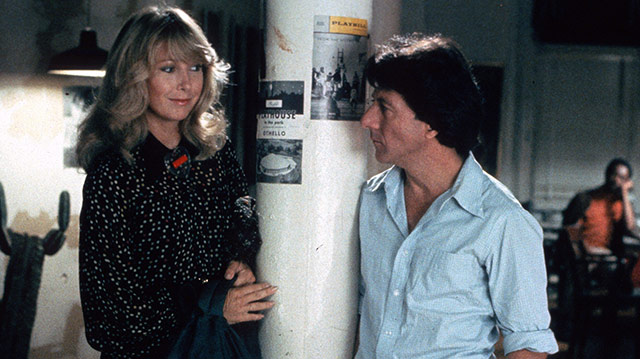
Tootsie (1982)

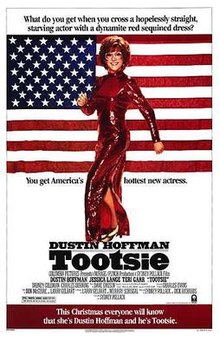
Dustin Hoffman plays somewhat against type in the marvellous Tootsie

Director: Sydney Pollack

Cast: Dustin Hoffman (Michael Dorsey/Dorothy Michaels), Jessica Lange (Julie Nichols), Teri Garr (Sandy Lester), Dabney Coleman (Ron Carlisle), Doris Belack (Rita Marshall), Charles Durning (Les Nichols), Bill Murray (Jeff Slater), Sydney Pollack (George Fields), George Gaynes (John van Horn), Geena Davis (April Page)

It sounds like a movie idea from hell: “We’ll get Dustin Hoffman to play a struggling actor who can only get a job when he dresses as a middle-aged woman and auditions for a daytime soap. Hilarious misunderstandings will follow…” But you’d be wrong: Tootsie is an absolute delight: not only a wonderful comedy, but a touching love story and an acute commentary on sexism and the compromises women are forced to make to get the same opportunities as men. It’s a wonderful, smart, thought-provoking film.

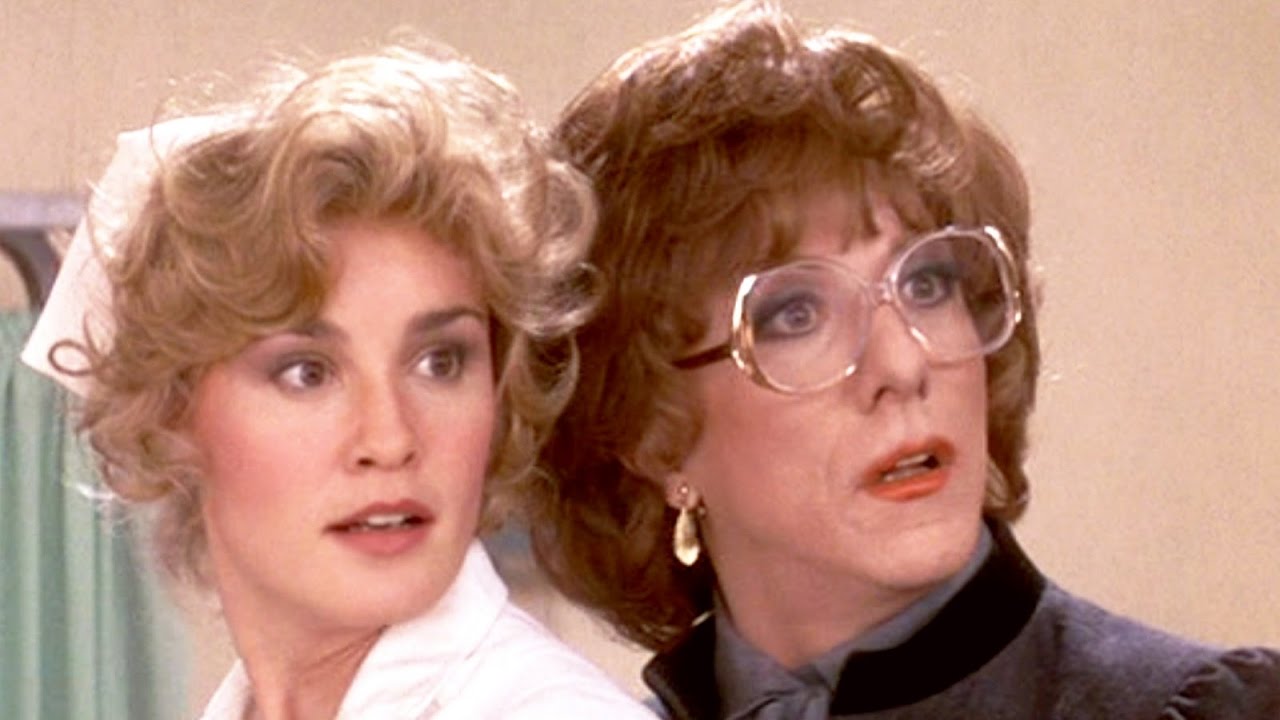
In a role that draws on more than a little self-parody, Dustin Hoffman plays Michael Dorsey, a dedicated, demanding, difficult actor who has alienated so many people across Broadway and Hollywood with his unwillingness to compromise that he can’t land a job. When his friend Sandy (Teri Garr) flunks an audition on a General Hospital-style daytime soap, Michael thinks “what the hell” and puts himself forward for the role under the disguise of the middle-aged “Dorothy Michaels”. Surprisingly he finds he lands the job: and realises that women’s lot on the masculine film-set is not a happy one, evading sexual approaches, treated like idiots and generally encouraged to not pipe up. Intelligent, clever fellow-cast member Julie Nichols (Jessica Lange) hides her light under a bushel. At first Michael enjoys the respect he wins, but as Dorothy increasingly becomes a feminist icon he’s plagued with guilt at the lies and deceptions he’s practising.

It’s the sort of idea that should be either patronising today (a man learns about feminism by walking in a woman’s shoes!) or inadvertently toe-curling. The fact that it isn’t (and I’ve watched this film with women who have enjoyed it a great deal, so I’m not completely guessing here!) is a tribute to the film’s lightness of touch, combined with a neat sense of the ridiculous, along with the emotional truth and genuineness that the film is handled with. It neither preaches nor mocks but simply focuses on telling the story and allowing us to draw our own conclusions. It also has a script packed through with some absolutely cracking jokes, all of which are delivered straight.

Central to its success is Dustin Hoffman, who plays the entire role completely straight. His Michael is a neat self-parody in his abrasive difficulty – but he’s also shown to be a concerned and genuine friend to Teri Garr’s delightfully ditzy Sandy, urging her to have more confidence (little realising how difficult it is for women to impress male casting directors if they behave with the confidence of men). Sure he’s not above clumsy passes to women at parties, but he’s no dinosaur or sexist. And becoming Dorothy Michaels is an opportunist moment of eagerness to show he has range and can get work if severed from his terrible reputation, rather than having any cruel or mocking motivations.

And what Hoffman does so well here is that Dorothy becomes her own personality. And that Michael immediately recognises that Dorothy, with her assurance, her kindness, her unwillingness to take nonsense, but her serene confidence, is a much better person than he is. She refuses to be trapped into either of the two roles the director intends for her (love interest or shrew) but insists her role in the hospital soap be treated like a dedicated professional, not defined by her sex – which makes her exactly the sort of role-model women around her (and eventually across America) have yearned for. Somehow as well, the film gets us to invest in what a great person Dorothy is, even as we know it’s really Michael in disguise – and Hoffman never, ever plays the part for laughs.

The casting allows the film to get a number of hilarious shots at the fast-paced, poorly-written, cheaply sexist nonsense that goes into daytime soaps. The director of the show is a roving lothario (played with all the smarm at his command by Dabney Coleman), who opposes Dorothy’s casting because she is not attractive enough, talks over the women in the cast and expects affairs as part of his salary. The show’s leading man is an aged actor (played with an oblivious sweetness by George Gaynes) who expects to kiss every woman in the show and is totally unable to learn lines. The plots of the soap are a joke, and the actresses are frequently placed into demeaning situations that real nurses and administrators (the only roles of course women can play in a hospital!) would never do.

Becoming horrified by this, Dorothy/Michael encourages the other women in the cast to break out from this – not least Julie Nichols, beautifully played by Jessica Lange as an intelligent, sensitive woman forced into pretending to be an airhead so as not to disturb the men around her. Lange is superb in this role, and so radiant that of course Dorothy/Michael finds himself falling in love with her – a complexity that constantly intrudes on the sisterly bond that Julie increasingly feels for Dorothy…

And that’s another source of guilt for Michael, who is (despite it all) a good guy, and slowly works out that there is no way of extracting himself from all this without hurting people’s feelings (not least when Julie’s sweetly charming widowed dad – played wonderfully by Charles Durning – starts to have feelings for Dorothy). Michael doesn’t want to hurt anyone – not even Sandy, with whom he finds himself stumbling into a one-night stand that he can’t work out how to reverse out of because he’s so desperate not to damage their friendship (something that he of course ends up damaging anyway). It’s a film that brilliantly balances these personal struggles with wider pictures.

Because, as Michael is aware, he’s himself guilty of using women by stealing the cause of feminism by pretending to be a woman. He’s perpetrating a con on the whole of America, and can’t work out a way to back out. The solution he does finally find is a comic tour-de-force – while finding time to still focus later on the real, emotional impact on those who have come closest to Dorothy – and gently indicates how lives can move on.

Sydney Pollack has probably never directed a film as smart, touching and wise as this one (he also puts in a hilarious cameo as Michael’s frustrated agent). It’s a film that could have been just a comedy about a man in drag, but in fact ends up raising profound issues about sexism, feminism and relationships that still feel relevant today. It’s almost certainly Hoffman’s greatest performance – honestly, he’s sublime here, it’s a once in a lifetime performance – and there is barely a wrong beat in it. The cast fall on the great script with relish – Garr was never better and Bill Murray has a superb unbilled supporting role as Michael’s acerbic, playwright housemate. You’ll laugh, you’ll cry, you’ll think and you’ll want to watch it again. Can’t say better than that.

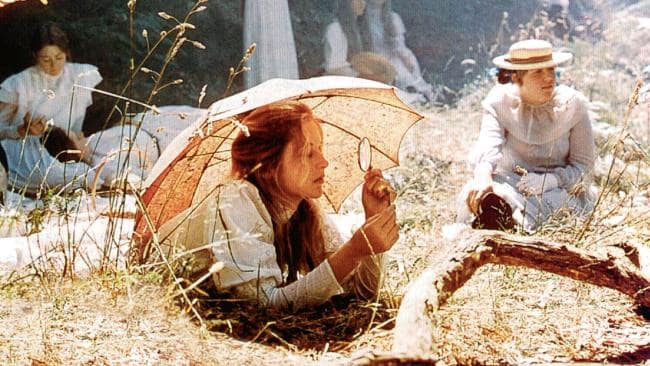
Picnic at Hanging Rock (1975)

Three girls go up a rock and are never seen again in Peter Weir’s masterpiece Picnic at Hanging Rock

Director: Peter Weir

Cast: Rachel Roberts (Mrs Appleyard), Anne-Louise Lambert (Miranda St Clair), Dominic Guard (Michael Fitzhubert), Helen Morse (Mlle de Poitiers), Margaret Nelson (Sara Waybourne), John Jarratt (Albert Crundall), Wyn Roberts (Sgt Bumpher), Karen Robson (Irma Leopold), Christine Schuler (Edith Horton), Jane Vallis (Marion Quade), Vivean Gray (Miss McGraw), Martin Vaughan (Ben Hussey), Kirsty Child (Miss Lumley), Jacki Weaver (Minnie)

Is there any film as haunting and elliptical as Picnic at Hanging Rock? An impenetrable puzzle shrouded in mystery and wrapped in an enigma, it’s the ultimate “mood” film, where everything you understand in the film has be teased out from its sidelines and the unspoken motivations. It’s not going to be for everyone: Peter Weir tells a story on the feature-length Blu-ray documentary (longer than the film) of the response of one US distributor when he saw the film: “[He] threw his coffee cup at the screen at the end of it because he had wasted two hours of his life – a mystery without a goddamn solution!” That’s a fair comment – but accept that this mesmeric film is somewhere between mystery, hynoptic trick and ghost story and you’ll find treasure in it.

Based on Joan Livesey’s novel (which many believed to be true – a fate that also faced the film when it was released), on St Valentine’s Day 1900, a group of girls from a finishing school head to the Hanging Rock in Victoria for a picnic. Three of them (and one of their teachers) walk up to the rock and simply seem to disappear. The subsequent search by the authorities is baffling – and the impact on those left behind is brutal. 

There is barely any real plot in Picnic at Hanging Rock but it’s not a film about that. It’s all about the mood, the creeping sense of menace, and the general uneasy dream nature of the story. Everything follows a woozy dream-like logic – and the atmosphere is built upon by the use of panpipe music and skilful use of classical music. Weir’s film is a masterpiece of ghostly, unsettling spookiness with the rock itself as some unknown mystical source at its centre – the first shot of the film shows it slowly appearing in the mist, as if it has somehow been transported there from some fantasia land outside of the normal.

Weir’s film became the most influential film of Australian cinema, and its tone set many of the key thematic points followed by later films of what became known as the “Australian New Wave”. It explores uneasy balances in Australia between the wildness of the country – and indigenous people’s beliefs and culture – and the social structures from the British residents who had claimed the land. Picnic also explores the beginnings of a split between long-standing Australian residents and those clinging to the upper class Brit lifestyle of the motherland. Weir’s film – with its brilliant photography – lingers on the nature surrounding the rock. Not only the rock itself, with its odd formations and strange structure, but also the animals and the environment about it. There is something unknowable, wild and untamed about these surroundings – something mankind can’t control or understand.

Weir shoots the film with a lush impressionism – everything has a hazy unreality about it – and the dreamy nature of the film is built on with the dark hints of sexual feeling bubbling under the surface. The girls are all on the cusp of discovering their own sexuality – and there are plenty of open suggestions of same-sex crushes, of growing awareness of their sexual natures among the girls. It doesn’t stop with them either – the adults are equally drawn towards unspoken desires (left very much open to interpretation). Weir gets some perfect visual representations of the stonking repression forced on top of all these feelings, not least a wonderful shot which shows several of the girls standing in a line tightly doing up each other’s corsets.

And that perhaps, it’s hinted, is what happens on the rock when the girls disappear. Trance-like, they walk towards a gap in the rock and seem to disappear. What drew them there? Lead girl Marian (a perfect performance of ethereal other-worldliness from Anne-Louise Lambert) even seems dimly aware in the opening scenes that she is bring drawn towards something. The only girl who isn’t drawn towards the mystic is more repressed, dumpy Edith – whatever the force is that calls the other girls, it leaves her panicking and screaming. What’s going on? Something dark, sinister – and you can’t help but think sexual.

And what does that mean for those left behind? A mess. Rachel Roberts (a late casting replacement for Vivien Merchant, and famously awkward around the girls on set) is very good as the distant, draconian headmistress of Appleyard Academy (basically a sort of finishing school for posh girls). The regime she runs at the school is a mixture of oppressive and discriminate, with punishments handed out according to Mrs Appleyard’s personal feelings about the students rather than any reflection of their own behaviour. Part of the film’s story is the fracturing of her own personality that happens as response to the disappearance – her collapse slowly into a sort of paranoid insanity, powered by drink. What dark secrets is she hiding? (The film hints that she has more knowledge than she should have of at least some of the darker events of the story, but never reveals how much or indeed why.) 

But then the whole cast are dealing with problems they scarcely seem to understand. There is a curious – perhaps homosexual bond – between Dominic Guard’s repressed English teen and John Jarrott’s earthy, ultra-Aussie outbacker (a very good performance from Jarrott in a character that could easily have fallen into stereotype). Perhaps that’s why Guard’s character is drawn constantly back to the rock – and also why he too seems to have such an overwhelmed reaction to it.

The sole character in the film who feels most capable of expressing their emotions is the school’s French teacher Mlle de Poitiers. Played exquisitely by Helen Morse – she gives the warmest, most engaging performance in the film – she is the only character who seems able to get in touch with her emotions, unfiltered by too much repression. Perhaps it is no coincidence that as a “double foreigner” (French among the Brits in Australia) she is less affected by the rules around her. Either way, she becomes a perfect audience surrogate, as slowly horrified and confused by the actions she sees around her in the college as the viewer is. Morse is fabulous in these scenes, from a burst of emotion when reunited with a character she thought lost, to quietly watching Mrs Appleyard’s disintegration late in the film.

But the real star is Weir’s masterful direction of the mood of this film. Like that distributor said, there isn’t any plot as such – vital events happen off screen, and there is the distinct feeling that you are only being told half the story – but despite that, the film is compelling. So much is conveyed in the mood, the tensions, the style of the film that you are invited to bring your own interpretation to events. That makes it a continually rewarding piece of cinema – it invites you to make your own answers. 

This juggling of atmosphere to make something so enigmatic is so crucial to the film’s success that the recent mini-series remake effectively continued the trick (with a few extra insights into Mrs Appleyard), and contained arguably even fewer answers over its 5 hours than this did in 2. But Weir’s brilliantly made, beautifully shot, eerily unforgettable film rightly takes its place as (perhaps) the greatest Australian film ever made: it’s a film that is about Australia, and about the tensions, confusions and mysteries of that country. Brilliant.

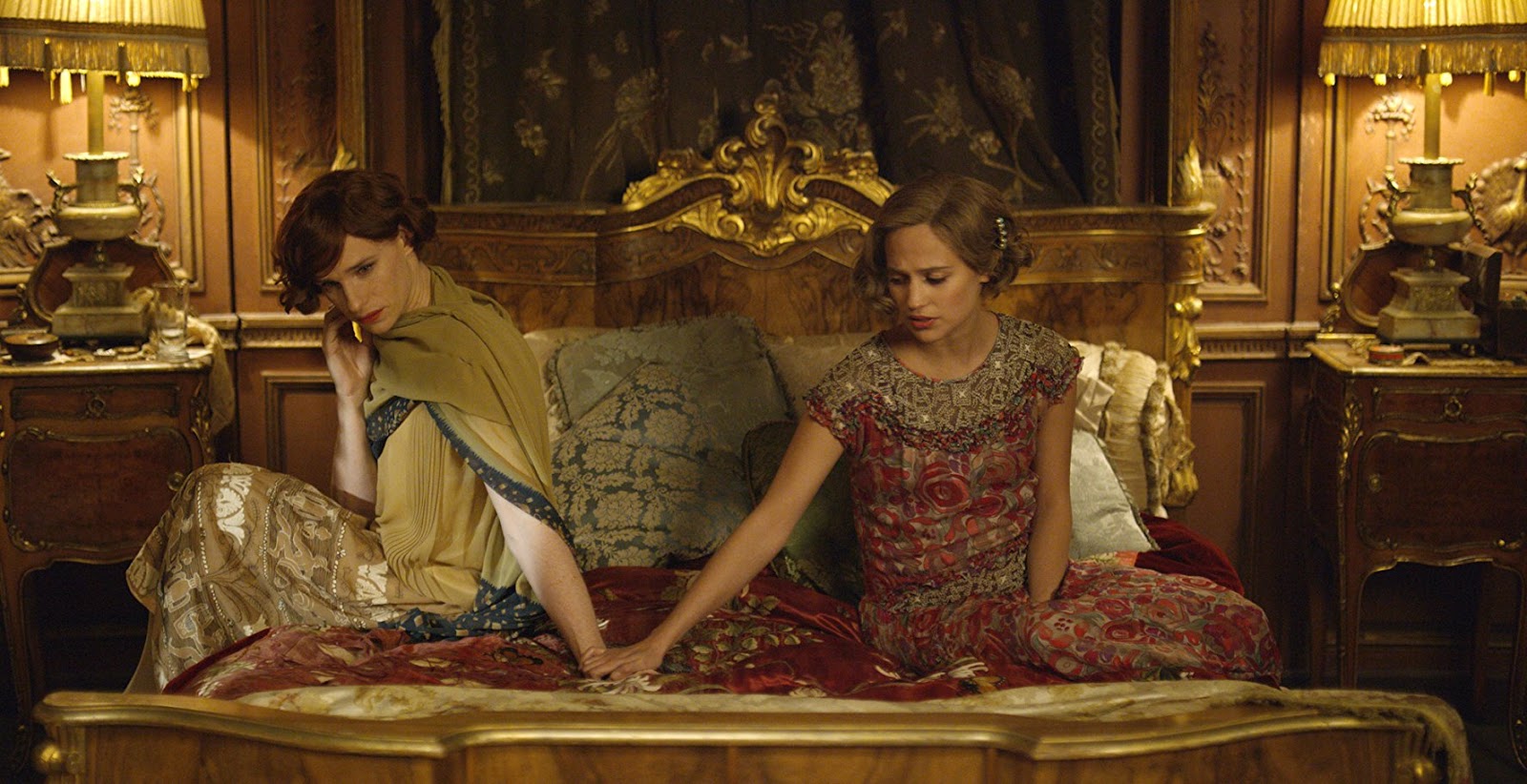
The Danish Girl (2015)

Eddie Redmayne and Alicia Vikander struggle with questions of identity in the overly sentimental The Danish Girl

Director: Tom Hooper

Cast: Eddie Redmayne (Einar Wegener/Lili Elbe), Alicia Vikander (Gerda Wegener), Matthias Schoenaerts (Hans Axgil), Ben Whishaw (Henrik Sandahl), Amber Heard (Ulla Paulson), Sebastian Koch (Dr Kurt Warnekros), Pip Torrens (Dr Jens Hexler), Nicholas Woodeson (Dr Buson), Emerald Fennell (Elsa), Adrian Schiller (Rasmussen)

Working out who you are can be a lifetime’s struggle for some people. Finding out that who you are is someone outside the bounds of what society considers normal or acceptable often calls for a special kind of bravery. That’s the kind of bravery that Einar Wegener had when he realised that he felt he was a woman, not a man. Einar became one of the first ever recipients of sex reassignment surgery, becoming Lili Elbe. It’s an inspiring true-life story, fudged in Tom Hooper’s syrupy, sentimental film.

Eddie Redmayne plays Einar/Lili, slowly realising his fascination with women’s clothing is actually part of a far larger realisation, that she identifies as woman rather than a man. Her wife, Gerda (Alicia Vikander), helps Lili explore her identity, herself journeying through pain at losing her husband to final acceptance and support as Lili begins surgery to complete her transition.

Tom Hooper’s film is shot and framed with the magnificence you expect from his previous films. Hooper’s mastery of framing not only presents people in striking contexts (he has a particular eye for positioning people artfully in a frame with fascinating walls behind them), but also uses the camera to drill into its protagonists (throwing backgrounds into soft focus) to help you begin to empathise with them. It’s a great way to build a connection with the lead characters. But the film never quite adds enough depth and real understanding to its beautiful visuals. I’m not sure it really gets inside the mind of Lili and gets a real understanding of her.

For starters, the structure of the film is confused. The main problem is that the dramatic thrust of the film is Lili realising she is a woman. The character’s emotional and psychological conflict is all bound up in struggling to accept this: the journey of the film is Lili’s internal journey to know and accept herself. Once this realisation is made the drama drains out of the film. Try as it might, it can’t make a series of operations to make complete Lili’s transition dramatically interesting. It also fails to really get inside the psychology of Lili at this point, making her feel more like an exotic, occasionally selfish, passenger through a series of treatments, rather than someone who feels like she has real dramatic thrust.

This is partly because the film splits the perspective more or less equally between Lili and Gerda. While the film follows the passage of Lili realising who she is, if anything more of its empathy and understanding (and interest) is invested in how Gerda reacts to this change. You can see the logic of some complaints that the story of this leading LGBT figure is filtered through the perceptions of their heterosexual wife. Gerda’s emotional journey – pain, anger, rejection, sorrow, despair, acceptance and support – is what really drives the film, far more really than Lili’s realisations. 

But this slightly skewed perception is all part of a film that never quite feels true. I appreciate that Lili moved in some bohemian circles, but surely more people would have been more outraged in the 1920s and 30s by this change. The only people in the film we see reacting in any way negatively are two doctors and a pair of thugs in Paris. Other than that, far from a struggle for acceptance, people seem to fall over themselves to tell Lili how wonderful her new identity is.

The most supportive figure of all is Lili’s childhood friend, Hans Axgil (played very well by Mattias Schoenaerts) – who’s the centrepiece of another major issue with the film. This wonderfully warm and kind man befriends and supports both Lili and Gerda. I left the film wanting to find out what happened in real life to this man who seemed too good to be true. Guess what: he was literally too good to be true. He didn’t exist. In fact no one in the film existed other than Lili and Gerda. Furthermore the timeline (and many of the events) of the film have been changed, as have some of the facts around their relationship. For a film pushing itself as an inspiring “true story” this feels more than a little bit like a cop out.

This is part of the film simply trying too hard. From lingering shots of Einar longingly fingering women’s clothing early in the film, to the syrupy music sore that hammers home as many of the emotional beats of the film as possible, it’s a film that wants to do things as obviously as possible for the audience. It wears its “importance” very heavily: you can tell all involved believed that the project they were working on was going to have an impact on viewers across the world.

Not that we should detract at all from two lead performances. Redmayne immerses himself utterly in the role and performs with sensitivity, giving Lili an early sense of fear that develops into an increasingly relaxed and confident determination. Vikander is equally good, running the full gamut of emotions: she probably is the movie’s heart (making her supporting actress Oscar feel even more like character fraud). Two fabulous performances – and plenty of striking visuals, well directed – but it’s a film that really never quite feels like it gets into the heart of its lead, and always feels like it’s pushing you into feeling an emotional reaction, straining for you to shed tears, rather than letting them come naturally.

Albert Nobbs (2011)

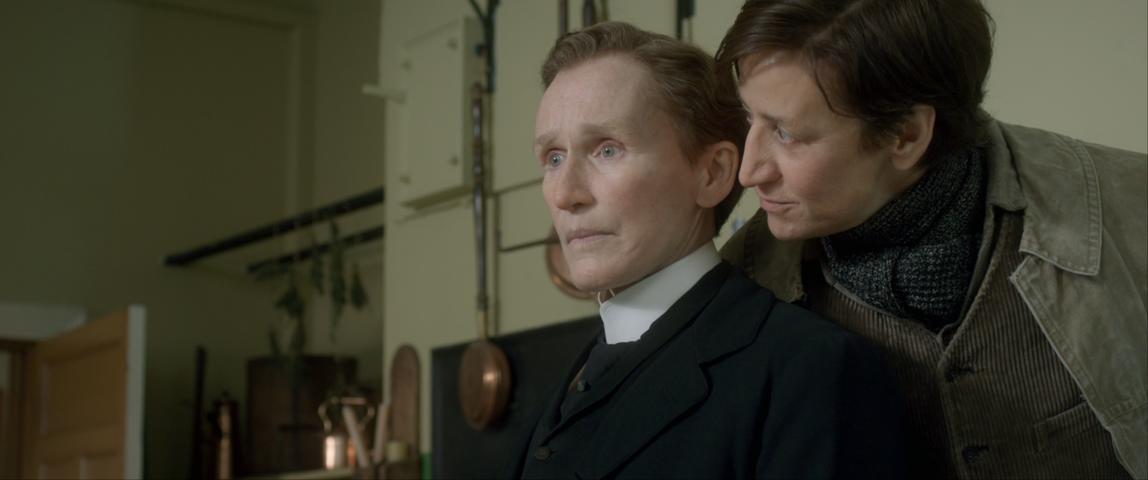
Glenn Close plays a woman pretending to be a man in the curiously empty Albert Nobbs

Director: Rodrigo Garcia

Cast: Glenn Close (Albert Nobbs), Mia Wasikowska (Helen Dawes), Aaron Taylor-Johnson (Joe Mackins), Janet McTeer (Hubert Page), Pauline Collins (Mrs Baker), Brenda Fricker (Polly), Jonathan Rhys Meyers (Viscount Yarrell), Brendan Gleeson (Dr Holloran), Maria Doyle Kennedy (Mary), Mark Williams (Sean), Bronagh Gallagher (Cathleen Page)

Passion projects are funny things. Everyone has them. And sometimes, when you put them together, other people struggle to see what all the fuss was about. Few films fit that bill more readily than Albert Nobbs. This cross-dressing, Victorian gender curio was something Glenn Close spent decades trying to bring to the screen, after starring in the original play off-Broadway.

Albert Nobbs (Glenn Close) works as a butler at a middling hotel in late 19th-century Dublin. Nobbs keeps himself to himself and saves his tips and wages with the dream of buying his own tobacco shop. Nobbs also has another reason to cling to privacy: Nobbs is actually a woman, masquerading as a man in order to find work. Everyone at the hotel is totally fooled – but his world slowly begins to shift when he meets decorator Hubert Page (Janet McTeer), who similarly is a woman living as man, but who has her own business and a wife and family home. Page’s experiences make Nobbs begin to question this life of isolation – with disastrous consequences.

Albert Nobbs is a carefully filmed, respectful, dry and dull film. It’s nominally a film you might expect to have something to say about gender and sexuality – but its shyness around such matters, its lack of insight, its bashful awkwardness means it already looks like a museum piece. On top of which, most of the characters and situations it covers are frankly not particularly inspiring, dynamic or engaging. There isn’t actually much there to spark your attention.

Which it makes it even more surprising that Close was so drawn to this material. Why? It’s hard to say, as even her performance seems as buttoned up, oblique and distanced as the character she is playing (it doesn’t help that Nobbs is neither an interesting or engaging character, coming across like a person with an ill-formed personality, whom the viewer struggles to understand). You would expect her to have some sort of deep emotional bond with this character – but I’m not sure that really comes across.

The film fundamentally lacks the courage it needs to tackle issues of gender complexity. Nobbs has a troubled background of abuse and rape – but the story never really tackles this, instead using it as a lazy attempt to explain a confused sexuality. The film never really engages with the issue of whether Nobbs likes being a man or feels forced to do to make ends meet. It throws in a curveball scene where Nobbs relaxes on a beach walk wearing women’s clothes. But it never takes any step – even the most tentative ones – of Nobbs laying claim to relating more to being one gender or another. 

Nobbs doesn’t seem to identify as a trans man, a cis-gender woman disguising herself as a man for practical reasons in a patriarchal world, or as someone trying to live outside traditional gender constructs all together. It feels pretty uncomfortable with virtually any formulation along these lines, so avoids exploring any of them. It wants Nobbs to feel comfortable in women’s clothes, but also wants to admire Nobbs for living as a man, while also suggesting Nobbs is trapped by society. It’s a confused film.

In any case, the more time you spend with Nobbs the creepier Nobbs seems. It’s unfortunate that a large chunk of the film is given over to Nobbs’ confusingly motivated courtship of Mia Wasikowska’s maid. Throughout, Nobbs is strangely incapable of understanding any sort of emotional link between two people, and here seems unable to comprehend that Helen may have her own emotions and desires that don’t marry with Nobbs’ functional desire for a wife. This pursuit (seemingly to complete the picture of a desired future) creates an image of a stalker rather than someone really seeking a romantic connection. The fact that Helen and her rakish beau plan to swindle Nobbs hardly helps to make these characters likeable either.

Close’s performance doesn’t help with its locked in reverence. So it’s just as well that Janet McTeer bursts into the film with energy, (literally) baring all in seconds and bringing more vibrancy, dynamism and engagement in her scenes than the rest of the film put together. While Nobbs is a rather dull, empty vessel of a person, Page is a lesbian in a loving relationship, escaping marriage by pretending to be a man. That is a story I can get interested in, that can have relevance today: Nobbs’ isn’t. McTeer is excellent, and I wish the film her been about her.

Albert Nobbs is a worthy, but flat film shot with a slow reverence and delivering a story that promises much but completely fails to deliver. Aside from Janet McTeer’s wonderful performance there is very little reason to visit this film. In fact today its avoidance of even engaging with questions of gender and identity actually make it look rather gutless and pointless. A passion project that really makes no real sense.

The Crying Game (1992)


Jaye Davidson and Stephen Rea play a dangerous game of attraction

Director: Neil Jordan

Cast: Stephen Rea (Fergus), Miranda Richardson (Jude), Forest Whitaker (Jody), Jaye Davidson (Dil), Adrian Dunbar (Peter Maguire), Tony Slattery (Deveroux), Jim Broadbent (Col), Ralph Brown (Dave)

The Crying Game is one of those little movies that could: a small scale British/Irish drama about human nature and dangerous relationships, which suddenly burst into the world big, was nominated for five Oscars and won one for its creator, turning him into a widely respected writer/director.

The film follows Fergus (Stephen Rea), an IRA soldier who, over a long night, bonds deeply with Jody (Forest Whitaker) a British soldier his unit are holding hostage with the intent of killing him if their comrades are not released. When Jody is accidentally killed trying to escape his execution, and British soldiers wipe out his cell, Fergus escapes to a new life in London, aiming to track down Jody’s girlfriend Dil (Jaye Davidson) whom Jody asked him to find. Fergus discovers things about himself and Jody in London he little anticipated – and also finds that his IRA companions, especially the dangerous Jude (Miranda Richardson), are not as deceased as he believed.

When it was first released in the UK, The Crying Game was a critical and box-office disaster. This was linked to its IRA plotline, largely on account of the film’s unwillingness to stick an unequivocally clear condemnatory label on the IRA. Of course, the film is not a film about terrorism at all – and whatever it says about the rights and wrongs of the British presence in Ireland (very little indeed), I think it’s pretty clear that it shows killing and violence are completely wrong. However, the film was saved by its huge success in America. There, its subject matter didn’t provoke the same level of controversy it was re-marketed as the biggest “twist” film since Psycho.

And ever since then I would say it has stayed in that list of great “twist” films – up there with The Usual Suspects, The Sixth Sense, Planet of the Apes, Fight Club and of course Psycho, among many others. Most of its mystique at the time was due to the fact that the twist was revealed just over halfway through the film and was based around a theme that has gained far more familiarity to us today. I won’t say what the twist is (just in case), as seeing it unfold is a pleasant surprise that turns what we think we know about several of the characters on its head. I’ll simply say that it is a question of identify and leave it at that.

Identity is appropriate, as that’s what this film is about: the images we build about ourselves and how we project those to the people around us. The way our environment, and the people we spend time with, help to shape the people we are. The sometimes unexpected depths that we discover within ourselves. The film is dramatically opposed to label altogether: hence it can present a gunman for the IRA who is a sensitive and kindly soul, whose relationships with others are based on gentleness (and Fergus is just one of three characters in the film who turn out to be very different from our initial perception of them). Many of these reveals are connected to understanding how love and affection can overlap with feelings of attraction and how we express these feelings. This is all parts of the film’s fundamentally humanitarian outlook.

The film has a poetic, at times almost dreamlike, quality about it. There is a lyrical ambience to many of the scenes, with the camera drifting comfortably through the action. Visions of Jody plague Fergus throughout, both day-to-day and (tellingly) during a sexual encounter with Dil. Jody’s image haunts the film, ghost-like, through the many photos of him in Dil’s flat. Many of the events have a similarly haunting sense of being a few degrees out of reality. It’s got the sense of a violent bedtime story or fairy tale in London.

Jordan’s script is outstanding – humane, witty, deeply felt – and the actors embrace the opportunity to play such multi-levelled, difficult-to-pigeonhole characters. It’s also brilliantly constructed into three clear acts, each of which comment upon and deepen the others: we have Fergus and Jody together in Ireland, a tragic growth of friendship and respect between two men; Fergus and Dil in London, a sweet and tentative romance built on secrets; and finally the return of the IRA to London, a destructive thriller. Each act feels like a natural development and there are no juddering changes of tone, as Jordan keeps the focus on the characters and their personal stories and feelings.

A large part of the film’s success is linked to Stephen Rea’s thoughtful and sensitive performance as Fergus, a man who has clearly stumbled into a life of violence despite his sensitive and rather tender nature (and our underlying natures guiding our actions is a major theme of the film). He’s a true lost soul, and his deep (and sudden) friendship with the kidnapped Jody has an ease about it that reveals depths about his character. His relationship with Dil has a sweetness to it, while Fergus is engagingly nervous and tentative of openly expressed love (not to mention that he lies to her – non-maliciously – from the start, as he knows far more about her than she realises). It’s a low-key but commanding performance with a real depth of feeling, and Jordan gives the character a powerful redemptive arc that Rea plays to the hilt.

There is also terrific work from the rest of the cast. This is one of only two films Jaye Davidson ever made, and the untrained naturalness of the acting adds a huge amount to the mystique of the character, as well as making Dil truly sympathetic and intriguing. Davidson’s short career also preserved the unique mystery around the character that was so essential to the film’s success. Forest Whitaker’s English accent is an up-hill battle, but the actor brings his force-of-nature charisma to the part so completely you overlook that he isn’t convincing as a Londoner, a solider or a cricketer. What you do believe is his connection with Fergus, while Whitaker is able to suggest dark hints throughout that his bond with Fergus is as least part manipulation.

Miranda Richardson has the grandest role as a death-dealing IRA hitwoman, which she delivers with aplomb, her dark eyed fanatical fury making her a dangerous antagonist for the film. Jim Broadbent also shines in an early role as an enigmatic barman, but there is hardly a bum note in the acting, although Tony Slattery is perhaps a little too broad as Fergus’ worksite boss.

The Crying Game is a hugely rewarding film to watch, a deep and thoughtful film, packed with wonderful scenes, great acting and guaranteed to lead to discussion and debate after it has finished. Yes it’s a film with a famous twist – but it is not a film defined by that twist. Instead that is only part of the rich tapestry of the film’s exploration of identity, desire and self-knowledge, in which the images we are present to others are as difficult to interpret as the images we present to ourselves.