Category: Films about grief

Black Panther: Wakanda Forever (2022)

Black Panther: Wakanda Forever (2022)

Grief and loss are the beating heart of this tender and heartfelt Marvel film, mixed with standard action tropes

Director: Ryan Coogler

Cast: Letitia Wright (Shuri), Lupita Nyong’o (Nakia), Danai Gurira (Okoye), Angela Bassett (Queen Ramonda), Tenich Huerta Mejía (Namor), Dominique Thorne (Riri Williams), Winston Duke (M’Baku), Martin Freeman (Everett K Ross), Julia Louis-Dreyfus (Valentina Allegra de Fontaine), Florence Kasumba (Ayo), Michaela Coel (Aneka)

There is one thing you can never imagine – and never want to – having to plan for in your franchise. The tragic loss of your lynchpin. For Black Panther that man was Chadwick Boseman, and his heart-breaking early passing hangs over the film like a shroud.

Black Panther: Wakanda Forever is two films in one. One is a standard Marvel adventure film, with gags, set pieces and careful groundwork laid for future entries. The other is a heartfelt eulogy, a processing of the raw shock the people making the film – and many watching it – felt at the loss of this fine actor. In universe, T’Challa (Boseman) has passed away. His sister Shuri (Letitia Wright) blames herself for failing to save his life and his mother Queen Ramonda (Angela Bassett) has become protective and unrelenting in her judgements.

With its monopoly on vibranium, Wakanda is now the most powerful nation on Earth. Other powers want a piece of that apple – and the US are plumping the deaths of the oceans for vibranium. But their search intrudes on a secret underwater civilisation led by wing-footed, super-strength Namor (Huerta Mejía). Namor threatens to unleash destruction unless Wakanda deliver him the scientist who created the US’s vibranium detector – who turns out to be a college student genius with Tony Stark vibes, Riri Williams (Dominique Thorne). When Shuri refuses to hand her over, Namor states he is coming for the surface – and will destroy Wakanda, a country he cannot trust.

Black Panther: Wakanda Forever is bookended by two heart-breakingly genuine moments of emotion. The death of T’Challa (off screen) and his funeral – a grief stricken, beautifully filmed funeral procession – carries a great deal of genuine rawness. A final montage of shots of Boseman, presented as the memories of Shuri finally coming to terms with her brother’s death is moving. The strongest parts of the film are these human moments. Wright has been open at her shock and pain at Boseman’s death and this translates beautifully in her affecting performance.

These adjustments to the script are the strongest parts of the film. Letitia Wright and Angela Bassett provide subtle, delicate work as two people affected by grief in very different ways, but both now more reckless, protective and retributive than before. The responses, guilt and pain of several characters carry real force and leave the deepest mark on the audience. It also builds a subtle “passing the torch” narrative, as Wakanda fears they have seen the last of their “Black Panther” who protected their nation through history.

Away from this, the film settles into being a more traditional Marvel franchise extender. Rightly much time has been given to the real-life tragedy, but this means much of the remainder of the plot feels rushed. Our new antagonists are hurriedly introduced – so much so that leader Namor (well played by Tenich Huerta Mejía with a charisma that covers an under-written part) introduces his people’s entire culture in an awkward info dump an hour into the film. Not a single other character of his merman race gets so much as a name (as I can remember) let alone a personality.

Despite being a slightly silly concept of an Atlantan (but definitely not Atlantis because that’s already been claimed by another franchise) underwater city with water pressure having given its inhabitants super-human strength, it is another strong commitment to diversity. These people descend from the Mayan civilisation, meaning they share the same history of persecution by the West as the African nations Wakanda represents. It should make them natural allies, right?

Of course, it doesn’t as this is a film that pivots on the mistakes and miscalculations of political leaders and how these force them into war. The film makes its point about political rivalries early with Ramonda giving the French and US an almighty ticking off at (a surprisingly small) UN for their ruthless attempt to obtain vibranium for themselves. However, Black Panther: Wakanda Forever dodges really delving into the most interesting implications of this.

Because there is a kernel of a really interesting, challenging idea here. In many ways Wakanda behaves with exactly the same domineering arrogance as the Western powers they criticise. The Wakandans take unilateral decisions for the world because they know best, treat other nations like recalcitrant children and horde the world’s most powerful resource for themselves. They are this close to a benign, dictatorial state. But the film isn’t interested in exploring this.

Bringing Wakanda and Talokan into rivalry on the grounds of Talokan seeing them as potential oppressors – as the most powerful among the surface nations they have always feared would crush them – would have been more interesting than the confused, convoluted “with us or against us” war we end up with. But I understand that a film, which prides itself on celebrating African culture, is not going to want to be seen as undermining any of that with something sharper.

Besides, this is all a set-up for the inevitable large scale action sequences. The finest is a haunting attack on a ship, where the Talokans use their siren voices to inspire the crew of an American black ops ship to drown themselves. There’s a decent car chase, some well-choreographed fights a pitched battles that thrill. It’s also notable that the loss of Boseman has led to this franchise being dominated by women of colour, all of whom deal with the sort of dilemmas and consequences that are normally the preserve of male (and white) comic-book heroes.

But the film’s heart is in the personal moments – and more interesting when looking at Shuri’s protective affection for Dominique Thorne’s plucky (sometimes overly so) inventor. It’s also interesting that this is a film that flirts more than I was expecting with its leads choosing anger and vengeance, over forgiveness and conciliation. Shuri and Ramonda lash out, with dangerous consequences, and express minimal regret. Black Panther: Wakanda Forever deserves points for being willing to tackle the negative implications of grief.

That’s the strength of the film, just as a pain of Boseman’s death is the beating heart. Black Panther: Wakanda Forever is overlong and skips more challenging ideas, but it is also shot through with genuine grief. It’s not perfect, but it’s real, well-meaning and (for all its silliness and bombast in places) has a heart firmly in the right place. When a Black Panther rises in the final act, you will feel the film has earned it.

The Banshees of Inisherin (2022)

The Banshees of Inisherin (2022)

Director: Martin McDonagh

Cast: Colin Farrell (Pádraic Súilleabháin), Brendan Gleeson (Colm Doherty), Kerry Condon (Siobhan Súilleabháin), Barry Keoghan (Dominic Kearney), Pat Shortt (Jonjo Devine), Jon Kenny (Gerry), Brid Ni Neachtain (Mrs O’Riordan), Gary Lydon (Paedar Kearney), Aaron Monaghan (Declan), Shelia Fitton (Mrs McCormick), David Pearse (Priest)

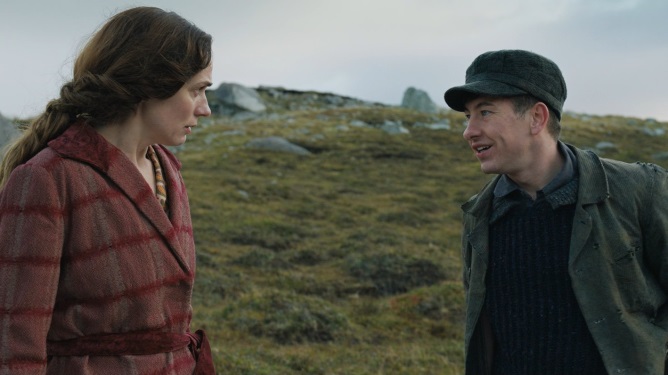
Pádraic (Colin Farrell) and Colm (Brendan Gleeson) are life-long friends on the small Irish island of Inisherin. Until one day, in 1923, Colm bluntly says he won’t speak to Pádraic again as “I just don’t like ya no more”. What on earth has led to this seemingly permanent severance? Did Pádraic do something wrong? The torment of not knowing will create a huge strain on Padraic, who prides himself on “being nice” and can’t understand why the older Colm doesn’t want to chat him. Just as Colm can’t understand why Pádraic can’t leave him alone, especially as he is almost universally agreed to be dull. Eventually this blunt stop to a friendship swiftly escalates out of all control.

McDonagh’s film is packed with the scintillating dialogue you would expect, and he combines it with an intriguing, tragedy-tinged character study where two sympathetic characters tip themselves into destruction through the unwillingness of either of them to compromise. It’s no coincidence that the film is set during the Irish Civil War. Cut off from the mainland on their tranquil island (where life feels like it hasn’t changed for the best part of 100 years), the characters are disturbed from their own civil war, every now and again, by the sound of gunfire and explosions from the mainland. The Banshees of Inisherin can be seen as a commentary on civil wars: don’t they all start, essentially, from someone deciding they have had enough and “just don’t like ya” anymore?

This marvellously rich film boils down a whole country tearing itself apart over what sort of future it wants, into one personal clash over two people’s future. The future increasingly obsesses Colm, a man preoccupied with mortality (who assumes his life can now be counted in years rather than decades), suffering from depression, worried he will disappear leaving no mark. A talented fiddle player, he wants to be like Mozart, remembered decades later – and he can’t do that wasting time every day for hours on end listening to Pádraic talking about his “wee donkey’s shite”.

It’s a perspective on the future, that Pádraic just can’t understand. For him, what does it matter what people you’ll never meet think about you? What matters to him is that the people around him like him and remember him as a “nice fella”. Not in a million years does legacy occur to him: the familiarity of everyday being the same is the most comforting thing, and change a horrific and terrifying thing to be avoided as much as possible.

You can see all this instantly in Colin Farrell’s heart-rending performance as this gentle, fragile but unimaginative soul, heart-broken at the inexplicable loss of his best friend. The film is a striking reminder that, contrary to his looks, Farrell’s best work is in embodying lost souls, the sort of people never ready for the life’s hurdles. Pádraic certainly isn’t, and his attempt to process what has happened defeats him. A man who considers his pet goat his next best friend and is as reliant as a child on his sister, doesn’t have the ability to understand what Colm is driving at about mortality, assuming instead he will stumble across the right words to be welcomed back into Colm’s company. He becomes the unstoppable object, trying to batter down Colm’s wall of silence.

He’s onto a losing battle, as Colm reveals himself to be – either due to his depression or his just not caring any more – the immovable force. Wonderfully played with a tinge of sadness and a depression-induced monomania, by Brendan Gleeson, Colm is a decent guy in many ways but fails to appreciate or consider the effect his actions will have on others. Instead he is focused on achieving at least something notable from his life. It leads to dramatic steps to drive Pádraic away, Colm threatening to cut off one of his fiddle playing fingers every time Pádraic bothers him, a threat he transpires to be more than willing to carry out.

And so civil war breaks out. As well as the parallels with Ireland’s war, I also felt strong echoes of our own poisoned social-media discourse. By his own lights, Colm believes his sudden severing of contact with Pádraic is perfectly reasonable. Many people who have “ghosted” others no doubt feel the same. Colm is reasonable when he explains it, and he still steps in with silent acts of comfort and support when Pádraic falls foul of the island’s brutish police office. But he never considers the traumatic impact this unexplained change will have on Pádraic – or how flashes of kindness can be as cruel as hours of non-acknowledgement.

Radicalism, in civil war and social media, quickly takes hold. What else can you call Colm’s threat to slice off his own fingers (the fingers he needs to live his dream of fiddle-playing legacy)? Just like people blowing hard on Twitter, he needs to deliver or lose face. Pádraic makes angry, passionate condemnations of Colm in the pub, like he’s posting rants online. Things escalate to a point where no-one feels they can step away or backdown.

That’s the tragedy McDonagh identifies here. This one decision of Colm’s – no matter the motives – ends up having disastrous effects on both men. Pádraic changes from a gentle soul to someone capable of wrathful fury and lifelong grudges. Colm literally disfigures himself, guaranteeing he will never achieve the very thing he started this for. Could there be a better parable for the destructive nature of civil combat? Neither Colm or Pádraic are willing to compromise: what if Colm said he would only see Pádraic once or twice a week, eh? Just like Ireland, they burn the world down.

This all takes place in a rich framework, with McDonagh skilfully working in clever, challenging sub-plots. The legend of the banshee, who foretold death and enjoyed watching destruction, is woven throughout, embodied by the sinister Mrs McCormick (a ghostly Shelia Fitton). The most forward-looking person on the island is Pádraic’s sister Siobhan – brilliantly played by Kerry Condon – who finds herself wondering why on earth she stays in such a self-destructive small-world. Barry Keoghan (also superb) plays the universally acknowledged village dunce, who (if you stop and listen to him) quotes French and poetry and (for all his crudeness and lack of social graces) is clearly a man stunted under the heel of his abusive father, the village policeman.

As events escalate and rush out of control – McDonagh’s pacing is very effective here – the film slows for carefully judged moments of emotional power, from the burial of a beloved pet to a character weeping in bed at the painful choices that must be made. McDonagh has created a powerful universal metaphor for the dangers of extreme, definitive choices and a total rejection of compromise by boiling it down to the smallest scale possible.

And your sympathies ebb and flow, due to the beautiful performances from its leads. Farrell is heartbreaking, a memory you carry as he becomes more vengeful. Gleeson is coldly reasonable, even as we grow to understand his crushing sense of mortality and character-altering depression. These two actors power an intelligent and thought-provoking film that achieves a huge amount with subtle and rewarding brushstrokes.

A Single Man (2009)

A Single Man (2009)

Grief is at the heart of this moving, beautifully made debut from Tom Ford

Director: Tom Ford

Cast: Colin Firth (George Falconer), Julianne Moore (Charley Roberts), Nicholas Hoult (Kenny Potter), Matthew Goode (Jim), Jon Kortajarena (Carlos), Paulette Lamori (Alva), Ryan Simpkins (Jennifer Strunk), Ginnifer Goodwin (Mrs Strunk), Teddy Sears (Mr Strunk), Lee Pace (Grant Lefanu)

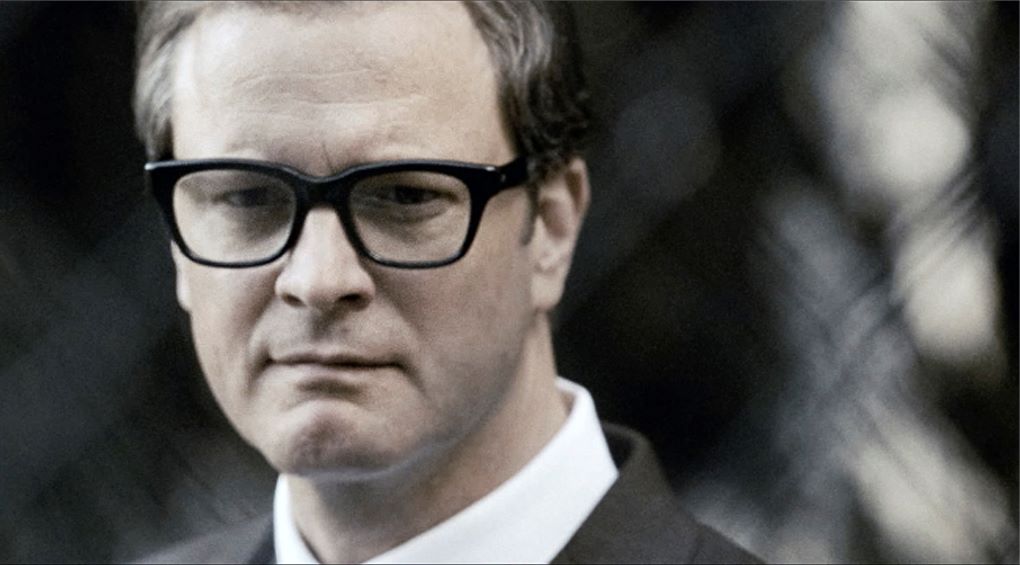
Grief is like a gaping wound that never heals. It’s an unbearable burden LA-based English professor George Falconer (Colin Firth) can’t bear any longer. Distraught after the death of his partner of sixteen years Jim (Matthew Goode), George decides November 30th 1962 will be the last day of his life. He will spend the day putting his affairs in order, soaking up the isolated intensity of moments, have dinner at his oldest friend Charley’s (Julianne Moore) house, then take his life. Adapted from Christopher Isherwood’s novel, A Single Man follows that one day.

The universal pain of grief and vibrancy of love shines out of one of the most tender gay-love stories ever made (strikingly shot and acted by a straight director and leads). A Single Man is a film that aches in every frame with the desolation of loss and the agony of moments that can never be claimed, touches that can never be made and conversations that can never be had. It studies how empty and overbearing life can feel when we know we must face it alone, without the person who made the world make sense to us.

It is of course a double burden when that loss cannot be acknowledged. George learns of the death of Jim via an awkward phone call from Jim’s brother (a vocal cameo from Jon Hamm) who can’t bring himself to openly acknowledge the love between the two men and tells him it’s a “family only” funeral. George himself can only convey repressed English regret during the phone call, before collapsing into lurching emotional hysteria after it. His loneliness and cool distance from others is all a side effect of man who must always hide his true feelings and who and what he is.

The film gains a huge amount from Colin Firth’s extraordinary performance in the lead role, hiding a seething, raw pain under a genteel and refined exterior. This seemingly cold, precise man – who dresses like a fashion model and is polite to a fault – is a tempest below the surface of loss that cannot be expressed. It’s as much the burden of putting on one face to the world, knowing there is another below the surface, that has crushed George’s spirit over the past years, as the loss of Jim. All of this is captured by Firth with exquisite sensitivity, in a perfectly judged performance.

Even George’s closest confidante Charley – his best friend, and one-time experimental romantic fling, now a depressed divorcee – can’t quite understand George’s feelings for Jim. Played with a wonderful air of domestic, middle-aged tragedy by Julianne Moore, Charley still can’t quite believe a homosexual love can ever really be the “equal” of a heterosexual one – that some part of George would have been happier if he had accepted a ‘normal’ relationship and family with her rather than the more ‘exotic’ relationship he chose. If even those closest to George can’t really see his relationship as legitimate, what chance does his apple-pie neighbourhood have of doing so?

It’s the intense loneliness – no one to share his pain with, no way to really mourn his love – that has finally beaten the will to carry on for George. Ford’s direction reflects his sense of ennui by presenting the world as coldly drained out, rich colours replaced with greyscale-tinged greys and blues. Warm colours only intrude in those moments where George consciously decides to engage, one final time, with the wonders the world has to offer, the frame filling with warmth and colour.

Ford’s elegiac film doesn’t shy away from the coldness of pain and loss. Opening with a (literally) chilling scene, as George imagines encountering Jim’s dead body in the snows, it conveys the functional distance the world can seem to have when we are dealing with life changing internal feelings. George is entrapped into tired conversations about university politics (his gaze drifts to two male tennis players, the screen momentarily filling with colour). Reflecting his fastidious nature, he carefully puts his affairs in order at the bank and catalogues keys, account details and suicide notes on his desk. All of it feels irrelevant compared to the pain within.

But A Single Man is also a hopeful film. Even when the world seems at its bleakest – when we have decided we can’t go on – there is still hope. It’s represented here by Nicholas Hoult, warm, open and honest as George’s student Kenny who intuitively identifies something is wrong with George and goes to huge lengths to try and find out what. The tenderness between the two – and the protectiveness as well as genuine smiles Kenny can promote in George – is a beat that suggests there may still be some chance of happiness in this world where we least expect it.

It’s part of the same warmth and humanity that underlies Ford’s heartfelt film, wonderfully directed. If it was a parade of bleakness, it would have far less effect. But flashbacks to George and Jim together show the joy and comfort of their lives, while the small moments of warmth and humanity in the present constantly remind us of what George’s decision will cost him.

The film’s final dark splash of irony may well be a little too on the nose, sign posted as a possibility a little too heavily earlier in the film. But, in its exploration of grief and intelligent, intense character study it’s a wonderful debut from Ford. And Firth’s extraordinary, career defining role (a year later, after winning the Oscar for The King’s Speech he thanked Tom Ford as being someone who owed a piece of the award to) is one for the ages that speaks to anyone who has ever known loss.

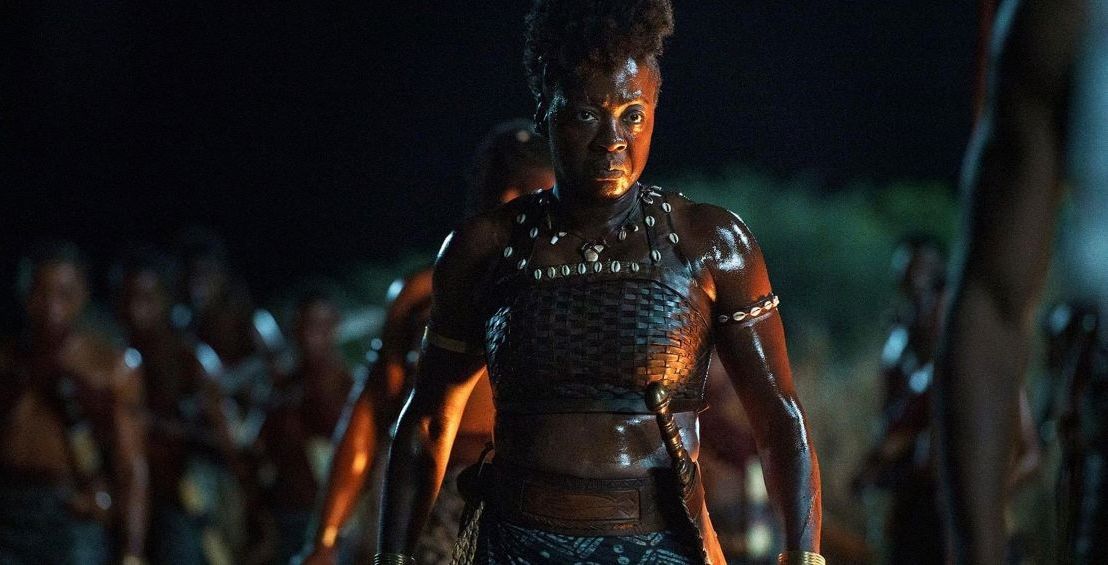
The Woman King (2022)

The Woman King (2022)

Punchy historical action epic is very entertaining (if not hugely original narratively) as well as being a triumph of representation

Director: Gina Prince-Bythe

Cast: Viola Davis (General Nanisca), Thuso Mbedu (Nawi), Lashana Lynch (Izogie), Sheila Atim (Amenza), John Boyega (King Ghezo), Hero Fiennes Tiffin (Santo Ferreira), Adrienne Warren (Ode), Jayme Lawson (Shante), Masali Baduza (Fumbe), Angélique Kidjo (The Meunon), Jimmy Odukoya General Oba Ade), Thando Dlomo (Kelu), Jordan Bolger (Malik)

It’s 1823 in the West African Kingdom of Dahomey. The kingdom is trapped in the middle of a host of competing interests: most notably the rival Oyo empire and the European slavers controlling the region’s main port. Dahomey depends for its security on the Agojie, an elite group of women warriors commanded by their respected general Nanisca (Viola Davis). War brews between Dahomey and Oyo, and Nanisca is pushing King Ghezo (John Boyega) to end Dahomey’s involvement in the slave trade. At the same time, a new Agojie recruit, Nawi (Thuso Mbedu) brings memories of past traumas flooding back to Nanisca – might she and Nawi have some lost bond?

The Woman King is a pulsating action film, a mixture of Braveheart and Black Panther (it even has a cold open, as the Agojie storm an Oyo village to save captured Dahomey citizens bound for the slave ships, that feels like a straight lift from the latter film’s opening). Proudly celebrating both women and black people (men are very much in secondary roles, while the only white character is a hypocritical slaver played with relish by Hero Fiennes Tiffin), it’s a punch in the solar plexus for what’s been a male-dominated genre.

Watching it I suddenly realised, half-way through, that if the film had been made 10 or 15 years ago, the plucky new recruit having to prove she belonged among the Agojie would have been played by a white actress. There would have been a flashback to the child being found by the Agojie and then a montage of her searching from fear to longing to emulate the women around her. Like Cruise in The Last Samurai, she would have become the best-of-the-best, accepted by her new black sisterhood. It’s a triumph that Hollywood no longer needs stories like this filtered through white eyes before they would even consider bringing them to the screen.

Instead, the focus is strongly on a story that wants to celebrate the rich culture and history of African kingdoms. Dahomey’s civilisation, advanced farming and irrigation, egalitarian culture and humane religious and spiritual practices, are shown in loving detail. Their tenuous position as a small kingdom surrounded by rivals is carefully presented, just as the corrupting nature of European powers is made clear. It is they who have turned slavery – an ever-present in African history – into an industry that dominates the African economy and has led to a subtle devaluation of human lives that many Africans openly collaborate in.

In this, Prince-Bythe’s tightly directed film juggles a coming-of-age story for Nawi with a coming-to-terms story for Nanisca. It’s a film that manages to present both in the context of a series of action set-pieces and exciting training montages (the Agojie effectively have to complete a massive obstacle course to qualify as a member of the sisterhood). To be honest, much in the film isn’t really that original, more a remix of set-pieces and ideas from similar films. What makes it stand out is the representation and the context where it is taking place.

It also allows impressive actors to take on roles way outside of public expectations. None more so than Viola Davis, whose pumped up physique shatters any perceptions of what you might expect. This is a tour-de-force role from Davis, as she plays a defiant and strong woman, secretly terrified of trauma in her own past (and worries about her own weakness) who leads by charismatic example, but is just as capable of unjust slap-downs. She’s a woman struggling to embrace all facets of herself, doing so in the spotlight of a whole country looking to her for leadership. It makes for a powerful performance from Davis, perfectly fusing her skill at playing matronly warmth, imperious distance and deep reserves of determination and courage.

There are similarly excellent performances from a uniformly strong cast, with Lashana Lynch a stand-out as a courageous fighter who surprises herself with her mentorship abilities. Thuso Mbedu gives a star-making turn as Nawi, a young woman who matches Nanisca for bull-headedness and suppressed self-doubt, who reveals herself as a natural leader. Shelia Atim is excellent as Nanisca’s level-headed trusted number two, while John Boyega walks perfectly a fine-line of a man teetering between being a wise leader and a playboy.

They are helped by a film that may lack originality in its plotting and structure, but makes up for that with its warmth for its characters, and the gritty, involving realism of its shooting. Prince-Bythe keeps the pace of the film running smoothly and stages each of the film’s many set-pieces with a dynamism that keep you on the edge of your seat. She also successfully manages to incorporate some searching material around Nanisca’s past traumas without being exploitative.

Historically, the film is a little dubious, walking a carefully curated line on Dahomey’s involvement in slavery (in many ways it might have been better if the film was set in a fictional kingdom inspired by Dahomey). It doesn’t dwell on the Agojie chaining up their captives to be shipped to the slavery markets. It pushes an anti-slavery message strongly – but ignores the historical fact that the real Ghezo continued in the trade until the bitter end. (Legitimate points could have been made about his right to the same compensation as plantation owners elsewhere.) There is a complex, difficult story here that the film romanticises into something with cleaner rights and wrongs.

But, with a history of poor representation and white-only-lens view on African culture in film, you can forgive a film aiming to redress that balance. Strongly directed, exciting and crowd-pleasing, with well-drawn characters played with real skill by a very strong cast, it might recycle many ideas from other films, but it does it with a compelling freshness.

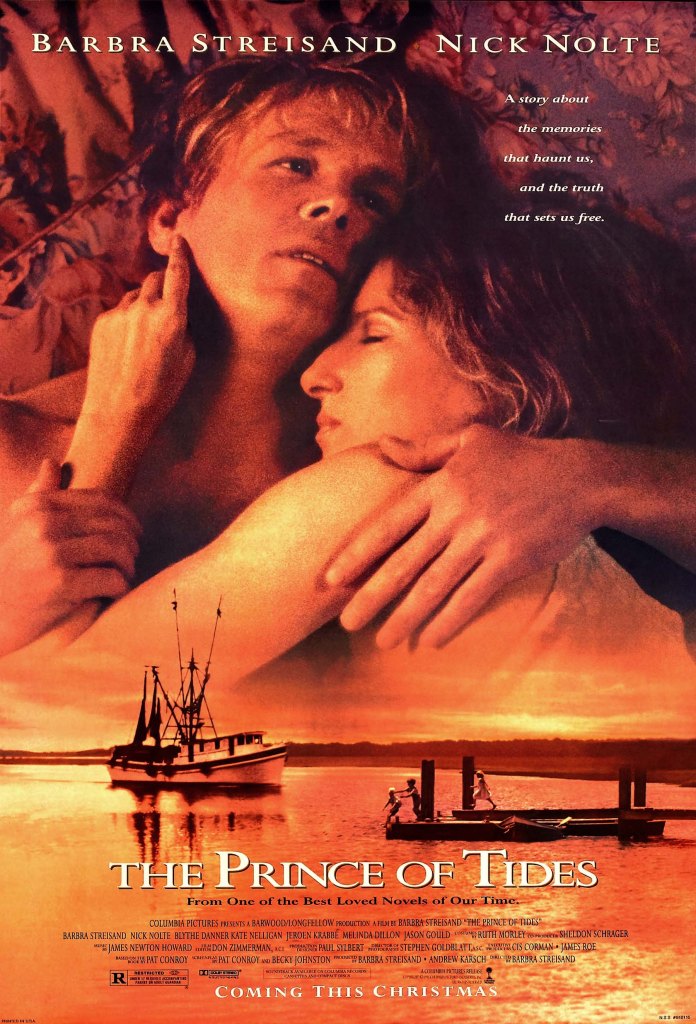
The Prince of Tides (1991)

The Prince of Tides (1991)

Past traumas are uncovered and a gentle love story unfolds in Streisand’s extremely effective relationship drama

Director: Barbra Streisand

Cast: Nick Nolte (Tom Wingo), Barbra Streisand (Dr Susan Lowenstein), Blythe Danner (Sally Wingo), Kate Nelligan (Lila Ward Newbury), Jeroen Krabbé (Herbert Woodruff), Melinda Dillon (Savannah Wingo), George Carlin (Eddie Detreville), Jason Gould (Bernard Woodruff)

For many, La Streisand is easy to knock. She developed a reputation as difficult: controlling, demanding and perfectionist. But don’t we praise these qualities in men? Perhaps she has more than a point when she claims complaints against her are grounded in sexism. Her snubbing by the Academy – The Prince of Tides got seven nominations including Best Picture, but none for Streisand bar as Producer – certainly feels like a crusty boys’ club deciding there is no place at their big night for a strong-minded woman. Doubly unfair since Streisand deserves plenty of praise for a film as rich, heartfelt, moving and surprisingly funny as The Prince of Tides.

Tom Wingo (Nick Nolte) is a football coach in South Carolina, where his marriage to Sally (Blythe Danner) is drifting towards the rocks, largely thanks to Tom’s jovial inability to be emotionally open. He’s called to New York when his poet sister Savannah (Melinda Dillon) attempts suicide. To aid her recovery, Tom must talk to her psychiatrist about the traumas of their childhood. But Tom himself is far, far away from putting bottled-up pain behind him. Streisand plays the psychiatrist, Dr Susan Lowenstein, struggling in an unhappy marriage with an arrogant violinist (Jeroen Krabbé, being Euro-smug as only he can) and with a troubled relationship with her son Bernard (played by Streisand’s real-life son Jason Gould). Despite initial uncertainty, will a spark of romance flair up between Wingo and Lowenstein?

Well, if you listen to the luscious score by James Newton Howard for a few seconds, you can be pretty confident the answer will be “yes”. (But it’s fine – Lowenstein’s husband is an arrogant tosser and Wingo’s wife tearfully confesses her own affair; no need to worry about betrayal here.) Officially adapted from his own huge novel by Pat Conroy,working with Becky Johnston (though it was an open secret Conroy frequently confirmed that Streisand wrote the script), it distils a massive novel into a tightly paced, extremely well-made romance that feels, in many ways, a throwback to the “women’s pictures” of the 1940s. (Conroy was thrilled.)

The big difference is that the typical Bette Davis role is here played by Nick Nolte. This is an extraordinarily superb performance by Nolte: never before had I appreciated what a deeply soulful, sensitive performer he is, especially when he is called to play the “gruff” card so frequently. Nolte’s Wingo is a Southern, gentlemanly good-old-boy, a man’s man who laughs off trouble and moves with the physicality of a rough-and-tumble sportsman. But, under the surface, he’s a sensitive, vulnerable a man tortured by past traumas he can barely bring himself to think about and consumed with guilt, self-loathing and the inability to express his feelings.

In nearly every frame of the film, Nolte is sensational: endearing, funny, joyful (his dancing at a house party has a hilarious self-mockery to it) but also stand-offish and self-contained. The film revolves around key meetings between him and Streisand’s Lowenstein, which grow increasingly intense as the taciturn joker Tom, almost against his will, has his carefully mounted defences stripped away. We see nothing, by the way, of Lowenstein’s treatment of Savannah, so tightly focused is the drama on Tom’s story. While narratively sensible, this does mean that Savannah is reduced to little more than a narrative device.

It makes for effective drama, well directed by Streisand. It’s a film that mixes moments of shock – Tom seeing his sister’s bloodstains on her apartment floor or deflate into mumbling incoherence when pushed on his past – with moments of genuine warmth and sweetness. Heck even a heated argument between the two of them segues suddenly into something comic when Lowenstein impulsively throws an Oxford English Dictionary at him, damn near breaking his nose. It should also be noted Streisand unselfishly casts herself in the less showy role – essentially a feed for Nolte – and cedes the finest moments and meat of the film to him.

Perhaps that’s also partly why Streisand’s doctor is the least convincing part of the film. With her diva nails and famous features, no amount of dome-like-glasses ever really makes you forget you are watching one of the world’s icons pretend to be a psychiatrist. (Particularly as the film relies on the magic therapist trope so beloved of Hollywood, where gentle probing and quiet “what do you think” lines lead to huge emotional revelation.) If anything, she’s more convincing and comfortable as the socialite mum struggling with her dreadful husband and resentful son.

Why the son is quite as resentful as he is to his mother, is left a bit of a mystery. Nevertheless, Jason Gould does a decent job as a young man torn between playing the football he loves and fulfilling the musical promise his father expects. (He also has a great father-son chemistry with Nolte, who coaches him in football skills.) Much clearer is why Lowenstein is struggling with her ghastly husband. Jeroen Krabbé is beautifully, smackably, smug and condescending. So much so that I laughed heartedly at the film’s most crowd-pleasing moment, as Tom punishes him for his rudeness over a dinner party by juggling his priceless Stradivarius over the edge of a penthouse balcony.

It makes it easy for us to accept Streisand’s eventual affair – much as Blythe Danner’s Sally regretfully confessing that Tom’s emotional closed-offness has driven her into the arms of another man. Despite the poster’s impression though, this is far from a steamy romance, waiting almost four fifths of its runtime before the two confess their feelings for a cathartic affair. For the bulk of the film, it’s an unspoken mutual affection, driven by Tom’s Southern flirtatious manner and Susan’s half-smiles. Again, it’s a slow-build, carefully paced romance that feels real.

Also because the film’s real build is not towards the two stars converting flirting to grinding, but in uncovering the exact trauma Tom is suppressing and has made him resent his mother (Kate Nelligan very good as an aspirant social-climber, refusing to invest love in her children) almost as much as his violent father (a surly Brad Sullivan). The reveal is, in some ways, expected – but also shockingly unexpected, particularly due to the visceral rawness which Streisand shoots the Nolte-narrated flashback with (Nolte is, needless to say, wonderful in this scene).

It’s part of the surprisingly effectiveness of a film that, in other hands, could have been a sentimental family drama, but is lifted by excellent, committed performances (Streisand is clearly a whizz with actors) and sensitive, patient direction. Streisand resists attention-grabbing flash, carefully letting scenes and emotions build, using subtle but effective camera movements. It comes together into a film that surprised me greatly with its richness. It eventually has a heart-warming message to tell of the power and importance of having the courage to admit your pain and emotions and, in its portrait of a man’s man engaging with his vulnerability, projects a message still powerful today. If Redford or Eastwood had directed it, they would have won an Oscar.

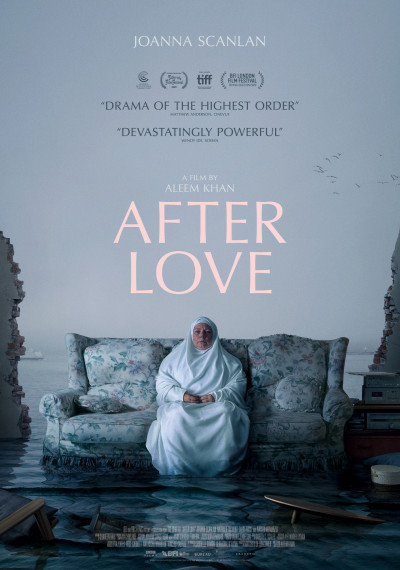
After Love (2021)

After Love (2021)

Loss, grief and family combine in Aleem Khan’s poetic, heartfelt debut

Director: Aleem Khan

Cast: Joanna Scanlan (Mary Hussain), Nathalie Richard (Genevieve), Talid Ariss (Solomon), Nasser Memarzia (Ahmed), Sudha Bhuchar (Farzanna), Nisha Chadha (Mina)

Mary Hussain (Joanna Scanlan) is a white English woman who converted to Islam decades ago to marry Ahmed (Nasser Memarzia). Ahmed works as a captain of a ferry ship, travelling between their home in Dover and Calais. When he suddenly passes away, Mary is distraught. But that’s nothing compared to how she feels when she discovers Ahmed had a second family in Calais: Genevieve (Nathalie Richard) and their son Solomon (Talid Ariss) – whose very existence is a painful memory of the child Mary and Ahmed lost decades ago. Mary travels to Calais to do she’s-not-sure-what but, due to a misunderstanding, ends up working as a cleaner in Genevieve’s house as she packs for a move, totally unaware Ahmed is not just ignoring her calls.

The debut film from Aleem Khan – whose mother was similarly a white English convert, living in Kent, who immersed herself in her adopted culture – After Love is part fascinating moral dilemma, part profound exploration of the burden of grief. Mary’s life has been shattered by the loss, not only of her husband, but the even greater loss of her understanding of what her life was. Khan captures this with a beautifully shot visual metaphor: Mary hallucinates the world literally collapsing around her, from dust dancing in the sunlight, to cracks appearing in the ceiling above her to a vivid hallucination of the white cliffs of Dover collapsing behind her as she sails to Calais.

Khan’s film is at its strongest when it centres Mary’s emotions and faith. It’s a wonderful endorsement of the power of faith. Faith is central to Mary’s life: she immersed herself in her adopted culture – from prayer to dress to food, which she cooks with love-infused skill. Part of the film’s purpose is to challenge any underlying assumptions we may have about this culture. Mary’s faith is not something forced upon her or which provides barriers to her. It has, instead, given her peace, purpose and contentment. In a world where images of Islam are not always so positive, it’s refreshing to see religion as such a positive force in a person’s life.

But the film also knows seeing a woman in a hijab carries certain assumptions. Its perhaps the biggest reason why, when Mary arrives at her door, Genevieve assumes she is a cleaner. Later she will question why Mary wears it, as if it was a set of chains rather than a personal choice that is an expression of her faith. For Genevieve, the hijab not only makes it easier to push her into a servile position, it also defines her, in the eyes some, as being on the lower rungs of society (which she isn’t). You can be confident if Mary had turned up wearing a black dress and a hat, the film would have played out very differently.

We see Mary carefully prep what she might say to this other woman, before she arrives. It all goes out of the window in tongue-tied fear and shock when she arrives. Instead, she ends up working as a cleaner. Mary accepts the misunderstanding for reasons she almost can’t understand herself. Is it meekness? Awkwardness? Curiosity? Shock that this woman is far more glamourous than she is? Does she want revenge? She hardly knows herself, using her position in the house, effectively as a servant, to learn more about this woman and the family she built with her husband.

If there is a weakness in After Love it’s the slightly contrived nature of this plot. In a film grounded in the realism of the pain of loss – Mary’s devastation, confusion and sense of being adrift is explored with a profound sensitivity – it revolves around the sort of plot device that wouldn’t seem out of place in a soap opera. It takes a bit of investment – which the film just about manages to earn – to go with this storyline, which relies slightly on contrivance to sustain itself.

But it does allow us to have our perceptions about Genevieve challenged as well. While we assume, at first, she will be little better than a hussy, we discover she is a sensitive, realistic woman, well aware that she is (and more than a little guilty about being) “the other woman”. She is struggling with her teenage son Solomon, who can’t understand why his life is so unusual and of course blames his mother more than his absent (and therefore idealised) father.

In fact, the longer Mary stays in this house, not telling the truth, becoming a confidant to mother and son, the more you start to feel your loyalty shift. From our first perception of Mary being the wronged woman, the more you start to feel she is taking terrible advantage of Genevieve and her son. That not telling them Ahmed is dead, as they long to hear from him, is wrong. That her attempt to comfort Solomon (whom she starts to feel a motherly love for) by texting him from Ahmed’s phone is inadvertently deeply cruel. You start to feel unease about this interloper, lying to this family at what is already a difficult time.

The fact you stick with her is due to the extraordinary performance by Joanna Scanlon. Quiet, polite, over-flowing with faith and a desire to help, Scanlon also lets us see that the loss of Ahmed (and the loss of her memories of a happy marriage) has torn her apart. Scanlon’s performance drips with grief and pain, an anguish she can barely form into words. It’s a gentle powerhouse of humanity (and rightly BAFTA winning). Richard and Ariss also give fabulously raw performances as two people only just holding their own relationship together, never mind processing the loss of a husband and father.

After Love is strongest when exploring the profound and lasting effect of grief. Khan’s film is shot with a poetic beauty, and he draws deep and moving performances from his lead actors. It revolves around a massive contrivance but carries enough impact that you’ll feel the same note of hope, of the debris settled and life going on, as the film ends on.

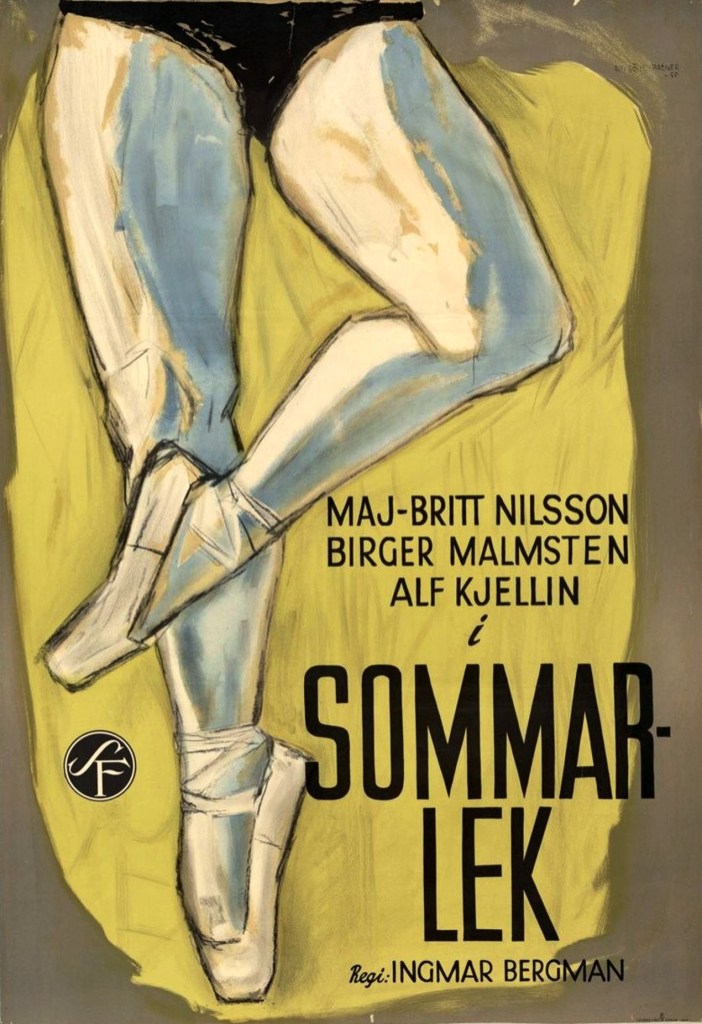
Summer Interlude (1951)

Summer Interlude (1951)

Memory, mortality, repression, grief and a little dash of hope: Bergman establishes his themes in one of his earliest film

Director: Ingmar Bergman

Cast: Maj-Britt Nilsson (Marie), Birger Malmsten (Henrik), Alf Kjellin (David Nyström), Annalisa Ericson (Kaj), Georg Funkquist (Uncle Erland), Stig Olin (Ballet Master), Mimi Pollak (Mrs. Calwagen)

On the night of the dress rehearsal for her next production, successful ballerina Marie (Maj-Britt Nilsson) receives a parcel containing an old diary. It’s thirteen years old and belonged to Henrik (Birger Malmsten), a young man she met and fell in love with while staying with family friends on a small island. The relationship was one of blissful joy – so why then does even the faintest memory of it bring out a cold panic in Marie?

The answer is of course rooted in past trauma in a film that touches on so many themes Bergman would explore in even greater detail later, it’s hard to see it as a film in its own right, like an early draft pencil sketch of a Renaissance master. Themes of memory, trauma, mortality, repression, romance and coming to terms with all of these would resurface time and again in the master’s later work. Wild Strawberries, The Seventh Seal, Face to Face, Persona, Fanny and Alexander… They all expand on Summer Interlude. For starters, Marie’s reverie on the island revolves around memories activated by eating strawberries and takes in an ageing priest exploring mortality through chess.

So, you can sort of watch Summer Interlude as a game of inspiration-spotting, keeping a tally of the Bergmanesque pre-homages. But that would do a disservice to a heartfelt, beautifully judged, hauntingly sad film which deals not only with loss but also acceptance. It’s effectively two films in one, straddling the emotionally cold present and Marie’s return to the windswept island, and the glorious summer of carefree romance she shared all that time ago, when everything was possible.

As Marie, Maj-Britt Nilsson is impressive. One of the first of Bergman’s muses – and the first major indicator of his skill and empathy for powerful female-led drama – Nilsson has the difficult job of distinguishing between two versions of her character. Her present day one is muted, restrained and hiding behind her ballet performance make-up, unable to really face the world and unhappy in her own skin. By comparison, the younger version feels like a different person: vibrant, hopeful, excited and youthful. And besotted with Birger Malmsten’s boyish and delightful Henrik, an impulsive but engaging kid.

The flashback to their romance is given the sun-dabbled beauty of memory. They run across beaches and up hills, flirt in beach huts and conduct a sweet engagement ceremony. The company of the other is more than enough for both of them. Gunnar Fischer’s photography captures this with an intense, naturalistic beauty – including a gorgeous shot of a cloud across the sun while we hear the voices of Marie and Henrik below. It also makes for a wonderfully alive contrast to the more static coolness of the present, where wide-open spaces are exchanged for backstage confines.

It’s not a huge surprise to reveal that Marie and Henrik’s relationship end tragically. That after all is the mood we associate with the Gloomy Swede. But what makes the film really work is the hope and joy not only of the memory of that glorious summer – but also in the ability, thirteen years later, of Marie to consider processing it and allowing new joy into her life. To come to terms with what has happened to her and learning to love the person she is today, (literally) wiping away the defensive make-up that has kept her distant from the world.

Much of her defensiveness comes courtesy of “Uncle” Erland (a deeply unsettling Georg Funkquist), the family friend she was staying with that summer. A doctor and psychiatrist, Erland clearly has a unsuitable interest (bordering on obsession) with Marie (something all too obvious to his wife). His desire to help her deal with her tragedy is based more on an unpleasant desire for control as it is friendship. He’s one of the darker figures in Bergman, even more so because he’s so mundane in his corruption.

Memory and past trauma linger over Summer Interlude – and the influence of both is central to the film’s impact. Bergman skilfully intercuts between past and present, without ever overplaying or showing his hand. Both timelines are interspersed with little character flourishes that would be worthy of whole films (and in some cases Bergman explored those himself later!). Henrik’s geriatric aunt, a fanatical chess player, who (correctly) states she will live for decades to come. A priest dwelling on mortality. A ballet master who understands how Marie’s obsession with dancing serves to blot out any other life. A fellow dancer who muses on how long before their time is up.

These ideas are assembled though with a warmth and emotional intelligence that would become Bergman’s hallmark. It’s also a film crammed with invention: a (brief) argument with Henrik over Marie’s obsessive practice, frames her feet in constant close-up as she practices her moves: the film will end with a similar shot, this time with practice married to romance. For a film about tragedy, trauma and torturous memories, it’s surprising how optimistic it is. As Marie smiles for what seems like the first time in decades, you feel there is hope for us all.

Wild (2014)

Wild (2014)

Reese Witherspoon finds herself in a film that is more than just Eat, Pray, Hike

Director: Jean-Marc Vallée

Cast: Reese Witherspoon (Cheryl Strayed), Laura Dern (“Bobbie” Grey), Thomas Sadoski (Paul), Michel Huisman (Jonathan), Gaby Hoffmann (Aimee), Kevin Rankin (Greg), W. Earl Brown (Frank), Mo McRae (Jimmy Carter), Keene McRae (Leif)

Ever thought tackling a 1,100 mile hike would be a fun adventure? The opening of Wild might change your mind. Gasp as Reese Witherspoon rips out a bleeding toe nail and then throws her ill-fitting hiking boots down a mountain, screaming abuse at them all the way! Want to grab that back-pack now?

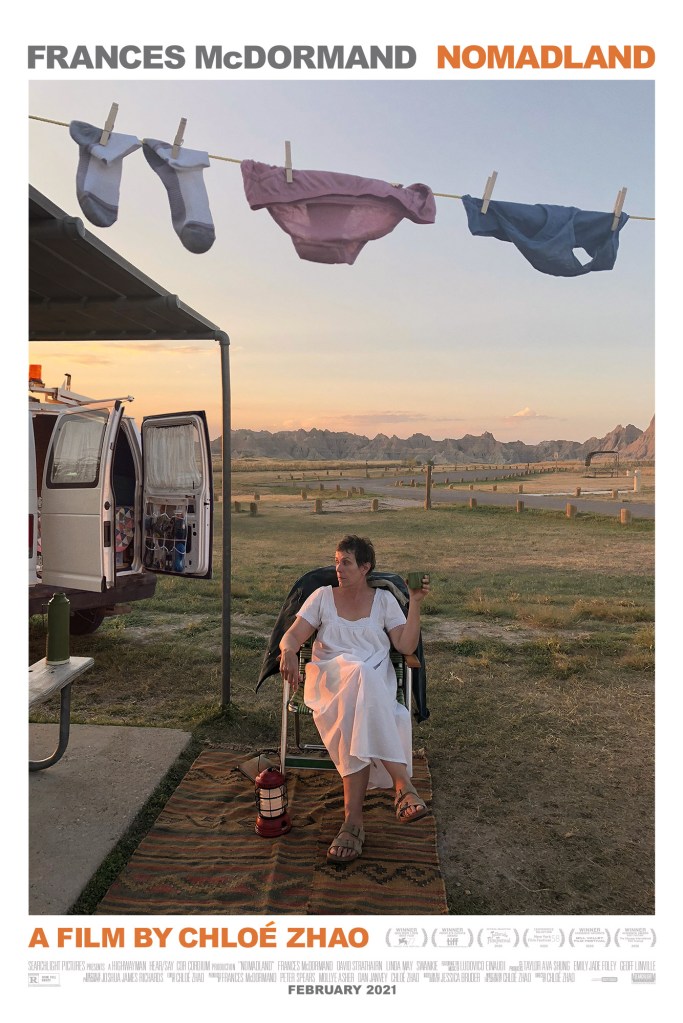
In this adaptation of a memoir about loss and self-discovery, Witherspoon plays Cheryl Strayed who (fairly impulsively) decided to hike the Pacific Crest Trail in 1995 to try to find in herself the woman her late mother “Bobbie” (Laura Dern) believed she could be. After Bobbie’s early death from cancer at 45, Cheryl had collapsed – ruining her marriage to Paul (Thomas Sadoski) in an orgy of anonymous sex and heroin addiction. Now she wants to make a new start.

Adapted by Nick Hornby with a good deal of skill and emotional intelligence, Jean-Marc Vallée’s film is an interesting character study via the survivalist genre, mixed with a touching exploration of grief, loss and self-loathing. After throwing us into Day 26 with that bloodied toe-nail, the film rolls back to follow Cheryl’s walk: intercut with powerful memories of her relationship with her mother, each memory activated by different encounters along the way and bubbling into her mind along with a distinctive soundtrack (most especially Simon and Garfunkal’s El Condor Pasa) that reflects the music that reminds Cheryl of her mother.

It could have been a sentimental finding-yourself movie – Eat, Pray, Hike anyone? (I also rather like Reese Witherspoon Finds Herself in a Backpack) – and I won’t lie, there are elements of that. But maybe it caught me in the right mood, maybe because I’ve always fancied testing myself with an epic hike, but I actually found it intelligent, sensitive and just the right side of sentimental.

Wild carefully avoids simple points. It’s a film not about a long journey leading to revelation, but a journey that helps you accept all your past decisions, right or wrong. There is a pointed lack of emotional breakdowns, tearful confessions or flare ups of self-anger and revelation. Instead, it’s about the long grind of starting an internal journey towards contentment. Because trekking 1,100 miles is the long haul: there ain’t any easy ways out or short cuts on this trek.

The film’s principal asset is Reese Witherspoon. Also serving as producer, Witherspoon is in almost every single frame and delivers an under-played but very emotionally satisfying performance. She plays Cheryl as quietly determined, having already hit rock bottom and knowing every step she takes from now is upwards. She meets adversity – aside from the odd flash of frustration – with a stoic will and finds an increasing spiritual freedom in the wild that serves as an escape from the horrific wilderness of her self-destructive years. But she never lets us forget the pain that underpins this journey for Cheryl. It’s a very impressive performance.

The reminders of that pain are distributed through the film, which unflinchingly chronicles Cheryl’s escape from grief in the arms of a parade of sleazy men, anonymous hotel sex and (finally) shooting up heroin on the streets of San Francisco. It ends her marriage to Paul – but not their friendship, in the sort of adult emotional reaction you hardly ever see in a movie. Paul – played with warmth by Thomas Sadoski – may not be able to continue his marriage after discovering his wife’s parade of trust-breaking, but it doesn’t stop him from helping a person he loves who is in need.

All of this is nicely counterpointed by the hike itself. Naturally it’s all slightly episodic, as Cheryl moves from location to location, but Hornby’s script makes these vignettes really work. Vallée’s direction also does a fantastic job of intercutting between the long walk of 1995, and Cheryl’s memories of both her mother (played with a vibrancy that makes a huge impression from limited screen time by an Oscar-nominated Laura Dern) and her own emotional collapse after her death.

I also appreciated that Wild doesn’t shirk from showing the vulnerability of an attractive young woman hiking alone. Some potential predators are revealed to be the opposite: others are exactly what they appear to be. But not every encounter is one of potential danger: far from it.

Cheryl is met time and again by people who only appear to support, share their expertise and help her in her quest. At an early station, a man talks her through the huge amount of equipment she’s bought and advises what she can leave behind (Vallée opens the film with the strenuous effort, including rolling around on the floor, Cheryl has to go through just to put this backpack on). She finds a touch of romance with a handsome musician (a charming Michel Huisman). There’s also comedy, most of all with Cheryl’s encounter with a self-important journalist (Mo McRae), who won’t be convinced that she isn’t a female hobo.

This is all packaged together in a quiet, un-pretentious way that culminates in a thought-provoking monologue about the value of self-acceptance and putting aside regrets. Others would have layered on the sentiment, but here the balance is just right. With Witherspoon at the top of her game, Wild is a well-made and involving road trip that also makes you think.

The Curious Case of Benjamin Button (2008)

The Curious Case of Benjamin Button (2008)

Ageing, romance and sentiment in Fincher’s handsome shaggy dog story

Director: David Fincher

Cast: Brad Pitt (Benjamin Button), Cate Blanchett (Daisy Fuller), Taraji P Henson (Queenie), Julia Ormond (Caroline Button), Jason Flemyng (Thomas Button), Elias Koteas (Monsieur Gateau), Tilda Swinton (Elizabeth Abbott), Mahershala Ali (Tizzy Weathers), Jared Harris (Captain Mike Clark)

As the eleventh hour of the eleventh day of the eleventh month of 1918 strikes, a baby boy is born. A baby boy unlike any other, with the appearance and illnesses of a very old man. Discarded by his horrified father (Jason Flemyng), the boy is adopted by Queenie (Taraji P Henson), caretaker of a nursing home. There it becomes clear he is growing backwards: the older he gets, the younger he appears. Young Benjamin will eventually grow into Brad Pitt and spend his life watching those around him grow ever older as he grows ever younger. Most joyful, and painful, of all being his childhood friend Daisy (Cate Blanchett), the woman he will love his whole life.

Fincher’s film is a strange beast. A huge technical triumph, that uses cutting edge special effects and astonishing make-up to age – in both directions – Brad Pitt and Cate Blanchett throughout the course of the film (both taken from extreme old age to face-lifted youth), it’s also a whimsical shaggy dog story with elements of a fairy tale that does very little with its astonishing concept other than pepper the script with easily digestible homilies about the purity of the simple life, as if screenwriter Eric Roth was still gorging on the same box of chocolates from which he plucked Forrest Gump.

TCCoBB has a lot going for it: you can see why it was coated with technical Oscars. The ageing and deageing special effects are skilfully and even subtly done, the recreation of a host of periods – from the 1910s to the 1990s and beyond – flawlessly detailed. Claudio Miranda’s photography uses a host of film stocks – from sepia, to scratchy home movie footage style, to luscious technicolour beauty – to reflect time and era constantly. The assemblage of the film has been invested with huge care and attention and, despite its great length, Fincher cuts together (with Kirk Baxter and Angus Wall) an episodic film that manages to keep its momentum and drive going.

Also, it’s a far less vomit-inducing spectacle than the manipulative stylings that coat Forrest Gump. This is in part to Brad Pitt’s restrained and contemplative performance in the lead role: Pitt underplays with surprising effectiveness, capturing Benjamin’s “come what may” attitude and eagerness to go with the flow of the opportunities life offers him. He delivers the narration with an authority just the right side of portentous (for all his rather flat, uninteresting voice) and skilfully manages to invest his body with a physicality quite contrary to his physical appearance (his old body moves with a young man’s casualness, while his younger form carries a slightly world-weary hesitancy).

Benjamin’s mantra becomes one of living your life just as suits you best, not as others expect you to and never worrying about leaving it too late to take chances or make changes. Or at least something like that. To be honest, the weakest part by far of TCCoBB is the lightness and breeziness of its thematic impact. I’ve seen this film three times and, other than a slightly charming shaggy dog story, I’m not quite sure what point it is trying to make – other than straining for a star-cross’d romantic sadness.

This feels like a missed opportunity because there is so much that could be explored here. The film is a nearly unique opportunity to explore how much age – either physical or mental – defines us. A chance to see how our perceptions of a person are shaped as much by what they look like or how they sound, as by who they are. What sort of different perspective on humanity might Benjamin have? How might those around him evaluate, their own lives as they see this him getting younger?

Questions such as these are not touched, the film settling for Benjamin’s whimsical, first-do-no-harm philosophy crossed with a sort of saintly non-interference. The closest it gets to dealing with this is in Benjamin’s friendship and later relationship with Daisy. Old/young Benjamin is told off by Daisy’s grandmother for being a dirty old man, when they first met as children (or old man in his case). Later their lives will drift together and apart, until they form a relationship when both are “the same age” physically. But the film shirks really exploring the implications of this – and outright flees the idea of Benjamin as an increasingly younger man in a romantic relationship with an increasingly older Daisy.

Instead, it settles all too often for easy lessons, comforting parables and charming little vignettes. Benjamin grows up cared for by his adopted mother Queenie (an engaging, if straight forward, performance by Taraji P Henson) – but in the sort of 1920s New Orleans where a racial epithet is never even whispered. He travels the world with Jared Harris’ (rather good) salty sea-dog, falling in love briefly with Tilda Swinton’s lonely champion swimmer turned society wife. He reconnects happily with his father (after all it’s much easier to live a life of free choice if you are the heir to a massive button factory empire). Idyllic 1960s love hits Daisy and Benjamin – a brief shot of a cruise missile taking off is the only reference to those troubled times we see.

It’s all very easy, romantically toned, sweet and easily digestible. Even writing it down highlights how these are charming, eccentrically tinged, vignettes. All events and experiences come together with a vague “lessons learned” impact, as old Benjamin regresses into a teenager, a child and then an infant. But it could have been so much more. A real study of what makes us human, a real look at how events and perspectives define us. It isn’t. Heck, other than watching Pitt travel handsomely around the world on a motorbike in a late montage, we don’t really get much of a sense of how being young/old may impact him.

Which isn’t to say it’s not enjoyable. It all proceeds with a great deal of charm and love, much of which has clearly been invested in every inch of its making. The acting from (and chemistry between) Pitt and Blanchett is very effective. But it feels like a slightly missed opportunity, a film that settles for being a warm, reassuring cuddle when it could have sat you down and helped you understand your life. For all its slight air of importance, it’s a crowd-pleasing, if slightly sentimental, film.

Mothering Sunday (2021)

Mothering Sunday (2021)

Arthouse flourishes and trickery drown this try-hard literary adaptation

Director: Eva Husson

Cast: Odessa Young (Jane Fairchild), Josh O’Connor (Paul Sheringham), Sope Dirisu (Donald), Olivia Colman (Mrs Niven), Colin Firth (Mr Niven), Glenda Jackson (Older Jane Fairchild), Patsy Ferran (Milly), Emma D’Arcy (Emma Hobday)

Based on an award-winning novel by Graham Swift, Mothering Sunday is mostly set on a single day: March 30th 1924. Jane Fairchild (Odessa Young) is the maid of the Nivens (Colin Firth and Olivia Colman), both of whose sons died in the Great War. The only surviving son of their close social circle is Paul Sheringham (Josh O’Connor), who has been conducting a secret sexual affair with Jane for several years. On this fateful day, Paul sneaks away from his fiancée (who was originally to marry the Nivens’ deceased son, James) for a tryst with Jane. The tragic after-effects will shape Jane’s future life. This is intercut throughout the film as she deals with the illness years later of her lover, philosopher Donald (Sope Dirisu).

Mothering Sunday is a proud, in fact a little too proud, art-house film. It takes an intricate, well structured and delicate novel by Swift and piles on the technique to try and wring as much meaning from the piece as possible. In doing so, Husson drowns a simple story in cinematic tools. Skilful cutting, intriguing shots, rich layered music, artful compositions, juddering intercutting between timelines, repeated shots and symbolic compositions eventually give an impression of a film trying too hard to impress.

It’s a story that would have carried a world more impact if it had been told with simple directness, where stylistic flourishes felt natural rather than exploited at every conceivable opportunity. Instead of moving though, the film eventually becomes tiring and the pointed dynamism of the film’s making gets in the way of the emotion. As we are cut away from moments of emotion, or the dialogue tries too hard to capture the complexity of Swift’s writing (as my wife put it, “there is a lot of talk about jizz”), we are constantly prevented from encountering the quiet emotion and unspoken devastation that should be at the heart of this simple-but-shattering story.

Even when Olivia Colman’s character – in her only real scene – is heart-rendingly confessing her pain at the loss of her children and her envy of Jane for her orphan status (she has no one to lose), Husson’s camera seems at least as interested in making you admire the fiddily mirror-based tracking shot she is using to shoot it. It is far more impactful and graceful when it sits still: for example moments like Colin Firth’s well judged performance of deeply repressed grief and pain, which expresses itself in very British banalities about the weather and doing-the-decent-thing.

Which isn’t to say that Mothering Sunday is a bad film, or that there aren’t moments of deeply impressive film-making. A dashboard-mounted camera that follows Jane’s disguised torment as she is driven to the scene of disaster is memorable, and there are beautiful shots like an aerial shot lingering over a fire in a forest that haunt the imagination. The film has a haunting quality to it, like a half-memory that flits from clear picture to clear picture via hazy recollection. But all this style swamps the impact. The film never has the patience to sit down and let us get involved in its story properly. Or really tackle how lasting the impact of loss – particularly the generational loss of the 1910s – had on families and, by extension, the whole country.

Mothering Sunday’s main successful feature is the hugely impressive performance from Australian actress Odessa Young. Not only is her accent faultless, but Young has a poetic romanticism in here that sits equally alongside an old soul within a young body. Much of the film is dependent on her micro-reactions to moments of life-changing sorrow and joy. She spends a large chunk of the film naked (as required by the source material – although this is also another tiresome sign of the film’s overly proud ‘arthouse’ badge) – but imbues this with a bohemian freeness that suggests it’s the only time, released from the shackles of her work clothes, that she feels truly free. She carries almost the whole film and does so with a consummate, compelling ease.

There are fine performances as well from Josh O’Connor – channelling Prince Charles somewhat – as a conflicted man, crushed by the burden of carrying the expectations for a whole generation, and Sope Dirisu (in a rather thankless role) as Jane’s later philosopher lover. Glenda Jackson contributes a neat cameo as a Doris Lessing-like older Jane, now a hugely successful novelist, reacting just like she did to the winning of the “major international prize” for literature.

But the overall film never quite manages to carry the impact it should. It should leave you consumed with the sadness and waste of early death and the destruction that comes from war. Instead, you will remember more the pyrotechnical invention of its making – and the wonderful score by Morgan Kibby – rather than any heart or sense of tragedy.