Category: Films about mental health

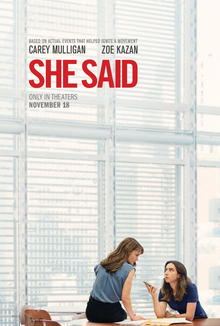
She Said (2022)

She Said (2022)

Earnest, well-meaning but not entirely dramatic recounting of the New York Times investigation into Weinstein

Director: Maria Schrader

Cast: Carey Mulligan (Megan Twohey), Zoe Kazan (Jodi Kantor), Patricia Clarkson (Rebecca Corbett), Andre Braugher (Dean Baquet), Jennifer Ehle (Laura Madden), Samantha Morton (Zelda Perkins), Ashley Judd (Herself), Zach Grenier (Irwn Reiter), Peter Friedman (Lanny Davis), Angela Yeoh (Rowena Chiu)

In 2017, the New York Times published revelations about Miramax kingpin Harvey Weinstein that shocked the world. Weinstein had used his position to force his sexual attentions on anyone from aspiring actresses to employees, with a rap sheet of crimes ranging from gropes to rape. It shook Hollywood to its core. She Said is the dramatization of the investigation carried out by reporters Jodi Kantor (Zoe Kazan) and Megan Twohey (Carey Mulligan) who sought out the victims, won their trust and pushed the story through despite threats of legal action.

She Said is a worthy, well-meaning film. It has moments of genuine power and its recreation of the testimony of the victims is tragic and heart-rending. But yet… I didn’t find it dramatic. I was left wondering, why did this true story of journalistic tenacity not carry the same impact as Spotlight or All the President’s Men?

Perhaps it’s because the film doesn’t really cover this story as an investigation. There isn’t the sense of facts slowly emerging to form a horrifying picture, or one small incident ballooning into an earth-shattering scandal. Instead, Twohey and Kantor are certain they have the basic facts from the start, with the film being instead a reveal of how many cases there are, rather than an expose of a wrong. While this is still important, it isn’t necessarily always dramatic and, eventually, She Said starts to feel every minute of its two-hour-plus run time.

The real focus of the film probably should have been the journalists’ determined work to win the trust of the principal witnesses – in particular Jennifer Ehle’s Laura Madden, whose whole life has been partially in the shadow of Weinstein’s assault in the 90s. Kantor – played with an empathetic richness by Zoe Kazan – worked night and day to encourage these women to bring their stories to the public. Instead, the film gets distracted with trying to cover too much, both the famous and the unknown victims, and the peripheral presence of Rose McGowan, Gwyneth Paltrow and Ashley Judd (playing herself) unbalance the movie away from the difficult, challenging – but more dramatically rewarding – work exploring office workers called into meetings to “massage” their gross boss.

It’s a shame the focus gets pulled away from these unknown women, who were little more than teenagers when Weinstein abused them in the 90s, since the sequences where they tell their stories are the ones that carry the most impact. There are superb cameo appearances from a trio of great actors. Ehle is superb as a woman resigned to trying to put things behind her, Morton brilliant as another prickling with rage and resentment, and Yeoh very good as a woman who never really managed to process her trauma. The careful, respectful, but deeply sad recounting of these women’s experiences by this trio are the film’s highlights.

Too much of the rest of the film gets bogged down in editorial procedure and the flat collecting of facts. It’s a bad sign when the film has to continuously state the “danger” the characters are facing while investigating and how every wall has ears. While Weinstein was a horrible man, terrifyingly powerful within his industry, I find it a stretch when (unchallenged) a character fears Weinstein will have him killed. I can’t see Weinstein hiring a hitman or utilising the sort of espionage techniques that would make the FBI jealous.

The film also struggles to get to grips with the depressing limits to any struggle for justice in the field of sexual harassment and assault. It starts by depicting Twohey’s investigation into Trump’s “locker room” pussy-grabbing “banter”, which peters out into a total failure to have any real impact at all. While the film suggests this as a motivating factor for the journalists to “get it right” this time, it doesn’t seem to acknowledge the limits of #metoo. It’s clearly very different to get Hollywood to clean out its house, compared to taking on someone with real power. Equally, the film gives no space to attempting to understand why Lisa Bloom, who represented victims of Bill O’Reilly and Trump, went to town defending Weinstein. There are interesting topics to explore here, but She Said wants to simplify its narrative down to goodies and baddies.

Time is also given over to the journalist’s home lives, none of which adds much to the overall narrative. Kantor’s relationship with a 10-year-old daughter just beginning to understand words like “rape” never quite solidifies into a thematic motivator. Twohey’s struggles with post-natal depression are bravely raised, but effectively disappear from the film (which makes me feel even a feminist film is squeamish about saying anything except motherhood is the dream for all women).

The final arc gets equally slightly bogged down in the fact-checking procedure. At times, the film has a little too much of a documentary feel, as if drama might have got in the way of the message. Despite this, there are some very good performances, with Kazan and Mulligan concealing mounting outrage under professional, dispassionate cool (Mulligan gets an outburst at a harassing bar patron, which does feel like too much of a “for your consideration” moment), even if we get little sense of who they are as people.

She Said is a very worthy look at a seismic news story, which never quite translates its coverage of impactful events into a truly compelling narrative.

Aftersun (2022)

Aftersun (2022)

Memory fails to give the information needed in this striking, thought-provoking debut

Director: Charlotte Wells

Cast: Paul Mescal (Calum), Frankie Corio (Sophie), Celia Rowlson-Hall (Adult Sophie), Brooklyn Toulson (Michael), Sally Messham (Belinda), Spike Fearn (Olly), Harry Perdios (Toby)

Memories resemble half-remembered dreams more than we like to think. No matter how hard we try, we are always constrained in what recollect: if we didn’t notice or understand it at the time, trying to remember every detail of an event can be like trying to assemble a jigsaw using the final picture and many blank pieces. It’s a core theme from Charlotte Well’s fascinating, thought-provoking, debut picture, a fictional memory piece unlike anything else.

In the late 90s, 31-year-old Calum (Paul Mescal) and his 11-year-old daughter Sophie (Frankie Corio), go on a package holiday to Turkey. For Sophie, this was an exciting holiday of a lifetime. But, looking back on the holiday decades later, the now 31-year Sophie (Celia Rowlson-Hall) knows something was wrong. Her father was a far more fragile, delicate man than her 11-year-old self could hope to realise. But her attempt to understand this will be forever restricted by her memories and the few camcorder films she has of the holiday.

Well’s film is both a challenging, intriguing musing on the nature and unknowability of memories, and a superb presentation of a loving father-and-daughter relationship. What it doesn’t give you at any points are easy or obvious answers. There are no revelations, no breakthroughs, no sudden dramatic recollections that reposition everything. There isn’t even a confirmation of what exactly happened to the father after 11-year-old Sophie flew back home to her mother. There is a sense of unease throughout, which plays against the childhood joy in many of the scenes. We know something is amiss. But this isn’t about adult Sophie trying to solve a puzzle: it’s clear she never will. She can assemble the jigsaw, using the final picture, but the blank pieces will always remain blank.

To film this, Wells (with great confidence and skill for a first-time director) uses a number of unshowy but intelligent camera angles and film stocks. The film opens with home recordings, before images rewind and granulate before our eyes. Reflecting how memories are never quite what we need them to be, but are reliant on what we were focusing our attention on at the time, the film frequently concentrates visually on the wrong things while important events happen just out of shot.

That opening camcorder scene sees Calum, with weary firmness, asking Sophie to turn off the camera rather than answer questions about where he wanted his life to be now when he was 11. When we reach this moment again in the film’s flashback structure (which we now realise is crucial to understanding Calum’s depression and feelings of inadequacy), the film is constrained by what Sophie was focusing on at the time. So, we focus rigidly on the small television in the hotel room Sophie was playing her recording on, meaning we only see events in the room on hazy TV-screen reflections and the small part of the mirror visible on screen.

This recurs throughout. We focus on character’s legs or the skydivers floating down the Turkish sky (the activity Sophie wanted to do that Calum ruled out because she was too young). A polaroid picture slowly developing on the table during their meal together on the final night. Other scenes that had a strong impact on a child play out full screen: her encounters with a group of older children who play pool with her. Her first flirtation with a boy her own age, that ends with a kiss (though she ‘remembers’ more clearly other children hammering on the roof above them).

Above all, she has many clear memories of her father. Aftersun is a beautiful depiction of a loving relationship between father and daughter. Sophie remembers clearly the shared jokes (mocking a tour guide, mucking around in a pool). She remembers the insistence her father tried to teach her self-defence moves, the way he carefully applied her sun cream, the night they threw bread rolls and ran away from a tour guide concert, teaching her his tai chi moves while she playfully imitated him. It’s a warm, intimate, extremely genuine relationship superbly bought to life.

But she also remembers harsher moments. The times her father would go quiet. The way he wouldn’t tell her how he broke his arm (he wears a cast for the first few days of their holiday). The moment he adamantly refuses to sing karaoke with her on stage – and her stubborn insistence to perform REM alone – before he passes out in their hotel room, leaving her locked out. Flashes of silence or ennui which he tried to hide from her, but she can just about understand now.

And it’s clearer to us, not least from the brilliance of Paul Mescal’s performance. Few actors can convey such deep, gut-wrenching pain and emotional turbulence under a confident exterior. Mescal looks like a happy-go-lucky guy, but every movement is tinged with an unknowable sadness. At times he seems crushed. It’s clear he’s working overtime to (largely successfully) hide this from his daughter. But still he’ll talk briefly about his own unhappy childhood, marvel that reaching 30 was “hard enough” when someone asks what he will do at 40, talks about future plans he doesn’t seem to quite believe in and uses tai chi and meditation to suppress some deep emotional trauma.

Adult Sophie – and the film – can only imagine what he might be going through, or what caused this spiritual crisis. Wells throws in scenes of Calum alone, which clearly can’t be memories (Sophie isn’t there) – are these Sophie’s imaginations and interpolations? Her attempts to fill in the gaps? Is she imagining her father walking alone through the streets at night, or weeping uncontrollably in his hotel room after she leaves? Is this her attempt to fill the gaps, just as a conversation where Calum assures Sophie she can always talk to him about anything is played in long shot, like Sophie remembers it but didn’t realise its importance at the time.

There is a recurring visual intercut of the adult Sophie watching what looks like an unaged Calum dancing in a club, strobe lighting only intermittently lighting his face. The film’s emotional closing moments, cut to Bowie and Queen’s Under Pressure, finally help us to understand what we might be seeing here, the closest thing to a reveal (unveiled during a virtuoso rotating transition shot which takes us through multiple locations and timelines in a single fluid movement) the film has.

At the centre of much of this is an extraordinary performance from Frankie Corio as Sophie, a precociously talented child who gets a perfect balance between understanding and ignorance, and brilliantly communicates that age when children are starting to form independent character and interests away from their parents.

Aftersun is a thought-provoking, dynamic and challenging piece of cinema, that lingered with me for days after seeing it. Sad but also strangely joyous at times, acted with perfection, it marks Wells as a talent to watch.

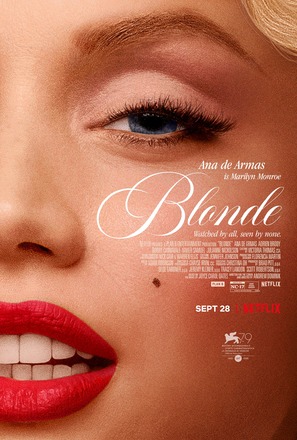
Blonde (2022)

Blonde (2022)

Exploitative biopic of Marilyn Monroe that doubles down on misery, discomfort and leaves you feeling rather like a Peeping Tom

Director: Andrew Dominik

Cast: Ana de Armas (Norma Jeane Mortenson/Marilyn Monroe), Adrien Brody (The Playwright), Bobby Cannavale (Ex-Athlete), Xavier Samuel (Cass Chaplin), Julianne Nicholson (Gladys Pearl Baker), Evan Williams (Edward G Robinson Jnr), Toby Huss (Whitey), David Warshofsky (Mr Z), Caspar Phillipson (Mr President), Dan Butler (IE Shinn), Sara Paxton (Miss Flynn)

Few icons had such cultural impact in the 20th century as Marilyn Monroe. Maybe Elvis – coincidentally also the subject of a 2022 biopic. Even people who have never seen a Monroe film can impersonate her or knows about that dress being blown up around her. It’s also pretty widely know she had a difficult life, troubled family and some disastrous marriages culminating in her tragically early death from an overdose. Blonde, based on a novel by Joyce Carol Oates, dives into a heavily fictionalised account of Monroe’s life, focusing overwhelmingly on anything that could be seen as miserable, shocking and traumatic to the exclusion of almost everything else.

In doing so it’s hard not to think that, for all its attempts to shine a light on the difficulties of Monroe’s life, it’s not also partly exploiting her as well, turning her into a sort of misery porn entertainment. Over the course of nearly three hours, we see her raped at least three times, beaten, fall victim to elaborate revenge plots, forced through two blood-soaked abortions, pumped full of drugs to get her through film shoots and constantly at the centre of slavering piles of male filmgoers who scream for her attention and call her a whore the second she walks past. To say Blonde is a miserable film that’s tough to watch is putting it lightly.

Why does Marilyn put herself through it? The film offers no real answers, beyond the simplest, crudest flashes of pop-psychology possible: Daddy issues. Growing up not knowing who her father is, Marilyn’s life is a quest to find either her father or an acceptable substitute. That could be the audience, the husbands she calls “Daddy” or the hope that the person claiming to be her father who sends her a letters, might one day meet her. This is about as far as the insight goes. How issues influenced her choices and decisions is left frustratingly untold.

The film skims over the creative control she gained over her movies, the production company she set up and her skill as comic actor (it focuses much more on her dramatic Actor’s Studio work). It never once tries to understand why she continues in a career she hates so much – she had plenty of chances, even in this film, to back out – or what lured her to the silver screen and a quest for superstardom in the first place. It’s as if acknowledging Monroe worked hard to get her career would undermine the victimhood the film is determined to define her with.
The film suggests “Marilyn Monroe” is a persona put on by Norma Jean. This is another crude piece of psychology. We completely skip the years Norma Jean must have spent creating this persona and we never learn what influences it or get an understanding of “who” this Marilyn is. I suppose it’s “Marilyn” who smiles at film premieres or appears on screen: but we get little sense of how Norma Jean might have used this alternative persona to get her through the day. For all the time we spend with her, we never understand her beyond someone desperate for love with severe Daddy issues.

The film is so clumsily mishandled, its makers were reduced to stating it was not intended as an anti-abortion movie. This despite both abortions being horrifying experiences (one with a drugged Marilyn begging that she’s changed her mind, the other a late blood-soaked possible-fantasy where Marilyn is kidnapped has an implied Kennedy baby removed). Worse than this, the film Marilyn hammers home Marilyn’s sense of guilt. During her first abortion she imagines herself in a house burning down around her and later imagines a conversation with a giant foetus, which asks “Mummy why did you kill me?” and begs her not to do the same for her future babies. Not exactly the sort of messaging you expect from a #metoo film.

On top of this, Blonde is a film almost unbearably pleased with itself. This is Art with a capital A, R and T. Dominik shifts from colour to black-and-white, changes film stock and constantly shifts and changes the aspect ratio from shot-to-shot. In almost three hours, only once could I see any logic in this: as Marilyn agrees to marry Joe DiMaggio, the frame closes in on her from 2.35:1 to 4:3, a neat visual metaphor for the constricting marriage she has signed up for. Other than that, there is no rhyme or reason for any of these visual changes in the film. It doesn’t comment on the action, reflect emotional beats, delineate between reality or fantasy… it just smacks of an overindulged director using all the flashy tools for the sake of it. It becomes intensely irritating.

There is a committed lead performance from Ana de Armas (even if her Cuban accent does sneak through), who captures beautifully Monroe’s physical and vocal traits and sells what emotional titbits she is given in the salacious, muck-raking framing of the film. Her traumatic relationship with her disturbed mother, a sex-filled thruple with Hollywood princes Cass Chaplin and Eddy Robinson Jnr, raped by Darryl F Zanuck and a surprisingly-vile John Kennedy (while a TV in the background shows missiles rising – boom boom), knocked about by a jealous Joe DiMaggio (in real life he remined close to her and organised her funeral, but hey ho)… it’s all meant to be shocking but it’s all dialled up with glee of a two-bit muck-rag, flogging the hot goss.

That’s standard for the whole film, a flashy, pleased-with-itself epic that focuses on misery and pain for its subject at the cost of everything else and ends up telling us very little about her or her inner life, instead leaving us feel slightly like peeping toms for watching.

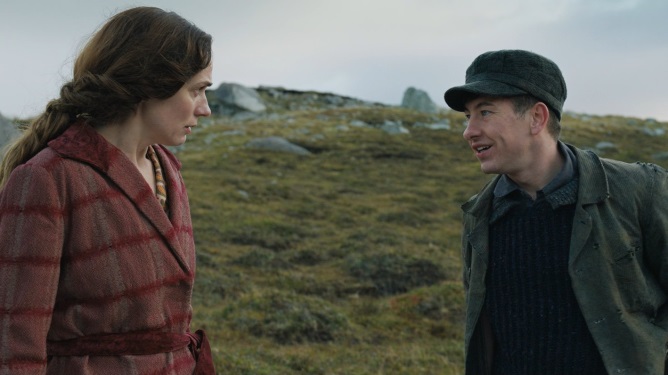
The Banshees of Inisherin (2022)

The Banshees of Inisherin (2022)

Director: Martin McDonagh

Cast: Colin Farrell (Pádraic Súilleabháin), Brendan Gleeson (Colm Doherty), Kerry Condon (Siobhan Súilleabháin), Barry Keoghan (Dominic Kearney), Pat Shortt (Jonjo Devine), Jon Kenny (Gerry), Brid Ni Neachtain (Mrs O’Riordan), Gary Lydon (Paedar Kearney), Aaron Monaghan (Declan), Shelia Fitton (Mrs McCormick), David Pearse (Priest)

Pádraic (Colin Farrell) and Colm (Brendan Gleeson) are life-long friends on the small Irish island of Inisherin. Until one day, in 1923, Colm bluntly says he won’t speak to Pádraic again as “I just don’t like ya no more”. What on earth has led to this seemingly permanent severance? Did Pádraic do something wrong? The torment of not knowing will create a huge strain on Padraic, who prides himself on “being nice” and can’t understand why the older Colm doesn’t want to chat him. Just as Colm can’t understand why Pádraic can’t leave him alone, especially as he is almost universally agreed to be dull. Eventually this blunt stop to a friendship swiftly escalates out of all control.

McDonagh’s film is packed with the scintillating dialogue you would expect, and he combines it with an intriguing, tragedy-tinged character study where two sympathetic characters tip themselves into destruction through the unwillingness of either of them to compromise. It’s no coincidence that the film is set during the Irish Civil War. Cut off from the mainland on their tranquil island (where life feels like it hasn’t changed for the best part of 100 years), the characters are disturbed from their own civil war, every now and again, by the sound of gunfire and explosions from the mainland. The Banshees of Inisherin can be seen as a commentary on civil wars: don’t they all start, essentially, from someone deciding they have had enough and “just don’t like ya” anymore?

This marvellously rich film boils down a whole country tearing itself apart over what sort of future it wants, into one personal clash over two people’s future. The future increasingly obsesses Colm, a man preoccupied with mortality (who assumes his life can now be counted in years rather than decades), suffering from depression, worried he will disappear leaving no mark. A talented fiddle player, he wants to be like Mozart, remembered decades later – and he can’t do that wasting time every day for hours on end listening to Pádraic talking about his “wee donkey’s shite”.

It’s a perspective on the future, that Pádraic just can’t understand. For him, what does it matter what people you’ll never meet think about you? What matters to him is that the people around him like him and remember him as a “nice fella”. Not in a million years does legacy occur to him: the familiarity of everyday being the same is the most comforting thing, and change a horrific and terrifying thing to be avoided as much as possible.

You can see all this instantly in Colin Farrell’s heart-rending performance as this gentle, fragile but unimaginative soul, heart-broken at the inexplicable loss of his best friend. The film is a striking reminder that, contrary to his looks, Farrell’s best work is in embodying lost souls, the sort of people never ready for the life’s hurdles. Pádraic certainly isn’t, and his attempt to process what has happened defeats him. A man who considers his pet goat his next best friend and is as reliant as a child on his sister, doesn’t have the ability to understand what Colm is driving at about mortality, assuming instead he will stumble across the right words to be welcomed back into Colm’s company. He becomes the unstoppable object, trying to batter down Colm’s wall of silence.

He’s onto a losing battle, as Colm reveals himself to be – either due to his depression or his just not caring any more – the immovable force. Wonderfully played with a tinge of sadness and a depression-induced monomania, by Brendan Gleeson, Colm is a decent guy in many ways but fails to appreciate or consider the effect his actions will have on others. Instead he is focused on achieving at least something notable from his life. It leads to dramatic steps to drive Pádraic away, Colm threatening to cut off one of his fiddle playing fingers every time Pádraic bothers him, a threat he transpires to be more than willing to carry out.

And so civil war breaks out. As well as the parallels with Ireland’s war, I also felt strong echoes of our own poisoned social-media discourse. By his own lights, Colm believes his sudden severing of contact with Pádraic is perfectly reasonable. Many people who have “ghosted” others no doubt feel the same. Colm is reasonable when he explains it, and he still steps in with silent acts of comfort and support when Pádraic falls foul of the island’s brutish police office. But he never considers the traumatic impact this unexplained change will have on Pádraic – or how flashes of kindness can be as cruel as hours of non-acknowledgement.

Radicalism, in civil war and social media, quickly takes hold. What else can you call Colm’s threat to slice off his own fingers (the fingers he needs to live his dream of fiddle-playing legacy)? Just like people blowing hard on Twitter, he needs to deliver or lose face. Pádraic makes angry, passionate condemnations of Colm in the pub, like he’s posting rants online. Things escalate to a point where no-one feels they can step away or backdown.

That’s the tragedy McDonagh identifies here. This one decision of Colm’s – no matter the motives – ends up having disastrous effects on both men. Pádraic changes from a gentle soul to someone capable of wrathful fury and lifelong grudges. Colm literally disfigures himself, guaranteeing he will never achieve the very thing he started this for. Could there be a better parable for the destructive nature of civil combat? Neither Colm or Pádraic are willing to compromise: what if Colm said he would only see Pádraic once or twice a week, eh? Just like Ireland, they burn the world down.

This all takes place in a rich framework, with McDonagh skilfully working in clever, challenging sub-plots. The legend of the banshee, who foretold death and enjoyed watching destruction, is woven throughout, embodied by the sinister Mrs McCormick (a ghostly Shelia Fitton). The most forward-looking person on the island is Pádraic’s sister Siobhan – brilliantly played by Kerry Condon – who finds herself wondering why on earth she stays in such a self-destructive small-world. Barry Keoghan (also superb) plays the universally acknowledged village dunce, who (if you stop and listen to him) quotes French and poetry and (for all his crudeness and lack of social graces) is clearly a man stunted under the heel of his abusive father, the village policeman.

As events escalate and rush out of control – McDonagh’s pacing is very effective here – the film slows for carefully judged moments of emotional power, from the burial of a beloved pet to a character weeping in bed at the painful choices that must be made. McDonagh has created a powerful universal metaphor for the dangers of extreme, definitive choices and a total rejection of compromise by boiling it down to the smallest scale possible.

And your sympathies ebb and flow, due to the beautiful performances from its leads. Farrell is heartbreaking, a memory you carry as he becomes more vengeful. Gleeson is coldly reasonable, even as we grow to understand his crushing sense of mortality and character-altering depression. These two actors power an intelligent and thought-provoking film that achieves a huge amount with subtle and rewarding brushstrokes.

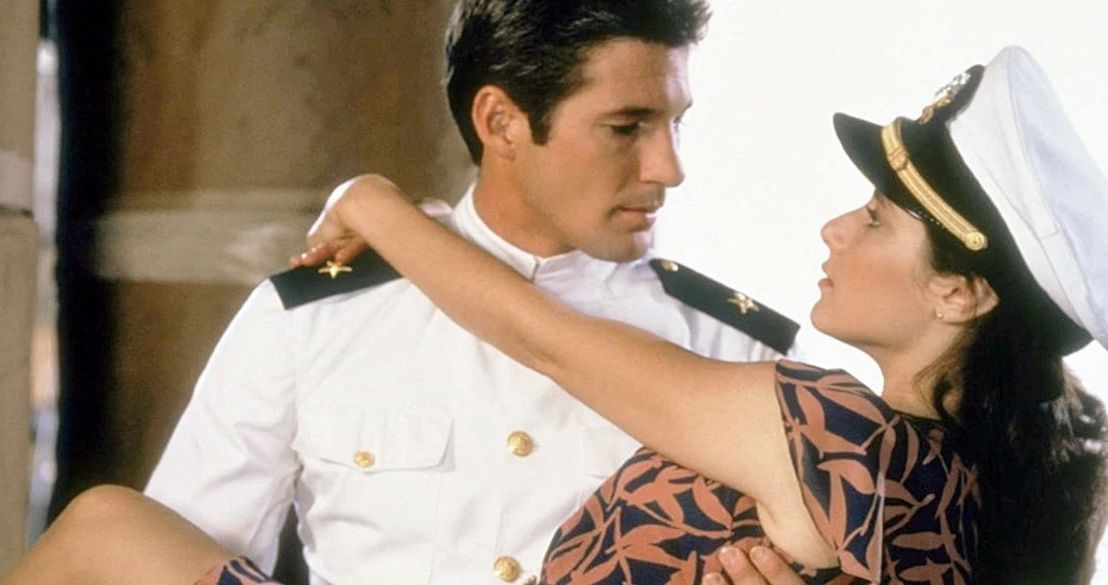
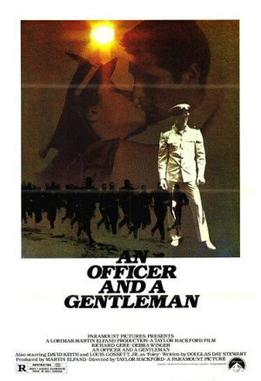
An Officer and a Gentleman (1982)

An Officer and a Gentleman (1982)

Classic 80s romance? Or is it, in fact, a searing kitchen-sink drama about class and depression? One of the great mis-remembered films of all time

Director: Taylor Hackford

Cast: Richard Gere (Zach Mayo), Debra Winger (Paula Pokrifki), Louis Gossett Jnr (Gunnery Sergeant Emil Foley), David Keith (Sid Worley), Lisa Blount (Lynette Pomeroy), Robert Loggia (Byron Mayo), Lisa Elbacher (Casey Seeger), Tony Plana (Emiliano Santos Della Serra), Harold Sylvester (Lionel Perryman), David Caruso (Topper Daniels)

An Officer and Gentleman is remembered as a sweep-you-off-your-feet romance, with power-ballads underplaying attractive Hollywood stars passionately proclaiming their love. It ain’t anything like that. This proto-Top Gun – a film it has strong similarities to in structure and design – is actually a kitchen-sink drama masquerading as a feelgood movie, with a final romantic image and “Up Where We Belong” leaving a deceptive memory behind. Where Top Gun is loud, brash and fundamentally reassuring and straight-forward, An Officer and a Gentleman is jagged, surprisingly difficult and unsettling. Put it this way: Tom Cruise doesn’t call anyone the c-bomb in Top Gun.

Zach Mayo (one of Richard Gere’s legendary performances, the memory of which guided much of the rest of his career far more than its reality) is a Navy-brat determined to be nothing like his alcoholic, whoring dad (Robert Loggia). He’s going to graduate from Naval Flight Candidate school and become “an officer and a gentleman”. Zach is a damaged soul, defensive, closed-off and selfish, a smarmy, cruel loner interested only in what he can get out of any relationship. The film is about whether Zach will learn to become a sympathetic, caring person, rather than a resentful douche.

There are three influences that might just change him. Firstly, fellow trainee Sid (David Keith), from a Naval officer family, attending because his deceased brother can’t. The second is training officer and uncompromising disciplinarian Sgt Emil Foley (Louis Gossett Jnr). And, finally, factory worker Paula (Debra Winger), one of the local women officer candidates are warned are intent on bagging a husband by fair or foul. Each will play a different role in making Zach a fully rounded person.

Hackford’s film is a tough, hardened one that takes a long hard look at mental health, guilt, suicide, parental resentment and a host of other complex issues. Any romantic moment is matched with one of pain, fury or characters doubled over with guilt and shame. It dives deep into its flawed hero and shows how someone can, almost unwittingly, be reconstructed into something warmer. It does all this in grimy, scruffy settings with characters making desperate choices motivated by poverty and lack of choices.

It opens with a shaggy-haired, scruffy Gere starring into a mirror in a dark motel room while his father is passed out in bed with two prostitutes. We are constantly reminded of Zach’s working-class background, his life growing up trailing behind his (largely indifferent) father after the suicide of his mother, left to fend for himself in the rough and tumble of the Philippine streets. At naval school, the same chippy resentment of how people perceive his roots persists – along with the lessons he has spent his whole life learning: that he should count on no-one but himself.

Zach doesn’t believe he’s worth loving. Facing abandonment issues (of different kinds) from both his parents, he doesn’t give a toss about anyone and expects them to feel the same. He sets up a grift selling pre-polished buckles and boots to his fellow candidates, only helping them for a price. He completes exercises alone, cheats in aeronautical class, and gloats as he passes anyone on physical trials. When dating Paula, he frequently retreats into cold rudeness when conversation turns to anything emotional, and repeatedly claims he wants nothing more than a bit of fun. It all stems – as Paula realises – from a defensive hostility, pushing people away before they can leave him.

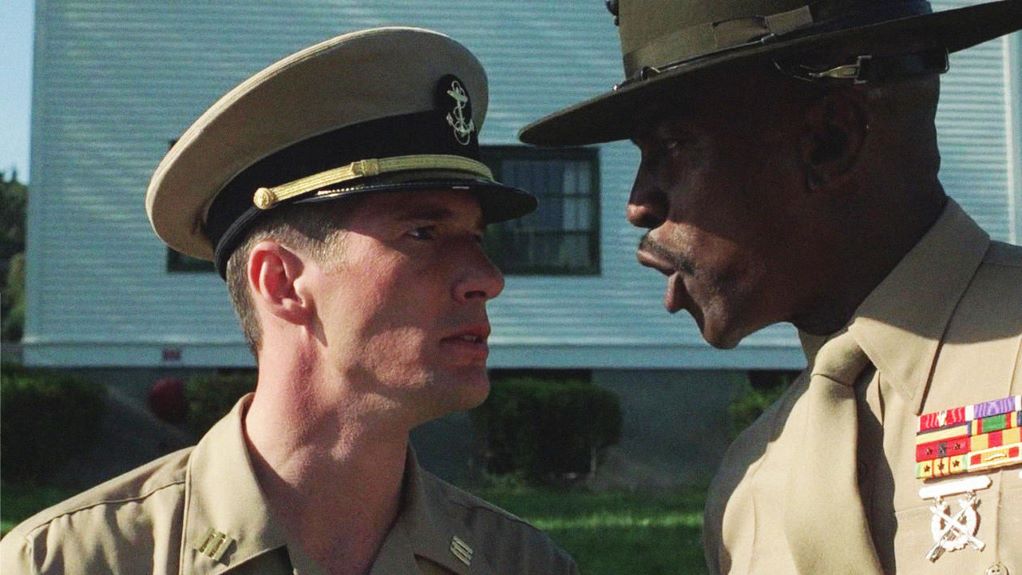
His lack of team-playing is identified early by Foley as his Achilles heel. Louis Gossett Jnr won an Oscar for his impressively nuanced work here. At first Foley seems an almost unbelievably horrible man, a bully dropping racist and homophobic slurs with casual ease, who makes it his mission to drive his candidates out of the programme (right down to bragging that he chisels a mark on his swivel stick whenever another one drops out).

However, Hackford and Gossett Jnr skilfully show this is, to a degree, a show: Foley is tough because the military is tough, and deep down he does care. Candidates slowly earn his respect (female candidate Seeger may fail to climb a wall, but goddamn he respects her guts) and he quietly goes to great lengths to support them. Foley’s act is intended to get them to excel – and he’ll be proud of them when they do, just as they will be grateful to him. The strength of Gossett Jnr’s performance mean his scenes dominate the narrative (at the cost of the romance), but this is to the film’s benefit.

Interestingly, that romance is often the least effective part of the film. Gere and Winger have fine chemistry (despite, allegedly, not getting on) but the narrative often takes sudden time jumps. From one scene to another they’ll go from together to split up, and the film never quite manages to show us naturally how this is changing Zach. Instead, it frequently stops to tell us this, with on-the-nose conversations. Winger is good, but the relationship feels forced – as if it a film couldn’t exist without a romance, when actually Paula could be removed altogether and it wouldn’t really change the film.

It’s forced perhaps because what really feels like it changes Zach is the friendship with Sid. Played very well by a sensitive David Keith, Sid is everything Zach is not. Confident, happy to help others, a natural leader and team player. Under the surface he isn’t – doubtful and insecure – but the friendship between them is the spark that changes Zach. Sid is, much like Goose in Top Gun, the sacrificial pal, but this sacrifice promotes real growth in Zach. The parallel romance between Sid and gold-digger Lynette (a fine Lisa Blount) is also an effective commentary on Zach and Paula, both characters being mirror images of the leads.

The film culminates in that romantic sweep-you-off-your-feet moment in the factory: but that feels like it belongs in a different film than the hard-boiled one we’ve been watching of a man confronting his fear of failure and lack of self-worth. Gere, by the way, is very good as Zach – his smirk a defensive screen for a host of psychological problems (few actors would have been willing to be as unlikeable as Gere is here). An Officer and a Gentleman is really a character study in working-class resentments, but somehow is mis-remembered as the quintessential 80s romance. It truly isn’t. Instead Hackford’s film – flawed as it is – is smarter and pricklier than that.

A Single Man (2009)

A Single Man (2009)

Grief is at the heart of this moving, beautifully made debut from Tom Ford

Director: Tom Ford

Cast: Colin Firth (George Falconer), Julianne Moore (Charley Roberts), Nicholas Hoult (Kenny Potter), Matthew Goode (Jim), Jon Kortajarena (Carlos), Paulette Lamori (Alva), Ryan Simpkins (Jennifer Strunk), Ginnifer Goodwin (Mrs Strunk), Teddy Sears (Mr Strunk), Lee Pace (Grant Lefanu)

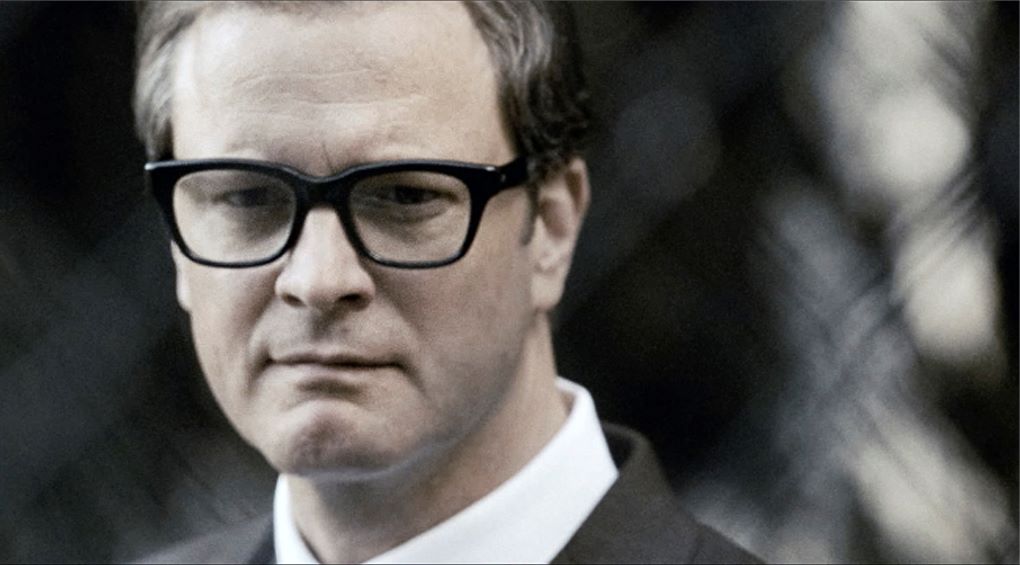
Grief is like a gaping wound that never heals. It’s an unbearable burden LA-based English professor George Falconer (Colin Firth) can’t bear any longer. Distraught after the death of his partner of sixteen years Jim (Matthew Goode), George decides November 30th 1962 will be the last day of his life. He will spend the day putting his affairs in order, soaking up the isolated intensity of moments, have dinner at his oldest friend Charley’s (Julianne Moore) house, then take his life. Adapted from Christopher Isherwood’s novel, A Single Man follows that one day.

The universal pain of grief and vibrancy of love shines out of one of the most tender gay-love stories ever made (strikingly shot and acted by a straight director and leads). A Single Man is a film that aches in every frame with the desolation of loss and the agony of moments that can never be claimed, touches that can never be made and conversations that can never be had. It studies how empty and overbearing life can feel when we know we must face it alone, without the person who made the world make sense to us.

It is of course a double burden when that loss cannot be acknowledged. George learns of the death of Jim via an awkward phone call from Jim’s brother (a vocal cameo from Jon Hamm) who can’t bring himself to openly acknowledge the love between the two men and tells him it’s a “family only” funeral. George himself can only convey repressed English regret during the phone call, before collapsing into lurching emotional hysteria after it. His loneliness and cool distance from others is all a side effect of man who must always hide his true feelings and who and what he is.

The film gains a huge amount from Colin Firth’s extraordinary performance in the lead role, hiding a seething, raw pain under a genteel and refined exterior. This seemingly cold, precise man – who dresses like a fashion model and is polite to a fault – is a tempest below the surface of loss that cannot be expressed. It’s as much the burden of putting on one face to the world, knowing there is another below the surface, that has crushed George’s spirit over the past years, as the loss of Jim. All of this is captured by Firth with exquisite sensitivity, in a perfectly judged performance.

Even George’s closest confidante Charley – his best friend, and one-time experimental romantic fling, now a depressed divorcee – can’t quite understand George’s feelings for Jim. Played with a wonderful air of domestic, middle-aged tragedy by Julianne Moore, Charley still can’t quite believe a homosexual love can ever really be the “equal” of a heterosexual one – that some part of George would have been happier if he had accepted a ‘normal’ relationship and family with her rather than the more ‘exotic’ relationship he chose. If even those closest to George can’t really see his relationship as legitimate, what chance does his apple-pie neighbourhood have of doing so?

It’s the intense loneliness – no one to share his pain with, no way to really mourn his love – that has finally beaten the will to carry on for George. Ford’s direction reflects his sense of ennui by presenting the world as coldly drained out, rich colours replaced with greyscale-tinged greys and blues. Warm colours only intrude in those moments where George consciously decides to engage, one final time, with the wonders the world has to offer, the frame filling with warmth and colour.

Ford’s elegiac film doesn’t shy away from the coldness of pain and loss. Opening with a (literally) chilling scene, as George imagines encountering Jim’s dead body in the snows, it conveys the functional distance the world can seem to have when we are dealing with life changing internal feelings. George is entrapped into tired conversations about university politics (his gaze drifts to two male tennis players, the screen momentarily filling with colour). Reflecting his fastidious nature, he carefully puts his affairs in order at the bank and catalogues keys, account details and suicide notes on his desk. All of it feels irrelevant compared to the pain within.

But A Single Man is also a hopeful film. Even when the world seems at its bleakest – when we have decided we can’t go on – there is still hope. It’s represented here by Nicholas Hoult, warm, open and honest as George’s student Kenny who intuitively identifies something is wrong with George and goes to huge lengths to try and find out what. The tenderness between the two – and the protectiveness as well as genuine smiles Kenny can promote in George – is a beat that suggests there may still be some chance of happiness in this world where we least expect it.

It’s part of the same warmth and humanity that underlies Ford’s heartfelt film, wonderfully directed. If it was a parade of bleakness, it would have far less effect. But flashbacks to George and Jim together show the joy and comfort of their lives, while the small moments of warmth and humanity in the present constantly remind us of what George’s decision will cost him.

The film’s final dark splash of irony may well be a little too on the nose, sign posted as a possibility a little too heavily earlier in the film. But, in its exploration of grief and intelligent, intense character study it’s a wonderful debut from Ford. And Firth’s extraordinary, career defining role (a year later, after winning the Oscar for The King’s Speech he thanked Tom Ford as being someone who owed a piece of the award to) is one for the ages that speaks to anyone who has ever known loss.

The Prince of Tides (1991)

The Prince of Tides (1991)

Past traumas are uncovered and a gentle love story unfolds in Streisand’s extremely effective relationship drama

Director: Barbra Streisand

Cast: Nick Nolte (Tom Wingo), Barbra Streisand (Dr Susan Lowenstein), Blythe Danner (Sally Wingo), Kate Nelligan (Lila Ward Newbury), Jeroen Krabbé (Herbert Woodruff), Melinda Dillon (Savannah Wingo), George Carlin (Eddie Detreville), Jason Gould (Bernard Woodruff)

For many, La Streisand is easy to knock. She developed a reputation as difficult: controlling, demanding and perfectionist. But don’t we praise these qualities in men? Perhaps she has more than a point when she claims complaints against her are grounded in sexism. Her snubbing by the Academy – The Prince of Tides got seven nominations including Best Picture, but none for Streisand bar as Producer – certainly feels like a crusty boys’ club deciding there is no place at their big night for a strong-minded woman. Doubly unfair since Streisand deserves plenty of praise for a film as rich, heartfelt, moving and surprisingly funny as The Prince of Tides.

Tom Wingo (Nick Nolte) is a football coach in South Carolina, where his marriage to Sally (Blythe Danner) is drifting towards the rocks, largely thanks to Tom’s jovial inability to be emotionally open. He’s called to New York when his poet sister Savannah (Melinda Dillon) attempts suicide. To aid her recovery, Tom must talk to her psychiatrist about the traumas of their childhood. But Tom himself is far, far away from putting bottled-up pain behind him. Streisand plays the psychiatrist, Dr Susan Lowenstein, struggling in an unhappy marriage with an arrogant violinist (Jeroen Krabbé, being Euro-smug as only he can) and with a troubled relationship with her son Bernard (played by Streisand’s real-life son Jason Gould). Despite initial uncertainty, will a spark of romance flair up between Wingo and Lowenstein?

Well, if you listen to the luscious score by James Newton Howard for a few seconds, you can be pretty confident the answer will be “yes”. (But it’s fine – Lowenstein’s husband is an arrogant tosser and Wingo’s wife tearfully confesses her own affair; no need to worry about betrayal here.) Officially adapted from his own huge novel by Pat Conroy,working with Becky Johnston (though it was an open secret Conroy frequently confirmed that Streisand wrote the script), it distils a massive novel into a tightly paced, extremely well-made romance that feels, in many ways, a throwback to the “women’s pictures” of the 1940s. (Conroy was thrilled.)

The big difference is that the typical Bette Davis role is here played by Nick Nolte. This is an extraordinarily superb performance by Nolte: never before had I appreciated what a deeply soulful, sensitive performer he is, especially when he is called to play the “gruff” card so frequently. Nolte’s Wingo is a Southern, gentlemanly good-old-boy, a man’s man who laughs off trouble and moves with the physicality of a rough-and-tumble sportsman. But, under the surface, he’s a sensitive, vulnerable a man tortured by past traumas he can barely bring himself to think about and consumed with guilt, self-loathing and the inability to express his feelings.

In nearly every frame of the film, Nolte is sensational: endearing, funny, joyful (his dancing at a house party has a hilarious self-mockery to it) but also stand-offish and self-contained. The film revolves around key meetings between him and Streisand’s Lowenstein, which grow increasingly intense as the taciturn joker Tom, almost against his will, has his carefully mounted defences stripped away. We see nothing, by the way, of Lowenstein’s treatment of Savannah, so tightly focused is the drama on Tom’s story. While narratively sensible, this does mean that Savannah is reduced to little more than a narrative device.

It makes for effective drama, well directed by Streisand. It’s a film that mixes moments of shock – Tom seeing his sister’s bloodstains on her apartment floor or deflate into mumbling incoherence when pushed on his past – with moments of genuine warmth and sweetness. Heck even a heated argument between the two of them segues suddenly into something comic when Lowenstein impulsively throws an Oxford English Dictionary at him, damn near breaking his nose. It should also be noted Streisand unselfishly casts herself in the less showy role – essentially a feed for Nolte – and cedes the finest moments and meat of the film to him.

Perhaps that’s also partly why Streisand’s doctor is the least convincing part of the film. With her diva nails and famous features, no amount of dome-like-glasses ever really makes you forget you are watching one of the world’s icons pretend to be a psychiatrist. (Particularly as the film relies on the magic therapist trope so beloved of Hollywood, where gentle probing and quiet “what do you think” lines lead to huge emotional revelation.) If anything, she’s more convincing and comfortable as the socialite mum struggling with her dreadful husband and resentful son.

Why the son is quite as resentful as he is to his mother, is left a bit of a mystery. Nevertheless, Jason Gould does a decent job as a young man torn between playing the football he loves and fulfilling the musical promise his father expects. (He also has a great father-son chemistry with Nolte, who coaches him in football skills.) Much clearer is why Lowenstein is struggling with her ghastly husband. Jeroen Krabbé is beautifully, smackably, smug and condescending. So much so that I laughed heartedly at the film’s most crowd-pleasing moment, as Tom punishes him for his rudeness over a dinner party by juggling his priceless Stradivarius over the edge of a penthouse balcony.

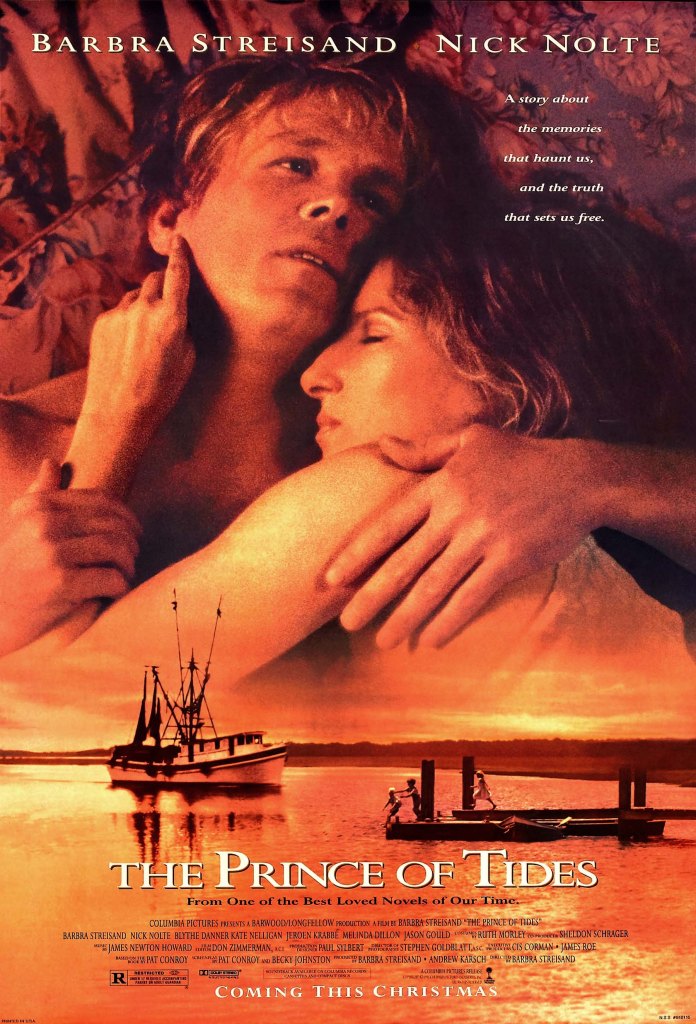
It makes it easy for us to accept Streisand’s eventual affair – much as Blythe Danner’s Sally regretfully confessing that Tom’s emotional closed-offness has driven her into the arms of another man. Despite the poster’s impression though, this is far from a steamy romance, waiting almost four fifths of its runtime before the two confess their feelings for a cathartic affair. For the bulk of the film, it’s an unspoken mutual affection, driven by Tom’s Southern flirtatious manner and Susan’s half-smiles. Again, it’s a slow-build, carefully paced romance that feels real.

Also because the film’s real build is not towards the two stars converting flirting to grinding, but in uncovering the exact trauma Tom is suppressing and has made him resent his mother (Kate Nelligan very good as an aspirant social-climber, refusing to invest love in her children) almost as much as his violent father (a surly Brad Sullivan). The reveal is, in some ways, expected – but also shockingly unexpected, particularly due to the visceral rawness which Streisand shoots the Nolte-narrated flashback with (Nolte is, needless to say, wonderful in this scene).

It’s part of the surprisingly effectiveness of a film that, in other hands, could have been a sentimental family drama, but is lifted by excellent, committed performances (Streisand is clearly a whizz with actors) and sensitive, patient direction. Streisand resists attention-grabbing flash, carefully letting scenes and emotions build, using subtle but effective camera movements. It comes together into a film that surprised me greatly with its richness. It eventually has a heart-warming message to tell of the power and importance of having the courage to admit your pain and emotions and, in its portrait of a man’s man engaging with his vulnerability, projects a message still powerful today. If Redford or Eastwood had directed it, they would have won an Oscar.

The Fighter (2010)

The Fighter (2010)

A fighter has a title shot, in a surprisingly heartwarming film about the importance of family, no matter how messed up it is

Director: David O Russell

Cast: Mark Wahlberg (Micky Ward), Christian Bale (Dicky Eklund), Amy Adams (Charlene Fleming), Melissa Leo (Alice Eklund-Ward), Jack McGee (George Ward), Frank Renzulli (Sal Lanano), Mickey O’Keefe (Himself)

Everyone loves Rocky. We all want to that local-hero-turned-good, the guy who went the distance. Lowell, Massachusetts had that in Dicky Eklund. Eklund, a minor pro-boxer, once went the distance against Sugar Ray Leonard in 1978 (he argues he knocked him down, although many are convinced Leonard slipped). “The Pride of Lowell” then became… a crack addict, tumbling from disaster to let-down, helping and hindering the career of his brother, fellow boxer Micky Ward.

The story of the two brothers – leading up to Ward’s eventual title shot in 1997 – comes to the screen in Russell’s affectionate, if traditional, boxing drama, long a passion project of Mark Wahlberg who plays Micky. Wahlberg kept himself in boxer-condition for years as he dreamed of making the film, recruiting director and cast and producing the film. The fine, sensitive film we’ve ended up with is a tribute to his commitment and producing skills, while the fact that Wahlberg casts himself in the least dynamic part is a nice sign of his generosity.

Because it’s only really on the surface a Micky Ward film. Sure, the film follows the vital events in his life. It opens with him bashed up in a mis-match, filling his role as a “stepping stone” fighter, someone the future champs flex their muscles against. We follow his struggles to escape from under the thumb of his large brash family – above all his bombastic, domineering mother Alice (Melissa Leo). He forms a relationship with ambitious-but-caring Charlene (Amy Adams), moves up the ranking, lands that title shot, fights the big bout. But it never quite feels like Micky is the star.

Because, really, this feels like it’s about Dicky Eklund working out the first act of his life is over, and trying to find if he has what it takes to start a second, more humble, one. The film opens with Dicky followed by an HBO crew for a fly-on-the-wall documentary. Dicky’s convinced himself it’s to chart his boxing come-back. It’s actually about the horrific impact of crack addiction. Dicky is a strung-out, unreliable junkie, living on past glories but screwing up everything he touches, being enabled by the fawning worship of his mother and sisters, who still worship him as the families main event (and continue to do so, even as Micky rises to title shot). The film’s heart is Eklund sinking to rock bottom and realising he has forced the compliant Micky into playing a subservient role in his own life.

Perhaps it feels like a film more focused on the remoulding of this charming but selfish figure because of the compelling performance of Christian Bale. Starving himself down to match Eklund’s wizened, strung-out physique (he’s still got the boxer moves, but his body has wasted away) is a day’s work for a transformative actor like Bale. But this isn’t just a physical performance, but a deep immersion into the personality of a person who almost doesn’t realise until it is too late how fundamentally flawed he is. Bale’s a ball of fizzling energy and electric wit coated in a lethargic drug-induced incoherence. His energy is frantic but uncontrolled, wild and mis-focused. It’s a superb, heartfelt performance of loveable but dangerous uselessness that nabbed Bale an Oscar.

But what makes The Fighter a surprisingly warm film is that, for all his many flaws, selfishness and self-obsession, Dicky genuinely cares for his brother. He wants the best for him, he believes in and loves him. Much of the power of Bale’s performance comes from the fact he never forgets this, even when Dicky is at his worst. In fact, Russell’s whole film works because that warmth and love everyone feels for Micky is never forgotten and never weaponised by Russell into helping us make moral judgements about the characters. Nor does it forget that Micky may sometimes hate his family, but he never stops loving and needing them.

A weaker film would have stressed the trailer-trash greed of Melissa Leo’s Alice. Leo (who also scored an Oscar and famously dropped the f-bomb on live TV, condemning the ceremony to a permanent time delayed broadcast ever since) is in many ways playing an awful character: controlling, nakedly favouring Eklund over his brother, quick to judge, rude and aggressive. She’s never truly likeable – but Russell’s film understands everything she does is motivated by love. She genuinely wants the best for Micky, even while she pushes him into bad fights and never listens to him. She tries to protect him, and expresses this in destructive selfishness.

In many ways she’s just like Micky’s girlfriend Charlene, who recognises early that Micky’s family (who have turned him into a timid hen-pecked type) can’t be trusted to run his whole career, but who also subtly pushes herself into Alice’s place as the leading decision-making influence in his life. Very well played by Amy Adams (who lost the Oscar to Leo), Charlene is smart, sexy, loving but just as determined that it’s her way or the highway.

What Micky needs to do, the film carefully (if rather safely) outlines, is take the best qualities of all his influences. It’s Eklund’s “job” to realise Micky needs everyone he loves singing from the same hymn-sheet. It needs compromise and putting other people first. It makes for a nice little paean to the importance of family relationships, founded on forgiveness and admitting when you are wrong. Micky forgives his mother and brother for their selfishness: they, in turn, acknowledge their mistakes. Eklund is crucial here: Bale is again superb as a man who suddenly realises pride has nearly ruined his life and embraces the junior role in the relationship with his brother.

Sure, none of this reinvents this wheel, but it still makes for engaging and rather sweet drama. Russell mixes it with some neat stylistic flourishes that don’t overwhelm the film. It’s shot with an edgy, handheld immediacy reflecting its street roots. The fights are shot with old TV cameras, so that invented footage can fuse with 90s HBO coverage. Russell of course gets great performances from his actors, as he always does.

The Fighter is in many ways predictable. But it wears its heart very much on its sleeve, and Wahlberg deserves credit for assembling it and for giving a quiet, generous performance at the centre of it. And the film’s commitment to the idea that, no matter the problems in our families, we can all find the courage to admit our mistakes and pull in the same direction remains heartwarming.

Good Luck to You, Leo Grande (2022)

Good Luck to You, Leo Grande (2022)

Questions of intimacy and sex are explored but not in depth in this theatrical two-hander

Director: Sophie Hyde

Cast: Emma Thompson (Nancy), Daryl McCormack (Leo Grande)

A widowed, retired former RE teacher “Nancy” (Emma Thompson), hires a high-class escort “Leo Grande” (Daryl McCormack) to explore the opportunities in life she feels she has missed: namely, any sexual experience that doesn’t involve functional, passion-free couplings with her deceased husband; the positions and acts she’s heard about that he considered “demeaning” to all involved; and, above all, something called an orgasm. Over multiple meetings, the fragile Nancy and the smooth, charming, but personally guarded Leo tentatively explore physical and emotional barriers.

Hyde’s film could very easily be a theatre piece. Largely taking place in a single location – the hotel room Nancy has hired for their meetings – across four “acts”, it’s a film that relies heavily on the skill and chemistry between the two actors. On that front, it’s very blessed to have such skilled performers who play off each other with such generous and dynamic performances.

They’re helped by a witty script from Katy Brand, crammed with good lines. Nancy is a fusspot, sheltered and deeply self-conscious, who approaches everything from a teacherly angle, including drawing up a sexual “checklist” for their session (“attainable goals” as she puts it). Her middle-class, middle-age hesitancy around sex as something to feel ashamed about casts its mark over everything she says and does (“I don’t like anything going in places where things are meant to come out”) and she can’t shake her own shame and fears that she is exploiting someone (she worries she feels like “Rolf Harris” – a reference that hilariously flies over the head of Leo).

It’s a gift of a role for Emma Thompson, who delights in the witty (if theatrical) dialogue, but also sells speeches full of personal discontentment, bitterness and profound regret. Her early nerves – with a little pinch of guilt – at hiring this sex worker, slowly tip into an outpouring of painful regrets. Nancy is a woman who has lived her life by strict rules – rules that have left her deeply unhappy and desperate for a meaningful intimate relationship with someone to confide in.

Thompson, in a way that I’m not entirely sure the film does, also understands that Nancy is not as nice a person as she might believe she is. Her sadness is often counterpointed with bitterness, rudeness and a tendency to judgementalism. It’s a defensive shield for her deep unhappiness within – but it also perhaps suggests why she is as lonely as she is. This is Thompson at the top of her game, effortlessly funny, heart-rending and frustrating almost from moment to moment.

Her unease, and near-Catholic guilt at sexual intimacy and satisfaction, contrasts neatly with the smoothly professional Leo. It can’t be easy for a young actor to go toe-to-toe with a heavyweight, but McCormack plays Leo with a huge subtlety. Eager to put Nancy at her ease in their first meeting, we see him carefully but skilfully move between several different, possible, personas in search of something she will like. Flashes of personal intimacy and friendship he gives her always leave you guessing how much is real, and how much settling on a persona for his client. Brief moments of thoughtfulness show Leo reflecting on his own past – issues that will come to the surface in later sessions. McCormack skilfully walks the tightrope of playing a man with an invented personality, who adjusts his persona from moment to moment to best please someone else.

The main delights of Good Luck to You, Leo Grande are in the (sometimes funny, sometimes sad, sometimes excruciatingly embarrassing) exchanges between these two, as Nancy constantly puts off what she paid for, partly due to not knowing if she wants it and partly being ashamed to ask for it. At its strongest moments the film uses this to explore our own societal feelings about the entwining between sex, shame and guilt.

After all, sex is something we all have very clear ideas about. And, just like we do with our bodies, often end up judging ourselves harshly against some imagined standard. The film gently argues that perhaps a world of high-class, shame-free, professional sex with someone who knows what they are doing – and can help a client enjoy something that many find quite stressful – might not be a bad thing. It says a lot that Nancy’s first assumptions about Leo tie into a fear that he might be being exploited or vulnerable in some way. It’s also interesting that Leo (at least as he claims – he of course may not be telling the complete truth) enjoys his work, because he sees it as a sort of ultimate people pleasing.

It would be a stronger film if it was able to do more of this thoughtful societal commentary. It never quite manages to really grapple with the issues it raises though, partly because it becomes a little preoccupied with the personal hang-ups of its characters (it would have also helped with Leo didn’t have his own past problems to deal with as well, which rather undermine part of the film’s point that we shouldn’t feel ashamed or that choosing a life like this isn’t always linked to past problems).

It also, by making it very clear that Leo is working at the very expensive end of the sex industry, perhaps takes a slightly rosy view of sex work, glossing over the risks and exploitation experienced by others in the industry with a couple of breezy lines. However, it’s also a very strong two hander, well-written with two excellent performances from McCormack and Thompson, both of whom are superb. It just could have been a little more.

Summer Interlude (1951)

Summer Interlude (1951)

Memory, mortality, repression, grief and a little dash of hope: Bergman establishes his themes in one of his earliest film

Director: Ingmar Bergman

Cast: Maj-Britt Nilsson (Marie), Birger Malmsten (Henrik), Alf Kjellin (David Nyström), Annalisa Ericson (Kaj), Georg Funkquist (Uncle Erland), Stig Olin (Ballet Master), Mimi Pollak (Mrs. Calwagen)

On the night of the dress rehearsal for her next production, successful ballerina Marie (Maj-Britt Nilsson) receives a parcel containing an old diary. It’s thirteen years old and belonged to Henrik (Birger Malmsten), a young man she met and fell in love with while staying with family friends on a small island. The relationship was one of blissful joy – so why then does even the faintest memory of it bring out a cold panic in Marie?

The answer is of course rooted in past trauma in a film that touches on so many themes Bergman would explore in even greater detail later, it’s hard to see it as a film in its own right, like an early draft pencil sketch of a Renaissance master. Themes of memory, trauma, mortality, repression, romance and coming to terms with all of these would resurface time and again in the master’s later work. Wild Strawberries, The Seventh Seal, Face to Face, Persona, Fanny and Alexander… They all expand on Summer Interlude. For starters, Marie’s reverie on the island revolves around memories activated by eating strawberries and takes in an ageing priest exploring mortality through chess.

So, you can sort of watch Summer Interlude as a game of inspiration-spotting, keeping a tally of the Bergmanesque pre-homages. But that would do a disservice to a heartfelt, beautifully judged, hauntingly sad film which deals not only with loss but also acceptance. It’s effectively two films in one, straddling the emotionally cold present and Marie’s return to the windswept island, and the glorious summer of carefree romance she shared all that time ago, when everything was possible.

As Marie, Maj-Britt Nilsson is impressive. One of the first of Bergman’s muses – and the first major indicator of his skill and empathy for powerful female-led drama – Nilsson has the difficult job of distinguishing between two versions of her character. Her present day one is muted, restrained and hiding behind her ballet performance make-up, unable to really face the world and unhappy in her own skin. By comparison, the younger version feels like a different person: vibrant, hopeful, excited and youthful. And besotted with Birger Malmsten’s boyish and delightful Henrik, an impulsive but engaging kid.

The flashback to their romance is given the sun-dabbled beauty of memory. They run across beaches and up hills, flirt in beach huts and conduct a sweet engagement ceremony. The company of the other is more than enough for both of them. Gunnar Fischer’s photography captures this with an intense, naturalistic beauty – including a gorgeous shot of a cloud across the sun while we hear the voices of Marie and Henrik below. It also makes for a wonderfully alive contrast to the more static coolness of the present, where wide-open spaces are exchanged for backstage confines.

It’s not a huge surprise to reveal that Marie and Henrik’s relationship end tragically. That after all is the mood we associate with the Gloomy Swede. But what makes the film really work is the hope and joy not only of the memory of that glorious summer – but also in the ability, thirteen years later, of Marie to consider processing it and allowing new joy into her life. To come to terms with what has happened to her and learning to love the person she is today, (literally) wiping away the defensive make-up that has kept her distant from the world.

Much of her defensiveness comes courtesy of “Uncle” Erland (a deeply unsettling Georg Funkquist), the family friend she was staying with that summer. A doctor and psychiatrist, Erland clearly has a unsuitable interest (bordering on obsession) with Marie (something all too obvious to his wife). His desire to help her deal with her tragedy is based more on an unpleasant desire for control as it is friendship. He’s one of the darker figures in Bergman, even more so because he’s so mundane in his corruption.

Memory and past trauma linger over Summer Interlude – and the influence of both is central to the film’s impact. Bergman skilfully intercuts between past and present, without ever overplaying or showing his hand. Both timelines are interspersed with little character flourishes that would be worthy of whole films (and in some cases Bergman explored those himself later!). Henrik’s geriatric aunt, a fanatical chess player, who (correctly) states she will live for decades to come. A priest dwelling on mortality. A ballet master who understands how Marie’s obsession with dancing serves to blot out any other life. A fellow dancer who muses on how long before their time is up.

These ideas are assembled though with a warmth and emotional intelligence that would become Bergman’s hallmark. It’s also a film crammed with invention: a (brief) argument with Henrik over Marie’s obsessive practice, frames her feet in constant close-up as she practices her moves: the film will end with a similar shot, this time with practice married to romance. For a film about tragedy, trauma and torturous memories, it’s surprising how optimistic it is. As Marie smiles for what seems like the first time in decades, you feel there is hope for us all.