Category: Films about mental health

Another Round (2020)

Another Round (2020)

Vinterberg’s film explores our complex relationship with alcohol with a surprising lack of judgement

Director: Thomas Vinterberg

Cast: Mads Mikkelsen (Martin), Thomas Bo Larsen (Tommy), Magnus Millang (Nikolaj), Lars Ranthe (Peter), Maria Bonnevie (Anika), Helene Reingaard Neumann (Amalie), Susse Wold (Principal)

Mankind’s most difficult relationship? Might just be with alcohol. Ever since Noah first toppled over pissed, we’ve struggled to balance that delightful buzz a touch of intoxication gives with the destructive impact way too much has. It’s a relationship explored in Thomas Vinterberg’s curious mix of warning and celebration, Another Round, which (slightly obliquely) looks at the positives and negatives of alcohol consumption.

In a gymnasium school in Copenhagen, history teacher Martin (Mads Mikkeslen) has lost all passion and interest in his students (so much so they try to have him removed) and his marriage is stuck in an increasingly distant rut. After a birthday meal, he and three friends – PE teacher Tommy (Thomas Bo Larsen), psychology teacher Nikolaj (Magnus Millang) and music teacher Peter (Lars Ranthe) – agree to a pact to combat their ennui. After reading a theory that mankind is born with 0.05% blood alcohol content deficiency (and topping it up makes you more creative and relaxed), they decide to experiment with maintaining a certain level of inebriation. At first it has a positive impact; but as they push the boundaries of the experiment, the negatives swiftly multiply.

Vinterberg’s film is notable for not taking an obvious (or firm) stance on alcohol consumption. It’s easy to imagine an American or British film dwelling on the negatives at the cost of everything, or demonstrating deep regret in the friends for ever starting on this journey in the first place. Another Round doesn’t do this. In fact, it rather bravely points out the positives we can feel from the happiness and relaxation alcohol can give. So much so that, at first, it actually improves people’s lives. After all, if it was always all bad – we wouldn’t drink it would we?

This is most notable in the case of Martin. He might stumble in the staffroom on the way to class, but (after a swig of vodka) his teaching becomes more inspiring, electric and engaging. He rediscovers a passion for working with students, dropping the disengaged drawling of semi-confused facts we see him use earlier (where he doesn’t even seem to be listening to himself, randomly drifting from the Industrial revolution to Churchill) and replacing it with insightful parallels, high-energy tempo and fun activities. Whether it’s psychological or something else, being able to relax clearly has a positive short-term impact on his ability to teach.

It’s matched in the others as well. Peter gets his students singing with an intensity and beauty he couldn’t begin to get them to reach earlier. Tommy, in his work with a primary school football team, brings out the skilled footballer in a shy, bespectacled student (although his uncomfortable blurring of the line between teacher and surrogate parent with this boy hints at Tommy’s lack of control, which the film will explore in more depth). Vinterberg echoes the giddy feeling of elation all four feel by subtle use of a free-moving handheld camera, compared to the more staid rigidity of the earlier stable shots.

Martin also dramatically improves his personal life. He starts to reconnect with his family and rebuild passions with his wife. Sure, there are negatives. Hidden alcohol stashes at the school are discovered. It becomes harder to hide their intoxication in the common room. But it still feels good, right? Problem is, Martin makes the mistake many of us have. If a small amount of this makes me feel this good – why don’t I take a large amount? Surely if I up the blood alcohol content even higher, the positives will be all the greater. Sadly, of course, it doesn’t work like that.

Vinterberg’s film is careful not to use labels like alcoholism. But, in the same way it isn’t afraid to show the world-beating confidence a stiff drink or two can give you, it doesn’t shy away from the impact of over-consumption. Deciding, “as an experiment”, to push their drinking to absurd levels for one night only, to get as intoxicated as possible, the four have a fab night. But the next morning? Peter loses all his clothes diving in the sea. Nikolaj wets the marriage bed in a confused stupor. Martin wakes up, face bleeding, on the pavement having tried (and failed) to use his keys on his neighbour’s house, and is carried home by his humiliated children.

This is as nothing compared to the terrible impact of alcohol on Tommy. While all four of the men no doubt become increasingly dependent, it’s Tommy who tips into full blown alcoholism. Beautifully played by Thomas Bo Larsen, its painful to watch this gruff-but-playful bachelor dip increasingly into confused, stumbling, permanent inebriation, living in a home made of finished bottles and unable to hide from colleagues or students his intoxication.

But, for all that much of the second half of the film focuses on these negatives, it doesn’t offer easy solutions. All four realise things have gone too far – but none of them can forswear (or even seem to consider doing so) alcohol. Martin’s marriage collapses and Nikolaj’s nearly goes the same way. But they still gather at the film’s end for a drink. It’s at this point that it can be a little unclear what Vinterberg’s thoughts are on the demon. But then perhaps that is the point: we all know it’s bad for us anyway, so a film that looks at how we balance that desire with a certain level of responsibility is always, perhaps, going to shy away from either easy answers or definitive statements.

It’s perhaps why the film ends with a surprisingly blissful, up-beat ending of hope for the future rather than despair, as Martin explodes into a riotous improvised dance routine. It’s easy to forget Mikkelsen is a trained dancer, and the fact he provides such a striking, memorable ending to the film is fitting as it’s a triumph for him. At first a shambling, sad-sack figure, Mikkelsen’s Martin finds a casualness and relaxation that seemed beyond him (the film is a physical triumph for Mikkelsen – his drunken move through a common room worthy of Gene Kelly or Buster Keaton). Mikkelsen’s work is extraordinary in its emotional complexity – bursts of pained sorrow, rage, guilt, self-loathing, despair and hope flash across his face and he holds the entire film together.

He’s ably supported by Larsen, Millang and Ranthe – all superb – and Vinterberg’s deceptively casual and unobtrusive direction helps craft a film that offers scenarios but not lectures. While I could have hoped for the film perhaps taking a bit more of a stance one way or the other – or give a more unflinching look at the impact on others of alcohol abuse – as a personal story Another Round is vibrant, honest and (strangely) hopeful, for all the terrible impacts it displays. It lingers with you like a hangover.

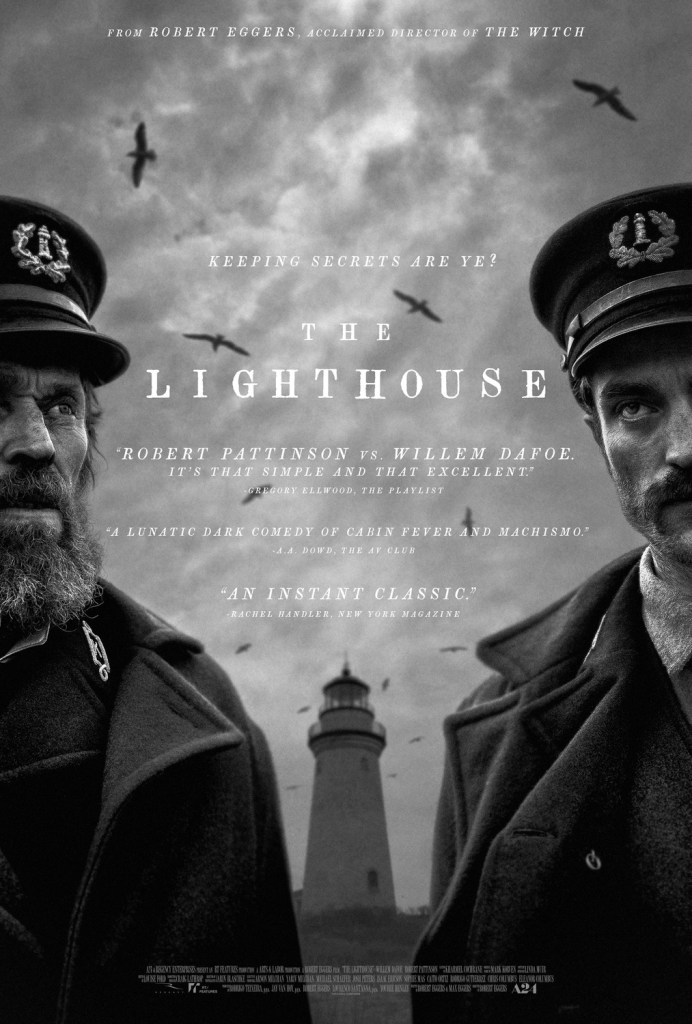
The Lighthouse (2019)

The Lighthouse (2019)

Undefinable, haunting madness in Robert Egger’s mesmeric film that defies categorisation

Director: Robert Eggers

Cast: Robert Pattinson (Ephraim Winslow), Willem Dafoe (Thomas Wake)

Who’d want to be a lighthouse keeper? Weeks on end, stuck on a rock, with nothing but sea gulls and your fellow keepers for company. The cabin fever might well start to make you feel your grip on reality shifting. You’d definitely think it was a strong chance watching Robert Eggers’ mesmeric, enthralling and undefinable masterpiece, a mix of everything from Victorian shlock to Greek Mythology via MR James and Edgar Allen Poe, by way of Freud and Jung. It’s impossible to work out, horrifyingly clear and deeply, unsettlingly brilliant.

Two ‘wickies’ (lighthouse keepers) in 1890s arrive on an island off the coast of New England. Thomas Wake (Willem Dafoe) is a (self-proclaimed?) salty-sea-dog and veteran wickie. He tends the light. His assistant, Ephraim Winslow (Robert Pattinson), is a former woodworker working on contract, seemingly on the run from something. He is the island’s dogsbody and tends the mechanisms that keep the light on and turning and the island’s fog-horn blaring. These two live cheek-by-jowl, a relationship that oscillates between distrust, resentment and strange warmth.

Things take an increasing turn for the bizarre, as a storm cuts them off from their scheduled relief. Slowly the isolation, supplies failure (gin and beans are seemingly the only food sources left) tap into the psychological flaws in the men themselves. Ephraim becomes ever more consumed by visions of a horrific but sensual mermaid. Wake obsessively guards his sole access to the lighthouse tower – and, Ephraim suspects, the mysteries it contains. Their relationship crosses boundaries of longing, violence and anger.

The Lighthouse is somewhere between parable, modern myth and psychological study. You could call it a horror film – I see it more as a classic ghost story – but you could just as easily call it a survivalist film, a character study or a psychological thriller. Egger’s insidiously unsettling film-making and the sublime acting from the two leads combine to make a film ripe for interpretation, and intensely rewarding on rewatch. It’s an explosion of artistic brilliance.

Shot in a superbly atmospheric black and white – and a claustrophobic academy ratio 4:3 – it’s a film that presents one striking, chilling, unforgettable visual image after another. Inspired by silent cinema – in particular Murnau, Lang and von Sternberg, although I spotted elements of Keaton – but as if moody German expressionism was used to shoot a Rorschach test. The inky blacks, and overwhelming bursts of blinding white light, suggest unimaginable horrors lurking out of sight, while its impressionistic imagery constantly pushes us to question the reality of the film.

It all builds on the superb feeling of isolation Eggers invokes. Rooms are small and crowded with furniture. The island is a bleak rock, shorn of any vegetation. The only wildlife is an army of seagulls. The blare of the island’s foghorn is continuous – sounding like a doom-laden rumble from Hell – that seeping into the viewer’s soul. Every corner of the lighthouse station becomes achingly familiar to the viewer and somewhere you can imagine not wanting to spend a second longer than you have to.

Stretching their vocal muscles around a script (written by Eggers and his brother Max) full of rich, chewy, Victoriania dialogue by way of Beckett and Pinter (in one compellingly funny sequence, the two actors basically shout “what” at each other over and over again) both are superb. Dafoe walks a fine line expertly between realism and Robert-Newton-esque parody, as the saltiest sea-dog imaginable, who can oscillate between surly admonitions and flights of myth-filled, metaphorical fancy. Pattinson dives head first into a man who we are never sure we fully understand: is he a frustrated time-server, a violent monster, a delusional schizophrenic, a little-boy lost? Either way it’s a truly brilliant performance of Day-Lewis level commitment and immersion.

You could have a lot of fun arguing that perhaps both men are two halves of the same fractured psyche (as if Wake is a future version of Ephraim, almost as if the film is him witnessing his own origins story). Certainly, as their film progresses, their personalities and histories begin to merge. It would help explain the curious emotional bond between them: at times they seem to almost hate each other, at another a drunken fight is only inches away from a sexual encounter. They laugh at and loath each other, are mutually dependent, plot each other’s destruction but then pathetically look at each other for reassurance and praise (Wake is heartbroken when Ephraim criticises his cooking, while Ephraim both resents and worships this hard-taskmaster father figure).

It’s a suspicion that could also be incited by the all-pervading weirdness on the island. Ephraim –carrying the burden of secret crimes on the mainland – see visions of a mermaid among logs, in which sexual encounters are mixed with the mermaid’s murderous attempts to drown him. His first-day searches of the house unearth a carving of a mermaid, which seems to fascinate and repel him – he takes to masturbating (joylessly) over it in the workshop. He seems to spy Wake worshiping, naked, the light during his long-night vigils up the tower (suspicious fluids drip down from here, along with half glimpses of mermaid tentacles). In any case, Wake guards his access to the light like a jealous lover, while his faith in sea mythology becomes increasingly less of a mantra and more of a framework to understand the world.

How much is real? Or is it a sign of Ephraim’s fractured, guilty, conscious? We see most of the events through his eyes – a man we know is a thief and, most likely, a killer. There is more than enough evidence that Ephraim is lying about his past as much to himself as he is Wake. Wake too is a liar – telling at least two versions of how he ended up with a gammy leg, enough to make you wonder how much his claims of being a sea-dog are true. As isolation and constant drink – the two spend most of the second half in various states of inebriation first from gin then turpentine – kick in, and they and their surroundings become increasingly dishevelled and fart-stenched.

There are dark powers at work on this island. Echoes of Greek Myths loom – Ephraim has traits of Prometheus, fascinated by a light horded by the Gods, the very light that Wake, Proteus like, is determined to keep to himself. Wake stresses that the gulls carry the souls of dead sailors – and the unsettling persistence these pester Ephraim with, is surpassed only by the violence with which he responds to them. Elements of Victorian ghost stories, hypnotism and gothic fiction combine in every corner of a film where we see very little but get a lot implied (powerful, Eisenstein and Bunuel-style, close-ups of faces and eyes imply powerful horrors out of shot).

The Lighthouse reminds me in many ways of the best of the BBC Ghost Stories of the 1970s in their unsettling, MR James-style unexplained (even unstated) horrors. There is a palpable air of horrific tension around the film, of an unexplained, unknowable force that could somewhere destroy both men – and has perhaps unsettled their minds. The film culminates in a superb, haunting shot as Ephraim comes face-to-face with something unknown that is pure MR James: we never see what caused the horror, only its terrible results. (It’s as terrifying as Whistle and I’ll Come to You or A Warning to the Curious where blind, over-confident curiosity leads to dreadful outcomes).

Eggers film is not a conventional horror film: I believe thinking of it as a deeply unsettling exploration of man’s vulnerability and weakness, ala MR James, is key. This is a story of unseen, imagined, unsettling horrors – but also a claustrophobic relationship drama, playing out like a psychological thriller as two men dance around destroying and seducing each other. It’s a complex Rubrik’s cube that rewards constant thought and attention. Beautifully filmed, superbly acted, compelling in every frame, it can claim to be one of the most unique and powerful American films of the 2010s.

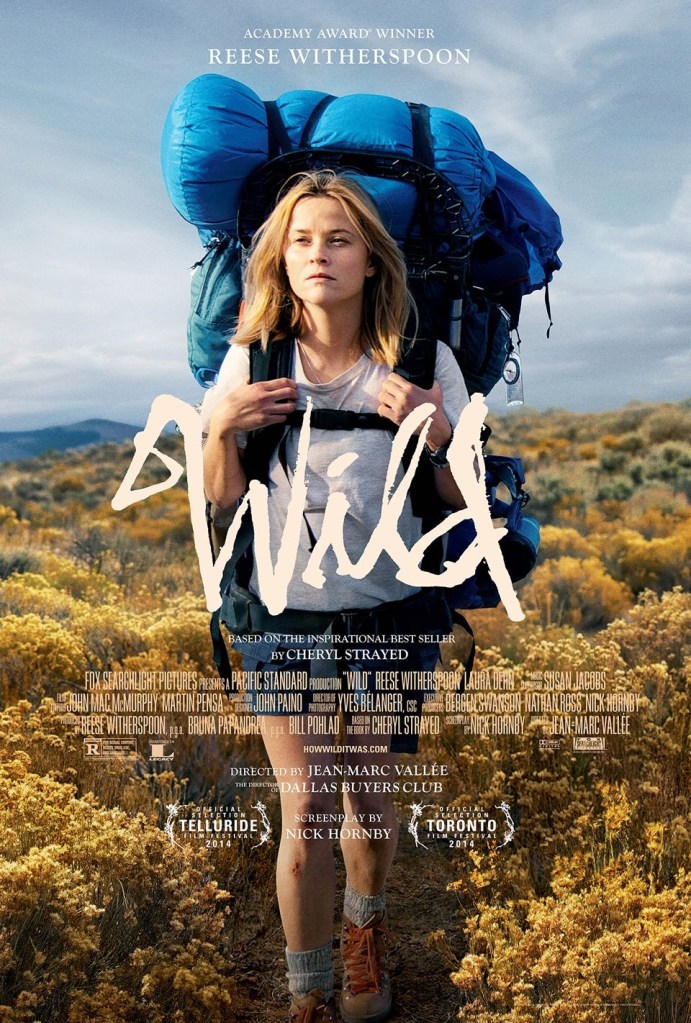
Wild (2014)

Wild (2014)

Reese Witherspoon finds herself in a film that is more than just Eat, Pray, Hike

Director: Jean-Marc Vallée

Cast: Reese Witherspoon (Cheryl Strayed), Laura Dern (“Bobbie” Grey), Thomas Sadoski (Paul), Michel Huisman (Jonathan), Gaby Hoffmann (Aimee), Kevin Rankin (Greg), W. Earl Brown (Frank), Mo McRae (Jimmy Carter), Keene McRae (Leif)

Ever thought tackling a 1,100 mile hike would be a fun adventure? The opening of Wild might change your mind. Gasp as Reese Witherspoon rips out a bleeding toe nail and then throws her ill-fitting hiking boots down a mountain, screaming abuse at them all the way! Want to grab that back-pack now?

In this adaptation of a memoir about loss and self-discovery, Witherspoon plays Cheryl Strayed who (fairly impulsively) decided to hike the Pacific Crest Trail in 1995 to try to find in herself the woman her late mother “Bobbie” (Laura Dern) believed she could be. After Bobbie’s early death from cancer at 45, Cheryl had collapsed – ruining her marriage to Paul (Thomas Sadoski) in an orgy of anonymous sex and heroin addiction. Now she wants to make a new start.

Adapted by Nick Hornby with a good deal of skill and emotional intelligence, Jean-Marc Vallée’s film is an interesting character study via the survivalist genre, mixed with a touching exploration of grief, loss and self-loathing. After throwing us into Day 26 with that bloodied toe-nail, the film rolls back to follow Cheryl’s walk: intercut with powerful memories of her relationship with her mother, each memory activated by different encounters along the way and bubbling into her mind along with a distinctive soundtrack (most especially Simon and Garfunkal’s El Condor Pasa) that reflects the music that reminds Cheryl of her mother.

It could have been a sentimental finding-yourself movie – Eat, Pray, Hike anyone? (I also rather like Reese Witherspoon Finds Herself in a Backpack) – and I won’t lie, there are elements of that. But maybe it caught me in the right mood, maybe because I’ve always fancied testing myself with an epic hike, but I actually found it intelligent, sensitive and just the right side of sentimental.

Wild carefully avoids simple points. It’s a film not about a long journey leading to revelation, but a journey that helps you accept all your past decisions, right or wrong. There is a pointed lack of emotional breakdowns, tearful confessions or flare ups of self-anger and revelation. Instead, it’s about the long grind of starting an internal journey towards contentment. Because trekking 1,100 miles is the long haul: there ain’t any easy ways out or short cuts on this trek.

The film’s principal asset is Reese Witherspoon. Also serving as producer, Witherspoon is in almost every single frame and delivers an under-played but very emotionally satisfying performance. She plays Cheryl as quietly determined, having already hit rock bottom and knowing every step she takes from now is upwards. She meets adversity – aside from the odd flash of frustration – with a stoic will and finds an increasing spiritual freedom in the wild that serves as an escape from the horrific wilderness of her self-destructive years. But she never lets us forget the pain that underpins this journey for Cheryl. It’s a very impressive performance.

The reminders of that pain are distributed through the film, which unflinchingly chronicles Cheryl’s escape from grief in the arms of a parade of sleazy men, anonymous hotel sex and (finally) shooting up heroin on the streets of San Francisco. It ends her marriage to Paul – but not their friendship, in the sort of adult emotional reaction you hardly ever see in a movie. Paul – played with warmth by Thomas Sadoski – may not be able to continue his marriage after discovering his wife’s parade of trust-breaking, but it doesn’t stop him from helping a person he loves who is in need.

All of this is nicely counterpointed by the hike itself. Naturally it’s all slightly episodic, as Cheryl moves from location to location, but Hornby’s script makes these vignettes really work. Vallée’s direction also does a fantastic job of intercutting between the long walk of 1995, and Cheryl’s memories of both her mother (played with a vibrancy that makes a huge impression from limited screen time by an Oscar-nominated Laura Dern) and her own emotional collapse after her death.

I also appreciated that Wild doesn’t shirk from showing the vulnerability of an attractive young woman hiking alone. Some potential predators are revealed to be the opposite: others are exactly what they appear to be. But not every encounter is one of potential danger: far from it.

Cheryl is met time and again by people who only appear to support, share their expertise and help her in her quest. At an early station, a man talks her through the huge amount of equipment she’s bought and advises what she can leave behind (Vallée opens the film with the strenuous effort, including rolling around on the floor, Cheryl has to go through just to put this backpack on). She finds a touch of romance with a handsome musician (a charming Michel Huisman). There’s also comedy, most of all with Cheryl’s encounter with a self-important journalist (Mo McRae), who won’t be convinced that she isn’t a female hobo.

This is all packaged together in a quiet, un-pretentious way that culminates in a thought-provoking monologue about the value of self-acceptance and putting aside regrets. Others would have layered on the sentiment, but here the balance is just right. With Witherspoon at the top of her game, Wild is a well-made and involving road trip that also makes you think.

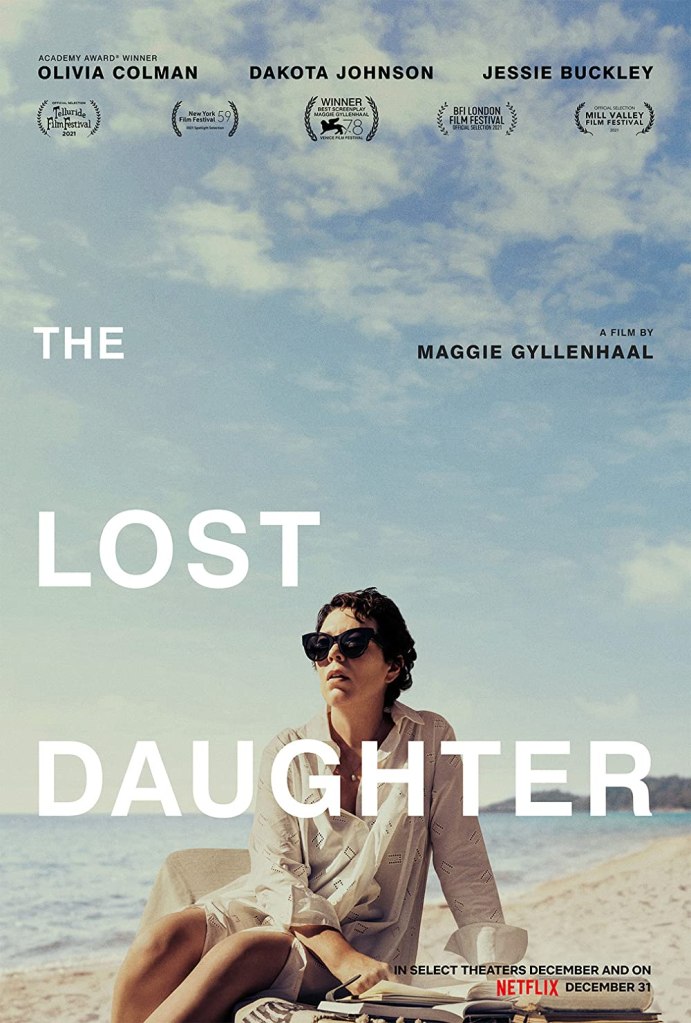
The Lost Daughter (2021)

The Lost Daughter (2021)

Motherhood, loss and guilt are at the heart of this over-extended drama that doesn’t feel like it focuses on the right things

Director: Maggie Gyllenhaal

Cast: Olivia Colman (Leda Caruso), Jessie Buckley (Young Leda Caruso), Dakota Johnson (Nina), Ed Harris (Lyle), Dagmara Dominczyk (Callie), Paul Mescal (Will), Peter Sarsgaard (Professor Hardy), Jack Farthing (Joe), Oliver Jackson-Cohen (Toni), Athena Martin (Elena), Robyn Elwell (Bianca), Ellie Blake (Martha)

Leda (Olivia Colman), a professor of Italian Literature, holidays in Greece. That holiday is disturbed by the arrival of a noisy, aggressive family from Queens. A member of that family, unhappy young mother Nina (Dakota Johnson) loses her daughter on a beach. Leda finds her, but it triggers her own unhappy memories of motherhood (Jessie Buckley plays the young Leda). She impulsively steals the child’s beloved doll, as her paranoia and mournful reflections grow.

Maggie Gyllenhaal’s directorial debut is a confident, assured piece of film-making, but I found it a cold and slightly unsatisfying film. There is a fascinating subject here, that the film fails to really tackle. One of life’s great unspoken expectations is that everyone should find being a parent – especially being a mother – hugely rewarding. This film studies a woman who didn’t, but still wants to reassure us of the love and happiness found in the bond with a child, no matter your mistakes as a parent. In doing so, it marginally ducks an important societal issue and reaches conclusions that feel predictable, for all the ambiguity the film ends with.

Colman’s expressive face and ability to suggest acres of unhappiness in a forced smile or gallons of frustration with a single intake of breath, are used to maximum effect. Leda is a woman comfortable with her own company, forced and uncomfortable in conversation, her eyes flicking away as if looking for an exit. She seems confused about how to respond to the quiet advances of handyman Lyle (a gentle Ed Harris) and increasingly resents the intrusion into her holiday of outsiders.

How much is this slightly misanthropic, isolated view of the world her natural personality, and how much has it grown from her choices in the past? Flashbacks reveal her struggles as a mother – and the strained relationship with her children today – and it’s clear Leda is a bubble of confused emotions, uncertain about what she thinks and feels.

That past, to me, is the real area of interest, rather than the distant, cold woman those choices have created. I’d argue a stronger film – and one that would feel like it was really making a unique point – would have focused on the younger Leda. Expertly played by an Oscar-nominated Jessie Buckley –brittle and growing in claustrophobic depression – she loves her two girls. But, most of the time, finds them overbearing, all-consuming and more than a little irritating. She’ll laugh at their jokes and be terrified when one of them gets lost, while still resenting their domineering impact on her life.

When she wants to work, they demand attention. When her daughter has a small cut on her finger, Leda is repeatedly asked to kiss it better like a broken record. Leda gives her other daughter her own childhood doll – and then throws it out of a window in fit of hurt fury when the daughter covers it in crayon and says she doesn’t like it. The kids get in the way of everything: be it work (she retreats behind headphones to focus), holidays, sex with her husband or even masturbation.

Her feelings go beyond post-natal depression. She is someone who genuinely loves her children, but can’t bear the idea of mothering them. This is the meat of the film, far more than the present-day narrative. Gyllenhaal sensitively tackles a rarely discussed topic: what can we do if we find parenthood was a mistake? Knuckle down or give up and run away? A film exploring this could have been compelling: but it only takes up a quarter of an over-extended film.

Instead, by focusing on the maladjusted present-day Leda, the film presents her motherhood difficulties as the root cause of her problems. Leda sees a potential kindred spirit in young mother Nina – a brash and exhausted Dakota Fanning – who seems equally frustrated by parenting. But Leda is so insular and self-obsessed, is she only seeing what she wants to see? If she thinks Nina is also failing as a mother, will that make her feel better about her own failures?

The Lost Daughter is an unreliable narrator film – and Gyllenhaal expertly suggests much of what we see are Leda’s perceptions rather than necessarily the truth. The menace from Nina’s loud and aggressive extended family is a constant presence: but is it real, or just Lena’s paranoia. Does the family really cover every tree with a missing poster for a child’s lost doll, or does it just that way to Leda? Does Nina share Leda’s own resentments with motherhood, or does Leda just want her to?

It’s a subtle ambiguity that continues until the film’s close. It leaves many questions unanswered and open to the viewers interpretation. Different viewers will take very different messages from it. But for me, the film wasn’t quite interesting enough – and shied away from exploring the questions of guilt and doubt about parenthood. At no point does Leda even voice the possibility that she regrets having kids – for all that she surely does – which feels odd. For me the film takes a long time to not quite say as much as I feel it could have done.

Ran (1985)

Ran (1985)

Kurosawa’s epic version of King Lear places style over substance, but offers many glorious visual treats

Director: Akira Kurosawa

Cast: Tatsuya Nakadai (Hidetora Ichimonji), Akira Terao (Taro Ichimonji), Jinpachi Nezu (Jiro Ichimonji), Daisuke Ryu (Saburo Ichimonji), Mieko Harada (Lady Kaede), Yoshiko Miyazaki (Lady Sué), Mansai Nomura (Tsurumaru), Hisashi Igawa (Kurogane), Peter (Kyoami), Masayuki Yui (Hirayama Tango)

An ageing Lord lays down the burdens of office to his three children. Two flatter the old man: the third tells him he’s a fool. The lord banishes the third child and treasures the other two, who betray him tipping him into a lonely madness, screaming on a moor. Sound familiar? Kurosawa takes Shakespeare’s King Lear and transposes it to the final days of Samurai Japan. Lear becomes Hidetora (Tatsuya Nakadai) and his daughters become sons, Taro (Akira Terao), Jiro (Jinpachi Nezu) and Saburo (Daisuke Ryu), with the latter two taking on Hidetora’s land.

Ran translates as “Chaos”. That’s really what the film is about. Kurosawa’s Lear is strikingly nihilistic. Anything from the original play that could be called remotely optimistic – there is no good servant figure, no sensible Albany and no Edgar caring for, and avenging, his blinded father – is removed. Instead, Hidetora’s decision leads to unrelenting death and destruction, a carnival of bodies piling up in burnt out, ruined castles. This is Lear, tinged with the sort of Beckettian-wasteland theorists like Jan Kott would love: bleak and hopeless with only suffering at its heart.

As you expect with Kurosawa, its filmed with poetic beauty. The more frantic, Western-action, stylings of Kurosawa’s youth are gone, a victim perhaps of his auteur reputation. Ran is a self-consciously important film, an epic taking place in a series of stately medium and long-shots (I can barely remember more than a few close-ups), in luscious Japanese countryside, peopled by hundreds of colour-coded extras. Kurosawa’s fault is that he sometimes focuses on this, at the cost of the thematic complexity of Lear.

But what he certainly gets right is the bleakness at its heart. Kurosawa is not remotely seduced by any glamour in Hidetora. Played by Tatsuya Nakadai in a deliberately classical noh­-style (full of elaborate poses and declamatory, plot-heavy dialogue) designed to stress how out-of-touch he is, compared to the more modern styles of the other actors. A vain, proud man who expects to be obeyed without question, Hidetora is never a truly sympathetic figure until his final moments.

Everything we learn about him hammers home his past of violence and brutality – he wiped out of the families of both of his daughters-in-law to steal their lands, he blinded Ran’s prince-turned-beggar Tsurumaru, who wanders the wilderness and gives Hidetora shelter. Falling from power, he’s as stubborn and arrogant than ever, leading his retainers to their death in an ambush. There is none of the “very fond, foolish old man” about him (there isn’t much of that about Lear either), just a tyrant who brings himself low.

Hidetora’s greed has also introduced a serpent into his own nest. Many have seen Taro’s wife Lady Kaede (Mieko Harada) as a Lady Macbeth figure, but really she’s a sort of Edmond or Iago. Seductive, vengeful and interested only in furthering the chaos, she lives in her murdered father’s castle, married to the son of the man who killed him. She schemes to turn both brothers against each other, seduces Jiro and pushes him to murder his wife. Using her body and her brain, she works to destroy the clan, her hatred motivated by Hidetora’s past cruelty.

Chaos is the perfect time for her schemes to take hold. Kurosawa’s setting of Ran near the end of the Samurai era, adds an additional blood-tinged brutality to the film’s battles. This was the time when the Samurai were learning their swords and arrows were poor defence against muskets. The battles are massacres: massacres of people fighting two different kinds of war. One is that of guts and honour: another the brutal long-distance finality of the bullet. Samurai are mowed down in their dozens on futile charges, while two of Hidetora’s sons are shot down from a distance, never seeing their killer’s faces. It’s a million miles from the traditional boar-hunt that opens the film – and it’s a world none of the characters manages to adjust to.

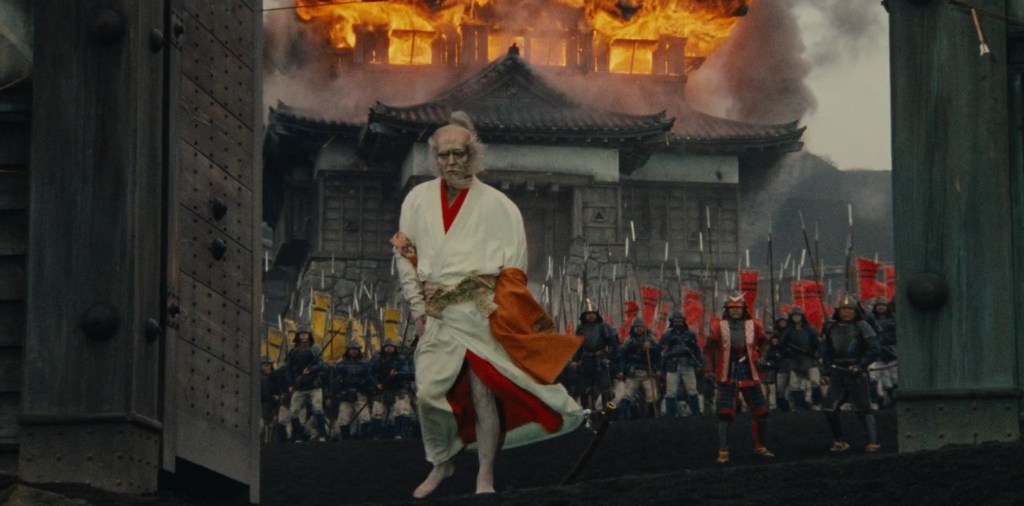
The violence of these battles is the central touch of mastery in Kurosawa’s epic. A whole castle was built – out of plywood – solely so it could be burned down during the pivot sequence at the centre of the film. Hidetora’s last castle is surprised by the armies of both sons, whose soldiers spray it with a never-ending stream of bullets and fire arrows. Playing out in silence under a haunting score, this is a chilling showpiece for Kurosawa’s visual mastery, a terrifyingly nihilistic view of the horror and destructiveness of conflict.

Inside Hidetora’s men are ripped apart or punctured like pin cushions, leaking gallons of crimson blood. His harem commits seppuku. The castle burns down around him. All while Hidetora sits in stoic disbelief at the top of a tower, his connection with reality collapsing. He eventually leaves the castle – walking through the parting invading forces (a shot that could only be attempted once as the set literally burned down around him) and out of the smoking gates. It’s an extraordinary sequence, the finest in the film: wordless, poetic and terrifyingly, hauntingly, brutal.

From here, Kurosawa’s Ran embraces the bleakness of Lear: Hidetora loses all trace of sanity, rages in self-loathing in the same fields he lorded over in the film’s opening sequence, is reduced to pathetically begging for food from the man he blinded and ends the film cradling the body of his murdered son. Around him his fool – an extraordinary performance from Japanese variety performer Peter – mocks his actions and tells bitter jokes about the savagery of the world while despairing and raging at the horrific position he has been reduced to in caring for his master.

Kurosawa embraces that bleakness: but how much does of Shakespeare’s depth does Kurosawa grasp? I’m not sure. In stressing the cruelty and madness of Hidetora, he robs him of Lear’s growing self-realisation about the emptiness of power and his own failings as a ruler. Hidetora is a two-dimensional character, as are most of the others. Kurosawa’s simplification of Lear removes the destructiveness of fate, the grotesqueness of chance and the punishments of loyalty (there is no Gloucester character, while the Kent figure is largely sidelined – both I feel is a real loss).

In making Ran, Kurosawa focused on two things: a depressingly post-Nuclear age vision of the world as a wasteland in waiting, and the pageantry of grand-settings and beautiful imagery. Compare Ran to the faster-paced dynamism of his earlier films (Seven Samurai may be nearly as long, but it doesn’t feel like it compared to the slow-paced Ran). There is a self-important artiness about Ran: it’s more stately style feels like Kurosawa showing he could do Ozu as well as he could Ford, while it’s indulgent run-time (there are many moments of near-silent nihilistic wilderness, that add length and import but not always depth) can test your patience.

Ran is basically a simplification of Lear that takes the core of the story, strips out many of its themes and contrasting sub-plots, and focuses on a single message, of man’s inhumanity to man. In doing that it loses the scope of a play that astutely looks at the personal and the political, the intimate and the epic, that understands the self-deceiving flaws of good and bad men. It’s large and important, but it’s not as powerful a tragedy as Lear because its fundamentally a simple film.

Which is not to say it is a bad film. But it is to say that Kurosawa had perhaps become seduced by his status as a legendary “Great Director” into believing that long and beautiful were synonymous with quality and importance. Ran is a fascinating and chilling film, with many striking and haunting moments. But it also misses some of what made its source material great, and it’s a triumph of moments and visuals than it is of intellect and depth.

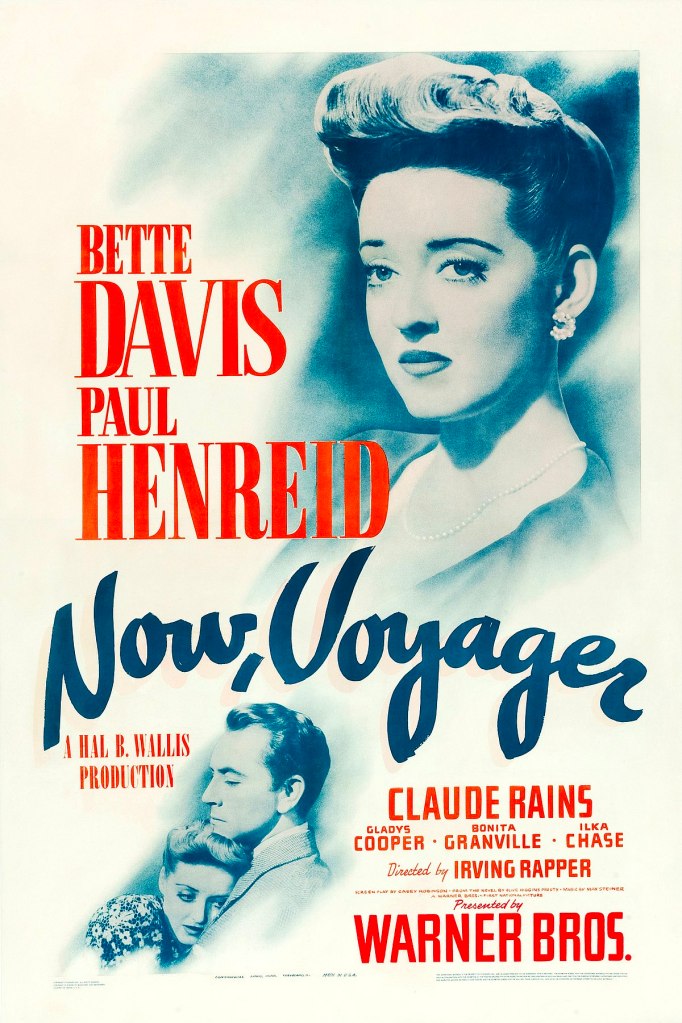
Now, Voyager (1942)

Now, Voyager (1942)

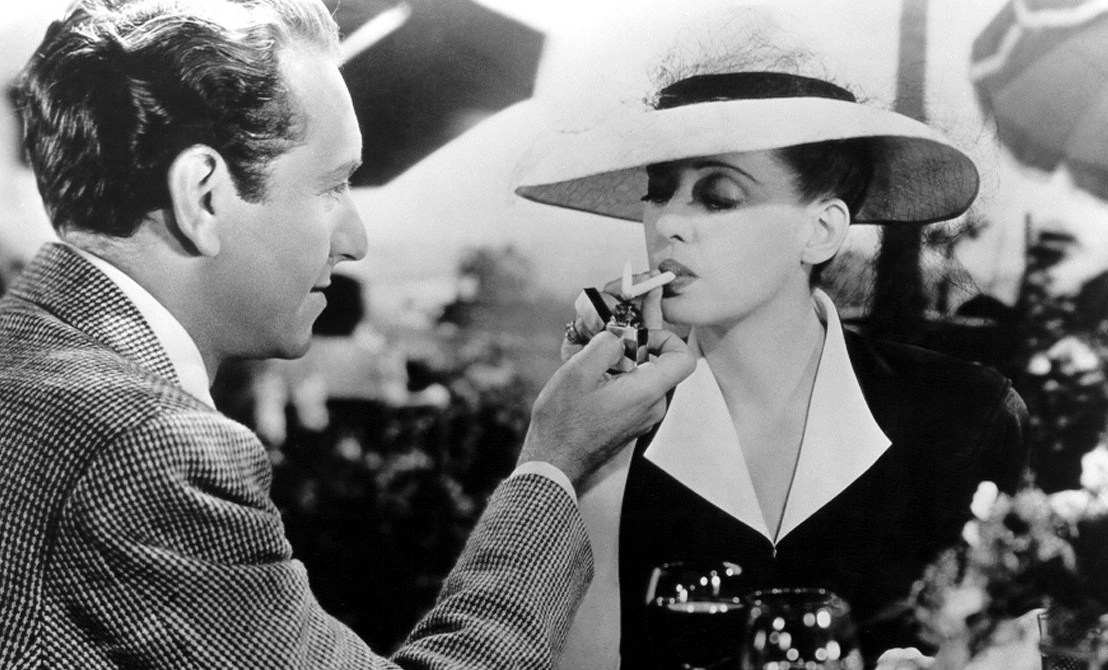
Romance, make-overs and erotic cigarette lighting abounds in this classic luscious romance

Director: Irving Rapper

Cast: Bette Davis (Charlotte Vale), Paul Henreid (Jerry Duvaux Durrance), Claude Rains (Dr Jaquith), Gladys Cooper (Mrs Windle Vale), Bonita Granville (June Vale), John Loder (Elliot Livingston), Ilka Chase (Lisa Vale), Lee Patrick (Deb McIntyre), Janis Wilson (Tina Durrance)

The untold want by life and land ne’er granted, / Now, voyager, sail thou forth, to seek and find”. Walt Whitman’s words are the poetic urging of kindly psychiatrist Dr Jaquith (Claude Rains) to patient Charlotte Vale (Bette Davis) before she embarks on a cruise that will change her life. Crushed under her imperious mother’s (Gladys Cooper) thumb, Charlotte grew-up an unloved ugly-duckling and self-loathing spinster. How will a taste of freedom change her life – and, with that taste, a love affair with unhappily married would-be-architect Jerry Durrance (Paul Henreid)?

It’s easy to see Now, Voyager as a piece of soapy, romantic puff – and there are certainly suds in its DNA – but that’s to do an engaging, heartfelt character-study down. This is a sort of moral rags-to-riches story about a woman who has been mocked her whole life, finding the courage to build her own life. But that life is not the picture-perfect final image you might expect: instead, it’s about compromise and, more importantly, choosing your own compromises. Without knowing it, that is what Charlotte has been striving for. “Don’t let’s ask for the moon: we have the stars” are her famous closing lines, and it’s about the idea that choosing a compromised version of the life she actually wants is better than a life foisted upon her by others.

Now, Voyager works as well as it does, almost exclusively down to Bette Davis. She fought to get the role, hand-picked the director (an old friend) and stars (insisting on Henreid, despite a disastrous test) and reshaped most of the dialogue. It’s all justified by her superb performance. Charlotte Vale, with her ugly-duckling opening appearance, and operatic romance with Jerry, could have been a pantomimic performance. Davis though grounds her in sensitivity, reality and a deep emotional empathy. It’s a complex, heart-stirring performance.

Almost uniquely for stars at the time, Davis was not afraid to get ugly when the part demanded (she practically invented ugging-up). Charlotte Vale’s first appearance – Rapper teases the reveal by focusing first on her hands at her desk, legs as she descends a staircase before allowing her to fully enter frame – is a sight. With an eye-catching, hairy mono-brow, mousy glasses, a flattened haircut and dumpy clothing, she’s a million miles from our idea of 40s glamour. But Davis doesn’t make her a joke or play up to the appearance. She gives Charlotte a steel, born of self-defence – she snaps swiftly at Dr Jaquith when she thinks she is being condescended to – and a deep well of pain and ill-defined longing for a change she can hardly grasp.

Matters are beautifully inverted when she heads off on her cruise (you can criticise the film’s portrayal of therapy, which seems to be easy if you are stinking rich and can afford a cruise). Rapper repeats his intro trick again – this time revealing a physically confident and striking Charlotte, made-up and dressed to the nines. But, just as the self-loathing Charlotte had a defensive steel, so this ‘confident’ Charlotte has the same vulnerability and fear of ridicule and rejection just beneath the surface. Davis brilliantly gives the outwardly changed Charlotte, a different but equally moving vulnerability, a woman still working out who and what she is.

It’s a brilliant performance that gives the entire confection of the film a real emotional heft, as we experience every inch of this seminal voyage with her. And a lot of that life-change is filtered through the bond between her and fellow-passenger Jerry. Skilfully played by Henreid with a euro-charm that barely masks his own sadness, loneliness and guilt, Jerry may look the part but like Charlotte he’s close to succumbing to imposter syndrome. Unloved by his wife (this unseen harridan arguably deserves a film of her own – perfect role for Joan Crawford?) – but trapped into the marriage by his sense of duty and his love for his timid daughter Tina (Janis Wilson).

Jerry and Charlotte’s relationship blossoms from shyness into a genuine love affair. Reading between the lines of its 1940s code, it’s clear our two heroes get-it-on. Stranded in Brazil after a car crash (caused by an uncomfortably dated caricature portrayal of a Hispanic driver), the two of them ‘snuggle up’ for warmth while camping the night in an abandoned building. Any doubts about how far this went is removed when Henreid lights two cigarettes in his mouth in the next scene, passing one to Charlotte who sucks sensually on it. (This was the era when the language of cigarettes was crucial as a stand-in for bumping and grinding).

Of course, an affair could never be explicitly allowed, just as any idea of Henreid divorcing his awful wife was anathema. But its knowing that it-can-never-be which gives the film its romantic force. Charlotte will eventually find herself drawn to helping Jerry’s daughter Tina, their shared love for the child being the thing that will allow them to be married in spirit if not in actuality.

You could argue Charlotte’s decision to semi-adopt Tina as companion is not dissimilar from her own mother’s would-be exploiting of Charlotte as an unpaid nurse. But Charlotte has learned a lot from the cruel fierceness of her mother. Played with a witheringly cold grandeur by Gladys Cooper – at one point she taps her finger on a bed post in a way which captures oceans of barely repressed fury – this woman is selfish, self-obsessed and cruel. Standing up to her expectation that nothing has changed is the major challenge for Charlotte, with Bette Davis skilfully showing it takes all her strength to overcome.

Now, Voyager is an effective romantic film. It’s helped a great deal by Max Steiner’s beautifully romantic score, that perfectly complements and enhances every on-screen image. Superbly acted by its four leads – Claude Rains is also wonderful as the kindly and deeply professional Jaquith – it’s a detailed character study that manages to rise triumphantly above its soapy roots.

12 Monkeys (1995)

12 Monkeys (1995)

A world-ending-virus can only be cured through the power of time-travel in Gilliam’s twisty, paradox time loop

Director: Terry Gilliam

Cast: Bruce Willis (James Cole), Madeleine Stowe (Dr Kathryn Railly), Brad Pitt (Jeffrey Goines), Christopher Plummer (Dr Leland Goines), David Morse (Dr Peters), Jon Seda (Jose), Christopher Meloni (Lt Halperin), Frank Gorshin (Dr Fletcher), Bob Adrian (Geologist), Simon Jones (Zoologist), Carol Florence (Astrophysicist), Bill Raymon (Microbiologist)

2035 and the world is a plastic-coated hell, where what remains of mankind huddle below the Earth in rudimentary, environmentally controlled, airtight refuges. The surface is a dream, now home to a deadly virus that wiped out 99% of the population. That virus was unleashed in Philadelphia in 1996: nothing can stop that. But time travel can help the scientists of 2035 gain a sample of the original pre-mutation virus. They believe it was unleashed by an organisation called “The 12 Monkeys”. Track the organisation in the past and find an original sample of the virus. Easy right?

Wrong. Time travel messes with your mind, making it hard to tell what’s real and what’s not. The travellers are penal “volunteers”. James Cole (Bruce Willis) is selected as he has a photographic memory and a strong memory from 1996 of witnessing a Philadelphia airport shooting, that will help send him back. However, he’s flung back to 1990 and thrown into an asylum, treated by Dr Kathryn Railly (Madeleine Stowe) and sharing a room with environmentalist Jeffrey Goines (Brad Pitt). Rescued and correctly sent to 1996, can Cole convince Railly he’s telling the truth and track Goines who has become the leader of the 12 Monkeys?

12 Monkeys is one of the most intriguing time-travel films ever made – and its future, ripped apart with plague, seems chillingly closer today. It puts a vulnerable, scared person at its centre – and makes him a dangerous, inarticulate Cassandra who reacts with violence when no-one listens him (which they never do). It repeatedly tells us things cannot end well, but still gets us hoping they might anyway. It presents puzzles that provoke debate and stretch the imagination.

Gilliam’s most main-stream film is an eccentric, unsettling, tricksy film that juggles time travel and paradoxes, as well as mental health and the nature of reality. Shot with a Dutch-angle infused oddness – reflecting its hero’s mental unbalance – and scored with a French-inflected whirly-gig musical theme that is reminiscent of the demented street people that pepper the film (and may, or may not, be other unbalanced time travellers), it constantly puts you on edge and unsettles.

This extends to its casting, which takes two Hollywood superstars – Willis and Pitt – and deglamorises them to a shocking degree. As Cole, Willis is shambling, vulnerable, scared and struggling to distinguish between reality and fantasy. An 8-year-old boy when the virus destroyed the world, in a way he’s never grown up. He looks around the world of the past with a wide-eyed wonder (he adores the sun and the feel of the soil beneath his feet) but has the stroppy impulsiveness of a maladjusted teenager. He’s so twitchy and insecure, you start wondering if he is the mentally disturbed man who imagines he’s from the future, that his doctors think he is. It’s Willis’ least-Willis performance ever and one of his finest.

Similarly, Pitt pushes himself as the disturbed, aggressive Goines. Prone to obsessive rambling, that stretches Pitt’s languorous vocal register (he trained for months to improve his vocal range), Pitt’s performance is wide-eyed, unpredictable and unsettlingly dangerous. With a single eye swollen and askew, it’s a performance that plays with being OTT but manages to work because he mostly avoids actorly showing off. Madeline Stowe, by contrast, has the most difficult role as the ‘normal person’, a sceptical psychiatrist becoming more and more convinced Cole is telling the truth.

Of course, despite the film’s efforts to play with reality, the audience are always pretty certain he isn’t wrong about the future. But, with the sight of fellow deranged time travellers, not to mention Willis’ vulnerable performance, that Cole could still be crazy. Even if you are right, doesn’t mean you are sane.

Gilliam’s surrealist future helps with this. Every time Cole is pulled back to 2035, the world becomes ever more deranged. Is his grip on reality eroding, as he is feared it is. Design wise the future is a triumph – but it also seems eerily similar to the 1990 asylum Cole is in. Has the building, and the things in it, been repurposed in 2035? Or, as the scientists of 2035 become ever more surreal (including serenading Cole at one point in a Dennis-Potteresque fantasy), questioning Cole via a circular floating series of TV screens while he sits in a suspended chair, is Cole’s grip on reality gone?

It keeps the tension up in the ‘past’ plotline, even as the things Cole has seen in the future – strange messages on walls, photos, voicemail messages – accumulate. 12 Monkeys is a fascinating time-travel movie, that establishes from the very first moment it is impossible to change the past (something the audience, like the characters, get sucked into forgetting). After all, if the plague was stopped, then time travel would never be invented in the first place. All Cole, and the other travellers, can do is collect information.

But that doesn’t stop the future influencing the past. Goines decides to form the 12 Monkeys based on a conversation with Cole in 1990. Dr Railly becomes fascinated with apocalyptic predictions – writing a book that will influence the man planning viral annihilation in 1996 – only because she meets Cole. And, above all, 2035 Cole’s presence in 1996 leads to that strong childhood memory happening in the first placce. The final reveal of the meaning behind Cole’s recurring memory-dream is the perfect example of a time-loop closing (so much so the scientists in the future bend over backwards, giving Cole a doomed mission, to ensure it happens).

It also explains why he is drawn towards Stowe’s Railly, who resembles (with the exception of her lack of Hitchcock Blonde hair) the woman in his dream. The relationship between Cole and Railly develops into a slightly forced romance (it feels like a script requirement, for all Gilliam’s taking the characters to watch Vertigo to hammer home the obvious contrasts). But when it focuses on two people drawn together for reasons they can’t quite understand (and there are hints of predestination) it just about works. That and the commitment of both actors to the roles.

12 Monkeys is about 15 minutes too long (it’s 1990 section outstays its welcome), especially as the audience is never in doubt that the plague is real (after all this is a movie). But Gilliam keeps us on our toes with how confident we feel in Cole: we’re repeatedly shown he’s violent, inarticulate and impulsive. The final half of the film, where the origins behind events we have been shown or heard in the first half, is fascinating. The tragic turns of the film’s paradoxical temporal loop is brilliantly executed and haunting. Gilliam’s film is quirky, unsettling and a design triumph: but it also tells a fascinating story. It’s his most accessible and crowd-pleasing film.

Vertigo (1958)

Vertigo (1958)

Obsession and grief come dangerously into play in one of the greatest films ever made

Director: Alfred Hitchcock

Cast: James Stewart (John “Scottie” Ferguson), Kim Novak (Madeline Elster/Judy Barton), Barbara Bel Geddes (Midge Wood), Tom Helmore (Gavin Elster), Henry John (Coroner), Raymond Bailey (Doctor), Ellen Corby (Hotel manager), Konstantin Shayne (Pop Leibel), Lee Patrick (Car owner)

Spoilers: Vertigo was controversial at the time for revealing its twist, three quarters of the way through the film. I might well do the same in the review – although this is possibly a richer film if you know the twist going in

In 2012 Vertigo dislodged Citizen Kane at the top of Sight and Sound’s decadal “Greatest Film” poll, after 50 uninterrupted years for Welles’ classic. It’s an astonishing turn-around for a film which was a box-office disappointment and first met with reviews that called it “long and slow” and complained that Hitchcock had “indulged in such farfetched nonsense”. (Welles also hated the film – bet he’s even more pissed off at it now.) This is partly because Vertigo is a fiercely, almost defiantly, complex and cold film that defies easy characterisation and flies in the face of the fast-paced watchability of most of Hitchcock’s popular films. But it’s still a haunting and fascinating masterpiece, which has its greatest impact when you reflect on it days after it has finished.

Its plot is both complex and slight. John “Scottie” Ferguson (James Stewart) is an ex-police detective, his career ended by crippling acrophobia bought on by powerlessly watching a fellow officer fall to his death. He’s hired by old college friend Gavin Elster (Tom Helmore) to follow Elster’s wife Madeline (Kim Novak). Madeline is in the grip of an idée fix that she is an incarnation of Carlotta Valdes, a woman who committed suicide in 1857. Scottie follows her – and develops an idée fix of his own for the beautiful Madeline. When his acrophobia prevents Scottie from saving Madeline from jumping to her death from a bell tower, he suffers a near-breakdown. Then he catches sight of Judy Barton (Kim Novak again) who has a chilling resemblance to Madeline. And Scottie tries to turn her into just that.

Vertigo is a dizzying film of monomania and obsession, something you are immediately plugged into with its beautiful Saul Bass opening (swirling spirals, reflecting the circular nature of the obsessive) and its hauntingly mesmeric and off-beat romantic theme from Bernard Herrmann (possibly his greatest work – and he also scored Kane!). More than any other Hitchcock film, Vertigo places us firmly into the POV of its lead character, who is in all but three scenes and whose perceptions and observations we not only share but which totally guide our understanding of everything we see in the film (until that twist, when suddenly we shift to knowing more than he does).

Hitchcock’s technique is truly masterful here. There isn’t the flash of something like North by Northwest, but the sort of chilling control that builds tension and unease that also marks out films like The Birds or, to a degree, Psycho (although that’s much more of a black joke, where Vertigo is terrifyingly serious). Hitchcock uses a huge number of POV shots, alternating with shots of Stewart’s reactions (at times these are disturbing in their fixed intensity) building a subtle momentum that reflects the character’s obsession and further filters everything we experience from his perspective.

That would be the perspective of an ever-more obsessed man tipping steadily into stalkerish territory. Few films have so clearly drawn the link between the private eye and the voyeur. As Scottie silently prowls the streets of San Francisco, observing every inch of Madeline’s actions – and Vertigo has long, worldless stretches of what Hitchcock called “pure cinema” – the disturbing pleasure and control that following brings you becomes more and more clear. It’s certainly giving a sense of masculinity back to Scottie, introduced to us hanging helplessly from a ledge and then so hamstrung by his condition he can’t even climb a step ladder without collapsing.

Judged from this perspective, Scottie is one of the most darkly disturbing characters in film. Rescuing Madeline from the Golden Gate (where she has jumped in) he takes her home, undresses her and puts her in his bed – hardly normal behaviour. It’s not long from there before he surrenders to his romantic obsession (feelings Madeline perhaps returns), that eventually leads him again to be a powerless witness as Madeline plunges to her death right in front of him.

Catatonia and mental collapse follow – but really it’s perhaps just a continuation of the same obsession in another form. Because after a stay in a sanatorium, Scottie is back on the streets again, prowling for something – anything – that could make him feel closer to Madeline again. Which is how he spots Judy, the woman who reminds him of the woman he’s lost. Scottie doesn’t so much woo Judy as seemingly browbeat her into a bizarre (joyless and sexless) relationship and undertake a terrifyingly grotesque remodelling exercise, designed to make her into a carbon copy of Madeline.

This sequence is probably partly at the heart of the film’s fascination for critics and film historians – even more so since we’ve learned about Hitchcock’s manipulative, controlling relationship with his blonde female stars. Here we have Scottie instructing his love interest how to dress, walk and cut her hair – all while telling her it’s for her own good and she’ll like it – his voice with the breathless longing of a closeted pervert (that is when Scottie manages any sexual yearning to Judy, who he treats more like a treasured exhibit). This is Hitchcock dramatizing his own hang-ups, presenting them as creepy and dangerous, making Vertigo partly as well a fascinating psychological study of its director. Did Hitchcock know that his controlling relationship with women was wrong? And, in real life, could he not help himself or did he not care?

Vertigo is a perfect exploration of obsession. But it also pulls the rug out from us – and rewards constant reviewing as a result – because the film reveals there was a whole other level going on. Scottie may seem the Hitchcock substitute, but the in-film Hitch figure is actually the amiable Gavin Elster. Because the entire action of the film is carefully stage-managed by Elster to manipulate Scottie (and us!): Judy and Madeline (as Scottie has met her) are in fact the same woman, a doppelgänger for Elster’s wife. The real Madeline – who Scottie never sees or meets – is murdered by Elster at the top of that tower, and Judy/Madeline was helping build a backstory to have this murder written off as suicide, with Scottie’s acrophobia perfect to make him a powerless witness.

Here comes that pleasure for rewatching: because now when Scottie rescues “Madeline” from the river, then spends the next day with her, we thought at first he knew more than she. Now however, we understand he’s always been a patsy who knew less than anyone else. We’ve been manipulated by Elster, the master director, pulling the strings and building horrors for us. That’s Hitchcock.

The film reveals this in one of the few scenes told from Judy/Madeline’s perspective – and means we then watch Scottie actually craft a woman who actually is the woman he’s obsessed with into his memory of that very same woman. (Get your head around that!) And she allows it, because she seems as desperate as he to recapture the passion of those brief days together – but cannot tell him the thing that would help to do that. It all leads, of course, to Scottie’s destructive obsession leaving him once again to being a helpless witness as another victim plummets to their death.

Vertigo is effectively a two-hander, and most of the focus usually lands on Stewart. He is chillingly dead-eyed in this, his crazed hunting after something he doesn’t even understand capturing the controlling horror behind some romance. In many ways though, Kim Novak has the more complex part. She doesn’t speak for almost 45 minutes – she spends it mostly in long shot performing Elster’s play for Scottie (and us) of the mentally disturbed wife. But when Novak does take centre stage, this is a complex multi-layered performance, carefully modulated throughout to communicate (in advance) Judy’s vulnerability and love for Scottie, without ever letting us realise she is anything but the death-fixated “Madeline”. Novak marries two contradictory characters into one with a simple and convincing aplomb. Equally good is Barbara bel Geddes, in almost the only other named role, as Scottie’s one-time fiancée now best friend, all too aware that her feelings are not returned.

Vertigo will never match the likes of Casablanca or North By Northwest – on a list of films truly popular with audiences. It’s been described as the ultimate critic’s film: a cool, chilling, brilliantly filmed, psychological thriller that quietly exposes the mechanics of film, the manipulation of story-telling and the dark psyche of its director. In many ways initial reviews were right: on first impression, the film is cold and slow, with characters it’s hard to relate to. But it has a truly haunting quality few others can match. And it constantly presents us with a clear image, while never allowing us to guess we are seeing only part of the overall picture. It can leave us as dizzy as Scottie is, hanging from that ledge and staring down at doom, the camera zooming inside his head and showing us his terrifying POV. You need to work at it, but this is a film to value.

The Batman (2022)

The Batman (2022)

Robert Pattinson presents a noirish Bat in Matt Reeves’ dark, moody vision

Director: Matt Reeves

Cast: Robert Pattinson (Bruce Wayne/Batman), Zoë Kravitz (Selina Kyle/Catwoman), Paul Dano (The Riddler), Jeffrey Wright (Lt James Gordon), John Turturro (Carmine Falcone), Peter Sarsgaard (DA Gil Colson), Andy Serkis (Alfred Pennyworth), Colin Farrell (Oswald Cobblepot/Penguin), Jayme Lawson Bella Réal) Rupert Penry-Jones (Mayor Don Mitchell Jnr), Barry Keoghan (Arkham Prisoner)

The rain pounds down on Gotham. In the shadows a masked man strikes terror into the hearts of wrong-doers. It could only be the start of a new Batman trilogy. At least that’s the intention, as DC Comics mines its strongest asset, in a dark, noirish version that positions Batman as a gumshoe pulp detective with fisticuffs. If Reeves film at times has more ambition than it knows what to do with, at least it is ambitious.

For two years Bruce Wayne (Robert Pattinson) has been crusading on the streets of Gotham as Batman, trying to fix the city’s problems one criminal at a time. He’s formed an uneasy alliance with police Lt James Gordon (Jeffrey Wright) and is just about tolerated by the official force. That starts to change when unhinged serial killer The Riddler (Paul Dano) begins a campaign of terror targeting Gotham’s elites, who he accuses of corruption. How far will the Riddler go? How do crime boss Carmine Falcone (John Turturro) and mysterious cat burglar Selina Kyle (Zoë Kravitz) fit in?

Reeves’ film is a grimy film-noir Batman. Pretty much the entire film is set at night-time, in seedy bars and filthy streets with barely a frame unaccompanied by the pounding of rain on the soundtrack. Atmospherically shot by Grieg Fraser, the film has a rain-sodden canvas with deep blacks and splashes of red. It’s sound design – and Michael Giacchino’s music – uses deep bases and reverbative sounds that give the film an intimidating rumble.

Reeves’ takes Fincher’s Seven and Zodiac as key inspirations, mixed with the shadowy darkness of Pakula and other 1970s filmmakers. Gotham is the hellish noir of Seven, where light is a stranger. The Riddler is radically re-interpreted as an ingenious psychopath, covering his crimes with cryptic clues, cultivating an online audience with videos where he conceals his face behind a sort of gimp mask and prominent spectacles – in methods and style he’s very similar to the Zodiac killer.

Batman is a tech-assisted private eye, working alongside the official forces, doing things they can’t do. Few other Batman films have zeroed in on the detective element of the character as much, but it’s possibly his main skill here: searching for clues, deftly cracking the Riddler’s cryptic clues, chasing down leads, utilising top-of-the-line surveillance equipment (a set of contact lenses that records everything he sees) and making connections from crime to crime. He’s a sort of miserable Sam Spade who punches lots of people.

Setting the film very early in Batman’s crusade allows for a rough and raw quality to Batman’s gear and approach, helped by Pattinson’s age. The suit has a homespun practicality to it, a hulking suit of armour that bullets bounce of, with various useful attachments. The batmobile is essentially a normal car with a massively souped-up engine. Batman often travels on a normal but powerful motorbike, and stakes out witnesses with his armour disguised under a hoodie. At times Bruce misjudges things: a fall from a building that almost goes horribly wrong, the odd fight where he bites of more than he can chew.

With an eemo look inspired by Kurt Cobain, Bruce Wayne is a surly recluse with serious emotional difficulties. He has a tense relationship with surrogate father Alfred (an effective Andy Serkis), who disapproves of how Bruce spends his evenings. The Batman has far less Bruce Wayne in it than almost any other Batman movie. This Bruce only feels comfortable behind the mask and has worked hard to crush all fear and emotion to find security in anonymity. He has cut himself off not only from the city, but from humanity, idealising his lost parents – and is a stern, humourless judge who describes his mission as one of vengeance.

There is a lot of vengeance needed in Reeve’s corrupt Gotham. The film bites off a huge chunk of content around corruption, class conflict and injustice. The Riddler’s crimes are all connected to corruption, people whose hands are actually filthy with drug money. His fury extends to the Wayne family – Gotham’s venerated philanthropists – and the film is at its best with this character when he functions as a sort of avenging angel of class war.

But it doesn’t quite manage to nail down exploring the morality of a serial killer, eliminating pernicious public figures. There is no discussion of the misguided merit in the twisted motives of the killer. He’s always presented as wicked and insane, with no scope given to understand or acknowledge the legitimate social points he makes. A late act reveal of his deeper plot comes from nowhere and (with its indiscriminate destruction) feels inconsistent with any point the film was trying to make earlier. It seems instead to exist to give us a big action set-piece. The film strains towards a coherent message about institutional, systemic corruption, but doesn’t quite give it the depth and shade it needs.

It’s all part of a film that isn’t quite smart enough, or a script that isn’t deft enough. Take a look at those riddles. Darkly fascinating as they are, their never quite strong or enigmatic enough. The film offers no ‘light-bulb moment’ when a hidden message is suddenly made clear. Batman cracks them all quickly, apart from one. Most audience members will quickly suss out that one and you suspect the only reason Batman doesn’t is that if he did the film would end quickly.

Ending quickly is something The Batman isn’t concerned about. At nearly three hours, it is far too long – particularly as it never quite works out what it is trying to say. There are too many sub-plots: an unrecognisable Colin Farrell is good value as The Penguin, but his entire presence is to set up future movies. The film drags out its ending with a sudden twists, which don’t feel like a wider plan playing out behind the scenes rather than slightly jarring extensions.

The Batman covers a lot, but none of it in enough depth. Very good as Robert Pattinson is, I don’t feel we learn a lot about Wayne. The Batman adds a romance with Selina Kyle (a dynamic Zoë Kravitz) and gives her a sub-plot of her own which largely just crowds the film. None of these plots are complex in themselves, but they all play out at the same time, reducing the focus on each of them. It’s all too much for you get to a handle on what the film is trying to be about.

Essentially, you feel Reeves had hundreds of ideas about what he wanted his Batman film to be – and didn’t have the heart to leave any of them out. But, even when over-ambitious, he’s an impressive and exciting film-maker. The Batman is crammed with great scenes (from action to disturbing splashes of horror). When the sequel comes, a clearer overall theme will help a great deal. But, with this dark but beautifully made film – and an impressive Batman from Robert Pattinson – I’ll be excited to see what Reeves does next.

Calm with Horses (2020)

Calm with Horses (2020)

Irish gangsters manipulate a violent but needy boxer in this well-made debut

Director: Nick Rowland

Cast: Cosmo Jarvis (Arm), Barry Keoghan (Dymphna), Niamh Algar (Ursula), Ned Dennehy (Paudi), Kiljan Moroney (Jack), David Wilmot (Hector), Anthony Welsh (Rob), Simone Kirby (Jules)

In rural Ireland a former boxer, Arm (Cosmo Jarvis), has found a new outlet for violence as an gang enforcer. But Arm is, at heart, a gentle soul, and his desire to belong and be part of a “family” is effectively exploited by the gang, especially his weaselly, bullying boss Dymphana (Barry Keoghan) who treats him like an affectionate pet-dog. His ex, Ursula (Niamh Algar), mother to his autistic son Jack, wants him to change his ways or stay out of their lives. But can Arm change?

Rowland’s film has a deliberately seedy quality to it, shot with a grimy intensity and crawling along on its belly among the mud and filth of Irish crime gangs. It’s a thrilling expose though of how crime takes and takes and is never satisfied. It’s turned Arm into a shell, throwing him the odd bone of inclusive comfort, then ordering him out like a rabid dog to hand out another beating to anyone who has crossed the family.

The main target is a man the heads of the family suspect of raping their teenage niece – although whether this was genuine sexual assault or simply a question of perverse family pride is left open. Arm opens the film by handing out a vicious beating – albeit one where he carefully lays out the ground rules with his victim before going about it with a punch-clock sense of duty. It’s what Arm is used for – a not that bright, piece of muscle who, despite his intimidating presence, will do (almost) anything for anyone who makes him feel wanted.

Even if the main person who does is as a dastardly as Dymphana. Keoghan is very good as a snide, insidious small-time crook, who openly calls Arm his dog and fills his head with prejudices and suspicions designed to keep him in his place. If he’s the dark angel, then Ursula is the good one: Algar equally brilliant as a decent, kind, supportive person who has come to the end of her tether with a man who she now feels is a danger to the fragile temperament of her autistic son.

It’s the fate of this son that will penetrate through the dead exterior shell that surrounds Arm, and make him start to question his own life. There is more than a hint that the fragile, timid, surly Arm – beautifully played, with a haunting gentleness under the violent exterior by Cosmo Jarvis – suffers from a similar condition to his son. Like him, he finds rage he can’t control bubbling up inside him (Arm is hopelessly ill prepared for helping his son during Jack’s emotional outbursts). He at times lacks an emotional intelligence to understand how people are treating him and why. It’s something Ursula knows and recognises – and why she gives him as many chances as she does.

Like his son, Arm finds himself calmed by engagement with animals (the title comes from Jack’s therapy sessions, horse riding). He also, buried somewhere in him, has a strong sense of right and wrong and eventually finds the courage to question his orders, as he begins to understand he really belongs not with them but with his ‘true’ family. His motivations shift from simply pleasing his masters to finding the money Ursula needs to move to Cork and place Jack in a special-needs-school, a need for his son that he slowly learns to place above his own wants and desires.

Eventually this explodes into scenes of retributive violence, shot by Rowland with an immersive intensity (there are some particularly uniquely filmed country-lane car-chase scenes, with the camera mounted on the car at an unusual angle). The violence that has lurked only just beneath the surface of the crime family, bubbles savagely to the top as it’s made clear that even the slightest deviation from what the family wants or expects from its enforcer will never be tolerated.

At times, Calm with Horses is a little too reminiscent of other crime dramas: for all its intelligent and skilful construction and playing, there isn’t a lot that feels really original here. Its influences are plain, but what it has is an intelligent empathy for its characters, and their situations, that constantly rewards you. At times, these characters surprise you with how far they will go: at others they disappoint you with their selfishness. But, thanks to the acting and direction, they always feel real.

Calm with Horses is an impressive debut, confident and exciting. Jarvis is superb as an inarticulate, unaware gentle-ish giant, with Keoghan and Algar outstanding in support (both were BAFTA nominated). It’s grimy, matching the dangerous world its set in, but it also has flashes of hope and understanding in it, little moments of calmness that pepper the darkness. It’s a fine crime drama.