Category: Films about obsession

The Most Dangerous Game (1932)

The Most Dangerous Game (1932)

Manhunting takes on a new meaning, in this punchy, influential horror-thriller that launched a whole genre

Director: Ernest B. Schoedsack, Irving Pichel

Cast: Joel McCrea (Bob Rainsford), Fay Wray (Eve Trowbridge), Robert Armstrong (Martin Trowbridge), Leslie Banks (Count Zahoff), Noble Johnson (Ivan), Steve Clemente (Tartar), William Davidson (Captain)

It’s man of course. Adapted from Richard Connell’s iconic short story, The Most Dangerous Game sees famous big-game hunter Bob Rainsford (Joel McCrea) washed up on jungle island in the middle of the ocean. He finds a Gothic castle, home to White Russian aristocrat Count Zahoff (Leslie Banks). Zahoff is an overblown egotist with a hunting obsession. He seems an urbane, generous – if sinister – host. But what’s behind that locked iron door? If he’s such a passionate hunter where are all his trophies? And why do people keep getting ship-wrecked and disappearing on his island?

The Most Dangerous Game is staged in a trim 63 minutes, with much of the first half being build-up towards the extended chase sequence that fills it’s second half. The film kickstarted a genre of “manhunt” films, which would take its ideas (and violence) much further. On its release, many of the shots of Zahoff’s human trophy room (with its mounted and pickled heads and his grim, wry commentary of the fates each met on his hunt) were cut, and the first victim, drunken buffoon Martin Trowbridge (Robert Armstrong) is killed off camera. That’s not to say the violence is avoided as the film’s final battle features snapped spines, stabbings and death by bloody-thirsty hounds.

It all makes for an exciting film, told with whipper-sharp pace. This is especially surprising considering how relatively slowly it starts, with Rainsford and his friends chatting about the ethics of hunting (oh the irony!) on their luxury yacht before it sails into Zahoff’s booby trap. Any idea we are in for a staid journey is quickly dispelled as Rainsford’s two fellow survivors are swiftly gutted by sharks, forcing him to swim for shore and the striking, immersive jungle set.

The Most Dangerous Game was shot on the same sets as King Kong – either concurrently or as a test for design work for that classic, depending on who you ask. Schoedsack would go on to direct that – and bring along Wray, Armstrong and several other members of the cast – and TMDG is a wonderful initial try-out for Kong. You can even recognise shots and settings from that film, while the film’s wonderful use of tracking shots, careful editing and superb whip-pans as hunter and hunted charge through the bushes makes for brilliant dramatic tension in its own right.

That’s after we’ve had the odd gothic, horror-tinged oddness of Zahoff’s castle. Zahoff’s trophy room is somewhere between medieval torture chamber (a sort of iron maiden device seems to be the main persuader Zahoff users to get guests to join in ‘the game’) and haunted house, with pickled heads bubbling in jars. The house itself is intimidating, huge in scale with rooms decorated with blood-thirsty hunting tableaus inspired by myths and legends.

It all matches Zahoff’s own OTT grandness. Played, in a remarkable film debut, by Leslie Banks, Zahoff is a truly iconic villain. Banks, a war veteran with striking scars and half of whose face had been paralysed, is a mesmeric, captivating presence whose eyes shine with obsessive indifference and sadistic glee. Spending his nights pontificating to his guests – who he treats with snobby disdain – he’s also a braggart and a cheat. He talks a good game of giving his guests a “fair chance” – but arms them only with a knife, while he has a bow and arrow and rifle (not to mention a team of dogs and three burly, violent, Tartar servants). Banks plays the role to the absolute hilt, dressed in stormtrooper black, a riotous operatic grandness just the right side of camp, relishing every second.

He soaks up most of the interest in the film. Joel McCrea is left with little to do but to look wary – although the revenge-soaked fury he returns with in the film’s violent denouement is effective. Fay Wray adds a lot of charm to the film in this early trial as scream queen. Robert Armstrong tries the nerves a little too much as her drunken brother, overplaying the comic stumbling. But the relative grounded normality of McCrea and Wray is needed for us to stick with them when they are reduced to fleeing through the jungle to escape the maniacal eyes of Banks.

Zahoff of course wants to get the respect of noted hunter Rainsford, but that doesn’t stop him frequently cheating in their battle of wills. He’s smart enough to dodge Rainsford’s traps, but doesn’t hesitate to unleash his hounds or leave (what he believes to be) the killing blow to someone else. It’s a nice beat to remind us that, for all his big speeches, Zahoff is an inadequate bully desperate to be the legend he claims to be.

It’s something we grow aware of throughout the film’s momentum packed second half, essentially a wild chase through the jungle with Rainsford and Eve desperately trying everything to stay one step ahead (the original story didn’t include a female character, but it’s a wonderful insertion which helps humanise Rainsford considerably compared to Zahoff). The unrelenting action, expertly shot, is undeniably exciting (even if we expect, based on its successors, a higher number of innocents being chased to meet fatal deaths) helping to make TMDG one of the most influential B-movies around.

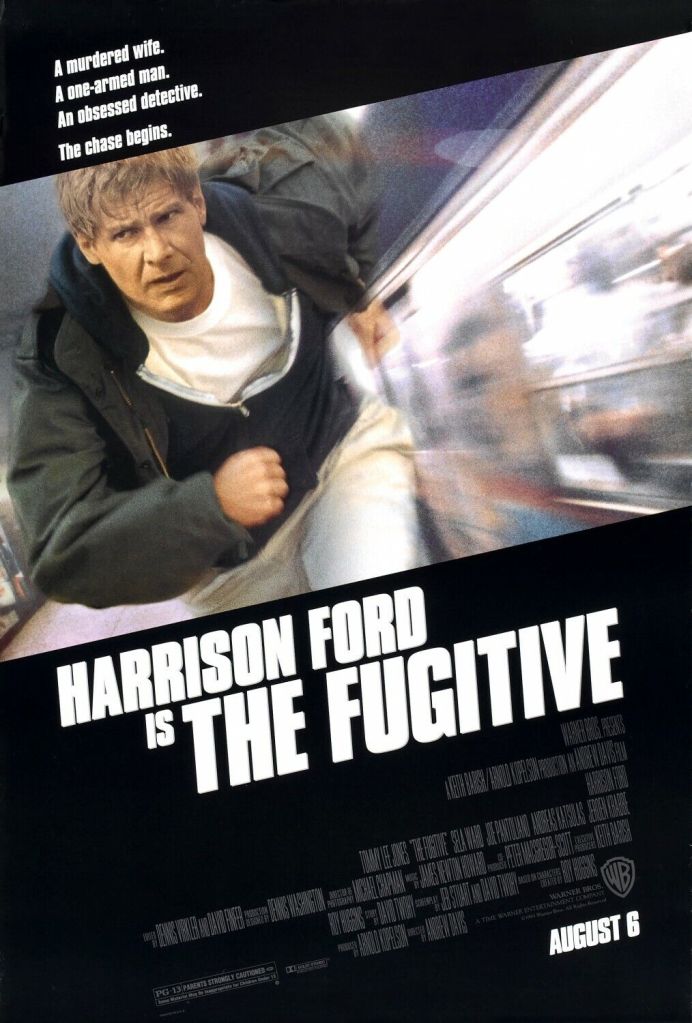
The Fugitive (1993)

The Fugitive (1993)

An innocent man goes on the run in the one of the finest thrillers of the 90s

Director: Andrew Davis

Cast: Harrison Ford (Dr Richard Kimble), Tommy Lee Jones (US Marshal Sam Gerard), Sela Ward (Helen Kimble), Joe Pantoliano (US Marshal Cosmo Renfro), Jereon Krabbé (Dr Charles Nichols),Andreas Katsulas (Fredrick Sykes), Daniel Roebuck (US Marshal Bobby Biggs), Tom Wood (US Marshal Noah Newman), L Scott Caldwell (US Marshall Erin Poole), Johny Lee Davenport (US Marshall Henry), Julianne Moore (Dr Anne Eastman), Ron Dean (Detective Kelly), Joseph Kosala (Detective Rosetti), Jane Lunch (Dr Kathy Wahlund)

I think there are few things more terrifying than being accused of something you didn’t do. How can you hope to prove your innocence, when no one listens and there isn’t a scrap of evidence to back up your story? How dreadful again if the crime you are accused of, that everyone thinks you are guilty of, is the brutal murder of your wife? The double blow of everyone thinking you guilty, while the real killer walks free. What would you do to clear your name? And how much harder would that be, if you were also on the run from the law who are eager to prep you for the electric chair?

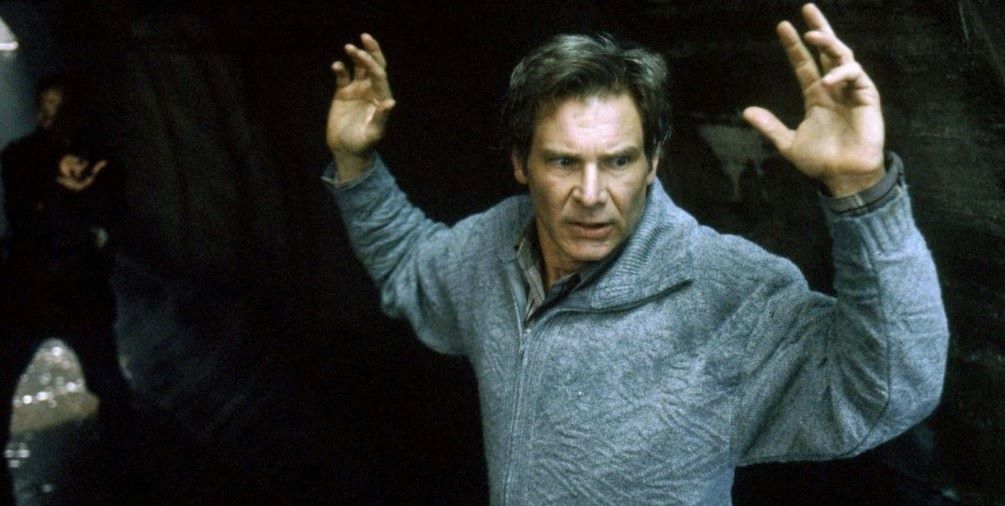
It’s the key idea of The Fugitive, adapted from a hit 60s TV show, and undoubtedly one of the best thrillers of the 90s. Harrison Ford is Dr Richard Kimble, on death row for the murder of his wife Helen (Sela Ward). In transit to prison, an accident caused by a convict’s escape attempt gives him a chance to escape. Returning to Chicago, Kimble is determined to hunt down the mysterious one-armed man he knows murdered his wife and work out why. Problem is, he’s being chased down by a team of US Marshals led by the relentless Sam Gerard (Tommy Lee Jones), who’s not interested in Kimble’s guilt or innocence, only in catching him.

The Fugitive is propulsive, involving and almost stress-inducing in its edge-of-the-seat excitement. It’s a smart, humane and gripping thriller, both a chase movie and an excellent whodunnit conspiracy thriller. It’s one of those examples of Hollywood alchemy: a group of people coming together at the right time and delivering their best work. It’s comfortably the finest work of Andrew Davis, a journeyman action director, who delivers work of flawless intensity, perfectly judging every moment. It’s shot with an immediacy that throws us into the city of Chicago and its surroundings (Davis was a resident of the city and worked with photographer Michael Chapman to bring the real city to life on screen) and the film never lets up for a moment.

It gains hugely from the casting of the two leads. No actor can look as relatably harassed as Harrison Ford. Determined but vulnerable – there is a marvellous moment when Ford squirms with suppressed fear rising in an elevator filled with cops – Ford makes Kimble someone we immediately sympathise with. He’s smart – evading police, forging IDs, inveigling himself into hospitals to access amputee records – but constantly aware of the danger he’s in, brow furrowed with worry, narrow escapes met with near-tearful relief. Ford excels at making righteousness fury un-grating – the film makes a lot of his boy-scout decency – and never forgets Kimble is a humanitarian doctor, putting himself frequently at risk to save lives, from pulling a wounded guard from wreckage during his escape or saving a boy from a missed diagnosis in the hospital where he is working as a cleaner.

You need a heavyweight opposite him, which the film definitely has with Tommy Lee Jones. Jones won an Oscar for his hugely skilful performance. It would have been easy to play Gerard as an obsessed, fixated antagonist. Jones turns him into virtually a dual protagonist. Much as we want Kimble to stay one step ahead of the law, we respect and become bizarrely invested in Gerard’s hunt for him. Jones is charismatic as the focused Gerard, but also a man far more complex than he lets on. He genuinely cares for his team, takes full responsibility for their actions and finds himself becoming increasingly respectful of Kimble, even entertaining the idea of his innocence.

Not that an unspoken sympathy will stop him doing his job. When Kimble pleads his innocence at their first meeting his (iconic) response is “I don’t care”. Later, he doesn’t hesitate to fire three kill-shot bullets at Kimble when nearly capturing him in a government building – Kimble saved only by the bullet-proof glass between them. Jones never loses track of Gerard’s dedication above all to doing his job (the investigation he starts into Kimble’s case is motivated primarily by it being the most efficient way to work out where Kimble might go). But the edgy humour and pretend indifference hide a man passionate about justice and with a firm sense of right and wrong.

These two stars make such perfect foils for each other, it’s amazing to think they spend so little time opposite each other. Davis makes sure those few meetings have real impact, starting with their iconic early face-off at the top of a dam. A gripping chase through the bowels of this concrete monster, it’s also a brilliant establishing moment for how far both men will go: Gerard will continue the hunt, even after losing his gun to Kimble in a fall – because he has another concealed, ready to hand; Kimble won’t even think about using a gun and will go to the same never-ending lengths to preserve his chance at proving his innocence, by jumping off that dam.

The film implies they recognise these similarities in each other. Perhaps that’s why Kimble even eventually bizarrely trusts Gerard as a disinterested party – even while he remains terrified of Gerard catching up with him. The unpicking of (what turns out to be) the conspiracy behind Helen’s death is carefully outlined and surprisingly involving (considering it rotates around sketchily explained corporate shenanigans) – largely because Davis has so invested us in Kimble’s plight.

That’s the film’s greatest strength. Everything draws us into sharing Kimble’s sense of paranoia: that one misspoken word or bad turn could lead to his capture. Scored with lyrical intensity by James Newton Howard, it’s tightly edited and only gives us information when Kimble gets it. We only learn information about the night of the murder as he remembers or uncovers it. Davis twice pulls brilliant “wrong door” routines, where both editing and the careful delivery of information to us at the same time as Kimble makes us convinced that raids are focused on him, when they are in fact looking at someone else entirely.

This sort of stuff makes us nervous, worried for Kimble – and hugely entertained. I’ve seen The Fugitive countless times, and its relentless pace, constant sense of a never-ending chase and the brilliance of its lead performers never make it anything less than utterly engrossing. There is barely a foot wrong in its taut direction and editing and it’s crammed with set-pieces (the dam face-off, a chase through a St Patrick’s Day parade, a breathless fight on an elevated train) that never fail to deliver. It’s a humane but sweat-inducing thriller, a near perfect example of its genre.

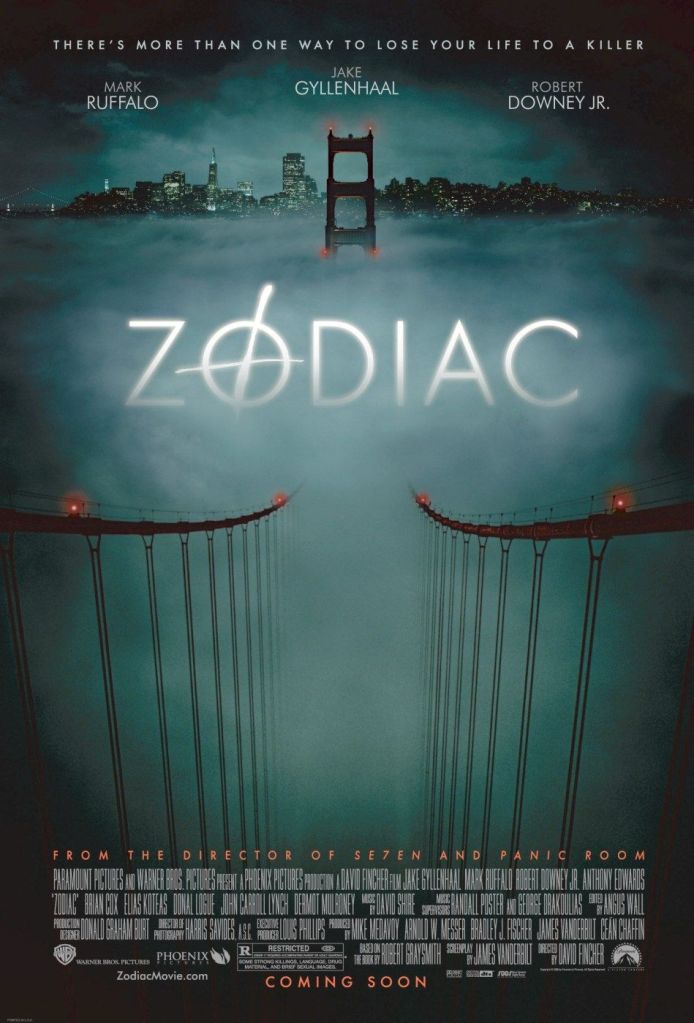
Zodiac (2007)

Zodiac (2007)

A chilling chronicle of the hunt for a serial killer told with a superb mix of journalism and filmic flair

Director: David Fincher

Cast: Jake Gyllenhaal (Robert Graysmith), Mark Ruffalo (Inspector Dave Toschi), Robert Downey Jnr (Paul Avery), Anthony Edwards (Inspector Bill Armstrong), Brian Cox (Melvin Belli), Elias Koteas (Sergeant Jack Mulanax), Donal Logue (Captain Ken Narlow), John Carroll Lynch (Arthur Leigh Allen), Dermot Mulroney (Captain Marty Lee), Chloë Sevingy (Melanie Graysmith), John Terry (Charles Thieriot), Philip Baker Hall (Sherwood Morrill), Zach Grenier (Mel Nicolai)

It’s one of the great unsolved mysteries of American history, like San Francisco’s version of Jack the Ripper. For a large chunk of the late 60s and early 70s, a serial killer known only as “the Zodiac killer” murdered at least five (and claimed 37) innocent people, all while sending mysterious, cipher-filled letters to San Francisco newspapers, taunting police and journalists for failing to catch him and threatening further violent acts. The investigation sifted through mountains of tips and half clues but only produced one possible suspect, Arthur Leigh Allen: though no fingerprint or handwriting match could conclude a case.

The story of the hunt for this elusive killer, stretching into the 1980s and concluding with another dead-end coda in 1992, is bought to the screen in a film from David Fincher that expertly mixes cinematic flair with journalistic observation. Channelling All the President’s Men and 70s conspiracy thrillers as much as it does the dark obsession of Fincher’s Seven, Zodiac is a master-class not only in the bewildering detail of large-scale investigations (in the days before computer records and DNA evidence) but also the grinding, destructive qualities of obsession, as those hunting the Zodiac killer struggle to escape the shadow of a case that grows to dominate their lives.

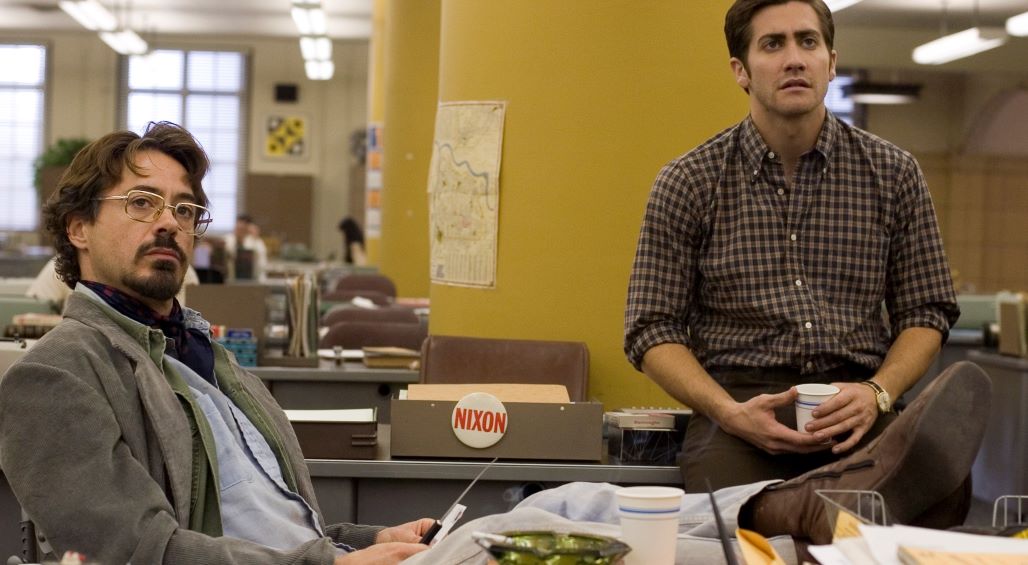
Zodiac focuses on three men, all of whom find their lives irretrievably damaged by their investigation. At first, it seems the drive will come from Robert Downey Jnr’s Paul Avery. Avery is the hard-drinking, charismatic, old-school crime correspondent on the San Francisco Chronicle. In a performance exactly the right-side of flamboyant narcissism, Downey Jnr’s Avery is a man who likes to appear like he takes nothing seriously, even while the burden of the case (and a threat to his life from the Zodiac killer) tips him even further into a drink habit that is going to leave him living in a derelict houseboat, in a permanent state of vodka-induced intoxication.

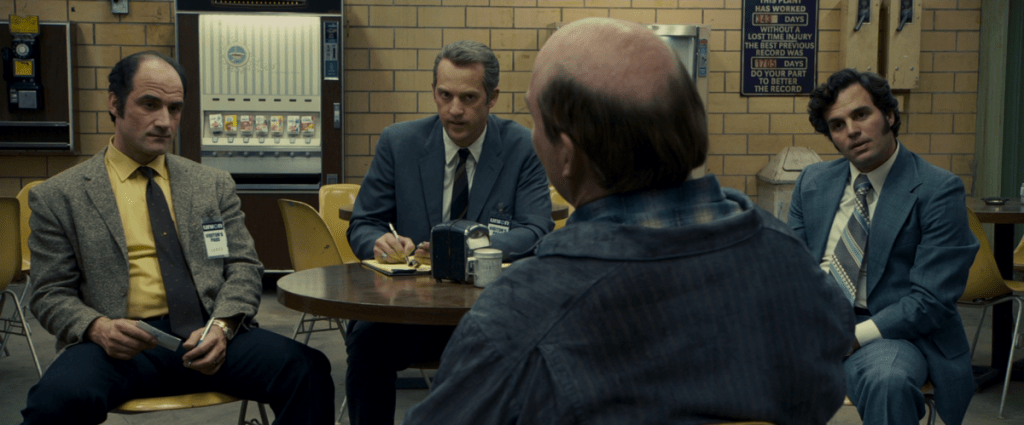
The second is Inspector Dave Tosci, a performance of dogged, focused professionalism from Mark Ruffalo. He’s confident he’ll find his man, and will go to any lengths to do it, staying on call night and day, and hoarding facts about the case like a miser. He relies more than he knows on level-headed, decent partner Bill Armstrong (played with real warmth by Anthony Edwards). Tosci’s self-image and belief slowly crumble as every lead turns dead end, every gut instinct refuses to be backed by the evidence. The killing spree becomes his personal responsibility, a cross he bears alone for so long that when a belated letter from Zodiac surfaces in 1978, his own superiors believe Tosci sent it in some vain attempt to keep a cooling case alive.

Our third protagonist, present from the arrival of the very first Zodiac letter at the door of the Chronicle, is Jake Gyllenhaal’s Robert Graysmith. A quiet, studious, teetotal political cartoonist who is literally a boy scout, Graysmith spent a huge chunk of the 70s and 80s trying to crack the case, eventually turning his investigation into a best-selling book. It’s Graysmith who becomes the focus of Fincher’s investigation of obsession. The glow of monomania is in Gyllenhaal’s eyes from the very start, as the cipher and its deadly message spark a mix of curiosity and moral duty in him. He feels compelled to solve the crime, but it’s a compulsion that will overwhelm his life. The Zodiac is his Moby Dick, the all-powerful monster he must slay to save the city. (“Bobby, you almost look disappointed” Avery tells him, when Avery suggests some of the Zodiac’s murderous claims are false, as if reducing the wickedness of the Zodiac also reduces the power of Graysmith’s quest.)

The real Graysmith commented when he saw the film, “I understand why my wife left me”. It’s a superb performance of school-boy doggedness, mixed with quietly fanatical, all-consuming obsession from Gyllenhaal, as the film makes clear how close he came (closer than almost anyone else) to cracking the case, but nearly at the cost of his own sanity. Graysmith pop quizzes his pre-teen children on the case over their breakfast (a far cry from, at first, his instinct to shield his son from the press coverage) and as he becomes increasingly unkempt, so his house more and more becomes a mountain of boxes and case notes.

It’s the secondary theme of Zodiac: how obsession doesn’t dim, even when events and evidence drop off. The second half of the film features very little new in the case (which peaked in the early 70s) but focuses on the lingering impact of the ever more desperate and lonely attempts to solve it. Armstrong, the most well-adjusted of the characters, perhaps knew it was a hopeless crusade when he threw his cards in and left the table after a few years to spend time with his children while they grew up. Avery cashes out as well – even if his health never recovers. Tosci is cashiered from the game, and even Graysmith finally realises the impact on him.

That second half of the film is long. Too long. It also, naturally, leaves us with no ending – a sad coda that hints at the guilt of primary (only) suspect Arthur Leigh Allen, but gives us (just like the surviving victims) no closure. It’s fitting, and deliberate, but still the only real flaw of Zodiac is that, at 150 minutes, it’s too long. The deliberate draining of life from the case, like a deflating balloon, also impacts the narrative, which consciously drops in intensity (and, to a degree, interest – despite Gyllenhaal’s subtle and complex work as Graysmith). It’s even more noticeable considering the compelling flair with which Fincher delivers the first half of his scrupulously researched film.

Fincher and screenwriter James Vanderbilt spent almost 18 months interviewing everyone involved with the case. Nothing was included in the film unless it could be verified by witnesses. That included the crimes of the Zodiac: only attacks where there were survivors are shown, the only minor exception being Zodiac’s murder of a taxi driver (where only distant eye-witnesses were available) – even then, every event is confirmed by ballistics and no dialogue is placed into the mouth of the victim. The film also acknowledges the unknown nature of the Zodiac killer: each time the masked killer appears in recreations of his crime he is played by a different (masked) actor, subtle differences in build, tone of voice and manner reflecting the contradictory eye-witness statements. These chilling scenes are shot with a sensitivity that sits alongside their horrifying brutality. Fincher felt a genuine responsibility to reflect the horror of what happened, but with no sensationalism.

Instead, he keeps his virtuoso brilliance for the investigation. The newspaper room filling with the super-imposed scrawl of the Zodiac killer, while the actors read out the words. Restrained but hypnotic editing, carefully grimed photography, camera angles that present everyday items in alarming new ways, a mounting sense of grim tension at several moments that makes the film hard to watch. A superb sequence surrounding the Zodiac’s demand to speak to celebrity lawyer Melvin Belli (a gorgeous cameo from Brian Cox), first on a live TV call-in show, then in person (a “secret meeting” swamped by armed police, which Zodiac, of course, doesn’t turn up to). This is direction – aided by masterful photography (Harris Savides) and editing (Angus Wall) – that immerses us in a world (like drowning in a non-fiction bestseller), while never letting its flair draw attention to itself.

Zodiac was a box-office disappointment and roundly forgotten in 2007. It’s too long and loses energy, but that’s bizarrely the point. It implies, heavily, that Allen (played with a smug blankness by John Carroll Lynch) was indeed the killer, but doesn’t stack the deck – every single piece of counter evidence is exhaustingly shown. In fact, that’s what the film is: exhaustive in every sense. It leaves you reeling and tired. It might well have worked better, in many ways, as a mini-series. But it’s still a masterclass from Fincher and one of the most honest, studiously researched and respectful true-life crime dramas ever made. And just like life, it offers neither easy answers, obvious heroes or clean-cut resolutions, only doubts and lingering regrets.

Kinds Hearts and Coronets (1949)

Kinds Hearts and Coronets (1949)

Murder and amorality abound in the darkest (and perhaps Greatest) Ealing comedy ever

Director: Robert Hamer

Cast: Dennis Price (Louis Mazzini), Alec Guinness (The nine members of the d’Ascoyne family), Valerie Hobson (Edith), Joan Greenwood (Sibella), Audrey Fildes (Mama), Miles Malleson (Hangman), Clive Morton (Prison Governor), John Penrose (Lionel), Hugh Griffith (Lord High Steward)

Imagine you’re Louis Mazzini (Dennis Price). Your mother is the outcast daughter of the d’Ascoyne family (all of whom, male or female, bear a striking resemblance to Alec Guinness), Dukes of Chalfort. These vindictive snobs won’t even allow his mother to be buried in the family mausoleum. However, in the event of a series of unlikely deaths, Louis is the eventual heir to the dukedom. That couldn’t happen, could it? Even if they’re all such stuffy, tedious bores that the suave, sophisticated, urbane and witty Louis feels a lot more like what a duke should be.

What to do? Well, it’s obvious really: Louis will have to murder them. Because Louis wants nothing more than the thing he can’t have. It’s the same with the ladies in his life: his childhood sweetheart Sibella (Joan Greenwood), sensual and manipulative, seems all the more tempting when he’s with the refined and austere Edith (Valerie Hobson) and vice versa. We know that the charming Louis’ murderous career will eventually end at the gallows – the film opens with him writing his memoirs and eating his last meal in prison – but what crime will find him there?

Kind Hearts and Coronets is one of the first of the Ealing comedies. It’s also pretty much the one that sets the Gold Standard. I’ll confess I’ve been sceptical in the past, but rewatching it again, its black comic humour, shrewd psychology and delightful amorality delighted me as never before. Kind Hearts is a very, very funny movie: perfectly constructed, gorgeously scripted and supremely sharp, knowing and scintillating. It’s a miraculously marvellous film.

Is there a comedy sharper and more heartless than Kind Hearts? Our hero is, at best, a sociopath who kills without the slightest regret. Murders are frequent punchlines. One of its leading ladies is as selfish, conniving and ruthless as the hero. D’Ascoynes bite the dust regardless of their decency (and some of them are genuinely quite nice). But we don’t care – largely because Louis is such a smoothly charming and amusing person.

Brilliantly played by Dennis Price, even when poverty forces him into the role of draper’s assistant Louis is the genteel duke to his fingertips. His sociopathic focus on his own desires is delivered with such dry wit (“It is so difficult to make a neat job of killing people with whom one is not on friendly terms”) we can’t help but like him, even though he is a remorseless killer. Dispatching one d’Ascoyne and his mistress in a river “accident” he only sighs “I was sorry about the girl, but found some relief in the reflection that she had presumably during the weekend already undergone a fate worse than death.”

Some critics have attempted to position Louis as some sort of class warrior, pruning the nobility. Would that were so, eh? The biggest snob in the film is clearly Louis (compared to him the worst of the d’Ascoynes are more rude and boorish), a man so convinced of his own intellectual and hereditary superiority that even his lowly roots don’t concern him.

Louis really matches our expectations of a duke. He’s refined in voice and manner, dignified in physicality and has the sort of arch wit no one else can compete with (when Sibella tells him her husband wishes to go to Europe to expand his mind, Louis replies “He certainly has room to do so”). He is a million miles from a class warrior: he wants nothing more than to take his place on the velvet cushions of the House of Lords (so much so he insists on being tried there). He’s so convinced of his own superiority, the dispatch of legions of d’Ascoynes cause him to lose not a second of sleep.

He’s also charming, funny and ingenious: we like him. It’s the same reason we like Joan Greenwood’s scheming, sexy and selfish Sibella: what’s more fun than an unashamed baddy? It’s easier to like her more than Valerie Hobson’s staid Edith – though Hobson’s generous performance is spot on for creating the ideal upper-class wife, exactly the sort of refined status symbol Louis would long for.

Hamer’s perfectly paced comedy is largely a triumph of dialogue and characterisation. He shoots much of it in carefully positioned mid-shot. But there are wonderful moments of visual comedy. Who can forget Admiral d’Ascoyne slowly submerging, going down with his sinking ship? Or, best of all, Louis and Edith’s gentle garden conversation about her husband Henry d’Ascoyne’s future while, in the background, over a wall, the small explosion that has just killed him smokes away (“I could hardly point out that Henry now had no time left for any kind of activity, so I continued to discuss his future” Louis observes). But above all, Hamer doesn’t skim on the cold amorality of Louis. While we are never invited to judge him, there are no attempts to hide his sociopathic blankness.

Confronted with real emotion and situations outside his control, Louis is helpless. When his mother dies, he can only mourn her with a flourish straight out of the cheap melodrama he despises. When Sibella’s husband, the dull Lionel, insults his background, he’s reduced to punching him. Caught off guard in his trial, his articulate wit absolutely deserts him. Louis slips on  personae like the fine suits he wears, but his ambitious mind can only travel on his pre-planned route, no others.

But that makes him more than match for the d’Ascoynes. In a masterstroke, all members of this family are played by Alec Guinness, the sort of impish, playful trick Guinness loved. It’s a series of eight distinct comic sketches – to be honest none of them a challenge to Guinness, who is such a great actor that playing these pencil-sketch eccentrics was no-problem-at-all – but still a delightful running gag. His d’Ascoynes include a bumbling vicar, a windbag general forever banging on about his Boer (Bore?) war, a sneering playboy scion, bumbling amateur-photographer Henry (the most sympathetic by a mile), a stuffy banker, an austere suffragette and a bullying duke with a capacity for violence.

Seeing each of these Guinnesses is a neat running joke (not to mention, a little gag at the in-breeding of the upper classes). Price gets in on the act as well, doubling up as Louis’ Italian Tenor father (who dies of shock on Louis’ birth – our hero’s first murder?). But it’s also part of the film’s comedic commentary on construction, duality and falseness. Is it a surprise that the d’Ascoynes are all facets of the same actor, when Louis himself is an entirely self-constructed man, part bitter by-blow, part natural duke? Nothing is ever quite what it seems. Louis lies to everyone he meets, pretends affections he never feels and presents a front to the world totally different from his real self. Even the reason Louis is on death row turns out to be radically different from what we expect.

Kind Hearts and Coronets is a perfect display of arch Wildean front, redirected into sociopathic irritation (I can’t call Louis furious – he’s not got enough depth to him for real anger). It’s a jet-black comedy, crammed with superb lines and brilliantly acted, above all by Price whose tortured unknowability behind his Cowardian suaveness is perfect. Guinness went into film legend, Greenwood is fascinatingly vicious and Hobson the embodiment of polite class. Every scene has a great line and the humour is as dark as it comes. It’s one of the greatest of all Ealing’s comedies –certainly the darkest and most vicious – with a hero who looks, acts and talks like a villain.

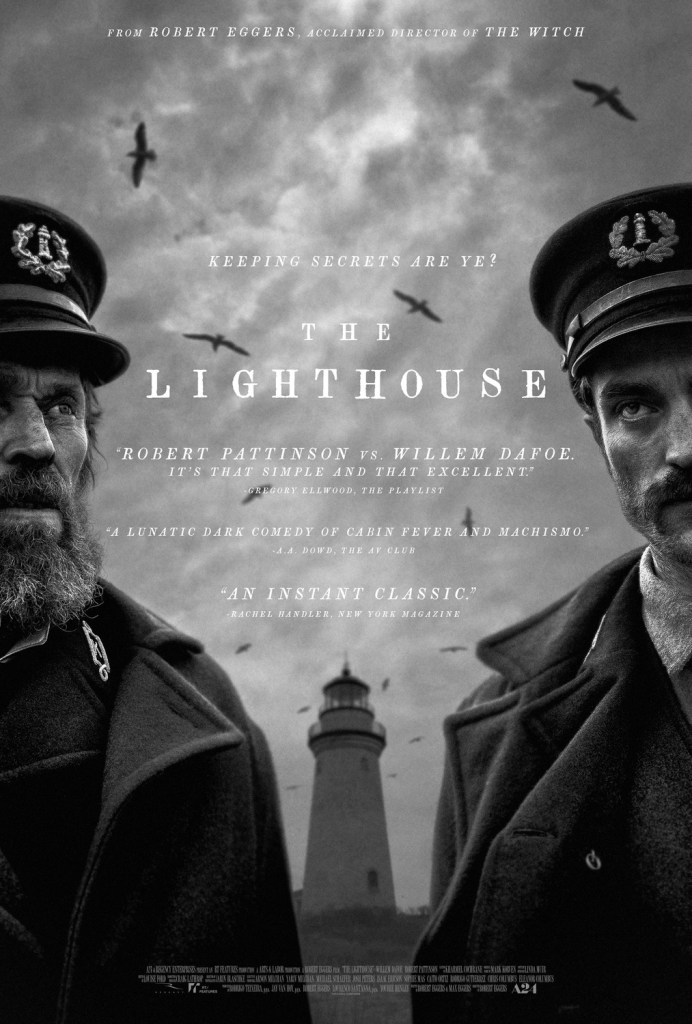
The Lighthouse (2019)

The Lighthouse (2019)

Undefinable, haunting madness in Robert Egger’s mesmeric film that defies categorisation

Director: Robert Eggers

Cast: Robert Pattinson (Ephraim Winslow), Willem Dafoe (Thomas Wake)

Who’d want to be a lighthouse keeper? Weeks on end, stuck on a rock, with nothing but sea gulls and your fellow keepers for company. The cabin fever might well start to make you feel your grip on reality shifting. You’d definitely think it was a strong chance watching Robert Eggers’ mesmeric, enthralling and undefinable masterpiece, a mix of everything from Victorian shlock to Greek Mythology via MR James and Edgar Allen Poe, by way of Freud and Jung. It’s impossible to work out, horrifyingly clear and deeply, unsettlingly brilliant.

Two ‘wickies’ (lighthouse keepers) in 1890s arrive on an island off the coast of New England. Thomas Wake (Willem Dafoe) is a (self-proclaimed?) salty-sea-dog and veteran wickie. He tends the light. His assistant, Ephraim Winslow (Robert Pattinson), is a former woodworker working on contract, seemingly on the run from something. He is the island’s dogsbody and tends the mechanisms that keep the light on and turning and the island’s fog-horn blaring. These two live cheek-by-jowl, a relationship that oscillates between distrust, resentment and strange warmth.

Things take an increasing turn for the bizarre, as a storm cuts them off from their scheduled relief. Slowly the isolation, supplies failure (gin and beans are seemingly the only food sources left) tap into the psychological flaws in the men themselves. Ephraim becomes ever more consumed by visions of a horrific but sensual mermaid. Wake obsessively guards his sole access to the lighthouse tower – and, Ephraim suspects, the mysteries it contains. Their relationship crosses boundaries of longing, violence and anger.

The Lighthouse is somewhere between parable, modern myth and psychological study. You could call it a horror film – I see it more as a classic ghost story – but you could just as easily call it a survivalist film, a character study or a psychological thriller. Egger’s insidiously unsettling film-making and the sublime acting from the two leads combine to make a film ripe for interpretation, and intensely rewarding on rewatch. It’s an explosion of artistic brilliance.

Shot in a superbly atmospheric black and white – and a claustrophobic academy ratio 4:3 – it’s a film that presents one striking, chilling, unforgettable visual image after another. Inspired by silent cinema – in particular Murnau, Lang and von Sternberg, although I spotted elements of Keaton – but as if moody German expressionism was used to shoot a Rorschach test. The inky blacks, and overwhelming bursts of blinding white light, suggest unimaginable horrors lurking out of sight, while its impressionistic imagery constantly pushes us to question the reality of the film.

It all builds on the superb feeling of isolation Eggers invokes. Rooms are small and crowded with furniture. The island is a bleak rock, shorn of any vegetation. The only wildlife is an army of seagulls. The blare of the island’s foghorn is continuous – sounding like a doom-laden rumble from Hell – that seeping into the viewer’s soul. Every corner of the lighthouse station becomes achingly familiar to the viewer and somewhere you can imagine not wanting to spend a second longer than you have to.

Stretching their vocal muscles around a script (written by Eggers and his brother Max) full of rich, chewy, Victoriania dialogue by way of Beckett and Pinter (in one compellingly funny sequence, the two actors basically shout “what” at each other over and over again) both are superb. Dafoe walks a fine line expertly between realism and Robert-Newton-esque parody, as the saltiest sea-dog imaginable, who can oscillate between surly admonitions and flights of myth-filled, metaphorical fancy. Pattinson dives head first into a man who we are never sure we fully understand: is he a frustrated time-server, a violent monster, a delusional schizophrenic, a little-boy lost? Either way it’s a truly brilliant performance of Day-Lewis level commitment and immersion.

You could have a lot of fun arguing that perhaps both men are two halves of the same fractured psyche (as if Wake is a future version of Ephraim, almost as if the film is him witnessing his own origins story). Certainly, as their film progresses, their personalities and histories begin to merge. It would help explain the curious emotional bond between them: at times they seem to almost hate each other, at another a drunken fight is only inches away from a sexual encounter. They laugh at and loath each other, are mutually dependent, plot each other’s destruction but then pathetically look at each other for reassurance and praise (Wake is heartbroken when Ephraim criticises his cooking, while Ephraim both resents and worships this hard-taskmaster father figure).

It’s a suspicion that could also be incited by the all-pervading weirdness on the island. Ephraim –carrying the burden of secret crimes on the mainland – see visions of a mermaid among logs, in which sexual encounters are mixed with the mermaid’s murderous attempts to drown him. His first-day searches of the house unearth a carving of a mermaid, which seems to fascinate and repel him – he takes to masturbating (joylessly) over it in the workshop. He seems to spy Wake worshiping, naked, the light during his long-night vigils up the tower (suspicious fluids drip down from here, along with half glimpses of mermaid tentacles). In any case, Wake guards his access to the light like a jealous lover, while his faith in sea mythology becomes increasingly less of a mantra and more of a framework to understand the world.

How much is real? Or is it a sign of Ephraim’s fractured, guilty, conscious? We see most of the events through his eyes – a man we know is a thief and, most likely, a killer. There is more than enough evidence that Ephraim is lying about his past as much to himself as he is Wake. Wake too is a liar – telling at least two versions of how he ended up with a gammy leg, enough to make you wonder how much his claims of being a sea-dog are true. As isolation and constant drink – the two spend most of the second half in various states of inebriation first from gin then turpentine – kick in, and they and their surroundings become increasingly dishevelled and fart-stenched.

There are dark powers at work on this island. Echoes of Greek Myths loom – Ephraim has traits of Prometheus, fascinated by a light horded by the Gods, the very light that Wake, Proteus like, is determined to keep to himself. Wake stresses that the gulls carry the souls of dead sailors – and the unsettling persistence these pester Ephraim with, is surpassed only by the violence with which he responds to them. Elements of Victorian ghost stories, hypnotism and gothic fiction combine in every corner of a film where we see very little but get a lot implied (powerful, Eisenstein and Bunuel-style, close-ups of faces and eyes imply powerful horrors out of shot).

The Lighthouse reminds me in many ways of the best of the BBC Ghost Stories of the 1970s in their unsettling, MR James-style unexplained (even unstated) horrors. There is a palpable air of horrific tension around the film, of an unexplained, unknowable force that could somewhere destroy both men – and has perhaps unsettled their minds. The film culminates in a superb, haunting shot as Ephraim comes face-to-face with something unknown that is pure MR James: we never see what caused the horror, only its terrible results. (It’s as terrifying as Whistle and I’ll Come to You or A Warning to the Curious where blind, over-confident curiosity leads to dreadful outcomes).

Eggers film is not a conventional horror film: I believe thinking of it as a deeply unsettling exploration of man’s vulnerability and weakness, ala MR James, is key. This is a story of unseen, imagined, unsettling horrors – but also a claustrophobic relationship drama, playing out like a psychological thriller as two men dance around destroying and seducing each other. It’s a complex Rubrik’s cube that rewards constant thought and attention. Beautifully filmed, superbly acted, compelling in every frame, it can claim to be one of the most unique and powerful American films of the 2010s.

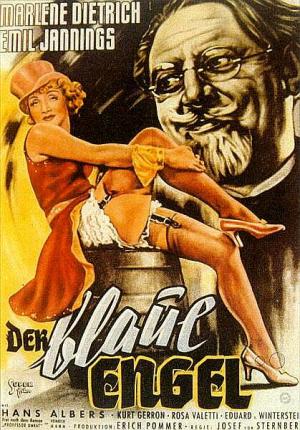
The Blue Angel (1930)

The Blue Angel (1930)

Dietrich lights up the screen in von Sternberg’s first fliration with sound but not his last with obsession

Director: Josef von Sternberg

Cast: Emil Jannings (Professor Immanuel Rath), Marlene Dietrich (Lola Lola), Kurt Gerron (Kiepert), Rosa Valetti (Gueste), Hans Alberts (Mazeppa), Reinhold Bernt (Clown), Eduard von Winterstein (School director), Rolf Muller (Angst), Roland Verno (Lohmann), Carl Balhaus (Ertzum)

Love and lust can be dangerous, all-consuming forces. Just ask Josef von Sternberg. It’s a rare film on his CV that isn’t about the self-destructive nature of longing. The Blue Angel is about obsession and its deadly consequences: but it’s also the birthplace of an obsession that would define von Sternberg’s own career. It’s the film where he discovered Dietrich. Did von Sternberg guess that, in time, he might himself become a version of the lovestruck Rath? I’d guess not, but the stench of sadomasochist excitement from complete prostration comes out of every frame of this classic.

Immanuel Rath (Emil Jannings) is a professor at the local gymnasium, preparing his students for university. Problem is, they are more interested in the goings-on at the seedy nightclub The Blue Angel than with Rath’s pompous lessons about Hamlet. Specifically, they are obsessed with Lola Lola (Marlene Dietrich), the erotic head-line singer. Rath tries to catch his students in the act – and instead finds himself smitten by Lola, leaving his career to marry her. Five years later, and Rath has lost every ounce of self-respect, regularly debased by the cabaret company and reduced to doing humiliating chores for his wife.

The Blue Angel was one of the first major sound movies made in Germany. Jannings – winner of the first Best Actor Oscar – was the biggest star in Germany and handpicked von Sternberg, who had directed him to that Oscar in Hollywood’s The Last Command, to make the film. Plans to make a film about Rasputin were ditched in favour of an adaptation of Heinrich Mann’s story about a professor who becomes infatuated with a cabaret singer. It’s a tragic tale of a man bought low by an unsuitable woman: however, von Sternberg (with Mann’s agreement) rewrote the plot into a parade of humiliation for the professor. Rather than a tragic figure, he would be a pompous man turned into a submissive, emasculated figure of mockery.

Is this what Jannings had in mind? Surely not. Von Sternberg was critical of the actor, believing his overly-expressive movements and facial expressions – so perfect for silent cinema – looked crude and ridiculous with sound. Jannings certainly seems more comfortable throughout The Blue Angel with reactions than dialogue: but even then, his wide eyes, double-takes and shocked mouth often seem too much. In art imitating life, he feels like the self-important “actor” being taken down a peg, marginalised in the frame and (by the end) smeared in clown make-up with the yolk of raw eggs running down his face.

Jannings was certainly unhappy with the focus of the film shifting powerfully to Dietrich. He was the star, but it’s Dietrich you remember. And no wonder, since von Sternberg’s camera can hardly take its eyes off her. Dietrich’s cabaret performances – recorded live – were a sensation. Just as much was her brooding sensuality, with Dietrich’s rawness as a performer guided by von Sternberg into an unforced naturalism. Where Jannings is large, she is small. Where he double takes, she raises a single arched eyebrow. Where he blusters, she quietly sits and cocks her head. Von Sternberg’s camera frequently centralises her in the frame as if trying to unwrap the enigma of this intriguing woman.

Who is Lola? You can watch in detail and never be sure. At times she’s a coquettish tease. At others a contemptuous dominatrix. But then she is also playful, sensitive and (at first) seems to find the idea of possible security and fatherly protection from Rath desirable and alluring. Dietrich’s performance constantly keeps us on our toes. Does she at expect to be protected by Rath, but finds his increasing submissiveness arousing (does Rath find the same?). Or was she – as she hints in her cold and manipulative second rendition of Falling in Love Again – always a manipulator of men? (I like to think the other clown in Act One is some sort of former lover of Lola, the sad eyes he uses when staring at Rath seeming to say “don’t make my mistakes”.)

Sex is central to The Blue Angel. Von Sternberg’s camera constantly catches Lola’s legs in frame – in one striking shot on a spiral staircase directly above Rath’s head. Dietrich swaggers and dips, her hips moving, her legs curled sensually. She’s lit like a mix of an angel and a Caravaggio-esque temptress. She takes a sort of twisted pleasure in demeaning Rath – reduced to cooling her curling iron and rolling her stockings on so she can head out to “entertain” more men. But, just as telling, Rath keeps coming back for me. Sure, he might shout and rage – but then he’ll humbly take his place on his knees in front of her.

The Blue Angel is strikingly decadent. While Rath’s classroom has a hide-bound Victorianism – with himself as a puffed-up Thomas Arnold – the nightclub is seedy, crammed with loutish clientele swigging beer. Lola’s dressing room is rundown, the pay is poor and the glamour almost non-existent. This is the underbelly of Weimar Germany, already feeling the pinch. Rath is reduced to selling dirty postcards of his wife – his dishevelled frame hawking these around the punters after her performances – and allowing her to entertain “private admirers”.

Humiliation becomes the heart of this beautifully made film. Shot by von Sternberg with his signature artistic richness – the unnamed town feels like a Dickensian blow back more than Germany of the time – with beautiful halos of light and a frame that constantly fills itself with dynamic movement, The Blue Angel culminates in high tragedy laced with farce. Rath, forced into performing a humiliating clown routine in his hometown, watches as his wife watches him while clasping her new lover to her lips. Is she seeing how far she can push her pet in his humiliation? Will nothing make him stand up to her? Is this always what she wanted or just what she finds she likes?

Either way, you can see here the formation of fascinations that von Sternberg would only let go further in future films (think of The Scarlet Empress which reimagines Catherine the Great as the ultimate dominatrix). It humiliates Jannings both textually and meta-textually – making him look like a hammy relic, next to the sensual naturalness of Dietrich. But it’s also one of the great films about the erotic desire to be belittled. It was von Sternberg’s calling card and it cemented his desire to work with Dietrich again and again. Make of that what you will.

Note: The Blue Angel was of course made in the shadow of the rise of the Third Reich. Dietrich narrowly beat out Leni Riefenstahl for her role. Goebbels later banned the film for being “Jewish”. Of its three stars: Dietrich was a passionate anti-Nazi campaigner. Emil Jannings became the most famous actor to support the Nazis (which ended his career after the war). And, tragically, Kurt Gerron and his wife were murdered in Auschwitz.

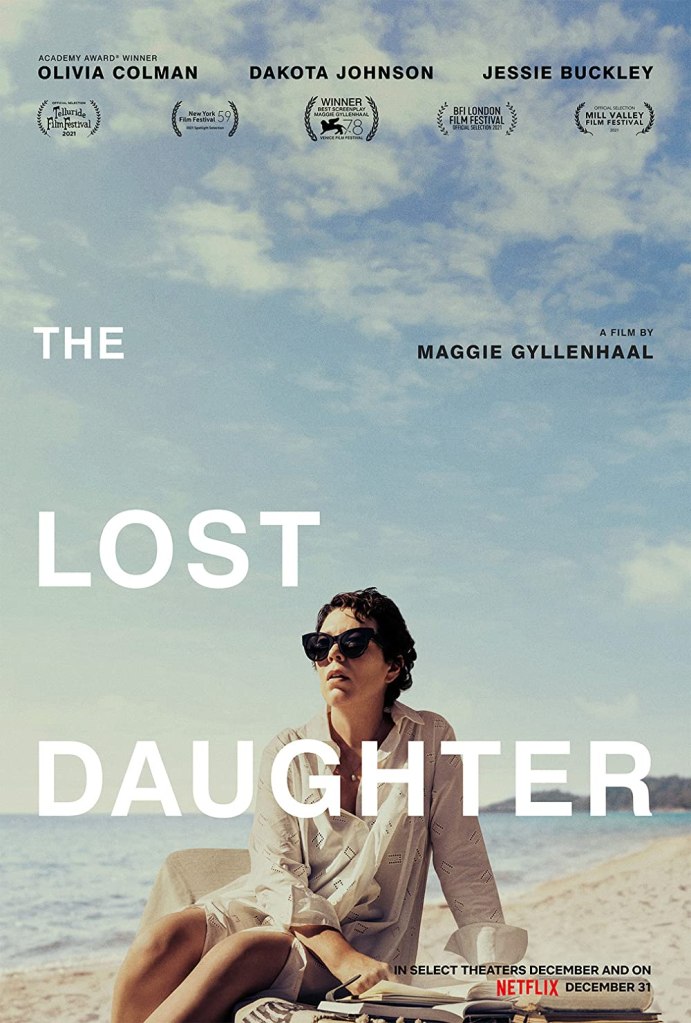
The Lost Daughter (2021)

The Lost Daughter (2021)

Motherhood, loss and guilt are at the heart of this over-extended drama that doesn’t feel like it focuses on the right things

Director: Maggie Gyllenhaal

Cast: Olivia Colman (Leda Caruso), Jessie Buckley (Young Leda Caruso), Dakota Johnson (Nina), Ed Harris (Lyle), Dagmara Dominczyk (Callie), Paul Mescal (Will), Peter Sarsgaard (Professor Hardy), Jack Farthing (Joe), Oliver Jackson-Cohen (Toni), Athena Martin (Elena), Robyn Elwell (Bianca), Ellie Blake (Martha)

Leda (Olivia Colman), a professor of Italian Literature, holidays in Greece. That holiday is disturbed by the arrival of a noisy, aggressive family from Queens. A member of that family, unhappy young mother Nina (Dakota Johnson) loses her daughter on a beach. Leda finds her, but it triggers her own unhappy memories of motherhood (Jessie Buckley plays the young Leda). She impulsively steals the child’s beloved doll, as her paranoia and mournful reflections grow.

Maggie Gyllenhaal’s directorial debut is a confident, assured piece of film-making, but I found it a cold and slightly unsatisfying film. There is a fascinating subject here, that the film fails to really tackle. One of life’s great unspoken expectations is that everyone should find being a parent – especially being a mother – hugely rewarding. This film studies a woman who didn’t, but still wants to reassure us of the love and happiness found in the bond with a child, no matter your mistakes as a parent. In doing so, it marginally ducks an important societal issue and reaches conclusions that feel predictable, for all the ambiguity the film ends with.

Colman’s expressive face and ability to suggest acres of unhappiness in a forced smile or gallons of frustration with a single intake of breath, are used to maximum effect. Leda is a woman comfortable with her own company, forced and uncomfortable in conversation, her eyes flicking away as if looking for an exit. She seems confused about how to respond to the quiet advances of handyman Lyle (a gentle Ed Harris) and increasingly resents the intrusion into her holiday of outsiders.

How much is this slightly misanthropic, isolated view of the world her natural personality, and how much has it grown from her choices in the past? Flashbacks reveal her struggles as a mother – and the strained relationship with her children today – and it’s clear Leda is a bubble of confused emotions, uncertain about what she thinks and feels.

That past, to me, is the real area of interest, rather than the distant, cold woman those choices have created. I’d argue a stronger film – and one that would feel like it was really making a unique point – would have focused on the younger Leda. Expertly played by an Oscar-nominated Jessie Buckley –brittle and growing in claustrophobic depression – she loves her two girls. But, most of the time, finds them overbearing, all-consuming and more than a little irritating. She’ll laugh at their jokes and be terrified when one of them gets lost, while still resenting their domineering impact on her life.

When she wants to work, they demand attention. When her daughter has a small cut on her finger, Leda is repeatedly asked to kiss it better like a broken record. Leda gives her other daughter her own childhood doll – and then throws it out of a window in fit of hurt fury when the daughter covers it in crayon and says she doesn’t like it. The kids get in the way of everything: be it work (she retreats behind headphones to focus), holidays, sex with her husband or even masturbation.

Her feelings go beyond post-natal depression. She is someone who genuinely loves her children, but can’t bear the idea of mothering them. This is the meat of the film, far more than the present-day narrative. Gyllenhaal sensitively tackles a rarely discussed topic: what can we do if we find parenthood was a mistake? Knuckle down or give up and run away? A film exploring this could have been compelling: but it only takes up a quarter of an over-extended film.

Instead, by focusing on the maladjusted present-day Leda, the film presents her motherhood difficulties as the root cause of her problems. Leda sees a potential kindred spirit in young mother Nina – a brash and exhausted Dakota Fanning – who seems equally frustrated by parenting. But Leda is so insular and self-obsessed, is she only seeing what she wants to see? If she thinks Nina is also failing as a mother, will that make her feel better about her own failures?

The Lost Daughter is an unreliable narrator film – and Gyllenhaal expertly suggests much of what we see are Leda’s perceptions rather than necessarily the truth. The menace from Nina’s loud and aggressive extended family is a constant presence: but is it real, or just Lena’s paranoia. Does the family really cover every tree with a missing poster for a child’s lost doll, or does it just that way to Leda? Does Nina share Leda’s own resentments with motherhood, or does Leda just want her to?

It’s a subtle ambiguity that continues until the film’s close. It leaves many questions unanswered and open to the viewers interpretation. Different viewers will take very different messages from it. But for me, the film wasn’t quite interesting enough – and shied away from exploring the questions of guilt and doubt about parenthood. At no point does Leda even voice the possibility that she regrets having kids – for all that she surely does – which feels odd. For me the film takes a long time to not quite say as much as I feel it could have done.

Sweeney Todd: The Demon Barber of Fleet Street (2007)

Sweeney Todd: The Demon Barber of Fleet Street (2007)

Blood, guts and gore in this horror-tinged, claret-dipped Burton adaptation of Sondheim’s musical

Director: Tim Burton

Cast: Johnny Depp (Sweeney Todd), Helena Bonham Carter (Mrs Lovett), Alan Rickman (Judge Turpin), Timothy Spall (Beadle Bamford), Jayne Wisener (Johanna Barker), Sacha Baron Cohen (Adolfo Pirelli), Laura Michelle Kelly (Lucy Barker/Beggar Woman), Jamie Campbell Bower (Anthony Hope), Ed Sanders (Toby Ragg)

Sondheim’s blood-soaked musical about the infamous serial-killing barber, intent on revenge against the judge who transported him to Australia and stole his late wife, took years to make it to screen. His intensely theatrical, intricate musical masterpieces don’t always translate to film – they lack that crowd-pleasing oomph. What with Todd slashing throats with misanthropic glee, aided by besotted neighbour Mrs Lovett baking the bodies into pies, and no wonder Sweeney was a difficult pitch.

However, it’s practically tailor-made for the High Priest of Gothic Oddity, Tim Burton. A lifelong Hammer horror fan, it’s no surprise Burton had loved the musical since first seeing it in 1980. He’s a perfect match for this stuff, and his film is a bleak, heavily desaturated, oppressively grim and strikingly optimism-free descent into a subterranean hell, with almost every scene accompanied by a free-flowing deluge of Shining-style levels of blood.

Sweeney Todd is a design triumph (Oscar-winning for its production design and nominated for its costumes). It’s London is like an Oliver! set run through a fevered nightmare slasher film. Everything is grandiose, filthy and above all cold, oppressive and unwelcoming. Most of the light comes from the reflection of moonlight on the blades of Todd’s razors, and the basement of his building is a gruesome horror show, with a pumping furnace and mangled body parts in a mincer.

The film shocked critics expecting a more traditional Broadway musical translation with the dark glee it embraces the gore. When throats are slashed – which occurs as regularly as clockwork – blood sprays over the actors, camera and virtually everything else. Sweeney’s chair drops his victims head-first into the cellar: each fall is seen in terrible detail, bodies landing with a sickening crunch, twisted out of shape and heads smashed open on the stone floor. There is little black comedy, the film embracing flat-out horror.

It also focuses on the black hate in Sweeney’s heart, his fixation on revenge at any costs and the lack of any trace of humanity within him. While Mrs Lovett longs to turn this “relationship” into something more intimate and loving – she even sings about it in By the Sea to the stony-faced indifference of Sweeney – to Sweeney she is little more than a convenient means to an end. Bravely, no real attempt is made to make us feel real sympathy for this brutal killer – and the visceral brutality of his killings only adds to this.

The film is dominated by its two leads, simplifying the musical down to something leaner, swifter and meaner. This is a dark revenge tragedy doubling as a character study of its two leads’ souls. These places a lot of pressure on Depp and Carter. Sweeney Todd was very much at the apex of a trend in musical film-making where stars were trained to sing, rather than casting skilled singers who can act. Sweeney Todd is an immensely complex musical, with deeply challenging lead parts. Even using the intimacy and immediacy of the camera to bring the scale down (they don’t need to hit the back row), it still must have been intimidating to sing with very little experience.

Depp and Carter however acquit themselves well. Working with a director they both trust implicitly, they give dark, twisted performances of unspoken longings. Depp, in one of his finest and most restrained performances (which says a lot about the irritating abandon of many of his other roles) that stresses Sweeney’s sociopathic coldness. He is a tortured man, turning his unhappiness and self-loathing into a weapon to slice open the world. Carter channels sociopathic eccentricity with a tenderness, vulnerability and desperation for love.

As singers however, they are competent rather than inspired. Depp goes for an earthy, Bowie-esque, Rex Harrison-paced growl that conveys the emotion but simplifies the songs and robs them of some of their impact. Carter’s more lively rendition carries more character, but in both cases you wonder what would have happened if the film had married its cinematic visuals with assured Broadway performers. The best singers by far are Jamie Campbell Bower (whose role as the would-be lover of Sweeney’s long-lost daughter is heavily cut) and Ed Sanders, who is excellent as the orphan taken under Mrs Lovett’s wing (West End-star Laura Michelle Kelly, perversely, barely sings a note).

The focus on Sweeney and Mrs Lovett leaves little room for the other actors. Rickman brings a subtle perversion to Judge Turpin – even though, bless him, he’s not the best singer – and Spall a creepy eccentricity to the Beadle. But this is the Sweeney show, a decision that robs the film of any trace of the more hopeful elements of the original, to zero in on the dark horrors.

The film pulls few punches, but never makes us care about Sweeney. For all the trims, it’s surprisingly poorly-paced (especially considering its short run-time). Such little importance is given to the supporting characters, time feels wasted when we are with them. The cuts also stress how little actual plot there is around Sweeney and Mrs Lovett (once they decide to embark on a life of crime, there is little that happens to sustain the film through its middle act).

The film is a Gothic slasher triumph, but it’s perhaps neither a great musical nor a truly engaging tragedy. A slice more humanity, in between the slashed throats, might have helped a great deal.

Vertigo (1958)

Vertigo (1958)

Obsession and grief come dangerously into play in one of the greatest films ever made

Director: Alfred Hitchcock

Cast: James Stewart (John “Scottie” Ferguson), Kim Novak (Madeline Elster/Judy Barton), Barbara Bel Geddes (Midge Wood), Tom Helmore (Gavin Elster), Henry John (Coroner), Raymond Bailey (Doctor), Ellen Corby (Hotel manager), Konstantin Shayne (Pop Leibel), Lee Patrick (Car owner)

Spoilers: Vertigo was controversial at the time for revealing its twist, three quarters of the way through the film. I might well do the same in the review – although this is possibly a richer film if you know the twist going in

In 2012 Vertigo dislodged Citizen Kane at the top of Sight and Sound’s decadal “Greatest Film” poll, after 50 uninterrupted years for Welles’ classic. It’s an astonishing turn-around for a film which was a box-office disappointment and first met with reviews that called it “long and slow” and complained that Hitchcock had “indulged in such farfetched nonsense”. (Welles also hated the film – bet he’s even more pissed off at it now.) This is partly because Vertigo is a fiercely, almost defiantly, complex and cold film that defies easy characterisation and flies in the face of the fast-paced watchability of most of Hitchcock’s popular films. But it’s still a haunting and fascinating masterpiece, which has its greatest impact when you reflect on it days after it has finished.

Its plot is both complex and slight. John “Scottie” Ferguson (James Stewart) is an ex-police detective, his career ended by crippling acrophobia bought on by powerlessly watching a fellow officer fall to his death. He’s hired by old college friend Gavin Elster (Tom Helmore) to follow Elster’s wife Madeline (Kim Novak). Madeline is in the grip of an idée fix that she is an incarnation of Carlotta Valdes, a woman who committed suicide in 1857. Scottie follows her – and develops an idée fix of his own for the beautiful Madeline. When his acrophobia prevents Scottie from saving Madeline from jumping to her death from a bell tower, he suffers a near-breakdown. Then he catches sight of Judy Barton (Kim Novak again) who has a chilling resemblance to Madeline. And Scottie tries to turn her into just that.

Vertigo is a dizzying film of monomania and obsession, something you are immediately plugged into with its beautiful Saul Bass opening (swirling spirals, reflecting the circular nature of the obsessive) and its hauntingly mesmeric and off-beat romantic theme from Bernard Herrmann (possibly his greatest work – and he also scored Kane!). More than any other Hitchcock film, Vertigo places us firmly into the POV of its lead character, who is in all but three scenes and whose perceptions and observations we not only share but which totally guide our understanding of everything we see in the film (until that twist, when suddenly we shift to knowing more than he does).

Hitchcock’s technique is truly masterful here. There isn’t the flash of something like North by Northwest, but the sort of chilling control that builds tension and unease that also marks out films like The Birds or, to a degree, Psycho (although that’s much more of a black joke, where Vertigo is terrifyingly serious). Hitchcock uses a huge number of POV shots, alternating with shots of Stewart’s reactions (at times these are disturbing in their fixed intensity) building a subtle momentum that reflects the character’s obsession and further filters everything we experience from his perspective.

That would be the perspective of an ever-more obsessed man tipping steadily into stalkerish territory. Few films have so clearly drawn the link between the private eye and the voyeur. As Scottie silently prowls the streets of San Francisco, observing every inch of Madeline’s actions – and Vertigo has long, worldless stretches of what Hitchcock called “pure cinema” – the disturbing pleasure and control that following brings you becomes more and more clear. It’s certainly giving a sense of masculinity back to Scottie, introduced to us hanging helplessly from a ledge and then so hamstrung by his condition he can’t even climb a step ladder without collapsing.

Judged from this perspective, Scottie is one of the most darkly disturbing characters in film. Rescuing Madeline from the Golden Gate (where she has jumped in) he takes her home, undresses her and puts her in his bed – hardly normal behaviour. It’s not long from there before he surrenders to his romantic obsession (feelings Madeline perhaps returns), that eventually leads him again to be a powerless witness as Madeline plunges to her death right in front of him.

Catatonia and mental collapse follow – but really it’s perhaps just a continuation of the same obsession in another form. Because after a stay in a sanatorium, Scottie is back on the streets again, prowling for something – anything – that could make him feel closer to Madeline again. Which is how he spots Judy, the woman who reminds him of the woman he’s lost. Scottie doesn’t so much woo Judy as seemingly browbeat her into a bizarre (joyless and sexless) relationship and undertake a terrifyingly grotesque remodelling exercise, designed to make her into a carbon copy of Madeline.

This sequence is probably partly at the heart of the film’s fascination for critics and film historians – even more so since we’ve learned about Hitchcock’s manipulative, controlling relationship with his blonde female stars. Here we have Scottie instructing his love interest how to dress, walk and cut her hair – all while telling her it’s for her own good and she’ll like it – his voice with the breathless longing of a closeted pervert (that is when Scottie manages any sexual yearning to Judy, who he treats more like a treasured exhibit). This is Hitchcock dramatizing his own hang-ups, presenting them as creepy and dangerous, making Vertigo partly as well a fascinating psychological study of its director. Did Hitchcock know that his controlling relationship with women was wrong? And, in real life, could he not help himself or did he not care?

Vertigo is a perfect exploration of obsession. But it also pulls the rug out from us – and rewards constant reviewing as a result – because the film reveals there was a whole other level going on. Scottie may seem the Hitchcock substitute, but the in-film Hitch figure is actually the amiable Gavin Elster. Because the entire action of the film is carefully stage-managed by Elster to manipulate Scottie (and us!): Judy and Madeline (as Scottie has met her) are in fact the same woman, a doppelgänger for Elster’s wife. The real Madeline – who Scottie never sees or meets – is murdered by Elster at the top of that tower, and Judy/Madeline was helping build a backstory to have this murder written off as suicide, with Scottie’s acrophobia perfect to make him a powerless witness.

Here comes that pleasure for rewatching: because now when Scottie rescues “Madeline” from the river, then spends the next day with her, we thought at first he knew more than she. Now however, we understand he’s always been a patsy who knew less than anyone else. We’ve been manipulated by Elster, the master director, pulling the strings and building horrors for us. That’s Hitchcock.

The film reveals this in one of the few scenes told from Judy/Madeline’s perspective – and means we then watch Scottie actually craft a woman who actually is the woman he’s obsessed with into his memory of that very same woman. (Get your head around that!) And she allows it, because she seems as desperate as he to recapture the passion of those brief days together – but cannot tell him the thing that would help to do that. It all leads, of course, to Scottie’s destructive obsession leaving him once again to being a helpless witness as another victim plummets to their death.

Vertigo is effectively a two-hander, and most of the focus usually lands on Stewart. He is chillingly dead-eyed in this, his crazed hunting after something he doesn’t even understand capturing the controlling horror behind some romance. In many ways though, Kim Novak has the more complex part. She doesn’t speak for almost 45 minutes – she spends it mostly in long shot performing Elster’s play for Scottie (and us) of the mentally disturbed wife. But when Novak does take centre stage, this is a complex multi-layered performance, carefully modulated throughout to communicate (in advance) Judy’s vulnerability and love for Scottie, without ever letting us realise she is anything but the death-fixated “Madeline”. Novak marries two contradictory characters into one with a simple and convincing aplomb. Equally good is Barbara bel Geddes, in almost the only other named role, as Scottie’s one-time fiancée now best friend, all too aware that her feelings are not returned.

Vertigo will never match the likes of Casablanca or North By Northwest – on a list of films truly popular with audiences. It’s been described as the ultimate critic’s film: a cool, chilling, brilliantly filmed, psychological thriller that quietly exposes the mechanics of film, the manipulation of story-telling and the dark psyche of its director. In many ways initial reviews were right: on first impression, the film is cold and slow, with characters it’s hard to relate to. But it has a truly haunting quality few others can match. And it constantly presents us with a clear image, while never allowing us to guess we are seeing only part of the overall picture. It can leave us as dizzy as Scottie is, hanging from that ledge and staring down at doom, the camera zooming inside his head and showing us his terrifying POV. You need to work at it, but this is a film to value.

The Northman (2022)

The Northman (2022)

A viking tears through flesh and blood in quest for revenge in this bizarre, fascinating Viking epic

Director: Robert Eggers

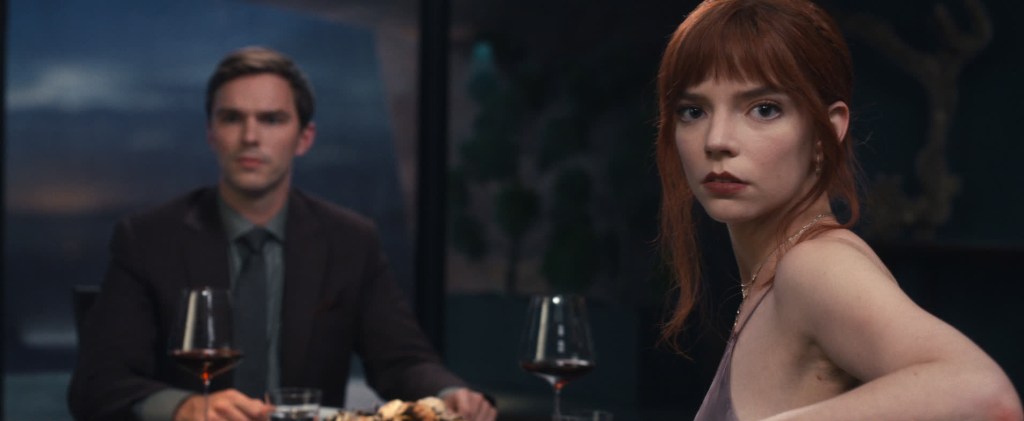
Cast: Alexander Skarsgård (Amleth), Nicole Kidman (Queen Gudrún), Claes Bang (Fjölnir the Brotherless), Anya Taylor-Joy (Olga of the Birch Forest), Ethan Hawke (King Aurvandill War-Raven), Björk (The Seeress), Willem Dafoe (Heimir), Oscar Novak (Young Amleth), Gustav Lindh (Thorir), Ingvar Eggert Sigurðsson (He-Witch), Kate Dickie (Halldora), Ralph Ineson (Captain Volodymyr)

Ask people about Hamlet, and they picture a poetic Prince, plagued with doubt and vulnerability, talking to skulls rather than carrying out his mission of revenge. What you probably don’t think about are Vikings on a Berserker rage, slaughtering left, right and centre. But Hamlet has its roots in a bloody Scandinavian legend, where remorseless death is handed out by a ruthless killer. That’s the side of Hamlet, Eggers takes for inspiration in his bloody, bold and resolute Viking film, a blood-soaked acid trip it’s hard to imagine anyone else making.

It’s 895 and King Aurvandill (Ethan Hawke) returns from conquest to his wife Gudrún (Nicole Kidman) and young son Amleth (Oscar Novak). Amleth takes his vows of manhood with his father, guided by a demented He-witch (Willem Dafoe) – only for his father to be almost immediately killed by his half-brother Fjölnir (Claes Bangs), who seizes his throne and wife. Amleth escapes – and years later has grown into a berserker Viking warrior (and Alexander Skarsgård). He sees his chance for revenge when he disguises himself as a slave, and joins a shipment traveling to Fjölnir’s village (Fjölnir having lost his throne). There he forms an alliance with Russian slave Olga (Anya Taylor-Joy) and works to undermine and terrify Fjölnir, before he can enact his revenge and save his mother.

The Northman is, possibly above all, a shocking, absorbing deep-dive into Viking Culture. Eggers doesn’t shirk for a second from the bloody, ruthless mayhem of Viking life. Our introduction to the adult Amleth sees him first whipping himself (and others) into a (possibly magic mushroom fuelled) Berserker rage, dressed as wolves and howling at the fireside, before launching an unbelievably ruthless attack on a Russian village. The desperate peasants are butchered with savage fury (and blood lust). In the aftermath, rape, murder and other horrors occur uncommented on in the background, while those not seen fit for slavery are herded into a barn to be casually burned alive.

Amleth, at no point, expresses a jot of regret for his actions (as a Viking wouldn’t), and even after passing for a slave never questions the institution. His revenge uses the same ruthless, blood-dripping fury as his ravaging and his only passing moment of pause is about directly killing Viking women and children (he gets over it). In all this he is in no way different from the rest – in fact he’s even one of the more sympathetic – Vikings. Fjölnir – revealed as otherwise a wise and generous leader – ruthlessly murders and rapes his slave as he fancies and a weekend’s entertainment for all is watching two teams of slaves beat themselves to death in a no-holds-barred version of hockey.

Eggers leaves you in no doubt that, for all the grim fascination, this is a brutal and savage civilisation that you would in no way want to encounter. Saying that, despite Eggers’ clear intentions, with the film’s cast modelling a sort of chiselled, gym-trained super-human Aryanism, sweeping away Slavic peasants and enforcing a triumph of Nordic culture, parts of this film are surely being channelled into the wet dreams of elements of the right-wing.

The film doesn’t just explore violence. Family bonds are demonstrated to be all important to Vikings – Amleth and Fjölnir are dedicated to their families and go to huge ends to protect and mourn them. (A funeral of one warrior features elaborate blood-letting, as the deceased’s horse is decapitated and his favourite slave willingly butchered so both can join him on the journey to the afterlife). There is a mutual regard and affection between warriors – even opponents – in a culture that puts itself above others. Honoured slaves are respected – though told they can never be equal. Licensed fools and mystics are given a great deal of freedom – Willem Dafoe’s crazed He-witch at Aurvandill’s court mocks all and sundry with no repercussions. There is a huge faith placed in wise men and women who inspire awe and fear – even a slave, such as Olga, with possible mystic powers is treated with caution. Bonds and duties across generations and to the next life are revered. Prophecies and destinies are respected. Poetry and storytelling is highly valued.

For all the killing, there are elements of a rich culture here and strong family bonds. All these combine in the person of Amleth, who will not be shaken from his destiny but will enact it in his own time, in line with the prophecies he of a seeress (an unrecognisable Björk). Eventually it doesn’t matter if Amleth’s idealised memory of his parents turns out to be not the whole story, or if he has a chance to build a new life. Destiny is, in fact, all.

Eggers’ film takes place in what almost a state of heightened, fevered excitement. Beautifully shot by Jarin Blaschke, it mixes expressionistic near-black-and-white, with drained-out shots of violence and flame-lit moments of psychological and body horror. Visions shot in a piercing mix of blues, greys and icey chilliness puncture the film, with strange compositions of characters, Valkyries, Valhalla and the Gods. Supernatural elements pepper the film, with Amleth’s father influencing events in the shape of a raven and Amleth completing a quest for a fateful sword. These moments of hyper-reality are perfectly executed and in a visually unique, blood-drenched nightmare.

Where The Northman is less successful is exploring the inner-depth of its characters. Skarsgård is charismatic and physically perfect, but doesn’t give much inner-life to Amleth. Moments of doubt or uncertainty in Amleth never quite convince and he feels more a force of nature than a person. There are richer performances from others, Kidman in particular a revelation as a cryptic, unknowable woman with a mid-film encounter of heightened emotional (and sexual) tension between her Skarsgård. Bangs’ Fjölnir is strangely sympathetic. Anya Taylor-Joy carries a dominant, mystical force in her performance that helps make her character a bridge between multiple worlds.

All these combine into a film of shocking violence, jaw-dropping beauty and troubling emotional and psychological horror. There is no doubt the film is overlong – there are probably one too many deeply odd segues into drug-induced ravings of various prophets and seers – but as an exploration of a culture so uniquely alien, its sublime. As a piece of work from a truly distinctive and unmatchable director, it’s superb. You look it The Northman and can’t believe anyone else could have made it. If nothing else, that makes it a film worthy of your time.