Category: Films about obsession

Manhunter (1986)

Manhunter (1986)

Mann’s visually striking thriller doesn’t have quite the dark subversiveness it needs but is an unsettling thriller

Director: Michael Mann

Cast: William Petersen (Will Graham), Kim Griest (Molly Graham), Dennis Farina (Jack Crawford), Brian Cox (Dr Hannival Lecktor), Joan Allen (Reba McClane), Tom Noonan (Francis Dollarhyde), Stephen Lang (Freddy Lounds)

Before The Silence of the Lambs, there was an earlier attempt to bring the twisted world of Thomas Harris’ gothic thrillers to the screen. Michael Mann’s Manhunter has grown in reputation since its release, along with an increased regard for the visually stylised and cold modernism of Mann’s work. Truthfully, Manhunter lacks the Hitchcockian dark wit, and is far less effective at exploring the dark links between investigator and psychopath, than Silence of the Lambs. But it remains an intriguing – and often disturbing – curiosity.

FBI profiler Will Graham (William Petersen) is called out from extended leave by Agent Jack Crawford (Dennis Farina) to investigate chilling serial killer, the Tooth Fairy. The killer breaks into family homes and brutally murders the occupants, leaving bite marks and broken mirrors behind. Graham has an empathetic gift for understanding the mindset of killers, something he used to capture cannibalistic serial killer Hannibal Lecktor (Brian Cox), now imprisoned in a mental institute. Graham’s quest to catch the Tooth Fairy leads to him becoming ever more obsessive, including reconnecting with Lecktor to help profile the killer. Meanwhile the Tooth Fairy, Francis Dollarhyde (Tom Noonan), a lonely photo developer obsessed with William Blake’s Red Dragon and desperate to ‘become’ something greater begins his first meaningful relationship with blind colleague, Reba (Joan Allen).

Manhunter is set in a crisp, modernist world of clean, soulless buildings, glass fronted houses and offices and precise, featureless rooms. Mann and cinematographer Dante Spinnotti film everything with a series of tinges – strong, cool blues, drained out and striking whites, murky greens. All is designed to give the film a deliberately forensic feeling, like we watching something play out in a crime lab. It fits with a film that is fascinated with the procedures of investigating and profiling and delights in the intuitive, deductive leaps Graham makes.

Mann’s film attempts to draw parallels between Graham and Dollarhyde, both men uncomfortably in touch with their darkest, twisted impulses. As Hannibal Lecktor observes, Graham can so completely inhabit the interior world of killers, because he secretly longs for the buzz of killing himself. That’s easy to see in William Petersen’s focused, intense performance. Reluctantly dragged back in, Graham is noticeably unphased by the horrific crime scenes he witnesses (however much he is furious at the loss of life) and becomes ever more fixed and lean as the hunt continues, increasingly more-and-more like the obsessive prey-hunting psychopath he is investigating.

In doing so he sidelines his family – even putting them in danger – and increasingly cuts off human connections to feed his laser-focused quest. This contrasts him with Dollarhyde, a damaged, isolated and self-loathing man who flirts with the last vestiges of humanity. A man who sees nothing in himself that anyone could love, Dollarhyde becomes as giddy as a schoolboy when Reba sees him as a kind, attractive and decent man. Behind his eyes, Tom Noonan shows a quiet struggle between the obsessive monster, driven to destroy, and a man considering changing his path. This intriguing contrast between the family-man who leaves tem to hunt killers and the killer who flirts with settling down is a thread you wish the film had more patience to explore among its neon-lit, filtered style.

But Mann doesn’t quite have the patience to draw these threads together. Perhaps not helped by, skilled and intelligent as Noonan’s performance is, always presented Dollarhyde as an imposing, Frankenstein-monster style heavy rather than someone we invited to feel the sort of twisted empathy for that the film needs. We should be feeling something of what Graham says when he talks about feeling pity for the abused child and disgust for the twisted killer that child grew up to be. We never truly do.

Perhaps that’s partly because Dollarhyde is a character the film can never build up the same interest in, as it does with the looming shadow of Hannibal Lecktor (the spelling was unique to this film). Appearing only in three scenes, Lecktor dominates the film. Basing his performance on Scottish serial killer Peter Manuel, Cox brings the part a chillingly studied delight at his own intelligence with an air of quiet politeness which only vaguely masks his malice and cruelty. A ghost of a smile is behind every cruel, hurtful word and action he carries out and his every action is motivated only by a desire to harm. It’s a mesmerically terrifying, low-key performance that overwhelms the film.

It contributes to the film’s second half never really matching the first. As Lecktor recedes and Graham focuses on the Tooth Fairy, the lack of personal connection between hunter and hunted (and the film’s unease to draw too distinctive a comparison between them) makes the final hunt less compelling ironically than when the Tooth Fairy was an unknown, unseen adversary. Noonan’s most effective scene is his terrifyingly soft-spoken interrogation of smart-aleck reporter Freddy Lounds (a braggart Stephen Lang), but the film isn’t brave enough to give him enough potential humanity to make the character really interesting – or the Satanic charisma that Lecktor has.

Manhunter culminates in a disappointingly run-of-the-mill shootout (edited with a curiously ham-fisted jaggedness) and an unsatisfactory Graham family reunion that feels like it hasn’t got the energy or desire to explore any of the lasting impact the darkness we’ve discovered in our lead character would surely have. Manhunter not only changes the title of Harris’ book (there was fear that Red Dragon was too easy to mistake as a martial arts film), but it also benches the emotional and psychological obsession of Dollarhyde (even the character’s famous tattoos don’t appear in the film). It becomes a strikingly shot, intriguingly fast-paced thriller which doesn’t manage to make the psychological complexities its striving for either as fascinating or unsettling as it should. It has plenty to haunt you – its creepy POV home-invasion opening is nightmare-inducing – but Harris was better served by Lambs mix of playful dark-horror and focus on acute psychological insight.

Beau Travail (1999)

Beau Travail (1999)

Denis poetic, art-house classic is intense, searing and transformative, crammed with beautiful images

Director: Claire Denis

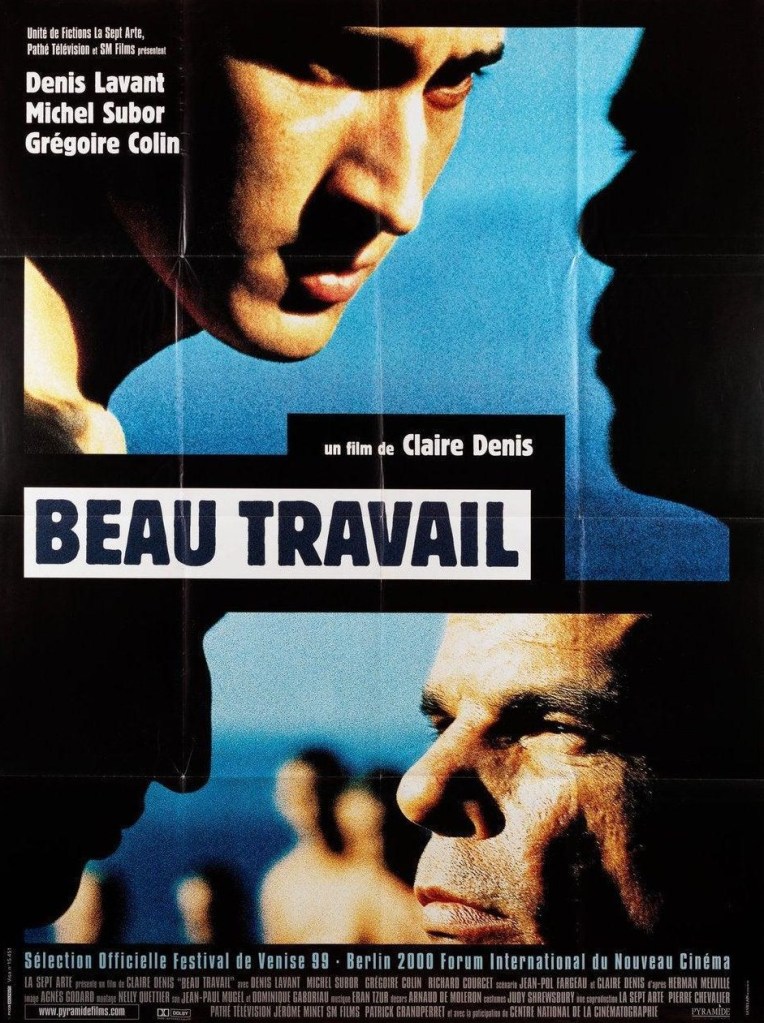
Cast: Denis Lavant (Adjudant-Chef Galoup), Michel Subor (Commandant Bruno Forestier), Grégoire Colin (Légionnaire Gilles Sentain), Richard Courcet (Légionnaire), Nicolas Duvauchelle (Légionnaire)

I think it’s fair to say Beau Travail will not be to everyone’s taste. For every person (a bit like me) who comes out of the film humming ‘Rhythm of the Night’, they’ll be another who will never have made it far enough into the film to even understand why anyone would. Denis’ poetic film, shot like a combination of art project and choreographic exercise almost wilfully foregoes plot and character in favour of experience. Framed around a voiceover that could be almost anything from a diary, to a letter to a suicide note, Beau Travail is a film that wants you to be as uncertain about its aims and intents, as its lead character is about his own.

Denis’ film is a remix of several literary sources, most notably Melville’s Billy Budd – though you can also make a case that there is more than a trace of Othello in there. Set in a French Foreign Legion unit based in Djibouti under the command of veteran Forestier (Michel Subor), our focus is his Adjudant-Chef Galoup (Denis Lavant). Galoup is a rigid stickler for duty and an obsessive legionnaire, distant from those around him. He takes an almost instant, irrational, dislike for new recruit Sentain (Grégoire Colin) who can form easy rapport with those around him. Galoup schemes to destroy Sentain. In a framing device, Galoup recounts the story having left the Foreign Legion.

It should probably be restated that this brief summary of the plot pretty much covers every detail in this brief but poetically open-ended film. It takes over a third of the film’s runtime for the unexplained conflict at the film’s heart to even begin and Denis scrupulously avoids anything you could categorically call an answer. Which in a way is an answer in itself. Because Beau Travail is, it is easy to forget, a memory piece. It’s framed with Galoup remembering his career in the Foreign Legion, and everything we see in the film is filtered through his recollections. How reliable are these? How much do the strangely intricate, beautifully choreographed desert training sequences reflect reality and how much are they the result of an unreliable narrator?

Perhaps Galoup’s motiveless loathing for Sentain is rooted in his own inability to understand himself and his own longings. Embodied in a performance of immense physical exactitude by Denis Lavant, Galoup is a tightly drawn spring, a mass of careful, well-chosen movements. He’s naturally content with the labours of the French Foreign Legion: scrupulously ironing creases into his clothes, making his bed with careful perfection, striding through the desert wilderness. At the nightclub with his men, he’s a distant observer – he can’t even really take part in their campfire sing-alongs. He only finds physical ease in their ritualised training sequences.

These training sequences are extraordinary, more like Gene Kelly dance sequences than anything you might associate with training. While in the dance clubs the men are awkward movers, on the training field they have sinewy grace. Ritualised fight training sees their bodies move through pre-set positions with a striking, musical beauty. Even back and leg stretches see twenty men moving with perfect co-ordination in the desert sand, leaving matching trails in the dust.

There is a reason why the title translates as Beautiful Work. The film is a continual stream of military tasks in the desert, most of which seem pointless. Camps are built, holes are dug, rocks are smashed. It’s combined with a series of domestic tasks treated with an equal almost fetishistic relish. Men whip water from their laundry as they peg it up to dry. In unison they iron their shirts into a perfect finish. Potatoes are peeled with casual ease. The training they undertake, powering through assault courses, sees them move with a graceful physical ease. There may never seem to be a point to all the things they do but it’s done with a real beauty. You can totally imagine this idealised vision of unison is exactly how Galoup would want to remember his days in his beloved Legion.

Denis’ transformation of Galoup’s memories of the Legion’s work into unspoken dance sequences, also points towards the increasing homoerotic undertone. This feels like more than a clue about Galoup’s undefined hostility to Sentain who is in many ways a spiritual brother-in-arms. But Lavant’s simmeringly intense, buttoned-up (literally) Galoup could never express such feelings. Is that why some of these training sequences that he remembers feel oddly sexualised? A wrestling practise session, bare-chested, feels like nothing less than aggressive competitive hugging. In one training session Galoup and Sentain walk around in an ever-decreasing circle in what feels like the entrée to a tango or a romantic clinch.

It’s not just Galoup. Michel Subor’s professional soldier Forestier watches the topless training sessions with an unspoken (unrealised) fascination. Galoup’s idolisation of his commander – he even carries a dogtag bracelet of Forestier’s in his exile like a totem – is another motivation, jealousy clearly on his mind as his commander takes a shine to the brave new soldier. Galoup it’s suggested is a man who barely understands himself, let alone others, lashing out with violence and aggression at others due to longings he barely feels or understands in himself.

All of this plays in Denis’ slow, observant, film full of carefully composed cross-cuts taking us in and out of the camp and nearby town and throws up a chorus of Djiboutian women who observe the men and interject at crucial points. Beautifully shot by Agnes Godard, it’s a film of striking images often beautifully composed into intriguing montages that go from nightclubs, to deserts, to seemingly abandoned military vehicles. It is I think vital, at every point, to remember that everything we are seeing is being framed through the memories of a man who, Denis implies, is deeply repressed in (possibly) several ways.

Frequently we see scenes Galoup can have no knowledge of. Others– like Sentain finally provoked into striking his senior officer – are played out with a near-dream like unreality. The eventual fate of a character in the desert could be wish-fulfilment for Galoup – after all he could have no idea. Does he imagine his Legionnaires singing to him as he boards his flight to exile? Above all, as he wanders without purpose through the streets of Marseilles, what is he intending to do? Why is he writing his reflections (if you can call such vague narrative interjections that)? Is it an elaborate suicide note?

All of this comes to a head in Denis’ fascinating and beautifully striking final scene. As Galoup lies on his bed – perfectly made – gun in hand, the camera pans across his body to focus on one of his arm muscles twitching rhythmically. Then we cut to Galoup in that Djubati nightclub: but now he looks like a different man, casually dressed, relaxed – and he explodes into a no-holds-barred dance to Rhythm of the Night, full of the frentic, effortless, improvisationary energy he’s denied himself utterly. Is he imagining a fraction of the life he could have had if he was able to embrace feelings and emotions in himself he can barely understand? (A critic observed, Galoup may be so repressed the closest he can get to imagining being gay is relaxed dancing.) Denis told Lavant to dance ‘as if between life and death’. Is this his idea of an afterlife?

Beau Travail won’t be for everyone – and even at its slim 93 minutes, it’s refusal to interject much in the way of pace or characterisation (aside from Galoup, almost every other character is a cipher and Galpoup has crushed almost any trace of personality in himself). But go into it expecting not a throbbing tragedy (as I did at first) but instead something almost akin to a half-remembered dream and it will provide an experience you will be eager to revisit and explore.

Further reading

Fight Club (1999)

Fight Club (1999)

Hugely popular, I find it widely misunderstood but also a little too in love with its own cleverness

Director: David Fincher

Cast: Edward Norton (The Narrator), Brad Pitt (Tyler Durden), Helena Bonham Carter (Marla Singer), Meat Loaf (Robert Paulson), Jared Leto (Angel Face), Holt McCallany (Mechanic), Zach Grenier (Richard Chessler), Eion Bailey (Ricky), Peter Lacangelo (Lou), Thom Gossom Jnr (Detective Stern)

When Fight Club was made, the studio didn’t get it. You can’t blame them. Studio suits sat down and just couldn’t understand what on earth this primal cry of anger, giving voice to the disillusioned and dispossessed, was going on about. Fight Club was categorically not for them. I’d managed to miss it for decades, so it’s an odd experience watching this angry millennial film for the first time when I’m now exactly the sort of punch-clock office drone its characters despised. I think I missed the boat.

Our narrator (Edward Norton) is cynical, bored and feels his life is going nowhere. Suffering from crippling insomnia, he takes to attending support groups for various terminal illness survivors, releasing his own ennui among the pain there. It’s where he meets fellow ‘suffering tourist’, Marla (Helena Bonham Carter), whom he’s attracted to while resenting her intrusion on his own private therapy. Shortly after he meets Tyler Durden (Brad Pitt), a charismatic rebel with whom he founds an underground bare-knuckle fight group for men who can’t express themselves in the modern world. But Durden’s charismatic, anti-corporatist rhetoric tips more and more into radicalism and he starts an affair with Marla. What will our Narrator do?

Sometimes I think Fight Club might be one of the most misunderstood films ever. So many people who have fallen in love with it talk about it being an attack on conformity in our cold modern world. Of its celebration of people leaving the oppressive, mindless 9-5 grind to find something true and real that makes them feel alive. To be fair, Fight Club is partly this. But how do our heroes do this? By starting a cult where the bitter, resentful and inadequate search for meaning through violence and becoming part of a monolithic organisation that bans independent thought. Essentially, it’s a cult movie, exploring what makes people who can’t relate to the monotony of the “real life”, embrace an oppressive set of rules simply because those rules make them feel important.

This misreading by many is a tribute to the brilliance of Fincher’s direction. Fincher’s film is radical, sexy, pulsating and exciting. It’s shot like a mix of music video and experimental feature and crammed with cutting, witty lines that skewer and puncture the ”grown up” ideas that so many find weary and tiresome. It’s a modern Catcher in the Rye and it pours all its functional, dynamically written anti-establishment rhetoric into the mouth of one of the world’s most charismatic stars in Brad Pitt and allows him to let rip.

Fincher’s Fight Club is really, to me, about the intoxicating excitement of anger, of how easy it is to pour your frustrations into actions that are destructive and selfish but which you can invest with a higher meaning. School shooters, incels – many of them see themselves as stars in their own Fight Clubs, as cool anti-establishment rebels who see some higher truth beyond the rest of us. Fight Club is a brilliantly staged exposure of how this mindset is created and how damn attractive it can be.

Because when Pitt lets rip with this mantra on finding truth and purpose, turning your back on Ikea and Starbucks and all the other soulless “stuff” people find important, you want to stand up and cheer with him. You can see that the attraction of forming a secret brotherhood with a series of other similarly frustrated men, who feel emasculated and purposeless in a world where they can’t do something meaningful like fight Nazis or hunt deer. How they could find satisfaction and a sense of masculine validation in punching seven shades of shit out of each other. Because, as the adrenalin and the blood flows, and the teeth go flying, you feel alive.

It’s certainly a lot more fun than trying to actually deal with your problems. Fight Club is really about this sort of toxic, masculine anger and bitterness leads us to fail to deal with our problems. The Narrator needs Durden, because he can’t manage to process his own feelings of insecurity and inadequacy. He can’t deal with ennui – except through a constant stream of cynical, privately spoken, bitter remarks – and when he meets a girl he likes, he can’t cope with that either.

Durden comes into his life straight after Marla does, and Durden does everything with Marla the Narrator can’t. He flirts with, impresses and fucks her. That’s the sort of thing the Narrator (literally) can only dream about doing. The film builds towards the Narrator realising that, by embracing Durden, he is denying himself the possibility of something real with an actual kindred spirit (screwed up as Marla is, she has decency and empathy). Fight Club – much as many of its fans who find the final act “disappointing” don’t want to admit it – is about putting away childish resentments and growing up. Even if the Narrator is culpable for the things Durden does – and only threats to Marla awaken his acknowledgement that he should do something – he recognises the aimless, irresponsible and dangerous anger of Durden is not healthy.

Because Fight Club centralises a group of terrorists who tell themselves they are plucky anarchists who don’t want to hurt anyone – but we know it never stops there. Especially when you have a mesmeric, Hitlerish figure like Durden driving people on. Pitt is superb as this raving id monster, a hypnotic natural leader who delivers rhetorical flourishes with such intense and utter belief he essentially brainwashes a legion of men into following his orders without question – acid burns, bombs and death don’t even make them blink, just even more willing to follow his orders.

Fincher works so hard to make us understand the attraction of all this that sometimes Fight Club – with its flash filtered look set in a nearly perpetual night – is more than a little pleased with its impish menace. It also takes a little too much delight in teasing its infamous twist – it’s a little too delighted with the “ah but when you watch it back” ingeniousness with which it presents a melange of scenes (the twist also makes you realise later just how brainwashed and dangerous the men in this cult must be, once we realise what they saw and how little they reacted to it). Fight Club also, for all its cool lines and winning gags, has an air of pop psychology to it. (I am very willing to overlook its cheap anarcho-socialism as we are very clearly invited to see this as empty nonsense – for all many people watching the film don’t.)

Edward Norton is extremely good in a challenging role, a stunted and bitter dweeb who dreams of being a player and barrels along with ever more dangerous events. He walks a fine line between a sheltered follower and true acolyte, in several moments showing more than a flash of Durden’s ballsy, take-no-chances, sadism-tinged determination when you least expect it. It’s the sort of performance designed to make sense in the whole, not in the moment – and on that score it’s exquisite. He also makes a wonderful pairing with Helena Bonham Carter, exploding her bonnet reputation with a part that’s rough-edged, unpredictable but surprisingly humane and vulnerable.

Is Fight Club a masterpiece? I’m not sure. It’s a very clever, sharp and dynamic piece of film-making designed to pull the wool over your eyes (in more ways than one). But it can also be overly pleased with itself and does such a superb job of getting you to empathise with the deluded and violent that when it gear changes in the final act it never quite lands as it should. It feels like an angry teenager’s idea of the greatest film ever made (and you can’t deny it digs into the same “loner who sees the deeper truth” vibe that helped make The Matrix a phenomenon later that year). It’s Fincher at his young, punk best – and maybe Fight Club got all this out of his system (you can’t believe the same man made this and Curious Case of Benjamin Button), but for me it lives in the shadow of Fincher’s dark and dangerous Seven, a film which explores similar themes but with more humanity and greater depth than Fight Club.

The Red Shoes (1948)

The Red Shoes (1948)

Ballet and obsession go hand-in-hand in this beautiful, triumphant film

Director: Michael Powell, Emeric Pressburger

Cast: Anton Walbrook (Boris Lermontov), Marius Goring (Julian Craster), Moria Shearer (Victoria Page), Robert Helpmann (Ivan Boleslawsky), Léonide Massine (Grischa Ljubov), Albert Bassermann (Sergei Ratov), Ludmilla Tchérine (Irina Boronskaya), Esmond Knight (Livingstone Montague), Austin Trevor (Professor Palmer), Jean Short (Terry), Gordon Litmann (Ike), Eric Berry (Dimitri)

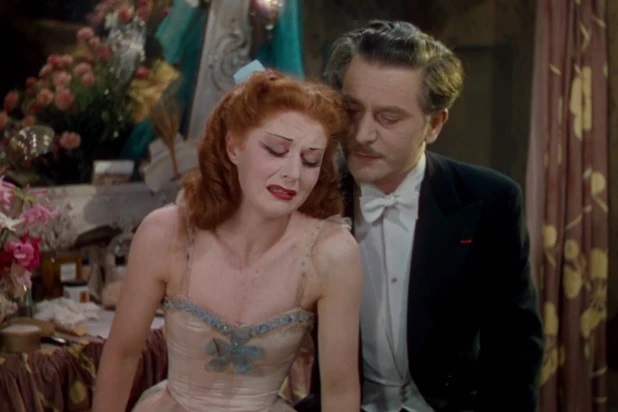
If there was a moment when “ballet” and “obsession” became synonymous in people’s minds, it might just have been the premiere of Powell and Pressburger’s The Red Shoes. The founding text in the cult of en pointe, The Red Shoes mixes technicolour beauty and fairy-tale darkness with an elaborate meditation on the struggle to balance life and art. For many it’s the peak of The Archer’s cinematic artistry. While I don’t place it that high – I have too much fondness for the beauty of A Matter of Life and Death, enjoyment for the bonkers madness of Black Narcissus and too much respect for the pleasures of The Life and Death of Colonel Blimp – there is no arguing that this is vibrant, beautiful filmmaking, two masters firing on all cylinders.

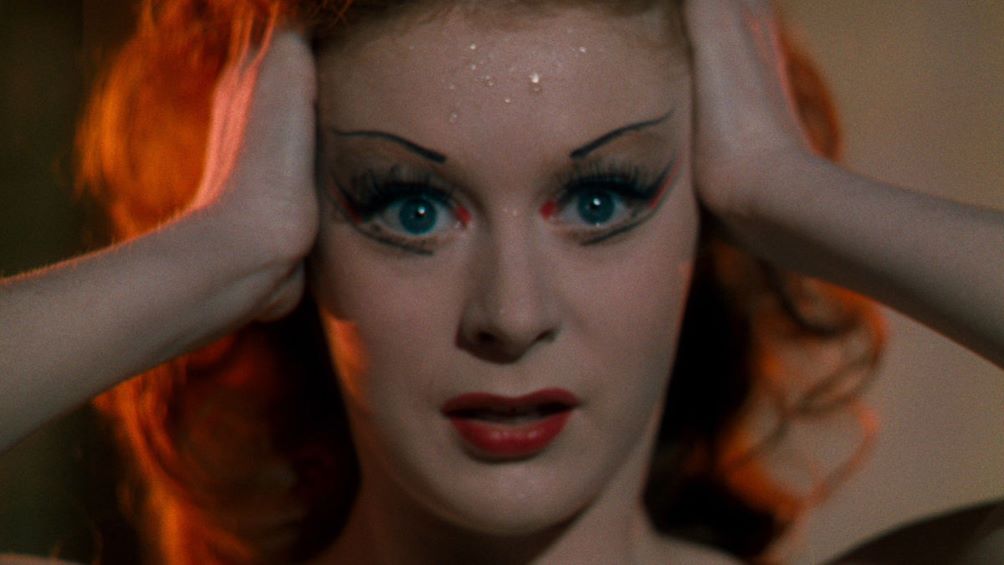
The Red Shoes is the ballet battleground for the conflicting demands of three people. Boris Lermontov (Anton Walbrook) is a Diaghilevish impresario for whom everything is secondary to art, demanding complete obedience from his protégés. Julian Craster (Marius Goring) is a gifted young composer who values life and love over art. Between them is Victoria Page (Moira Shearer), graceful once-in-a-generation ballerina talent who wants to both dedicate herself to Julian but also dance herself into legend with Boris. These three will make and break alliances on and off tour, touring Craster’s Red Shoes about ballet shoes with a mind (and dance) of their own.

On its release The Red Shoes became the most successful British film ever released in America (it even topped the end-of-year box office chart). Its popularity added even greater momentum to the wave of Hollywood musicals that turned into a tsunami. Would Gene Kelly have had the guts to end An American in Paris with a fifteen-minute ballet if Powell and Pressburger hadn’t stuck a 17 minute one in the middle of The Red Shoes first? Where The Red Shoes differs from Hollywood musicals that pirouetted in its footsteps, was it darkness and surprising bleakness, it’s clear, cold-eyed look at the limits of opportunity and the dangers of following your dream.

Because Victoria Page – played with a great deal of honesty and affecting vulnerability by professional ballet dancer Moira Shearer – is severely damaged by doing so. Inveigling her way into Lermontov’s company (despite Lermontov’s distaste at her mother’s forceful pushiness) she proves her spurs by a sensational performance in a small-scale Swan Lake at the Mercury Theatre (dancing to a recording rather than a live band) and is parachuted into a leading role in Lermontov’s productions. Vicky dreams of leaving the sort of mark few do – but she’s also human, unsuited at heart to the fierce, all-consuming obsession Lermontov expects from his stars. Shearer makes her vulnerable, gentle, lacking the force of personality to resist peer pressure.

Pressure is what Lermontov trades in. Played with a vampiric intensity by Walbrook, Lermontov is pale, Germanic and frequently retreats behind sunglasses. He commands there is no God but art and that he alone is its unquestionable high priest. He holds court in his office, where his staff come and go, rotating around his every whim and opinion. He lurks in the shadows at the rear of the theatre during rehearsals, quietly passing judgement. Vicky’s predecessor is dismissed for daring to get married. And there is the constant expectation that should he ask you for a sacrifice, it should be made in seconds.

He doesn’t care for conflict. In fact, any disagreement is met with summary dismissal. It doesn’t matter how much he’s invested in you. As Julian Craster discovers to his cost. Goring does fine work as the enthusiastic young composer (even if he is clearly a little old for the role) who we are introduced to excitedly watching his professor’s new composition for Lermontov only to discover all the melodies are his. While Lermontov is reluctant to do anything to ensure Craster gains the credit for his work (a sign of his own need to control all patronage and praise) he takes Craster on, who proves himself no flash in the plan. But no amount of time invested in Craster matters when the young composer dares to fall in love with Vicky. And even worse, she dares to love him back.

Because love and a life outside of the dance isn’t part of the plan. These ideas are all captured in The Ballet of the Red Shoes, the piece Craster composes for Vicky (the preparation for which is the catalyst for their burgeoning love affair). Based on the Hans Christian Anderson tale of the dancing shoes that had a life of their own, it neatly encapsulates Vicky’s problem. As Lermontov says summing up the story, it’s the tale of shoes that at first delight a young woman and then literally dance her to death. The entire ballet, like the film, is a grim reminder of the horrific price all-sacrificing excellence in the arts can lead to.

It’s fitting that this story is placed at the heart of such a hugely beautiful and fascinating film. Powell and Pressburger’s film are virtually a by-word for technicolour beauty. Jack Cardiff excels himself here as a photographer (only a reluctance to give this Brit outsider an Oscar two years running surely prevented even his nomination). The Red Shoes is crammed with exquisite imagery, gorgeous photography and striking, unforgettable colours. Hein Heckroth’s sets are magisterial (and Oscar winning), not least in the staging of the ballot that dominates the centre of the film.

The ballet is filmed quite unlike any other dance sequences in films. Powell in many ways breaks the cardinal rules of shooting dances. The ballet is a combination of quick edits and intricate camera moves. It is defiantly non-realistic: despite the setting, it is clearly (with its use of slow motion, super-imposed images and effects like the red shoes lacing themselves onto Vicky’s feet) not a faithful theatrical staging but highly cinematic. It beautifully, subtly suggests that we are at a tipping point between reality and imagination, that Vicky’s identification with the lead role has partially shifted her perception of the whole piece into a fairy tale turned real.

Is that partly why the whole film feels like we are walking in her own personal Hans Christian Anderson story? With Julian as the romantic prince, the theatre as a mix of enchanted forest and mysterious castle – and Lermontov as the beast who may be a prince in disguise or the wolf dressed as granny. It leads into the finales tragic ending, which blurs the line between reality, imagination and trauma into an undefinable mass. Do those red shoes exert a terrible, profound power of Vicky she hardly understands? Or are they just physical representations of her own ability to choose between the demands placed on her?

The Red Shoes is in some ways a traditional melodrama, not to mention another fable of a woman being unable to have both career and family (in the way, of course, that a man can). It is also a slim story, and the ballet – impressive as it is – depends on your relationship to that artform to work or not (I confess I find it drags slightly). But it’s also full of delightful behind the scenes sequences, from rehearsals to design meetings with Albert Bassermann’s Germanic designer to Craster’s coaching of the orchestra.

Visually rapturous, its directed with a great deal of flair and sympathy from Powell who draws some superb performances from his cast of mostly professional dancers. Although Shearer has no real chemistry with Goring, her performance as Vicky is beautifully observed and highly sympathetic and The Red Shoes is blessed with a definitive performance from Walbrook who is powerfully, imposingly domineering as Lermontov. The Red Shoes may at time dress its melodramatic heart in a little too much on-the-nose artiness, but it is also a sensational, ravishing film that lingers as long in the memories as Vicky’s prodigious dance steps.

Through a Glass Darkly (1961)

Through a Glass Darkly (1961)

Faith, family and femininity are put to the test in Bergman’s bleak meditation on religion and love

Director: Ingmar Bergman

Cast: Harriet Andersson (Karin), Gunnar Björnstrand (David), Max von Sydow (Martin), Lars Passgård (Minus)

Bergman’s Through a Glass Darkly marks a new era in the Master’s filmography. It was the first of three thematically connected films about faith and religion (although you could argue The Virgin Spring really makes this a quartet). It saw Bergman make a firm commitment to seemingly theatrical chamber pieces, with small, focused casts of trusted collaborators handling complex (joke-free) and searching themes. It was also first of his films set on Fårö, a place that would become so associated with him it would effectively be rechristened Bergman Island.

Through a Glass Darkly (Bergman’s second consecutive Oscar winner for Best Foreign Language Picture) is a brooding, intense chamber piece set entirely in a house and beachside jetty on Fårö. It’s a family reunion. Author David (Gunnar Björnstrand) returns to Sweden from Switzerland to see his children. They are 17-year old son and aspiring writer Minus (Lars Passgård) and Karin (Harriet Andersson), now married to respected older doctor Martin (Max von Sydow). The real purpose of the gathering is to monitor the recovery of Karin, a schizophrenic whose condition has (without her knowledge) been declared inoperable. Karin is drawn to obey the commands of voices only she hears which she believes emanate from an abandoned bedroom, covered in cracked wallpaper. There she believes God calls for her to join him on the other side of the wall.

There is much to admire about Through a Glass Darkly, not least the striking, haunting, cinematography of Sven Nykvist. In a film that takes place on an almost silent island – there is no music, other than a few bars of Bach on the soundtrack, and barely any natural sound, so much so that a late arrival of a helicopter seems (deliberately) like an almost demonic visitor – light becomes the main force. It beats down from the sun, wraps across rooms, seems to transform spaces in front of an eye (there is a beautiful stationary shot of it flooding an abandoned boat where Minus and Karin sit in shocked horror). It picks out every feature of the scarred wallpaper in Karin’s room and casts searching shadows and stark, interrogative beams across the character’s faces.

It greatly expands both the intensity and claustrophobia of a challenging chamber piece, exquisitely directed by Bergman. The acting of the four leads – three trusted collaborators and a newcomer – is faultless. Andersson, in particular, tackles an almost impossibly difficult character who we first meet as a carefree young woman and leave as a huddled, shattered figure hiding from the light behind sunglasses. Andersson’s raw and searching performance avoids all overblown histrionics, becoming a detailed and compassionate study of a woman losing control over her actions. Bergman holds the camera on her for long takes, while Andersson lets a multitude of emotions play across her face.

Björnstrand is equally impressive as a (disparaging) Bergman stand-in, an artist neglecting his children in a quest for perfection, coldly distant to others, guilty at his selfishness (at one point he excuses himself to privately weep at his inadequacy as a father, then returns unchanged) but quite happy to take what he can from his family to use in novels. von Sydow takes a quietly restrained role as a sombre, somewhat dour man, hopelessly in love with his wife but clearly little more to her (and he accepts this) than a surrogate father. Passgård more than matches them as a depressed teenager, yearning for approval and frustrated at learning how difficult life is.

Bergman’s family follows this complex and challenging family, which becomes a filter for understanding if love is where God is in our world. The family is distant and uncommunicative with each other – the opening scene sees them laughingly return from a swim, but the second any of them split into pairs for conversations, resentments about the others come bubbling out. Is any love here real or performative? And if it’s performative, where is love and therefore where is God?

In this world, has Karin’s schizophrenia may have emerged as an attempt to insert an acceptable love that is otherwise missing from her life. Her father is a cold-fish, who immediately announces at their reunion dinner he will soon leave for Yugoslavia, then produces a series of gifts “from Switzerland” all too obviously purchased at an airport and unsuitable for the recipient (such as gloves that don’t fit Karin). Her husband overflows with desire for her, but she can hardly raise a flicker of interest in him sexually and behaves him with more like an affectionate daughter.

The most affection filled relationship she has is also the most inappropriate. She and Minus have a relationship of physical intimacy, and she kisses and strokes him with an affection that from the start feels uncomfortably close. They confide in each other emotionally in a way they never would do with others, and Minus is the first witness of one of her schizophrenic breaks, invited by her to view the room she believes is a passageway to God. This unhealthy intensity builds, through confidences and whispered confessions into a terrible encounter in a ruined boat, where Karin is commanded by her voices to seduce Minus into crossing a terrible line.

Perhaps this is a search for love and meaning “to see but through a glass darkly” as St Paul wrote. Karin is searching endlessly for love – and therefore God – but her search seems fruitless. Her family only slowly adjust, she shatters her closest relationship and eventually even her visions in her wallpapered room tip into nightmares. Bergman never lets us see the visions Karin witnesses or hear the voices she does (this places more pressure on Andersson whose controlled and measured performance is more than capable of delivering on) but we see all the traumatic impact on her as they prove as incapable of delivering confirmation of love in her world as anything else.

It’s surprising, for a film which starts as a family drama and becomes a quietly nihilistic drama, that Bergman ends on a moment of hope as David and Minus share a moment of closeness. Bergman later said he regretted this, and the moment does feel forced at the end of a downbeat drama. It may be a reflection of the fact that Through a Glass Darkly, intriguing as it is, is perhaps a little too serious and leans a little too heavily into artistic intensity. It lacks the touches of warmth, hope and humanity that makes Wild Strawberries a masterpiece and at times hits its notes of intense brooding a little too hard (its more or less from here that the Gloomy Swede label stuck).

It’s frequently an artistic triumph, but in some ways I find it less complete than other Bergmans. It’s exploration of its themes of faith and love don’t always coalesce quite as sharply as I would wish. It strains a little too much for profound importance at the cost of some of its humanity and the characters – brilliantly performed as they are – feel a little too much like puppets in the hands of God-like Bergman, going as and when according to his needs. But then, a Bergman film that doesn’t quite make it, would be the crowning achievement of other directors – and Through a Glass Darkly haunts the mind, turning over and over again in your thoughts, for days after you’ve seen it.

Dance with a Stranger (1985)

Dance with a Stranger (1985)

Hell is other people in this Satresque version of the life of Ruth Ellis

Director: Mike Newell

Cast: Miranda Richardson (Ruth Ellis), Rupert Everett (David Blakely), Ian Holm (Desmond Cussen), Stratford Johns (Morrie Conley), Joanne Whalley (Christine), Tom Chadbon (Antony Findlater), Jane Bertish (Carole Findlater), David Troughton (Cliff Davis)

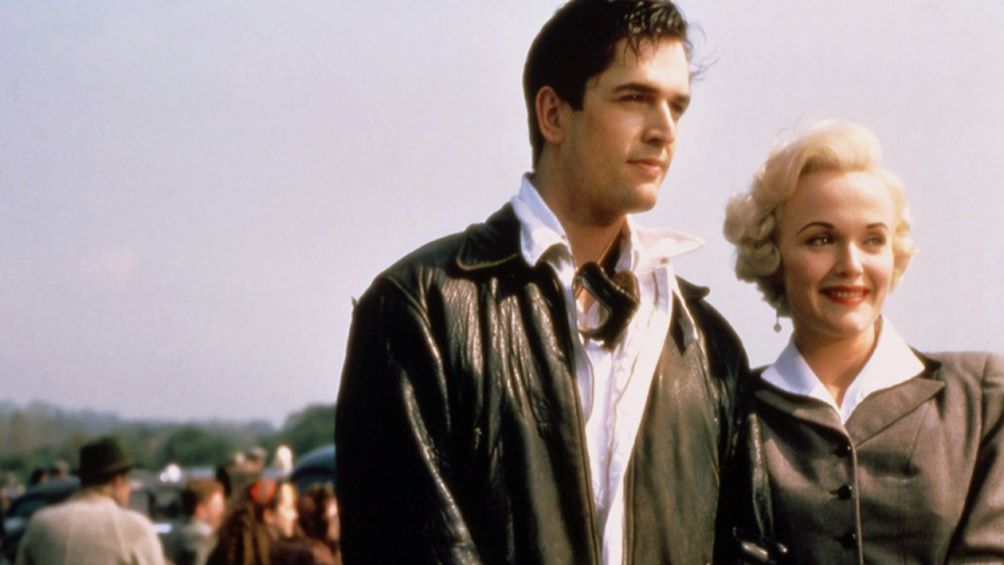
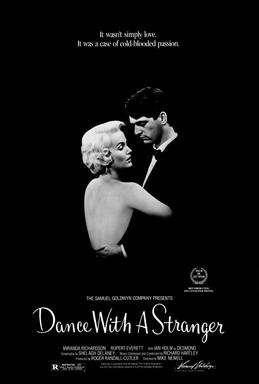
Hell is other people. Dance with a Stranger is the tragic story of how Ruth Ellis (Miranda Richardson in an electrifying screen debut) became the last woman hung for murder in Britain. But it’s also a terrible Satre-like tale of three people stuck a destructive cycle, loathing each other but unable to imagine their lives apart. Ellis is fanatically, obsessively in love with feckless David Blakely (Rupert Everett) who blows hot and cold on her and is nowhere near consistent in his feelings as middle-aged Desmond Cussen (Ian Holm), so besotted with Ruth (who treats him like a benevolent uncle) that he drives her to her assignations and pays rent on the apartment where she sleeps with Blakely.

All three cause each other immeasurable harm in Newell’s cool, bleak, well-made true-crime story that is far less interested in the moments of violence and retribution, than the sad and sorry cycle that leads to them. Tellingly, we never see a single moment of the trial or punishment of Ruth and the film effectively concludes in long-shot as we watch the fatal shooting of Blakely from afar. But who needs the close-up of this inevitable ending, when we’ve had front row seats to the catastrophic relationships that led up to it.

Like many British films, it’s at least partly about class. In 1950s London, we’re still on the cusp of the sort of cultural levelling out of the 1960s. This is a post-war, Agatha-Christie-like London. Blakely and his friends are Waughish Bright Young Things, living on Trust Funds and driving racing cars for fun. Their evenings are spent in drinking clubs aiming for glamour, staffed by those yearning to jump up a notch on the ladder like Ruth Ellis. Such women are of course for dalliances (and casual screws) not for marrying. Ruth’s back-up lover Desmond is an RAF-veteran who misses the war, an overgrown besotted schoolboy and middle-aged bachelor who accepts he is only worth other men’s cast offs.

Blakely’s friends encourage him to mess Ruth around because she’s a working-class strumpet. Ruth is at least partly willing to forgive him because marriage could lift her once and for all out of the working classes. Desmond is of less-interest, because a loveless middle-class marriage of sexual duty simply isn’t as attractive. Neither does Ruth love – or lust after – him the way she does the dynamic, sexy, little-boy-lost Blakely. A man she finds herself so uncontrollably drawn to that, no matter what he does – not turn up, mock her in front of his friends, push her down the stairs or punch her in the face in public – she comes crawling back. Often with Desmond in helpless tow, ignoring his adoration while demanding he drive her to another confrontation with the selfish Blakely.

Dance with a Stranger finds intense sympathy, to various degrees, with all three of its leads. But most strongly it turns Ruth Ellis, who could be a historical statistic, into a figure of real tragedy. Richardson is superb as a woman who is confident, assertive – even arrogantly dismissive – in so many areas of her life except one: her compulsive, obsessive and destructive love for Blakely. Dance with a Stranger charts effectively her mental collapse: from a woman who flirts confidently in a bar, to a quivering, weeping mess standing in the streets staring up at her lover’s window, screaming abuse, smashing up cars and babbling incoherently and inconsolably.

The film charts the same deadly cycle, showing Blakely’s ill-treatment and selfishness having ever more deadly impact on Ruth’s mental well-being. In it all, Blakely isn’t always malicious, more immature and easily led. Everett’s performance is perfect at capturing this playboy uneasiness under a fundamentally weak personality, a man who has been handed everything on a plate and is unable to respond in any adult way to Ruth’s love for him. Nevertheless, his stroppy behaviour gets her fired from her job and his behaviour fluctuates from gifts of framed pictures and promises of devotion, alternated with angry outbursts and emotional and physical violence.

And Desmond Cussen picks up the pieces time and again. Ian Holm is wonderful as this hen-pecked sadomasochist, impotent and all-too willing to debase himself, hurt time and again by seeing Ruth returning time and again to the dismissive Blakely. Holm makes Cussen small, weak, moody and frequently pathetic. He limply follows where she leads and suffers with weary, besotted patience every one of her preoccupied complaints against Blakely. This is man who almost sado-masochistically puts himself in painful situations, can’t be angry with Ruth for more than a few minutes and gets into impotent scuffles with Blakely outside pubs.

But it’s also Cussen who has the gun – and the film at least suggests the possibility that his openness about its location might well have been a factor in Ruth’s later decision to use it. The killing is, deliberately, the least interesting part of the film. What matters is the mental state that led Ruth to this killing. The self-delusion and desperation to believe that she could form a relationship with Blakely, the same obsessive blind-spot that leads to her closing the film writing a condolence letter to Blakely’s mother. Ruth is a victim here as much as him (perhaps more?) a mis-used woman who cannot give Cussen what he wants and can never get what she needs from Blakely.

Newell’s direction is sharp and sensitive and while the film’s cycle of destructive behaviour – Blakely and Ruth row, break-up, Cussen picks up some pieces, rince and repeat – can become overwhelming, it is partly the intention. And it cements the feeling for the audience of being as much trapped in this hell as everyone else. Holm is superb, Everett perfectly cast but Richardson is mesmeric as Ruth, vivid, vibrant, vivacious, vulnerable and victimised in a film that goes a long way to humanise the suffering behind what seem open-and-shut cases.

Decision to Leave (2022)

Decision to Leave (2022)

Obsession, murder and romance combine in this stunningly made inventive romantic film noir

Director: Park Chan-wook

Cast: Tang Wei (Song Seo-rae), Park Hae-il (Detective Jang Hae-jun), Lee Jung-hyun (Jung-an), Go Kyung-pyo (Soo-wan), Park Yong-woo (Im Ho-shin), Kim Shin-young (Yeon-su), Jung Yi-seo (Yoo Mi-ji), Jung Young-Sook (Granny Hae Dong), Yoo Seung-mok (Ki Do-soo), Park Jeong-min (San-oh), Seo Hyun-woo (Sa Cheol-seong “Slappy”)

Death from dizzying heights, a mysterious femme fatale and a detective who tips into unhealthy, romantic obsession. Sound familiar? Park Chan-wook’s Decision to Leave is an enticing spin on Vertigo, but also a beautifully made marriage of Park’s visually dynamic style with classic Hollywood film noir. Decision to Leave is soaked in the sort of atmosphere you’d find in Laura or Double Indemnity and is a breath-taking marriage of half-a-dozen genres, from noir to romance to tragedy. It rotates continuously, no matter how much we observe and watch people, on how little we understand them – and how little we understand ourselves. It’s a stunning piece of film-making.

Jang Hae-jun (Park Hae-il) is a high-flying Busan murder detective, the youngest senior investigator on the force. He’s also a reserved man, crippled with insomnia and weighed down with guilt over cases he failed to solve, conducting a long-distance marriage with Jung-an (Lee Jung-hyun) a scientist at the nuclear plant in distant Ipo. He’s called into investigate the death of a civil servant and keen climbing enthusiast, who fell to his death from his favourite climbing spot. His much younger Chinese wife Song Seo-rae (Tang Wei) is strangely unmoved by his death and becomes the investigation’s focus. She also becomes the focus of Hae-jun’s sleep-deprived obsession as he stakes out her home. Gradually Seo-rae and Hae-jun form an intimate but unromantic relationship as they discover a deep bond between them. But does that mean that Seo-rae isn’t a murderer?

Questions of motivation and the reasoning behind decisions is central to Park’s film. At its heart is Seo-rae, a woman constantly unreadable, as hard to distinguish as her turquoise-tinged clothes are between blue or green (depending on who you talk to). A Chinese woman in South Korea, her Korean is formal and perfectly phrased but she relies on Google Translate to render more emotive sentences into Korean. She nurses ageing women in their homes, showing them care and attention. She might also be a murderer several times over, for motives that are impossibly unreadable.

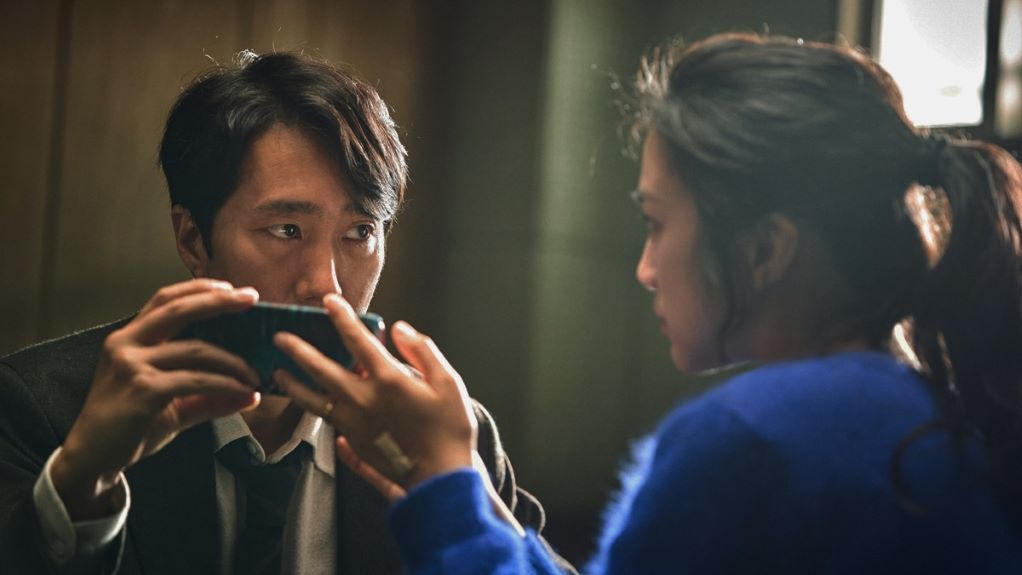
It must be particularly unreadable for a detective whose mind is clouded by lack of sleep. Hae-jun’s eyes in his lined, weary face are frequently blurred by eye drops (the same eye drops covering POV camera shots). As a detective he’s prepared for everything. He wears trainers, constantly prepared for sudden sprints after criminals (one of these sees him pounding up the side of Busan’s mountain – both he and the suspect collapsing, wheezing for breath, at the top), he has specially tailored coats filled with any object he might need, from tissues to aspirin to a knife glove for hand-to-hand combat. He is calm, unruffled and ready for anything. He’s also a man who struggles with knowing who or what he wants and has placed such pressure on himself that insomnia feels like his body telling him sleeping is irresponsible in a world where there is so much to fix.

Decision to Leave revolves around the fascinating dance between these two characters, a Sherlock Holmes and Irene Adler, who recognise on some-level they are kindred spirits. Both are quiet, dedicated observers of people. Both have the ability to zero in on details – its telling that Seo-rae is the only one who can help Hae-jun begin to crack his old cases and that Hae-jun is the only one who delights in every detail of Seo-rae’s careful, formal Korean. Neither are exhibitionists, both quest obsessively because they feel they must for others: Hae-jun for the victims of crimes, Seo-rae to reclaim the Korean land her grandfather had been forced to leave behind when he fled to China.

But yet… these are also people seemingly determined to manipulate and entrap each other. Sae-jae’s growing closeness with Hae-jun is also a way to get closer to the case, to follow Hae-jun’s progress and to nudge (or outright shove) it in certain directions. Her motives and decisions remain unclear. When they go on a tenderly chaste date to a Buddhist temple, is their connection and intimacy genuine for her, or is she ruthlessly playing a lonely man for advantage?

Because Hae-jun defines himself as a detective – after all, he will chase cases to the end long-after his bosses have demanded he file it. Decision to Leave explores how far this will affect Hae-jun: how far will he go to protect someone he suspects might be a killer? If he helps Seo-rae, how much would he grow to hate himself for doing it? Or to put it another way – is there a greater expression of love that a Holmes is capable of, than to help his Irene Adler get away with it?

These dizzying themes interweave with fascinatingly oblique motivations in this endlessly rewarding puzzle-box of a movie. It’s also clear to see the Vertigo parallels, as manipulators fall in love and stalkers try to shape people and events to meet their desires. It’s second act, set in Ipo, as the characters come back together after a time-jump is a brilliantly engaging dance between two people who might be deeply in love and might be doing their very best to manipulate each other. Here acts of love include reading seized phone call transcripts or draining a swimming pool of bloody water.

It’s extraordinarily shot by Park chan-wook – this is the sort of film that makes you want to run out and see everything else he’s ever made straight away. Decision to Leave is more classical and reserved than his other ‘cinema of cruelty’ films. But that isn’t to say it’s not crammed with endless inventive flair. Camera angles plumb every depth of imagination – from vertigo-inducing heights to shots that seem to place the camera inside phones, their graphics superimposed across the screen.

As Hae-jun imagines Seo-rae’s actions or stakes out her home, he is visually inserted into her memories or placed in the scene as a witness as he deduces how she may have killed her husband. As this dedicated, obsessive watcher – who can’t leave his fascination with the case alone – watches her home, Park suddenly places Hae-jun inside Seo-rae’s home, sitting alongside her on a sofa. Scenes replay from multiple angles to show us new perspectives, and the characters blur and switch roles as Seo-rae stakes out Hae-jun in Ipo, noticing how his smart shoes (not suitable for running) are in fact a sign of his collapse in confidence.

Decision to Leave gains hugely from Tang Wei and Park Hae-il’s superb performances. Tang Wei is utterly unreadable, her motives and emotions discernible moment-by-moment only in micro-clues – but by the film’s conclusion you feel you finally have an understanding of her tortured, confused emotions. Park Hae-il drips crumpled loneliness and sadness under a professional demeanour, his emotional vulnerability becoming more and more apparent, his job a fig leaf to give his life definition. The chastely, strangely innocent, intimacy between the two of them has profound emotional impact – this is a classic romance, about two people far closer than sex could make them.

Park’s direction of all this is perfectly paced – for a slight plot and an extended run-time, this feels like a film where not a moment is wasted. Like Vertigo every moment fits together into a complete whole which might only be understandable when you step back and look at. Visually, it’s a treat – inventive but not flashy, unique but not overbearing. And it builds a carefully modulated and deeply moving spiritual romance at its heart. It’s a beautiful slice of film noir, rung through with poetry. It’s a marvellous film.

Misery (1990)

Misery (1990)

Obsessive fans wanting to control the narrative is nothing new in this tension-filled King adaptation

Director: Rob Reiner

Cast: James Caan (Paul Sheldon), Kathy Bates (Annie Wilkes), Richard Farnsworth (Sheriff Buster), Frances Sternhagen (Deputy Virginia), Lauren Bacall (Marcia Sindell)

“I’m your number one fan”. Do any other words strike more fear into the hearts of celebrities? Stephen King’s Misery feels more and more ahead of the time. We live in an era where obsessed fans frequently take to YouTube (or obscure blogs – oh dear…) to shout their fury into the ether about how their beloved franchise has taken a wrong (i.e. counter to their head cannon) turn. Stephen King wasn’t a stranger to this: he’d already had fans in the mid-80s lambast his non-horror books. Misery takes it all a step further.

Successful novelist Paul Sheldon (James Caan) has written a series of Mills & Boon style Victorian romance novels about a character called Misery Chastain. Wanting to restart a career as a serious novelist, Paul retreats to the depths of Colorado to put the finishing touches to his new non-Misery novel. Driving back to New York, he has a car accident. With two broken legs and fractured shoulder, he is dragged from his car by nurse and fanatic Misery fan Annie Wilkes (Kathy Bates). Annie tells him not to worry: the phone lines will be back up soon and until then he can stay at her home. Until she discovers Paul has killed off Misery in his recently published book. A furious Annie makes it clear no one knows he’s there and that, if he ever wants to escape her secluded home, he’ll write a new Misery book to Annie’s personal specifications.

Misery is part horror, part deeply black comedy – a heightened fantasy of increasing paranoia powered by a superb performance by Kathy Bates that walks a fine line between grand guignol, farce and deluded tragedy. In many ways Annie, monstrous in her obsession, is a superb dark comic creation. She has an anorak-level obsessive knowledge about her passions, litters her speech with prudish replacement swear-words (“cockadoodie!”), bounces around the room with schoolgirlish excitement at having Paul in her presence and adores her pet pig (named, of course, Misery). Bates is energetic, wide-eyed and times kind of sweet.

But she’s also a chillingly ruthless and capable of great outbursts of rage and fury at the slightest provocation. A lonely woman with clear signs of being either bipolar or deeply depressed, sinking at times into “black dog” moods, stuffing herself with junk food in front of trashy TV, she relies on Paul’s books to give her a slice of the romantic, exciting life she feels she has missed out on. Like the most toxic fans today, she feels such emotion for the Misery books, she believes they belong to her personally – and if they deviate from what she wants it’s a personal affront. She is also so desperate to love and be loved, she takes a brutal control of the world around her, convinced that if she just works really hard the object of her admiration will admit he feels the same.

Bates is extremely good in a performance strikingly similar to Hopkins’ Lecter a year later (also, of course, Oscar winning). It’s a masterclass in actorly tricks, all deployed with triumphant expertise to create a character who is both darkly funny and terrifyingly controlling. Annie is so twisted that, in a way, doping Paul up on drugs and smashing his legs with a sledgehammer is like an expression of love. If he really understood what she was trying to do for him, how she knew the sort of books he should be writing, he’d never want to leave anyway right?

That leg smashing scene – and God it’s almost impossible to watch – is the height of Reiner’s taut direction that brilliantly makes this an endlessly tense chamber piece. The camera frequently shoots Annie from Paul’s prone position, meaning we are craning our heads up to look at her in exactly the same way he is. Later sequences, where Paul finally works out how to pick the lock of his room and explore (in his wheelchair) Annie’s kitsch-filled house with its shrines to her favourite celebrities, also place us on his visual level. Several scenes use tension effectively – you’ll catch your breath at the dropping of a model penguin, clench as Paul hides pills and knives around him for future escape attempts or sweat as Paul rushes to return to his room when Annie arrives home suddenly. But Reiner also threads in Hitchcockian wit throughout, amongst the tension.

It also gains a great deal from James Caan’s measured performance as Paul. Caan was last in a longlist of male actors offered the role (a sharp change from those days when Caan turned down roles that went on to win other actors Oscars) but willingly plays the passive, scared Paul with a low-key humbleness that works very well. He becomes someone who it is easy to root for.

Misery explores the lengths obsessive fans will go to to own their passions very well. Annie rejects Paul’s first attempt at humouring her with a new Misery book for its inconsistencies with previous novels (she clearly knows way more about it then him). That’s not even mentioning she demands he burns the (only) copy of his new non-Misery novel because “it’s not worthy of him” (being full of naughty words). It’s so good – and in a way prescient of where fandom is heading – it feels a cheap cop-out to also reveal Annie is a serial killer. Far more interesting is how quickly an unhealthy fixation could tip a maladjusted person from demands, to threats, to leg smashing fury.

Misery also fits a little too neatly into a trend – common at the time – of “regular guys” having their lives turned upside down by dangerous, deranged women (there are more than a few nods to Fatal Attraction and it’s not a surprise to hear Michael Douglas was offered the role). For all the dark skill Bates plays Annie with, we are rarely invited to sympathise with or understand her (she’s cemented as a freak with the discovery of her killer past) – again, how more interesting (and prescient) would it have been to just have a woman driven to extremes by obsessive monomania?

The film works best as a chamber piece. So much so, that any scene outside of the house feels superfluous – despite the excellent work from Richard Farnsworth as the local sheriff investigating Paul’s disturbance. Misery, with its abandoned house in the middle of nowhere, is sometimes a little too open in its huge debt to Psycho. But it’s ahead of its time in understanding the obsessive anger that lies under the surface of the darker elements of fandom – so much so you wish it had stuck to that.

Tár (2022)

Tár (2022)

Character flaws abound in this intriguing and challenging film, open to multiple interpretations

Director: Todd Field

Cast: Cate Blanchett (Lydia Tár), Nina Hoss (Sharon Goodnow), Noémie Merlant (Francesca Lentini), Sophie Kauer (Olga Metkina), Julian Glover (Andris Davis), Allan Corduner (Sebastian Brix), Mark Strong (Eliot Kaplan), Sylvia Flote (Krista Taylor), Mila Bogojevic (Petra)

Absolute power corrupts absolutely. It’s a maxim humanity manages to prove true, time and time again. It doesn’t matter what the field is, when someone holds sway over the dreams and ambitions of others, there’s a decent chance that power can be enjoyed so much it starts being abused. It’s an idea key to Todd Field’s gloriously complex and challenging Tár, a film that defies easy explanations and characterisations, both frighteningly in the “here and now” but also terrifyingly universal.

Lydia Tár (Cate Blanchett) is an internationally renowned conductor and composer. The first ever head of the Berlin Philharmonic Orchestra, she lives a jet-setting life of international acclaim and fame, praised at every stop-off for her stunning reinventions of classical music. But dark shadows swirl around her. She plays favourites: and her favourites are always attractive young women, just starting their career, who see her as inspiration and mentor. And Tár? She sees advantages to this. It’s unspoken knowledge to all, from her partner first violin Sharon (Nina Hoss) to the other members of the Orchestra. But as the suffering of one of Tár’s spurned proteges threatens to leak out into the public domain, her empire topples just as she reaches the summit of her career.

Tár is a brilliantly insidious film, a quiet but compelling character study that borrows elements of Kubrickian unknowability. In particular, Field avoids making moral decisions for the audience, but trusts we are smart enough to come to our own conclusions. Effectively, we spend the film following a deeply flawed, Spacey-like figure, whose life falls apart without being invited to feel morally superior to her. It allows us to feel the pain of her meeting the consequences of her actions, but never lets us forget her own arrogance and cruelty caused them in the first place.

Tár is both an inspirational genius and a dyed-in-the-wool bully. She solves problems with the mindset of an aggressive alpha – her solution to her daughter being picked on by a classmate, is outbullying the bully (“I will get you” she tells her, assuring her no one will believe her because Tár “is a grown-up”). She treats her assistant (and possibly former lover) Francesca who tags behind her in the hope of a junior conductor role like a slave, brow-beats Orchestra members and fellow conductors with friendly pressure and views every relationship in terms of what she can get out of it.

As this deeply flawed human-being, Cate Blanchett is mesmeric. Tár is a firm reminder that she is, perhaps, the greatest actor in the world and all her range is on show here. Blanchett is imperious, assured and totally brilliant. She invests Tár with such – admittedly deeply flawed – humanity, we have to constantly pull ourselves up to remember she’s a dreadful person. Tár is arrogant, convinced of her own genius and sees no-one as her peer. She’s also inspirational, charismatic and oddly charming. Blanchett’s mixes tragedy, grief, denial, panic and bottomless bitterness as Tár’s carefully constructed life falls apart like a time-delay car crash that suddenly jumps back into normal time.

Carefully paced – it’s difficult not to reflect on Tár’s opening words at a career retrospective interview on the importance of timing to give each moment its precise impact – Tár never rushes, unless it needs to and slowly, but assuredly unfolds the final days of her empire. It’s like watching the Indian Summer of an Astro-Hungarian Emperor, barely aware that huge global forces are about to sweep everything away and rob her of her control of events. Field reflects this in the film’s assembly: earlier sequences are marked by their long takes – virtuso set-pieces for Blanchett – and tracking camera, that constantly centres Tár. Later sequences become shorter, choppier, narrative information becomes less clear – it’s like Tár has lost control of the film as much as she has her life.

Control is central, and Tár’s abuse of it her undoing. Her (unspoken but implied) predatory demands for sexual favours in return for career advancement are an open secret among colleagues. Field adds a threatening sense of Tár being watched – either recorded on a phone, or shots of the red-haired back of a mysterious woman at key moments. The woman is Krista, a former protégé, the exact nature of her fall-out with Tár unclear, but who Tár has black-balled in the classical music world. Even as the fallout from this threatens to consume her, Tár can’t help herself from attempting to groom a new cellist (Sophie Kauer), fixing a blind audition, favouring her in private workshops and bypassing the orchestra’s new cellist to land her a juicy lead.

It’s part of Field’s wonderful and searching analysis of the corruption of power – even as the house of cards totters, people can’t seem to see it. While being a universal parable, the film is also fiercely topical. Tár has clear parallels with figures like Spacey. Her ageing former mentor (a crisp Julian Glover) bemoans how the slightest mistaken word to someone can be misinterpreted as lecherous abuse. Attention has focused on the idea of this as a cancel culture movie. Tár, at a Juillard lecture, does strongly disagree with a young BIPOC composer, who can’t relate to cis-gender old white guys like Bach. Tár pushes the rather self-righteous young man to justify himself, which he attempts. But she also goes increasingly further and further, moving from persuasion to brow-beating (her natural resort as a bully) and thinly veiled mockery. She’s smart enough to deconstruct the contradictions in the young man’s views – but cruel enough to mock his bravery at standing up. But Field allows both sides legitimate points, something that you don’t nearly get enough of in our polarised world.

Field also tips Tár more and more into something unsettling and other worldly. Tár’s uniquely perceptive hearing means she is plagued with strange noises: a chiming echoing around her bolt-hole apartment (the reveal of what this is, is another reminder of her indifference to other people), a screaming heard while out running, a metronome that wakes her at night. Strange daydreams, with ghostly, vampiric presences fill her mind. Late, she enters a damp-soaked abandoned building which feels like the gateway to some Lynchian parallel universe, guarded by a Tarkovsky-like dog who might as well be the gatekeeper to her nightmares. Much of the final act of the film unspools like a wild, terrible dream, where key events may not even be real. Reality crumbles, just as Tár’s control over her personal and professional life disintegrates.

Through it all we are invited by Field to empathise, but not sympathise, with this demanding and domineering woman. To understand her, but not forgive her, to dislike her but not tar and feather her. A lesser film would have done the moral work for us. Nothing is explicit about Tár’s cruelty, but the tears of her assistant (a superbly fragile Noémie Merlant) and the tight-lipped frustration of Sharon (Nina Hoss is terrifically pained and long-suffering in a difficult role) speak volumes. But yet, it’s hard not to feel something for someone as their life falls apart, no matter how earned the fall might be. Blanchett uses all her skills to make Tár someone who is frequently awful but never a bogeyman, is categorically in the wrong, but still a figure of hubristic tragedy.

Blanchett is earth-shatteringly good in the lead role and Field’s direction is subtle, balanced and plays just enough with your perceptions. Perhaps some of what we see takes place in Tár’s nightmares, perhaps we only see certain characters from Tár’s biased perceptions. It could even be a fabulous ghost story with past misdeeds haunting the frame, a deconstruction of our willingness to pull down the flawed, a study of the abuse of power – or all three and more. The fact you will debate it for weeks to come, means it’s definitely a great film.

Mulholland Dr (2001)

Mulholland Dr (2001)

Surrealist, dream-like images fill a film that’s wilfully complex, perplexing and probably Lynch’s masterpiece

Director: David Lynch

Cast: Naomi Watts (Betty Elms/Diane Selwyn), Laura Harring (Rita/Camilla Rhodes), Justin Theroux (Adam Kesher), Ann Miller (Coco), Mark Pellegrino (Joe), Patrick Fischler (Dan), Michael Cooke (Herb), Dan Hedaya (Vincenzo Castigliane), Angelo Badalamenti (Luigi Castigliane), Michael J Anderson (Mr Roque), Monty Montgomery (The Cowboy), Lee Grant (Louise Bonner), James Karen (Wally Brown), Chad Everett (Jimmy Katz), Melissa George (Camilla Rhodes), Billy Ray Cyrus (Gene), Lori Heuring (Lorainne Kesher)

Spoilers: I’ll be discussing in detail the plot (if you can call it that) including its final act reveals which are crucial for understanding the film. So watch it first!

Where do you begin? Mulholland Drive feels like the culmination of Lynch’s work, a perfect boiling down of Twin Peaks, Lost Highway, Wild at Heart and Blue Velvet into a surrealistic meditation on Hollywood, wish-fulfilment, dreams and reality. It’s both wilfully inaccessible and surprisingly clear, both coldly cruel and achingly tender, full of hope and devoid of happiness. It’s tough, cryptic, engrossing viewing and unpeels like an onion (and likely to have the same effect on you as that vegetable). Every scene may mean everything or nothing, but there is not a moment of it that isn’t darkly, thrillingly engrossing.

It starts with a car crash on Mulholland Drive – but not before a stream of seemingly disconnected images that only later reveal their importance, including a women on a bed and a dizzying array of disconnected jittybug dancers drifting across the screen like paper cut-outs before a purple background. The car crash involves a mysterious woman ‘Rita’ (Laura Harring) who narrowly escapes being murdered but is left with amnesia. She stumbles to the house of Betty (Naomi Watts), a newly arrived girl in Hollywood, eager to become an actress. With only a bag of money and a mysterious blue key to go on, Rita and Betty search to find out who Rita is. Meanwhile, director Adam Kesher (Justin Theroux) finds his film (which Betty wants to audition for) being taken over by gangsters. Did I also mention an incompetent-but-brutal hitman, a supernaturally omniscient albino cowboy and a monstrous goblin-like hobo who lives behind a diner and can kill on sight?

Mulholland Drive grew out of Lynch’s plans for a new Twin Peaks style TV series. He shot a pilot, the footage from which takes up much of the first two thirds. Like Twin Peaks it was full of mysterious alleyways to be explored: it’s amnesiac lead, mysterious money and blue key, shadowy gangsters (even led by Twin Peaks veteran Michael J Anderson, here in a Red Room style hide-away, his head attached to a prosthetic body), creepy supernatural nightmare elements. Alas, the executives hated it (it wasn’t exactly Desperate Housewives), but French investors stepped in to fund Lynch turning it into a surrealist movie, with an additional half an hour of footage to an ending (of a sort).

A sort of ending is what we get. Mulholland Drive is a famously confusing, impenetrable film. But to me it seems clear. Lynch’s solution was to turn all the pilot footage into a bizarre and terrible dream – and latch on an ending set in the ‘real world’ which re-presents characters, events and throwaway moments in surprising new lights, leading us to radically reinterpret everything. Effectively, the first two-thirds are the guilt-ridden nightmare of Diane (Watts again), a failed actress in Hollywood who paid for a hit on a star actress Camilla (Harring again) who she believes seduced and spurned her. In her dream, Diane reimagines both herself and Camilla exactly as she wishes they were: herself unspoilt by Hollywood with preternatural talent, Camilla as an amnesiac utterly reliant on her.

What we have here is dreams as wish fulfilment: and what city is more about that, than Hollywood? Mulholland Drive plays as the dark underbelly of Sunset Boulevard (pretty dark and bitter already!). Lynch’s Hollywood is a vicious, heartless, bloody place, where cruelty and death are commonplace. In ‘the dream’ the gangsters – terrifying cameos from Hedaya and composer Badalamenti, the latter dribbling inadequate coffee from his mouth during a meeting in a grotesque power play – call the shots. Reality might be worse. This heartless factory of dreams chews up and spits out innocents like Diane, turning her from naïve and optimistic into  bitter, twisted shell, emotionally maladjusted, locked in her apartment tearily in thrall to her worst instincts.

It makes sense in a way that the film is dominated (probably) by a dream. Hollywood is the town of stories, and it’s perversely logical that the unreality should feel so detailed, engrossing and narratively compelling while what is (probably) reality is fragmented, mundane and laced with cruelty. To the people of films, stories are richer and more freeing than anything that happens in real life and infinitely more comforting.

Comfort is what our dreamer wants. Naomi Watt’s Betty seems like a cliché of a small-town girl, swept up in the big city. Full of aw-shucks charm, the eagle-eyed will spot little moments of strength that feel out of character. There are micro-flashes of anger and she’s determined to break into a mysterious, abandoned house to find a clue when Rita runs. She’s a gifted actress, turning a mundane script in an audition (a script she and Rita laugh at) into a simmering performance of sexual control that stuns the room. But this is a multi-layed performance, just one facet of a whole.

Because Betty’s talent is recognised in the way her ‘real-world’ counterpart Diane – stuck in small supporting roles, gifts from Camilla – never is. There are touches of this in that audition: the director is the least involved and speaks only in vague bullshit. Its not just that talent recognition: in the dream she can turn her lover Camilla, an independent and (perhaps) selfish figure, into someone so dependent on her that she literally doesn’t even know who she is. She even turns the man Camilla leaves her for, into a deluded, humiliated cuckold in thrall to gangsters.

Lynch’s crafting of this dream is flawless. He can mine tension from even the smallest moments. Innocuous events – two men sitting in a diner, a kind old couple in a cab, a business meeting, a singing audition – drip with menace and unknown horror. His camera frequently, almost imperceptibly weaves, as if held floating in space. Logic jumps and sudden transitions abound. Lights flicker and time never obeys rules. He is also a master of black humour: a hit-job gone wrong (with bodies and a vacuum cleaner joining the carnage) is hilarious, as is Kesher’s unexpected arrival home to find his wife in bed with a muscular pool cleaner.

Mulholland Drive is also a sensitive and highly emotional romance story between two lost souls. Betty, naïve and helpful and Rita, who clings with gratitude and adoration to the woman who helps her. Moments of sexual tenderness between these two are shot with erotic beauty: contrasted sharply with the more sordid, aggressive couplings between them in ‘reality’.

But these mix with moments of chilling, unspeakable horror. The hideous goblin living behind a diner, an embodiment of all that is cruel, evil and twisted, later clutching a box the releases the furies themselves seem to leap from. Is this a dark expression of the dreamer’s own guilt (which seems to be transferred to “Dan” a man we see literally dying of fright in a diner that becomes crucial later)? The Cowboy, who may or may not be of this world, glanced at two dreadful moments (just as he promises) seems to guides the dream. And the Silencio club, a theatre of the bizarre, disturbing auditory and visual twists and turns that serves as the gateway between dream and reality – something Betty subconsciously knows, vibrating in terror in her seat, knowing this fantasy she has crafted is under siege from dark elements of the truth demanding she acknowledge them.

Mulholland Drive deconstructs itself at every turn, aided by Lynch’s wonderful, hypnotic surrealistic touches. What’s beautiful about it, perhaps, is it leaves it very much up to you. For me, the desire for dreams to be fulfilled is crucial. It’s all captured in Watts and Harring’s multi-layered performances, their versions of the same women contrasting and complementing each other. Lynch allows their personalities to blur both in character and in visuals (Rita ends up in a matching wig in touches of Vertigo while the film’s blurring of two personalities echoes Bergman’s Persona, including a homage via a shot where both faces seem to merge into one).

An intense, fascinating dream-like exploration of several classic Lynchian themes, Mulholland Drive is his finest, most rewarding film. One which, whatever interpretation you place on its events, grips and challenges you at every moment, full of scenes which spark a mixture of imagination, horror and intrigue. Powered by two wonderful performances at its lead, both with just the right mix of reality and fantasy about them, it’s an extraordinary film.