Category: Films about revenge

Winchester ’73 (1950)

Winchester ’73 (1950)

Psychological darkness underpins this dark and exciting Western from Mann and Stewart

Director: Anthony Mann

Cast: James Stewart (Lin McAdam), Shelley Winters (Lola Manners), Dan Duryea (‘Waco’ Johnny Dean), Stephen McNally (‘Dutch’ Henry Brown), Millard Mitchell (Frankie ‘High Spade’ Wilson), Charles Drake (Steve Miller), John McIntire (Joe Lamont), Will Geer (Wyatt Earp), Jay C Flippen (Sergeant Wilkes), Rock Hudson (Young Bull), Tony Curtis (Private)

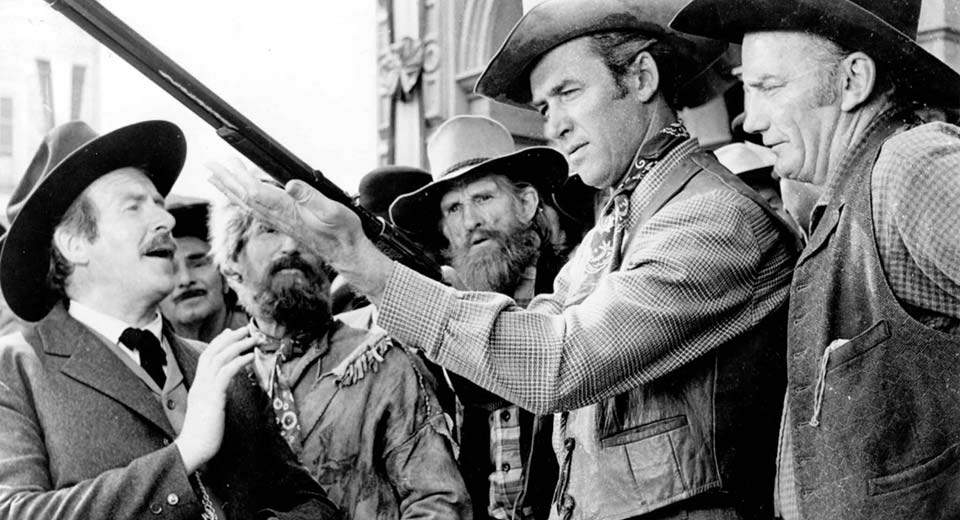
“The Gun That Won the West” was the proud boast of the Winchester Repeating Arms Company of its rifle ((it can fire several shots before reloading unlike normal rifles). As Winchester 73 puts it, such guns built the West and any Indian would give his soul for one. In Anthony Mann’s complex psychological western, it’s also an instrument of death defining a whole era. Winchester 73 follows the path of one ‘perfect’ repeating rifle, won in a shooting competition by Lin McAdam (James Stewart) but stolen from him and passed from hand-to-hand, seeming to curse everyone who touches it to death.

McAdam has his own mission, searching for the man who killed his father, ruthless criminal ‘Dutch’ Henry Brown (Stephen McNally). These two compete for the rifle, in a Tombstone shooting content refereed by legendary Wyatt Earp (Will Geer) whose orders to keep the peace in this town stop the two of them turning guns on each other from the off. Defeated, Dutch steals the rifle (after getting the jump on McAdam), but he doesn’t keep it long as it moves from owner-to-owner. Meanwhile, McAdam purses Dutch, with faithful friend High Space (Millard Mitchell) in tow, encountering war bands, cavalry troops and Lola Manners (Shelley Winters), a luckless woman tied to a string of undeserving men.

Winchester 73 unspools across 90 lean, pacey minutes and gives you all the action you could desire, directed with taut, masterful tension by Mann. It opens with a cracking Hawkesian shooting contest, with the equally matched McAdam and Dutch moving from shooting bullseyes, to dimes out of the sky to through the hoops of tossed rings. Among what follows is a tense face-off between cavalry and Indians, a burning house siege of Dutch’s ruthless ally ‘Waco’ Johnny Dean (Dan Duryea), a high noon shoot-out and a final, deadly, rifle shooting wilderness cat-and-mouse shoot-out between McAdam and Dutch. It’s all pulled together superbly, mixing little touches of humour with genuine excitement.

However, what makes Winchester 73 really stand out is the psychological depth it finds. Audiences were sceptical of James Stewart – George Bailey himself – as a hard-bitten sharp-shooter out for revenge. But Stewart – deeply affected by his war service – wanted a change and Mann knew there was darkness bubbling just under the surface. McAdam is frequently surly, moody and struggles to express warmth and kindness. He can only confess his fondness for High Spade while glancing down at the rifle he’s cleaning and the most romantic gesture he can give Lola is a gun when they are caught up in a cavalry siege, wordlessly suggesting she save the final bullet for herself. McAdam is driven and obsessively focused, stopping for nothing and no-one on his manhunt, a manhunt High Spade worries he is starting to enjoy too much.

And he’s right to worry. In hand-to-hand combat, Stewart lets wildness and savagery cross his face, his teeth gritted, eyes wild. Scuffling for the rifle with Dutch, there is a mania in his eyes that tells us he is capable of killing with his own hands, a look that returns when he later savagely beats the cocky Waco (it’s even more shocking, as Waco’s ruthless skill is well established, before McAdam whoops him like an errant child). Stewart plays a man deeply scarred by the loss of his father, his emotional hinterland laid waste by a burning need for revenge to fill his soul.

This is the West Winchester 73 sees, one of anger, self-obsession and lies. Seemingly charming trader Joe Lamont (John McIntire, very good) is a shameless card sharp who cheats everyone left-right-and-centre. Waco is perfectly happy to sacrifice his own gang so that he can escape the law – just as he’s perfectly happy to use women and children as human shields and provoke a hapless Steve Miller (Charles Drake), Lola’s luckless lover, into out-matched violence. Steve is hard to sympathise for, having left Lola in the lurch without a second thought when they are caught in the open by a war band (he rides off shouting ‘I’ll get help’ and only returns after finding it by complete fluke).

In this West, a gun is the ultimate symbol. Mann opens every section of the film with a close-up shot of the gun itself, this most prized of possessions, each time in the hands of a new owner. Earp keeps his town strictly gun-free, and both McAdam and Dutch instinctively reach for their holster-less waists when they first meet. (Will Geer does a fine line in avuncular authority as Earp, treated with affectionate patience which becomes quiet fear when he smilingly reveals who he is). The cursed rifle, like Sauron’s ring, seems to tempt everyone and then betray anyone who touches it. Of all its owners, only Dutch and McAdam seem to understand how to use it: and of course, McAdam is the only man with the determination to truly master it.

There isn’t much room for women in all this. Much like the rifle, Lola herself is passed from man-to-man. Played with a gutsy determination by Shelley Winters, she’s first seen thrown out of Tombstone on suspicion of being a shameless floozy, before passing from the useless Steve (who Winters wonderfully balances both affection and a feeling of contempt for) to the psychopathic Waco (few people did grinning black hats better than Dan Duryea). It’s been argued that Lola fills all the traditional female Western roles in one go – hooker, faithful wife, independent women, damsel-in-distress, redemptive girlfriend – and there’s a lot to be said for that. So masculine and violent is this world, women constantly need to re-shape and re-form themselves for new situations.

Fascinating ideas around violence, obsession and sexuality underpin a frontier world where, it’s made clear repeatedly, life is cheap make Winchester 73 really stand out. Led by a bravura performance by James Stewart (who negotiated the first ever ‘points deal’ for this film and made a fortune), with striking early appearances from Rock Hudson (awkwardly as a native chief) and Tony Curtis (as a possibly too pretty cavalry private), it’s both exciting and thought-provoking in its dark Western under-currents

Frankenstein (2025)

Frankenstein (2025)

Del Toro’s dream project makes it to the screen in a lavish gothic spectacular

Director: Guillermo del Toro

Cast: Oscar Isaac (Baron Victor Frankenstein), Jacob Elordi (The Creature), Mia Goth (Elizabeth Harlander), Felix Kammerer (William Frankenstein), Lars Mikkelsen (Captain Anderson), Christoph Waltz (Henrich Harlander), David Bradley (Blind Man), Charles Dance (Baron Leopold Frankenstein), Ralph Ineson (Professor Krempe)

When he was a kid del Toro fell in love with James Whale’s Frankenstein. It was his dream project to create his own version of Mary Shelley’s classic. Year of dreaming pay off in this visually gorgeous, and emotionally engaging film – even if it’s also a little overlong and overindulgent. Del Toro throws everything into Frankenstein, creating a grand Gothic epic whose sympathies firmly lie with the abused Creature.

You must be familiar with the plot: in eighteenth century Germany, Frankenstein (Oscar Isaac), driven by never-really-resolved anger over his mother’s death, dreams of conquering death. With the funding of arms dealer Harlander (Christoph Waltz), who is also uncle to the woman he loves: Elizabeth (Mia Goth) who happens to be fiancée to his younger brother William (Felix Kammerer). On a stormy night, he gives life to the Creature (Jacob Elordi) but quickly rejects him. The Creature tries to find a place in the world, only to discover the world is full of prejudice and violence towards him and the Creature’s resentment against his thoughtless creator grows.

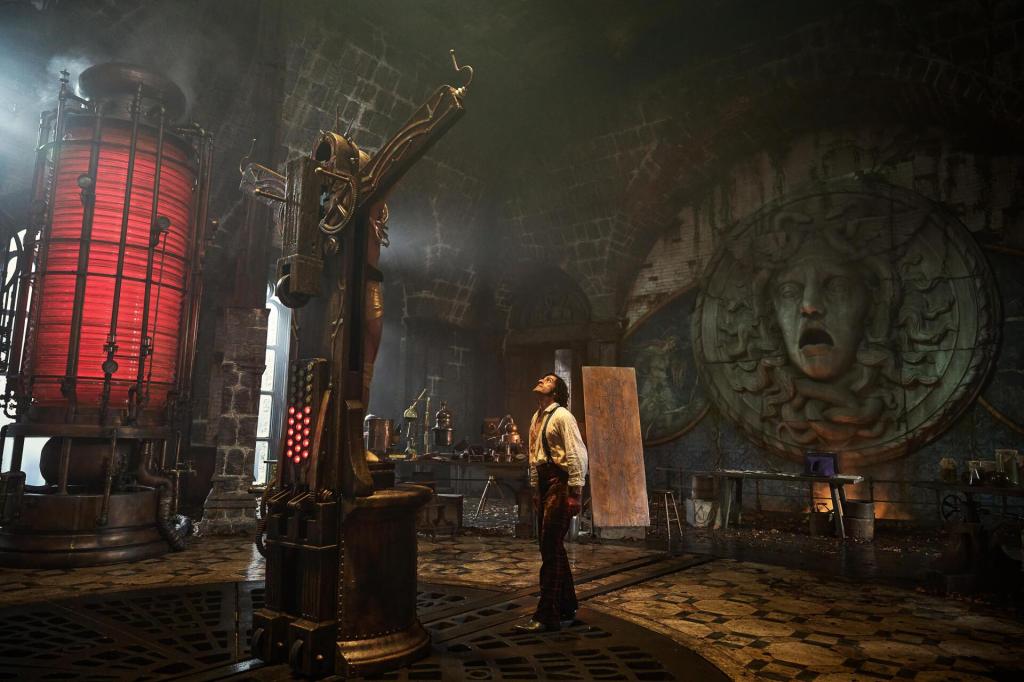
Del Toro’s film looks absolutely stunning, a sumptuously designed Gothic melodrama with extraordinary sets, grand costumes and beautiful cinematography (the Polar-set framing device is particularly striking, covered in lusciously contrasting blues and greens). There are striking echoes of the visual intensity of Pan’s Labyrinth, with Frankenstein’s lab turned into a mix of laboratory and classic temple, including a giant Medusa sculpture. The birthing sequence is a grandiose, operatically Gothic thing of beauty, a version of Whale’s film dialled gloriously up to eleven.

Del Toro’s film goes back to the novel in some ways (in themes and its Polar framing device), but in many ways it’s more of a complex, emotional reimagining of Whale’s film. Isaac’s Frankenstein, an egotist in need of an audience feels very similar to Colin Clive. Whale’s key motif, the Creature’s romantic yearning for the sun, becomes thematically central here. As there, Frankenstein conducts his experiments in a colossal Gothic tower, keeps the Creature chained and makes vague attempts to rear it and takes no responsibility for his actions or the deaths connected to it (in fact Isaacs’s Frankenstein lies and lies in a weasily attempt to protect his reputation). Waltz’s arms dealer funder of Frankenstein’s insanity feels like a version of Pretorious from Bride of Frankenstein, while del Toro goes even further than that film in deepening the bond between the Creature and the Blind Man.

Del Toro also doubles down on Whale’s implicit sympathy for the Creature. Here re-imagined as possessing near super-human strength and durability (his violent responses to being attacked being partially a result of his own strength being uncontrollably great), his child-like vulnerability is as dialled up as his actual physical invulnerability. The Creature feels, first and foremost, like a thought experiment by Frankenstein – and the fact this experiment has effectively rendered the Creature immortal and capable of a Wolverine-like cellular regeneration, condemned to walk the Earth forever alone only heightens the creator’s myopic selfishness.

One of del Toro’s key themes is terrible parenting. Much as he loathed his domineering, brutal father (Charles Dance, in a role perfectly crafted for his austere distance) who caned his face (his hands are too precious) when he flunked remembering anatomy facts, Frankenstein ends up echoing his father’s approach. When the creature constantly fails to say anything other than ‘Victor’, he too reaches for a cane to beat learning into him. Like his father, he resents the creature for being a bad reflection on him. He is, effectively, a dead-beat Dad, casually fathering a child which he has no idea how to treat, who falls back on cruelty.

There can be few Frankenstein’s on film less sympathetic than the version played here by an impressively egotistical Oscar Isaac. He’s full of preening self-importance and self-justification, obsessed with his task but giving no thought to its consequences. Twice he reanimates corpses then callously switches them off without a second thought. Giving birth to Frankenstein – just like in Whale’s film – after an initial interest (that is really self-congratulatory pride) his reaction is to chain him up in the basement and lose patience at him. With his constant milk-drinking there is a sense he’s a little boy who never grew up, and to him love is founded on possession: first of his mother, then his brother, then Elizabeth, all of whom at various points he wants to keep to himself – while his anger at the Creature is rooted in his failing to meet Victor’s expectations.

Frankenstein is at heart an angry mother’s boy, resenting his father for ‘taking’ his mother away from him (del Toro even has him wrapped in his mother’s distinctive red when he wakes to discover the Creature lives). There is more than an echo in that in his love for Elizabeth, the fiancée of his younger brother (who he also subconsciously resents for both ‘killing’ his mother in childbirth and for having the sort of relationship with his father Victor never had). These Freudian feelings are subtly enforced by Mia Goth playing both roles (it’s so subtly done I missed it first time round). Victor’s love for Elizabeth is just as possessive and selfish as that for his mother – and in the same ways his contempt for the Creature is for ‘failing’ him.

By contrast with this monster, the Creature is presented overwhelmingly sympathetically. Played with an outstanding physical and emotional commitment by Jacobi Elordi, he’s framed as a child stumbling towards a painful adolescence. Freshly born, he waddles like a toddler, stares in fascination at leaves floating on a stream and painfully forms the word ‘Victor’. Of course, it never occurs to his creator that this is the equivalent of “mama”. Only Elizabeth, who feels an immediate affinity with the sensitive soul, understands this. Only she tries to speak to him – or asks what his name is.

The poor Creature escapes into a world he quickly full of senseless, prejudiced violence. He bonds with a stag – only for the creature to be shot in front of him by hunters (who instantly turn their guns onto him). In conversation, Elordi presents a man who is sensitive, kind and gentle but capable of anger and fury. Del Toro crafts a tender relationship between the Creature and David Bradley’s Blind Man (the only person, other than Elizabeth, to look past his appearance). The film’s second act, focusing on the Creature’s emotionally painful interaction with the world is its strongest – not least because you feel throughout del Toro’s deep bond with him.

After all this, it’s surprising that Frankenstein ends on a note of hope. Del Toro’s film isn’t always quite nimble enough for this: some of its more optimistic moments can feel as if they have emerged a little thin air (or from the optimistic wishes of the director). In particular, Elizabeth’s bond with the Creature feels so swiftly sketched out it failed to completely convince (more time on this and less time on Waltz’ creepy arms dealer would have been welcome). But this feels like a passionate, committed and perhaps above all beautiful to-look-at piece of work with a real emotional heart. This easily lifts it into the upper echelons of Frankenstein adaptations.

One Battle After Another (2025)

One Battle After Another (2025)

Fabulously made film, a brilliant merging of half-a-dozen genres is one Andersons’s finest

Director: Paul Thomas Anderson

Cast: Leonardo DiCaprio (Pat Calhoun/Bob Ferguson), Sean Penn (Colonel Steven J Lockjaw), Benicio del Toro (Sergio St Carlos), Regina Hall (Deandra), Teyana Taylor (Perfidia Beverly Hills), Chase Infiniti (Willa Ferguson), Wood Harris (Laredo), Alan Haima (Mae West), Paul Grimstad (Howard Sommerville), Shayna McHayle (Junglepussy), Tony Goldwyn (Virgil Throckmorton), John Hoogenakker (Tim Smith)

What is revolution – changing the world or just the relentless grind of One Battle After Another? It’s as hard to define as it is to define Paul Thomas Anderson’s incredibly striking Thomas Pynchon adaptation. Look at it one angle, and it’s a sharp political commentary on America; from another it’s a satire on the insular, self-defeating rules of secret societies; from a third it’s a pulpy chase-thriller; from a fourth a touching coming-of-age story of a daughter growing closer to her dad. Anderson’s skill here is that it’s basically all these and more at the same time, an electric, frequently laugh-out loud funny, hugely eccentric film that defies all categorisation.

Pynchon’s novel Vineland saw the radicals of the 1960s pulled, clumsily, back to life in the 90s. Anderson keeps the time skip, but moves the start to the late 00s and the destination to today. Pat (Leonardo DiCaprio) is a dishevelled, but true-believing, junior member of The French 75, a radical Atifa-style organisation on a wave of armed anti-government action. He’s in love with Perfidia (Teyana Taylor), an adrenalin-fuelled militant whose radicalism is often secondary to the rush she gets from guns and bombs. She’s the source of perverted sexual obsession for bottled-up, socially-striving US army officer Stephen Lockjaw (Sean Penn). After Perfidia makes a terrible choice, 16-years later the disillusioned, frequently doped-out, Pat (now living under the alias of Bob Ferguson) is raising their teenage daughter Willa (Chase Infiniti) when Lockjaw explodes back into their life, desperate to clean up his past indiscretions in case they imperil his acceptance into a secretive Neo-Nazi organisation of wealthy American, ‘the Christmas Adventures Club’. Cue a wild and crazy chase.

Anderson’s film bowls along with a whipper-cracker pace, over-flowing with confidence that it doesn’t need to spoon-feed us timelines, details or locations but trusts us to go with narrative flow. Which I for one really did. It’s a film that throws you straight into the mix – a French 75 raid on an immigration detainment facility – and barely lets up from there. Within the first half an hour we’ve seen a wave of direct action events from blowing up campaign offices (after warning phone calls) to sabotaging a city’s electricity supply – alongside Pat and Perfidia overcome with giddy, sexual thrills at thumbing their nose at the system. It’s a great way of grasping what an addictive rush fighting the man can be, something that’s all too-clear in the excited whooping, cheering and bombastic speechifying of many of its members.

These good times can’t last, but Perfidia wants to enjoy them as long as she can. In a blistering, force-of-nature performance from Teyana Taylor, Perfidia acts completely on impulse, thrilled with her life of action, pulling the naïve Bob in her slipstream. Danger of all sorts is addictive, from bombs to risky liaisons. She’ll spontaneously attempt to sexually humiliate Lockjaw on their first encounter (essentially ordering him to ‘stand to attention’ for her), then throw herself into an off-the-books sexual relationship with him (after he obsessively tracks her down for more humiliation) seemingly for kicks. She embodies the risky, thrilling excitement of the revolutionary world.

She’s also what leads to its destruction (her fellow revolutionaries are reduced to frightened shadows of themselves when, during a bank raid. Perfidia actually uses the lethal force everyone else has just talked about). Anderson’s film, after its propulsive start (assembled like an extended montage across an entire act), jumps to a very different future, where the thrills and spills of the underworld are subtly undermined, firstly by the hilarious dark comedy of all communication being managed through obsessive codeword rules and then by comparison with a far more quiet, but far more effective, underground railroad for migrants run by Benecio del Toro’s (underplaying brilliantly, his natural charisma flowing off the screen) Latin community leader and Taekwondo-sensei.

It’s also clear how hard it is to keep the revolutionary fire-burning. One Battle After Another superbly exploits the vulnerability and anxiety that underpins many of DiCaprio’s best performances. For all his involvement with radical violence, Pat/Bob is a sensitive, true believer starry-eyed, but with an appreciation for every-day duties that his fellow revolutionaries lack. It’s him who believes family and their daughter should come first (Perfidia, in the midst of post-natal depression, even admits she’s jealous of her daughter for absorbing so much of Pat’s love and attention).

DiCaprio brilliantly finds in Bob a good heart, whose desire to do the right thing is undermined by his own incompetence. In disappointment, he’s become a paranoid grouch, grumbling about pronouns, like any other middle-aged man adrift in the modern world. DiCaprio burns through the desperate energy of the part, but mixes it with a rich vein of black comedy at Bob’s frequent inability to cope with his situation. It’s a perfectly judged performance of loyalty and love, mixed with exasperation, panic and frequent well-meaning poor judgement.

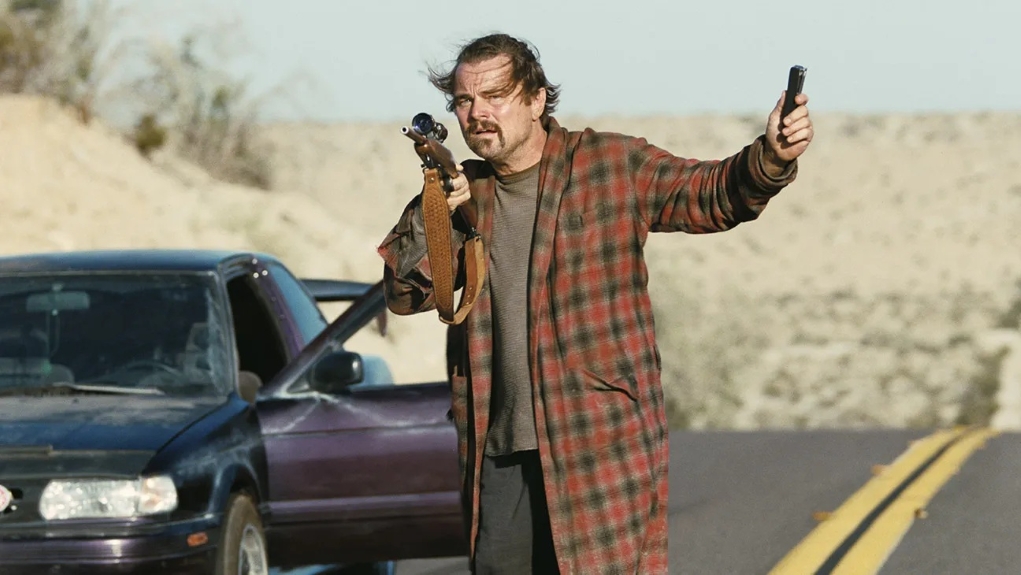
The second-act leans into the satirical comedy of these middle-aged revolutionaries, bought crashingly to life. In a neat comic touch, Bob spends most of the film on the run, desperately trying to find Willa, while dressed, Arthur Dent-style, in the same scuzzy dressing-gown he was wearing before Lockjaw’s raid. Time-and-time again, he’s reduced to swearing impotently down a phone-line like any other middle-aged consumer fed-up with unhelpful customer service, as he repeatedly fails to dredge vital codewords up from his stoned memory. During his escape, he’ll fall off a roof while evading the law, blanch at jumping from a moving car and spectacularly bungle a shoot-out. But what never waivers is his determination to help his daughter. One Battle After Another plays at times like a version of Taken where Neeson’s character had let himself get out of shape but still threw himself into the chase.

Anderson has fun with the bombastic self-importance of revolutionaries and the intricate insularity of their world. But he also has respect for their underlying desire to change the world for the better, even if the film suggests that the carefully, unflashy work being carried out by del Toro’s railroad is a better approach. Among the revolutionaries, there is a genuine warmth and feeling, embodied by Regina Hall’s loyal and humane Deandra (another superb performance in a film packed with them). There is a loyalty and protectiveness among the revolutionaries that bonds them together. And Sergio – del Toro outstanding as a never-fazed Sensei, a performance bubbling with dry wit – has built a community founded on mutual respect and looking out for each other.

And One Battle After Another has no respect at all for the alternative. The Christmas Adventures Club, the bizarre neo-Nazi group Lockjaw dreams of joining, shares the ridiculous language of secret knocks, handshakes and codewords. But it’s repellent in its instinctive racism and treats its members not as allies to be protected, but assets to be exploited and disposed of as needed. And their insidious extremism of its powerful white guys, with their hands on the gears of power, poses a far more dangerous threat.

Lockjaw is superbly played by Sean Penn as a ball of righteous, inadequate anger – from his ludicrous hair (which he frequently combs into an aggressive thrust), his tight t-shirts to accentuate his muscles to the lifts in his shoes to make him taller. Lockjaw is desperate to be a somebody, after a lifetime of social insecurity. Lacking any sense of imagination, with the emotional maturity of a disgruntled teen, Penn makes Lockjaw the embodiment of angry male entitlement trying to grab what power they can.

Anderson fuses all these elements into a film that takes us through several propulsive acts, from it’s French 75 prologue, to Bob’s desperate attempt to evade Lockjaw’s troops to a dusty road-chase that superbly carries an air of Mad Max. But Anderson does this, while never letting the film’s focus slip from the twisted family relationships at its centre: from Bob’s genuine, protective fatherly love, to Lockjaw’s incel jealousy and their twisted struggle for Willa (beautifully played by Chase Infiniti, in a star-making turn, as young woman finding a strength and idealism within herself that surprises her). It finds space for a genuinely moving series of personal relationships, just as it also skilfully shows Willa’s self-belief and social imagination flourishing under insane circumstances.

It’s part of a compelling, exciting, blackly comic and compelling film, which is not afraid to go to extreme, satirical lengths one moment and then pull you up with a scene that is gentle, earnest and heartfelt the next. It also avoids the trap of too directly preaching about America today, while asking several searching (and uncomfortable questions) about where we are now. Superbly acted across the board, it again shows Anderson is one of the finest directors working.

In Old Arizona (1929)

In Old Arizona (1929)

Early Talkie Western has moments of invention, around some awkwardly dated acting and plotting

Director: Irving Cummings, Raoul Walsh

Cast: Warner Baxter (The Cisco Kid), Edmund Lowe (Sergeant Mickey Dunn), Dorothy Burgess (Tonia Maria)

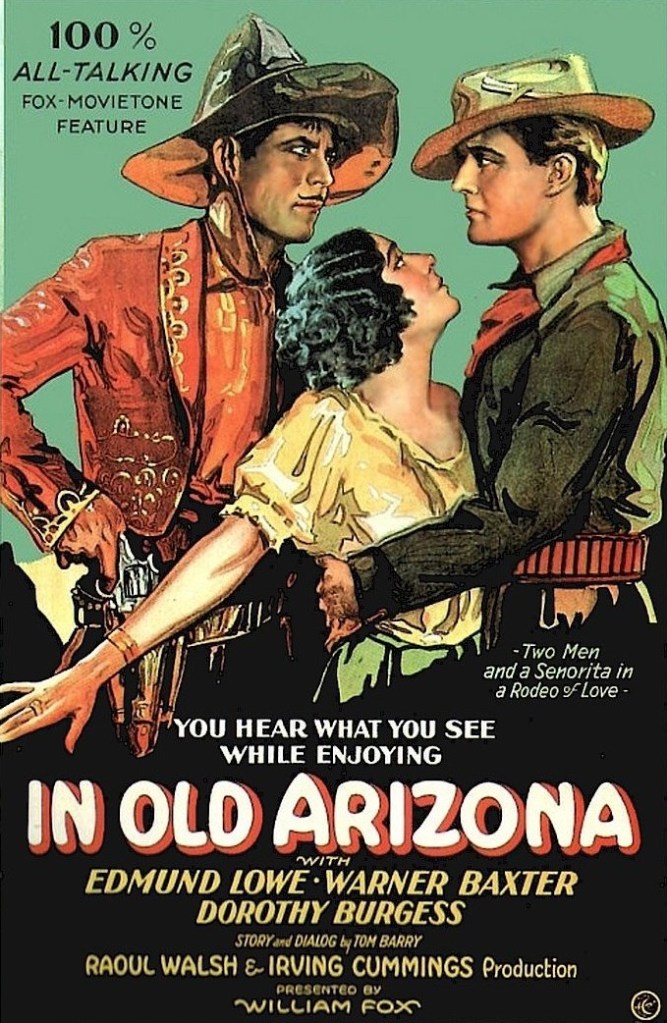
In Arizona, is a public nuisance is plaguing the authorities: The Cisco Kid (Warner Baxter), a charming bandit who holds up stagecoaches, flirts with women and evades the lawmen with a swagger and a smile. But he’s a decent thief: he only takes from those who can afford it (he’ll hand the money back if he finds out otherwise). His Achilles heel is the flirtatiously ruthless Tonia Maria (Dorothy Burgess), a vivacious sexpot who merrily cheats on him left, right and centre. She’s also quite happy to sell him out if she can get her hands on that generous reward money offered by Sergeant Mickey Dunn (Edmund Lowe) – who soon falls for her charms as well.

In Old Arizona was the first Talkie Western – and it stands out from other early Talkies that it’s not set in rigid sets with bolted down cameras, but on location. Imagine the excitement of audiences sitting down to watch a scene in a bustling market, to actually hear the sounds of a church bell ringing (it’s showpiece opening), carriage wheels, passengers bickering and Mariachi bands playing, while the camera tracks through the scene. Of course, much of this was accomplished via synchronised sound, applied after shooting – most of the dialogue scenes are shot with a far more rigid style – but it was still gripping. Never again in film history, would a shot of bacon sizzling (audibly) in a pan attract as much comment as it did with the reviewers of this film.

Other parts of In Old Arizona teeter between sound and silence. As mentioned, when the dialogue kicks in the film falls back on theatrical-front-row framing. All three of the principles – the only actors billed – give performances leaning into the principles of silent acting, with the framing and make-up frequently giving added prominence to their eyes (the main form of communication in silent cinema). Dorothy Burgess, in particular, makes her film debut but finds all her prepared awkward theatrical poses to communicate emotion look increasingly out-of-date (much as she’s clearly enjoying playing this ruthless, faithless schemer).

She’s not alone in this. Warner Baxter lifted one of the first Best Actor Oscars and it’s an entertaining performance, full of swaggering, alpha-male cheek. Baxter makes the Cisco Kid somewhere between a scheming rogue and a Robin Hood. But he also strikes a pose a little too frequently and tends to over accentuate gestures and reactions, a clear hangover of his silent career. He does, however, dance through the dialogue with a rolling Spanish accent, and if the character ends in a slightly awkward territory between camp and ruthless, it’s not really his fault so much as the script. He’s certainly far more entertaining than the wooden Lowe, whose voice is flat and uninteresting.

In Old Arizona quickly turns into two shaggy dog stories, stretched out over about 90 minutes. It’s surprising how little plot there is: it could easily have zipped by in 60 minutes. The first act covers the Cisco Kid’s hold-up of a stagecoach and the aftermath; the second an unwitting game of cat-and-mouse where Dunn is at a serious disadvantage as he has no idea what the Cisco Kid looks like; the third the mutual seduction of Dunn and Maria, their attempt to kill the Cisco Kid for his ‘dead-or-alive’ ransom and the Cisco Kid’s ruthless foiling of their scheme. Each feels like a short story, joined together, so it’s not surprising to find it’s adapted from exactly that from O Henry.

By all accounts O Henry’s Cisco Kid was a far more violent and brutal character than Baxter’s jolly, tuneful, gadabout. Sure, the Cisco Kid can handle himself – there’s a fine little action sequence, where he plays possum to gun down three would-be ransom collectors – but by and large he’s a romantic, and it’s clear he’s genuinely in love with the shallow and unfaithful Maria. This feels like it’s been designed to make her betrayal carry some bite, but since she is so blatantly unfaithful it actually makes the Kid look rather dim and slow on the uptake.

Maria is interesting as a Pre-Code character nakedly open in her sexuality – it’s pretty apparent she’s, at-best, a good time girl. She very smoothly seduces the straight-as-an-arrow Dunn (who up until meeting her, makes a big thing of constantly checking his treasured photo of him and his sweetheart). Dunn is of course not the smartest tool – the Cisco Kid runs rings around him during their first meeting, deftly picking him clean of information while not only giving him no idea who he is, but also making Dunn rather enjoy the company of the man he’s meant to be hunting.

It leads into what feels today a troubling conclusion to In Old Arizona. Primed from so-many Westerns that followed, we expect a gun-on-gun ending between the rivals from opposite ends of the law (and, the film eventually suggests, opposite ends of the moral spectrum – the Kid is loyal and decent, Dunn a hypocritic and treacherous). Instead, it becomes more about the Cisco Kid’s deliberately deadly punishment of a woman who has wronged him. It’s hard not to feel that, selfish as Maria is, she doesn’t quite deserve the fate she meets – or the Cisco Kid’s triumphantly heartless Bondian one-liner afterwards.

It’s an uncomfortable ending to a film that in some areas pushes forward the world of commercial film-making (it’s hard not to credit Walsh for the film’s pacier, on-location sequences with their pre-Fordian landscapes, galloping horses and gun-toting action) but in others still has an awkward foot in both silent cinema and the clumsy world of the early Talkies. There are proto-Western ideas here – the sort of narrative ideas that the likes of Ford and Hawks would later finetune and master – but it feels a little too much like a historical curiosity today.

Nosferatu (2024)

Nosferatu (2024)

Eggers’ wonderfully atmospheric remake is creepy, haunting and quite extraordinary

Director: Robert Eggers

Cast: Bill Skarsgård (Count Orlock), Lily-Rose Depp (Ellen Hutter), Nicholas Hoult (Thomas Hutter), Aaron Taylor-Johnson (Friedrich Harding), Willem Dafoe (Professor Albin Eberhart von Franz), Emma Corrin (Anna Harding), Ralph Ineson (Dr Wilhelm Sievers), Simon McBurney (Herr Knock)

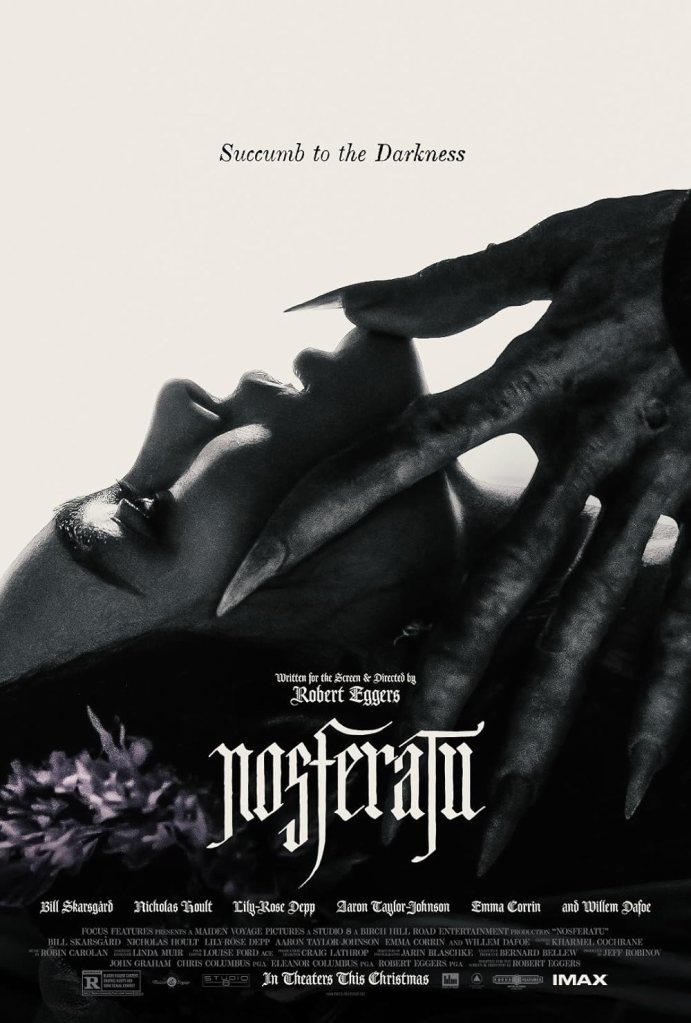
Robert Eggers dreamed so long of his own version of FW Murnau’s seminal vampire film (and Bram Stoker copyright infringement) Nosferatu, it was originally announced as his second film. We had to wait a bit longer, but it was well worth it. Eggers’ experience helped him create a film infinitely richer than I suspect he would have made ten years earlier. Nosferatu is an astonishing, darkly gothic, richly rewarding film, glorious to look at and a fiercely sharp exploration of the subtexts of both sources. It can never match the original’s seminal impact, but celebrates and elaborates it.

The story hasn’t changed dramatically from the one Murnau ripped off from Stoker. In Wisborg, junior solicitor Thomas Hutter (Nicholas Hoult) leaves his beloved wife Ellen (Lily-Rose Depp) for Transylvania and a lucrative land deal with the mysterious Orlock (Bill Skarsgård) that could lead to a comfortable life for him and his new wife. Unfortunately, there are three things he doesn’t know: firstly, the Orlock is a ravenously cruel vampire, with extraordinary supernatural powers; second his employer Knock (Simon McBurney) is an occultist worshiper of Orlock; thirdly, Orlock has used his mental powers for years to terrorise and groom Ellen from afar and Hutter’s presence is the final step in his scheme to control her. It won’t be long until a deadly curse plagues Wisborg.

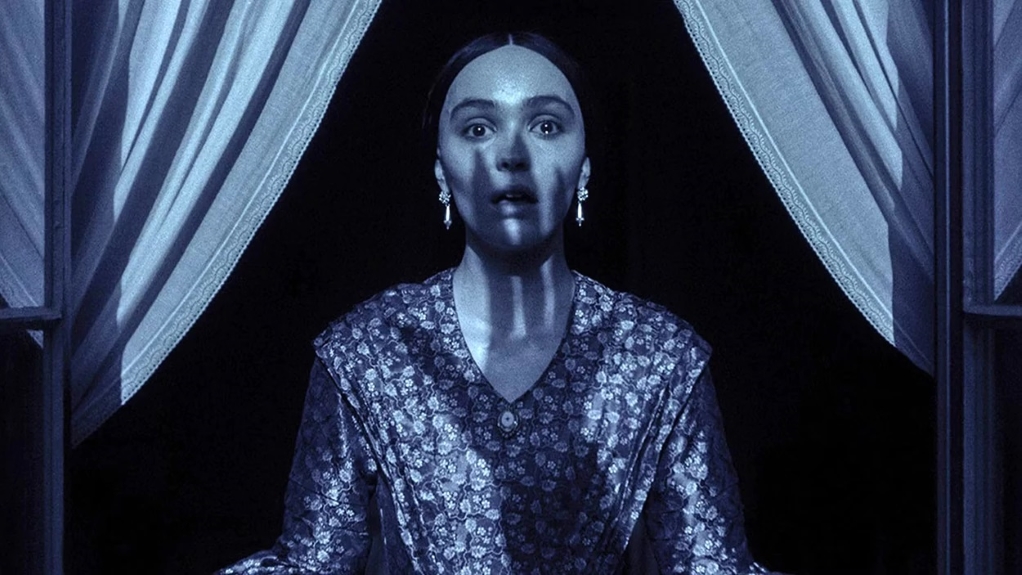
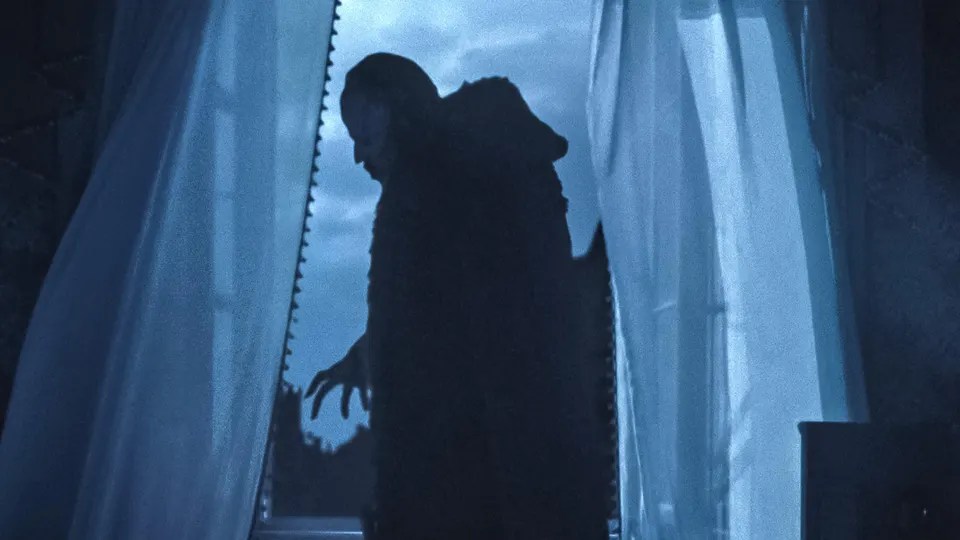
Egger’s dark (but extremely beautiful) gothic film drips with atmosphere, gloomy shadows rolling over its elaborate sets, the drained out night-time shots reminiscent of the tinted black-and-white beauty of the original. The entire film is soaked in love for silent-era horror, with homages to Murnau, Dreyer, Sjöström and so many others I couldn’t begin to spot them all – though I loved Orlock’s gigantic shadowy hand creeping Murnau’s Faustus-like over Wisborg. The film drowns in folk horror, from its snow-capped Transylvanian countryside dripping in unspeakable hidden evils to the unreadable motives of a mysterious Transylvanian village.

At its heart is an exploration of the sexual undertones of the vampire legend. Orlock’s assaults leave his victims are overwhelmingly sexual, with Orlock’s body thrusting forward while he drains the blood of his groaning victims. That’s not to mention Orlock’s revolting sexual manipulation of Ellen. Nosferatu leans heavily into Stoker’s dark sexual awakening subtext. Orlock’s psychological manipulation has left Ellen traumatised, torn between dark sexual desires and romance with Hutter. Nosferatu opens with a dark (dream?) sequence, as Ellen rises with sensual sighs from sleep, drawn towards Orlock’s seductive shadow in sheet curtains, before joining him outside for something that looks an awful lot like sex before Eggers cuts with a jump scare shot, our first glimpse of Orlock.

This is an Orlock radically different from Max Schreck’s original. While he shares his long nails and angular posture, here he is no-more-or-less than a decayed, rotting corpse. His body is covered in sores of decayed skin, with everything (including his penis) halfway to the compost heap, his bony legs and hips positively skeletal. There are homages to his Vlad the Impaler roots, from his fur-lined uniform coat (that like the rest of him has seen better days) to his surprisingly well-groomed moustache. But there isn’t a trace of the handsomeness of so many Draculas – this Orlock is possibly even more repulsive to look at than the rat-faced monstrosity of the original.

Skarsgård’s make Orlock a truly ruthless figure, delighting in his natural cruelty. With Hutter his looming, shadowy menace offers not a jot of home comforts, working to terrify a man who he sees as a perverse romantic rival. (His hallucinatory blood-sucking assault on Hutter is filmed in a manner reminiscent of rape). Throughout, he treats almost everyone he encounters with contempt and lofty disgust and takes a sadistic delight in torturing Ellen’s friend Emma Harding’s family, culminating in a truly shocking scene of grizzly horror. While the original Orlock was almost feral, like his rats, this one is a monstrous decayed sorcerer with a never-ending hunger and sadistic desire to play with his food.

He also has something the original never had: a voice. Skarsgård spent weeks in training to develop this (digitally unaltered) vocal range, a rolling bass-rumble which wraps itself around a raft of Dacian dialogue. Eggers’ gives him immense supernatural skills, in a film dripping with occult magic. Simon McBurney’s Knock (a remarkable performance) is a lunatic drowning in it: covered with dark markings, biting the heads of pigeons and communicating with Orlock by sitting naked in a Pentecostal star. His brain has been flushed out by Orlock’s mental power (who treats him like dirt) and the vampire’s hypnotic voice overwhelms the senses: just a few sentences drains Hutter of willpower (Nicholas Hoult’s fear is so palpable here you could almost touch it). Orlock’s malign influence can twist people or make them suddenly ‘wake’ with no idea of where they’ve been.

The power of his influence twists and distorts emotionally and physically. Lily-Rose Depp captures all this in a remarkable physical and vocal performance, as Ellen falls victim to Orlock’s mental manipulations. Depp throws herself into the most violent fits since Linda Blair: her body spasming, her voice distorted into an Orlock-mirroring gurgle, her eyes rolling back, her inhibitions falling away and blood weeping from deeply disgusting places, especially her eyes. Depp’s performance is extraordinarily committed, her fear and self-disgust at her manipulated sexuality (eekily from childhood) by the Count as tender as he hatred of him is sharp and all-consuming.

It’s never clear how far the vampire wants to screw Ellen, and how far he wants to consume her (Eggers even suggests, towards the end, that Orlock may even welcome his own destruction – perhaps the rapacious hunger is too much?). What is different from the original is Orlock and the plague he brings with him are different. While the original was a destructive force of dark nature, this Orlock is focused exclusively on punishing Ellen, with a literal plague striking down Wisborg.

In the face of this beast, the powers of science and reason are powerless (as Aaron Taylor-Johnson’s delicately performed Harding discovers, refusing to believe until its far too late). Like Murnau’s original, the powers of science and reason (such a key weapon against the vampire in Stoker) are useless. Even rationalist Dr Sievers (a fine performance by Ralph Ineson, channeling Peter Cushing and Michael Hordern) – a man so calm even the insanity of Knock can’t flap him – chucks in the towel and calls in Willem Dafoe’s barnstorming Professor von Franz (here considerably more effective than his counterpart), a scientist turned alchemist with deep occult knowledge.

But it can’t change the fact this is not a war between two sides, but a deeply personal struggle between Orlock and Ellen, with Hutter torn between them. Eggers’ focus on this personal story at the heart of a dark twisted legend adds a genuine freshness – and makes a superb counter-balance to the lashings of gothic horror the film soaks in. It makes for a superb remake that contrasts and comments on the original while telling its own story of dark, corrupted manipulation. Eggers’ direction is faultless in its atmospheric unease and there are superb performances from Skarsgård, Depp, Hoult and the rest. It’s a powerful work, overflowing with silent horror atmosphere while also feeling very modern that has the potential to haunt our nightmares as much as the original.

Dial M for Murder (1954)

Dial M for Murder (1954)

Second-tier Hitchcock thriller, with some interesting flourishes and entertaining moments

Director: Alfred Hitchcock

Cast: Ray Milland (Tony Wendice), Grace Kelly (Margot Mary Wendice), Robert Cummings (Mark Halliday), John Williams (Chief Inspector Hubbard), Anthony Dawson (Charles Alexander Swann), Leo Britt (Party goer), Patrick Allen (Detective Pearson)

Tony Wendice (Ray Milland) is in a bind. A former tennis pro turned barely-successful sports goods seller, he loves the high life. Unfortunately, he’s running through cash like water – and, worst of all, most of it isn’t even really his but the property of his socialite wife Margot (Grace Kelly). And Margot is in the middle of an affair with trashy fiction writer, American Mark Halliday (Robert Cummings). An affair Tony knows all about, having stolen Margot’s love letters to anonymously blackmail her. But his new scheme is somewhat more permanent: blackmail disreputable Charles Swann (Anthony Dawson) into murdering Margot at a time when Tony has a perfect alibi. Sadly, things don’t go to plan – when do they ever? – and with Swann skewered in the back with a pair of scissors, Tony hurriedly improvises pining a pre-meditated murder charge on Margot all while avoiding the suspicions of Chief Inspector Hubbard (John Williams).

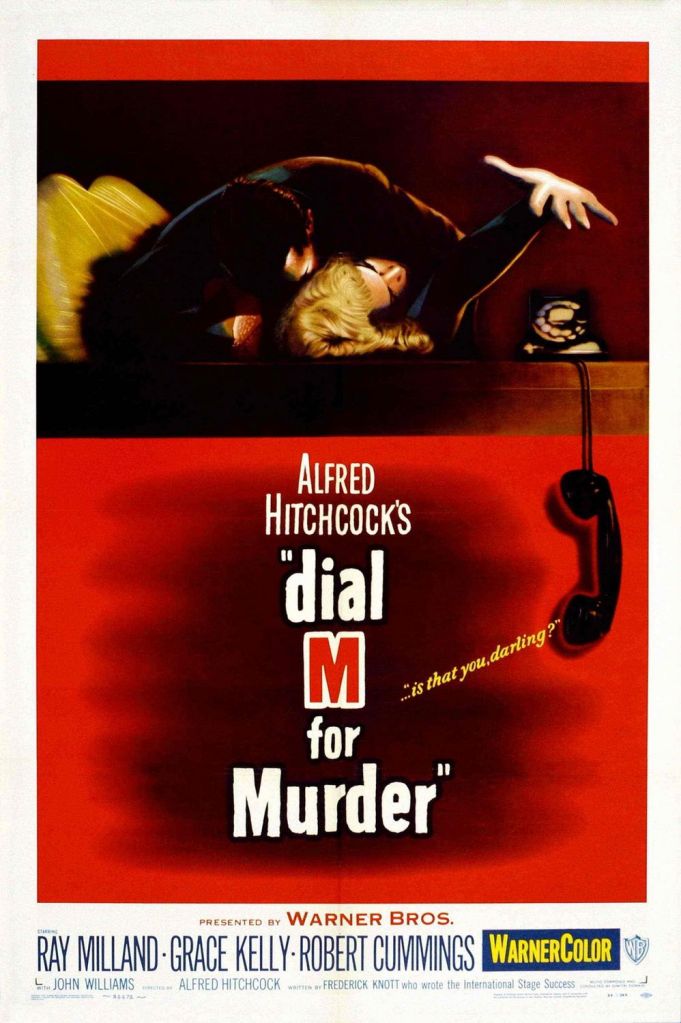
In his later extended interviews with Francois Truffaut, Hitchcock gave less than a few minutes to talking about Broadway-adaptation Dial M, describing it as, at best, a one-for-the-money assignment or sort of warm-up for Rear Window. He was similarly dismissive about the film being shot for 3D, which he described as a ‘nine-day wonder’ which he joined on the ninth day. Hitchcock had a tendency to play up to ideas of his genius, laying sniffy dismissal on what were viewed by critics as his lesser works (although Truffaut said Dial M grew on him every time he saw it). Actually, while Dial M does have the air of an assignment to it, there are some neat little Hitchcock touches it that, while not making it a classic, does make it an entertaining way to spend a Sunday afternoon.

After all, not many other directors would have so relished Swann’s body sliding down onto a small pair of scissors. Or found so many fascinating angles for shooting a (mostly) single-set, from lofted over-head shots that give Tony’s detailing to Swann of his elaborate plan a God-like force to crashingly tight close-ups on the phone Tony will use to dial in his alibi. Hitchcock also adds more than a little sexual energy to the play. There Margot’s affair is very much in the past, as opposed to here being very much keenly anticipated by Grace Kelly’s sensual stare over a newspaper to a clock counting down her assignation with Halliday. Hitchcock also avoided the sort of tedious ‘duck now!’ shots that has made 3D a joke in cinema-going circles, framing shots with a great deal of depth, placing key objects in different depths of field in the shot.

Dial M For Murder itself though, even with these little Hitchcock touches, tends to feel exactly like what it is: a well-heeled adaptation of a Broadway entertainment that is far more about plot, procedure and Christie-lite mystery than character or themes. (Actually, a mechanical operation like Dial M might well have appealed to Hollywood’s greatest ever proponent of the masterfully constructed tension piece more than her cared to admit). It’s a page-turner, Airport-novel transposed into glitzy, breezy entertainment where we get to flirt with someone completely naughty and wicked, but can be pretty sure the ‘howdunnit’ will become clear to everyone in the play, not just us (after all, the idea that Hitchcock – or anyone – will let Grace Kelly be executed for a crime she didn’t commit is of course preposterous).

Dial M plays very much into the Hitchcock playbook, where tension arises not from what we don’t know, but from the fact we know a little bit more than most of the characters. Just like Vertigo revealing its mystery surprisingly early, or watching a bomb tick down in Sabotage while its victims remain oblivious, we know from the start that this is all a scheme designed to entrap Margot. We know all the time exactly what Tony has done and the tension lies solely in working out whether Halliday or Inspector Hubbard will work it out and how they might manage to get Tony to pay for it. (There are also some echoes of Strangers in a Train, from Tony’s tennis-playing background to his sociopathic crime swop with Swann).

Tony is played with a suave, smugness by Ray Milland, which is just about likeable enough for a bit of you to want the selfish, shallow, self-obsessed Tony to get away with it. Milland won’t allow a slightly smug grin to disappear from his face – except in a burst of twitchy nerves when a stopped watch makes him concerned that he’s going to miss a vital phone call back home to establish his alibi during the attempted murder – and never once does he appear troubled by morality. In fact, he thinks rather sharply on his feet, pivoting in seconds from surprise at Margot’s survival to smoothly improvising a very convincing story, framed to (literally) hang Margot in. It’s an effective, enjoyable, pantomime-hissable performance which Milland has a lot of fun with.

He gets most of the film to himself, since Kelly is given a role that gives her little to do – although it does showcase her ability to communicate a great deal from looks alone, from her excitement at a future liaison, to growing fear as the police net draws around her. She’s certainly a far more magnetic performer than the bland Robert Cummings who has little about him to suggest he could set Grace Kelly all aflutter. The other key roles were filled out with actors from the original production: Anthony Dawson’s weasily opportunist Swann is perfectly convincing as the sort of cove who’d agree to murder to make his life easier while John Williams’ cements the image of the unflappable pipe-smoking detective who understands far more than it looks and lulls suspects into making fatal mistakes with an avuncular reassurance.

Dial M For Murder offers plenty of entertainment, even if it’s largely just a fairly routine plot-driven mechanical puzzle, spruced up by the odd inventive shot and engaging performance. But Hitchcock was probably right, that it sits very much in the second tier of his work.

The Critic (2023)

The Critic (2023)

McKellen’s familiar star turn is the only life in an otherwise unremarkable film

Director: Anand Tucker

Cast: Ian McKellen (Jimmy Erskine), Gemma Arterton (Nina Land), Mark Strong (David Brooke), Lesley Manville (Annabel Lord), Romola Garai (Cora Wyler), Ben Barnes (Stephen Wyley), Alfred Enoch (Tom Tunner), Nikesh Patel (Ferdy Harwood), Claire Skinner (Mary Brooke), Ron Cook (Hugh Morris)

The murky streets of 1930s West End London are the kingdom of Daily Chronicle theatre critic Jimmy Erskine (Ian McKellen), famous for his poison-inked, vitriolic reviews of the many shows that fall beneath his high standards. But the times they are-a-changing, not least at the Chronicle where the former owner (a Rothermere-like bully who loved Jimmy’s take-no-prisoners prose bullying) is replaced by his son David Brooke (Mark Strong), a softly-spoken liberal who wants to take the paper in a new direction. With the arrogant Erskine on a knife-edge (not helped by his risk-taking penchant for rough-trade sex encounters with gentlemen in the park), Brooke is about to unknowingly discover how far the famed critic will go to cling onto his job and reputation – and how easily he will embroil an ambitious young actress, Nina Land (Gemma Arterton), in his schemes.

The Critic starts far more interestingly when it ends. It’s easy criticism, but you can well imagine it falling foul of Erskine’s fury if he had seen it unfold before him in a West End theatre on a Tuesday night. Despite the best efforts of all involved, it all too quickly becomes the sort of routine revenge-murder-conspiracy potboiler that relies a little too much on contrivance and coincidence, the stench of familiarity all over it. Atmospheric as it is – set in a dimly-lit, fog-bound London and in the plush retiring rooms of the rich and famous – and well-selected as its selection of faux theatrical memorabilia that litters Erskine’s home is, the actual story becomes all too predictable.

The main thing it has going for it is a fine performance by Ian McKellen, even if the part plays so neatly to his strengths you feel he could play it standing on his head. McKellen has long mastered mixing the twinkle of the bon vivant with the vicious, cold-eyed cruelty of the sociopath, even having recently done the same thing in The Good Liar. Erskine is selfish, demanding, cruel with a self-destructive streak (both financially – living a ruinous life well beyond his means – and his frequent drunken pride and stubbornness). He bitterly believes himself to deserve acclaim and standing (denied to his failed acting career) and treats almost everyone around him with contempt hidden behind a raised eyebrow or pursed lip. His primary motivation, to the very end, is that his theatrical writing should become a collected volume in every home cementing him as a sort of Wildean wit.

The Critic toys with a more interesting view of Erskine as not entirely unsympathetic. His homosexuality – and the abuse and persecution it has bought him – shows him fall foul of encounters with the police and sees him challenging preening National Front blackshirts. He’s disgusted by Fascism and despises racism, promoting his young Black lover, secretary and amanuensis Tom Tunner (a fine performance of mixed loyalty and Stockholm-syndrome-like support from Alfred Enoch). He’s genuinely touched when Nina Lane – who has lambasted for years in print – tells him his writing made her want to act. But these shades of grey get largely ditched for as the film focuses on darkening his shadow as the plot descends into conspiracy, blackmail and murder.

McKellen does provide the film’s best entertainment. He knows how to deliver a line, how a splutter can communicate outrage, how an intake of breath can communicate fury, how the eyes can turn any smile insincere. He’s long since mastered Iagos and if The Critic doesn’t ask him to do anything he hasn’t done before, he can still do it like an absolute pro. There are other decent performances. Mark Strong plays against type as a man as (surprisingly) decent and kind as he seems. Gemma Arterton expertly plays both “bad” and “good” acting as would-be theatrical giant Nina Lane, while mixing desperation and self-loathing in her off-stage persona. On the other hand, the film wastes Romola Garai as Brooke’s Nazi-sympathising daughter and Lesley Manville as Nina’s chatterbox mother.

The Critic builds up a contrived (and inadvertently creepy) plotline that links both Brooke and Nina – most convenient for Erskine’s improvised blackmail scheme – and that melodrama eventually suppresses The Critic’s more interesting moments. A film that looked at Erskine’s character having been formed in a world where his sexuality was a persecuted crime might have made for a more intriguing storyline. Or which explored how Erskine settled for being court jester to powerful, clubbing homophobes – so much so he actively resents the more liberal Brooke. Or looked at the creeping onset of fascist sympathy in the upper classes. Or one which took a more expanded look at Tom’s struggles in a defiantly non-diverse 30s London (instead the significance of Tom’s skin colour fluctuates according to plot requirements and its awkward uniqueness is undermined by the fact the theatre director is played by Nikesh Patel). It avoids all this for all too familiar tropes.

In most ways The Critic has its moments but fundamentally fails to deliver. And, perhaps worst of all, it does so in a way that doesn’t even really raise the critical heckles. Instead, you’re overwhelming feeling when this sub-Christie drama comes to its close is that it was okay. The sort of film Jimmy Erskine would have dismissed in a few short sentences.

Seven (1995)

Seven (1995)

Darkly, unrelentingly unsettling, Fincher’s true-debut is an outstanding psychological thriller

Director: David Fincher

Cast: Brad Pitt (Detective David Mills), Morgan Freeman (Detective William Somerset), Gwyneth Paltrow (Tracy Mills), Richard Roundtree (DA Talbot), R. Lee Ermey (Police captain), John C McGinley (‘California’), Julie Araskog (Mrs Gould), Mark Boone Jnr (FBI man), John Cassini (Officer Davis), Reginald E. Cathey (Dr Santiago), Richard Schiff (Mark Swarr), Kevin Spacey (John Doe)

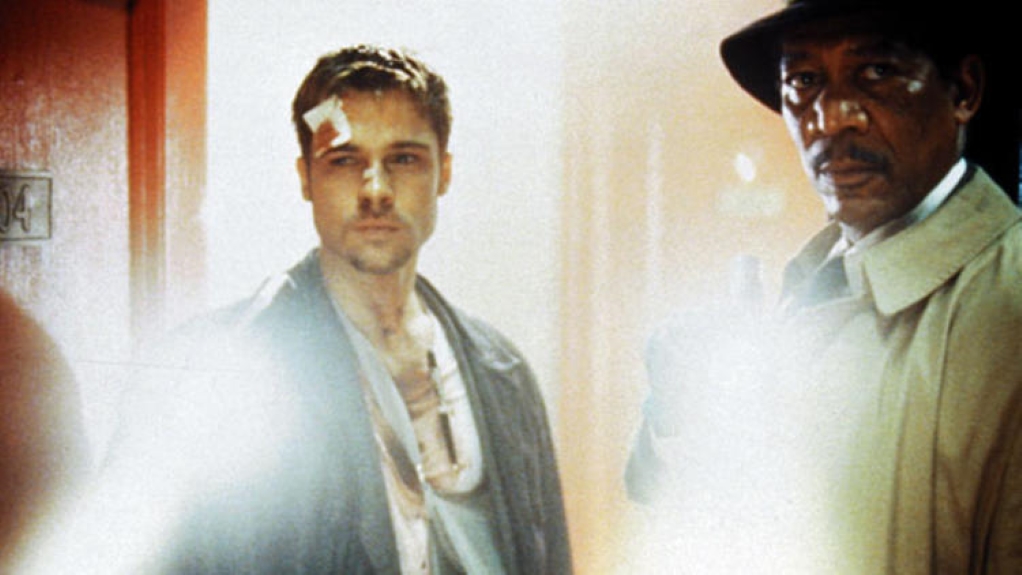
Set in a city where decency and humanity goes to die, daylight is a stranger and everything is covered with constant rainfall, Seven covers the most chilling week-in-the-life of two detectives. One, disillusioned William Somerset (Morgan Freeman), is counting down to his early retirement. The other, his cocksure replacement David Mills (Brad Pitt) thinks he’s unbeatable and indestructible. But they are going up against someone who will shake them to their core, a calculating serial killer dispatching victims he judges guilty of the seven deadly scenes, framing their bodies in grotesque rituals. Can they track him down before he completes his terrible work?

Seven is one of the finest, and most influential, of all serial killer films. Dark, haunting and relentless, it’s a perfect package of grim foreboding and nihilistic terror, expertly directed by David Fincher. Seven is very careful about what it shows you, trusting far more in the horror of suggestion and witnessing the reactions of the characters – you come out of it convinced you have seen more than you have. It never lets you relax for a moment, always dreading the worst – yet so many people never saw coming its infamous final act with its unexpected, horrifying, reveals and darkly, hope-free conclusion. Seven offers almost no comfort and never pets you at ease only a despairing look at how terrible the world can be and how desperate the struggle for goodness can be.

In a visual design that’s reminiscent of Blade Runner, the world of Seven is almost permanently dark, dingy and rain-soaked, the crime scenes filthy, terrifying haunted houses of grimness. The chaotic sounds of the city, mechanical and uncaring, are everywhere: Somerset even sleeps with a metronome ticking in an attempt to impose sone order on his world. The score uses base beats and near-industrial sound, the editing mixes smooth classic cuts and sudden shocks, the camera work is awash with tones from the green of greed to the blood red of lust. Not there there is any comfort in daylight, since the brightest, most open sequence of this claustrophobic film (even the Mills’ apartment violently shakes from passing trains, a subtle hint no where is safe) takes place in a pylon-stuffed field and it’s the most horrific, nihilistic of the lot.

Seven though is also darkly seductive: it plays on our fascination with the dark ‘genius’ of Hollywood killers, their love of patterns and the twisted purity of their quest for perfection. The film’s opening sequence, showing the killer’s preparations in a series of jagged, disorienting cuts, even places us in his perspective. When he is revealed, he mixes prissy politeness with dark, obsessive love for his work. Seven understands out fascination with the pattern killer – just as we were obsessed with Hannibal Lector and the Terminator, the guy in control is intriguing. It punishes us for this by stressing the horrific impact of his crimes and the traumatic impact on the survivors, is nihilistic ending even more effective for all the dark enjoyment the viewer has taken out of Seven’s grim momentum.

It’s also benefits hugely from its play on the conventions of the odd-couple detective pairing. Somerset and Mills are chalk-and-cheese: Somerset is calm, methodical and professionally distant, Mills is volcanic, lacks focus and becomes terribly personally invested. One of the films few touches of humanity and hope is the growing friendship between these two – slow-burning to say the least – that sees them go from butting heads to sharing jokes and supporting each other’s calls.

The performances are excellent. Brad Pitt (whose clout helped ensure producers couldn’t neuter the film’s shocking ending) is full of jittery energy masking his insecurity, doubt and fear; so worried about looking weak he resorts constantly to anger. Lacking patience (hilariously he can’t bring himself to read Dante and Chaucer, as Somerset recommends, instead resorting to hiding Cliff Notes books in his desk) he investigates the crimes with gusto, focused on the exterior not the interior. He can’t only see the killer as a lunatic, an under-estimation that makes him easy to manipulate.

The moral centre is Morgan Freeman’s Somerset, a superb performance. Somerset is completely disillusioned, convinced any trace of goodness in the world has disappeared. Despite this, events prove him wise (but not above terrible errors) and determined with a strong moral centre. He’s empathetic about crime in ways Mills isn’t (at an early crime scene, one of his first questions is if the victim’s kid has seen the body, a question dismissed as irrelevant by his colleagues) and investigates from inside the killer’s psyche, seeking to understand his motives. Perhaps no other film than Seven has given Freeman so perfect a vehicle, his expressive eyes full of sorrow and regret, his careful decency a mask of detachment that he slowly lets slip to Mills and his wife.

As that wife, Gwyneth Paltrow gives a striking, endearing and perfectly judged performance in a small but crucial role. Tracy Mills is the one unquestionably decent person in this crap-sack world, perhaps why she and Somerset are drawn together. Seven has a wonderfully quiet, humane moment in all this horror, when the two meet to discuss parenthood, a beautifully played exploration of doubt and fear from Paltrow and quiet semi-regret from Freeman. It’s a role pivotal for the film, Paltrow leaving a deeply tender impression on the viewer.

It’s vital for the film’s final act pay-off. Seven is perfectly constructed, both in its pacing of the murders and in not dragging out the mystery of the motive too long (it knows, of course, that everyone watching the film is ahead of the detectives on that score). It’s crammed with stand-out sequences: a SWAT team house storming promises drama but turns into a dark twist on the wrong-door routine; a chase sequence after a chance encounter with the unseen killer gives a perfect shot of adrenalin. It’s all unbalancing us for a shockingly unexpected move by the killer (the actor’s identity carefully kept a secret in advance, meaning his reveal is a genuine shock for the uninitiated) leading to its horrifically nihilistic ending that I defy anyone to anticipate (except its now probably as famous as the identity of Rosebud or Keyser Soze).

Seven is astonishingly brave in all its pulsating thrills and perfectly judged tension for offering very little hope. This is a film where good is essentially powerless against evil: Somerset is too detached to beat evil, Mills so invested in his own black-and-white world he’s easy prey for the coldly manipulative. The film’s conclusion is a punch to the gut, but logical in a film where we’ve seen ordinary people indifferent to the worst of humanity and evil being so devilishly determined and ingenious in its actions no one stands a chance to beat it. You can criticise Seven for its small beats of misogyny: while Tracy is pure, like a fairy-tale princess, the two female victims are a shallow, preening model while the lust victim is not the man who uses prostitutes but the prostitute herself – an attitude we shouldn’t be surprised the killer has, but is unquestioned by any of the (all-male) investigators. (I was uncomfortable with this when I first saw it in the nineties, and time hasn’t changed my mind).

But aside from that, Seven is a darkly compelling masterpiece, a brilliantly unsettling film from David Fincher, at last allowed to deliver a film that exactly matched his vision (in a way Alien 3 did not). The battle to keep its nihilistic dark and shocking ending was a battle well-won, and it makes for a film that is a chilling exploration of evil in the world as well as a compelling, darkly-bloody film noir set in a world of unrelenting hopelessness. One of the greatest serial killer films ever made.

Furiosa: A Mad Max Saga (2024)

Furiosa: A Mad Max Saga (2024)

Deliriously overblown and full of demented imagination even if it never quite feels necessary

Director: George Miller

Cast: Anya Taylor-Joy (Furiosa), Chris Hemsworth (Dementus), Tom Burke (Praetorian Jack), Lachy Hulme (Immortan Joe), Alyla Browne (Young Furiosa), George Shevtsov (History Man), John Howard (People Eater), Angus Sampson (The Organic Mechanic), Nathan Jones (Rictus Erectus), Josh Helman (Scotus), Charlee Fraser (Mary Jabassa), Elsa Pataky (Mr Norton)

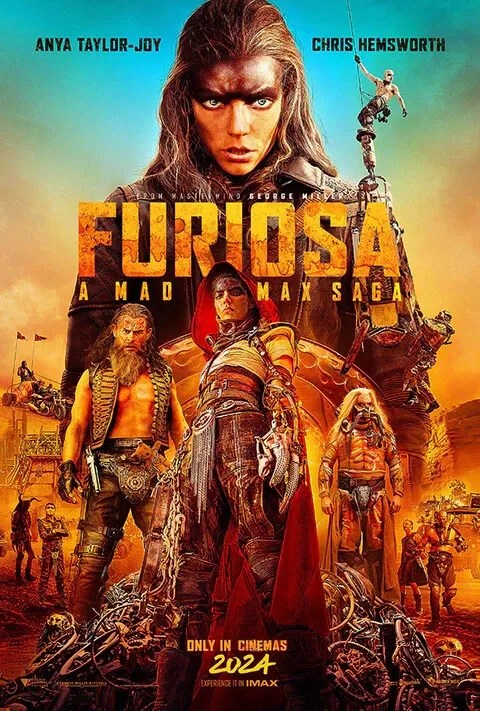
Is there a more demented mainstream film series than Mad Max? Furiosa follows the balls-to-the-wall excess of Mad Max: Fury Road with more of the same and a mythic atmosphere of Godfather Part II-backstory deepening. What you end up with might feel slightly odd or self-important – over two and a half hours of direct build-up for a pay-off we saw almost ten years ago (perhaps that’s why Furiosa ends with a cut-down play-back of the major events of Fury Road spliced into the credits, so we can all be reassured the villains left alive here got their comeuppance later). Furiosa is frequently overlong, a little too full of its love of expansive world-building and never quite convinces you that we actually need it – but then it’s also so bizarre, Grand Guignal and totally nuts perhaps we should just be happy that, in a world of focus-grouped content, it even exists.

We’re back on the desert wasteland of post-apocalyptic Australia as motorbike riding goons kidnap young Furiosa (Alyla Browne) from the Green Place hoping to use her to persuade crazed war lord Dementus (Chris Hemsworth) to lead his forces there. Despite the heroic efforts of her mother (Charlee Fraser), Furiosa remains a captive with only a secret tattoo on her arm (guess what’s going to happen to that…) to guide her home. Dementus provokes a resources war with cult-leader Immortan Joe (Lachy Hulme), with Furiosa traded, then escaping a hideous fate as one of Joe’s wives, instead growing up secretly-disguised as a boy (becoming Anya Taylor-Joy) as part of Praetorian Jack’s (Tom Burke) War Rig crew. Then the war between Immortan Joe and Dementus explodes again, foiling Furiosa and Jack’s plan to escape and giving Furiosa a change at revenge against Dementus.

That sprawling plot outline hopefully gives an idea of the ambitious bite George Miller is taking out of his world. While Fury Road took place over, at most, a few days, Furiosa stretches well over twenty, so gargantuan in scale and newly invented locations (as well as the mountainous citadel, we get the oil-rig nightmare of Gas Town and the Mordor-like Bullet Town) that it squeezes most of the entire Act Five war between Dementus and Immortan Joe into a brief, tracking-shot, montage. Furiosa is actually rather like a fever-dream Freud might have had after reading an airplane thriller, split into on-screen chapter titles – each with portentous (and sometimes pretentious) names like ‘The Pole of Inaccessibility’ – and a self-important narration dialling up mythic importance. If Fury Road was like someone stabbing an adrenalin-filled syringe straight into your heart, Furiosa is a like being told a detour-crammed story by someone a bit the worse-the-wear after a long night.

Not that Furiosa shirks on the banging madness of Fury Road’s slap-in-the-face action. It features a mid-film War Rig vs motor-bike raiders pitched-driving battle that is so extreme you wonder no one got crushed under wheel while making it, perfectly capturing the addled madness of Fury Road. A Chapter 4 pitched battle at one of Furiosa’s Dystopian-on-speed locations sees destruction, devastation and disaster on an even grander scale than anything else Miller has done before in this series, with an entire mining crater turned into a whirligig of firey destruction. That’s not forgetting three desperate desert chases – the finest of which is the film’s opening sequence, which see Furiosa’s mother track down and ruthlessly dispatch Furiosa’s kidnappers with a velociraptor-like ruthlessness and efficiency. No wonder Miller can put a whole war into a single shot – and why he feels comfortable ending Furiosa with a surprisingly personal and small-scale confrontation.

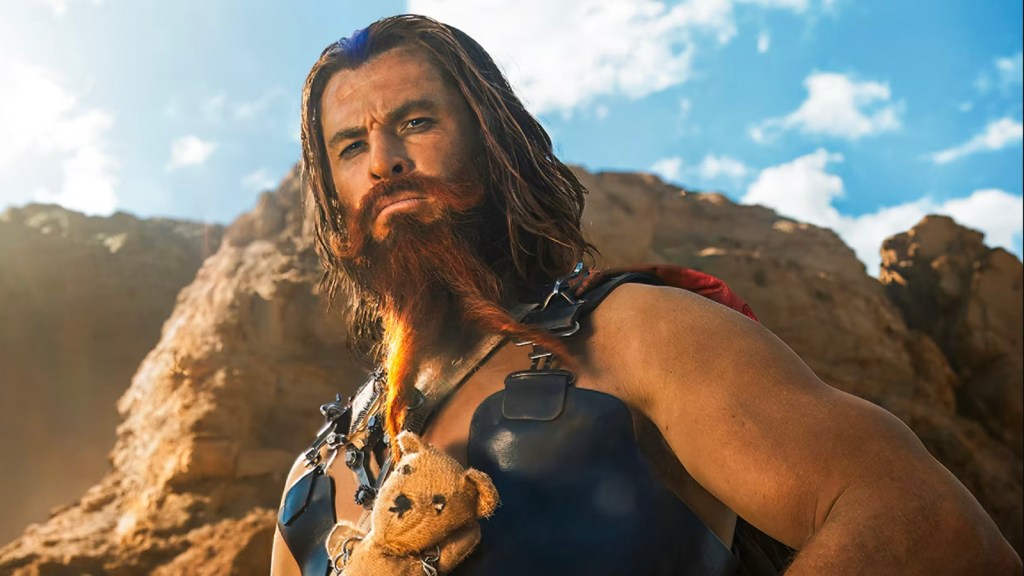
The main confrontation is between Furiosa and her self-proclaimed warlord – and would-be surrogate Dad – Dementus. Furiosa gives Chris Hemsworth the opportunity he’s been waiting for, allowing to flex his comic muscles, chew hilarious lumps out of the scenery and still show his menace. He makes Dementus an overgrown child, brilliant at stealing but with no idea about how to use them, obsessed with self-improvement (his dialogue is full of verbose, overwritten phrases, like a psychotic thesaurus) and only really happy when he’s smashing something. Introduced framing himself like a zen-like messiah, it doesn’t take long until he’s charging around on a chariot drawn by motorbikes, tasting other people’s tears and giving self-aggrandizing speeches while torturing Furiosa’s nearest-and-dearest. It’s a gift of a part, funny, scary, loathsome but strangely likeable even when he does awful things.

Opposite him, Anya Taylor-Joy actually has less to work with as Furiosa (she only takes over the part almost an hour into the film). Although this is meant to be a Furiosa film, it rarely feels like its telling us much more than we already know, especially since much the skills that ‘makes’ Furiosa what she is in Fury Road takes place in montage and her desire for freedom and to protect others are swiftly established so that any new-comers can unhesitatingly root for her. If Dementus is all talk, Taylor-Joy’s Furiosa is silent and simmering, her humanity either shrinking or quietly growing from moment-to-moment. She has a quiet romance with Tom Burke’s world-weary Praetorian Jack, but this really about converting her into a mythic figure of vengeance rather than making her a personality.

A vengeance we’ve already seen pan-out in Fury Road. I’ll be honest, for all the grand scale of Furiosa, I don’t really feel I learned anything about its central character here I hadn’t already picked up from Theron’s brilliantly expressive performance in the first film. For all the impressiveness of the scale, a lot of Furiosa boils down to physically showing us things that were implied in the first (second?) film – from locations, to the reasons why Furiosa lost her arm to giving us clear reasons for her motivations. But all this is already there – and with brilliant economy – in Fury Road. Telling us all again feels like Miller giving us the footnotes (Furiosa Silmarillon perhaps?) rather than anything truly new and the Homeric backdrop Miller is going for never really clicks into place.

So the most successful swings are not narrative but visual. Furiosa reminds you what an absolutely insane extreme world Mad Max is. Death cults of radiation-deformed albinos? Villains who bottle milk straight from the nipple (not a cow’s), while another obsessively fondles his exposed, pierced ones? A villain who straps a battered old Teddy bear to himself? Action set-pieces that throw in everything – flying bikes, lava lakes and arms stoically lopped off? Even time-jumps are done imaginatively, like a wig, caught in a branch, decaying in front of our eyes. Every single design decision in this – and the gorgeously sun-kissed photography – is dialled up to eleven for George Miller’s very personal vision of pulpy, dystopian chaos.

You can wonder at times – as I did – whether we really needed a two-and-a-half hour film that’s expands the thematic depth of a chase movie which already outlined its characters motivations and personalities with impressive economy. But then, there are moments in Furiosa that just feel like they’ve been pulled out of someone’s crazy dreams. It’s put together with such a good mix of pulp poetry and head-banging craziness by George Miller that after a while you just go with it. And it sticks with you in a way focus-grouped Marvel films never seem to.

Mutiny on the Bounty (1962)

Mutiny on the Bounty (1962)

Epic retelling that sticks with the same melodrama and nearly destroyed Brando’s career

Director: Lewis Milestone (Carol Reed)

Cast: Marlon Brando (Lt. Fletcher Christian), Trevor Howard (Captain William Bligh), Richard Harris (John Mills), Hugh Griffith (Alexander Smith), Richard Haydn (William Brown), Tarita Teriipaia (Princess Maimiti), Matahiarii Tama (Chief Hitihiti), Percy Herbert (Matthew Quintal), Duncan Lamont (John Williams), Gordon Jackson (Edward Birkett), Chips Rafferty (Michael Byrne), Noel Purcell (William McCoy), Tim Seely (Midshipman Ned Young), Henry Daniell (Admiral)

After the success of Ben-Hur, MGM thought it had cracked the mystery of making those cash-registers go ring-a-ding: massive historical pictures, with scale and run-time dialled up to “epic”. Mutiny on the Bounty was one of the most famous stories of all time and they’d had signed up Marlon Brando, universally seen as the greatest actor alive. It couldn’t go wrong, could it? Months of shooting and a disastrous box-office release later (despite a MGM campaign that landed this a Best Picture nomination), and Mutiny on the Bounty effectively destroyed Brando’s career for the next ten years and became a by-word for star excess.

Brando played mutineer Fletcher Christian – but in a manner completely different from Clark Gable (who, Brando disparagingly stated, only played himself minus the moustache). Brando’s Christian would be British and then-some: posh, foppish, a gentleman torn between the rules of society and those of fair play. Bligh – played with a constant sneer by Trevor Howard – would follow in the footsteps of Laughton, but Brando wanted to make something more serious, more historical. Less of a blood-and-thunder naval drama and more a character study that would give a fair crack of the whip (so to speak) to the Tahitian natives the mutineers lived among.

The film we ended up with though is no more historically accurate than the 1935 Best Picture winner. Part of the film’s disastrous reception might well be that this epic tells more-or-less exactly the same salacious story of a devilish sadist scowling as he whips men to death (far from the truth of the real Bligh, a poor leader but not a monster) until his noble number two steps up (the real Christian was a spoilt weakling) but in what feels like twice the time with half the fun. If you want to watch this version of the Bounty story, why would you want to choose this one? (We’d have to wait until the 1984 version for a more fair-handed telling.)

Not that Mutiny on the Bounty is as terrible as its reputation suggests. It touches – particularly in its thoughtful post-mutiny coda on Pitcairn island – on an interesting character study of the mixed motivations of Christian, filled with regrets and self-pitying sulking. It wants to explore where the balance lies between what is right by the letter of the law and by its spirit. Nothing Bligh does in the film is wrong as such, but his relish and zeal in doing it are. Christian isn’t a conventional hero, but a smirking, foppish character prone to snide remarks and affecting an air of disconnected duty for large chunks of the film. If the film had allowed Bligh more sympathy, rather than the two-dimensional monster he’s portrayed as here, it might have made for an interesting character clash.

Instead, it tends to be slow, self-important and pompous, not helped by Brando’s indulgent performance which sacrifices drama for portentousness. For all the film offers a cartoonish villain, it’s resolutely unfun and deathly serious. Shot with a professional, disengaged widescreen flatness by Milestone (called in from decades of retirement as a “safe-pair of hands”, after the sacking of Carol Reed), it’s uninspired and mistakes size for visual interest. The ship, in particular, is shot with a wide-angled spaciousness which feels completely wrong for a location supposed to be ripe with claustrophobic tension.

The drama attempts to make up for this with its parade of lashings, keel-haulings and bodies (or obvious dummies) tumbling to their death from the rigging. Trevor Howard delivers exactly what’s asked fork here, sneering and constantly in the wrong. It’s one of the film’s failings that it leans into psychological complexity in some places, while most of its events and its second lead are presented with cartoonish silliness. Its location shooting in Tahiti looks great (although the all-too-obvious intercutting of this with scenes on sound stages, sometimes from one cut to another, jars) but a widescreen image of glistening sea would look gorgeous in even the most workmanlike hands.

Perhaps the film is, at times, a chore because it all too clearly was for many involved. Reports of Mutiny on the Bounty have regularly focused on its disastrous making, with directors fired, location shoots awash with dysentery, shooting months over schedule. Above all, Brando rewriting the film on the fly, muscling a disinterested Milestone aside to direct certain scenes. Not a surprise that the studio decided all the blame would be dropped on him not them (they were also stung by the contract they gave him, at $5k a day overtime, Brando’s perfectionism becoming one of the main factors of the film going months over schedule), leaving him virtually unemployable for a decade.

But is that fair? Brando arguably become the awkward, unlikeable, misunderstood Bligh with the cast and crew as the mutineers, all of them intent on a voyage of mutual self-destruction. Put simply, this was a clash between Brando’s immersive, deep-dive acting style and Old Hollywood. To Brando “professional” meant something very different to the “hit-your-marks-say-your-words” attitude of Milestone and the crew: it meant searching over time for the heart of a character. The sort of psychological depth Brando was aiming for was just anathema to many of those he was working with, coming across as the unprofessional self-indulgence of a spoilt star. Combine that with Brando’s stand-offish shyness and professional selfishness and you had a recipe for disaster.

Severed from any director he respected (he made it all too clear he considered Milestone a hack studio Yes-Man) and with no-one having either the power or inclination to restrain him, Brando threw every idea he had at the screen, no matter how awful. So we got Christian with a ludicrous, giggle-inducing accent, a performance stuffed with foppish eccentric touches (and awful costume choices) that aims at thoughtful re-invention but comes across as a camp, bizarre mess. The tragic thing is Brando is clearly passionate about the project, putting more thought and commitment into this performance than he ever offered in barely-bothered turns in films like Sayonara.

Brando was also working with a group of Reed-recruited actors with no sympathy for him. This group of macho British and Irish heavy-drinkers (Hugh Griffith, in a crucial role, frequently disappears for no reason as his alcoholism eventually became such a burden he was fired mid-shoot) had no sympathy for the fey Brando or his acting style. Richard Harris’ loathing of his co-star – who responded to their open dislike with petty on-set power-plays, only making the whole problem grow – in particular is all too-clear. Brando looks most comfortable working with the Tahitian actors (he had long been a passionate anti-racist campaigner) and later married Tarita Teriipaia. It’s one of the few times where he makes Christian feel fully human rather than a mixed bag of conflicting actorly tricks.

Mutiny on the Bounty has its moments: unfortunately it’s all the wrong ones. For a film that wanted to be a more serious, historical exploration of the mutiny, its best parts revolve around Howard’s lip-smacking villainy, combined with flashes of its on-location shooting. Problem is, that’s not dissimilar from what we got in the 1935 original – and really you’d just be better off watching that.