Category: French New Wave

Le Mépris (1963)

Le Mépris (1963)

Godard’s film mixes virtuoso film-making with what feels a hard contempt for audience and characte

Director: Jean-Luc Godard

Cast: Brigitte Bardot (Camille Javal), Michel Piccoli (as Paul Javal), Jack Palance (Jeremiah Prokosch), Giorgia Moll (Francesca Vanini), Fritz Lang (Himself), Jean-Luc Godard (Lang’s assistant director), Linda Veras (Siren)

The title translates as Contempt and, to be honest, it’s hard not to feel a bit of the contempt when watching. Of all the Great Directors, the one I find the hardest to like is Godard. When you settle down to watch Godard, it’s hard not to escape the feeling you are steeling yourself to be looked down on. Godard wants you to know he’s watched more, read more and thought more than you about everything. Godard is playing out his fantasy of being a Hollywood director and a Great Artiste and wants you to know it. In fact, the further you move away from his debut À Bout de Souffle, the more his films become (for me) overly pleased-with-themselves statements rather than actual films.

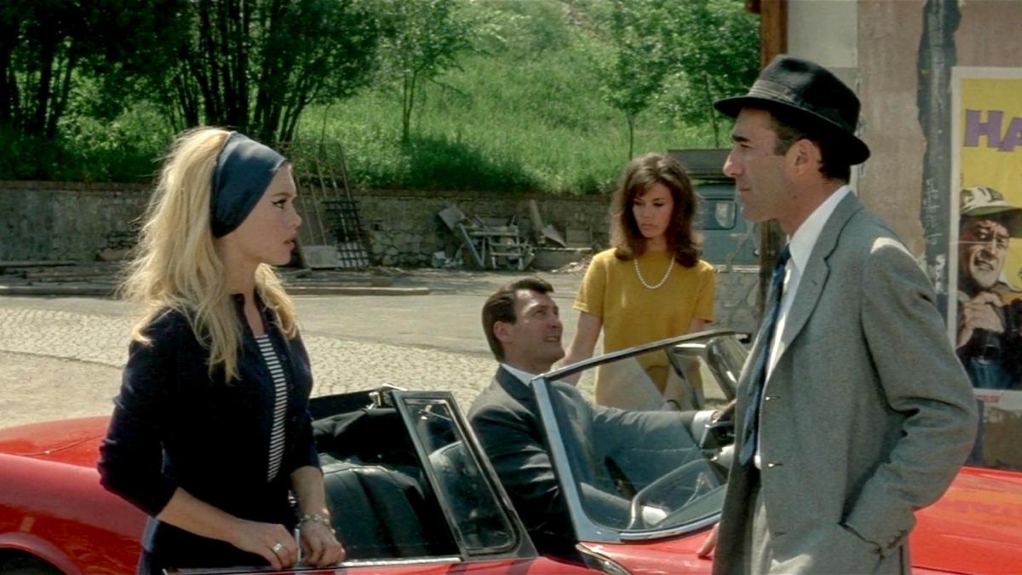
Paul Javal (Michel Piccoli) is a writer, who wishes he could be producing great novels or plays, but is actually banging out crapola dialogue to fill American producer Jeremiah Prokosch’s (Jack Palance) Odyssey-opus, a film its director (Fritz Lang, one of Godard’s idols, playing himself) is trying to turn into art rather than the cheap sword-and-sandals epic Prokosch wants. But by taking the shilling, Paul earns the contempt of his glamourous wife Camille (Brigitte Bardot), who sleepwalks her way into an affair with Prokosch. Things come to head (as such) at Prokosch’s villa on Capri.

It was shot with a larger budget and a more controlling producer than any previous (or subsequent Godard film). God alone knows what they made of this – one suspects them reacting rather like Palance’s tantrum-filled producer when he inspects the arty dailies of statues and coastlines Lang has shot (“You lied to me Fritz!”). On some level Le Mépris is Godard playing a joke on his money men. The want a steamy relationship film, with plenty of Bardot on display? Have a slow series of elliptical conversations, a languid (but wonderfully filmed) argument scene in which Piccoli takes both a bath and a crap, and here are some deliberately functional shots of Bardot’s naked back on the bed while she and Piccoli intone empty dialogue. For a film that involves extra-marital sex, groping, a gun and a fatal car crash it’s deliberately unsensational – as if Godard was showing the money men he could ram anything they demanded into the film and still make it feels like a ticking-off.

To be honest, there’s also in Le Mépris a bit of Godard’s contempt for himself for selling out, as if he realised part way through he’d made a terrible mistake by taking the money and wanted everyone to know it. You can see it in the film’s visuals, that turn the demanded cinemascope wideness (which Godard loathed) into a series of pan-and-scan shots and tight close-ups that wipe-out the impact of the grand visuals. Godard may appear in the film himself, but is real substitute is his hero Lang, here a visionary polygot (the only person who can speak the full hodgepodge of languages the characters communicate in), who gives voice to Godard’s most closely held views about cinema and the only person completely assured and comfortable with what he is doing.

Not that there isn’t an awful lot to admire in Godard’s work here. As fits a director steeped in a love of film, Le Mépris drips with homages to cinema technique. Godard speaks the credits – Welles in Magnificent Amberson’s style – over an opening shot which is itself of an opening shot filming a crew filming the opening tracking shot of Le Mépris. There are touches of Ford, Hawks and Lang in the stylistic love of Godard’s heroes. Paul dresses like a mix of Sam Spade and Dean Martin and loves chatter about old movies (he’s very excited about the prospect of catching an old Hawks film). The tattered film studio is lined with film posters (including those depicting Godard’s former wife Anna Karina). We see the intricate procedures of film-making and post-production and Bardot even reads books about cinema in her downtime.

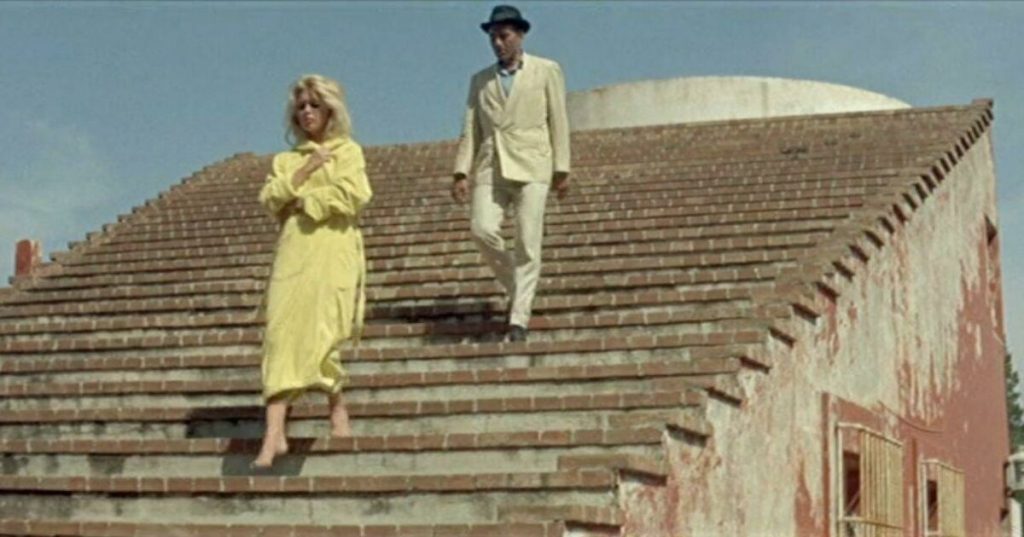
There is some astonishing film-making – Godard may be self-important, but he can shoot a film with grace. The tracking shots through the seemingly abandoned Cinecittà studios in Italy are beautifully done, as is the intriguing framework of the unique Capri villa and its striking staircase. The film’s highlight (and finest sequence by far, as well as its most human) is its middle act, a virtuoso choreographed sequence in the Javal’s under construction apartment (including French doors without glass, bathrooms without doors and intermittent furniture). The camera moves, brilliantly at a distance, to constantly frame these two characters interspersed between doorways, or kept apart by walls in the centre of the frame, barely ever managing to ever be in the frame together, the disjointed visual language perfect for communicating a conversation where they are never on the same page. It’s a superb way of filming partly an argument, partly a drifting out of love, partly a fumbling attempt to find common ground. There is a real emotional reality to this scene, something that isn’t present anywhere else in the film.

Even there though, it works because of its distance. Le Mépris is a strikingly distant film, Godard presenting a deliberately cold, hostile film that lacks any real warmth, empathy, wit or lightness, like he’s challenging us to swallow down this filmic medicine of cinematic inspiration and beautiful framing. Le Mépris also seems to despise its characters. Palance’s film producer (and this is a deeply uncomfortable performance from Palance, who constantly looks like he’s woken up suddenly and doesn’t know where he is) is a boorish philistine and an idiot. Piccoli’s writer is a shallow, preening  lightweight who wants to be a Godard but is a hack with pretensions.

Interestingly the most intriguing character in it is Bardot – but she remains elliptical, perhaps because part of Godard can only see her as some sort of trophy or status symbol, something Paul fails to ‘deserve’ because he can’t maintain his principles. Her motivations remain a mystery and one wonders if there is much place for them in Godard’s masculine view of the world, where women are either secretaries or muses. Camille herself seems to see herself as sort of property, suspecting her husband of pimping her to a producer but then seemingly embracing that in any case (despite her contempt for Prokosch). There is an air in Le Mépris that Godard can’t really imagine either Bardot or Giorgia Moll’s Francesca (a striking presence, who has the best running joke with her rudimentary translations of Javal’s dialogue for Prokosch) as collaborators or equals to either the brutish producer or the tortured men, but people who can only be defined by their attitudes towards them.

Above all, Le Mépris wants you to know your place when watching it. To admire it, but also to know that you wishes for something more dramatic or humane are shallow, base desires. That really you should be seeking out the sort of arty stuff Fritz Lang is shooting on the island, not the page-turning nonsense the executives wanted. It’s an attitude that pours out of the film, and after a while its one that makes you want to spend your time elsewhere. Godard may be a clever guy, but he can be very poor company.

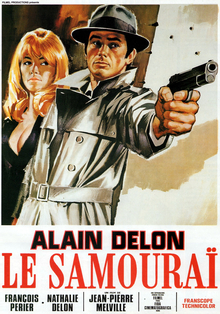
Le Samouraï (1967)

Le Samouraï (1967)

Melville’s iconic and enigmatic hitman film is the epitome of stripped-back cool

Director: Jean-Pierre Melville

Cast: Alain Delon (Jef Costello), François Périer (Superintendent), Nathalie Delon (Jane Lagrange), Cathy Rosier (Valérie), Jacques Leroy (Man in the passageway), Michel Boisrand (Bartender), Jean-Pierre Posier (Olivier Rey), Catherine Jourdain (Hatcheck girl), André Salgues (Mechanic)

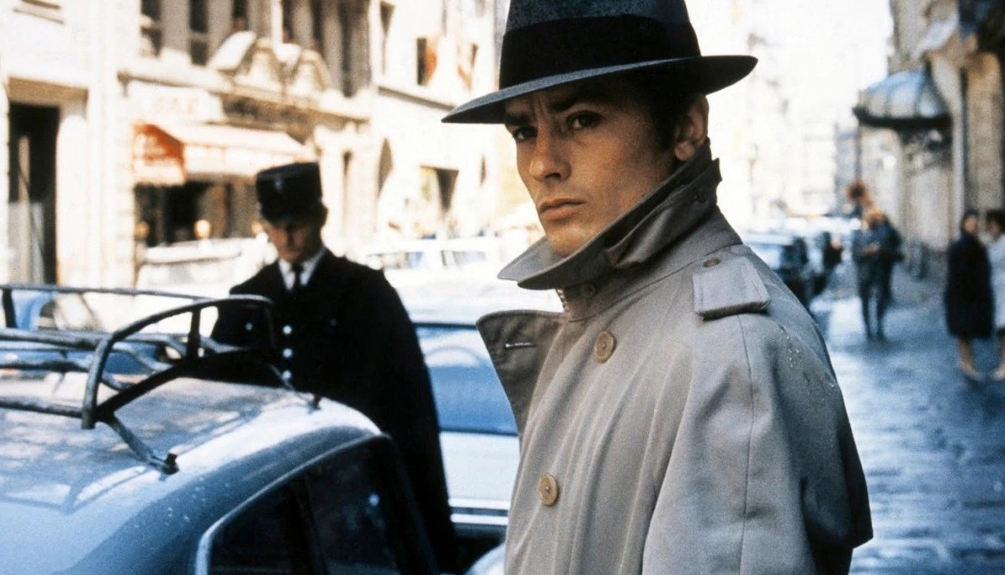
Every professional has his own code, his way of going about business. Why should a hired killer be any different? Jef Costello (Alain Delon) kills for money, but follows his own samurai-inspired code, going about his assignments with methodical preparation and ritualistic regularity, with his hands always covered with white gloves and his fedora at just the right angle. Le Samouraï is partly about how far Costello will go to follow his self-appointed rules. What about when a nightclub hit goes wrong, the piano-playing witness Valérie (Cathy Rosier) may or may not be protecting him, the investigating Superintendent (François Périer) is sure it’s him and the man who hired Jef decides he’s a loose end that needs tying up?

All this comes together in Melville’s stripped back, effortlessly cool mix of Hollywood noir and French New-Wave existentialism shot in a series of chilled greys that makes the film feel like a slice of monochrome 40s throwback. It’s Melville’s mix of the observational, forensic cinema of the likes of Bresson, told with the poetry of Cocteau and with more than a splash of Hawks. It makes for a film quite unlike many others, which sometimes has the logic of a dream, where the hero dresses like he’s stumbled in from Raymond Chandler and lives by a code encapsulated by an opening Bushido quote that Melville made up. It also cemented the filmic idea of the hitman as a mix of sociopath and poet, a consummate professional endlessly attractive in his unflappability sticking loyally to his personal code that shaped everything from Forsyth’s Day of the Jackal right up to John Wick.

Melville’s direction is pin-point perfect, every moment perfectly framed to bring just the right measure of cool and chill. It could almost be a silent – there is no dialogue for the first ten minutes and the dénouement returns to silence as we attempt to fathom Jef’s final cryptic motives – and Melville shoots the careful, forensic detail of Jef’s life with hypnotic mastery. Watching Jef go about, with (mostly) unflappable calm, the preparatory steps for a killing is gripping: stealing a car with a huge ring of possible ignition keys, buying weapons, dressing to perfection, scouting out the territory. It’s a film that’s endlessly fascinated with procedure: it gives almost the same time to the police’s less successful attempts to bug Jef’s apartment, in what becomes a game of move and counter-move.

It’s also a film that builds suspense through the gradual accumulation of facts and events. Jef’s hit in the club sees is no wham-bam affair, but filmed like a prowling tiger in its terrain, with Jef move from room-to-room mapping out his escape route. Two confrontations with a rival hitman, sent by his employers, masterfully feature slow build-ups to sudden bursts of action. An attempt by the police to trail Jef on the Metro cuts superbly back and forth from the police control room, the policemen following Jef to Jef himself, small moments shifting the advantage in the chase here and there.

In a superb performance of unreadable motives and feelings, Alain Delon creates a character who would leave a profound influence on every film hitman to follow. Jef is a man as distant, featureless and anonymous as his apartment (which is grey, contains only the most basic furniture and no possessions at all beyond his caged bird which is as much as an early warning system as pet). He buries himself in his role, keeps all other people distant (his girlfriend, played by Delon’s then wife Nathalie seems to mean little to him other than as an unshakable alibi source via her jealous fiancée) and seems devoid of emotion. It’s hard to imagine him expressing attachment for anyone or anything else (does he really feed that bird?). He’s cool though, because very few characters are as seemingly certain of who or what they are than Jef.

Which is going to be shaken when employers, witnesses and others start to break the expectations of his code. How far does Jef’s personal code of honour, loyalty to contracts and refusal to create collateral damage stretch? His killings are conducted in person – with paid targets greeted with an almost polite apology. But when his employers break the deal, targeting him – it seems nothing will shake him from extracting retribution. The only person who attracts anything approaching his anger is his mysterious employer – witnesses of his crime, other hitmen, the police are all just doing their job like him: but for the boss who broke his word, no threat or bribe will stop Jef. Sticking to the letter of his word is behind the film’s enigmatic ending and you could see the film’s conclusion as the perverse logical end of a philosophy of absolute honour.

Melville’s film drips in classic Americana cool, alongside it’s very Parisian locations. Jef can chew hard-bitten dialogue like a gumshoe and treat his girlfriend with a high-handed dismissiveness that fit him into a host of noirs. Really of course, Jef would be easily caught: despite the struggles of witnesses to identity him, could he look more distinctive in his fedora and Bogart raincoat? Not to mention those attention drawing gloves, that he whips off on completion of the killing to leave fingerprints everywhere? That sort of logic doesn’t matter in a film where it feels like the world is moving forward with the grim, inescapable inevitability of a dream.

There is, among the detailed realism a real sense of the unreal about Le Samouraï right from the start with Melville’s distinctive sharp zoom-in-then-out on Jef’s bed as he sits blowing cigarette smoke in the air. The witness, Valérie, has an unreal, ethereal quality about her, unshaken by seeing Jef at work and drawing him deeper into a situation full of traps and danger like some sort of angel of death. (There is a fair bit of Orphée in Le Samouraï, with an enigmatic hero drawn tighter and tighter into a world of strange rules and hard to predict outcomes). Melville’s film casts such a hypnotic magic that you even forget no real adherent to a Samurai code would ever kill for money.

It comes together in a super-cool, cut-back film of strikingly beautiful noirish images in a world seemingly with no colour at all. But also, a film that is surprisingly complex, considering its enigmatic hero, whose actions and decisions remain open to interpretation and discussion. It’s a film of fascinating contradictions, shot with observational realism but with the logic and unreality of a dream, mixing pulpy thrills with existential pondering. Its absorbing, magisterial and quite unlike almost anything else you could name.

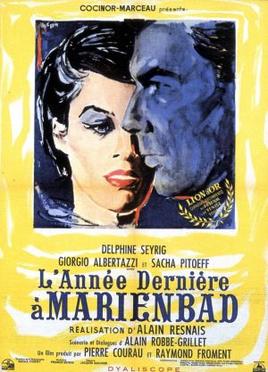
Last Year at Marienbad (1961)

Last Year at Marienbad (1961)

Ultimate arthouse film, designed to reward constant analysis and interpretation with no answers

Director: Alain Resnais

Cast: Giorgio Albertazzi (X), Delphine Seyrig (A), Sacha Pitoëff (M)

If there is one film that could practically stand as a dictionary definition of art-house cinema, it might be Last Year at Marienbad. A striking collaboration between director Alain Resnais and novelist Alain Robbe-Grillet, is puts the vague in Nouvelle Vague (French New Wave to you and me). Last Year at Marienbad is a film almost unlike any other, a work of art that lays itself out in front of you and asks you to bring your own viewpoint to bear to decide what (if anything) it’s actually about. You could call it a riddle wrapped in a mystery inside an enigma (to borrow a phrase from Churchill – and lord knows what he would have made of it).

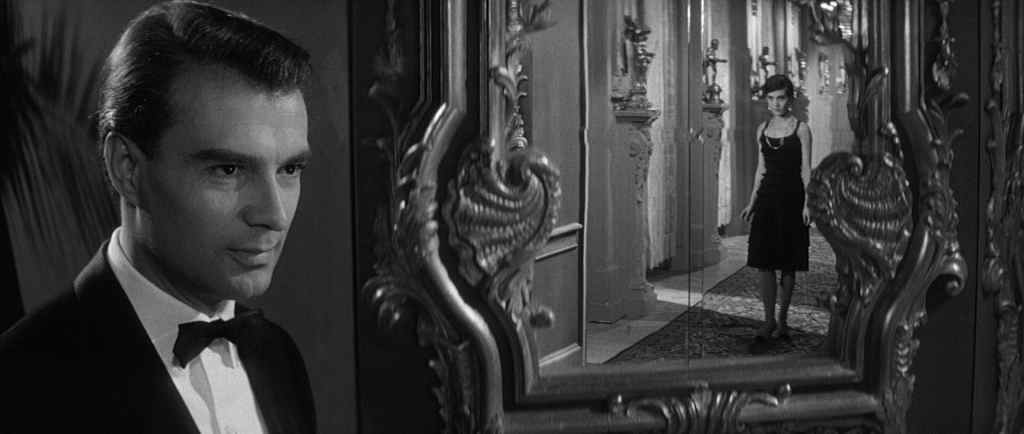
Last Year at Marienbad is set in a sprawling, Versailles-like palace (which might be a hotel), where grand, art-laden corridors go on forever, every room drips with fine details the grounds are mini-countries and opulent, geometric designs fill ever corner of the building. Within this, a parade of people dressed in evening finery move like impassive robots, uttering flat banalities and either moving slowly between rooms or standing impassively like statues. Among these strange, ghost-like figures a man (Giorgio Albertazzi) waylays a woman (Delphine Seyrig) and tells her a year earlier they met somewhere else (possibly Marienbad, but could have been Frederiksbad, Karlstadt or Baden), fell in love and planned to elope a year later. She doesn’t remember him at all. He spends the film trying to persuade her. Another man (Sacha Pitoëff), who might be her husband, engages the first in a mathematical card game (nim) which he defeats him at constantly.

If that sounds sparse, it’s because a plot description barely functions for a film so wilfully oblique it’s about whatever you decide it’s about. Resnais and Robbe-Grillet’s purpose perhaps can be seen when our two could-be lovers discuss a classical statue. (In a neat touch, the statue itself was specially carved for the film). Their conversation revolves around different interpretations of what these Roman (or Greek) figures are doing: is the man protecting the woman from walking into danger? Is the woman protecting the man? Are they in love? Are they arguing? Why is there a dog sitting at her feet, looking away? This conversation is framed through a series of lingering shots from multiple angles, that invite us to bore our eyes into the statue and decide for ourselves.

And that’s basically the film in microcosm. It’s a series of beautifully haunting images and scenes, shot by a gliding camera and accompanied by Francis Seyrig’s hypnotic score, that invites the views to stare at this film like they would a painting in a gallery and spot as many (or as few) tiny details as they like and see if it changes their view of the artist’s overall intention. Last Year at Marienbad, in effect, nearly defies any sort of logical criticism. What you take out of depends entirely on what you put in. Which is to say, it’s as perfectly legitimate to say it’s a pile of pretentious, piss-taking piffle as it is to call it a gorgeous, transcendent piece of art that leaves you thinking for days.

Everything is designed to leave things open to question, with the normal rules of logic and cinematic structure routinely discarded. Characters will be in frame at the start of the shot and then, as the camera drifts away from them, suddenly appear in another (impossible) location – for example one shot starts with X at a card table, then drifts across the room to the doorway to see him enter.

The people move like functional props, or bored actors trotting through their marks. There is barely a facial expression or jot of intonation in anyone. They stand mutely to attention, or shift through a senseless parade of conversations, waltzes and card games. There is a ghostly, dream-like, never-world quality to the entire hotel (it’s influence on The Shining – from Resnais’ controlled, Steadicam style shots, to the haunting sense that mankind has no agency or influence in the building – is really clear). It’s as cold as a block of marble, and the people often feel like statues that have walked off their pedestals into the world.

Locations are inconsistent and change all the time: Resnais shot the film in multiple palaces and stitched the locations together, hiding cuts with carefully placed objects (in one instance A walks down a corridor seemingly in one shot, but Seyrig is actually walking through about three totally different locations). The pattern, design and contents of rooms change (A’s bedroom shifts through myriad designs and layout, most noticeable in its constant swopping between either a mirror or a painting above the mantelpiece). An exterior balcony next to that statue subtly changes location as well (and even appears as a detailed landscape painting).

Everything shifts, twists and contorts all the time as if the film reforms depending on the angle you are looking at it from. The hotel could be a purgatory or a dream. It could be a half-formed memory. X could be an Orpheus striving to save his Eurydice. Or a self-aware film character. Or a trapped dead soul. A could be an amnesiac, a fantasy figure, a ghost, a part of X’s psyche. M could be her husband, X’s alter-ego, death or a complete stranger. Every single interpretation is legitimate and you could pull out different moments to support any one of them.

Myself, I saw it as like a dive into X’s memories. Everything about the shifting scenery, strange dis-jointed logic of the film moving seemingly at random between past and present, the repetitions and reframings of the same conversations, seemed like a man sifting his memories. X even stops and argues against certain scenes (‘It didn’t happen like that.’) There are hints of a dark trauma: repeated shots of A cowering in her room, brief moments of shock, tears and her pulling away from X. We see multiple hints of A’s death, including a possible shooting by M. I started to think this was X reframing his memories to absolve himself: that after rejection by A, he assaulted her in some way, she committed suicide (the opening play the characters are watching is Romers based on Ibsen’s play about a man haunted by the suicide of his wife). X is now forcing his memory to adjust this into a tragedy where he was the victim – and as part of that must persuade A she loved him.

But that’s just my view. You could just as well say X is so bored watching Romers, he makes up a whole fantasy based on it to keep himself entertained (inevitably, the set of the play changes completely whenever we see it). I do think it interesting most 60s criticism took X completely at his word as a victim, while more recent criticism has often cast X as an unreliable narrator (if that term has any meaning here). What matters more is whether you are intrigued enough to find dwelling on what this all means (the way we dwell over a Picasso) worth your time. For me it unquestionably is.

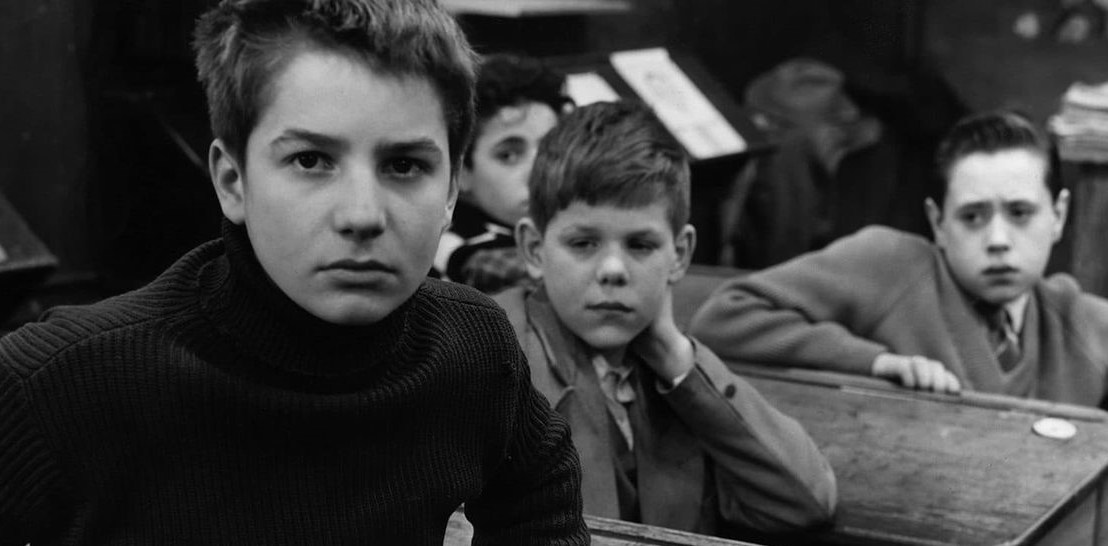
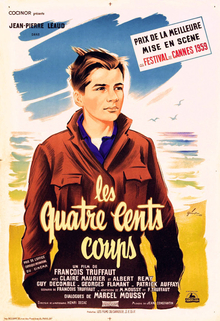
The Four Hundred Blows (1959)

The Four Hundred Blows (1959)

Injustice, oppression and disregard fill the life of a young ‘Truffaut’ in this marvellous coming-of-age story

Director: François Truffaut

Cast: Jean-Pierre Léaud (Antoine Doinel), Albert Rémy (Antoine’s father), Claire Maurier (Antoine’s mother), Guy Decomble (“Sourpuss”, the teacher), Patrick Auffay (René Bigey), Georges Flamant (Monsieur Bigey), Pierre Repp (English teacher), Daniel Couturier (Betrand Mauricet), Luc Andrieux (Gym teacher), Robert Beauvais (School director)

Truffaut’s first film, shot when he was just 26 years old, is not only one of the finest debuts ever, it’s also one of the films most in touch with being a child. Heavily based on Truffaut’s own troubled childhood, it’s a beautifully told exploration of how much children can be misunderstood by adults and what a cage, of circumstances outside of your control, childhood can become.

Antoine Doinel (Jean-Pierre Léaud) is a 12-year-old living in a cramped apartment with his parents, who have a tempestuous relationship and alternate between half-interested mateyness and exasperation with their son. Antoine is marked at school as the class trouble-maker and constantly finds himself in scrapes, only increasing the perception of him as a tearaway and lost cause. Eventually packed off to a reform school (basically a borstal), only his imagination and love of books and film (qualities no one sees in him but us) give him any hope.

What’s with that title? In French it’s Les Quatre Cents Coups in reference to the expression “faire les quatre cent coups” which roughly translates as “raising hell”. The alternative English title of Wild Oats (which to be honest isn’t much better) was rejected. But perhaps it’s for the best. The 400 Blows has a poetic gorgeousness about it: it reminds us of Waugh’s powerful quote from Brideshead Revisited about the destructive impact of circumstances and misguided interventions on the tragic Sebastian: “a blow, expected, repeated, falling upon a bruise”. And what is Antonie’s life but 400 blows hammering down, repeatedly and expectedly on the same bruise?

This is a kid who never catches a break. From the opening scene, as the kids pass around a page torn from a naughty calendar, it’s him who gets caught with it – because he starts doodling artistically around her eyes. He’s distracted from his punishment homework by one of his father’s (brief) bursts of friendly interest. Worried, he skips school the next day then invents a ridiculous lie of his mother dying to cover it, cementing the impression he is a habitual liar. When he quotes his beloved Balzac in a school essay competition, he is thrown out of the class for plagiarism. After stealing a typewriter, he’s caught when he tries to return it. The kid cannot get a break.

It’s a hugely sympathetic and moving insight into Truffaut’s own childhood. He too was raised, largely in indifference, by two parents who seemed uncertain they wanted him. Like Antoine, he discovers the man he thinks is his father actually isn’t. He also he spent eight years living with his grandmother, because his mother wanted an abortion not a child, and witnessed his mother’s extramarital romances. Truffaut to spent much of his time with his closest friend Robert Lauchney (here appearing as René Bigey – Lauchney worked on the film’s crew).

But, also like Antoine, Truffaut was passionate about imagination and the arts. Antoine reads Balzac’s Le Père Goriot (smoking an illicit cigarette – after all he’s French) and it makes such a powerful impression he can quote large chunks of it from memory in a school essay and builds a candle-lit shrine at home to the author (with his usual luck, the candle nearly burns down the cramped flat). The cinema is his other big escape. He takes every opportunity to visit, staring at the screen with wonder, stealing film posters (he swipes an image of Harriet Andersson in Summer with Monika) and finding an outlet for his imagination and intelligence that the real world never offers.

This is a child who requires attention, focus and encouragement to bring out his vibrancy and creativity. What he gets are orders to take the bins out and stupefyingly boring lessons of endless repetition mixed with abuse at school. Home life has only flashes of happiness: Antonie’s childish, giggling joy when his parents take him to the film, and laughing in the car as they remember the film on the way home, is the only time he seems to smile in their presence. At others, his mother mixes irritation with sudden bursts of affection that are really bribes for good behaviour.

He is bought to life in an extraordinary performance from Jean-Pierre Léaud. Found from a pool of 200 applicants from a newspaper advert, Léaud transformed Truffaut’s idea of Doinel. Truffaut saw him as more overtly fragile, timid and artistic. Léaud has all of that – but matches it with a defiance, a bravery and a slight resentment that makes his vulnerability all the more affecting. He is the sort of kid you see as a tearaway but, look closer, you’d see the soul of an artist.

Léaud’s performance is guided with a great deal of delicacy and skill by Truffaut – so successfully that he and Truffaut would collaborate five more times on films about Antoine’s future life. His part was largely unscripted, Truffaut outlining the plot and scene and then encouraging him to use his own words. It’s gloriously effective in a beautifully naturalistic late scene, when Antoine (the camera focused solely on him), responds to a series of questions from an unseen psychiatrist about his past, including an abashed cheeky giggle when asked about his sexual experience.

The 400 Blows also helped to kickstart what would become the French New Wave. Truffaut – and cinematographer Henri Decaë – shot the film with an on-the-streets naturalism that gave a large dollop of documentary realism to a narrative film. Decaë’s roving camera, moving easily and naturally through the streets, tracking the movement of the children, is also reminiscent of the very act of being a child, where life is often one of wild drifting and aimless but purposeful running through streets. The wide angles capture the everyday details of the Paris in a way that feels intimate and real, and also manage to hammer home the cramped apartment the Doinels live in (Antonine’s bedroom, Harry Potter like, is basically a cupboard under the stairs next to the bin).

It all builds towards the film’s extraordinary ending. Thrown into a reform school, essentially told by his mother she doesn’t want him to come home, barred from seeing his friend René, asked to choose which hand he wants to be slapped with by the teachers and forbidden access to the books and films he loves, Antoine does what he has done all his life. He runs.

Running from a football match, evading a pursuing teacher, Truffaut gives us two long tracking shots of extraordinary beauty but also profoundly openly to interpretation. Antoine runs through the countryside, the camera keeping pace with him, his feet pounding on the grass and pavement. We are joining him in his flight, running free alongside him. Then he arrives at his destination – and the camera tracks him as he walks across the beach until finally he sees the sea. He wades – and then turns to look directly at us, Truffaut freeze-framing and zooming in.

Are we being challenged? After all, perhaps we are all complicit in the wretched judgement Antonine has faced. Or is this him welcoming us, accepting us, acknowledging us as his co-conspirator and escapee? Who quite knows. What we do know is that The Four Hundred Blows set Truffaut on the path to being one of the world’s leading directors – and is a stunning, sympathetic and heart-breaking insight into the struggles and injustice that childhood can consist of.

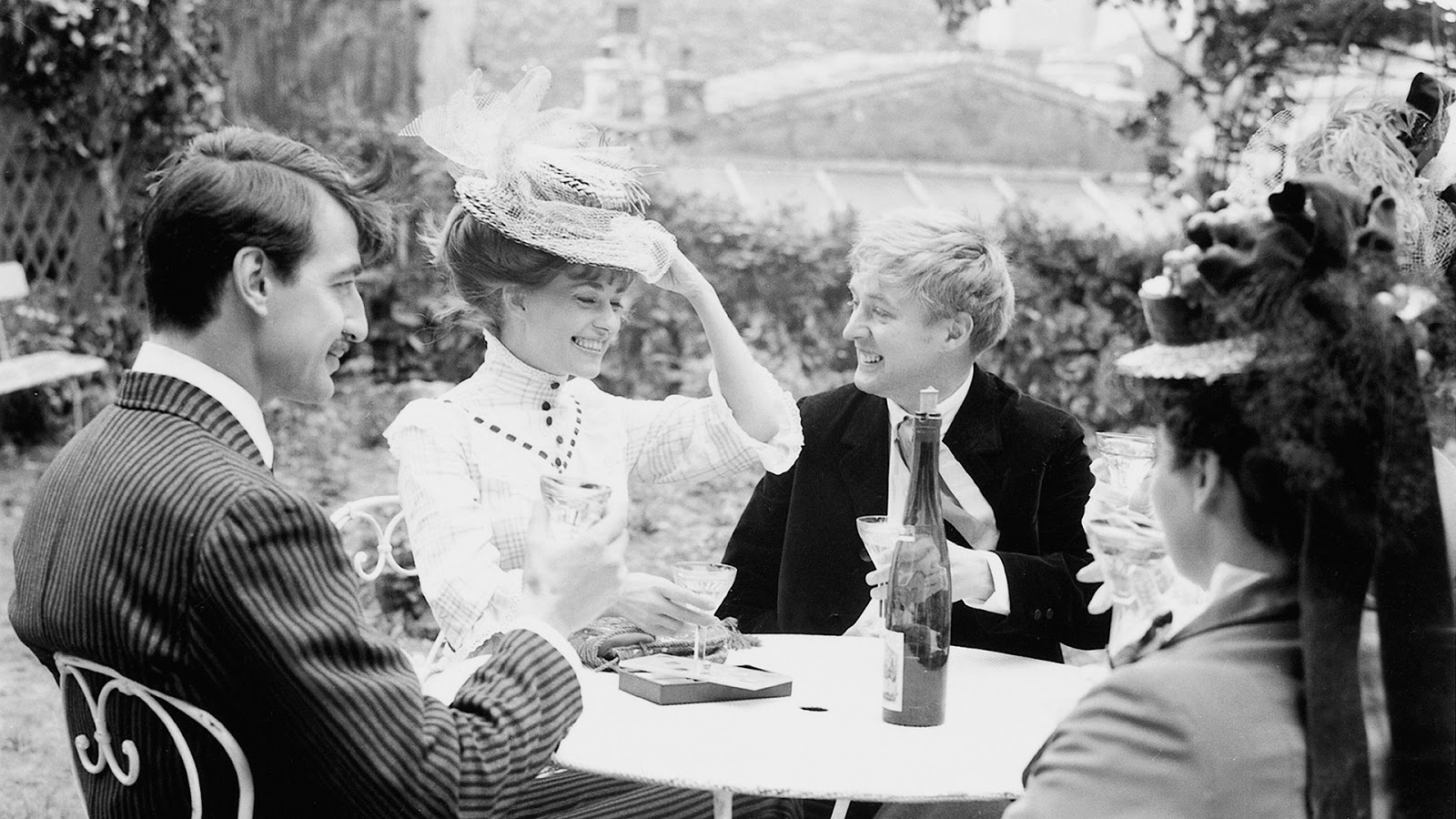
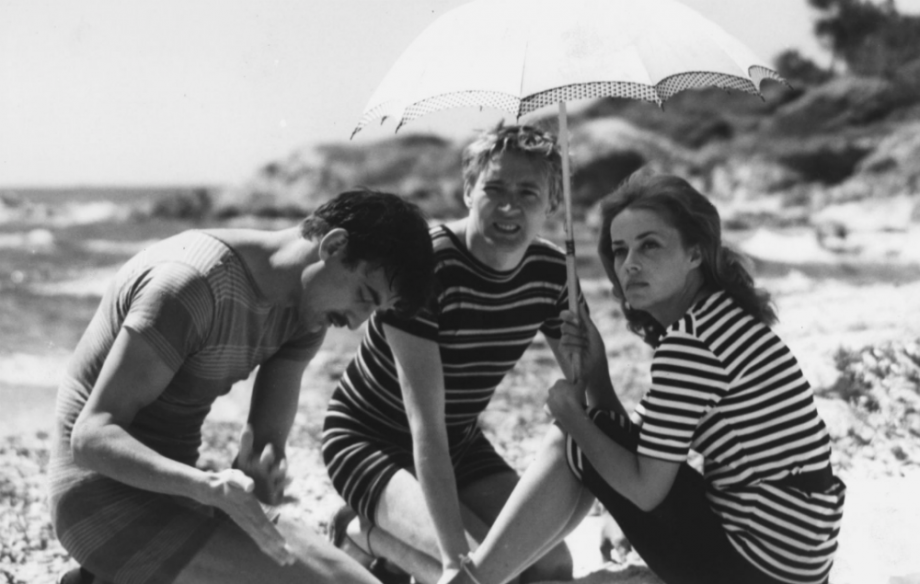
Jules et Jim (1962)

The film that launched a thousand menages: Jules et Jim

Director: François Truffaut

Cast: Jeanne Moreau (Catherine), Oskar Werner (Jules), Henri Serre (Jim), Vann Urbino (Gilberte), Boris Bassiak (Albert), Marie Dubois (Thérèse), Michel Subor (Narrator)

Of all the films of the French New Wave, Jules et Jim was the one that really captured the global imagination. Its success rode came not only from its embracing of the new French style, but also from the way it captured some of the mood starting to build across the world in the 1960s. Truffaut’s third film, it turned its then 29-year-old director into one of the most renowned directors in the world. Filmed with verve and imagination, it still holds up brilliantly today as well.

In Paris in the years before the First World War, French bohemian Jim (Henri Serre) and shy Austrian writer Jules (Oskar Werner) become best friends. They share everything – the arts, sport and occasionally women – and the bond between them is unshakeable. When both men meet Catherine (Jeanne Moreau), a free-spirited, extremely bohemian young woman, they both fall in love – although the infatuated Jules is the first to admit it. Both men fight for their countries in the Great War and return to civilian life: Jules marries Catherine and they have a daughter. But home life cannot keep Catherine bound down, and a visit to Jim throws the three of them into a curious but warm menage-a-trois. But can such bliss last forever?

Truffaut’s film is playful, vibrant and overflowing with style. While other French New Wave films prior to this had focused on sending the camera out into the streets and capturing the lives of everyday Parisians, Truffaut’s film mixes this with period trappings. Utilising the dynamic camera work of his peers, Truffaut throws in carefully selected newsreel footage and still photography. But all this material is edited with modern forcefulness, Truffaut using a range of freeze frames, wipes, dolly shots and several other editing and camera tricks to make this period story feel astonishingly fresh. The film is fast paced and brilliantly made, and Truffaut’s camera roves like an engaged but playful observer – a feeling added to by the use of a subtly wry narration.

According to legend, Truffaut found a copy of Henri-Pierre Roché’s semi-autobiographical novel in a charity bin and fell hard for the book. It’s a mark of Truffaut’s ability to judge the time he lived in, that he saw how clearly this story of bohemian free love in the 1920s would speak so strongly to the atmosphere of the 1960s. It’s a story that feels more dated today – and at times it’s hard not to feel a little bit annoyedby the very knowing, arty, exhibitionism of its characters, and the way they are very consciously living life as a performance – but it chimed like a bell back then. And the slight air of artificiality about many of the characters throughout gives even more of a jar of real emotion when they respond naturally to tragic and upsetting events.

Truffaut’s film – blessed with a simply sublime score from Georges Delerue, which captures the tone of the film perfectly – becomes a brilliant exploration of the freedom and imprisonment that comes from living your life for every new experience, and never settling. All three of the characters, to various degrees, refuse to settle for convention but are constantly striving for a marvellous new experience. Even the character least affected by these feelings, the more sensitive and weaker Jules, is willing to adapt and change his life constantly just so he can remain part of this circle and keep Catherine (with whom he is besotted) in his life.

Ah yes Catherine. Jeanne Moreau gives the sort of performance here that seems to define an entire generation. Again, today, Catherine’s constant striving for new experiences and addiction to the buzz of infatuation comes across at times as (to be honest) selfish. But she is also an electric figure, overflowing with life and joie-de-vivre. Moreau’s every scene is breathtakingly eye-catching – and Truffaut recognises this with carefully timed freeze-frames where the camera seems to soak in her beauty and dynamism as much as Jules and Jim. Moreau’s performance is truly iconic, like a force of nature, almost impossible to categorise – she is loving, selfish, brave, scared, flirtatious, bashful – and impossible to repeat.

It’s also clear why someone as unpredictable and all-consuming as Catherine gains the ever-lasting devotion of two close friends. Truffaut brilliantly captures both the hopeless devotion of these two men to this woman, and also the slight tinge of unspoken sexual bond between each other. Both men delight early in the film in each other’s permanent company, of this fact being recognised by all, and write each other poetry and stories. The film implies the fascination and longing both men have for Catherine, but also suggests that the strongest, most lasting bond is the one between the two men. Perhaps it is this that makes them so willing to settling into their menage – and certainly why, as Catherine’s interest in first one then the other waxes and wanes, it is each other’s company that they start to long for.

Of course that doesn’t mean that Jules doesn’t stay devoted to Catherine, a woman who gives him days of sunshine mixed with weeks of polite warmth. Oskar Werner is brilliantly sweet, gently naïve and vulnerable as Jules, filled with wit and tenderness but one of life’s passengers. He’s a man who follows rather than leads, or moves between the two other people in his life following the lead of first one or the other. The stronger willed Jim, played with a hardness and worldly realism by Henri Serre, is the one who both has the strength of character to hold Catherine longer and the will to turn away from her (even if for a short time).

The first half of the film is a marvellous explosion of relaxed joy, of pre-war innocence and youthful exuberance. It’s truly a young person’s film – and Truffaut’s  dynamic filming, inventive framing and giddy editing really captures this – and the film progresses much as life does into a middle age still clinging to the freedom of youth (like Europe attempting to recapture the innocence before the Great War) before beginning the descent towards the horrors to come of the 1930s. The film’s tragic conclusion has the sadness of a world lost, touched with the ridiculousness that seems inevitable for its exhibitionist characters. It makes for a marvellous and breathtakingly giddy ride, that (even if it looks at time dated in its very 1960s vibe) still carries a great deal of delight, joy and above all fun. Truffaut’s greatest achievement and most famous film still makes for a quite a calling card.

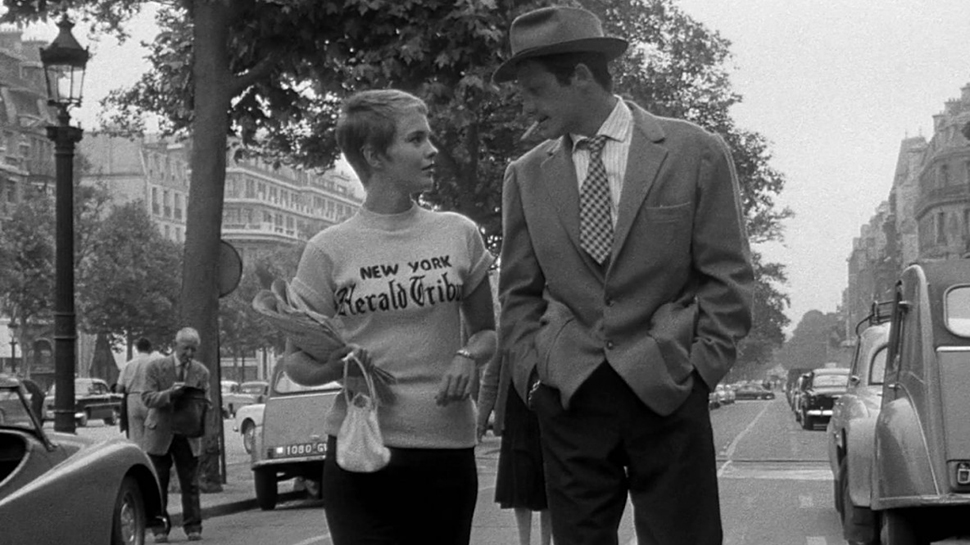
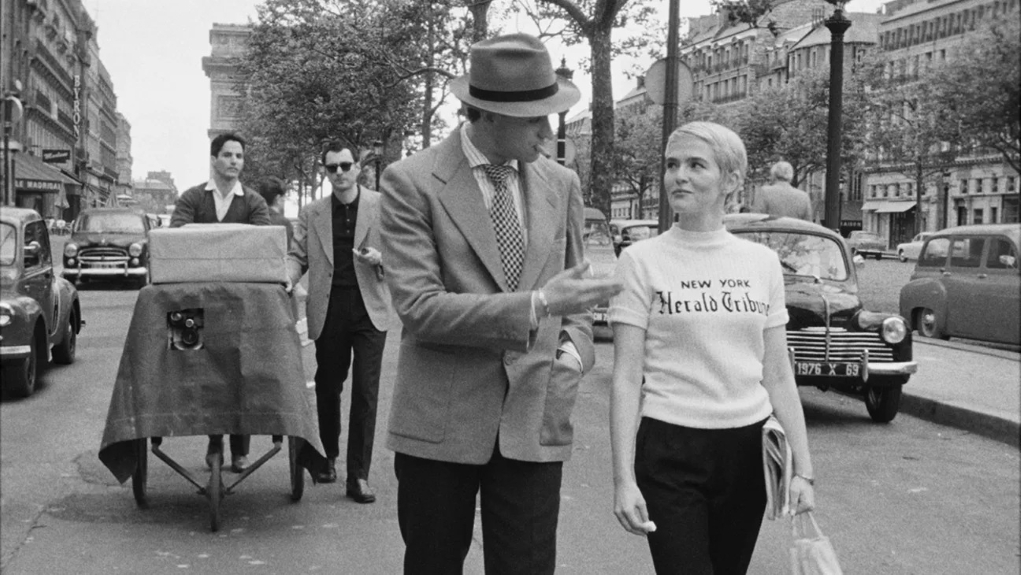
À Bout de Souffle (1960)

Jean Seberg and Jean-Paul Belmondo get obsessed with their own images in À Bout de Souffle

Director: Jean-Luc Godard

Cast: Jean-Paul Belmondo (Michael Poiccard), Jean Seberg (Patricia Franchini), Daniel Boulanger (Police Inspector Vital), Henri-Jacques Huet (Antonio Berruti), Roger Hanin (Carl Zumbach), Jean-Pierre Melville (Parvulesco), Liliane David (Lilane)

The French New Wave emerged from a group of film critics from influential magazine Cahiers du cinema in the 1960s, led by Francois Truffaut (who contributed a four page story outline to this film, although Godard later minimised his contribution as much as possible). The movement believed the director was the “author” of the film, stamping their personality on it. Packed with references to classic Hollywood movies, the films were shot with an improvisational lack of formality (that often hid brilliant cinematic technique) inspired by Italian neo-realism.

Breathless, Jean-luc Godard’s revolutionary masterpiece, was one of the central films in this school of filmmaking. It followed the last few days of Michael Poiccard (Jean-Paul Belmondo). A young man drifting through a life of petty crime, who idealises Humphrey Bogart’s style, he one day steals a car; it happens to have a gun in it, and in a moment of casual indifference he shoots a policeman trying to arrest him and flees. In Paris, while being hunted by the police, he reunites with his girlfriend, American student Patricia Franchini (Jean Seberg), and their self-absorbed relationship plays out under the shadow of the police net getting tighter and tighter.

Jean-Luc Godard’s film was hugely influential, as it seemed to re-write the rules of how films were to be made. Godard’s film is down and dirty, it’s almost guerrilla, but filmed with a wonderful, improvisational beauty. Shots are hand-held and dynamic, the action is all filmed on location, the framing is rough and ready, the camera gets up close and personal with the actors, throwing us in with them with an overwhelming sense of realism. The whole film feels irreverent, casual and cool, and gets a wonderful sense of urban Paris. It magnifies and reflects the very qualities the lead characters believe they have themselves.

Godard’s most influential touch was the use of jump cuts within scenes, with action jumping from moment to moment within a scene seemingly spontaneously, giving an impression of constant movement and ripping out the sense of time between actions. It also gives a sense of the film always driving forward, bouncing from beat to beat. According to rumour, this influential use of editing was a happy accident. The original cut of the film was well over two hours, and the distributors wanted something less than 90 minutes. Rather than cut whole scenes, Godard cut the small moments of movement or peace in scenes, giving the film a jagged freshness.

The whole film is full of these moments, the jumps over silences and conversational gaps, jumps in time lags between walking from point A to point B. It really works as well. The exterior scenes buzz with an exciting freshness. The long second act, basically nothing more than a conversation in a bedroom between the two leads, is edited almost like an action scene in a modern film – perfect for the self-dramatising energy the two characters are leading their lives with.

It’s those two leads who really help to make the film. Seberg picked up a quarter of the film’s budget to be the “name” lead, and she brings the film a soulful but distant sense of coolness. Belmondo was the real find, turning himself overnight into a mega star. In the sixties these were the people that your cool student wanted to be. Belmondo nailed his sense of iconoclastic cool in the opening moments – particularly when turning casually to the camera while driving his stolen car, to involve us personally in the story of his own life that he is constructing.

You can see how the performances (and characters) of the two leads had such impact on filmmaking. Energetic but also listless, contemptuous of authority and certain that whatever the world has in store for them it is definitely something more, self-absorbed and selfish, immature and convinced that their lives are more important that the average people around them – they are the predecessors of Bonnie and Clyde, of the young killers in Badlands. And nothing seemed to capture the counter-culture cool than Belmondo with a cigarette dangling from this mouth, apeing Bogart. 

But both lovers are equally selfish and obsessed with their own stories. Or rather, self-consciously living their lives like they are in a narrative – in fact you could say that the film predicts the self-obsession of the social media age. Michael lives a life that is all an entirely constructed front. He’s a would-be gangster, with a carefully studied front of gritty cool. He spends endless time making sure that his look, his clothes, his postures, his manners are always spot-on. He constantly keeps up a stream of consciousness narrative about his own life and situation, positioning himself as the sort of representative of modern American hip.

And Patricia is the same. Although at first she seems the more natural and grounded of the two, it’s clear her self-obsession is just as profound (if not more so) than Michael’s. Patricia constantly reviews and rebuilds the narrative of her own life, discussing her romantic life like it was a carefully constructed fiction, or some sort of hyper-cool Mills and Boon. “Do I love you? Should I love you? Can I make myself not love you?” Patricia’s construction of her own narrative – and her desire to shape and control it completely – makes her as completely artificial as Michael is. 

She’s so determined to construct her own narrative, that she shrugs off a string of revelations about Michael as if they didn’t exist. He’s a killer? Okay. He’s got at least two names? Hardly matters. He’s married? Nobody’s perfect. When deciding to betray Michael to the authorities, the action seems almost motiveless, but it quickly becomes clear that it is led by her latest review of the life situation and deciding it’s not what she wanted. Surrendering Michael to the law is her chance to say “No, I shape the story here – and I get to control who I feel love for, no one else”. By betraying Michael she is cutting a part of a life narrative out like she was removing a tattoo, something that she is not sure she wants any more but finds hard to remove.

One area where I do struggle with the film now is the attitude it has to its heroes. I think it wants us to kind of admire Michael – for all his faults – as some sort of unconventional hero looking to lead his life. I struggle to feel the engagement with a guy who is literally a murderer as much as the film wants me to – but I think this is the result of a major change from the more rebellious 1960s, to our changed times today. But then I’m also not sure that the film has as much heart as it wants to have – its characters are so consciously artificial that you never really get a sense of them as human beings. They are always characters, never people – and the film is always focused on their constructed images rather than anything real for you to invest in. There is much to admire, and not much to love.

And that doesn’t change the influential nature of the film. While it’s easier to admire the film than to love it – for all the strength of the performances, the characters are selfish fantasists – and its technical achievements sometimes distance as much as they throw us into the action, it’s still brilliantly put together. It’s masterfully made, and while I’m not sure it really has any heart, it’s got enough energy, force and urgency to make dozens of films.