Category: Gangster film

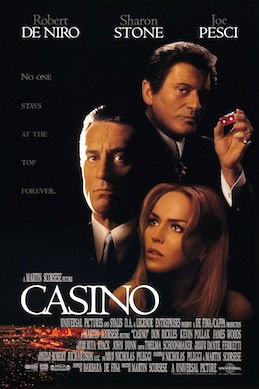
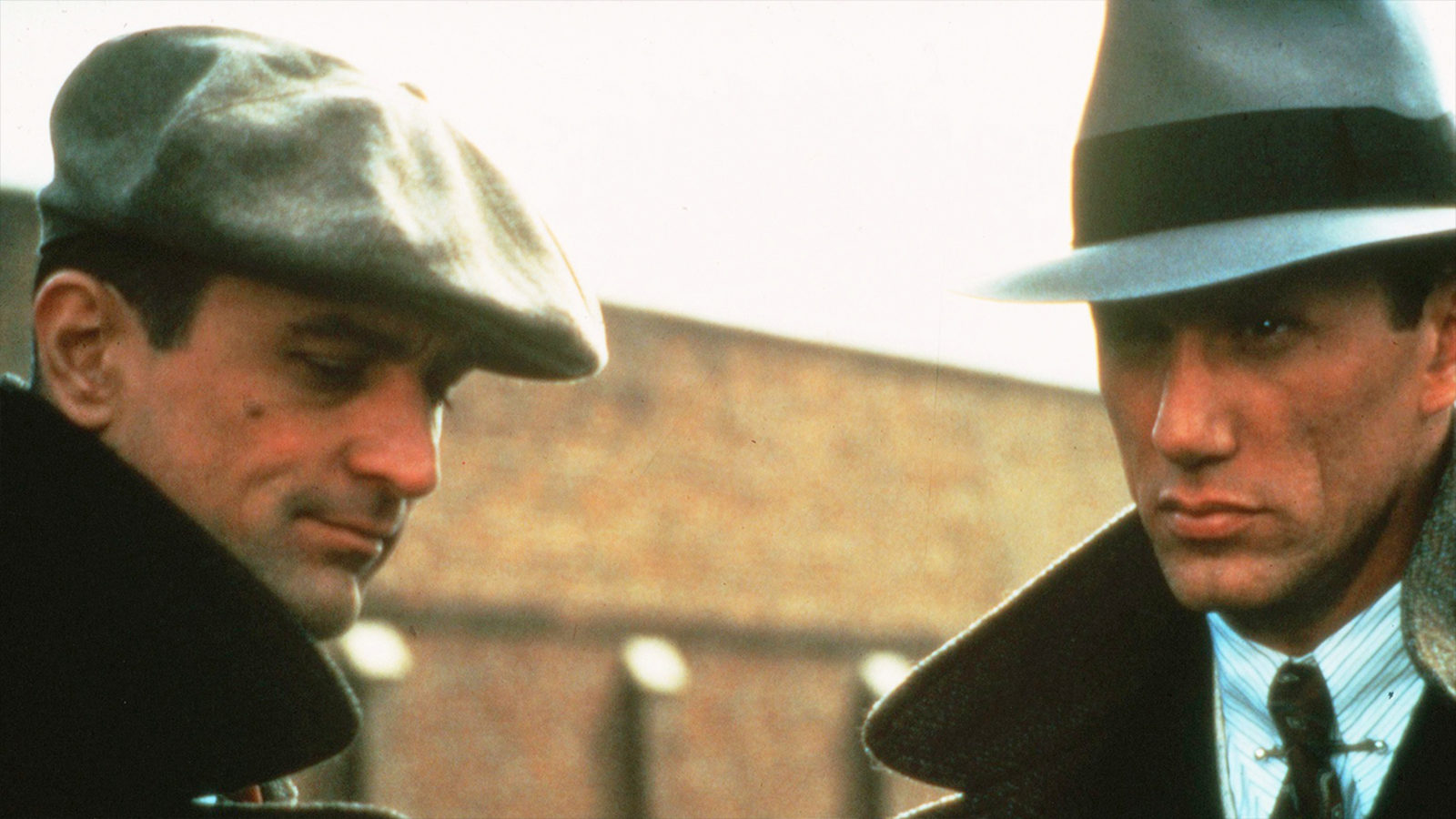
Casino (1995)

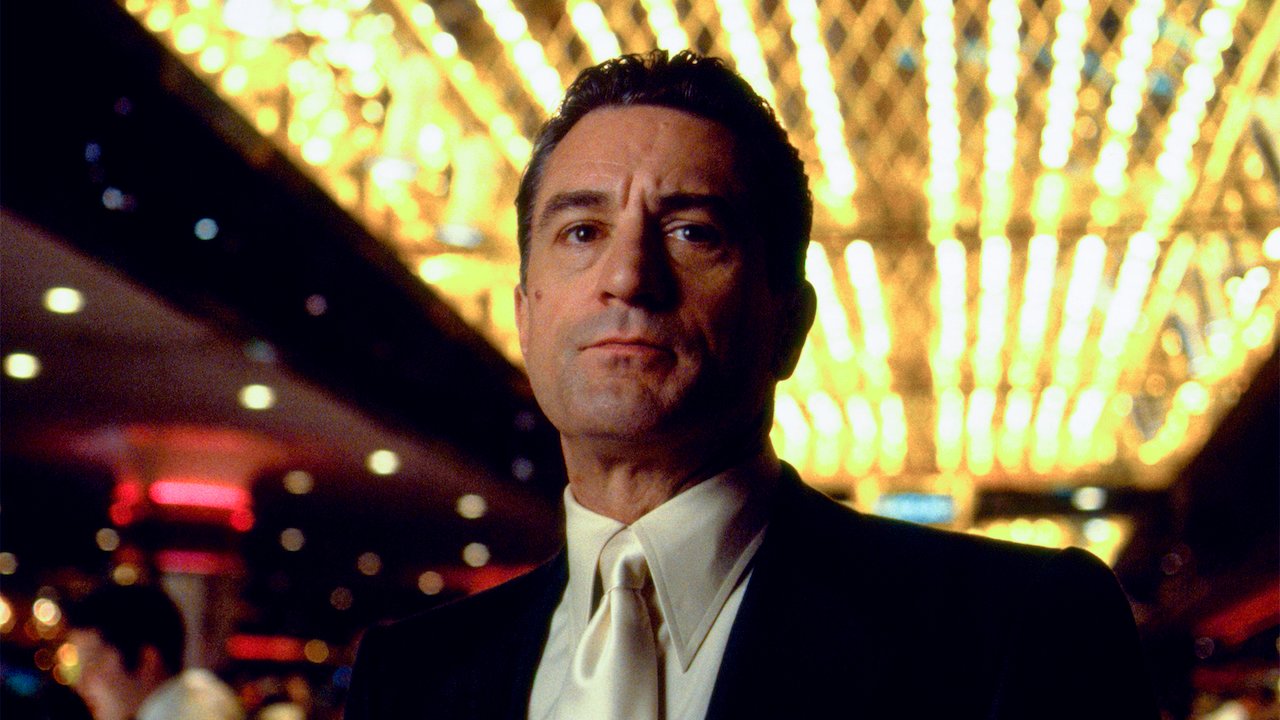
De Niro gets sucked into temptation and vice in Scorsese’s Casino

Director: Martin Scorsese

Cast: Robert De Niro (Sam “Ace” Rothstein), Sharon Stone (Ginger McKenna), Joe Pesci (Nicky Santoro), James Woods (Lester Diamond), Don Rickles (Billy Sherbert), Alan King (Andy Stone), Kevin Pollak (Philip Green), LQ Jones (Pat Webb), Dick Smothers (Senator), Frank Vincent (Frank Marino), John Bloom (Don Ward)

Scorsese’s Casino often gets overlooked in the master’s CV. Marking his first gangster film since Goodfellas, Casino is a very different film, a sort of combination history lesson and slice of violent gangster interplay, in which Las Vegas first gives these gangsters all their dreams coming true before chewing them up and spitting them out like all the other hopeless gamblers. And in doing that, it’s a perverse sort of nostalgia for the little guys being allowed to run the show – even if they did that by putting heads in vices – before they were shunted out by the even more ruthless efficiency of the mega-corporations. Because a world like Las Vegas only makes it easier for basic greed and personality flaws to take hold and ruin everything that’s good.

Sam “Ace” Rothstein (Robert De Niro) is a gambling and odds fixer, a man so expert at what he does and how he does it, so skilled at working the odds to spin out a profit for the Mafia, that the Chicago mob hires him to run their casino in Las Vegas. Rothstein turns the casino into the ultimate money making machine, understanding the odds of every bet and squeezing money out of every pore of the operation. While Sam takes care of the money, childhood friend Nicky Santoro (Joe Pesci) handles the other side of the Mafia business – increasingly abusing his position to make his own fortune on the side. Sam is further undermined by the only “against the odds” bet he ever made in his life: falling in love with Ginger (Sharon Stone), a selfish, self-destructive former hooker who is happy to take Sam’s money but will never offer him the love he craves. Disaster awaits.

Part of the reason perhaps why Scorsese’s Las Vegas epic (and the film is nearly three hours long) doesn’t have the warm regard of many of his other films is its focus on an intricate – although fascinating – explanation of how a Las Vegas casino operates, and the film’s reliance on voiceover to convey a vast amount of backstory, personal motivation and character insight. The opening hour of the film is almost entirely narrated (largely by De Niro and Pesci, although other characters occasionally intrude), as Scorsese shows exactly how a mob-skimming operation works in a casino, as well as nearly every detail of its operation, from day-to-day workings to dealing with cheats. The mechanisms of Las Vegas – along with its corruption, violence and blatant theft – are what fascinates the film. These sequences are assembled with the expected grace and skill of Scorsese and his regular editor Thelma Schoonmaker, but they lack the emotional connection of Goodfellas.

In fact, Casino might almost be some sort of tribute to silent film, so much of it is images accompanied alone by voiceover and well-chosen pop songs. It’s a film where imagery is all, with the camera prowling along the red-lined interiors of the casino itself (where daylight never intrudes), or lovingly following the progress of coins from slot machines to counting rooms to bags stuffed with cleaned bills for gangsters to carry away to their masters. It all makes for a rich and fascinating social history, even if you do feel slightly distanced from it by its near-documentary style voiceover.

But then, this voiceover does allow for a surprisingly rich character study once you plug into it. With the design stressing the demonic red-lined rooms and lights of Las Vegas – and the Saul Bass designed title sequence of a man falling through flames into a neon lit underworld – the idea of this place as some sort of hell is there all the way through. This context allows us to see three characters who are corrupted and destroyed by the pressures and temptations of five years running an operation in America’s capital of temptation and excess. And as the film goes on, everything gets bigger, from the garish colours and clothes to the music to the increasingly graphic violence.

And this film is astonishingly violent. Heads are placed in vices, people are brutally murdered by everything from pens to baseball bats, hits happen with a gruesome immediacy. And the person carrying out most of these acts is Pesci, a demonic imp lacking any sense of charm. Pesci retreads his role from Goodfellas, but even worse if possible, a man for whom violence is as second-nature as breathing. 

It makes a neat contrast through with De Niro, who dominates the film (and either appears in or narrates almost every minute). It’s one of De Niro’s calmer, most reflective performances ever in a Scorsese picture (arguably until The Irishman). He’s a quiet, meticulous, fastidious professional gambler, who never takes a chance professionally but takes huge gambles with his personal life. De Niro brings the film a calm centre, and the precision of a man who both loves what he does but is so obsessed with making things perfect he gets no pleasure from it. Unlike many De Niro roles in Scorsese, Sam is the closest you can see as a regular guy, someone who works in a world of theft and violence but sees that as a cost of doing business rather than a career choice.

It’s why he remains sympathetic, despite the destruction around him. Perhaps also helped by his simply appalling wife. Sharon Stone gets her finest part ever (she received the film’s only Oscar nomination, for Best Actress) as the self-destructive, greedy addict Ginger who doesn’t want to change anything about her life and marries Sam solely for his money, but continues her relationship with her pimp Lester (a sleazy James Woods) and snorts cocaine in front of her five-year-old daughter. But Sam takes the chance because he loves her – and this Jewish outsider, who moves in circles of Italian mobsters and Southern societies that control the state, wants nothing more than to be loved and accepted. It’s what keeps him close to Nicky – for all his horrific impulsiveness – because Nicky is the closest thing he has to a genuine friend.

It’s a theme that runs throughout the whole film. The Mafia allowed its “street” operatives to run this operation in Las Vegas – and would never allow such regular soldiers such power again – and Las Vegas itself closed its doors to these more “independent” operators in the future to give the riches to corporations and insiders. It’s part of what makes Casino such a fascinating history lesson – this is the Las Vegas we all kind of think of, dirty, corrupted and sexily run by gangsters (even if the film makes clear that these guys would crush your head for looking at them the wrong way). But it’s now a circus, an entertainment ride.  Because our heroes here make the same mistakes as the guys that go through their casino – “the longer they play, the longer they lose”.

The Usual Suspects (1995)

The immortal gang in legendary twist thriller The Usual Suspects

Director: Bryan Singer

Cast: Stephen Baldwin (Michael McManus), Gabriel Byrne (Dean Keaton), Benicio del Toro (Fred Fenster), Kevin Pollak (Todd Hockney), Kevin Spacey (Roger “Verbal” Kint), Chazz Palminteri (Agent Dave Kujan), Pete Postlethwaite (Kobayashi), Suzy Amis (Edey Finneran), Giancarlo Esposito (Jack Baer), Dan Hedaya (Sergeant Jeff Rabin)

SPOILERS: If you have been living in a cave since 1995, don’t read on as I discuss the twist at great length…

“Convince me”. That’s what Customs Agent Dave Kujan (Chazz Palminteri) says as he begins his interrogation of limping, low-time crook “Verbal” Kint (Kevin Spacey). That’s certainly what Kint does – and it’s what the whole film is aiming to do in this, the most famous confidence trick in movies. The Usual Suspects is one of those once-in-a-blue-moon films where everything comes together perfectly. It’s also a sleight-of-hand movie that remains hugely engaging and entertaining even when (as surely most people now do!) you know exactly what the magician has up his sleeve. Its solid gold entertainment factor even survives today, despite the slightly queasy presence of both Kevin Spacey and Bryan Singer in its credits.

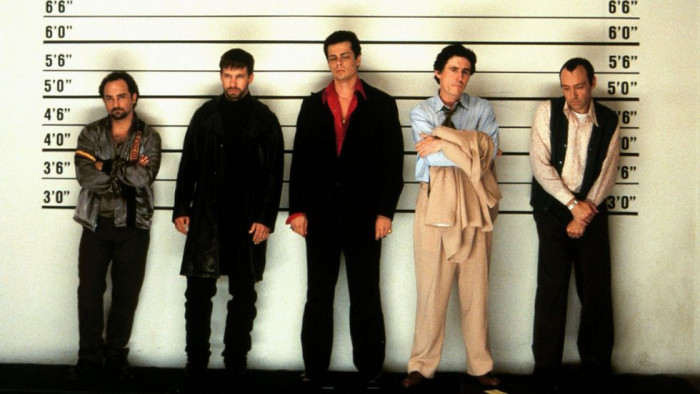
Told in flashback, the film follows the coming together of a bunch of regular criminals, pulled in for a line-up and deciding to team up. Along with Verbal, the others include McManus (Stephen Baldwin), Fenster (Benecio del Toro), Hockney (Kevin Pollak) and ex-cop turned criminal Dean Keaton (Gabriel Byrne). After a successful series of heists, the gang are conscripted by suspicious lawyer Kobayashi (Pete Postlethwaite) to take on a dangerous hijacking job for shadowy – possibly legendary – master criminal Keyser Soze, the bogeyman of the criminal classes. We know the job will go wrong – after all Verbal is banged up telling the whole story, the only survivor of the job – but how? And who is the shadowy Soze – or is he even real at all?

The Usual Suspects takes what you know about movies and then works double time to use it against you. With a structure inspired by classic noir crime films from the 1940s – the whole operation has a touch of The Asphalt Jungle while the interrogation has more than a hint of Double Indemnity – mixed in with a lot of Rashomon, it’s a movie that has you primed so much for a reveal and a twist that it skilfully misdirects you into expecting the wrong thing. Because how could you guess that perhaps the whole movie is a spun-out-of-the-moment invention by Verbal, and that possibly almost nothing we see during the course of its run time even happened. 

But how can we guess? From the very first scenes with Kujan and Verbal, Kujan is shot dominating the frame, always taller, always filling the screen. Verbal is sitting, meek, trapped by the frame, the camera frequently looking down at him. Every shot subliminally tells us that he is weak. The story has to be dragged out of him, with the investigation outside of the room forcing Verbal to expand on issues he doesn’t want to touch on. Like Kujan we invest in what we are finding out, because it looks like Verbal doesn’t want to tell it to us. That’s how they get you.

Because Verbal, in his story, is sprinkling in just the twist that Dave (and the audience) is probably expecting – that Gabriel Byrne’s Dean Keaton, the guy who claimed to have gone good, who just wanted out, was bad the whole time and was the criminal mastermind this whole time. Christopher McQuarrie’s ingenious script primes us for this: Dave Kujan is casting doubt on Keaton’s “death” right from the start, and as the audience surrogate figure we want to be as smart as he is. So what does it matter that we ”see” Keaton shot in the opening sequence of the film? Surely that was an illusion, and we’re as clever as Kujan in seeing through it.

The film even gives us a brilliantly assembled “reveal” series of edited flashbacks, in which every small moment and hint that has existed in the film is replayed for us (John Ottman’s editing is flawless here – and he should also have credit for composing the film’s hauntingly classical score) to convince us, beyond a shadow of a doubt that, yup, poor simple Verbal was taken in all the time by dastardly Keaton, the guy who looks like a film star. Only of course it’s bollocks. That charred corpse that Singer jump cuts to at the start of the film as police investigate the boat massacre is indeed Keaton. And the clever twist we thought we were working out, turns out to be a mass distraction laid out for us by Verbal and the film.

So we get a second brilliantly edited reveal sequence as it hits Kujan while he studies that most famous notice board in film, that everything he thought he had worked out had been spun out of hints and clues off the board – from asides and anecdotes to entire locations and characters. And Kevin Spacey limps and then walks away, shrugging off the skin of timid, weak Verbal to transform into the chillingly amoral Soze. It’s a trick that worked especially well when Spacey was an almost unknown actor at the time (today it’s less of a surprise to find out that Spacey could be a creep). There is possibly no better reveal in Hollywood.

But the film continues to entertain even when you know it because Singer’s film is stuffed with richly layered characters, scintillating scenes and some rich and spicy dialogue from McQuarrie. It’s a brilliant combination and provides every scene with a clear and electric dynamism that makes it impossible to tear your eyes away. There are some truly striking scenes – not least the iconic line-up scene – and the film carries an improvisational energy (that line-up scene is a magic use of outtakes, as the actors couldn’t keep a straight face during the sequence).

Part of the magic of it comes from the brilliant clash of a group of vastly different actors bouncing off each other: the self-consciously method Baldwin, the edgy energy of Pollack, the chilly technique of Spacey and the classically trained professionalism of Byrne, who pulls off with aplomb a difficult job of playing a decoy protagonist and antagonist in one. And that’s not mentioning the wild card of Del Toro who, working out his character was a one-note plot device, throws in an eccentric chic and impenetrable mumbling accent that is part affectation (the sort of thing that made the actor more trying later in his career) and part jaw-dropping show of confidence. And backing them up is a collection of actors as eccentric as Palminteri channelling Law and Order with a smile and Postlethwaite as a sinister limey lawyer with an accent that sounds like it hails from the Raj.

Singer’s direction is flawlessly confident, creating a rich tapestry that you could lazily call Tarantinoesque, but actually reminds you of John Huston in its carefully framed mise-en-scene. It’s a very classical movie in its way, that loves clever wipes, slow build ups, brilliantly edited and surprisingly low key in much of its framing and shooting. Everything is perfectly placed to help build up the illusion. Singer never touched these heights of confidence and control again. It’s also superbly edited throughout by John Ottman, each beat landing perfectly, each transition perfectly judged. It wouldn’t seem out of pace to see Cagney playing Kint (with Bogart surely as Keaton). 

The devilish trickiness of the plot is kept largely under wraps until late on – Soze isn’t even mentioned until nearly halfway through the film – and the film’s confident misdirection suggests this might just be the gang aiming too high and getting burned rather than a shadowy mastermind manipulating it all. It’s a brilliantly judged change of pace, and all part of the impish delight of the film. It’s a clever game, but has more than enough force and invention in its story telling to keep you gripped time and time again. McQuarrie and Spacey won Oscars – and the film hinges so much on Spacey’s ability to both tell an anecdote and also not push his acting lame – and the film lives on forever in the memory as one of the finest twists. But it does so because the twist grows so organically from the film, and the film’s delight in tricking you is completely infectious.

The Godfather Part II (1974)

Al Pacino defines his career (and film history) as The Godfather Part II

Director: Francis Ford Coppola

Cast: Al Pacino (Michael Corleone), Robert Duvall (Tom Hagen), Diane Keaton (Kay Corelone), Robert De Niro (Vito Corleone), John Cazale (Fredo Corleone), Talia Shire (Connie Corleone), Lee Strasberg (Hyman Roth), Michael V. Gazzo (Frank Pentangeli), GD Spradlin (Senator Pat Greary), Richard Bright (Al Neri), Gastone Moschin (Don Fanucci), Morgana King (Mama Corelone)

For what shall it profit a man, if he shall gain the whole world, but lose his soul? It’s the question that drives this triumphant, Oscar-laden, sequel to Coppola’s cinema-defining masterpiece, The Godfather to create what is, without doubt, the greatest one-two punch in cinema history, two films that develop and contrast each other naturally it’s very easy to consider them as one perfect film.

It’s 1958 and Michael Corleone (Al Pacino) has seen his power grow to control Crime across several states. However problems confront him including rivalry from Hyman Roth (Lee Strasberg) his business partner, a disaffected capo Frank Pentangeli (Michael V Gazzo) talking to a Senate investigation and growing tensions in his marriage to Kay (Diane Keaton). The story is intercut with the rise to power of his father Vito (Robert DeNiro), a man raising his family in Little Italy and realising the temptations of a life of crime.

Happy with just one Godfather film, Coppola only agreed to a second in return for a pile of cash and complete creative control. He used that to create a film even deeper, richer and mesmeric (perhaps) than the first film. While The Godfather is high grade pulp fiction, shot and assembled with arthouse skill and layered with depth, Part II is a profound family saga, an arthouse epic spliced with rich vein of pulp fiction at its heart. A multi-generational story that illustrates the dark corruption at the heart of America from top to bottom, it also demonstrates the stark differences in personality and action between two ruthless, authoritarian father figures who do all that they do in the name of family, one of whom sees that family prosper and grow around him, the other who destroys everyone near to him.

Coppola’s film removes much of the slightly cuddily family element from the Corleone family to show a darker, bleaker, chillier movie than its landmark predecessor. Coppola uses his control to expand and deepen the Corleone saga both in the past and present, but also in the dark hearts and secrets of a family built on crime, extortion and murder. It’s a thematically rich, engrossing and beautifully assembled piece of film-making. Exquisite in every touch and beat, completely convincing and breath-taking in its confidence it is clearly the greatest sequel ever made.

The film charts the final descent of Michael Corleone into the dark recesses of his own worst desires and instincts. The brutal, unforgiving, unrelenting coldness and absolute certainty matched with the overwhelming hunger to win that has left him hollowed out and unrecognisable from the naïve, idealistic young war hero we were introduced to at the wedding that opens The Godfather. Of course, even at the start of the film, as Michael holds court with a chilling coolness and maintains only awkward contact with his family – all of whom must submit to him and his wishes or face lethal consequences – it’s clear that the man who talked of “it’s my family Kay, it’s not me” is a long, long way away.

During the film we see Michael seem to harden even further, an adamantine chillness captured superbly by Al Pacino. In, without doubt, the greatest performance of his career, Pacino restrains bar maybe three times, the explosive energy and ferocity that has been the hallmark of his career (a feat that allegedly made him physically ill). Instead, he presents a Michael who is an almost pathologically cold fish, a fiercely intelligent, scheming observer with eyes that observe and understand everything, jet black boreholes that suggest only whirlpools of emptiness behind them. He’s unrelenting, lacks any doubt and (it becomes clear) has not a vestige of pity left in him, with empathy forced out of his body like water from a squeezed sponge. Pacino prowls every frame like a quiet tiger, oozing sharpness, intelligence and lethal, ruthless ambition.

Everything is done to protect and secure his family and its legacy, but each action seems to strip him one by one of everyone he claims to be protecting. His children seem to live in intimidation and later terror of him. His wife turns from misery to loathing to being ejected from the family home, even aborting her pregnancy to prevent herself bringing another Corleone into the world (a reaction that leads to a final, relationship severing explosion of rage from Michael). His brother Fredo, poor sweet, foolish Fredo, is sacrificed to an unrelenting desire for revenge. The man who did everything for “the family” ends the film by having his last surviving brother executed. The brother who, the film’s coda reveals, was the only member of the family to support his signing up for service in World War Two.

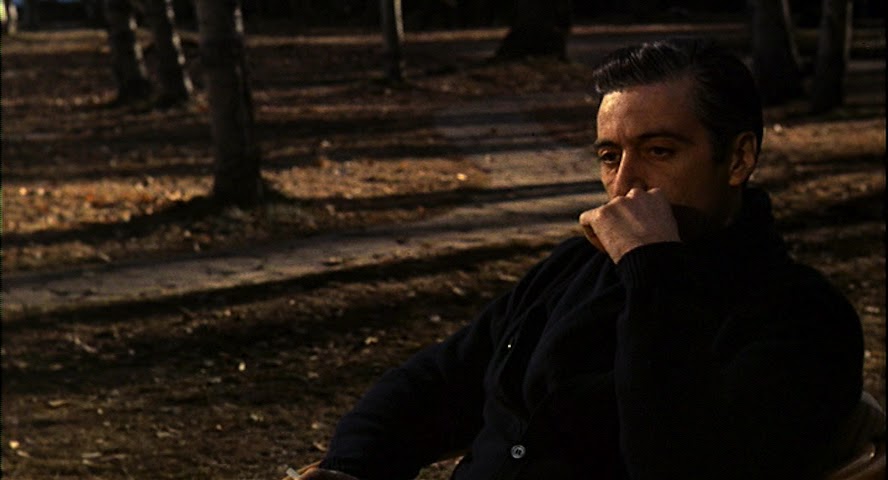
As Coppola’s camera drills into the face of Michael, cold, greying, alone in an autumnal garden – and how often the film simply studies the ruthless calculation of Michael, the man who understands every move everyone makes before they even make it – you know we are looking at a man who has damned himself, who has destroyed everything who claims to hold dear while working to protect it.

Brilliantly, Coppola intercuts the storyline of Michael’s damning collapse into complete moral damnation with the rise of his father. The Young Vito Corleone – played with Oscar-winning skill by De Niro who superbly channels the basic facets of Brando’s performance mixed with his own charm – arrives in America to find it a land as in thrall to the rule of the gangs as his hometown in Sicily. Like Michael in the first film, he is tempted by the world of crime and finds he has a natural aptitude for it: like his son he is a man who people follow, and the man who has the will to do what must be done. Like him he is an empire builder who commands respect and honour.

But unlike his son, he is a man capable of warmth, of empathy. He is man who can be playful, who respects others, who can feel forgiveness, who sees others as people, not just (as Michael does) simply being tools to be manipulated. Vito may be a murderer like his son, but he loves his wife, he loves his children and he can form bonds with them – natural, warm, loving bonds – that Michael can only dream of doing. For Vito it is all about the family, and providing for them is what inspires his actions. For Michael it’s words, but for Vito – it is everything.

Coppola masterfully intercuts these two storylines so they brilliantly comment and contrast with each other. Each step of Michael’s struggles to overcome the plots around him, are perfectly bookended with contrasting moments of Vito’s own rise to power, and the bonds of loyalty he builds even as Michael destroys those own bonds in his own life.

But then Michael is dealing with high stakes. While Vito’s early life shows Mafiosi running Little Italy, and calling the shots on the neighbourhood, a local tradition inherited en masse from the mother land, Michael moves in the worlds of government corruption. The empire we see Vito start to build is destined under his son to interfere in the rule of whole countries in Cuba, and commit unspeakable crimes to bring Senators and witnesses under their control in Senate Hearings into Organised Crime.

Coppola had intended the storyline around the reluctant family witness to be Clemenza, but Richard Castellano famously refused to reprise his role unless he was allowed to write his own dialogue. (The Godfather Part II was blighted with actor disputes: Brando refused to reprise his role in the film’s coda, while James Caan was paid more for a day’s work than he was for the whole of the first film). Instead the role was passed to Michael V Gazzo (Oscar nominated) as Frankie Pentangali, a loud-mouthed Capo manipulated into thinking he has been betrayed by the family. This threat hangs over the second half of the film – but Michael barely seems to break sweat under interrogation.

He has more problems with the Meyer Lansky inspired Hyman Roth (played by Pacino’s teacher, the legendary Lee Strasberg – also Oscar nominated). Roth it is who immerses Michael in a corrupt takeover of the Cuban government by the Mafia – an attempt foiled by the revolution – and Roth who becomes his nemesis, an old man in a hurry, who believes he can match the ruthlessness of this man without a soul. Coppola’s scenes of Cuban excess – not to mention the danger on the street as the country starts to tear itself apart – are of course masterful.

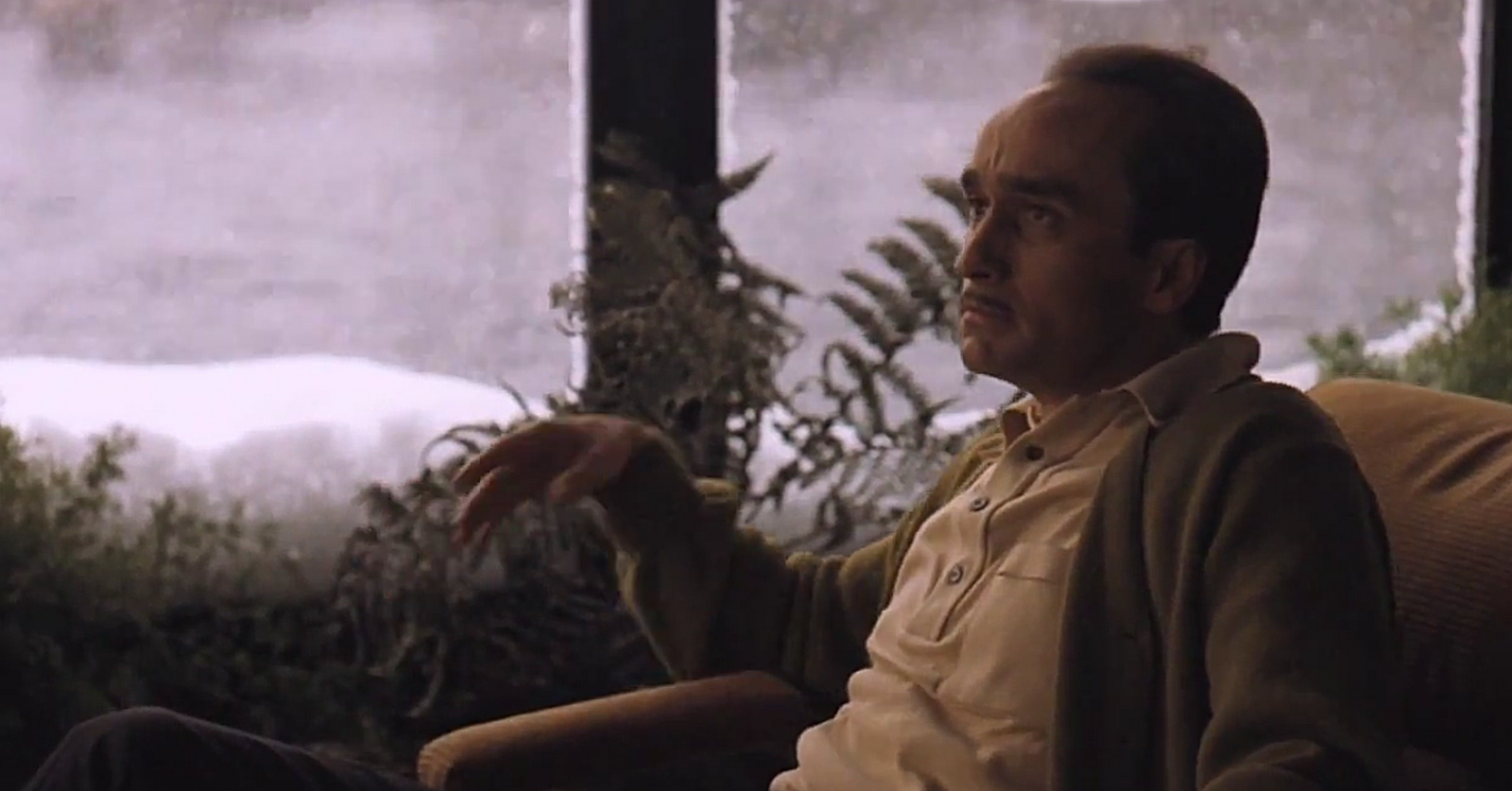
Cuba destroys Fredo, a snivelling John Cazale (inexplicably not nominated, despite extraordinary work here – never mind nomination he arguably should have won). Cazale’s Fredo is endearing but simple, a fundamentally weak man in a family of wolves, whose guilt is almost embarrassingly easily unveiled. Petulantly – but terrifyingly – raging late in the film at Michael at being passed over, he sits (sweaty and veins throbbing) in a reclining chair that bounces on each point he makes – a simple touch that makes him seem more and more impotent and pathetic every second.

The film echoes much of the structure of the first film, but here retold with a chilling coldness as the warm heart that – for all his crimes – Vito bought to this family is removed. The opening family event, Anthony’s confirmation, is a public show with no personality at all, where the Italians feel all at sea, their culture not known or cared for. Doors are closed on Kay with an alarming regularity – their marriage is so non-functional that even at the start they seem to have very little to say to each other. Vito returns to Sicily, as Michael did, but this time to extract revenge for his parents not to fall in love. The ending of the film culminates in a dark, ruminative and tragic hinged cleansing of Michael’s – crucially not the families but Michael personally – enemies.

The film is blessed with a brilliant array of supporting turns, from Diane Keaton’s soft-faced sadness masking deep and lasting resentment as Kay, to a flashily amusing tone from GD Spranlin as the greasily corrupt Senator. Robert Duvall does unsung but powerful work as a Tom Hagen coldly loyal, perhaps even in slight fear of his adopted brother, but despite his seeming decency willing to carry out truly terrible deeds for the family. Talia Shire (also nominated) is great as the rebellious Connie who pleads in vain for Fredo’s salvation.

This is all beautifully packaged together by Coppola into a film that meditates on the building and the destruction of a family, two stories neatly told together in parallel, with each echoing the other. It is a film shot at a riveting but controlled pace, that uses the classical filmic style of the original but mixed even further with the genius shooting of Gordon Willis to add a dark tinged 1970s style to ever shot. The film is an art house classic, but also a superb plot boiler, a gangster film that tells us profound truths about the attitudes that make us men and those that destroy us, just as it suggests that the darkness at the heart of crime will eventually consume the very thing it starts out to protect (even if it does take generations). While it is not as entertaining or engaging perhaps as the first film – it is perhaps an even greater achievement, a superb triumph of atmosphere and tone and a terrifying insight into the darkness that man can achieve.

For at the end Michael has won utterly. But he is also utterly defeated.

City of God (2003)

Violence is a way of life in Fernando Meirelles calling card sensation City of God

Director: Fernando Meirelles, Katia Lund (co-director)

Cast: Alexandre Rodrigues (Rocket), Leandro Firmino (Li’l Zé), Phellipe Haagensen (Benny), Douglas Silva (Li’l Dice), Jonathan Haagensen (Shaggy), Matheus Nachtergaele (Carrot), Seu Jorge (Knockout Ned), Jefechander Suplino (Clipper), Alice Braga (Angélica), Emerson Gomes (Stringy), Edson Oliveira (Older Stringy)

After Parasite’s win for Best Picture, it’s easy to remember the last foreign language film that made such a comparative impact at the Oscars – and it didn’t even win anything! Capturing the public imagination, City of God is that most American of things: a gangster film. Chronicling the life and death danger of the lawless slums of Rio de Janerio in the 1960s and 1970s, the film is an electric mixture of Latin and US film-making, a compelling shot of adrenalin that captured the imagination of the film-going public and made many Hollywood films look staid and dull. 

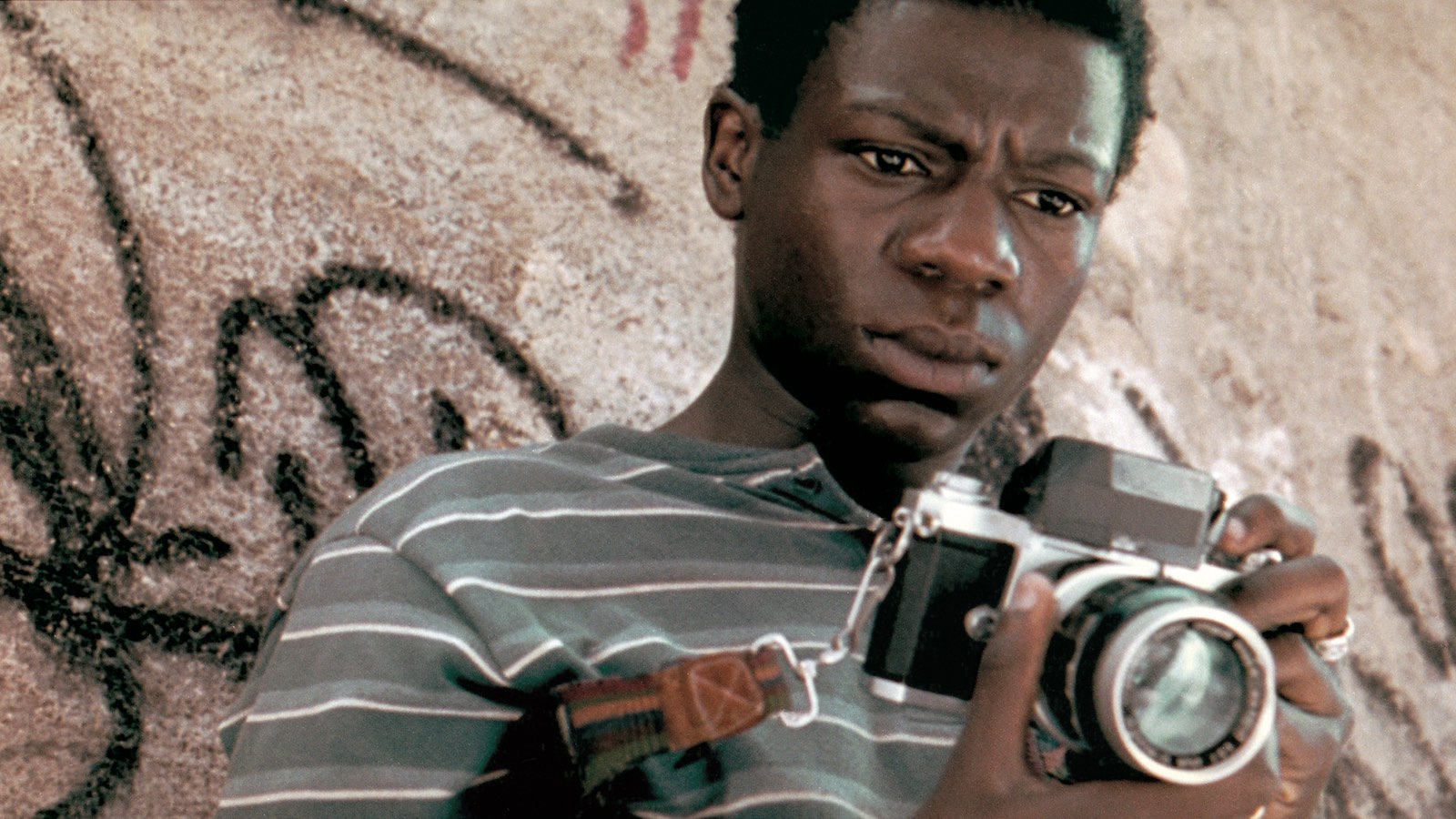
Shot on location with a largely non-professional cast, the film uses as our window into this world aspirant photographer Rocket (Alexandre Rodrigues), who has a front-row seat for an emerging (true life) gang war that erupts in the slumps between unstable psychopath Li’l Zé (Leandro Firmino) and his rival Carrot (Matheus Nachtergaele) and bereaved former sniper turned bus conductor and killer Knockout Ned (Seu Jorge). Starting at the end, the film rewinds through time and moves from perspective to perspective in a series of dynamic short stories that slowly merge and meld together to complete the film’s whole.

The film is directed by Meirelles (who got an Oscar nomination) and Katia Lund (who didn’t). Meirelles invited Lund to collaborate with him on the project, and is generally credited with the film’s look, editing style, frenetic pace and distinctive style of sharply exposed Latin colours mixed with the look of a rock video, all dynamic angles and immersive action. Lund bought her documentary realism to the film, as well as working closely with the actors and helping to shape their parts of the story. Agreeing to take a specific “co-director” credit probably cost Lund the nomination, and it feels inexplicable she was unrecognised today, even more so since Lund has pioneered several successful TV series based around the world of the film.

Controversy aside, it’s a high water-mark certainly for Meirelles who has never quite managed to match it since (The Constant Gardener remains his best work since, marrying the dynamism here with one of Le Carré’s most emotional and strongest stories). With its lashings of Scorsese, Tarantino and De Palma (among others), City of God remains a hugely engaging and engrossing gangster flick that really feels like it captures the threat and grimy reality of the streets of Brazil. Each section of the city we see feels like a lawless wild west, where guns rule, the police have no say and a whole population of ordinary people keep their heads down and just try to avoid getting caught (literally) in the crossfire. 

In this world violence is endemic, life is a short and brutish cycle of slaughter where danger leads inevitably to death, short-termism is the norm and a series of essentially childish young men see the excitement of crime turn into the brutality of a life of violence. None more so than the film’s vicious dark heart, Li’l Zé a young man with a flickering temper, a love of violence and death, barely able to relate to other people, unanchored in the world whose life is a self-destructive quest to be the biggest fish in his pond. Played with a swaggering panache by Leandro Firmino (and a chilling coldness as a child by Douglas Silva), the self-named Li’l Zé dominates the film as the sort of life-wire threat Joe Pesci used to be for Scorsese, never certain whether he will laugh or shoot.

Which makes him perfect for the unpredictability of the slums, where everyone wants to be a hood, drugs are rife and crime and murder is a legitimate way of living. The film splices together several short story narratives to illustrated this with Altmanesque confidence. Each section of the film is introduced as “the story of X”, all of them expanding from the starting story based around three wanna-be-hoodlums whose mixed fates reference everything from The Third Man to A Bout de Souffle. From this the film organically expands, using Li’l Zé as the fulcrum who hinges every other story around him towards disaster. It’s neatly cross-cut as well, starting the end before rewinding through a neat transition shot into the past to explain how we got where we are.

There seems to be no good deeds in the city. The most likeable character, Benny, is himself a gangster (and Li’l Zé’s only friend and restraining influence) who is fun-loving and cool while not adverse to theft and murder when needed. Kingpin Knockout Ned starts out as a man of good intentions, determined to clean up the town that has left him bereaved and hurt, but becomes consumed by the dark impact of violence. All the time, many of these gangsters are in love with their public image both the awe and fear they inspire in those around them as the most powerful people in the neighbourhood, and from their growing coverage in the press.

It’s a cycle that seems doomed to repeat itself, not least through the film’s introduction of “The Runts” a group of trigger happy pre-teen would-by gangsters, who roam through the streets waiting their chance to turn small stick-ups into a criminal empire. They are no more than following in the footsteps of Li’l Zé, shooting his gun and experiencing murder at their age and now zeroing on owning the whole slum. It’s the dark ambition of capitalism playing out on the streets.

The film works however as framing it around the jaunty, relaxed narrative of Rocket gives it the feeling of a series of shaggy dog stories and coming-of-age tales (and the film carefully mixes in among the gangsters plenty of reminiscences from Rocket around his teenager upbringing, his first love and his passion for photography). With someone as easy-going as Rocket as our guide, the film never becomes overbearing or depressing but instead as entertaining and engrossing. In a way it’s a shock to remember it features as much killing (including of a child) and mayhem as it does, as well as a world-weary nihilism too it that the odd person may escape the streets, but the general world there will never change. 

A staggeringly confident piece of film-making, City of God remains an exciting and compelling piece of cinema.

Quai des Brumes (1938)

Jean Gabin and Michèle Morgan are star-crossed lovers in Quai des Brumes

Director: Marcel Carné

Cast: Jean Gabin (Jean), Michel Simon (Zabel), Michèle Morgan (Nelly), Pierre Brasseur (Lucien), Édouard Delmont (Panama), Raymond Aimos (Quart Vittel), Robert Le Vigan (Le peintre), René Génin (Le docteur), Marcel Pérès (Le chauffeur), Léo Malet (Le soldat), Jenny Burnay (L’amie de Lucien)

It translates as “Port of Shadows” and it’s the shadows you are likely to remember in this noirish tinged classic of French cinema. A major success story when it was released in France, it also stands as some sort of milestone as being one of the few films condemned by both the pre-Vichy French government and Nazi Germany. More pleasingly, it’s also a firm testament to the brilliance and vibrancy of pre-War French cinema and the creative imagination of Marcel Carné.

Jean (Jean Gabin) is a soldier on the run, deserting his regiment to lead his own life in South America. Arriving in the port of Le Havre, he ends up in a run-down bar on the edge of the town where he meets the beautiful young Nelly (Michèle Morgan) a woman on the run herself from two unpleasant men. The first is local gangster Lucien (Pierre Brasseur) a braggart with whom Jean has already had a few run-ins. The other, even more dangerous, is Zabel (Michel Simon) Nelly’s godfather, a ruthless man under a genial façade who is obsessed with Nelly. Jean and Nelly fall in love, but how far will Jean go to put his own hopes for the future in doubt to protect Nelly?

Shadows dominate Carné’s beautifully atmospheric film. Jean emerges as if from nowhere on the road to Le Havre – nearly run over by the truck driver who picks him up. The bar is buried in the mists of the town. Shadows loom from every building and throw most of the city into a mysterious half-light. The action largely takes place in backrooms and cellars. Every frame tells you from the start things will not turn out well, with every decision carrying an underplayed air of foreboding. You can just tell every moment is putting another nail in the coffin of Jean’s chances of escape to that new life. The film is a brilliant slice of noir, expertly assembled with an artist’s eye by Carné, one of the most overlooked genius directors of his era. 

This darkened, gloomy style of the picture echoes the intentions of Carné and his regular collaborator, scriptwriter Jacques Prévert. The focus on the picture is the individual – in this case Jean and Nelly –trying to escape the control of both the state (the army) and also the domineering bullies that hold the local power (Lucien and Zabel). It’s no coincidence that Jean is an army deserter, and there is no sense of guilt on his part or even a fraction of recrimination is aimed towards him from anyone he encounters. Jean himself talks despairingly of the grim reality of killing and his wish to make his own choices. Carné was originally to make the film in Germany, but Goebbels was not having any film made in Berlin where the hero was an army deserter. 

So instead the film was shifted – wisely – back to France, not the French government was that happy either. With Carné and Prévert’s vision of a listless, tired, corrupted France where people like Jean simply refuse (it seems) to do what they are told, and where the few representatives of local government we meet are trivial non-entities, it’s not a surprise that the film was soon being blamed for sapping French spirit. As a sop to the French criticism of the script (and many of the films backers were desperate for its downbeat nihilism to be replaced by a more conventional upbeat, romantic ending) Jean does at least show respect for his army uniform – despite everything it’s never dirty, and when he takes it off its neatly folded. Today it seems even more like an impressionistic touch.

It’s the nihilism that runs through the film. We know Jean is good guy – he encounters a dog on the road to Le Havre that follows him with a singular devotion, unable to bear being parted from him – but the film itself has a shadowy feeling of despair and destruction throughout. Jean feels like a doomed hero from the start, a passive figure despite his bravado, who impulsively drifts from event to event – it’s when he chooses to become engaged that he dooms himself. Nelly is seemingly at first a femme fatale – and her reveal is a masterstroke of cinema – but really she’s as much a victim as Jean, someone very vulnerable, lonely and scared who wants a way out but can’t see how to even begin to find one. But then even the nemesis that runs through the film is low-key and trivial – Lucien is a joke, while Zabel for all his creepiness is also little more than a novelty gift shop owner.

The power of the film comes from seeing these two trapped figures surrounded by a world of darkness, listless depression and emptiness. And of course from the performances. The film is a reminder again that at this time Jean Gabin may well have been the greatest actor in the world. With a cigarette dangling, raffish cool under a surly salt-of-the-earth taciturnity, he turns Jean into the sort of enigmatic noir-hero years before the term was evented. Dripping with charisma in every frame, he’s both a Bogartish cynic and a De Niroish slice of muscle, a working class martyr. Nearly as good is Michèle Morgan, vulnerable and yearning into a surface of sexy cool. The two make a winningly attractive pair, not just sexy but with a growing romantic feeling.

It’s no wonder Jean throws himself into threatening and roughing up the pathetically weasily Lucien (Pierre Brasseur very good as a weak-willed bully who can lash out with the viciousness of a child) and squaring up to domineering Zabel. Michel Simon is terrific as the grandfatherly shop owner whose own dark obsessions and possible perversions become harder and harder to ignore. These two very different threats stand at opposite ends of the film and both contribute to its bleak ending.

Because of course Jean isn’t going to make that boat. The act of violence the film finally unleashes – after all that foreboding warning that it’s coming – is suitably shocking in a 1930s way, while the eventual fall of Jean is both fitting and also tragic in its low-key abruptness (it was later echoed by Brian de Palma in Carlito’s Way). With its gloomy atmosphere, its grim foreboding but also passionate love story at its heart, Quai des Brumes is a classic of French poetic realism.

White Heat (1949)

Top of the World Ma! Cagney excels in his final and greatest Gangster role White Heat

Director: Raoul Walsh

Cast: James Cagney (Cody Jarrett), Virginia Mayo (Verna Jarrett), Edmond O’Brien (Hank Fallon/Vic Prado), Margaret Wycherly (Ma Jarrett), Steve Cochan (“Big Ed” Somers), John Archer (Philip Evans), Wally Cassell (“Cotton” Valletti), Fred Clark (Daniel “The Trader” Winston)

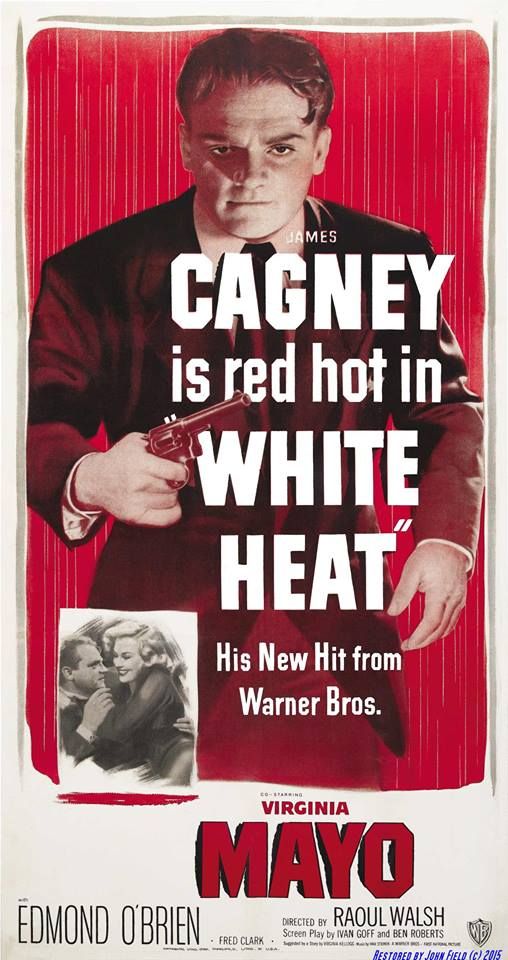
After winning an Oscar for Yankee Doodle Dandy, Cagney left Warner Brothers to form his own production company. When that folded, he swallowed his pride and re-entered the Warners’ fold. Money was driving the relationship: and it was the pay cheque that got Cagney to return one last time to the role of a psychotic gangster in White Heat. And if he had to go back, why not make that gangster the most psychotic of the lot? After all who else could make it to “the top of the world”?

Cody Jarrett (James Cagney) is the leader of a gang of criminals, to whom no act of larceny, violence or murder is taboo. A botched train hijack – during which Jarrett shoots two unarmed train drivers – attracts the full attention of the law, but Jarrett dodges justice by having himself sent down for a minor crime that happened at the same time as the train hijack. Not fooled, the Feds send an undercover operative, Hank (Edmond O’Brien), into the prison as Cody’s cellmate “Vic Prado”, tasked with getting the details of the train job and locating the mysterious fixer who set up the job. But such schemes didn’t take into account Jarrett’s psychological disturbance – powered above all by his obsessive, overwhelming love for his mother (Margaret Wycherly), the one dominant influence over his life.

Raoul Walsh’s film is a brutally efficient gangster flick which may be a little too long (the mechanisms of tracing and tracking a car are covered in far too great a depth…), but ticks all the boxes of the genre with exceptional skill and dexterity. It’s shoot-from-the-hip (literally) melodrama, and has all the internal logic of a schoolground game of cops and robbers, but Walsh’s direction is pin-point perfect, and the film is based around a series of stunning and effective set-pieces and crammed with a sort of deep (even disturbing) psychological insight that puts it miles ahead of many of films of the genre. Walsh also throws in some of the finest stylistic touches of film noir, with Virginia Mayo’s femme fatale, darkened frames, dubious morals among even our heroes (one of whom is a practised deceiver and liar) and a whirlwind monster at the centre.

But the film soars and flies because of Cagney, and the no-holds barred sharpness of Jarrett. The film revolves above all around the deep emotional emptiness and need in Jarrett, which sees him lean on O’Brien’s Falon (“like my kid brother!”) and, most famously, fixate like a toddler on his mother. Freud would have had a field day with Jarrett’s obsessive love for his mother, with Cagney turning him into the little boy lost. Consumed with headaches, he literally climbs into her lap so she can comfort him. The slightest criticism of her leads to instant reaction (not least knocking his wife off her chair – how can the poor woman compete with this beatified mother figure?)

This culminates in one of the film’s most famous sequences, as Jarrett digests in prison the news that his mother has died. Sitting in a crowded dining room, he passes word down to a new inmate for an update on his mother. Slowly the question is passed down the line of prisoners – and with trepidation the news of her death is passed back. And here is the Cagney magic. He seems too stunned at first to take it in then a series of low moans explodes into a titanic screaming fit, matched only by the violence he takes out on all who stand in his way. Walsh and Cagney kept the response secret from the entire room of 300 extras, all of whom seem as stunned as us by Jarrett’s total lack of control, his complete consumption in grief.

Cagney’s performance is just about perfect, a simmering mummy’s boy who is also a charismatic leader of men. A dangerous psycho who seems aware that he is not quite normal. A lonely man desperate for love. And Cagney has so many beautiful touches that could only be him – the quip as he plugs with bullets a car boot with a luckless gang member in it, the sly kick away at Virginia Mayo, that screaming sequence. It’s a performance of complete power and charisma, the gangster psychoanalysed and reduced to his bare essentials for a personality barely functional and obsessed with his mother.

Margaret Wycherly is similarly excellent as that mother, as sly and self-confident as her son and clearly as accomplished at leading a gang as him (I love the smug half smile she gives herself after evading the FBI tail she picks up). Edmond O’Brien does sterling work in the “straight man” role of the undercover cop, walking a line between judging and even perhaps sorta liking Jarrett a bit (even if he does get saddled with the mandatory “that’s the moral of the story” final line). Virginia Mayo is a wonderful mix of sex appeal and needling cheapness as Jarrett’s two-faced wife.

The film culminates in one of the most famous endings of all time – one you’ll know even if you haven’t seen the film – as the law catches up with Jarrett at last in a shoot-out at a gas plant. Finally driven mad by betrayal and abandonment – although lord Cagney’s performance makes clear that only a tenuous grip on sanity has been present in Jarrett from the start, fractured beyond repair by the loss of his mother – Jarrett insanely shoots at the police from atop a burning gas plant, before immolating himself (and most of the factory) with the cry “Made it Ma! Top of the world!”. As Jarrett heads down to a firey hell, so Cagney signed off on the gangster flick with perhaps the most dangerous, disturbed and also intriguing gangster on film. It’s such a mighty performance that the Hays-Code mandated final line of tutting disapproval at the criminal life from O’Brien feels even more forced and unnecessary than ever.

The Irishman (2019)

De Niro and Pacino under digital facelifts bring to life Scorsese’s meditative The Irishman

Director: Martin Scorsese

Cast: Robert De Niro (Frank Sheeran), Al Pacino (Jimmy Hoffa), Joe Pesci (Russell Bufalino), Ray Romano (Bill Bufalino), Bobby Cannavale (Felix “Skinny Razor” DiTullio), Anna Paquin (Peggy Sheeran), Stephen Graham (Anthony “Tony Pro” Provenzano), Stephanie Kurtzuba (Irene Sheeran), Jesse Plemons (Chuckie O’Brien), Harvey Keitel (Angelo Bruno)

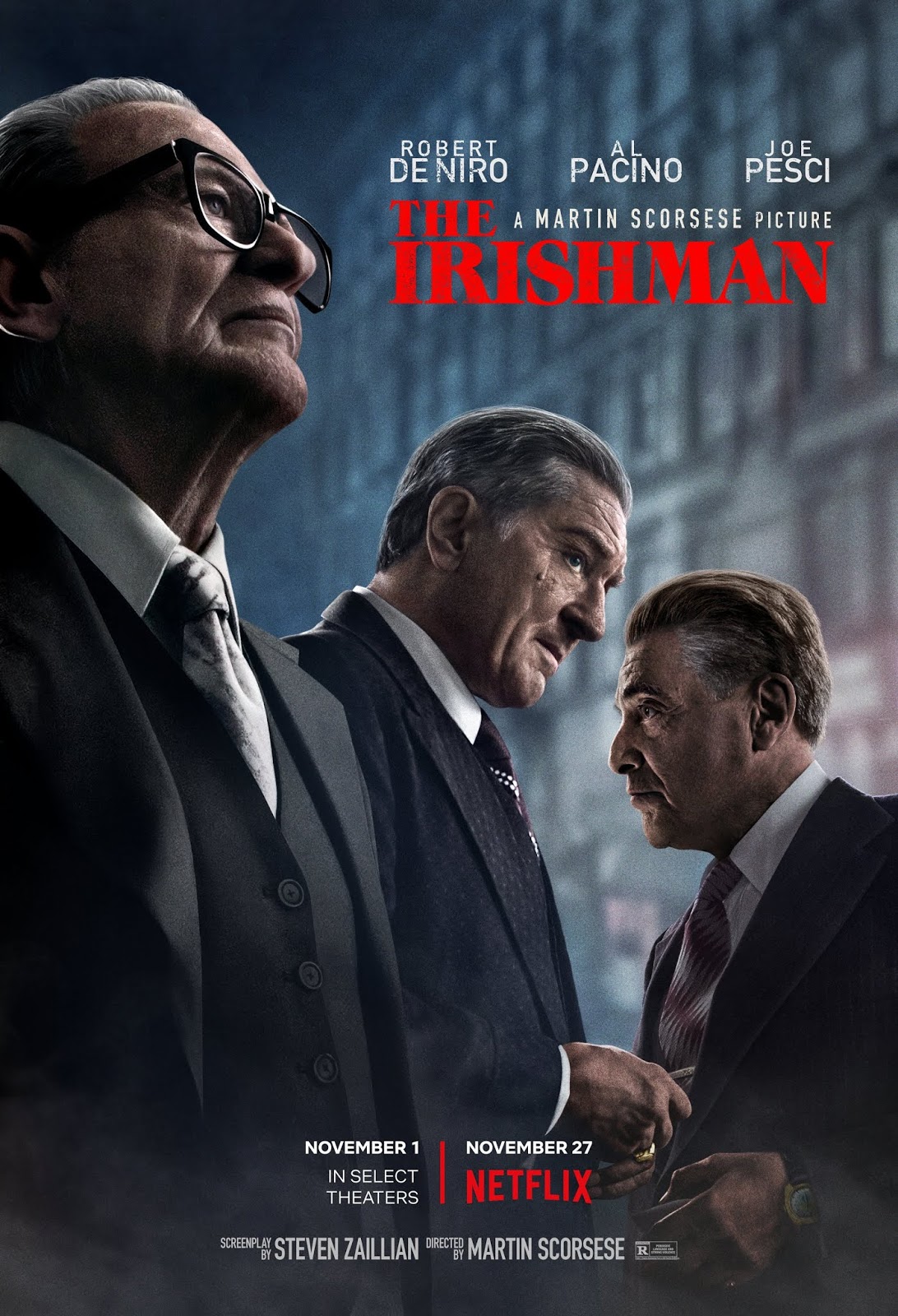
Scorsese had wanted to make this film for almost 20 years but it took the mega bucks of Netflix (to the tune of over $150 million) to finally bring it to life. With complete creative control, we get Scorsese’s epic as he saw it, an over three-and-a-half hour long sad meditation on the life of the gangster. For the first time in almost 25 years, Scorsese is reunited with his muse Robert De Niro – appearing here under various digital facelifts to tell the story of Frank Sheeran, an Irish member of the Mafia, and his relationship with infamous Teamster union leader Jimmy Hoffa (Al Pacino). Was the film worth the effort to make it?

I first saw The Irishman in the cinema. I now feel that was a mistake. This is a film that needs to be soaked in like a warm bath. Like reading an involving novel, it needs to savoured and consumed at your own pace. In the cinema in one take – with no intermission – its runtime is punishing. It’s the worst form of criticism but in one take, the film can overstay its welcome. In fact it can become a little boring.

Re-watching the film a year later at home – where I could break it up into three chunks as (I feel) so many people have, it becomes a richer and more engrossing viewing experience. Because this is a totally different beast to Scorsese’s previous gangster movies, a quiet mood piece, contemplative, sad, a genuinely tragedy-tinged, doom-laden reflection on the emptiness and costly violence of the gangster life, and the empty shells it leaves of the people in it. And at its centre, a man so dehumanised by war, by obeying orders, so lacking of personality, so incapable of emotion it seems, that he ends the film as a blank, lonely, abandoned slate. It’s a real, and deliberate, counter-point to his electric gangster films of the past, from Mean Streets via Goodfellas to Casino and the cartoonish The Departed. Here the price of doing business is your soul – and when that final bullet comes (as it inevitably will) you have nothing to show for it.

It makes for a late Scorsese epic – nearly a TV mini-series – slow-paced, wintery and a perfect counterpoint to Goodfellas. There crime is ruthless but you can see it’s also fun. Here it’s hardwork, unrewarding and inevitably leads to a bloody demise. Time settles on the shoulders of its leads like deadweights and their is a weary sadness as they trudge from one feud to another, each of which can only be resolved by putting another body in the ground. And everyone knows that the next feud might well mean it’s their body that will end up six feet under.

Frank Sheeran is a drained automaton, a human being possibly in name only, who takes on violent acts without question, who can kill without remorse. This is the very picture of a second-tier career criminal, a man who takes orders and carries out missions. De Niro brilliantly creates an sociopathic monster, a man almost devoid of his own personality, with little to him but a taciturn killer. Sheeran is a tough character to relate to or understand – but that’s because he’s not really a character at all. Interestingly he doesn’t have the sort of flaws that undermine other Scorsese gangsters, like Henry Hill. His flaw is in fact his entire existence. His sociopathic acceptance of violence, his thoughtless carrying out of killing, his inability to relate to human beings. It’s what leaves him alone, unloved and isolated in a care-home. This is a man who can barely muster much emotion about killing his best friend, whose quiet, placid nature perhaps only hides his lack of capability of even experiencing emotion.

The Teamster union politics content of the film is often dense and hard-to-follow. At times it tips into being not that interesting. So it’s tough that it takes up almost two hours of the film’s run-time. It’s a sign of the films overindulgence. At the end of the day I’m not sure it adds much to your overall impression of the film. But reviewing the film perhaps that’s the point. The very shallowness and even pettiness of this feuding – not to mention the naked, unromantic greed – over how to distribute union pension money, explodes the myth of any romance to this crime. These are blue-collar conmen, using violence as a way to conclude a board meeting.

As Jimmy Hoffa, Al Pacino is the best he’s been in literally decades – the film uses his “hoo hah” shoutiness to great effect, but Pacino also makes Hoffa an unexpectedly vulnerable and lost figure amongst all the politics, a showman who overestimates his importance and invulnerability. The entire film is shaped (we discover) around a series of flashbacks from Sheeran on a road trip on what turns out to be the final days of Hoffa’s life (the film includes a solution to Hoffa’s famous disappearance). De Niro and Pacino spark beautifully off each other as a bond forms between them – the films lingering on their growing friendship (and at times strangely homoerotic intimacy) one of its strongest elements, as well as carefully demonstrating how disloyalty is a crucial survival skill in this world.

The film strongest elements are the doom-laden nihilism of the gangster life. Told by Scorsese deliberately without flash and excitement, with a score so sparse that long stretches of the film echo with silence, there seems to be no fun at all in the gangster world, instead a series of mundane men sitting in small restaurants, talking about admin and punching the clock. Many of the gangster characters are introduced with on-screen captions that detail the dates and natures of their violent deaths. It’s the exact opposite of what you might expect from a Scorsese film. It’s a director showing the dark flipside of his previous films, of the way the gangster life is a dwindle through a dull life marked with moments of danger, where death is a sudden violent explosion that ends a life too soon.

And it leaves families in a mess. Anna Paquin speaks very few words as Sheeran’s adult daughter, but only because her silent disapproval and disgust at her father’s life becomes the haunting of Sheeran’s whole life. His daughter’s silent disgust is a recurrent theme (even from childhood, she is repulsed by his capacity for violence and his heartlessness). Sheeran’s attempt to break through her silent disapproval, to get her to acknowledge him in some way becomes a large part of the sad coda of Sheeran’s life. It’s all part of Scorsese’s message: what is the point of a life like this that brings wealth and power, but also leaves you broken, lonely and despised by everyone around you?

And you can’t argue with the skill with which this quiet, meditative, grim and slow exploration of the gangster world is put together by Scorsese – or the artistry that every moment of the film has, or the control of the director. It’s beautifully shot and edited. It’s pace is at times glacial, but this is resolved by watching at your own pace on Netflix. It’s not a film to be binged (ironically Scorsese has made a television novel that he wants you to watch in one go) but instead one to be savoured and considered. That’s where it’s strengths are.

There are also excellent performances. Joe Pesci, lured from retirement, is outstanding. He’s a revelation as a sort of cool, calm, grandfatherly fixer a million miles from the lunatics he played in Casino or Goodfellas. Pesci quietly dominates several scenes, using stillness and quiet like a vicious badger who knows he only needs to swat once to remove his foes. This is a performance of beautifully judged grace and stability, a calm reflectiveness that carries a vicious coldness at its heart. Russell may prefer a peaceful solution – but he will order your death without thinking twice. Also excellent is Stephen Graham as the sort of dangerously impulsive bully Pesci played to such great effect in those earlier movies.

And those famous digital facelifts? Well they are fine technically. You ignore them after a while. But no matter of digital trickery can make De Niro move with the gait, physicality or certainty of a man more than 30 years younger than he is. As we watch De Niro (supposedly a killer in his prime) shamble forward, or gingerly give a rude grocer a kicking, you can’t forget that he’s really a much older man. To be honest the film would have been just as good – maybe better – with actors the correct age filling in for the younger roles. Watching it again, I’m never convinced that I am watching a De Niro the age he was in Mean Streets or even Goodfellas. To be honest, at times the facelifts don’t look a lot more convincing than hair dye and a little tape to stretch the skin back.

In fact the digital facelift at times is almost a metaphor for the film: it’s a film where age and time are a constant presence. Knowing the lead actors are old men, trying to look young kind of sits with that. These are not dynamic, triumphant young men. But then they never were. These are men who feel the burdens of the world on their shoulders every day. Who at the end of their lives will have nothing to show for it over than a satisfaction that they managed to live slightly longer than they expected. Whose friends and family will hate them and who find they sold their souls and gained nothing but dust in exchange. Long, slow, sometimes trying – but on a second rewatch, also compelling, thought-provoking, heartfelt, insightful and inspiring.

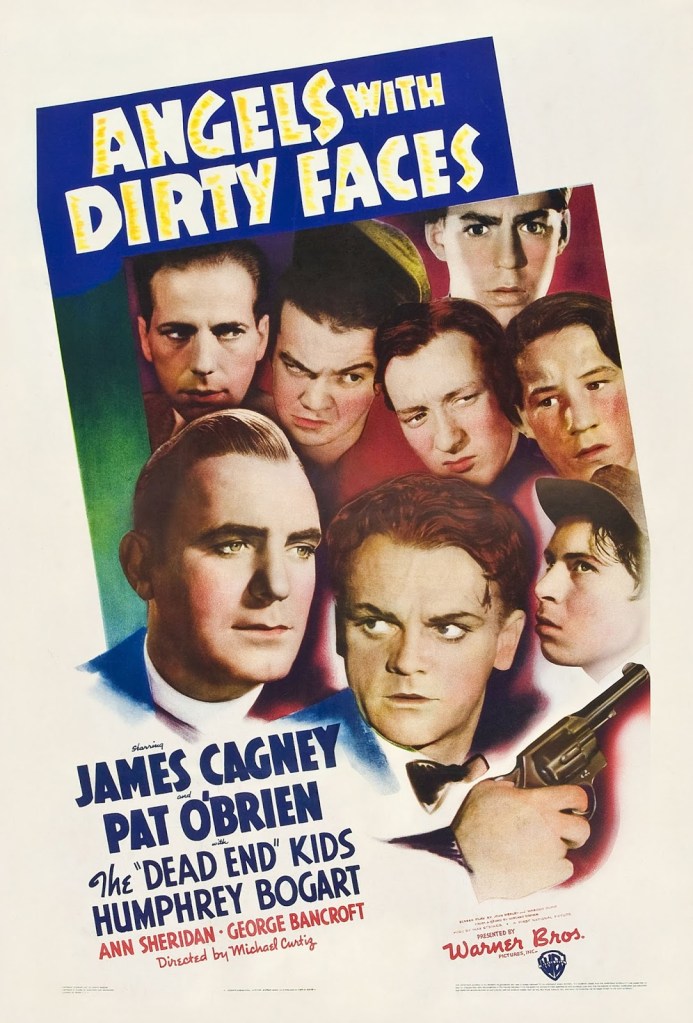
Angels with Dirty Faces (1938)

Angels with Dirty Faces (1938)

Cagney lets rip in this classic gangster film which is all about its barn-storming ending

Director: Michael Curtiz

Cast: James Cagney (Rocky Sullivan), Pat O’Brien (Father Jerry Connolly), Humphrey Bogart (Jim Frazier), Ann Sheridan (Laury Martin), George Bancroft (Mac Keefer), The Dead End Kids

It has perhaps the most famous ending of all gangster films. Faced with his final few minutes on Death Row, charismatic gangster Rocky Sullivan meets with his oldest friend, Father Jerry O’Connell. Rocky is a hero to the kids on the block, and Father Jerry pleads with him: go the chair yellow and just maybe you can help turn these kids away from a life of crime. No way Rocky is going to lose his pride – until the final few moments, when suddenly he collapses into a morass of whimpering fear and terror. Did he decide to listen to Jerry’s pleading? Or did he really go yellow after all?

It’s the question that you are meant to take from Angels with Dirty Faces, a superb example of the gangster genre, brilliantly directed by Michael Curtiz. And it works so well because quite simply no other actor in the history of film could have pulled it off as well as Cagney does. If you have any doubts about whether Cagney deserves to stand as one of the truly greatest film actors of all time, this film erases them. 

Cagney is simply superb as Rocky. Has there ever been a gangster who was so charismatic, so magnetic, so strangely decent in his way, who plays in the corrupt world of crime but has his own absolutely rigid moral code? Few other actors could have you so ready to believe he would ruthlessly pull the trigger at the drop of the hat, and yet would still be someone you’d consider inviting round for dinner. Every single scene hinges on his brilliance as a performer, and his interaction with each character is superbly judged. He is an unapologetic bad guy, a man who openly says that he isn’t sure he is capable of empathy in the same way as normal people, yet he also has a fierce sense of loyalty and doesn’t hesitate to take the rap for others or to put himself in harm’s way to protect those he feels loyalty towards.

It’s all part of the intriguing moral puzzle of the film, that rather bravely inverts the idea of good and evil that the Hays Code mandated. On the surface this is a Board approved plot of two kids from the wrong end of the block, one who ends up good one who ends up bad, with the bad one getting his comeuppance and the good saving souls all around. But scratch the surface and actually this is a film that is making far more subtle points about a world that is in shades of grey. For starters, the most faithful and loyal character in the film is the hoodlum Rocky. 

But more than that, the film stresses that the margin between priest and criminal is very thin indeed. Repeatedly it’s stressed that Jerry is only a priest – rather than a fellow criminal graduate of the reform system like Rocky – because he was able to run away faster from the police during their days of mayhem as tearaway boys. It only takes chance and a few lucky turns, and the priest owes his ability to find God and the good life solely because the criminal happily took the whole rap as a Kid. The priest and the criminal work almost hand-in-hand trying to encourage the local kids to engage more in their community (even if they are teaching subtly different lessons) and their friendship is unaffected by the events of the film. 

Much as the film is building a traditional narrative of crime being attractive but not in the end paying, it is also subtly suggesting that good and evil perhaps coexist in harmony more than we might think (or might be comfortable to acknowledge). Which brings us back to the title I guess: Jerry is an angel with a dirty face from his flawed childhood, but in a way Rocky himself is an angel whose face is covered with the muck of crime. Both characters have lives that have crime and misdemeanours behind them, even if they have eventually chosen different routes.

Curtiz’s film allows this commentary to bubble subtly and cleverly under a host of wonderful scenes and carefully composed sequences. The highlight of which might well be an extraordinarily well made extended shoot out scene, as Rocky faces his final show down with the cops after one crime too many. But it’s a peak of a series of superb sequences that make excellent use of framing and intent. Curtiz even makes the Dead End Kids – a group of, I’ll be honest, rather irritating child actors, whose fates I find it hard to get worked up about – reasonably engaging. There are several other fabulous performances, not least a wonderfully snivelling turn from Humphrey Bogart as a cowardly and corrupt lawyer with more than a few criminal connections.

It all comes back to that final sequence as events catch up with Rocky and the electric chair awaits. Cagney is simply brilliant in this scene, a perfect steel front of composure and pride that we are invited to question whether it cracks or he does so deliberately. Curtiz shoots the sequence in shadow play (apart from one shot of Rocky’s hands clinging desperately to a radiator) – to meet the Hays Code rules about what you could and couldn’t show on screen, the chair being a no – but it works superbly and Cagney’s powerhouse but also restrained performance nails it perfectly. While you like to think Rocky has done the “right thing” you can’t be sure – and it’s that question that hangs over it that helps cement this as a brilliant inversion of the black-and-white morals of the era: we like to think decency has prevailed, but maybe it’s all just being yellow after all…

The Public Enemy (1931)

The Public Enemy (1931)

Cagney’s first landmark gangster film, still a propulsive and gripping thriller

Director: William A Wellman

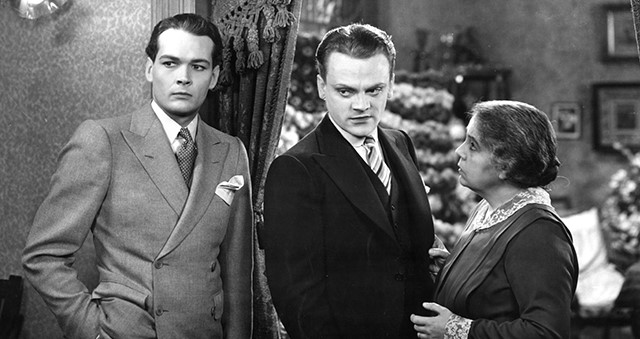
Cast: James Cagney (Tom Powers), Jean Harlow (Gwen Allen), Edward Woods (Matt Doyle), Joan Blondell (Mamie), Donald Cook (Mike Powers), Leslie Fenton (Nails Nathan), Beryl Mercer (Ma Powers), Robert Emmett O’Connor (Paddy Ryan), Murray Kinnell (Putty Nose)

The gangster film has been popular as long as there have been movies. And if there was an actor that first became synonymous with the hair-trigger violence of the underclasses, it was James Cagney. The Public Enemy was Cagney’s big-break, a career shift from the song-and-dance films that had been his bread-and-butter before this. Cagney seizes the opportunity with relish – and helped set a template that everyone from Tony Montana to Tommy Vito have followed ever since.

Tom Powers (James Cagney) is an impulsive, violent, ambitious small-time crook who gets more and more embroiled in the world of crime, from his boyhood in the 1900s to the introduction of prohibition in the 1920s. Partnered with his lifetime-long best friend Matt Doyle (Edward Woods) – and despite the disapproval of his straight-laced brother and war vet Donald (Mike Powers) – Powers rakes in the crash as an enforcer for Paddy Ryan’s (Robert Emmett O’Connor) liquer business. But when the gang war breaks out, the dangerously impulsive Powers finds himself in the middle of a situation he can no longer control.

Cagney amazingly wasn’t the first choice for Powers. In fact, he started shooting the film playing the terminally dull nothing-part of Matt Doyle, with Edward Woods playing Powers (the two child actors at the start of the film playing their young versions, specially cast for their resemblance to Cagney and Woods, remain noticeably the wrong way round). Cagney’s charisma tore up the screen in the rushes – far overshadowing the bland Woods – and the call came from the top: “Swop these guys round!” And so film history was born.

As silence turned to sound in the movies, so the style of acting that the movies required grew and changed. Originally sound was the preserve of the well-spoken, crystal clear, the mic needs to capture every word, diction of the classically trained actor (half the cast in the film continue to speak with cut-glass, Mid-Western clarity). Cagney was something else. A little spitball of energy, who rushed through the lines, who threw in his own accented casualness, who dropped letters from words, who felt real and alive. 

It’s astonishing watching this what a brilliantly modern actor Cagney is: the little psychological touches that speak to Powers’ many hang-ups and insecurities. The commitment to any bit of business required. The method dedication to doing things for real (not least his insistence that at one point Donald Cook punches him for real). His Powers is a brilliant portrait of searing nervous energy – that lifetime of dance training paid off in spades in Cagney’s mastery of physicality – and ruthless thoughtlessness, spiced with a touch of smartness (“Your hands ain’t so clean. You killed and liked it. You didn’t get them medals for holding hands with the Germans” he sneeringly tells his brother). It’s a masterful performance of magnetism that holds so much influence with films to come you’ll retrospectively see touches of Cagney in nearly every dangerous psycho played by actors such as Pacino, De Niro and Pesci.

Wellman’s film is also hugely influential, practically laying the ground work for the structure of gangster morality tale – from those first trivial involvements in crime, the getting deeper, those terrible relationships (often with a girl with a pauncheon for dangerous men), the isolation and the fall. Wellman shoots it with a brilliant eye for action – there are majestic chases, gun fights and punch ups that still entertain today (for all their slightly old fashioned look). As a piece of pulp story telling this is damn high class.

But the other trick is that some of the best scenes are those away from the action. Powers clashes with his brother are brilliantly done. An early sequence in which as a boy Powers wordlessly takes the strap from his strict father (a scene that is echoed years later in Scorsese’s Goodfellas, with Powers a clear prototype for both Tommy and Henry in that film) is brilliant. Most famously of all, the breakfast sequence when a bored and frustrated Powers shoves a grapefruit in the face of the (legitimate) complaints of a girlfriend. Watching it today it’s amazing to think how influential this scene was – audiences hadn’t really seen anything like it.

And it works as a dance with the devil because Wellman and Cagney both know that we might not want to spend time with Powers, but a part of us wants to see this working-class grasper and charismatic fun-loving criminal to succeed and get-ahead. You end up rooting a bit for him – even though you know, with the Hays Code in place, that Powers won’t still be standing by the end of the film. The executives were so worried about audiences being a little too keen on Powers, they added a sanctimonious message about the dangers of crime to the start of the film.

Fast-paced, pulpy, violent and full of excellent scenes with a real eye for how America grew and changed over the first 25 years of so of the 20th century, Wellman’s Public Enemy is a masterclass of film-making – and about a zillion times more influential than many of the prestige films released at the time. But it also works so well because Cagney is one of the best there is, not just in the gangster films, but films themselves. A performer you can’t tear your eyes away from who turns a pulp character into a sea of complexity, he’s as much one for the ages as the picture.

Goodfellas (1990)

Pesci, Liotta and De Niro embrace the life of crime in Scorsese’s masterpiece Goodfellas

Director: Martin Scorsese

Cast: Ray Liotta (Henry Hill), Robert DeNiro (Jimmy Conway), Joe Pesci (Tommy DeVito), Lorraine Bracco (Karen Hill), Paul Sorvino (Paulie Cicero), Frank Sivero (Frankie Carbone), Frank Vincent (Billy Batts), Tony Darrow (Sonny Bunz), Mike Starr (Frenchy), Chuck Low (Morrie Kessler), Frank DiLeo (Tuddy Cicero), Samuel L. Jackson (“Stacks” Edwards), Catherine Scorsese (Tommy’s mother), Michael Imperioli (Spider), Debi Mazar (Sandy)

If there is one film loved more than any other in Martin Scorsese’s filmography, it’s probably Goodfellas. It’s a seismic high-point, not just in its genre – the greatest gangster film ever made since The Godfather Part II – but in film-making, it’s influence and legacy seeming to hung over everything ever since, not least the next-great gangster epic The Sopranos (with which it shares a whopping 27 actors, most notably Lorraine Bracco, Michael Imperoli, Frank Vincent and Tony Sirico). But, on top of all that, Goodfellas works so well because it is a masterpiece of both style and substance, a superbly inventive film that uses all the tricks of cinema to tell a fascinating and brilliantly paced morality tale.

“As far back as I can remember I always wanted to be a gangster”. So says Henry Hill (Ray Liotta), our Irish-Italian guide (and those heritage distinctions are very important in this world) who joins the wrong crowd as a teenager in the 1960s and winds up a strung-out, cocaine-addicted wreck in the 1980s caught by the cops and turned for states evidence, fleeing to an obscure life in witness protection with his long-suffering wife and sometime-accomplice Karen (Lorraine Bracco). Along the way though, Hill loves the glamour and greed of the gangster life, it’s excitements and boys-club rules, guided by his mentor the terrifyingly ruthless Irish-Italian Jimmy “the Gent” Conway (Robert DeNiro), psychopathic fellow gangster Tommy DeVito (Joe Pesci) and menacingly quiet capo Paulie Cicero (Paul Sorvino – never better). 

Scorsese’s film is an electric celebration of movie making, partly why it’s so beloved of film buffs. Scorsese marshals all the weapons in his considerable arsenal as filmmaker. We get jump cuts. We get freeze frames (each marking a significant moment in Hill’s life). We get sharp editing. We get unreliable narration. We get dizzyingly brilliant long-shots and tracking shots (none more so famous than Henry and Karen’s arriving at a club – from travelling from the back door, through the kitchen and into the best table at the club all in one wonderful shot). We get Scorsese’s brilliant use of music, his perfectly placed camera, his brilliance in knowing when to hold his shots, his mastery of lighting (an early hit is so bathed in red it feels like digging a grave in hell). This film was the master at his ultimate height, inspired by everything from the New Wave to old-school 1930s gangster films.

He was also perfect for the material, as no one perhaps understood this world better than Scorsese: and that’s the seductive good and the terrifying bad. Back to that shot of Karen and Henry arriving at the club. The whole sequence – the deference with which Henry is treated, his cool comfort with power, the exclusiveness and special treatment of the whole thing – that smacks of the sort of ultimate party we can only dream of. For most of the first half of the film, Scorsese totally understands why this life is so appealing and exciting. Sure there is violence. There’s danger. But there’s also comradeship. There’s doing anything you want all the time (so long as you stick within the clubs rules). There’s being treated by a God by those around you. Who wouldn’t enjoy that? Is there any wonder Henry saw this as he was growing up and, more than anything, wanted a part of it? In voice-over Karen makes it clear, all this violence and power and being asked to hide guns by your boyfriend is sexy. Who cares about the implications, give me a slice of that pie.

Without understanding this glamour, the film could never show the dark depths of the underbelly of gangsterism. Strangely, perhaps because this is a blue-collar film (the highest gangster we see, Paulie, is still only a few steps away from the street), it’s easier for viewers to give these guys a pass for their behaviour (in a way no one did with Scorsese’s spiritual sequel, his white-collar crime movie The Wolf of Wall Street). Don’t be fooled. Scorsese hints at it with the opening prologue, with Henry, Jimmy and Tommy pulling over a car to brutally finish off (with a spade, knife and gun) a body of a yet-to-be-revealed victim in the back of a car. These ain’t good guys, and for all Henry is shocked by the capacity of violence from the other two he does nothing to stop it.

Because violence is what powers this film, it can happen anytime, it can happen to anyone and your killers always come to you smiling as friends. The gangster code preaches all the time about never betraying your friends, never ratting. But these guys stab each other in the back all the time. There is no honour among thieves. Every hit comes seconds after friendly enquiries and laughs. When Jimmy masterminds a brilliant heist, so paranoid and distrusting is he of those he did the crime with that he has them all killed (a masterful cut montage). Later in the film, strung out on cocaine and terrified of the law Henry treats every meeting like it’s the entrée to him being killed. Even Karen isn’t safe – witness the brilliantly oblique scene late in the film when Jimmy offers her some coats ‘they’re just round the corner’ – is it a hit? Are the coats real? Who knows…

Loyalty is only extended at best to one or two figures. Jimmy (Robert DeNiro in imperious form, terrifyingly cold and also generously ceding the best moments to his co-stars) seems to have a never-ending patience for the psychopathic, instinctive violence of his best friend Tommy. Played with a petrifying Oscar-winning flourish by Joe Pesci, Tommy is like a murderous Rumpelstiltskin, a brutal killer and wired murderer who can explode at any moment. Witness the famous “Funny how?” scene – it plays superbly off Tommy’s unpredictability, his hair-trigger possibility to either laugh with you or shoot you. Much of the film’s problems for our ‘heroes’ – not less that body in the boot of the car – stems from Tommy’s capacity for thoughtless violence. 

Scorsese directs these scenes with such unbearable tension, that any romance of the early sequences of the young Henry Hill disappears. How could you even begin to imagine spending time in a room with these violent, soulless men who kill each other at the drop of a hat? Despite all this, never for one moment until the very end does Henry even consider leaving this world behind. Like so many of the characters in The Sopranos the addiction of this world of power is just way, way too much and if that means a short life then, hell, so be it. Even at the end on witness protection, Henry’s punishment is that he is forced to live a normal life like a no-body (or rather like the rest of us) while balancing the guilt of betraying the people he left behind. Loyalty is a complex thing, but always one-sided in the Gangster world.

As Hill Ray Liotta gives the finest performance of his career. Henry is part wide-eyed naïve dreamer unaware that his dream is a nightmare, and loving every minute of it. Liotta’s Hill is an addict to everything he touches – danger, violence, infidelity and most damagingly of all the mountains of cocaine he is consuming by the 1980s. Compared to the other gangsters, he’s a decent guy – but only in the sense he hesitates (slightly) in the face of murder. He’s selfish, greedy, strangely likeable oddly sympathetic but you feel he gets everything he deserves. Just as good is Lorraine Bracco as his wife Karen, too aroused and infatuated with the bonuses the crime life brings her to listen to her conscience. 

Scorsese’s film is a masterpiece that completely understands that the gangster life is, at the end of the day, a series of boys who never grew up who espouse concepts like duty, honour and faith but live lives of greed, petty murder, vengeance and savagery. Sure walking on the dark side can be fun, can be exciting and can bring you some immediate bonuses. But it also leaves your soul as cold as Jimmy’s or as blackly non-existent as Tommy, the sort of guy who can pour affection on his mother while shrugging off her worries about what that terrible smell is in the boot of his car. These guys are having fun for half the film, until they aren’t, but don’t get seduced by the fun of it. Scorsese knows only too well that they’re going where the film started: a red light washed grave in the middle of nowhere.