Category: Gangster film

Midnight Run (1988)


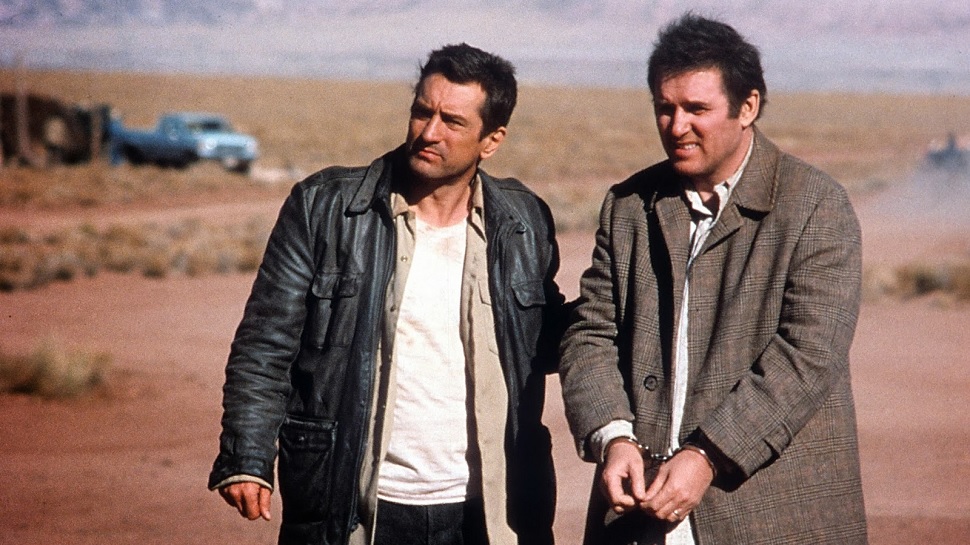
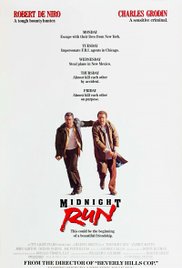
Robert De Niro and Charles Grodin go on the road in terrific buddy-movie action comedy Midnight Run

Director: Martin Brest

Cast: Robert De Niro (Jack Walsh), Charles Grodin (Jonathan “The Duke” Mardukas), Yaphet Kotto (Special Agent Alonzo Mosely), John Ashton (Marvin Dorfler), Dennis Farina (Jimmy Serrano), Joe Pantoliano (Eddie Moscone), Richard Foronjy (Tony), Robert Miranda (Joey), Jack Kehoe (Jerry Geisler), Wendy Phillips (Gail), Danielle DuClos (Denise Walsh), Philip Baker Hall (Sidney)

There are few comic set-ups you can get better mileage from than an “odd couple” – they meet, they argue, they grow closer, they fight again, they reconcile. It’s a standard formula. Midnight Run throws this together with a road trip formula (two people have to get from A to B but via every other letter of the alphabet). Really it should be hugely predictable. But Midnight Run is well written, very well acted and hugely fun – it manages to feel both light and frothy, but also sufficiently real and dangerous. It’s a great comic movie.

Jack Walsh (Robert De Niro) is a down-on-his-luck bounty hunter. Having been run out of the Chicago police force years ago for not taking a bribe, he’s skilled at his job but fundamentally unlucky and disenchanted. He’s looking for one big job to get him out: and it comes when mob accountant Jonathan “The Duke” Mardukas (Charles Grodin) skips bail. Hired by bail bondsman Eddie Moscone (Joe Pantoliano), Walsh has four days to find the Duke bring him back to LA before his bail is forfeit – manage it and he’ll get a cool $100k. But the Duke has stolen millions from the mob – so they want him dead, the FBI want him to testify, rival bounty hunters want to take him in – it’s all working out into a very long week for Walsh.

I really enjoyed Midnight Run when I first watched it years ago – and it’s been years since I’ve seen it – so it’s a delight to find it is as good as I remember. In fact, if anything, I think it might be better. It’s very funny – without anyone playing the material for overt or obvious laughs – but it’s also got a lot of soul. It never loses sight of the characters at its heart, in particular the loneliness, sadness and regret at the heart of Walsh, who presents a chip-on-his-shoulder stance to the world, to hide a decent and honourable man who can’t believe his principles are rewarded.

De Niro took on Midnight Run because he wanted to try comedy (he had just played Satan and Al Capone, so probably had earned a rest). Walsh is probably one of his best comedic performances, because he treats it with the investment he gave his greatest roles. He makes Walsh a real person – and he’s willing to downplay the comedy. He doesn’t mug or play to the camera (as he has more recently), he just plays the role with a slight wryness, a touch of lightness from the actor, while the role itself is kept real. His increasing frustration and world-weary resignation matches up perfectly with the hint of sadness he keeps under the surface. It’s a very effective performance.

It helps as well that De Niro allows Charles Grodin to carry the bulk of the comedy. Grodin was cast over the wishes of the studio – but it was an inspired move as the chemistry between the two actors is fantastic. They play off each other brilliantly, Grodin the more worldly, urbane and dry accountant, opposite the stressed out Walsh. Grodin is very funny, and very genuine – and he’s as whippersmart as the Duke himself, constantly keeping us on our toes as to when the Duke is telling the truth, and when he is pulling the wool over our (and Walsh’s) eyes. 

The film throws these two into a series of increasingly hilarious events – from a panic-attack on a plane, to a sneaky piece of con-man work in a back-district town – but mixes it up with genuine moments where the two open up to each other (there is a wonderful scene where Walsh, under the Duke’s gentle probing, final opens up about his past). Each of these moments is wonderfully played, and works so well because the two actors have a genuine connection between them. Both lift the other: Grodin clearly helps De Niro relax and loosen up, De Niro encourages Grodin to bring a greater depth to his acting than ever before.

The contrivances and competing parties they take on also throw in plenty of fun problems. My recording from the BBC from years ago was somewhat sanitised, so it’s a surprise to hear how many times De Niro uses the f-word in this film! Martin Brest films all this with a controlled restraint – perhaps a little too much control (Yaphet Kotto has talked of his misery of performing endless takes of even the simplest scenes). But the dangers Walsh has to take on walk just the right line between feeling real, and feeling comedic.

So we have a sinister gang-boss (played with lip-smacking relish by Dennis Farina), but his underlings on the ground are realistic-feeling, but non-too-bright gangsters (sharp enough to keep track of Walsh, dull enough to constantly say the dumbest things). The Feds are led by a tensely wound-up Yaphet Kotto, but the comedy comes from his cold stares at his underlings, who are prone to state the obvious. John Ashton is good value as a rival bounty hunter, a regular joe not-as-smart-as-he-thinks, but more than smart enough to win the odd hand. Joe Pantoliano gives possibly one of his most Pantoliano-performances of weasily whininess as Walsh’s bail bondsman boss.

Midnight Run rattles along brilliantly. It’s hugely entertaining, with a series of surprisingly high-blown action set-pieces (all met with a dry reaction from the Duke – “I’m sure we’re completely safe” when a pursing gun-laden helicopter temporarily drops out of view – and in turn a furious “Will you shut the fuck up!” from Walsh). Martin Brest gets the balance just right between comedy and drama, and creates a very funny movie where you end up caring a great deal for the characters. It’s a road-movie, buddy comedy that feels fresh and really works because it manages not to feel like it’s trying too hard. And of course it has a great closing scene – and one of my favourite end-lines to a movie ever: “Looks like I’m walking”. Check it out. You’ll like it.

Molly's Game (2017)


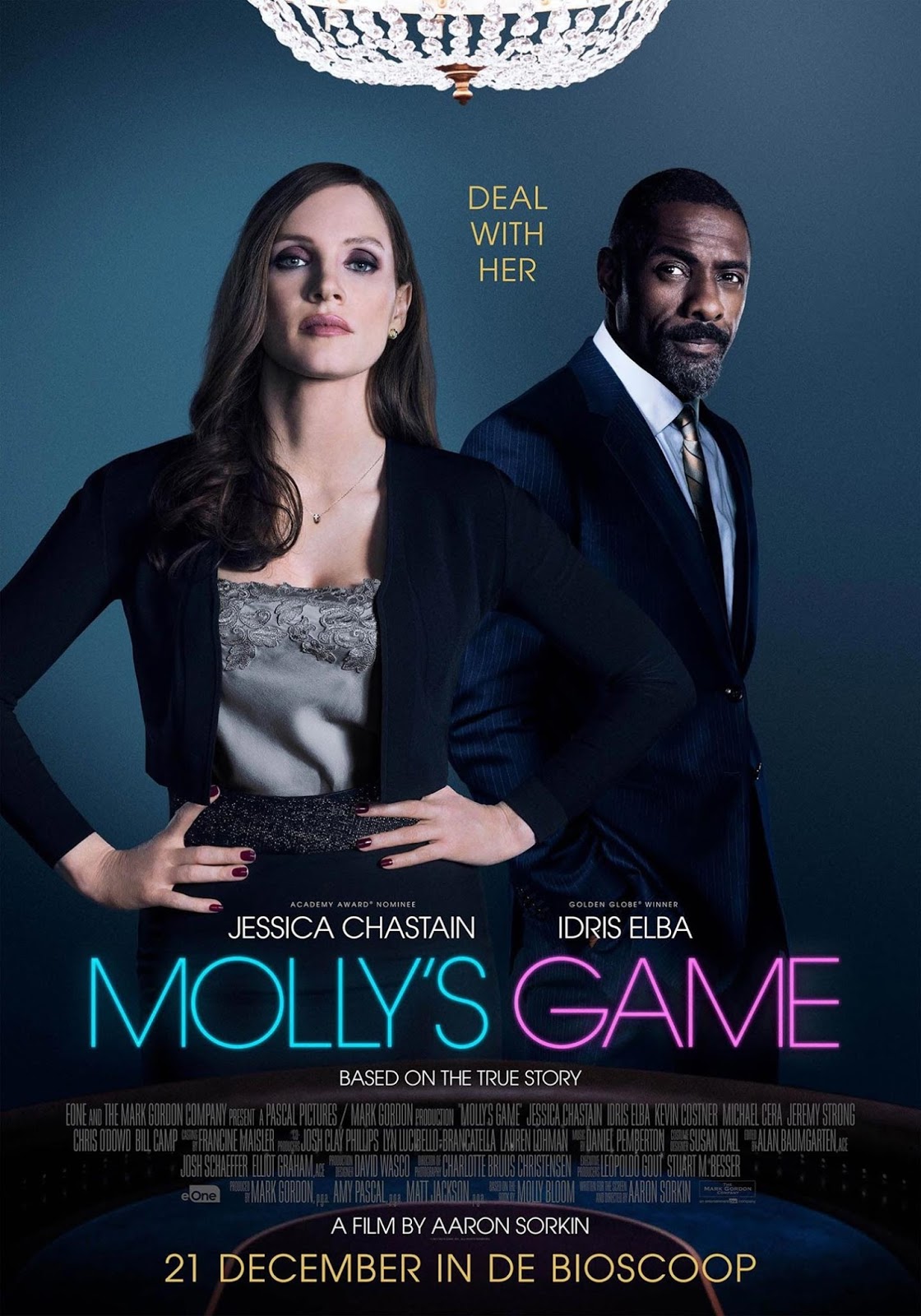
Jessica Chastain and Idris Elba excel in Aaron Sorkin’s dynamically scripted Molly’s Game

Director: Aaron Sorkin

Cast: Jessica Chastain (Molly Bloom), Idris Elba (Charlie Jaffey), Kevin Costner (Larry Bloom), Michael Cera (Player X), Brian d’Arcy James (Brad), Chris O’Dowd (Douglas Downey), JC MacKenzie (Harrison Wellstone), Bill Camp (Harlan Eustace), Graham Greene (Judge Foxman), Jeremy Strong (Dean Keith), Angela Gots (B)

Molly Bloom (Jessica Chastain) is all set to join America’s Winter Olympics team, under the guidance of her ultra-demanding psychiatrist father Larry (Kevin Costner), when a freak accident ends her career. So she heads to LA and becomes embroiled in the world of high-stakes poker, eventually setting up and running her own high stakes games in LA and New York, earning millions. But, over a decade later (in a parallel plotline) she has had a millions seized and is battling against imprisonment for her connections to the mob, with only lawyer Charlie Jaffrey (Idris Elba) on her side.

Sorkin’s zippy new drama has plenty of sparkling dialogue – as you could expect! Sure this film probably also proves he’s not really a director (it’s over-long, a little flabby, and structurally not very clean) but the guy can certainly put a speech together. My main issue with Molly’s Game is I’m just not quite sure what its point is. Maybe it only exists to entertain, but it feels like it wants to put together a touching story about family, faith and the value of your word. I’m not sure it really manages to achieve any of this. 

The parallel plotlines don’t always do the film a lot of favours. The present-day plotline of Molly and Jaffey working to clear her from the various charges she has been accused of, continually hints at some serious gangsterism set-ups later on: largely these never really transpire. Actually, the film heads into pretty standard “my-Daddy-didn’t-love-me” territory. It shy’s away from being something different and interesting about excess and punishment into psychiatry solving our problems.

Sorkin doesn’t always get the structure right, as if he hasn’t got the patience to actually make sure the fundamental plot information was clear enough, so eager was he to get on with the verbal pyrotechnics. Time is spent carefully exploring several poker hands – but the exact nature of the illegality of what Molly does running her poker games gets glossed over in seconds. 

But then this is a film that isn’t really that interested in plot dynamics, or even in over-arching themes. What it’s interested in is sizzling dialogue, and letting actors deliver it. The camera sits back and watches. So it’s not a surprise the most memorable scenes feature Jessica Chastain and Idris Elba (both superb) in a room, talking (or arguing) with each other. It’s the moments like these where the film really works – and Sorkin the director basically stays out of the way, using a two-camera set-up to record the scenes, like a filming of a Broadway play. 

Those two actors dominate the film. Chastain is excellent as Molly – ambitious, driven, playful but also vulnerable and ever-so-slightly bitter, who gets where she is through her own intelligence and hard work. Chastain also embraces playing a character with such a strong moral code – she’s terrifically warm and human in the part. Elba is equally fine, a wry professional with his own strong moral code (yup, The West Wing writer still loves those liberals of great conscience), an articulate (of course!), passionate advocate who is far warmer than he first appears.

The rest of the film never quite lives up to this, maybe because the poker games are never really that interesting, or because the life Molly leads among the rich and famous seems ill-defined (she has possibly the least impactful drugs addiction seen on screen). For someone who remains loyal to the end to her clients, we are never really clear why other than a suggestion of her basic sense of honour. Her projects are all set-up with ease, and the film builds towards a solution buried in psychiatry speak that similarly feels a little too easy.

Because while it is great that Molly is not defined by a romantic relationship – she is defined by men in virtually every other way. Her entire career is based on pleasing rich, middle-aged men (from whom she frequently has to bat away expressions of devotion or sexual interest). Three times she falls victim to senior male partners in business relationships. Above all, she is defined by her relationship with her overbearing father (well-played by a low-key Kevin Costner). The scene where this comes to a head, a father-daughter exchange late at night on a snowy New York bench, is so well-written and played you almost overlook its pattness.

Sorkin’s script is the most important thing here – and the film is built around it. Like Scorsese’s Casino(a film he must have seen a couple of times!) most of its opening act is structured heavily around Chastain’s expertly delivered voiceover. The actors get to enjoy delivering his engaging rat-a-tat dialogue, the expert playing and sharp dialogue ends up carrying a lot of uplifting moments in the film. It’s a film that embraces Sorkin’s scripting, and doesn’t worry about being too filmic about it: the zippiest moments of editing are so because the dialogue or voice-over demands it.

Some of the roles aren’t quite so well drawn: Michael Cera is just plain miscast in a role that needed a young Rob Lowe as an absurdly glamourous Hollywood poker addict (I can’t imagine people crossing a street let alone a continent to play cards with Cera). The rest of the women in the script get short shrift – even Molly’s mother is little more than a walk-on part. 

Molly’s Game is a lot of fun, even if it’s probably about 15 minutes too long. It’s got some great dialogue and, if Sorkin turns out not to be the best interpreter of his own work, he’s certainly no dud as a director. Overall, the themes and plot don’t quite come together as well as they should. But it’s very well acted – Elba and above all Chastain are absolutely terrific – and it has more than enough sparkle to it for an enjoyable Friday night.

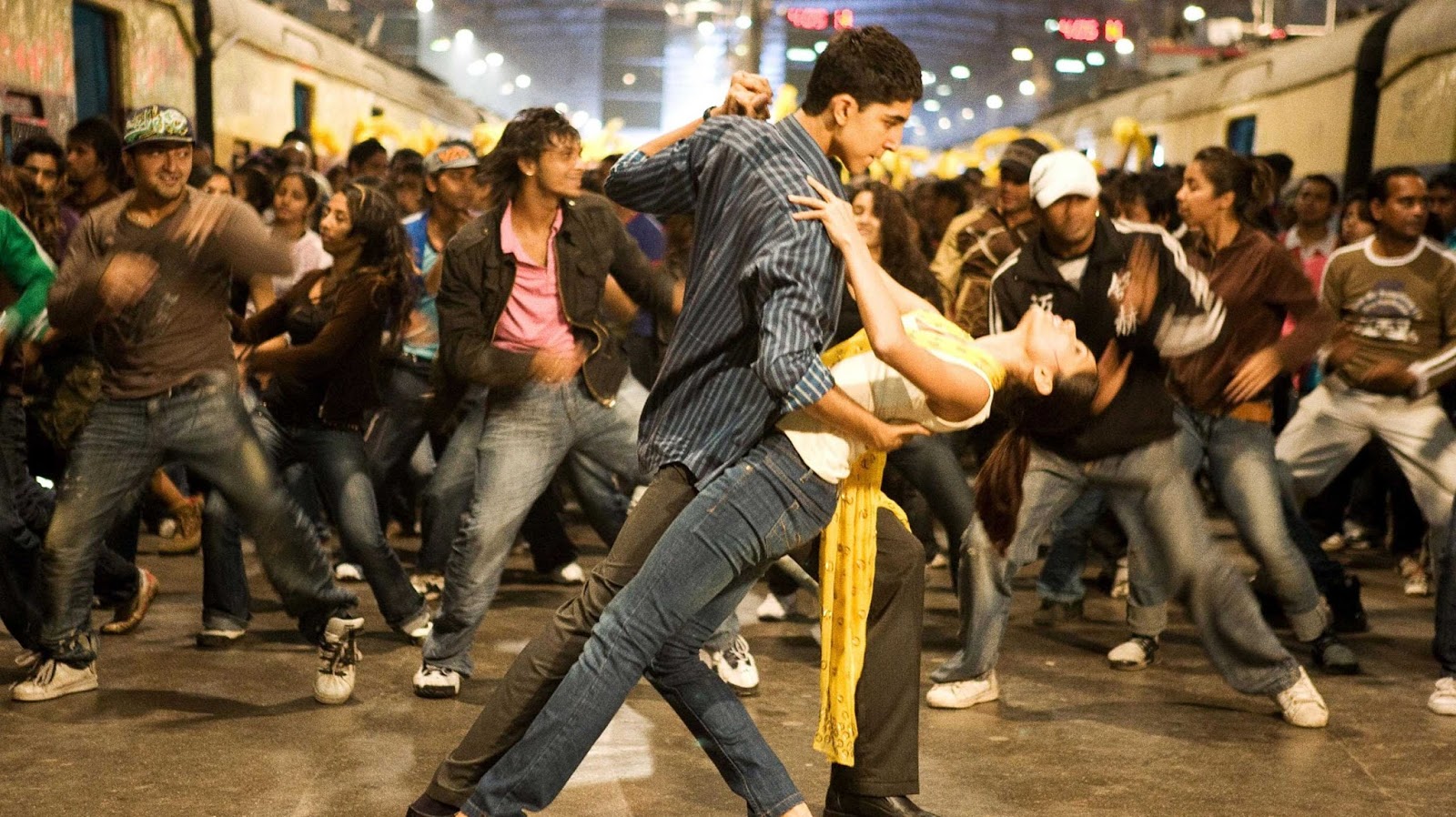
Slumdog Millionaire (2008)


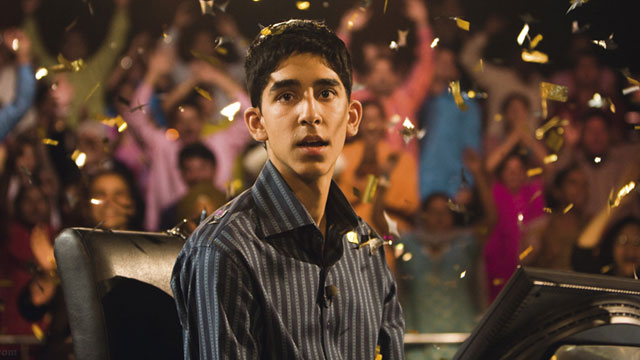
Dev Patel is the Chaiwala living the dream in Slumdog Millionaire

Director: Danny Boyle

Cast: Dev Patel (Jamal Malik), Freida Pinto (Latika), Madhur Mittal (Salim), Anil Kapoor (Prem Kumar), Irrfan Khan (Inspector), Ayush Mahesh Khedehar (Jamal [Child]), Tanay Chheda (Jamal [Teenager]), Azharuddin Mohammed Ismail (Salim [Child]), Ashutosh Lobo Gajiwala (Salim [Teenager]), Runbina Ali (Latika [Child]), Tanvi Ganesh Lonkar (Latika [Teenager]), Saurabh Shukla (Constable Srinivsas), Mahesh Manjrekar (Javred), Ankur Vikal (Maman)

Re-watching Slumdog Millionaire, it’s surprising to think that back in 2008 this film was so garlanded with awards (EIGHT Oscars!) and heralded so quickly as a classic. While it’s a well-made and at times rather sweet (with a hard-edge) fable, it’s also seems slightly less unique and genre-defying than first appeared. Never mind a list of the greatest Best Picture winners, I’m not even sure it’s the greatest Danny Boyle movie. But saying this, it’s still a fine movie – and one I arguably enjoyed more re-watching it almost ten years on then when I saw it in the cinema.

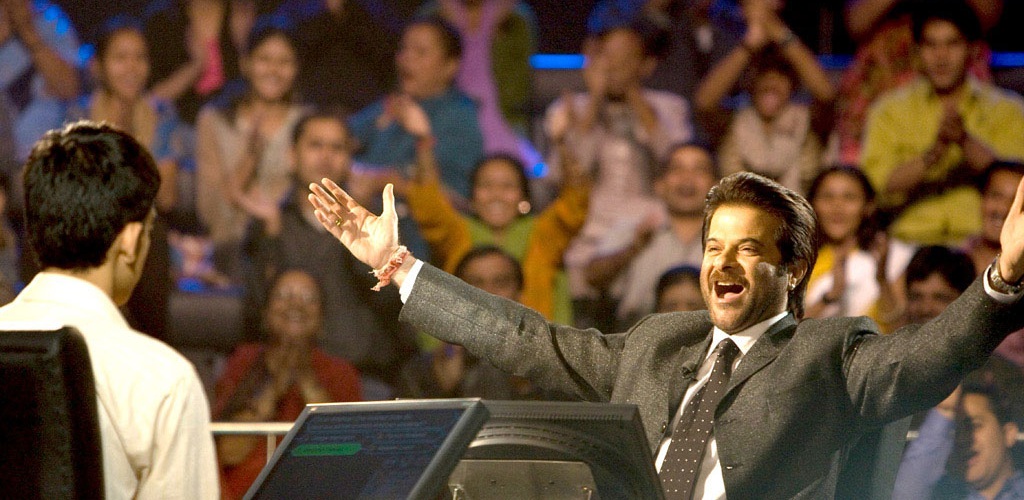
Jamal Malik (Dev Patel) is an eighteen year-old Muslim, a chaiwala working in a Mumbai call centre. He enters the Indian Who Wants to be a Millionaire?, hosted by egotistical Prem Kumar (Anil Kapoor), and to the astonishment of everyone is one question away from the ultimate prize of 20 million rubles. Arrested by the police and questioned before his final show, he explains via flashbacks how his experiences allowed him to answer each question. His life-story is one of danger and conflict in the slums and criminal underworld of India, tied closely to his brother Salim (Madhur Mittal) and their childhood friend Latika (Frieda Pinto), whom Jamal has loved his whole life.

Part social-realist tale, romance, family drama and fairy-tale, Slumdog’s main triumph is probably its ability to juggle half a dozen tones and genres so successfully. This is most strikingly demonstrated by fact that so many came out of a film that opens with its lead character being waterboarded and tortured by policemen, saying it was a brilliant feel-good movie! In fact, Boyle’s film is far more complex, touching on themes ranging from child exploitation and prostitution to gangland politics to social corruption, via murder, betrayal and mutilation. How does this a film crammed with this sort of material make you feel rather positive at the end?

Boyle’s, and screenwriter Simon Beaufoy’s, trick is to follow in the footsteps of that other great juggler of urban social comment and larger-than-life characters – Charles Dickens. Dickensian is perhaps the best word to describe Slumdog – it throws the viewer into the slums of Mumbai, glancing at this world with all the keen social commentary Dickens used to bring to Victorian London. As young children, Jamal and Salim are thrown in with a Fagin-like gang boss, while Latika develops an (admittedly much more gentle) Estelle-like connection with them both. Like David Copperfield, our hero moves from place to place (or frying pan to fire!), with an episodic charm, each event adding to the spectrum of his life. It works really well as it taps into a reassuringly familiar story structure that makes us feel narratively safe, no matter how much peril our heroes undergo.

What’s fascinating is placing this familiar material into (for us) a more exotic location. I suspect many American viewers watching were even less familiar with India as such a mixture of extreme wealth and poverty sit side-by-side so naturally (and again how Dickensian does that sound?). Anthony Dod Mantle’s cinematography is astounding for its energetic immersion in the streets of Mumbai –it’s like an explosion of Boyle’s high-octane, camera-shaking style seen in so many of his other films. It not only makes the film feel fresh and vital, it also manages to present India as something very different for those only familiar with the country as a Taj Mahal postcard.

The most compelling parts of the film are those in the first half that throw us into the Mumbai of Jamal and Salim’s childhood. Helped immensely by six terrific performances from the child and teenager versions of our three leads, these sequences (just over the first half of the movie) immediately involve the viewer in the fates and feelings of these characters. Perhaps because the film is shot in such an immersive style, you feel as if you have experienced the dangers (and occasional joys) alongside them, and developed a close bond with them. 

Despite the romantic plot of the movie, the true story is the jagged relationship, with its loyalties and betrayals, between the innocent, gentle dreamer Jamal and the more ruthless, realist Salim. The film charts the lengths they will go to protect and help each other – or sometimes in Salim’s case not. Salim is a fascinating character – easily the deepest, most conflicted of the three – who even as a child has a moral flexibility, happy to gain the benefits of a ruthless criminal lifestyle, while still having enough conscience to know what he has done with his life is wrong.

In contrast, the relationship between Latika and Jamal is far less complex. Frieda Pinto doesn’t actually appear until almost two thirds of the way into the movie – and she and Patel have only really one dialogue scene together to establish a romantic link. The romance between them is in fact the standard fairy-tale – two young friends as children who become unknowing sweethearts. The film relies on us being invested in their fates as children to want to be together, rather than building a link between two grown adults. This is the structure of a Prince Charming and a Princess in distress rather than grown-up storytelling – but it clearly works because it taps into our own fundamental first experiences of how stories work.

Dev Patel is a very sweet and highly engaging lead – and how could we not be immediately on the side of a pleasant, gentle young man whom we first see hanging from a ceiling with electrodes on his feet? Patel has a low-key decency about him that becomes more engaging the more you watch the film. Since most of his narrative function is to offer linking scenes to the far more dynamic and exciting flashbacks – and since the character of Jamal has very little real depth to him beyond “he’s a good guy” (again like a fairytale his innocence is untouched by events) – it’s quite a testament to his performance that you end up feeling as close to him as you do.

But it’s clear to me second time around the framing device of the Who Wants to be a Millionaire contest is the most disposable, and least interesting part of the movie. It does have the film’s most outright enjoyable adult performance, a swaggering, ego-filled turn from Amil Kapoor, but it’s still all much more predictable, obvious and functional than the adventures we see as our characters grow up. We know Jamal is going to keep getting things right (and thank goodness each question he answers, he learned the answers consecutively through his life! What a mess that might have been otherwise narratively!), so the fact that Boyle keeps what is essentially the same scene each time seeming interesting is quite something.


The gameshow however is the “quest” of this romantic fairy-tale. And fairy-tale is really what the film is: Jamal is there to try and find and save Latika. So in the end it doesn’t really matter that Latika hardly feels like a character, or that we’ve been given no real reason to think she and Jamal are in love other than the film telling us that they are, or that the plot of the film is really as flimsy as tissue paper. The film is a dream, a romantic fable. The genius of Boyle is to use a whole load of familiar, Dickenisan-style tropes to place this into a social-realist travelogue, a dynamite dance of flamboyant film-making techniques. So perhaps that is the point about Slumdog: on repeated viewings, like fairy-tales, its plot tricks and narrative sleight-of-hand become more obvious. But you get more of a respect for the confidence with which the trick is played.

Carlito's Way (1993)


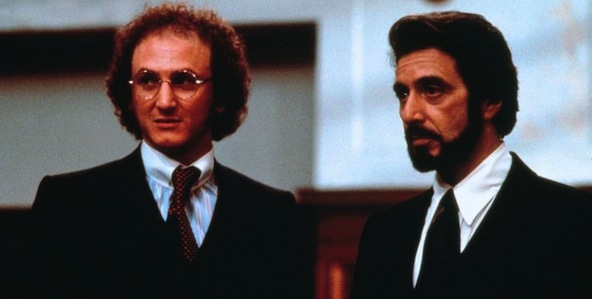
Sean Penn and Al Pacino struggle with the impact of a life of crime in Carlito’s Way

Director: Brian de Palma

Cast: Al Pacino (Carlito Brigante), Sean Penn (David Kleinfeld), Penelope Ann Miller (Gail), John Leguizamo (Benny Blanco), Luiz Guzmán (Pachanga), Jorge Porcel (Saso), James Rebhorn (Bill Norwalk), Joseph Siravo (Vincent Taglialucci), Frank Minucci (“Tony T” Taglialucci), Adrian Pasdar (Frank Taglialucci), Viggo Mortensen (Lalin)

Every so often from the 1990s onwards, Al Pacino actually bothered to act rather than rage in an orgy of self-parody. It’s the films where he does really embrace the challenge, like Carlito’s Way, that reminds you what a damn fine actor he is. Carlito’s Way may also be a reminder of what an overtly flashy director Brian de Palma is, but it’s a fine American gangster thriller.

In 1975, Carlito Brigante (Al Pacino) is released from prison after five years on a legal technicality, exposed by his friend and lawyer Dave Kleinfeld (Sean Penn). Carlito makes a speech at his hearing, claiming he is a reformed man who wants leave his criminal past behind him – and to the shock of Kleinfeld and his colleagues in the underworld, he’s telling the truth. Carlito attempts to go straight, and to rebuild a relationship with Gail (Penelope Ann Miller), the young woman he left behind. Unfortunately, Kleinfeld is not only becoming increasingly unpredictable due to his cocaine addiction, but he is starting to blur the lines between criminal lawyer and plain criminal. His actions continually threaten to drag Carlito back into the crime industry.

Carlito’s Way is a fine semi-morality tale, a modern tragedy of a man who, every time he thinks he’s out, “they pull me back in”. And of course we know that he’s on a hiding to nothing, as the film opens with Pacino gunned down by an unknown assailant and recounting most of the film’s plot (presumably) from beyond the grave. His attempts are doomed largely because, in order to go straight quick and easy, he has to raise money the only way he knows how – working in the very same flashy nightclubs and among the career criminals that he should absolutely be avoiding.

Carlito narrates the film with a weary reluctance, carefully recounting the mistakes he made and why. It’s a device that largely manages to avoid telling us the obvious, and actually gets us closer to, and like, Carlito. It also helps that Pacino’s voice itself has a gruff poetry to it, and he adds a Shakespearean grandeur to this familiar old-school tale of the crook who wants out.

Pacino’s intensity works fantastically for the part. He largely keeps the Pacino fireworks for the moments where they carry the most impact. He and de Palma carefully sketch out a portrait of Carlito as a world-weary man, who (try as he might) can’t leave behind the code and rules that have governed his life as a criminal. He can’t escape the confines of thinking like a criminal. Most terribly, his old-school sense of honour (few actors convey dishevelled personal morality better than Pacino) is what will doom him – he can’t break the code of the streets. It’s a terrific, empathetic performance from Pacino.

Pacino also develops a sweet, loving relationship between him and Penelope Ann Miller’s Gail. In the way of these films, Gail is a stripper – she alternates between sweetly loving and overtly sexually flirtatious as the plot demands – but Miller makes her feel like a real person. She and Pacino have great chemistry (which, rumour has it, also carried over into real life) and de Palma shoots their scenes with an old-school romanticism and a steady camera, which contrasts with the disjointed sweep and Dutch angles he uses elsewhere.

Sometimes these flashy angles get on my nerves. de Palma often feels like he’s trying too hard, rather than stretching his muscles. Saying that, he’s a master of the set-piece. The film has two action set-pieces and both simmer with tension and inventiveness. One involves a bungled drugs deal in a dingy bar. The other a thrilling chase sequence in Grand Central Station, a deliciously shot mixture of great editing and daring extended single shots. Sequences like this bring memories, inevitably, of Scarface and it’s tempting to see Carlito’s Way as a spiritual sequel – as if Tony Montana had been arrested and changed his ways.

Perhaps a testament to how good Carlito’s Way is (or rather how much I enjoy it) is that I even think Sean Penn is terrific in it. Penn is one of those actors I find tryingly self-important (both professionally and personally). But his weaselly lawyer, a hair-trigger addict, nowhere near as smart and adept as he thinks he is, is marvellous. Penn’s performance is a whipper-cracker mix of slimy self-confidence and arrogant blindness, with moments of curiously underplayed vulnerability that makes it make sense why Carlito remains so loyal to him. It’s one of Penn’s best, most controlled performances, a virtuoso performance of whining weakness.

Carlito’s Way is part pulp gangster thriller, part character study humanely outlining the impossible difficulty of changing our stars. Carlito may be ready to jack in the criminal world – but he continues to live the life of the criminal while persuading himself he isn’t. The whole film has a tragic inevitability about it – and would do even without the framing device. Carlito wants out – but he wants to rush to get the investment he needs, and walking the shadow line is the only thing he knows how to do. It’s a great modern tragedy.

Triple 9 (2016)


An all-star cast fail to make Triple 9 a classic, or even a decent watch

Director John Hillcoat

Cast: Casey Affleck (Chris Allen), Anthony Mackie (Marcus Belmont), Chiwetel Ejiofor (Michael Atwood), Clifton Collins Jnr (Franco Rodriguez), Woody Harrelson (Jeffrey Allen), Aaron Paul (Gabe Welch), Kate Winslet (Irina Vlaslov), Gal Gadot (Elena Vlaslov), Norman Reedus (Russell Welch), Michael K Williams (Sweet Pea), Teresa Palmer (Michelle Allen)

Triple 9 that never gets anywhere near fulfilling its potential. You look at the cast and you think “Wow! That has got to be one of the films of the year! Right?” Wrong. Triple 9 is another journey into the macho bullshit of the criminal underworld, where the “good” thieves have honour, the bad thieves are unscrupulous, the cops are all sorts of shades of grey, and the real baddies are foreign gangsters exploiting American criminals. All told with a backdrop of shouting, shooting and doping. You feel, and I suspect the filmmakers feel as well, that the film must be about something – but it really isn’t, it’s a super violent, dark Rififi with none of that classic’s touch.

Michael Atwood (Chiwetel Ejiofor) is a crack crook, leader of a gang that executes difficult jobs on demand for their Russian paymaster, mob boss’ wife Irina (a showboating Kate Winslet). Atwood’s crew includes dirty cops Marcus Belmont (Anthony Mackie) and Franco Rodriguez (Clifton Collins Jnr). Tasked to steal federal investigation data on Irina’s husband, Michael and his crew decide their only chance is to distract the police with a Triple 9 call out – the shooting of a cop. Their target? Belmont’s new partner, hotshot honest cop Chris Allen (Casey Affleck).

Triple 9 isn’t particularly inventive or unique. The problem is it also isn’t very interesting. This is largely because you don’t engage with any of the characters. Atwood is a blank, played by a disengaged Chiwetel Ejiofor. He has a standard sub-plot of a son he isn’t allowed to see. But it’s not enough to get us caring about him. Chris Allen isn’t particularly likeable (Casey Affleck is not the most relatable of actors) so it’s hard to get worked up over whether he’s going to be killed or not. The most interesting character is Anthony Mackie’s Belmont – but he has been saddled with an “I feel growing guilt” sub-plot that you’ve seen dozens of times before.

Perhaps aware that a lot of the writing was paper-thin, the film recruits a number of familiar actors to “do their thing” so that we can shortcut to what sort of person the character is meant to be, by seeing crude drawings of their more famous, nuanced roles. Aaron Paul’s performance will be familiar to anyone who has seen Breaking Bad; Norman Reedus essentially reprises his role from The Walking Dead. Woody Harrelson does his grizzled half-genius, half-dope fiend, difficult man schtick he’s done many times. Only Kate Winslet is cast against her type – and her scenery-chewing enjoyment of the role makes her feel like an actress doing a guest turn, rather than a real person.

Hillcoat’s direction doesn’t bring any of the film’s threads together. It never feels like a film that is about something. Where is the depth, where is the interest? It’s not even a particularly exciting film to watch, with the heist moments not particularly exciting or interesting, and its shot with a wicked darkness that never gets the pulse going. After some initial build-up, the plot never really goes anywhere unexpected, and the final pay-off is stretching for a narrative weight it just doesn’t have. 

Hillcoat and crew obviously feel they are making a higher genre film – but this is really just a pulp thriller, with actors acting tough but never convincing. None of the major events make a massive amount of sense: characters run into each other in a way that stretches credulity, the Russian mob runs its business with a counter-productive brutality, the dirty cops alternate between super cunning and horrendously dumb.  It’s a dumb, badly written movie that never comes to life. It doesn’t even have the real moments of excitement you need to at least grab you while the rest of the film drifts along. Not good. Not good at all. Triple 9? Not even triple stars.

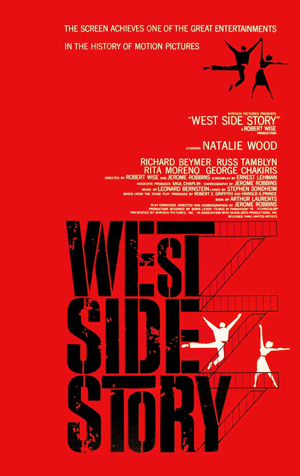
West Side Story (1961)


Dancers defy gravity and physics in the triumphant West Side Story

Director: Jerome Robbins, Robert Wise

Cast: Natalie Wood (Maria Nunez), Richard Beymer (Tony Wyzek), Russ Tamblyn (Riff Lorton), Rita Moreno (Anita Palacio), George Chakiris (Bernardo Nunez), Simon Oakland (Lieutenant Schrank), Ned Glass (Doc), William Bramley (Officer Krupke)

It’s strange to think now, but when it debuted on Broadway, West Side Story failed to win the Tony for Best New Musical (it went to The Music Man). Today, Bernstein and Sondheim’s masterpiece is a touchstone of musical theatre. Part of that surely must be connected to the fact that it’s so well known as a film – and that this triumphant movie production took 10 Oscars as well as holding a place in any list of Greatest Musicals on Film.

The story is of course Romeo and Juliet crossed with intricate ballet and light opera. On the streets of New York, the Jets (working-class white boys) and the Sharks (Puerto Rican immigrants) are two rival gangs fighting a street battle to control their district (via the medium of dance). But danger is about to explode when former leader of the Jets Tony (Richard Beymer) falls in love with Maria (Natalie Wood), the sister of Sharks leader Bernardo (George Chakaris). Will it end well? Surely not with these star-crossed lovers…

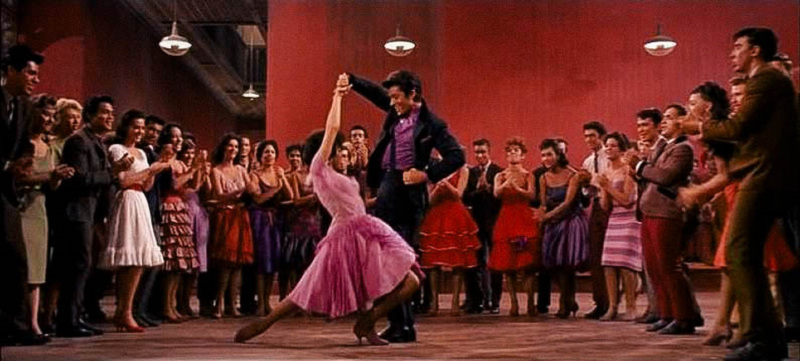
You can’t really begin to talk about West Side Story without first talking about the dancing. Not since Astaire and Rogers has a movie been defined so much by its physical grace and rhythmic control of movement. It’s awe-inspiring. Honestly, show-stoppingly, jaw-droppingly impressive. As the dancers defy gravity, physics and the limitations of a normal person’s body, you can’t help but want to spring to your feet and join in (don’t – I guarantee you are not as good). It’s simply amazingly good.

The opening Prologue sets the scene perfectly. It’s not easy to make a film about tough street gangs, where every fight scene is largely expressed through dance – the Prologue, however, does this perfectly, a stylised slow build of increasing musical tempo. From the simple device of clicking fingers, we build continually into an explosion of carefully controlled group choreography, where each of the twenty-odd dancers feels like an individual.

The camera choices are sublime: some shots hover in dramatic aerial shots. Tracking shots highlight the skill of the dancers. The crew dug pits into the tarmac to bury the cameras in so that they could stare straight up at the dancers at some points – during one brilliant sequence Chakiris and the Sharks seem to loom, God-like, over the viewer while moving in perfect synchronicity. It’s beyond a tour-de-force, it’s simply unlike anything else you’ve ever seen on film. The film would’ve deserved Oscars even if it had ended after ten minutes, it’s probably one of the best openings ever.

Fortunately it doesn’t, because there is more exquisite stuff to come. Moreno and Chakiris probably won their Oscars off the back of the scintillatingly “America”, a beautiful whirlygig, part debate, part argument, high-kicking joy of twirling dresses and pirouettes. It’s possibly the most exciting number in the whole film. “Cool” is an unbelievably wild and challenging dance number in a garage, that seems to throw in half a dozen different styles – the set itself seems to be struggling to survive under the rampant pace and passion of the dancers. It’s a deliriously giddy, passionate, dirty number with the actors clearly pushed way beyond their natural ease.

Famous Broadway choreographer Jerome Robbins directed the original production, and was the logical choice for the studio to choreograph the film. Robbins insisted he would only do so if he was also allowed to direct the entire film. A deal was eventually done where Robbins would direct everything involving music and dance, and seasoned professional Robert Wise would handle the rest. Robbins carries most of the credit for why this film really is unique – everything special and different about it is connected to his mastery of choreography.

As it happened, Robbins’ search for perfection was so great he ended up leaving the film running weeks behind and far over budget. After months of rehearsal, when the time came to film, Robbins would dramatically re-work the choreography to exploit locations. This was particularly expensive for the location. As take after take on expensive 65mm film mounted up, the producers eventually dismissed Robbins from the project after filming four numbers (“Prologue”, “Cool”, “America” and “I Feel Pretty”). Although the rest of the numbers used his choreography (and were directed by his assistants) they lack the inspired genius of the other four stand-out numbers. Wise, a skilled hired gun, took care of the rest of the filming.

It’s the weakness of West Side Story that very few things in the rest of the film live up to the heady, exhilarating joy of those core numbers. Both Beymer and Wood are uninspiring as the two leads. Wood is not remotely convincingly Puerto Rican, while Beymer is too clean-cut and nice-guy for a kid who was running a street gang not so long ago. The scenes focusing on these two drag– and are rather flatly shot considering the dynamism around anything involving dancing. Wood’s songs are at least memorable – largely because an uncredited Marnie Nixon supplies the singing – but Beymer’s voice replacement isn’t particularly inspiring and both “Maria” and “Tonight” get a bit lost here (he’s no Michael Ball, put it like that).

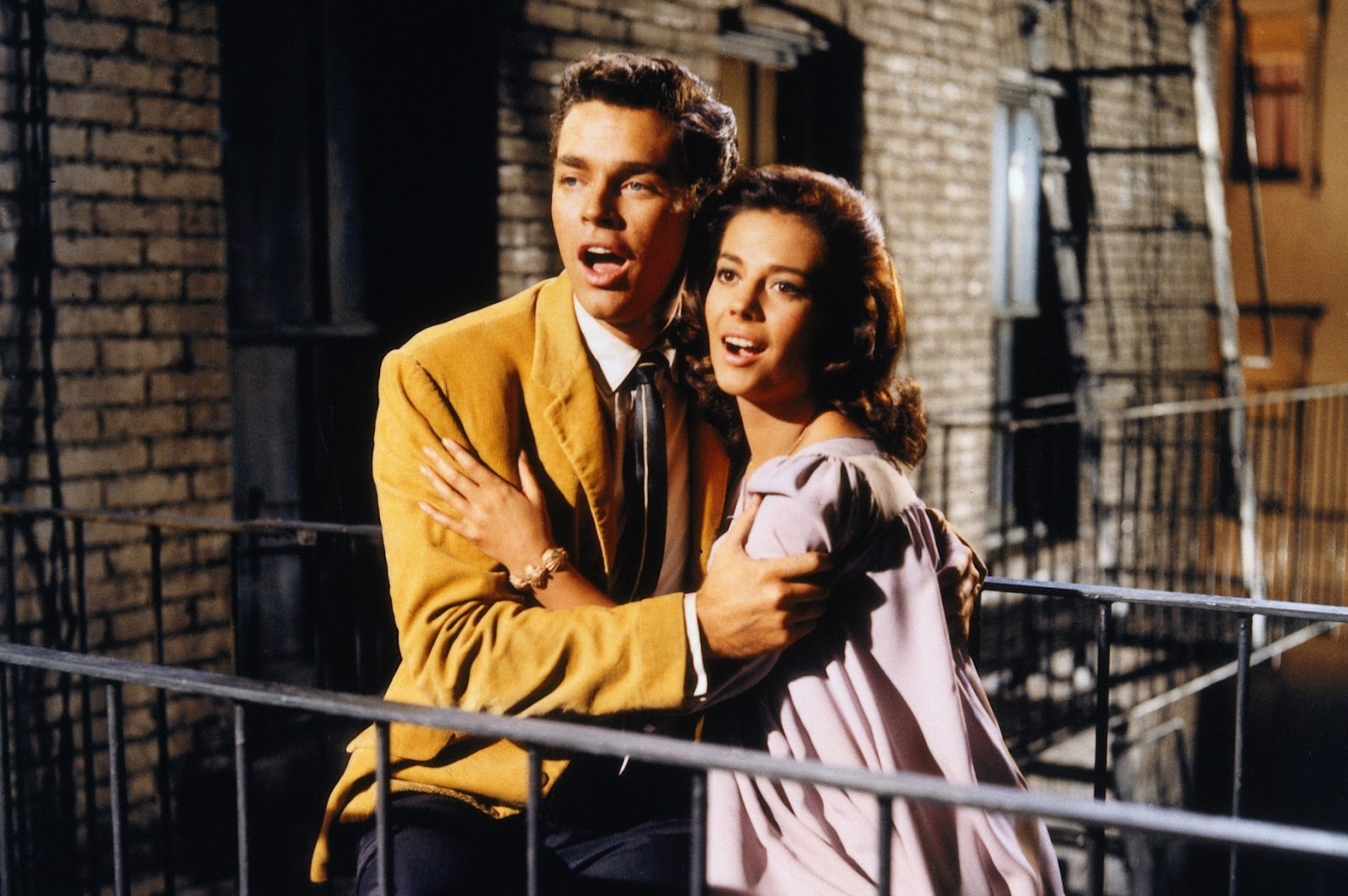
The script and storyline aren’t always the strongest. It’s a difficult to really remember any of the purely dramatic sequences. Tony and Maria’s meeting on the balcony summons up very little in the way of romantic frisson, let alone any favourable comparisons to Romeo and Juliet. (Truth be told, there is very little chemistry at all between the two performers). You get the feeling the film is reaching for a big socio-political message – hey kids, why don’t we all get along? – but never really quite gets there. It’s not quite got enough thematic weight behind it for the cultural acceptance angle it’s trying to push. But heck, Romeo and Juliet is a tough act to follow, so it’s not a surprise that the film works best as just a romance.

The big exception to the rule that the dramatic moments don’t hold a candle to the dance sequences is Anita’s assault by the Jets late on in the film – an unsettlingly visceral near gang-rape, which isn’t easy to watch, but works brilliantly. In fact any dramatic scene involving Rita Moreno stands out – she burns up the screen as the fiery Anita, a woman bubbling with passion but also with an emotional intelligence and sensitivity that nearly helps our heroes avoid disaster. Moreno’s dancing and singing are first class, but her acting throughout is similarly outstanding – any scene featuring her, your eyes are immediately drawn to her. She’s well matched as well by George Chakiris, another Oscar-winner, who’s a magnetic dancer and singer but also gives Bernardo a brilliant kindly pride laced with arrogance.

All this takes places in a regular technicolour wonderland of a setting. Daniel L. Fapp’s photography is marvellous, creating a rich palette that soaks up colour. Shots of a blood red sky at night set just the right ominous tone. He makes masterful use of colour and shade throughout. I’ve already talked about how the photography brilliantly helps build the impact of the dancers. But every scene is really carefully framed and presented, with the cages and barriers of the playground the gang fights over helping to hammer home the feeling of our heroes being trapped by fate. As you’d expect from Wise (the editor of Citizen Kane) the film is also brilliantly assembled in the editing room.

Parts of West Side Story are of course a bit dated. The dancers, for all their undeniable brilliance, are a little camp for rough and tumble street kids. The film’s costumes and settings look undeniably clean to modern eyes. The casting of Wood in particular as a Puerto Rican is odd today. It’s also probably too long a film – while the musical numbers could happily go on forever, other scenes drag a little. Most of the really strong, memorable material happens in the first half of the film. And like all brilliant works of art, it’s so distinctive it’s almost a little too ripe for parody. Some of the visual flourishes used to indicate fantasy sequences look slightly dated.

But these are niggles in a way, because even if parts of the film are a little bit below par, the overall impact of the film is quite extraordinary. There has never been – and I think never will be – a musical quite like this. I simply can’t imagine such a triumph of group choreography being made, or a film-maker spending such time and money to push the envelope of what it is possible for the human body to do in dance scenes. Despite its faults, I can’t imagine a viewer not being electrified by several sequences in this movie. And at the end of the day, what else is cinema for if not to bring our emotions and feelings to life in vibrant flashes?

Donnie Brasco (1997)


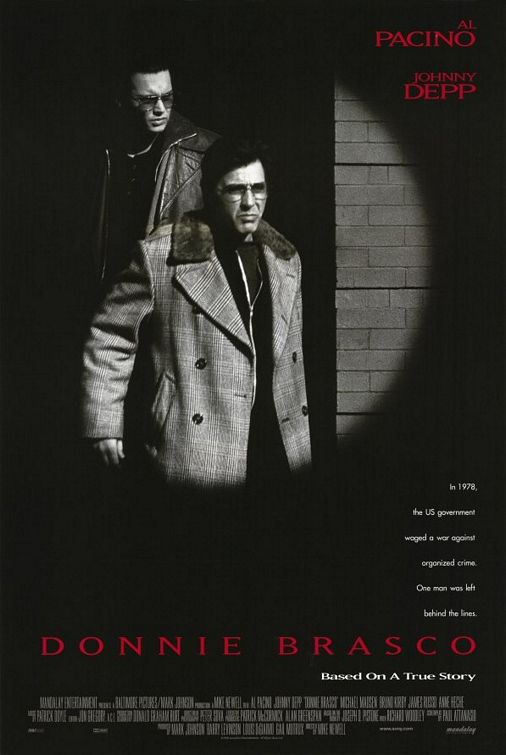
Pacino and Depp deliver low-key, carefully controlled, sensitive performances: how often do you get to write that?

Director: Mike Newell

Cast: Al Pacino (Benjamin “Lefty” Ruggiero), Johnny Depp (Joseph Pistone/Donnie Brasco), Michael Madsen (Dominick “Sonny Black” Napolitano), Bruno Kirby (Nicky Santora), Anne Heche (Maggie Pistone), James Russo (“Paulie” Cersani), Željko Ivanek (Tim Curley), Gerry Becker (Dean Blandford), Robert Miano (Al “Sonny Red” Indelicato), Tim Blake Nelson, Paul Giamatti (FBI Technicians)

The Mafia film genre is a crowded market, so it’s a brave film maker who enters it with something a little different. But we get that with Donnie Brasco, which focuses on the bottom rungs of the Mafia ladder, suggesting that being a low-ranking member of “this thing of ours” is in many ways quite similar to being a corporate drone in the big city, only with more killing.

Joseph Pistone aka Donnie Brasco (Johnny Depp) is an undercover FBI agent, infiltrating the New York Mafia. He wins the trust of “Lefty” Ruggiero (Al Pacino), a Mafia hitman. Drawn deeper into the Mafia world, the pressure builds on Pistone/Brasco, who slowly becomes more and more indistinguishable from the criminals he spends his time with – and feels guilty about the deadly fate Lefty will meet if the Mafia discover he inadvertently introduced a rat into the family.

Newell’s film (from Paul Attanasio’s excellent script) is a dry deconstruction of the gangster life, bringing it closer to the grind of the 9-5. The criminals put in long hours to earn the income they need to push up to those above them. Class distinctions abound – in one scene, Sonny Black (a good performance of ambition and resentment from Michael Madsen) forces a smile onto his face while mob bosses laugh openly at his dress sense. Lefty whines like a mule about everything from his lack of recognition to how put-upon he is (never has a mantra about 26 hits over a lifetime sounded more like complaints about constant filing requests). He could easily be mistaken half the time for a harrassed office junior who never made the grade. When violence comes, it’s sudden, graphic, confused and brutal – a hit in a basement goes far from smoothly with one victim struggling for his life while another screams in pain.

On the other hand, the gangsters are also suggested to be maladjusted teens who never grew up. The more time Donnie spends with them, the less and less capable he becomes of relating to (or even communicating with) his wife and family. The gangsters have a routine lack of empathy for each other and treat the rules of “our thing” like a boys’ clubhouse. Many of their actions have an ill-thought-out juvenility to them: Sonny at one point steals a lion for Lefty as a gift – in a bizarre scene immediately afterwards, Lefty and Donnie feed it hamburgers through the window while it sits in the back seat of Donnie’s car. On a work-trip in Florida, the gangsters behave like kids – mucking around in the pool, delightedly going down waterflumes, burying Lefty in the sand on the beach while he sleeps. Even Lefty is overcome like a star-struck teen when meeting a famed Florida boss.

It’s not surprising that Donnie and Lefty, both outsiders in a way, are drawn together as kindred spirits in this strange, unbalanced world. Donnie obviously is an FBI agent, but Lefty is a world-weary old-timer, with a sense of honour who seems (apart from his ease with killing and violence) to be the most “normal” of the gangsters. The film is a careful construction of the growth of loyalty between these characters – particularly the slow development of Donnie’s feelings of genuine friendship towards Lefty. What’s effective is that this is a gradual process without a definable key moment. Instead, it becomes rather touching as Donnie starts to avoid moving closer to better “contacts” in order to remain close to Lefty. Donnie Brasco might be one of the few films that really gets a type of male friendship, and the unspoken emotional bonds that underpin them.

Perhaps the best things about Donnie Brasco are the two wonderful performances we get from actors who never knowlingly underplay. Watching this and Ed Wood is a reminder of the actor Johnny Depp could have been, before clowning in Pirates of the Caribbean seemed to shatter his focus. Brasco/Pistone is a brilliantly low-key presentation of a fractured personality. At first, the differentiation between the two personalities is distinct and clear – but as the film progresses, Depp allows the two to almost c/ollapse into each other. Everything from his body language to his manner of speaking slowly repositions itself as he becomes more consumed by the gangster world. Depp is also very good at not losing track of Pistone’s horror at murder and violence, while allowing the Brasco persona to take part in its aftereffects. The quiet building of guilt in his eyes at the fate he is creating for Lefty is also gently underplayed, making it more effective.

However, this is Al Pacino’s movie. It’s certainly Pacino’s last great performance: with the added frisson that he’s Michael Corleone demoted to the bottom rung of the ladder, Pacino is magnetic. Lefty is a put-upon whiner, who still has a charisma of his youth that draws Donnie (and others) in. A man of strong moral principles, who treats Donnie with a fatherly regard, uncomfortable with much of the ostentation of his fellow gangsters, he’s also a ruthless killer who blithely shrugs off his killing of an old friend. All Pacino’s bombast is only rarely deployed for impact – instead Lefty is a low-key, almost sad figure, whose chance in life has passed by.

One extraordinary scene late on deserves particular mention. I won’t spoil things too much, but Lefty prepares to leave the house after a phone call full of bad news. Carefully, sadly, he smartens himself up then returns (after saying goodbye to his wife) to gently remove his valuables and leave them in a drawer for his wife – he even carefully leaves the drawer ajar so she can find it. Setting himself before leaving the house, he takes a small look around. It’s a beautifully gentle scene, which could be overloaded with meaning from another actor, but Pacino plays it with such quiet but intense focus, and such careful precision it works brilliantly. Take a look at the scene here (warning spoilers!)

Newell’s strength as an actor’s director is apparent in all the performances, and Donnie Brasco is a film of many wonderful scenes and moments. The film never loses track of the danger of undercover heart – and several striking scenes have Pistone close to being discovered. The film is not perfect: the aim of the FBI investigation, and the impact Donnie’s work are never really made clear and the scenes involving Pistone’s homelife feel far more predictable and conventional than the rest of the movie (Anne Heche has a thankless part). But when it focuses on the two leads, and their dynamism together, it’s a damn fine film. It’s not going to challenge Goodfellas as a story of low-key hoods, but it’s certainly a worthy addition to cinema’s mafia films.

Lawless (2012)


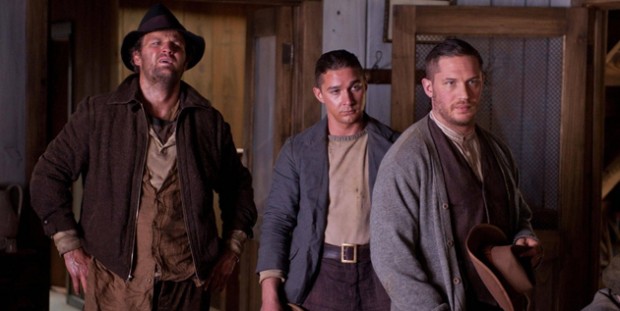
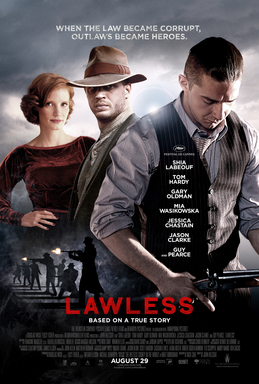
Brothers in crime. You can get a taste of the performances just from this still image.

Director: John Hillcoat

Cast: Shia LaBeouf (Jack Bondurant), Tom Hardy (Forrest Bondurant), Jason Clarke (Howard Bondurant), Guy Pearce (Marshal Charley Rakes), Jessica Chastain (Maggie Beauford), Mia Wasikowska (Bertha Minnix), Dane DeHaan (Cricket Pate), Gary Oldman (Floyd Banner)

Bootlegging, the Deep South, corrupt cops and the honourable code of criminals. It’s the sort of cocktail that’s made up dozens of films, some good, some bad, some ugly. This one definitely falls into one of the latter two camps.

It’s 1931, and the Bondurant brothers (Shia LaBeouf, Tom Hardy and Jason Clarke) run a moonshine business out of their Virginian countryside garage. One day the cops come a-calling, led by a corrupt US Marshall (Guy Pearce). They want a piece of the action. The brothers say no. So war breaks out…

Truth be told, this is actually quite a boring film – a pointless, clumsily constructed shaggy dog story that neither makes a point about the shabbiness of a bootlegging life of crime, nor challenges romantic assumptions about the small time crook challenging the system. There are a couple of random flashy scenes thrown in to allow the film-makers to demonstrate their technical expertise, but it’s all as weightless as a braggart regaling their guests at a dinner table. Hot air masquerading as a lungful of fresh stuff.

The performances dance between underpowered, over stretched and over indulged. Shia LaBouef doesn’t make his nominal lead a fully formed character. Jason Clarke makes no real impact in an underwritten role. Tom Hardy is the best of the bunch, but barely stretches himself as a bearlike family leader. Of the other major parts, Guy Pearce gives the kind of twitchy, pyrotechnical performance that is often mistaken for brilliant acting, all highblown showing off and no depth. Jessica Chastain and Mia Wasikowska are wasted playing contrasting love interests. Gary Oldman pops up for one scene as an overblown crime lord.

These performances drift along in the formless plot. There are nasty moments of violence that serve no purpose and don’t seem to tie into established characters personalities.  There are also poorly judged plot developments: at one point Jessica Chastain’s character is raped – mercifully off screen – an event never mentioned again. Characters are brutally dispatched; one has his manhood removed and posted to another character, others are strangled, shot or battered to death with spades. The violence continues on and off until the film ends with a confrontation scene between goodies and baddies. Nothing original or unique happens in this film – we’ve all seen it time and time again. There is no thrust to the story, no feeling that it is building towards a point or that a thematic point is being built. It’s just events happening for the sake of it.

Despite its flash and bravura crashes and bangs this is an empty, tedious movie that goes nowhere, says nothing and has no point. Nearly all the events of the film are predictable, from the fate of the villain to the crippled best friend (Dane DeHaan) who has victim written all over him from the first frame. Its surface sheen (it looks great, has a decent score etc.) and the look-at-me acting is enough to fool you for a moment into thinking “this must be a good film”. But it ain’t.