Category: German films

All Quiet on the Western Front (2022)

All Quiet on the Western Front (2022)

War is Hell in this impressively made but strangely unoriginal film, that looks the same and carries the same message as countless others

Director: Edward Berger

Cast: Felix Kammerer (Paul Bäumer), Albrecht Schuch (Stanislas “Kat” Katczinsky), Aaron Hilmer (Albert Kropp), Moritz Klaus (Franz Müller), Adrian Grünewald (Ludwig Behm), Edin Hasanovic (Tjaden Stackfleet), Daniel Brühl (Matthias Erzberger), Thibault de Montalambert (General Ferdinand Foch), David Striesow (General Friedrichs)

Perhaps no front-line fighting in history was more hellish than the mud-splattered sludge of death that were the First World War Trenches. Millions of men were fed through an industrial mincer of death, all for remarkably little gain. It was a tragedy born of ambition and pride. It’s cost on the young was beautifully captured by Erich Maria Remarque’s novel (an adaptation of which was one of the first Oscar winners) and it is bought to the screens again in this visceral German adaptation.

Paul Bäumer (Felix Kammerer) and his friends are naïve young men excited to serve in Spring 1917. Little do they know the blood-soaked, brutal reality of war. It’s soon thrust upon them when their first night in the trenches coincides with a catastrophic artillery attack. Skip forward a year and its November 1918. While Germany’s lead negotiator Matthias Erzberger (Daniel Brühl) tries to end the war, Paul and his mentor “Kat” (Albrecht Schuch) just hope to survive. But is there any hope?

All Quiet on the Western Front is raw, bloody and unflinching in its glance at the horrific realities of war. Shot with a cinematic beauty by Edward Berger that turns the mist filled world of no-man’s land into a sort of dreamscape that tips into a nightmare, it leaves no doubt about the brutal cost of war. Bodies are torn apart by explosions, shredded by bullets (even dead ones). Hand-to-hand combat is ruthless and there is not a jot of quarter given on any side. Everything is coated in a sheen of mud and blood, with dying men desperately gulping filthy water or left slumped where they fall.

The after-effects of war are horrifically shown. On their first night one of Paul’s friend is literally shredded by mortar fire. Bodies left on no-man’s land are peppered with bullets. The remains of a soldier is blasted out of his uniform, left hanging several feet up a tree. Paul and Kat discover a missing regiment of young recruits dead in an old factory, having removed their gas masks too soon. Tanks emerge from the mist, setting the ground shaking, rats fleeing before them, spewing death from their machine gun turrets, crushing screaming men under their tracks.

This is actually a fairly loose adaptation of the novel. The original prided itself on its lack of specifics: it’s never quite sure when or where it happens other than in the trenches. The soldiers fight in brutal battles in unnamed locations and simply live a day-to-day existence. This version make everything very specific: November 1918. Sub-plots around the armistice negotiations and the unwillingness of a die-hard Prussian General (a vilely arrogant David Striesow) to accept defeat expand the film beyond the novel’s original scope. However, this expansion never feels fully explored and at times detracts from the film’s richer, more intimate focus on the soldiers.

Berger’s film perfectly captures the sense of these boys being fed into a huge industrial meatgrinder in a cycle of death. The opening sequence follows a young soldier. He trembles with fear before going over the top, aimlessly fires his bullets and then grabs his spade to continue the charge and bludgeon a soldier. Cut to black before we follow the progress of Heinrich’s uniform. It is removed from his dead body, carted back to Germany, washed, repaired and then handed over to Paul as he signs up. Paul questions the name-tag inside: “Must have been too small. Happens all the time” the recruiting officer says, ripping it out. It’s all a production line.

Paul soon learns the truth. Felix Kammerer is excellent as this sensitive, enthusiastic young man (forging his father’s signature so he can join up) who sheds his innocence to become a battle-hardened warrior, succumbing to a mechanical, merciless violence in combat. He kills without hesitation and when guilt arrives – such as his killing of a French soldier in a fox hole – it leaves little long-term impact, so deadened has he become. Equally good is Albrecht Schuch, humane and worldly-wise figure as Kat. The bond – part brotherly, part father-son – is the film’s most affecting personal beat, and its most effecting scene involves Paul reading the illiterate Kat his mail.

There is much to admire here. But yet, while a technical triumph and immersive experience (even its score plays out with the organ-led heaviness of an artillery attack), I was less impressed with it than I expected. Perhaps that’s because it does or says nothing new. The original film was made by many people who were actually in the trenches. This film was made by people who grew up watching movies about wars. It’s frames of reference are subtly different, although its intentions are the same. Maybe that’s why I find it less affecting and less shocking than a film made 100 years ago.

For all its technical skill, the film is a continuation of visual grammar and thematic ideas established in countless films before. The blood-spattered immediacy of Saving Private Ryan. Tracking shots that remind you of 1917 and Paths of Glory. The on-the-streets fury of Black Hawk Down. The rumbling soundtrack of Dunkirk. It tells us War is Hell: but nothing else. Maybe that message is enough and it deserves repeating. But when the film expands the original like this, you want more.

The inclusion of the armistice works against it. The time jump means we lose any sense of the slow disillusionment of these men. Several key moments from the book – most notably Paul’s brief return to a home he can no longer relate to – have been stripped out. Setting the film in the last week of the war leads to a predictable ending that feels like its straining for even more pathos – of course there will be key deaths in the final minutes of the war. A more daring film might have looked more at how a harsh armistice and dark mutterings of betrayal led so many of these young men to hurl Germany back into war only twenty years later.

All Quiet on the Western Front is powerful, but its power is one of reiterating a familiar message. Berger’s film is wonderfully made but only follows confidently in the footprints of other (better) films. It avoids developing its message or context further and it’s expansion of the book’s plotline waters down the personal stories that made it so affecting. It’s grand, cinematic and powerful – but could have been more.

Corsage (2022)

Corsage (2022)

The perils of a life married into royalty are as tricky for some 150 years ago as they are today

Director: Marie Kreutzer

Cast: Vicky Krieps (Empress Elizabeth), Florian Teichtmeister (Emperor Franz Joseph I), Katharine Lorenz (Countess Marie Festetics), Jeanne Werner (Ida Ferenczy), Manuel Rubey (King Ludwig II), Finnegan Oldfield (Louis de Prince), Aaron Friesz (Prince Rudolf), Rosa Hajjaj (Valerie), Lily Marie Tschörtner (Queen Maria Sophie), Colin Morgan (George “Bay” Middleton)

Known to the world as Sisi, there are few more troubled figures in the history of European royalty than Empress Elizabeth of Austria. Locked into a largely loveless marriage with Emperor Franz Joseph, she struggled with the expectations of her position. She suffered from an eating disorder in an obsession to reduce her waist size, exercising vigorously every day. She was an international icon, formed strong bonds with the Hungarian people, helping integrate them into the Austro-Hungarian empire and her later life was touched with tragedy (including her son killing himself in a murder-suicide pact with his lover) before her assassination.

Only touches of this dynamic story make it into this curious film, that focuses on one facet of her personality at the cost of exploring others. Focusing on the years 1877-78, Elizabeth (Vicky Krieps) is strapped into ever tighter corsets, struggles with “representing” Austria, attempts several love affairs that end in rejection, smothers her youngest child Valerie (Rosa Hajjaj) with affection and is prescribed a new “wonder drug” (heroin) to ease her nerves. While her family despair, she starts to groom her lady-in-waiting Marie (Katherine Lorenz) to stand-in for her at public events.

From a British perspective, pretty clear parallels are drawn between Elizabeth and that icon of 20th century monarchy Princess Diana. Like Diana, Elizabeth’s personal struggles are misunderstood and unsupported by her royal network. An intelligent, passionate woman, Elizabeth stifles under conditions that require her to do and say as little as possible. Her dull, formal husband (Florean Teichtmeister, refreshingly decent and befuddled as the Emperor) merely needs her to wave at events, nothing more. She finds this increasingly oppressive and constrictive.

Kreutzer’s film is a stylish presentation of Elizabeth as a sort of Royal rebel. Drenched in lavender – even the cigarettes she chainsmokes are lavender – Elizabeth takes every opportunity she can to leave the palace, avoids “smile and wave” events and behaves with unpredictability at social events (she’s as likely to laugh and flirt as storm out giving the room the finger). Her fainting could be due to her incredibly tight corsets – or it could just be a way of causing mischief. The system around her simply doesn’t know how to react to someone who doesn’t know herself what she really wants.

Corsage is most engaged with this analysis of undiagnosed depression, at a time when the condition was largely utterly unknown. We can see Elizabeth is mired in misery, but to others she’s merely a self-indulgent, difficult, un-co-operative woman. Shot with a candle-lit intimacy and drained out colours, the film presents the world much as Elizabeth (it suggests) may have seen it. Dark, oppressive and domineering.

Kreutser bravely avoids making her completely sympathetic. The film doesn’t shirk in showing how selfish and self-obsessed she can be. She can’t tell her maids apart (even Franz Joseph is more clued up on their names), bans loyal lady-in-waiting Marie from marrying as she needs her too much and drags her daughter through endless reluctant excursions (including a pre-sunrise horse ride) because she’s more interested in moulding her than listening to her.

Vicky Krieps embodies this prickly personality with huge skill. There are flashes of the sort of person Elizabeth could be. She frolics playfully for an early film camera in the countryside and comes flirtingly to life with two potential lovers, an English riding instructor “Bay” (played with bashful charm by Colin Morgan) and the man closest to being a kindred spirit King Ludwig II of Bavaria (an ebullient Manuel Rubey). Sadly, Bay is far too cautious to become the Empress’ lover (even when she turns up at his room dressed in little more than her corsage) and Ludwig far too gay (much as he values her friendship).

Krieps performance is full of empathy for her pain. She skilfully communicates her mixed feelings towards her genuinely decent-but-dull husband (Franz Joseph, the sort of man who peels off his fake sideburns and stores them carefully in a box). But also makes her demanding, sullen and frequently rude and overbearing. She lashes out at and banishes from her presence those who ‘betray’ her.

Elizabeth’s status is compared with those in the mental health hospitals she took such an interest in.  There women are bound to their beds or dunked in freezing baths to cure them of their lustful desires) and the war wounded. It’s a reminder that things could be a lot worse. But it’s also a reminder of the film’s singular focus, away from the other facets of this woman’s personality. There is no real reference to her efforts to support the Hungarian people, her most successful attempt to break out of the confines of her role. It’s part of the film’s sometimes myopic view of its subject.

Kreutzer’s film is full of style. But it’s sometimes hard to see to what purpose. Much of the music the characters listen to is anachronistic modern pop (performed by period instruments). Locations have been deliberately chosen for their ramshackle, faded appearance, no attempt made to return them to the grandeur they would had at the time. Elizabeth takes dips in a very modern pool and the film closes on a cruise liner that wouldn’t look out of place today. Semi-surreal moments pop-up, such as Elizabeth towering in a small-scale room that may-or-may-not be either a giant doll’s house or a visual representation of her state of mind. But they never quite coalesce into a whole or carry a clear purpose, beyond design flourish.

I think part of this is because the film delves into Elizabeth’s depression but offers little in way of acute analysis as to why she felt like this. With most of the interesting events of her life kept out of the film, we effectively drop into a few years of depression without a wider context of her interests or passions. Elizabeth becomes someone the film defines largely by her position, much as her depressing life did, leaving her remaining a somewhat puzzling enigma.

It culminates in a genuinely confusing, alternate history scenario that I was mystified what the film intended to me to feel about. Does it end on a note of tragedy or triumph? I’ve no idea – and the coda with Krieps dancing confuses me further. It’s a befuddling ending for a stylish film (with a great central performance) but which is often one-note. Eventually you feel you effectively learned everything it had to say after the first few minutes, and its happiness to settle for repetition and style over a more searching study eventually makes it disappointing.

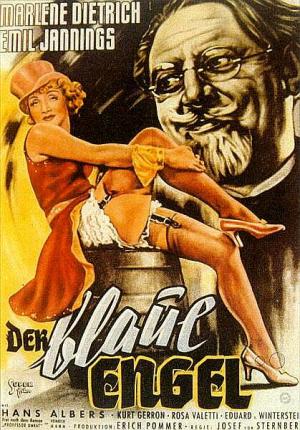
The Blue Angel (1930)

The Blue Angel (1930)

Dietrich lights up the screen in von Sternberg’s first fliration with sound but not his last with obsession

Director: Josef von Sternberg

Cast: Emil Jannings (Professor Immanuel Rath), Marlene Dietrich (Lola Lola), Kurt Gerron (Kiepert), Rosa Valetti (Gueste), Hans Alberts (Mazeppa), Reinhold Bernt (Clown), Eduard von Winterstein (School director), Rolf Muller (Angst), Roland Verno (Lohmann), Carl Balhaus (Ertzum)

Love and lust can be dangerous, all-consuming forces. Just ask Josef von Sternberg. It’s a rare film on his CV that isn’t about the self-destructive nature of longing. The Blue Angel is about obsession and its deadly consequences: but it’s also the birthplace of an obsession that would define von Sternberg’s own career. It’s the film where he discovered Dietrich. Did von Sternberg guess that, in time, he might himself become a version of the lovestruck Rath? I’d guess not, but the stench of sadomasochist excitement from complete prostration comes out of every frame of this classic.

Immanuel Rath (Emil Jannings) is a professor at the local gymnasium, preparing his students for university. Problem is, they are more interested in the goings-on at the seedy nightclub The Blue Angel than with Rath’s pompous lessons about Hamlet. Specifically, they are obsessed with Lola Lola (Marlene Dietrich), the erotic head-line singer. Rath tries to catch his students in the act – and instead finds himself smitten by Lola, leaving his career to marry her. Five years later, and Rath has lost every ounce of self-respect, regularly debased by the cabaret company and reduced to doing humiliating chores for his wife.

The Blue Angel was one of the first major sound movies made in Germany. Jannings – winner of the first Best Actor Oscar – was the biggest star in Germany and handpicked von Sternberg, who had directed him to that Oscar in Hollywood’s The Last Command, to make the film. Plans to make a film about Rasputin were ditched in favour of an adaptation of Heinrich Mann’s story about a professor who becomes infatuated with a cabaret singer. It’s a tragic tale of a man bought low by an unsuitable woman: however, von Sternberg (with Mann’s agreement) rewrote the plot into a parade of humiliation for the professor. Rather than a tragic figure, he would be a pompous man turned into a submissive, emasculated figure of mockery.

Is this what Jannings had in mind? Surely not. Von Sternberg was critical of the actor, believing his overly-expressive movements and facial expressions – so perfect for silent cinema – looked crude and ridiculous with sound. Jannings certainly seems more comfortable throughout The Blue Angel with reactions than dialogue: but even then, his wide eyes, double-takes and shocked mouth often seem too much. In art imitating life, he feels like the self-important “actor” being taken down a peg, marginalised in the frame and (by the end) smeared in clown make-up with the yolk of raw eggs running down his face.

Jannings was certainly unhappy with the focus of the film shifting powerfully to Dietrich. He was the star, but it’s Dietrich you remember. And no wonder, since von Sternberg’s camera can hardly take its eyes off her. Dietrich’s cabaret performances – recorded live – were a sensation. Just as much was her brooding sensuality, with Dietrich’s rawness as a performer guided by von Sternberg into an unforced naturalism. Where Jannings is large, she is small. Where he double takes, she raises a single arched eyebrow. Where he blusters, she quietly sits and cocks her head. Von Sternberg’s camera frequently centralises her in the frame as if trying to unwrap the enigma of this intriguing woman.

Who is Lola? You can watch in detail and never be sure. At times she’s a coquettish tease. At others a contemptuous dominatrix. But then she is also playful, sensitive and (at first) seems to find the idea of possible security and fatherly protection from Rath desirable and alluring. Dietrich’s performance constantly keeps us on our toes. Does she at expect to be protected by Rath, but finds his increasing submissiveness arousing (does Rath find the same?). Or was she – as she hints in her cold and manipulative second rendition of Falling in Love Again – always a manipulator of men? (I like to think the other clown in Act One is some sort of former lover of Lola, the sad eyes he uses when staring at Rath seeming to say “don’t make my mistakes”.)

Sex is central to The Blue Angel. Von Sternberg’s camera constantly catches Lola’s legs in frame – in one striking shot on a spiral staircase directly above Rath’s head. Dietrich swaggers and dips, her hips moving, her legs curled sensually. She’s lit like a mix of an angel and a Caravaggio-esque temptress. She takes a sort of twisted pleasure in demeaning Rath – reduced to cooling her curling iron and rolling her stockings on so she can head out to “entertain” more men. But, just as telling, Rath keeps coming back for me. Sure, he might shout and rage – but then he’ll humbly take his place on his knees in front of her.

The Blue Angel is strikingly decadent. While Rath’s classroom has a hide-bound Victorianism – with himself as a puffed-up Thomas Arnold – the nightclub is seedy, crammed with loutish clientele swigging beer. Lola’s dressing room is rundown, the pay is poor and the glamour almost non-existent. This is the underbelly of Weimar Germany, already feeling the pinch. Rath is reduced to selling dirty postcards of his wife – his dishevelled frame hawking these around the punters after her performances – and allowing her to entertain “private admirers”.

Humiliation becomes the heart of this beautifully made film. Shot by von Sternberg with his signature artistic richness – the unnamed town feels like a Dickensian blow back more than Germany of the time – with beautiful halos of light and a frame that constantly fills itself with dynamic movement, The Blue Angel culminates in high tragedy laced with farce. Rath, forced into performing a humiliating clown routine in his hometown, watches as his wife watches him while clasping her new lover to her lips. Is she seeing how far she can push her pet in his humiliation? Will nothing make him stand up to her? Is this always what she wanted or just what she finds she likes?

Either way, you can see here the formation of fascinations that von Sternberg would only let go further in future films (think of The Scarlet Empress which reimagines Catherine the Great as the ultimate dominatrix). It humiliates Jannings both textually and meta-textually – making him look like a hammy relic, next to the sensual naturalness of Dietrich. But it’s also one of the great films about the erotic desire to be belittled. It was von Sternberg’s calling card and it cemented his desire to work with Dietrich again and again. Make of that what you will.

Note: The Blue Angel was of course made in the shadow of the rise of the Third Reich. Dietrich narrowly beat out Leni Riefenstahl for her role. Goebbels later banned the film for being “Jewish”. Of its three stars: Dietrich was a passionate anti-Nazi campaigner. Emil Jannings became the most famous actor to support the Nazis (which ended his career after the war). And, tragically, Kurt Gerron and his wife were murdered in Auschwitz.

The White Ribbon (2009)

The kids are not all right in Michael Haneke’s The White Ribbon

Director: Michael Haneke

Cast: Christian Friedel (Teacher), Ernst Jacobi (Narrator), Burghart Klaußner (Pastor), Steffi Kühnert (Pastor’s wife), Rainer Bock (Doctor), Susanne Lothar (Midwife), Roane Duran (Anna), Leonie Benesch (Eva), Ulrich Tukur (Baron), Ursina Lardi (Baroness), Maria-Victoria Dragus (Klara), Leonard Proxauf (Martin), Josef Bierbichler (Baron’s steward)

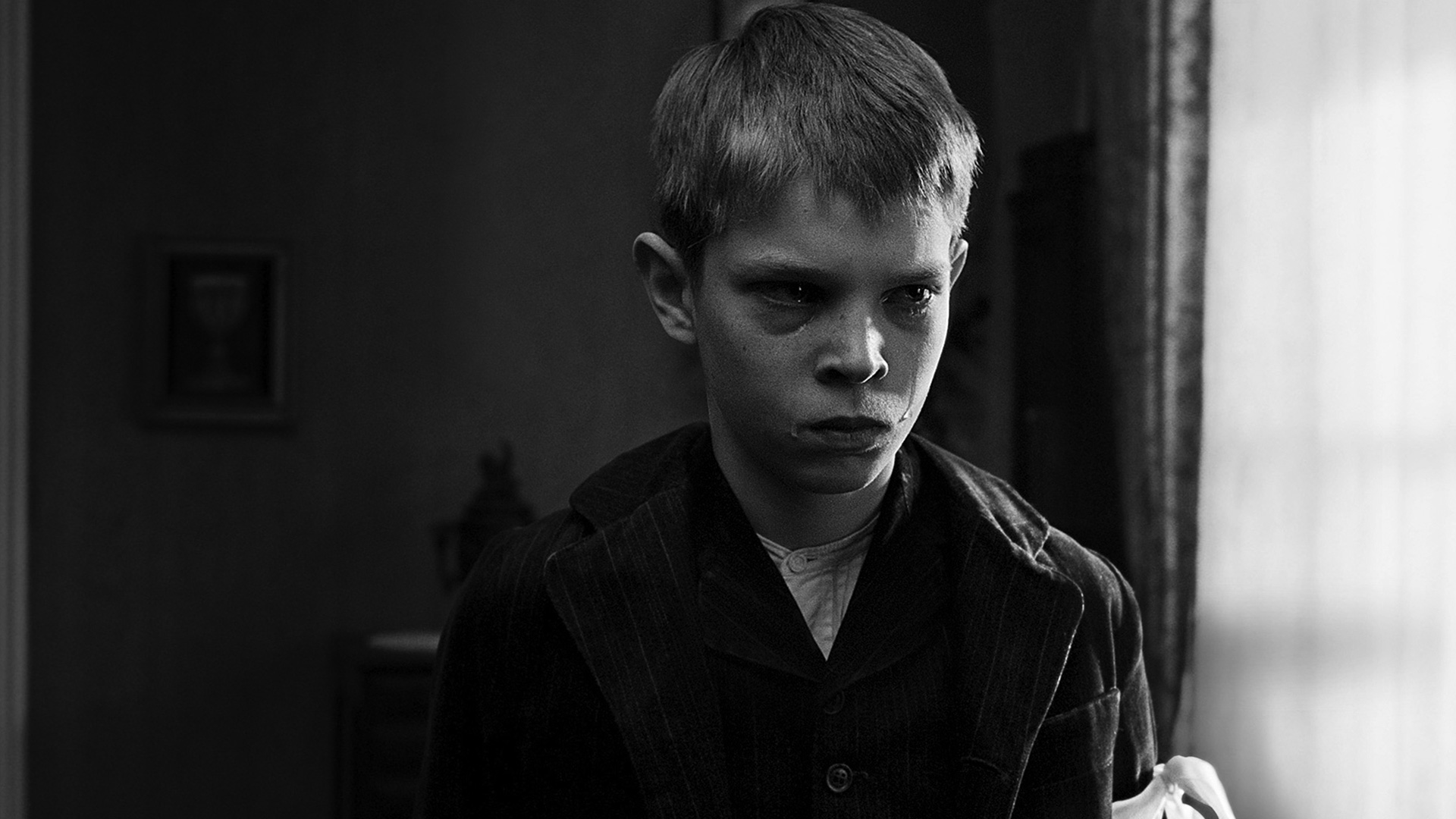
I think it’s fair to say Michael Haneke has a mixed view of humanity. His films look at the dark side of human nature, and the hypocrisies and cruelty underpinning much of our society. The White Ribbon explores these ideas further, a parable focusing on a small German village in the months before World War One, looking at how the life in one village perhaps helped lay the moral and societal groundwork for the younger generation to grow up and embrace Nazism.

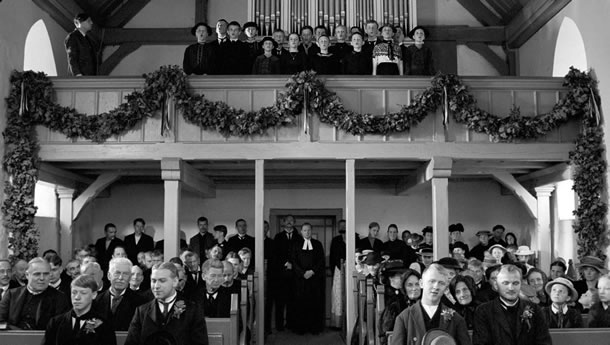
In the fictional village of Eichwald, tradition is strong. The town, and its morals, are governed by traditional authority figures. However, each of these figures fails to live up to the values they – often brutally – enforce on the village and, most especially, its children. The Baron (Ulrich Tukur) is a distant autocrat, who talks of a duty of care but treats the villagers like property. The pastor (Burghart Klaußner) preaches morality and abstinence, but bullies his (many) children and condemns utterly even the slightest deviation from his own rules. The doctor (Rainer Bock) is a studious clinician, who humiliates and devalues his lover, the town’s midwife (Susanne Lothar), and sexually abuses his teenage daughter Anna (Roane Duran). In late 1913, a series of unexplained and increasingly violent events occur, from an attempt to cripple the doctor to arson, kidnap, theft and the beating of the midwife’s handicapped son. The perpetrators remain a mystery – one which the decent but ineffectual teacher (Christian Friedel) attempts to uncover – his older self (Ernst Jacobi) providing an, at times, naïve narration.

Haneke’s aim is to explore the conditions that led a generation to embrace a regime that promotes the unthinkable. While it’s clear that a future of Hitler and fascism – neither mentioned once in the film – hover over everything, this parable could serve for any totalitarian regime. Haneke is not interested in specifics. What fascinates the director is the creation of a mind-set that enables people to willingly align themselves with horrific actions. The brilliance of The White Ribbon is that could be as easily applied to Stalinism and the Khmer Rouge as it can to Nazism.

Shot in a beautiful black-and-white, the film presents a series of striking images, imbued with an immense psychological depth and haunting sense of dread. Haneke’s mastery of visual imagery is sublime, and he paces the film perfectly. While it is easy to claim the film is slow – and it does take its time – the deliberation of the pacing, and the precision of each shot, is all part of giving the film its thematic weight. It’s like a medieval passion play, with every moment giving depth to the whole.

The film’s focus is on the children – tellingly, only characters below the age of about 20 are named. It’s their faces the camera returns to time and again – and the film is set in a key moment of many of their lives, where disillusionment with adults begin. The age when they begin to realise their parents are far from perfect and even hypocritical. The film more than suggests that it is the children – working in some combination or alone – responsible for the crimes that take place in the village. Their motivations range from anger and resentment to despair and a longing for escape.

Many of these events centre around the pastor’s family. Played with a perfect emotional austerity by Burghart Klaußner, the pastor judges all around him as unworthy, with his children suffering the brunt of his discipline. It’s easy to see he is overly harsh, hypocritical (the sheer number of his children suggests he hasn’t worked hard to suppress his own sexual feelings) and unjust. His son is tied to his bed while he sleeps to prevent “impure touching” and his daughter is blamed, and publicly humiliated by him, for a school disturbance she is trying to stop. He’s a father who demands respect but cannot inspire love.

Almost worst of all, he requires his children to wear a white ribbon, to constantly remind them of moral standards they have failed to live up to. These acts of stigmatisation and bullying are not balanced with any outward affection – whatever he may actually feel, the pastor is far too restrained to show any warmth – and Haneke demonstrates his children are taking all the wrong lessons from him. The learn to be cold, distant and judgemental, and that strength is vital and weaknesses are not to be tolerated: they beat out individual thinking, and replace it with cold conformity. A basically good man – and the pastor clearly believes he is doing his best to protect his children – rears children who see others as inferior and different, and stigmatisation as an essential part of life.

The whole village lives in medieval thrall to the baron. You could be believe this village was hundreds of years in the past, not a single century. The villagers slave on the baron’s fields, meekly tugging their forelocks to him in church. The baron takes unilateral decisions affecting everyone’s lives. His own family life is cold – his wife doesn’t love him (and her sexual, not romantic, faithfulness is the only thing that matters to him), while his weak young son is the victim of at least two crimes. It’s a pattern of distant, selfish authorities who believe they work for the good of the community, while taking everything they can from it.

But then corruption is also endemic at the home. Rainer Bock gives a chilling performance as the local doctor, respected by the community for his dedication, who treats those closest to him with disdain at best, and abusive cruelty at worst. A controlling, cruel man, the doctor is the clearest example in the film of the hypocrisy of the older generation, demanding respect, decency and obedience from the younger, while treating them with selfish vileness.

Haneke’s film is a grim – and disturbing – study of this sort of everyday horror and it effect on the psyche. The dehumanisation of the young is clear, and the growing casual cruelty they begin to dish out to others becomes more and more striking. The film taps into a Wyndhamish fear of the young, the children moving in packs, their respectful words not matching their air of menace. This unsettling feeling only grows because, for many of the crimes, we are never given a firm answer to who carries them out (although we can guess). Saying that, at least three acts of violence and sabotage are explicitly shown, all of them carried out by the young – enough for the viewer to suspect the others can be tied to the same generation.

The film does pepper itself with touches of hope – enough to suggest not everyone is destined to succumb to malevolent forces. The schoolteacher – sweetly played by Christian Friedel – is well-meaning, if ineffectual, and his courtship of the baron’s dismissed nanny Eva (an endearing Leonie Benesch) has a charming bashfulness. (Although the fact the couple are brow-beaten into postponing their marriage by her domineering father reminds us of the dominance of the older generation). After the pastor’s pet bird is killed (by his daughter, who crucifies the creature on his desk), he is moved to tears when his youngest son offers him his own pet bird to make him feel better (although inevitably the offer only promotes a curt “thank you” from the Pastor while his son is in the room). The women of the older generation all show signs for reluctance or discontent with the behaviour of the patriarchs, although any protest is of course in vain.

It’s touches like this that prevent Haneke’s film from being a lecture. The village isn’t inherently bad, just terribly misguided. This all enforces the universality of the film. You’re kidding yourself if you think this could only happen in Germany. These generational clashes and the twisting of an entire generation could happen anywhere. The world is what we make it, and the white ribbons that help us remember our innocence can just as easily be used to categorise us as the worthy and the unworthy. Haneke’s film is a brilliant, profound and challenging piece of work that rewards thought, analysis and rewatching. Quite possibly his masterpiece. 

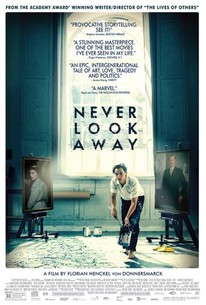
Never Look Away (2019)

Tom Schilling excels in this shadowy Gerhard Richter biography Never Look Away

Director: Florian Henckel von Donnersmarck

Cast: Tom Schilling (Kurt Barnet), Sebastian Koch (Professor Carl Seeband), Paula Beer (Ellie Seeband), Saskia Rosendahl (Elisabeth May), Oliver Masucci (Professor Antonius van Verten), Ina Weisse (Martha Seeband), Rainer Bock (Dr Burghart Kroll), Hanno Koffler (Gunther Presueer)

In 2006 The Lives of Others propelled Florian Henckel von Donnersmarck to the fore-front of the European Arts Film circle. His follow-up, the Depp/Jolie starrer The Tourist was a disaster that sent him spiralling back. Now von Donnersmarck returns to German cinema – and the travails and divides of a country split for a large chunk of the 20th century into East and West – with Never Look Away a film heavily inspired by the life and work of famed German artist Gerhard Richter, with splashes of German history and it’s difficult relationship with both fascism and socialism.

Kurt Barnett is an artist growing up in Nazi Germany, living outside Dresden after his father lost his teaching job due to his reluctance to join the party. Barnett’s family is hit hard during the way – his two young uncles are killed, Dresden (and everyone he knows) is destroyed. Worst of all his inspirational artistic sister Elisabeth (Saskia Rosendahl) is diagnosed with schizophrenia and is quietly killed during the Nazi programme of removing “unsuitable elements” from German society. That decision is taken by Professor Carl Seeband (Sebastian Koch), a natural survivor and amoral egotist who later makes the adjustment smoothly to living in the Socialist East. Barnett (played by Tom Schilling as a young man) meanwhile goes to East German art school, falling in love with a fashion student Ellie (Paula Beer), but struggling to find his own voice in an East Germany where all art must serve a social purpose. Will escape to the West bring freedom of thought?

Never Look Away is a mantra in the film, in an epic quasi-biography that explores the dark underbelly of German history, filtering the countries struggles to find some sort of freedom through the world of Art. It also has an unflinching eye for the losses and horrors of Nazi Germany, with the film never turning away from the brutal impact of the bombings of Dresden, the death of Kurt’s uncles on the Eastern front and (toughest of all) the shuffling of his tragic aunt into a gas chamber. 

But the film also works so well as a commentary on the silent repression Germany has suffered throughout the twentieth century, from the fear of stepping out of line with a contrary opinion in Nazi Germany, to the repression of individualist thought under Communist East Germany. “Never Look Away” are the last words Elisabeth speaks to Kurt – and it’s what fuels his eventual move towards Art that comments on reality with its blurred reproductions of personal snapshots and images (see Gerard Richter’s art). 

Von Donnersmarck uses art as a neat commentary for these ideas by showing how, in each era of Germany, the comments and views of art reflect each other. The film opens with the young Kurt and Elisabeth taking a tour around a Nazi “Degenerate Art” exhibition in Dresden, which suggests the likes of Picasso and Dali are either insane, moral degenerates, perverts or all three for their failure to create art that properly reflects nature. Later at the East German art school, the same artists are denounced again for failing to carry a proper and correct social message in their work. The tables are turned in the free Germany of the 1960s, where Modern exhibitionist art is all the rage, and paint and canvas is so passeas to be almost vulgar. Three different political spectrums, three very different dictates from society about what constitutes art.

How’s a man to find himself, and his personal expression as an artist, in the middle of this? Kurt is a gifted painter and drawer, but in every era his work is moved towards what is expected of him. As a boy in Germany he hides his impressionist sketches. In East Germany he becomes a famous painter of socialist images and murals. In the art college he tries to shift his style into the experimental alleyways of his peers – work that his professor (played with a neat mixture of pretension and earnestness by Oliver Masucci) recognises his not his true voice. It takes putting his own spin on images and memories of the past – of careful reproductions than subtly blurred to reflect our own imperfect memories (a visual trick von Donnersmarck prepares us for throughout the film with Barnett watching things move in and out of focus as they happen before him) works perfectly.

The film throws together this mix of art and German history with a thick streak of melodrama, which should be ridiculous but basically seems to work. Contrivance and coincidence bring together the fates of Barnett and Professor Seeband, the man responsible for the death of his aunt, and bounds their lives together forever. It’s a narrative development that could make you groan, but somehow the film gets away with it. It probably mostly works because Sebastian Koch is excellent as Seebold, even if the man is so base, selfish, lacking in shame and principle and coldly, uncaringly ruthless that he feels at time almost like a cartoon. No deed of greed and bastardy is beneath him, and the score frequently underlines his villiany with a series of unsubtle cues. 

But it works because Koch’s Seebold is also a marvellous commentary on the flexibility of so many in Germany. Seamlessly he turns himself from proud SS sterilisation and termination doctor, into proud East German Socialist leader and finally into centre-piece of West German society as a leading surgeon. Just as art is bent and shifted, so Seebold represents how people will allow their lives and principles to adapt and shift with all the rest. It’s worth a bit of melodrama and some plot twists that lean on the unbelievable (and are based far less on reality than most of Richter’s life). 

But the sections that focus on Barnet/Richter are just as fine, and von Donnersmarck brings energy, excitement and joy to the act of art creation in the way few other film makers have done. Tom Schilling continues his excellent run of roles, as a passionate free-thinker, yearning to have the chance to find his own voice and Paula Beer is just as good as his wife, whose artistic soul is just as strong, even if she does get a (albeit moving) can-I-have-babies plotline. The relationship between these two is striking for its loving affection and genuine warmth. And it gives the film a real heart.

Never Look Away isn’t perfect, but in its marvellous expression of the joys of artistic creation and the way that art is bent and used for the needs of government and society, it has a lot to say. With excellent performances across the board – Schilling, Koch and Beer are fabulous – it is also a fascinating commentary on the schizophrenic nature of Germany itself throughout much of the twentieth century. Melodramatic and obvious at times – and even I will say overlong at nearly three hours – a thudding mix at times of points made with too much force, it’s also a marvellous exploration of art and artists. Von Donnersmarck is back.