Category: Ghost stories

Ghost (1990)

Ghost (1990)

Romance and the afterlife come together in a very earnest, but rather endearing, mega-hit

Director: Jerry Zucker

Cast: Patrick Swayze (Sam Wheat), Demi Moore (Molly Jensen), Whoopi Goldberg (Oda Mae Brown), Tony Goldwyn (Carl Bruner), Rick Aviles (Willie Lopez), Vincent Schiavelli (Subway ghost)

The biggest smash hit of 1990, Ghost turned Demi Moore into one of Hollywood’s biggest star, transformed ‘Unchained Melody’ into one of the most popular songs of all time and turned pottery into a hobby everyone thought they should try at least once. You wouldn’t have predicted any of this when you were pitched Ghost, helping to explain why nearly everyone in Hollywood turned it down. After all who wants a romantic film where the hero is six feet under and ectoplasmic by the end of the first act? Throw in that the film was directed by Jerry Zucker, best known for a parade of spoofs, comedies and farces and the smart money was on a bomb waiting to happen. Guess again.

Sam (Patrick Swayze) and Molly (Demi Moore) are a loving couple, living in New York: she’s a sculptor, he’s a banker (the sort of contrasting professions only Hollywood romantic couples have). They have big plans for the future; plans cut short when Sam is killed by a mugger. But Sam doesn’t move on with the bright heavenly light. Instead, he sticks around on Earth, wanting to be near Molly and desperate to find out who killed him. Something that’s hard to do when he can’t touch or move anything and no one can see or hear him except other ghosts. Two things change his (after)life – discovering his murder was only the tip of a pile of shady dealings at his bank that puts Molly in danger and fake-psychic Oda Mae Brown (Whoopi Goldberg) who isn’t quite as fake as she thought.

Ghost is extremely earnest and surprisingly endearing. Despite what the doubters said, from Romeo and Juliet to Titanic nothing gets people invested in a romance more than a tragic end. Ghost merely reshuffles the deck by placing this death at the start, then explores the on-going grief of two deeply bonded people, wrenched apart. It mixes that with familiar romance tropes: it doesn’t let Sam’s demise get in the way of the old “he just can’t say I love you too” chestnut (a Han Solo-ish ‘Ditto’ is his preferred response), inevitably finding a way to flip this in a later plot point.

Sure, it’s easy to giggle at the soft-focus obviousness of the lovey-dovey material between Swayze and Moore, but you can’t doubt their commitment or their natural chemistry. The film’s ace-in-the-hole of ‘Unchained Melody’-sound-tracked pottery turning into earth-rocking rumpy-pumpy is parody-bait, but kind-of-works in its soapy earnestness in showing how much they hunger for each other’s touch. (You could say it can’t be that good since they seem to fly through foreplay to climax in the time it takes a not-that-long song to play). Both actors are quite under-rated: Moore is perfectly tender and fragile (she was partly chosen for her ability to cry on a six-pence) but also tough and determined when the situation calls for it, while Swayze charmingly develops his character from cocky junior-master-of-the-universe to a deeper, more rounded man after he ceases to be alive.

Having stressed so much their tactile love in the film’s first act, it makes the afterlife hit harder. In this film haunting has the potential for a being a dull chore (the rules of haunting here were wonderfully parodied in BBC’s Ghosts sitcom): ghosts are stuck in whatever clothes they died in (without all the blood), can’t touch anything in the real world and end up sitting around waiting for they’re-not-sure-what. Dead Sam carries on one-sided conversations, tags behind Molly when she drives places and watches time go by so slowly. Ghost captures rather well the weakness of this situation: Sam sees all sorts of danger unfolding for Molly, but there is literally nothing he can do about it (a desperate Swayze thrashing his hand through things trying to stop them, plays rather well).

Ghost gets some brief meta-physical fun out of the lack of logic in ghosts being able to walk through walls and pass their hands through objects but can sit in chairs perfectly fine and never sink through floors (basically, don’t ask, as also parodied in Ghosts). It even chucks in some mildly-disturbing POV shots of what it looks like to Sam as he walks through someone else (icky basically). You can’t keep a high-flyer down though and Sam masters ‘ghost skills’ after what seems like a few hours training from an unbalanced poltergeist (a wonderfully twitchy Vincent Schiavelli), allowing him to interact with objects in the real world (he basically becomes an invincible superhero – and the ease he masters this makes me wonder why every single ghost can’t put aside an afternoon to learn how to do it. They’ve got the time after all!).

Of course, you couldn’t make a film about a man who can’t talk to anyone. Ghost has a trump-card in the Oscar-winning Whoopi Goldberg, having a whale of a time in a terrific comic performance as a hustling fraudster who unknowingly turns out to be a real psychic, eventually pushed into helping Sam. Goldberg provides nearly all of the film’s laughs – and her mad-cap energy makes an excellent contrast with the earnest leads – with her fast-talking frustration at the constant stream of interjections she hears from Sam (making conversations with other people rather challenging). It’s a role with several comic set-pieces, not least a crowded séance full of ghosts desperate to be heard, but also with heart as Oda Mae becomes a better person despite herself.

She does this of course by helping Sam root out exactly why he was murdered. The reveal of Sam’s secret nemesis will be a shock only to someone who has never seen a film before. Of course, his even cockier colleague and best friend (played with a sleazy desperation by a marvellously weasily Tony Goldwyn) is behind the shady financial dealings Sam was uncovering. Just to hammer home how much we loath Goldwyn’s Carl, he’s also a whiner, a guy who loves flashing his cash and makes some none-to-subtle topless moves on our grieving Molly. How dare he!

Ghost builds itself to a neat final confrontation that proves surprisingly affecting in its honesty (dead means dead) and its optimistic view of the afterlife as a place where love still lives on. Sure, it’s a bit corny and its weakness for teary, soft-focus romance is easy to poke fun at. But you can’t argue that it doesn’t work: it’s romantic, sweetly played, funny when it means to be (Goldberg is excellent) and surprisingly optimistic and feel-good.

The Sixth Sense (1999)

The Sixth Sense (1999)

Shyamalan’s opus has just enough to reward re-watching after the world learned its secret

Director: M. Night Shyamalan

Cast: Bruce Willis (Dr Malcolm Crowe), Haley Joel Osment (Cole Sear), Toni Collette (Lynn Sear), Olivia Williams (Anna Crowe), Donnie Wahlberg (Vincent Grey), Glenn Fitzgerald (Sean), Mischa Barton (Kyra Collins), Trevor Morgan (Tommy), Bruce Norris (Mr Cunningham)

Does this film have the most famous twist of all time? M. Night Shyamalan’s opus is so dominated by its final reveal (look away now) that Bruce Willis was is in fact a ghost, that every single viewing of it afterwards is focused on watching every second and seeing if you can spot the joins. I’m not sure if that has made for a long shelf-life or not for The Sixth Sense, an otherwise surprisingly sweet Stephen King-ish story of a child coming to terms with a miraculous power. Is there much more to The Sixth Sense by a third viewing though – can the magician’s trick land a third time?

I’d say just about. A year on from the shooting of famed child psychologist Dr Malcolm Crowe (Bruce Willis) by a former patient he failed to help, his traumatised wife Anna (Olivia Williams) has stopped speaking to him and Malcolm needs redemption. Could he find it with the case of troubled ten-year-old Cole Sear (Haley Joel Osment). Cole, despite his obvious good nature, is frequently moody and terrified by curious incidents. His mother Lynn (Toni Collette) despairs as Cole seemingly refuses to talk to her. Can there be truth in Cole’s belief that he can see, and talk with, dead people?

The Sixth Sense has the reputation of a supernatural chiller. But, bar a few jump scares as ghosts walk across screen to sudden, loud musical notes, it’s actually a far more gentle story. In Shyamalan’s world the ghosts are not malevolent or cruel – they are simply confused, lost souls (of course “some of them don’t even know they’re dead”) with unfinished business. They are, in other words, rather like the rest of us – and Cole’s realisation of this is actually rather sweet.

This humanity is the real triumph of the film, helped enormously by the untricksy care Shyamalan unfolds his story with. While almost every film he made since teetered from disappointment to disaster (with ever more desperate attempts to recapture the rug-pull zeitgeist to ever diminishing returns from increasingly savvy audiences), The Sixth Sense is a reminder of the road not taken. If Shyamalan had focused on small-scale, intimate character dramas like this he could have had quite the CV. His camera work is careful, often unobtrusive, gentle in its slow, immersive movement and he backs aware almost entirely from fast cutting. The Sixth Sense is really a spooky fairy tale.

It also creates an environment for four impressive actors to tackle four challenging roles. From Olivia Williams, whose marvellously detailed performance of utterly naturally not reacting goes a huge way to maintaining the film’s delicate tightrope to the (Oscar-nominated) Toni Collette, who superbly channels deep motherly love and pained helplessness under a blowsy exterior.

Bruce Willis (who only took the film on under contractual obligation) gives possibly his finest performance here. Suppressing his natural cocksure confidence into suppressed confusion and guilt, he convinces as an expert plagued with self-doubt. It’s a quiet, expressive performance that’s a tribute to the acting chops Willis had when he was moved beyond smirks.

It’s also a very supportive performance that helps bring the best out of a gifted child actor. Haley Joel Osment carries a large chunk of the film. He’s vulnerable and scared but also older than his years, alternating between the innocent excitement of a child and the weary reflection of a much older man. He creates a character you both want to comfort and also cheer for his growing strength. Shyamalan works with both actors to continually subtly shift the power balance between them without ever showing the film’s hand.

Because, of course, Cole knows the truth from the start – no one is better at spotting these things than him, and his unwillingness to speak to Malcolm within ear shot of others (such as during their first real consultation while his mother prepares dinner in the kitchen) speaks volumes. No wonder he keeps shooting him those looks of pity and concern which we, at first, interpret as fear.

You can’t escape that the film’s pretence, on repeated viewing, demands the viewer to reach some tenuous conclusions on how Ghosts operate. I think there is just enough there to suggest – from the sudden appearance and disappearance of ghosts – that they operate like we do in a dream, suddenly finding themselves in places with no memories of how they got there. They can move some objects, but only if they allow themselves to “see” them. They imagine what their own appearances are (the film implies Malcolm always appears in his blood soaked shirt to Cole, it’s just we see Malcolm’s perception of himself as a suited psychiatrist) and are subconsciously drawn towards people who can see them or who they have unfinished business with. The pretence just about sustains itself.

But is there more to the film than that? Pleasingly – and a little to my surprise – there is. While The Sixth Sense is more spooky than terrifying, that’s because it’s a film where helping and caring for people is the answer. No matter how horrific looking the ghosts seem, they are really scared people looking for help. This realisation – and the way Cole seemingly decides to commit his life to helping them – is actually extremely affecting. It’s a basic message of not judging a poltergeist by its cover, that really works.

It’s these beats that really work on a second or third viewing. I would trade the whole “he’s a ghost” twist for that gorgeous final scene between Collette and Osment in a car, where he finally confesses and shares a family secret from the grave to Collette’s initial confusion, anger and then emotional release. It’s a beautiful scene (it surely nailed Collette an Oscar nomination) and is the finest moment of Shyamalan’s career. It also shows the heart of the film – this is a parent-son film (with two parents), that’s about learning to love and accept. Everything else is really just set-dressing.

The magic trick (and Shyamalan hints at the sleight of hand he’s pulling by having Malcolm perform a similar distraction trick) may lose its mystique, but it then allows you to focus on the emotion that made you care about the trick in the first place. And, let’s be honest, the emotional heart is really what made the film a phenomenon. Any film can have a rug-pull twist – but it only really connects if people already cared about what they were watching. The Sixth Sense focuses on making sure we invest and it’s that which makes the film last, when all the glitz of the trick has faded.

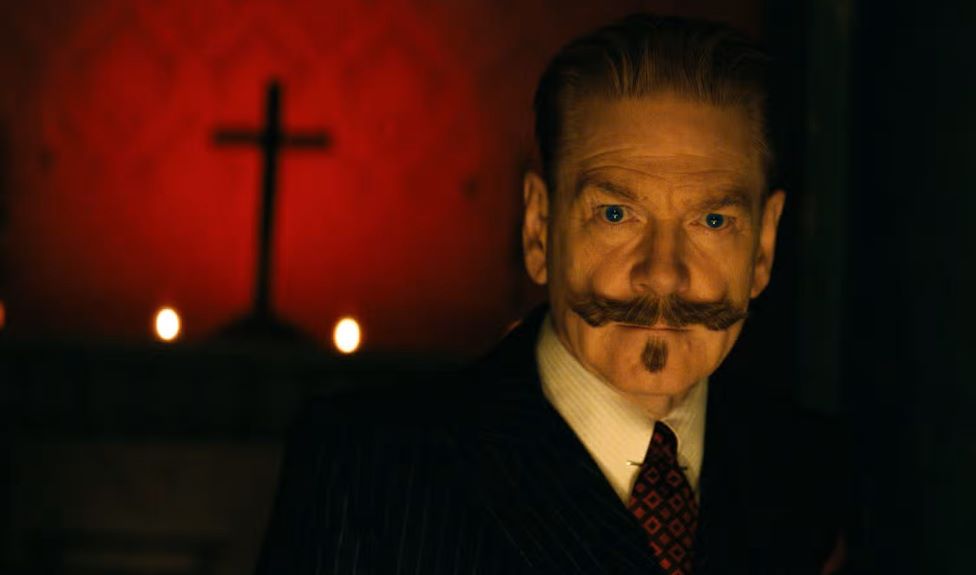
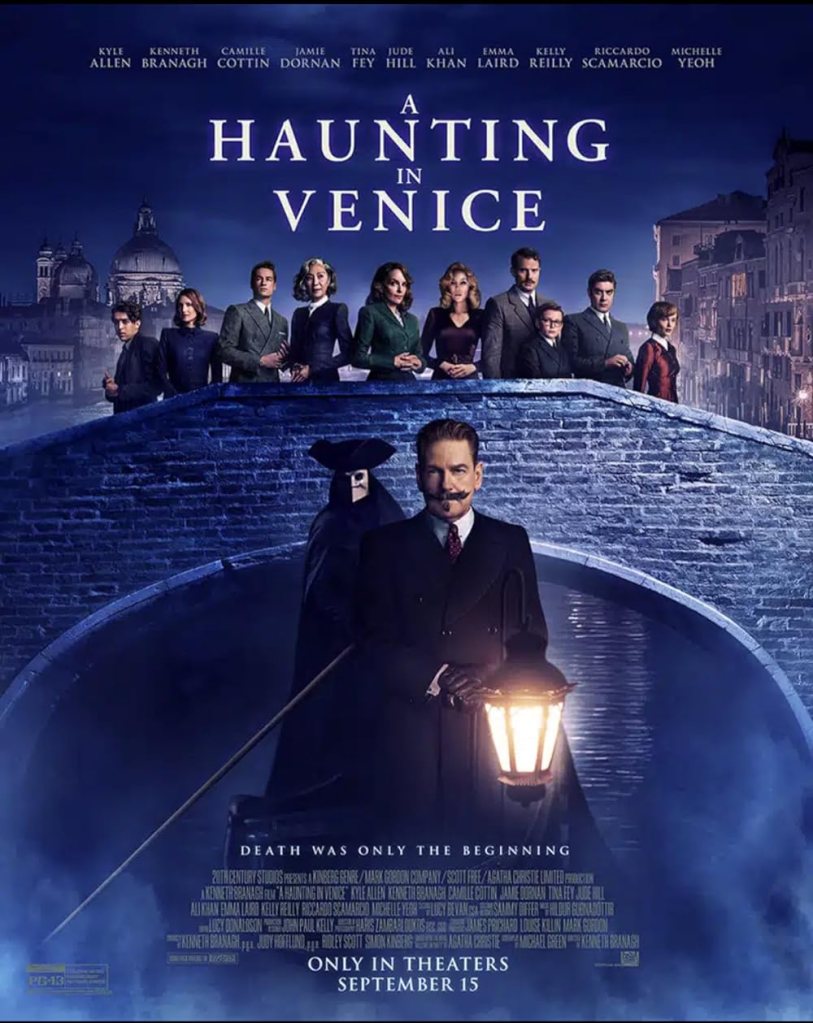
A Haunting in Venice (2023)

A Haunting in Venice (2023)

Branagh’s third Poirot outing lowers the scale but feels more real and involving than any others

Director: Kenneth Branagh

Cast: Kenneth Branagh (Hercule Poirot), Kyle Allen (Maxime Gerard), Camille Cottin (Olga Seminoff), Jamie Dornan (Dr Leslie Ferrier), Tina Fey (Ariadne Oliver), Jude Hill (Leopold Ferrier), Ali Khan (Nicholas Holland), Emma Laird (Desdemona Holland), Kelly Reilly (Rowena Drake), Riccardo Scamarcio (Vitale Portfoglio), Michelle Yeoh (Joyce Reynolds)

Branagh’s Poirot films have been a mixed bag. Big on starry cast and luscious locations, they’ve also succumbed too readily to bombast not to mention the sort-of tricksy directorial flourishes Branagh has such a weakness for. It’s a pleasant surprise then that A Haunting in Venice turns itself into the smallest-scale and tightest of his Poirot films and might just be the most successful of the lot.

It’s 1947 and a retired Hercule Poirot (Kenneth Branagh) lives as a recluse in Venice, studiously ignoring potential cases, his door firmly guarded by bodyguard (and retired policeman) Vitale Portfoglio (Riccardo Scamarcio). All this changes when he is visited by an old friend, crime novelist Ariadne Oliver (Tina Fey) who recruits Poirot to help debunk spiritualist Joyce Reynolds (Michelle Yeoh). Reynolds is conducting a séance for retired opera singer Rowena Drake (Kelly Reilly), still grieving the recent death of her daughter Alicia. With other guests including Alicia’s former fiancée Maxime (Kyle Allen), PTSD suffering Dr Ferrier (Jamie Dornan) and his precocious son Leopold (Jude Hill) and housekeeper Olga Seminoff (Camille Cotton), the stage is set when a storm and a murder all strike on the same night. Finally, Poirot takes up arms again.

A Haunting in Venice has a fair bit of latitude to work with since there is not an Agatha Christie Poirot mystery actually called that (or even set in Venice). Instead, this is a fast-and-loose adaptation of Hallowe’en Party (definitely one of the lesser-known books) which shifts its location, reshuffles the characters backgrounds, brings a few off-page murders very much “on page” and repackages the story to take place in a sadness-tinged, post-war misery which neatly reflects Poirot’s private grief and guilt at a life which has seen so much death.

This actually works rather well. Contrary to much of the publicity, which played up the horror elements, this is about a million miles away from The Exorcist (although Branagh clearly rewatched Don’t Look Now for Venice scares inspiration), offering instead a camp-fire spookiness and a couple of jump scares. A Haunting in Venice is actually the first Branagh Poirot that feels it would fit into the Suchet-Poirot mould: a slightly maudlin atmosphere mixed with gentle humour, a tight interview-based structure and a (thankful) reduction in gun-toting stand-offs.

A Haunting in Venice is predominantly set in one crumbling Venetian house over one night during a wild storm. The house is given a ghostly backstory of a medieval orphanage left walled-up to prevent a plague outbreak spreading – and there are suggestions of supernatural mischief (objects fall down seemingly on their own) at various points (most of which are swiftly debunked by Poirot). The film is shot and framed with a series of fish-eye lenses and some oblique angles (as per Branagh, the second shot of the film is a Dutch angle) to maximise the dimensions of the house but also at key points stress its claustrophobia, all of which works rather well. It’s moodily lit in a series of shadows (to maximise those spooky jump scares) but its horror elements are lite – a whirligig of screaming and bloodshot eyes at the séance are about as far as it goes.

Instead, it unfolds in a traditional manner, bookended by a prologue and epilogue that indulges the beauty of the location shooting (including a luscious final aerial shot over Venice). The film effectively uses its post-war setting to add emotional impact – after suffering through a war that claimed millions of lives, is it surprising that people are more susceptible to the attractions of taking to the dead? The impact of war blights several characters, from Jamie Dornan’s doctor (Dornan is very good in the role), forever scared by the sights he saw liberating Bergen Belsen to a pair of young Eastern European refugees who have fled the Nazis.

Poirot’s background as a soldier and his own traumatic familiarity with death are also rather neatly wrapped up in questions of his faith. In Branagh’s quiet, melancholic performance (where its clear moments of warmth are only covering deep regrets), it becomes clear his faith in God is as lost as his belief that the world can be improved by deduction. His rejection of spiritualism is pointedly based on a belief that there is nothing outside of the tangible.He fits in witha house awash with traumatised doctors, opera singers lost in grief, housemaids who feel their lives have no purpose and even a crime novelist who’s last three books were flops.

Tina Fey is very playful as this Agatha Christie self-portrait, bouncing effectively off Branagh’s more sombre Poirot. The cast is in fact uniformally strong – a reduced cast list from previous Branagh Poirot’s means each one feels slightly more developed. Yeoh bites into the juicy part of Joyce with movie-star confidence, Reilly is subtly fragile, Cottin and Scamarcio both effectively hiding secret depths. Jude Hill, fresh from playing the young Branagh in Belfast marks himself as a kid with a golden future with a stand-out turn as the mature, worldly-wise young Leopold, comforting and caring for his emotionally scarred Dad.

All of this is marshalled into a tight murder-mystery – we get a bit of Grand Guignal slaughter as well as an effective locked room mystery thrown on top (as well as a homage to the originals apple-bobbing murder) – with a Poirot who is unsettled and out of sorts (for reasons that I guessed but make perfect, secular sense when revealed). It even wraps up on a quietly affecting note of hope. By dialling down the flourishes, scale and action (even if Branagh can’t resist a snorricam shot of himself through the house), A Haunting in Venice actually becomes more rewarding than either of the previous films in the series – and Branagh’s Poirot remains a strong, very human interpretation of the character. Surprisingly, despite its playing with the supernatural, it feels more grounded and human and, despite effectively creating a new story, closer to Christie.

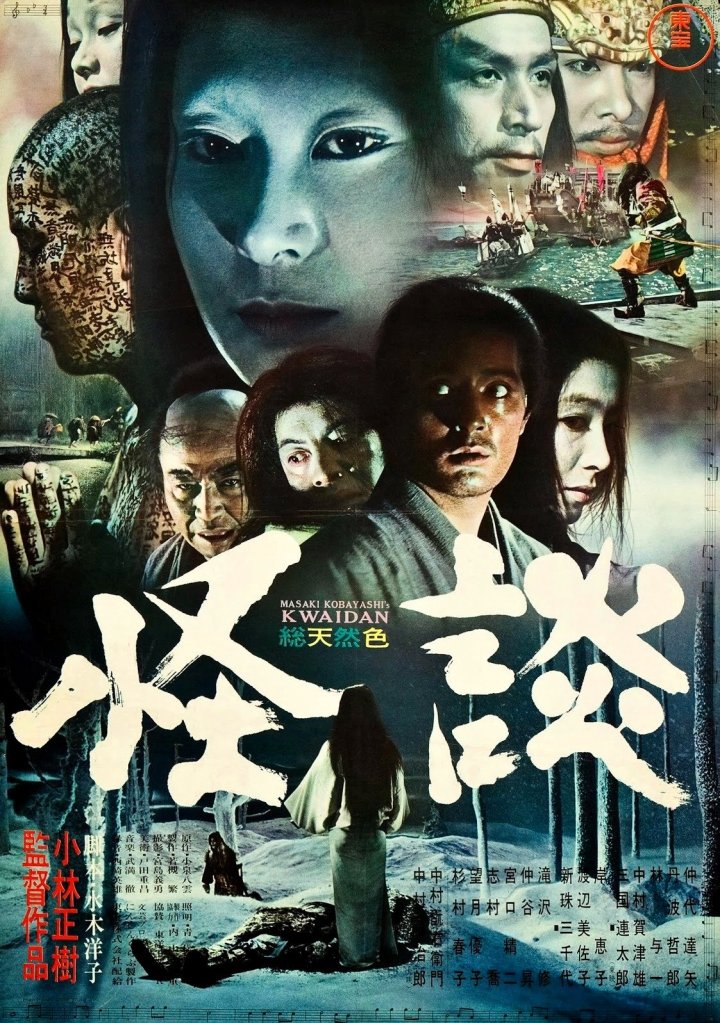
Kwaidan (1964)

Kwaidan (1964)

Unsettling dread abounds in this beautiful, terrifying collection of ghost stories

Director: Masaki Kobayashi

Cast: The Black Hair – Rentarō Mikuni (Samurai), Michiyo Aratama (First wife), Misako Watanabe (Second wife); The Woman of the Snow – Tatsuya Nakadai (Minokichi), Keiko Kishi (Yuki-Onna); Hoichi the Earless – Katsuo Nakamura (Hoichi), Tetsurō Tamba (Warrior), Takashi Shimura (Head priest); In a Cup of Tea – Osamu Takizawa (Author), Noboru Nakaya (Shikibu Heinai), Seiji Miyaguchi (Sekinai)

What is horror? For many people, it’s guts and gore. But I’ve always found far more unsettling the creeping terror of the unnatural, the unsettling dread of the unknown. The best ghost stories do this: the horror of encountering something that, by all logic, shouldn’t be there. The paralysing fear of coming face-to-face with something that surely cannot be real. The MR James style of ghost stories, where supernatural powers are unknowable and unrelenting. Kwaidan, Kobayaski’s collection of Lafcidio Hearn’s Japanese ghost stories, trades brilliantly in this – each of the stories contains moments of real spine-tingling dread that sent goosebumps racing over my body.

Kwaidan is built around four short stories, each separate but thematically linked. In The Black Hair, a samurai (Rentarō Mikuni) leaves his faithful first wife (Michiyo Aratama) for a loveless marriage with the daughter of a rich man. Realising his mistake, he finally returns to her but he stumbles into a haven that becomes a nightmare. In The Woman of the Snow, woodcutter Minokichi (Tatsuya Nakadai) encounters a terrible spirit (Keiko Kishi) in the forest who swears him to secrecy on pain of death – can he keep his silence from Yuki (Kishi again), the woman he marries? In Hoichi the Earless, Hoichi (Katsuo Nakamura) a blind ballad singer, is unwittingly hired by the spirits of a dead warlord. And in In a Cup of Tea, a samurai (Seiji Miyaguchi) is horrified when he sees a reflection that is not his own in a cup of tea.

Simple concepts – and in many cases you can see where this might be going just from the description – but the unnerving sense of dread and the uncontrollable inevitability of the supernatural horrors are what makes this truly terrifying. Kobayashi’s film is slow, careful, precise, and it is this very quality that contributes most effectively to its terror. As the camera moves slowly through unnaturally still and quiet locations, with a soundtrack made of a mix of silence and deeply unsettling, jarring chords and discordant sound from Toru Takemitsu, you actually feel like you want nothing more than to turn and run. Whatever Kobayashi’s camera is slowly edging towards showing us, we know it can’t be anything good. The expectation is a large part of the terror.

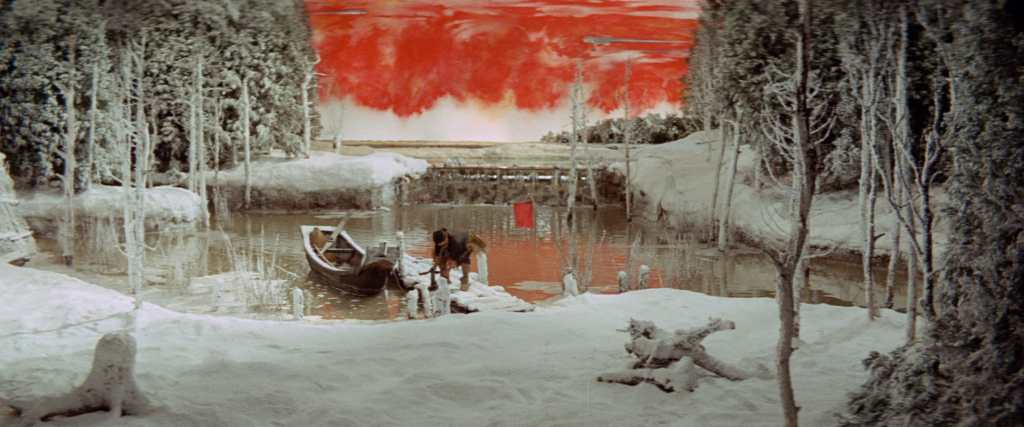
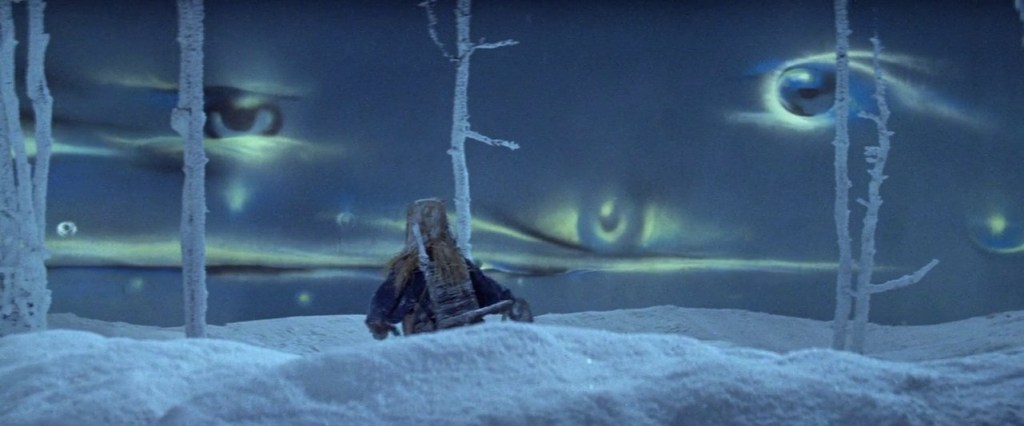
The unsettling world of Kwaidan is magnified by Kobayashi’s desire to control every element of the world he constructed. Bar a few shots of wave-lashed coasts and a Samurai riding competition (presumably too difficult to recreate inside), every scene was filmed inside a massive air-hanger studio. No attempt is made to disguise this. Instead, this exquisitely beautiful film makes a virtue of this to add to the unnerving sense of unreality. Skylines and backdrops are swirling whirlpools of paint and colour, never once trying to suggest a reality. Buildings, fields and even lakes subconsciously feel hemmed in by massive walls of painted unreality. It adds a terrifying fable quality – a nightmareish unreality – to the entire film.

It also makes Kwaidan a uniquely beautiful film. Not since Jack Cardiff’s work with Powell and Pressburger have scenery and backdrops looked as beautiful as this. Kwaidan is an explosion of gorgeous colours, used vividly and imaginatively to suggest mood, themes and threats. In The Woman of the Snow, the spirit seems to suck everything but blues and whites out of the palette – something we notice even more from the orangey skies that surround the woodcutter at every other point. The faded, paler colours in The Black Hair when the samurai returns to his first wife clue us in that all is surely not well. Splashes of red throughout spell danger – a coat, the lining of a pair of sandals, a torn flag, the lining of a cup, all of which the characters ignore.

They ignore these dangers at their peril. One of most dreadful things about the unsettling terrors of Kwaidan is that we can see the outcomes of their mistakes long before the characters do. The stomach-churning dread is waiting for it to happen. It’s executed to perfect effect in The Black Hair. The pompous samurai (a fine performance by Mikuni) is naturally due to be punished for abandoning his wife – and the faded home but unchanged wife he visits after years warn us well before him that horrors will follow. But Mikuni’s horrified shriek when confronted with the truth – and the staggering, nightmare-like, lack of control he seems to have over his body when he realises it (like a dream where you need to run but can’t) – makes this short chapter honestly one of the most unsettling things I’ve ever seen, a true Japanese MR James classic.

Equally fine is the second story The Woman of the Snow. It’s the most lusciously filmed of the four – its painted backdrops are Van Goghian works of art and the colour contrast between the warm summer and terrifying, pale blue winter is extraordinary. Its story is slight, but its spirit – Kishi moving with, again, a nightmarish precision that is deeply unnatural – is terrifyingly relentless. It offers no plot shocks, but the terror of inevitability, to excellent effect.

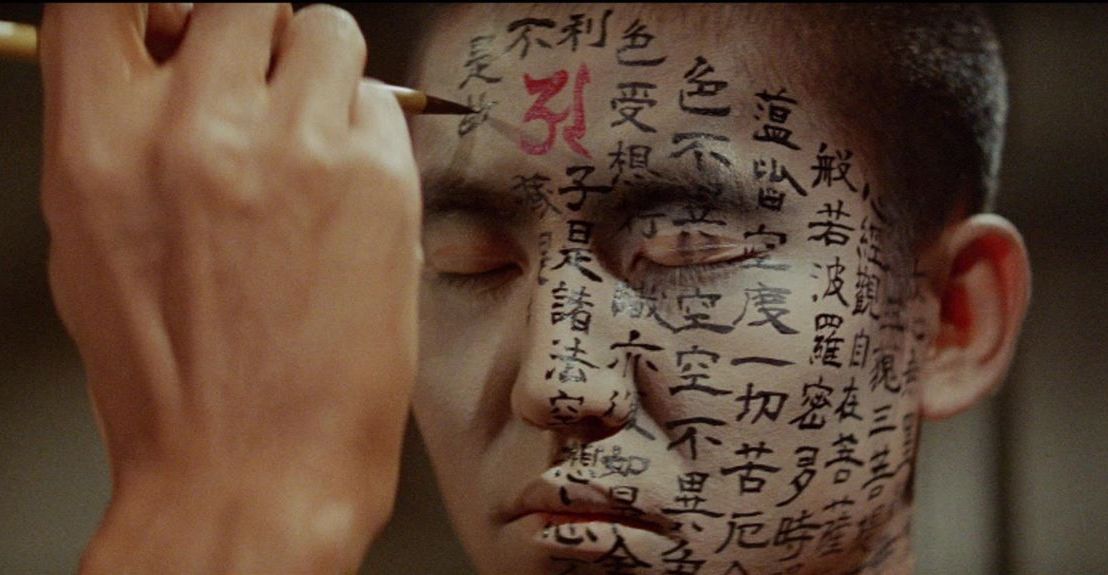
Kwaidan’s two final stories are less satisfying than these two masterpieces. Hoshi the Earless is very long – almost half the run time alone – and the story most dependent on an understanding of Japanese history. It recreates with a deliberately artificial beauty an ancient Japanese naval battle – clearly taking place in a water tank before a painted backdrop, but dreamlike in its execution, like a half-remembered vision, crammed with striking colours and images. The actual story of Hoshi is the least haunting, but provides Kwaidan’s most lingering cultural image, of a body covered (almost) from head to toe in writing to ward off spirits. Kwaidan concludes with a curiosity In a Cup of Toe a deliberately un-finished story – although the reason it remains unfinished provides Kwaidan with its final burst of shocking horror and another striking, unforgettable image of nightmarish dread.

Images of nightmarish dread abound in a film constructed intricately and deliberately artificially to heighten its sense of horror. The inevitability of many of the outcomes in its story detracts not one jot from the terror – if anything they add to it. Kobayashi’s direction is detailed, controlled, perfectly paced and wrings every last drop of unease from the audience. It’s a film that is long and slow, because the best terror often comes from the lingering slow-build – and its world of disjointed noises and sounds works perfectly to never allow the audience to relax. Kwaidan is an essential and masterful horror film, a collection of the sort of ghost stories that would make you run from the campfire.

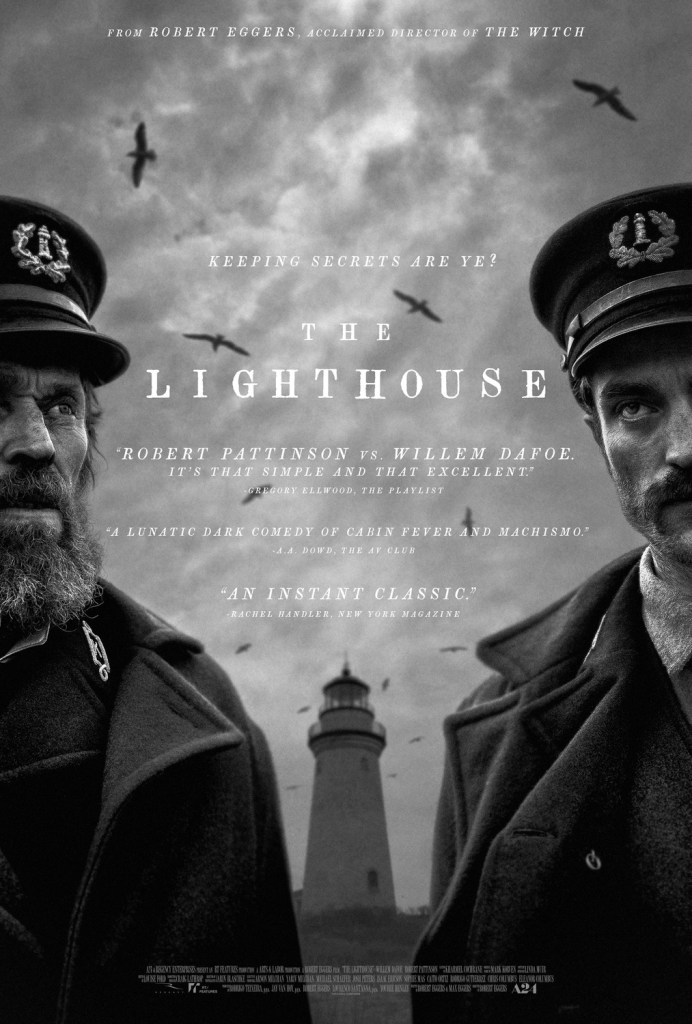
The Lighthouse (2019)

The Lighthouse (2019)

Undefinable, haunting madness in Robert Egger’s mesmeric film that defies categorisation

Director: Robert Eggers

Cast: Robert Pattinson (Ephraim Winslow), Willem Dafoe (Thomas Wake)

Who’d want to be a lighthouse keeper? Weeks on end, stuck on a rock, with nothing but sea gulls and your fellow keepers for company. The cabin fever might well start to make you feel your grip on reality shifting. You’d definitely think it was a strong chance watching Robert Eggers’ mesmeric, enthralling and undefinable masterpiece, a mix of everything from Victorian shlock to Greek Mythology via MR James and Edgar Allen Poe, by way of Freud and Jung. It’s impossible to work out, horrifyingly clear and deeply, unsettlingly brilliant.

Two ‘wickies’ (lighthouse keepers) in 1890s arrive on an island off the coast of New England. Thomas Wake (Willem Dafoe) is a (self-proclaimed?) salty-sea-dog and veteran wickie. He tends the light. His assistant, Ephraim Winslow (Robert Pattinson), is a former woodworker working on contract, seemingly on the run from something. He is the island’s dogsbody and tends the mechanisms that keep the light on and turning and the island’s fog-horn blaring. These two live cheek-by-jowl, a relationship that oscillates between distrust, resentment and strange warmth.

Things take an increasing turn for the bizarre, as a storm cuts them off from their scheduled relief. Slowly the isolation, supplies failure (gin and beans are seemingly the only food sources left) tap into the psychological flaws in the men themselves. Ephraim becomes ever more consumed by visions of a horrific but sensual mermaid. Wake obsessively guards his sole access to the lighthouse tower – and, Ephraim suspects, the mysteries it contains. Their relationship crosses boundaries of longing, violence and anger.

The Lighthouse is somewhere between parable, modern myth and psychological study. You could call it a horror film – I see it more as a classic ghost story – but you could just as easily call it a survivalist film, a character study or a psychological thriller. Egger’s insidiously unsettling film-making and the sublime acting from the two leads combine to make a film ripe for interpretation, and intensely rewarding on rewatch. It’s an explosion of artistic brilliance.

Shot in a superbly atmospheric black and white – and a claustrophobic academy ratio 4:3 – it’s a film that presents one striking, chilling, unforgettable visual image after another. Inspired by silent cinema – in particular Murnau, Lang and von Sternberg, although I spotted elements of Keaton – but as if moody German expressionism was used to shoot a Rorschach test. The inky blacks, and overwhelming bursts of blinding white light, suggest unimaginable horrors lurking out of sight, while its impressionistic imagery constantly pushes us to question the reality of the film.

It all builds on the superb feeling of isolation Eggers invokes. Rooms are small and crowded with furniture. The island is a bleak rock, shorn of any vegetation. The only wildlife is an army of seagulls. The blare of the island’s foghorn is continuous – sounding like a doom-laden rumble from Hell – that seeping into the viewer’s soul. Every corner of the lighthouse station becomes achingly familiar to the viewer and somewhere you can imagine not wanting to spend a second longer than you have to.

Stretching their vocal muscles around a script (written by Eggers and his brother Max) full of rich, chewy, Victoriania dialogue by way of Beckett and Pinter (in one compellingly funny sequence, the two actors basically shout “what” at each other over and over again) both are superb. Dafoe walks a fine line expertly between realism and Robert-Newton-esque parody, as the saltiest sea-dog imaginable, who can oscillate between surly admonitions and flights of myth-filled, metaphorical fancy. Pattinson dives head first into a man who we are never sure we fully understand: is he a frustrated time-server, a violent monster, a delusional schizophrenic, a little-boy lost? Either way it’s a truly brilliant performance of Day-Lewis level commitment and immersion.

You could have a lot of fun arguing that perhaps both men are two halves of the same fractured psyche (as if Wake is a future version of Ephraim, almost as if the film is him witnessing his own origins story). Certainly, as their film progresses, their personalities and histories begin to merge. It would help explain the curious emotional bond between them: at times they seem to almost hate each other, at another a drunken fight is only inches away from a sexual encounter. They laugh at and loath each other, are mutually dependent, plot each other’s destruction but then pathetically look at each other for reassurance and praise (Wake is heartbroken when Ephraim criticises his cooking, while Ephraim both resents and worships this hard-taskmaster father figure).

It’s a suspicion that could also be incited by the all-pervading weirdness on the island. Ephraim –carrying the burden of secret crimes on the mainland – see visions of a mermaid among logs, in which sexual encounters are mixed with the mermaid’s murderous attempts to drown him. His first-day searches of the house unearth a carving of a mermaid, which seems to fascinate and repel him – he takes to masturbating (joylessly) over it in the workshop. He seems to spy Wake worshiping, naked, the light during his long-night vigils up the tower (suspicious fluids drip down from here, along with half glimpses of mermaid tentacles). In any case, Wake guards his access to the light like a jealous lover, while his faith in sea mythology becomes increasingly less of a mantra and more of a framework to understand the world.

How much is real? Or is it a sign of Ephraim’s fractured, guilty, conscious? We see most of the events through his eyes – a man we know is a thief and, most likely, a killer. There is more than enough evidence that Ephraim is lying about his past as much to himself as he is Wake. Wake too is a liar – telling at least two versions of how he ended up with a gammy leg, enough to make you wonder how much his claims of being a sea-dog are true. As isolation and constant drink – the two spend most of the second half in various states of inebriation first from gin then turpentine – kick in, and they and their surroundings become increasingly dishevelled and fart-stenched.

There are dark powers at work on this island. Echoes of Greek Myths loom – Ephraim has traits of Prometheus, fascinated by a light horded by the Gods, the very light that Wake, Proteus like, is determined to keep to himself. Wake stresses that the gulls carry the souls of dead sailors – and the unsettling persistence these pester Ephraim with, is surpassed only by the violence with which he responds to them. Elements of Victorian ghost stories, hypnotism and gothic fiction combine in every corner of a film where we see very little but get a lot implied (powerful, Eisenstein and Bunuel-style, close-ups of faces and eyes imply powerful horrors out of shot).

The Lighthouse reminds me in many ways of the best of the BBC Ghost Stories of the 1970s in their unsettling, MR James-style unexplained (even unstated) horrors. There is a palpable air of horrific tension around the film, of an unexplained, unknowable force that could somewhere destroy both men – and has perhaps unsettled their minds. The film culminates in a superb, haunting shot as Ephraim comes face-to-face with something unknown that is pure MR James: we never see what caused the horror, only its terrible results. (It’s as terrifying as Whistle and I’ll Come to You or A Warning to the Curious where blind, over-confident curiosity leads to dreadful outcomes).

Eggers film is not a conventional horror film: I believe thinking of it as a deeply unsettling exploration of man’s vulnerability and weakness, ala MR James, is key. This is a story of unseen, imagined, unsettling horrors – but also a claustrophobic relationship drama, playing out like a psychological thriller as two men dance around destroying and seducing each other. It’s a complex Rubrik’s cube that rewards constant thought and attention. Beautifully filmed, superbly acted, compelling in every frame, it can claim to be one of the most unique and powerful American films of the 2010s.

Rebecca (1940)

Joan Fontaine and Laurence Olivier find married life isn’t a bed of roses in Rebecca

Director: Alfred Hitchcock

Cast: Joan Fontaine (The second Mrs de Winter), Laurence Olivier (Maxim de Winter), Judith Anderson (Mrs Danvers), George Sanders (Jack Favell), Reginald Denny (Frank Crawley), Gladys Cooper (Beatrice Lacy), C. Aubrey Smith (Colonel Julyan), Nigel Bruce (Major Giles Lacy), Florence Bates (Mrs Edythe Van Hopper), Edward Fielding (Frith), Leo G. Carroll (Dr Baker)

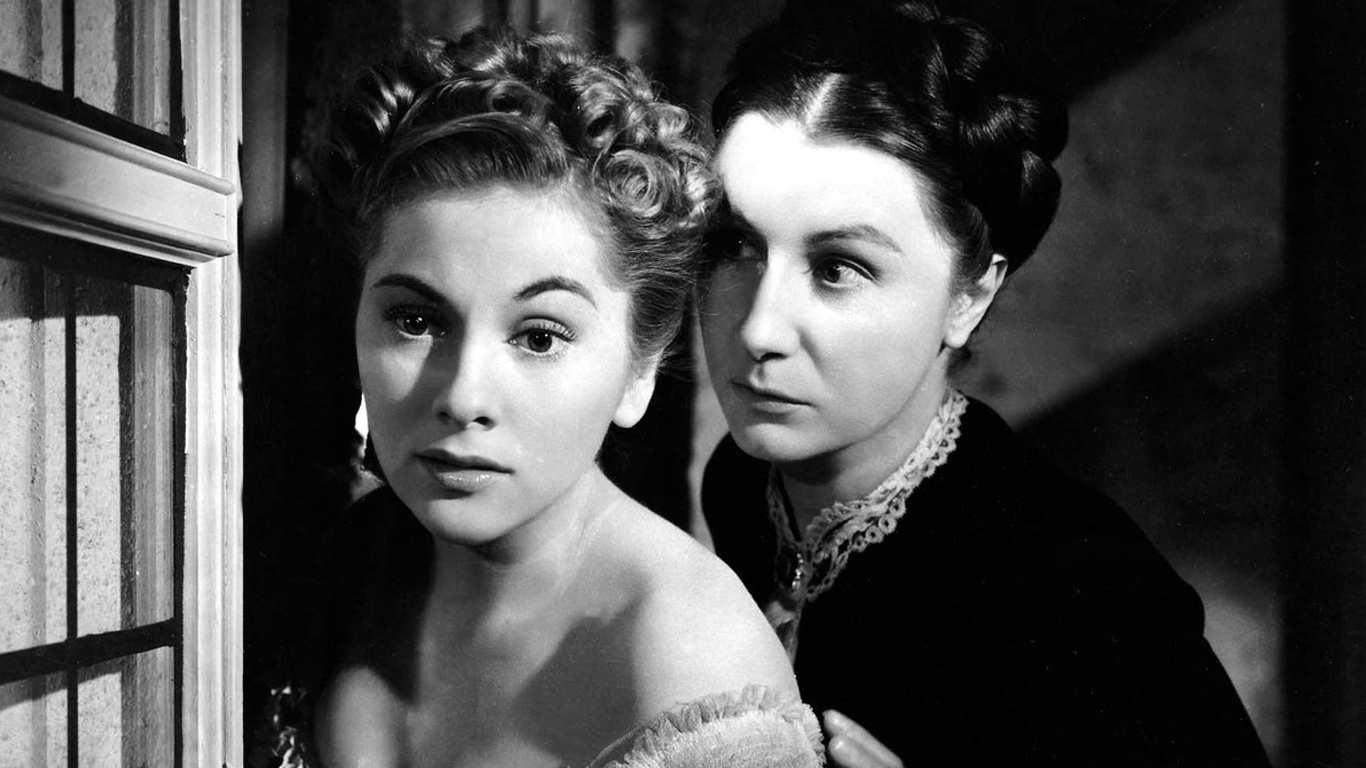
It’s impossible to know what people are really thinking isn’t it? Rebecca is a film all about secrets and misconceptions, the biggest enigma of them all being that title character, the deceased wife casting a ghostly shadow over every scene. Adapted from Daphne du Maurier’s best-selling novel, Rebecca was Hitchcock’s first American picture and a masterclass in atmosphere with a vulnerable and deeply sympathetic lead, packaged into a wonderfully entertaining film combining the best of producer David O. Selznick’s sense for literary translation with Hitchcock’s filmic virtuosity.

On the French Riviera, a naïve young woman (Joan Fontaine), working as a paid companion for widower Mrs Van Hopper (Florence Bates), meets and becomes engaged to the aristocratic Maxim de Winter (Laurence Olivier). Maxim is a widower, whose previous wife Rebecca drowned. Becoming the second Mrs de Winter, our heroine quickly finds herself out of her depth in Manderley, Maxim’s colossal country home. Every where she goes there are memories of Rebecca, her husband still seems to be in love with his first wife and the housekeeper Mrs Danvers (Judith Anderson), still fanatically loyal to Rebecca, takes every opportunity to subtly remind the second Mrs de Winter of her own inadequacy. But is there a darker mystery behind the death of Rebecca?

Hitchcock’s Oscar-winning film (his only one, although he didn’t get the Director award) is a gothic delight. The action takes place in a mist-filled Cornwall, in a house where every nook and cranny has a dark secret. From its opening sequence, with the camera tracking through a fogbound forest before emerging in sight of a the intimidatingly grand Manderley, this is a film swimming in atmosphere and a dread of dark, psychological secrets, wrapped up in a dynamic melodrama.

At its heart is the vulnerable second Mrs de Winter – so timid we never even learn her name – beautifully embodied by Joan Fontaine. Nervous, awkward and shy, her hands often clasped together and shoulders (under a parade of unglamourous cardigans) tense, she rarely (if ever) looks comfortable. Fontaine’s wonderfully judged performance makes her bashful and deferential but also kind and guileless. Her polite eagerness to do the right thing and help people makes us warm to her instantly. And it’s impossible not to empathise with this gentle middle-class girl, parachuted into being the grand mistress of a huge house. Everyone seems to find her wanting – even Maxim’s decent sister (a droll performance by Gladys Cooper) good naturedly criticises everything from her lack of hobbies to poor dress sense.

That house would make anyone feel inadequate. Hitchcock frequently shoots Fontaine dwarfed by Manderley’s huge interiors, with its walls which seem to stretch on forever. She looks like a small frightened rabbit, as hopelessly oppressed by the building as she is bewildered by the procedures involved in running a house like this. Plus, there are all those reminders of Rebecca – everything seems to carry a monograph and not an item in the house seems to be without her personal touch. In many ways Rebecca is a ghost story without a ghost, where Rebecca’s presence (or lack of it) dominates the entire world of the film.

And our heroine (so uncertain of who she is, she tells a phone caller “I’m sorry Mrs de Winter has been dead for some time” before she suddenly remembers that is now her) won’t be allowed to escape that legacy. Not least because Mrs Danvers is there to remind her. In a superbly cold, calculating and chilling performance of barely repressed obsessiveness, Judith Anderson is outstanding as this housekeeper from your nightmares. Mrs Danvers is determined to turn Manderley into a mausoleum to her lost mistress – and ideally the new Mrs de Winter into a human sacrifice. Hitchcock manages to suggest more than a hint of sexual obsession into Mrs Danvers – she fondles with awe Rebecca’s negligee, drapes herself in Rebecca’s fur coats and remembers her with a breathless intensity. It’s an obsession that makes her subtly unbalanced and deeply dangerous.

Rebecca contains many of the themes that would run through Hitchcock’s work. Obsession obviously has a dark hold over Manderley, not least over Maxim who has the air of a man capable of violence. Unspoken, unknown crimes haunt over Manderley. The death of Rebecca is constantly bought back to us, not least with the film’s continual visual reference to crashing waves. The second Mrs de Winter feels isolated and watched at every turn, a stranger (and potential victim) in her own home. Several shots hammer home giddy, vertigo-inducing heights – from Maxim’s introduction on the cliffs, to the long drop from the heights of Manderley which Mrs Danvers urges a distraught Mrs de Winter to consider taking.

But what’s superb about Rebecca is that the reveals we expect to find are of course totally different to the reveals we get. A lot of this hinges on Olivier’s complicated and fascinating performance as Maxim. In many ways a man of total self-assurance – he barely breaks away from his breakfast to phone Mrs Van Hopper and inform her he will marry her companion – the more time we spend with him, the more his vulnerability, insecurity becomes clear, as does his patrician pride which leads to a self-damaging bluntness. When the secrets are revealed, its striking how this scion of the upper classes becomes suddenly lost – just as finally receiving some answers and reassurance turns Fontaine’s Mrs de Winter into someone more sure of herself than we have ever seen.

The film’s final act spools out a well-paced, intriguing courtroom drama, turned reversed murder-mystery. While some of the original novel’s developments are changed for code-related reasons (the usual provisos on crime and punishment), it makes very little impact on the compelling nature of the vice that seems to be trapping Maxim and his wife. Much of this is powered by George Sander’s superbly hissable turn as a preening playboy (and total shit), purring lines such as “I say marriage to Max is hardly a bed of roses is it?” with a near sadistic glee. It builds to a denouement straight out of horror, with Mrs Danvers taking rightful place as a demonic lord of misrule.

Rebecca was a product of the collaboration between Selznick and Hitchcock: two strong personalities who knew their own mind. Their relationship was fraught and troubled – they basically agreed on almost nothing – but the clash produced a work that stands as some of their best. Selznick demanded Hitchcock stick to the book – he had wanted to name the lead character ‘Daphne’, and introduce a running joke of sea sickness and a Jane Eyre-ish ‘mad woman in the attic’ – and in turn Hitchcock refused to film Selznick’s suggested flourishes (such as a smokey “R” filling the night sky for the final shot). Goes to show that conflict can produce great art.

Rebecca is an outstanding gothic melodrama, superbly acted (there is not a weak link in the cast) and brilliantly directed with a mist-filled flair and sense of heightened tension. A fascinating psychological puzzle while also being superbly gripping entertaining, it’s one of the finest Best Picture winning films of all time.

The Little Stranger (2018)

Little stranger header
Domhnall Gleeson doesn’t believe in ghosts in The Little Stranger

Director: Lenny Abrahamson

Cast: Domhnall Gleeson (Dr Faraday), Ruth Wilson (Caroline Ayres), Will Poulter (Roderick Ayres), Liv Hill (Betty), Charlotte Rampling (Mrs Ayres), Harry Hadden-Paton (Dr David Granger), Anna Madeley (Anne Granger), Richard McCabe (Dr Seeley)

Can an adaptation of a novel work when the key to its success was the way it was told rather than the story itself? With its unreliable narrator and distinctively interior style, Sarah Waters’ book was a tough ask. But, making it even harder for the big screen, The Little Stranger is a ghost story narrated by a fervent non-believer, who witnesses none of the supernatural elements and spends his time finding detailed, logical reasons for why the people living in the haunted house are as unsettled as they are. It makes for a challenge which, for all the style Lenny Abrahamson brings, the film doesn’t quite manage to meet.

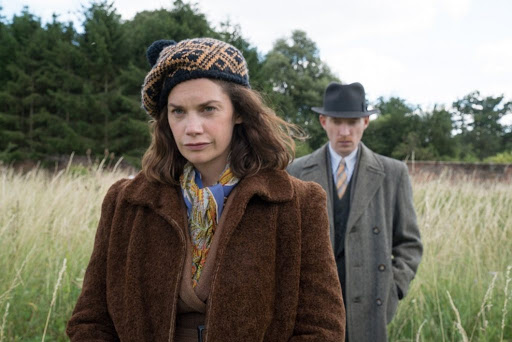
Our sceptic is Dr Faraday (Domhnall Gleeson), a young village GP in the years immediately after the Second World War. Faraday grew up in the shadow of the Ayres house, a grand country seat now being lived in by the last remnants of the Ayres family who have fallen on hard times. Son Roderick (Will Poulter) has been left with debilitating injuries after his RAF service, Caroline (Ruth Wilson) seems destined to become a spinster, and their mother (Charlotte Rampling) struggles to hold together what’s left of the house’s prestige, among leaking roofs and bills that can’t be paid. Dr Faraday becomes an intimate of the household. But are the family’s problems partly linked to a malign presence in the house, perhaps the unsettled ghost of a third, long-dead Ayres sibling? Or is it all just bad luck, frozen pipes, branches on the window and creaking floorboards?

Well of course it isn’t. The film’s main problem is that it takes a book where the narrator spends the entire time stubbornly refusing to accept he is in a ghost story, and repackages it as a more conventional tale of creeps and psychological horror. While moments like this are undoubtedly unsettling, it rather flies in the face of what made the book unique in the first place.

In the book you find yourself – despite knowing deep down he’s wrong, because that’s not how stories work – thinking that maybe all this is just a series of terrible coincidences impacting a psychologically fragile family. In the film, you are never in any doubt that the ghosts are real. Not least, because we are frequently witness to supernatural events. When Charlotte Rampling’s character is terrified in the nursery by the ghost of her lost child, we share the terror with her. A truer adaptation of the book would have only shown us the aftermath – a trembling woman on the ground surrounded with broken glass – and asked us if we shared Faraday’s diagnosis of suicidal depression.

The change in perspective from the book has a particularly bad impact on the Faraday character. Faraday, deep down, is a sort of chippy Charles Ryder, as much in love with the house – and the prospect of one day owning it – as he is with the family itself. This mix of longing, envy and class jealousy bubbles under the surface of the character in the book, qualities that we have to read between the lines to detect. In the film however, these qualities are bought firmly to the surface.

This means that, for all Domhnall Gleeson has just the right rigidity and lack of imagination for the born sceptic, it means the character’s sinister possessiveness towards the Ayres house comes more to the fore. In the film it’s hard to escape the sense Faraday is as much a creep as the ghost (something the film even perhaps vaguely suggests in its open-ended conclusion). He’s cold and undeniably bitter, quietly but resentfully recording each moment where he is treated like a retainer.

The film also loses some of the context of the book as well. Part of the reason this house is falling apart is the declining wealth of the family in a world of post-war depression and higher death duties. Today the Ayres house would have been long since flogged to the National Trust. The crumbling house – compared to the grand vision in Faraday’s memories – is itself a metaphor for a particular class in Britain. However, this gets a bit lost in the film. Instead it’s easy to see the Ayres as just personally unlucky rather than symptomatic of a general collapse of the landed class.

But the film does do lots of good things. The ghost stuff is undeniably creepy – even if, as I say, it leaves the viewer in no doubt that Faraday is wrong and the Ayres are right. Will Poulter is very good in a small role as the bitter and scarred son, while Wilson captures a sense of premature middle-aged drift in Caroline, a woman unhappy in her life but unsure what she wants. Rampling is similarly very strong as a crumbling matriarch.

The film also looks lovely – perhaps too lovely, with its idealised view of a 1950s that surely was dirtier than this – and is well assembled. It just fails to bring a narrative drive to the film to replace the uncertainty and scepticism of the narrative voice that made the book so strong. There Faraday’s dismissals and self-denial about his class envy were what made the story compelling: here they are both removed – and what’s left isn’t quite interesting or unique enough to fill the gap.

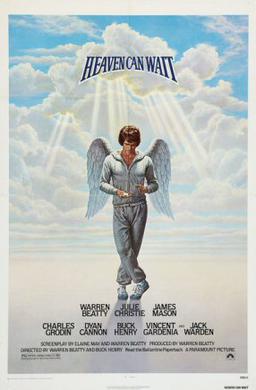
Here Comes Mr Jordan (1941)

Edward Everett Horton, Robert Montgomery and Claude Rains deal with death, admin and body swops in Here Comes Mr. Jordan

Director: Alexander Hall

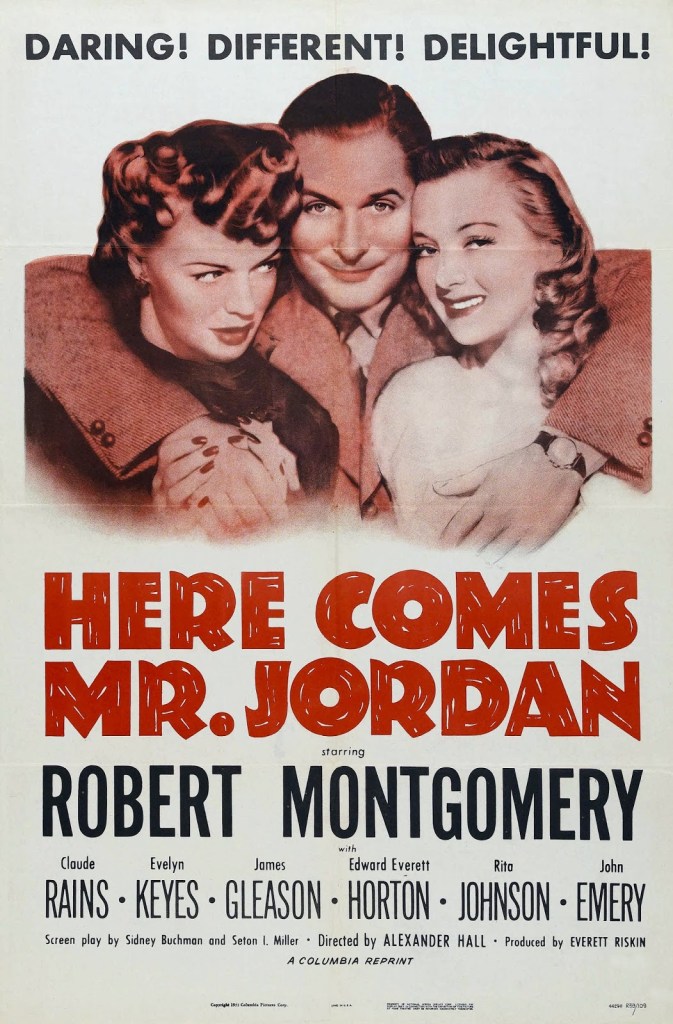
Cast: Robert Montgomery (Joe Pendleton), Evelyn Keyes (Bette Logan), Claude Rains (Mr Jordan), Rita Johnson (Julia Farnsworth), Edward Everett Horton (Messenger 7013), James Gleason (Max “Pop” Corkle), John Emery (Tony Abbott), Donald MacBride (Inspector Williams), Don Costello (Lefty), Halliwell Hobbes (Sisk)

One of the best things about the Hollywood Studio system is that created an environment where middle-brow talents could suddenly lift themselves up to create something very special. That’s certainly the case with Here Comes Mr Jordan, the career high spot for its director and its main stars. It’s the sort of product of Classic Hollywood where everything comes together perfectly and delightfully.

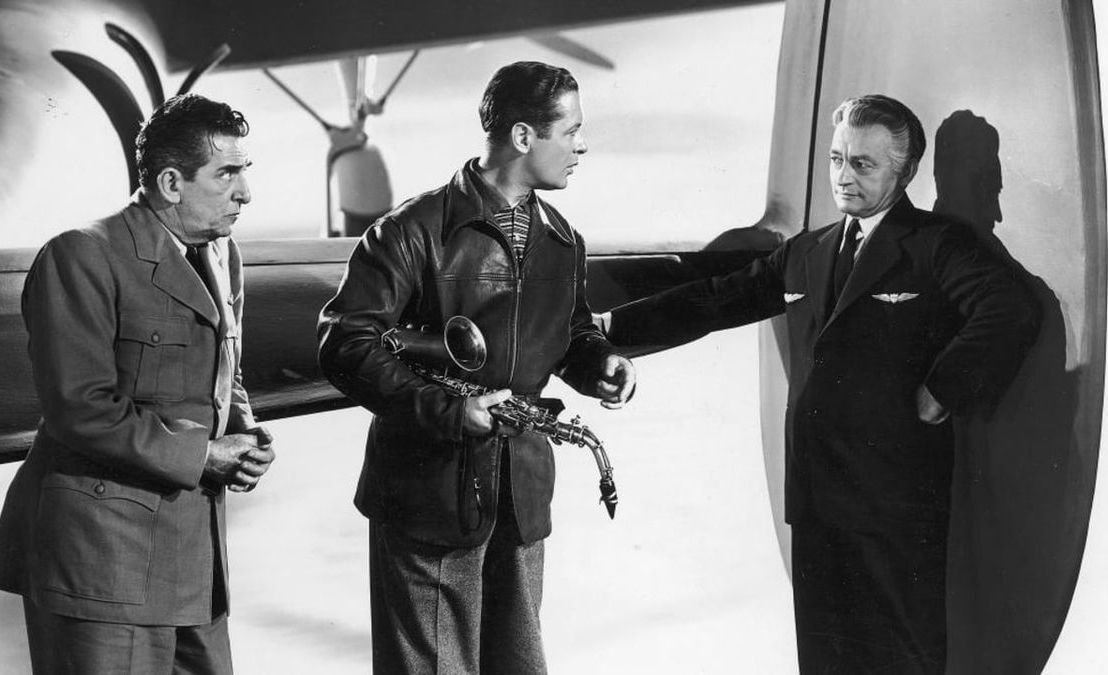
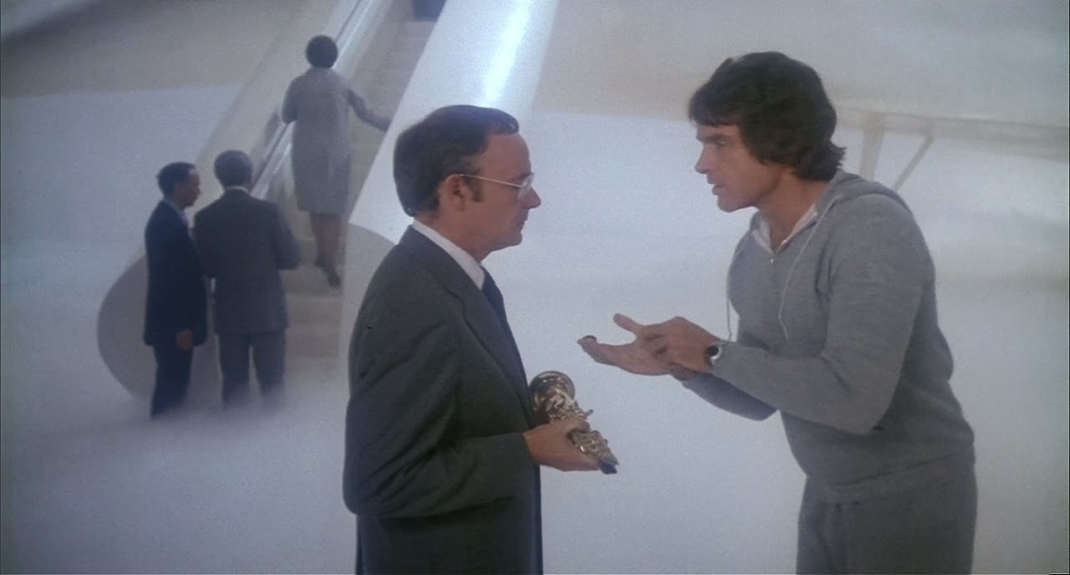
Joe Pendleton (Robert Montgomery) is a boxer with a shot at the title. An amateur pilot, Joe flies his own one-man flight to New York for the match. On the way, his plane crashes. An officious Angel, Messenger 7013 (Edward Everett Horton), collects his soul – only to find on arrival in heaven that Joe was meant to survive the crash and live for another 50 years. Unfortunately, by the time the mistake is found out, Joe’s body has been cremated. Head Angel Mr Jordan (Claude Rains) has no choice other than to find Joe another body on Earth. So Joe winds up in the body of millionaire Bruce Farnsworth, recently murdered by his wife Julia (Rita Johnson) and secretary Tony Abbott (John Emery). In his new body, Joe decides to correct Farnsworth’s wrongs, returning his embezzled money to investors and helping to free the father of Bette Logan (Evelyn Keyes), who took the blame. Joe also wants to retrain for a boxer – recruiting, much to his confusion, his old coach Max Corkle (James Gleason) – and he and Bette begin to fall in love. But Joe’s destiny, it turns out, is to be the champ – and he can’t do that in Farnsworth’s body. How will Mr Jordan clean this mess up?

Here Comes Mr Jordan is a delight, a hilarious musing on reincarnation and afterlife, in which the next world is as weighted down by bureaucracy and red tape as much as this one. With neat, unobtrusive direction from Alexander Hall (who never hit the jackpot like this again), the film keeps its comic balls up in the air beautifully, while throwing in some neat observations around life, death and fate. The script bubbles with lovely bits of invention, from the Afterlife to a bureaucratic organisation to Joe’s inhabiting of Farnsworth’s body (after trying a few other bodies on first), while still appearing to himself (and we the viewers – a neat idea that the film invites us not to think about too much as Joe’s mannerisms and physicality must be completely different from Farnsworth) unchanged from his original body.

Around this the film gets some neat pot shots at big business corruption. In some ways this is a little like A Matter of Life and Death mixed with Capra. As in Capra, the humble, kind-but-not-super-smart regular Joe is the one who takes a long-hard look at the corruption and greed of Big Business and Corporate America and decides “there has to be a better way”. The kind of guy who solves major business problems simply by doing the right thing and listening to his heart. Counterbalancing that is Joe’s ongoing obsession with continuing his boxing career, from his determination to get a body that’s “in the pink” (a phrase that drives Mr Jordan up the wall) to roping in his ageing butler into a series of vigorous workouts.

A large part of the charm of Joe Pendleton lies in the brilliantly dry, witty, sweet but still a little selfish qualities that Robert Montgomery (Oscar nominated) brings to the part. Playing the part with a homespun Brooklyn honesty and simplicity, Montgomery also has a childish delight in finding he can pass unobserved as this new man (particularly funny after his initial terror that he will be “found out” any second), while his boxing obsession has an endearing genuineness to it. Montgomery, as well as getting the light comedic tone spot on (no surprise that Cary Grant was the first choice for the role – although he could never have played the working class Joe as well as Montgomery does he) he also builds a very sweet and charming romance with Evelyn Keyes (also in a career best role), who is ill-treated but defiantly assured of the importance of doing the right thing as Bette.

The whole cast is quite superbly assembled, seasoned pros, doing their thing with aplomb. James Gleason was Oscar-nominated as Joe’s befuddled manager, trying to wrap his head around incarnation. Gleason also gets some of the finest gags, as Corkle tries to interact with Mr Jordan, who remains invisible to the living – but also brings a genuine warmth and tenderness to his feelings for Joe, who he clearly sees as a son. As Mr Jordan, Claude Rains is smoothness personified, playing the entire film with a relaxed grin on his face, gleefully mixing in an obsession with ensuring the “rules” are followed, while offering a dry reaction to events such as murder. As his underling Edward Everett Horton brings his patented A-game of flustered middle-man.

Mr Jordan grins so much through the film it’s easy to forget that he’s basically the Angel of Death. Reasonable and supportive, Jordan is also blithely unaffected by death and murder. The film, among the jokes and the general air of a fairy tale, has a little vein of darkness. In his introduction Jordan is overseeing the collection of souls from some of the battlefields of World War II. Later he calmly informs Joe of Farnsworth’s murder taking place even as they speak. The film doesn’t hesitate to shy away from the details of Farnsworth’s killing – or from two further murders. It’s a little nugget of darkness in amongst the charm, and a reminder that this comedy on death and the afterlife took place while the world was tearing itself apart. No wonder death can sometimes not be as big as a deal to everyone as it is today (especially to the Angel of Death).

Because the film has a more Capraesque belief that what matters is not who we are but what’s inside. Joe will appear as Farnsworth to everyone, but eventually what people will respond to (he is told by Jordan) is the person inside not the outward appearance. The potential that Joe may have to move to a new body to fulfil his destiny of becoming the champ, doesn’t meant that he and Bette need to necessarily be apart if his heart remains the same. While the film does suggest (I feel darkly!) at one point that Joe may forget who he was originally the longer he is in a new body, the more it stresses the point that the basic qualities of his decency won’t be lost.

Its ideas like this – combined with expert telling and superb Classic Hollywood grace and skill in its shooting, directing and acting – that give Here Comes Mr Jordan a little bite, along with its comic impact. Nominated for seven Oscars it won two – and it stands to be remembered in what was a glory year for Hollywood. You might expect something rather slight – but this delightful comedy is as thought provoking as it is playful.

The Shining (1980)

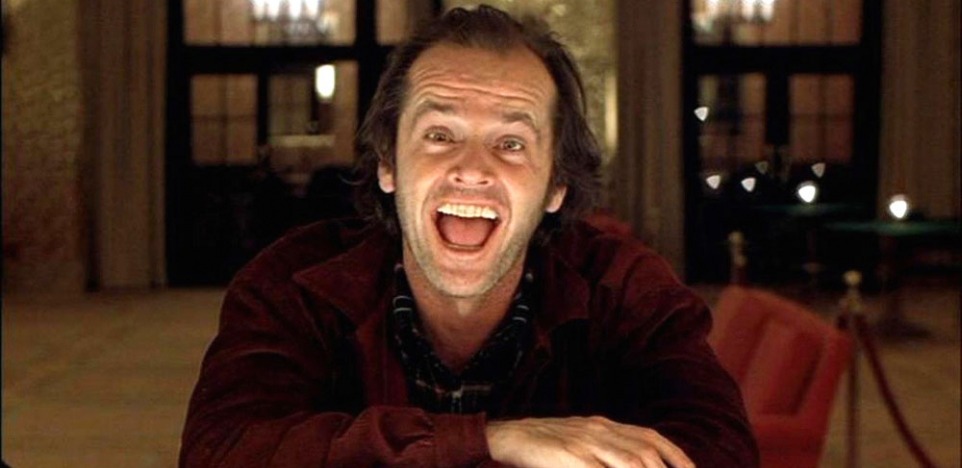
Jack Nicholson loses his mind in The Shining

Director: Stanley Kubrick

Cast: Jack Nicholson (Jack Torrance), Shelley Duvall (Wendy Torrance), Danny Lloyd (Danny Torrance), Scatman Crothers (Dick Hallorann), Barry Nelson (Stuart Ullman), Philip Stone (Delbert Grady), Joe Turkel (Lloyd), Anne Jackson (Doctor), Tony Burton (Larry Durkin)

I’ve often had mixed feelings towards Kubrick’s films. He’s impossible not to admire and there is no doubt many of his films are landmarks in cinema. But I’ve also often found him a brilliant technician, a striking intellectual but an emotionally cold and distant director, who seizes the brain and sense but doesn’t always engage the heart. It’s perhaps unsurprising that a director who has such control over the tools of cinema should be able to use it to create one of the greatest horror films of all time. Because what else is horror but the expert use of technique to unsettle and scare the audience? It’s like the genre Kubrick was destined to try – and succeed at.

The Shining was itself partly born out of Kubrick’s disappointment at the reception given to Barry Lyndon, his cinematically rich, but emotionally unengaging (to many) Thackeray adaptation. It garlanded awards, but praise that was more respectful than fulsome – while audiences had largely stayed away. Kubrick may be an artist – but he still wanted people to see his work. He decided to direct a film based on a poplar horror novel – after all people have been seeing slasher and fright pics for decades, so why not get a piece of that action? Stephen King’s novel was one of the few that engaged him (allegedly the famously highbrow Kubrick spent months reading part way into various horror novels before flinging them across his office in contempt). Sure Kubrick – much to King’s annoyance – junked many of the author’s themes in favour of his own. But in doing so he created a terrifying and deeply unsettling experience that stands as his most effective late work.

In the abandoned, and snow isolated, Overlook Hotel during off-season, writer Jack Torrance (Jack Nicholson) is hired as caretaker to keep the building running. Accompanied by his wife Wendy (Shelley Duvall) and young son Danny (Danny Lloyd), Torrance hopes to use the isolation time to come up with a draft of his new novel. However, dark forces are at work at the hotel. Ten years ago the caretaker butchered his whole family there, and the deaths have left a psychic legacy on the building. This is picked up on by the ESP-powered Danny, but also begins to play on the psyche of Jack who slowly begins to become ever more short-tempered, twitchy and unhinged as time goes on.

The Shining is one of the most frightening and unsettling films I’ve ever seen. And I attribute that completely to Kubrick’s mastery of the language of cinema. Every single frame, every single note on the soundtrack, has been perfectly shaped to inspire dread in the heart of the viewer. There are no cheap tricks, no jump scares, no obvious cinematic parlour games. Instead this is Kubrick using his technical artistry. What else can you say when one of the most disturbing things in the film is the changing sound of Danny’s tricycle as he cycles round the hotel (in a single, low angle, tracking shot), going from near silence as he cycles over carpet to bursts of sound as he cycles over wooden floor? When the score overwhelms with discordant sound and high notes as Danny simply stares at a door? 

But Kubrick’s genius is everywhere. He understands how the human brain is unsettled by symmetry. Watch the film again and see how so much of it is perfectly framed, how still the camera often is, how images – such as shots of corridors or rooms – are set in such a way to make the image look symmetrical. Something is off in our minds about seeing a building that looks so precise. It transfers as well when the actors are caught in the middle of the frame, with the set either side of them looking identical. Our mind keeps telling us it’s wrong. It feeds into our own doubts and fears. It disturbs us completely. Stillness and quiet mix with bursts of colour. For every elevator door opening to deposit a tidal wave of blood, there is the quiet intimacy of Philip Stone (absolutely chilling) as a ghostly representation of a past janitor, urging Jack to “correct” his wife and child.

That fear of symmetry extends as well to Kubrick’s use of two girl twins as ghosts of the former caretaker’s murdered children (and their stillness and softness of voice is equally terrifying). The ghosts throughout this film that urge Jack on in his murderous rampage are almost uniformly softly spoken, calm and polite – qualities that carry more and more menace. Even when the horrors begin to erupt, Kubrick keeps the camera movement and editing slow, gentle and frequently employs tracking shots (naturally leading to the invention of a new type of Steadicam). Where jump cuts are used they are to give us flashes of Danny’s ESP visions of the hotel (sudden cuts to the murdered girls or other horrors), enough to jolt us and working all the more in the rest of the film’s measured pace and gothic chills.

Kubrick also brilliantly makes use of the psychological impact of isolation. Out in the middle of nowhere, it’s clear time quickly loses meaning. The film is punctured throughout with title cards that seem increasingly random, either naming days (with no indication of how much time has passed between them) or time jumps that seem unconnected with the previous scene. It’s quick to see how much the Torrance’s perception of time has been lost in never-changing surroundings. The impact of constant isolation on a fragile psyche is perhaps something we are even more acutely aware of in 2020, and it’s clear that it has a catastrophic effect on Jack, who becomes ever more susceptible to his bad angels.

Those bad angels are partly where Kubrick begins to deviate from King. Not surprisingly, with Kubrick’s often nihilistic view of humanity, he introduces the idea that Jack has a history of violent temper and even striking Danny. This is very different from King’s idea of a good man and father being bent out of all recognition by the hotel’s evil into a would-be murderer. It’s possibly the main objection King had against the film’s changing of the novel. That and Kubrick’s clear disinterest in “shining” – the name given to the ESP qualities some of the characters display. For Kubrick, what was more important was the unsettling impact environments can have on people’s psyches – amplified in this case by terrifyingly bloodthirsty ghosts. For King the corruption of the good from evil among us was crucial. Both are fascinating ideas – but you can see why the book’s author would not be pleased to see his concepts sidelined.

Part of this may also have stemmed from the casting of Nicholson. Probably the greatest American actor of the 1970s (his hits during that decade are astonishing), this was the first chapter in a new era. Now Nicholson became JACK, part actor but part personality, so larger-than-life that you only had to say his first name for everyone to know who he was. Sure, Nicholson is (like in A Few Good Men) a ticking time bomb, but the performance works. It’s the film where Nicholson embraced for the first time the demonic grin and leer of cruelty he would use so well. But seeing him attack the film’s gothic qualities, while still having a touch of humanity for its quiet moments, works a treat. Could any other actor in the world have pulled off “Here’s Johnny!” and still have us absorbed in the character and the film? It’s pantomime, but brilliance.

More controversial is Shelley Duvall’s weepy, slightly pathetic wife. Much of Duvall’s wetness in the role is surely connected to the reportedly miserable time she had on set. To draw the “right” reactions from her, Kubrick essentially bullied her on set, putting her through hell. Sometimes hundreds of takes were done of even the most trivial scenes to get them right (this film perhaps cemented Kubrick’s reputation for ludicrous perfectionism), a regime that reduced Duvall to a state of near psychological collapse. While this was perfect for her performance, it was hardly conducive to her well-being. And was in itself perhaps another sign of the lack of heart in Kubrick, a director concerned only in the end with effect not emotional truth.

So it’s a black mark against the film. But The Shining is still a masterpiece, perhaps one of Kubrick’s greatest films. The film was so dependent on its technical wizardry, detailed perfection and preciseness that its impact becomes almost unbearable. It focuses on all Kubrick’s strengths and almost none of his weaknesses – indeed his basic dislike of people becomes crucial to its effect rather than running counter to an audience’s need to invest. Tense, unsettling, troubling and in the end deeply scary, while never feeling cheap or exploitative. It’s a landmark in both its genre and its director’s career.

The Seventh Seal (1957)

Death plays chess in Ingmar Bergman’s The Seventh Seal

Director: Ingmar Bergman

Cast: Max von Sydow (Antonius Block), Bengt Ekerot (Death), Gunnar Björnstrand (Jöns), Bibi Andersson (Mia), Nils Poppe (Jof), Erik Strandmark (Jonas Skat), Åke Fridell (Plog), Inga Gill (Lisa), Bertil Anderberg (Raval), Gunnel Lindblom (Mute girl), Inga Landgré (Karin)

Is there a more famous arthouse film than The Seventh Seal? Winning the Special Jury Prize at Cannes, the film turned Ingmar Bergman into the doyen of the Arthouse across the world and many of its actors into major figures of world cinema. The film so captured the imagination it became one of those films that falls slightly in and out of fashion, largely because it’s almost impossible to come to it fresh. Its style, images and concepts have been so echoed, parodied and teased ever since that it’s become a corner stone. But it should stay in fashion, because it’s a well-made and intriguing film.

In the fourteenth century, a knight, Antonius Block (Max von Sydow), washes up on the shores of Denmark with his squire Jöns (Gunnar Björnstrand). Death (Bengt Ekerot) comes for them, but Block challenges him to a game of chess. If Block wins, Death will leave him be if Death wins Block will go with him. Death accepts, and Block seizes the time this will give him to try and understand more about faith, destiny and man’s place in God’s plans. As the game stops and starts, Block and Jöns travel to Block’s estate, encountering and befriending along the way Jof (Nils Poppe) and Mia (Bibi Andersson) a pair of travelling actors, just trying to make their way in the world.

Bergman’s film is shot in a luscious but very simple black-and-white and juggles profound issues about mankind and faith with an imagination-capturing central concept of man playing chess with death. Bergman based the film on a woodcut from the famous Swedish artist Albertus Pictor (who appears in the film, decorating a church with images of death and plague – themes that run throughout the film) and used it as a jumping off point for a meditations on the inevitable end.

It makes sense then to set the film in the medieval era, where death indeed may well feel like a constant companion. Bergman’s medieval world is a smorgasbord of medieval tropes – some have criticised the historical accuracy of Crusades, plague, flagellants, Pictur, witch trials etc. all happening at the same time, which seems bizarre criticism for a film that features a white faced Death prowling the countryside with a chess board. It works very well though for creating a sense of a parable around the whole film.

Death is a continual in the film. A crowd of flagellants marches through a village at one point, a monk stopping only to harangue the crowd on the fury of God, before a mist descends and seems to pick off most of the crowd, several flagellants disappearing as they walk, leaving a mostly empty field. It’s a visual picture of death, Plague carries off one and all, an active representation of mortality. It leaves a world in which man either contemplates, gets angry or decides to just live day-to-day – reactions that we see in all the film’s characters.

Of course, Block takes the contemplative route, vainly asking what it is all about – what is God’s plan and what meaning does life have? Perfectly using von Sydow’s imperious chill, Bergman makes Block an intellectual straining for understanding, an aesthete who wants to believe his time on earth has all been part of some plan and that he himself has done (or will do) something that matters. Von Sydow is particularly fine in the role, not least in his agonising confessional scene where he slowly but with an increasing world-weariness unburdens his soul to a priest he cannot see – but who we see is of course Death himself.

But that’s just another low blow from Death, a fascinating figure. Played with a benign politeness by Bengt Ekerot, Bergman presents a Death who is cunning, intrudes on world events and doesn’t play fair. He cons Block into telling him a winning chess stratagem, cuts down a tree to claim the soul of the man hiding it and reveals himself to be the leader of a group intent on burning witches. He may be polite but he’s ruthless. No wonder he inspires such fear, and Ekerot may smile but it’s the smile of a man who knows he will win no matter what and everyone will come with him eventually. 

So what is the secret to what life is all about? In Bergman’s medieval world, God seems silent. We see two religious figures: one the haranguing Monk, the other the fallen Priest Ravel – a thief, a liar and a bully. The priest in the Church they visit turns out to be Death. The countryside is vast, unfriendly and bleak. Block’s quest to understand something of what man’s role in creation is seemingly doomed. Perhaps his squire – an excellent Gunnar Björnstrand – already understands what Block needs to learn: there is no grand secret, we must simply enjoy the moments we have been given. His squire is a simple, decent (for his time), unpretentious man with some sense of justice. And maybe that’s the trick.

It certainly seems to be the case with Jof and Mia, the more homespun actors who take pleasure in their family, their lives and the outside and welcome strangers with open arms. Extremely well played by a naïvely sweet Nils Poppe and a radiantly kind Bibi Andersson, these two (with their baby son) are the only people happy. And that happiness even spreads to Block, who starts to forget his concerns with finding a secret to life in the simple happiness of an honest meal, kindly shared. Even Death comments that Block’s interest in the game seems to fade from here.

Block’s struggle to understand why we are here, his straining for some sign and his belief (perhaps) that with this he can escape Death slowly melts under his understanding that life is what is around us and the people we share it with, perhaps not some sort of cryptic puzzle for him to untangle. And that’s Bergman’s message as well perhaps, that among our concerns to understand and control our destiny, the most truth (and pleasure) can be found in not thinking about these things. Jof sees early on a vision of the Holy Mary (we do not see it only his face). His wife laughs it off, but later only Jof can see Death – if one vision is true, why not the other? Is Jof’s innocence and decency perhaps the key?

And that is why perhaps Jof and Mia are the only two to escape Death’s grasp. Block finds his moment of purpose – and the quiet smile von Sydow gives here is perhaps the finest moment of his performance – distracting an unknowning Death to let the family escape in the forest. Death relentlessly comes for the rest of the characters at Block’s estate – to be met with anger, begging, resignation, bitterness and a strange, beatific acceptance from the mute housekeeper, who Bergman slowly tracks in on until her face fills the frame.

Death then takes them all – giving us the film’s final enduring image, a recreation of Pictur’s painting of Death leading the dead souls in a grim dance to eternity across the hills, each of them flowing in a line behind them seen only by Jof. 

What is Bergman’s marvellously assembled – and it is perfectly filmed and edited – film about exactly? Finding peace and acceptance with what is around us and our place in the world perhaps, but it’s such a rich and rewarding film that it unravels other meanings and messages throughout every frame. It deserves to remain in fashion for as long as there are films.