Category: Historical biography

Ten Rillington Place (1971)


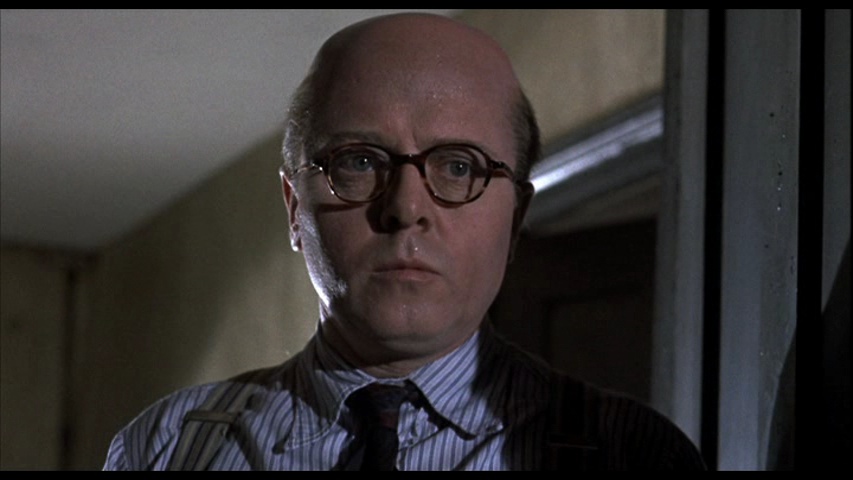
Richard Attenborough brings the killer John Reginald Christie to life in Ten Rillington Place

Director: Richard Fleischer

Cast: Richard Attenborough (John Reginald Christie), Judy Geeson (Beryl Evans), John Hurt (Timothy Evans), Pat Heywood (Ethel Christie), Isabel Black (Alice), Robert Hardy (Malcolm Morris), Geoffrey Chater (Christmas Humphreys), André Morell (Judge Lewis), Tenniel Evans (Detective Sergeant)

Films about real-life serial killers have that eternal problem: how far can they go in giving us answers? How much can we ever really understand why a killer does what they do? Is there any way of really putting ourselves in their shoes – and do we really want to? Ten Rillington Place avoids a lot of these issues by making no attempt to give understanding to Christie at all, simply presenting his actions, and by putting the focus on the tragic death of Timothy Evans.

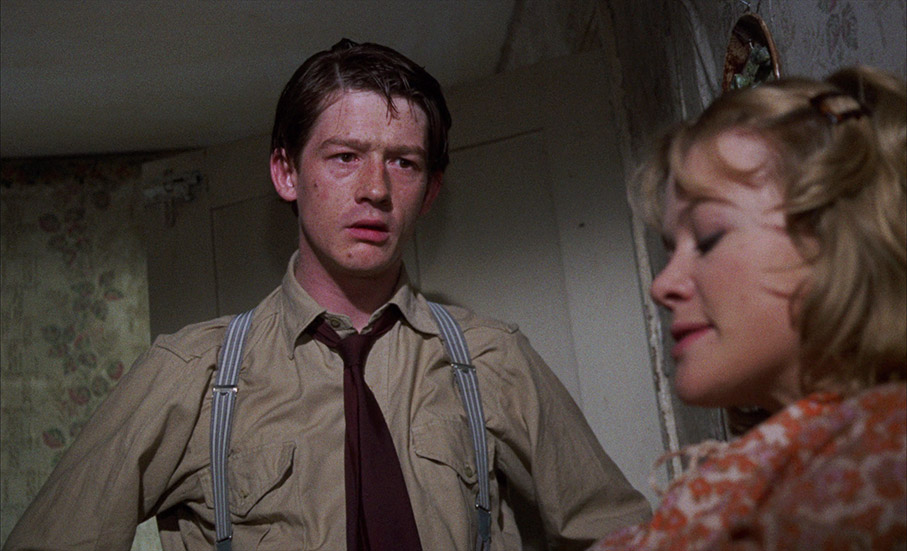
In a miscarriage of justice Timothy Evans (John Hurt) was tried and executed for the murder of his wife Beryl (Judy Geeson) and their baby daughter in 1950. The real murderer? The man who lived downstairs, John Christie (Richard Attenborough), a socially maladjusted, softly spoken man who confessed to killing at least eight people three years later at his trial for murdering his wife. Christie had an uncanny gift for gaining the confidence of desperate women, would offer to perform illegal (and free) medical procedures (such as abortions), during the course of which he would gas them with carbon monoxide, strangle them, possibly carry out acts of necrophilia and then bury them in his garden or in the walls of his house. Evans never suspects until far too late that Christie is the killer and, scared that he will be accused, follows Christie’s advice to the letter – advice that will only make him look all the more guilty.

Richard Fleischer’s chillingly documentary-style film-making goes into forensic detail on the events of the murder of Beryl Evans and her daughter, and the wrongful conviction of Timothy Evans for the crime – largely on the basis of Christie’s testimony at Evans’ trial. Fleischer shoots the film with a deeply disciplined restraint, a calm documentary style that avoids any sensation lingering on the crimes, but still carries great emotional impact.

The film covers the period from Evans moving into the flat above Christie, Christie’s murder of Beryl, Evans panicked flight to Wales on Christie’s advice, his series of confessions to the police, his trial and execution. Book ending the film we get a scene with Christie murdering his neighbour Muriel Eady – a terrifying demonstration of Christie’s murder rituals, as well as an indicator of how easily he could gain the trust of his victims. What it strikingly doesn’t try to give us is any psychological explanation for why Christie did what he did. There are no revealing flashbanks, no cod-psychology. Instead we just see a killer, kill people. We might get an idea of what he gets out of it, but no explanation of what turned him to it. The film is all the more powerful for it. 

Instead the focus is on the victims, and the Evans story is heart-rending, partly because of Fleischer’s calm, sensitive direction, but mainly due to John Hurt’s astonishingly powerful performance. The film, and Hurt, don’t shy away from the qualities that made Evans seem like such a natural fit for a murderer at his trial. He’s a compulsive liar. He brags. He fights and argues with a fury. He’s not really that sympathetic a guy at first. But he’s certainly innocent. Hurt brilliantly demonstrates his vulnerability and simplicity – Evans was illiterate and almost unbelievably trusting, a liar who fell victim to a superb, manipulative liar.

His shock and slowly growing realisation of the nightmare he is in are incredibly moving, as is his powerful grief when he finds his wife killed – and his trusting innocence when he turns (unknowingly) straight to his wife’s killer for advice on what to do. Every action Evans takes in the film makes you want to jump in and urge him to do something – anything – different.  Unsympathetic as he is at the start, by the conclusion you almost can’t bear to watch him incriminate himself with each action. Hurt is sublime, with his weak manner, his confusion, his touching faith that it will all be okay and his feeble mantra of “Christie Done It” – it’s one of the greatest performances in his career.

Judy Geeson gives a marvellously emotional performance as Beryl Evans. Geeson has the perfect look for the part, and she completely embodies a woman who has found herself in a difficult situation, in love with a weak man. You understand completely how she is drawn towards Christie as a confidant, and why she would feel the desperation to abort a child she and Evans could never afford. Her eventual murder is horrifying in its struggle and desperation, the growing horrible realisation in her eyes that she is in mortal danger – this is a particularly strong sequence, difficult to watch for the viewer, as we know what a terrible series of decisions she is making. 

Fleischer’s film was motivated by a very firm anti-death sentence stance. The scene of Evans’ execution is shocking in its brutal suddenness. Shot with a handheld camera and in a single take (in near silence other than Hurt’s deep breathing), the execution is over and done with in less than a minute – from Evans sitting in a room, to the reveal of the executioner’s noose next door and the terrible drop (with a jump cut straight to Christie stretching his back). It’s a brilliantly low-key, but resoundingly powerful scene that sticks with you for all time.

All this way and we’ve not mentioned Richard Attenborough’s transformative performance as Christie. Attenborough presents the softly spoken monster as a bland, empty non-entity, a man who has almost nothing to make him stand out from the crowd. He never makes the part into a great monster or any sort of domineering force of nature. In partnership with Fleischer, he shows Christie was a total blank canvas of a man, “evil” only in the most mundane and uninteresting way. He’s so mild-mannered, you can see why so many women trusted him. Attenborough is chillingly blank throughout, in a deeply unsettling performance of crushing mundanity. He’s brilliant in this film – Attenborough was completely committed to its anti-death penalty stance – and he avoids the temptation of trying to explain or make sense of Christie. 

That’s the trick of the film – Christie is not a special man. He performs dreadful acts, but he is a nothing of a person, devoid of motive (the lack of motive is something those at Evans’ trial use most to argue against Christie’s possible guilt), a totally forgettable man who committed crimes memorable only for their cruelty. Fleischer, and Clive Exton’s careful, thoroughly researched script, is simply superb in presenting Christie with all his filthy blankness, Rillington Place in all its crushed lack of colour, and the murders in un-flashy documentary sadness. Ten Rillington Place is an engrossing true-life story that turns a miscarriage of justice into a Greek tragedy. It’s a much overlooked classic.

Belle (2013)


Gugu Mbatha-Raw is the mixed race daughter making waves in society in Amma Asante’s underwhelming pseudo-historical film Belle

Director: Amma Asante

Cast: Gugu Mbatha-Raw (Dido Elizabeth Belle), Tom Wilkinson (William Murray, Lord Mansfield), Sam Reid (John Davinier), Emily Watson (Lady Elizabeth Mansfield), Sarah Gadon (Lady Elizabeth Murray), Miranda Richardson (Lady Ashford), Penelope Wilton (Lady Mary Murray), Tom Felton (James Ashford), James Norton (Oliver Ashford), Matthew Goode (Captain Sir John Lindsay), Alex Jennings (Lord Ashford)

The British film industry produces a constant stream of costume dramas, many covering alarmingly similar ground on the aristocracy or wealthy of the Georgian period onwards. It’s to be commended then that Belle takes a similar plot, but from a radically different direction. Here, a famous real painting of a white and mixed-race pair of ladies becomes the jumping off point for a drama about an illegitimate mixed-race daughter of a wealthy family.

Dido Elizabeth Belle (Gugu Mbatha-Raw) is the daughter of naval captain and a slave in the West Indies. After his death, she his raised by her uncle William Murray (Tom Wilkinson), Earl of Mansfield, and his wife (Emily Watson) to raise her as their own alongside their niece Elizabeth (Sarah Gadron). Belle is treated as an equal among the family, but is not allowed to dine with guests or move freely in society. However, Belle has inherited a fortune from her father – unlike Elizabeth – and quickly finds herself a source of interest from the younger sons of the nobility. Meanwhile Lord Mansfield, the Chief Justice, is asked to rule on the slave ship Zorg case (where slavers threw their slaves overboard in a storm), a case that brings passionate abolitionist John Davinier (Sam Reid) into Belle’s life and makes her start to re-evaluate society’s attitude to her.

Belle is a formulaic costume drama, given an imaginative twist by placing a black woman at its heart. It explores issues around the imbalanced attitudes of British society at the time (and since), and the hypocrisy and racism that bubbles under the surface of the British gentry. Belle is rejected by all and sundry – until knowledge of her wealth becomes known, at which point many of these objections are choked back to secure her money. The film gets much mileage out of Belle slowly comparing her position first to the black servants around her and then to the slaves who lost their lives on the Zorg.

However, what undermines Belle is that it is a work of fiction – and it feels like it’s hiding it. What we do know about the real Belle (which isn’t much) doesn’t relate at all to what we see in the film. She wasn’t an heiress. She didn’t fall in love with an abolitionist lawyer – Davinier was not the aspiring son of a cleric, but a French steward. Elizabeth probably wasn’t a penniless relative. Mansfield’s credentials as a proto-Abolitionist and reformer were never in doubt – by the time of the Zorg case he had already passed a ruling 10 years earlier that there was no basis for slavery in British law. Belle actually lived in Mansfield’s house until his death as effectively a housekeeper and semi-secretary (the very fate she rejects in the film). The film’s lack of interest in historical fact even affects small details – at one point James Norton’s pleasant but empty Oliver boasts his father has purchased him a commission as a Captain in the Navy, virtually the only institution in Georgian England which promoted solely on merit! (This annoyed me a lot more than it should have.) 

Belle is not a true story by a long stretch – but that doesn’t stop it proclaiming a “what happened next” series of captions at the end. It could have got away with this in a way other non-historical films have, if its story itself was more compelling. But instead Belle offers a merely serviceable story, offering a unique prospective on the aristocracy but largely using it to tell a fairly conventional “love across the social divide” story. Honestly, for large chunks of the film you could replace Belle with any slightly shameful second daughter, and the story would remain largely the same.

Which is a shame because it feels like it wastes something really interesting – and also wastes Mbatha-Raw’s star-making turn. She is excellent – sweet and naïve, but growing in confidence, determination and wisdom, gaining the strength of will to shape her own destiny. The film introduces interesting themes as Belle begins to question the attitudes of her family – do they accept her because they must? Would they be as open to a black stranger? – but these themes don’t quite coalesce into something really solid and coherent. Instead they are trotted out, but we don’t really feel we learn anything.

Similarly, the case of the slave ship Zorg seems rather loosely defined. We don’t get a real sense of public pressure or interest in the case, or really understand the essentials of what the case involved. Instead, it’s used primarily as a tool to question the attitudes of Lord Mansfield, and whether he has the ability to expand his obvious love for Belle into a wider statement of man’s equality. Tom Wilkinson is very good as Mansfield – prickly, but essentially decent and caring under a gruff surface – even if the role can hardly be a challenge for him. But the film doesn’t really manage to make a really compelling argument about what it is trying to say, other than slavery is of course bad.

Elsewhere, the film takes simple shots and shoots fish in the barrel. The Ashton family are introduced to stand in for British society. Lord Ashton is brisk and businesslike and interested only in maintaining the status quo. Lady Ashton – played by Miranda Richardson at her most coldly standoffish – only cares about securing wealth for sons. Of those sons, James Norton gets the most interesting part as the decent but shallow Oliver. Poor Tom Felton though: his character might as well be Draco Malfoy in period costume, all but spitting out ‘Mudblood’ at Belle. None of these performances offer anything different from what we’ve seen before.

That’s part of the problem with Belle – it wastes an interesting idea by slowly turning it into a more conventional story, primarily focused on who is Belle going to marry, rather than the implications of a black woman in a racist society, or the hypocrisy of that society being only willing to accept her when she has money. Despite some good acting – Penelope Wilton and Emily Watson also give tender performances – and a star-turn in the lead, it’s not really that interesting a film. You keep expecting it to burst into life, but it never does: for such a film offering a fresh perspective on history, you don’t feel like you’ve learned anything new about Georgian society at the end of it.

The Westerner (1940)

The Westerner (1940)

Entertaining but unspectacular Western fun as odd-couple friends turn rivals

Director: William Wyler

Cast: Gary Cooper (Cole Harden), Walter Brennan (Judge Roy Bean), Doris Davenport (Jane Ellen Matthews), Fred Stone (Caliphet Mathews), Forrest Tucker (Wade Harper), Paul Hurst (Chickenfoot), Chill Wills (Southeast), Lilian Bond (Lillie Langtry), Dana Andrews (Hod Johnson)

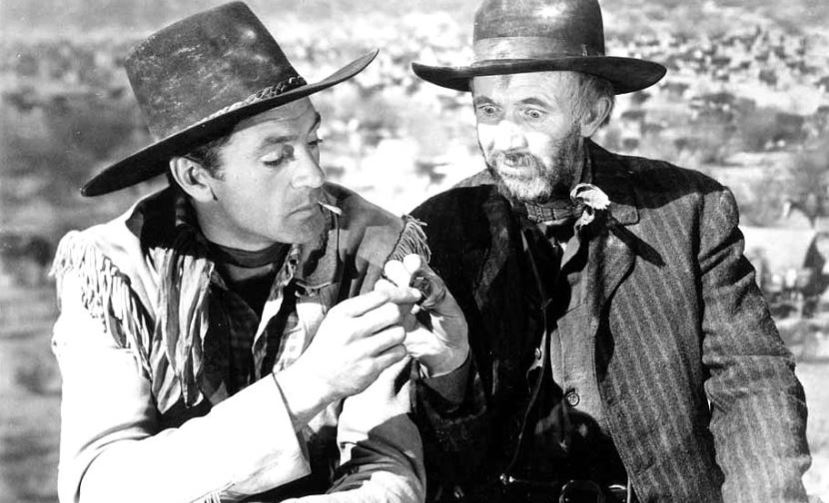
In 1882, Cole Harden (Gary Cooper) arrives in the town of Vinegaroon in Texas. The town is ruled by “Judge” Roy Bean (Walter Brennan), a corrupt, self-proclaimed justice of the land, who collects unfair fines and hands out “suspended sentences” (i.e. hangings). Nearly hanged, Harden escapes by peddling a story of his (fake) friendship with Lillie Langtry, the obsessive focus of Bean’s love. Over time the two men find themselves drawn to each other, forming a friendship – which is challenged by Bean’s favouring the violent cattle ranchers over the homesteaders.

The Westerner is a well-constructed, decent old-style Western that doesn’t do anything particularly radical – as if those making it needed a bit of downtime between more demanding projects, so put together something quite enjoyable to fill their time. It’s nominally a film about the clash between cowboys and homesteaders, but this plotline actually gets very little play – and is pretty unclear.

What it really is, is a sort of romance between Harden and Bean. They are two people surprisingly drawn together, who have a similar outlook on the world, and share a very natural and immediate bond. They have very real chemistry. In fact their chemistry is so strong there is barely room for anyone else to get a look in. 

So the film is a sort of bromance tragedy, because of course it’s clear that they will end up on opposite sides. Because Bean has principles of control which Harden cannot allow to stand. Because the same instincts that lead Bean to champion the cowboys, are the same ones that lead Harden to champion the homesteaders. Both men think that they are basically in the right. The main difference between them is probably that, if push comes to shove, Bean would rather win than be right, while Harden is more concerned with meeting his moral standards than anything else.

Wyler brings all this together with professional crispness, shooting the action and more chamber-piece moments with skill. He draws a real playfulness from Brennan and Cooper – could many other directors have thought about including a scene where Cooper wakes up slightly confused in a bed with Brennan’s arm around him after a night of drinking? Confrontations throughout the film have a playful edge to them, even when guns are on the table. Even the final gun fight between the two has a reluctant edge to it, as if this was a game with a few more consequences than normal. 

The bond between Bean and Harden is so strong, and so central to the film, that the relationship between Harden and Jane Ellen Mathews never quite clicks into gear. There is a charming scene where Cooper (with an honest flirtatiousness) cuts a lock of Jane Ellen’s hair – but the film isn’t really interested in this relationship. It feels like it exists for plot and scripting reasons – that the writers felt a romantic plot was needed, and wanted to give Harden a very clear personal motivation above and beyond his sense of justice. Doris Davenport is fine as Jane Ellen, but it’s not a performance you really remember.

Gary Cooper is rather good as Cole Harden, despite his reluctance to do the film. Cooper identified that Brennan had the best role and the best lines, and felt that he would actually be playing the support rather than the lead. Contractual obligation got him into the film. And it’s a good thing, as Cooper is actually very good. He has a light comedic touch which you don’t often associate with him, which he matches with his upright honesty and unflinching decency. But there is a playful grin behind his eyes throughout, and you get a real sense of his conflicting loyalties.

But Cooper was right – Judge Roy Bean is the role in this film, and Walter Brennan (who won his third supporting actor Oscar in five years for this) is quite simply terrific. His Bean is a wily, slightly crooked, maverick bully with a warped sense of personal justice – but he’s also a charming, rather sweet old man with a tough streak. The script gives a lot of focus to Bean’s obsessive love for the actress Lillie Langtry, which not only humanises him, but turns someone who we first see carrying out a ruthless judicial murder into some sort of teenage, love-struck rogue. That’s the genius here – Bean could be awful, but actually we (like Harden) end up loving him. Brennan’s effortlessly charismatic performance is central here – he is terrific in the role.

Take away these performances though and you probably only have flashes here and there of class alongside. Scenes are well constructed, and the entire film is very well filmed by the great Gregg Toland, but it’s very much a solid piece of professional work rather than a great classic. Brennan is brilliant and Cooper impressive, but not much more of the rest of the film really settles into the memory.

Rob Roy (1995)


Tim Roth and John Hurt are the villainous aristocrats taking advantage of Liam Neeson’s honour in Rob Roy

Director: Michael Caton-Jones

Cast: Liam Neeson (Rob Roy MacGregor), Jessica Lange (Mary MacGregor), John Hurt (Marquess of Montrose), Tim Roth (Archibald Cunningham), Eric Stoltz (Alan MacDonald), Andrew Kier (Duke of Argyll), Brian Cox (Killearn), Brian McCardie (Alasdair MacGregor), Gilbert Martin (Guthrie), Ewan Stewart (Coll), Jason Flemyng (Gregor), David Hayman (Tam Sibbalt), Shirley Henderson (Morag)

In the mid-1990s there was one of those bizarre Hollywood coincidences that saw two similarly filmed Scottish-based dramas head into production at the same time: Braveheart and Rob Roy. Braveheart stole the headlines, and the Oscars, and turned William Wallace from a footnote in history into an icon of Scottish independence. However, it’s arguable that the over-looked Rob Roy is the better, richer, more involving film.

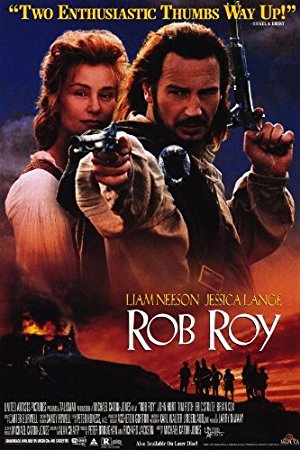
In 1713, Rob Roy MacGregor (Liam Neeson) is the Chief of the Clan MacGregor, in a loving marriage to Mary (Jessica Lange), and supports his clan through protecting the cattle of the gentry. Knowing that this is not enough to help their poverty, Rob borrows £1,000 from the Marquess of Montrose (John Hurt) to start a cattle trading business. However, on collecting the money, his friend Alan MacDonald (Eric Stoltz) is murdered by Archibald Cunningham (Tim Roth), a foppish playboy and ruthless fencer, who is staying with Montrose and wants the money to clear his debts. Montrose demands Rob falsely testifies that his rival the Duke of Argyll (Andrew Keir) is a Jacobite in return for forgetting the debt – when he refuses, he is named an outlaw and a rebel.

Rob Roy works so damn well because it is thrillingly told, well-scripted, shot with a romantic sweep in some terrific Scottish locations and uniformly excellently acted. It’s perfectly constructed as a classic melodrama, because the heroes are pretty much completely upright, admirable and inspiring (without ever being tiresome or sanctimonious), while the villains are intriguingly shifty and vile, running the gamut from cowardly opportunist to vicious sociopath. Chuck this in with a tightly focused plot, and it works extremely well.

Liam Neeson is perfect casting as the upright Rob. Few people do nobility and decency better than Neeson, and Rob is just about the most stand-up guy you can imagine. You can totally understand why every one of his clan seems to worship the ground he walks on. Neeson’s classical physicality and stance totally sell him as the ultimate highlander, while his kindly eyes and gentle manner make him an obvious fit as an inspiring leader. 

Caton-Jones directs the action with zip, even if the film does perhaps go on a fraction too long. He sets Rob’s decency and honour at the centre of the film, and brilliantly builds the thematic story around the shifting world where old-school honour and decency is being left aside for the more ruthless realpolitik of Montrose. Rob’s old-school decency makes him the kind of hero figure you see in a traditional Western – and Caton-Jones is clearly inspired by the scope and sweep of John Ford Westerns, making excellent use of the mist and the hills. 

The Scottish highlands are our wild plains, the traditional values are those of the homestead – and the communities Rob protects are presented with a warmth and glow that is never galling. A lot of this is due to Jessica Lange’s excellent performance as Mary, a woman of warmth, tenderness but also hard-hearted realism mixed with a sharp strength of will. Lange (and her lilting accent is quite lovely to listen too) handles the events that occur to her as the wife of a rebel with a dignity, but also a fierce rage just below the surface. If Rob is defending honour, she represents it.

But the real strength the film has is its villains. It has three very different but terrific antagonists, each of them brilliantly brought to life by three very good actors. John Hurt brings Montrose a brilliant sense of slightly perverted corruption, the arrogant insouciance of a man who works out there is more going on than he is being told, but not caring so long as he can turn it to his advantage. Brian Cox is excellent as the cowardly, greedy, shallow and bullying land property manager, snivelling and timid beneath his bluster. 

The real swagger through comes from Tim Roth, who is quite superb as the flamboyant sadist and sociopath Archibald Cunningham. Roth marches off with the film, pitching it just right as a man who presents (and lives) a performance to the entire world: a foppish playboy who seems light and disposable, but is in fact a ruthless, dangerous man with no principles and a horrifying capacity for violence. The character has enough humanity to prevent him from becoming a caricature – he’s bitter at being a bastard, he has a strange affection for his mother. He’s aware that he’s the baddie – he just doesn’t care. In fact he loves it. He invites people to underestimate him – and takes a sadistic delight in proving them wrong. He’s a perfect dark reflection to Rob.

The film introduces him demonstrating his terrifying skill with a sword in a sporting duel: and you don’t need a PhD in storytelling to guess that the film is heading towards a second, closing sword duel between our noble hero and his sadistic opposite. When it comes, it’s a belter of a sword fight, brilliantly choreographed, that sums up the whole movie: Rob fights with a broadsword (and the film demonstrates how exhausting swinging one of those can be) and depends on directness and fairness. Cunningham fights with a rapier, is quick, indirect and gleefully delights in inflicting a number of glancing wounds. It’s one of the best sword fights (and uses of combat to communicate character) on film – and it’s engrossing.

Rob Roy is easily overlooked – but it’s a fine film, full of memorable moments and above all stuffed with terrific performances. Caton-Jones shoots the film very well, and works brilliantly with the actors. You’ll remember them all – and you’ll invest in their stories. Yes it is a little too long, and yes sometimes it’s a little too in love with the romance of the highlands – but it’s a smashing, exciting and engrossing film and you’ll certainly find plenty in it to enjoy: not least Roth’s showboating menace.

The Man Who Knew Infinity (2015)


Dev Patel is mathematical genius Srinivasas Ramanujan, struggling against prejudice in The Man Who Knew Infinity

Director: Matthew Brown

Cast: Dev Patel (Srinivasas Ramanujan), Jeremy Irons (GH Hardy), Devika Bhise (Janaki), Toby Jones (John Edensor Littlewood), Stephen Fry (Sir Francis Spring), Jeremy Northam (Bertrand Russell), Kevin McNally (Percy MacMahon), Richard Johnson (Vice Master Henry Jackson), Anthony Calf (Howard), Padraic Delaney (Beglan), Shazad Latif (Chandra Mahalanobis)

The British Empire. It’s a difficult slice of British history, and it undoubtedly contributed to contemporary attitudes of superiority that affected British people and their institutions. It’s these attitudes that form the central themes of The Man Who Knew Infinity, an effective story of a struggle against the odds. 

In the early 1900s, Srinivasas Ramanujan (Dev Patel) works in Madras as a junior accountant – but his superiors quickly realise his mathematical abilities far outstrip his mundane tasks, and encourage him to write to mathematics professors to bring his theoretical work to their attention. Ramanujan starts a correspondence with GH Hardy (Jeremy Irons) of Trinity College, Cambridge, who invites him to England to explore his potential. Once there, Ramanujan quickly proves his genius but, despite Hardy’s support, he struggles to be accepted by the fellows and students of the college, who only see an upstart from the colonies.

The Man Who Knew Infinity is a conventionally structured biography – struggles personal and professional, success followed by setback and a final triumph combined with a bittersweet ending. It’s structurally nothing different from things you’ve seen before, but it’s told with calm, quiet, engrossing dedication, with unflashy direction, a solidly written script and some truly excellent acting. No wheel is reinvented, but it revolves with a highly enjoyable and heartfelt tenderness.

It’s a film that manages to present mathematics without using spurious real-world clunky metaphors, and gets a lovely feel for the hard work and theoretical study that go into mathematical theory. It also brilliantly communicates what the maths is about. I’m no theoretical mathematician (football stats are my limit) but even I could follow (just) why Ramanujan’s insights were so important and what they meant to the field of theoretical mathematics. The film has a real feel, not only for rhythms of academic work, but also the politics of academia (which needless to say are labyrinthine).

But the film’s main point is the resentment and outright racism Ramanujan must overcome. Played by Dev Patel with a quiet decency and modesty that only rarely bubbles over into bitterness, Ramanujan is constantly hit with everything from misunderstanding to contempt. His every achievement is met by questioning and doubt. His proofs must be demonstrated time and time again. To win the support and respect of his peers, he must constantly revise and revise his work, while the slightest slip is held up as proof his fraudulence or luck. 

If you do want to criticise the presentation of this, you could say that much of the campaigning and struggle for acceptance is championed by the establishment figure of Hardy – it’s he who does most to convert others, and who presents Ramanujan’s key theories to the Royal Society at the end. Stressing Ramanujan’s politeness and humbleness does have the downside of making him a slight passenger at times in his own movie.

But then it’s not just his movie, because this is a story of a deep, near romantic, bond that forms between the gentle Ramanujan and the shy and sensitive Hardy. Hardy, the film implies, was a man uncomfortable with emotional closeness, but he feels a huge bond with Ramanujan, having overcome similar class-based prejudice. The two men have a natural understanding, and support each other, finding themselves in perfect sync in their opinions on mathematics and their outlooks on life. In the nature of the British, nothing is ever said – but it’s clear that both men feel an intense personal connection that, quite possibly in Hardy’s case, mixes with a suppressed romantic yearning.


This relationship largely works so well because Jeremy Irons is quite simply fantastic as Hardy. Cast so often as superior types, here he gets to flex other parts of his arsenal as someone shy, timid, and sensitive. Hardy is so uncomfortable with personal friendships, he can rarely bring himself to look directly at other people. Irons sits on the edges of frames, or hunches and shrinks, his eyes permanently cast down. Saying that, he brings out the inner steel and determination in Hardy, his devotion as an advocate for Ramanujan. Irons is so shyly withdrawn, that the moments he allows emotional openness with Ramanujan, and most movingly with fellow mathematician Littlewood (played with a kindly good nature by Toby Jones), are wonderfully affecting. This might be one of Irons’ finest performances in his career.

The Man Who Knew Infinity is in many ways a conventional film, but performances like Irons’ lift it into something a little bit special. It’s a well-meaning and heartfelt film that embraces some fascinating concepts and also presents a story of triumph against adversity that feels genuinely moving and engaging. Filmically and narratively it’s very much by-numbers at times – but it hits those numbers so well, you’ll certainly have no complaints.

Caravaggio (1986)

Nigel Terry is Caravaggio in Derek Jarman’s extraordinary meditation on art Caravaggio

Director: Derek Jarman

Cast: Nigel Terry (Michelangelo de Caravaggio), Sean Bean (Ranuccio Thomasoni), Tilda Swinton (Lena), Garry Cooper (Davide), Dexter Fletcher (Young Caravaggio), Spencer Leigh (Jerusaleme), Michael Gough (Cardinal del Monte), Nigel Davenport (Giustinani), Robbie Coltrane (Cardinal Scipione Borghese), Dawn Archibald (Pipo), Jonathan Hyde (Baglione), Jack Birkett (Pope)

Derek Jarman started his career as a painter, before he began making his own eccentric, art-house films, shot through with a fascination with visual imagery, colliding time periods, abuse of power and homosexuality. For years, Jarman had sought funding to make a biographical film about Caravaggio – one of his (and my) favourite artists. The film he eventually produced, Caravaggio, is quite simply not like anything you’ve really seen before – partly a masterpiece of striking imagery and inventiveness, partly a groaningly semi-pretentious, self-conscious piece of art cinema. What it never is though is dull.

Told in a disjointed series of flashbacks, in which not every scene necessarily connects with the scenes preceding and following it, Caravaggio as a young boy (Dexter Fletcher) is taken under the wing of Cardinal del Monte (an imperiously controlling Michael Gough): creepy part art patron, part pervert. Caravaggio (Nigel Terry) becomes a successful painter, while never losing his taste for the wildness and violence of the streets of Rome. He becomes fascinated by street fighter Ranuccio Thomasoni (Sean Bean) and Thomasoni’s lover Lena (Tilda Swinton), the three of them forming a sensually suggestive menage-a-trois, which eventually leads to tragedy. All this is framed with the dying Caravaggio, remembering in a semi-poetic voiceover feelings and moments from his life.

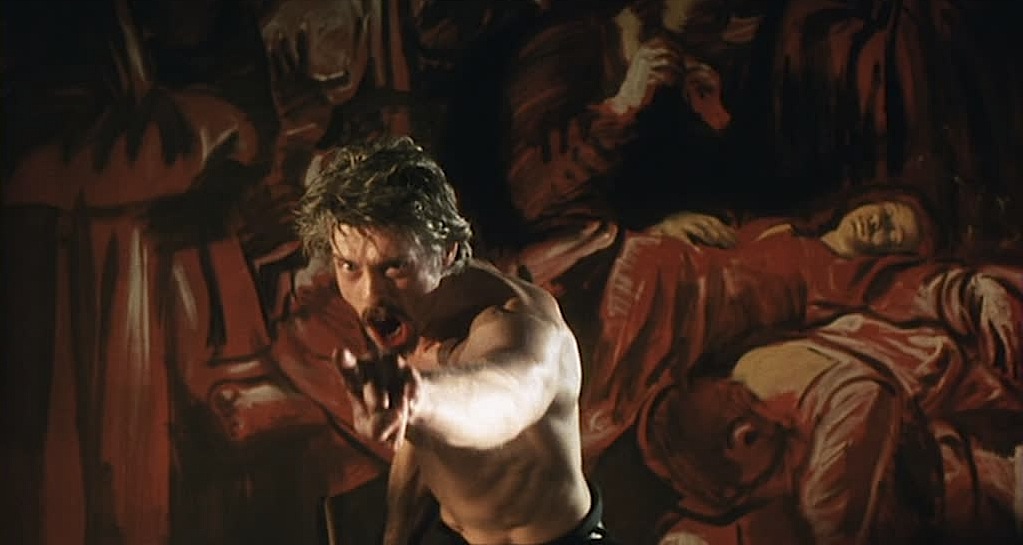
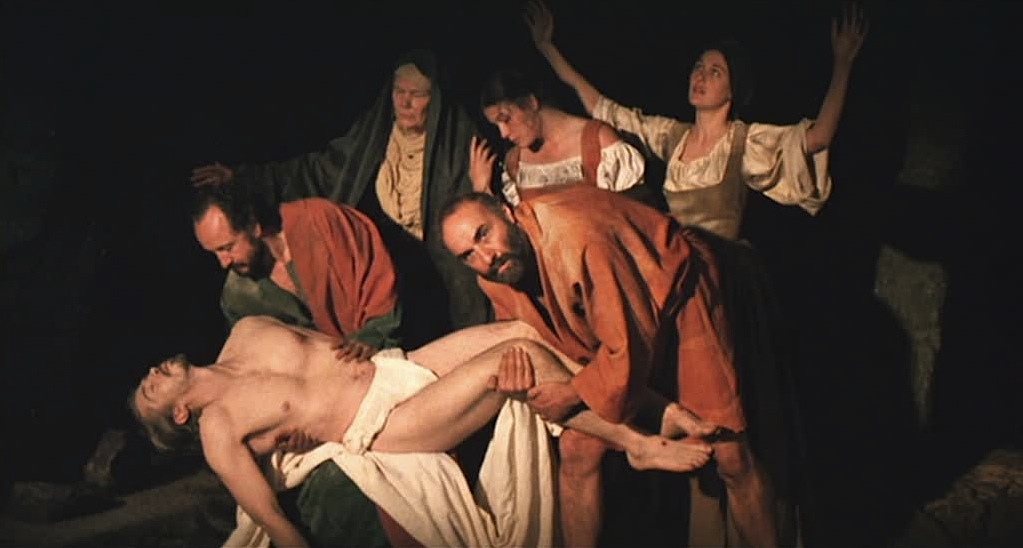
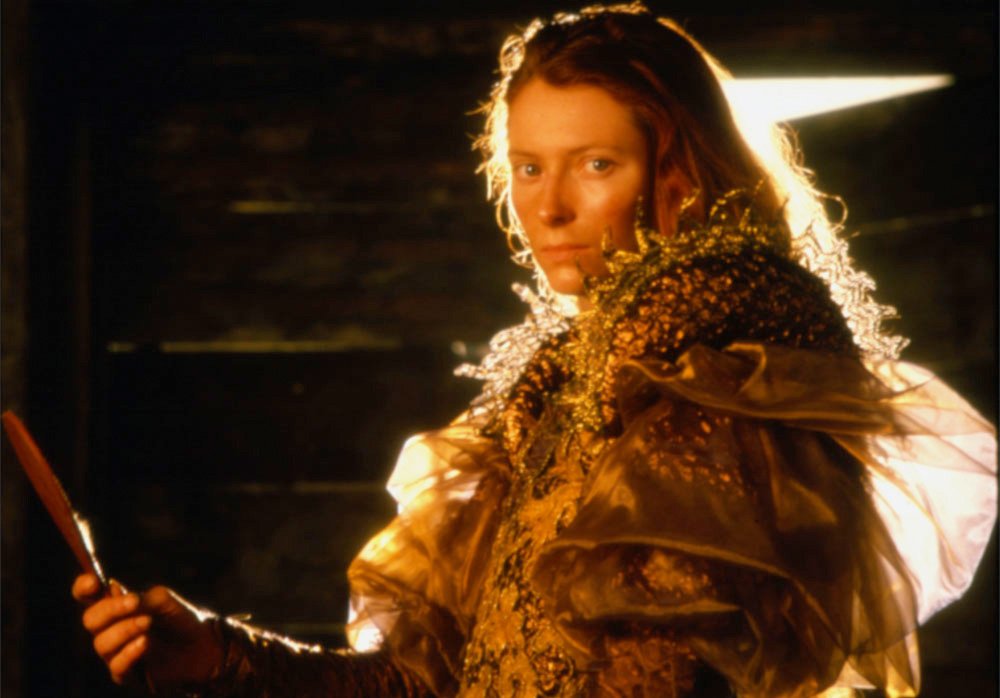
Firstly, for any fan of Caravaggio, this film is a visual treat. Every frame is lit and framed to be as reminiscent as possible of the style of the master. Many scenes are framed either in bare, stone rooms with single windows, or in sets emerging out of an inky blackness. Lighting often strikes diagonally across the frame, just as in Caravaggio’s best work. A number of scenes seem lit from a single source, such as a candle. On top of this, a number of scenes feature either the creation of, or inspiration for, a number of Caravaggio’s most memorable artworks: for those familiar with his work, it’s a delight to see these either recreated in the studio by models, or suggestively composed out of scenes. For an art lover, it’s a visual treat.

Jarman also has an intricate understanding of the creation of art, and when we watch Caravaggio at work it genuinely feels like watching a real artist, engaging with the world, recording images in his mind’s eye, and preparing his next work. The scenes watching Caravaggio create his masterpieces are fascinating in their detail and the careful build-up of paint to create an effect. The effort of models to stay still for the painter is constantly stressed. It’s a tribute to the work that goes into creation, even if the film succumbs to a few pretentious clichés (at one point Caravaggio and Ranuccio fight playfully with knives and Ranuccio cuts Caravaggio: of course Caravaggio smears the blood over Ranucci’s face. That tends to be what artists in films do). 

Jarman, however, makes a film that is deeper and more suggestive than that. This is a fascinating meditation on power and patronage in the world of art. Caravaggio is a genius, but also a tool of the people above him in the pecking order. One of the first things we see is the teenage Caravaggio selling first a painting, then his body, to a pervy art collector. The patrons call the shots here, and if they want to put your work on their wall, or their hands down your pants, the artist just needs to fall into line. Caravaggio himself is little different – the models he works with are treated with a certain warmth, but there is a clear hierarchy here. His relationship with Ranuccio and Lena is rooted initially in power – he can effectively buy them or their bodies, because he controls the money available to them. The renaissance was not a time of equality: everyone is in hock to someone else, and everyone is defined by what they can trade, be that their art, their body or both.

The film has a clear sensual charge to it in every frame, despite not containing a single scene of sex. There are highly suggestive moments of sexual abuse and desire throughout. It’s heavily implied Cardinal del Monte’s interest in the young Caravaggio is not completely innocent, as del Monte sits with him in bed teaching him to read. During their first modelling session, Caravaggio tosses a series of coins at Ranuccio, each of which the man inserts suggestively into his mouth. Every scene with Lena tingles with sensuality – either with Caravaggio, Ranuccio or the mysteriously powerful Cardinal Borghese (a corrupt looking Robbie Coltrane). 

Perhaps the most striking feature of the film though is its highly unique look. Taking his cue from Caravaggio himself – who painted the subjects of his historical pictures in contemporary dress and locations – Jarman and costume designer Sandy Powell dress the cast in a series of shabby, 1940s-1970s clothing (with the exception of a scene in the Vatican, which is established as a fancy dress party). Caravaggio is barely seen without a cigarette in his mouth, and dresses like a bohemian from Montmartre. Plenty of modern props are introduced – a banker fiddles with a pocket calculator, the writer Baglione hammers his criticisms into a typewriter while flicking through a luscious magazine of Caravaggio prints. Ranuccio cleans a motorbike.

All this manages to not only make the film continually visually striking, but also playfully reminds the audience all the time that they are watching a version of a reality – not a true story but a fictionalisation of the painter’s life. It gives Jarman an artistic licence that he exploits to the full, and makes this a film that really sticks in the memory. It’s an inventiveness you wish you saw more in films rather than slavish historical recreation.

Caravaggio is not a masterpiece – it’s a little too self-consciously arty for that. It almost delights at times in being disjointed and hard to follow. Some scenes leap over what seems like years of events. There is no real narrative through-line. The poetic voiceover can start to wear you down – I searched it for meaning, but I’m not sure if there was much there. Saying that, although this is very much a director’s film, there are some fine performances. Terry does a very good job as the artist himself, capturing a sense of the creative spark behind the eyes. Bean is excellent in one of his first roles as the earthy, insecure Ranuccio. Tilda Swinton however steals the film (it’s easy to see why she became Jarman’s muse) as the beguiling and mysterious Lena.

Caravaggio is that rare thing: a film about an artist that seems to understand art, and feel like a work of art itself. It’s unique and eye-catching and memorable as well as having a neat eye for the tragic. I was strangely mesmerised by it throughout. It’s not a perfect film, but it’s a very good one.

Churchill (2017)


Brian Cox does his very best Greatest Britain as Churchill

Director: Jonathan Teplitzky

Cast: Brian Cox (Winston Churchill), Miranda Richardson (Clementine Churchill), John Slattery (General Dwight D. Eisenhower), James Purefoy (King George VI), Ella Purnell (Helen Garrett), Richard Durden (Jan Smuts), Julian Wadham (Field Marshall Bernard Montgomery), Danny Webb (Field Marshall Alan Brooke), Jonathan Aris (Air Field Marshall Trafford Leigh-Mallory)

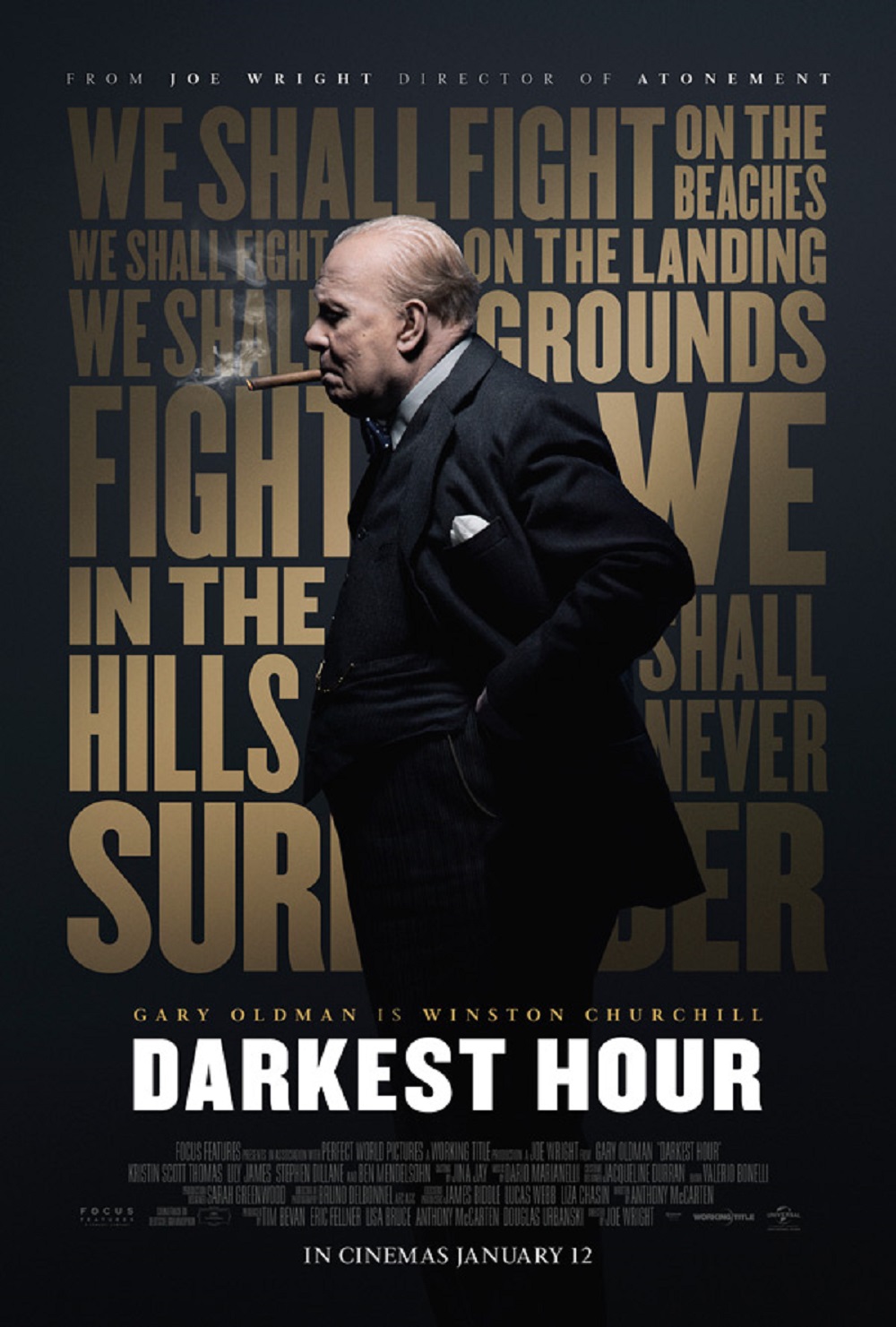
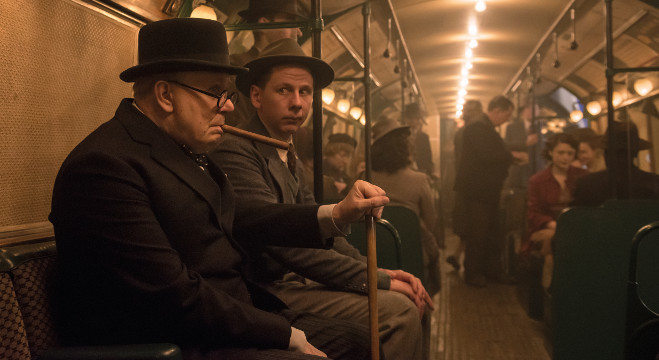
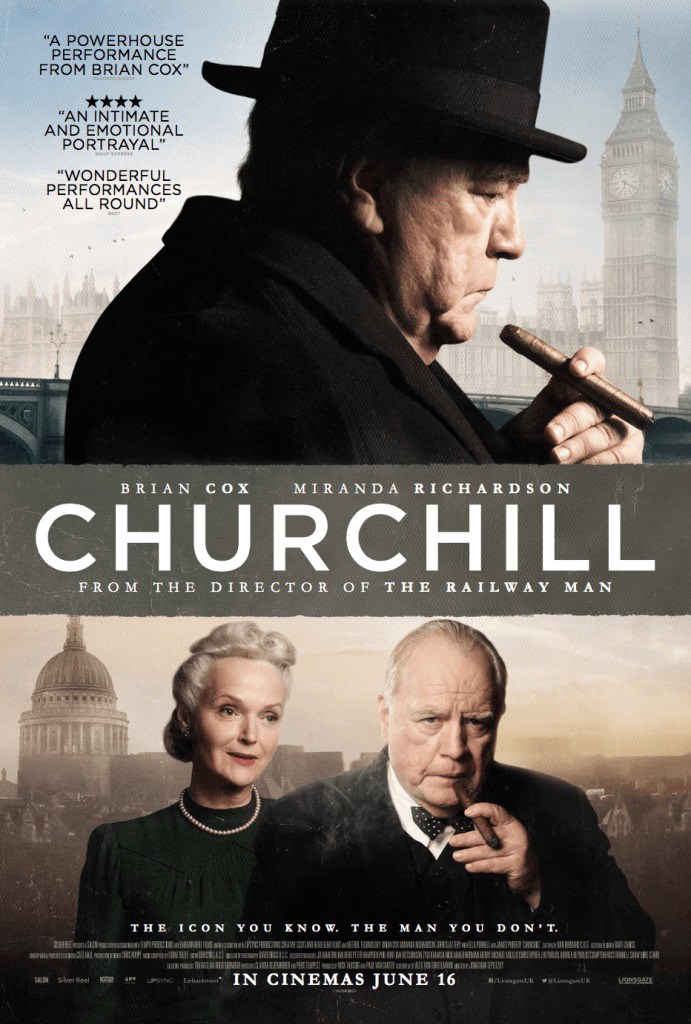
Someone should open a club: The Churchill Club. Every actor who’s played the Great Man gets instant membership. President the late Robert Hardy (seven times!). Other members? You name it: Finney, Gambon, Burton, Spall, Gleeson, Russell Beale, West, Hoskins… Think of a shorter, slightly rotund British character actor and inevitably they’ve had a go. Even the decidedly non-rotund, non-short, non-British John Lithgow aced the role in Netflix’s The Crown. With Gary Oldman also making his pitch this year in Darkest Hour, this film sees renowned character actor Brian Cox join the club. 

1944. Its three days before D-Day and Winston Churchill (Brian Cox) is getting cold feet. Haunted by memories of Gallipoli, he fears that the attack on Northern France will lead to disaster and oceans of blood. Against the advice of his Generals Montgomery (Julian Wadham) and Brooke (Danny Webb), he attempts to push General Eisenhower (John Slattery) to change the plans. As depression takes its grip on him, only his wife Clementine (Miranda Richardson) can get through to him. 

Churchill is a bit of a mess. It’s pretty well acted but highly televisual, shot with a self-conscious flourish that only emphasises its micro-budget. Teplitzky is in love with the cross-fade (or even worse the half fade) – constantly cutting from place to place for brief moments in the middle of scenes, often for lingering shots of actors staring out to sea or walking through fields. The action is often framed oddly, in long shot with full bodies in shot framed between ground and sky. Other scenes are filmed flatly – when Montgomery addresses his army, no amount of slow pans can hide that it consists of about 20 men.

On top of that, every single scene is scored within an inch of its bloody life. Now I love the power of film music, but this goes too far. The score is bland, predictable and unimaginative and just not that interesting to listen to. When it’s dropped heavy-handedly on top of every single scene it makes you want to scream. It’s also often completely misjudged or inappropriate – as gentle romantic piano swells during a key discussion between Churchill and the King, you almost expect them to kiss. 

That’s before we get started on the script, which is instantly forgettable. Alex von Tunkleman wrote a long running column in the Guardian on historical accuracy (or not) in films. Talk about a hostage to fortune, when you try to write your own film… I’ll go into historical issues in a bit, but there are lots of little things that feel wrong from Smuts (Deputy PM Of South Africa!) following Churchill around like some sort of valet too Montgomery addressing the Prime Minister to his face as “Churchill”. Stuff that just doesn’t feel quite right. The script also relies on a fictional “young secretary” who eventually speaks truth to the great man and wins his respect. Von Tunkleman is no writer of snappy dialogue, the film too often feeling like a wonky history lesson than a drama.

Historically the film does explore a different side of Churchill – enough to ruffle the feathers of the millions of Churchill fans out there. It focuses on his depression and self-doubt, within the framework of a period when he was starting to become sidelined by America. It also focuses on his little known opposition (certainly initially) to D-Day (he favoured a second front opened in Europe’s “soft underbelly” of Italy) – although it certainly expands this last-minute opposition for dramatic effect. I’m pretty sure he was on board by this point (however initially reluctant)!

What the film looks like it might do (but never quite does) is really explore some of Churchill’s laws and vulnerabilities – to look at the negatives and see how overcoming (or dealing with these) made him a great man. It touches heavily on Churchill’s depression – the “black dog” – with a desperately worried Churchill retiring to his bed to despair, praying for bad weather to prevent the landing and bawling out his secretary. Churchill is frequently wrong or mistaken, and the film captures much of the frustration his generals had with this talented amateur. It also isn’t afraid to show that, with American muscle driving the war, Churchill was becoming more of a mascot than a major orchestrator of allied strategy.

It’s a shaded portrait, but the film is eventually seduced by Churchill’s magnestism – a King’s Speech style final radio broadcast is all swelling regard, and a coda of Churchill waving his hat on a beach towards France hammers home his legendary status – miles away from its careful look at his growing irrelevance (and his concerns about this) early in the film. For all we have characters constantly stressing to Churchill his time is passing, the film can’t help finishing with a flourish that hammers home his centrality.

Churchill is flat and unimaginative but it does have an energetic, engaging performance from Brian Cox. While not in the first rank of Churchills, he captures the charisma, without slavishly imitating the famous voice. His Churchill, with his depression and doubt, also feels different: a slightly counter-establishment actor like Cox fits nicely with this. It’s an assured, charismatic performance hampered by the material. The rest of the cast feed off scraps though Miranda Richardson is assured as a twinkly level-headed Clementine. Richard Durden also deserves mention as gruffly supportive Smuts, as does James Purefoy as a gentle George VI.

Churchill means well – but fails. It’s aiming to question some of the reverence we have for the past, but ends up falling between stools, in the end too in love with the myth, but too critical to please the die hards. Flatly filmed and woodenly written, too many scenes fade from memory too quickly. Brian Cox (and Winston) deserved better.

Anne of the Thousand Days (1969)


Henry won’t be happy with that girl: stagy adaptation of the Anne Boleyn story Anne of the Thousand Days

Director: Charles Jarrott

Cast: Richard Burton (King Henry VIII), Geneviève Bujold (Anne Boleyn), Irene Papas (Queen Catherine of Aragon), Anthony Quayle (Cardinal Wolsey), John Colicos (Thomas Cromwell), Michael Hordern (Thomas Boleyn), Katharine Blake (Elizabeth Boleyn), Valerie Gearon (Mary Boleyn), Peter Jeffrey (Duke of Norfolk), Joseph O’Conor (Bishop Fisher), William Squire (Sir Thomas More)

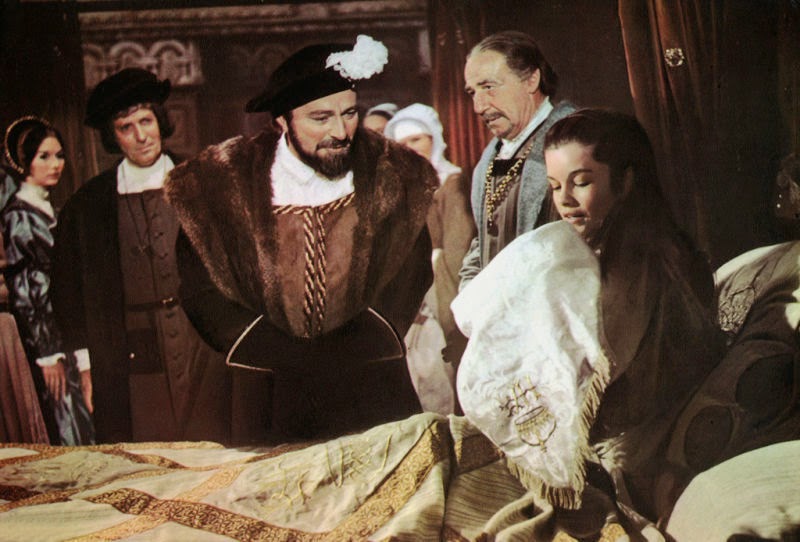
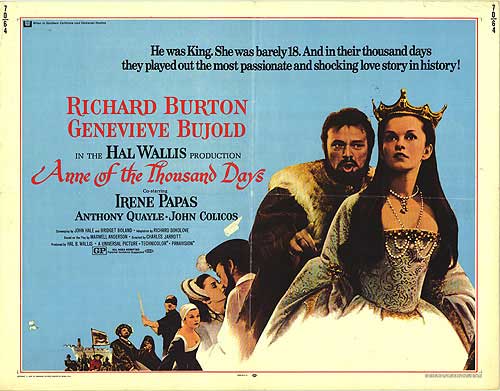
Anne of the Thousand Days fits neatly into Hollywood’s obsession of the 1960s: the grand British historical epic, crammed with costumes, old locations and leading Brit actors in beards mouthing “olde English” style dialogue. Some of these films are of course marvellous – A Man For All Seasons being clearly the best – some are merely competent. AotTD falls very much in the latter category. It’s a solid but dry and rather self-important piece of entertainment, more interested in wowing you with its pageantry than moving you with its emotion.

As the film opens, Henry VIII (Richard Burton) considers whether or not to sign Anne Boleyn’s (Genevieve Bujold) death warrant. The film then flashes back to tell us the story of Anne’s rise and fall. Along the way, the usual figures from Tudor history are wheeled out: Wolsey, Catherine, More, Cromwell and assorted Boleyns.  And of course, the whole thing ends with Anne proudly proclaiming her daughter will one day be the greatest queen of England, with quite exceptional clairvoyance given how unlikely that would’ve actually looked at the time.

The main problem is it isn’t sure what it wants to say about its central character. It wants to simultaneously position her as a strong, “modern” woman with her own ambitions but as a woman succumbing to passion. Essentially, it wants to have its cake and eat it: for Anne to understand Henry is far from love’s ideal vision, while not wanting to lose their “Great Romance”. So we have scenes where Anne questions why anyone would want to marry Henry or talks of her desire for peace, and later scenes where she demands the judicial murder of all who refuse to accept the marriage.

And it may want to show Anne as a modern woman, but – frustratingly – it’s only actually interested in her as a romance object. Her modernity is solely expressed in defying her family to try and marry someone other than Henry, and having spirited “I hate you/I love you” sparring matches so beloved of Hollywood. But the film has no interest in her intelligence, her involvement in the Reformation, or how this led into dangerous conflict with the increasingly powerful Thomas Cromwell (here her downfall is solely down to her inability to produce a son, and being jealous of love rival Jane Seymour, here playing the sort of minxy temptress Anne is often accused of being).

And even this simplified, Mills-and-Boon Anne is inconsistent– one minute she’s a sweet young girl bravely resisting her unwanted royal suitor. Then, she’s delighted with the power that comes with allowing the King to court her. Equally suddenly, she falls in love with him (though that scene is so confusingly written it’s initially unclear whether this is genuine or simply a ploy to win back the attention of Henry). Even away from the central “romantic” relationship, her character oscillates – she schemes revenge against Wolsey, but then is too nice to take Hampton Court from him.

Despite this, Genevieve Bujold delivers an excellent performance. The film successfully plays up her youth early on, and she brings the role a lot of passion, fire and intelligence. Her French-Canadian accent also makes perfect sense considering Anne was largely brought up at the French court. Bujold does her best to hold together an inconsistent character and delivers a real sense of Anne’s independence and intellectual strength. Not even she can completely sell the competing visions of Anne the film has, but she does a very good job with what she is given.

Richard Burton was allegedly fairly scornful of his performance, but he is terrific. One area where the film does succeed is repositioning Henry as a proto-tyrant, who literally cannot conceive he is wrong. In a memorable scene, Henry explains that, ruling as he does through God, any thoughts in his head must have been placed there by God, ergo he can never be wrong. If that isn’t a tyrant, I’m not sure what is. Burton’s charisma is perfect for a man who can flip on a sixpence from bonhomie to fury. While Anne’s intellectualism is overlooked, the film does a great job of demonstrating Henry’s intellectual fakery, via his bland and overbearing musical compositions (met with a rapturous response from the court). Lords literally breathe sighs of relief after they leave his presence. Burton may not be an ideal physical match, but embodies Henry’s ruthless selfishness and towering ego.

It’s a shame that, despite having strong performances, the film is not only so confused, but also so flat and dry. Charles Jarrott frames the film with a dull conventionality, carefully letting costumes and production design fill the screen like a dutiful workman. Has he got any really interesting ideas for shooting this stuff, or presenting a routine plot with any freshness? Not really. Instead we get spectacle, and inevitable rundown of events, but no real sense of novelty. It turns the whole thing into a rather slow, reverent slice of British history, dry and stodgy, ticking off events as it goes.

Those events come and go with a confused focus. The foundation of the Church of England is under explained. The fates of several characters are left unresolved – in particular Cardinal Wolsey (an otherwise excellent Anthony Quayle) simply disappears. The final condemnation of Anne is rushed and confused (you would be forgiven for not really understanding who she has been accused of sleeping with, and the alleged incest between her and brother is almost thrown away). Other characters are simplified (despite good performances from their actors):  so William Squire’s More is upstanding and honest, while John Colicos’ Cromwell is dastardly and scheming.

Anne of the Thousand Days is rather old fashioned and probably best watched now as a Sunday afternoon film. It tells a very, very familiar story (how many times have we seen Henry/Anne’s romance on screen before and since) without too much originality, and largely fudges putting together a clear sympathetic portrait of its central character. Having said that, it is well acted and looks wonderful. It’s just also rather dry and far too aware of having an “important” story to tell.

A United Kingdom (2016)


Rosamund Pike and David Oyelowo are a love match in underwhelming A United Kingdom

Director: Amma Asante

Cast: David Oyelowo (Seretse Khama), Rosamund Pike (Ruth Williams Khama), Terry Pheto (Naledi Khama), Vusi Kunens (Tshekedi Khama), Jack Davenport (Alistair Canning), Laura Carmichael (Muriel Williams-Sanderson), Jack Lowden (Tony Benn), Tom Felton (Rufus Lancaster), Charlotte Hope (Olivia Lancaster), Nicholas Lyndhurst (George Williams), Anastasia Hille (Dot Williams)

Some films just have a safe, crowd pleasing, “your whole family would like it” feel to them. A United Kingdom falls very neatly into this category. It’s a simple and straightforward story, told with a cosy safety that won’t challenge you or really stick in your memory.

Seretse Khama (David Oyelowo), heir to the throne of the Bamangwato tribe in what will become Botswana, is studying law in England in the late 1940s to prepare for his reign. He meets and falls in love with London girl Ruth Williams (Rosamund Pike) – and despite the protests of their families and their nations, they marry and resolve to build a life in his country working for the betterment of his people. But first they must overcome what seem insurmountable obstacles.

A United Kingdom is a very well-meaning film. It has an important story to tell about acceptance and prejudice. Many of the points it makes about the negative reactions to mixed race marriages and colonial politics are still painfully relevant today. It’s an earnest and good-hearted film. It’s just a real shame that it’s also not that special.

It’s well acted by the two leads, we can give it that. Sure they are presented as almost flawless individuals, but David Oyelowo and Rosamund Pike are engaging performers and give a lot of emotional weight to the story. Their courtship is sweetly hesitant and their relationship feels real and lived in. Oyelowo brings much of the magnetic charisma he has shown in a wide range of films to the part, and Pike’s neat mixture of prim Englishness, decency and stubborn self-determination work really well.

But the story it so simply done, the whole thing feels like a TV movie of the week. The film is flatly directed and conventionally shot: London is always dark, filmed through a blue lens, with rainwater or fog dripping off every shot. Africa by contrast is a vibrant, orange lensed place where every sunset and sunrise looks like a painting. Very few shots show much more imagination than that. There is no flair or originality to the cinematography, the composition of the shots, or even the musical score (which swells up stirringly at emotional moments and then fades instantly from memory). On every technical level, it can boast nothing more impressive than workman-like competence.

The narrative is equally simplistic: our heroes fall in love, deal with rejection, passionate speeches are made, allies are slowly won over and a deus ex machina finally makes everything fine. The stakes of what Seretse is putting at risk through his marriage are never made completely clear, despite all the talk of digging and diamonds. The final resolution of the entire problem is so simplified, contrived and rushed I almost had to double check the runtime to see if I missed anything. It’s all part of the same simplification in the story that sees sides change with confusing speed – Seretse’s sister goes from rejecting Ruth to treating her like a sister in a blink; Ruth’s father (distractingly played by Nicholas Lyndhurst, forever Rodney) is given one moment in a cinema to switch from prejudiced British working man to repentant father.

The characters themselves are very plainly drawn: they are either goodies or baddies with no attempt made to look at the deeper feelings or motivations behind them. For instance, Seretse’s uncle is shown as simply outraged by the marriage, with no attempt to explore why a marriage like this may not have been seen as ideal in a fragile community, or how it might have made holding a deal with the UK together difficult. Similarly, the Brit characters are almost to a man mustachio twirlers or bitchy mem-sahibs, callously sipping sherry as they thwart Seretse and Ruth’s plans. (Spare a thought for poor Tom Felton, yet again hired to play Draco Malfoy In A Different Historical Costume.)  Even Clement Attlee (so regularly beautified as the Prime Minister who oversaw the creation of the Welfare State and NHS) is portrayed here as a cold-hearted architect of realpolitik.

By making its lead characters so saintly and pure, and anyone who disagrees with them so cruel and sunk in villainy, the film weakens itself. Yes it has a sweet relationship at the middle, but it also manages to make this feel slightly lightweight, because the film itself is so flimsy. When their opponents are such cartoonish baddies, and their aims for their country so unclearly explained, it minimises the impact of the story. Instead of showing us the birth of a modern, democratic nation through the focal point of one couple’s struggle against prejudice and adversity, it makes both personal and national triumphs feel actually less impressive than they were – no more than a Sunday afternoon, Mills & Boon tale of a working class London girl and a handsome, “exotic” stranger.

A United Kingdom is an important story that has made itself into a slight one, a conventionally filmed and simplistically told tale that never carries the weight and impact it should do. Despite good performances from the leads, it’s really nothing special.

The Iron Lady (2011)


Meryl Streep impersonates the Iron Lady to excellent effect in this otherwise bland and forgettable, compromised mess of a picture

Director: Phyllida Lloyd

Cast: Meryl Streep (Margaret Thatcher), Jim Broadbent (Denis Thatcher), Olivia Colman (Carol Thatcher), Roger Allam (Gordon Reece), Nicholas Farrell (Airey Neave), Iain Glen (Alfred Roberts), Richard E. Grant (Michael Heseltine), Anthony Head (Sir Geoffrey Howe), Harry Lloyd (Young Denis Thatcher), Michael Pennington (Michael Foot), Alexandra Roach (Young Margaret Thatcher), John Sessions (Edward Heath)

In British politics has there been a figure as controversial as Margaret Thatcher? A domineering Prime Minister who reshaped the country (for better or worse depending on who you speak to), crafting a legacy in the UK’s politics, economy and society that we will continue to feel for the foreseeable future, she’s possibly one of the most important figures in our history. It’s a life rich for a proper biographical treatment; instead, it gets this film.

The film’s framing device is focused on the ageing Thatcher (Meryl Streep), now dealing with onset dementia and having detailed conversations with her deceased husband Denis (Jim Broadbent). Cared for by her daughter Carol (Olivia Colman), she reflects on her political career and the sacrifices she made personally to achieve these. Woven in and out of this are Thatcher’s increasingly disjointed memories of her political career.

The most surprising thing about this film is how little it actually wants to engage with Thatcherism itself. Perhaps aware that (certainly in the UK) Thatcher remains an incredibly divisive figure, the film’s focus is actually her own struggles with grief and approaching dementia. Her career as PM is relegated to a series of flashbacks and short scenes, which fill probably little more than 20-30 minutes of the runtime, shot and spliced together as a mixture of deliberately subjective memories and fevered half-dreams. Can you imagine a film about Thatcher where Arthur Scargill and the miners’ strike doesn’t merit a mention? You don’t need to: thanks to The Iron Lady it now exists. 

Perhaps Thatcher’s politics were considered to “unlikeable” – certainly, one imagines, by its writer and director – to be something to craft a film around, so it was thought better to brush them gently under the table. Instead the focus is to make Thatcher as sympathetic as possible to a viewer who didn’t share her politics, by concentrating on her struggles against sexism in the 1950s and her struggles with age late on. Why not accept what Thatcher stood for and make a film (for better or worse) about that? Perhaps more material on her actual achievements in office were shot and cut (the film does have a very short run time and underuses its ace supporting cast), but the whole film feels fatally compromised – which is more than a little ironic since it is about a woman famous for her lack of compromise.

In fact it’s rather hard to escape the view that Roger Ebert put forward: “few people were neutral in their feelings about [Thatcher], except the makers of this picture”. It’s a film with no real interest in either politics or history, the two things that defined Thatcher’s entire life. And as if to flag up the mediocre nature of the material they’ve chosen, it’s then interspersed with too-brief cuts to more interesting episodes from Thatcher’s life than those we are watching. Only when the older Thatcher hosts a dinner party and launches into a blistering sudden condemnation of Al-Qaeda and support of military action against terrorism (followed by her casual disregard of a hero-worshipping acolyte) do we ever get a sense of finding out something about her, or of seeing her personality brought to life.

The film’s saving grace is of course Meryl Streep’s terrific impersonation of Thatcher. I call it impersonation as the film so strenuously avoids delving into the events and opinions that shaped Thatcher that Streep gets very little opportunity to really develop a character we can understand, or to present an insight into her. Her performance as the older Thatcher – losing control of her mannerisms, deteriorating over the course of the film – is impressive in its technical accomplishment, but that’s largely what it remains. As the film doesn’t allow us to really know Thatcher, and doesn’t work with what defines her, it largely fails to move us when we see her weak and alone. So for all the accomplishment of Streep’s work, I couldn’t say this was a truly great performance – certainly of no comparison to, say, Day-Lewis as Lincoln or Robert Hardy as Churchill. I’d even say Andrea Riseborough’s performance in TV’s The Long Walk to Finchley told us more about the sort of person Thatcher was than Streep does here.

Despite most of the rest of the cast being under-used though, there are some good performances. Jim Broadbent is very good as Denis Thatcher, although again his performance is partly a ghostly collection of mannerisms and excellent complementary acting. However the chemistry between he and Streep is magnificent and accounts for many of the film’s finest moments. Olivia Colman does sterling work under a bizarre fake nose as a no-nonsense Carol Thatcher. From the all-star cast of British actors, Roger Allam stands out as image-consultant Gordon Reece and Nicholas Farrell is superbly calm, cool and authoritative as Airey Neave. Alexandra Roach and Harry Lloyd are excellent impersonating younger Thatchers.

The Iron Lady could have been a marvellous, in-depth study of the politics of the 1980s, and a brilliant deconstruction and discussion of an era that still shapes our views of Britain today. However, it wavers instead into turning a woman defined by her public role and views into a domestic character, and brings no insight to the telling of it. By running scared of Thatcher’s politics altogether, it creates a film which makes it hard to tell why we should be making a fuss about her at all – making it neither interesting to those who know who Thatcher is, nor likely to spark interest in those who have never heard of her.