Category: Historical epic

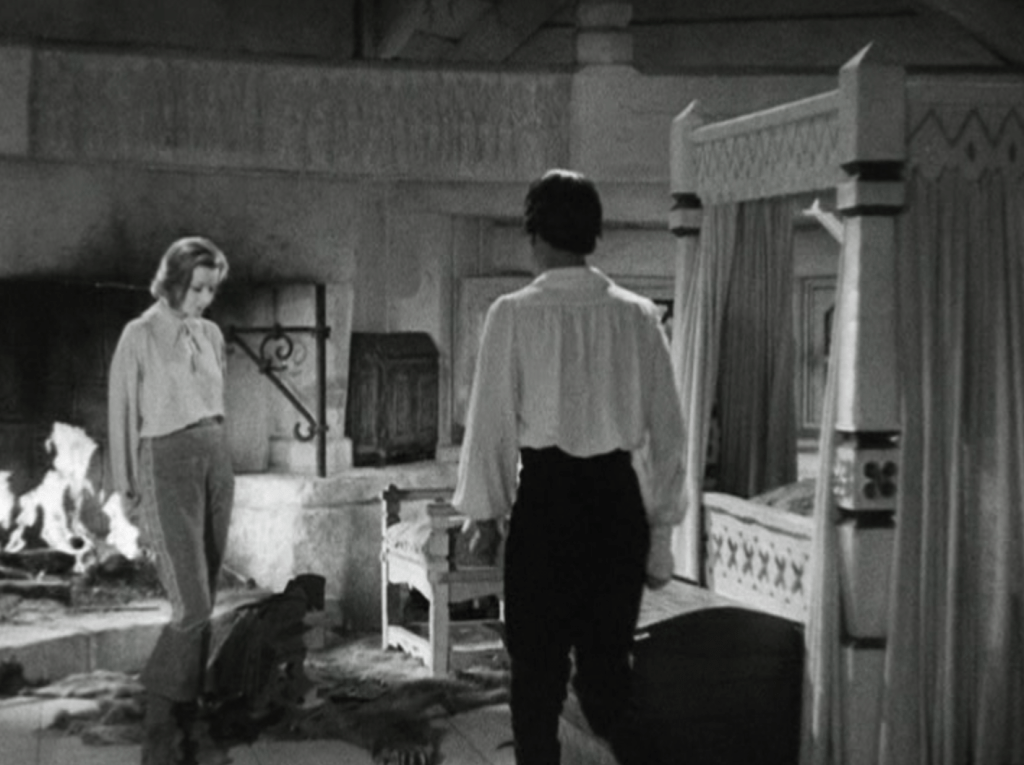
Fanny and Alexander (1982)

Fanny and Alexander (1982)

Bergman’s gorgeous final film, a sublime family saga, that leaves you thinking for days

Director: Ingmar Bergman

Cast: Bertil Guve (Alexander Ekdahl), Pernilla Allwin (Fanny Ekdahl), Ewa Fröling (Emilie Ekdahl), Jan Malmsjö (Bishop Edvard Vergérus), Gunn Wållgren (Helena Ekdahl), Erland Josephson (Isak Jacobi), Jarl Kulle (Gustav Adolf Ekdahl), Allan Edwall (Oscar Ekdahl), Pernilla August (Maj), Mona Malm (Alma Ekdahl), Börje Ahlstedt (Carl Ekdahl), Christina Schollin (Lydia Ekdahl), Harriet Andersson (Justina), Stina Ekblad (Ismael Retzinsky), Mats Bergman (Aron Retzinsky), Gunnar Björnstrand (Filip Landahl)

After many years (and masterpieces) Bergman wanted to move on from film: but before he went, there was time for one more magnum opus, a sprawling family saga that would throw a host of his interests (death, family, sexual openness, God, theatre, infidelity, the unknowable) onto one grand, sprawling canvas. Fanny and Alexander would be a truly personal film, featuring a young protagonist with more than a passing resemblance to Bergman himself. Despite this it’s an irony Bergman might like that the finest version of this film we have is actually a five-hour recut for television (the limits of run-time from distributors being one of many things Bergman was tired of). That version is a beautiful, life-affirming, gorgeous piece of film-making, an extraordinarily humane story tinged with the supernatural told on a luscious, Visconti-like scale. It’s a fitting sign-off from a master.

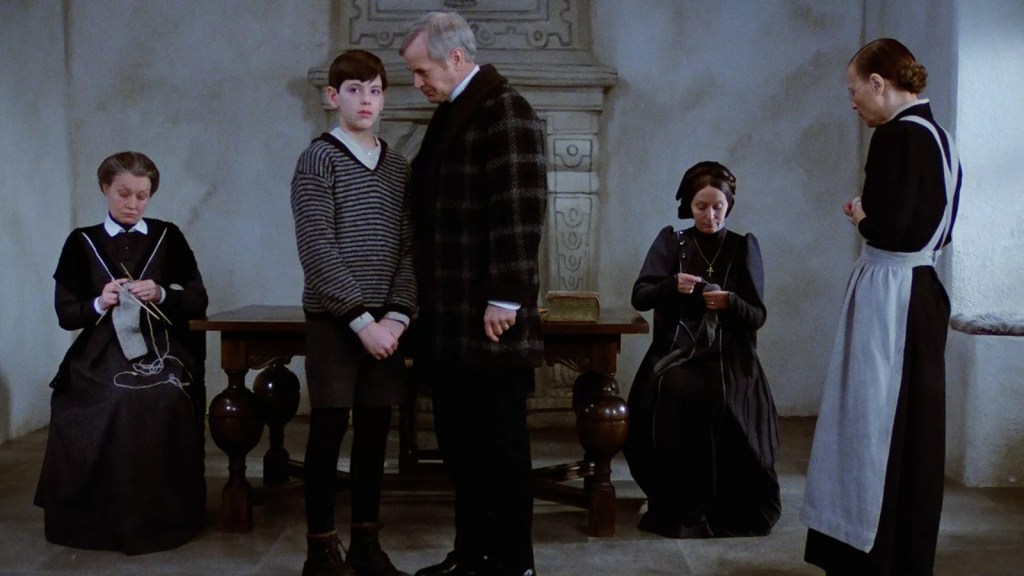
In 1907, the wealthy Ekdahl family live in a luxurious apartment block, their rooms filled with the rich detail of their love of art and culture. Ten-year-old Alexander’s (Bertil Guve) father Oscar (Allan Edwall) and mother Emilie (Ewa Fröling) run the Ekhdal theatre, where his wealthy grandmother Helena (Gunn Wållgren) once performed. After a fabulous Christmas celebration, Oscar dies after a stroke while rehearsing the role of the Ghost in Hamlet. After a period of mourning, Emilie remarries to the older Bishop Edvard Vergérus (Jan Malmsjö), who turns out to be a domestic tyrant, obsessed with the letter of religious and family law. Will Alexander, his younger sister Fanny (Pernilla Allwin) and their mother escape from Vergérus’ controlling clutches?

What really strikes you first and foremost about Fanny and Alexander is its gorgeous warmth – hardly the first quality you traditionally associate with Bergman. It opens with a prolonged (over an hour) Christmas celebration, with the family and their servants eating, laughing, telling stories and dancing through their gorgeously furnished apartment. It should feel indulgent (and I suppose it is), but this warm reconstruction of an at-times-flawed, but fundamentally loving and vibrant family is actually deeply moving and heart-warming.

The Ekdahls have a bohemian freedom, with their love of theatre and art (only Uncle Carl, a manic depressive businessman, feels slightly out-of-place and even he takes the children to one-side during the festivities to entertain them by blowing out candles with his farts). Their house is charmingly egalitarian, with the servants treated as part of the family, loyalty they return. The theatre troupe (led by Bergman regular Gunnar Björnstrand in his final, small, role) – are equally part of this extended family, the theatre a second magical home where the children take small roles in various productions and delight in the stagecraft and costumes behind-the-scenes.

Fitting a Bergman family (and the Ekdahl’s share some elements with parts of Bergman’s family) they are extremely forward-looking in their morality. Uncle Gustav Adolf (played with bombastic, gentle charm by Jarl Kulle) is a notorious ladies man, but goes about it with such innocence and near-childish openness his patient wife Alma (Mona Malm) indulges him because in all other respects he’s a loving husband and father, and his overall fidelity to her is never in doubt. Alma restricts herself to a single slap of his new lover, maid Maj, but otherwise treats her like a sister. Pernilla August is hugely endearing as this caring young woman, swiftly absorbed into the wider Ekdahl family who value her care for others. The Ekdahl’s have no time for conventional morality, led from the front by matriarch Helena (Gunn Wållgren is fantastic as this wordly-wise, ideal grandmother figure) who has lived a life of sexual openness with her husband and values people not societal conventions.

Oscar, their father (wonderfully played by Allan Edwall as a bashfully mediocre actor and a quietly shy but warm man) takes his role as the leader of this company very seriously, but with a light touch (modestly bemoaning his lack of statue compared to his father). Bergman uses a myriad of small moments to make this father an ideal parent, not least a late-night fantastical story he improvises for the children, spun around their nursery room chair, one of the most tender moments of parent-child bonding in the movies. (This despite hints that Oscar, who has allowed the younger, more sensual Emilie to conduct her own affairs, might not be their true father).

The stunning production and costume design (which won Oscars for Anna Asp and Marik Vos-Lundh) are essential for creating this immersive, rich and vibrant life: one which will be exploded in Dickensian tragedy by the death of Oscar and the arrival of the Murdstone-like Edvard Vergérus (played with chilling, smug hypocrisy by Jan Malmsjö under a fake smile) who is everything the Ekdahls are not. Where they are warm and egalitarian, he is cool and elitist, he is a prude with no regard for art and his home is in bleached-out puritan stone, devoid of personal touches – it literally looks like a different world to that we’ve spent the first few hours in, full of untrustworthy people (like Vergérus’ maid played by a wonderfully two-faced Harriet Andersson).

Vergérus is all about control, something we suspect from the start with his aggressively tender manhandling of Alexander, his hand slamming into the back of his neck. He worms his way into the affections of Emilie – a woman who, with her earth-shattering wails over the body of Oscar, is clearly vulnerable in her raw grief (Ewa Fröling is extraordinary as this gentle figure, prone to appalling judgement and unexpected strength of character) – and then sets out their marriage terms with controlling agendas, not least that in arriving in his house, she and her children must shed every inch of their previous life, from personal connections to the knick-knacks they have grown to love. He’s a poor advert for a God Alexander is already cursing for taking his father (his attic, filled with crumbling religious symbols, feels of a part of Bergman’s world where God is at best a passive observer, at worst a near malicious presence).

Bergman makes clear Vergérus is a man who genuinely believes he is doing the best for his family and that the moral lessons he hands out, at the end of a cane, to Alexander are essential. A weak man who mistakes bullying for strength. In many ways the fact he is not vindictive just weak and convinced of his own moral certainty (re-enforced by his fawning family, who treat him like a sort of prophet). Sure, he’s capable of anger, anti-Semitic slurs and little acts of cruelty, but Malmsjö shows him as a man who is trying, in his own wrong-headed way, to win the love of his adopted wife and children and can’t understand why he is not met with gratitude and love.

Perhaps it’s this sudden dropping into a cold world (one not dissimilar from Bergman’s own troubled relationship with his priest father – in fact you leave Fanny and Alexander wondering if Bergman hated his own father as much as Alexander who literally prays for his death) that so sparks Alexander’s own links to a mystic world around him. There is a rich vein of something other throughout Fanny and Alexander, from the statues Alexander watches move in the opening sequence (not to mention the haunting spectre of Death he witnesses in the same moment), to Oscar constantly appearing to Alexander like Hamlet’s Ghost. Is this haunting Alexander’s guilt at this failure to face his dying father on his deathbed, or a link to a world beyond our understanding?

After all Oscar’s Ghost greets Helena at one point, the two entering into a loving conversation. And he’s not the only supernatural touch around Fanny and Alexander. Family friend (and Helena’s lover) the Jew Isak (a rich performance by Bergman regular Erland Josephson) lives in a house full of mystic puppets that might be able to breath and walk. Isak perhaps uses magic to help smuggle the children out of Vergérus’ house (making them appear in two places at once), while his androgenous son Ismael (played by a woman, Stina Ekbad) is implied to having the spiritual power to channel Alexander’s hatred of Vergérus into actual supernatural revenge in the real world (another classic literary touch, that plays on spirituality and the Mad Woman in the Attic in Jane Eyre).

Fanny and Alexander is an extraordinary film, I feel I have only begun to scratch its surface here. It’s both a Dickensian family fable and a semi-benevolent Ghost story. It’s a family saga and a careful look at a particular time and place. It’s funny and moving. It really feels like one final mighty effort from a master.

The Hidden Fortress (1958)

The Hidden Fortress (1958)

Kurosawa’s samurai entertainment is overlong but has just enough action and adventure

Director: Akira Kurosawa

Cast: Toshiro Mifune (General Rokurota Makabe), Minoru Chiaki (Tahei), Kamatari Fujiwara (Matashichi), Susumu Fujita (General Hyoe Tadokoro), Takashi Shimura (General Izumi Nagakura), Misa Uehara (Princess Yuki), Eiko Miyoshi (Yuki’s lady-in-waiting), Toshiko Higuchi (Prostitute)

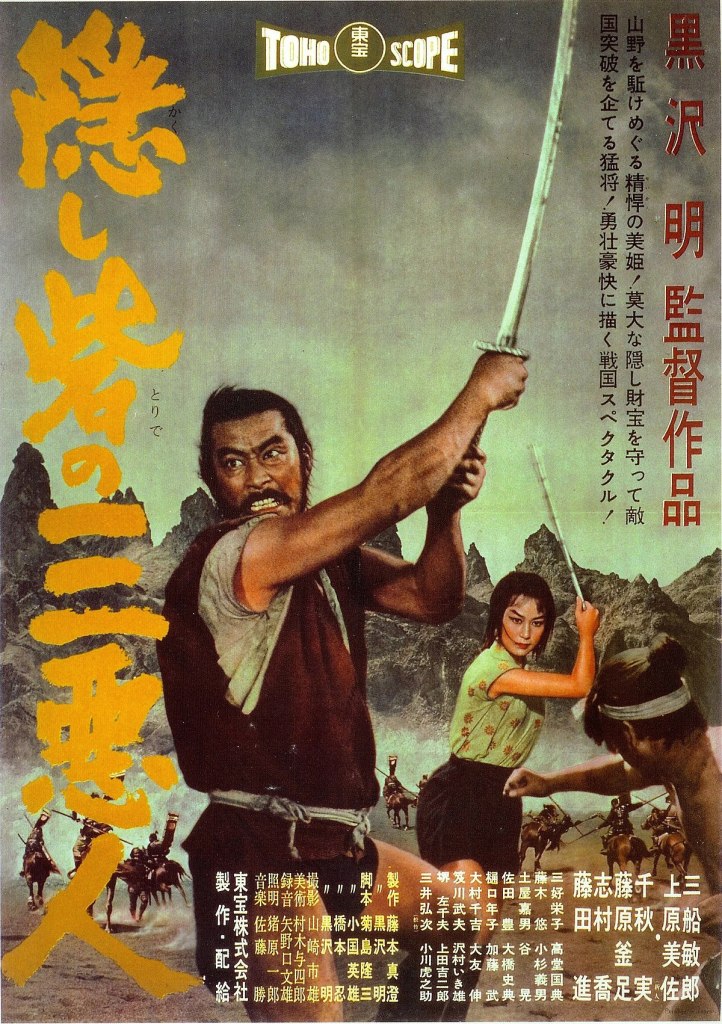
A princess hides in a castle from the wicked forces who have captured her kingdom. Her only hope is a noble general who has concealed the kingdom’s gold in bundles of wood, hidden in a lake at a mysterious castle. The general needs to get the gold and the princess through miles of hostile territory, with only a pair of greedy, incompetent peasants to help. This fairy tale structure is spun by Kurosawa into a samurai action-adventure with Mifune (inevitably) as the general, Misa Uehara as the Princess and Minoru Chiaki and Kamatari Fujiwara as the peasants. It’s good fun, overlong, but an entertaining ride – and one now best known now for its influence over Star Wars.

Kurosawa, after pouring his heart and soul into Throne of Blood, needed to relax. He decided it was time for an entertainment, something to please the crowds. The Hidden Fortress is certainly that, Kurosawa’s first film shot on impressive widescreen Tohoscope, with plenty of horse-bound action and swordplay. It’s really a Kurosawa Westerns, with heroes on the trail on a mission with bad guys to foil. But, as is sometimes the case with Kurosawa, it’s length and scope frequently makes it feel slightly indulgent, while it’s mix of comedy and drama doesn’t always sit comfortably together.

The Hidden Fortress is though highly cinematic. As well as Kurosawa’s enjoyment of the wide-angle lens – soaking up the slopes of Mount Fuji, often rolling in a beautiful mist – it frequently employs Kurosawa’s love of fast-editing tricks, in particular fast wipes to move us seamlessly from one place and time to another (one of many flourishes that influenced George Lucas who made these Kurosawa wipes internationally famous). A horse charge, where General Makabe chases down the samurai hunting them, is a grippingly frenetic with its pace and energy.

Kurosawa mixes this with comedy, though his unusual POV characters. In another move cited by Lucas’ as the inspiration for C3PO and R2D2, much of The Hidden Fortress takes place from the perspective of its peasant sidekicks. But, unlike the genial droids, Tahei and Matashichi are greedy, cowardly and selfish, frequently proving themselves untrustworthy. But, then in a touch of social commentary, perhaps they don’t owe anything to a general who treats them as slaves and (initially) plans to kill them once they are no longer useful. They are played with energetic larger-than-life force by Minoru Chiaki and Kamatari Fujiwara that contrasts neatly with the gruff authority of Mifune.  

It’s them we follow from the start, feuding over robbing the body of a slain samurai before being flung into the slave mines of the Princess’ former kingdom. One of Hidden Fortress’ gently played themes is the class difference between these two sons-of-the-soil and the upper-classes they (reluctantly) serve. For starters, that service comes with no choice – it never occurs to Makabe that they have a say in the matter – and they are told almost nothing about the purpose of their journey. They are instead tools for a higher purpose, just as the Princess’ similar-looking maid is sent to town to be captured and executed, to help protect the bloodline of the royal family.

It’s an attitude the Princess – well played by Misa Uehara as a stubborn young woman, full of righteous indignation at her restrictive office – comes to deplore. She, unlike anyone else among the elite, questions the idea of the poor as unimportant puppets for their betters, and it is she who is drawn to protect people, including a mis-treated prostitute who she insists Makabe buys the freedom of. It’s also she – more than anyone else, including the two peasants – drawn towards the anarchic Fire Festival they encounter, with its dismissal of worldly goods and embracing of enjoying life. But, perhaps Kurosawa’s point is it’s only the wealthy who can afford to indulge themselves with such thoughts: peasants have far fewer options and no choice but to scrabble in the dirt for coins.

This social commentary would perhaps be more widely discussed if the film had kept Kurosawa’s original title, Three Bad Men in a Hidden Fortress: a title that tips Tahei, Matashichi and Makabe into the same morally ambiguous pot, all obsessed with worldly needs (money or the continuation of the royal house) over any concerns about those around them. But, somehow, it’s easier to focus on the wheedling greed of the peasants, and overlook the lofty cold distance of the general, because he’s a noble guy, brave and daring who spares his opponent after a fair duel.

It’s also because The Hidden Fortress is less focused on these elements – Seven Samurai did the snobbery of the samurai class and the mixed motives of the working classes more effectively in any case – and more on being a rollicking, road-movie entertainment. It’s Western-style (in both ways) misfit band adventures, features expertly filmed action set-pieces. Best of all the previously mentioned chase, and a gripping one-on-one duel between Rakabe and his rival General Tadokoro (a fine performance of quiet dignity from Susumu Fujita), that is edge-of-the-seat in its mix of graceful camera work and exciting sword play.

The Hidden Fortress is entertaining, but it’s hard to escape the feeling there is too much of it. Despite not being as long as Seven Samurai, it feels less forceful narratively, largely features less compelling characters and is less well balanced between depth and action. Its plot feels almost deliberately lightweight and the resolution feels rushed. The film’s fairy-tale simplicity really needs a relatable hero at its heart – but the focus on the sometimes irritating peasants means we don’t get that. Fundamentally, The Hidden Fortress is an adventure story from a director, taking a rest from more complex work. It entertains, but feels like it lives in the shadow of other films, even before its connection to Star Wars turned it into a footnote in another film’s story.

Titanic (1997)

Titanic (1997)

Cameron’s film is easy to knock, but is a triumph of romance, scale and real-life tragedy

Director: James Cameron

Cast: Leonardo DiCaprio (Jack Dawson), Kate Winslet (Rose DeWitt Bukater), Billy Zane (Cal Hockley), Frances Fisher (Ruth DeWitt Bukater), Kathy Bates (Molly Brown), Gloria Stuart (Old Rose), Bill Paxton (Brock Lovett), Suzy Amis (Lizzy Calvert), David Warner (Spicer Lovejoy), Danny Nucci (Fabrizio De Rossi), Victor Garber (Thomas Andrews), Bernard Hill (Captain Smith), Jonathan Hyde (J Bruce Ismay)

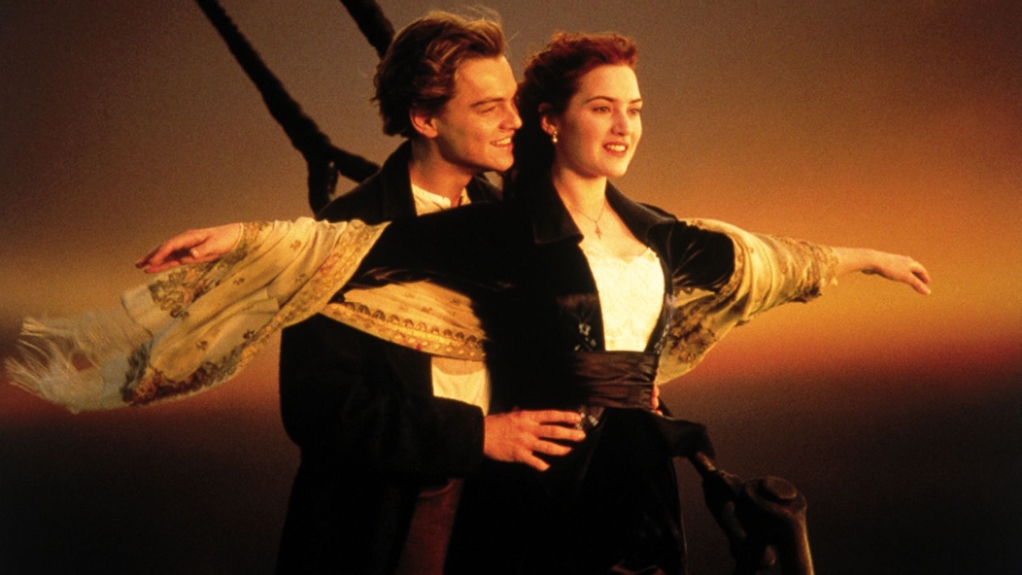
Get on any ship, and I guarantee you’ll see two people at the bow standing, one in front of the other, with their arms stretched out. If that doesn’t tell you something about the lasting impact of Titanic nothing will. Titanic was a sensation: top of the box office for months with the sort of repeat-viewing producers dream of; My Heart Will Go On went platinum and half the world was in love with Leonardo DiCaprio. It won 11 Oscars, made a billion dollars and is a film everyone knows even if (hard to believe) they ain’t seen it. James Cameron took an enormous punt on TitanicRomeo and Juliet meets disaster movie on legendary ship – and it paid off in spades. Because, no matter your cynicism, you can’t deny he created a film millions of people invested in to an extraordinary scale, staged with the epic sweep, gorgeous detail and pounding disaster thrills that channelled David Lean, Luchino Visconti and Irwin Allen all at once.

Rose DeWitt Bukater (Kate Winslet) is destined for a life of dutiful, unimaginative marriage with spoilt millionaire Cal Hockley (Billy Zane) when she boards Titanic as a first-class passenger in Liverpool on 10 April 1912. Also boarding the ship (but in steerage) is drifter and would-be artist Jack Dawson (Leonardo DiCaprio). When he saves her from taking her own life by jumping from the ship, they form a bond which flourishes into a love that will change both their lives. But not as much as the iceberg the ship is ploughing relentlessly towards across the Atlantic.

It’s very easy to take a pop at Titanic. Its romance sometimes succumbs to Mills and Boon cliché and Cameron’s script has more than its fair share of clunky lines (it’s one of those rare Best Picture winners with no screenplay nomination). Plenty of people hated it in a fit of inverted snobbery as a whole generation took this modern romance to its heart. But Titanic reveals the truth of the magic of movies: it uses a traditional romance to build our emotional investment in the sinking and the lives of ordinary passengers, more successfully than any other Titanicfilm had before or since.

Cameron knew the mountain he had to overcome. After all, this was the most famous disaster since Pompeii: where was the tension? So, he opens with a modern-day setting, a treasure hunt among the real ship’s ruins, with the hilariously named Brock Lovett (a game Bill Paxton in a thankless role) searching for a priceless diamond, the Heart of the Ocean. His only link: the older Rose (a plucked-from-retirement performance of charm and hidden fire from 87-year-old Gloria Stuart), who becomes our window to the past. This allows the audience to be told the geekily excited “ain’t it cool” details of the sinking with the same sort of distance we’re used to thinking about it. The film then becomes a lesson in making us learn, like Brock, this wasn’t an anecdote but a horrific disaster that killed 1,500 real people (made worse because we know exactly what’s going to happen to this ship every step of the way). The MacGuffin is intended to look as trivial as it does by the film’s end.

His key tool for this was his Romeo and Juliet love story told, for all its airport-novel lack of originality, with a vibrant, earnest intensity. Helped by fantastic chemistry between two talented actors, you have to work hard not to care for Rose and Jack (no accident those initials). And through their eyes, the whole ship comes to life, Just as the special effects camera sweep through the ruins, turns it from a ghost shop into a living breathing place, where ordinary, real-life dramas play out in every corner. It’s a perfectly judged entry point for bringing history to compelling life, playing on emotions we’ve all felt: love and fear of death.

The film splits neatly into two acts. The first is the romance and, whatever you say, it’s a cinematic romance for the ages in its old-school sweep. As we watch them bounce round the ship, make each other laugh, dance and fall in love, the utter lack of cynicism is really winning. It’s so overwhelmingly genuine and heartfelt, you can’t help feeling it yourself. Both help each other find new depths: for Rose, the willingness to embrace her own choices, for Jack a maturity and responsibility he’s lacked. Bathed in golden cinematic light and backed by James Horner’s superb score, they become two people we really invest in being together. It’s so earnest and honest it even gets away with otherwise ridiculous scenes like “draw me like one of your French girls Jack”.

Both the leads carry-off it off superbly. No mean feat considering the challenge of making the film – not least being submerged for weeks in freezing cold water during night shoots. Kate Winslet makes Rose burst with life from the depths of fear and doubt, effortlessly carrying much of the movie. It’s often overlooked that Rose drives much of the pace of the romance, as well as clearly being the more sexually and romantically experienced partner. Leonardo DiCaprio – who found it a burden for years, as it turned him from proto-DeNiro to heartthrob pin-up – gives an infectious energy to Jack’s fortune-cookie mantras, while growing in authority as the film progresses towards disaster.

Cameron fills his golden-hued recreated Titanic with the sort of detail we’ve not seen since The Leopard. Sure, his view of the haves and have-nots is hardly subtle (from ruthlessly posh, heartless Brits to plucky, happy-go-lucky Irish working-class), but it makes it very easy to relate to the injustice, bullying and casual snobbery. In Rose’s fiancée Cal, Billy Zane unselfishly plays an utter rotter: a coward, a snob who mocks Picasso and has never heard of Freud, a bully who treats Rose like a pet dog and puts his own needs (and safety) first at every turn. Titanic might be a ship of goodies and baddies (most egregiously in its clumsy slandering of First Officer Murdoch, a clumsy mis-step Cameron later apologised to Murdoch’s family for), but it’s undeniably alive.

It’s that quality of life which makes the sinking of the ship so horrifyingly intense. Cameron’s extraordinary second-half of the film – effectively a souped-up, horrifying remake of A Night to Remember (including quoting shots from that film) – never lets us treat this like a historical curiosity. Instead, it hammers home in intense, tragic detail, the shocking loss of life and the desperate, futile attempts of so many people to survive. Told in close to real-time, superbly edited and practically dripping in freezing water, it’s terrifying in its unstoppable intensity. Suddenly the scale of this mighty ship shrinks into an ever smaller world of fear. Events advance with horrifying speed, as the ship slowly then terribly quickly, disappears, made worse by our knowing in advance every step.

Cameron breathes life into dozens of small tragedies that surround Titanic. The band that played on. The Irish mother who puts her children to bed, knowing they cannot escape. The wealthy elderly couple who lie together while the water washes up around them. The hysterical children separated from their weeping father who remains on board. The priest who spends his dying moments comforting his flock. The camera catches moments of terror in the eyes of people we have seen fleetingly in the film. Titanic drains any sense of perverse excitement at the disaster from you. By the time the survivors are pleading for rescue in the freezing Atlantic, you’ll be as shell-shocked and shaken as the witnesses in the lifeboats.

Watch Titanic with your cynicism parked, and it is an extraordinary piece of epic, romantic film-making. The cinematography, production design, costumes and editing are all perfect and James Horner’s inspiring score takes the film’s slightly mushy romance to a higher level. There are great performances from the likes of Kathy Bates and Victor Garber. And the second half grips like a horrific vice, never letting go. There’s a reason this film gripped the hearts of the whole world in 1997: it knows exactly what it is trying to do and excels at doing it. And never, in any film, has a historical disaster hit a viewer with as much punch as Titanic does.

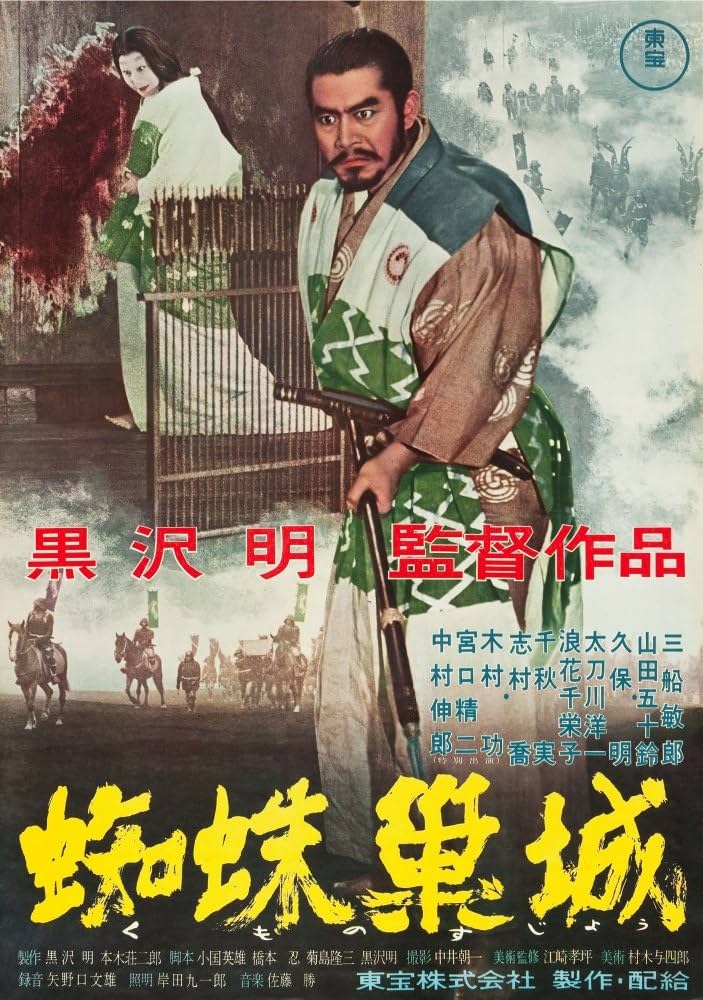
Throne of Blood (1957)

Throne of Blood (1957)

Kurosawa’s Macbeth adaptation beautifully captures much of the spirit of Shakespeare

Director: Akira Kurosawa

Cast: Toshiro Mifune (Taketoki Washizu), Isuzu Yamada (Lady Asaji Washizu), Minoru Chiaki (Yoshiaki Miki), Takashi Shimura (Noriyasu Odagura), Akira Kubo (Yoshiteru Miki), Yōichi Tachikawa (Kunimaru Tsuzuki), Takamaru Sasaki (Lord Kuniharu Tsuzuki), Chieko Naniwa (Forest witch)

Shakespeare is universal. What more proof do you need, than to see Macbeth very much present in Throne of Blood, Kurosawa’s samurai epic version of the Bard’s Scottish play. Kurosawa’s film takes the plot of Shakespeare’s tragedy, with touches of Japanese Noh theatre, told with his distinctive visual eye. It makes for truly great cinema, one of Kurosawa’s undisputed masterpieces – even if it loses some of the greatness of Shakespeare along the way.

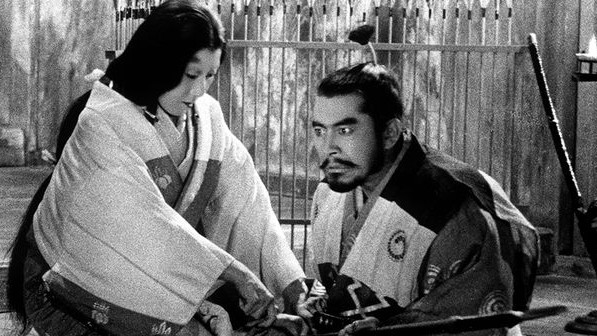
You can though see Shakespeare from the beginning in Kurosawa’s mist filled epic (bringing back memories of the Scottish Highlands). A badly-wounded soldier brings news to Lord Tsuzuki (Takamaru Sasaki) of the defeat of his traitorous former friend thanks to the brilliant generalship of Washizu (Toshiro Mifune). Meanwhile, in the forest, Washizu and his fellow general Miki (Minoru Chiaki) encounter a witch (Chieko Naniwa) who prophesies that Washizu will one day be the Lord. When other prophesies proof true, Washizu starts to think how he could make the last true as well. His ambitions are encouraged by his wife Lady Asaji (Isuzu Yamada), who persuades him murder is the best tool for succession. But can they live with the consequences of their crime?

So much, so Shakespeare right? Throne of Blood ingeniously translates Shakespeare’s plot to an entirely different setting, one of feudal Japan. It also translates some of the Bard’s most striking verbal imagery into visuals: the strange mixture of rain and sunshine (‘so foul and fair a day’) that Washizu and Miki wade through before they meet the witch; Miki’s horse thrashing wildly through the courtyard like Duncan’s; the lamps that light the way to Tsuzuki’s chamber (like Macbeth’s dagger). Kurosawa’s visual transformation of the play’s imagery is breathtakingly original.

On its release Throne of Blood was savaged by Western critics for its cheek, before critical consensus shifted to proclaim it one of the greatest of all Shakespeare adaptations. But do you still have Shakespeare without the language (and by that, I don’t mean from English into translation, but its complete removal). Kurosawa’s film makes no attempt to replicate the poetry of Shakespeare (most strikingly, its equivalent of the “Tomorrow and tomorrow and tomorrow” speech is Washizu shrieking “Fool! Fool” as he sits in frustration, a neat image but one where you’d wish Mifune had been given more to play). But Throne of Blood may not be a complete Shakespeare adaptation, but it’s possibly one of the greatest adaptations ever made of a Shakespeare story.

This is because Throne of Blood captures so many of the core thematic concepts of Macbeth, not least its destructive, nihilistic force and the terrible, crushing burden self-imposed destiny and ambition sets. Toshiro Mifune’s Washizu may more of a brute than Macbeth, but his blustering, aggressive exterior hides a weak man, insecure and dependent on others. His weakness is in fact a lack of imagination, his inability to picture a life outside of the tracks laid down before him by the witch. His lack of independent thought is recognised by his wife, Asaji who nudges and pushes Washizu in the direction she (and he, deep down) wishes at every opportunity.

Washizu is soon trapped in a cycle of murder and disgrace he can’t escape. The walls of the room where he and Asaji plot the murder of Lord Tsuzuki is still smeared with the blood from the seppuku of its former owner who also betrayed Tsuzuki. Whenever he enters the forest, Washizu seems almost wrapped inside its branches, unable to find his way. Before a dinner to host the murdered Miki, Washizu listens (like Claudius) to a noh actor recount details of a crime all too similar to his own. As Lord, Washizu cowers powerlessly in it just as its previous owner did. Even the film itself is a grim cycle of the inevitability of destruction: Kurosawa’s open mist rolls away to reveal a monument to the castle before the castle itself emerges to take its place, the film returning at its end to the same mist-covered monument. These bookends also stress how transient (and pointless) this grappling for power is – nature will eventually claim all.

But it also suggests a world where death is so inevitable, that you might as well seize what power you can when you can. Even Miki – the film’s finest performance from Minoru Chiaki, full of subtle reactions of resignation and disgust – turns a blind eye (despite his sideways glances of disgust at key moments) to Washizu’s crimes, to further his son’s promised hopes for the throne. Asaji is motivated by her belief that there is no sin in seizing what you can from our brief time in this world, firmly telling Washizu that not only is it his duty to deliver the prophecy but – in a world where Tsuzaki gained power by murdering the lord before him – he would hardly be the first and that no previous killer trusts a potential new rival in any case.

Asaji is strikingly played by Isuzu Yamada, a quiet, scheming figure who sees everything and has an inner strength her husband lacks. Like Mifune, she uses the striking poses of Noh theatre to fabulous effect – Asaji herself moves, on the night of the murder, in a noh dance craze – and to communicate the dance of power between them throughout that long night. Kurosawa also uses silence beautifully with Asaji, most strikingly of all her silent, almost supernatural, collecting of drugged saki for Tsuzaki’s guards: as she walks into, disappears into darkness, then reappears carrying the drink all that is heard is the squeak of her robes across the floor. Yamada’s controlled, Noh-chill makes her brief collapse into futile hand-washing madness all the more striking.

After the long night of the murder, Kurosawa presents a world that grows more and more uncontrolled. In a brilliant innovation, Asaji provokes the murder of Miki by lying (perhaps?) about being pregnant, making Washizu desperate to protect the chance of a royal line. Miki’s murder leads to his terrifying pale ghost silently challenging an increasingly wild Washizu, who thrashs weakly around the room seemingly without any control. Mifune’s powerfully gruff Washizu becomes increasingly petulant and desperate, lambasting his troops and clinging to the letter of the prophecies rather than their more detailed meaning. Mifune’s striking poses – inspired by noh theatre – seems to trap him even more as hyper-real passengers in a pre-determined story. If Kurosawa’s adaptation has rinsed much of their complexity out, he firmly establishes the couple at its centre as trapped souls in an inescapable cycle.

Kurosawa innovates further by introducing a sort of Greek chorus of regular soldiers, ordinary warriors under Washizu’s command whose faith in their commander (they clearly know he murdered Tsuzaki) shrinks as Washizu’s grip on the situation fails. Washizu clings to belief in his invulnerablity – even after the prophecy about the impossible circumstances needed for his defeat (as if a forest can ever move!) is told to him in a fit of mocking laughter by the androgynous witch and a string of suspicious woodland spirits.

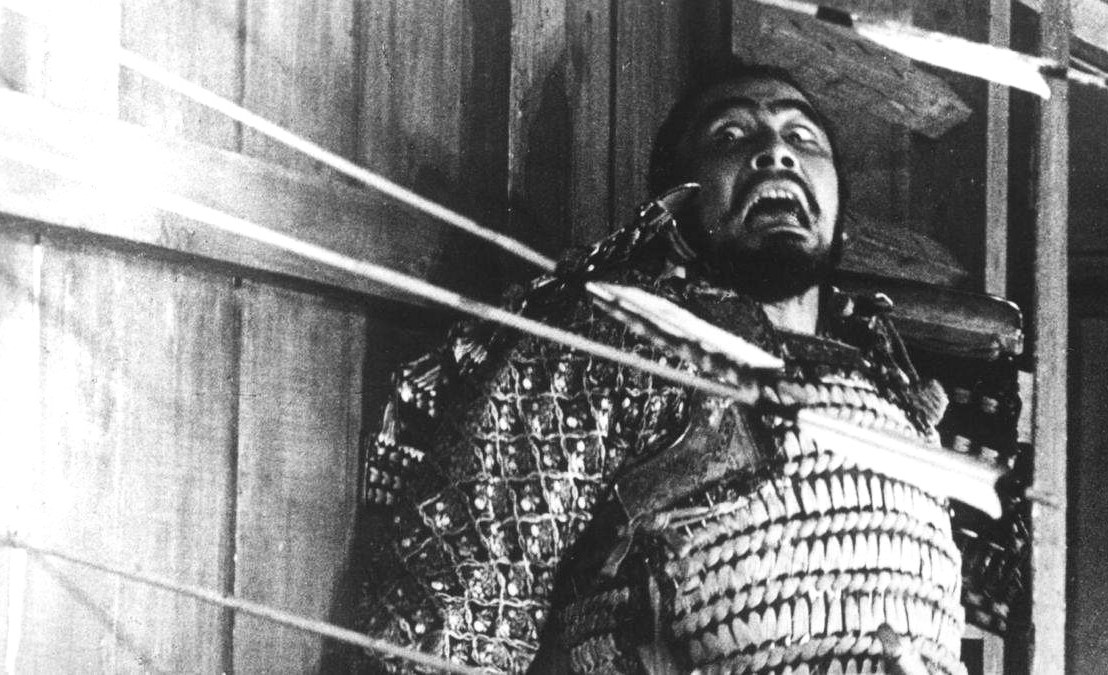
It culminates in Washizu instigating his own destruction, bragging to his men about the obscure circumstances that will lead to his defeat – leading to his own disillusioned men fragging the panicked lord the second the situation comes to pass. Kurosawa’s ending is visually extraordinary, Washizu pierced with so many arrows he resembles a human porcupine (Mifune’s terror was real, the actor dodging real arrows). Just as Asaji collapses into madness, Washizu’s fate is ignoble – Kurosawa doesn’t even afford him Macbeth’s brave duel against Macduff, this great warrior instead going down without so much as inflicting a scratch on Throne of Blood’s Malcolm and his forces.

Throne of Blood focuses beautifully on some (not all) of the key themes in Macbeth. It presents a fatalistic world where choices are few and the deadly cycle of death never seems to stop. Kurosawa interprets this all beautifully, transferring Shakespeare’s verbal imagery into intelligent, dynamic imagery. Sure, in removing the text it removes the core thing that makes Shakespeare Shakespeare – and also leads to the simplifying of its characters, in particular its leads who lose much of their depth and shade. But as a visual presentation reinvention of one of Shakespeare’s stories, this is almost with parallel, a triumphant and gripping film that constantly rewards.

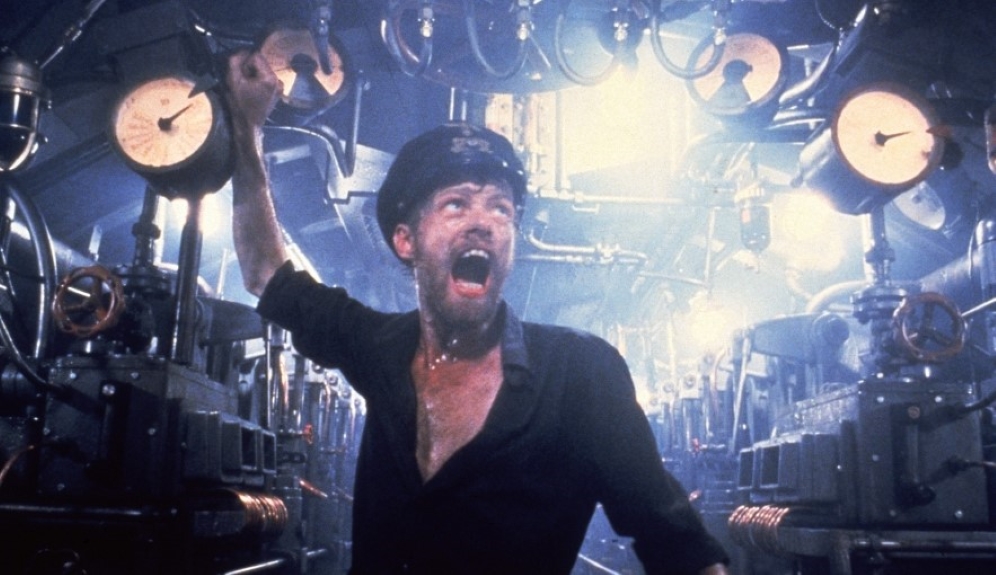
A Night to Remember (1958)

A Night to Remember (1958)

Still one of the definitive Titanic movies, a compelling documentary-influenced look at the disaster

Director: Roy Ward Baker

Cast: Kenneth More (Charles Lightoller), Michael Goodliffe (Thomas Andrews), Laurence Naismith (Captain Edward Smith), Kenneth Griffith (Jack Phillips), David McCallum (Harold Bride), Tucker McGuire (Molly Brown), Frank Lawton (J Bruce Ismay), Richard Leech (William Murdoch), John Cairney (Murphy), John Merivale (Robbie Lucas), Honor Blackman (Liz Lucas), James Dyrenforth (Colonel Archibald Gracie IV), Anthony Bushell (Captain Arthur Rostron)

The sinking of the Titanic on 14 April 1912 is one of the most iconic events in twentieth century history. A Night to Remember brings the ship’s final hours to life in forensic detail, based on Walter Lord’s carefully researched book. Told with documentary-style distance, mixed with admiration for stiff-upper-lip British pluck, the film cemented many people’s perceptions of the night of the sinking and remains one of the best-known films about the disaster.

To tell the story, the production decided it needed a central figure and selected Second Officer Charles Lightoller, recruiting a British star to play the role. And no one did bluff, charismatic middle-class decency better than Kenneth More, born to play roles like this. Lightoller would be placed at the heart of the keep-calm-and-carry-on evacuation of the ship, More’s reassuring presence letting the audience know everyone involved was doing their best under impossible circumstances.

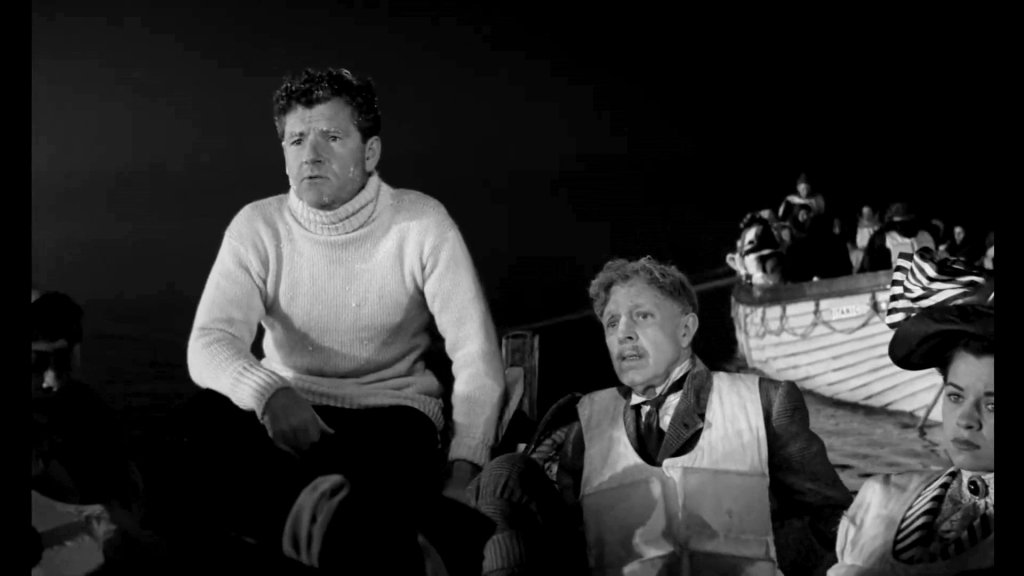
A Night to Remember remains very effective. It’s special effects and recreation of the ship are highly impressive. Even tilting sets were built to replicate the ships list, meaning drinks tilt in glasses and the careering skid of a dinner cart in the dining room was done for real. But where it really scores is its effective capturing of a very particular British mood: the determination to carry-on in terrible, appalling circumstances. While it’s easy to look at this unflappability in the face of disaster as almost comic, what’s so effective in A Night to Remember is that below the surface it’s clear almost every single character is screaming in terror.

You can see it in the shell-shocked disbelief of Captain Smith (a very effective Laurence Naismith, an excellent portrait of man in ultimate authority with no power at all to affect the situation) who stares with shame at the hundreds of people he can’t save. It’s in the guilt of Thomas Andrews (Michael Goodliffe, full of wry humour that slips away leaving him a shell) who blames himself and vainly tries to save others without creating panic. The grim-faced determination of radio operator Jack Phillips (a remarkably restrained Kenneth Griffith) who taps out the SOS until the bitter end. These feelings are carefully hidden and suppressed – for the good of morale – but the screaming panic and despair of the passengers in the final moments of the ship are simply giving voice to hidden feelings earlier.

What comes across very well in A Night to Remember is the utter powerlessness of the situation, matched with the bad luck and poor preparation that condemned more to death. It’s clear to everyone in authority, from the start, that there are insufficient lifeboats and quickly becomes apparent no help is not coming. While not raising enough urgency around the evacuation did contribute to deaths, it’s also clear to the officers it’s the only way they can hope to maintain any sense of order for as long as possible. If they fronted up on the real disaster heading their way, those guns they grab from the armoury would have all been exhausted keeping control.

A Night to Remember subtly suggests the fault is not personal, but somehow systemic: that Titanic is just the rash a whole host of societal problems have come out in. You can see the arrogance and unwillingness to question in the huffy pretension of the man on the train who pulls Lightoller up for mocking a soap advert that celebrates the ship. The behaviour of many of the passengers that safety precautions are at first an imposition, then that their class and position should automatically entitle them to particular treatment. The thudding refusal of many to accept the reality that the unsinkable ship can go down. The stunned look on people’s faces when the truth hits them and, as Lightoller says late in the film, it suddenly feels like they can never trust so blindly again.

Alongside this, it’s a tribute to bravery and self-sacrifice, often expressed with that classic British reserve and dry humour in the face of imminent disaster. From Lightoller and the sailors who fight, up the final moment, to assemble two collapsible boats even as the deck sinks under water around them to the engineering crew who willingly agree to stay below deck to keep the power on – a certain death sentence (“And it’s my birthday today and all” someone good naturedly moans, while the others gather a water-logged cup of tea). Perhaps uniquely for Titanic films, there isn’t even a villain: it’s one of the few adaptations that doesn’t show Ismay (a never-the-less pompous and weasily Frank Lawton) ordering the ship to go faster. In fact Ismay is shown energetically throwing himself into the evacuation (even told to stop trying to help by Lightoller) who steps into a boat (self-loathing covering his face) only when no one else tries to take one of the available seats.

Despite which, the film doesn’t avoid the fundamental errors. The treatment of the second and third-class passengers is shockingly abrupt and impatient, as if the saving of their lives is an inconvenience on a busy night – by the time they are allowed on deck, one plaintively moans that the lifeboats have already left. A group of bellboys are ordered to remain where they are (and instructed to not smoke!) condemning them. As the scale of the disaster grows, several passengers in under-filled boats complain that they are ‘already too full’ to go back for survivors. Even Lightoller’s decisions (interpreting ‘women and children first’ as ‘women and children only’, a decision that led to half-full boats sent away) are criticised.

A Night to Remember also sprinkles itself with several touching personal stories that carry real impact. The first-class passenger who asks Andrews for a no-bullshit appraisal, then quietly ensures his wife and sleeping children board a lifeboat. The Stausses who refused to separate and go down with the ship. A lost child saved from trampling by a steward, who promises him it will all be over soon as they sink. The young couple crushed by a falling funnel. The heartless card sharp who turns out to have a capacity for calm self-sacrifice.

And it could all have been avoided. More than any other film A Night to Remember focuses on the unquestioning crew of the Californian who watch the sinking from ten miles distance (including the never-ending launch of emergency rockets) but having no instructions or initiative don’t do a thing (they switch their radio off rather than try and find out more). The rigid mindset of the system right there: disasters just don’t happen to British ships (Britannia rules the waves after all) so no reason to rock the boat. They are contrasted with the professional urgency of the Carpethia (who did leave their radio on) who race against hope to help.

A Night to Remember captures this all extremely effectively, remaining a powerful and documentary look at the simple facts of the world’s second most iconic (after Pompeii) disaster. Full of some very fine performances and shot with a pacey assurance by Roy Ward Baker, it remains one of the definitive studies of the diaster.

Mutiny on the Bounty (1962)

Mutiny on the Bounty (1962)

Epic retelling that sticks with the same melodrama and nearly destroyed Brando’s career

Director: Lewis Milestone (Carol Reed)

Cast: Marlon Brando (Lt. Fletcher Christian), Trevor Howard (Captain William Bligh), Richard Harris (John Mills), Hugh Griffith (Alexander Smith), Richard Haydn (William Brown), Tarita Teriipaia (Princess Maimiti), Matahiarii Tama (Chief Hitihiti), Percy Herbert (Matthew Quintal), Duncan Lamont (John Williams), Gordon Jackson (Edward Birkett), Chips Rafferty (Michael Byrne), Noel Purcell (William McCoy), Tim Seely (Midshipman Ned Young), Henry Daniell (Admiral)

After the success of Ben-Hur, MGM thought it had cracked the mystery of making those cash-registers go ring-a-ding: massive historical pictures, with scale and run-time dialled up to “epic”. Mutiny on the Bounty was one of the most famous stories of all time and they’d had signed up Marlon Brando, universally seen as the greatest actor alive. It couldn’t go wrong, could it? Months of shooting and a disastrous box-office release later (despite a MGM campaign that landed this a Best Picture nomination), and Mutiny on the Bounty effectively destroyed Brando’s career for the next ten years and became a by-word for star excess.

Brando played mutineer Fletcher Christian – but in a manner completely different from Clark Gable (who, Brando disparagingly stated, only played himself minus the moustache). Brando’s Christian would be British and then-some: posh, foppish, a gentleman torn between the rules of society and those of fair play. Bligh – played with a constant sneer by Trevor Howard – would follow in the footsteps of Laughton, but Brando wanted to make something more serious, more historical. Less of a blood-and-thunder naval drama and more a character study that would give a fair crack of the whip (so to speak) to the Tahitian natives the mutineers lived among.

The film we ended up with though is no more historically accurate than the 1935 Best Picture winner. Part of the film’s disastrous reception might well be that this epic tells more-or-less exactly the same salacious story of a devilish sadist scowling as he whips men to death (far from the truth of the real Bligh, a poor leader but not a monster) until his noble number two steps up (the real Christian was a spoilt weakling) but in what feels like twice the time with half the fun. If you want to watch this version of the Bounty story, why would you want to choose this one? (We’d have to wait until the 1984 version for a more fair-handed telling.)

Not that Mutiny on the Bounty is as terrible as its reputation suggests. It touches – particularly in its thoughtful post-mutiny coda on Pitcairn island – on an interesting character study of the mixed motivations of Christian, filled with regrets and self-pitying sulking. It wants to explore where the balance lies between what is right by the letter of the law and by its spirit. Nothing Bligh does in the film is wrong as such, but his relish and zeal in doing it are. Christian isn’t a conventional hero, but a smirking, foppish character prone to snide remarks and affecting an air of disconnected duty for large chunks of the film. If the film had allowed Bligh more sympathy, rather than the two-dimensional monster he’s portrayed as here, it might have made for an interesting character clash.

Instead, it tends to be slow, self-important and pompous, not helped by Brando’s indulgent performance which sacrifices drama for portentousness. For all the film offers a cartoonish villain, it’s resolutely unfun and deathly serious. Shot with a professional, disengaged widescreen flatness by Milestone (called in from decades of retirement as a “safe-pair of hands”, after the sacking of Carol Reed), it’s uninspired and mistakes size for visual interest. The ship, in particular, is shot with a wide-angled spaciousness which feels completely wrong for a location supposed to be ripe with claustrophobic tension.

The drama attempts to make up for this with its parade of lashings, keel-haulings and bodies (or obvious dummies) tumbling to their death from the rigging. Trevor Howard delivers exactly what’s asked fork here, sneering and constantly in the wrong. It’s one of the film’s failings that it leans into psychological complexity in some places, while most of its events and its second lead are presented with cartoonish silliness. Its location shooting in Tahiti looks great (although the all-too-obvious intercutting of this with scenes on sound stages, sometimes from one cut to another, jars) but a widescreen image of glistening sea would look gorgeous in even the most workmanlike hands.

Perhaps the film is, at times, a chore because it all too clearly was for many involved. Reports of Mutiny on the Bounty have regularly focused on its disastrous making, with directors fired, location shoots awash with dysentery, shooting months over schedule. Above all, Brando rewriting the film on the fly, muscling a disinterested Milestone aside to direct certain scenes. Not a surprise that the studio decided all the blame would be dropped on him not them (they were also stung by the contract they gave him, at $5k a day overtime, Brando’s perfectionism becoming one of the main factors of the film going months over schedule), leaving him virtually unemployable for a decade.

But is that fair? Brando arguably become the awkward, unlikeable, misunderstood Bligh with the cast and crew as the mutineers, all of them intent on a voyage of mutual self-destruction. Put simply, this was a clash between Brando’s immersive, deep-dive acting style and Old Hollywood. To Brando “professional” meant something very different to the “hit-your-marks-say-your-words” attitude of Milestone and the crew: it meant searching over time for the heart of a character. The sort of psychological depth Brando was aiming for was just anathema to many of those he was working with, coming across as the unprofessional self-indulgence of a spoilt star. Combine that with Brando’s stand-offish shyness and professional selfishness and you had a recipe for disaster.

Severed from any director he respected (he made it all too clear he considered Milestone a hack studio Yes-Man) and with no-one having either the power or inclination to restrain him, Brando threw every idea he had at the screen, no matter how awful. So we got Christian with a ludicrous, giggle-inducing accent, a performance stuffed with foppish eccentric touches (and awful costume choices) that aims at thoughtful re-invention but comes across as a camp, bizarre mess. The tragic thing is Brando is clearly passionate about the project, putting more thought and commitment into this performance than he ever offered in barely-bothered turns in films like Sayonara.

Brando was also working with a group of Reed-recruited actors with no sympathy for him. This group of macho British and Irish heavy-drinkers (Hugh Griffith, in a crucial role, frequently disappears for no reason as his alcoholism eventually became such a burden he was fired mid-shoot) had no sympathy for the fey Brando or his acting style. Richard Harris’ loathing of his co-star – who responded to their open dislike with petty on-set power-plays, only making the whole problem grow – in particular is all too-clear. Brando looks most comfortable working with the Tahitian actors (he had long been a passionate anti-racist campaigner) and later married Tarita Teriipaia. It’s one of the few times where he makes Christian feel fully human rather than a mixed bag of conflicting actorly tricks.

Mutiny on the Bounty has its moments: unfortunately it’s all the wrong ones. For a film that wanted to be a more serious, historical exploration of the mutiny, its best parts revolve around Howard’s lip-smacking villainy, combined with flashes of its on-location shooting. Problem is, that’s not dissimilar from what we got in the 1935 original – and really you’d just be better off watching that.

Die Nibelungen (1924)

Die Nibelungen (1924)

Wagnerian epic is crammed with gorgeous, dramatic imagery and relentless pace

Director: Fritz Lang

Cast: Paul Richter (King Siegfried of Xanten), Margarete Schön (Kriemhild of Burgund), Hans Adalbert Schlettow (Hagen of Tronje), Theodor Loos (King Gunther of Burgund), Hanna Ralph (Queen Brunhild of Isenland), Rudolf Klein-Rogge (King Attila), Bernhard Goetzke (Volker of Alzey), Rudolf Rittner (Margrave Rüdiger of Bechlarn), Georg John (Mime the Goldsmith/Alberich the Dwarf/Blaodel)

Fritz Lang wanted to create a film that would help a shell-shocked Weimar Germany start to feel proud of its heritage and culture. He would do this with a film of the legend of Siegfried. It’s not really Lang’s fault that this Aryan feel-good stuff, coupled with Lang’s flawless visual compositions dripping with power and authority, would turn into the wet dreams of the Nazi party Lang fled Germany to escape. Die Nibelungen has unfortunate associations, but it stands as a towering pinnacle of Lang’s visual artistry. An adaptation of the legend, not the Wagner operas, Lang created something both mystic but also subtly questioning the idealistic figures it celebrates.

He would do all this in two (epic of course) films, totalling almost five hours. In the first Siegfried, the hero (Paul Richter) overcomes dragons and murderous dwarves to gain powers of almost (that almost is key) total invulnerability, strength and invisibility. Powers he puts to the test to win the weak King Gunther of Burgundy (Theodor Loos) the hand of Brunhild (Hanna Ralph) by invisibly aiding Gunther best this Valkyrie at a series of challenges. He even takes on Gunther’s form to help lead Brunhild to the bridal bed. Brunhild however discovers the truth from the loose lips of Siegfried’s wife (and Gunther’s sister) Kriemhild (Margarete Schön). Brunhild’s tricks Gunther and his loyal heavy Hagen (Hans Adalbert Schlettow) to murder Siegfried via a spear in his one weak spot. In Kriemheld’s Rache, Kriemheld plots the destruction of everyone who conspired in the death of her husband, via a marriage with the warlord Attlia the Hun (Rudolf Klein-Rogge).

The first thing that strikes you about Die Nibelungen – aside from its surprisingly electric pace – is the powerful, undeniable beauty of nearly every single frame. Lang composed each image as if it was a painting, from Siegfried introduced in steaming smoke at the forge, to the formalist imperialism of the castle of Burgandy and the rigid order and symmetry of its soldiers. Locations, from grand castles to mystic forests, underground caverns full of scheming, wicked creatures are superbly bought to life. There is a martial power Lang’s composition of so many of these images, their perfect angles and symmetrical blocking: parts of Die Nibelungen are some of the greatest pageantry displays in movies.

There is a wonderful sense of overblown, geometric, artificiality in all this – Lang deliberately creates a world larger than life and full of the unworldly and impossible. Buildings tower over crowds, courts that hold thousands to view events of grand importance, sieges of burning halls that fill the frame, staircases up impossibly high buildings. The sort of world of medieval excess where Gunther and Kriemheld disembark from a boat by walking across a bridge of shields created by half-submerged knights. Power and magnificence come from every frame.

It’s matched with an impressive creation of the bizarre and magical. Of course Siegfried kills a giant, animatronic dragon (strangely it’s obvious – even then surely – fakeness works in a film where everything is a heightened, from the emotions to the buildings to the costumes). Siegfried trains in something not far off from Vulcan’s forge and the forest feels like a sort of fairy-tale wonderland. Lang pioneered cross-fades and double exposures to make extraordinary effects, as Siegfried disappears under a veil of invisibility and jumps impossible distances. There is an extraordinary shot where Brunhild, still in the midst of her Valkyrie-like super-powers, seems to jump straight into the camera lens at full force. A beautiful edit sees a tree seem to reform itself into a skill in front of the eyes of the grieving Krimhild.

But Die Nibelungen places its world of power and magical forces in an increasingly costly human world of realpolitik and conspiracy, where its mystical but naïve and simple hero is out of step. Even before then, Siegfried’s status as a hero is subtly questioned. The dragon he kills seems a peaceful, inoffensive creature for all is scale, sitting placidly when Siegfried attacks and stabs it in the eye. Lang introduces a lovely touch where it’s dying tail flick will send the leaf that shields a crucial spot of Siegfried’s back from the torrent of invulnerability-granting dragon’s blood he bathes in. Siegfried is easily manipulated by the dwarf Albereich (a Gollum-like, uncomfortably antisemitic in appearance) before a large dose of luck allows him to defeat his opponent and gain the treasure of Nibelungen.

At the court of Burgundy, for all his courage and blunt honesty, Siegfried is at sea among the subtle power dynamics. The kingdom is ruled by chronically indecisive weakling Gunther (a snivelling Theodor Loos), easily manipulated by Wagnerian-costumed Hagen (an imposingly arrogant and faintly psychotic Hans Adalbert Schlettow). Siegfried’s main acts are to trick and then break the resistance of Brunhild (a dynamic Hanna Ralph) while impersonating the weakling – hardly acts to brag about, which doesn’t stop Siegfried doing exactly that to his wife who then blurts it out to Brunhild in a fit of pique. This isn’t a hero covering himself with glory, just as even the formally idealistic Brunhild (much to her later self-disgust) is reduced to scheming and plotting revenge, a far cry from the noble actionee she prided herself on being.

It’s not a surprise to find Part 2 heads into a Götterdämmerung as Kriemhild’s obsessive, destructive desire for revenge against Hagen (her husband’s murderer) meets with Gunther’s own stubborn-short-sighted protection of his controlling vassal. Nearly half of Part 2 is dedicated to the prolonged siege of the King and his followers by the massed armies of Kriemheld’s new husband Attila the Hun, her manipulations of him helped a great deal by Hagen’s arrogant, impulsive violence against Attila’s people. This extended battle sequence is astounding in its scale, violence and excitement – you can see the influence it had on The Two Tower’s Helm’s Deep – and is shot with the same visual mastery as the more stately first half, even as it seeks into bloody desperation.

It must be stated that Die Nibelungen does feature more than its share of clumsily presented racism. As mentioned, the hook-nosed, gold-obsessed, murderous dwarf Albereich is a painful antisemitic stereotype. Rudulf Klein-Rogge is caked under layers of make-up as the ugly, Slavic Attila while his Hun army resemble crouching Orc like figures, frequently ripe for the sword edge of the relentless German soldiers. It’s the uncomfortable flip side of the Aryanism idealism and romantic framing given to Siegfried, that these un-German figures are painted so monstrously.

But Die Nibelungen’s subtle criticism of the flaws in its German leads – it would go some to call them heroes – balances this out. From the flawed, empty-headed, foolishness of Siegfried to the increasingly sadistic, unrelenting cruelty of Kriemheld (Margarete Schön’s performance is excellent, going from sweetly retiring to unblinking fanaticism over the course of the film) the Germanic characters are compromised, weak and cruel: Hagen and Gunther are no one’s ideas of admirable figures. Compared to them, for all his clumsy racist appearance, Atilla feels like a reasonable figure, loving his family, caring for his people and refreshingly free of vindictiveness and cruelty.

It makes for an intriguing complex undercurrent in a film which, of course, the Nazis interpretated entirely on surface-appearance as a celebration of Aryan super-might. Or at least they did for Part 1 – even they couldn’t kid themselves that Part 2 didn’t quite fit that bill. Today Die Nibelungen provokes the same interesting thoughts. But above all it’s a visual marvel from a gifted film director, a truly painterly masterpiece that, for all its great length, never flags and offers a new marvel, camera trick or miraculous composition with every frame. This is silent cinema at its best.

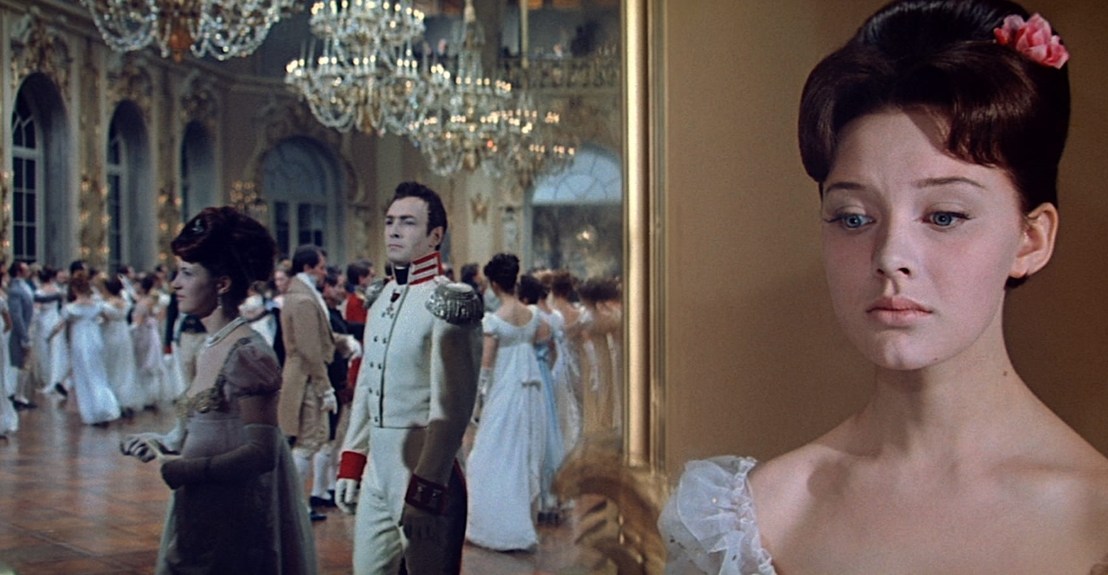
Napoleon (1927)

Napoleon (1927)

Gance’s monumental film takes the breath away, packed with innovation, invention and drama

Director: Abel Gance

Cast: Albert Dieudonné (Napoléon Bonaparte), Edmond Van Daële (Maximilien Robespierre), Alexandre Koubitzky (Georges Danton), Antonin Artaud (Jean-Paul Marat), Abel Gance (Louis de Saint-Just), Gina Manès (Joséphine de Beauharnais), Vladimir Roudenko (Young Napoléon), Marguerite Gance (Charlotte Corday), Yvette Dieudonné (Élisa Bonaparte), Philippe Hériat (Antoine Saliceti), Max Maxudian (Barras), Annabella (Violine Fleuri), Nicolas Koline (Tristan Fleuri)

There is a marvellous quote from Victor Hugo when he wrote about the young life of the most famous Frenchmen who ever lived: Déjà Napoléon perçait sous Bonaparte. Which roughly translates as ‘already Napoleon was bursting through Bonaparte’ – or to put it another way, the man was already being consumed by the legend. That idea dominates Abel Gance’s extraordinary, epic, retelling of the Young Napoleon’s life, an origins story that sees a young man become increasingly distant and legendary before our eyes. Gance’s film may be resolutely old-fashioned in its historiographical approach, but is revelatory in its cinematic flair and invention, with almost every scene demonstrating Gance pushing the medium in new directions.

Napoleon was planned as only the first of no-less-than six films that would cover the cradle-to-grave story of the man who defined his whole era. Such was Gance’s ambition through, that even across five hours he felt he had only scratched the surface of the first 27 years of Napoleon’s (Albert Dieudonné) life from his childhood education (snowball fights and all) at Brienne – where he is seen as a Brutish Corsican outsider – via the French revolution, his failed attempt at revolution in Corsica, his successful siege of Toulon and promotion to General at 24, nearly losing his life in The Terror, Thermidor and his crushing of the Vendemaire uprising, marriage to Josephine (Gina Manès) and the beginning of his campaign in Italy.

Gance unfolds this in a film brimming with cinematic verve and invention. Much like its lead character, it is a seismic and larger-than-life (literally so in its most famous innovation, the three frame wide-screen effect achieved for its final twenty minutes). Napoleon practically defines the notion of historical epic, reproducing many at historical events at a 1:1 ratio. At its centre is a magnetically hypnotic (almost literally) performance from Albert Dieudonné (so enamoured with the role, he was buried in his costume) juggling the impossible by suggesting some of the many shades of this fascinating figure, part revolutionary, part tyrant, part romantic, part war-monger.

There is something truly striking and original in every frame of Napoleon. Gance presents a picture of the famous general more than touched with an old-fashioned Great Man theory of history, but still suggests he is almost two men in one. He is Bonaparte, the slightly-chippy, awkward young man who clumsily woos Josephine (barely sure where to do with hands, tugging shyly at his sash), struggles to get noticed in a map-making office and finds it challenging to make friends, either at school (where he is a painfully serious outsider) or as an adult. But he is also Napoleon, the totem of history who Gance frequently frames as almost communing with a historical version of himself.

This Napoleon bursts from the awkward Corsican shell of Bonaparte. Gance frequently frames him almost confronting the camera, light shimmering around him to form halos, with a piercing stare that freezes people into place. He comes to identify himself with the flag and the revolution. So much so that, in his escape from Corsica, he will be borne across the seas by a tricolour jerry-rigged into a sail and visualise himself being hailed by the executed ghosts of the revolution as its natural heir. Indeed, the film ends with Napoleon atop a mountain starring into a montage of his future achievements, as if he was bending history around him.

Which isn’t to say Gance sees him as a constantly sympathetic figure. While there is no question he is a force of nature – he controls the frame, frequently centred and when the camera moves (such as the careering gallop that takes him to Italy) he is always at the eye of its propulsive tracking shots – he is also an imposing, even scary figure, distant and cold. In dyed red frames, he looks positively demonic, such as when he looms forward out of the rain in Toulon, his face filling the frame to demand relentless attack. His self-identification with the revolution becomes monomaniacal.

Gance re-enforces his distance from normal human reaction by returning constantly to the Fleuri’s, a working-class family who shadow the Great Man (Violine loves him hopelessly and her father and brother worship him) but whom he never notices. It’s part of him being crafted into marble before us – with all the terrifying lack of human understanding that suggests. Throughout he’s shadowed by an eagle, a visual representation of his mystical, greater-than-human nature, a bird of destiny that drives him relentlessly on. He’s contrasted constantly with other would-be leaders: the itchy Marat, the empty windbag Danton and (most noticeably) the curiously ineffectual Robespierre, an uncharismatic man who can’t control a crowd, is lost behind darkened glasses, follows the orders of others and is comically dwarfed by an eagle statue not elevated by it.

Gance’s history has a slight school-book Victorianism to it. He’s very proud of “historical” facts – quotes and events are frequently branded with the on-screen phrase “(Historical)” so we can see his behind-the-scenes research – and has more than a little love for irony. Of course, the final island covered in school-boy Napoleon’s geography class is “St Helena”! Of course, the English sailor who spots him escaping from Corsica (and is refused a request to sink his ship) is Nelson! The film is littered with cameo appearances from later Napoleon rivals and allies. There is also a darker irony playing here: we know that when Napoleon is praised by the ghosts of the revolution that, far from protecting it, he will in fact become its final destroyer.

But what really singles out Napoleon is it’s intense, cinematic inventiveness. It’s an explosion of unique, fascinating images packaged into a single film. Gance reinvented the wheel multiple times on this one, not least on his of ghostly images and cross-fades. To achieve this – such as the ghostly appearance of the Great Revolutionaries in an otherwise empty Assembly Hall, he re-exposed the same film multiple times (sometimes as many as twenty) to achieve the effect. The same for Napoleon’s schoolyard fights, a single sequence with the screen split into nine squares each showing a different moment in time achieved by covering different parts of the frame for each exposure.

Gance’s camera is strikingly mobile, his editing frequently thrilling and thought-provoking. The famous sequence of Napoleon’s escape from Corsica is superbly intercut with the clash in the Assembly that will lead to the execution of the Gironists. The swaying of the ship is increasingly echoed by the swaying and eventually full-blown swinging of the camera in the Assembly room. Both events merge together through cross-fades. The camera whips through some scenes with real pace and aggression – witness the fast-paced tracking shots that follow Napoleon to Italy.

That’s matched as well with imaginative scenes of quiet beauty. The young Napoleon quietly communing with his pet eagle. The marvellous “shadow marriage” Violine conducts with a cardboard doll of Napoleon, positioned to cast a full-length shadow on the wall. There are moments of black humour – the coffin Robespierre and Saint-Just keep the death sentences they’ve passed in – and moments of soaring, lyrical inspiration such as the first singing of the Marseilles which takes on a mystical quality. To achieve this, Gance pushed the camera places it had never been before, patenting new techniques and devices to achieve frames, angles and cross-fades never seen before.

The most stand-out being the astonishing three-frame wide-screen effect. Perfectly mapped, with the small distortion in the joins almost adding to the power, this creates Panavision decades before Hollywood had even coined it. It creates awe-inspiring vistas of Napoleon’s Italian army – although the battle scenes Gance shoots are often cruel and dirty, with bodies twisted and crushed by the violence of war – but it also allows Gance to present three different images side-by-side, something he exploits to maximum effect in the closing moments that presents a giddyingly cut (it’s Eistensein-influence is clear) montage of past moments in the film that have led up to the Napoleon we see standing on a mountain before us starring into the future.

For Gance through, it is a future that wouldn’t come. Napoleon was not a success – perhaps people couldn’t quite process the scale of it, perhaps the money-men were terrified that Gance had spent the budget of six films on one and still hadn’t got round to Austerlitz, Borodino and Waterloo. The film was butchered and tinkered with for decades before it was reborn. And what a relief, because this is a stunning epic, which (for all its narrative simplicity) has something to wonder at in every frame. An extraordinary film, which everyone should see at least once.

Lancelot du Lac (1974)

Lancelot du Lac (1974)

Bresson’s bleak film is the least romantic, most depressing Arthurian film out there

Director: Robert Bresson

Cast: Luc Simon (Lancelot du Lac), Laura Duke Condominas (Queen Guinevere), Humbert Balsan (Gawain), Vladimir Antolek-Oresek (King Arthur), Patrick Bernhard (Mordred), Arthur De Montalembert (Lionel)

Only Bresson could have made a King Arthur film like this. Lancelot du Lac takes Bresson’s spare, thoughtful style and applies it to that most unlikely of genres, the historical epic. What we end up with (for better or worse) is something perhaps bleaker and more difficult than any other King Arthur film out there. Bresson repackages Camelot not as the dreaming spires of hope, but a spare, vaguely mechanical world where Arthur and his knights are going through the motions of duty and honour, while stumbling towards inevitable death. However much the characters want to believe in a higher purpose, they can’t escape the cynical truths of the world, or their own lusts and desires.

Lancelot du Lac opens with the return of the knights from a disastrous Grail Quest. The best of them, Percival, never came back. Neither did most of the rest, all dead in some distant land. Arthur (Vladimir Antolek-Oresek) is a worn-out man who doesn’t seem to know what to do next. He’s delighted to see Lancelot (Luc Simon) return. Just as pleased is his queen Guinevere (Laura Duke Condominas), whose historical affair with Lancelot is an increasingly open secret in Camelot. Lancelot talks about letting it lie in the past, but temptation inevitably fractures the kingdom as Mordred (Patrick Bernhard) plots a coup.

Bresson doesn’t compromise on any of his distinctive style. Scenes mix between carefully structured longer takes, that frequently feature on obscure parts on the body (in particular legs, whose motion frequently fills the frame) and simple cutting between the faces of two people in conversation. He casts non-professional actors and, as before, ruthlessly drills them until they deliver every line with a flat, defiantly non-actorly, monotone. Nearly every event of note happens off screen. Every human is a choiceless cog in a much larger machine, unable to impact or effect the actions around them.

There is no romance whatsoever in Lancelot du Lac. The film is bookended with what passes (in Bresson) for moments of action. A clash between knights at the start ends (after a very short and perfunctory swinging of swords) with a blood spurting decapitation and another blood spurting disembowelment. (The blood spurting style was effectively piss-taked within a year by Monty Python and the Holy Grail.) It ends with a deliberately underwhelming Battle of Camelan, in which we see no fighting only faceless knights dead in a woody clearing, as archers rain arrows down. There is no glamour here, no glory or honour in combat – just pointless, mechanical sacrifice.

It’s the same with the jousting tournament which takes up a surprisingly large portion of the film’s runtime. Bresson shoots this almost with an almost irritatingly cheeky lack of spectacle. As horses charge at each other, the camera lingers on: the arms of a bagpipe player, the legs of horses, the ends of spears and the impassive faces of Arthur and Gawain in the crowd. Occasionally flags go up to denote new jousts and helmets crash down over faces. But any sense of what’s going on, or the point of it, is secondary to the sense of the knights as nothing more than humble parts of a great, pointless machine, churning out martial events by rote.

That sense of a machine is behind all of Bresson’s vision of Camelot. The actors all wear armour, all the time, clunking around the set like clumsy automatons, every flinch accompanied by the clank of armour. (John Boorman’s Excalibur would present the Wagnerian contrast of this same aesthetic choice.) Towards the end, Bresson repeats four of five times in sequence near identical shots of knights slamming helmets over their faces making them look like even more like robots.

It’s here where the actors deliberately lifeless performances work, and actually create a sort of hypnotic power. Bresson’s style makes them all feel like tired, exhausted figures at the end of their tethers, scarcely knowing the point anymore. Lancelot looks like a middle-aged bank manager sticking to the letter of a code because it’s all he’s got. Arthur is so disengaged from any sense of the ‘dream of Camelot’, he practically allows a civil war to break out due to apathy. Gawain is so constrained by his idea of duty that he allows himself to be killed, seeking revenge for the death of a brother he couldn’t stand. Mordred is the only guy who really feels aware of the world he lives in, a middle-manager who stirs up trouble and then gets others to deliver for him.

No wonder Guinevere constantly questions the whole set-up and the point of anything anyone is doing. Why shouldn’t she and Lancelot try and cling to something real, even if it will destroy everything else? After all it’s not the original sin: Camelot was already long since corrupted, way before they hooked up. There is no sense in Bresson’s work that medieval honour really means much to anyone, and the only people who really talk about it (Gawain and Lancelot) respectively die for no reason and betrays everyone after convincing himself his betrayal was an act of honour.

There is a fatalistic, hypnotic quality to this after a while as we watch characters square their actions against abstract ideals irrelevant to the situation they are in. So, Lancelot steals Arthur’s wife and then rides to a pointless death for the man he betrayed. Arthur allows men to die on crusades, allowing his kingdom to become fatally weakened in pursuit of purity. Everyone talks about honour all the time, but no one does anything to turn the situation into something actually honourable. Instead, their lives are ones of empty, unknowing fatalism leading to inevitable ends. It makes for a powerfully bleak Bresson tale – and faith and Christianity is notable by its absence in this world. Without it, it seems the knights have nothing to cling to.

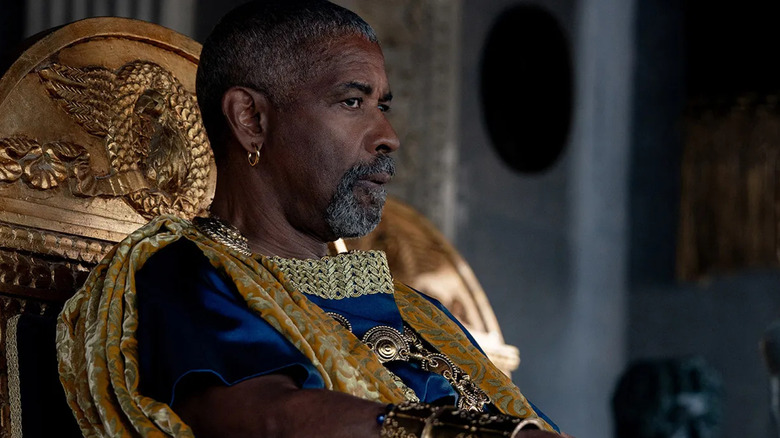
Napoleon (2023)

Napoleon (2023)

Scott’s epic of the most famous Frenchman of all time looks good but is empty at heart

Director: Ridley Scott

Cast: Joaquin Phoenix (Napoleon Bonaparte), Vanessa Kirby (Josephine Bonaparte), Tahar Rahim (Paul Barras), Ben Miles (Caulaincourt), Ludivine Sagnier (Thérésa Cabarrus), Matthew Needham (Lucien Bonaparte), Sinéad Cusack (Letizia Bonaparte), Édouard Philipponnat (Alexander I), Ian McNeice (Louis XVIII), Rupert Everett (Arthur Wellesley, Duke of Wellington), Paul Rhys (Talleyrand), Catherine Walker (Marie-Antoinette), Mark Bonnar (Jean-Andoche Junot)

Is Bonaparte cinema’s White Whale? Filmmakers have often tried and failed to bring this epic life – who else so dominated their era that’s its literally named after them? – to the screen. Abel Gance’s silent epic could only squeeze his early years into five-hours and the planned five sequels never materialised. Famously, Kubrick spent decades planning a Napoleon film (he had a veritable library of Napoleonic research) but could never deliver. Napoleon has popped up in films as wide ranging as Time Bandits and Waterloo, but the definitive film has never been made. Is Scott’s Napoleon it?

Napoleon takes a rather old-fashioned approach to the biopic. The fashion now is to focus on a single event that becomes a window into its subject’s life. Napoleon, in its two and a half hours, takes a far more cradle (or revolution) to grave approach. We join Napoleon Bonaparte (Joaquin Phoenix) as an anonymous artillery captain and leave him (via 13 Vendémiaire, Egypt, the 18 Brumaire coup, self-coronation, Austerlitz, Borodino, Moscow, St Elba, Waterloo and Helena) dying in exile. It’s as swift and pacey a run-down of his life and times as it sounds like, with the film’s main focus being on his complex, love-loath relationship with Josephine (Vanessa Kirby).

Scott’s film is a visual treat – don’t those uniform’s look gorgeous! – and it works best as a coffee-table book of the life-and-times of one of History’s most controversial figures. What it doesn’t work as is as film where you feel you gain any real understanding of what motivated Napoleon or where the charismatic energy that made millions of soldiers flock to him time-and-time again came from. Scott’s Napoleon emerges as a maladjusted, emotionally-stunted oddball, apt to glower and sulk who is never the master of events or people. It’s a revisionist view that doesn’t ring true.

It’s not helped by a surprisingly low-key performance by Joaquin Phoenix, bulked up and lumbering, playing up the “Corsican Brute” angle that so alienated the Emperors he negotiated with. Phoenix’s performance is all pout and emotionally inarticulate self-pity, with small flashes of domineering force that come across as childish sulks. But it’s never the performance of a man who looks like he could motivate a nation to march with him into a mincer (several times!). Nor a performance that brings a sense of the fierce-ambition of a man who wanted to control and reshape the world. It focuses instead on one small aspect of his personality and misses vast swathes of his rich, autodidact personality.

It doesn’t help that filtering Napoleon’s life through his relationship with his wife feels like a gossipy approach used because tackling Napoleon’s complex attitudes towards his Corsican ancestry, contradictory interests in instituting democratic systems in a dictatorship and desire to bring peace to Europe via a series of destructive wars would be too tricky. Instead, we get a Napoleon who plans his movements and campaigns to compensate for his sexual inadequacy at being cuckolded by his wife, rushes back from Egypt to confront his cheating wife and seemingly escapes from exile because he’s pissed at his wife flirting with the Tsar. It’s not helped that the most interesting mechanism in their relationship – she was older and more experienced than him, with two children already – is compromised by Vanessa Kirby clearly being far younger than Phoenix.

Saying that Kirby is good in the film, conveying a complex set of emotions towards a husband who sometimes amuses her but, just as often, repels her with his bullying possessiveness (not to mention his militaristic sexual technique). Napoleon uses their relationship as a constant frame to interpret events, not only as motivation but also as a narrative device, letters between them constantly updating us on events off-screen. But the film only lightly sketches what drew them together in the first place (basically his attraction and her use of her sexuality to win protection) and the film ends up stuck in the same cycle of fall-out followed by Napoleon’s desperation to possess her again.

The time given to sketching out the broad strokes of this relationship means we never get a sense of history behind events or where the qualities, that made Napoleon the guy who governed most of Europe, came from. Scott’s film is (which, with its stressing of the deaths caused in his wars, settles for an anti-Napoleon stance) plays up his negative qualities and gifts him few positive ones. Phoenix’ performance is almost perversely anti-charismatic: he never laughs, is constantly shown as a pompous windbag who only children are wowed by, loses all his raconteur charm and is frequently victim to events – be that panicking at his attempted coup (where he’s bailed out by his brother) or only at Austerlitz looking like he has any particular military skill.

Still the film bowls along, too fast to ever really engage with events. A host of strong British Actors pop-up (their character names and functions plastered on the screen), but their appearances and dialogue are often so truncated it’s hard to really understand why they are there. Julian Rhind-Tutt’s Sieyes pops up to announce he plans to seize power with Napoleon and is never heard of again. Ben Miles and Paul Rhys rush through exposition as Caulaincourt and Talleyrand. A host of actors playing Generals stand in the background and snatch lines when they can. There are a few inadvertently comic casting choices – I did snigger when former News Quiz host Miles Jupp pops up as Francis I.

This historical gallop means years frequently pass between scenes and we often get very little idea why developments are taking place: for example, Napoleon seems to become Emperor on the basis of a half-muttered suggestion from Talleyrand. Conquests of whole countries are skipped over in seconds. Josephine’s offspring appear as children and are next seen as adults. Other than them, no one ages at any point over the film’s near 20 year span, with Phoenix and Kirby in particular looking little different at the end as they did at the start. (The film also rewrites heavily the comparative ages of its two leads – Josephine was in fact several years older, partly why conceiving an heir became such a problem.)

The battles are impressive though – even though they take up not quite as much screen time as you might think. The campaign in Egypt boils down to essentially a single cannon ball pot-shot at the Great Pyramid (never happened of course). Borodino is a cavalry charge. Austerlitz and Waterloo are the only battles that get real screen time, with both offering remixes of the actual history (Waterloo, incidentally, looks less impressive and smaller in scope than the Bondarchuk film managed). The photography is beautiful (as it is throughout) and the film doesn’t flinch on showing the impact of bullets and cannon balls. But it has no interest in understanding Napoleon’s actual strengths as a general (essentially, skilful movement of forces from a distance) substituting them with him leading not one but two cavalry charges – a suicidal risk he never took.

“At least it looks good” pretty much sums up the strengths and weaknesses of Napoleon. It’s enjoyable enough and buffs might enjoy the odd Historical Easter Eggs, but it never gets to the heart of understanding its subject and settles for a ticking off events and personalities rather than placing them into an informative context. You’d come out of this wondering how this guy got to where he was – and that makes you feel the film has failed to answer its implicit question in the tag line “He came from nothing. He conquered everything.” How, eh? How?