Category: Horror film

Fallen (1998)


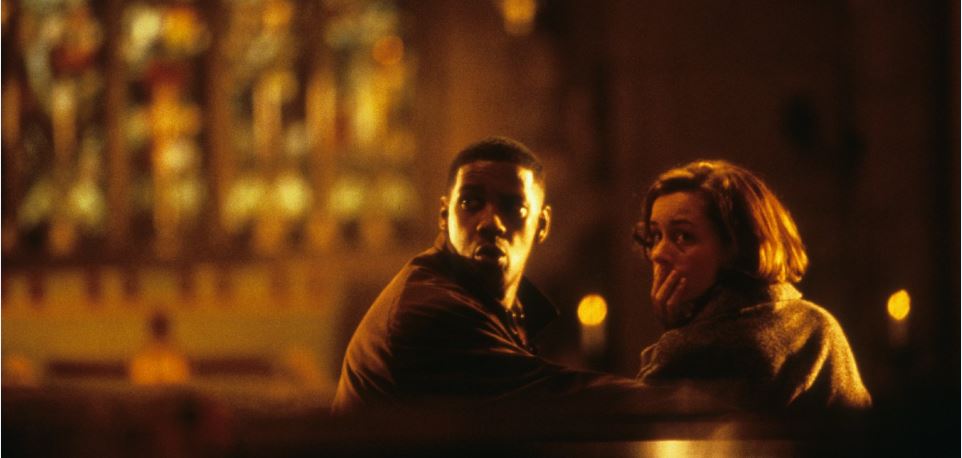
Denzel Washington and Embeth Davidtz on the run from a nasty Demon in Fallen

Director: Gregory Hoblit

Cast: Denzel Washington (Detective John Hobbes), John Goodman (Detective Jonesy), Donald Sutherland (Lt. Stanton), Embeth Davidtz (Gretta Milano), James Gandolfini (Lou), Elias Koteas (Edgar Reese), Gabriel Casseus (Art Hobbes)

Every so often, a film comes round that you know, while you watch it, is a fairly average, unspectacular piece of film-making. But for some reason something about the film just clicks with you and you end up enjoying something basically nothing special. For me, Fallen is one of those films.

What’s particularly nice about having this film as a bit of a guilty pleasure is, I’m pretty sure, most people have never heard of it. Detective John Hobbes (Denzel Washington) has recently been present at the execution of a notorious serial killer. Moments before his death, the killer grabs his hand and mutters a message in a strange language. As a copycat killer continues the crimes – and begins to frame Hobbes – the detective slowly realises his nemesis is no man, but a demon, able to possess humans by touch. He failed to possess Hobbes – and now wants to destroy his life.

There is nothing really new here: Hobbes is straight out of film noir, while the plotline of his mentally handicapped brother raising a son is pure TV-movie of the week. The demon possession idea is not exactly new (although it’s snazzily shot) and the demon quickly heads the way of most creatures in these films: foul-mouthed and delighting in sex and violence. There is a secret underground movement of those aware of the demons on Earth (fortunately we only see one of them) combatting their evil. Nothing really new.

But Fallen makes these elements seem somewhat fresh. The idea of the demon moving from person-to-person via touch is very interestingly presented. At one point Hobbes has a conversation with the demon, as it switches from host to host. Later Gretta (Embeth Davidtz) is pursued down the street by the demon, moving swiftly from person to person in a chain of touching hands. The various actors do a good job of conveying a single consistent character for the demon (fortunately he favours possessing recognisable character actors from US TV drama). Hoblit’s direction has plenty of these interesting new ways of presenting things. He’s also able to keep a good air of menace throughout the film.

It’s not perfect of course. The investigation of the demon’s background hits all the familiar beats from Dante to the Bible. Hobbes must be the only person in the world who (having decoded a message) has to ask A NUN whether the word “Apocalypse” means anything to her. A detective who has never heard of the word apocalypse? Times have changed: it’s the sub-title to a bad X-Men film now. At least one character is so obviously set-up as a candidate for long-term possession, you immediately suspect he’s innocent.

But the film has a fine closing scene, and a decent twist which plays with your initial expectations. It also gives you plenty of clues throughout (from the first shot of the film) about how the action might play out, more than enough for you to work it out for yourself. The idea of the “final confrontation in the wilderness” is again a familiar one, but the supernatural element makes this feel different. It’s actually a twist I didn’t see coming first time around (I was young at the time, not sure if I would be caught again today) – but it’s well presented and doesn’t cheat the audience.

Probably the main reason the film works so well though is Denzel Washington. Here is an actor giving a performance probably beyond the material, encouraging others to lift their game. He perfectly captures both Hobbes’ dedication and his purity of soul, with plenty of little touches that never feel heavy handed. He makes the plotline with his brother hugely sweet. He gets the balance just right between scepticism and dawning horror. It’s a real professional performance that plays off his charisma very well – imagine how awful it would have been with Keanu Reeves in the lead.

But I love that twist ending, and I’m a sucker for these demonic possession films (like disaster films or period epics) so I’ve seen this 3-4 times and really enjoyed it each time. As well as Washington, John Goodman and Embeth Davidtz give very good performances, and there is always enough mystery that you never feel you are racing  far ahead of the film (of course we know from day one it’s about demonic possession, but the characters never feel dense catching up with us). Fallen is a high quality piece of B-movie thrills. If you haven’t heard of it, do check it out.
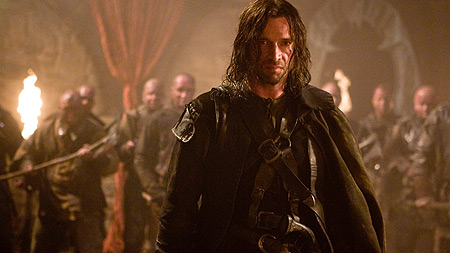
Solomon Kane (2009)


James Purefoy excels in cult-classic in the making Solomon Kane

Director: Michael J Bassett

Cast: James Purefoy (Solomon Kane), Max von Sydow (Josiah Kane), Pete Postlethwaite (William Crowthorn), Alice Krige (Katherine Crowthorn), Rachel Hurd-Wood (Meredith Crowthorn), Jason Flemyng (Malachi), Mackenzie Crook (Father Michael)

Solomon Kane was a pulp-magazine character from the 1920s. I’d never heard of him before – I imagine many others haven’t either – so bringing a film about him to the screen was always going to be a labour of love. That’s certainly what this film is. 

In 1600, Solomon Kane (James Purefoy) is a ruthless mercenary, but is confronted by a demon who tells him his soul is forfeit to the Devil. Horrified, Kane flees to sanctuary in a monastery, forsaking violence and devoting himself to God. After being expelled because the abbot has a dream, he encounters a Puritan family, the Crowthorns, and travels with them. Kane is deeply drawn to the Crowthorns – and when they are ambushed, the family killed, and daughter Meredith (Rachael Hurd-Wood) kidnapped by the servants of the sorcerer Malachi (Jason Flemyng), Kane swears to revenge the Crowthorns and rescue Meredith.

There’s something quite sweet and charming about Solomon Kane. It’s an old fashioned B-movie with a winning style. Is it going to rock any worlds? Probably not, but it’s got plenty of swagger and it makes a small budget go a long way. Bassett’s influences are pretty clear – everything from Witchfinder General to Lord of the Rings – but he shoots the film with a commendable energy. The visual flair is impressive, and successfully creates the feel of an England halfway between civilisation and the middle ages. Bassett also knows how to shoot an action scene, and the film is stuffed with fantastic sword fights that hit the right balance between brutality and dynamism.

Bassett also finds a fair amount of emotional heft in the story. The decision to focus a large chunk of the opening 45 minutes on Kane’s guilt and his attempts to make amends, make him a character we end up caring about. The “good family that wins our hero’s heart” cliché is exactly that, but it works very well here as Bassett takes his time and lets Kane’s bond with the Crowthorn family grow organically. All this patient establishment of Kane’s personality really pays off during the action of the second half.

It’s also helped a great deal by James Purefoy’s committed performance in the lead role. Purefoy has long since been a favourite of mine, who never really got the breaks to become a bigger star. His performance has the physicality and charisma, but Purefoy also adds in a Shakespearean depth to create a man desperate for redemption, carrying a pained heart very close to the surface. He dominates the whole film, setting the tone; and I suspect his dedicated performance encouraged fine work from the actors around him, despite almost all the other roles being little more than cameos. There are blockbusters whose leading actors are incapable of holding the screen as well as Purefoy does here.

Bassett’s B-movie spectacle is not perfect. The eventual explanation of why the Devil wants Kane’s soul is inexcusably garbled. Jason Flemyng is miscast as the demonic sorcerer Malachi, and his final confrontation with Kane lacks real impact (largely because Malachi has so little presence throughout the film) and devolves into a face-off with a dull special effects monster that looks rather like Megatron in the live-action Transformers films. There is a smaller-scale, personal ending in this film, but it gets crushed under the foot of the special effects. It’s a shame that a large portion of this film’s budget probably went on this.

Solomon Kane is structured, and plays, like a B-movie – but it’s proud of that. Its low budget demanded inventiveness and dedication from the cast and crew, all of whom delivered. The grimy design of the world is perfect, the story creates a good combination of action and emotion. Its story may be pretty clichéd, but it’s presented with great gusto – and has a terrific leading performance from a heavily under-rated actor in James Purefoy. More people deserve to see this – if this isn’t a cult classic in the making, I’m not sure what is.

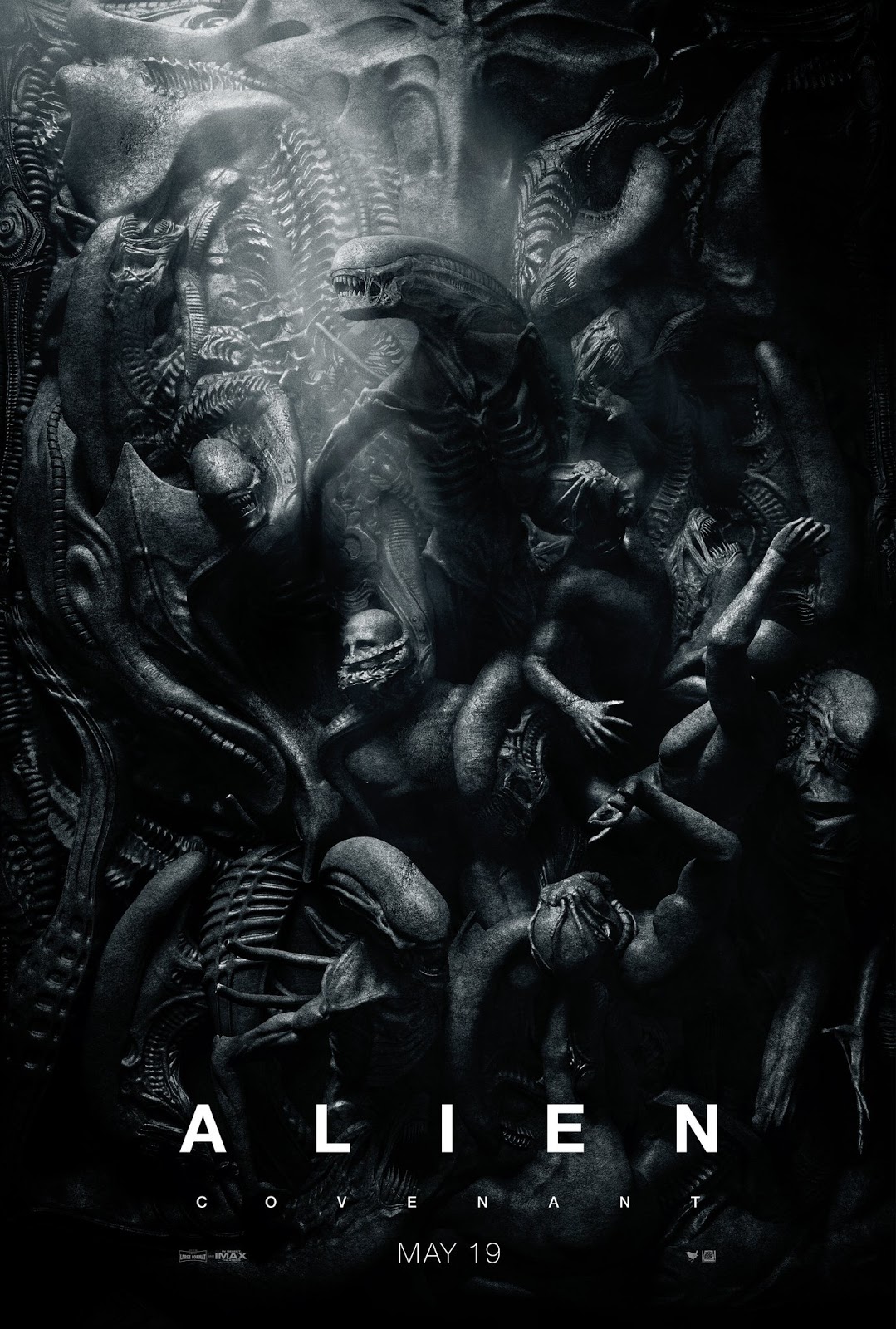
Alien: Covenant (2017)


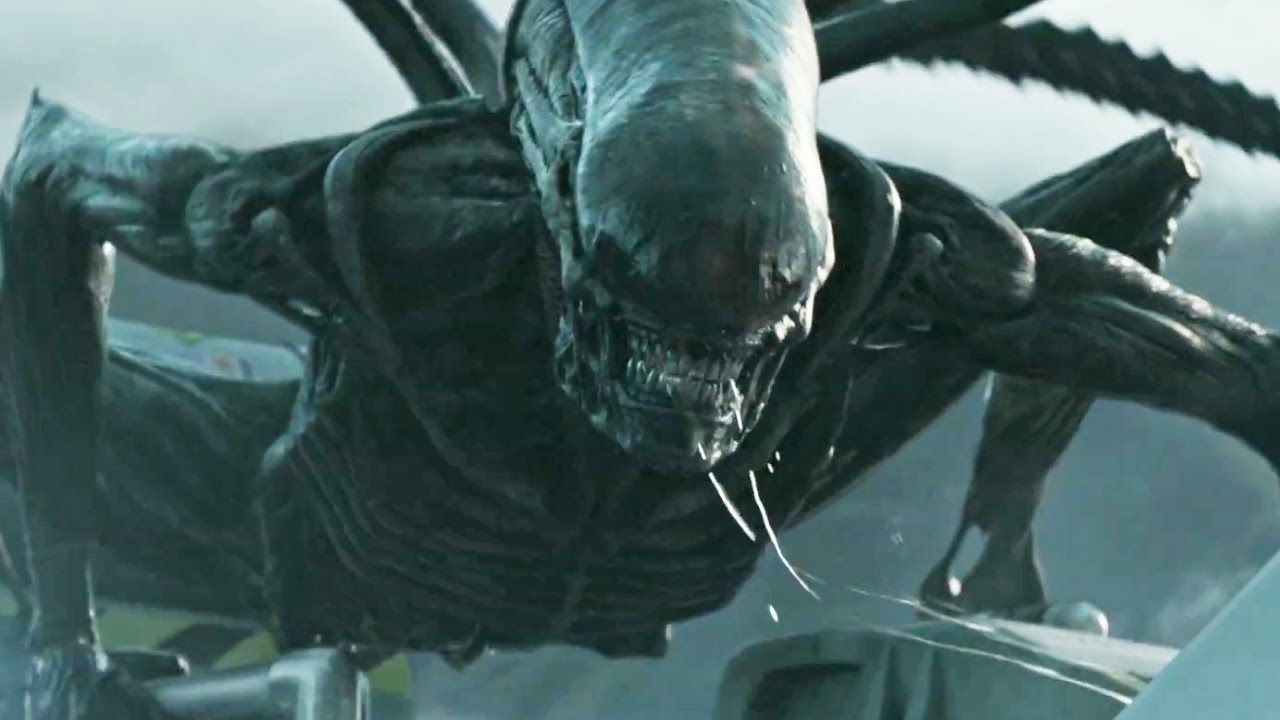
The xenomorph rises again, in prequel Alien: Covenant

Director: Ridley Scott

Cast: Michael Fassbender (David/Walter), Katherine Waterston (Daniels), Billy Crudup (Oram), Danny McBride (Tennessee), Demián Bichir (Lope), Carmen Ejogo (Karine), Amy Seimetz (Faris), Callie Hernandez (Upworth), Guy Pearce (Peter Weyland), Noomi Rapace (Elizabeth Shaw), James Franco (Jacob)

The Alien franchise is a series I’ve always had a lot of time for. Perhaps I just enjoy the carnage and blood letting of these movies, but at their best there is a sinister poetry behind the pure destructiveness of this rampaging beast, with a perfect mix of haunting nihilism and stirring action. In 2012, Scott returned to the franchise to explore its roots. His prequel film, Prometheus, had a mixed reception (and it’s a film I’ve found weaker with repeated viewings) but it still had that mixture of nihilistic poetry and gore. So where does Alien: Covenant fall?

Set 10 years after Prometheus, a solar flare hits the colony ship Covenant. To repair the damage, the ship’s android Walter (Michael Fassbender) wakens the crew, although the captain (an unbilled James Franco) is killed by a malfunction. Command passes to Oram (Billy Crudup), although many of the crew look to the captain’s wife Daniels (Katherine Waterston) as their moral leader. After the damage is repaired, the crew investigate a signal from an abandoned world, where they find the marooned android David (Fassbender again) and a planet with a terrible virus, that infects its hosts to create brutal Xenomorph monsters. But is all as it seems?

Alien: Covenant is a mixed bag. It has a haunting and unsettling tone and gives us plenty of aliens in all their various forms. Many of the sequences of alien attacks are exciting. It’s trying to build a mythology around the creation of the aliens, and tie that in with a thematic exploration of our needs to create and destroy. It wants to explore the potential dangers of artificial life, and how it could judge us and find us wanting. At the same time, it’s a flawed and rather predictable film, which never really surprises you. It might give you some things to think about – but it won’t provoke your interest enough to make you really think about them for long after the credits roll.

Its main weakness is in its large cast. Most of the characters are referred to throughout by non-descript surnames, hammering home their lack of individuality. The film is so resolutely invested in the establishment of its mythology, it has no time to build characters or a story around the crew. They are little more than ciphers, plot tools to deliver specific points rather than for us to relate to them, or feel concern for their fate. Even Waterston’s Daniels, nominally our surrogate character, feels distanced and undefined. Like the rest of the cast, she suppresses the loss of a loved one (there are at least three bereaved partners in this film) with a suddenness that speaks less of her professionalism and more of the film’s shark-like need to always moving forward.

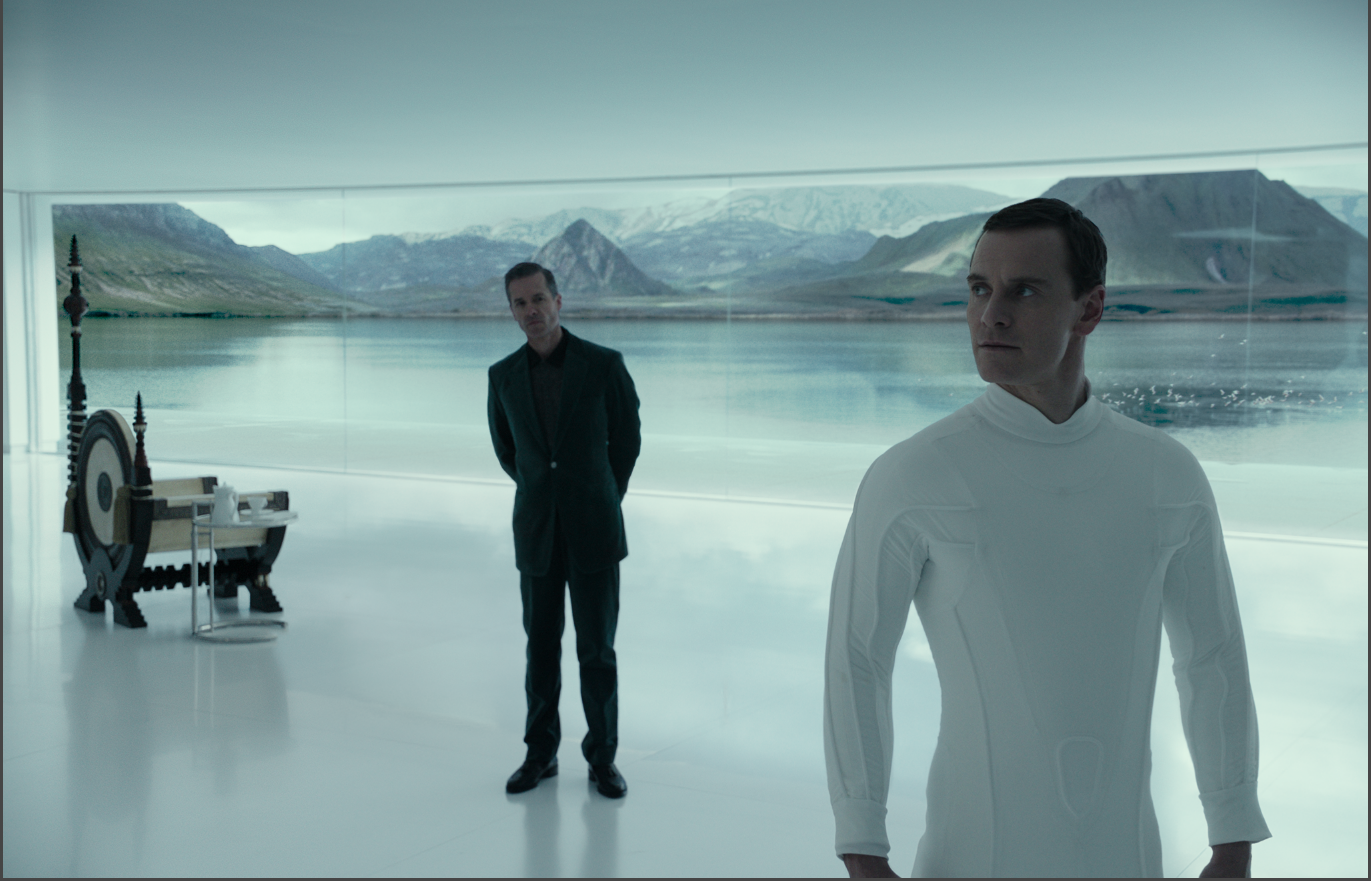
The one exception to the blandness is Fassbender’s dual role as androids David and Walter. It’s an actor’s bread and butter to play different roles, so we shouldn’t be surprised that a great actor like Fassbender executes it here with such skill. But he clearly distinguishes both the loyal, straightforward Walter and the darkly oblique David, and manages to craft the two most impressive performances in the film. This also gives Fassbender several chances to act oddly with himself, including a scene where David (rather suggestively) teaches Walter to play a pipe (it’s all about the fingering) and even a creepily possessive kiss scene between the two androids.

It helps that the film positions David as a protagonist-antagonist, and spends time exploring his fractured psyche (because it is central to the creation of the aliens, the film’s main interest). From its dark prologue, which shows David awkwardly questioning his nature with his creator (a swaggering cameo from Guy Pearce), David carries much of the film thematic interest. He is a creation of mankind, who believes he has surpassed his creators. Learning that Walter, a second generation, has been programmed to be less ‘human’ in his emotional capability as David, only confirms his belief that he is perfect. David is fuelled by a homicidal rage towards his creators, matched with an insane fixation on his own perfection.

The film wheels out a host of literary big guns to suggest a richness and depth to its exploration of these themes, from Milton to both Shelleys, but these points are really window dressing, as David is really closer in spirit to a Mengele crossed with a mad scientist from an old Hollywood B-movie. Despite this though, Fassbender’s David feels like a fully-rounded, absorbing character. His ‘Walter’ performance is equally good – gentler, compassionate, less grandstanding but quietly engaging.

Alien: Covenant is a film that aims high and wants to add some intellectual heft to its “slasher” roots. I think it’s probably a film that “hangs out” with ideas rather than enters into a proper conversation with them, but at least it’s aiming for thematic depth and richness, even if it often misses. I’m not sure it carries the sense of wonder and awe, and near-religious parallels, Prometheus (a deeply flawed, but more haunting film than this) managed. But it wants to make us question our place in the universe, and how our blind overconfidence could one day doom us. These ideas may just be window dressing to the blood and guts that the film delights in, but it at least shows that Scott is trying to make something a little deeper, and trying to make points about human nature.

It may be this focus on philosophical musing and the mythology of the alien’s development, distracted the film-makers from creating a plot to wrap around all this. The characters actions are too are often determined by the requirements of the plot, rather than logic or characterisation. So many dumb decisions are made, it stretches credibility: deflecting on a whim to a strange planet, charging around this alien world with careless abandon, following a clearly demented android you don’t trust into a room full of alien eggs – the plot requires each of the characters to perform various acts of stupidity in order for it to get anywhere.

The plot is also a hybrid that remixes beats from the previous films. No death (and there are loads of them) carries any surprise or shock value, and the alien itself (impressively filmed as the action is) behaves pretty much as you would expect. The familiarity of the events also makes the characters feel (to the audience) even more stupid and careless. There is excitement, but the film never really gets you to the edge of your seat – with its familiar action, and bland characters most of whom are little more than alien-fodder, you just never feel a tension or investment in their fates.

I wanted to like Alien: Covenant more than I actually did – but the truth is that it’s a film that lets itself down. There are moments of awe and wonder in there. It has a very good villain, whose motives and reasoning are interesting and thought-provoking. It has a terrific pair of performances by Michael Fassbender. But it’s also got too much flatness – plot and characters seem rushed and thinly sketched out. It’s clear where Scott’s and the writers’ focus was – and it means chunks of this movie just glide past the eyes and ears. Not the worst Alien film by a longshot – but still someway off the greatness of the first two films.

Twin Peaks: Fire Walk With Me (1992)


Laura Palmer and Dale Cooper trapped in Twin Peaks nightmare halfway house between this world and the next

Director: David Lynch

Cast: Sheryl Lee (Laura Palmer), Ray Wise (Leland Palmer), Mädchen Amick (Shelly Johnson), Dana Ashbrook (Bobby Briggs), Phoebe Augustine (Ronette Pulaski), David Bowie (Phillip Jeffries), Eric Da Re (Leo Johnson), Miguel Ferrer (Albert Rosenfield), Pamela Gidley (Teresa Banks), Chris Isaak (Special Agent Chester Desmond), Moira Kelly (Donna Hayward), David Lynch (Gordon Cole), Kyle MacLachlan (Special Agent Dale Cooper), James Marshall (James Hurley), Frank Silva (BOB), Kiefer Sutherland (Agent Sam Stanley), Grace Zabriskie (Sarah Palmer)

Twin Peaks was a mystifying, but very short lived, sensation. Its first series gripped America with its whodunit mystery around who killed Laura Palmer: it was an early 90s Broadchurch with added mysticism and twisted Lynchian psychosis. Just like Broadchurch, the second series stumbled from disaster to disaster as the answer to the mystery was revealed. Though this plot line was dark, disturbing and haunting, effectively contrasted with the surreal humour of the rest of the show, large chunks of the episodes were, to be honest, terrible. As Lynch’s attention turned elsewhere, the show fumbled through half a season of increasingly bizarre, pointless, laughable and plain rubbish episodes, before rallying at the end with a return to the mysterious dwelling on the nature of evil that the series is now best remembered for.

Twin Peaks is a rare anomaly – a show whose most die-hard fans would probably admit at least a quarter of the episodes were terrible. Ratings had dropped off a cliff as the series went on (sure enough it was cancelled). The cast and crew knew the show had lost something – several actors, most notably Lara Flynn Boyle (here replaced by Moira Kelly) refused to appear in the film. Even the show’s star, and Lynch surrogate, Kyle MacLachlan only agreed to return for this film for a few brief scenes (requiring an urgent re-write). However, Lynch’s interest in the concept had clearly been awakened during his writing and filming of (what would become) the final episode, surely one of the most surreal, unsettling, bizarre, intriguing and disturbing episodes of TV ever screened.

Twin Peaks: Fire Walk With Me was Lynch’s final reclaiming of the series from the toilet it had dropped into. It also served partly as a “retcon” to tie the foundations of the original series plotline into the mythology the show had deepened in its final few episodes (built upon many surreal elements Lynch had introduced in the first episodes, otherwise hinted at rather than explored). As much of this mythology was unsettling, this movie very much follows that mood, losing much (if not all) of the dark, surrealistic humour that contrasted the darkness so well in the series. Twin Peaks: Fire Walk With Me is a strange movie that is more like an expanded extra episode of the series, rather than a stand-alone. It makes no attempt at all to appeal to anyone who hasn’t seen every episode of the series: I’d go so far to say it’s almost completely impenetrable without having sat through all of Twin Peaks.

The film explores two plot-lines: the first an investigation by FBI Agent Chester Diamond (Chris Isaak) into the murder of Teresa Banks, a plotline referred to many times in the series. The film then flashes forward a year to cover the final few days of the original murder victim Laura Palmer (Sheryl Lee) and her relationship with her father Leland Palmer (Ray Wise), who is possessed by a demonic presence known as BOB, driven by it to perform acts of sexual and physical violence. Laura is aware – and terrified – of the existence of BOB (a greasy haired face from a thousand nightmares) but seems unable to recognise that BOB and her father are one and the same. It’s the discovery of this in the film that will help to tip her over the edge into despair.

If the film is about anything other than expanding the mythology around BOB and the mysterious “Black Lodge” between dimensions, where evil and violence abound, it’s about the damaging impact of domestic abuse. The film intensely explores the personality damage Laura (an excellent and fully committed Sheryl Lee, leaving nothing in the locker room in a performance of fearless intensity) has suffered as a result of years of sexual abuse from her father (Ray Wise equally good as his personality veers wildly between gentle father and possessed evil rapist). Laura’s fractured psyche is the root cause, Lynch makes clear, of her sexual promiscuity, drug addiction and flashes of cruelty. She’s even aware of the damage, as seen in her desperation to protect others (especially the gentle Donna) from being sucked into the nightmare of her life.

The unremitting bleakness of Laura’s disastrous life is intermixed with the horror of the scenes where we witness Leland’s destructive behaviour to her, while the final scene of her eventual murder is haunting in its skilful nightmare imagery and suggestive editing. Lynch’s direction remains humane and tender, and despite putting Sheryl Lee through the ringer she never feels exploited. Instead, the film has an incredible empathy for both her suffering, and the confused, damaged actions she is driven to carry out. It gives us an understanding of the damage that can be done to even the strongest seeming people by abuse.

Alongside this, Lynch unleashes the full range of dark surrealism through a series of disturbing images to build up his mystical backstory. This is a flat out horror film, with twisted images of monkeys, blood and forests guaranteed to haunt your dreams. Nearly every scene in Twin Peaks re-positions the often quirky town of many of the episodes as a nightmareish world of neon, darkened rooms and twisted sexual and physical violence. The portrayal of Laura Palmer’s fragile heart is as intensely moving as it is intensely filmed, while the views behind the red curtain into the hellish underbelly of Twin Peaks’ mystical mythology will stick with you for some time – and is sure to be central to the new third series.

Twin Peaks: Fire Walk With Me was met with intense hostility when it was released: “It’s not the worst movie ever made,” the New York Times review read, “it just seems to be”. David Lynch publically stated he had clearly done when the network couldn’t do, and successfully killed Twin Peaks. Of course that wasn’t the case – with the new third series finally coming to the screen 25 years after the screening of this film. The re-evaluation of the film has only grown in the intervening period. The nightmarish content (and the final scenes of the series) – the wicked BOB, the nightmare of the Black Lodge and the Red Room, the elements of psychological horror – these are the things that Twin Peaks is remembered as being about: the rotten core of the sweet pie of the town.

Sleepy Hollow (1999)


Rumours that Johnny Depp is tapping into his eccentric style are of course unfounded

Director: Tim Burton

Cast: Johnny Depp (Ichabod Crane), Christina Ricci (Katrina Van Tassel), Michael Gambon (Baltus Van Tassel), Miranda Richardson (Lady Van Tassel), Casper Van Dien (Brom Van Brunt), Jeffrey Jones (Reverend Steenwyck), Richard Griffiths (Magistrate Philipse), Ian McDiarmid (Dr. Thomas Lancaster), Michael Gough (Notary Hardenbrook), Christopher Lee (Burgomaster), Christopher Walken (The Headless Horseman), Claire Skinner (Beth Killian) 

Tim Burton’s films often take on a larger-than-life quality, an overblown fanciful journey into a world that is a few degrees off from our own. So a bizarre ghost story about a headless horseman lopping off bonces left, right and centre, in an isolated town that feels more like a construct from a series of other films than any sort of real place, probably suits him perfectly.

After a series of murders via decapitation in the small town of Sleepy Hollow, Iachobad Crane (Johnny Depp) is called from New York to investigate. An eccentric (what else, it’s Depp) moderniser, Crane believes in logic and forensic investigation and is having none of the fears of the townspeople that the murders are being committed by a headless ghost. However he soon changes his views…

This adaptation bears little or no resemblance whatsoever to the original source material, bar a few homages, one or two brief scenes and a few character names. Burton, indeed, seems to have no interest in it at all: what he is interested in doing is paying homage to high-blown Hammer horror films from the 60s and 70s. Whether you enjoy this largely depends on whether you were a fan of either Burton or this style of film-making going into it.

I found the film rather too arch throughout – from the stylised performances of the actors, through to the slight tongue-in-cheek tone. It’s not particularly scary at any point, despite the blood and gore – largely because nothing ever feels real, there’s no sense of dread or peril. Heads are lopped off with an almost comic athleticism, bouncing around floors or rotating on necks. Only one sequence – the murder of a family – carries any real sense of unease about it. The rest of the film is one not-particularly-witty black comedy, in which a lot of time and talent seems to be invested in something not particularly interesting.

Depp is of course perfectly suited to this, his “look at me” acting style springing to the fore as Crane. As usual he overloads the character with quirks and mannerisms, the sort of tricksy emptiness it’s easy to mistake for great acting. The rest of the cast go about their business with a trained professionalism. However, despite the array of British acting talent on display, in truth none of them make much of an impression, with the exception of a nice cameo from Alun Armstrong as a senior New York policeman, and Miranda Richardson who has fun with her role as a sinister housewife with hidden depths.

The awards attention for the film focused on its finest aspects – its look and design. The production design of the film is impressively constructed and the artificial look of the exterior sets actually fits in very nicely within the world of the film. Emmanuel Lubezki’s photography also looks fantastic, shooting the film with a slightly off colour, 70s style that adds a vibrant red to the large amount of blood on screen. Costumes and other technical aspects are also impressive. The film looks fantastically striking, like a brilliantly designed coffee table book – and has about as much plot as one. It’s my problem with Tim Burton – this whole “unique vision” of his, often seems to be an excuse for littering his films with in jokes, arch design and stylisation and leaving out the things we actually care about, like characters, emotion and drama.

In the end, it’s really not a lot more than a joke, a pastiche of a certain genre of film that seems much more like one for the fans than a joke that we can all take part in. I’m aware not liking it throws me open to accusations of not “getting it” or expecting more from it, but I basically didn’t really find the joke funny enough. Its arch style make it hard to relate to, and despite the clear enjoyment of all involved, not a lot of the wit behind the scenes is clear in the final product. With nothing to really invest in, a rather sudden ending and a mood throughout that is trying to be creepy rather than genuinely so. Don’t expect a retelling of its plot around a camp fire to awaken too many goosebumps.