Category: Kidnap drama

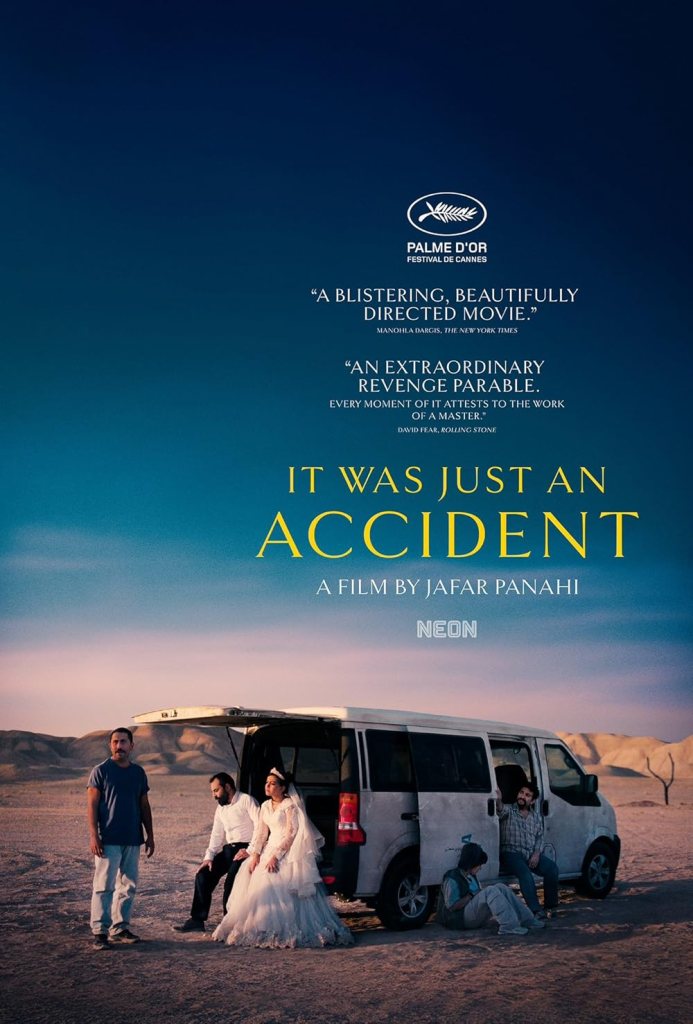
It Was Just an Accident (2025)

It Was Just an Accident (2025)

Compelling, compassionate and deeply political drama, full of humanism and warmth

Director: Jafar Panahi

Cast: Vahid Mobasseri (Vahid), Mariam Afshari (Shiva), Ebrahim Azizi (‘Eghbal’), Hadis Pakbaten (Goli), Majid Panahi (Ali), Mohammad Ali Elyasmehr (Hamid), Delnaz Najafi (‘Eghbal’’s daughter), Afssaneh Najmabadi (‘Eghbal’s’ wife)
Late at night, a father (Ebrahim Azizi) driving his heavily pregnant wife and daughter home, hits a wild dog. His young daughter is deeply upset, but the father impassively responds it was ‘just an accident’. But the car is damaged, so the father pulls over for help. When he does so, the distinctive squeak of his artificial leg brings near-by Vahid (Vahid Mobasseri) into a horrified cold sweat. Vahid has heard that squeak before: belonging to Eghbal (‘Peg Leg’) the man who brutally tortured him in prison.

The next day Vahid kidnaps Eghbal, intending to bury him alive until doubt sets in: has he got the right man? To get the confirmation he needs, he reaches out to others tortured by Eghbal, including wedding photographer Shiva (Mariam Afshari), bride Goli (Hadis Pakbaten) (with groom Ali (Majid Panahi) in tow) and Shiva’s former partner Hamid (Mohammad Ali Elyasmehr). Can this motley group confirm Eghbal’s identity? What will they do with him?

It Was Just an Accident takes inspiration from Death and the Maiden and it’s a story that could be happening right now. Jafar Pahani’s outstanding film is set in Iran, where anyone can be seized from the streets and face months of relentless, brutal questioning from furious interrogators. Pahani, himself imprisoned for seven months in 2022-23 (only gaining release after going on hunger strike) shot the film secretly (and illegally) in Iran, the sixth film he has shot in this way, after being banned from film-making. Smuggled out of the country, it won the Palme d’Or, and makes compelling political points about life in Iran while never losing track of the human stories at its heart.

Pahani asks searching questions about truth, reconciliation and what separates the oppressed from the oppressor. Each character, a rag-tag assemblage of the regime’s victims all bundled together in a beat-up van like an eccentric Scooby-gang, must ask themselves what they want from their former torturer. Is it vengeance pure and simple? Or something deeper? And would taking satisfying, violent revenge really fill the hole years of brutal treatment left inside them? Do they want to stoop to the same vile level as their torturer – if he can take the last vestige of their humanity from them in this state, is this not a victory of sorts for Iran?

There is no doubt about the lasting trauma years of imprisonment has left on its victims. Vahid, constantly stooped with back-pain, literally freezes in mute horror at hearing Eghbal’s squeaking leg, before rushing into a sudden, ill-thought-out kidnapping. Shiva can barely bring herself to look at her possible torturer, barely suppressing vomit when she recognises his smell. Goli has to be restrained from beating him, her pain roaring to the surface. Hamid’s instinct to immediately kill Eghbal needs all the group to restrain him: his fury so intense, the man’s identity is almost irrelevant to Hamid’s desire for revenge. Even the calmest people find themselves succumbing to the cathartic need to assault Eghbal, to work some of the pain out of their system.

But yet… aside from Hamid, the group find it hard to embrace the violence of their oppressors. Instead, all crowded into Vahid’s van with a drugged Eghbal locked in the boot, they meander, arguing over what to do. Bury him in the desert? Confront him? Let him go before he identifies them? These people fell foul of Iran’s government because they campaigned for worker’s rights – they are not revolutionary fighters, but ordinary people. This dilemma leaves them sitting in the desert, emotionally sharing stories of their imprisonment, seemingly waiting (as Hamid says watching Shiva sit under a dead tree, like Waiting for Godot) for a decision to come to them.

These heart-rending stories reveal the oppressive horror of Iran’s system. Tales of mock executions, people left hanging upside down for days, harangued under brutal conditions to confess and name names. The fear of returning there is a constant, all of them scared that a released Eghbal may come for them. The abusive infection at the top of the country, trickles down. Anyone with any authority abuses their power, from car park attendants who carry card machines to force bribes for turning blind eyes to suspicious activity to hospital staff who place rules above treating people (and nurses who expect ‘tips’ for service), the system feels corrupt from top-to-bottom.

But that doesn’t mean the country is. Pahani reminds us throughout that real people are kind: there is a strong, uplifting humanist streak throughout It Was Just an Accident. From an ordinary person’s instinctive offer to help when Eghbal’s car breaks down, to passers-by who rush to help push Vahid’s van when it breaks down (filmed in long shot, these passers-by didn’t even knew they were in a film) to a doctor who over-rules petty officialdom to help a woman in need. It Was Just an Accident is full of small moments of human warmth and decency. Each of our group displays these attributes at points, with Vahid and Shiva in particular revealed as people of deep generosity and kindness. The film also takes surprising turns, with the characters responding to circumstances with a decency and humanity that is immensely moving.

Pahani shoots with a series of measured, long-takes allowing performances and themes to naturally expand. He films a series of virtuoso extended scenes of intense emotion, where the camera simply sits or glides gently to follow the action. The long desert scene, where the characters share their stories is all the more powerful for the gentle, unobtrusive distance the camera gives them. Best of all, a hugely powerful sustained shot, lit by the brake lights of the van, explodes with grief, cathartic anger, menace and shame – as well as eliciting extraordinary performances from the actors.

It Was Just an Accident is wonderfully acted across the board. Vahid Mobasseri is heart-breakingly decent beneath his pain. Mairam Afshari’s Shiva is superb as a principled woman who won’t allow herself to be corrupted. Mohammed Ali Elyasmehr’s Hamid never lets the anguish beneath his rage get forgotten. Hadis Pakbaten gives Goli a desperation to speak out while Majid Panahi’s Ali allows his character’s reserve to slowly break. Ebrahim Azizi walks a fine-line with the possible Eghbal, switching from assurance to desperate confusion, pleading to rage – and closes with an impassioned tour-de-force that provokes complicated, enigmatic reactions from the audience.

Enigmatic is also part of Pahani’s ending, a quiet, open-to-interpretation final sequence that could be either a haunting reminder of how the past never lets us go, or a suggestion that there is a hope for truth and reconciliation. How you take it, is to you. But there is no doubting the extraordinary power of Pahani’s film, or how lightly it wears its political and social messages. This is not a film without humour, nor is it a film that forgets people are capable of decent, humane acts that can surprise even themselves. It’s a film that will leave you thinking deeply.

Weapons (2025)

Weapons (2025)

Creepy and unsettling horror with a fascinating puzzle-box structure

Director: Zach Cregger

Cast: Julia Garner (Justine Gandy), Josh Brolin (Archer Graff), Alden Ehrenreich (Paul Morgan), Austin Abrams (James), Cary Christopher (Alex Lilly), Toby Huss (Captain Ed Locke), Benedict Wong (Marcus Miller), Amy Madigan (Gladys), Sara Paxton (Erica), Justin Long (Gary), June Diane Raphael (Donna Morgan)

At exactly 2:17am, seventeen young children from the same third-grade class all wake up and run from their houses, their arms trailing behind them like aeroplane wings. The disappearance shatters the local community. Fingers of blame point quickly, most of them at their teacher Justine (Julia Garner). It feels like some bizarre conspiracy, but are there darker forces at play? That mystery will rope in obsessed father Archer (Josh Brolin), troubled cop Paul (Alden Ehrenreich), drug-addict and thief James (Austin Abrams), decent school principle Marcus (Benedict Wong) and the only child from Justine’s class who didn’t disappear, young Alex Lilly (Cary Christopher).

Cregger’s creepy horror movie tells its story from all these character’s perspectives, each section opening like a book’s chapter with their name on the screen. Events re-play from different angles and perspectives and our understanding of events (and their horror!) grows as each person sheds more light on the overall picture. There is a deeply unsettling sense of dread and menace hanging over Weapons, built from the start by an unsettling child narrator who promises us that we are set to see things so unbelievable and ghastly, the authorities covered the whole thing up.

Weapons is influenced by some of the best ensemble dramas – Cregger specifically name-checked Anderson’s Magnolia as an influence – and I also felt it follows very much in the footsteps of Kubrick’s The Shining. It embraces the deeply unsettling dread and horror of quiet menace and the tension of disturbing background events. Which isn’t to say it doesn’t miss out on shattering blood and guts and body horror inspired by Cronenberg and The Thing: when the gore comes in Weapons it’s visceral, gut-wrenching and impossibly bloody.

It taps into everyday fears and horrors then takes them to the nth degree. What parent hasn’t feared the inexplicable disappearance of a child? And when disasters like that happen, people often lash out the suspicious. Poor Justine – a fine performance of outer abrasiveness hiding gentleness and vulnerability by Julia Garner – sticks out like a sore-thumb in this small community. An outsider with a prickly personality and a destructive streak a mile long, a little too fond of vodka (which she buys by the bucketload) and extra-marital sex with married men (which cost her a job at her previous school).

Her stumbling attempts to sympathise with the parents is made worse by the fact she has no clues to offer them. Not helpful (and you can’t help but sympathise with Justine here, as this is a true nightmare set-up) when everyone else is convinced she must know something. Further modern fears are tapped into when Justine faces a campaign of silent intimidation in her home by a faceless persecutor and her car is painted with the word ‘Witch’ (a brilliant little touch making her car instantly recognisable in all the other perspectives that follow).

The loudest voice of this fractured community becomes Archer, played with gruff guilt and fury by James Brolin, pestering the police with his Justine-centred theories and bulldozing other parents for evidence. It’s a dark irony of course that Archer’s paranoid investigations – focused on triangulating a shared route from the direction the children are seen running in doorbell cameras – turns out to be much closer to the truth than the official investigation (but then the police don’t realise they are in a horror movie here, whereas Archer surely starts to think he might be). Similar to Justine, Archer surprises us with his concealed decency and emotional vulnerability, another success in Cregger’s film where greater character depths are constantly revealed.

It works both ways as the more we see of Alden Ehrenreich’s police officer Paul, the less we like him. At first he seems a slightly luckless soul with a gentle heart, but he emerges more and more as a selfish bully who doesn’t think about twice about hurting people around him then worries endlessly about the consequences. Similarly, Austin Abrahm’s drug-addict burglar stumbles far closer to the truth than anyone else – but his interest in it is connected solely to his desire for $50k reward (and it’s hard not to start to think Paul is fairly interested in that as well).

The storyline of these characters unspools in Cregger’s short story structure very effectively, the camera frequently trailing behind each character in a series of tracking shots (this means we often only see the facial reactions when the scene repeats from a different perspective). Cregger’s shies away from jump scares (not that he doesn’t use these quite effectively at several points) in favour of simple shots and draining out sounds to let quiet background moments create dread. Perhaps most chilling of all sees a character sleeping in a car being slowly approached by a mysterious woman, a scene of such sustained but simple tension it will have you twitching in your seat.

To reveal anything of what the secret cause of this horror is would be spoil things considerably – Weapons works best the less you know about it. But it’s not a spoiler to say there are dark forces at play – Weapons clues you in fairly quickly that a creepy house, with newspaper coated windows, is likely to be the centre of what nightmares may come. A big part of this is a performance of crazy off-the-wall freakishness by Amy Madigan, a gift of a role she rips into with gusto, an eccentric presence dripping with unsettling menace, both vicious and then eerily calm. Madigan bites into the role like Hopkins did Lecter, doing terrible things with a calm smile, making threats with calculated menace. Genuinely terrifying, truly memorable.

Weapons opens up a pot of terrifying, unsettling nightmare fuel. From the unnervingly unreal way the children run (arms trailing behind them) to background events that carry real terror. But there are moments of black comedy in here as well: the final sequence is both blood-soaked horror and also darkly hilarious (Cregger using distanced perspective shots to expert effect) and a housebound fight plays like a horror-slapstick. The main success of Weapons is it’s creeping sense of menace, the unsettling thought of horrific dark powers just on the edges of reality, that lack any sense of morality or decency. That what we can’t imagine is even more terrifying than what we can.

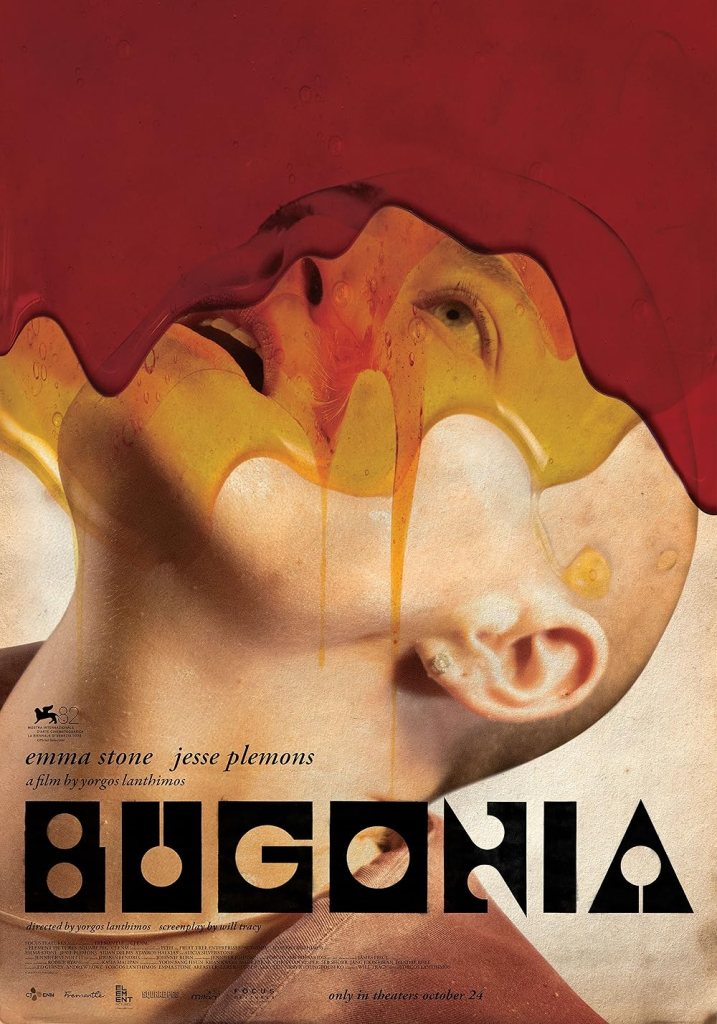
Bugonia (2025)

Bugonia (2025)

Satire, kidnap drama, politics and more combine in Lanthimos’ partially successful thriller

Director: Yorgos Lanthimos

Cast: Emma Stone (Michelle Fuller), Jesse Plemons (Teddy Gatz), Aidan Delbris (Don), Stavros Halkias (Casey), Alicia Silverstone (Sandy Gatz)

The world sometimes feels like its racing towards hell in a handcart And those on the bottom surely can’t help but look at the super-rich and wonder what on Earth do I have in common with them? But some, maybe particularly beaten down by life, may conclude something different: I’ve got nothing in common with the super-rich, because they are literally not of this Earth. That they are mysterious aliens who walk among us, planning to wipe us out. Bugonia takes a deep dive into the troubled, damaged psyche that can embrace the worm-hole of conspiracy theory, as well as the uncaring platitudes of the mega-companies that (maybe) rule the world.

Michelle Fuller (Emma Stone) is the CEO of Auxolith, an all-powerful pharmaceutical company that operates (at times) right on the fringes of legal. She becomes the target of beaten-down beekeeper Teddy Gatz (Jesse Plemons) and his loyal learning-disabled cousin Don (Aidan Delbris). Teddy is certain Michelle is from the planet Andromeda, that she can contact her mothership through her hair and that her mission is to wipe out mankind. Locking her in the basement of his farm-house, they enter into a mix of interrogation, battle of wills and wits and fluctuating power balances. Is Teddy deranged, vulnerable or misguided? Is Michelle scared victim, arch-manipulator or heartless CEO?

All this plays out, often in tight close-up, in Lanthimos’ jet-black comedy, which is two parts social satire to one part blisteringly nihilistic view of humanity and our future. As Burgonia’s carefully oscillates from one side to another, its political views and stances can be hard-to-perceive, but it certainly suggests Lanthimos has hardly the highest hopes for future. This helps make the film fresh, engaging and challenging. It’s constant cuts from one ‘side’ to the other, also means these two rivals rarely share the same frame, visually imposing their distance and rivalry – Lanthimos even uses non-complementary framing to place them awkwardly together, two people with no common ground.

While Teddy nominally holds the cards as the kidnapper, he’s so clearly such a weak, scared, vulnerable character (often framed weakly within the film) it’s hard not to feel sorry for him. Similarly, Michelle may go through some truly ghastly treatment as Teddy tries to unmask her ‘secret identity’, but remains such a forceful, dominant character (“I’m a winner and you are a fucking loser” she rants at Teddy at one point), framed with such utter assurance, her bland corporate indifference to others and willingness to manipulate the fault-lines in her kidnappers relationships (especially the gentle, child-like Don) never make her feel like a victim but just as dangerous as Teddy.

Teddy’s crazy, flat-Earth-mindset (and Lanthimos punctures each chapter with a view of an increasingly flat Earth, which is at first a darkly comic hat tip and then takes on a second chilling meaning late on) ranting and raving is presented as both darkly funny and also unsettling in how he can use it to justify any violence. Sure, it’s funny that he shaves Michelle’s head and covers her with cream to ‘weaken her influence’, or with gentle earnestness stresses he leads the human resistance to Andromeda (membership currently two). Slightly less funny that he insists he and Don chemically castrate themselves so as not to be seduced, or that pumps Michelle full of over 400 volts to try and unmark her (all while insisting her is a humanitarian, but as an alien Michelle technically has no human rights).

But then Michelle’s corporate coldness is rarely absent. She may remember all her staff’s name with a practised efficiency, but there is a degree of empathy missing in her, replaced with pragmatic hardness. As it becomes clear Teddy’s selection of her is (perhaps) more connected to her drugs companies treatment of his mother (Alicia Silverstone), her blasé assurances that everything was done legally and lack of any real guilt speaks volumes.

Lanthimos always keeps us guessing with Michelle: at moments she will switch from fear and vulnerability, to suddenly snapping back with utter authority, absorbing all the power in the room from the frequently hapless Teddy. Teddy in fact increasingly resembles a lost little boy (he even cycles through town with the relentless pedal-turning speed of a toddler), way-out-of-his-depth and at times all but deferring to Michelle’s advice about her own kidnapping.

Bugonia becomes a dance, not only between truth and fiction, but between two strikingly very different people, one so accustomed to power than even when in a nominally powerless situation they don’t feel anything but a winner, the other a desperate, scraggy haired loser who seems unable to really process what he should do to win a hand where he seems to hold all the aces. To make it work you need two electric actors: Lanthimos has this in spades with two trusted collaborators.

Stone’s ability to switch between corporate fear, desperate negotiation and earnest insincerity are as striking as her ability to keep her character so utterly, eventually terrifyingly, unknowable. In every second of Bugonia you can never be certain exactly what sort of person Stone is playing, her sociopathic assurance both understandable in the situation but also deeply unsettling. Plemons’ gives Teddy a child-like earnestness and desire to do the right thing that underpins his unhinged, ludicrous conspiracy theories, making him someone we both pity and understand is capable of doing terrible things for reasons he can justify to himself. Credit also goes to Aidan Delbris’ affecting performance as the gentle, easily-led Don.

Bugonia may well over-play its hands at points. It’s hard not to expect some sort of twist coming our way – I’m not sure how many people will be surprised by how the film plays out. It’s nihilistic ending feels a little too hard-edged and pointed for a film that hasn’t, until that point, embraced that level of flat-out cynicism. A clumsy introduction of a cop with a shady past is thrown in merely (it seems) to give us another reason to feel sorry for Teddy. Lanthimos’ at points engages, not always successfully, in a level of body horror that wouldn’t feel out of place in the excesses of Cronenberg. But then there are moments of real wit: the paralleled cuts of both Teddy/Don and Michelle going through their fitness regimes, a painfully uncomfortable bolognaise meal that tips into a full-out barney between the two stars, it’s unsettling near-finale in Michelle’s office and the playful realisation that much of the truth was there from the start, but hidden.

Bugonia might be a little too scatter-gun and self-consciously crazy to be a really effective satire, but with two terrific performances and an unsettlingly tense shooting style from Lanthimos (with echoes of everything from Dreyer to Hitchcock) there is enough of interest there to keep your mind bubbling even after it’s hard-hittingly sour ending.

The Taking of Pelham 123 (1974)

The Taking of Pelham 123 (1974)

Effective thrills on a well made heist drama with some interesting social points to make

Director: Joseph Sargent

Cast: Walter Matthau (Lt. Zachary Garber), Robert Shaw (Mr. Blue), Martin Balsam (Mr. Green), Héctor Elizondo (Mr. Grey), Earl Hindman (Mr. Brown), James Broderick (Denny Doyle), Dick O’Neill (Correll), Lee Wallace (Mayor), Tony Roberts (Warren LaSalle), Jerry Stiller (Lt. Rico Patrone), Rudy Bond (Police Commissioner), Julius Harris (Inspector Daniels)

Colour coded crooks carry out a crime? Tarantino was clearly a fan of The Taking of Pelham 123. And who can blame him? This is exactly the sort of well-constructed, entertaining thriller Hollywood used to churn out so well. It even manages to mix its cunning crooks with more than a bit of cynical social commentary on the contemporary mess that was New York. It’s grimy, surprisingly hard-edged but with a lean slice of black humour: you can see why it’s a bit of a cult classic.

On the New York City subway, a gang of determined, efficient criminals take control of the front car of downtown train ‘Pelham 1-2-3’ (a train name now banned in New York due to copycat fears!). They are led by polite but utterly ruthless Mr Blue (Robert Shaw) and include nervous train-expert Mr Green (Martin Balsam), loyal Mr Brown (Earl Hindman) and trigger-happy Mr Grey (Hector Elizondo). Their demands are simple: $1million dollars (such humble ambitions these days!) in one hour, or they execute one of their 18 hostages every minute. And no negotiation, no matter how much City Transit Police cop Zachary Garber (Walter Matthau) might try over the radio. With the crooks seemingly having thought of everything, can Garber stop playing catch-up and work out their plan?

You only need to look at the popularity of Die Hard to see what guilty pleasure there is in fanatically prepared criminals trying to get away with it. The Taking of Pelham 123 has all of this. Blue’s team is professional, prepared and have anticipated everything. From calmly telling the passengers how futile any escape attempt would be, to anticipating every single action of the authorities, to delivering (with fatal results) on every one of their promises, these guys have the sort of competence we always sneakly admire in film. Match that with Mr Blue’s strangely samurai-like sense of honour (he’ll keep every deal he makes, despises anger and sadism and respects worthy opponents – even while he emotionlessly executes a hostage) and a bit of you will root for the criminals to get away with it. Right up to, of course, when they start to deliver on their fatal promises.

Of course, it helps that The Taking of Pelham 123 takes some intriguingly sharp pops at the forces ranged against the criminals. The mayor’s ineffectiveness is underlined by having him spend virtually the entire film in bed with a stinking cold. His decision about what to do hinges on how many votes he might get. He resents going to the scene, complaining he’ll get booed (guess what happens!) and is frequently brow-beaten by his more accomplished deputy. When he whines about where they are going to raise the money from (stop to remember for a second what a bankrupt, crime-ridden, mess New York was at the time) it’s even suggested (half-jokingly) he considers cleaning out one of his Swiss bank accounts. Around them many members of the police are heavy-handed, trigger-happy and frequently flustered by the relentless deadlines while the main representative of the train network sees the risk of 18 deaths as an irritating obstacle to an efficient transport system.

This has all been factored into the criminal’s plans. Ask for a big amount, but not so big that the authorities find it politically impossible to deliver. Give a deadline that is achievable but too short to allow anyone the time to make a plan. Count on the general disorganisation of the system being your best ally. Yup The Taking of Pelham 123 is a very 70s crime thriller, when cynical expectations about the efficiency and honesty of the authorities is crucial to the scheme!

Naturally, in a world like this, an awkward looking, scruffy maverick is our hero. Walter Matthau is the man you call for – particularly when the villain is Robert Shaw at his most smooth, clipped and articulate. Matthau’s homespun wisdom and gut instincts are, of course, the only thing the villains haven’t anticipated. It’s Garber’s focus on the people – as opposed to the obsession everyone else has about saving face and passing the buck – that marks him out: that and his authority-shirking cynicism and complete lack of interest in work-place turf battles.

The Taking of Pelham 123 barrels along from there with surprising efficiency and a little dark humour. Some of this humour is even – rather bravely – at the characters own lazy assumptions. One of Garber’s most knuckle-dragging colleagues is seemingly unable to comprehend the idea of a female police-officer. Garber himself isn’t immune: his increasingly rude handling of a group of Japanese transport officials rebounds on him with acute embarrassment when they reveal on departure that they speak perfect English (so understood all his derogatory slurs) and, on meeting his police liaison (Julius Harris) Garber awkwardly fails to hide his astonishment at discovering the authoritative, intelligent man he’s been talking to on the radio is Black (a surprise all too clearly noted by Harris).

Whimsical humour rebounds – not least the impact of the recurring cold of an excellently world-weary and avaricious Martin Balsam’s Mr Green and Garber’s instinctive, polite Gesundheit – among the surprisingly hard-edged violence and no bullets-pulled shootings. But the main thing that ends up compelling you is trying to work out, like Garber, exactly what the criminals are planning and how they intend to get away with it. In that sense, Sargent’s film keeps itself lean, mean and focused and zeroed in on the plot details. A stripped down, always exciting entertainment.

The King of Comedy (1983)

The King of Comedy (1983)

Scorsese’s dark satire on the obsessive love of fame was miles ahead of its time

Director: Martin Scorsese

Cast: Robert De Niro (Rupert Pupkin), Jerry Lewis (Jerry Langford), Sandra Bernhard (Masha), Diahnne Abbott (Rita Keene), Shelley Hack (Cathy Long), Frederick De Cordova (Bert Thomas)

Like moths to a flame, celebrity attracts obsessives, weirdos and those desperate to grab their slice of fame’s limited cake. In our world of influencers and social media, the sharp, uncomfortable and acidic King of Comedy has become a classic after flopping on release. The world seems full of Rupert Pupkin’s today, people who feel their mission in life is to share their gifts for entertaining with the world and feel ownership over their famous idols.

Rupert Pupkin (Robert De Niro) feels like this about TV chat-show host Jerry Langford (Jerry Lewis). Pupkin sees himself as a polite, affable comedy-star-in-the-waiting and only the fact that he and Langford have never met is preventing them from forming a deep and lasting friendship. In actuality, Pupkin is a fantasist with an elaborate fantasy-world he struggles to differentiate from reality. Believing Jerry wants to give him his big break, his stalkerish attempts to become the star’s protégé lead to inevitable rejection. Desperate, he allies with Jerry’s even-more-openly obsessive stalker Masha (Sandra Bernhard) to take desperate measures to break into the spotlight.

The King of Comedy gets, in a way few other films have done before or since, the dark outer-reaches of the allure of fame. It’s a film about people desperate, in different ways, to have a part of the glamourous exciting world are pressed up against the screen watching. It’s about the darkly-comic – and, in their way, terrifying – lengths people will go to feel special and noticed. To land a quiet moment with a distant superstar or (even better) to become the celebrity themselves.

There’s a little bit of Rupert Pupkin in all of us. Perhaps that’s why we find De Niro’s exquisite performance both hilarious, mortifying to watch but also strangely endearing. Who hasn’t spun in their head elaborate fantasies full of warm conversations with those we admire, where they fall over themselves to tell us how amazing we are? Or imagined a critical teacher going on television to tell the world how wrong they were? Or dreamed of impressing the person we fancied at school with tales of our high-flying success among the hoi-polloi?

What we perhaps don’t do, is build a replica TV studio in our apartment, staffed with life-size cardboard cut-outs of our heroes. Or act out, long into the night, the conversations we wished we had. We probably don’t try to force up fantasies weekend retreats with superstars into reality by turning up at their houses unannounced with a date we want to impress in tow. We might enjoy flirting with a little fantasy life, we’ve probably not started to believe it or started to resent the celebrities for not performing in real life the affection they show us in our mind.

But Rupert does. Superbly played by De Niro – this might just be his finest performance, hilariously over-eager, pathetic but with just the possibility of Bickle-like danger under the surface – Pupkin lives half in this world, half in his own. He doesn’t even seem to realise how socially awkward or desperate he is, approaching every conversation with an air of polite, calm decency. The sort of guy who hands over his own autograph to the girl he’s trying to impress, telling her it will be worth a fortune one day. Who, when he finally gets the chance to talk to his idol after ’rescuing’ him from a deranged fan (something we quickly realise is a set-up – and an indicator of the ends Pupkin will go to), seems literally unable to let the conversation end, utterly unaware each additional word that passes his lips makes it less-and-less likely Jerry will ever speak to him again.

Pupkin only looks normal when he’s compared to his partner in Jerry-obsession Masha, a superbly grating performance of unhinged monomania from Sandra Bernhard. Masha and Rupert – the sparky, bickering interplay between De Niro and Bernhard is electric, the two sounding like children feuding over the last cookie in the jar – are two halves of the same personality: Rupert the more polite, more capable of affecting normality part who longs for a celebrity to recognise him as one of their own; Masha is the possessive id, who wants to grasp her object of affection tight and never let them go, focused on celebrities because they are easier to follow than regular people.

But we’ve all been desperate to take a chance to get close to something we want haven’t we? When presenting himself at Jerry’s office with his demo tape, Pupkin politely but firmly refuses to read any social cues from the staff that they want him to leave. De Niro’s permagrin is a superpower, rejection bouncing off him unscathed. De Niro manages, under the smile and unassuming manner, to always demonstrate Pupkin’s belief fame is his due. The King of Comedy really understands the belief many feel that all which separates them from success is luck. Pupkin rejects hard work and honing his act, genuinely not understanding why he can’t graduate straight to prime-time TV. He’s a millennial ahead of his time, someone who believes if he really, really wants something he should get it.

What’s fascinating about Scorsese’s film is it encourages us to share Pupkin’s delusional perspective. Jerry Langford – a superb performance of bitter, dark self-parody by Jerry Lewis – is all smiles on TV but, as far as we can see, a surly bully in reality, frequently abrupt and rude. But think about it: we only really see him from the perspective of the invasive Pupkin and the frankly terrifyingly Masha. Would you cut these guys any slack? In brief moments where King of Comedy puts us in Jerry’s shoes, it’s clear his world isn’t always pleasant: the woman who responds to his polite refusal to talk to her son on the phone screams “You should die of cancer” at him and he’s obvious genuinely scared of Masha. Is it a surprise he clutches a golf club throughout his confrontation when Pupkin arrives at his home? He chooses his words carefully because too much interaction can be as dangerous as none-at-all.

What’s also quietly clever about King of Comedy is that Pupkin isn’t talentless as such. His problem is all his material is as derivative and carefully studied as his attempt to act normal is. When we see his act, some of the jokes land – but they land like with the carefully planned poise of an obsessive who has copied the tics of those with genuine talent. Pupkin is witty, but it’s outweighed by his obsessive desire for immediate fame. Everything about him is carefully crafted, his entire persona constructed to cope with the world. That’s why he retreats so often in fantasy, where everything is easier.

And maybe King of Comedy heads into fantasy, much as Taxi Driver perhaps does. Don’t trust a Scorsese-De Niro film where someone who we’ve seen as maladjusted, unaware and self-deceiving as Pupkin gets what he wants at the end. King of Comedy shares huge amounts of DNA with Taxi Driver – history repeating itself as farce – even if Pupkin is too childish and incompetent to be as much of a danger as Bickle is.

King of Comedy captures all this with a brilliant understanding of the addictive qualities of fame and celebrity. Sure we sort of like Pupkin sometimes, but we also understand why Jerry finds him so unbearable and unsettling – and also clear just how short a distance he would need to travel to become Masha. King of Comedy delivers all this with an unflashy skill and hosts a truly superb performance from De Niro, a pitch-perfect study in weakness, longing, delusion, repressed desperation and strange vulnerability. It speaks to feelings we’ve all had, but it also reveals the horrific end results of those longings.

Misery (1990)

Misery (1990)

Obsessive fans wanting to control the narrative is nothing new in this tension-filled King adaptation

Director: Rob Reiner

Cast: James Caan (Paul Sheldon), Kathy Bates (Annie Wilkes), Richard Farnsworth (Sheriff Buster), Frances Sternhagen (Deputy Virginia), Lauren Bacall (Marcia Sindell)

“I’m your number one fan”. Do any other words strike more fear into the hearts of celebrities? Stephen King’s Misery feels more and more ahead of the time. We live in an era where obsessed fans frequently take to YouTube (or obscure blogs – oh dear…) to shout their fury into the ether about how their beloved franchise has taken a wrong (i.e. counter to their head cannon) turn. Stephen King wasn’t a stranger to this: he’d already had fans in the mid-80s lambast his non-horror books. Misery takes it all a step further.

Successful novelist Paul Sheldon (James Caan) has written a series of Mills & Boon style Victorian romance novels about a character called Misery Chastain. Wanting to restart a career as a serious novelist, Paul retreats to the depths of Colorado to put the finishing touches to his new non-Misery novel. Driving back to New York, he has a car accident. With two broken legs and fractured shoulder, he is dragged from his car by nurse and fanatic Misery fan Annie Wilkes (Kathy Bates). Annie tells him not to worry: the phone lines will be back up soon and until then he can stay at her home. Until she discovers Paul has killed off Misery in his recently published book. A furious Annie makes it clear no one knows he’s there and that, if he ever wants to escape her secluded home, he’ll write a new Misery book to Annie’s personal specifications.

Misery is part horror, part deeply black comedy – a heightened fantasy of increasing paranoia powered by a superb performance by Kathy Bates that walks a fine line between grand guignol, farce and deluded tragedy. In many ways Annie, monstrous in her obsession, is a superb dark comic creation. She has an anorak-level obsessive knowledge about her passions, litters her speech with prudish replacement swear-words (“cockadoodie!”), bounces around the room with schoolgirlish excitement at having Paul in her presence and adores her pet pig (named, of course, Misery). Bates is energetic, wide-eyed and times kind of sweet.

But she’s also a chillingly ruthless and capable of great outbursts of rage and fury at the slightest provocation. A lonely woman with clear signs of being either bipolar or deeply depressed, sinking at times into “black dog” moods, stuffing herself with junk food in front of trashy TV, she relies on Paul’s books to give her a slice of the romantic, exciting life she feels she has missed out on. Like the most toxic fans today, she feels such emotion for the Misery books, she believes they belong to her personally – and if they deviate from what she wants it’s a personal affront. She is also so desperate to love and be loved, she takes a brutal control of the world around her, convinced that if she just works really hard the object of her admiration will admit he feels the same.

Bates is extremely good in a performance strikingly similar to Hopkins’ Lecter a year later (also, of course, Oscar winning). It’s a masterclass in actorly tricks, all deployed with triumphant expertise to create a character who is both darkly funny and terrifyingly controlling. Annie is so twisted that, in a way, doping Paul up on drugs and smashing his legs with a sledgehammer is like an expression of love. If he really understood what she was trying to do for him, how she knew the sort of books he should be writing, he’d never want to leave anyway right?

That leg smashing scene – and God it’s almost impossible to watch – is the height of Reiner’s taut direction that brilliantly makes this an endlessly tense chamber piece. The camera frequently shoots Annie from Paul’s prone position, meaning we are craning our heads up to look at her in exactly the same way he is. Later sequences, where Paul finally works out how to pick the lock of his room and explore (in his wheelchair) Annie’s kitsch-filled house with its shrines to her favourite celebrities, also place us on his visual level. Several scenes use tension effectively – you’ll catch your breath at the dropping of a model penguin, clench as Paul hides pills and knives around him for future escape attempts or sweat as Paul rushes to return to his room when Annie arrives home suddenly. But Reiner also threads in Hitchcockian wit throughout, amongst the tension.

It also gains a great deal from James Caan’s measured performance as Paul. Caan was last in a longlist of male actors offered the role (a sharp change from those days when Caan turned down roles that went on to win other actors Oscars) but willingly plays the passive, scared Paul with a low-key humbleness that works very well. He becomes someone who it is easy to root for.

Misery explores the lengths obsessive fans will go to to own their passions very well. Annie rejects Paul’s first attempt at humouring her with a new Misery book for its inconsistencies with previous novels (she clearly knows way more about it then him). That’s not even mentioning she demands he burns the (only) copy of his new non-Misery novel because “it’s not worthy of him” (being full of naughty words). It’s so good – and in a way prescient of where fandom is heading – it feels a cheap cop-out to also reveal Annie is a serial killer. Far more interesting is how quickly an unhealthy fixation could tip a maladjusted person from demands, to threats, to leg smashing fury.

Misery also fits a little too neatly into a trend – common at the time – of “regular guys” having their lives turned upside down by dangerous, deranged women (there are more than a few nods to Fatal Attraction and it’s not a surprise to hear Michael Douglas was offered the role). For all the dark skill Bates plays Annie with, we are rarely invited to sympathise with or understand her (she’s cemented as a freak with the discovery of her killer past) – again, how more interesting (and prescient) would it have been to just have a woman driven to extremes by obsessive monomania?

The film works best as a chamber piece. So much so, that any scene outside of the house feels superfluous – despite the excellent work from Richard Farnsworth as the local sheriff investigating Paul’s disturbance. Misery, with its abandoned house in the middle of nowhere, is sometimes a little too open in its huge debt to Psycho. But it’s ahead of its time in understanding the obsessive anger that lies under the surface of the darker elements of fandom – so much so you wish it had stuck to that.

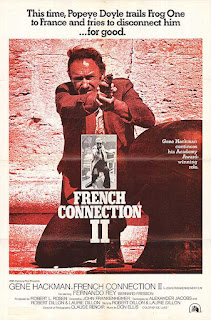
French Connection II (1975)

French Connection II (1975)

Change of setting isn’t really enough to justify the existence of this half-hearted sequel

Director: John Frankenheimer

Cast: Gene Hackman (Detective Jimmy “Popeye” Doyle), Fernando Rey (Alain Charnier), Bernard Fresson (Inspector Henri Barthélémy), Philippe Léotard (Jacques), Ed Lauter (General Brian), Charles Millot (Miletto), Jean-Pierre Castali (Raoul Diron), Cathleen Nesbitt (Old Lady)

Did The French Connection really need a sequel? Friedkin’s original was a self-contained gem, based on a true story, that even ends with a series of “what happened next” captions. But there was enough of a foot in the door for a completely fictionalised resolution to fates left hanging. French Connection II has some similarities with the original, but it’s also a slight film caught even more obviously than the first between documentary realism and trigger-happy actioner.

The whole film feels like it has been assembled in a rush. The plot is incredibly slight. “Popeye” Doyle (Gene Hackman) arrives in Marseilles to help the police track drug kingpin Alain Charnier (Fernando Rey). Doyle doesn’t speak a word of French and charges around pissing everyone off and generally making a nuisance of himself. He’s grabbed off the streets by Charnier’s men. To get him to talk they spend weeks force-feeding him heroin until he’s hooked then cut off his supply. They then return him to the Marseilles police who lock him in a cell and help him go cold turkey. When he comes out if Popeye wasn’t mad before, he certainly is now.

That (long) sequence of heroin addiction and painful cold turkey is one of two things that really makes Frankenheimer’s sequel stand out. I think it must be what attracted Hackman to the film. Not only did the liberal Hackman (troubled by Doyle’s slight neo-fascism in the first film) probably enjoy the idea of seeing this guy hit rock bottom, it’s also an opportunity for an acting tour-de-force. Hackman is probably given more challenging material in this largely forgotten sequel than in his actual Oscar-winning role.

Weaned onto the drugs, Hackman’s body language shifts from defiant resistance to despondent, dope-strewn lethargy until he can’t be bothered to record the passing of days any more in his tally chart. He goes from being cuffed and dragged around, to blankly following his captors and rolling up his sleeve to accept another shot. But that’s nothing compared to the cold turkey scenes.

Locked up in a dingy cell under the police station (the French police worried about taking the blame and also feeling a brotherhood with this fellow cop), Doyle goes through withdrawal mourning – anger, bargaining and eventual grief – in a series of calmly shot, claustrophobic scenes that allows Hackman let rip. And he certainly does, deconstructing this proud man’s self-image until he’s a weeping mess, kicking doors, throwing food around and so full of self-loathing, he can barely face himself in the mirror. It’s hard to watch, and something truly unique – a twisted punishment for a drugs cop and a man who defines himself by his lack of reliance for anyone or anything else.

This long sequence takes up the centre of the film – and includes an equally difficult scene to watch, as Frankenheimer stages in (a single take) forensic detail the French police’s pumping of Doyle’s stomach to get a final (deadly) overdose out of his system. It’s quite unlike anything else I’ve seen before in a cops and robbers shoot-em-up (which is what most of the rest of the film, at heart, is) and you can guarantee it’s the one thing people will remember.

The other element that stands out is Frankenheimer’s – a long time Francophile – ability to shoot Marseilles not as a tourist destination, but a strikingly real urban environment. On top of this anti-picture-postcard environment, he stresses Doyle’s isolation. None of the French dialogue in the film is translated, leaving us as stranded as Doyle is in trying to understand what is going on and what people are saying. Doyle clumsily pantomimes for everything he wants, be that information from a suspect (he tries his toe-picking line to no effect what-so-ever) to a drink in a bar (a long exchange until he finally reaches an understanding with the barman on “whiskey”). Doyle, of course, has made no effort to learn any French and blunders about in a city he doesn’t understand, ruining operations and getting himself and others in trouble.

Aside from these moments though – and despite the film being well shot by Frankenheimer, with a nice continuation of the original’s drained out neo-realism – this is otherwise a conventional and unimaginative film that ticks a number of expected boxes. It has an action set-piece at a dry dock that feels unreal (and also copies the central idea of the car smuggling operation from the first film) and concludes in a chase and shoot-out that’s almost a copy of the original’s ending – with an ending even more sudden. For all Frankenheimer’s love of France, the film still has a suspicion for Europeans – be they smooth criminals or obstructive cops.

French Connection II tries a couple of different things, but never really makes a case for itself as a truly stand-alone film. It’s main rivalry between the hero and villain is dependent on having seen the first film and its slender plot veers into the sort of shoot-outs and set-pieces that don’t feel remotely like they are occurring in a ‘real’ world. It deserves credit for the bravery and honesty of its cold turkey sequence, but it’s a sequence caught in a film that otherwise offers little that’s truly unique.

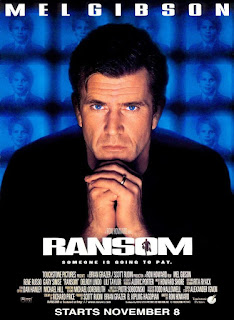
Ransom (1996)

Ransom (1996)

Every parent’s nightmare gets tackled in this efficient, smart (but not quite smart enough) thriller from Ron Howard

Director: Ron Howard

Cast: Mel Gibson (Tom Mullen), Rene Russo (Kate Mullen), Gary Sinise (Detective Jimmy Shaker), Delroy Lindo (FBI Special Agent Lonnie Hawkins), Lili Taylor (Maris Conner), Liev Schreiber (Clark Barnes), Donnie Wahlberg (‘Cubby’ Barnes), Evan Handler (Miles Roberts), Brawley Nolte (Sean Mullen), Paul Guilfoyle (FBI Director Stan Wallace), Dan Hedaya (Jackie Brown)

There is no greater fear for any parent than losing a child. Doesn’t matter if you are prince or pauper, the same heart-pounding dread is there. But sometimes the risks are greater if you a prince. Because the more money you have, the more likely a kidnapper might think you’d be willing to swop that money to get your kid back.

It’s what kidnappers decide when they take the son of Airline owner Tom Mullen (Mel Gibson). The kidnappers want $2million and no questions asked, in return for his son Sean (Brawley Nolte). Tom and his wife Kate Mullen (Rene Russo) are willing to pay – with the advice of FBI Agent Lonnie Hawkins (Delroy Lindo). But after the first bungled handover, Tom becomes convinced the kidnappers have no intention of returning his son alive. So, he takes a desperate gamble to try and turn the tables, much to the fury of secretive kidnapper (and police detective) Jimmy Shaker (Gary Sinise).

Ransom is a change of pace for Ron Howard, his first flat-out thriller. And it’s a very good one. Ransom has a compulsive energy to it, powered by sharp filming and cutting and some impressively emotional performances from the leads. It also takes a number of unexpected narrative twists and turns – before it reverts to a more conventional final act – and manages to keep the viewer on their toes.

Its main strength is an emotionally committed performance from Mel Gibson. Taking a leaf from Spencer Tracy’s book, this is Gibson at his best, very effectively letting us see him listen and consider everything that happens around him. Mullen is a determined man who plays the odds, and cuts corners only when he must – but is also convinced of his own certainty. He applies his own business learning – of negotiation and corporate deal-making – to this kidnapping, which is an intriguingly unique approach. Gibson’s performance is also raw, unnerved and vulnerable and he plays some scenes with a searing grief you won’t often see in a mainstream movie. Russo does some equally fine work – determined, scared, desperate – and their chemistry is superb.

Howard coaches, as he so often does, wonderful performances from his leads and from the rest of the cast. Gary Sinise turns what could have been a lip-smacking villain into someone chippy, over-confident and struggling with his own insecurities and genuine feelings for his girlfriend (a doe-eyed Lili Taylor, roped into kidnapping). Delroy Lindo is very good as the professional kidnap resolver and there are a host of interesting and engaging performances from Schreiber, Wahlberg, Handler and Hedaya. Ransom turns into a showpiece for some engagingly inventive performances.

Howard also triumphs with his control of the film’s set-pieces. The kidnapping sequence is highly unsettling in its slow build of the parent’s dread. The first attempted exchange is a masterclass in quick-quick-slow tension, with Gibson and Sinise very effective in a series of cryptic phone calls. The ransom phone calls are similarly feasts of good acting and careful cross-cutting, which throb like fight scenes. Howard understands that this is a head-to-head between two men struggling in a game of deadly one-up-manship, both of them constantly trying to figure out not only their next move, but the likely reaction of their opponent.

For much of the first two thirds of the film, Ransom is very effective in its unpredictability. There is a genuine sense of dread for how this might play out and the radical changes of plan both sides of the kidnap play out land events in a very different place than you might expect at the start. The more hero and villain try to out-think each other, the murkier the plot becomes.

It’s unfortunate that the final third devolves into a more traditional goody/baddy standoff with guns, punches and our hero reasserting his control (and the safety of his family) through the fist and the trigger. But then I guess in the 90s you couldn’t have a Gibson film without a bit of action. But when the film focuses on the thinking, talking, slow-burn tension and the sheer terror of parents who have lost a child, it’s a very effective and tense film that stands up to repeat viewings.

Séance on a Wet Afternoon (1964)

Kim Stanley and Richard Attenborough are superb in unsettling drama Seance on a Wet Afternoon

Director: Bryan Forbes

Cast: Kim Stanley (Myra Savage), Richard Attenborough (Billy Savage), Nanette Newman (Mrs Clayton), Mark Eden (Charles Clayton), Patrick Magee (Superintendent Walsh), Gerald Sim (Sergeant Beedle), Judith Donner (Amanda Clayton), Ronald Hines (Constable)

Myra (Kim Stanley) and Billy (Richard Attenborough) Savage are a middle-aged couple held together by shared grief for a lost child. Myra works as a medium with the spirit of their son, Arthur, as a spirit guide. But grief has had a damaging impact on them both – and Myra believes her work can bring some life back to their lost son. Keen to gain more recognition – and therefore for their son – she urges Billy to kidnap the daughter of a rich couple, so that she can “discover” the child through her spirit guide. However, events soon spiral increasingly out of control.

Bryan Forbes writes and directs (and produces, with Attenborough) this unsettling and often tense film, which shares DNA with ghost stories (but contains no terrors) and psychological dramas. It’s also a superbly acted chamber-piece, an acute psychological study of two deeply traumatised individuals who have responded very differently to personal tragedy and found themselves locked into cycles of behaviour that are becoming increasingly destructive.

Forbes shoots the film with a fly-on-the-wall intensity, giving the exterior scenes a cinéma verité style, concealed cameras capturing unwitting crowds walking blithely through a kidnap drama. There is a kitchen-sink realism here, and elements of psychological hammer horror, with the viewer never quite sure how far this couple will be willing to go. The eerie score by John Barry, mixes in with hauntingly dominant sound designs (especially of dripping water in the film’s opening moments) to create an oppressive, claustrophobic atmosphere that leaves you not in the least surprised that the psyche of its two lead characters have been so badly damaged.

That sense of disturbance fits perfectly with the lack of planning around the couple’s entire operation. Despite sparks of ingenuity (many of them dependent on Billy’s bland forget-ability and bank-managerish blending into the crowd), once the child has been kidnapped, they have no idea of the next step or how (or even, it seems, if they want to) exploit the situation. It becomes increasingly clear that the plan is not a grand design, but a final desperate attempt to find meaning in their own lives and (certainly in Myra’s case) to provide some sort of connection to their lost son.

That lost son hangs over the whole film, his pointedly not-real ghostly presence having contributed hugely to Myra’s mental disintegration – and also having crushed the life out of Billy. Myra has clearly never recovered from the shock and grief – more facts of which are revealed as the film plays out, culminating in a scintillating scene of emotional confrontation between the two – and Billy, in a desperate attempt to comfort his wife, has instead become the chief enabler of her fantasies.

It makes for an elegant two-hander of stirring emotion – and requires two actors at the peak of their game. As Myra, the little-known Kim Stanley is a sensation. A Broadway star (the “female Brando”) but with only one film credit prior to this (and only three more after this), Stanley brings a brilliant method technique but also a freshness and theatricality matching perfectly the film’s theatrical roots and heightened sense of reality. Stanley delivers an immersive performance that walks a fine tight-rope between calculation, delusion and psychological collapse. It’s a show-piece role, but Stanley largely avoids overplaying, instead exploring the deep emotional scars in the character with a sensitivity that makes Myra someone to pity as recoil from.

Opposite her, Attenborough delivers one of his finest performances as the complex, conflicted Billy. Seeming at first just a brow-beaten husband, it becomes clear Billy has in fact taken on a great emotional responsibility for protecting and comforting Myra, a dedication that has (step-by-step) led to him catering to her every misguided demand. It’s a generous, very subtle performance, of a fundamentally good man who performs misdeeds because he believes it is for the greater good, confusing love for his wife with refusing to make her confront reality.

These two excellent performers perform a complex dance where our perception of the power dynamics in the relationship constantly shift. At first Myra appears to hold all the aces, brow-beating the meek Billy and lecturing him on everything from the spirit world to classical music. However, it slowly becomes clear – as does Myra’s lack of grasp of reality – that Billy is the quieter but stronger character, whose dedication and strength has kept the couple going.

Séance on a Wet Afternoon is at its best when exploring the relationship between these two and provides two fine actors magnificent opportunities which their seize with relish. Its pace flags a bit over the two hours – a tighter 90 minute run time would probably have helped it – and while it’s lack of drive in the plot does reflect the confused ambling scheme at its heart, it does mean the film can drift. But this is a fine psychological study, well-made and superbly performed.

Midnight Special (2016)

Michael Shannon is the loyal dad in Midnight Special

Director: Jeff Nichols

Cast: Michael Shannon (Roy Tomlin), Joel Edgerton (Lucas), Kirsten Dunst (Sarah Tomlin), Adam Driver (Paul Sevier), Jaeden Lieberher (Alton), Sam Shepard (Pastor Calvin Meyer), Bill Camp (Doak), Scott Haze (Levi), Paul Sparks (Agent Miller)

At some point around its original release, someone attached the label “Spielberg-esque” to Midnight Special. I suppose this may be due to its father-son central relationship and its rough similarities to Close Encounters. But it’s a label that does the film no favours. JJ Abrahms would create a Spielberg-esque film, but Jeff Nichols? Pull the other one. Instead Jeff Nichols creates a sci-fi film that wilfully avoids explanations and turns its back as often as it can on any sentimentalism. It’s more like James Cameron crossed with existential philosophy. It certainly won’t be offering up easy entertainment.

Roy Tomlin (Michael Shannon) is on the run from the law with his son Alton (Jaeden Lieberher), helped only by his friend Lucas (Joel Edgerton). Alton has mysterious powers – glowing eyes, elements of telekinesis and the ability to intercept electrical signals – that have made him a target for everyone from the government to a cult that has kept him under lock and key for years, believing he holds the key to surviving the inevitable apocalypse. Alton has an aversion to sunlight which means our heroes can only travel at night, heading towards a secret location, trying to stay one step ahead of the dangerous figures following them.

Nichols film is almost too elliptical for its own good. But then I think this is partly Nicholls point. He’s looking to subvert a few expectations here. To create a sci-fi, other-world chase movie that’s wrapped itself up in enigmas. Sadly, I think to have enigmas like this become truly engaging, you need to form a connection with the film itself – and Midnight Special fails too much here.

It keeps its cards extremely close to its chest – it only begins to dive into any sort of explanation about what’s going on over halfway into the film, and even then this is kept vague and undefined. There is virtually no exploration given of most of the characters of their backstory, bar a few key points. It’s a chase movie which frequently slows down to a crawl. It’s a science fiction film that’s largely confined to the ‘real’ world. It’s a father-and-son on the run film, which separates these two characters for a large chunk of its runtime. All this makes it very difficult to form an emotional attachment with, in the way you do with, say, Close Encounters or The Terminator (both of which leave traces in this film’s DNA).

Not that I think Nicholls will mind, as this is an attempt to do something different, more of an existential musing on humanity. Its unfortunate that this was exploration of personal regrets and tragedies against a backdrop of earth-shattering sci-fi revelations was done more absorbingly in Arrivalamong others. Compared to that, Nicholls film seems almost a little too pleased with its deep (and in the end slightly empty) mysteries and its opaque characters, many of them defined more by actions and plot functions rather than personality traits.

There’s strong work from Shannon as a father desperate to do the right thing and Lieberher as young boy who becomes calmer and more in control as the film progresses. But we never quite learn enough – or understand enough – about either of them to really invest in their fates.

And without that investment, its hard to worry in the same way about what might happen to them – or to really care about the revelations they are seeking to discover by the films conclusion. The film could counterbalance this if the ideas behind it were fascinating enough. But I am not sure they are. It touches upon questions of faith, parental love, destiny and human nature – but it studies them like they were under a microscope. Ideas are there to be excavated from it, but that doesn’t always make for great story-telling. Take the cult: there are fascinating ideas about the honesty (and pervasions) of faith, contrasting this perhaps with the overwhelming faith the father has in his son’s fate. The film introduces this – and then doesn’t really give it any depth.

It’s a problem all across the film. It’s partly a meditation on human progress and enlightenment – but the film never makes a compelling case or intellectual argument about it. Again there’s some great opportunities here, not least with Adam Driver’s fine performance as a sceptic turning believer – but it even that plotline eventually gets reduced to simply allowing someone to move from A to B for plot purposes. The film – for all the skill it’s made with and the obvious talent of Nicholls – is cold and distant.

And a cold and distant film is eventually going to get that reaction from a lot of its audience. Those who can see its merits, but never engage with it – or care about it – enough to really seek it out.