Category: Kitchen sink drama

Room at the Top (1959)

Room at the Top (1959)

An ambitious man chooses between a damaging love affair and career in this fabulous kitchen-sink drama

Director: Jack Clayton

Cast: Laurence Harvey (Joe Lampton), Simone Signoret (Alice Aisgill), Heather Sears (Susan Brown), Donald Wolfit (Mr Brown), Donald Houston (Charlie Soames), Hermione Baddeley (Elspeth), Ambrosine Phillpotts (Mrs Brown), Allan Cuthbertson (George Aisgill), Raymond Huntley (Mr Hoylake), John Westbrook (Jack Wales), Richard Pasco (Teddy)

If there is one thing that preoccupied British cinema of the late 50s and early 60s it was class. How was a working class boy from the wrong end of the tracks supposed to pull himself up and make himself some room at the top? That’s certainly one of the many themes that you find in Jack Clayton’s sensational hit, nominated for a string of Oscars, but it’s also as much about how the search for that mystical nirvana that sees you invited for tea and crumpets at the conservative club, also means sacrificing huge shards of your own soul.

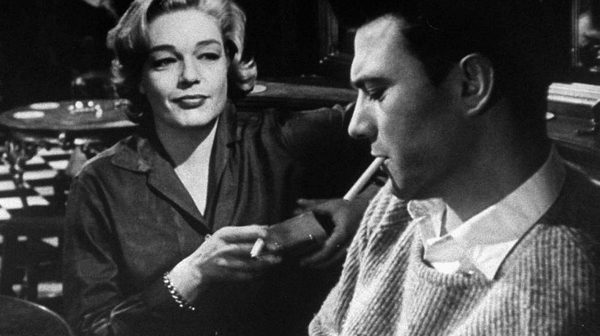
Joe Lampton (Laurence Harvey) arrives in the a Yorkshire town to take on a dreary, poorly-paid post in the Treasurer department of the local council – but has the bonus of being office work that gives him a chance at working his way up to the top. To that end he sets his ambitious cap at Susan Brown (Heather Sears), daughter of major local business magnate Mr Brown (Donald Wolfit). But Joe is also a man of his own passions, which fly in the face of his ambition, and he finds himself drawn towards married older French woman Alice Aisgill (Simone Signoret), who he meets at the local amateur drama club and who encourages him to surrender his ambitions and instead lead a life of contentment and happiness with her. Which possible life will Joe choose?

Perhaps the very first of what became the kitchen-sink genre, Room at the Top is beautifully filmed by Jack Clayton (as you would expect), but also brings the other major strength of this overlooked director to the fore, his ability with actors and to wring all-encompassing tragedy from the most everyday of circumstances. That’s what he does here, creating an almost epic scale of internal struggle for its hero, prickly as he is, drawn between two deeply conflicting goals, that asks what profits a man who gains the world at the cost of his soul?

Because, Room at the Top is that uniquely British film, that shows ambition and desire to better yourself often comes hand-in-hand with the sort of ruthless disregard of your roots, backgrounds and those around you in order to find your own path. Joe Lampton is a former POW, chippy, insecure, bitter, angry and determined to gain the sort of life he deserves. Of course it’s not hard to agree that he is more deserving than some of the tweedy, chinless fools around him and the sneers and condescension he receives from the officer class (his rival for Susan’s affections delights in calling him Sergeant, and reminding him constantly of his superior war record) is more than enough to motivate Joe.

What’s really striking about Joe therefore as how weak the character is. In undoubtedly the finest performance of his career, Laurence Harvey (a difficult and unreadable actor, with a style bridged between minimalism and woodenness) bravely shows both the bullish determination and the fundamental insecurity and weakness of Joe. A character who defines himself solely around what he feels he can achieve, he’s also a man completely unaware of what happiness is and how he to get it – and the thawing of her personality into something warmer and more loving with Alice, only serves to highlight how misguided and weakly he suppresses and kills such feelings in order to seize opportunities in life he feels entitled to.

It’s a rich contrast to Alice herself, a woman who is far braver and more certain about what she wants, and willing to fly against the conventions expected of her if it means she can gain happiness. The novel was adapted to turn Alice into a French ex-pat (married to a brutally cold RAF type played with an imperious selfishness by Allan Cuthbertson) solely so Signoret could be cast in the role – and it’s a match made in heaven. Simply wonderful, Signoret brings the part not only an imperious sexuality, but also a deep and lasting vulnerability under the surface of Euro-chill, a woman who we see opening herself up to the possibility of an affair becoming something truly lasting and deep, who has the courage to understand who and what she wants in a way Joe never can. 

The tragedy is in that inability of Joe to understand his yearnings. Clayton’s brilliantly subtle film demonstrates time and time again, contrasting its romantic freedom laced with passion when Joe and Alice are together with the stilfed, contained suppression and chill that the more buttoned up, angered Joe meets elsewhere. If Joe had the will and strength he would top fighting for the things he should want in order to seize the opportunities he actually wants. His tragedy is that he can’t – and can’t begin to understand himself, or acknowledge his desires, until it is too late.

This was all a deep shock – and carried real power – at the time when Britain was shifting out of post-war hierarchies into the freer 60s, and Room at the Top was a massive hit at the box office. But it made such impact because its attitudes feel so deep and real, and the simple, everyday tragedy it details of two relationships doomed for different reasons, bound together by the self-defeating ambition of its lead character. Because wherever he goes, Joe will have people like Mr Brown (Donald Wolfit is very good by the way, in a role far outside his usual style) constantly reminding him of his oik status, so any victory in inbuilt with failure. Joe’s ambition and intelligence serve largely to blind and deflect him from the things he really wants. A lesson for us all.

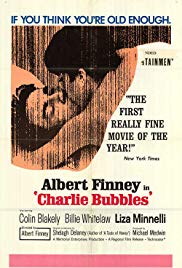
Charlie Bubbles (1968)

Albert Finney and Liza Minnelli deal with ennui in Charlie Bubbles

Director: Albert Finney

Cast: Albert Finney (Charlie Bubbles), Colin Blakely (Smokey Pickles), Billie Whitelaw (Lottie Bubbles), Liza Minnelli (Eliza), Timothy Garland (Jack Bubbles), Richard Pearson (Accountant), Nicholas Phipps (Agent), Peter Sallis (Solicitor), Alan Lake (Airmen), Yootha Joyce (Woman in Café), Wendy Padbury (Woman in Café), Susan Engel (Nanny)

In the late 1960s Albert Finney was possibly the biggest star in British cinema. It was a status that the private and reserved Finney found challenging – and fed heavily into his only directorial effort, Charlie Bubbles, an amiable and whimsical journey through the alienation that afflicts a successful northern writer, bored by the world of success in London but no longer at home in his working class roots. It’s a story that spoke to both Albert Finney and the film’s scriptwriter Shelagh Delaney.

Because writing is really just a hobby, not a viable career path as Charlie Bubbles (Albert Finney) is constantly reminded when he returns to his home in Manchester (“Are you still working sir, or do you just do the writing now?” queries an old friend of his father). Charlie is hugely successful but also hugely bored, wrapped in ennui and barely able to engage in his surroundings be that his wealth, his London settings, working class clubs he visits with fellow writer Smokey (Colin Blakely), the attentions of his enthusiastic secretary Eliza (Liza Minnelli) and his responsibilities to his ex-wife Lottie (Billie Whitelaw) and son Jack (Timothy Garland). (The poster by the way gives a hilariously incorrect idea of the plot as some sort of lothario drama).

The film largely doesn’t really have a plot as such, just follows the drifting lack of engagement Charlie feels for everything around him. It’s largely a showcase for some nifty heartfelt writing and some intriguingly imaginative direction from Finney. It’s actually a bit of a shame watching this that Finney didn’t direct another film, as he not only works well with actors but has an original eye for visuals. One scene is shot entirely through a bank of security cameras, others take interesting angles on everything from lunchtime meetings (with many too-camera addresses) to love scenes (shot with an efficient boredom that hammers home how little Bubbles seem engaged with it). 

It’s also a lovely little showcase for Shelagh Delaney, whose script is crammed with juicy little lines and playful moments, as Charlie struggles from event to event. It’s a very bitty and drifting storyline, that deliberately heads towards no particular destination. In that it reflects the aimlessness of Charlie’s own life. There is nothing particularly wrong with this, as the various sketches of which it is made up work rather well, particularly as they often engagingly switch from style and tone. There are a few other films I can think of that open with a ludicrous food fight between two friends, two guys pretending to be mannequins in a department store, a depressed man shooting pop guns at a video surveillance image, a Manchester United football game, an ex-wife catching chickens and finally the hero drifting away in a balloon.

How you go with this sort of thing really depends how much you engage with the action on offer or the whimsical style of the entire shaggy dog story. It also rather depends on how much sympathy you feel for someone burdened with immense wealth and fame from overwhelming artistic and critical success. The film gives some taste of this – staying with his ex-wife she is pestered by no less than three reporters arriving unannounced eager to hear the words of the boy wonder – but it’s pretty hard for us plebs to understand. Which I guess is the film’s point.

After all every time Charlie heads anywhere around his own working class roots in Manchester, he is met with either a snide insinuation that he has lost touch with his roots or a confused lack of understanding about the London lifestyle he has left behind. Charlie himself feels like he has no empathy for the wealth of London, but struggles to feel at home anymore in a world he has left behind. Interestingly he seems most comfortable in his ex-wife’s country cottage in the middle of nowhere.

Perhaps it’s hard to really understand the feelings you could have about the burdens of success without going through this sort of thing yourself. Finney certainly had – though it’s interesting that he the actor and he the director seem to be on a different page. While the film tries to have an engaging lightness about it, Finney’s own performance is weighted down and overly somber, so low-key as to be almost pushing against the tone of the film. Perhaps it’s a role Finney needed to take in order to get the film made – or perhaps he directed the film because no one else would – but even Finney himself was critical afterwards of his performance as being too heavy for the film.

It does mean however that the lightness and perfect touch of the rest of the actors are needed to balance him out. Liza Minnelli (in nearly her film debut) is superb as an effervescent young woman, delighted with things around her, warm and eager to engage with people around her. Billie Whitelaw is also great (and BAFTA winning) as Charlie’s ex-wife who he continues to share a vast amount of romantic and sexual chemistry with, for all she has no patience for his ennui and the intrusions his fame brings to her life.

The film drifts engagingly along, before finally departing with its star in a hot balloon into the sky. It’s the sort of whimsical fantasy that also feels like a commentary from those wrapped up in the surprising boom of kitchen sink drama British films, that brought fame and wealth to those involved, but also pulled them away from feeling comfortable and happy in their own roots. It’s perhaps hard to understand without having gone through an experience like that, but it works here because most of the rest of the film has an imaginative charm to it.

Wild Rose (2019)

Jessie Buckley sings up a storm in kitchen sink drama disguised as uplifting fable Wild Rose

Director: Tom Harper

Cast: Jessie Buckley (Rose-Lynn Harlan), Julie Walters (Marion Harlan), Sophie Okonedo (Susannah), Jamie Sives (Sam), Craig Parkinson (Bar singer), James Harkness (Elliot), Janey Goodley (Barmaid)

How do we find a balance between our dreams and the cold realities of our responsibilities? What do you do when your dream, what feels like the one thing you’ve been put on earth to do, never seems to come any nearer? And at what point does fixating on these dreams stop being naively exciting and start becoming selfish, as you ignore your children and others depending on you?

Rose-Lynn (Jessie Buckley) is released from prison back into her home in Glasgow. An immature screw-up, with a total lack of application but blessed with a blunt charm, Rose-Lynn has made a disaster of everything she has touched and has an almost non-existent relationship with her two young children who have effectively been raised by their grandmother Marion (Julie Walters). Rose-Lynn lands a job as a domestic cleaner thanks to a family friend, but her dream remains to go to Nashville and become a country singer. Her singing on the job is overheard by her wealthy employer Susannah (Sophie Okonedo) who decides to support her dream – but the temptation of her dream starts to sabotage her commitment to the relationship she is starting to build with her children.

Wild Rose on the surface (and in the marketing material) looks like an uplifting film about a young woman chasing her dream in the face of overwhelming odds. But it’s actually more like a 60s kitchen sink drama, spliced with country music. Rose-Lynn is a working-class single mother who had her two kids before the age of 18, who dreams of a better life but refuses to engage with her responsibilities in the real world. She basically is a dumb teenager who has never grown up, and has never given up on her fantasy of becoming a star. Like a sulky teenager, she rejects anything that feels like too much hard work – from learning a musical instrument to writing her own songs – and seems to believe just rocking up in Nashville with no plan and no contacts will magically land her a music career.

In actuality, Rose-Lynn is a rather selfish dreamer, with a self-destructive streak powered by laziness and a chippy resentment that cause her to frequently do her best to wreck opportunities. Pushing to get her security tag removed, she still heads out drinking until the last possible minutes of her curfew. Getting an opportunity to visit the BBC Radio studios, she prepares by getting drunk on the train. She miraculously escapes being fired the first day on her cleaning job, despite drinking from her employer’s drinks cabinet and dancing around her house not working the instant she is left alone. On top of which, she persistently lies or tells half-truths to everyone around her, and continually fails to deliver on commitments.

Your reaction to the film will be totally governed by your reaction to this character. So just as well she is played with such radiance and joie-de-vive by Jessie Buckley. A bombshell of a talent, Buckley manages to keep this character just the right side of charming. Her failures come not from cruelty or even conscious selfishness, but from a lack of maturity and just plain not growing up. She’s not ready to be a mother and not ready to deal with responsibility. But she’s still charming, she’s enthusiastic, she loves life and she wins friends easily. It just makes it all the more frustrating that she is such a screw-up.

You can see why her mother (a marvellous performance of caring but long-suffering frustration by Julie Walters) still loves her, even while she is beyond disappointed about the mess Rose-Lynn seems determined to make of her life. Her two children – adorable little moppets – are frequently shunted to one side, and the film walks a fine line between Rose-Lynn’s obvious love for them and also her (unspoken) resentment that their very existence acts as an anchor on her following her dream (the dream she is manifestly unprepared for).

Into all this turmoil steps Sophie Okonedo as her middle-class wannabe bohemian employer Susannah. This is surely the oddest character seen in films for a while, a sort of middle-class saviour who offers a world of opportunity to Rose-Lynn (who has withheld the truth about everything from her background to her family). Rather than doing what a real person would do and fire Rose-Lynn on her first day, Susannah not only encourages her singing but milks her upper-middle-class uni contacts to land an Rose-Lynn an interview with BBC Radio 2 legend Bob Harris (making a bizarre cameo as himself) and then goes further by offering to throw a fundraiser for Rose-Lynn to go to Nashville. Why does she do all this? Who knows, it’s all required for the plot in order to artificially bring to head the clashes in Rose-Lynn’s life between her dream and her family.

But then that’s the nature of the film, which hinges on narrative contrivances and clichés delivered with a solid level of commitment from the cast. In truth, this clash between what we should do and what we want to do is something we’ve seen many times before. The film seems determined to have its cake and eat it by reaching a conclusion that both these things are equally important and that (I guess) we need to find a balance between them. It makes for a slightly odd ending, or series of endings – just when we think it’s going to wrap up, another scene follows giving us another coda.

But then I guess it’s not clean, just as life isn’t. The real focus anyway is less Rose-Lynn’s dream and more about whether she can grow up enough to look after her children and stop being such a screw-up. In that sense it’s a hopeful film – as you would expect of course – but it feels like the film should pick a side, not least in saying that sometimes your dreams of being a professional footballer, or actor, or singer might be something you need to put aside at some point when it’s clear they are never going to happen. But then who really wants to think that?

This Sporting Life (1963)

Rachel Roberts and Richard Harris excel in brutal kitchen-sink drama This Sporting Life

Director: Lindsay Anderson

Cast: Richard Harris (Frank Machin), Rachel Roberts (Margaret Hammond), Alan Badel (Weaver), William Hartnell (“Dad” Johnson), Colin Blakely (Maurice Braithwaite), Arthur Lowe (Slomer), Vanda Godsell (Mrs Weaver), Jack Watson (Lennox), Harry Markham (Wade), George Sewell (Jeff), Leonard Rossiter (Phillips), Anne Cunningham (Judith)

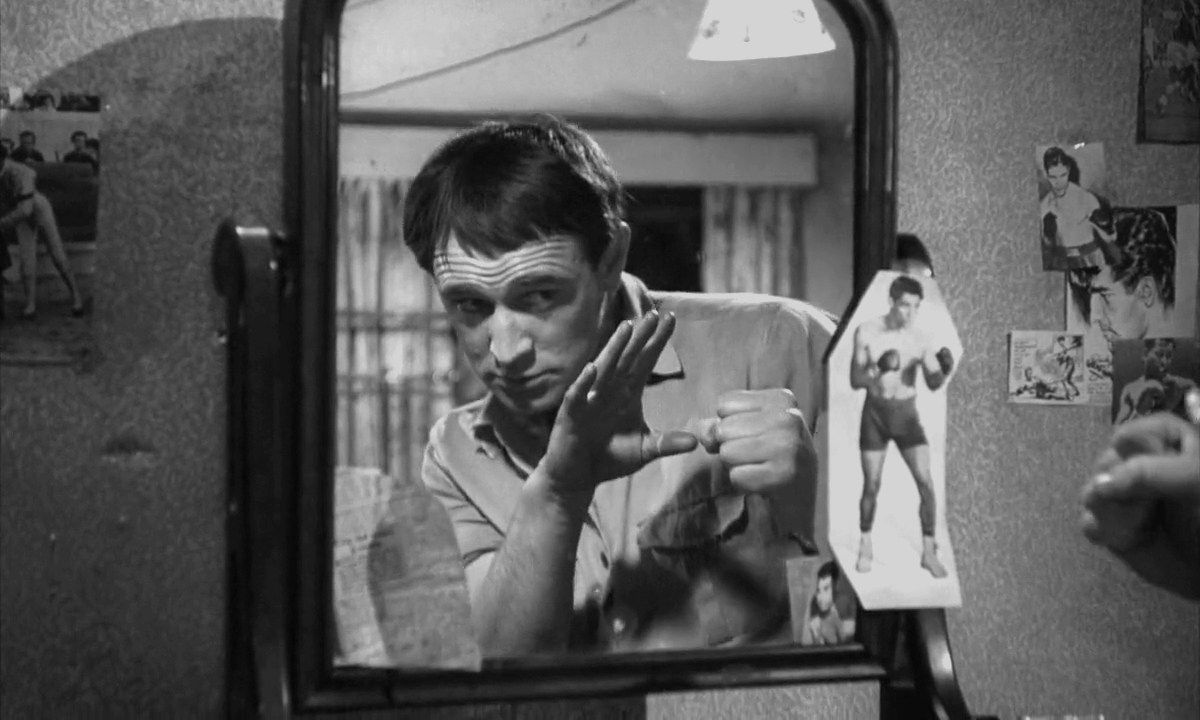
The British New Wave of the early 1960s embraced working-class stories. They centred on chippy, confident, crowd-pleasing working-class young men (it was always men) from regional towns, doing blue collar work, thumbing their nose at the establishment and fighting to find their own way. This Sporting Life takes a similar route – but its central character, Frank Machin, is a furious, resentful and selfish man, who seems hellbent on destroying everything he touches. Unlike Arthur Seaton or Billy Fisher, he’s hard to like – and the film hits as hard as scrum of rugby players. 

Frank Machin (Richard Harris) is a miner turned professional rugby player – not that he has any love for the game (“I only enjoy it if I get paid for it!” he contemptuously states). Machin is an articulate brute of a man, a pugilistic whirligig of resentments, barely expressed or understood desires, and a deep-rooted and chronic insecurity that cries out for love while pushing it away. He’s in love with his landlady, widowed mother of two young children Margaret Hammond (Rachael Roberts). They begin an affair of sorts – but it can barely survive her trauma and Machlin’s self-destructive rage.

Lindsay Anderson’s films are notable for their anger and bitter satire, so it’s no surprise he directed the least crowd-pleasing, angriest angry-young-man film of all – or that This Sporting Life killed the genre. The film is a series of hits, aimed far and wide, from the deference of the players to the owners who treat the clubs like playthings (the “amateur fair play” British attitudes to sport from the patronising owners gets a kicking), to the hypocritical judgemental attitudes of the working class. Even its romantic story features two characters so unable to engage with or understand their feelings that they only really seem able to communicate fully when raging at each other. 

Anderson’s new-wave, kitchen sink aesthetic creates a film that feels like a series of battles. From Machlin moving in local clubs to visiting the home of creepy closeted club owner Weaver (a smooth and unsettlingly cruel Alan Badel), whether rebuffing the advances of Weaver’s wife or at a Christmas party, he always seems ready for violence. The rugby matches are filmed like mud covered fights, with players piling into each other like sledgehammers. Even the “romantic” (and I use that word advisedly) scenes between Roberts and Harris feel like conflicts (they frequently tip into nerve-shreddingly raw emotional outbursts). 

Anderson’s film takes everything you expect from the Saturday Night and Sunday Morning expectations and amps up the danger, anger and tension. Machlin barrels through scenes, conversations and relationships in the same way he charges through the rugby pitch. The whole film is a sharp warning of the danger of unrestrained masculinity, pushing all softer emotions to one side. Machlin wants so desperately to be a man that everything must be a battle, at all times displaying his most manly qualities. The tragedy is that you can tell there is a far more sensitive and intriguing personality below the surface.

All this comes together in Richard Harris’ searing performance in the lead role. His career break – he won the Best Actor award at Cannes and was nominated for an Oscar – Harris was possibly never better. He’s a brooding force of nature in this film, utterly convincing as a man who bottles up his feelings until it is way too late. He hits out at everything, but you feel he is really running scared from the vulnerability in his own personality. With children, Machlin is tender and gentle, but with adults he is unable to express his feelings. His emotions for Margaret are based around suggestions of a need for a mother figure, sexual desire – and a desire for an answer to the emptiness he feels in himself. Harris is like an Irish Brando here, a marvellous, emotional, dangerous, brutal figure.

Rachel Roberts (also Oscar-nominated) is just as good, giving another extraordinary performance (to match the similarish role she played in Saturday Night and Sunday Morning) as Margaret. Grieving her husband, terrified of commitment, aware of her own position, as incapable in her own way of expressing her emotions and feelings as Machlin is, Margaret is as much a damaged and combative character. Roberts’ performance suggests years of disappointment and struggle behind the eyes, and she has a rawness and humane anguish in her scenes with Harris that sear the eyeballs. The scenes between these two are difficult to watch but engrossing.

The film is stuffed with excellent performances. William Hartnell is heartbreakingly tragic as the closeted talent scout who spots Machlin, only to be dropped by the new star. Colin Blakely is excellent as Machlin’s more grounded and engaging teammate. Vanda Godsell is the face of female corruption as Weaver’s sexually possessive wife. Arthur Lowe (who went on to work with Anderson several times) is very good as a stuffy but shrewd board member. All of this is beautifully filmed in black and white, with an urgency mixed with flashes of impressionistic grimness.

Anderson’s film, though, is primarily a working-class tragedy, about a man unable (until far too late) to really understand what he wants. Why is this? Because of failings in himself, but also failings in his upbringing, where qualities of self-understanding and expression are not encouraged, where pressure is placed on men to be men, where class and stuffy attitudes look to stamp out any real sense of self-knowledge. It’s an angry young man film that is truly, really angry. No wonder it flopped at the box office. But no wonder it lasts in many ways better than other films from this genre. It feels like a film that wants to say something, that has an urgent message. And it has at two extraordinary performances.

Alfie (1966)


Michael Caine excels as amoral cockney moralist lothario Alfie

Director: Lewis Gilbert

Cast: Michael Caine (Alfie), Shelley Winters (Ruby), Millicent Martin (Siddie), Julia Foster (Gilda), Jane Asher (Annie), Shirley Anne Field (Carla), Vivien Merchant (Lily), Eleanor Bron (Doctor), Denholm Elliott (Abortionist), Alfie Bass (Harry), Murray Melvin (Nat)

Is there a more “swinging Sixties” film than Alfie – the story of a cockney wideboy interested only in “birds” and having a good time? On the surface it captures the attitude of the 1960s, with free love, thumbing your nose at authority, and having the sort of fun the wartime generation frowned on. But it’s a more interesting film than this, which criticises the emptiness of the 1960s by showing us Alfie’s selfishness and loneliness. Sure he has a good time now and again – but would anyone really want to live like this forever?

Alfie (Michael Caine) is a handsome chauffeur with a never-ending stream of affairs, commitment constantly avoided. The film follows these entanglements, starting with his needy girlfriend Gilda (Julia Foster), the mother of his child, whom he constantly cheats on. When Gilda finally leaves him – and Alfie loses touch with the son he has become fond of – a medical condition ends up with him in a convalescent home, where his affairs include the wife of a fellow patient, Lily (Vivien Merchant). Later relationships with a young hitchhiker (Jane Asher) and a rich American woman (Shelley Winters) similarly lead to disappointment.

The main thing that makes Alfie last (possibly the only thing) is Michael Caine’s sublime performance. Caine is on screen the whole time, and the film is spotted throughout with his casual direct-to-camera addresses. Caine’s charm and likeability work perfectly for this device, winning the audience over. But Caine never falls for Alfie – even if many audience members clearly did. Caine’s constantly demonstrates Alfie’s hypocrisy, shallowness, meanness and selfishness. Sure he recounts his actions with wit, but most of these actions are extremely shitty. But right from the start there is a charismatic, lothario swagger to him – and a cheeky charm – that makes you like him.

But his general shittiness is more obvious today than back in the 1960s. Then the amount of sex probably shocked viewers the most. Today it’s Alfie’s inability in to refer to women as anything but “it”, like some smooth Richard Keys. His attitude to women is appalling – he describes Jane Asher’s hitchhiker like some sort of floor-cleaning, bed-sharing car. Alfie avoids any sort of emotional connection at all with his conquests, and the film makes clear that this has left him empty and lonely, feelings he buries deep down.

In fact, the film is most telling at the moments when Alfie doesn’t turn to us with that confident grin and place a self-serving spin on what just happened. Seeing his son being warmly embraced by Gilda’s new husband (at the christening of their new child), Alfie can only skulk quietly at the back of the church – as scared to meet our eyes as he is those of this family he could have had. His love for his son is something Alfie refuses to accept himself – but his feelings are all too clear at his physical collapse on losing access to his child, and his later tear-stained reaction to Lily’s abortion.

Ah yes the abortion scene. Probably the highlight of the film – if only because its intense seriousness is so different from the rest of the film, and Alfie’s wheedling weakness and whiny self-justification become all the clearer. His complete lack of principle in sleeping with his only friend’s wife (“Well what harm can it do?”) of course results in her pregnancy. And Alfie is all at sea, firstly with Vivien Merchant’s expert portrayal of distress, pain, shame and guilt as Lily – and with Denholm Elliot’s perfect cameo of grimy, resentful disillusionment as a struck-off doctor turned back-street abortionist. Just to bang the nail on the head, Alfie leaves Lily alone after the operation (telling the audience that there’s nothing he can do anyway, right?). He may be horrified later at what he has done, and may feel moments of empathy – but has he really learned anything?

The film is full of these moments where we are invited to understand that Alfie is not leading a life for us to aspire to, but one we need to avoid. It’s left Alfie alone, miserable and abandoned. For all the jaunty 1960s vibe, and Alfie’s charming cheek, he’s not a happy man but a desperately shallow one. And he’s even got a shelf life for this way of life: “He’s younger than you are” one of his lovers tells him late in the film, as she leaves him. Because what has Alfie got in his life? When he runs through a checklist in the film’s closing monologue (“a bob or two, some decent clothes, a car. I’ve got my health back and I ain’t attached. But I ain’t got my peace of mind”) the emptiness of his life is all too clear.

Caine’s brilliance is to make this tragic, empty, selfish man seem attractive and exciting – while also never losing sight of what a complete shit he is. It’s a great performance and he dominates the entire film. He plugs perfectly into the hip, light touch that Lewis Gilbert directs the film with, and the entire film has a layer of cool on it that works rather well. What makes the film last today though is its shrewd analysis of the empty, soulless, coldness that underpins living your life like this – and how the sort of shallow, no consequences, no emotional investment bouncing around Alfie has just leaves you alone and growing old.

“What’s it all about?” You can argue the answers are buried in this film – but Alfie never spots them.

A Day in the Death of Joe Egg (1971)

Janet Suzman and Alan Bates balance the pressure of bringing up a paralysed daughter in A Day in the Death of Joe Egg

Director: Peter Medak

Cast: Alan Bates (Bri), Janet Suzman (Shelia), Peter Bowles (Freddie), Shelia Gish (Pam), Joan Hickson (Grace), Elizabeth Robillard (Jo), Murray Melvyn (Doctor), Constance Chapman (Moonrocket lady)

The playwright Peter Nichols’ daughter Abigail was born in 1960, suffering from severe physical and mental disabilities, requiring 24-hour care from her parents. Nichols transformed the experience into a play about two parents who struggle to care for their daughter, and spin out little fantasy conversations with their child, indulging in flights of fancy even while her father wonders if it is even worth carrying on with looking after a child who will never experience any improvement or independent life.

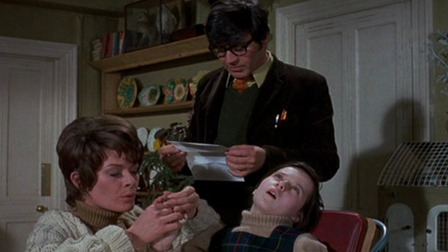
Alan Bates plays the husband Bri, a put-upon teacher at a boys’ school, prone to flights of comic fantasy. Bri feels increasingly frustrated about the unacknowledged strain their handicapped daughter Jo is placing on his marriage to Shelia (Janet Suzman), whose focus is almost exclusively on looking after their daughter. The couple use often surreal black humour to cope with the constant pressure of caring for the child.

The excellent Indicator blu-ray contains a fascinating interview with Peter Nichols, who clearly didn’t care for the film. He found it off-balance, too emotionally overwrought, too realist and essentially too depressing. He’s probably right. The play is a finely balanced mixture of near stand-up comedy and marital grief. Bri’s comic moments are vaudeville fantasy sequences, with funny accents and larger-than-life characters pulled together. This toying with the fourth-wall just can’t be translated in to cinema here, instead the film downplays the dark humour and humanity of the piece, and instead makes it a rather heavy-handed and glum watch.

Bates still has many of the essentially comic funny voices and character-based routines – there are sequences where he acts out the roles of various doctors and priests who have consulted on Jo in the past. But his performance is just a little too eccentric, a little too out-there, a little too twitchy – frankly it makes him hard to engage and empathise with. Maybe it’s the changing times that haven’t helped, but Bri’s constant whining that his sex life has been destroyed just doesn’t sound right.

Of course, Nichols is using this whining to touch upon the damage done by the pressure of constantly caring for a daughter who will never show any signs of improvement and never be capable of communicating with her parents. Nichols knows of what he speaks: he and his wife eventually hospitalised their daughter (and had two other children) – and he believes the parents should have done the same in his play. By making the entire focus of their life a child who is, essentially, an object (twice at opposite ends of the film she is pushed into a room slumped over a wheelchair), it’s clear the couple are causing no end of damage to their emotional lives. Maybe it’s just heavier going as well because the film features a real child – while the play used theatrical invention to represent the child.

The film slightly unbalances itself by moving away from black humour to emotional impact. Maybe part of this is due to Janet Suzman’s astonishingly strong performance as Shelia, a part she invests with great layers of emotion and hope, constantly refusing to give up hope that one day Jo may respond. Suzman has one extremely emotional speech, recounting a moment where Jo pushed over some play blocks, which she delivers with a teary, earnest, simplicity to the camera which is profoundly moving. It probably makes Bates’ performance seem a little more irritating than it actually is, because she is strong.

And that is a problem with the film, because in order for it to work you need to bond with both parents. You need to share and be inspired by Shelia’s hope, while at the same time see that Bri’s more realistic perceptive, and his dark longings to end Jo’s life of suffering, are in many ways just as legitimate. The film is all about this issue of euthanasia – conversations dance around it constantly – and it largely manages not to fall either side of the issue. There are points on both sides – and the real issue is should the parents find some other way to get support and help with caring for their daughter? Instead you don’t quite bond with both parents the way you need too. You feel Bri is a bit too sharp, and that Shelia is a bit too unrealistic in what she believes in.

The second half of the film introduces most of the secondary characters, particular Freddie and Pam (expertly played by Freddie Bowles and Shelia Gish), giving us a fresh perspective on the events. Freddie is bluntly concerned in a jolly way with doing what he can to help and urges the couple to consider hospitalisation. Pam, however, behaves with the awkward embarrassment many of us are ashamed to admit we feel when confronted with the seriously paralysed. We also get to see more of Joan Hickson (the only cast member from the original stage production) as Bri’s brassy and difficult mother, whose attempts to help largely only serve to increase tensions.

It slowly becomes clear though that this is a film about the collapse of a marriage under pressure, even more than about caring for a disabled child. But shorn of much of its humour – the fantasy sequences don’t really work, because they feel a little too heightened and overplayed – the film turns the play into something really quite bleak. It’s frankly a little too depressing and overbearing to really enjoy. It has plenty of good performances, but doesn’t really open up the play and instead turns it into an intense, rather overbearing chamber piece. A film that loses its balance from the stage version, and instead becomes something quite glum, in which Bates’ Bri doesn’t really win our sympathy as you feel he should do. It’s a tougher watch than Nichols intended – surely why he wasn’t really happy with it.

The Loneliness of the Long Distance Runner (1962)

The Loneliness of the Long Distance Runner (1962)

Class struggles makes it harder to win the race in this excellent kitchen-sink drama

Director: Tony Richardson

Cast: Tom Courtenay (Colin Smith), Michael Redgrave (Governor), Avis Bunnage (Mrs Smith), Alec McCowen (Brown), James Bolam (Mike), Joe Robinson (Roach), Dervis Ward (Detective), Topsy Jane (Audrey), Julia Foster (Gladys), James Fox (Gunthorpe), John Thaw (Bosworth)

In the 1960s British film made waves when it started to turn away from upper-class, costume-laden dramas, and accents started to be heard that weren’t cut-glass and RP. Few of these films ran (literally) further from this than The Loneliness of the Long Distance Runner.

After the death of his father, Colin Smith (Tom Courtenay), a working-class young man, is drawn into a life of petty crime. Sent to borstal for his re-education, his skill at long-distance running catches the eye of the Governor (Michael Redgrave). The Governor hopes to use Colin to win the five-mile cross-country run in the joint sports challenge day he has arranged with the local private school. But will Colin play ball, or will he stick to his own principles of never playing “their” game?

The Loneliness of the Long Distance Runner is in many ways a sort of British Rebel Without a Cause, but without the glamour. Instead, Colin is a council house lad, angry at the world (but not quite clear why) and brought low by the theft of £70. The film showcases Colin as a sort of anti-authority hero, a man who just simply doesn’t want those bastards telling him what to do. He’s not violent or dangerous, he’s more sullen, fed-up and laced with anger and contempt at a world that short-changed his father. 

He finds himself in the confines of borstal, an institution all about rules, regulations and changing people to match what society expects of them: everything Colin hates, and spends the film pushing against. Unlike the anti-hero of Alan Sillitoe’s other seminal kitchen sink drama, Saturday Night and Sunday Morning, Colin isn’t out for what he can get – while that film’s lead was more frustrated the system didn’t work enough for him, Colin wants no system at all. He wants freedom to make his own choices and define his own life – and his rebelling is all about that.

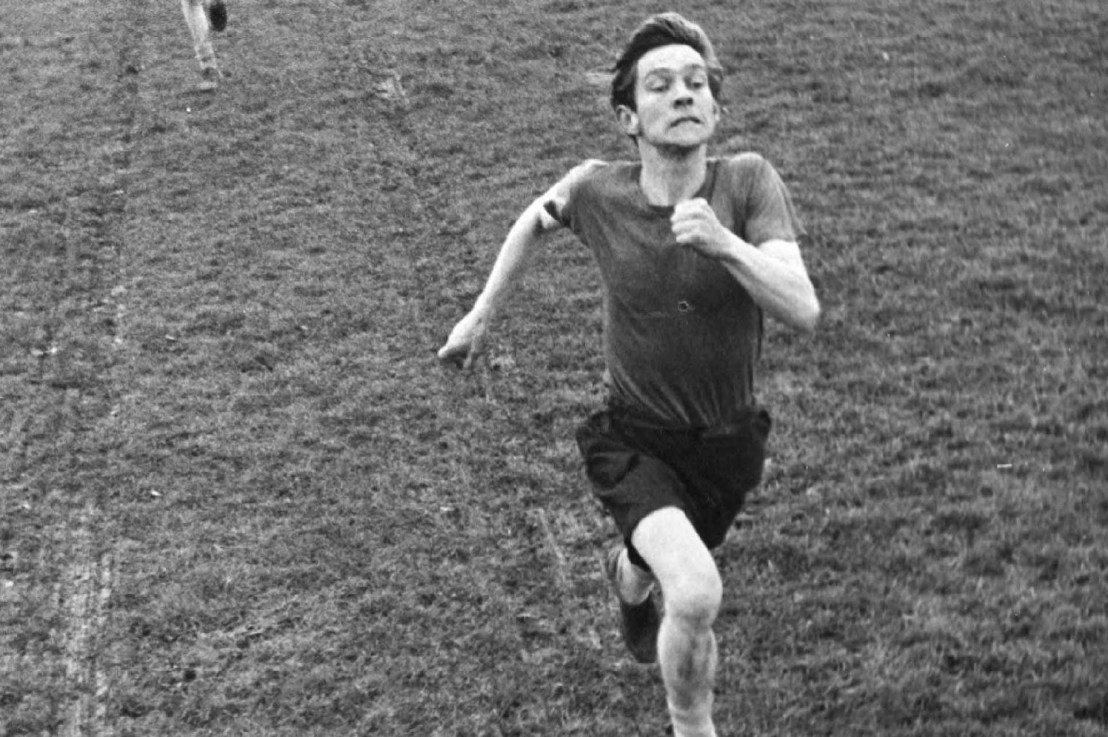
What’s intriguing about Silitoe’s story is Colin has a genuine gift for running. Richardson shoots the sequences of Colin running through the country (granted special permission to go unattended by the Governor) with a lyrical freedom. It’s as if, while running, Colin can put the world aside for a moment, to focus on his own independence. Silitoe gives Colin the means to move up in the world – but to do so he has to fall in with the desires of his “betters”. Therein lies the film’s conundrum.

It helps a great deal that Michael Redgrave is terrific as the Governor – the very picture of hypocritical and self-serving authoritarianism, interested in the boys only so far as they can serve his ends. The slightest misdemeanour and punishment is absolute – with the boy banished back to the bottom rung of the borstal, and ignored by the Governor. 

Richardson shoots the borstal as a confining series of small spaces, a real contrast to the broad, open spaces Colin runs through. The flashback scenes that showcase Colin’s life of petty crime are shot with an intense realism, on-location in Nottingham streets. These scenes are perhaps slightly less engaging and interesting than those at the borstal: their content is pretty similar to other kitchen-sink dramas, and they seem more predictable (for all their engaging direction and acting) than other parts of the film.

The real success of the film is largely due to Tom Courtenay, making his film debut. It would be easy to be annoyed by Colin, an inarticulate and chippy lad who hates the system without actually being engaged enough to understand why. But Courtenay brings the part a tenderness and surly vulnerability, and for all his childish rebellion, his barely expressed feelings of grief and anger at his father’s death strike a real chord. Given a sum of money in compensation, largely frittered away by his mother (Avis Bunnage also excellent) on her fancy man, Colin symbolically burns part of it, then spends the rest taking himself, a friend and two girls to Skegness. Colin’s relationship with Audrey is sweetly, and gently organically grown – and Courtenay brings a real vulnerability to a confession of his own virginity.

Courtenay makes Colin’s principles and issues understandable to us – and relatable – even though it’s tempting to encourage him to play along with the Governor, win the race and seize and opportunity to better himself from that. But what Courtenay makes clear, is that doing that would be a sacrifice Colin’s own sense of self – and that would be a defeat.

The Loneliness of the Long Distance Runner is a terrific kitchen-sink drama, built around an empathetic lead performance, that gives you plenty to think about. It’s shot with a poetic beauty by Richardson and photographer Walter Lassally. Finally, some credit must go to the casting director – not only Courtenay, but James Bolam and (uncredited) John Thaw and James Fox fill out the cast in prominent roles. Keep an eye on those guys: they might have futures ahead of them y’know.

Saturday Night and Sunday Morning (1960)


Albert Finney is an angry young man out for himself in Saturday Night and Sunday Morning

Director: Karel Reisz

Cast: Albert Finney (Arthur Seaton), Shirley Anne Field (Doreen), Rachel Roberts (Brenda), Hylda Baker (Aunt Ada), Norman Rossington (Bert), Bryan Pringle (Jack), Edna Morris (Mrs Bull), Elsie Wagstaff (Mrs Seaton), Fran Pettitt (Mr Seaton)

Whatever people say I am, that’s what I’m not because they don’t know a bloody thing about me! … What I’m out for is a good time – all the rest is propaganda. – Arthur Seaton

The 1960s saw a cultural shift in British cinema. Prior to this, most British films were either Ealing-style comedies or dramas focused on the middle or upper classes. When the working classes did appear, they were usually scamps or “ever so ‘umble”. This all changed in the 1960s with the emergence of “kitchen sink” dramas. The New Wave of British Cinema had arrived – films that looked at the real lives and issues of the working classes, that dared to present the working man (and it generally was men) as a living, breathing human being (warts and all) rather than some sort of latter-day Shakespearean comic turn.

Arthur Seaton (Albert Finney) is a skilled, well-paid worker in a bicycle factory in Nottingham. He’s also your quintessential “angry young man”, contemptuous of his fellow workers, adamantly opposed to being told what to do with his life and only interested in a hedonistic life where he does whatever he wants. As Arthur begins a relationship with aspirant young woman Doreen (Shirley Anne Field), his life is complicated by the wife of a fellow worker, Brenda (Rachel Roberts), whom he’s sleeping with, announcing she’s pregnant.

Saturday Night and Sunday Morning caused such a sensation when it was released. But it’s such a strong capturing of a particular time and moment that it’s hard to look at it today without seeing it as a little bit dated, or finding it hard to work out what all the fuss was about. But Arthur Seaton seemed to capture the mood of generation – and that’s a credit to Alan Sillitoe’s excellent (semi-autobiographical) script, based on his own novel.

Albert Finney gives the part a forceful, primal aggression that seems to capture the spirit of the age. He constantly bubbles with ill-directed resentment, mixed with cynicism and a beery oafishness. He isn’t a “faux” intellectual, like a Jimmy Porter, or a man striving to move up the greasy pole. He’s a chippy, arrogant, slightly lazy man with no interest in self-improvement. He’s also a horrendously selfish character, interested only in his own pleasure – I think it goes without saying his treatment of women doesn’t stand up well. Tied of being preached at about the sacrifices of the war generation (who surround him in the factory), he merely wants to do what he wants, when he wants. Despite his flaws, he seemed to capture the feelings of a post-war generation.

The film was also unique for the themes it addressed. It was pretty much unheard-of for a film to even mention the possibility of abortion. It tackled issues of adultery and pre-marital sex (it’s one of the first films to show a man and woman waking up in the morning in bed together). Its lead character drinks, swears (as much as allowed by the censors) and even takes pot shots at neighbours he doesn’t like with an air gun. All of this of course seems rather tame now – but at the time, it was radical to see someone like this, behaving like this, on screen.

The plot, such as it is, is as aimless in many ways as Arthur himself. Not a lot happens in the film, apart from Arthur constantly pushing to not “let the bastards grind you down”. Of course all the pain in the story actually comes from Arthur’s own actions, not least to Brenda, his occasional mistress. Rachael Roberts is sensational as Brenda – the finest performance in the film – a slightly faded former glamour girl, now older, lonely and whose appeal to Arthur (and his appeal to her) seems as much maternal as it does sexual. Brenda’s a tragic figure, clinging to a fantasy of a life free from her dull husband – but slowly (and sadly) learning that she is looking for something from Arthur he can never give her.

By contrast, Arthur’s other conquest, Doreen, is a far more assured, determined and ambitious woman, closer to his own age. Shirley Anne Field is playful and charming, but in her own way as much besotted with Arthur’s rootless masculinity as Brenda. Unlike Brenda though, she is a determined to get what she wants. Arthur and she eventually seem set to settle down for domesticity on a new-build council estate, a decision Arthur seems to resign himself to (he flings a stone impotently at the new houses, but barely seems to understand why). Even this relationship reinforces Arthur’s emptiness – his aimless rebellion lands him eventually in the very conventional lifestyle he spent the rest of the film pushing back against.

Karel Reisz shoots all this with a documentary realism. Freddie Francis’ brilliant photography gives a new wave, neo-realist romance to the Nottingham streets that reinforces the feeling that we are watching a real slice of life. Of course, today much of this revelatory impact of this is lost – we’ve seen these sort of dramas too many times. Arthur’s rebellion is so ill focused – and his attitudes bordering so heavily on the misogynistic – that it’s a lot harder to sympathise with him today than it would have been back then. However, it captures a moment of history, and a feeling many young people at the time had – that the world they were presented with just didn’t match up with what they wanted from life. A dated classic, but still an important piece of film making.