Category: LGBTQ+ films

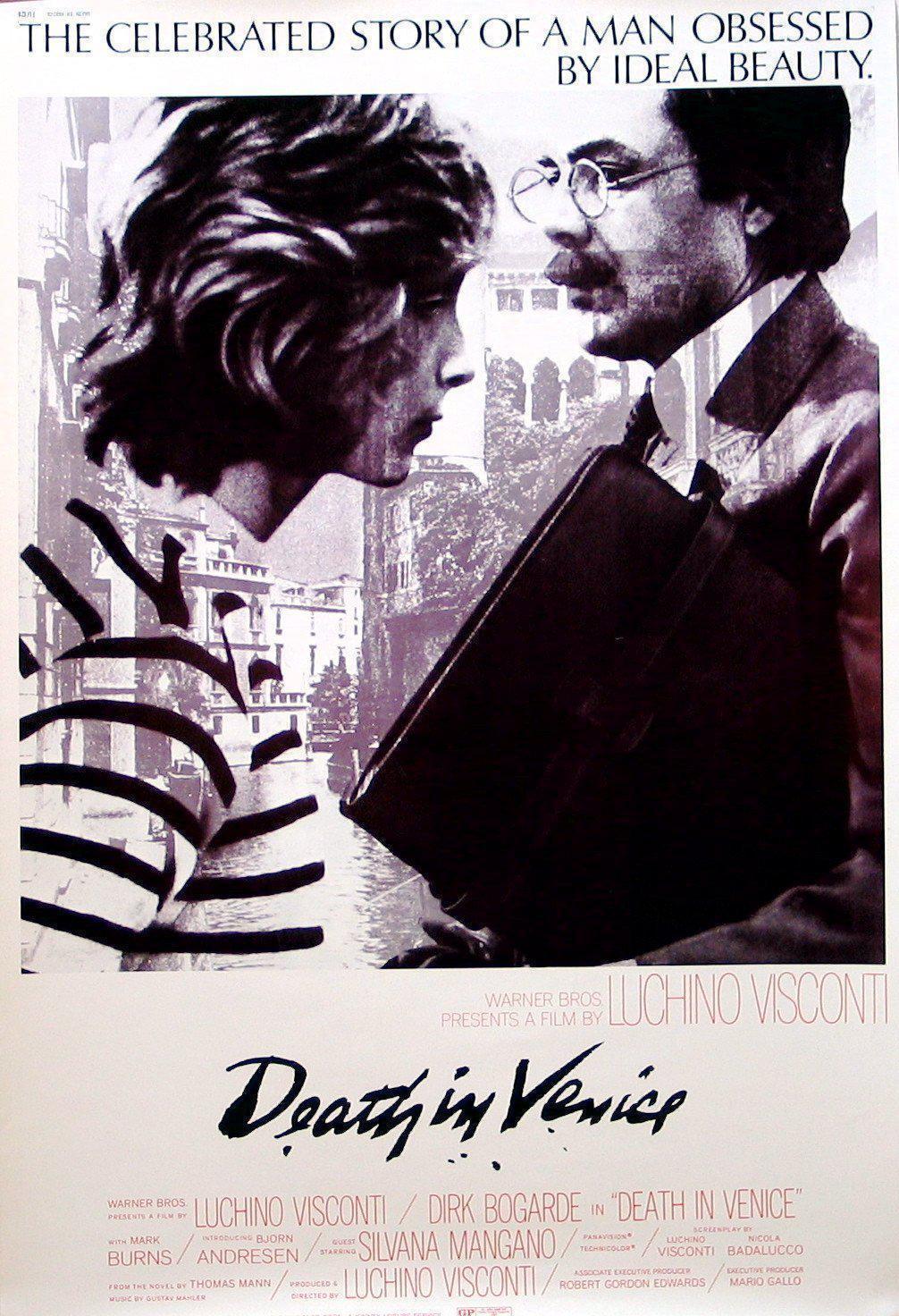
Death in Venice (1971)

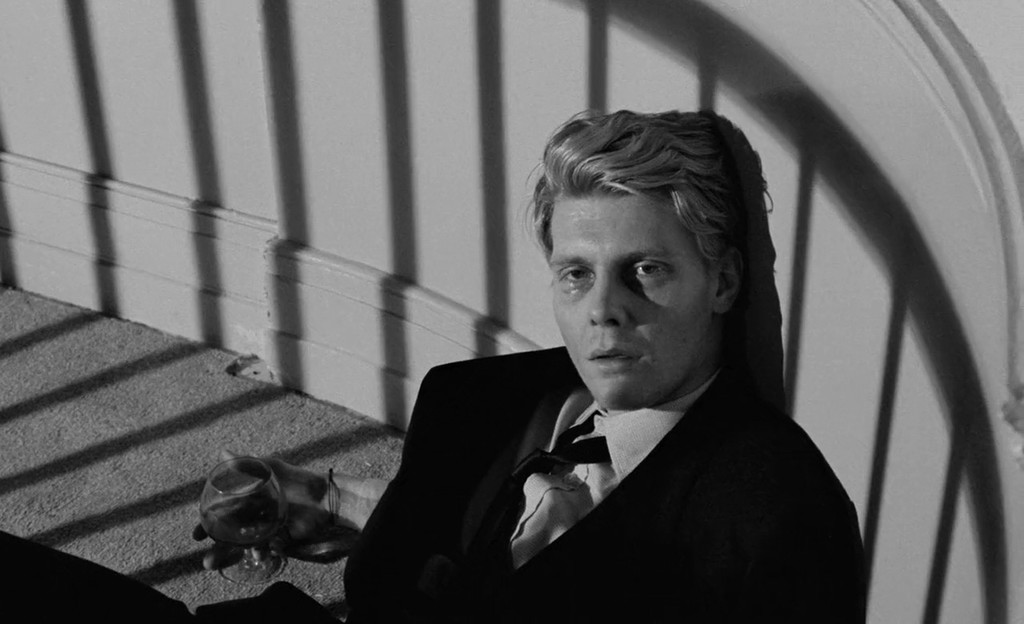
Dirk Bogarde falls victim to obsession in Death in Venice

Director: Luchino Visconti

Cast: Dirk Bogarde (Gustav von Aschenbach), Mark Burns (Alfred), Marisa Berenson (Frau von Aschenbach), Björn Andrésen (Tadzio), Silvana Mangano (Tadzio’s mother), Romoloa Valli (Hotel manager), Nora Ricci (Governess), Franco Fabrizi (Barber), Carole André (Esmeralda)

In the early 1900s a famed German composer, Gustav von Aschebach (Dirk Bogarde), travels to Venice for his health. A repressed artist who believes beauty is found not in the sensual but the spiritual, his world is turned upside down when he becomes fascinated/infatuated with a divinely beautiful teenage boy (Björn Andrésen) staying at his hotel. Gustav lingers in the city, never speaking to the boy, but reduced to watching him at the beach and following him and his family puppy-like through the city. A city that is on the verge of falling into a serious cholera pandemic. With Gustav’s health rapidly deteriorating, the title alone tells you where this all going.

That opening paragraph will probably also tell you all you need to know about whether this is the film for you or not. Increasingly, the idea of a famed artist starring with a longing, breathless admiration at a (very young looking) teenage boy (who is also at times shot with a coquettish flirtatiousness, increasingly aware that he is being looked at) has more than a whiff of Operation Yewtree to it. Take a moment though: Visconti’s extremely delicate and deliberate film largely manages to walk a tightrope between sexual interest and a deeply closeted admiration for physical beauty in the style of classical statues or paintings.

The film is not a leering pederast’s fantasy, but a melancholic meditation where this young man as much represents the loss of youth amidst a life of regret and closeted repression as it does sexual interest. Don’t get me wrong, sex bubbles under there. Gustav – even if he is struggling to process his own feelings – has a giddy schoolboy like love for this unattainable boy, something he seems aware he can (and will) never act on. Gustav becomes a rather tragic even pathetic figure. By the time the film ends and he has caked his face in the same “young” make-up that disgusts him when he sees it on the face of another ageing roue on his arrival in Venice, it’s hard not to feel he has lost his way. He seems aware death is knocking and that it is simply a matter of opening the door.

Visconti’s film is perhaps the ultimate arthouse classic. Long, slow, with lashings of Gustav Mahler playing while the camera slowly pans across incredibly detailed sets (rumour has it, even the unopened drawers were filled with period specific props) and lavish costumes. It’s got more than a puff of self-importance, taking as its subjects art, love and beauty. It’s the sort of film where nothing much really happens (there is no real dialogue for the first ten or last ten minutes), but what little happens is laced with an overwhelming spiritual and poetical importance.

The film is however outstandingly beautiful. Venice has never looked so striking – or so original. It’s not a picture postcard: the sky is frequently doom-laden pinks and reds, the streets are lined with litter, antiseptic wash and later small fires to burn away the bad air. But everything is presented with a painterly, if doom-laden, beauty. As mentioned, the period detail is exquisite and faultless. There are more than a few comparisons with Barry Lyndon in its obsession with detail, the pictorial and period over such trivial matters as storyline and humanity. Like that film it also has a languid self-importance, that has helped make it ripe for parody throughout the years.

And yet, it engages at some level slightly more than Barry Lyndon perhaps because Dirk Bogarde is a far more skilled actor than Ryan O’Neal. Bogarde is a master of the small detail. A huge portion of the film is basically Bogarde starring at Tadzio and letting a range of emotions play across his face: fascination, shame, fondness, intrigue, self-disgust, longing. Visconti frequently lets the camera just study Bogarde’s face as the actor thinks, capturing moments of almost youthful excitement that tip as swiftly into an old-man’s shame. It’s a compellingly cinematic performance from Bogarde, an actor who never quite gets the credit he deserves.

Of course, it’s also an important land-mark in gay cinema. It’s one of the few films where we have a man express a confused yearning and admiration for a beautiful teenage boy (films – such as American Beauty – which cover similar ground with men and teenage girls are far more common). Despite this, the film never tips into feeling too icky, largely because Gustav himself is a rather sexless figure. Flashbacks show his failed fumblings with (female) prostitutes and traces of a marriage with a wife (a silent Marisa Berenson – another Barry Lyndon link), with whom he shares grief at the loss of a daughter, but seemingly little else. The implication is that Gustav has carefully suppressed all his emotions in to raise himself to a higher artistic plain. Tadzio perhaps shows him there is also beauty in youth and life, rather than just intellect.

Or you might think that’s just hogwash, and an excuse for a man in his fifties to leer at a pretty young boy. There are times when Visconti makes Tadzio too coquetteish, at times casting him in the role of distant seducer (although there are hints at least some of these glances and poses are in the imagination of the infatuated Gustav). Björn Andrésen has spoken about his discomfort in making the film (where Visconti and others allegedly tended to treat him with an icky fascination) and dealing with its legacy. Often the film plays more awkwardly today and while Visconti is partly aiming for the sort of admiration of beauty we see in classic Renaissance art – like Rubens co-directed the film – he’s still at times also positioning a young teenage boy as something close to a sex object. The film is not as simple as that, and its far from being crude while Aschenbach never feels predatory or dangerous only deluded – but touches of it are there.

Death in Venice has faced years of parody. It’s an easy film to snigger about, with its self-consciously arty look and feel. Visconti wants you to know this is an important film, and like Tarkovsky often hammers this home by making it slow and ponderous. But it’s also a beautiful and strangely engrossing film. A slow-paced two hours – pace that could have been helped if the heavy-handed flashback discussions about art between Gustav and piano player (lover?) Alfred had been trimmed out. Visconti directs it with a poetic mesmerism.

It’s got the feel of a classic painting. But it’s a film: and parts of that make it troubling at times. It never questions the appropriateness or not of this semi-sexual fascination of Gustav (for all that it stresses his increasingly pathetic delusion). However, it just about works because of the overwhelming air of tragedy and regret that hangs over it – and Bogarde’s delicately judged performance. Visconti indulges himself terribly here – but produces something that feels very much his own. Death in Venice is intriguing because its simultaneously bloated and self-important, but also mesmerising and beautiful.

Vita and Virginia (2018)

Gemma Arterton and Elizabeth Debicki struggle to bring a love story to life in Vita and Virginia

Director: Chanya Button

Cast: Gemma Arterton (Vita Sackville-West), Elizabeth Debicki (Virginia Woolf), Isabella Rossellini (Lady Sackville), Rupert Penry-Jones (Harold Nicholson), Peter Ferdinando (Leonard Woolf), Gethin Anthony (Clive Bell), Emerald Fennell (Vanessa Bell), Adam Gillen (Duncan Grant), Karla Crome (Dorothy Wellesley)

The love affair between Bloomsbury group writers Vita Sackville-West (Gemma Arterton) and Virginia Woolf (Elizabeth Debicki) inspired a successful epistolatory play by Eileen Atkins. It’s got all the elements you need for a love story: sadly none of those make their way into this limp, lethargic, languid film which drains any trace of passion from its material.

Where did it all go so wrong? The film expands the plays concept (two actors performing the various letters between the two lovers) into a series of conversations and throws in as characters the other members of the Bloomsbury circle. Sadly, what it fails to do is convey a sense of joi d’vive to any of this. The Bloomsbury crowd not only come across as pompous bores, but they never even really seem to be enjoying themselves. They certainly find it hard to get passionately worked up about any of these marvellous artistic ideas we keep being told they are having. The only thing we really see them talk about is sex, probably because it’s easier to put that on screen than writing.

The failure of the film is increased by the sadly misjudged performances by the two actors at its heart. It’s already a struggle to get any sense of chemistry between these two – I can’t put my finger on why this is, but there isn’t the undefinable ‘spark’ between them. Perhaps it’s partly because they both choose such wildly diverse acting styles, that their scenes never quite click together.

Debicki goes for a stately fragility, mixed with an emo waviness and seems to be playing every scene as if she subconsciously stating “my character committed suicide you know”. Arterton seems to try and compensate for Debicki’s overstated lip wobbling, by going for a jolly hockey-sticks brashness. Neither performance compliments the other and the effect is feeling like two very good actresses feeling constrained in different ways by the material.

It’s not helped by the flatness of much of the filming. I’ve seen Chanya Button’s work elsewhere (notably on television with some great work on WW2 drama World on Fire), but here she seems uncertain how to bring visual interest to this story. Too many scenes are shot with a murky lack of visual interest. Moments of letter reading are presented as the actors addressing the camera. Stylistic flourishes – such as Virginia’s visions of swiftly growing vines at moments of emotion – seem to come out of nowhere and jar with much of the rest of the traditionalism of the rest of the filming.

So instead, two fascinating intellectuals end up coming across as slightly self-absorbed bores in a relationship that never catches fire. Most of the rest of the cast fail to make an impact: Rupert Penry-Jones gets closest as Vita’s husband who oscillates between embracing their open marriage and demanding a wife who will fulfil a more traditional role. But for the rest, it’s hard to get any sense of their personalities with some performances – especially Adam Gillen – tipping too far into gurning comedy.

The general lifelessness of the film is made somehow even worse by the bizarrely left-field score. It’s a strikingly anachronistic slow-paced drum-and-base inspired sound that wouldn’t seem out of place in the late hours of a nightclub. Here it not only feels horrendously out of place – not least because it’s the only anachronistic touch either in the film-making of the performances, which are otherwise scrupulously correct – but it’s incessant throbbing beat actually helps make the film even slower, as if you were watching it in a slightly intoxicated haze.

Vita and Virginia should really have crackled with the vibrancy of the real-life characters and the passion of their love for each other and their shared ideas. Instead it’s a tedious bore that never sparks into life.

Sunday Bloody Sunday (1971)

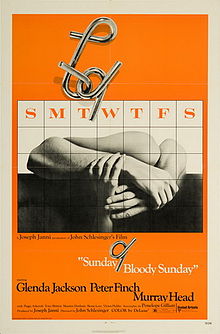
Sunday bloody sunday header
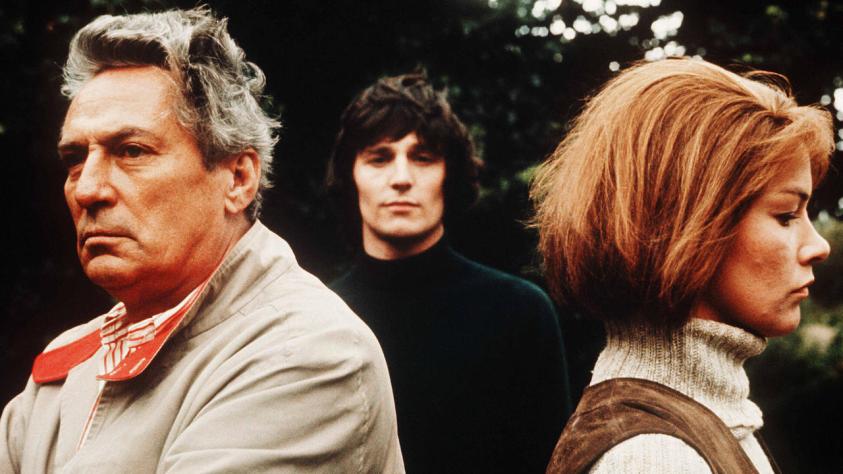
Peter Finch, Murray Head and Glenda Jackson in an unconventional relationship in Sunday Bloody Sunday

Director: John Schlesinger

Cast: Peter Finch (Dr Daniel Hirsh), Glenda Jackson (Alex Greville), Murray Head (Bob Elkin), Peggy Ashcroft (Mrs Greville), Tony Britton (George Harding), Maurice Denham (Mr Greville), Bessie Love (Answering service lady), Vivian Pickles (Alva Hodson), Frank Windsor (Bill Hodson), Thomas Baptiste (Professor Johns), Richard Pearson (Patient), Jon Finch (Scotsman)

Is anything better than nothing? Or, sometimes, is nothing better than anything? It’s a question that lies at the heart of John Schlesinger’s mature and surprisingly low-key exploration of relationships Sunday, Bloody Sunday. In the on-going puzzle of life, what on earth are the answers?

Alex (Glenda Jackson), a divorced woman in her mid-thirties, is in a relationship with young artist Bob Elkin (Murray Head). But the bohemian Bob is also in another relationship, with 50-year-old Dr Daniel Hirsh (Peter Finch). Bob moves between his two partners. Alex and Daniel, who have never met, accept they have him on a timeshare basis and work within his rules, for fear of losing him.

That’s a brief summary – but this is not a film overburdened with plot. Rather it’s a character study. Perhaps its greatest strength (and for some it’s main weakness), is the lack of melodrama or conflict in this unconventional set-up. Any expectations that this might be building towards a cathartic outburst or a traumatic event of some kind should be dispelled from the start. This is a very restrained and genuine film, deeply heartfelt, that avoids cheapness.

In fact, the film becomes a very striking study of the fear of loneliness. Both Alex and Daniel live in semi-acknowledged fear of being left alone. You can see the emotional fragility in them, when separated from Bob. Alex – who Bob has abandoned during a weekend’s baby-sitting to visit Daniel – quietly sits eating fudge and trying to read a book, while tears play in her eyes. Later Daniel will similarly resemble a little boy lost after being stood up at a restaurant. The excitement of being with Bob – for all his faults – are just as acute as the sadness when left alone in their own company.

Both Alex and Daniel are people staring down the barrel of a life of being alone. Alex is a woman stuck between two stools – too bohemian to be happy in a nine-to-five and a safe everyday relationship, too conventional to fully embrace the sort of devil-may-care casualness of Bob. She seems uncertain herself what she wants from life (the perfect relationship, or the bursts of happiness with a young lover).

Daniel, a gay Doctor in middle-class London from a traditional Jewish background, has spent a lifetime quietly carrying on and accepting companionship where he can find it. A man who has understood that a certain degree of isolation is just part and parcel of being who he is. Who balances, perhaps, the flaws in his relationship against getting only a part of what he wants as opposed to nothing.

It’s those questions the film comes back to time and time again. Alex expresses them most clearly, happy in the moments of playful joy she finds with Bob, but this only covering deep lying anxieties. Flashbacks reveal her childhood worries about traumatic events befalling her father (bought on by the killing of a friend’s dog in a road traffic accident due to the carelessness of a child she is looking after). These fears are directly linked to her tentativeness towards long-term relationships: she invests emotionally so much in those she cares for, that it’s difficult for her to find a romantic partner that is perfect enough to justify this level of commitment.

But Daniel has similar issues: his life has taught him to expect that he might always be alone. An insight into his romantic life before Bob is shown with a chance encounter with a former pick-up (played with chippy aggressiveness by Jon Finch) who forces Daniel to give him a lift and then pinches his medical bag. These sorts of risky, emotion-free entanglements are dwarfed by the tenderness and warmth Daniel gets with Bob, for all that Bob is mercurial and immature. As Daniel says at the film’s end (in a beautiful fourth-wall breaking address to the camera), Bob isn’t perfect but he’s something and that while Bob never made him completely happy, right now Daniel is happy only when he is not missing him. It’s balances like this that people make in their lives.

It may also be a fascination with youth. Both Alex and Daniel are either heading into – or deep into – middle age, and they surely wouldn’t deny there is an additional excitement from spending time with the defiantly young Bob. Bob – a rather thankless role to be honest, played with a deliberate lack of depth by Murray Head – is in some ways a cipher, a rather selfish young man who can only think about moving on to the next opportunity, not the difficulties of being fixed in one place and making the best of it. Does this young man’s attitude carry additional appeal to two people with greater ties and responsibilities? Perhaps it does.

Schlesinger’s film is well-paced, and directed with an intimacy by the director who surely built many elements of his own life into Daniel. The two leads – who share a scene only twice, at one point literally passing each other in cars like ships in the night – are both superb. Glenda Jackson is superbly able to suggest a hinterland of emotional guardedness and fragility, behind a confident exterior, that only cracks at key moments. It’s a brilliantly subtle performance of small moments.

Peter Finch is equally superb as Daniel. The film was controversial at the time for featuring the first gay kiss in British cinema (sexuality questions are refreshingly not a major part of the equation and never discussed, which makes the film ever more modern – the kiss itself is played with an unshowy naturalism). The part had been hard to cast – Ian Bannan was fired (to his later intense regret) for being visibly uncomfortable – but Finch (less worried, perhaps because his romances with everyone from Vivien Leigh to Shirley Bassey were so well known, no one watching in the cinema could imagine he was really gay) embraces the part with a beautifully sensitive empathy. It’s a wonderful moving portrait of a man who has come to terms with loneliness and accepted it. Tender and very true, it’s wonderfully heartfelt.

Both stars (along with Schlesinger and the script, credited by Penelope Gilliatt but likely the work of several hands) were nominated for Oscars (inexplicably the film itself was snubbed), and its perhaps their sensitive and tender work is behind the film’s success. Schlesinger co-ordinates all this into a unshowy but very mature intelligent analysis of relationships and the compromises that come with them. Thoughtful and questioning, it’s adult cinema.

The Servant (1963)

Through a glass darkly: Dirk Bogarde and James Fox in a dark drama as master and The Servant 

Director: Joseph Losey

Cast: Dirk Bogarde (Hugo Barrett), Sarah Miles (Vera), James Fox (Tony) Wendy Craig (Susan Stewart), Catherine Lacey (Lady Agatha Mounset), Richard Vernon (Lord Willie Mounset)

Imagine a world where Bertie Wooster was a weak-willed, sexually confused drunk and Jeeves a malign force, to whom control over and destruction of his master go hand-in-hand. That’s the basic set-up of Joseph Losey’s masterpiece The Servant, a fascinating and brilliant exploration of class and sex in Britain in the 1960s, a lean, razor sharp, gripping and sinister film that lingers in your memory like a nightmare you can’t shake off.

Tony (James Fox) is a louche, rich young man returning home to Blighty, looking to expand his inherited fortune through dodgy property investments in Brazil. Before then, he needs a home to call his own – and a gentlemen’s gentlemen to run it. Tony hires Barrett (Dirk Bogarde), a scrupulously polite, observant man, able to meet every single one of his employer’s needs. But why is Tony’s fiancé Susan (Wendy Craig) so instinctively hostile to Barrett? And what is Barrett’s exact relationship with the housemaid Vera (Sarah Miles) he introduces into the house – and who quickly becomes the focus of Tony’s interest? Over time, the balance of power between servant and master becomes more and more uncertain.

Losey was an ex-pat American, driven out of the country by the McCarthy hearings. This adaptation of a Robin Maugham novel is the sort of brilliant deconstruction of (and assault on) the British class system and manners that perhaps only an outsider) could have made. The film drips with an air of corruption and vice. Even the earliest, most unobtrusive frames carry an air of over-observant malice. No coincidence this is also the leading quality of Barrett, perhaps one of the most darkly malign forces on film, whose piercing intelligence sees everything and whose self-control never slips. Losey’s camera constantly lingers over the slightest shot and detail, to an increasingly unsettling degree. As the plot becomes increasingly dark, claustrophobic and horrifying, the film’s exploration of the class-fuelled psycho-sexual, alcohol-fuelled relationship between Barrett and Tony becomes ever more pointed.

Losey partnered with the perfect script writer in Harold Pinter (who also briefly appears as a posh restaurant goer). Pinter’s lean, spare and menacing dialogue, with its corrupted poetry and acute psychological insight, is easily his finest film script – and perhaps the only one that truly could sit alongside his finest stage work. Pinter’s brutal vision of this twisted world is coated in a dark menacing commentary on Wodehouse (Susan and Barrett’s “duel” over the placing of a vase comes almost straight out of Jeeves) – and above all on the weakness that underlies those dependent on servants, as well as the loathing a servant can develop for his master, while still loving the control he has over his life.

Losey responds to this masterful script with some inspired work, making the house where the action takes place increasingly claustrophobic and disturbing. The camera work slowly becomes more intimate as the film progresses – and Barrett entraps Tony increasingly into a total, infantile dependence on him. Takes become longer as the house itself – increasingly dishevelled, with Barrett’s property increasingly appearing throughout the property, while Tony’s goods are disposed of – seems to close in around the action. Reflections and mirrors increasingly dominate the film, as if pulling us with Tony through a glass darkly.

It’s a good servant who understands his master’s needs before he knows them. Barrett is the best kind of servant. Within seconds, the unctuous, Uriah Heap-like Barrett (ever so ‘umble), has dissected the character of the foppishly weak playboy Tony, and identified him as man with no will of his own, ripe to be dominated and manipulated. Dirk Bogarde has never been better than his work here, a terrifyingly precise and soulless manipulator, whose veneer of obsequious service drops away with his affected accent to reveal a deeply corrupted, terrifyingly cruel man. Bogarde never allows a second of doubt to enter Barrett’s mind – even when it (briefly) looks like he’s lost his position, Barrett’s face is contorted with a contemptuous curl of the mouth and a cocky defiance. It’s brilliant work from Bogarde, creating one of cinema’s greatest monsters, destroying because he can.

His tools are of course to use his master’s fondness for booze and pretty faces against him. Vera – played with a sparkingly flirtatious richness by Sarah Miles, which disguises her ruthless disgust for Tony and his selfishness – is inveigled into the house as Barrett’s “sister” (actually his mistress), and swiftly instructed to seduce the hapless Tony, bending this playboy to her will. Losey’s camera follows in smooth shots as this woman moves from one man’s bed to another – while you can feel the influence of Pinter in the spare, sexually charged power Vera uses to seduce Tony (and the hints of submissive excitement in Tony). Losey soundtracks their first encounter – Miles erotically discussing the weather, pure Pinter genius, while Fox’s throat is so dry you can almost feel it yourself – with first the dripping of a tap, then the rocking back and forth of a pan in the sink. It brilliantly suggests the way Tony himself seems to be being consumed in a hypnotic trap.

Not that Tony is particularly sympathetic himself: a weak-willed, rather feckless and languid playboy whose interests in pleasure quickly tip into addiction. James Fox is perfectly cast in a role that plays on his aristocratic assurance, but finds deep reserves of doubt and inadequacy in him. Pinter and Losey draw more than a bit of a question mark over the sexual undertone in the relationship between Barrett (at least metrosexual) and Tony, that travels across sharing the favours of Vera. After (temporarily) throwing Vera and Barrett out, Tony collapses into a grief-stricken mess over Vera’s bed – the bed shared with Barrett – the camera gliding gently over male nudes pinned to the wall. Later Tony will debase himself fully to Barrett, reduced to crawling around the floor, his tie used as leash, dragged to perform with prostitutes for Barrett’s dark amusement.

If there is a character who sees through this early it’s Wendy Craig’s sensitively played Susan – but even she can have no idea of the horrors of Barrett’s plans to break Tony completely to his will. Susan recognises – even if she can’t understand why – the sinister satanic nature of Barrett, even while she seems powerless to do anything about it. Her attempts to empower Tony to break his dependence on this omniscient figure fail completely. In a beautiful Pinterish touch, at the end she almost considers joining their bizarre, sex and alcohol fuelled menage – as close as cinema as perhaps got to skirting a sort of sexual hell.

The final act of the film (it has a neat three act structure, Pinter superbly constructing the screenplay to show Barrett and Tony’s shifting power relationship), sees an almost infantalised Tony now meekly accepting (almost apologising) as Barrett lets rip – all pretence at humbleness gone and Northern vowels increasingly let loose – with his abuse and disgust.

In a brilliantly dark commentary on the upper and serving class, such is the dependence on one for the other, that the house collapses in Barrett’s temporary absence. The power may lie with Tony – but when Barrett stops collaborating with that, the imbalance between them is revealed. It’s Barrett who can actually do things – from cleaning to cooking – that Tony cannot. The drive and will of the middle classes eventually overwhelms and breaks the upper class, turning them into a vehicle for their own entertainment, like some sort of dark National Trust.

The Servant is a profoundly brilliant film, one that could stake a claim for being one of the greatest British films ever made. Losey’s sharp outsider’s eye brilliantly dissects both the tensions between the classes, but also the disturbingly awkward relationship the British have about sex, a drug for the reserved, a pot of unspoken but deeply desired treats. Bogarde is quite simply superb, Barrett is one of the greatest monsters of cinema who could strike fear into the heart of Hannibal Lecter. Pinter’s dialogue is brilliant. This psycho-sexual class drama is a work of art and essential viewing.

Moonlight (2016)

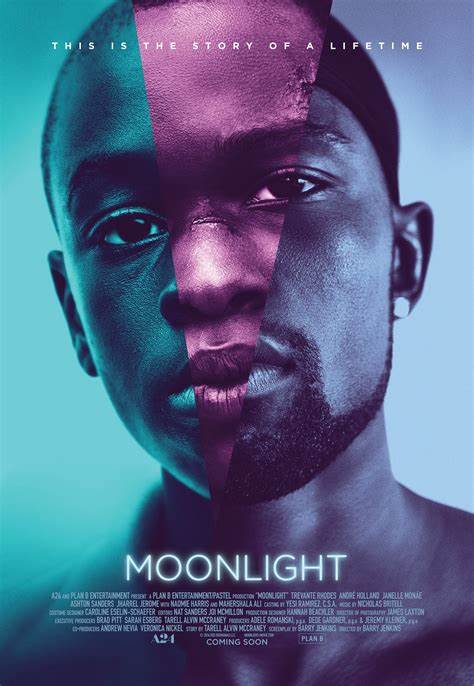
Mahershala Ali is a mentor with mixed impact in Barry Jenkins tender Moonlight

Director: Barry Jenkins

Cast: Trevante Rhodes (Adult Chiron/”Black”), Ashton Saunders (Teenage Chiron), Alex Hibbert (Young Chiron/”Little”), André Holland (Adult Kevin), Jharrel Jerome (Teenage Kevin), Jaden Piner (Young Kevin), Naomie Harris (Paula), Mahershala Ali (Juan), Janelle Monáe (Teresa), Patrick Decile (Terrel)

What makes us the people we are? So many things in our environment, personalities and influences can shape the people we are. Imagine, though, how much we might end up twisting and manipulating ourselves, if some of the core parts of what made us who we are, ran against the expectations of our community. It’s the fascinating, poetic heart of Moonlight, Barry Jenkins’ astonishingly tender Oscar-winner, which shows a side of the Black American experience that so rarely makes it to the screen.

In three acts, we see the life of Chiron, from a young child, to a confused teenager to a muscular, adult drug dealer. Played by a different actor at each age, each self-contained half-an-hour-or-so act sees him struggle with understanding who he is, and deal with the impact that different people have on shaping the man he is, from his mother Paula (Naomi Harris), a woman embracing a destructive drug addiction, to his mentor as a young boy, the thoughtful drug dealer Juan (Mahershala Ali) and his caring girlfriend Teresa (Janelle Monáe). Perhaps the core influence however is childhood friend Kevin, the love of Chiron’s life. Because Chiron is struggling with the fact he is gay, in a community where macho masculinity is all important.

Jenkins’ thoughtful and beautifully made film is a wonderful coming-of-age story, that explores deeply emotional territory with sensitivity and care. Jenkins invests the entire story with a beautiful sense of poetry and an echoing, longing sense of sadness. The entire film is constructed of paths not taken, of lost opportunities and painful misunderstandings. It asks profound questions around the people who inspire us, the impact our parents can have, the damaging impact of trying to conform with the world, and the struggle we can take to understand ourselves.

Because the main theme that runs through each act is Chiron’s struggle to come to terms with his homosexuality. As a young boy it’s something he’s beginning to be aware of – and the distance it brings, knowing he’s different from his fellow kids. It’s there in the cruel treatment he receives from his mother. As a young boy, there is the potential that his life could go another way – something that his mentor figure, drug dealer Juan, detects (perhaps, the film subtly implies, because it echoes lost opportunities and ignored feelings in Juan’s own life).

The middle act shows how these chances can be truly lost, how our teenage experiences can shake us. Because Chiron is different in a way that will never gain true acceptance in such a macho environment, where Chiron has it enforced to him time and time again that his sexuality is a weakness, something that dirties him and makes him less than others. Jenkins’ film offers a beautiful view of how a teenager can be made to feel ashamed of themselves and the person they are – to the extent that his reaction after his first sexual experience with his childhood friend Kevin is to apologise. Chiron hasn’t been given the emotional confidence or language to be comfortable with who he is – Juan is the only person who has ever told him that there is nothing wrong with being gay. Chiron instead has to cope with isolation, guilt and shame – emotions that Jenkins’ beautifully structured middle-chapters show, push him more and more towards anger and rage.

It’s perhaps not surprising that Chiron as a young adult has turned himself as much as possible into what his community believes “a man should be”. It’s striking how similar he looks to Juan – from his dress and jewelry, to his muscular manner and his profession. The skinny boy of the first two chapters has become a muscle-bound, intimidating young man. What hasn’t changed is his emotional distance, his isolation. In fact, what has been magnified is his desire to be loved, to feel a connection. A connection that he arguably hasn’t felt for over a decade.

The film can speak to anyone who has had problems fitting in, who feels different from others. Jenkins fits it beautifully into a community he was familiar with, a Black community (there isn’t a single white person anywhere in the film) that values qualities of masculinity and aggression that run counter to Chiron’s own personality, but which he is forced to conform with. This is such a compromised community that the person who understands Chiron most – the drug dealer Juan – is also a big part of the problem, supplying the drugs that are affecting his mother’s life and a leading part of the violent, macho world Chiron lives in.

This mentor relationship is the beating heart of the much of the film – helped by Mahershala Ali’s wonderfully judged (Oscar-winning) performance as Juan. Juan is a man of contrasts, thoughtful and tender, understanding of the internal struggles of a young man (has he dealt with them himself), but also moving in a violent and destructive world, a leading part of the criminal community that dominates Chiron’s world. He offers enough of a lost opportunity for Chiron to have reshaped his life – while also propping up the world that will crush him.

Juan is certainly a big part of destroying Chiron’s mother Paula. Naomi Harris is superbly damaged, raw and uncontrolled as an addict we see disintegrate over the first two chapters until she settles into the fragile older woman plagued with guilt in the final act. This is a mother who offers no love and support to her son, who denigrates him for his differences and builds a world around him that has no love or understanding in it. Her collapse is as much a criticism of the horrors and compromises of this community as it is a terrible warning story.

Jenkins’ film looks phenomenal, with a style that marries poetry and realism. It can feature young boys playing in the park with aggressive naturalness, underscored with Mozart. There is a beautiful running theme of water, cropping up at key moments of Chiron’s life: from the swimming lesson Juan gives him, to the cold water he cleans his face in after a teenage beating, to the adult Chiron largely drinking only water (perhaps to make sure he never slips and reveals too much of himself). It’s a gentle touch – reflected as well in the cool blues that frequently cover the screen, like the wash of water.

The actors portraying Chiron and Kevin are wonderful. The final act revolves around a beautifully played scene between Trevante Rhodes and André Holland as their adult versions, a low-key, but deeply emotional, conversation that sees them carefully skirt round a host of emotions that can never be expressed, partly as neither character as the emotional hinterland to use them.

Jenkin’s film won a deserved Oscar as Best Picture. It deserves it for showing us two worlds we see so little in film: both the working-class Black community, but also the life of a young gay man in modern America. It’s wonderfully judged, low-key, personal and with a slight story carries great emotional force. It gives you far more to think about and consider than you might at first expect, and makes for an eye-opening and deeply involving film.

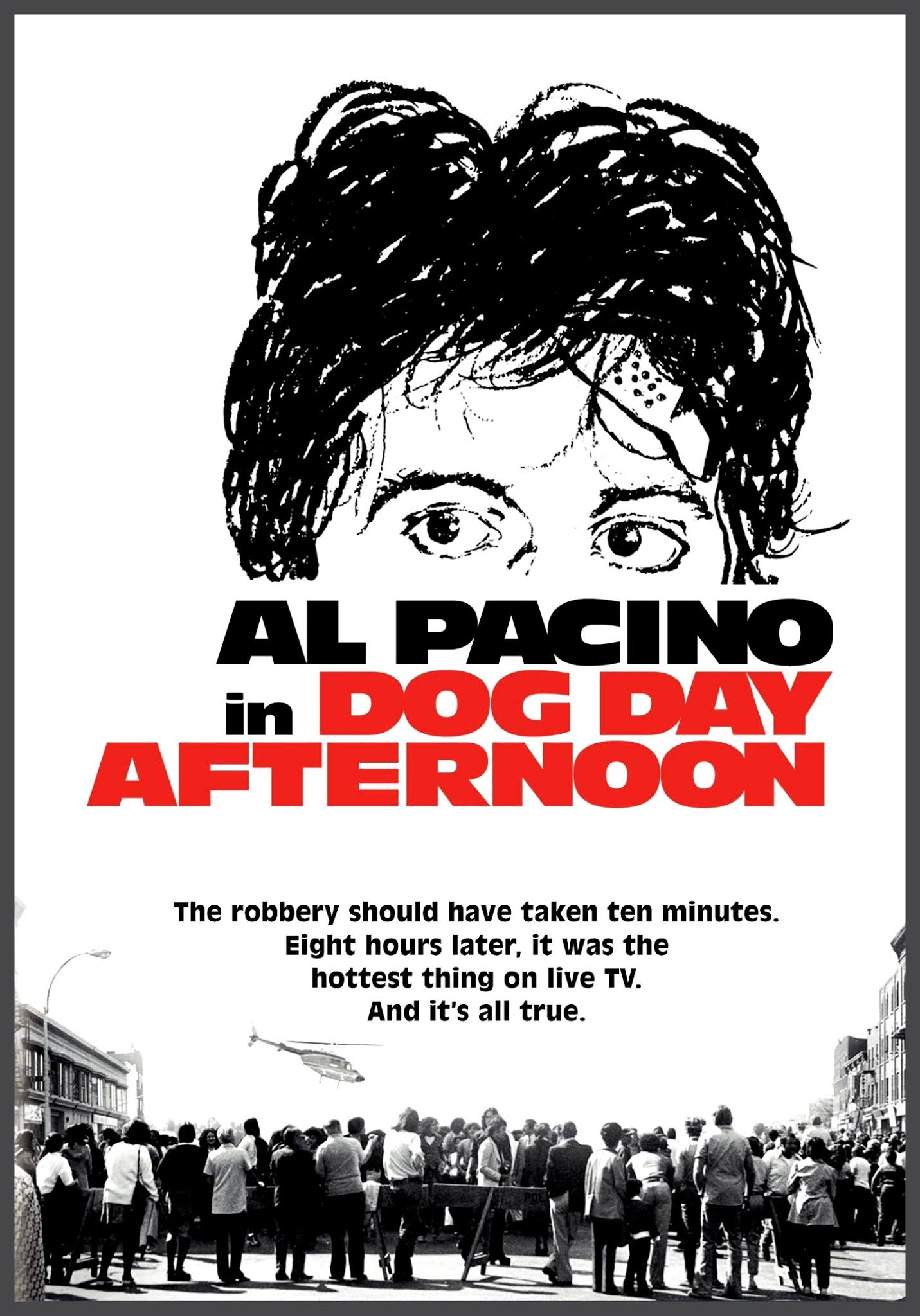
Dog Day Afternoon (1975)

Al Pacino takes a bank hostage in Dog Day Afternoon

Director: Sidney Lumet

Cast: Al Pacino (Sonny Wortzik), John Cazale (Sal Naturile), Charles Durning (Sgt Eugene Moretti), Chris Sarandon (Leon Sharmer), James Broderick (Agent Sheldon), Lance Henriksen (Agent Murphy), Penelope Allen (Sylvia), Sully Boyer (Mulvaney), Susan Peretz (Angie Wortzik), Carol Kane (Jenny)

Perhaps only in the 70s could a failed bank robber have been turned over-night into a counter-culture folk-hero. It’s the subject of Sidney Lumet’s thrilling, heist-gone-wrong movie, set on one sweltering day in New York when Sonny Wortzik (Al Pacino) tried to rob a bank to fund the sex-change operation of his boyfriend Leon (Chris Sarandon). He ends up taking the co-operative bank staff hostage while a media and public firestorm takes place outside the bank, mixed in amongst an army of trigger-happy cops. And it’s all based on a true story.

Sonny is far from your hardened criminal. He doesn’t want anyone to get hurt. He takes care of the hostages, who all become immensely fond of him and his less confident partner-in-crime Sal (John Cazale). When the police and media turn up, Sonny is outraged at the trigger-happy police presence and quickly wins the support of the crowd with his honesty, bluntness and quick wit. With the police incapable of controlling the situation, soon he is actively playing to the crowd, taking phone calls from the press in the bank. He becomes a counter-culture icon, sticking it to the man (his famous chant of “Attica!”, refers to the famous prison riots, where prisoners rioted to secure their rights).

It’s the key topic that fascinates Sidney Lumet, in this brilliantly frentic, edgy and dynamic film, that captures the tension in New York, where it felt like the careful balance between law and order could disintegrate any time. Lumet’s improvisational feel with the crowds, the edgy, raw performances – particularly from Pacino and Durning, both of whom are sensational – and the sense that anything could happen at any time. Dog Day Afternoon is about a city on the edge, combined with the ability of the media to turn regular people into stars. There was little faith in the authorities, and even a little bit of nose thumbing in their direction could sway the crowds.

At the centre of all this is Sonny, a fascinatingly flawed person, partly absorbed with being the centre of attention, part desperately trying to work out what his best move is among an increasingly narrowing number of options. Al Pacino nearly didn’t take the role, after suffering a near nervous collapse from the pressure of Godfather Part II – but, after committing to the film, he gave one of his most extraordinary performances of an era he and a small group of actors dominated.

Sonny feels increasingly trapped in his predicament. The robbery of the bank is hilariously cack-handed from the start – one of the robbers bails in minutes and has to be begged not to go home in the get-away car – and it becomes clear that for Sonny this is all a last desperate throw of the dice. Both of his relationships – with his first wife and his second marriage to Leon – are relationships on the brink of disaster, destabilised by Sonny’s desperate need for prove of love and affection. He’s a man uncertain in his own skin, smart enough to know the world isn’t fair, but not smart enough to know what to do with it. Fundamentally decent, but forced into illegal actions. Pacino delivers this with the expected fireworks, but when we see Sonny away from the public gaze, he’s a sad, broken-down, isolated man who genuinely doesn’t know where his life is going.

Dog Day Afternoon was radical at the time for how it deals with homosexuality. Neither Sonny nor Leon are presented – as might have been expected at the time – as limp-wristed or fey, but just regular guys who happen to want different things from life. Chris Sarandon (Oscar nominated) is strikingly tender, low-key and world-weary as a man resigned to what the world is throwing at him, from the emotional pressure of meeting Sonny’s needs for affection, to spending every day feeling trapped in his body and facing suspicious stares from all around him. Pacino presents Sonny as a masculine, dynamic figure whose sexuality is just part of his personality. It’s a film not afraid to acknowledge the love between men, and never considers this anything other than entirely normal – something extremely unlikely in 70s cinema. Indeed, you can see the mood of the time in the way the crowd changes once the motivations behind Sonny’s actions becomes clear. Hostility grows – through many gay rights activists quickly arrive to bolster the crowd. The films normalising of homosexuality, also serves as a critique for the assumptions and reduced options many identifying as gay had at the time.

Of course, this all makes the entire siege even more attractive to the media. The film is a neat satire of the way the press can turn events like this into entertainment. A pizza delivery guy, sent to feed the hostages, can barely contain his excitement, screaming “I’m a star!”. At least two hostages refuse offers to leave the siege – at least partly, it’s suggested, because there is nowhere better to be than at the centre of the show. Pacino’s electric playing to the crowd demonstrates how Sonny’s firecracker sense of the turmoil of the period – the violence of the authorities and the lack of justice for the regular guy – helps feed this. The media’s eagerness to sensationalise the events, do turn them from real life into entertainment – and the way so many characters and on-lookers yearn to be part of a real-life drama – is sharply critiqued, with truth and humanity sacrificed for prime-time ratings (ideas Lumet would explore even more deeply in his next film Network).

It’s also fascinating to watch the cack-handed police inexperience at handling sieges like this, from the lack of central control to the trigger-happy cops, to allowing public and the media to get within a few metres of the bank entrance. Charles Durning is superb as a frazzled police sergeant, out of his depth, unable to control his colleagues and totally lacking the calm and control needed for hostage negotiations. He’s replaced in the operation by FBI agent Sheldon – played with a chilling distance by James Broderick – who represents the other side of the law at the time: ruthless, cold and very ready to switch from negotiation to execution.

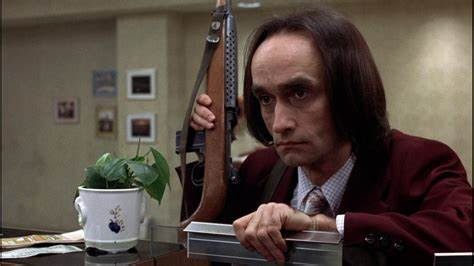
Sonny may look is in control of things, but it’s quickly clear no-one really is. Even Sonny feels this, Pacino delivering with a resigned calm a scene where Sonny asks one of the bank tellers to record his final will. Dog Day Afternoon is also a tragedy, with the real victim being Sal, Sonny’s partner in the robbery. He’s played with an almost childish innocence by John Cazale, as a not very-bright man completely out of his depth, whose idea of a foreign country to escape to is Wyoming (a hilarious piece of improvisation by Cazale). While Sonny is the public face of the situation – and someone law officials figure they can work with – Sal becomes a dangerous unknown quantity for them that they feel needs to be disposed with. An offer they openly make to Sonny, who furiously rejects it (but, tellingly perhaps, doesn’t tell Sal about).

Poor Sal sweetly chats with the staff. He quietly warns about the dangers of smoking. He sweats and timidly waits to be told what to do. He bravely tells Sonny that he is completely ready to shoot the hostages, while clearly having no idea about the emotional reality of doing this. He meekly follows instructions and is responds with panic to almost every situation. Cazale’s flawless performance turns him into the real victim here, completely unprepared in every way for the situation he is in (he whiningly complains about being called gay on the news, and is terrified at the idea of flying with the hostages to a foreign country, having never been in a plane before). It’s a wonderful personal tragedy that plays in the background of the film.

Lumet’s film has the dynamic vibe of a fly-on-the-wall documentary turned drama. Pacino is the perfect actor for this, his performance (Oscar-nominated) sensational, high-octane and demonstrative mixed with confused, vulnerable and eventually traumatised and guilt-ridden. The film brilliantly balances questions of politics, media and sexuality, offering seering critiques of attitudes around all three. Wrapped into a fire-cracker film, this is a brilliant piece of social commentary, personal tragedy and street theatre. Overlooked more than it deserved, it’s a masterpiece of 70s film making.

Summerland (2020)

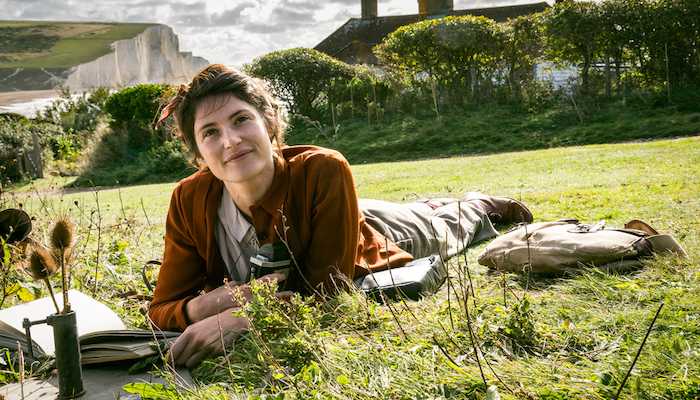
Gemma Arterton is a misanthrope with a buried heart of gold in Summerland

Director: Jessica Swale

Cast: Gemma Arterton (Alice Lamb), Gugu Mbatha-Raw (Vera), Penelope Wilton (Older Alice), Tom Courtenay (Mr Sullivan), Lucas Bond (Frank)

As London is suffering under the Blitz, in a sunny village in Kent reclusive writer Alice Lamb (Gemma Arterton) has her world turned upside down when she is forced to take in young evacuee Frank (Lucas Bond). Depressed and lonely after the collapse of her relationship with the glamourous Vera (Gugu Mbatha-Raw) at college, Alice has shut herself off and leads a solitary life. So it surprises her when she finds her heart thawing for Frank – though not as much as she will be by other revelations.

Jessica Swale has a successful career as a playwright. Several of her plays look at the place of women in history. Blue Stockings was a fascinating (and highly popular) story of female undergraduates in the late Victorian era, smart enough to excel academically but seen as second-class citizens in Cambridge. Nell Gwyn rehabilitated Charles II’s mistress as an intelligent and caring woman and a talented writer and actress. Summerland follows some of these themes – focusing on a lonely lesbian in the 1940s who, with her unconventional interests and academic leanings, is out of touch with her time. But Summerland softens this up by covering the whole story in a dreamy, luscious warmth where everything works out fine and acceptance and reconciliation is the name of the game. It’s both far less interesting than Swale’s stage work and also just as enjoyable.

Not there’s anything wrong with a a bit of cosiness in film. But Summerland is so relentlessly feel-good you end up missing a little bit of bite. Could there not be one character who questions Alice’s sexuality (which even by the 1970s, where Penelope Wilton plays an older version of the character, was hardly welcomed with open arms)? Surely in this seaside town of Kent there would be whisperings of a sort around the village’s multicultural population? Would the colour of Vera’s skin cause no comment from anyone at Cambridge or elsewhere? There are darker societal issues that could have been explored here that just aren’t touched on. I suspect the film is going for a “colour blind” casting, which works in theatre and with older time periods, but seems a bit more awkward when applied to a time period when race was a very real issue. You’d get a ton more social commentary from an episode of Call the Midwife which somehow feels a bit wrong.

But then the film isn’t trying to make a social comment, but is trying to be a bit of escapism. On that score it works very well indeed. With gorgeous Kent scenery, wartime Britain looks like the sort of idyllic Sunday tea-time drama-land you’d love to live in. The fundamental decency of everyone is somehow rather reassuring – even town gossip and busybody Sian Phillips has a heart of gold – and the film bubbles along through a series of events that are both utterly predictable (and at times hugely implausible) and also strangely reassuring. Because you could figure out most of the film early on, you never need worry.

It’s given a great deal of energy by Gemma Arterton’s performance of bad-tempered misanthropy, which of course hides great reservoirs of love and warmth for humanity. Arterton has some beautiful comic timing (an early scene where it appears she is using a ration coupon to buy chocolate for a child without coupons, only to trouser it herself is perfectly done, and probably the film’s highpoint) but also really succeeds in demonstrating the emotional trauma and pain Alice is experiencing. There is a beautiful lightness about how she opens up to Frank (scenes that are of course hugely predictable but still delivered with a genuineness and sweetness that really works).

The flashbacks allow a sun-kissed romance between Alice and Vera to play out, and leave enough questions to keep us guessing (for a bit) as to how this relationship failed to flower. (Needless to say, despite a brief line about flying in the face of society, we never see for a fraction of a second that anyone has any problem with this completely public relationship). Vera is warmly played by Gugu Mbatha-Raw, who brings a radiant life to the part. (A fun moment for Swale watchers – Arterton and Mbatha-Raw both played Nell Gwyn in Swale’s play.)

Summerland throws in a bit of thematic depth around a hunt for Fata Morgana mirages – the focus of Alice’s latest book – and the possibility that these cloud-based mirages of castles carry some sort of spiritual message from the afterlife. But this also serves as part of the film’s easy solving of problems. Any obstructions to the characters’ happiness are swept aside, either by not being mentioned or by the narrative swooping in (one offscreen “character” is easily dispatched, so that we feel no conflicted guilt at their existence getting in the way of the resolution). But this is a film that is offering a light, simple, gentle, escapist story. Nothing remotely challenging – or even really hugely dynamic – happens in it, but for those looking for Covid escape, Swale’s escapist, sweet film debut is worth a look.

Portrait of a Lady on Fire (2019)

Noémie Merlant and Adèle Haenel are part of an illicit affair in Portrait of a Lady on Fire

Director: Céline Sciamma

Cast: Noémie Merlant (Marianne), Adèle Haenel (Héloïse), Luàna Bajrami (Sophie), Valeria Golino (The Countess)

There have been several well-known, successful films made that have focused on male gay couples but, perhaps because female directors are simply fewer in number, there have been fewer films that have focused on lesbian love stories. Portrait of a Lady on Fire is a triumphant course correction to this, a film that is both a beautiful artistic statement and also a deeply moving and involving romance drama, subtly and truthfully told. 

Marianne (Noémie Merlant) is a young female artist in late eighteenth-century France, who is summoned to an isolated island to paint the daughter of a Countess (Valeria Golino). The daughter – Héloïse (Adèle Haenel) – has been plucked from her chosen life in a convent after the death of her sisterm and is now set to marry a Milanese nobleman. A painting of her is needed to “seal the deal”. Problem is, Héloïse refuses to sit for any artist – so Marianne is to pretend to be her companion in order to study her and paint her from memory. However, as the trust between the two women grows, Marianne confesses to Héloïse – and destroys the painting – an action that finally leads to her agreeing to sit for a new painting. As the Countess leaves the two women alone on the island with just a maid, Sophie (Luàna Bajrami), the painting continues – as does the bond between them.

Sciamma’s film is beautifully made, an artistic triumph of intense feeling that helps us forge a deep emotional bond with these two women. Sciamma uses mid shots and close-ups for almost 70% of the film, an effect that brings the women’s faces – and the often micro-emotions that cross them – into sharp focus, as well as building a stunning sense of intimacy between them and the audience, as if we are pressed close up against them. It allows us as well to really feel the growing physical closeness between the two women, as they more and more share the frame. 

Sciamma only breaks away from these to longer shots when the camera moves outside of the house – to capture the women walking to and from the house across the island’s beach – or when disagreement has broken between them. The effect is stunning, totally immersive, and allows the two actresses to beautifully convey a deeply felt courtship that takes well over half the film to flower into an actual relationship after a prolonged, hesitant, second-guessing courtship.

Noémie Merlant is wonderful as Marianne, the artist who has struggled all her life as a woman in a man’s world, restricted by what she is and is not allowed to paint (from themes to nude men – which are of course out). Marianne is a woman with a thick skin, who is careful to avoid opening herself up, but eager to form a bond beyond this. The “artist” of the relationship, she has spent her life observing the world but only rarely allowed herself to be part of it. Her quietness is neatly contrasted with Héloïse’s more noticeable immediate chill, which is itself a careful shield from a world where she has no choices, but reveals a deep longing for emotional and intellectual freedom and a humming tenderness and gentleness. It’s an equally superb performance from Adèle Haenel.

Both women are struggling to express themselves in a men’s world. A man hardly speaks in the entire film (and other than in the film’s opening and coda, they don’t even appear) but the presence of men hangs over the entire film. The little commune of independence that Marianne, Héloïse and Sophie form – a very equal, comfortable naturalness where they cheerfully exchange roles, with the maid relaxing while the mistress cooks – can only exist while men are distant. The judgements and decisions of men affect all their lives – from Marianne’s painting to Sophie’s pregnancy, which the women work together to avert. 

When we do see men they are distant and selfish. On the boat over to the island at the start of the film, not a single man lifts a finger to save her painting gear after it is dropped in the ocean (forcing Marianne to dive in herself); at the film’s conclusion, the male servant who arrives promptly takes the centre of the kitchen and demands to be served dinner. The women’s enjoyment of leading their own lives – from their relationship, to Marianne’s triumphant decision to sketch a recreation of Sophie’s abortion, capturing a moment no man would ever choose to paint (or have a clue how to) stresses that, never mind sexuality, women got to make very few decisions of their own in the eighteenth century.

But it’s the relationship that is central, and it’s beautifully and organically developed with an immensely involving delicacy. Every beat is perfectly placed and the effect is overwhelmingly emotional. Sciamma uses music only three times in the film: once Marianne’s enthusiastic to recreate Vivaldi on a harpsichord for Héloïse’s enjoyment early in the film (a touching sign of her eagerness to share her passions), again for a haunting but beautiful moment of singing from a group of peasant women on the beach, and finally a powerful echo of the movie’s first use of music, surely bound to take its place as one of the great endings of film. 

For the titular painting itself, the one that captures Marianne’s feelings about Héloïse rather than the one she paints for the suitor, it appears only briefly on screen and we never see its creation. What we see is the moment that inspired it – a Héloïse so wrapped up in Marianne that she never even notices her dress catch fire in a bonfire on a beach – and it’s that which is truly important. At that moment we know everything about what that moment means to both women, and the force of a love that will last the lifetime of both women and shape their emotions and lives in profound ways. Sad, beautiful, joyful, triumphant Portrait of a Lady on Fire is a great piece of film-making.

Midnight Cowboy (1969)

Jon Voight and Dustin Hoffman are an odd couple in the Big Apple in Midnight Cowboy

Director: John Schlesinger

Cast: Jon Voight (Joe Buck), Dustin Hoffman (Enrico “Ratso” Rizzo), Sylvia Miles (Cass), John McGiver (Mr O’Daniel), Brenda Vaccaro (Shirley), Barnard Hughes (Towny), Bob Balaban (Young Student), Ruth White (Sally Buck), Jennifer Salt (Annie)

Even today it still feels like an odd Best Picture winner: two down-and-outs in the slums of New York, both trying to hustle, develop a strangely symbiotic relationship part brotherly, part semi-romance. It’s even more bizarre when you remember the year before the Academy had given the Big One to the super-safe family-friendly charms of Oliver! Still the only X-rated film to win Best Picture (though it looks hilariously tame for such a rating today), Midnight Cowboy is both the first step towards the fresh, modern film-making of the 70s and also a dated landmark of a particular era of film-making.

Joe Buck (Jon Voight) is the would-be Cowboy, escaping the hum-drum life of dishwashing in a run-down restaurant in Texas (not to mention a backstory darkly hinted at of a childhood of neglect and traumatic sexual encounters of the past) to make the trip to the Big Apple to find a new career – as a gigolo. After all he “ain’t a for-real cowboy. But [he is] one helluva stud”. Sadly making a career of sleeping with rich women for money ain’t half a lot harder to pull off than you might think. Not least when you are quite the naïve rube, certainly compared to more practised hustlers like “Ratso” Rizzo (Dustin Hoffman), a crippled, seriously ill born-and-bred New York who lives a hand-to-mouth on the streets desperate for each coin he can find. Both hustlers team up to try and make their wealth from Joe’s attractions – but life is tough for the desperate underclass of American society.

Released in 1969, the film stunned the States with Brit John Schlesinger’s insight into the dark underbelly of the American dream. Schlesinger, in a way few film makers before had, focused on the scuzzy poverty of the American loser, the two dreamers who fantasised about turning their lives around into the American ideal, but instead met failure and depression at every turn. This was a million miles from the “poor boy made good” vision of past films, or the sort of Capraesque spin of small-town guys winning out in the big city due to their inherent pluck and honesty. There’s none of that in Midnight Cowboy

Throw in Schlesinger’s style – the way his camera immerses you in New York with its “on the hoof” immediacy (Schlesinger couldn’t afford to get the streets closed, so simply shot the actors in medium or long-shot in real streets and locations, with real people) – and you got a vision of America you hadn’t seen before. The use of locations gives triumphant shots – Jon Voight emerging head and shoulders above the New Yorkers as he walks through bustling streets – and also moments that hum with authenticity. Most famously Hoffman’s “I’m walkin’ here” outburst when the actor was nearly mowed down by a taxi mid-shot while crossing a road. Midnight Cowboy takes you down in the gutter with these characters, and makes you feel part of their world. When we see the freezing poverty they live-in – in an abandoned apartment block – you practically shiver with them.

Throw in with this Schlesinger’s (and Waldo Salt’s fabulous script) careful and sensitive exploration of the bonds between the two men. Starting as strangers, both Ratso and Joe slowly find themselves drawn together in a symbiotic way that’s part soul mate, part unspokenly romantic. It’s implied throughout that the two characters feel a connection towards each other that they lack both the emotional and intellectual language to understand. But it’s there for the audience to pick up on, even if the sexuality of the two characters is something they seem barely able to understand (Joe’s sexuality is certainly far more fluid than he can even begin to grasp, while Ratso hurls around homosexual slurs so often you can tell he doth protest too much). These characters become inseparable, tending to each other (at one point an ill and soaking Ratso loosely embraces Joe, while Joe uses his shirt to dry his face and hair), sharing dreams and hopes for the future, forming a bond that goes way beyond questions of sexuality. For both of them it’s more than clear that an emotional bond like this is something alien to them both, a connection they have long feared in a cruel world.

Both actors excel in the two roles. Voight – in a career making performance – is understanding as a man who is naïve, easily fooled, caring but distant, who slowly begins to replace his wide-eyed innocence with a greater understanding of himself. Joe is a hopeless hustler – a failure as a seducer of women, and twice reduced to tragically mismanaged male prostitution, a stud who ends up paying his first customer to spare her feelings. The film carefully sketches in a backstory of emotional frigidity which adds context to a character who is charmingly selfish but learns to make a connection with another human being.

Hoffman was equally keen for the role, desperate for a part that would be the polar opposite of Benjamin from The Graduate. While Voight plays with a grounded naturalism and unaffected genuineness, Hoffman’s performance pushes the envelope of quirk. There is no end to the affectation of the role – scruffy, limping, sweaty, loud, twitchy – it’s a show-off of a role, with the moments of emotional vulnerability seized on with an actorly relish. But it still works because, despite it all, Hoffman communicates a genuine empathy and sorrow in the role, and because the performance bounces so well off Voight’s stiller, more balanced work.

The film works less well when it drifts away from this central pairing. The “marks” get short shrift, with the women in particular either hornily manipulative (Sylvia Miles, receiving a generous Oscar nod for five minutes work) or serenely wise (Brenda Vaccaro as a woman with more insight into Joe’s fluidity of sexuality than himself). Joe’s male marks are a tragically ashamed young student (Bob Balaban in an effecting debut) or full of messed up self-loathing (Barnard Hughes). 

Similarly, Schlesinger’s directorial flourishes may have looked like modern cinema verite at the time, but don’t half look like dated, heavy-handed touches today. Joe’s backstory – told in wordless sequences with different film stock – not only seem tiresome and alienating but also flimsy in the extreme in their psychological insight. Schlesinger’s satire on the Warholesque arty high-life of New York is heavy handed in the extreme, and its filming style outrageously clunky. The film’s psychological depth is thin and insight often blunted, while Schlesinger’s analysis of character often seems dependent on actors (some overindulged) rather than a true vision.

But despite that, Midnight Cowboy works because the characters are so rich and the insight into the life down-and-outs in New York still feels real. Voight and Hoffman (for all his indulgence) are excellent and the sexless romance between the two characters is intriguing and, by its conclusion, carries real emotional weight. While dated and lacking in as much insight as you might wish, it’s still a film that reflects on the damaging gap between dreams and reality, and the difficulty of casting the former aside.

Colette (2018)

Keira Knightley tries her best in this light but safe biography Colette

Director: Wash Westmoreland

Cast: Keira Knightley (Gabrielle Colette), Dominic West (Henry Gauthier-Villars/Willy), Eleanor Tomlinson (Georgie Raoul-Duval), Aiysha Hart (Polaire), Fiona Shaw (Sido), Denise Gough (Missy), Robert Pugh (Jules), Rebecca Root (Rachilde), Julian Wadham (Ollendorff)

In the era of #metoo what could make for a more relevant storyline today than this biography of Gabrielle Colette (Kiera Knightley), a young woman who marries literary playboy Henry Gauthier-Villars (Dominic West) aka Willy. Henry brings her back to Paris, and reveals the secrets of his success – he is the front man for a host of ghostwriters, producing articles and even novels for the public. Colette writes a novel for the “factory”, based on her own childhood – Claudine àl’école – which Willy initially rejects but later publishes under his own name (after he has suggested revisions to improve its plot and general raunchiness). The book is a smash – and Willy is a sensation – as are the sequels, but the growing frustration Colette feels at her lack of recognition, combined with the growing sense of freedom she finds in their open marriage, starts to lead her to question what she wants from her own life.

Colette is a decent, rather middle-of-the-road and middlebrow literary biography, that dabbles with controversy and racy content, but essentially follows a fairly traditional structure of our hero finding her own voice. The most interesting thing about it, despite the obvious surface message of the woman exploited by a man, is to suggest that while Willy certainly profited from Colette’s work, he was also the primary driver in her development as a writer and that the two of them maintained a stable working partnership for years until events led to their collapse. 

Much has been made in particular of a scene where Willy locks Colette into a room to write – and there isn’t a single review that hasn’t mentioned it – but, in the context, it’s Colette who has failed to focus on the writing (which the pair have already been paid for), or wdo the work she has committed to do, much to Willy’s disappointment when he returns to the country home that the advance for the book has paid for. While her objections are at first furious she swiftly settles into writing in the room (and there is no suggestion that this event is any more than a single one-off, a shock tactic from Willy to get Colette creating again). This isn’t to say the film is suggesting that Colette shouldn’t have received all the credit and freedom from the start, but it does raise more interesting questions: yes Willy was taking advantage of her, but yes he also pushed her to achieve things she would never have done herself.

It’s all part of Dominic West’s superb performance as Willy, skilfully balancing a man who (until the final act of the film) is neither flat-out villain or misunderstood hero, but a man of shades of grey: flawed, selfish, lazy, thoughtless but also encouraging of his wife’s exploration of her own sexuality and creativity, supportive and capable of acts of charming sweetness and kindness. Westmoreland makes clear that for much of the marriage their relationship was functional and a good match, for all it was founded on the false sands of Colette being denied the public credit for her own work. Sure he spunks their money up the wall continuously, but he also helps her become an artist. 

For all the film’s workmanlike structure and obvious telling, this does make for a far more interesting version of the story than the straight “ogre-victim” story you might expect, even if it does start to get a bit bogged down in sexual shenanigans. The mostly focus around bisexual American socialite Georgie (Eleanor Tomlinson with a soapy Southern accent), who becomes the lover of both Colette and Willy. It’s part of the sense of Colette questing for an identity, but the idea of what this is and what the journey is never quite solidifies into something really incoherent. Though I suppose you could argue the journey is Colette realising she doesn’t need Willy, and that shorn of him she can survive far better on her own than he can without her.

Part of this is connected to Keira Knightley’s solid, but not quite deep enough, performance as Colette. As is often the way with her best work, Knightley works her socks off here and is clearly completely committed to the role and the film – but she just isn’t quite capable of elevating the depths of her skill to meet the full demands of the film. She doesn’t disgrace herself at all, but it’s a performance that never had enough fire and life to really become compelling.

It means you don’t quite get the powerful feminist message the film is aiming for. Knightley’s performance isn’t quite strong enough to counter-balance West, and the film’s failure to put together a compelling story line around what Colette actually wants – the film eventually settles for a rather ill-thought out phrase about wanting to lead her own life – means it peters out without much impact. There is a powerful story in here around women being denied recognition for their own talents and skills, but it never quite coalesces as it should.