Category: Media satire

The King of Comedy (1983)

The King of Comedy (1983)

Scorsese’s dark satire on the obsessive love of fame was miles ahead of its time

Director: Martin Scorsese

Cast: Robert De Niro (Rupert Pupkin), Jerry Lewis (Jerry Langford), Sandra Bernhard (Masha), Diahnne Abbott (Rita Keene), Shelley Hack (Cathy Long), Frederick De Cordova (Bert Thomas)

Like moths to a flame, celebrity attracts obsessives, weirdos and those desperate to grab their slice of fame’s limited cake. In our world of influencers and social media, the sharp, uncomfortable and acidic King of Comedy has become a classic after flopping on release. The world seems full of Rupert Pupkin’s today, people who feel their mission in life is to share their gifts for entertaining with the world and feel ownership over their famous idols.

Rupert Pupkin (Robert De Niro) feels like this about TV chat-show host Jerry Langford (Jerry Lewis). Pupkin sees himself as a polite, affable comedy-star-in-the-waiting and only the fact that he and Langford have never met is preventing them from forming a deep and lasting friendship. In actuality, Pupkin is a fantasist with an elaborate fantasy-world he struggles to differentiate from reality. Believing Jerry wants to give him his big break, his stalkerish attempts to become the star’s protégé lead to inevitable rejection. Desperate, he allies with Jerry’s even-more-openly obsessive stalker Masha (Sandra Bernhard) to take desperate measures to break into the spotlight.

The King of Comedy gets, in a way few other films have done before or since, the dark outer-reaches of the allure of fame. It’s a film about people desperate, in different ways, to have a part of the glamourous exciting world are pressed up against the screen watching. It’s about the darkly-comic – and, in their way, terrifying – lengths people will go to feel special and noticed. To land a quiet moment with a distant superstar or (even better) to become the celebrity themselves.

There’s a little bit of Rupert Pupkin in all of us. Perhaps that’s why we find De Niro’s exquisite performance both hilarious, mortifying to watch but also strangely endearing. Who hasn’t spun in their head elaborate fantasies full of warm conversations with those we admire, where they fall over themselves to tell us how amazing we are? Or imagined a critical teacher going on television to tell the world how wrong they were? Or dreamed of impressing the person we fancied at school with tales of our high-flying success among the hoi-polloi?

What we perhaps don’t do, is build a replica TV studio in our apartment, staffed with life-size cardboard cut-outs of our heroes. Or act out, long into the night, the conversations we wished we had. We probably don’t try to force up fantasies weekend retreats with superstars into reality by turning up at their houses unannounced with a date we want to impress in tow. We might enjoy flirting with a little fantasy life, we’ve probably not started to believe it or started to resent the celebrities for not performing in real life the affection they show us in our mind.

But Rupert does. Superbly played by De Niro – this might just be his finest performance, hilariously over-eager, pathetic but with just the possibility of Bickle-like danger under the surface – Pupkin lives half in this world, half in his own. He doesn’t even seem to realise how socially awkward or desperate he is, approaching every conversation with an air of polite, calm decency. The sort of guy who hands over his own autograph to the girl he’s trying to impress, telling her it will be worth a fortune one day. Who, when he finally gets the chance to talk to his idol after ’rescuing’ him from a deranged fan (something we quickly realise is a set-up – and an indicator of the ends Pupkin will go to), seems literally unable to let the conversation end, utterly unaware each additional word that passes his lips makes it less-and-less likely Jerry will ever speak to him again.

Pupkin only looks normal when he’s compared to his partner in Jerry-obsession Masha, a superbly grating performance of unhinged monomania from Sandra Bernhard. Masha and Rupert – the sparky, bickering interplay between De Niro and Bernhard is electric, the two sounding like children feuding over the last cookie in the jar – are two halves of the same personality: Rupert the more polite, more capable of affecting normality part who longs for a celebrity to recognise him as one of their own; Masha is the possessive id, who wants to grasp her object of affection tight and never let them go, focused on celebrities because they are easier to follow than regular people.

But we’ve all been desperate to take a chance to get close to something we want haven’t we? When presenting himself at Jerry’s office with his demo tape, Pupkin politely but firmly refuses to read any social cues from the staff that they want him to leave. De Niro’s permagrin is a superpower, rejection bouncing off him unscathed. De Niro manages, under the smile and unassuming manner, to always demonstrate Pupkin’s belief fame is his due. The King of Comedy really understands the belief many feel that all which separates them from success is luck. Pupkin rejects hard work and honing his act, genuinely not understanding why he can’t graduate straight to prime-time TV. He’s a millennial ahead of his time, someone who believes if he really, really wants something he should get it.

What’s fascinating about Scorsese’s film is it encourages us to share Pupkin’s delusional perspective. Jerry Langford – a superb performance of bitter, dark self-parody by Jerry Lewis – is all smiles on TV but, as far as we can see, a surly bully in reality, frequently abrupt and rude. But think about it: we only really see him from the perspective of the invasive Pupkin and the frankly terrifyingly Masha. Would you cut these guys any slack? In brief moments where King of Comedy puts us in Jerry’s shoes, it’s clear his world isn’t always pleasant: the woman who responds to his polite refusal to talk to her son on the phone screams “You should die of cancer” at him and he’s obvious genuinely scared of Masha. Is it a surprise he clutches a golf club throughout his confrontation when Pupkin arrives at his home? He chooses his words carefully because too much interaction can be as dangerous as none-at-all.

What’s also quietly clever about King of Comedy is that Pupkin isn’t talentless as such. His problem is all his material is as derivative and carefully studied as his attempt to act normal is. When we see his act, some of the jokes land – but they land like with the carefully planned poise of an obsessive who has copied the tics of those with genuine talent. Pupkin is witty, but it’s outweighed by his obsessive desire for immediate fame. Everything about him is carefully crafted, his entire persona constructed to cope with the world. That’s why he retreats so often in fantasy, where everything is easier.

And maybe King of Comedy heads into fantasy, much as Taxi Driver perhaps does. Don’t trust a Scorsese-De Niro film where someone who we’ve seen as maladjusted, unaware and self-deceiving as Pupkin gets what he wants at the end. King of Comedy shares huge amounts of DNA with Taxi Driver – history repeating itself as farce – even if Pupkin is too childish and incompetent to be as much of a danger as Bickle is.

King of Comedy captures all this with a brilliant understanding of the addictive qualities of fame and celebrity. Sure we sort of like Pupkin sometimes, but we also understand why Jerry finds him so unbearable and unsettling – and also clear just how short a distance he would need to travel to become Masha. King of Comedy delivers all this with an unflashy skill and hosts a truly superb performance from De Niro, a pitch-perfect study in weakness, longing, delusion, repressed desperation and strange vulnerability. It speaks to feelings we’ve all had, but it also reveals the horrific end results of those longings.
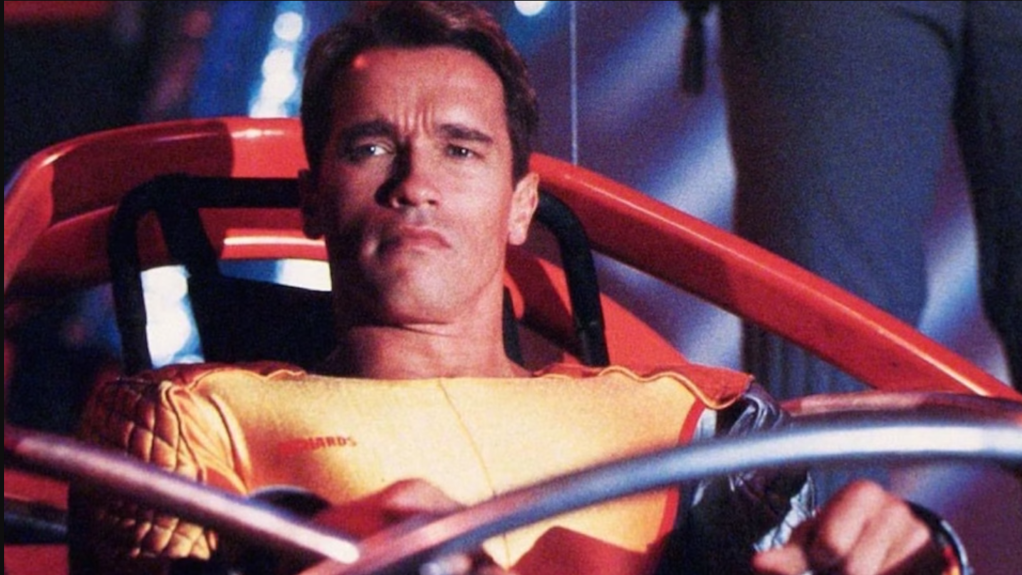
The Running Man (1988)

The Running Man (1988)

Gloriously stupid Arnie vehicle, sort of satire but really a chance for violence and wise-cracks

Director: Paul Michael Glaser

Cast: Arnold Schwarzenegger (Ben Richards), María Conchita Alonso (Amber Mendez), Richard Dawson (Damon Killian), Yaphet Kotto (William Laughlin), Jesse Ventura (Captain Freedom), Jim Brown (Fireball), Erland Van Lidth (Dynamo), Marvin J. McIntyre (Harold Weiss), Gus Rethwisch (Buzzsaw), Professor Toru Tanaka (Professor Subzero), Mick Fleetwood (Mick)

It’s 2017 and the USA has fallen apart (they were more right than they thought…) with a dictatorial government keeping the population in their place and distracting them from their lost freedoms with the violent TV show The Running Man, where criminals fight to the death in gladiatorial contests. The latest contestant? Ben Richards (Arnold Schwarzenegger), a former cop who everyone believes massacred civilians from his helicopter gunship but who we know is actually the hero who tried to stop it. Running Man host Dawson (Damon Killian) thinks Richards is the guy for a ratings slamdunk. But guess what? Arnie is as tough as he looks and might just bring down the system in prime time.

The Running Man makes an interesting contrast with Rollerball. In fact, it’s really just a souped-up 80s version of the same idea, of corporations using violent entertainment to keep the masses in line. The main difference being Rollerball is a sort-of lingering existentialist character study which mixes ambiguity with high-octane sports action, played out with Kubrick-inspired classical music and lingering slow-mo. The Running Man is a loud, brash, hyper-violent film that allows Arnie to flex both his muscles and his wise-cracking wit. Leaving its roots as a Stephen King adaptation far behind, it’s both a lot more stupid and a whole lot more fun than Rollerball.

The Running Man is a bizarre mix of Cronenbergish media satire and ludicrous camp comedy. It’s in-universe TV show has a parade of killers on it, laughable in their cartoonish violent silliness, with methods of killing so elaborate that they would put Bond villains to shame. Subzero is an ice-skating wrestler with a razor-sharp hockey stick! Buzzsaw dispatches opponents using (you guessed it) a chainsaw that can cut through anything! Dynamo dresses up in an electric suit, sings opera and electrocutes people! Fireball burns everything with his gas-filled flame-thrower!

You think that sounds silly? Well don’t worry because Arnie will (surprise, surprise) send them all to their maker with a karmic death (you have one guess as to how they all die) and an apt pun (“He had to split!” he grins slicing Buzzsaw in half with his own chainsaw). This is Arnie at his eighties height, expanding his brand and transforming The Running Man into his very own star vehicle. (He even squeezes in his “I’ll be back!” catchphrase). Ben is the perfect Arnie character: he’s noble but cool, muscular but witty, makes bad-ass threats and delivers on them, smokes stogies like they’re going out of fashion and waltzes off with the girl at the end after saving the world.

Arnie is sort of working alongside a resistance movement, but they don’t get in the way of his manly independence. The principle function of his resistance movement buddies Laughlin (Yaphet Kotto) and Weiss (Michael J McIntyre) is to symbolically lay down their lives to give Arnie even more moral high-ground – The Running Man makes very clear he doesn’t enter this sadistic blood-sport to protect himself (oddly in this totalitarian dictatorship, criminals still have enough rights to choose not to sacrificed on national television) but to save the lives of his Red Shirt pals. Their deaths also serve to justify the ruthless violence Arnie hands out (though of course he refuses to kill an unarmed, injured opponent just so we know all the other bodies he dropped must have deserved it).

It’s all set in a charmingly quaint 80s view of the future: power-suits for the rich and jump-suits for the convicts, with clunky TVs and worn-out urban environments. The Running Man throws in its odd surreal, camp and bizarre touch, not least the sight of Mick Fleetwood (buried under prosthetics) playing himself as the resistance leader. Its pumped-up TV show is packaged like a hyper-violent 80s mega-smash, hosted by real-life actor-turned-quiz-show-host Richard Dawson, gleefully embracing self-parody as a venal, heartless bully full of two-faced smarm with the audience while treating his staff like dirt.

Dawson, in all his larger-than-life awfulness, actually makes a pretty good foil for the muscle-bound Arnie, not least because he understands exactly what the Austrian Oak wanted from this film. Because Arnie knew people didn’t really want social commentary or satire – they wanted a black-and-white world where the ex-Terminator could smack, punch and shoot things with gleeful abandon while testing out a host of potentially quotable catch-phrases. Essentially The Running Man is a sort of Tom-and-Jerry cartoon with a sheen of social commentary, that panders shamelessly for our love of watching outré villains suffer grim and painful ironic deaths.

And you know what? Arnie was right. Because, however stupid (and its very, very stupid) The Running Man is, no matter how cookie-cutter, uninspired and predictable every single second of it is – it’s perfect, brain-dead, beer-in-hand, Friday night fun. And while the progression of Rollerball to this is a perfect example of how lobotomized Hollywood had become, at least this is fun.

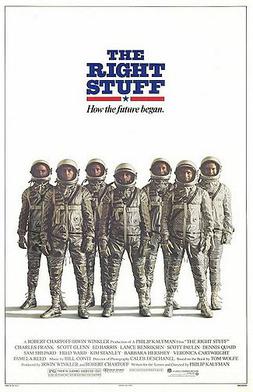
The Right Stuff (1983)

The Right Stuff (1983)

Patriotic heroism subtly retold as shrewd satire – no wonder the film bombed

Director: Philip Kaufman

Cast: Sam Shepard (Chuck Yeager), Scott Glenn (Alan Shepard), Ed Harris (John Glenn), Dennis Quaid (Gordon Cooper), Fred Ward (Gus Grissom), Barbara Hershey (Glennis Yeager), Kim Stanley (Pancho Barnes), Veronica Cartwright (Betty Grissom), Scott Paulin (Deke Slayton), Charles Frank (Scott Carpenter), Lance Henriksen (Wally Schirra), Donald Moffat (Lyndon B Johnson), Levon Helm (Jack Ridley), Mary Jo Deschanel (Annie Glenn), Scott Wilson (Scott Crossfield), Kathy Baker (Louise Shepard), David Clennon (Liaison man), Jeff Goldblum (Recruiter), Harry Shearer (Recruiter)

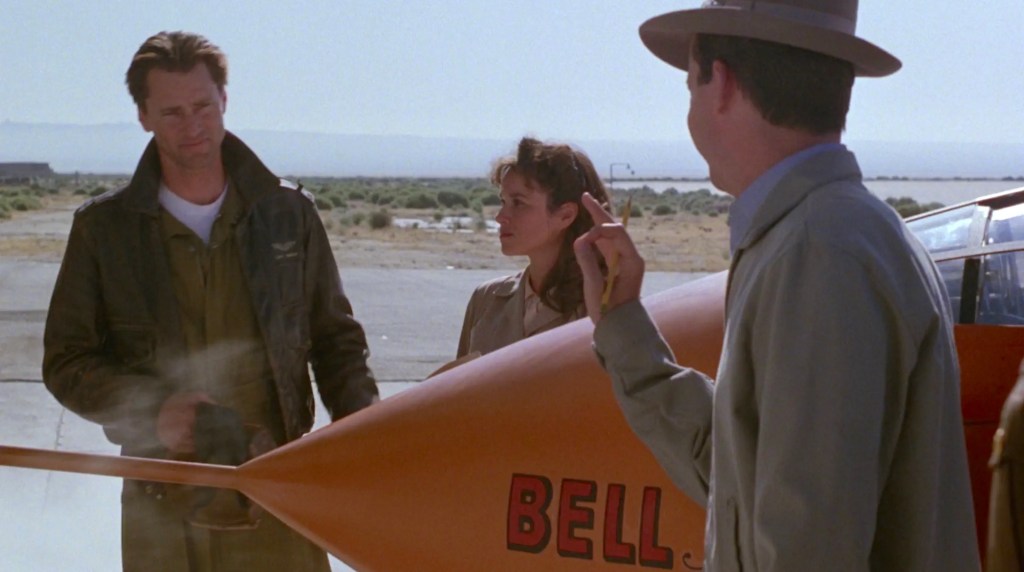
During the Cold War, the US and Russia had to fight with something – from proxy wars to chess, but most famously with Space: the competition to go further, faster and higher among the stars. The Right Stuff focuses on the Mercury Seven pilots at the centre of the US response to Soviet success including Alan Shepard (Scott Glenn), John Glenn (Ed Harris), Gus Grissom (Fred Ward) and Gordon Cooper (Dennis Quaid), a mix of the cocksure and the confident. But in a space programme where a monkey is an acceptable “pilot” for this human cannonball, do any of them have “the right stuff”? Could any of them match the skill of legendary test pilot Chuck Yeager (Sam Shepard) – one of the guys who scorned this astronaut programme for being “spam in a can”?

The Right Stuff, adapted from Tom Wolfe’s book, seemed destined to become a patriotic smash-hit. Despite its eight Oscar nominations (and four wins) it was, in fact, a catastrophic bomb. Perhaps that was because it subverted its patriotism so well. The Right Stuff is, in fact, a subtle, anti-heroic satire (told at huge length) masquerading as a patriotic yarn. It’s marketing avoided that meaning those most likely to enjoy didn’t go and see it, and those who went for that felt alienated. While largely respecting the astronauts, it suggests space race triumphalism was a sort of mass hysteria, with limited results, inflated into something mythic by political expediency, media spin and industrial might. Not the happy, flag-waving message Reaganite America expected or wanted.

Kaufman’s sympathy instead lies with an older, “truer” America. The Right Stuff is an intensely nostalgic film: but for a completely different time. It is in love with Frontier America, where men-were-men and the daring proved themselves in taming the frontier, in this case the sky itself. Our tamer is Chuck Yeager, played with a monosyllabic Gary-Cooper-charisma by Sam Shepard. Yeager is the last of the cowboys (even introduced riding a horse in the desert), taking to the skies like an old frontiersman hunting down that “demon” who lives at the sound barrier.

This is the sort of America The Right Stuff celebrates, and Yeager is the guy who has it. Unlike the Mercury programme, Yeager isn’t interested in showbiz and self-promotion (his reward for breaking the sound barrier? A free steak and a press embargo), just the quiet satisfaction of having done it. It’s the old, unflappable, quietly masculine confidence of a certain kind of American tradition and it’s totally out of step with the world the media is now celebrating with the astronauts. Instead, these effective passengers in the rocket will be hailed as the great pilots.

Kaufman’s film is a long, carefully disguised, quiet ridicule of many of the aspects of the Mercury programme. It’s conceived, in a darkened room, by a group of politicians so clumsy they can’t even work a projector. It’s head, Lyndon B Johnson (Donald Moffat on panto form) is a ludicrous figure, at one point reduced to an impotent tantrum in a car when he doesn’t get his way. The NASA recruiters are a comedy double act – Goldblum and Shearer sparking wonderfully off each other – who first suggest (in all seriousness) circus acrobats as pilots and then fail to identify Yuri Gargarin. The programme begins with a series of failed launches that travel tiny distances before exploding, culminating in one attempt ending with an impotent pop of the cap at the top of the rocket.

NASA is slightly ramshackle and clueless throughout. Far from the best and brightest, Kaufman is keen for us to remember that many of the scientists fought for the Germans in the war, that decisions were often made entirely based on what the Russians have just done, that the astronaut recruitment tests are a parade of bizarre physical tests because no one has a clue what to test for, and that the final seven selected aren’t even the best just the ones who persevered through the tests and (crucially) were small enough to fit in the capsule. That doesn’t stop the media – played by a San Francisco physical comedy troop – from turning them overnight from jobbing pilots to superstars.

The astronauts status is frequently punctured. Scott Glenn’s granite-faced Shepard is strapped into the cockpit for hours on his first flight, until finally he begs to pee (followed by a montage of coffee being slurped, hose pipes blasting and taps dripping) before being instructed to release his bladder into his suit, meaning he heads into space sitting in a puddle of his own piss. Dennis Quaid’s cocksure Cooper has an over-inflated idea of his skills and is prone to dumb, blow-hard statements (arriving at Yeager’s Air Force base he non-ironically states he’ll soon have his picture up on the deceased pilot’s memorial wall). Fred Ward’s Gus Grissom is a slightly sleazy chancer – controversially The Right Stuff presents him as panicking on re-entry from his first mission, blowing his hatch and sinking his ship, something he categorically denied (and was later proved not to have done).

Even John Glenn, played with a sincerity and decency by Ed Harris (if this had been a hit, Harris’ career of playing hard-heard would have been totally different), is subtly lampooned. So straight-laced he literally can’t swear (his attempt to say ‘fuck’ never gets past a strained Ffff), he’s introduced via a ludicrous TV quiz show and his square-jawed morals frequently tip into puritan self-importance. Undergoing physical tests, Kaufman even cuts from his grimacing face to a grinning chimp on the same test (and who will beat him into space). Compared to Yeager, who can correct a plane on a desperate nose dive and beat the skies into submission (and has the only outright heroic refrain in Bill Conti’s Oscar-winning score), none of them have that right stuff.

Do they get it? In a way: but their triumph is establishing their character, not their skills. Kaufman uses Yeager to point us towards this (his seal of approval is vital for the film): after Grissom’s debacle, he defends him in the bar and praises their courage in essentially sitting on top of a massive bomb.
Tellingly, the astronauts’ most courageous moment in the film isn’t in the cockpit at all: it’s Glenn supporting his stammering wife’s refusal to go on air with LBJ, despite the pressure from NASA bigwigs – and the other astronauts uniting in fury when Glenn is threatened with being dumped from the next flight. The others become more noble through maturing and casting aside fame’s temptations.

In a way they prove their spurs, even if Kaufman’s film makes clear none of them can match Yeager’s traditional values. The film ends with Yeager, maverick to the last, undertaking an unauthorised test flight in a desperate attempt to keep funding for his jet programme going. Even with this final flight – dressed in a bastardised version of a space suit – Yeager shows he’s not lost it, a man so undeniably superhuman in his American resilience that even a bit of fire won’t slow him down.

The Right Stuff celebrates Yeager, but he’s the B-story – and the film frames him as a forgotten figure, left behind by a world obsessed with the bright and shiny. The Right Stuff has to centre the astronauts but it doesn’t focus on the missions (which, apart from Glenn’s, barely receive any screen time – certainly not compared to the time given to Yeager’s flights) or the glory, only quietly implies there was a slight air of pointlessness about the whole thing – that the space race was perhaps just a dick-waggling competition between superpowers. It makes for interesting – if overlong – viewing, but as punch-the-air entertainment, no sir. No wonder it bombed.

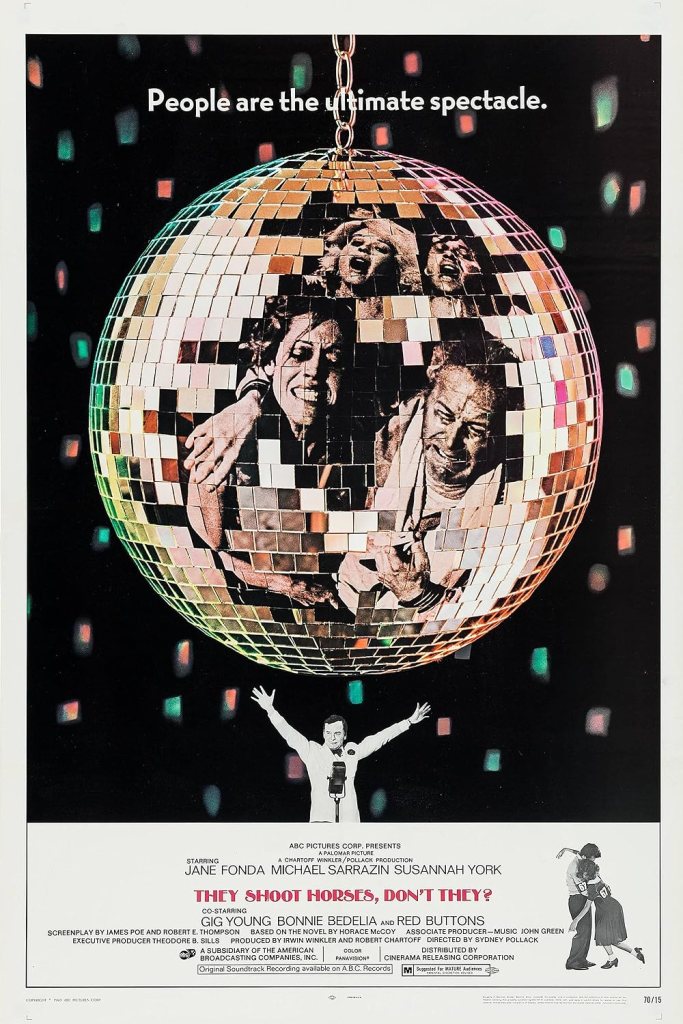
They Shoot Horses, Don’t They? (1969)

They Shoot Horses, Don’t They? (1969)

Savage satire on the cruelty of entertainment, heavy-handed at times but also ahead of them

Director: Sydney Pollack

Cast: Jane Fonda (Gloria Beatty), Michael Sarrazin (Robert Syverton), Susannah York (Alice LeBlanc), Gig Young (Rocky Gravo), Red Buttons (Harry Kline), Bonnie Bedelia (Ruby Bates), Michael Conrad (Rollo), Bruce Dern (James Bates), Al Lewis (“Turkey”), Robert Fields (Joel Girard), Severn Darden (Cecil), Allyn Ann McLiere (Shirl), Madge Kennedy (Mrs Laydon)

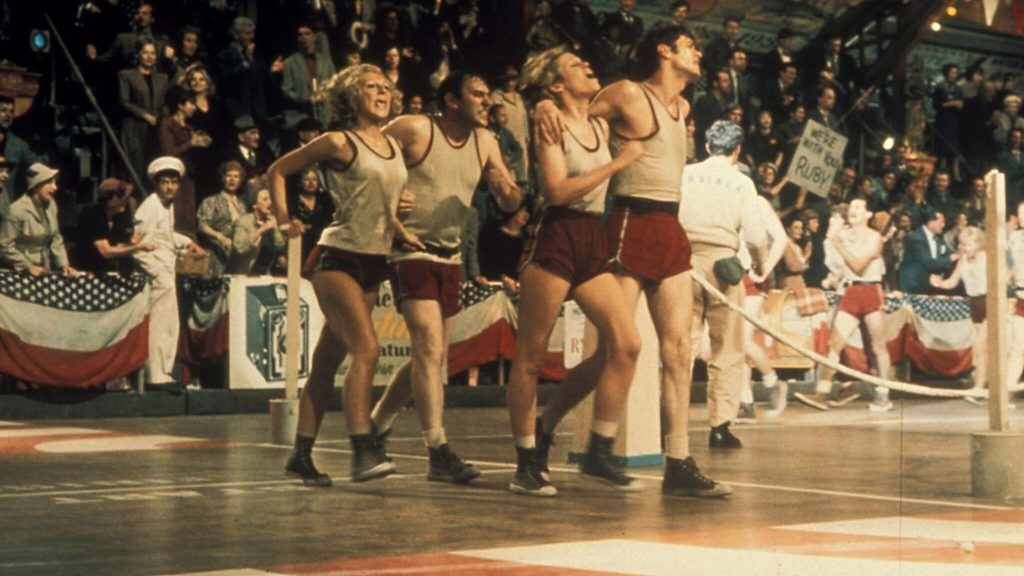
Wheeling out the desperate for entertainment was a mainstay of TV for much of the early noughties with the Simon Cowell factory repackaging human lives for entertainment. But it’s hardly a new phenomenon. During the Depression in 30s America, the country was gripped by a new craze: dance marathons. In exchange for prize money and (perhaps!) a shot at stardom, regular people came off the streets to dance (or at least move around the dance floor) for as long as possible (with short breaks every hour). These shows went on and on, hour after hour, day after day for months at a time, with the audience paying to pop in and gawp.

It doesn’t take much to see how class comes into this. The competitors are the unemployed and out of luck, attracted as much by regular food and a roof over their head. The audience are rich and comfortable, tossing sponsorship bones towards the manufactured ‘stories’ that take their fancy. The event is controlled by a manipulative, alcoholic MC (Gig Young) spinning stories and drama for the crowd. As days turn to weeks the contestants become ever more haggard, drained and physically and emotionally shattered: cynical Gloria (Jane Fonda), homeless Robert (Michael Sarrazin), aspiring actors fragile Alice (Susannah York) and distant Joel (Robert Fields), retired sailor Harry (Red Buttons) and bankrupt farmers James (Bruce Dern) and his heavily pregnant wife Ruby (Bonnie Bedelia).

Pollack’s viciously nihilistic satire throws all these into a hellish never-ending treadmill of physical movement and psychological torture that leaves each character washed out, drained, doused in sweat with sunken, sleepless eyes. You can clearly see the links from They Shoot Horses to Rollerball all the way to The Hunger Games. It’s a grim look into part of the human psyche that, ever since the Colosseum, takes pleasure out of watching the suffering of others for entertainment. The crowded audience – eating popcorn and cheering on their favourites – are as indifferent to the sufferings of the contestants as the organisers with their quack medical teams.

Designed to gain the maximum sense of claustrophobia – once we enter the hall for the dance competition, we never see the outside again for virtually the whole film – the film constantly grinds us down with the exhausting relentlessness of the show. Pollack intercuts this with brief shots of Robert being questioned by the police – moments we eventually realise are flashforwards, making it clear tragedy is our eventual destination. A siren that sounds like nothing less than an air raid warning is repeatedly heard, warning competitors any brief respite they have is coming to a close. The actors become increasingly shuffling, wild-eyed and semi-incoherent in their speech and actions, grimly embodying characters acting on little sleep, in situations of constant strain.

But then that’s entertainment! Part of the thrill for the crowd – whipped up by Gig Young’s showman, a man who oscillates between heartless indifference and flashes of sympathy for his stars (hostages?) – is watching them push on through never-ending pressure. It’s clear to us as well – from their desperate, fixed determination to complete any physical challenge set and the relish with which they consume any food given – that the contestants will tolerate anything just to have, for a few weeks, a taste of something they couldn’t hope to get living on the streets.

Their desperation doesn’t even enter into the moral calculations of those running the show. In fact it’s something that makes them easier to manipulate. Part of the MC’s calculations is creating a relatable story of suffering for the chosen few ‘leads’ any one of which can lead to a triumphant feel-good ending. Potential love-matches are pushed together, sentimental favourites are promoted. Alice’s fine clothing is quietly destroyed by the team running the show because it doesn’t fit a narrative of penniless dreamers. The participants are crafted into “characters”: the ageing Harry as the “Old Man of the Sea”, Gloria and Robert – thrown-together, last-minute partners –as star-cross’d lovers (despite their extremely tense personal relationship).

It all gets too much for the contestants. Serious medical conditions are not unusual – the frequent refrains from the (so-called) medical staff that “we’ve got a dead one” before exhausted, unresponsive contestants are slapped or thrown into ice baths to revive them speaks volumes. When a contestant does indeed die, the event is quietly hushed up for the audience with another feel-good fantasy of noble retirement. Those desperate for a shot at stardom – something they have no hope of getting from a show designed to turn them into drained-out zombies for the entertainment of the masses – are reduced to quivering messes. None more so than Alice – played with a heart-rendering fragility by Susannah York channelling Streetcar Vivien Leigh – who begins the film confidently performing a Shaw monologue and it ends it barely connected to reality.

York’s fine performance is one of several in the film. Young won an Oscar as a MC Rocky, the consummate showman who sometimes surprises us with flashes of humanity (which he clearly drowns with the bottle) before his professional ruthlessness kicks in. Red Buttons is excellent as the rogueish Harry who realises he’s out of depth far-too-late, Bedelia and Dern very good as an experienced couple earning a desperate living from marathons. Particularly fine is Jane Fonda who grounds the film with a gut-punch of a performance of barely concealed rage, deep-rooted self-loathing and brutal, angry cynicism as a woman who understands exactly the show she is in but has no choice but to play along, while hating herself for doing it.

They Shoot Horses, Don’t They feel in many ways ahead of its time and for all time – after all, entertainment like this hasn’t died out. Pollack’s film is harshly lit, and his direction is very strong, even if the film does sometimes make its points with a little too much repetitive force. It’s also a film – with its metaphor of suffering horses standing in for suffering people –a fraction too pleased with its own arty contrivance (a slow-mo and sepia tinged opening lays on its symbolism a little too thick, while its flash-forwards yearn a little too much for a French New Wave atmosphere). Michael Sarrazin isn’t quite able to bring depth to the – admittedly deliberately blank Robert – making him an opaque POV character, a role he effectively surrenders on viewing to Fonda.

But despite its flaws, They Shoot Horses Don’t They is a remarkably hard and incredibly bleak film on human nature, which doesn’t let up at all as it barrels to its almost uniquely grim and nihilistic ending. It offers nothing in the way of hope and paints a world gruesomely corrupted and completely indifferent to the thoughts and feelings to the most vulnerable in it. It is ripe for rediscovery.

Fight Club (1999)

Fight Club (1999)

Hugely popular, I find it widely misunderstood but also a little too in love with its own cleverness

Director: David Fincher

Cast: Edward Norton (The Narrator), Brad Pitt (Tyler Durden), Helena Bonham Carter (Marla Singer), Meat Loaf (Robert Paulson), Jared Leto (Angel Face), Holt McCallany (Mechanic), Zach Grenier (Richard Chessler), Eion Bailey (Ricky), Peter Lacangelo (Lou), Thom Gossom Jnr (Detective Stern)

When Fight Club was made, the studio didn’t get it. You can’t blame them. Studio suits sat down and just couldn’t understand what on earth this primal cry of anger, giving voice to the disillusioned and dispossessed, was going on about. Fight Club was categorically not for them. I’d managed to miss it for decades, so it’s an odd experience watching this angry millennial film for the first time when I’m now exactly the sort of punch-clock office drone its characters despised. I think I missed the boat.

Our narrator (Edward Norton) is cynical, bored and feels his life is going nowhere. Suffering from crippling insomnia, he takes to attending support groups for various terminal illness survivors, releasing his own ennui among the pain there. It’s where he meets fellow ‘suffering tourist’, Marla (Helena Bonham Carter), whom he’s attracted to while resenting her intrusion on his own private therapy. Shortly after he meets Tyler Durden (Brad Pitt), a charismatic rebel with whom he founds an underground bare-knuckle fight group for men who can’t express themselves in the modern world. But Durden’s charismatic, anti-corporatist rhetoric tips more and more into radicalism and he starts an affair with Marla. What will our Narrator do?

Sometimes I think Fight Club might be one of the most misunderstood films ever. So many people who have fallen in love with it talk about it being an attack on conformity in our cold modern world. Of its celebration of people leaving the oppressive, mindless 9-5 grind to find something true and real that makes them feel alive. To be fair, Fight Club is partly this. But how do our heroes do this? By starting a cult where the bitter, resentful and inadequate search for meaning through violence and becoming part of a monolithic organisation that bans independent thought. Essentially, it’s a cult movie, exploring what makes people who can’t relate to the monotony of the “real life”, embrace an oppressive set of rules simply because those rules make them feel important.

This misreading by many is a tribute to the brilliance of Fincher’s direction. Fincher’s film is radical, sexy, pulsating and exciting. It’s shot like a mix of music video and experimental feature and crammed with cutting, witty lines that skewer and puncture the ”grown up” ideas that so many find weary and tiresome. It’s a modern Catcher in the Rye and it pours all its functional, dynamically written anti-establishment rhetoric into the mouth of one of the world’s most charismatic stars in Brad Pitt and allows him to let rip.

Fincher’s Fight Club is really, to me, about the intoxicating excitement of anger, of how easy it is to pour your frustrations into actions that are destructive and selfish but which you can invest with a higher meaning. School shooters, incels – many of them see themselves as stars in their own Fight Clubs, as cool anti-establishment rebels who see some higher truth beyond the rest of us. Fight Club is a brilliantly staged exposure of how this mindset is created and how damn attractive it can be.

Because when Pitt lets rip with this mantra on finding truth and purpose, turning your back on Ikea and Starbucks and all the other soulless “stuff” people find important, you want to stand up and cheer with him. You can see that the attraction of forming a secret brotherhood with a series of other similarly frustrated men, who feel emasculated and purposeless in a world where they can’t do something meaningful like fight Nazis or hunt deer. How they could find satisfaction and a sense of masculine validation in punching seven shades of shit out of each other. Because, as the adrenalin and the blood flows, and the teeth go flying, you feel alive.

It’s certainly a lot more fun than trying to actually deal with your problems. Fight Club is really about this sort of toxic, masculine anger and bitterness leads us to fail to deal with our problems. The Narrator needs Durden, because he can’t manage to process his own feelings of insecurity and inadequacy. He can’t deal with ennui – except through a constant stream of cynical, privately spoken, bitter remarks – and when he meets a girl he likes, he can’t cope with that either.

Durden comes into his life straight after Marla does, and Durden does everything with Marla the Narrator can’t. He flirts with, impresses and fucks her. That’s the sort of thing the Narrator (literally) can only dream about doing. The film builds towards the Narrator realising that, by embracing Durden, he is denying himself the possibility of something real with an actual kindred spirit (screwed up as Marla is, she has decency and empathy). Fight Club – much as many of its fans who find the final act “disappointing” don’t want to admit it – is about putting away childish resentments and growing up. Even if the Narrator is culpable for the things Durden does – and only threats to Marla awaken his acknowledgement that he should do something – he recognises the aimless, irresponsible and dangerous anger of Durden is not healthy.

Because Fight Club centralises a group of terrorists who tell themselves they are plucky anarchists who don’t want to hurt anyone – but we know it never stops there. Especially when you have a mesmeric, Hitlerish figure like Durden driving people on. Pitt is superb as this raving id monster, a hypnotic natural leader who delivers rhetorical flourishes with such intense and utter belief he essentially brainwashes a legion of men into following his orders without question – acid burns, bombs and death don’t even make them blink, just even more willing to follow his orders.

Fincher works so hard to make us understand the attraction of all this that sometimes Fight Club – with its flash filtered look set in a nearly perpetual night – is more than a little pleased with its impish menace. It also takes a little too much delight in teasing its infamous twist – it’s a little too delighted with the “ah but when you watch it back” ingeniousness with which it presents a melange of scenes (the twist also makes you realise later just how brainwashed and dangerous the men in this cult must be, once we realise what they saw and how little they reacted to it). Fight Club also, for all its cool lines and winning gags, has an air of pop psychology to it. (I am very willing to overlook its cheap anarcho-socialism as we are very clearly invited to see this as empty nonsense – for all many people watching the film don’t.)

Edward Norton is extremely good in a challenging role, a stunted and bitter dweeb who dreams of being a player and barrels along with ever more dangerous events. He walks a fine line between a sheltered follower and true acolyte, in several moments showing more than a flash of Durden’s ballsy, take-no-chances, sadism-tinged determination when you least expect it. It’s the sort of performance designed to make sense in the whole, not in the moment – and on that score it’s exquisite. He also makes a wonderful pairing with Helena Bonham Carter, exploding her bonnet reputation with a part that’s rough-edged, unpredictable but surprisingly humane and vulnerable.

Is Fight Club a masterpiece? I’m not sure. It’s a very clever, sharp and dynamic piece of film-making designed to pull the wool over your eyes (in more ways than one). But it can also be overly pleased with itself and does such a superb job of getting you to empathise with the deluded and violent that when it gear changes in the final act it never quite lands as it should. It feels like an angry teenager’s idea of the greatest film ever made (and you can’t deny it digs into the same “loner who sees the deeper truth” vibe that helped make The Matrix a phenomenon later that year). It’s Fincher at his young, punk best – and maybe Fight Club got all this out of his system (you can’t believe the same man made this and Curious Case of Benjamin Button), but for me it lives in the shadow of Fincher’s dark and dangerous Seven, a film which explores similar themes but with more humanity and greater depth than Fight Club.

The Menu (2022)

The Menu (2022)

Dark satire is mixed with intelligent character work and a challenge to our assumptions in this intriguing film

Director: Mark Mylod

Cast: Ralph Fiennes (Julian Slowik), Anya Taylor-Joy (Margot Mills), Nicholas Hoult (Tyler Ledford), Hong Chau (Elsa), Janet McTeer (Lilian Bloom), John Leguizamo (Famous Actor), Reed Birney (Richard Liebbrandt), Judith Light (Anne Leibbrandt), Paul Adelstein (Ted), Aimee Carrero (Felicity), Arturo Castro (Soren), Rob Yang (Bryce), Mark St Cyr (Dave)

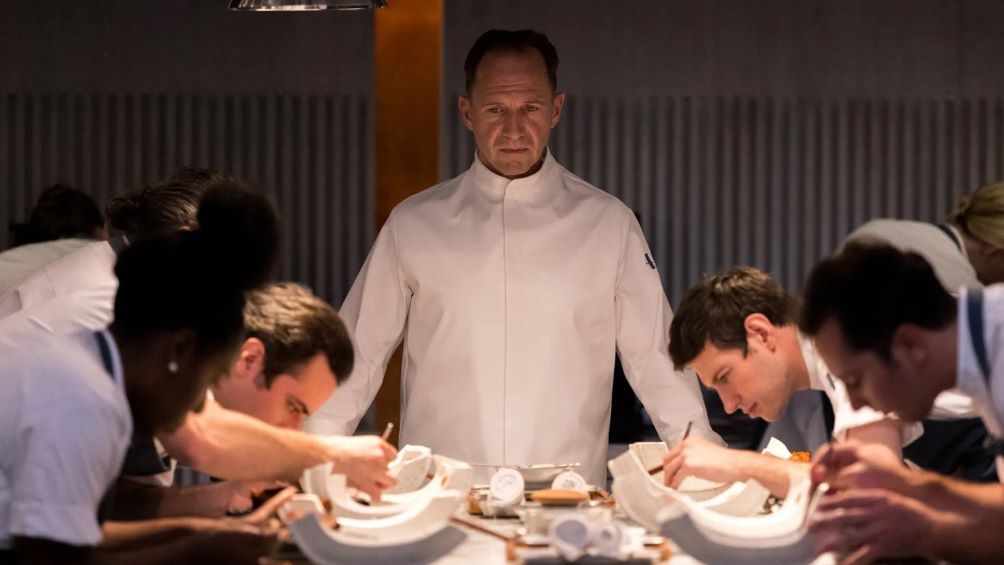
A dash of Succession. A soupcon of Hannibal Lector. Lashings of The Most Dangerous Game. All these ingredients are mixed to delightfully dark comic effect in The Menu, a sharp and tangy assault on class and modern society which leaves an unusual but satisfying taste in the mouth.

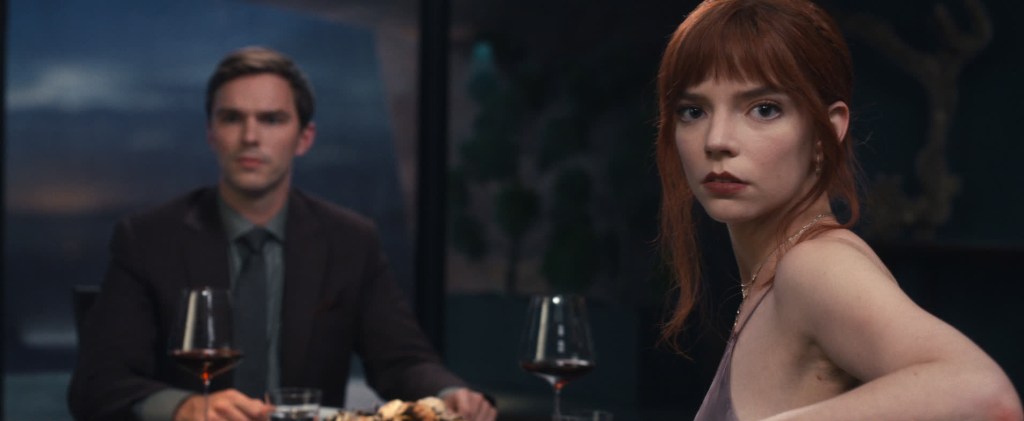
First those touches of The Most Dangerous Game. Julian Slowick (Ralph Fiennes) is a restauranteur so exclusive, his restaurant is based on a private island. Each course, of each menu is part of an overall story that forms the meal. For the story of the meal he is currently preparing, Slowick has selected an exclusive guest list of the rich and famous: businessmen, the rich, movie stars, food critics – the elite, the snobbish, the 1%. And the story he is serving up is one of increasingly grim retribution for this table-load of takers not givers. The only unexpected figure there is Margot (Anya Taylor-Joy), last-minute guest of obsessive food purist Tyler (Nicholas Hoult). How will this unexpected fly in the soup affect Slowick’s plans for the evening?

The Menu in many ways is a revenge satire. Slowick does not hold back in his increasing fury and bitterness at the people he serves without appreciation or gratitude in return. His customers are interested only in food if it costs a lot and is exclusive. They have no interest in his actual skills, in the staff (whose names they do not remember), the food itself or anything beyond their own desires. Many of the customers – most hideously a trio of “bro” investors (played with slapable smugness by Castro, Yang and St Cyr) – flash their jobs and cash expecting these to ensure their every whim is met. To them the world is like dough to be shaped into whatever bread they want it to be.

The film – with glee – exposes the hideous selfishness of the rich customers. A rich couple (Birney and Light) who have attended Slowick’s restaurants several times yet remember nothing about the food or the staff. Janet McTeer’s elite food critic, who practically scratches marks into her pen to mark the restaurants she has closed (she’s accompanied by a fawningly obsequious editor, played by Adelstein). A famous actor (John Leguizamo) who has long-since sold-out and treats his fans with contempt, joined by his spoilt rich-girl assistant/girlfriend (Aimee Carrero). Each of them is deconstructed in turns by Slowick over a series of courses parodying the snobbish bizarreness of high-class dining.

And here is where those touches of Succession make themselves known in the flavour. That series – and Mylod is a veteran (and its finest director) – also presents the ghastly shallowness and greed of the super-rich to expert comic effect. But what that show also does – and what Mylod brilliantly manages here – is make what could be two dimensional monsters sympathetic. The Menu presents these dreadful people with honesty; but, as the punishments – cruelly personal reveals, psychological torture, a finger cut off here, a man hunt there – pile up, you start to wonder if the punishment is too much?

The “bro” investors may be dreadful selfish, arrogant, dick-swinging morons: but they are also immature idiots who have never really grown up. The rich couple might treat places like this elite restaurant as a God-given right, but does that really deserve death? The food critic is harsh and arrogant, but is writing cruel words a mortal sin? The actor loathes himself for selling out his talent to make money and his girlfriend has simply been born into money and never wanted for anything. Do these people really deserve the monstrous ends Slowick has planned for them?

It’s the smartness of The Menu which could easily have invited us to just enjoy the rich and powerful being exposed, humiliated and punished. Instead, this is a smarter, more intelligent dish. The lower-class restaurant staff should be the people we are rooting for. But Slowick runs the restaurant like a cult, the staff near-robotic automatons that follow Slowick’s orders without question, intone their “Yes, Chef!” answers like a religious chant and snap to attention as one. Slowick’s number two Elsa – superbly played by Hong Chau – sums them up: all of them are desperate to become her boss and will follow Slowick to hell and back without a murmour and their heartless, personality free cruelty makes them very hard to root for.

As does Slowick himself. Here comes that sprinkling of Lector. Played with a superb, chilling intensity by Ralph Fiennes at his most coldly austere, Slowick could have been a character who swept us up in his intelligent superiority. But there is not a hint of joy in Slowick, only a vast, bubbling anger and resentment under a coldly precise exterior. Who on earth could look at this near-psychopath and think “I’d love to be him”? Slowick’s service is dryly, terrifyingly funny but you’d certainly not be left wanting to leave him a tip (unless it was your only way of getting out alive).

Instead, we gravitate towards the odd one-out. Anya Taylor-Joy is excellent as Margot, the unexpected guest who finds herself the only person unprepared for by Slowick, who is neither a member of the super-rich, but too free-spirited and independent minded to join the Slowick cult. Dragged along by Tyler – a hilarious performance of over-eagerness, snobbish elitism and stroppy self-entitlement by Nicholas Hoult – The Menu revolves more and more around the dance of death between her and Slowick. Like the audience, Margot is invited to pick a side to sympathise with.

It makes for a rich, lingering dish with an intriguing after taste, far more developed and better cooked than the sloppy revenge saga or re-heated leftovers it could have been. It left me wanting a second course.

Triangle of Sadness (2022)

Triangle of Sadness (2022)

Östlund’s super-rich satire lines up straight-forward targets to easily knock down

Director: Ruben Östlund

Cast: Harris Dickinson (Carl), Charlbi Dean (Yaya), Dolly de Leon (Abigail), Zlatko Burić (Dimitry), Iris Berben (Therese), Vicki Berlin (Paula), Henrik Dorsin (Jarmo), Woody Harrelson (Captain Thomas Smith), Alicia Eriksson (Alicia), Jean-Christophe Folly (Nelson), Amanda Walker (Clementine), Oliver Ford Davies (Winston), Sunnyi Melles (Vera)

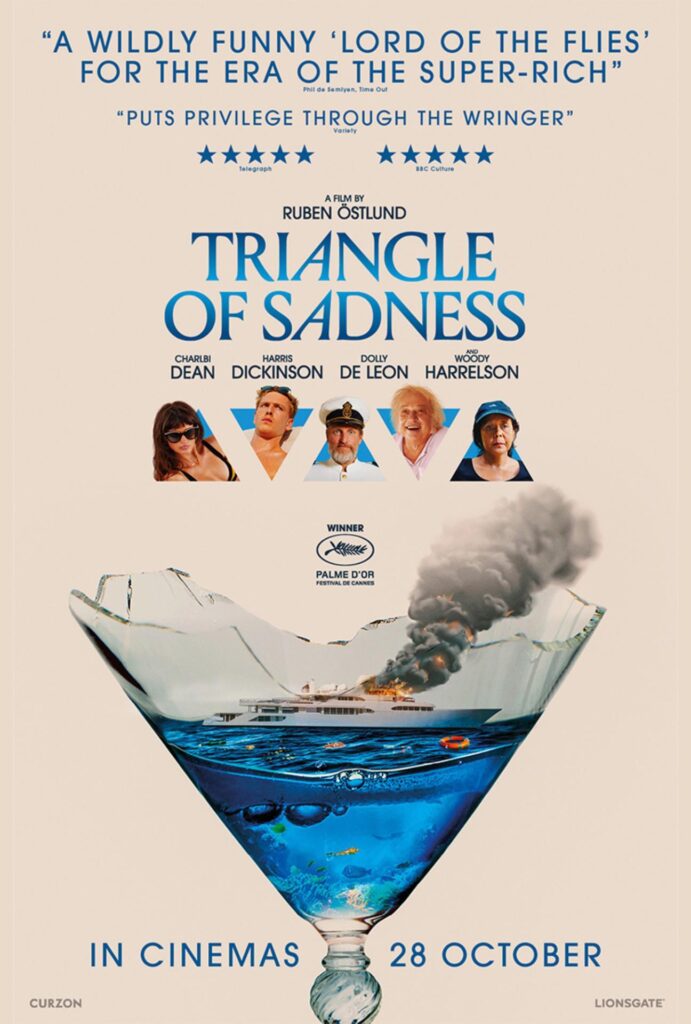
In my review of The Square, Östlund’s previous Palme d’Or winner, I described its targets as “so obvious, the entire film might as well be footage of fish being shot in barrels”. If only I’d known: Triangle of Sadness, his satire on the super-rich, takes this to the Nth degree: it’s an entire film of Östlund spraying machine gun bullets into an aquarium of drugged fish. That’s not to say there ain’t good jokes in here and several of its sequences are cheeky, engaging and funny. It’s well-made and high quality: but it’s also obvious and is in a such a rush to make its oh-so-clever satirical points that it frequently blunts its own impact.

The film revolves around a luxury cruise liner. On board: the self-obsessed, selfish, greedy representatives of the world’s oligarchs. A Russian who repeatedly amuses himself by bragging that he sells “shit” (fertiliser), a Danish app builder who splashes his cash, a married couple of British arms-traders who jovially bemoan how UN restriction on landmines made for tough financial years… you get the idea. Also on board: Instagram influencer supermodel Yaya (Charlbi Dean) and her insecure male model boyfriend Carl (Harris Dickinson). All of them treat the staff like slaves. But when the ship sinks after a storm and an attack by Somali pirates, the surviving passengers find they entirely lack the skills needed to survive on an island, unlike toilet-cleaner Abigail (Dolly de Leon) who rockets from the bottom to the top of the social hierarchy.

Östlund’s film lays into the emptiness, greed and selfishness of the super-rich with glee, even if it hardly tells us anything we don’t already know. The rich are only interested in their own needs and can only see others as tools for their own pleasure: who knew? Wanting to expand his satirical targets even further, Östlund also takes a pop at the social media generation. Apparently, they are shallow and interested only in commodifying their own lives. Who knew? It’s the sort of stuff that makes for a punchy student revue, but you want something a little bit more challenging that moves above cheap shots from a Palme d’Or winner.

In many ways the film’s most interesting section (and most subtle ideas) take place before we even reach the boat. The film’s first chapter exclusively follows Carl and Yaya. Carl auditions for a modelling job where he’s treated like a piece of meat (hilariously they mutter about him needing botox). At a fashion show, staff pleasantly demand three people move out of their seats to make way for VIPS – who immediately ask for one more seat. Everyone shuffles along one (the camera following this with a neat tracking shot), leaving Carl seatless. This is a more subtle commentary on the self-obsessive focus of the super-rich than anything that follows.

Carl and Yaya are in an interesting position: they are both part of the beautiful super-rich and not (they don’t have any money). That early act opener balloons from a disagreement over who pays for a meal into Carl inarticulately arguing for sexual-equality and mutual partnerships that defy gender roles. It’s more interesting than almost anything that follows, because it’s multi-layered and raises genuine issues we all face (to varying degrees).

But the film abandons multi-layered the second it steps foot on the boat. There are fun set pieces. Carl unwittingly gets a pool attendant fired because he’s jealous of Yaya’s admiration for his topless body. The staff on the boat gee themselves up for days of enthusiastic deference with a tip-expectant-group-chant. A Russian lady demands the staff all swim in the sea so they can have as much fun as she is having (and to show how ‘normal’ she is). The film’s most infamous set-piece occurs as a storm coincides with the captain’s dinner (with the fish courses under-cooked due to the aforementioned obligatory staff swim) leading to nearly all the passengers projectile vomiting across the state room, then sliding around the floors of the swaying ship in their own filth.

Amusing as that can be in its guignol excess, it tells you how subtle the film is. The film is awash with obvious, lazy jokes – of course the polite arms trading couple are called Winston and Clementine! To hammer home the social issues the film whacks us over the head with, the Captain (an awkward performance from Woody Harrelson) an alcoholic Marxist spends the storm pissed in his cabin, reading Noam Chomsky and his own anti-capitalist ravings over the ship’s tannoy. This takes up a huge amount of screen-time and manages to be both obvious and not very funny.

The film enjoys taking these pot-shots so much, it ends up feeling rushed when we arrive at the island. If we had seen more of Dolly de Leon’s Abigail earlier in the film (in actuality, the film sidelines her as much as the characters do, barely allowing her more than a minute of screentime in its first hour), the shift in social hierarchy would have carried more impact. If Östlund’s film had more patience to show the passengers expectation that shipwrecked life would be identical to that on the boat, then Abigail taking charge after a few days that would have carried more impact. Instead, Abigail takes command from arrival, and then essentially behaves (in a way I’m not sure the film quite understands) with exactly the same self-entitled greed as the passengers did. She takes the best cabin, establishes a hierarchy, keeps most of the food and turns Carl into a sex toy.

Because we’ve not really seen Abigail earlier in the film, we don’t get a sense of her earlier mistreatment (really, most of the film would have been better told from her point-of-view) or join her satisfaction at the tables being turned. The film also exhausts its commentary on the super-rich leaving it with little to say about in its third act Lord of the Flies set-up. Instead, the film dawdles its way to a conclusion and cliffhanger ending that feels unearned.

It makes you regret the loss of its earlier more subtle commentary on Instagrammers Carl and Yaya (good performances from Harris Dickinson and the tragically late Charlbi Dean) who are drowning-not-waving in a world where they must commodify their bodies but have no power over them, struggling to work-out where they fit in a world. It throws this overboard to go for some (admittedly at times funny) gags about greed and very obvious social commentary. If it had committed to its social underclass uprising earlier – or carried on with its more subtle themes from the opening prologue – it would have been a better film. Instead it’s as subtle and probing as the faceful of vomit it serves up halfway through.

Amsterdam (2022)

Amsterdam (2022)

Lots of quirk, whimsy and smugness, not a lot of interest or dynamism in this satirical mis-fire

Director: David O. Russell

Cast: Christian Bale (Burt Berendsen), Margot Robbie (Valerie Voze), John David Washington (Harold Woodsman), Robert De Niro (General Gil Dillenbeck), Chris Rock (Milton King), Rami Malek (Tom Voze), Anya Taylor-Joy (Libby Voze), Zoe Saldana (Irma St Clair), Mike Myers (Paul Canterbury), Michael Shannon (Henry Norcross), Timothy Olyphant (Tarim Milfax), Andrea Riseborough (Beatrice Vandenheuvel), Taylor Swift (Elizabeth Meekins), Matthias Schoenaerts (Detective Lem Getwiller), Alessandro Nivola (Detective Hiltz), Ed Begley Jnr (General Bill Meekins)

David O Russell’s has made a niche for himself with his ensemble awards-bait films, filled with touches of quirk and offering rich opportunities for eccentric, showy performances from actors. Some of these have walked a fine line between charm and smugness: Amsterdam tips too far over that line. Like American Hustle it’s a twist on a real-life event (opening with a pleased with itself “A lot of this really happened” caption) but, unlike that film, it fails to insert any compelling storyline, settling for a whimsical shaggy-dog story that frequently grinds to a halt for infodumps or lectures.

Set in 1933, just as Roosevelt has taken office, it follows three friends who formed a friendship for life in post-war Amsterdam. They are: wounded veterans doctor Burt Berendsen (Christian Bale) and lawyer Harold Woodsman (John David Washington) and socialite-artist-turned-nurse Valerie Voze (Margot Robbie). Berendsen and Woodsman lost touch with Valerie in the 1920s, but now they are all bought together after the murder of their respected former commander as part of a plot from various nefarious types to overthrow the government in a fascist-inspired coup.

Sounds gripping right? Well, Amsterdam fails to find any urgency in this. In fact, details of this plot and the political context it’s happening in are sprinkled around the film as if Russell kept forgetting what the film was supposed to be about. It’s almost as if he stumbled on an unknown piece of American history – a rumoured coup attempt, thwarted by being denounced by the ex-Marine General approached to lead it (here represented by De Niro’s ramrod straight General Dillenbeck) – but got more and more bored with it the longer he spent on it.

Instead, his real interest is in the faint overtones of Jules et Jim style thruple between Berendsen, Woodsman and Voze (though this is American not French, so any trace of homoeroticism is dispatched, despite the obvious bond between the two men). The most engaging part of the film is the Act two flashback to these three healing, dancing and bonding in post-war Amsterdam, in a “our troubles are behind us” bliss. Even if it’s self-satisfied in its bohemianism.

To be honest, even then, they have an air of smugness behind them. They pass the time singing improvised nonsense songs based on words pulled out of a hat and playfully posing in Valerie’s modernist artwork. Valerie is played with almost enough charm by Robbie for you to overlook she is a standard Manic Pixie Dreamgirl, the sort of babe who pulls shrapnel from bodies to turn it into artistic tea-sets as a commentary on the madness of war. She and Woodsman form a relationship (with the married Berendsen as a sort of – well I’m not sure what, but definitely not a sexual third wheel) and these blissful Amsterdam days are the times of their life. Russell is so keen for us to know it, that all three pop up in short cutaways at key moments to whisper “Amsterdam” direct to the camera, an affectation that fails to deliver the spiritual impact its straining for.

It’s better than the shaggy dog story around the conspiracy that fills the 1930s part of the storyline. This remains so poorly defined, that Bale has to narrate a concluding slideshow of clips and fake newsreel and newspaper coverage to explain what on earth has just happened. The lack of clarity about the stakes – and the general lack of seriousness or urgency anyone treats them with –fails to provide any narrative oomph. Instead, it drifts along from casual meeting to casual meeting, every scene populated with a big-name actor showboating.

There is a lot of showboating in this film. Bale, an actor with an increasingly worrying tendency for funny voices and tics, fully embraces the facially scarred, glass-eye wearing Berendsen, perpetually stooped with a war wound and prone to fainting from pain-killer overuse. It’s a showy, actorly performance with a licence to go OTT. Bale does manage to invest it with an emotional depth and vulnerability, but there’s more than an air of indulgence here.

Most of the rest follow his lead. Malek and Taylor-Joy sink their teeth into a snobby socialite married couple. Rock essentially turns his role as a veteran into a less sweary extension of his stand-up act. Myers and Shannon seize with relish roles as ornithologist spies (is this meant to be a joke about the origins of the James Bond name from the author of a bird-spotting guidebook?) Poor John David Washington ends up feeling flat with his decision to underplay (like he’s in a different movie) and only De Niro really manages to feel like anything other than an actor on holiday.

Russell wants to make a point about the continual corruption of the rich and how their hunger for more power will never be sated. There are some half-hearted attempts at attacking racism, with the ill treatment of black veterans, but it lacks bite or edge. His attempts to draw parallels with Trump are all too clear, but the film largely fails to integrate these ideas into the film. In fact, it ends up relying on voiceover lectures from Bale about dangers to democracy. It ends up like being hectored by an angry socialist after a student revue night.

The film is shot with a series of low angle shots and medium and close ups that eventually made me feel like I was watching it from the bottom of a well. A vague sepia-ish tone is given by Emmanuel Lubezki, but the film looks flat and visually uninteresting (so much so I was stunned to see $80million had somehow been blown on it, despite most of the cast working for scale). It drifts towards a conclusion, without giving us anything human to invest in (as Russell managed so well in Silver Linings Playbook or The Fighter) or providing the sort of caper enjoyment he delivered in American Hustle. Instead, it’s oscillates between smug and dull.

Nope (2022)

Nope (2022)

Be afraid of looking in Jordan Peele’s puzzling but less enlightening horror suspense film

Director: Jordan Peele

Cast: Daniel Kaluuya (Otis Jnr “OJ” Haywood), Keke Palmer (Em Haywood), Steven Yeun (Ricky “Jupe” Park), Brandon Perea (Angel Torres), Michael Wincott (Antlers Holst), Wrenn Schmidt (Amber Park), Keith David (Otis Haywood Snr), Donna Mills (Bonnie Clayton)

Spoiler warning: Peele loves to keep ALL the plot details on the QT – so I discuss more than he would want, but hopefully not enough to spoil the plot.

Jordan Peele’s previous horror films brilliantly married up genuine chills with acute social commentary. Plot details have often been kept under wraps – after all half the joy of watching Get Out or Us the first time is working out what the hell is going on. Nope continues this trend, but for the first time I feel this is to the film’s detriment. I actually think Nope would be improved if you know going into it that this was Peele’s dark twist on Close Encounters of the Third Kind (with added body horror). Instead, Nope plays its enigmatic cards so close to its chest that it ends up never having a hand free to punch you in the guts.

Pensive and guarded Otis Jnr (Daniel Kaluuya) – known, unfortunately, as OJ – and his exuberant wanna-be-star sister Em Haywood (Keke Palmer) are trying (with differing levels of enthusiasm) to keep their father’s Hollywood horse handling business alive after his freak death from a coin falling from the sky (everyone assumes it fell from a plane). The business is struggling, with OJ forced to frequently sell their horses to their neighbour, a former child star turned ranch theme-park owner, Ricky (Steven Yeun). Their lives are altered however when they discover a huge UFO living in a cloud near their ranch, sucking up horses (and other animals) and spitting out any inorganic remains. Seeing this as their path to fortune (and in Em’s case fame) they try and capture the UFO on film.

Nope is all about our compulsive need to look. Nothing draws our eyes like spectacle – and what could be a bigger spectacle than a huge saucer in the sky that eats people? It doesn’t matter if we know we shouldn’t, our eyes are drawn up (now imagine if Peele had been able to call the film Up!). We want to be part of the big event, whether that’s seeing the latest blockbuster at the big screen or rubber-necking at a roadside accident. Nope hammers this point home, when it becomes clear you are only at danger from the saucer when you look directly at it. Spectacle literally kills!

This is all an inversion of the mid-West America that starred at the skies in wonder in Close Encounters. There the Aliens capped the film with a glorious light show with awe and wonder from the humans watching. Here the appearance in the sky is a prelude to sucking you up, digesting you and vomiting out blood and bits of clothing a few hours later. Despite this, Ricky tries to make an entertainment show out of the creature (something he, of course, learns to regret), and OJ and Em find little reason to re-think their attempts to capture the animal on screen.

Peele’s film takes a few light shots at social media culture. Of course our heroes’ first instinct is to reach for their phones (they are looking for that “Oprah shot” that will guarantee fame and fortune). OJ at least is largely motivated by the cash influx his struggling business needs – Em wants the fame. But the film still attacks the shallow “main event-ness” of social media, where having the best and most impressive thing to show off (for a few seconds) is the be-all-and-end-all.

Peele remains too fond of these characters to judge them too harshly. But he has no worries about taking shots at the fame-and-money hungry Ricky, or a TMZ reporter who arrives at the worst possible moment and dies begging to be handed his camera so he can record the moment. Arguably Ricky would have made a more interesting lead: a man chewed up and spat out by the fame machine and angling for a second chance, who thinks he’s way smarter than he actually is.

The film opens with a chilling shot of what we eventually discover was the bloody aftermath of the disastrous final filming day of Ricky’s sitcom from his childhood-acting days, Gordy’s Home. Gordy was a chimp living with an adopted family: until the chimp actor snapped in bloody fury. It sets up a sense of danger, but the plot never quite marries it up with the main themes of Nope. Parallels are thinly drawn with Ricky’s attempt to commercialise this infamous tragedy, but it feels forced: the whole section plays like a chilling short story inserted into the main narrative. And the film never explores in detail the lesson from this bloody tragedy, that we underestimate the dangers animals can pose (despite the film being littered with creatures).

Instead, Peele settles for a stately reveal of his plot. It takes almost an hour for the film’s true purpose to become clear, but it lacks the acute and darkly funny social commentary that made his previous films so fascinating while they took their time showing you their hand. Interesting points are made about how black people are (literally) whitewashed out of Hollywood’s history (the Haywoods claim to be descended from the black jockey featured in the first ever moving film made in America). But it’s a political point that sits awkwardly in a satire (about something else!), and Peele overstretches the opening without making the central mystery compelling enough.

There are, however, fine performances from the actors, Kaluuya’s shuffling physique – slightly over-weight, the troubles of the world weighing him down – is matched with his charismatically sceptical looks. Keke Palmer is engaging and funny as his slap-dash sister, and the warm family bond between these two works really well. It never quite makes sense that someone as publicity-averse as OJ would really want to become a social media sensation, but you can let it go.

There is lots of good stuff in Nope – it’s beautifully filmed and assembled and once it lets you in on its plans, it has a strong final act. But its social commentary isn’t quite sharp or thought-provoking enough – people are shallow and love spectacle and social media, who knew – and neither the mystery or the plot are quite compelling enough. It’s told with imagination and Peele has a fascinating and unique voice: but Nope isn’t much more than a solid story well told.

La Dolce Vita (1960)

La Dolce Vita (1960)

Ennui, emptiness and envy in Fellini’s coolly satirical portrait of a hedonistic Rome

Director: Federico Fellini

Cast: Marcello Mastroianni (Marcello Rubini), Anita Ekberg (Sylvia Rank), Anouk Aimée (Maddalena), Yvonne Furneaux (Emma), Walter Santesso (Paparazzo), Lex Barker (Robert), Magali Noël (as Fanny), Alain Cuny (Steiner), Nadia Gray (Nadia), Jacques Sernas (Divo), Laura Betti (Laura), Valeria Ciangottini (Paola)

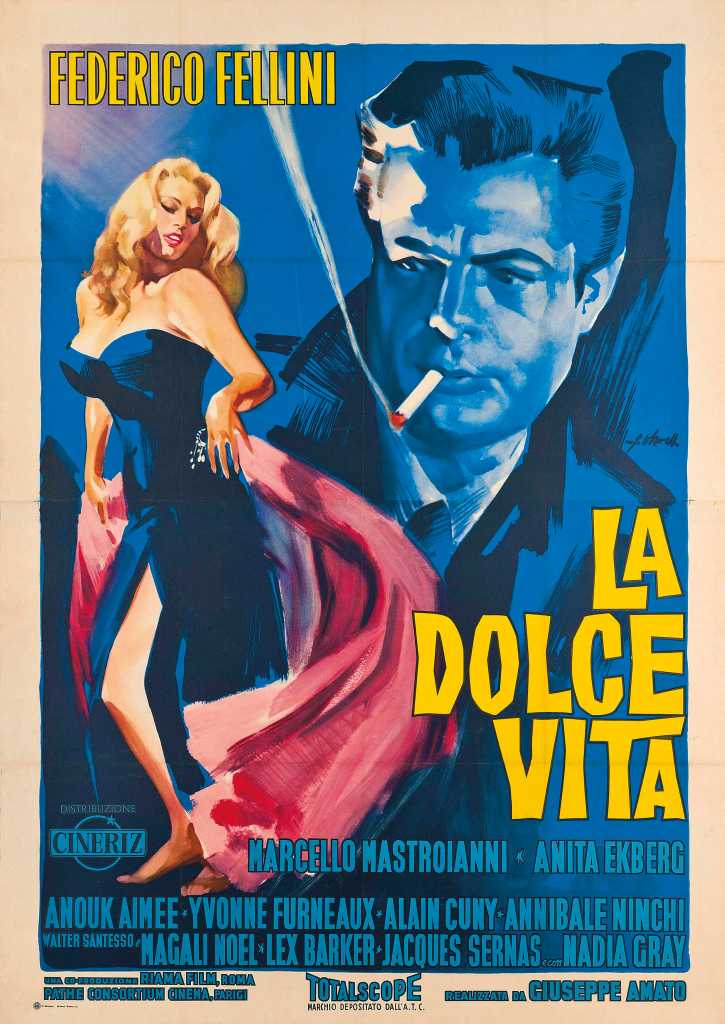
It’s one of those films as much about everything as it is nothing. Fellini’s omnibus of interconnected shaggy-dog short stories follows Marcello (Marcello Mastroianni), a would-be novelist writing a gossip column, as he mixes with the great and the good in Rome. Casual affairs, Hollywood stars, nightclubs, drunken parties and would-be orgies – Rome is a whirligig of the shallow and meaningless, all wrapped up in a classic façade. La Dolce Vita was gloriously popular and hugely influential – it seemed to be casting a cynical eye over the 60s, even as they were kicking off – and remains possibly Fellini’s best-known and most popular film.

At its heart is Marcello. Gloriously played with a shallow suaveness smothering deep self-loathing by Mastroianni, Marcello has enough insight to understand the world he occupies is an empty and meaningless one – but not enough drive, discipline or determination to do anything about it. For all his dreams of becoming a novelist and artist, he’s all too easily seduced by the glamour and the hedonistic pleasures of Roman high society. When presented with choices, he invariably takes the easier one. He has enough soul to wish he had more of one.

Fellini lays out his journey through Roman night-life with a painterly skill – the frame is often full of fresco like images, taking in multiple characters at once, all preoccupied and busy with their own needs and wants. Fellini uses a superb mix of shifting POV shots to constantly place us in and then immediately out of Marcello’s shoes. Characters stare direct at the camera – are they looking at us or Marcello? Marcello arrives at Steiner’s house in a POV shot – but then Marcello walks into the shot and suddenly we are witnesses again. It’s a film where we are always reminded we are on the outside, like participants in a dream.

La Dolce Vita is long, but also spry. This is a city of people universally keeping ennui at bay, by a never-ending parade of parties and sex. While we might see and hear life-changing statements – declarations of love, resolutions to build a better life, the severing of personal relationships – these lead to nothing. Fundamental relationships and patterns of living remain unchanged across the (unspecified) period of time the film covers. Words come and go as easily as parties.

La Dolce Vita is constructed from seven short stories, each exploring a different aspect of Marcello’s empty, hedonistic existence. They cover: a sexual encounter with society heiress Maddalena (Anouk Aimée) in the water-logged flat of a prostitute; a night Marcelo spends trailing Hollywood star Sylvia (Anita Ekberg) across Rome; Marcello and other reporters reporting on a ‘miracle’ just outside Rome; a visit from Marcello’s estranged father; a party at an aristocrat’ faded palazzo with a failed encounter with Maddelena; finally a beach-house party where a jaded Marcello fails to initiate an orgy and collapses into something akin to a mini-breakdown, which he shrugs off. Intercut with this is Marcello’s friendship with Steiner (Alain Cury), the intellectual family-man Marcello aspires to be, who transpires to be as depressed and trapped as Marcello – with disastrous consequences.

These encounters are open to multiple interpretations: and part of the film’s strength is Fellini’s lightness in telling the story. Interpretation and significance isn’t forced upon the film: it’s long because it is stressing the repetition of its cycles. Each ‘short story’ is told with a pace and skill, frequently shifting in tone. Fellini will make you hoot with laughter or swoon with sensuality in one scene – and then shift uncomfortably in your chair the next.

Part of La Dolca Vita’s aim is to move Rome on from the tourist-centred attractiveness it had been given by a host of films from Roman Holiday on. It’s essentially marrying films like that with Rome Open City and Bicycle Thieves. It’s Fellini’s attempt to compare (and perhaps question) Rome’s classical cultural background with the hedonistic casualness of today’s world. It opens with a statue of Jesus being helicoptered across the outskirts of Rome towards St Peter’s. The statue is a glorious reminder of the power of Rome’s religious significance: but what follows it? A second helicopter, flown by Marcello and Paparazzo (his photographer), smirking and trying to pick up the numbers of the sun-bathing women waving up at them. New and old Rome intermixed, and not favourably.

The film is full of moments like this. The party at the aristocrat’s palazzo takes place in gorgeous grounds and rooms lined with busts of Roman emperors. At first it feels like a comparison between class and classlessness. But then you remember that ancient Rome was a hub of orgies and violence, and everything at this party would probably look pretty tame to the emperors watching.

The false miracle suggests affectations of Christianity are stage-managed and willingly performed at the dictates of the media. A priest may denounce the whole thing, but it doesn’t stop an army of people desperate to grab a piece of the action – from the media to ostentatious worshippers – descending on a small field, all of them willingly playing their expected parts. It only takes a downpour of rain to turn this devotional crowd into a panicked mass of people, blindly charging from shelter to shelter – with tragic results for one pilgrim. TV journalists stage-manage the crowd, give lines to members it and turn the whole place into a film-set.

As the film progresses, elements of classical Roman architecture slowly drift out, replaced by the harsher modernist buildings and blocks of flat (we’re subtly reminded, particularly with the arrival of Marcello’s father, mysteriously ‘absent’ for much of Marcello’s childhood, that a lot of these buildings were fascist in origin). Ironically the most famous sequence buries itself in classical architecture: Marcello’s night vainly following Sylvia (an alluringly playful Anita Ekberg, channelling Marilyn Monroe) in the hope of a sexual encounter (she remains wilfully oblivious of this). It culminates in Ekberg’s famous Trevi fountain dance – inspiring millions of would-be imitators.

Marcello’s life takes place in nightclubs and drunken parties, where social and sexual morals are modern and casual. Marcello’s most significant relationships are with Maddalena (Aimée is wonderfully archly cold), who toys with a profession of love only to instantly sleep with another man, and fiancée Emma (a clingy and desperate Yvonne Furnaux), who Marcello dutifully maintains a relationship with. Marcello wishes to see himself as a glamourous playboy, but he’s frequently on the backhand – picked up when wanted by Maddalena, played with by Anita and oppressed by Emma. We see him as often ignored and rejected as we do conquering.

Who Marcello really wants to be is the intellectual Steiner, who seems to have it all: fame, respect, and a loving family. It’s after meeting Steiner that we see Marcello doing the only novel writing in the film. Sitting in a beach café, he chats with a young waitress, Paola, who he compares to an angel in Umbrian paintings. Paola is also the last face we see in the film: waving to Marcello from a distance after his depressingly bitter failed orgy, as the guests gather around a leviathan washed up on a beach. She seems to be trying to ask him how the writing is going: he fails to understand and walks away. Paola feels like a moment of hope – a representative of a more fulfilled life of creativity and meaning – rejected by Marcello in favour of wallowing in pleasure. Fellini ends the film with Paola staring directly at the camera: is she making the offer of meaning to us instead?

It’s open to interpretation – as is the whole film. A big part of Fellini’s skill is not to hammer his points home, but let events speak for themselves, leaving the film open to interpretation. I see it as a sort of Dantesque parallel. Nearly every story is framed with characters moving up and down stairs – like the circular descent of Dante through Hell. Its structure seems to be broken into Cantos. And each step sees Marcello descend a little bit further – culminating in Mastroianni impotently ripping up pillows and spraying feathers over a laughing woman.

Is modern Rome hell? That might be a little bit too far. But it’s definitely a soulless purgatory. Paparazzo doesn’t care who he hurts to get the photo – a dead child or a grieving mother are all game. Marcello’s uses what talents he has for empty and cynical purposes and to seduce women. Everyone thinks only about their next hedonistic encounter. It’s a wonder that Fellini makes this as strangely enjoyable as it is: but then he is a master. And La Dolce Vita remains his most popular and most recognised work.