Category: Monster film

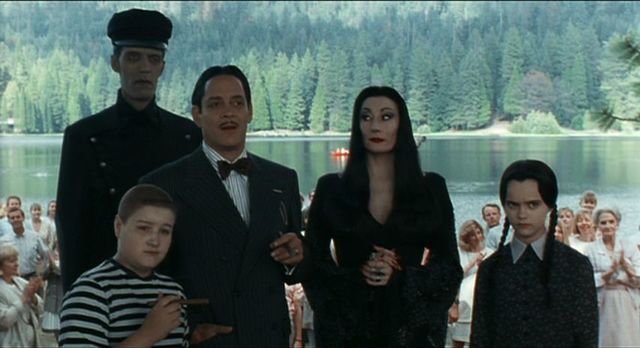
Addams Family Values (1993)


The Addams Family Values: Goth meets summer camp fun in this engaging comedy

Director: Barry Sonnenfeld

Cast: Anjelica Huston (Morticia Addams), Raúl Juliá (Gomez Addams), Christopher Lloyd (Uncle Fester), Joan Cusack (Debbie Jellinsky), Christina Ricci (Wednesday Addams), Carol Struycken (Lurch), Jimmy Workman (Pugsley Addams), Carol Kane (Grandma Addams), David Krumholtz (Joe Glicker), Peter MacNicol (Gary Granger), Christine Baranski (Becky Martin-Granger)

The Addams Family was a serviceable family comedy about a bizarre group of Halloween style characters, who delighted in leading lives of cartoony horror. It drifts along, and was a big hit, but its sequel Addams Family Values is several times smarter, more confident and funnier. As a comedy family saga mixed with cartoon creepiness, it’s hard to beat.

Celebrating the birth of their new child (“He has my father’s eyes” / “Take those out of his mouth”), Morticia (Anjelica Huston) and Gomez (Raúl Juliá) hire a new nanny, Debbie Jellinsky (Joan Cusack) to care for the baby. On her advice, they also decide to send the insanely jealous Wednesday (Christina Ricci) and Pugsley (Jimmy Workman) to a summer camp – needless to say they do not fit in with the All-American, Apple-Pie ideals championed there. Debbie meanwhile has wicked designs on becoming the widow of their rich Uncle Fester (Christopher Lloyd).

Addams Family Values gets a lot of comic juice out of some very witty set-ups. Everyone involved in the film feels more relaxed and happy to let the comedy breathe. Sonnenfeld lets the set-ups come naturally and allows the characters to come to the fore. Every joke in the film comes from watching the characters bounce off their circumstances. Of course, a lot of this comes from the fact the film doesn’t need to do any of the heavy lifting of introducing the world or the characters – it rightly assumes we know what we are getting from the start – but it still makes the film hugely entertaining.

A lot of the humour comes from the brilliant summer camp plotline, with its passive-aggressive, jolly-hockey-sticks owners (a very funny Peter MacNichol and Christine Baranski) and their naked favouritism for the popular kids. Placing the Addams children into a world of normal teenage politics and the forced jollity of adults who would rather still be one of the popular kids at school is a brilliant touch. This clash of values makes for no end of comic glory, culminating in a disastrous Thanksgiving play, which is a triumph of the sad and overlooked over the popular kids (because who watching any film favours the popular kids?).

Christina Ricci is brilliant in this – her deadpan sense of comic timing is spot-on. Every scene and every one-liner is stand-out. The film even finds time for a sweetly semi-romantic plotline between her and loser Joe Glicker (David Kumholtz, also very good as the kind of kid who likes to read A Brief History of Time). Ricci ends up carrying a lot of the film’s comic material, and she’s so perfect in the role that to a lot of us she will always be Wednesday Addams, never mind what she does.

The summer camp plotline is so drop-dead funny and memorable, it rather overshadows the film’s actual plot about Debbie’s attempts to seduce and murder Fester. Sonnenfeld struggles to make this main plot come to life – his real delight is in the sketch-based comedy of the summer camp and the Addams’ love for the grotesque and the extreme. Having said that, Joan Cusack is wickedly sexy and funny as a heartless social climber.

Anjelica Huston and Raúl Juliá remain divinely perfect as a couple so besotted they can barely look at each other without bursting into a steamy tango, or an avalanche of flirtatious foreign language banter. Juliá rips into the dialogue with a flamboyant gusto, and he’s a perfect foil for Huston’s supercool, arch one-liners. Sonnenfeld never lets the introduction of a baby affect their comic darkness in any way, which is a perfect set-up for comedy.

Addams Family Values is terrific good fun and always keeps you laughing. It’s a load better than the original, and has some terrific comic set-pieces in. Sure it’s got a pretty basic plot, but it’s directed with a wicked dryness by Barry Sonnenfeld and its cast are now completely comfortable in their eccentric characters. The tone always seems spot-on between the surrealist darkness and the childish, cartooney horror. It’s a very entertaining film.

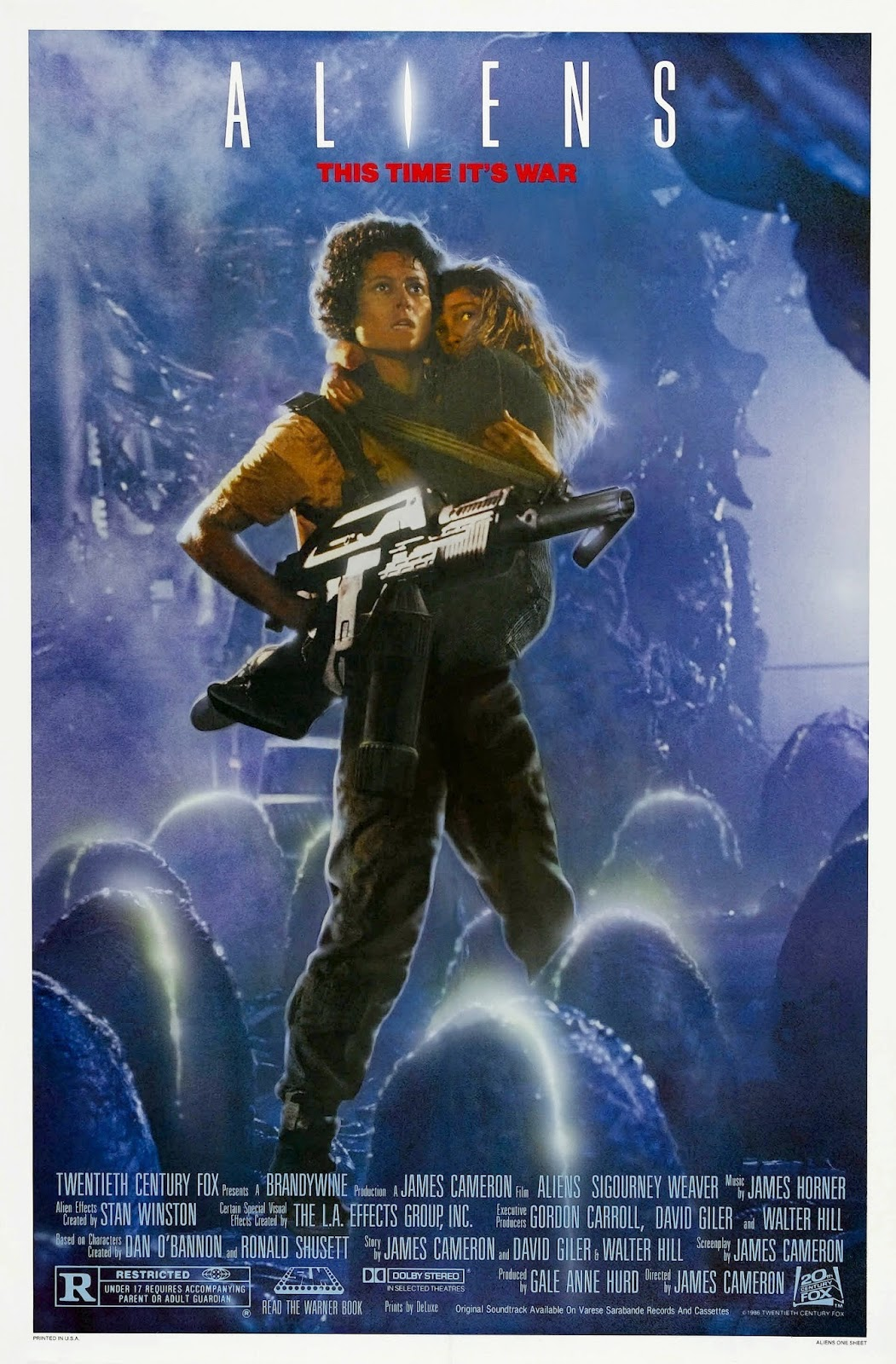
Aliens (1986)


Sigourney Weaver takes on the terrifying alien hordes in Aliens

Director: James Cameron

Cast: Sigourney Weaver (Ellen Ripley), Michael Biehn (Corporal Dwayne Hicks), Paul Reiser (Carter Burke), Lance Henriksen (Bishop), Carrie Henn (Newt), Bill Paxton (Private Hudson), William Hope (Lieutenant Gorman), Jenette Goldstein (Private Vasquez), Al Matthews (Sergeant Apone), Mark Rolston (Private Drake)

When any list of greatest-sequels-ever-made is put together, you get the familiar names: Godfather Part II, Toy Story 2, The Empire Strikes Back – but no such list is complete without James Cameron’s groundbreaking Alien sequel, Aliens. In fact, Aliens is so bloody good no list of great action films, science fiction films or even war films is complete without it. 

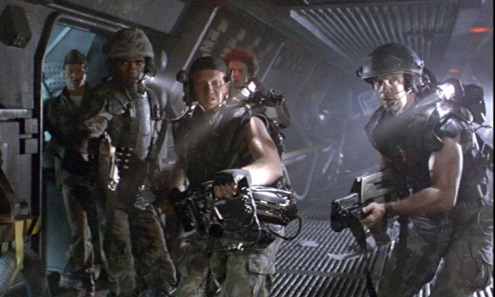
Set 57 years after Alien, Ripley (Sigourney Weaver) is awakened from hypersleep and returns to Earth. Her warnings of the hideous Alien threats on LV-426 go unheeded by the soulless Weyland-Yutani company – until all contact is lost with the terraforming colony there. At which point, company man Burke (Paul Reiser) recruits a troop of marines to head to LV-426 on a rescue mission. However, the over-confident marines find themselves on a devastated base with only one survivor, a traumatised young girl called Newt (Carrie Henn), and are quickly out of their depth fighting against a ferocious enemy whose tactics and motivations they don’t understand. 

Can this really only be the second large-scale movie James Cameron ever made? The guy may be (allegedly) a demanding, perfectionist dick, but you are left in no doubt of his mastery of genre film-making – or the thematic depth and emotional weight he can bring to what in the hands of thousands of other film-makers would have been a cheap-shock, monster-schlock thriller. Aliens is quite simply magnificent, one of the best Hollywood films you are likely to see. I’ve seen it I don’t know how many times, but it never, ever loses its impact. It’s always gripping, the action is always compelling and it never ever fails to scare and thrill you. 

Cameron’s trick is that he is so good at build-up. Nary a single Alien is seen on screen for the best part of an hour. Instead Cameron invests time in establishing the characters and their relationships. We begin to understand each of the marines as individuals. We feel our empathy for Ripley grow as we discover she has lost her daughter while in hypersleep, that she still feels traumatised by the events she witnessed, but that she has a strength of character, integrity and will that helps her weather the storms she has endured. You understand these characters so well – and the world that they inhabit – that when they start getting torn apart by slathering xenomorphs, it carries real weight and impact.

All the weapons the marines have and their tactics are carefully explained. We spend a good 15 minutes in the base itself before any Aliens arrive: the entire complex is quickly established as basically a huge haunted house. The wonderful production design makes it feel like the industrial zone on The Crystal Maze if a desperate hand-to-hand battle had been fought there (it’s also great that Cameron leaves what actually happened there to our imagination). Cameron has a mastery of small details – so the marines’ motion detectors have an electronic bleeping that increases in intensity as movement gets closer. It’s a brilliant tension builder that works time and again. The over-confident marines also makes their later fear all the more realistic and strangely affecting.

Then of course when things do kick off, it goes absolutely mental. Not for nothing is poor Hudson (a career establishing performance of bravado hiding fear from Bill Paxton) screaming “It’s game over man! GAME OVER!” after the first foray into the Alien nest. Paxton by the way has a perfect part in this film – every single line is endlessly quotable, largely because of his pitch-perfect delivery (I love “What so you mean they cut the power? They’re ANIMALS man!”), and despite being a cocky blow-hard, you end up loving him. Jenette Goldstein is similarly excellent as an almost impossibly hard-as-nails marine – she’s full of good advice, such as “Just nerve gas the whole fucking nest”.

The rest of the film is a helter-skelter of high octane, perfectly paced action. Every single sequence in this film is a stand-out, with stakes that feel impossibly high. Cameron really understood just how terrifyingly, inhumanly, remorselessly brutal the Aliens are – they are relentless and brilliantly single-minded, as well as having a ruthless cunning. They look and sound incredibly unsettling, and their darker, more animalistic design works wonders. It’s actually amazing, considering how this film is over 30 years old, that the Alien effects look better here than in Ridley Scott’s Alien: Covenant. Technically this film hasn’t aged a day – even the model work makes the film look real and lived in, rather than electronic and shiny.

James Horner’s score is sombre, unsettling and foreboding. It makes brilliant use of near ambient sound, before building into crashing, threatening crescendos in sequence with the action. Mix that in with the film’s brilliant sound design, and you’ve got a marvellous soundscape. The Aliens sound unnatural in their hissing fury. The military equipment is just the right side of futuristic and modern. The lighting is a dark mixture of shadows and reds. Everywhere seems unsettled. The editing is hugely influential – fluid, calm, brilliantly communicating the story and the geography of the action, everything.

Cameron’s greatest triumph, though, is to ground the story so well in a sense of family. The marines, for all their arguments and feuds, are a functional family unit – part of the reason William Hope’s useless Gorman struggles is because he doesn’t have the confidence to impose himself on such a tight group. But the real family theme is the mother-daughter relationship between Ripley and Newt. This is a bond that grows throughout the film, and feels really genuine and warm. It’s also a relationship that gives an emotional basis for all the actions we see. Cameron recognised that we can all relate to a basic family and that protecting this against the Aliens is what defines us in relation to them.

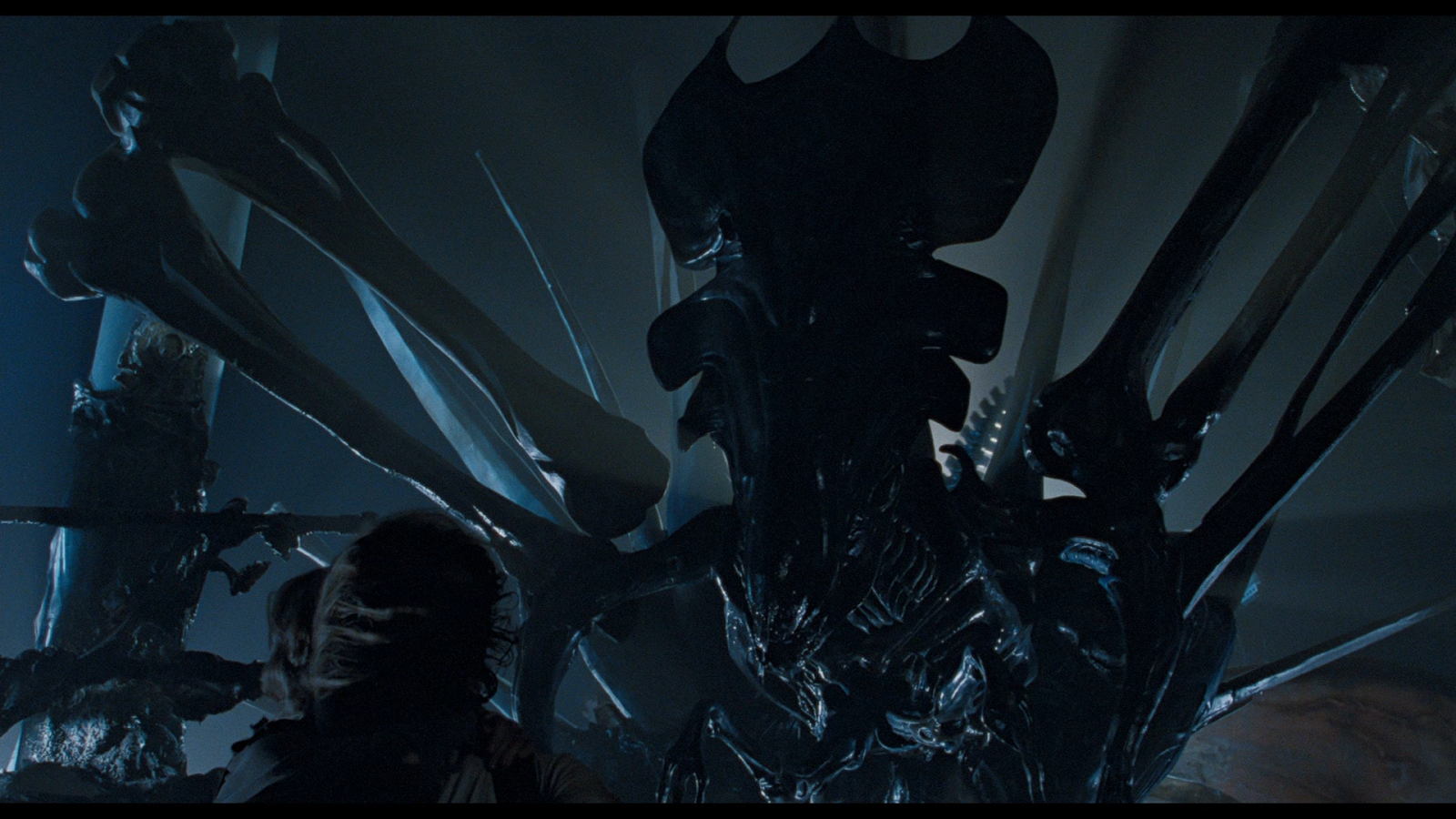
Of course, it also allows some clever thematic contrasts later when we are introduced to the Queen Alien. While it would be easy to blame this film for the tired cliché of the “Alien Queen” which we’ve seen time and time again, it’s used really well here. The Aliens may be conscienceless killers, but they’re still someone’s children: and we get a really neat contrast between Ripley and the Alien Queen’s determination to protect their children (as well as the best use of the word “Bitch” until Molly Weasley in Harry Potter).

The film’s secret weapon however is Sigourney Weaver’s outstanding performance in the lead. Not many actors get Oscar nominations for sci-fi or action films: Sigourney Weaver is one. And she deserved it because this is an iconic performance. Ripley isn’t an action hero – she’s strong and resourceful and she survives because of that. She’s not skilled at expressing herself or communicating – largely because it’s clear she’s suffering from PTSD. She completely fails to win over the corporate board with her story, and it’s clear the marines don’t hold her initial briefing in high regard. But even before they arrive on the planet, she’s beginning to win their respect. By the time of the initial encounter, her principled, strong-willed, sensible resourcefulness effectively makes her the expedition’s leader. 

Alongside this, Weaver does a fantastic job with Ripley’s growing maternal feelings towards Newt – the bond between these two is immediately clear, and her maternal protection of Newt becomes one of her core motivations. With Weaver, Hicks and Newt we end up with a strange family at the centre – a curious closeness that makes the film feel unique. It adds a strong emotional core to the film, and gives Weaver a depth to play with that enlightens her relationships throughout the film – she’s clearly got a strong protective feeling, and her desire to protect the marines is as much a part of this as her feelings for Newt.  It’s a terrific performance, full of feeling and strength. She fully deserved the Oscar nomination – arguably she could have won.

Aliens is one of those landmark films that never lets you down. Cameron’s direction of it is pitch-perfect, there’s hardly a fault in the whole film. It’s a masterpiece of design and construction and totally gripping from start to finish. It’s not only one of the best sequels of all time, as a purely enjoyable and affecting piece of cinema it may well be superior to the original. Even more than the first film, it made Ellen Ripley one of the great iconic characters of cinema. It will never get old and it’s never going to get tired. If you haven’t seen it, you really, really should.

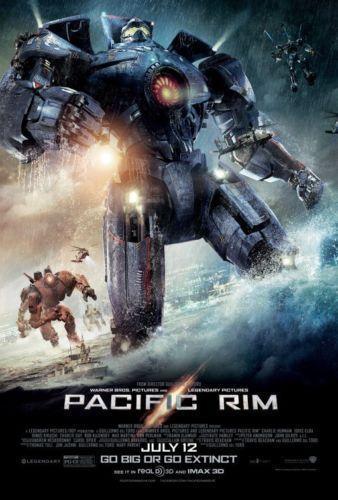
Pacific Rim (2013)


Idris Elba, Charlie Hunnam and Rinko Kikuchi are cancelling the Apocalypse in Pacific Rim

Director: Guillermo del Toro

Cast: Charlie Hunnam (Raleigh Becket), Idris Elba (General Stacker Pentecost), Rinko Kikuchi (Mako Mori), Charlie Day (Dr Newt Geiszler), Max Martini (Hercules Hansen), Robert Kazinsky (Chuck Hansen), Ron Perlman (Hannibal Chau), Clifton Collins Jnr (Tendo Choi), Burn Gorman (Dr Gottleib), Diego Klattenhoff (Yancy Beckett)

Film can be a beautiful and thought-provoking art-form. But sometimes, gosh darn it, you just want to leave the works of the great artists behind and watch a big, loud film in which giant robots hit giant monsters. Over and over again. In lurid, glorious, high colour detail. That’s pretty much the life and career of Guillermo del Toro. Make something like Pan’s Labyrinth. Then follow it up with something so wildly, tonally different you won’t believe it’s from the same guy: Pacific Rim.

In 2013, huge monsters (Kaiju) emerge from an interdimensional portal at the bottom of the Pacific Ocean. As they destroy cities left, right and centre, mankind is pushed to the limit. Eventually they develop Jaegers – giant robots controlled by two pilots, whose minds are linked together and used to drive the Jaeger’s movements. In 2020, Raleigh Becket (Charlie Hunnam) leaves the Jaeger force, commanded by General Stacker Pentecost (Idris Elba), after his brother and co-pilot is killed by a Kaiju. By 2025, the world governments decide to cut the funding of the Jaeger programme – forcing Pentecost to call Becket out of retirement and team him with his adopted daughter Mako Mori (Rinko Kikuchi) to launch a final, desperate, assault on the portal with the few remaining Jaegers, in an attempt to stop the ever-increasing number of Kaijus for good.

Pacific Rim is loud. It is silly. Its plot is a collection of clichés and offcuts from other movies. Some of the acting in it is ludicrously bad, over-the-top, poorly accented or all three. It looks and sounds like a direct-to-DVD movie made on a massive budget. Yet, despite all this, it’s really, really good fun. The ultimate guilty pleasure. Deafeningly dumb, but somehow it sort of knows this, and it knows you know it, so it just gives you what you wanted when you sat down – bangs, bashes and silly dialogue. Maybe this all works because Del Toro is actually a real director: he can shoot this nonsense with a sense of flair and scale, and is confident enough as a storyteller to just accept he’s making a dumb film and doesn’t need to try and pile some spurious depth on it, but just run with the emptiness.

Pacific Rim gives you this: some truly sublime robot vs. monsters battling in a variety of beautifully shot locations, in particular downtown Hong Kong. I mean, who wouldn’t love seeing this smashy super-action? The robots basically look really cool, the monsters are really imaginative, it’s tonnes of fun. Of course the battles are silly, there is always “one more weapon” to use that is bigger and better than anything they’ve used before (so why not do that from the start?). Del Toro also shoots the fights with a surprisingly calm camera, that makes the action the frantic lead, rather than the normal thing you see in these films, with the camera flying around all over the place. They’re edited really well. The score is great. The battles don’t overstay their welcome, and the characters at the centre of the Jaegers are always kept front-and-centre. Who wouldn’t love them?

The plotline of the film has a B-movie directness, which del Toro manages to fill with some depth. It’s a film about co-operation and learning to work together. This should be pretty wearingly obvious – okay it is – but somehow it strangely moving in the film. The Jaegers literally need two people to work together so closely they share a mind to operate it. The whole Jaeger programme only works from intimate co-operation. Characters feud and argue – but the film is about them learning to overcome these differences and work together. The film hammers home the fatality rate of this war with kaijus so well, that you end up really caring for sacrifices and risks these people are running. When Jaeger pilots start dying, I find it actually rather moving in its brutal suddenness. 

At lot of this comes from the wonderful, hero-worshipping, film style del Toro uses. Look at shots such as when (in flashback) Idris Elba’s Penthouse climbs out of a Jaeger, framed by the sun behind him – he looks like some sort of ultimate hero. The Jaeger pilots all have their own distinctive themes, and are framed and shot with idealism and adoration. Sure their personal issues are the most rampant form of clichéd melodrama – but it’s sold with complete conviction, and told with such unabashed simplicity, that you end up caring for it. 

This is despite the fact that most of the acting is pretty below par. Idris Elba is the one major exception – the only one with the charisma to sell such basic plots as “dying of brain tumour” and to make chuckle worthy lines like “we are cancelling the apocalypse” sound like rallying cries, rather than seriously awful crap. Charlie Hunnam, by comparison, has nowhere near that level of charisma and Raleigh Becket is probably the most forgettable lead character you’re going to see in a movie like this. Robert Kazinsky is pretty awful as his rival Jaeger pilot (his accent is dreadful). Charlie Day and Burn Gorman are hit-and-miss as the comic sidekick scientists. Rinko Kikuchi is however pretty good – and with her “drift” memory loss she has probably the film’s most affecting sequence.

But this isn’t a film of subtle character work or sharp scripting. It’s got a B-Movie aesthetic, but it delivers it totally honestly. Basically, Guillermo del Toro is a good enough director to be comfortable with making a really, really good bad movie, Pacific Rim is deeply silly and stupid, but it is a lot of fun and its characters (despite their pretty forgettable or clichéd nature) are still people you really invest in. Del Toro pulls off a neat trick filming this, perhaps because the film is so sweetly honest, and unabashed, about what they are doing here. It’s got a heart-warming message about co-operation. It never feels exploitative. It’s got a childish sweetness about it, a real family robot basher. It’s the best bad movie you’ll ever see.

An American Werewolf in London (1981)

It’s a lesson in how not to spend your gap year in American Werewolf in London

Director: John Landis

Cast: David Naughton (David Kessler), Jenny Agutter (Alex Price), Griffin Dunne (Jack Goodman), John Woodvine (Dr Hirsch), Lila Kaye (Pub landlady), Frank Oz (Mr Collins), David Schofield (Dart Player), Brian Glover (Chess Player), Rik Mayall (2nd Chess Player), Don McKillip (Inspector Villiers), Paul Kember (Sergeant McManus)

Horror and comedy are both extreme genres, on the edges of normality and are designed to provoke extreme reactions, of either terror or hilarity. So it’s often a bit of a surprise that more films haven’t attempted to put the two of them together. But that’s what John Landis does in An American Werewolf in London. You’ll laugh, you’ll scream, you’ll even cry a bit. You’ll probably also look away a few times. And you probably won’t want to go hiking straight after it.

David Kessler (David Naughton) and Jack Goodman (Griffin Dunne) are two students backpacking through the English countryside. Taking shelter from the rain in a pub, The Slaughtered Lamb (pub sign a wolf’s head on a spike), they are swiftly intimidated by the locals and head back out – ignoring suggestions to keep on the road. Sure enough, they are attacked by a crazed wolf… Three weeks later David awakens in hospital, plagued with nightmares and visions of himself running through the forest. Could he be a werewolf? Falling in love with his nurse Alex (Jenny Agutter), he soon finds himself staying in her flat in London – just as the full moon rises…

AAWIL is a playful movie, with a grungy, college-humour to it. The jokes are often laugh-out loud funny, and the central characters are very engaging. As well as this the film is filled to the brim with blood, guts and slaughter. Guts fly, blood sprays. Landis gets the balance more or less spot-on between heightened humour and bloody slaughter – every bloody moment is followed by an excellent comic punchline, and just when the humour and romances start to get too much of a hold, you get a moment of shuddering violence. It’s also crammed with some great music – although in a terrible oversight there is no playing of Werewolves of London (if ever a song seemed written for a film…).

It’s best remembered for its influential werewolf transformation sequence. Rick Baker won the first Oscar for make-up for this tour-de-force at the film’s centre, which showpieces David’s painful looking transformation. This sequence has inspired every single werewolf transformation since, including David Thewlis’ in Harry Potter. Limbs stretch and distort. Hair springs up. His body arches and his spine practically snaps itself into new positions. His face distort, and the entire shape of the body changes. And of course it’s screamingly painful. The sequence hasn’t aged a day, and it’s still a marvel of make-up and practical effects.

Landis’ decision to largely shoot werewolves from POV or in flashes is a good one – when we get the animatronic wolf on the screen towards the end it is strikingly unconvincing and artificial looking, like a wobbily muppet. But for the bulk of it he makes these animals terrifying forces of nature. No wonder the creepy pub denizens are terrified of them.

The opening pub sequence is a masterpiece of small village aggression. Who hasn’t gone into a pub like this and felt like the room went silent as soon as you entered? The actors here revel in these hostile villagers, not least Brian Glover as a domineering loudmouth and David Schofield as a sinister darts player. It also brilliantly shows from the start that David and Jack are fish out of water – stuck adrift in a land they don’t quite understand, with a condition they don’t really seem to be completely aware of.

Not that it’s all bad for David, as he gets a steamy love-affair with Jenny Agutter’s alluring Alex, every geeky college boy’s dream of a gap-year love affair. Sure the bond between them is rushed – and Alex alternates between being caring-and-observant and is actually fairly dim when the film demands it (Yeah David has come home naked over than a woman’s coat, having spent the night sleeping in a zoo and has no memory of the night – but nothing odd strikes her about his behaviour…) – but she still gives a cracking performance.

David Naughton balances the film very well as David – a geeky student, horny and almost wilfully ignoring what’s happening to him. Griffin Dunne possibly steals the show as Jack, a strange mixture of best friend, geeky off-the-cuff wit and giver of bitter-but-straight-forward advice (the make-up for Jack by the way is almost more impressive than the transformation itself). 

American Werewolf in London is a bit of a (forgive me!) shaggy dog story. Structurally I’m not sure if it’s that great, as it tends to drift at times before a rush to the finishing line. The ending in particular is abrupt – not helped by a deliberately jarring final musical choice. It bowls along, but it’s so in love with its mix of horror and comedy that you never quite end up pulling for the romance at its centre as you should. I’m not sure John Woodvine was quite the right casting for the doctor investigating the werewolf phenomenon – he’s almost seems to feel as if he is above the picture. Landis gets some neat hits on British culture, but you can’t help but feel that there is more to be mined here – there isn’t quite enough American-British culture clash there to really sell David’s confusion.

It’s not a brilliant masterpiece – but it is very entertaining and crammed with striking scenes. Landis is playing around here – in fact he may be telling a massive joke, taking the piss out of monster movies while knocking slacker comedies by turning the slacker into a murderous monster. But it’s very good for all that – and for several key sequences alone you’ll find it hard to shake. It’s a film for late-night viewing and such a good mixture of comedy and extreme horror that it will always feel unique.

What We Do In the Shadows (2014)


The odd housemates of vampire-comedy What We Do in the Shadow

Director: Jermaine Clement, Taika Waititi

Cast: Taika Waititi (Viago), Jermaine Clement (Vladislav), Jonathan Brugh (Deacon), Ben Fransham (Petyr), Jackie Van Beek (Jackie), Cori Gonzalez-Macuer (Nick), Stu Rutherford (Stu), Rhys Darby (Anton)

The life of a vampire – in between all the blood, what do you actually do? How do you fill the (never ending) time of immortality? Or, more mundanely, how do you find friends to live with? Jermaine Clement and Taika Watiti’s excellent flat-share comedy is a free-wheeling but very sweet vampire and buddy-movie comedy, set in a vampire flat share. It’s Being Human with more jokes, and more heart.

Opening their doors to a fly-on-the-wall mockumentary crew (whom they have taken a solemn vow not to eat), we enter the lives of four vampire friends who live in Wellington. Viagro (Taika Waititi) is a 379-year old dandy: prissy, with a hatred of clutter. Vladislav is a 862-year old former Vlad-the-Impaler style tyrant, still not completely over torturing people in the basement (though definitely ashamed of this vice). Deacon (Jonathan Brugh) is a youthful 183, the baby of the group, a self-absorbed rock-n-roll Byronite type. Petyr is 8,000 years old, and is a Nosferatu-style monster who never comes out of the basement. Their lives are turned upside down when Deacon accidentally turns boorish Nick (Cori Gonzalez-Macuer) – though this also introduces them to Stu (Stu Rutherford), a genial and immensely likeable chap whom they all take a shine to.

What We Do in the Shadows is a very funny spoof of nearly every vampire cliché you can imagine. Each vampire takes on the style and characteristics of a different sub-school of vampire dramas. It rolls along with a genial looseness, creating heart-warmingly endearing characters – despite the fact that the film doesn’t stint on watching our heroes brutally spill blood and guts as they eat various guests. Of course things like this are juxtaposed with brilliant belly laughs – something about vampires bickering about the washing up and the cleaning rota is just inherently hilarious. Watching them dress up for a night out (unable to see their own reflections) is a gem sequence.

The film shows each of its characters are frozen in time, sort of man-children, stuck in their own time periods and totally adrift in the modern world. It’s part of what makes them endearing. Throw in a couple of sweet plotlines, most notably Viagro’s romantic longing for the woman he moved to New Zealand for almost 60 years ago (and who now resides in a care home), and you’ve got a winner. The group’s interaction with Stu is wonderfully sweet – despite their initial irritance with (and hunger for) the ruddy-faced human in their midst, they quickly all bond with his straightforward calmness and his understanding of everything from the internet to working the TV.

It’s packed with plenty of hilariously inventive gags around vampire-lore. Our heroes spend every night prowling nightclubs – hampered by the fact that before they can enter anywhere, they need to be invited in (we see several snapshots of them attempting to get invitations from impassive bouncers). In confrontations they hiss and fly at each other in a way that’s just this side of silly. Viagro constantly bemoans the mess his housemates make when they eat their victims, without clearing up (he futilely attempts to get them to put towels down to protect the sofa). But there are also endearing spins – the vampires crowd around the computer to watch a youtube video of a rising sun, something they’ve obviously not seen for centuries.

The later introduction of a rival werewolf pack adds further comedy opportunities, with the werewolves headed up by an uptight control freak who enforces rules on everything from physical conduct to the use of foul language. It’s just one of many expert beats in a superb comedy.

What We Do in the Shadows is acted with such lightness and openness, it’s very easy to not notice that it’s brilliantly handled. In the hands of other groups of comedians, this could have been smug, self-satisfied and more about the actors amusing themselves than the audience. Instead this is a gleeful series of scenes, the movie like a big hilarious party we’ve been invited to join. As well as being sharply written and directed, the acting is fantastic. 

It’s an unusual, dark comedy – but it’s got a lot of heart and a lot of brains. It’s a comedic joy, that would certainly reward constant viewing – each scene contains comic highlights. Highly recommended!

Mary Shelley's Frankenstein (1994)


Kenneth Branagh struggles to bring Mary Shelley’s Frankenstein to life

Director: Kenneth Branagh

Cast: Robert De Niro (The Creature), Kenneth Branagh (Victor Frankenstein), Tom Hulce (Henry Clerval), Helena Bonham Carter (Elizabeth), Ian Holm (Baron Frankenstein), John Cleese (Professor Waldman), Aidan Quinn (Captain Robert Walton), Richard Briers (Grandfather), Robert Hardy (Professor Krempe), Trevyn McDowell (Justine Moritz), Celia Imrie (Mrs Mortiz), Cherie Lunghi (Caroline Frankenstein)

In 1994 Kenneth Branagh was the heir of Laurence Olivier: a man who could act, direct and produce, who never had a false step, whose every film was a success. In other words he was ripe for a kicking, and Mary Shelley’s Frankenstein was the stick used to beat him. It was practically the founding text of “Branagh-bashing”, for a time one of the favourite sports of the British press.

Victor Frankenstein (Kenneth Branagh) grows up obsessed with defeating death, traumatised by the death of his mother. Training as a doctor in Vienna, after the murder of his mentor Professor Waldmann (an effectively serious John Cleese), he uses the body of the murderer to create the Creature (Robert De Niro) – but, horrified by what he has created, he flees home to Geneva. While the Creature comes to terms with being an outcast, Victor marries his sweetheart Elizabeth (Helena Bonham Carter) – only for her to become a target when the Creature vows revenge.

Okay the good stuff about this film: the production design is terrific, the Frankenstein house in particular a marvellous set. It’s also a very faithful adaptation, pretty much following the book (apart from a late, horribly melodramatic “Bride of Frankenstein” sequence). Branagh gets some affecting moments out of the film, particularly in the calmer moments – De Niro gives an interesting performance and the retention of the Walton framing device in the Arctic is well done. There is a good film in here. But it’s buried completely under the overblown shouting, swooping cameras and booming music that covers the rest of the film.

Contrary to his reputation as a purveyor of intricate Shakespeare adaptations, Branagh has always been a lover of big movies, who brings an operatic intensity to cinema. The problem is he goes too far here. This is at times so ridiculously overblown and frenetic in its tempo, you start to think Branagh is trying too hard, desperate to make a big budget smash. Wanting to make a big, gory, gothic horror film, he dials everything up to eleven, and the sturm und drang eventually becomes a tale full of sound and fury signifying nothing.

Interestingly, this intensity is particularly overbearing in the Frankenstein scenes, rather than those focusing on the Creature. Several scenes are filmed with the camera swooping round in circles over long intense takes, while the score thunders away. This principally happens in scenes of high emotion – the deaths of Frankenstein’s mother and his mentor Waldmann are both operatically overblown (in the latter Branagh literally cranes up and screams “No!”). Eventually it all becomes too much. You are crying out for everyone to take a breath and just deliver a line calmly.

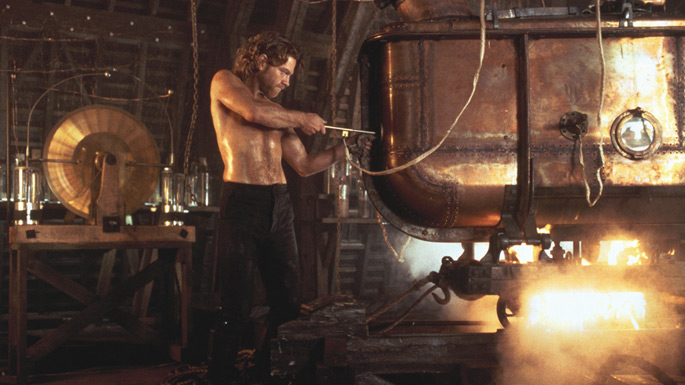
Now I can see what Branagh is doing here. He’s looking to emulate the high-Gothic semi-camp of 1930s horror films. That’s the charitable explanation for why he spends the entire Creature-birthing scene running round topless (he must have spent ages on that chest), with Patrick Doyle’s score booming away, while the camera swoops and sweeps around him. Branagh is partly channelling Colin Clive’s mad scientist from James Whale (he even bellows “Live!” in pure Clive style twice in the film), but by going for overwhelming bombast in his performance, he misses out on making the character relatable. Now Victor is a selfish asshole of course, but we should at least relate to him a little bit: I’m not sure many people can in this film.

It’s a real shame because there is in fact, under the frantic editing and dizzying camerawork, a quieter, more intelligent film trying to get out. Branagh’s Frankenstein is a man deep in trauma about death, unable to cope with losing people, whose fear becomes a dangerous obsession. The romance between Victor and Helena Bonham Carter’s sweetly innocent Elizabeth has a lot of warmth (the chemistry is also excellent: no surprise to hear that the actors started a long term relationship on the set of this film). There are moments here meditating on life and death, but they constantly get lost in the next ridiculous bloody action scene, or explosion of overblown acting.

Similarly, De Niro mines a lot of confused sympathy from the Creature – probably because he seems the quieter and more “normal” person, for all his scars and acts of murder. The sequence with the Creature looking after the family of a blind man (a decent Richard Briers) sees De Niro mine a great deal of vulnerability and innocence from his situation. The contained camera work and restrained acting make these the finest scenes in the film, more memorable than any of the blood and guts that fill the final half hour.

De Niro and Briers: Your only chance to see Travis Bickle and Tom Good share a scene

And those blood and guts are a problem, because this is not a scary film. Not even one little bit. Instead it’s either ridiculous or juvenile – in a sequence where a character literally has their heart ripped out by the Creature, Branagh can’t resist not only having the Creature holding it up to the camera, but for the camera to jump to a close up of the heart literally beating in its hand. Not scary, not gross, just stupid and childish. At any points of tension we get the pounding music and running around and shouting like a Gothic Doctor Who. If only Branagh had taken a breath and treated the material more calmly and sensibly we could have ended up with something creepy and spooky, rather than garish.

It’s a real, real shame because honestly there are some good things in this movie. I’ve mentioned De Niro, but Tom Hulce is also terrific as Clerval and Bonham Carter very good as Elizabeth. There are moments of real class in the design and production – I’ve lambasted Patrick Doyle’s score a bit, but there are some very good tracks in here. The problem, much as it massively pains me to say it because I love him, is Branagh. His performance and direction is just too much: too giddy, too overblown, too frantic, too overwhelming. The film comes across less as a tribute to old style melodramatic horror movies, more a very intelligent gifted man talking down at fans of the genre, giving them what it appears the genre is about on the surface, rather than the depths that actually appeal to people. Despite its merits, the film is not alive, but dead inside.

Alien: Covenant (2017)


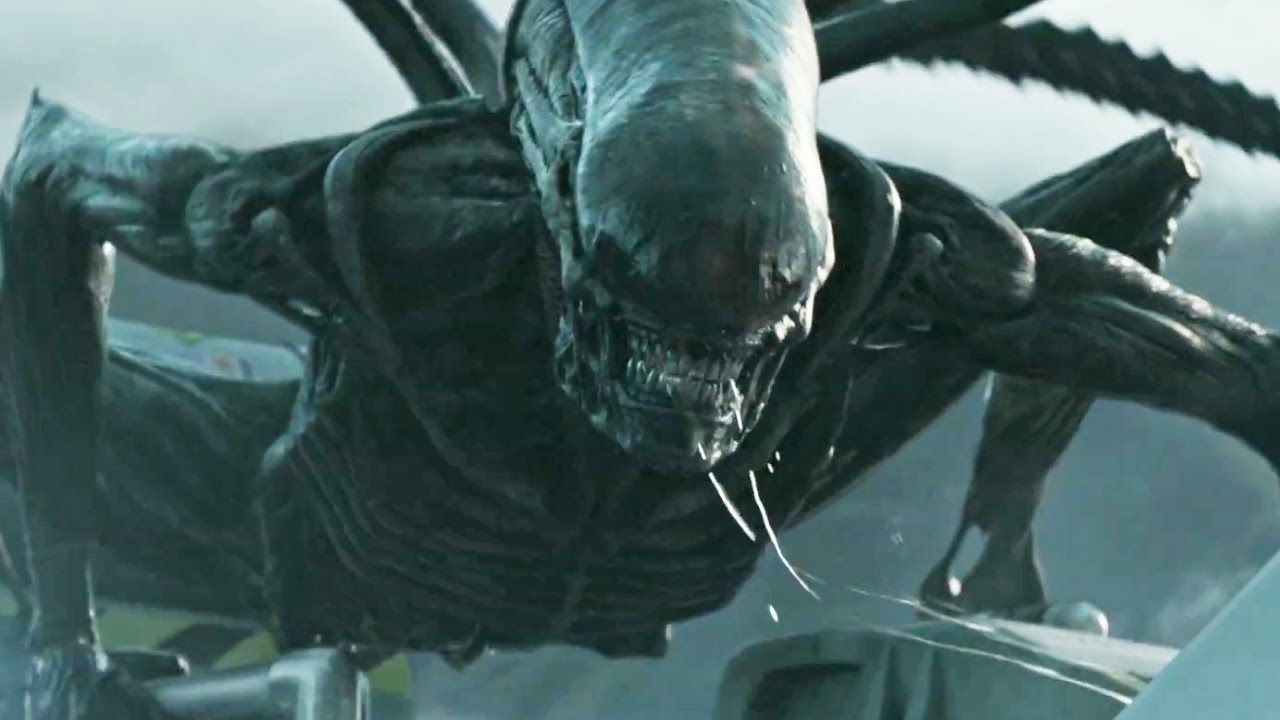
The xenomorph rises again, in prequel Alien: Covenant

Director: Ridley Scott

Cast: Michael Fassbender (David/Walter), Katherine Waterston (Daniels), Billy Crudup (Oram), Danny McBride (Tennessee), Demián Bichir (Lope), Carmen Ejogo (Karine), Amy Seimetz (Faris), Callie Hernandez (Upworth), Guy Pearce (Peter Weyland), Noomi Rapace (Elizabeth Shaw), James Franco (Jacob)

The Alien franchise is a series I’ve always had a lot of time for. Perhaps I just enjoy the carnage and blood letting of these movies, but at their best there is a sinister poetry behind the pure destructiveness of this rampaging beast, with a perfect mix of haunting nihilism and stirring action. In 2012, Scott returned to the franchise to explore its roots. His prequel film, Prometheus, had a mixed reception (and it’s a film I’ve found weaker with repeated viewings) but it still had that mixture of nihilistic poetry and gore. So where does Alien: Covenant fall?

Set 10 years after Prometheus, a solar flare hits the colony ship Covenant. To repair the damage, the ship’s android Walter (Michael Fassbender) wakens the crew, although the captain (an unbilled James Franco) is killed by a malfunction. Command passes to Oram (Billy Crudup), although many of the crew look to the captain’s wife Daniels (Katherine Waterston) as their moral leader. After the damage is repaired, the crew investigate a signal from an abandoned world, where they find the marooned android David (Fassbender again) and a planet with a terrible virus, that infects its hosts to create brutal Xenomorph monsters. But is all as it seems?

Alien: Covenant is a mixed bag. It has a haunting and unsettling tone and gives us plenty of aliens in all their various forms. Many of the sequences of alien attacks are exciting. It’s trying to build a mythology around the creation of the aliens, and tie that in with a thematic exploration of our needs to create and destroy. It wants to explore the potential dangers of artificial life, and how it could judge us and find us wanting. At the same time, it’s a flawed and rather predictable film, which never really surprises you. It might give you some things to think about – but it won’t provoke your interest enough to make you really think about them for long after the credits roll.

Its main weakness is in its large cast. Most of the characters are referred to throughout by non-descript surnames, hammering home their lack of individuality. The film is so resolutely invested in the establishment of its mythology, it has no time to build characters or a story around the crew. They are little more than ciphers, plot tools to deliver specific points rather than for us to relate to them, or feel concern for their fate. Even Waterston’s Daniels, nominally our surrogate character, feels distanced and undefined. Like the rest of the cast, she suppresses the loss of a loved one (there are at least three bereaved partners in this film) with a suddenness that speaks less of her professionalism and more of the film’s shark-like need to always moving forward.

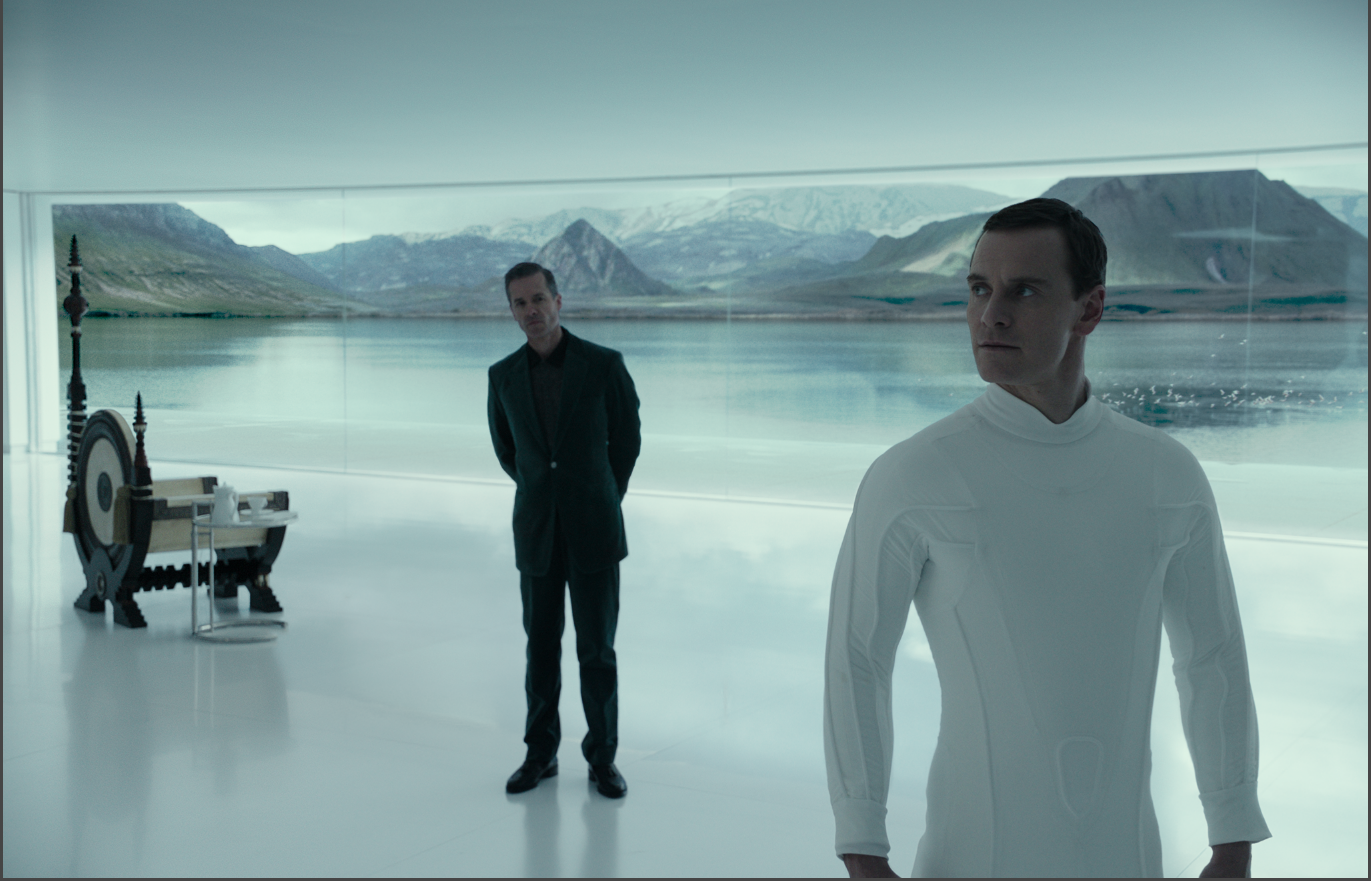
The one exception to the blandness is Fassbender’s dual role as androids David and Walter. It’s an actor’s bread and butter to play different roles, so we shouldn’t be surprised that a great actor like Fassbender executes it here with such skill. But he clearly distinguishes both the loyal, straightforward Walter and the darkly oblique David, and manages to craft the two most impressive performances in the film. This also gives Fassbender several chances to act oddly with himself, including a scene where David (rather suggestively) teaches Walter to play a pipe (it’s all about the fingering) and even a creepily possessive kiss scene between the two androids.

It helps that the film positions David as a protagonist-antagonist, and spends time exploring his fractured psyche (because it is central to the creation of the aliens, the film’s main interest). From its dark prologue, which shows David awkwardly questioning his nature with his creator (a swaggering cameo from Guy Pearce), David carries much of the film thematic interest. He is a creation of mankind, who believes he has surpassed his creators. Learning that Walter, a second generation, has been programmed to be less ‘human’ in his emotional capability as David, only confirms his belief that he is perfect. David is fuelled by a homicidal rage towards his creators, matched with an insane fixation on his own perfection.

The film wheels out a host of literary big guns to suggest a richness and depth to its exploration of these themes, from Milton to both Shelleys, but these points are really window dressing, as David is really closer in spirit to a Mengele crossed with a mad scientist from an old Hollywood B-movie. Despite this though, Fassbender’s David feels like a fully-rounded, absorbing character. His ‘Walter’ performance is equally good – gentler, compassionate, less grandstanding but quietly engaging.

Alien: Covenant is a film that aims high and wants to add some intellectual heft to its “slasher” roots. I think it’s probably a film that “hangs out” with ideas rather than enters into a proper conversation with them, but at least it’s aiming for thematic depth and richness, even if it often misses. I’m not sure it carries the sense of wonder and awe, and near-religious parallels, Prometheus (a deeply flawed, but more haunting film than this) managed. But it wants to make us question our place in the universe, and how our blind overconfidence could one day doom us. These ideas may just be window dressing to the blood and guts that the film delights in, but it at least shows that Scott is trying to make something a little deeper, and trying to make points about human nature.

It may be this focus on philosophical musing and the mythology of the alien’s development, distracted the film-makers from creating a plot to wrap around all this. The characters actions are too are often determined by the requirements of the plot, rather than logic or characterisation. So many dumb decisions are made, it stretches credibility: deflecting on a whim to a strange planet, charging around this alien world with careless abandon, following a clearly demented android you don’t trust into a room full of alien eggs – the plot requires each of the characters to perform various acts of stupidity in order for it to get anywhere.

The plot is also a hybrid that remixes beats from the previous films. No death (and there are loads of them) carries any surprise or shock value, and the alien itself (impressively filmed as the action is) behaves pretty much as you would expect. The familiarity of the events also makes the characters feel (to the audience) even more stupid and careless. There is excitement, but the film never really gets you to the edge of your seat – with its familiar action, and bland characters most of whom are little more than alien-fodder, you just never feel a tension or investment in their fates.

I wanted to like Alien: Covenant more than I actually did – but the truth is that it’s a film that lets itself down. There are moments of awe and wonder in there. It has a very good villain, whose motives and reasoning are interesting and thought-provoking. It has a terrific pair of performances by Michael Fassbender. But it’s also got too much flatness – plot and characters seem rushed and thinly sketched out. It’s clear where Scott’s and the writers’ focus was – and it means chunks of this movie just glide past the eyes and ears. Not the worst Alien film by a longshot – but still someway off the greatness of the first two films.

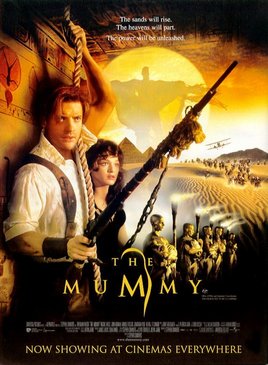
The Mummy (1999)


Brendan Fraser and Rachel Weisz face off against their undead nemesis in The Mummy

Director: Stephen Sommers

Cast: Brendan Fraser (Rick O’Connell), Rachel Weisz (Evie Carnahan), John Hannah (Jonathan Carnahan), Arnold Vosloo (Imhotep), Kevin J O’Connor (Beni Gabor), Jonathan Hyde (Dr Allen Chamberlain), Oded Fehr (Ardeth Bay), Erick Avari (Dr Terrence Bey), Patricia Velasquez (Anck-Su-Namun), Omid Djalili (Warden Gad Hassan)

The Mummy came out so many years ago that it’s being “rebooted” again as a Tom Cruise vehicle, as part of a Universal “Monsters Cinematic Universe” (oh dear God, even writing it sounds terrible). I’ve no idea what the new Mummyis like, but I am pretty certain it won’t match this film for fun, excitement, wit or (most of all) honest, gee-shucks B-movie charm.

In ancient Egypt, High Priest Imhotep is cursed and buried alive after his affair with Pharaoh’s mistress; should he rise again, he will do so as an unstoppable monster. Flash forward to 1926 and adventurer Rick O’Connell (Brendan Fraser) is hired by Egyptologist Evie Carnahan (Rachel Weisz) and her chancer brother Jonathan (John Hannah) to guide them to the hidden city of Hamunaptra. There, in competition with a rival American team of explorers, they find the body of Imhotep, read aloud from the book of the dead, bring Imhotep back to life – and all hell breaks loose.

I’ll say it straight out: I think you’ve got to have a pretty hard heart not to have a soft spot in it for The Mummy. Tonally, it’s one of the few Hollywood family-action films that doesn’t have any major miss-step. It’s a silly, rather warm-hearted, B-movie action with intensely likeable leads and a series of entertaining set-pieces. Every frame has been shot and framed like an epic, old-school adventure movie – and the plot knowingly runs with its clichés. It’s a film with literally no pretensions, which embraces its status as a piece of entertainment. And, I’d say, it succeeds magnificently at doing that.

It’s helped by a hugely charming performance from Brendan Fraser as a combination of Indiana Jones and Humphrey Bogart in The African Queen. Fraser’s got the chiselled good looks, but also a great deal of timing. The film gives him plenty of bon mots (“Patience is a virtue” Evie cries while decoding hieroglyphics; “Not right now it isn’t” Rick replies, staring at the hordes of possessed Egyptians heading their way) and he delivers them with a perfect 1930s matinee idol charm. It also helps that he has terrific chemistry with Rachel Weisz.

Weisz plays her part with a sweet comic charm, but adds a growing toughness to the character that prevents her from being a damsel in distress. John Hannah is pretty good value as her comic relief brother, while Oded Fehr makes such a great impression in limited screentime as the representative of a group of ancient guardians, you are surprised he hasn’t had more opportunities since then. Arnold Vosloo plays the Mummy with a tinge of sadness round the edges that humanises a man who is literally a monster.

Stephen Sommers directs the film with a witty sense of visual humour. This ranges from the obvious comedy (a 360 shot that takes in Evie knocking over a series of bookcases) to the satirical (he has a lot of fun with the gun-toting, ill-fated American explorers throughout the film). He also keeps the film barrelling along, without overlooking opportunities for character development. Despite the constant stream of action beats you always feel you understand exactly what motivates Rick and Evie – and their growing attraction to each other feels carefully developed.

Perhaps in a way The Mummy shows how films have changed in the last 17 years. When it was released, it was denounced as a big, dumb action film. However, compared to some of the fast-cut, poorly scripted rubbish churned out now, it looks rather sweet, well structured and focused more on character than on effects. As such it’s a really enjoyable and charming film, miles head of crap like Batman vs. Superman. Release exactly the same film today and I think many would call it a breath of fresh air, without the wearying self-important tone that weighs down so many modern blockbusters.

No it’s not a work of genius and no it’s not perfect. Omid Djalili’s character sails perilously close to racial stereotype. The killing scarab beetles in particular sometimes go marginally too far for its family audience. The special effects look a bit dated at points. Logically of course the plot barely stands up to thinking about: who on each curses someone with a terrible curse that makes them invincible and immortal? Why not just punish Imhotep by killing him badly eh?

Sommers is no master film maker – later Mummy films would largely fail to recapture this magic – but when he gets his boys-own, B-movie style bang-on, as he does here (and in The Rocketeer), he is a wonderful entertainment merchant, who makes engaging, entertaining films. No it’s not going to win any awards or trouble any top ten lists, but it’s always going to put a smile on your face.