Category: Movies about movies

Empire of Light (2022)

Empire of Light (2022)

Mendes passion project is strangely free of passion in a film that misses the targets it aims for

Director: Sam Mendes

Cast: Olivia Colman (Hilary Small), Micheal Ward (Stephen Murray), Tom Brooke (Neil), Toby Jones (Norman), Colin Firth (Donald Ellis), Tanya Moodie (Delia), Hannah Onslow (Janine), Crystal Clarke (Ruby), Monica Dolan (Rosemary Bates), Sara Stewart (Brenda Ellis)

In 1981, Hilary Small (Oliva Colman) is the duty manager of grand, old-fashioned, Margate sea-front cinema The Empire. A quiet, lonely spinster who’s never seen any of the cinema’s movies, she carefully performs her duties at work which include servicing the sexual needs of owner Mr Ellis (Colin Firth). However, her life changes when young Black man Stephen Murray (Micheal Ward) starts as an usher. The two strike up a friendship that becomes a relationship – but runs into conflict as Stephen struggles with growing racism and Hilary suffers a relapse into schizophrenia.

Empire of Light has been described as personal passion project by Sam Mendes. Bizarrely it feels like a film which all passion has been strained out of. It’s a functional and safe film, scripted with little inspiration and given life largely by the charisma of its two leads.

Empire of Light partially frames itself as a love-letter to cinema-going and film. Strangely it hardly engages with either of these. In fact, it could (with minor script changes) be set just as easily in a department store, petrol station or bingo hall. This is a film where no-one talks about cinema, watches a film or even seems interested. Toby Jones’ projectionist explains the mechanics of his trade in what feels like a carefully scripted explanation of the workings of a machine the writer knows nothing about. For all the beauty of Roger Deakins’ photography, there is no moment of magic that you might expect from a director who claims to be enamoured with the medium.

Hilary finally decides to watch a film for the first time: “pick any one you like” she tells Jones. He tees up Being There – a film I’m wondering if Mendes has seen. For starters, would I show a film about mental health featuring a racist cartoon in the middle to a woman struggling with her own mental health who has just watched a close friend being beaten up by the National Front? You’re left feeling Norman simply teed up whatever film was in the machine. But then, as he says, he doesn’t really watch the films anyway. Afterwards Hilary and Stephen chat about Peter Sellers – but never once mention he has only just died.

Empire of Light fails at most other things it attempts to do. Its heart is in the coming-of-age, second-chance-at-life romance at its centre. There is fine chemistry between Colman and Ward, and their bashful coming together works as a meeting of two spiritually similar people who feel life is passing them by. Their unspoken courtship early on – rescuing a wounded pigeon together in the abandoned upper-storey of the Empire or watching the New Years fireworks on the roof – has a pleasant innocence. But fundamentally, these characters feel ill-defined and go through personal crises that feel pat and under-developed.

Colman gives her all as Hilary – although this sort of dumpy, frumpy, tragic, timid woman is becoming a little too much of a calling card – but this is a thin character. We slowly realise Hilary is a woman struggling with mental health – making her sexual exploitation by Firth’s smug, sleazy, manager even more unpleasant. She carefully goes about her work, stares down at the ground and wouldn’t even dream of intruding on the cinema-goer by actually watching the film. Colman masters the little touches of glee she gets at the presence of Stephen, Hilary’s simultaneous enjoyment and bashfulness about what she assumes is a hopeless crush.

Where the film fails though is in finding any depth in Hilary’s struggles with schizophrenia. Colman’s character is inspired, in many ways, by Mendes’ own mother. The film aims for a sympathetic presentation of mental health, which it manages but without providing any insight. While many aspects of mental health were not discussed at the time, a film made today really should have more to say than Empire of Light musters.  Instead, Hilary’s condition feels like a dramatic shorthand. For a passion project that’s not good enough – the film even falls back on the age-old “stops taking her meds” plotline. For all the gusto and commitment Colman brings to Hilary’s mental collapse – a furious destruction of a sandcastle, or ranting, drunk, in an apartment where the walls are strewn with self-penned graffiti – it never feels insightful enough.

It’s sadly the same with Micheal Ward’s Stephen. For all Ward is hugely charming as this saintly young man – and for all he expertly suggests Stephen’s anger at the growing tide of racism in Britain – the issues he deals with feel like window-dressing. The most interesting moment is his confrontation with an angry, racist customer who is appeased by Hilary rather than challenged – much to Stephen’s justified fury. But name-checking Brixton and New Cross and saying “it’s getting worse” doesn’t really feel like getting to grips with the dilemmas he, and young men like him, were facing. Particularly when Stephen responds to a deadly beating with something approaching a shrug of the shoulders. You can’t argue with Mendes’ genuine feelings, but there is never enough depth.

Instead, these major social issues are benched by the film’s end, making them feel like discussion points to make Hilary feel better about her life and for Stephen to resolve to move on with his. It has less to say about these issues than an episode of Call the Midwife. Just as it has nothing to say about the magic of cinema going, turning it into a retro back-drop of posters and old sweeties. Far from making a case for cinema, it makes the building as irrelevant as some worry it is becoming today.

Mulholland Dr (2001)

Mulholland Dr (2001)

Surrealist, dream-like images fill a film that’s wilfully complex, perplexing and probably Lynch’s masterpiece

Director: David Lynch

Cast: Naomi Watts (Betty Elms/Diane Selwyn), Laura Harring (Rita/Camilla Rhodes), Justin Theroux (Adam Kesher), Ann Miller (Coco), Mark Pellegrino (Joe), Patrick Fischler (Dan), Michael Cooke (Herb), Dan Hedaya (Vincenzo Castigliane), Angelo Badalamenti (Luigi Castigliane), Michael J Anderson (Mr Roque), Monty Montgomery (The Cowboy), Lee Grant (Louise Bonner), James Karen (Wally Brown), Chad Everett (Jimmy Katz), Melissa George (Camilla Rhodes), Billy Ray Cyrus (Gene), Lori Heuring (Lorainne Kesher)

Spoilers: I’ll be discussing in detail the plot (if you can call it that) including its final act reveals which are crucial for understanding the film. So watch it first!

Where do you begin? Mulholland Drive feels like the culmination of Lynch’s work, a perfect boiling down of Twin Peaks, Lost Highway, Wild at Heart and Blue Velvet into a surrealistic meditation on Hollywood, wish-fulfilment, dreams and reality. It’s both wilfully inaccessible and surprisingly clear, both coldly cruel and achingly tender, full of hope and devoid of happiness. It’s tough, cryptic, engrossing viewing and unpeels like an onion (and likely to have the same effect on you as that vegetable). Every scene may mean everything or nothing, but there is not a moment of it that isn’t darkly, thrillingly engrossing.

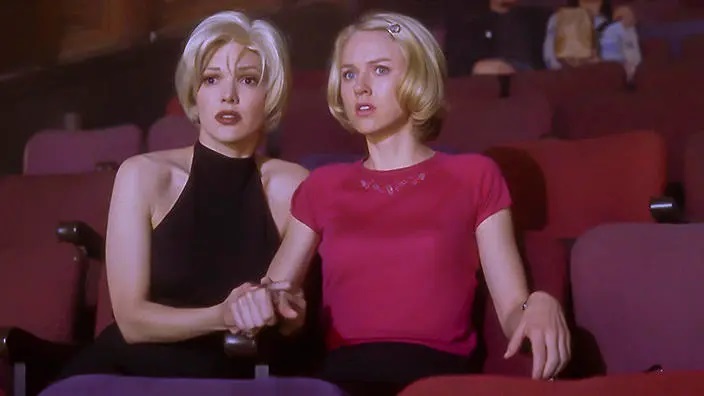
It starts with a car crash on Mulholland Drive – but not before a stream of seemingly disconnected images that only later reveal their importance, including a women on a bed and a dizzying array of disconnected jittybug dancers drifting across the screen like paper cut-outs before a purple background. The car crash involves a mysterious woman ‘Rita’ (Laura Harring) who narrowly escapes being murdered but is left with amnesia. She stumbles to the house of Betty (Naomi Watts), a newly arrived girl in Hollywood, eager to become an actress. With only a bag of money and a mysterious blue key to go on, Rita and Betty search to find out who Rita is. Meanwhile, director Adam Kesher (Justin Theroux) finds his film (which Betty wants to audition for) being taken over by gangsters. Did I also mention an incompetent-but-brutal hitman, a supernaturally omniscient albino cowboy and a monstrous goblin-like hobo who lives behind a diner and can kill on sight?

Mulholland Drive grew out of Lynch’s plans for a new Twin Peaks style TV series. He shot a pilot, the footage from which takes up much of the first two thirds. Like Twin Peaks it was full of mysterious alleyways to be explored: it’s amnesiac lead, mysterious money and blue key, shadowy gangsters (even led by Twin Peaks veteran Michael J Anderson, here in a Red Room style hide-away, his head attached to a prosthetic body), creepy supernatural nightmare elements. Alas, the executives hated it (it wasn’t exactly Desperate Housewives), but French investors stepped in to fund Lynch turning it into a surrealist movie, with an additional half an hour of footage to an ending (of a sort).

A sort of ending is what we get. Mulholland Drive is a famously confusing, impenetrable film. But to me it seems clear. Lynch’s solution was to turn all the pilot footage into a bizarre and terrible dream – and latch on an ending set in the ‘real world’ which re-presents characters, events and throwaway moments in surprising new lights, leading us to radically reinterpret everything. Effectively, the first two-thirds are the guilt-ridden nightmare of Diane (Watts again), a failed actress in Hollywood who paid for a hit on a star actress Camilla (Harring again) who she believes seduced and spurned her. In her dream, Diane reimagines both herself and Camilla exactly as she wishes they were: herself unspoilt by Hollywood with preternatural talent, Camilla as an amnesiac utterly reliant on her.

What we have here is dreams as wish fulfilment: and what city is more about that, than Hollywood? Mulholland Drive plays as the dark underbelly of Sunset Boulevard (pretty dark and bitter already!). Lynch’s Hollywood is a vicious, heartless, bloody place, where cruelty and death are commonplace. In ‘the dream’ the gangsters – terrifying cameos from Hedaya and composer Badalamenti, the latter dribbling inadequate coffee from his mouth during a meeting in a grotesque power play – call the shots. Reality might be worse. This heartless factory of dreams chews up and spits out innocents like Diane, turning her from naïve and optimistic into  bitter, twisted shell, emotionally maladjusted, locked in her apartment tearily in thrall to her worst instincts.

It makes sense in a way that the film is dominated (probably) by a dream. Hollywood is the town of stories, and it’s perversely logical that the unreality should feel so detailed, engrossing and narratively compelling while what is (probably) reality is fragmented, mundane and laced with cruelty. To the people of films, stories are richer and more freeing than anything that happens in real life and infinitely more comforting.

Comfort is what our dreamer wants. Naomi Watt’s Betty seems like a cliché of a small-town girl, swept up in the big city. Full of aw-shucks charm, the eagle-eyed will spot little moments of strength that feel out of character. There are micro-flashes of anger and she’s determined to break into a mysterious, abandoned house to find a clue when Rita runs. She’s a gifted actress, turning a mundane script in an audition (a script she and Rita laugh at) into a simmering performance of sexual control that stuns the room. But this is a multi-layed performance, just one facet of a whole.

Because Betty’s talent is recognised in the way her ‘real-world’ counterpart Diane – stuck in small supporting roles, gifts from Camilla – never is. There are touches of this in that audition: the director is the least involved and speaks only in vague bullshit. Its not just that talent recognition: in the dream she can turn her lover Camilla, an independent and (perhaps) selfish figure, into someone so dependent on her that she literally doesn’t even know who she is. She even turns the man Camilla leaves her for, into a deluded, humiliated cuckold in thrall to gangsters.

Lynch’s crafting of this dream is flawless. He can mine tension from even the smallest moments. Innocuous events – two men sitting in a diner, a kind old couple in a cab, a business meeting, a singing audition – drip with menace and unknown horror. His camera frequently, almost imperceptibly weaves, as if held floating in space. Logic jumps and sudden transitions abound. Lights flicker and time never obeys rules. He is also a master of black humour: a hit-job gone wrong (with bodies and a vacuum cleaner joining the carnage) is hilarious, as is Kesher’s unexpected arrival home to find his wife in bed with a muscular pool cleaner.

Mulholland Drive is also a sensitive and highly emotional romance story between two lost souls. Betty, naïve and helpful and Rita, who clings with gratitude and adoration to the woman who helps her. Moments of sexual tenderness between these two are shot with erotic beauty: contrasted sharply with the more sordid, aggressive couplings between them in ‘reality’.

But these mix with moments of chilling, unspeakable horror. The hideous goblin living behind a diner, an embodiment of all that is cruel, evil and twisted, later clutching a box the releases the furies themselves seem to leap from. Is this a dark expression of the dreamer’s own guilt (which seems to be transferred to “Dan” a man we see literally dying of fright in a diner that becomes crucial later)? The Cowboy, who may or may not be of this world, glanced at two dreadful moments (just as he promises) seems to guides the dream. And the Silencio club, a theatre of the bizarre, disturbing auditory and visual twists and turns that serves as the gateway between dream and reality – something Betty subconsciously knows, vibrating in terror in her seat, knowing this fantasy she has crafted is under siege from dark elements of the truth demanding she acknowledge them.

Mulholland Drive deconstructs itself at every turn, aided by Lynch’s wonderful, hypnotic surrealistic touches. What’s beautiful about it, perhaps, is it leaves it very much up to you. For me, the desire for dreams to be fulfilled is crucial. It’s all captured in Watts and Harring’s multi-layered performances, their versions of the same women contrasting and complementing each other. Lynch allows their personalities to blur both in character and in visuals (Rita ends up in a matching wig in touches of Vertigo while the film’s blurring of two personalities echoes Bergman’s Persona, including a homage via a shot where both faces seem to merge into one).

An intense, fascinating dream-like exploration of several classic Lynchian themes, Mulholland Drive is his finest, most rewarding film. One which, whatever interpretation you place on its events, grips and challenges you at every moment, full of scenes which spark a mixture of imagination, horror and intrigue. Powered by two wonderful performances at its lead, both with just the right mix of reality and fantasy about them, it’s an extraordinary film.

Blonde (2022)

Blonde (2022)

Exploitative biopic of Marilyn Monroe that doubles down on misery, discomfort and leaves you feeling rather like a Peeping Tom

Director: Andrew Dominik

Cast: Ana de Armas (Norma Jeane Mortenson/Marilyn Monroe), Adrien Brody (The Playwright), Bobby Cannavale (Ex-Athlete), Xavier Samuel (Cass Chaplin), Julianne Nicholson (Gladys Pearl Baker), Evan Williams (Edward G Robinson Jnr), Toby Huss (Whitey), David Warshofsky (Mr Z), Caspar Phillipson (Mr President), Dan Butler (IE Shinn), Sara Paxton (Miss Flynn)

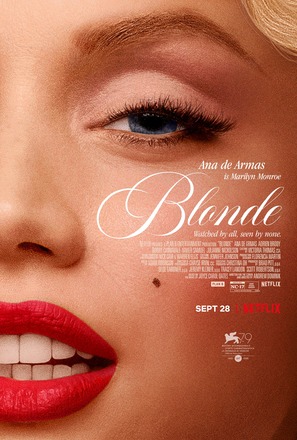
Few icons had such cultural impact in the 20th century as Marilyn Monroe. Maybe Elvis – coincidentally also the subject of a 2022 biopic. Even people who have never seen a Monroe film can impersonate her or knows about that dress being blown up around her. It’s also pretty widely know she had a difficult life, troubled family and some disastrous marriages culminating in her tragically early death from an overdose. Blonde, based on a novel by Joyce Carol Oates, dives into a heavily fictionalised account of Monroe’s life, focusing overwhelmingly on anything that could be seen as miserable, shocking and traumatic to the exclusion of almost everything else.

In doing so it’s hard not to think that, for all its attempts to shine a light on the difficulties of Monroe’s life, it’s not also partly exploiting her as well, turning her into a sort of misery porn entertainment. Over the course of nearly three hours, we see her raped at least three times, beaten, fall victim to elaborate revenge plots, forced through two blood-soaked abortions, pumped full of drugs to get her through film shoots and constantly at the centre of slavering piles of male filmgoers who scream for her attention and call her a whore the second she walks past. To say Blonde is a miserable film that’s tough to watch is putting it lightly.

Why does Marilyn put herself through it? The film offers no real answers, beyond the simplest, crudest flashes of pop-psychology possible: Daddy issues. Growing up not knowing who her father is, Marilyn’s life is a quest to find either her father or an acceptable substitute. That could be the audience, the husbands she calls “Daddy” or the hope that the person claiming to be her father who sends her a letters, might one day meet her. This is about as far as the insight goes. How issues influenced her choices and decisions is left frustratingly untold.

The film skims over the creative control she gained over her movies, the production company she set up and her skill as comic actor (it focuses much more on her dramatic Actor’s Studio work). It never once tries to understand why she continues in a career she hates so much – she had plenty of chances, even in this film, to back out – or what lured her to the silver screen and a quest for superstardom in the first place. It’s as if acknowledging Monroe worked hard to get her career would undermine the victimhood the film is determined to define her with.

The film suggests “Marilyn Monroe” is a persona put on by Norma Jean. This is another crude piece of psychology. We completely skip the years Norma Jean must have spent creating this persona and we never learn what influences it or get an understanding of “who” this Marilyn is. I suppose it’s “Marilyn” who smiles at film premieres or appears on screen: but we get little sense of how Norma Jean might have used this alternative persona to get her through the day. For all the time we spend with her, we never understand her beyond someone desperate for love with severe Daddy issues.

The film is so clumsily mishandled, its makers were reduced to stating it was not intended as an anti-abortion movie. This despite both abortions being horrifying experiences (one with a drugged Marilyn begging that she’s changed her mind, the other a late blood-soaked possible-fantasy where Marilyn is kidnapped has an implied Kennedy baby removed). Worse than this, the film Marilyn hammers home Marilyn’s sense of guilt. During her first abortion she imagines herself in a house burning down around her and later imagines a conversation with a giant foetus, which asks “Mummy why did you kill me?” and begs her not to do the same for her future babies. Not exactly the sort of messaging you expect from a #metoo film.

On top of this, Blonde is a film almost unbearably pleased with itself. This is Art with a capital A, R and T. Dominik shifts from colour to black-and-white, changes film stock and constantly shifts and changes the aspect ratio from shot-to-shot. In almost three hours, only once could I see any logic in this: as Marilyn agrees to marry Joe DiMaggio, the frame closes in on her from 2.35:1 to 4:3, a neat visual metaphor for the constricting marriage she has signed up for. Other than that, there is no rhyme or reason for any of these visual changes in the film. It doesn’t comment on the action, reflect emotional beats, delineate between reality or fantasy… it just smacks of an overindulged director using all the flashy tools for the sake of it. It becomes intensely irritating.

There is a committed lead performance from Ana de Armas (even if her Cuban accent does sneak through), who captures beautifully Monroe’s physical and vocal traits and sells what emotional titbits she is given in the salacious, muck-raking framing of the film. Her traumatic relationship with her disturbed mother, a sex-filled thruple with Hollywood princes Cass Chaplin and Eddy Robinson Jnr, raped by Darryl F Zanuck and a surprisingly-vile John Kennedy (while a TV in the background shows missiles rising – boom boom), knocked about by a jealous Joe DiMaggio (in real life he remined close to her and organised her funeral, but hey ho)… it’s all meant to be shocking but it’s all dialled up with glee of a two-bit muck-rag, flogging the hot goss.

That’s standard for the whole film, a flashy, pleased-with-itself epic that focuses on misery and pain for its subject at the cost of everything else and ends up telling us very little about her or her inner life, instead leaving us feel slightly like peeping toms for watching.

The Barefoot Contessa (1954)

The Barefoot Contessa (1954)

An enigmatic beauty finds fame but not happiness in Hollywood in Mankiewicz’ slightly muddled mix of satire, romance and tragedy

Director: Joseph L Mankiewicz

Cast: Humphrey Bogart (Harry Dawes), Ava Gardner (Maria Vargas), Edmond O’Brien (Oscar Muldoon), Marius Goring (Alberto Bravano), Valentina Cortese (Eleanora Torlato-Favrini), Rossano Brazzi (Count Vincenzo Torlato-Favrini), Elizabeth Sellers (Jerry Dawes), Warren Stevens (Kirk Edwards), Franco Interlenghi (Pedro Vargas)

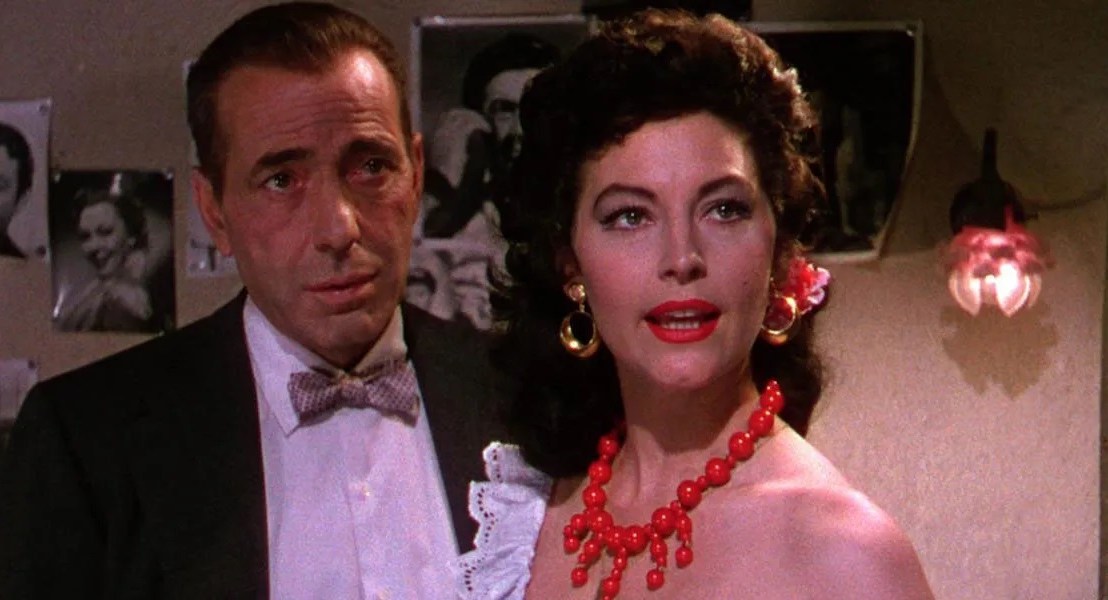
Rain hammers down on a funeral in the Italian Rivera. A group of (mostly) men gather to pay their respects to deceased film star Maria Vargas (Ava Gardner). In flashback, two of the men who discovered her as an exotic dancer in a Madrid nightclub, remember her. Harry Dawes (Humphrey Bogart) is the world-weary writer-director and her friend and mentor, Oscar Muldoon (Edmond O’Brien) a publicist to power-mad producers and self-satisfied millionaires who wanted to use Maria for their own ends. Maria’s success goes with a growing loneliness and ennui: marriage to Count Vincenzo Torlato-Favrini (Rossano Brazzi) feels like a fresh start but leads only to further tragedy.

Mankiewicz’s The Barefoot Contessa was an attempt to do for Hollywood what he so superbly did for theatre in All About Eve. What’s fascinating is that it’s clear Mankiewicz loved the theatre – for all its bitchy acidness – but clearly didn’t like Hollywood that much. The Barefoot Contessa is a cold, cynical film where Hollywood is a shallow, selfish place with no loyalty and where people are only commodities.

The only exceptions are Dawes and Maria. Dawes – an obvious Mankiewicz stand-in (and who hasn’t wished they could be Humphrey Bogart?) – is an artist, with an abashed guilt about wasting his talents on shallow films. Played with a quiet, observational languor by Bogart (so ashen faced at times, he seems almost grey), Dawes narrates with a dry distance, seeing but avoiding involvement, an arched eyebrow for every event. He’s also got a level of principle and integrity largely missing from the other Hollywood figures.

What we see of them is often hard to like – could Mankiewicz already be so bitter about his profession, just a few years after dominating the Oscars? Maria’s first producer, Warren Stevens, is a spoilt millionaire (inspired by Howard Hughes), played with a stroppy greed by Kirk Edwards. Stevens humiliates underlings in restaurants, treats Dawes like a bellboy, demands total devotion from Maria (sulkily ordering her to stay away from a potential rival at a dinner party) and has not a shred of interest in art. Under his control, Dawes directs films which sound formulaic (Black Dawn!) and which he clearly despises. A screen-test for Maria is gate-crashed by a series of European producers who gossip about money, stars, finance and never art.

Maria rises above all this as a true romantic ideal, her tendency to go barefoot part of her defining characteristic as a natural free-spirit in touch with the Mother Nature (“I feel safe with my feet in the dirt”). Ava Gardner is perfectly cast as this romantic but enigmatic figure, an idealised figure we never quite understand. Introduced as curiously indifferent about auditioning for Hollywood (partly due to her instinctive dislike for Stevens), Maria almost drifts into stardom but finds little contentment. She lives the ultimate Cinderella story (as she comments on with Dawes) but never find a satisfying fairy tale ending after her rags-to-riches story.

The Barefoot Contessa starts as a Hollywood expose, but becomes an ill-focused study of this almost unknowable glamour figure. Gardner is, of course, nothing like what a Madrid dancer from the slums would look or act like, but she is perfectly cast as the idealised figure Mankiewicz wants for his Maugham-ish exploration of ennui and shallowness among the jet-set of Europe. They’re not that different from Hollywood producers: obsessed with status and class, and uninterested in truth and art. Marius Goring’s Italian millionaire turns out (for all his Euro-charm) to be as much a stroppy ass as Stevens (humiliatingly blaming Maria for his gambling losses). Her husband, the Count, seems to be her salvation, but turns out to be as much a deceptive empty-suit as anyone else.

I suppose it’s part of the point that we never get to hear Maria’s own voice, only the perceptions of the men around her. You could say the same about All About Eve’s Eve and Margo, but they were such rich characters our understanding of them was always clear. But Maria is never quite compelling enough and Mankiewicz never escapes from making her feel a variation on a fantasy figure (between sex bomb and earth mother). Mankiewicz was forced to compromise on his central conceit (rather than gay, her husband is cursed with ludicrous war-wound induced impotency) of Maria marrying the man least suited to giving her the family-life purpose she seeks.

The Barefoot Contessa – strangely for a film from a director whose best work was with women – eventually becomes a film about men, fascinated with a woman they can never really understand. Dawes gets the closest, the only man free of sexual desire for her, but to the others she is often seen as an unobtainable sexual figure (on a yacht, she defiantly confronts the lecherous stares of the men on board). When we finally see her dance, she has a freedom and naturalness you feel has been crushed by the circles she now moves in.

It feels like two films pushed together: one a Hollywood expose about a newly-grown star (that film is a broader, farcical one where Edmond O’Brien’s hammy Oscar-winning turn as a wild-eyed, famously sweaty publicist seems to fit); the other a novelistic musing on ennui in the moneyed jet-set classes, where an unobtainable woman is at last obtained by a man who can do nothing with her.

Mankiewicz’s weakness is not pulling these two narratives together into a coherent thematic whole. He himself was later critical of the films structure. It’s beautifully written of course – Mankiewicz is a master of theatrical pose – and Jack Cardiff’s technicolour beauty is outstanding. The Barefoot Contessa sits in the shadow, both of In a Lonely Place (Bogart’s vicious 1950 Hollywood expose) and films that loosely followed in its ennui-exploring footsteps, like La Dolce Vita. But it’s as if Mankiewicz got a bit lost (like Dawes) about what his intentions were in the first place.
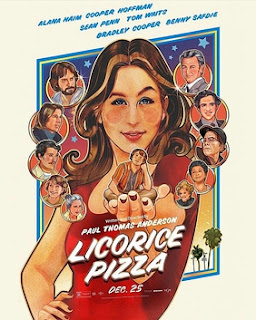
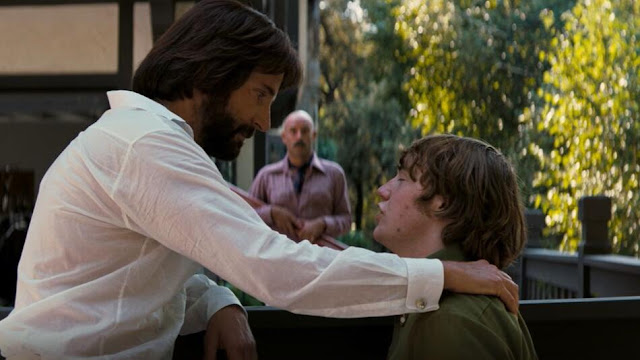
Licorice Pizza (2021)

Licorice Pizza (2021)

Young romance in a changing time in Paul Thomas Anderson’s unconventional love story

Director: Paul Thomas Anderson

Cast: Alana Haim (Alana Kane), Cooper Hoffman (Gary Valentine), Sean Penn (Jack Holden), Tom Waits (Rex Blau), Bradley Cooper (Jon Peters), Benny Safdie (Joel Wachs), Skyler Gisondo (Lance), Mary Elizabeth Ellis (Momma Anita), John Michael Higgins (Jerry Frick), Christine Ebersole (Lucy Doolittle), Harriet Sansom Harris (Mary Grady)

Is there a force harder to understand than love? That’s basically the theme of Paul Thomas Anderson’s delightfully whimsical film, which explores an unlikely relationship in Los Angeles in 1973, played out to a backdrop of the OPEC gas crisis. Told with a dreamlike grace and overflowing with affection and warmth for its characters, it’s a deceptively simple film that is a masterpiece of heartfelt craft.

Standing in line to have his photo taken for his High School picture, 15-year-old Gary Valentine (Cooper Hoffman) is instantly smitten with cynical photography assistant, 25-year-old Alana Kane (Alana Haim). Much to her surprise, his claim to be a child actor in the movies is actually true – he’s co-starring with Lucille Doolittle (Christine Ebersole, in a thinly veiled spoof of Lucille Ball) in a movie. He’s also a budding entrepreneur, setting up a business selling water beds in LA. Alana still doesn’t know what she wants to do with her life, but finds herself drawn to Gary, despite her acute awareness of their age difference. The two of them become business partners and drift in and out of friendship, never quite sure exactly how they feel about each other.

Now I guess you might well have checked yourself there at the thought of a romance between a teenager and a 25-year-old. But there is no prurience here, no masturbatory coming-of-age fantasy with an older woman or sleazy grooming. This is instead a very genuine, sweet and moving romance between two people who only really have numbers keeping them apart. It particularly works because Gary in many ways feels about 5 years older than he actually is and Alana often feels about 5 years younger than she is. In many ways they are both twenty-year-olds – and it’s only the fact that they are not which puts a barrier between them being together. As such it becomes very easy to accept their potential relationship, and even root for it.

That’s massively helped by the fact that these two characters are marvellously embodied by two first-time actors. Anderson specifically wrote the role for Alana Haim, member of family rock group Haim (Anderson has directed several of their music videos, and was taught by Haim’s mother). She’s stunning: prickly, quick-witted, cynical but also vulnerable and sensitive. She’s desperate to find some sort of purpose in her life: exploring the role of trophy girlfriend, businesswoman and political campaigner, but always seems like she’s slightly lost, for all her defiance. Haim is also wonderfully exasperated and befuddled by the interest she feels for this younger guy, barely able to acknowledge she might have feelings for him. Haim is superb.

Gary, played by the son of regular Anderson collaborator the late Philip Seymour Hoffman, is equally well bought to life by Cooper Hoffman. Gary’s career as a child actor is coming to an end: as we see through a disastrously over enthusiastic audition, which the casting directors watch out of a polite respect. But Gary has the go-getting hustling skills of someone much older. He’s got an eye for business opportunities – water beds, film productions, pinball machines – that would be the envy of others. He’s smart, confident, frequently cocky, assured – but at times also staggeringly immature (like a teenage boy he’s obsessed with boobs and Alana watches with frustrated despair as he and some friends drag out miming a wanking gag for what seems forever). He’s also still sometimes just a kid: mistakenly arrested at one point, he sits in terror in a police station and, even when uncuffed and released, is too scared to leave the station without Alana’s encouragement.

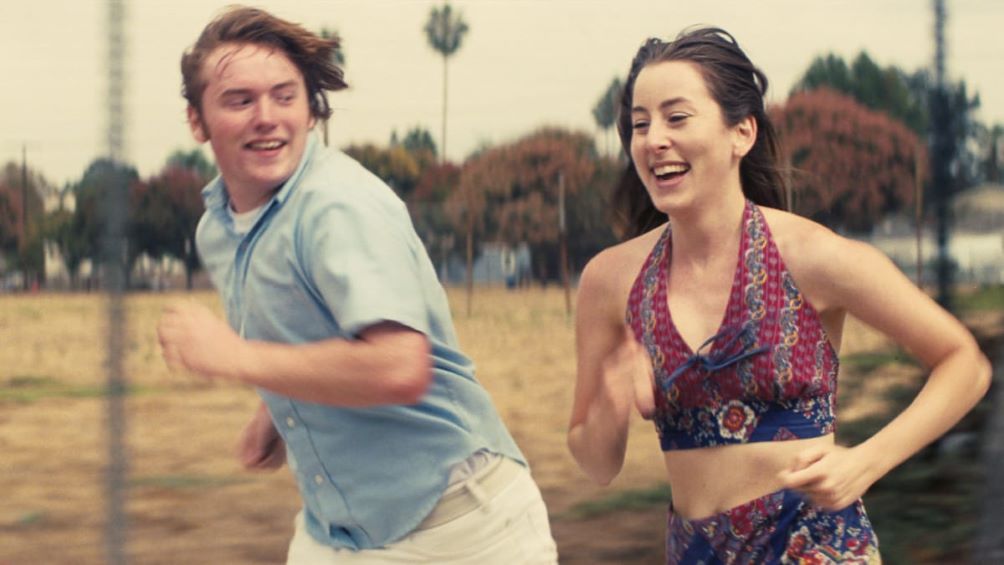
That arrest scene is yet another moment that reaffirms the deep bond and love between these two people. Wrongly arrested for nominally fitting the description of a suspected killer – “Look forward to Attica!” the police taunt him – he’s hauled from an Expo. Alana follows, running full pelt after the squad car – even though at this point they’ve not spoken for weeks – and then holds him for what feels like forever when he is released (before, of course, slapping him and saying “What did you do?”). Later, when Alana falls while taking part in an ill-advised late-night motorbike stunt, Gary will run the length of a golf course to make sure she is alright (despite, again, the two of them having cut ties before this). Moments like this sing with a real romantic force.

Particularly as this is such a love-hate film. Alana and Gary constantly hurt each other, finding ways to get into perfect sync only to screw it up. Gary is heartbroken when Alana starts to date his older co-star (a smug atheist, played wonderfully by Skyler Gisondo). Alana is overcome with jealousy and pain when Gary flirts and kisses a school crush his own age at the launch of their water-bed business. After auditioning for a movie role, Alana delights in making Gary uncomfortable when he walks into the bar where she is enjoying a drink with the movie’s male star. Through it all, these two are drawn back to each other time and again – and when the chips are down their loyalty and love to each other is absolute, even if they can’t always admit it to either themselves or each other.

Around the two outstanding central performances, Anderson constructs a series of scenes and skits that drift from one to the other. The whole film has a curiously dreamlike transition structure: it’s frequently hard to tell how much time has passed and the narrative omits overly functional scenes, so we frequently see a situation has changed but only an implication of why (example: Gary’s mother tells him she can’t chaperone him to New York for a TV appearance – next shot Alana and Gary are on a plane. How was this agreed? Who cares!). Each of the sequences plays out with a shaggy-dog story charm, directed with the confidence and brilliance of a director who is happy to make it look easy. And let me tell you, very few could pull off something as light and charming.

The film is stocked with delightful cameos. John Michael Higgins is very funny as the owner of a Japanese restaurant, with two successive Japanese wives who he “translates” for by repeating in ludicrously Japanese accented loud English whatever has just been said. Harriet Sansom Harris is very funny as a plugged-in agent. Ebersole is a monstrous attention-hungry star. Sean Penn is funnier than he’s ever been playing a version of William Holden, pissed and barely able to distinguish between his film roles and real life, cajoled by an equally pissed director (Tom Waits on top form as a sort of Peckinpah-Huston combo) to perform a motorbike stunt late at night. Best of all is Bradley Cooper, who burns through his brief scenes as an unhinged Jon Peters, a whipper-cracker of unpredictability and insatiable horn.

But it’s the two leads that give this heart, and Licorice Pizza is an amazingly sweet, tender, endearing and deeply charming love story about a couple who can’t quite understand why they want to be together and spend most of the movie making sure they’re not. Anderson brings it altogether with immense homespun charm – this is almost a home movie, Haim’s family play he character’s family, the cast is stuffed with Anderson’ family and friends – and Licorice Pizza is the sort of delight that shouldn’t work, but very triumphantly does.

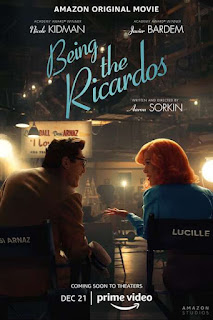
Being the Ricardos (2021)

Being the Ricardos (2021)

I Love Lucy is bought to life in this behind-the-scenes drama that bites off more than it can chew

Director: Aaron Sorkin

Cast: Nicole Kidman (Lucille Ball), Javier Bardem (Desi Arnaz), JK Simmons (William Frawley), Nina Arianda (Vivian Vance), Tony Hale (Jess Oppenheimer), Alia Shawkat (Madelyn Pugh), Jake Lacy (Bob Carroll), Clark Gregg (Howard Wenke), John Rubenstein (Older Jess Oppenheimer), Linda Lavin (Older Madelyn Pugh), Ronny Cox (Older Bob Carroll)

A film about I Love Lucy is always going to lack cultural cache outside of the US: it would be the same if a British film about Dad’s Army or Hancock’s Half Hour played there. Without a legacy of growing up on endless re-runs, I think a lot of British audiences (like me) will be left playing catch-up working out who the stars are and what the show is about.

Sorkin’s Being the Ricardos follows one week in the making of I Love Lucy in 1952. It’s a big week. There are rumours of infidelity (from him) in the lives of the married co-stars Lucille Ball (Nicole Kidman) and Desi Arnaz (Javier Bardem). On top of that, the media is running stories that Ball is a card-carrying communist (not completely true). And finally, she’s pregnant, something the network can’t imagine would be acceptable to include in a family show. All these problems come to a head as that week’s show is finalised, rehearsed and shot.

Sorkin’s film is by far and away at its best when dealing with the backstage mechanics behind bringing a TV show to the screen. Which perhaps isn’t a surprise, as that is obviously material he’s very familiar with. The film is fascinating at showing the technical side of things like rehearsals, and it’s very illuminating on the dedicated perfectionism Ball bought to making the comedy work. We see every single gag being worked on over and over to mine the maximum number of laughs from it. There are long back and forth conversations on timing, positioning and nuances of line delivery.

There are similarly fascinating ideas during scenes in the writers’ room. A huge board maps out the details of future episodes. The writers – a neatly squabbling but fundamentally loyal Alia Shawkat and Jake Lacy, headed up by executive producer Tony Hale – are constantly pushed to fine-tune their ideas, while passionately defending many of their own jokes to the sceptical stars.

A sequence essentially showing Ball and the writers spit-balling ideas that will develop into future set-pieces is particularly well done. Sorkin also comes up with a neat visual concept showing how Ball considers the impact of the gags: events from the show play out in black-and-white then switch to colour as the action pauses and Ball considers what to do next to get the most laughs. It’s all part of the film’s primary strength: a fascinating look at the energy and passion required to produce a half-hour sitcom, be it arguing over camera placement to a sleepless and worried Ball calling her co-stars to the studio in the wee small hours to fine-tune a pratfall.

Where the film is less certain is all the other stuff it tries to cover. Being the Ricardos is almost the dictionary definition of a film biting off more than it can chew. It tries to cover: the making of a TV show, McCarthyism, a biography of the marriage of the two stars, the sexism of network TV, racial unease at the Cuban Arnaz playing Ball’s husband, the sexual prudishness of the 1950s, and expectations around gender roles. On top of which, Sorkin’s film trumpets continuously that this was the “most difficult week ever”. It’s an onslaught of stakes the film finds hard to deliver on.

For starters, most of the action focuses on the mechanics of making the show – mechanics that surely would be the same every week. The communist plotline is introduced then largely dropped for most of the film until the final rousing hurrah. McCarthyism is barely tackled, other than a new perspective from Arnaz, who remembers being forcibly driven from Cuba by Communists. Awkward flashbacks fill in some of the backstory around Lucille and Desi’s meeting but end up feeling like superfluous additional information that adds nothing to anything other than the runtime.

Tensions in their marriage bubble away before finally coming to a head, as if Sorkin didn’t want to spoil the rat-a-tat dialogue with some deeper content. The film is very good at showing what a great team they made: Ball’s creativity and comic genius matched with Arnaz’s business-sense and ability to plan every aspect of the show’s technical and financial set-up. But again, more could have been made of this – too often it’s an idea crowded in amongst others, with a tone that can’t decide how it feels about Arnaz’s possible betrayal or Ball’s fixation on it.

More could have been made about the prudish and sexist struggles Ball and Arnaz went through to get her pregnancy integrated in the show. It’s a fascinating realisation that the implication that a happily married couple must have had sex to produce a baby was anathema to TV networks in the 50s. A film that focused on the battle to get this integrated into the show – and the impact that doing so had on America and television – would not only have been more focused, it would also have played into the film’s real strengths: the mechanics of actually making television. As it is, this sense of the struggle Ball had to get due recognition in a male-dominated industry is lost.

As the two stars Nicole Kidman (under layers of latex to transform her facial features into Ball’s) and Bardem are very good, Kidman in particular brilliantly conveying Ball’s comedic genius as well as her self-doubt and insecurity, expressing itself in worries about her marriage to making sure her female co-star looks less attractive than her on the screen. Kidman pounces on Sorkin’s fast-paced dialogue and provides much of the film’s drive and focus. There are also neat supporting turns by JK Simmons and especially Nina Arianda as their co-stars.

In the end though, yet again, it feels like Sorkin the writer is ill-served by Sorkin the director. While the film is more sharply directed than his others, it lacks focus, discipline and drive, like Sorkin can’t bear the idea of cutting some of his own words and ideas so tries to include them all. It ends up meaning nearly all of them lack the impact they should have.

The Player (1992)

Tim Robbins is the ultimate heartless Hollywood exec in Altman’s vicious satire The Player

Director: Robert Altman

Cast: Tim Robbins (Griffin Mill), Greta Scacchi (June Gudmundsdottir), Fred Ward (Walter Stuckel), Whoopi Goldberg (Detective Susan Avery), Peter Gallagher (Larry Levy), Brion James (Joel Levison), Cynthia Stevenson (Bonnie Sherow), Vincent D’Onofrio (David Kahane), Dean Stockwell (Andy Sivella), Richard E. Grant (Tom Oakley), Sydney Pollack (Dick Mellon), Lyle Lovett (Detective Paul DeLongpre), Gina Gershon (Whitney Gersh), Jeremy Piven (Steve Reeves)

Hollywood: it’s a hell of a place. Sharks ain’t got nothing on studio power-brokers, hunting product to sell. After all, not a single letter of “Art” appears in “Hollywood”. Griffin Mill (Tim Robbins) hears 50,000 pitches a year and gives the green light to ten or twelve. Mill is plagued with death threats. Confronting the writer (Vincent D’Onofrio) he believes responsible, he kills him in a fight. Can he get away with murder and successfully romance the writer’s artist girlfriend June (Greta Scacchi)? And, even more importantly, can he protect his job from hotshot executive Larry Levy (Peter Gallagher)?

Robert Altman had been working outside of the studios for well over two decades after negative experiences creating his critically acclaimed but hard-to-digest masterpieces (including McCabe and Mrs Miller and The Long Goodbye, the sort of films only Altman could make). His career had drifted during the 1980s, as his edgy, ‘disciplined ill-discipline’ approach (with overlapping sound and roving cameras) moved out of fashion. The Player was not only his payback expose on the studio system, with the exec a sociopath, but also his triumphant comeback to the frontline of film-making (he earned several awards, including a nomination for Best Director).

The Player is nominally a comedy, but in the way of Altman it also fits half a dozen other labels: from film noir to corporate satire. Above all it’s a maverick’s view of a system designed to produce product (Mill constantly speak of his films like this – he would love our modern age of “content”). The studio’s offices are lined with posters from classic Hollywood – but the studio produces the most crowd-pleasing cookie cutter movies you can imagine. It’s all about squeezing in all the ideal elements a film must have: “Suspense, laughter, violence. Hope, heart, nudity, sex. Happy endings. Mainly happy endings.” (In a neat subversive twist, these are of course all present in The Player – but then it’s to be expected when what we are seeing might actually be a film within a film).

Film pitches all have an air of desperation, every idea boiled down to simple, easily digestible slogans. It’s nearly always a combination of two other films – “Out of Africa meets Pretty Woman!” – or involves the biggest stars (“Julia” and “Bruce” were those two stars – and both actors hilariously spoof themselves in the film’s climactic sequence). Ahead of its time, the film even features a pitch (from a cameoing Buck Henry) for The Graduate 2, a nostalgia tinted exploitation of the IP with all the original cast, that basically sounds like the sort of thing they’d actually make today.

There is no place for film-making as an art – any idea that can’t be compressed into 30 seconds is worthless. Mill’s knowledge of film is patchy at best, his attempt to make small talk about Bicycle Thieves boiling down to “Perhaps we should remake it?”. The film (possibly the film within a film within a film), Habeas Corpus, pitched by Richard E Grant’s pretentious writer (“No stars! No pat Hollywood endings!”) is only attractive because it has the wisp of Oscar about it (and Oscars mean Big Bucks). Even then, Mill plans to rework the whole film into exactly the sort of pat-Hollywood romantic thriller Grant’s character claims to hate (no character will support this decision more than Grant’s sellout writer). The only person who seems to actually watch films is Fred Ward’s studio head-of-security – and at least half of his references are met with blank incomprehension. When Griffin makes a speech donating the studio’s old films to a cultural library, his words about art and culture are incredibly hollow.

This vicious satire of the shallow culture of Hollywood – Larry Levy’s up and coming executive attends AA solely to network, not because he has a drink problem – is wrapped up in a beautiful noir framework, that’s brilliantly a few degrees off reality (for reasons that later become clear). Deluged by death threats from (he surmises) a disgruntled writer, Griffin meets the man he suspects – a pretentious holier-than-thou wannabe, played with chippy fury by Vincent D’Onofrio – who he beats to death in a neon-lit carpark, after a dig too far about Mill’s job security (as nothing threatens these guys more than the prospect of being drummed out of town).

Altman’s film wonderfully echoes the neon lit shadows of classic noir, while building a homage filled trap around Mill, desperate to escape punishment. Mill of course has killed the wrong man – and his stalker knows it – and his own heartless-but-effortlessly-cool business dealings are contrasted with his efforts to avoid the dogged pursuit of a police department (led, in a curious but just-about-effective piece of casting, by Whoopi Goldberg) correctly convinced he is guilty. The film asks, how much does morality intrude on Mill, when he’s led his whole life trampling people: isn’t literally killing someone only the next step up from all that metaphorical killing he’s been doing?

His one weakness is falling in love with his victim’s girlfriend, an artist played with a breezy sexiness by Greta Scacchi. Scacchi’s June is intriguingly unknowable – how much does she suspect Mill, and how much does she even care? – and the dance of seduction and suspicion between them is highly effective, culminating in a tastefully, imaginatively but highly sensually shot sex scene (built from Scacchi’s refusal to do a nude scene – instead the nudity comes from a full frontal of Robbins emerging from a mud bath).

Scacchi’s June feels like halfway between a real person and a movie construct – and that’s a deliberate effect in a film which, the ending suggests, may well have been a movie within a movie. Mill takes a pitch in the final moments from his actual blackmailer, who outlines the very film we have been watching, a pitch Mill accepts on condition the film (he?) gets a happy ending: cue Mill arriving home to June and the two of them using the same pat Hollywood pay-off lines to greet each other, we just saw Bruce Willis and Julia Roberts mouth in Mill’s happy-ending for Habeas Corpus. Apply the logic of a film to all the action and it suddenly makes sense on a whole new level, as a beautifully judged exploration of the very crowd-pleasing elements Mills praises, repackaged in a sharp and bitter satire.

Tim Robbins performance of restrained amorality is vital to the film’s success. In his career, any weakness is deadly – a mantra he applies to his interactions with the police and with June. Mill is so eerily controlled – fear is the only emotion he categorically shows, guilt never crosses his mind – you start to wonder if he even has a real personality. But, in the movie’s structure, he’s both a real person and also a construct whose life echoes scenes from the movies whose posters fill his office.

Altman balances these ideas of truth and reality perfectly within the studio satire. The film is astonishingly well-made, all Altman’s trademarks of overlapping dialogue and roving camera present and correct. It opens with a hugely confident seven-minute tracking shot around the studio, which feels like a real “I’m back!” statement – and is beautifully and wittily done. The film is crammed with dozens of celebrities playing themselves (they were given no dialogue and encouraged to improvise scenes), all of them keen to show they were in on the joke.

The Player is dark, witty and very clever, one of Altman’s sharpest and most enjoyable films. Crammed with echoes of film noir and a brutal expose of Hollywood business practice, it’s very well performed and keeps just enough lightness and humanity (it encourages to empathise, but not sympathise, with Mill, for all his amorality) to also be entertaining. One of the great films about Hollywood.

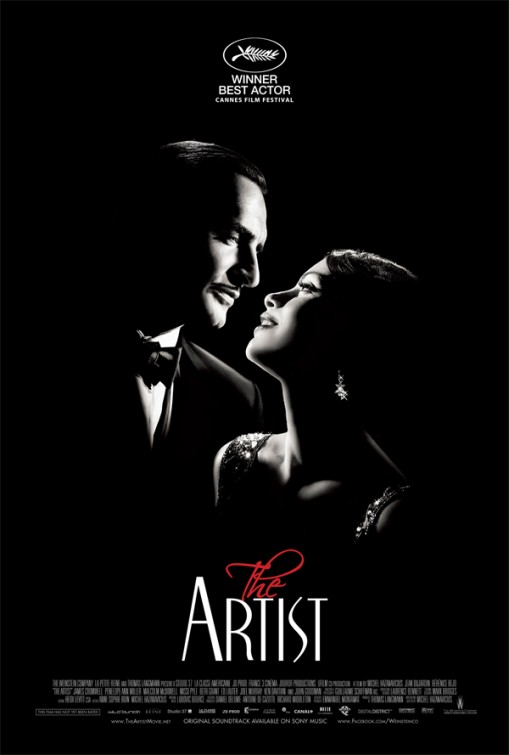
The Artist (2011)

Jean Dujardin and Bérénice Bejo delight in the light, frothy, charming Best Picture winner The Artist

Director: Michel Hazanavicius

Cast: Jean Dujardin (George Valentin), Bérénice Bejo (Peppy Miller), John Goodman (Al Zimmer), James Cromwell (Clifton), Missi Pyle (Constance), Penelope Ann Miller (Doris Valentin), Malcolm McDowell (Butler)

In 1920s Hollywood George Valentin (Jean Dujardin) is King of the Silver Screen. Why would he want anything to change? Surely these ‘Talkies’ are just a passing fad, right? Ooops. Before he knows what has happened, Valentin has gone from top of the world to the very bottom, left behind (like so many real-life silent stars) by change. Meanwhile, Peppy Miller (Bérénice Bejo), the young extra from his glory days whom Valentin briefly mentored, become a star of the Talkies. But Peppy still loves Valentin – and maybe he loves her – even while Hollywood pulls them apart.

Plot-wise, The Artist is pretty conventional. What really makes it stand out is that it’s a silent film about silent film. Perhaps that’s why the whole world went gaga for it (gifting it five Oscars, including wins for Hazanavicius, Dujardin and the Big One) – it was a genuine burst of nostalgia-tinged novelty. Everything old is eventually new again: I remember the novelty myself – sitting in a cinema and suddenly, after the music stops, hearing nothing but silence. Match that with the undeniable charm and energy the story is told with and, boom, you had a hit.

Does The Artist survive repeated viewings? Just about – though it looks increasingly like a slight film, that raises warm feelings but makes little lasting impact (I was surprised how much of it I had forgotten). Hazanvicius’ study of silent cinema has clearly been thorough, and this is undeniably a wonderful love letter to Hollywood’s history. Every technical detail is carefully reproduced, and the pastiche Fairbanks-style adventure stories Valentin stars in is spot on. The actors fully embrace the slightly exaggerated mannerisms of silent acting, telegraphing emotions with urgency.

Hazanvicius uses sound, when it comes, brilliantly. The opening of the film is bathed in music as we watch the premiere of one of Valentin’s films – only for all the sound to drop out the second the film-within-a-film ends. (We even see a “Silence behind the screen” sign before it does). We only hear everyday sounds twice – once in a hilariously haunting dream of Valentin’s where objects make noise but he cannot – and at the end of the film as Valentin finally finds a place in Talking Hollywood. Other than that, it’s scores, speaking cards (some of them witty, like Valentin’s wife’s question “Why do you refuse to talk?”) and all the style of silent cinema.

It’s a sweet and gentle film. There is no trace of the ruthless business Hollywood is, and not a trace of the darkness that touched many of this era. There is never any prospect of Valentin turning into, say, Sunset Boulevard’s Norma Desmond or any of the other washed-up waxworks in her house of broken dreams. Valentin loses everything, but remains a generous and decent guy, firing the loyal chauffer he hasn’t paid in a year (and giving him his car for free!) because otherwise he’ll never leave him. And of course, his dog loves him, so he must be a great guy. (The dog by the way was the break-out star, this charming, brave canine even getting a campaign for best supporting actor).

The film centres a love story between Valentin and Peppy. The two of them have an instant connection – but Valentin is the star, with Peppy the ingenue. This bond can survive nearly everything, even while Valentin resents her success. Hazanavicius manages to make this very sweet, even though Peppy is sometimes tediously saintly in her devotion. Valentin may have mixed feelings about his protégé – but in a housefire, the only thing he saves is footage of the two of them messing around in outtakes from one of his old films.

The film seems unbothered as well by the fact that Valentin is married. The wife (a thankless role for Penelope Ann Miller) doesn’t get a name, let alone any sense of a personality other than (it seems) being some sort of shrew.

You could also see Peppy, if you wanted to be uncharitable, as a bit of a stalker. She buys up (by proxy) all of Valentin’s goods when he goes broke, practically abducts him from the hospital after he is caught in a fire, hires his staff. Tip your head to one side and you can see her boiling a few bunnies. The Artist though sees her as more of a “Guardian Angel” (as per the title of one of Peppy’s movies) – and you can argue that there is something old-fashioned (not always in a good way) about a film where the female lead defines her success only by how it can help the man she loves.

The tinge of creepy to the Valentin-Peppy relationship isn’t helped by using a huge chunk of the Bernard Herrmann Vertigo score to underscore the film’s conclusion, not to mention the left-field melodrama of Peppy racing across town to prevent Valentin from committing suicide (motivated it seems by realising Peppy is his Guardian Angel). It’s an odd mis-step – and the sequence not only feels radically different from the rest of the film, it also seems to heavy for such a light confection.

But, negatives aside, it’s a decent little film. Jean Dujardin is the epitome of charm and old-school Hollywood wit as Valentin – it’s a master-class in physicality and he oozes matinee idol cool, and a certain boyishness. Bejo is very good as the well-meaning, kindly Peppy. The film is a puff of air, and once you get over the novelty, you’ll be amazed how little there is to it. But it’s told with such energy, charm and nostalgic wit (and ends with a lovely dance routine) as well as affectionate nods to old-school Hollywood, you won’t mind too much, even if you’re surprised it won as many awards as it did.

Argo (2012)

John Goodman and Alan Arkin say hoorah for Hollywood in Ben Affleck’s middle-brow, over-praised award-winner Argo

Director: Ben Affleck

Cast: Ben Affleck (Tony Mendez), Bryan Cranston (Jack O’Donnell), Alan Arkin (Lester Siegel), John Goodman (John Chambers), Victor Garber (Ken Taylor), Kyle Chandler (Hamilton Jordan), Tate Donovan (Robert Anders), Clea DuVall (Cora Amburn-Lijek), Christopher Denham (Mark Lijek), Scoot McNairy (Joe Stafford), Kate Bische (Kathy Stafford), Rory Cochrane (Lee Schartz), Taylor Schilling (Christine Mendez)

There is an art to telling a “true story”. Apollo 13 is a masterclass in turning a story everyone knows into edge-of-the-seat tension. For many people, Argo does a similar trick. It doesn’t for me. I can’t understand the praise for this middle-brow, conventional movie other than that its smoothly made blandness makes it easy to watch. I got so annoyed when re-watching it I threw my slipper down in anger, like the middle-class rebel I clearly am.

Anyway, the film kicks off with the US embassy in Tehran being stormed on 4th November 1979. While the embassy staff are taken hostage, six embassy officials escape and find shelter with the Canadian ambassador Ken Taylor (Victor Garber). But how to get them out of the country safely? CIA extraction officer Tony Mendez (Ben Affleck) comes up with the “best bad plan we’ve got” – set up a fake Hollywood production company, finance a fake movie, fly to Tehran, then fly the fugitives out on Canadian passports, passing them off as the movie’s crew on a scouting mission. The cover film is sci-fi epic Argo, and with producer Lester Siegel (Alan Arkin) and famous make-up artist John Chambers (John Goodman) on board to give the project realism, the mission is on.

Argo won itself a lot of friends on the way to its Oscar for Best Picture. Why? Because this is a very easy-to-swallow, middle-of-the-road film that successfully turns an American foreign policy disaster into a charming heist movie with a happy ending. It faithfully follows the pattern of all heist movies: the crazy idea, pulling together the perfect team, the difficult rehearsal, the weak link who pulls it out of the bag at a crucial moment even the panicked “we do it anyway!” ending as the best-laid-plans need to be partially improvised on the fly.

In fact, for all its desperate attempts to look like a smart, political, 70s-style piece of cinema making, The Sting is by far and away the 1970s film it most resembles, for all it wants you to think it’s The China Syndrome by way of All the President’s Men. The film starts with an inspired story-board montage of the way Western interference in Iranian politics from 1953-1979 effectively ruined the country. But that’s as good as it gets politically. After that, any further attempt to engage with either Iran or America’s foreign policy gets completely abandoned. It becomes a simplistic rescue story stuffed full of uncomplicated goodies and baddies.

Hollywood of course loved it. Why wouldn’t it? There’s only one thing Hollywood loves more than a film that takes good-natured insider pot-shots at itself. And that’s a film where Hollywood saves the day. Argo does both. It’s a celebration of how Hollywood may be shallow, but when push comes to shove it delivers. Alan Arkin (Oscar-nominated for a role he could play standing on his head) coasts as a (fictional) old-school producer, selling the film’s mediocre punchlines about the Golden Globes, WGA and the uselessness of directors. Argo has a real “slap-on-the-back” air to it, the sort of gentle roast you might get from a guest speaker at an end-of-year party.

But of course you want to know: why did I threw my slipper? Quite frankly, Argo is a con. It starts with a burst of documentary-style realism, charting the attack on the embassy. The film uses a range of different film stocks, including home-movie style footage and newsreel material. It gives an impression of complete factual reality. But, like the movie, that’s just an impression. None of the footage we see is from the time period. It’s all glossily re-created to give the idea that we are watching something snatched from the headlines.

It’s probably the last time the film touches reality. Because from there Argo is a “true” story only in the broadest sense. Almost every single specific in the film is invented or repackaged. Most crucially, the film presents all this as a CIA operation from top-to-bottom. In reality, it was a Canadian operation, with the CIA providing assistance. Not the impression you get here. Even worse the end even has the team at Langley smugly smacking each other on the back and saying they’ll give the Canadians the credit for National Security reasons. Ouch. Not content with that, it also falsely accuses the Brits and New Zealanders of leaving the fugitives hanging out to dry. Ouch again.

I don’t mind most of the film’s other myriad inventions. Its fine to hugely expand the Hollywood stuff, as it’s fun. I don’t care that Mendez (who was Hispanic by the way – but I guess Affleck with a beard is the next best thing) was only in Tehran for 36 hours not the several days he is in this film. Building a bit of tension at the airport passport control – until that weak link proves his worth by talking fluently through the made-up film’s plot – is classic heist cinema. It’s cliched but its fine.

What really, really bugs me is that Affleck and team obviously decided the real story wasn’t exciting enough so – while poking fun at the shallowness of Hollywood – turned this story into exactly the sort of shallow adventure-fantasy that’s Hollywood’s bread-and-butter. In real life, there were nerves at the airport, and a delay to the flight. And there is a lot of old-school-conspiracy-thriller-tension that could have been created with that – if the film really was the sort of The Parallax View style thriller it wants you to think it is.

But that’s not bombastic enough for Affleck et al. Instead the ending is ludicrously overblown, stuffed with problems to overcome. The mission is off-then-on-again (this convoluted resolution requires a real-life childless man to have two kids at school). Then the Iranians work out something is up, and tear through the airport, guns waving in a race to stop the flight. Police cars race onto the runaway as the plane carrying our heroes takes off. And then I threw my slipper.

I threw it because it makes no sense. If the Iranian secret service knew about the extraction, they wouldn’t run through the airport. They’d RADIO THE CONTROL TOWER and stop the plane taking off. They’d scramble jets to bring the plane back while it was still in Iranian airspace. They certainly wouldn’t race cars onto the runaway – and I’m not sure a civilian plane would take off with an armoured car just underneath its wing. Nothing like this happened, or would happen. Its reality filtered through the tired cliches of Hollywood movies. It doesn’t even feel true.

Argo starts trying to comment on world affairs, but then focuses overwhelmingly on a minor victory in the middle of a disaster. The Iranian hostage crisis was a national humiliation that lasted years. But in this film, Affleck shows he learnt something from Pearl Harbor just like that film’s celebration of the Doolittle raid, this uses a small success to excuse a disaster. We even get Jimmy Carter bragging in voiceover that the crisis was resolved without resorting military force: the only reason for that was because the military strike Carter himself ordered was so ineptly planned it had to be humiliatingly cancelled mid-mission.

Argo doesn’t care. It’s a cuddly story about Hollywood saving the day, that starts with a critical eye and turns into a cheerleader for Carter’s disastrous policy in Iran. The hostage crisis is a tough story it doesn’t want to talk about (a brief scene of some hostages undergoing a mock execution only reminds us that the film can’t be bothered to talk about them). It repackages disaster as triumph and pretends to be a cleverer, richer film than it is. It apes 1970s conspiracy thrillers and political films but is only a faint shadow of them. Garlanded with awards, it’s competent-at-best.

In a Lonely Place (1950)

Humphrey Bogart struggles with a dark capacity for rage In a Lonely Place

Director: Nicholas Ray

Cast: Humphrey Bogart (Dixon Steele), Gloria Grahame (Laurel Gray), Frank Lovejoy (Sergeant Brub Nicolai), Carl Benton Reid (Captain Lochner), Art Smith (Mel Lippman), Martha Stewart (Mildred Atkinson), Jeff Donnell (Sylvia Nicholai), Robert Warwick (Charlie Waterman)

Hollywood: it’s a dark town. When movie makers turn their lens on themselves you’ve just as likely to see the dark underside of showbusiness, as you have a celebration. In a Lonely Place was made in the same year as Sunset Boulevard, and it’s even darker and less hopeful than that movie. It focuses on a person with a certain level of kudos, that has led others to overlook his deep personal flaws. In a Lonely Place reveals itself as a quite ahead of its time in its unflinching look at why people find themselves drawn into potentially abusive, controlling relationships with people who talk endlessly about how much they love you even while they try and control every aspect of your life. Overlooked at the time, it’s seen more and more as a classic.

Dixon Steele (Humphrey Bogart) is a successful screenwriter but has gone a few years since his list hit. Hired to adapt a plot-boiler he’s so contemptuous of the synopsis he invites a waitress at his favourite restaurant, Mildred (Martha Atkinson), to his flat one night to describe the story to him. Becoming as bored with her as he is with the cliched plot, he sends her home. When she is murdered later that night, Dixon is number 1 suspect. He’s alibied by his neighbour, aspiring actress Laurel Gray (Gloria Grahame) and the two start a relationship. But the pressure from the investigation and his writing assignments bring Dixon’s barely controlled rage more and more to the surface – with Laurel slowly fearing that he could be capable of anything if pushed to it.

It would be expected for a movie of this period – say something like Suspicion where of course Cary Grant is just misunderstood not a would-be killer – for all this to simmer and then resolve itself as a terrible series of errors (mostly of course from the woman). In a Lonely Place doesn’t do this. Instead, from the start we are given no reason to doubt Dixon’s capacity for near-murderous rage. Practically the first thing we see him do is assault a producer – albeit avenging an insult to an alcoholic actor friend. His first resort is violence. It’s something he’ll resort to time and time again, his capacity for anger joined with a self-pity that makes preemptive violence more likely.

It bleeds into the relationship with Laurel, which at first is all goodness and light. The two of them are well-suited, and an excellent tonic for each other: she’s a combination of muse and amanuensis, helping Dixon turn out his script; he opens doors in Hollywood she has spent years pushing against. But Dixon’s possessiveness, resentment and suspicion become clearer, accentuated by Laurel’s reserve and caution to emotional commitment. The relationship becomes tortured as Dixon resents any trace of suspicion against him, alternating with desperately possessive pleading for love. Any deviation from his idea of their relationship is seen by him as an act of betrayal.

Then there’s that temper. It’s there all the time, a sadistic streak that suggests a damaging lack of empathy. Dixon – while vaguely sorry for Martha’s death – is also perfectly happy discussing her demise with a clinical academic interest. He’s unphased by crime scene photos. He feels no guilt about not driving her home. Later, at the house of his friend (one of the detectives) he theorises how the crime was committed with an animation that turns into unsettling excitement. After a row with Laurel he drives a car (with both of them in it) with reckless fury and then nearly beats to death someone whose car he clips. Dixon follows these moments with futile half-apologies – anonymous flowers for Martha’s family, anonymous cheques to pay for car damages. But he never addresses his deep psychological problems.

This relationship becomes one ripe with the unspoken capacity for violence. Gloria Grahame is excellent as a careful, guarded woman who opens herself romantically, only to become terrified that the man in her life could just as easily kill her as kiss her. It’s a tension we feel too. Making breakfast, Dixon may talk about how they will be together always– but his vulnerable voice underlines his own doubts, and his furious insistence that they marry ASAP carries the capacity for fury if denied.

As Dixon, Humphrey Bogart gives one of (if not the) greatest performances of his career. Playing a character who, with his dark rages, allegedly had similarities with himself, his Dixon is a bleak figure. Capable of wit and charm, Bogart also makes him a cruel, seedy and sinister in his excitement at murder, while never preventing us finding him vulnerable and weak in his fear at being abandoned. But not sympathetic enough for us to worry he may end things by murdering Laurel. He’s never sympathetic – his late, motiveless, slapping around of his decent agent ends our chance of finding him that for good – but he’s understandable.

And he lives in a dysfunctional town. Where Hollywood intrudes on the action, Ray makes clear it is dark, unsettling, alien and unfriendly town – a truly lonely place. There are no confidantes or friends: only colleagues and potential rivals. You are only as good as your last credit: when your last few credits are poor, you’re no-one. On the other hand, rage and misbehaviour will be tolerated if you can produce the goods. It’s not a place for humanity or goodness.

Ray’s overlooked classic is a beautiful fusion of film noir and Hollywood insider movie. With superb performances from the two leads, it also feels way ahead of its time in looking at abusive relationships. Abusive partners don’t arrive twirling moustaches. They seem decent, loving and passionate – its only when you start to disappoint them they start to turn angry, controlling and abusive. By the time the film’s end come – and it’s a bleak one – you’ll be hard pressed to find some hope in it. But you will certainly find some great film-making.