Category: Musicals

The Greatest Showman (2017)

Hugh Jackman excels in The Greatest Showman, like a Broadway show bought straight to film

Director: Michael Gracey

Cast: Hugh Jackman (PT Barnum), Michelle Williams (Charity Hallett-Barnum), Zac Efron (Philip Carlyle), Rebecca Ferguson (Jenny Lind), Zendaya (Anne Wheeler), Keala Settle (Lettie Lutz), Yahya Abdul-Mateen II (WD Wheeler), Natasha Liu Bordizzo (Deng Yan), Paul Sparks (James Gordon Bennett), Sam Humphrey (Charles Stratton)

In early 2018, the whole world seemed to go crazy for The Greatest Showman. A big old-fashioned film musical that wouldn’t look out of place with Gene Kelly in the lead, people went to the cinema again and again to see this escapist song-and-dance epic. Based loosely on the life of PT Barnum (Hugh Jackman), covering his marriage to childhood love Charity (Michelle Williams) and the creation of his Museum of Curiosities (funded through some chicanery with banks), he staffs the museum with “freaks” whom he encourages to embrace their nature and entertain the crowds. The “circus” is a huge success, but will Barnum be seduced by his desire for greater fame and acceptance in the cultural high circles that have no time for his mass entertainment? And how will his fascination with opera singer Jennie Lind (Rebecca Ferguson) affect his marriage?

If you get the idea from that plot summary that this is rather safe and unchallenging plot-wise, you would be right. Structurally this doesn’t offer anything more than hundreds of musicals before it – a hero aims for the stars, loses his roots on the way, only to triumphantly rediscover them and remember why he got into this business in the first place. Yup that’s your classic Hollywood plot here. And it doesn’t matter a damn.

Because The Greatest Showman, like the shows Barnum offered the crowds, knows exactly what it is: an old-fashioned Hollywood musical, shot like a classic piece of Broadway spectacle, crammed to the gills with hugely exciting and dynamic musicals performers ripping through a series of impressive songs and some stunningly choreographed numbers. Who gives a damn if you’ve seen the story before, when it’s so well done, the actors so engaging and the highlights on the way to brilliant to watch. Come to this with your mind set for the West End, and you’ll love it. Expect to see La La Land and you are in for a disappointment (or a pleasant surprise!)

Gracey’s film is unashamedly old-fashioned, and shot with a confident stillness that puts the actors, dancers and singers front-and-centre rather than the flourishes of a director. In contrast to some over-directed musical numbers, Gracey is happy to place the camera so we can see all the numbers perfectly. And why wouldn’t he when all the actors can dance as well as this? I want to see every step of the intricate choreography (that would have thrilled Kelly) from Jackman and Efron in The Other Side. I want to see every step of the thrilling group dance number From Now On. I want to marvel at Efron and Zendaya soaring through the skies on trapeze ropes in Rewrite the Stars.

It’s a musical that chose its cast carefully, requiring that they should all be capable of the sort of feats of physical and musical perfection that we all enjoy watching on Strictly every week. In all this, the snubs of the critics seems neither here nor there – hilariously the film always commentates on its own terrible reviews in advance (!) in the character of James Gordon Bennett, a humourless snobby theatre reviewer – it’s a film that is shot in the arm of pure entertainment. 

I mean you’d need to have a heart of pure cold not to feel some serious emotions during Jackman and Williams’ beautiful rooftop ballet during A Million Dreams. What I particularly liked about this was its unabashed, carefully designed artificiality – like a blast of 1950s Minnelli musicals, this uses painted backdrops and studio locations to beautiful effect to create a larger-than-life, theatrical world of hyper reality. It really helps you to get even more swept up by it all.

But then you also get swept up from having an actor as charismatic as Hugh Jackman in the lead. Oozing charm and grace from every pore, Jackman is riveting in the role, his grin a mile wide, his skills as a singer and (most especially) a dancer shown off to stunning effect. He turns moments that could have rogueish qualities into sweetness, he is impossible not to root for. Sure as an actor he’s not stretched with the conventional arc Barnum has, but does that matter when he is giving this all he has. It’s a hugely, overwhelmingly enjoyable performance of pure charisma that I can’t imagine any other actor in Hollywood having the chutzpah to pull off. It’s so skilled that he never overwhelms the film but you could move the whole performance into a 1,000-seater theatre and it would still work perfectly.

The rest of the cast all lift their considerable game to match the commitment and expertise of the lead. Williams showcases her own musical talents, while Efron and Zendaya have a truly affecting romance at the heart of the film (while also being considerably compelling musical performers). Rebecca Ferguson has the least rewarding role (and is also dubbed for the high soprano singing), but does a decent job as someone you could imagine turning Barnum’s head. The rest of the cast playing assorted circus performers create a truly family atmosphere, with Keala Settle and Sam Humphrey particularly fine.

You could argue that the film – with its message of acceptance and lack of judgement – flies a little bit in the face of the real Barnum (“there’s a sucker born every minute”) who probably was partly exploiting his acts for cash. The treatment of Jennie Lind as an increasingly scheming would-be-seductress is a sad slur on a woman who gave most of her earnings to charity. In fact you wish allthe names had been changed to distance us from reality.

But the film gets away with it because it is basically a heartfelt and genuine piece of work that, most of all, like a huge Broadway musical just wants to entertain the audience. And on that score it works – you’ll get invested in the characters and their story and you’ll find yourself humming the songs afterwards and trying (failing) to dance those steps. Go into it in the right mindset, and you’ll find a delight.
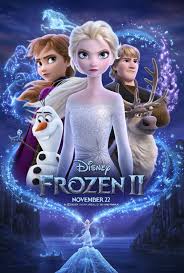
Frozen 2 (2019)

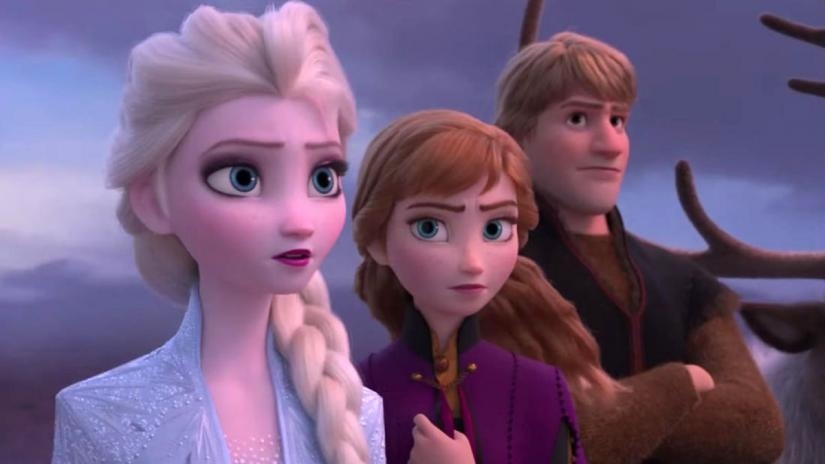
The gang are all back together in Frozen 2

Director: Jennifer Lee, Chris Buck

Cast: Kristen Bell (Anna), Idina Menzel (Elsa), Josh Gad (Olaf), Jonathan Groff (Kristoff), Sterling K Brown (Mattias), Evan Rachel Wood (Iduna), Alfred Molina (Agnarr), Martha Plimpton (Yelena), Jason Ritter (Ryder), Ciaran Hinds (Pabbie), Jeremy Sisto (King Runead), Rachel Matthews (Honeymaren)

Frozen was a phenomenon, a film that seemed to come out of nowhere and seized the imagination (and the passions) of audiences. Why did it work so well? It’s got a great bunch of characters, a focus on sibling affection that is very easy to relate to (and very different from most romance-based Disney films), a well-rounded bunch of characters (so easy to relate to, they inspired a number of fan in-jokes in a way that only characters in films you really care about can) and of course that song. Frozen II works very hard to double down as much as possible on the things that worked, and to give you the chance to spend more time with these characters. If it fails to match the magic of the first film, it still makes for an entertaining trip to the cinema.

Elsa (Idina Menzel) and Anna (Kristen Bell) are now living together in the kingdom of Arendelle, and all is peace and contentment. Until one day a siren call that Elsa keeps hearing from across the water occurs at the same time as a series of elemental events in the kingdom, each harnessing earth, fire, air and water. The sisters quickly work out that this must be connected in some way with the stories their parents told them of the Enchanted Forest, a magical land near to Arendelle that  disappeared after a mysterious feud between the two kingdoms. Accompanied by living snowman Olaf (Josh Gad), Anna’s boyfriend Kristoff (Jonathan Groff) and his reindeer Sven, the sisters head off to find the cause of the disturbances, solve the mystery of the enchanted forest and save Arendelle. Phew!

Frozen 2 is engaging, fun and has some very good jokes. Its main problem is a plot that feels both sprawling and epic and also muddled and confusing. As the film hits its final act, you may well feel more than a little confused about why events are unfolding like this, what the motivations of certain characters are, why some things happen to characters etc. What the film seems to lack is a compelling unfolding of the plot, and a clear structure of how these events link together to form the overall arc.

As such, we seem to head to several locations and constantly encounter a series of magical creatures, but never really get a firm grasp of how they link together. The film has a series of flashbacks and expands the backstory of the series, but then never really pulls together clearly how the events of the past shaped the present. The moment where this is explained feels rushed and murky, and seems to revolve around a sort of “anti-magic” attitude from a key character in the past that has no context with the rest of the film and never feels really clear. 

The plot may not be the strongest, but where the film really does work is in its sense of humour and its fun script, and the engaging riffs Lee and Buck make on the previous film. Fan humour from the first film – not least the close relationship between Kristoff and Sven – is doubled down on in this film with a series of knowing sight gags. Olaf – far more engaging here than in the first film – has a series of excellent fan gags, peaking in a hilarious showpiece moment where he essentially acts out the entire plot of Frozen for the people of the Enchanted forest (all of whom respond like the fans). It’s a hilarious show piece, and a real sign of the film’s strengths, which are often when it is riffing on the first film.

The film also carries across the other things that worked from the first film. The close relationship between the two sisters is central to most of the film’s development (although it also means that Anna seems to have to protest her devotion in virtually every scene). The sense of outsider and isolation in Elsa is also explored further, with her confusion over being happy where she is but still yearning for something more. The film also threads in a charming B-plot of Kristoff’s attempts to propose to Anna, which provides both charm and several moments of comic gold.

The film does struggle to find a replacement song for Let It Go, although Into the Unknown comes close, another inspiring, story-packed, ballad for Idina Menzel to bring to inspired life again. The song also plays well with the several fans who have seen Elsa become a gay icon, with most of the lyrics leaning on the idea of heading out from the safety of knowing where you are to finding your true self in the “unknown”, answering the siren call of your own desires. Also of course, it’s a belting song which you can enjoy on its own merits!

Wild Rose (2019)

Jessie Buckley sings up a storm in kitchen sink drama disguised as uplifting fable Wild Rose

Director: Tom Harper

Cast: Jessie Buckley (Rose-Lynn Harlan), Julie Walters (Marion Harlan), Sophie Okonedo (Susannah), Jamie Sives (Sam), Craig Parkinson (Bar singer), James Harkness (Elliot), Janey Goodley (Barmaid)

How do we find a balance between our dreams and the cold realities of our responsibilities? What do you do when your dream, what feels like the one thing you’ve been put on earth to do, never seems to come any nearer? And at what point does fixating on these dreams stop being naively exciting and start becoming selfish, as you ignore your children and others depending on you?

Rose-Lynn (Jessie Buckley) is released from prison back into her home in Glasgow. An immature screw-up, with a total lack of application but blessed with a blunt charm, Rose-Lynn has made a disaster of everything she has touched and has an almost non-existent relationship with her two young children who have effectively been raised by their grandmother Marion (Julie Walters). Rose-Lynn lands a job as a domestic cleaner thanks to a family friend, but her dream remains to go to Nashville and become a country singer. Her singing on the job is overheard by her wealthy employer Susannah (Sophie Okonedo) who decides to support her dream – but the temptation of her dream starts to sabotage her commitment to the relationship she is starting to build with her children.

Wild Rose on the surface (and in the marketing material) looks like an uplifting film about a young woman chasing her dream in the face of overwhelming odds. But it’s actually more like a 60s kitchen sink drama, spliced with country music. Rose-Lynn is a working-class single mother who had her two kids before the age of 18, who dreams of a better life but refuses to engage with her responsibilities in the real world. She basically is a dumb teenager who has never grown up, and has never given up on her fantasy of becoming a star. Like a sulky teenager, she rejects anything that feels like too much hard work – from learning a musical instrument to writing her own songs – and seems to believe just rocking up in Nashville with no plan and no contacts will magically land her a music career.

In actuality, Rose-Lynn is a rather selfish dreamer, with a self-destructive streak powered by laziness and a chippy resentment that cause her to frequently do her best to wreck opportunities. Pushing to get her security tag removed, she still heads out drinking until the last possible minutes of her curfew. Getting an opportunity to visit the BBC Radio studios, she prepares by getting drunk on the train. She miraculously escapes being fired the first day on her cleaning job, despite drinking from her employer’s drinks cabinet and dancing around her house not working the instant she is left alone. On top of which, she persistently lies or tells half-truths to everyone around her, and continually fails to deliver on commitments.

Your reaction to the film will be totally governed by your reaction to this character. So just as well she is played with such radiance and joie-de-vive by Jessie Buckley. A bombshell of a talent, Buckley manages to keep this character just the right side of charming. Her failures come not from cruelty or even conscious selfishness, but from a lack of maturity and just plain not growing up. She’s not ready to be a mother and not ready to deal with responsibility. But she’s still charming, she’s enthusiastic, she loves life and she wins friends easily. It just makes it all the more frustrating that she is such a screw-up.

You can see why her mother (a marvellous performance of caring but long-suffering frustration by Julie Walters) still loves her, even while she is beyond disappointed about the mess Rose-Lynn seems determined to make of her life. Her two children – adorable little moppets – are frequently shunted to one side, and the film walks a fine line between Rose-Lynn’s obvious love for them and also her (unspoken) resentment that their very existence acts as an anchor on her following her dream (the dream she is manifestly unprepared for).

Into all this turmoil steps Sophie Okonedo as her middle-class wannabe bohemian employer Susannah. This is surely the oddest character seen in films for a while, a sort of middle-class saviour who offers a world of opportunity to Rose-Lynn (who has withheld the truth about everything from her background to her family). Rather than doing what a real person would do and fire Rose-Lynn on her first day, Susannah not only encourages her singing but milks her upper-middle-class uni contacts to land an Rose-Lynn an interview with BBC Radio 2 legend Bob Harris (making a bizarre cameo as himself) and then goes further by offering to throw a fundraiser for Rose-Lynn to go to Nashville. Why does she do all this? Who knows, it’s all required for the plot in order to artificially bring to head the clashes in Rose-Lynn’s life between her dream and her family.

But then that’s the nature of the film, which hinges on narrative contrivances and clichés delivered with a solid level of commitment from the cast. In truth, this clash between what we should do and what we want to do is something we’ve seen many times before. The film seems determined to have its cake and eat it by reaching a conclusion that both these things are equally important and that (I guess) we need to find a balance between them. It makes for a slightly odd ending, or series of endings – just when we think it’s going to wrap up, another scene follows giving us another coda.

But then I guess it’s not clean, just as life isn’t. The real focus anyway is less Rose-Lynn’s dream and more about whether she can grow up enough to look after her children and stop being such a screw-up. In that sense it’s a hopeful film – as you would expect of course – but it feels like the film should pick a side, not least in saying that sometimes your dreams of being a professional footballer, or actor, or singer might be something you need to put aside at some point when it’s clear they are never going to happen. But then who really wants to think that?

A Star Is Born (2018)

Bradley Cooper and Lady Gaga excel in A Star is Born, truly one from the heart

Director: Bradley Cooper

Cast: Lady Gaga (Ally Campana), Bradley Cooper (Jackson Maine), Sam Elliott (Bobby Maine), Dave Chappelle (George “Noodles” Stone), Andrew Dice Clay (Lorenzo Campana), Anthony Ramos (Ramon), Rafi Gavron (Rex Gavron), Greg Grunberg (Phil), Ron Rifkin (Carl)

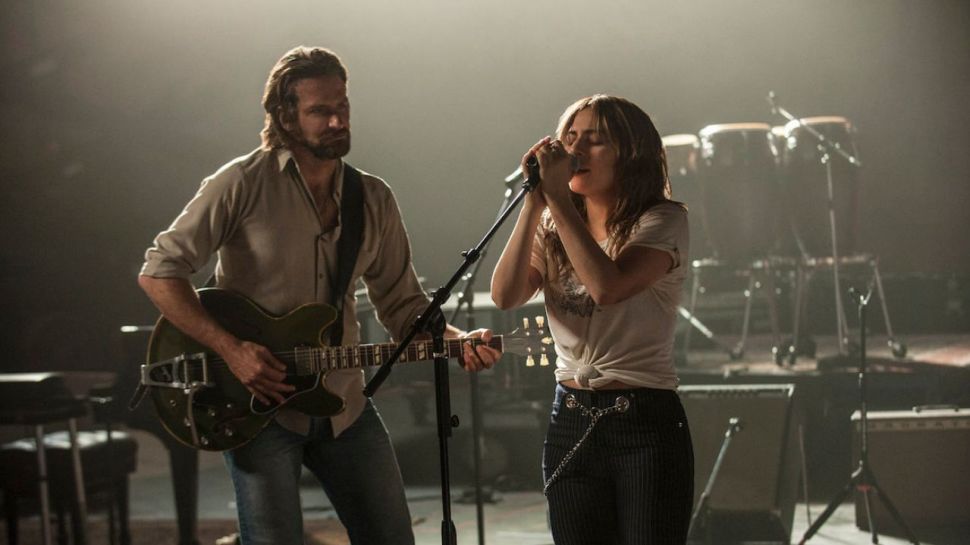
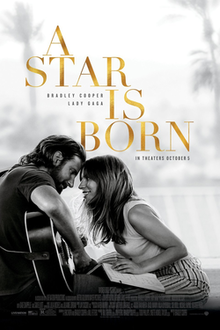
The story of A Star is Born is practically a staple of Hollywood. Bradley Cooper’s film is the fourth version (after 1937, 1954 and 1976) and re-packages the action to the country and western scene. Cooper injects the film with a real seam of emotion and complex, challenging humanity – represented above all by Cooper and Gaga’s searing, heartfelt, beautiful performances.

Jackson Maine (Bradley Cooper) is a famous country singer, and a self-destructive, if charming, alcoholic. One day, by chance, he stumbles into a bar and overhears a performance by Ally (Lady Gaga), a soulful artist rejected on multiple occasions for a record deal because of her slightly unconventional style and looks. Jackson and Ally form a deep connection and he invites her to perform with him. Their bond grows and Jackson is proud as her career starts to flourish. But this rise is matched by his own increasingly damaging alcoholism and drug addiction which puts his health and their happiness at risk.

A Star is Born brilliantly refocuses the story as a beautiful relationship drama. In previous versions, the man slumps into destructive behaviour due to resentment at the female protégé’s increasing success. Here though, Jackson – despite flashes of jealousy – remains supportive and proud of his wife, and she devoted to him. What Cooper has structured here is a story about the damage of depression and alcohol – and how they can shatter and destroy a person regardless of events in their life.

It also means we get a fresh perspective on an otherwise predictable drama. Having Jackson remain proud and supportive – and increasingly guilt-ridden by the impact his behaviour has on Ally – means we can also remain invested in him. Similarly, it’s hard not to share his feeling that Ally loses something of her beautiful soul as her manager crafts her into a manufactured pop icon. It’s the intrusion of the rest of the world into this couple that puts strain on their relationship, not internal tensions. 

It’s a film in many ways that starts with a happy ending. The early, romantic meetings are beautifully done, the first performance of Shallow (Ally’s song) on stage plays like the fist-pump ending of any number of Cinderella stories. Her protective attraction matched with his old school chivalry in their early relationship is deeply romantic and shows what could be between them. Cooper sprinkles the film with happy endings – you’ll be begging the film to stop at any number of them – and barely a scene goes by that won’t have you choking back tears or watching through your fingers in pained horror at how badly things can go wrong.

It helps that for both leads this was clearly a deeply personal project. Both produce sensational performances. Cooper has talked about his struggles with both alcoholism and depression – and he brings all this deep rooted pain to bear here. Jackson is, in many ways, a wonderful man – caring, supportive and loving – but struggles with demons he can’t control. Cooper’s fragility, his suffering, his gut wrenching guilt and sadness are played beautifully in a performance that truly comes from the heart, and that leaves you wanting to give him a hug.

Lady Gaga is his match in a performance of tender innocence, of gentle humanity and earnestness. Again you sense the story of an unconventional person, with crippling self doubt, more than speaks to her. Gaga’s emotional bravery and commitment here is extraordinary, and you feel again she is showing in this film something very personal and tender to her. The chemistry between the two actors is electric – it’s rare to see two such performances complement each other so perfectly.

These two actors play off each other beautifully, with scenes that are at times hard to watch in their scarring emotional truth. At the same time, the investment of the audience is absolute in this loving relationship. The film also has some excellent performances in the support, not least from Sam Elliott as Jackson’s frustrated, but fundamentally loving, brother.

A Star is Born shocked me. It’s not the film I was expecting, or the story I anticipated. Instead it’s an entertainment industry parable, a love story, a film about the destructive unpredictability of depression and how sometimes love can’t conquer all. With some graceful direction from Cooper and above all his emotional honesty – and the truth of his and Gaga’s performances – this becomes a film that tugs on the heart strings until heart strings break. Beautifully made and wonderful.

My Fair Lady (1964)

Audrey Hepburn and Rex Harrison cover how to speak proper in My Fair Lady

Director: George Cukor

Cast: Audrey Hepburn (Eliza Doolittle), Rex Harrison (Professor Henry Higgins), Stanley Holloway (Alfred P Doolittle), Wilfrid Hyde-White (Colonel Hugh Pickering), Gladys Cooper (Mrs Higgins), Jeremy Brett (Freddy Eynsford-Hill), Theodore Bikel (Zoltan Karpathy), Mona Washbourne (Mrs Pearce), Isobel Elsom (Mrs Eynsford-Hill), Henry Daniell (British Ambassador)

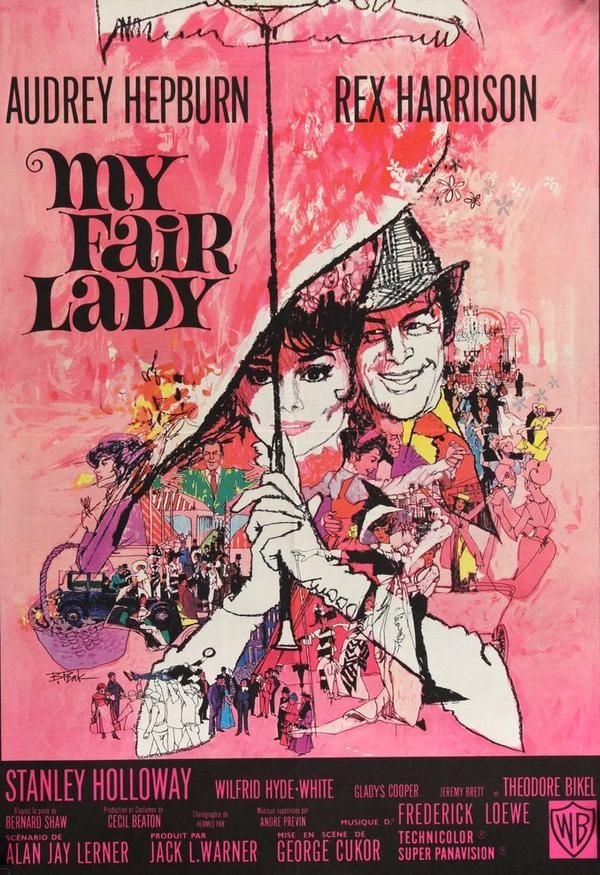
My Fair Lady is possibly one of the most popular musicals of all time. A singing-and-dancing adaptation of George Bernard Shaw’s most popular play, a satire on self-improvement and sexual politics, the original Broadway production ran for over six years and 2,717 performances, while the original cast-recording album was a smash hit bestseller. It was a question of when rather than if a film version would be made. When it finally happened, the film was garlanded with Oscars aplenty, not least Best Picture, Best Director and Best Actor.

The musical follows the story of Eliza Doolittle (Audrey Hepburn), a cockney flower girl in Victorian London, whose life is changed after a chance encounter with linguistics genius Professor Henry Higgins (Rex Harrison). Higgins has a bet with his colleague Colonel Pickering (Wilfrid Hyde-White) – he can change Eliza’s accent and manners so much that the shrill cockney girl will pass for a society belle. The bet will not only change their lives, but also those of Eliza’s father, sage-like binman Alfred (Stanley Holloway), and lovestruck romantic young gentleman Freddy Eynsford-Hill (Jeremy Brett). 

From the start, producer Jack L Warner wanted to develop a new verison of the film, fresh and different from the stage production. George Cukor, the esteemed director from Hollywood’s Golden Years, was brought on board as a safe pair of hands – but it was clear Warner was calling the shots. How to put your own stamp on a massive hit musical? Well you start by getting a fresh cast in. Julie Andrews had made the role her own in the original production, so Hollywood was stunned when she was overlooked for the part. Instead Audrey Hepburn was hired – while Julie Andrews got the consolation price of being able to accept Disney’s offer of the role of Mary Poppins. Warner knew who he wanted for Higgins – and Cary Grant was swiftly courted for the role. But Grant refused, allegedly responding that he wouldn’t even see the film unless Rex Harrison was retained in his signature role.

So Harrison owes him a drink or two, because the film allowed him to leave a permanent record of a stage role he had played over 1,000 times on Broadway and in the West End. Harrison had taken a revolutionary approach to musicals, by basically not singing. Instead he sort of spoke the songs rhythmically – an approach that every other performer of the role has stuck to. The film is a brilliant capture of this unique and authoritative performance, and while Harrison is not exactly fresh he’s certainly charismatic, delivering every scene with confidence and well-rehearsed bombast.

Harrison’s steely lack of willingness to compromise also lead indirectly to a revolution in sound recording in the movies. Harrison refused to obey the custom at the time to lip-sync on set to a pre-recorded soundtrack. Harrison insisted that his performance was subtly different every time so he could never lip-sync accurately. Instead the technicians were forced to invent a sort of wireless microphone that could be disguised in the over-sized neck ties Harrison wears. This also means that at least one musical number has the bizarre situation of Harrison singing live, Hyde-White lip-syncing and Audrey Hepburn being dubbed.

Ah yes Hepburn. If there is one thing everyone remembers about Hepburn’s performance in this film, it is that she doesn’t sing a single note of the final film. Her actual singing was quickly considered by Warner to be not up to snuff, and so she is replaced by voice-double-to-the-stars Marnie Nixon. It’s always a mark against Hepburn, whose performance is often rather shrill, stagy and (whisper it) even a little bit irritating. In fact, she’s pretty much miscast as the cockney flower girl, never convincing as a bit of rough from the streets, and is so horrendously misstyled throughout that she also jarringly looks like a 1960s fashion icon floated into a period film.

Having hired the male star of the Broadway production – not to mention Stanley Holloway also being retained from the original cast after James Cagney refused to be drawn out from retirement – the film quickly settles down into being a straight Broadway musical captured as faithfully as possible on the big-screen. My Fair Lady is a film crushed under the pressure of its design, and watching it today it looks unbearably studio-bound and flat. In every scene you can never forget you are watching the action take place on enormous sets, with the camera pulled back to try and get as much of the expensive soundstage work in frame as possible.

As a dance musical, it’s pretty flat – Holloway’s numbers in particular are strikingly lifeless in their dancing, which makes you regret even more that Cagney couldn’t be lured to star in it – and much of the singing feels forced or over-performed. Even Harrison’s numbers feel pretty by-the-numbers from Harrison’s constant repetition of them. Even the more impressive scenes – such as the race track sequence – feel artificial and over-designed, the money chucked at the careful period detail and over-elaborate costumes and set (designs courtesy of Cecil Beaton, who allegedly drew the designs and then disappeared to leave them to be interpreted by others) seeming more and more dated as the years pass by.

But then this was a film that probably felt dated at the time it was made – it beat Dr Strangelove for best picture, and in five years’ time Midnight Cowboy was lifting the Oscar – never more so than in Cukor’s direction. One wonders at times what Cukor really did: Warner cast the film and led on the design and staging. Harrison and Holloway had played their roles literally thousands of times already. The camera work is as conservative and unimaginative as you can expect, with the film dryly set up to give you the perfect view from the stalls. Several touches – such as the staging (complete with blurry focus edges) of Eliza’s fantasies of the domineering Higgins being punished by firing squad – are clumsy and obvious. It’s a film made with no real independent personality whatsoever.

Not to mention the fact that it completely fails to draw any chemistry from the Higgins/Doolittle relationship whatsoever. It’s an odd one, as the musical takes on a romantic ending of the two characters together – an ending, by the way, that Shaw famously hated when a suggestion of it was added to the original Pygmalion production. Here, this comes from nowhere, and feels unbelievably forced and artificial as Harrison has demonstrated no interest at all (other than irritation) for Hepburn, and she in turn offers little back. When they come back together it’s hard to care.

But they cared back then as this was a huge box office smash. It’s very odd to imagine it now – because this isn’t a great film, it’s a decently done one that carries some charm but never finds an identity for itself as film away from its musical roots and never brings anything unique and imaginative to the table. It’s extraordinarily flat as a piece of film-making and seems increasingly more and more dated in its performances, its atmosphere and its staging. It’s got some charm, but I’m not sure if it’s got enough.

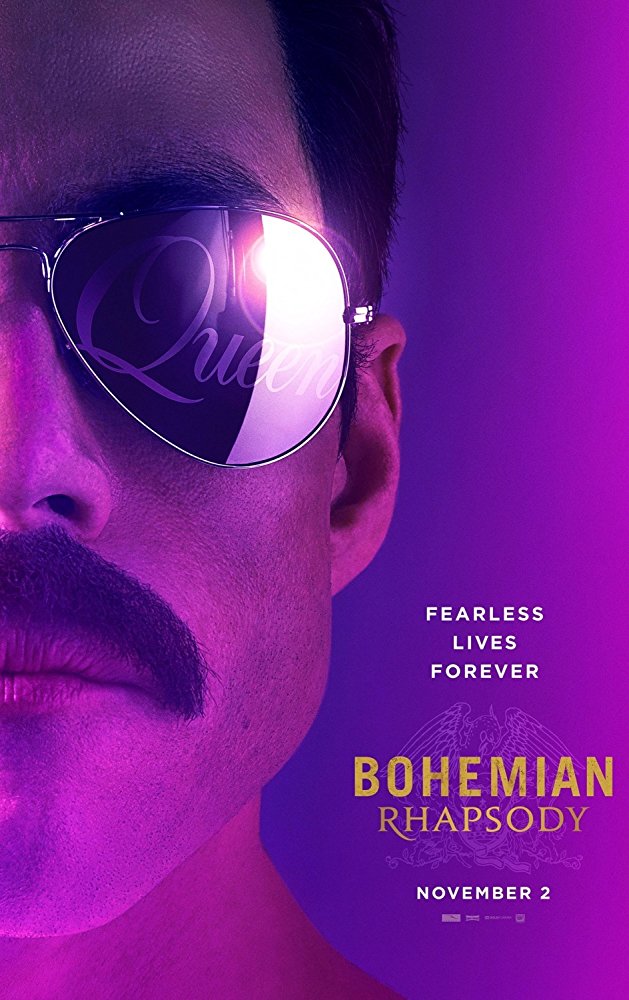
Bohemian Rhapsody (2018)

Rami Malek brings Freddie Mercury to life in crowd-pleaser Bohemian Rhapsody

Director: Bryan Singer (Dexter Fletcher)

Cast: Rami Malek (Freddie Mercury), Lucy Boynton (Mary Austin), Gwilym Lee (Brian May), Ben Hardy (Roger Taylor), Joe Marzello (John Deacon), Aidan Gillen (John Reid), Allen Leech (Paul Prenter), Tom Hollander (Jim Beach), Mike Myers (Ray Foster), Aaron McCusker (Jim Hutton), Ace Bhatti (Bomi Bulsara), Meneda Das (Jer Bulsara)

Biography can be a tricky territory on film. How can you hope to capture a whole life, with all its ups and downs, its shades of grey, in a single sitting of two hours? Well the truth is you can’t really – and Bohemian Rhapsody is an enjoyable but very safe and traditional attempt to tell something of Mercury’s life. It carefully organises his life into a clear five act structure (Beginnings, Early success, Triumph, Temptation and fall, Redemption) that wouldn’t have been unfamiliar to the writer of a medieval mystery play.

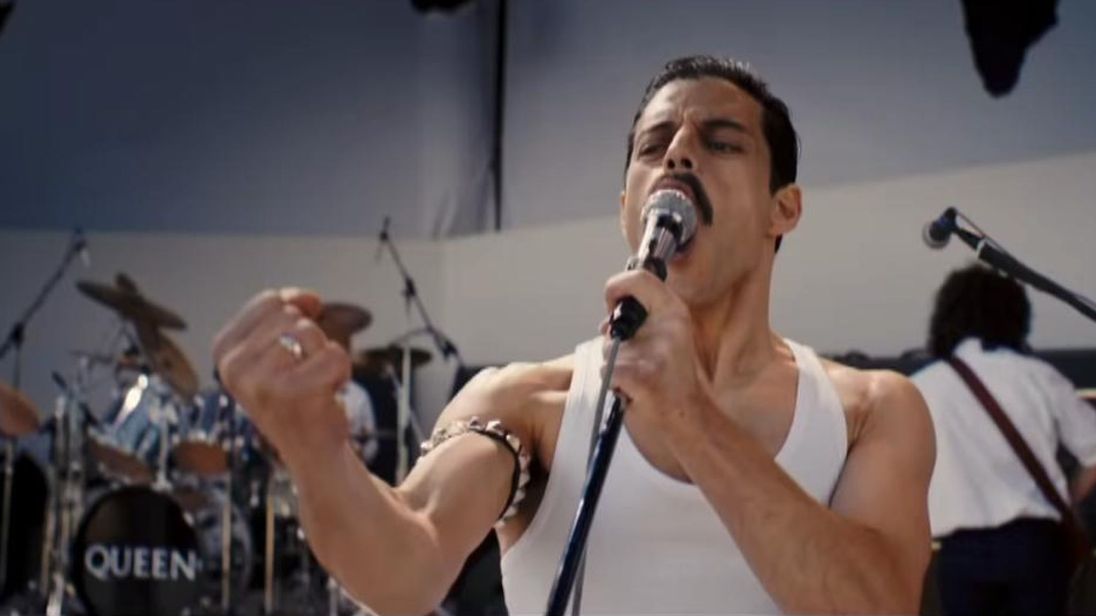
The film uses Queen’s legendary Live Aid performance as the book ends for a story that covers Freddie Mercury (Rami Malek) as he joins Queen, works closely with the band to compose the hit songs that would make them legends, then falls tragically under the influence of band manager Paul Prenter (Allen Leech) and leaves the band to build a solo career and succumbs to those dreaded demons of drink, drugs and sex. The film culminates in a brilliant recreation of Live Aid (by the way, only making the vaguest of passing references to the cause behind Live Aid, with the main motivation for performing seeming to be that everyone else is) which, despite some wonky CGI at points, brilliantly captures the atmosphere of being at an electric live gig. 

Bohemian Rhapsody is an affectionately made crowd-pleaser of a film which has convention running through its soul like sugar at the centre of stick of rock. With the heavy involvement of the surviving members of Queen and their manager, it’s a film that wants to very carefully avoid anything too controversial – which is fair enough when it’s people making a film about their friend – and does its best to shave off his rough edges, and apportion blame for faults anywhere other than Freddie.

As such, the film defines Freddie’s successes as those he achieved as part of “the family” of Queen – and his failures when he fell under the influence of others who were using him. The film draws Freddie as being desperate to find love and acceptance – from his struggles to be accepted by his traditional father (a very good performance by Ace Bhatti), to his deep love for his wife Mary Austin (while guiltily struggling with his homosexuality), to his sometimes prickly relationship with the rest of Queen, who are basically a band of brothers. Is it any wonder that someone as desperate for love as Freddie might fall under the influence of someone offering constant but not genuine affection?

Anyway, the film very carefully spreads the genius of Queen neatly around the band (we see them all chucking in songs and key ideas, even if Freddie is the driving force). Part of the reason the film works is that the band are right – these are songs for everyone. These are songs that make you want to be involved in their performance, that make you want to sing along and stamp your feet. It’s the magic alchemy of the band’s own genius that the film is so dependent on – even if the film does sometimes struggle to dramatise the act of creating art. Early on we see Freddie idly play the opening bars of Bohemian Rhapsody on the piano. “What’s that, it’s beautiful” asks his wife – “It has promise” Freddie shrugs. That’s about par for the course for how the songs come together in this film. What makes it work is the chemistry between the actors and the general lightness of the story telling.

That lightness is largely missing from the sections of the film that chart Freddie’s “dark days”. Keen to absolve Freddie as much as possible from fault, the film largely takes all his negative traits and actions and basically pours them into another man and identifies him as the reason for everything bad that happens in the film. I have no idea if the real Paul Prenter (a moustache twirling performance by Allen Leech) bore any resemblance to the chippy, bitter, scheming, selfish, greedy bad influence who appears in this film – but then Prenter has been dead for over 20 years so we’ll never know. The film blames everything – and I mean everything – on Prenter and paints Freddie as an innocent victim led astray.

The film also shies away as much as possible from showing us anything too gay. In fact, it’s hard not to get the awkward (if no doubt inadvertent) feeling that the film’s implying that the more Freddie got immersed in the gay underworld, the more he was consumed by his flaws and by bad things. In any case we get shots of Freddie at S&M parties, but shot with a dream like wistfulness that concentrates on Freddie walking towards the camera disconnected from his surroundings. The film juggles the timeline of Freddie’s life as much as possible to make for a clean narrative (in actual fact Prenter wasn’t dismissed until two years after Live Aid, Queen never split up and reformed and Freddie wasn’t diagnosed formally with AIDS until 1989), and it adds to a feeling that we are seeing a carefully formed drama that is telling a “better” version of Freddie’s life.

The biggest weapon in the film’s arsenal is Rami Malek’s performance in the lead role. His recreation of Freddie’s style and on-stage swagger is so faultless, you start to believe you are seeing the real thing. He also really adds a vulnerability, loneliness and sensitivity to Freddie’s private life. He can be prickly and arrogant, but it all stems from a deep insecurity that Malek brilliantly builds with a tender empathy. It’s a star-making performance, and he is very well supported by the rest of the cast, including Lucy Boynton as his loving wife, Gwilym Lee, Ben Hardy and Joe Mazzello very good as the other members of the band and Tom Hollander excellent as their eventual manager.

The main issue with the film is its strident conventionality. It obeys all the rules you would expect of a good biopic, and builds a picture of Freddie’s life that perfectly fits an ideal drama structure. Its basically safe, traditional and largely directed with a lack of imagination (although it’s troubled production, Bryan Singer’s dismissal due to “personal problems” and Dexter Fletcher’s late parachuting in to finish the film no doubt contributed to this) which offers very little that will surprise you and, in its quesiness on homosexuality, some that might offend you. But I think it provides enough pleasure from Queen’s wonderful discography that it almost rocks you.

Mary Poppins Returns (2018)

Emily Blunt is practically perfect in every way in Mary Poppins Returns

Director: Rob Marshall

Cast: Emily Blunt (Mary Poppins), Lin-Manuel Miranda (Jack), Ben Whishaw (Michael Banks), Emily Mortimer (Jane Banks), Pixie Davies (Annabel Banks), Nathanael Saleh (John Banks), Joel Dawson (Georgie Banks), Julie Walters (Ellen), Colin Firth (William Weatherall Wilkins), Meryl Streep (Topsy), Dick van Dyke (Mr Dawes Jnr), David Warner (Admiral Boom), Jim Norton (Mr Binnacle), Jeremy Swift (Hamilton Gooding), Kobna Holdbrook-Smith (Templeton Frye), Noma Dumezweni (Miss Penny Farthing)

Some sequels go into production even before the first film hits the cinemas. Others give you a good long wait – and Mary Poppins has had you waiting 54 years. Of course, part of that was down to her creator, PL Travers. Travers so hated the Disney original (I mean, she really hated it) she outright banned all other adaptations of her work – but her estate were far more open to the prospect (and let’s be honest, probably also to the money) that Disney could finally go ahead with a sequel.

And thank goodness for that, since this delightful film is practically perfect in every way. It’s 25 years since the events of the first film, and Michael Banks (Ben Whishaw) is now a widower with three children, whose home is about to be repossessed by the bank for non-payment of loans. His sister Jane (Emily Mortimer) is trying to help, but the pressure and sadness are showing on Michael and are forcing his children Annabel, John and Georgie (Pixie Davies, Nathanael Saleh and Joel Dawson) to grow up fast. The Banks family is in trouble – so it’s the perfect time for the arrival of Mary Poppins (Emily Blunt) to save the day – with a little bit of help from gas-lighter Jack (Lin-Manuel Miranda).

Mary Poppins Returns is a triumphant mix of nostalgia and originality, that walks a very difficult tightrope between being a loving pastiche and tribute to the original film while also managing to bring its own original charm and magic touch. That’s a difficult trick to pull off – but it basically takes a slight remix of the original film’s story and adds a heft of emotional impact to create something that feels modern and fresh while also being very close tonally to the original.

This is never clearer than in Emily Blunt’s sublime performance as Mary Poppins. If there is anyone who had a more difficult job in this film than Blunt I can’t think of them. She had to take on the most iconic character of an iconic actress – and does so brilliantly, but creates a character who feels an equal mix of both Andrews and Blunt. This is clearly the same character as before, but Blunt mixes in a wonderful heart-warming care and concern under the pristine English exterior that melts the heart. She has a glowing twinkle to her, an almost bottomless charm with an endearing delight for the wonder and silliness that is part of Poppins world. And boy can she sing and dance? She carries the film with effortless grace – to such endearing effect that, just like with Julie Andrews, you miss her as she becomes less prominent in the final act.

And of course she is matched by a superb company of actors. Lin-Manuel Miranda makes the transition to the big-screen like a duck to water, hugely loveable, wonderfully charming and superb (as you would expect) at the musical sequences. The three children give exemplary performances, with never a hint of sickly sentimentalism. Emily Mortimer is radiantly giddy as Jane, while Ben Whishaw will bring a lump to the throat as a Michael who is struggling under a huge amount of grief.  That’s not the mention wonderful turns from the whole of the cast, especially from Holdbrook-Smith as a kindly lawyer.

All these actors are “marshalled” brilliantly by director Rob Marshall. With his experience of musicals – both on screen and stage – Marshall knows his stuff and brings all his experience to bear here to create a sequel that will be seen (I’m sure) as a worthy companion to the original. Marshall’s direction of the musical sequences is faultless. He knows exactly how and where to place the camera for maximum effect, and gets just the right tone and mood from these scenes. He’s also, let’s not forget, a brilliant choreographer and has put together some exquisite sequences, not least the lamplighter song Trip the Light Fantastic, a whirligig showstopper of a number that if you saw it in the West End would have the whole crowd on their feet.

The songs make for easy criticism (reviewers seem duty-bound to say they are not as good as the original) – but to these ears Marc Shaiman and Scott Whitman’s songs and scores are both catchy and engaging. Give them time and I’m sure you’ll find them as replete with impact as the Sherman brothers’ tunes from 1964. Saying that, there might be one musical number too many – but that’s a very minor criticism. 

Because this is a film that gets so much else right. The storyline is certain to leave a lump in the throat, with its delicate handling of grief and the sadness both of growing up and also children being forced to leave their childhoods behind in impossible circumstances. These are universal themes – and they certainly impacted on me, and on a cinema packed with families all of whom were engrossed. That’s part of the magic of what Marshall has achieved here – heck, even the final Big Ben set-piece starts pushing you towards the edge of your seat in tension. I also loved the bravery of the colour-blind casting. It’s a film that stands on its own feet so well, it almost takes you out of the film when Dick van Dyke appears at the end – it doesn’t need the cameo, this film is its own beast.

Mary Poppins Returns will leave a smile on your face and a glow in your heart. It’s totally lovely from start to finish. Emily Blunt is superb (with wonderful support from all) and Rob Marshall triumphs as director and choreographer in this, surely his finest movie ever. It’s got something for all ages, and a truly heart-warming story. It takes everything that works so well in the first film and builds on it. It’s a wonderful mixture of homage and originality, that you will enjoy time and time and again. Practically perfect!

The Prince of Egypt (1998)

Animated DeMille epics in the rather brilliant The Prince of Egypt

Director: Brenda Chapman, Steve Hickner, Simon Wells

Cast: Val Kilmer (Moses), Ralph Fiennes (Ramesses II), Michelle Pfeiffer (Tzipporah), Sandra Bullock (Miriam), Jeff Goldblum (Aaron), Danny Glover (Jethro), Patrick Stewart (Pharaoh Seti), Helen Mirren (Queen Tuya), Steve Martin (Hotep), Martin Short (Huy), Ofra Haza (Yocheved)

When Dreamworks Studio was put together by three Hollywood mega hotshots (Katzenberg, Spielberg and David Geffen), Jeffrey Katzenberg, former head of Disney, finally got the chance to make his animated version of The Ten Commandments. The Prince of Egypt was the first project under the Dreamworks animation label – and it was intended to beat Disney at its own game. It succeeded – so well that many people think it actually is a Disney film. Is that a good thing?

Anyway, the story should be familiar. In Ancient Egypt, Moses (Val Kilmer), the child of Jewish slaves, is adopted by Pharaoh (Patrick Stewart) as a baby after being found in the bulrushes. Moses grows up as brother to Ramesses (Ralph Fiennes) the future Pharaoh – until the shock of finding out his heritage leads him to flee Egypt. But an encounter with the burning bush (voiced again by Kilmer) gives him a new mission – back to Egypt to demand of Ramesses “Let My People Go”. Will he succeed? Well: There Can Be Miracles (When You Believe).

It helps you to believe in miracles when a film looks as gorgeous as this one does. The animation is amazing, not just because of its quality and richness, but the imagination of its images. From the framing of Pharaoh and later Rameses around the Egyptian architecture around them, to an extraordinary dynamic shot of Moses throwing his sandals from the room when encountering the burning bush, to the haunting interpretation of the killing of the firstborn, it’s brilliant. 

It doesn’t stop there either, with the final parting of the Red Sea awe-inspiring in its scale. But the film does equally beautiful work with the smaller, more intimate moments: each character feels real and lived in, and the film perfectly captures smaller moments of affection, love and hurt with genuine emotional force. It’s a terrifically well-made film.

And of course it has a classic story – it’s literally stood the test of time. So imaginative are the visuals – and so impressive is its scope and scale – that it almost dwarfs the DeMille style it’s quietly apeing. In fact, I’d worry whether it is a film that will have greater appeal to movie-lovers and parents than perhaps it does to children. There isn’t much in the way of humour – even the film’s nominal comic characters, a pair of cynical Egyptian priests (and near con artists) voiced by Steve Martin and Martin Short, are on the side of the oppressive baddies. There are a few decent songs in there – I rather like the Les Miserables style oomph of “Deliver Us” – and the film makes great use of the beautiful voice of the late Israeli singer Ofra Haza. But there is no getting around that this is a serious piece of film-making, with nary a comic camel in sight.

But this is no bad thing at all, and I think it stands The Prince of Egypt in good stead as it’s a film you’ll like more the older and more mature you are watching it. Not least the wonderfully complex relationship it explores between Moses and Ramesses – these two wild young men start as carefree kids (the first thing we see them do is smash up a temple building site in the film’s most cartoonish sequence, a sort of Wacky Races chariot drag race), and each become dramatically changed by responsibilities. Moses ascends to a higher plane of responsibility and humanity – but Ramesses finds himself forced into defending to the death a system of government he seemed at best disinterested in as a young man.

The film actually carries a great deal of sympathy for Ramesses. It’s in many ways a tragedy of the brother relationship between these two princes of Egypt getting shattered by events. But Ramesses is a lonely, almost needy figure, who needs Moses’ affection and respect. Ralph Fiennes mines a lot of vulnerability for this man struggling to fill his father’s shoes, who just wants Moses to chuck this whole prophet business in and go back to being his only friend. Ramesses becomes a complex, vulnerable and rather sad man – unable to deal with the pressure of his role and desperate to revitalise a lost connection with Moses, the hatred he eventually feels for his former brother born almost exclusively from rejection. 

Moses isn’t quite as interesting a character – he’s more of a waster who becomes a stand-up guy – but the film successfully builds an aura about him. It struggles a bit more with those Old Testament morals: we are meant to condemn Pharaoh’s slaughter of the Jewish firstborn that opens the film, but God’s massacring of the the Egyptian firstborn (for all Moses’ discomfort with it) is presented as being primarily the fault of the Egyptians’ stubbornness.

But then that steers us into theological territory, which no animated epic for kids can really manage to set new ground with. Instead, let’s focus on the many things the film does right. First and foremost that striking visual imagery and beautiful animation, and the depth and shading it gives to the characters. The all-star cast do extremely well – even Jeff Goldblum is fairly restrained – and it’s got some great songs. It deserves to be shown as often as The Ten Commandments on the television.

Into the Woods (2014)

James Corden and Meryl Streep in the strangely flat Into the Woods

Director: Rob Marshall

Cast: Meryl Streep (The Witch), Emily Blunt (The Baker’s Wife), James Corden (The Baker), Anna Kendrick (Cinderella), Chris Pine (Cinderella’s Prince), Tracey Ullman (Jack’s Mother), Christine Baranski (Cinderella’s Mother), Johnny Depp (The Big Bad Wolf), Lilla Crawford (Little Red Riding Hood), Daniel Huttlestone (Jack), Mackenzie Mauzy (Rapunzel), Billy Magnussen (Rapunzel’s Prince), Tammy Blanchard (Florinda), Lucy Punch (Lucinda), Frances de la Tour (Giant’s Wife), Simon Russell Beale (Baker’s Father)

Musicals are big box office. Everyone has a side of themselves that enjoys the razzmatazz of song and dance numbers. In the world of the musical, Stephen Sondheim is often seen as the pinnacle of musical master craftsmen – and for years, studios had tried to bring Into the Woods, his musical reimagining of fairy tales, to the big screen. Was it worth it? Um, possibly not.

A baker (James Corden) and his wife (Emily Blunt) are desperate to have a child. A witch (Meryl Streep) claims she has cursed them after the baker’s father (Simon Russell Beale) stole magic beans from her garden. She will lift the curse in return for four items she can use to lift a curse on her – a milk white cow, a red coat, a glass slipper and some golden hair. Well if you know anything about fairy tales it won’t take you long to figure out which tales we are going to be heading into with that list – and sure enough Jack (Daniel Huttlestone), Red Riding Hood (Lilla Crawford), Cinderella (Anna Kendrick) and Rapunzel (Mackenzie Mauzy) all make appearances. But here the happy ending comes half way through the story – how will the characters deal with the impact of their choices when they have to face the consequences of their actions?

Okay I’m going to be honest, Into the Woods left me a little cold as just a musical. I didn’t really get into any of the numbers as they were playing, and the basic storyline is an odd combo: half satire, half social commentary on the dangers of getting what you want at all costs. I mean that’s clever stuff, and some big themes, but the movie certainly seems to wear them very heavily. And the movie also fails to make the musical sections engaging or inspiring – instead they are rather leadenly staged with very little real vibrancy or joy.

What’s already a rather disengaging musical isn’t helped by Rob Marshall’s leaden direction, which positions each scene with a flatness where the actors get lost in the wide screen and murky set design. Into the Woods is an astonishingly boring film to look at, murky and dimly lit, mistaking lighting (or lack of it) for mood. Every single scene is dingy and poorly framed, with events occurring in front of the viewer but never really getting engaging or interesting. Nothing strikes you interest.

It becomes a film that really isn’t that interesting to watch. This is despite some very strong efforts from nearly all the cast. Meryl Streep inevitably captured most of the praise as the Witch, and she is good, but there is something a little too artificial about her performance for my taste, something not quite heartfelt. But Emily Blunt is very good (and an excellent singer as well – who knew!) as the Baker’s wife, full of humanity and warmth. Chris Pine brings some excellent comic timing to the impossibly vain and preening Prince. There are plenty of other good moments as well, as most of the cast throw themselves into it. 

But these moments keep getting lost in sequences that just aren’t interesting. For every amusing sing-off between the two princes on a waterfall, or moment of genuine warmth and charm between the baker and his wife, we get sequences of unbearable smugness (principally Johnny Depp’s appalling look-at-me cameo as the Big Bad Wolf). British character actors abound all over the place, but most have virtually nothing to do. In addition, the violence and horror elements of the original musical – as the cast deal with the terrible consequences of their actions and turn on each other – are toned down considerably.

In fact, as leading characters start dying left, right and centre, it’s not really shocking enough (as the darkness of their fates is skirted around), as Marshall’s camera meekly turns away  from anything that might cause a fraction of upset. Wasn’t the whole point of fairy tales – and I suppose the original musical – to deal with both the darkness and the light? Why make such a dark musical and then try and force it into being a 12A rating? Why make a movie that tackles dark themes and then shy away from them as often as possible?

It’s part of the slightly incoherent mood of Into the Woods – it never really clicks. It doesn’t really offer much to enjoy: the musical numbers (after the opening title number) are pretty unengaging, and they are filmed with a dull unimaginativeness. Despite the money spent on it, the film looks really cheap. While there are a couple of good performances, others – like Anna Kendrick – are trying a little too hard. It’s a story that is supposed to be about the dark heart of fairy tales, and how reality after a happy ending often isn’t as jolly as we think it is – instead it’s a story that never really feels like it’s about anything.

Magic Mike (2012)

Magic Mike: there are rare moments with most of the clothes on

Director: Steven Soderbergh

Cast: Channing Tatum (“Magic” Mike Lane), Alex Pettyfer (Adam “The Kid”), Cody Horn (Brooke), Matt Bomer (Ken), Olivia Munn (Joanna), Joe Manganiello (Big Dick Richie), Matthew McConaughey (Dallas), Adam Rodriguez (Tito), Kevin Nash (Tarzan), Gabriel Iglesias (Tobias)

The formula for Magic Mike is basically an all-boys Coyote Ugly mixed with a 1970s blue-collar social drama. But a blue-collar social drama where collars might be all the men are wearing. Based on Channing Tatum’s own experiences as a stripper back in the day (I’d be fascinated to find out how many of the things in this film Tatum got up to when he was a lad), Magic Mike follows the story of Mike Like (Tatum), a brilliant stripper who dreams of setting up his own bespoke furniture company (if that’s not an insight into the sort of eccentric film this is, you’ve got it there!). Meeting young Adam (Alex Pettyfer), he takes the kid under his wing and inducts him in the world of strip clubs. Adam gets a taste for the life, while Mike gets a taste for the company of Adam’s disapproving sister Brooke (Cody Horn). So mentor and mentee gradually find themselves drifting towards trouble.

Magic Mike is good fun mixed with some pretty standard low-rent crapsack world problems, as small-time crime and drugs intrude on the otherwise gentle world of professional male stripping. Magic Mike is essentially a sort of fairy tale, which wants to enjoy the dynamism of performing on stage while also casting a disapproving eye on its hedonism and emptiness. It’s the sort of film which wants to show what a great time you can have living that lifestyle in the short term, while also praising its hero for realising he wants more. You might think (and it has been sold and partially recut) into a hot stripping film, but deep down it wants to be a 1970s social issues drama. It just never quite gets there, because it doesn’t have the depth and can’t escape the cliches of coming-of-age dramas.

So it’s not exactly the most revelatory film in the world. What’s most interesting is that often in these films it’s the mentor who leads the mentee astray. Here, it’s the mentor who finds his life gradually being damaged by the mentee. Mike is basically a kind, decent guy who just hasn’t really grown up. Adam, whom he brings into the stripping world, is basically a shallow, lazy, increasingly selfish person who is only interested in himself. While deep down Mike knows that stripping and all its hedonistic temptations are only a means to an end, for Alex it is the end, and he wants to lead this sort of life forever.

Mike’s basic charm works so well because it’s rooted in Channing Tatum’s own charm as a performer. He has a sweet, puppydog quality as well as a fundamental little-boy-lost innocence, which should seem strange for a bloke who rips his clothes off and gyrates semi-naked on a stage in the laps of cheering women. But it makes sense. The show is a brilliant showcase for Tatum, not only showing his acting and performing strengths but also showcasing his dancing and movement skills. As well as, of course, his chiselled torso. The film front and centres a rather sweet will-they-won’t-they with Mike and Alex’s sister Brooke, played with a sweet firmness by Cory Horn. And there are a host of other excellent performances, not least Matthew McConaughey stealing scenes as club owner Dallas, hiding his greed under a domineering bonhomie.

The film stops frequently for elaborate stripping scenes in manager Dallas’  club. These are put together with real wit and engagement, and while the film never really explores the issues in stripping (no touching from the guests, performance enhancing drugs, the hedonistic openness etc. etc.) it does make a change to see the men of the film being treated entirely as sex objects and not the women (or at least not as much, this still being a film that opens with a semi-nude Olivia Munn). Soderbergh though has always been a proficient technician rather than the sort of intelligent artiste he would like us to think he is, so it’s a not real surprise that most of the film is more flash than depth.

So that’s perhaps why the film largely settles for being a standard “man needs to grow up and leave his old life behind” and “young buck goes out of control” story. The structure of this, and its air of kitchen sink drama as we see Mike struggle to get a loan to start his business, or deal with a stripping event gone wrong as Alex brings drugs to a private party, is something that contrasts nicely with the more dynamic stuff in the club. All this is pretty standard arc material – and Soderbergh’s film dodges really drilling down into some of the issues it touches on. 

Magic Mike is a fun film with a touch of depth, that wants to combine a character study with a study of its stars’ characterful bodies. It only touches upon some of its themes, and tells a fairly traditional story under all that. But it’s got a sort of charm, and it delivers its cliches with aplomb. But then I’m not sure I’m quite the target market for it.