Category: Myths and legends

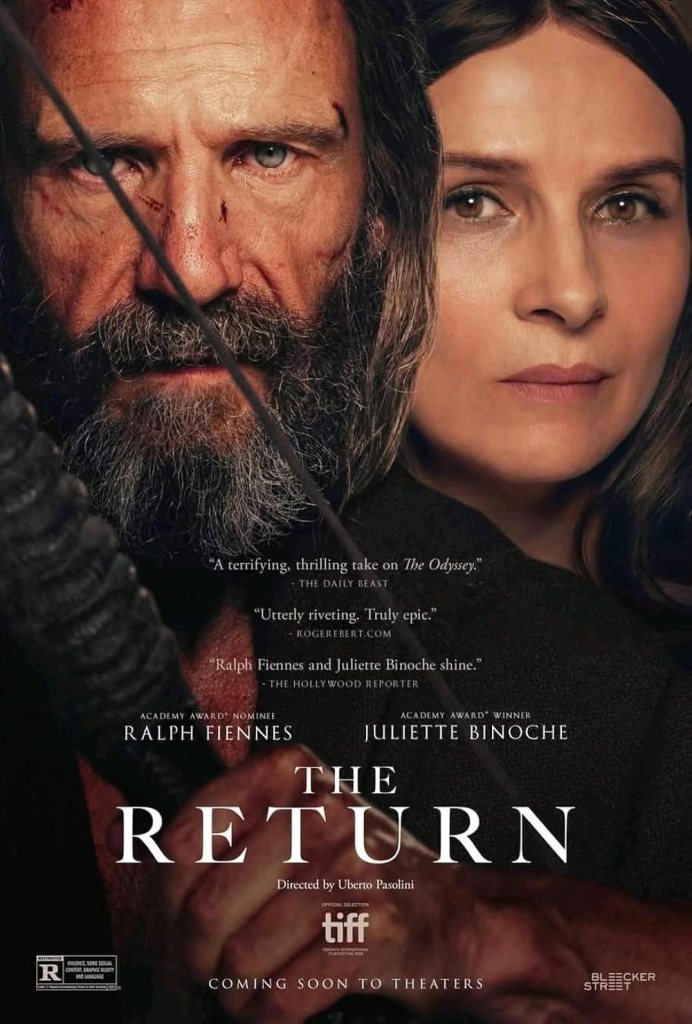
The Return (2025)

The Return (2025)

The Odyssey retold as an exploration of trauma and guilt in a rich and rewarding film

Director: Uberto Pasolini

Cast: Ralph Fiennes (Odysseus), Juliette Binoche (Penelope), Charlie Plummer (Telemachus), Tom Rhys Harries (Pisander), Marwan Kenzai (Antinous), Claudio Santamaria (Eumaeus), Ayman Al Aboud (Indius), Amir Wilson (Philoetius)

War can tear your soul apart, even if it’s become an ancient clash of legend: the memory of the deeds you did and the lives (both friend and foe) you left behind can haunt you. The pain of guilt and trauma swims behind the expressive eyes of Ralph Fiennes’ Odysseus in this unique adaptation of Homer’s famous tale of the longest journey home. A version that, as the title suggests, jettisons the journey itself (along with all those Gods) focusing instead on the spiritual journey a soul must take to come-to-terms with things seen and done and to face the consequences on those left behind. Pasolini’s film does this with expressive, melancholic beauty, bringing a unique vision to a story told many times before.

A shipwrecked Odysseus is washed, naked, up on the shore of his kingdom of Ithica – although its heavily implied this is an accident as he is clueless at first to where he is. In fact, lying naked on the beach, suggests the cunning old warrior has in many ways been born again: this time to face the pain of those he left behind. That doesn’t just include his wife Penelope (Juliette Binoche) waiting fruitlessly for years for word of his whereabouts, but also his bitter son Telemachus (Charlie Plummer) who deeply resents his absent father. It’s also the people of his kingdom, now poor and ravaged, the cream of a generation lost under his leadership, the island pillaged by a parade of cruel suitors for Penelope desperate to claim the kingdom. So great is Odysseus’ guilt he continues to conceal his identity – perhaps worried as much at confronting the truth about himself as he is the myriad people on the island with reason to hate him.

The Return replays Homer as an exploration of war trauma and PTSD. In many ways it has more in common with William Wyler’s The Best Years of Our Lives than Wolfgang Petersen’s Troy. No matter the era, it’s never easy for warriors to find a place in a world of peace they left far behind. Powered by a deeply affecting, sensitive performance from Fiennes, The Return centres a man beaten down by shame and regret, barely able to look others in the eye. This is the lasting impact of conflict. While the war at Troy is already being mythologised by the young, Odysseus’s stories focus on the ordinary citizens of Troy, who longed for peace and met their end in fire and blood. Fire and blood, what’s more, that he visited upon them.

Mix that in with the constant memory of the boatloads of Ithica’s finest young men, who have not returned with him, their souls lost in conflict and at sea. No wonder Odysseus feels solely tempted to forget himself, to become just another anonymous beggar. The Return is the tragedy of an incredibly smart, cunning man shamed that his gifts are harnessed best for death and destruction. In battle he is ruthlessly efficient, using the strengths of others against them, constantly identifying every possible advantage.

It’s a fate that he – and Penelope – fear may absorb their son. Telemachus, played with a frustrated petulance by Charlie Plummer, has watched his father’s kingdom fall apart, felt abandoned by both his parents (one to war, the other to stoic silent) and straining at the leash to do something to prove himself. If that means testing how far the parade of Penelope’s suitors will go, so be it – even if their patience with this boy becoming a man is wearing fatally thin. Tension hangs over The Return: will Telemachus follow in those footsteps Odysseus so bitterly regrets – will violence consume the next generation as much as the first?

What it will do is leave more victims behind. Juliette Binoche – with an instinctive chemistry, gives a deeply humane but fascinatingly cryptic performance – simmers with the never-ending pressure of trying to keep home and family together, very aware her own home is now awash with dangerous men she can only just control. Binoche is a tight-wound bundle of tension, suppressed fear and unacknowledged anger at her betrayal. This is a woman clinging to hope of her husband’s return, as it offers the only escape from the trap he has left her in – and if that means forcing his hand so be it.

Ithica has become a ragged island. Pasolini’s visuals for the film, influenced by Baroque artwork in its parade of barely-clothed nudes in rural settings and run-down classical wrecks, not only look gorgeously artful but successfully conveys the impression of a kingdom on its last legs. With everyone thinly clothed and living in shacks, Odysseus’ palace crumbling and lives being cheaply taken whenever the suitors fancy, it’s clear the world he left behind has disintegrated. The suitors are largely a gang of louts, increasingly fed-up with waiting (‘This fuckin’ place!’ Tom Rhys Harris’ Pisander petulantly whines at one point after getting lost in a futile chase through the maze-like woodland). They are fragilely led by Marwan Kenzai’s Antinous, whose tragedy is that he genuinely loves Penelope. In another life, indeed, you can imagine him making a considerate and kind husband if unreturned affection hadn’t made him bitter.

These ideas and concepts bring a fresh vision to The Odyssey, grounding this adaptation in a world of post-traumatic guilt and the horror of violence, devoid of gods and monsters. Fiennes, his body muscled up like a burnt and tanned roll of taut rope, is a warrior struggling against awakening. We all know eventually he will of course – but the enormous psychological burden of once again using your wit and ingenuity to efficiently slaughter other people is always palpable. It doesn’t matter if the targets ‘deserve’ it: the psychological damage remains the same.

The Return explores all the subtly, with beautifully measured performances from Fiennes and Binoche and impressive supporting turns not least from Claudio Santamaria as Odysseus’ old servant, shrewdly aware of his master’s identity earlier than he admits and determined to rouse the king to take responsibility for his actions. Sombre, wonderfully filmed and a compelling reimagination of the myth, it’s a unique view of Greek mythology that carries real emotional impact.

Die Nibelungen (1924)

Die Nibelungen (1924)

Wagnerian epic is crammed with gorgeous, dramatic imagery and relentless pace

Director: Fritz Lang

Cast: Paul Richter (King Siegfried of Xanten), Margarete Schön (Kriemhild of Burgund), Hans Adalbert Schlettow (Hagen of Tronje), Theodor Loos (King Gunther of Burgund), Hanna Ralph (Queen Brunhild of Isenland), Rudolf Klein-Rogge (King Attila), Bernhard Goetzke (Volker of Alzey), Rudolf Rittner (Margrave Rüdiger of Bechlarn), Georg John (Mime the Goldsmith/Alberich the Dwarf/Blaodel)

Fritz Lang wanted to create a film that would help a shell-shocked Weimar Germany start to feel proud of its heritage and culture. He would do this with a film of the legend of Siegfried. It’s not really Lang’s fault that this Aryan feel-good stuff, coupled with Lang’s flawless visual compositions dripping with power and authority, would turn into the wet dreams of the Nazi party Lang fled Germany to escape. Die Nibelungen has unfortunate associations, but it stands as a towering pinnacle of Lang’s visual artistry. An adaptation of the legend, not the Wagner operas, Lang created something both mystic but also subtly questioning the idealistic figures it celebrates.

He would do all this in two (epic of course) films, totalling almost five hours. In the first Siegfried, the hero (Paul Richter) overcomes dragons and murderous dwarves to gain powers of almost (that almost is key) total invulnerability, strength and invisibility. Powers he puts to the test to win the weak King Gunther of Burgundy (Theodor Loos) the hand of Brunhild (Hanna Ralph) by invisibly aiding Gunther best this Valkyrie at a series of challenges. He even takes on Gunther’s form to help lead Brunhild to the bridal bed. Brunhild however discovers the truth from the loose lips of Siegfried’s wife (and Gunther’s sister) Kriemhild (Margarete Schön). Brunhild’s tricks Gunther and his loyal heavy Hagen (Hans Adalbert Schlettow) to murder Siegfried via a spear in his one weak spot. In Kriemheld’s Rache, Kriemheld plots the destruction of everyone who conspired in the death of her husband, via a marriage with the warlord Attlia the Hun (Rudolf Klein-Rogge).

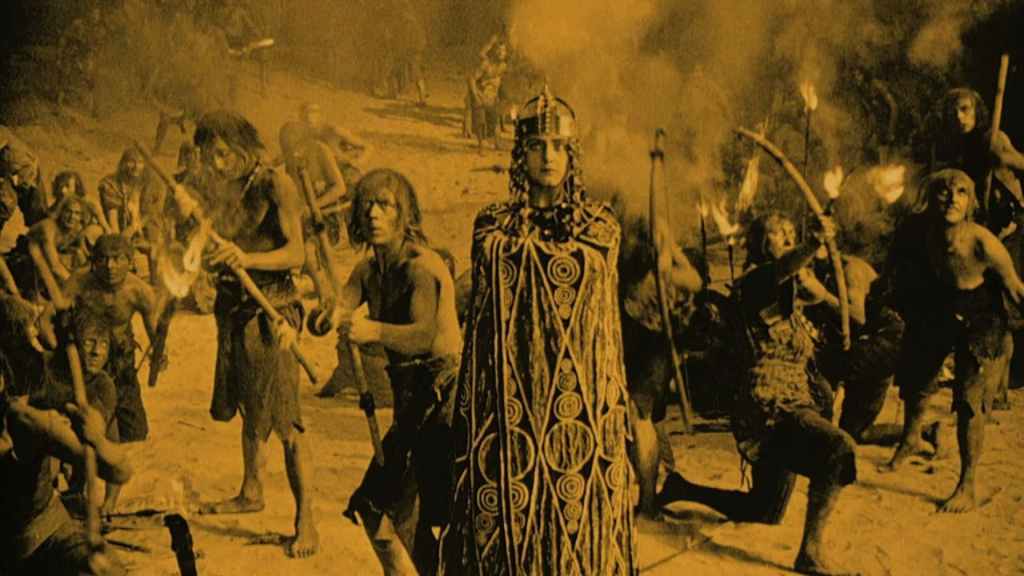
The first thing that strikes you about Die Nibelungen – aside from its surprisingly electric pace – is the powerful, undeniable beauty of nearly every single frame. Lang composed each image as if it was a painting, from Siegfried introduced in steaming smoke at the forge, to the formalist imperialism of the castle of Burgandy and the rigid order and symmetry of its soldiers. Locations, from grand castles to mystic forests, underground caverns full of scheming, wicked creatures are superbly bought to life. There is a martial power Lang’s composition of so many of these images, their perfect angles and symmetrical blocking: parts of Die Nibelungen are some of the greatest pageantry displays in movies.

There is a wonderful sense of overblown, geometric, artificiality in all this – Lang deliberately creates a world larger than life and full of the unworldly and impossible. Buildings tower over crowds, courts that hold thousands to view events of grand importance, sieges of burning halls that fill the frame, staircases up impossibly high buildings. The sort of world of medieval excess where Gunther and Kriemheld disembark from a boat by walking across a bridge of shields created by half-submerged knights. Power and magnificence come from every frame.

It’s matched with an impressive creation of the bizarre and magical. Of course Siegfried kills a giant, animatronic dragon (strangely it’s obvious – even then surely – fakeness works in a film where everything is a heightened, from the emotions to the buildings to the costumes). Siegfried trains in something not far off from Vulcan’s forge and the forest feels like a sort of fairy-tale wonderland. Lang pioneered cross-fades and double exposures to make extraordinary effects, as Siegfried disappears under a veil of invisibility and jumps impossible distances. There is an extraordinary shot where Brunhild, still in the midst of her Valkyrie-like super-powers, seems to jump straight into the camera lens at full force. A beautiful edit sees a tree seem to reform itself into a skill in front of the eyes of the grieving Krimhild.

But Die Nibelungen places its world of power and magical forces in an increasingly costly human world of realpolitik and conspiracy, where its mystical but naïve and simple hero is out of step. Even before then, Siegfried’s status as a hero is subtly questioned. The dragon he kills seems a peaceful, inoffensive creature for all is scale, sitting placidly when Siegfried attacks and stabs it in the eye. Lang introduces a lovely touch where it’s dying tail flick will send the leaf that shields a crucial spot of Siegfried’s back from the torrent of invulnerability-granting dragon’s blood he bathes in. Siegfried is easily manipulated by the dwarf Albereich (a Gollum-like, uncomfortably antisemitic in appearance) before a large dose of luck allows him to defeat his opponent and gain the treasure of Nibelungen.

At the court of Burgundy, for all his courage and blunt honesty, Siegfried is at sea among the subtle power dynamics. The kingdom is ruled by chronically indecisive weakling Gunther (a snivelling Theodor Loos), easily manipulated by Wagnerian-costumed Hagen (an imposingly arrogant and faintly psychotic Hans Adalbert Schlettow). Siegfried’s main acts are to trick and then break the resistance of Brunhild (a dynamic Hanna Ralph) while impersonating the weakling – hardly acts to brag about, which doesn’t stop Siegfried doing exactly that to his wife who then blurts it out to Brunhild in a fit of pique. This isn’t a hero covering himself with glory, just as even the formally idealistic Brunhild (much to her later self-disgust) is reduced to scheming and plotting revenge, a far cry from the noble actionee she prided herself on being.

It’s not a surprise to find Part 2 heads into a Götterdämmerung as Kriemhild’s obsessive, destructive desire for revenge against Hagen (her husband’s murderer) meets with Gunther’s own stubborn-short-sighted protection of his controlling vassal. Nearly half of Part 2 is dedicated to the prolonged siege of the King and his followers by the massed armies of Kriemheld’s new husband Attila the Hun, her manipulations of him helped a great deal by Hagen’s arrogant, impulsive violence against Attila’s people. This extended battle sequence is astounding in its scale, violence and excitement – you can see the influence it had on The Two Tower’s Helm’s Deep – and is shot with the same visual mastery as the more stately first half, even as it seeks into bloody desperation.

It must be stated that Die Nibelungen does feature more than its share of clumsily presented racism. As mentioned, the hook-nosed, gold-obsessed, murderous dwarf Albereich is a painful antisemitic stereotype. Rudulf Klein-Rogge is caked under layers of make-up as the ugly, Slavic Attila while his Hun army resemble crouching Orc like figures, frequently ripe for the sword edge of the relentless German soldiers. It’s the uncomfortable flip side of the Aryanism idealism and romantic framing given to Siegfried, that these un-German figures are painted so monstrously.

But Die Nibelungen’s subtle criticism of the flaws in its German leads – it would go some to call them heroes – balances this out. From the flawed, empty-headed, foolishness of Siegfried to the increasingly sadistic, unrelenting cruelty of Kriemheld (Margarete Schön’s performance is excellent, going from sweetly retiring to unblinking fanaticism over the course of the film) the Germanic characters are compromised, weak and cruel: Hagen and Gunther are no one’s ideas of admirable figures. Compared to them, for all his clumsy racist appearance, Atilla feels like a reasonable figure, loving his family, caring for his people and refreshingly free of vindictiveness and cruelty.

It makes for an intriguing complex undercurrent in a film which, of course, the Nazis interpretated entirely on surface-appearance as a celebration of Aryan super-might. Or at least they did for Part 1 – even they couldn’t kid themselves that Part 2 didn’t quite fit that bill. Today Die Nibelungen provokes the same interesting thoughts. But above all it’s a visual marvel from a gifted film director, a truly painterly masterpiece that, for all its great length, never flags and offers a new marvel, camera trick or miraculous composition with every frame. This is silent cinema at its best.

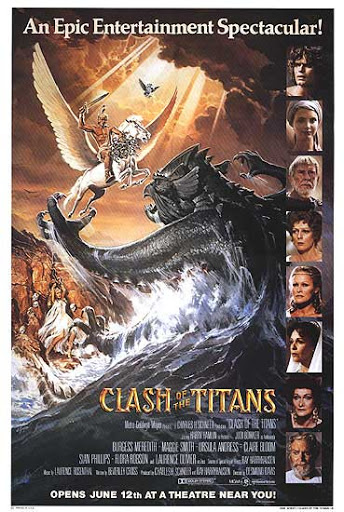
Clash of the Titans (1981)

Clash of the Titans header
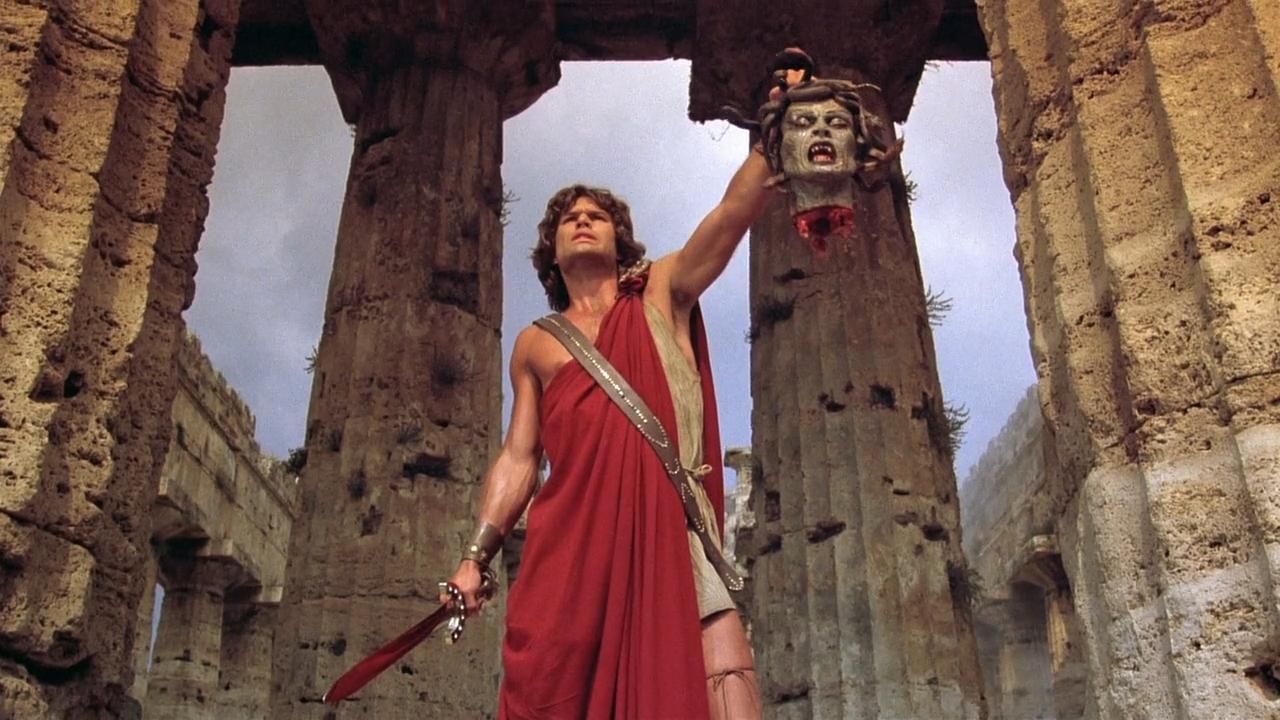
Harry Hamlin takes on monsters in Clash of the Titans

Director: Desmond Davis

Cast: Harry Hamlin (Perseus), Judi Bowker (Andromeda), Burgess Meredith (Ammon), Maggie Smith (Thetis), Sian Phillips (Cassiopeia), Claire Bloom (Hera), Ursula Andress (Aphrodite), Laurence Olivier (Zeus), Susan Fleetwood (Athena), Tim Pigott-Smith (Thallo), Jack Gwillim (Poseidon), Neil McCarthy (Calibos), Donald Houston (Acrisius), Flora Robson, Freda Jackson, Anna Manahan (Stygian Witches)

It’s almost impossible not to have a soft spot in your heart for Ray Harryhausen’s stop-motion magic. The best of Harryhausen – and for me surely that’s his superb Jason and the Argonauts – has a magic that few other films can match. A magic born of awe at the technical skill and patience needed to bring it to the screen and the boundless imagination behind them. For all that they are no more real than the CGI of today, there is an emotional connection you can form with watching something where you know each frame was painstakingly hand-made, that you can’t quite feel for the scope of a computer-born Marvel world. Clash of the Titans was the last hurrah for Harryhausen. It’s far from perfect, and even in 1981 it looked dated and almost a relic from another era – but it still carries enough entertainment value.

We’re back in the mythology of ancient Greece. As a boy, Perseus (Harry Hamlin) and his mother are sent out to sea to drown by his Grandfather King Acrisius of Argos (Donald Houston), jealous of her love from Perseus’ father, the God Zeus (Laurence Olivier). Zeus orders Argos destroyed by the Titan sea monster the Kraken. Years later Princess Andromeda (Judi Bowker) of Joppa is due to marry Calibos (Neil McCarthy), son of the Goddess Thetis (Maggie Smith). But Calibos is cursed by Zeus, turned into a monster for his crimes. Andromeda is cursed by Thetis to only marry a man who can answer a riddle (set every night by Calibos). Perseus – using gifts from Zeus – discovers the answer to the riddle, confronts Calibos, cuts off his hand and is set to marry Andromeda.

But when Andromeda’s mother Cassiopeia (Sian Phillips) claims her daughter is more beautiful than any of the Gods, Thetis condemns the Andromeda to be consumed by the Kraken, or the city to be destroyed. To stop this, Perseus – with the quiet help of Zeus and his winged horse Pegasus – must travel across Greece to obtain the head of Medusa, who turns all who look upon her to stone.

Well, in case you were in any doubts (and I really struggled to write those last couple of paragraphs), one of Clash of the Titans main faults is that it’s plot is a mess (a combination of several Greek myths into one story) and lacks either a clear narrative thrust or a clear villain. It’s without focus, flabby and has so many sub-clauses in its structure, you either need to concentrate or just switch off and take it on a scene-by-scene basis. It’s summed up by the meaningless title which – for all Flora Robson’s Stygian witch shrieks “a titan against a titan!” mid-way through the film – barely relates to the plot.

The film also suffers from an over-abundance of characters (Gods, Kings, warriors, monsters) many of them only vaguely outlined. But with so much going on (and so much plot to cover in the slight running time) it all pulls focus from our two leads. Harry Hamlin’s Perseus is a dull, uncharismatic figure who it’s hard to get interested in. Judi Bowker fares a little better as Andromeda, but her brief moments of proactivity are only byways before she becomes a damsel in distress, chained to a rock. Neil McCarthy as nominal villain Calibos is undermined by only getting to play the character in close-up (in all other shots he’s all too obviously replaced by a tailed stop-motion monster), and in any case the character is barely given any decent motivation or background.

It doesn’t help these underpowered leads that there are a host of famous actors picking up pay cheques around them. Laurence Olivier made no secret of the fact that a large cheque (and only a week’s shooting time) was what bought him on board as Zeus (although the part is a good fit for his grandeur). Claire Bloom and Ursula Andress signed up for similar reasons. Maggie Smith (who was married to the screenwriter) seemingly did the film as a well-paid favour. Burgess Meredith repackages his role from Rocky as a poet turned advisor to Perseus. I will say Tim Pigott-Smith does a decent turn as the head of Joppa’s royal guard. But these are paper-thin characters, given what life they have by the actors rather than the script.

But Clash of the Titans is all about those Harryhausen set-pieces, with everything else just over-complicated filler to get us from place-to-place. Desmond Davis’ uninspired and flat direction doesn’t help, with the action too often presented in basic medium shot and frequently over-lit – a lighting set-up that doesn’t help to make the effects look particularly convincing. The film feels confusingly pitched, part a kids film, part an appeal to nostalgic adults. Neither seems to particularly work, and the film ends up looking rather uninspired.

This was the last hurrah for this sort of stop-motion. Star Wars had reset the table completely for adventure films like this. Clash of the Titans feels like a feeble attempt to address this challenge – right down to the irritating robotic owl Bubo, a clear rip-off of R2-D2 right down to his bouncing movement and dialogue of beeps. The film goes for making things as big as possible – the gigantic kraken, the huge scorpions – but everything in it looks a little tired.

Davis’ uninspired direction and the film’s flatness doesn’t help – or its general air of fusty, dusty oldness. If Jason and the Argonauts has all the charge and energy of a young man’s film (from its sharp direction, pacey plot, neatly drawn characters and Herrmann’s score), this really feels like a middle-aged Dad trying to be hip. The Kraken’s destruction of Argos seems to consist of little more than a few toppling pillars. The beast is slow, cumbersome and takes forever to do anything. An extended sequence where our heroes fight a two-headed dog is both dull and laughable. The only classic piece of stop-motion here is Medusa. Surely no coincidence that this is the most atmospherically shot sequence, with lighting that helps to hide the joins between stop-motion and reality in a way the rest of the film ruthlessly exposes.

Clash of the Titans is a film you can feel a nostalgia for – but really it’s actually rather naff. It’s badly plotted – surely the story could have been told in a cleaner way than this confused mess. Too many actors either phone it in, or fail to deliver the charisma needed (Todd Armstrong in Jason is no Olivier, but at least he had a matinee idol robustness Hamlin lacks). It’s limply directed. Worst of all, too much of the stop-motion looks a little silly – the film failing to cover up the cracks and too frequently exposing the joins rather than disguising them. Show this one to someone first, and you’ll never get them back to watch the best of Harryhausen. While I always enjoy it – for nostalgia if nothing else – its a cult classic, but no classic.

Orphée (1950)

Jean Marais is in love with Death in Cocteau’s poetic Orphée

Director:  Jean Cocteau

Cast: Jean Marais (Orphée), François Périer (Heurtebise), María Casares (The Princess), Marie Déa (Eurydice), Henri Crémieux (L’éditeur), Juliette Gréco (Aglaonice), Roger Blin (The Poet), Édouard Dermit (Cégeste), René Worms (Judge)

Cocteau is perhaps the only major poet who became a filmmaker. His films introduced, naturally, a poetic beauty into the French New Wave – something that has led many to overlook their embracing of the techniques of modern cinema. Orphée is his most successful work, a beautiful re-imagining of the Orpheus myth, set in a smashed up post-war France, with the afterlife a bombed-out industrial wasteland. It’s a beautifully made, inventive and hugely impressive film, not without flaws, that allows you to see the potential magic and inventive sleight-of-hand in cinema. It’s a treat.

Orphée (Jean Marais, Cocteau’s real life-partner) is a poet who attracts the attention of a mysterious Princess (María Casares) during a poets’ café brawl that leaves her current protegee Cégeste (Édouard Dermit) wounded after he is hit by speeding motorcycle riders.  He helps her “transport him to the hospital” only to find that Cégeste is dead and that the Princess is some sort of manifestation of Death, transporting artists to the afterlife. The mysterious motorcycle riders are her assistants, while her driver Heurtebise (François Périer) also has some sort of role in carrying souls to the afterlife. Orphée wakes the next morning obsessed with Princess and the cryptic messages he heard on her car radio, that echo the seemingly meaningless messages of the Free France radio. His obsession distracts him from his wife Eurydice (Marie Déa), but when the Princess’ assistants claim her life, Orphée with the help of Heurtebise (who has fallen in love with Eurydice) feels compelled to journey to the afterlife to rescue her.

Cocteau’s film captures the poetic beauty of a dream, many of the events happening with a strange logic in a world that feels a few degrees askew from ours. It’s a film in love with the personal interpretation of great poetry, presenting a series of events we are invited to form our own impressions of. Cocteau’s film also suggests the ever-present link between the dead and the living – the dead still yearn, in their way, for life (some wander the afterlife unaware that they are even dead) while the poet Orphée falls in love with the mystical immortality of death, the all-encompassing love-affair our soul can have with the afterlife. The Princess is herself drawn towards poets, whose grace and beauty she can help promote to their own immortality.

To present this strange and unsettling world, Cocteau uses a host of inventive cinematic tricks that constantly surprise and delight. The Princess’ helpers feel like they invented the cosplay aesthetic with their burly short-sleeve shirts, helmets, dark glasses and machine guns. The afterlife is a blasted, burnt-out factory with ruined homes and houses around it and vital meetings and trials taking apart in worn-out rooms with cracked and decaying walls. The characters move through this afterlife depending on their status – Orphée crawls through it like treacle, battling against his own brain struggling to understand where he is, while Heurtebise glides through it seemingly without moving his feet. 

The afterlife is accessed by moving through mirrors. Cocteau uses reflections intriguingly throughout the film – after all mirrors show us only a version of our world, not the real thing. Mirrors are moved through either as if they are not there, or melt into liquid that souls can pass through. Cocteau uses film in reverse to show mirrors smashing and then reforming themselves, a brilliant effect that looks disconcertingly wrong. He uses the same technique to show dead souls rising under the Princess’ influence, standing with a bizarre disjointedness (the actors were filmed falling and the film reversed). The rubber gloves that must be used to move through mirrors are also shown being put on using reverse photography – the actors were filmed taking them off and the film is reversed making the gloves seem like they fly onto the hands. It’s a simple effect but brilliantly done.

Cocteau continues this inventiveness in the afterlife. Some sets are built on an angle, meaning Orphée at one point crawls along one wall before sliding impossibly down the next wall. Back projection is brilliantly used to show Heurtebise manipulating the afterlife around him. It’s a feast of inventive and imaginative angles, ideas and concepts brilliantly shot. And mirrors are always the key, the doorway to death and a world like ours but not.

And behind that door, Cocteau presents a fascinating afterlife. Is the Princess Death? Or just one of many functionaries? Heurtebise too seems to have some sort of role as Death – and the functionaries of the afterlife operate under a series of rules that suggest they barely understand the world of the living any more. Orphée is allowed to take Eurydice home – on condition he never looks at her, a condition nearly impossible to meet in the real world, despite Heurtebise’s best efforts. Meanwhile Orphée is fixated on Death, chasing the Princess through cloisters and a marketplace in the real world, drawn towards the ghostly messages on the radio (their echoing of French Resistance messages indicating their link to a deathly past of destruction). 

The film throws in a love triangle with Death as the third wheel. Orphée is moved by the desire for the immortality death can bring, while the Princess herself perhaps causes Eurydice’s death out of envy and bends the rules anyway she can to bring herself closer to Orphée. Orphée’s quest for inspiration and immortality distract him from the everyday love of his wife – and her pregnancy. Only Heurtebise still seems to yearn for the quiet normality of everyday life.

The film’s main flaw is that it often fails to invest the relationship of Orphée and Eurydice with any real emotional depth. Part of this is the fault of Jean Marais, who delivers a performance that is aiming for brooding but instead generally comes across as sour and sulky, making him hard to warm to or invest in, while Marie Déa is given very little to do. The real interest is in the figures from the afterlife, and María Casares is superb as a cold, almost dominatrix like Death who slowly finds in herself great longing (perhaps in part for her previous life on earth). François Périer is similarly superb as Heurtebise, desperate to feel again as he did when alive.

Despite the film’s lack of real heart and warmth among (of all things!) it’s living characters, there is so much depth, inventiveness and bizarre longing in the afterlife that you can more than forget this. Cocteau’s film is a wonderful dream, an immersive, brilliantly created feast for the imagination that marries art and cinematic techniques in a way few others have managed before or since.

Beowulf (2007)

A CGI Ray Winstone faces off against monsters, temptation and fate in Beowulf

Director: Robert Zemeckis

Cast: Ray Winstone (Beowulf), Anthony Hopkins (King Hrothgar), John Malkovich (Unferth), Robin Wright (Queen Wealtheow), Angelina Jolie (Grendel’s Mother), Crispin Glover (Grendel), Brendan Gleeson (Wiglaf), Alison Lohman (Ursula)

Around the turn of the century a new style of film-making (and I guess acting) burst into the world of Hollywood. There had been special effects and there had been animation. We’d seen actors transplanted by CGI into any number of settings and locations. But motion-capture was something else. Its leading pioneer is of course Andy Serkis, and the art involved essentially placing a load of dots on people’s faces to record every inch of their movements and then feed this physical performance into a computer to create a CGI personality that unified actor and special effect. 

Zemeckis, always a pioneering film maker, was fascinated by the art and had used it on previous films – but Beowulf was his real push to create something that couldn’t have been done without motion capture. So Ray Winstone – a bulky middle aged actor – is here transformed through the computer into a slim, muscular man in his early thirties. Winstone plays Beowulf himself, and Zemeckis’ aim here was to bring to life in a way that had never been done before the ancient poem. And not only the humans would be motion captured: Grendel and his mother (played by Crispin Glover and Angelina Jolie) would also be powered by real-life human performances.

It makes a fascinating film visually to watch. Zemeckis’ camera work has the complete freedom to roam anywhere around the actors (every move they made was recorded into the computer from every angle). And he doesn’t hold back, with the camera swooping and sliding around every dimension and angle of the locations, often moving freely and swiftly with a series of engrossing tracking shots and fast moving sweeping panoramas. 

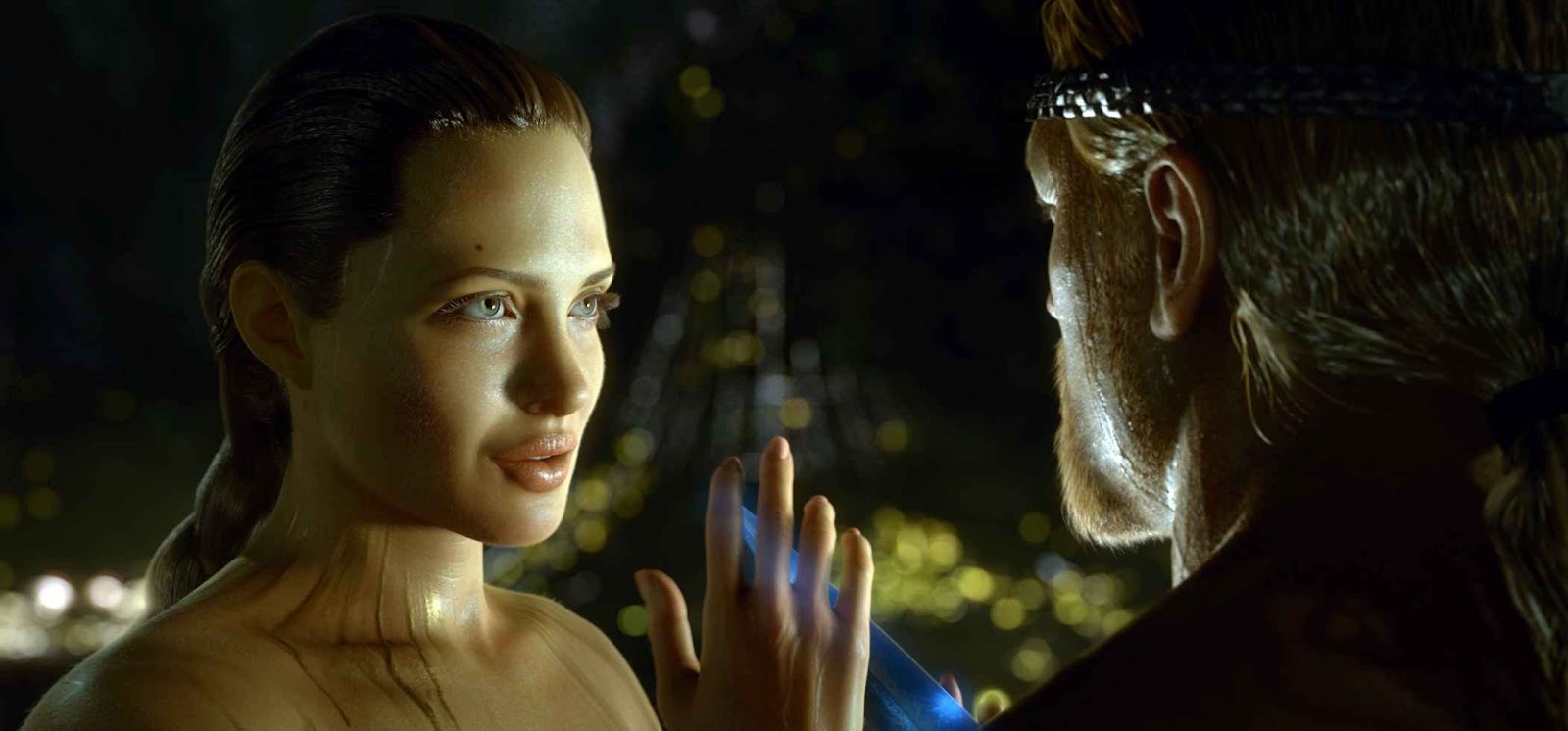
It also means that having real performances behind every creature in the film adds a real human dimension to even the most vile monsters. Crispin Glover’s physical commitment – not to mention the searing, twisted pain in his every moment – humanises Grendel in a way his simple monstrous appearance never could. The later dragon has a real feeling of humanity behind it, for all its scales and arrogant cruelty. Angelina Jolie reported she felt surprisingly uncomfortable when she saw the final realisation of her performance as Grendel’s mother – imagined here as an extremely seductive succubus, permanently naked with perfectly formed curves – but the entire thing works because of the performance behind the animation.

Some of the motion capture isn’t always of course completely successful. There is something still slightly too shiny, slightly too polished about the faces – part of the film being a slightly strange halfway gap between animation and real acting. The eyes suffer most – for all the efforts of the animators there is something still slightly dead behind, something not quite of the human face about them. It’s something that you can’t help but spot, and can’t help but be disconcerted about.

But it largely comes second to some of the imagination that exists in this version of the story. Zemeckis’ film making is often visceral and bloody – and the action sequences are as involving as he manages to make the other sequences are engaging. Not everything works: Beowulf fights Grendel in the nude, and the decision to have Beowulf’s ‘bits’ constantly obstructed by a series of fortuously placed items smacks somewhat of Monty Python and seems tonally off from the rest of the film. But by and large it works.

It does this because the script from Neil Gaiman and Roger Avery mixes the original poem with something reminiscent of Macbeth. One of its key themes is the seduction of power and the inner guilt of heroes who know that they have feet of clay. Grendel is reimagined as the son of Hrothgar – seduced by Grendel’s mother with offers of power, he creates with her Grendel, the living embodiment of his flaws. Grendel’s mother represents the creeping temptation of greed, ambition and the “old ways” (the film plays up the Christianisation of the Vikings in the background throughout). She’s effectively all the witches rolled into one (but much hotter).

And Beowulf is ripe ground for our temptations as it’s made clear right from the start that – while clearly a great warrior – he is also a triumphalist blowhard who enjoys repeating and expanding his own myth. A story recounted about his fighting sea monsters during an epic sea swimming competition (‘It used to be just one’ comments best friend Wilfric) is a masterpiece of puffed up self-promotion on top of genuinely impressive deeds, Beowulf’s words diverging from the story we see on screen towards in the end is a neat foreshadowing of his eventual seduction by Grendel’s mother. 

Beowulf isn’t an empty boaster though. He’s a sympathetic Macbeth who feels guilt about the “sound and fury” that his life story has become. The aged Beowulf in the second half of the film is weary, tired and full of self-loathing, his great name an oppressive weight he can’t live up to or escape from. He’s a man who knows all the time he has feet of clay, but the name of a God – and that the name is so important he can’t let anything puncture it. Wilfric twice refuses to allow Beowulf to divest his conscience: the legend is so important it’s been printed as fact.

Ray Winstone handles this all pretty well – even if a lot of this requires sorrow behind the eyes, that motion capture simply can’t provide – even if the transformation of his face makes him look more like Sean Bean than a younger version of himself. Hopkins and Malkovich embrace all the cavorting and expressive body movement of motion capture like the old hams they can be. The film’s real highlight is Robin Wright who makes a great deal of Hrothgar then Beowulf’s sad wife, unhappy, quietly aware of both her husband’s flaws and perhaps the only level headed person in the Kingdom.

Beowulf has some fine technical work, but its real lasting interest is the psychological depths it tries to explore in its hero. Far from the perfect warrior, he’s someone doubtful and doubting, whose insecurities and vulnerabilities grow throughout the film and finally – like a mix of Lear and Macbeth – only becomes fully sympathetic at the very end. It makes for an interesting remix of a story nearly older than any other in our culture.

Jason and the Argonauts (1963)


The Argonauts take on dreadful monsters in Jason and the Argonauts. You gotta love it.

Director: Don Chaffey

Cast: Todd Armstrong (Jason), Nancy Kovack (Medea), Gary Raymond (Arcastus), Laurence Naismith (Argus), Niall MacGinnis (Zeus), Michael Gwynn (Hermes), Douglas Wilmer (Pelias), Jack Gwillim (King Aeëtes), Honor Blackman (Hera), John Cairney (Hylas), Patrick Troughton (Phineus), Nigel Green (Hercules)

Watching this film it’s impossible not to get swept up in childish glee. It’s one of the most gloriously entertaining, wonderfully imaginative and brilliantly enjoyable films ever made. Watch this at the right age and it’s got you for life. Its best remembered of course for its wonderful Ray Harryhausen stop-motion effects – but to be honest the whole film is a brilliantly assembled package from start to finish, full of thrills and spills. I love it, I’ll always love it, and it’s got to be one of the best adventure stories ever filmed. Not much point writing more is there? But I guess I will.

The plot hews fairly closely (give and take) to the mythology. Pelias (Douglas Wilmer) seizes the Kingdom of Thessaly. Terrified of a prophecy that says a child of King Aristo of Thessaly will take the throne from him, he kills Aristo’s daughter at the temple of Hera (Honor Blackman). Outraged, Hera becomes the protector of Aristo’s surviving son Jason (Todd Armstrong), and 20 years later he returns. Jason needs to prove himself if he is to re-take the throne, and decides to find the legendary Golden Fleece in the distant land of Colchius. He builds the greatest ship ever – the Argus – and holds games to find the finest crew in Greece. But danger awaits!

If any film is associated the most with Ray Harryhausen, it’s this one. So it’s almost a shock to realise he didn’t direct it, and that the monster moments are carefully placed only at key moments – and that a lot of the rest of the film relies on human action. Jason and the Argonauts is so good because all these elements are brilliantly put together and superbly staged, with an old-school, boys-own adventurousness. How can you not enjoy this film?

The Harryhausen effects are astonishingly good, and their stop-motion brilliance have a grounded reality to them. The staggering copper monster Talos is fabulous – grinding joints, groaning weight and size. The shrieking harpies that plague Patrick Troughton’s put-upon Phineas have an unpleasant, grasping dirtiness to them. The Hydra guarding the fleece is a rattlesnake-like vicious beast. All brilliant. I love them all – just sequences to dream of.

But the highlight is of course the skeletons’ battle. Oh wow. This sequence still holds up so well. It took Harryhausen years in the making and planning, but really paid off. The skeletons are terrifying in their cold-eyed ferocity. For skulls, Harryhausen gives their faces a lot of expressiveness. I just love this sequence – it speaks to the child in all of us. And there is something extra magical from knowing that the sequence was put together frame-by-frame and the live action shots carefully choreographed to match-up with it. Not for nothing did Tom Hanks namecheck this film when presenting Harryhausen with an honorary Oscar. 

These sequences really work though because the film has a wonderful Sunday-morning-serial briskness to it. Pacily directed by Don Chaffrey, the film motors so swiftly through its plot that you are surprised to find it’s only about an hour and a half. Its story structure is not always perfect: apart from Jason and Arcastus most of the rest of the Argonauts are so briefly introduced (despite the recruitment Olympics montage at the start) you’ll find them hard to tell apart. The arc of the story is often a little messy, and iIn fact it’s easy to forget the film ends on a cliffhanger (the sequel was never made) and that Douglas Wilmer’s sinister Pelias is totally forgotten after the first half an hour. But it’s so well done it doesn’t matter. 

But Chaffey keeps the events moving forward so well, the tone so perfectly balanced between heroics, gods debating and thigh slapping jokiness that the film’s tone and momentum never slackens, with the Harryhausen monster sequences as exciting tent-poles in the film’s action. A lot of this feeling is carried across from Bernard Herrmann’s excellent score, a hummable mixture of bombast and slightly eerie mysticism that reflects and compliments the action throughout.

The film is extremely well-made and put together. The Gods as these gigantic figures living in Olympus (Jason is not a lot bigger than the chess pieces they use to guide the wars of the humanity) are great fun: Niall MacGinnis is a very 1960s idea of Zeus (the gods would be hot younger guys today, not tubby Brits), but gives it a headmasterly briskness. Honor Blackman is very good as a proud but caring Hera – the use of the Argus’ headpiece as her voicepiece works really well. It’s quite something that all this interference from the Gods never feels silly at all.

Todd Armstrong and Nancy Kovacks are, to be honest, pretty wooden as the leads but that seems to be what the film needs. Armstrong does a very neat line in middle-distance staring. Gary Raymond has a lot more fun as a scheming Arcastus. The film also manages to shuffle some perceptions: Nigel Green’s Hercules is more of a roisterer than the great warrior (and, with his meat-headed over-confidence, causes more problem for the Argonauts than most). Other performances are perfect adventure-story ham: Jack Gwillim chews the scenery outrageously as King Aeëtes, which kind of matches up with the overblown hyper-reality of the skeleton fight.

Talking about this film, it’s hard not to treat it as a sequence of scenes that I really love. But every scene in it has something. I love the moment where Hylas proves his worth via clever stone-skimming. The approach to the clashing rocks – and the intervention of Poseidon to hold the rocks apart – is brilliant. Hermes’ disguise being unveiled. Hercules doing something decent by staying behind on an island to look for a missing Hylas. All those brilliant Harryhausen sequences.

There is something about this film that is just endlessly and constantly entertaining. No matter your age, it’s a film for every single generation of children (young and old!) to enjoy. It’s simply marvellous, and Chaffey and Harryhausen deliver it wonderfully. Every scene is exciting, the pace never slackens, the special effects are brilliant. But on top of that, it’s a brilliantly put together, well directed, beautifully scored film. It’s exciting, it’s gripping, it’s wonderfully entertaining. I’m gutted they never made that sequel (although since Jason and Medea’s story is literally all down-hill from here, it’s probably just as well).

Troy (2004)


Brad Pitt sails into history and legend as Achilles in the misunderstood Troy

Director: Wolfgang Petersen

Cast: Brad Pitt (Achilles), Eric Bana (Hector), Orlando Bloom (Paris), Diane Kruger (Helen), Brian Cox (Agamemnon), Peter O’Toole (Priam), Rose Byrne (Briseis), Saffron Burrows (Andromache), Brendan Gleeson (Menelaus), Sean Bean (Odysseus), Julian Glover (Triopas), James Cosmo (Glaucus), John Shrapnel (Nestor), Julie Christie (Thetis), Garrett Hedlund (Patroclus), Vincent Regan (Eudorus), Nigel Terry (Archeptolemus), Trevor Eve (Velior), Tyler Mane (Ajax)

VERSION CONTROL: Some films are just vastly superior as Director’s Cuts. Troy is one. The longer cut of Troy,I can assure you, is a richer, deeper, more enjoyable film. So watch that one. I’m also spoiling The Illiad. For those who worry about such things.

When I was younger I loved the Greek myths. I had two or three books of them and I read them over and over again. I practically grew up knowing the whole story of the siege of Troy in intimate detail. This helped feed my love for sweeping epic films, with big casts, spectacle and themes. So it probably won’t surprise you to hear I love Troy. That I’ve seen it dozens of times. It’s the film I wish had existed when I was a kid, because I would have watched it again and again. I know it’s not perfect, but I can forgive it almost anything. 

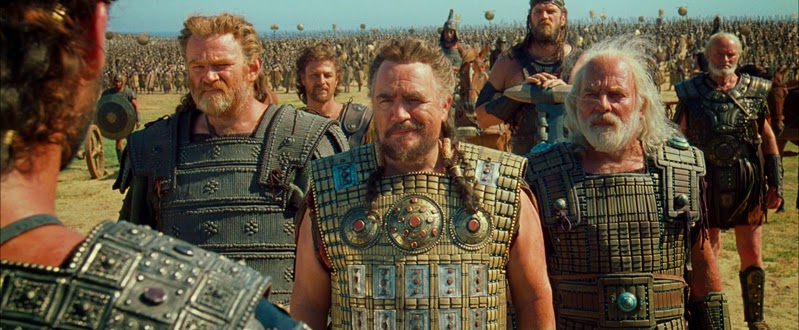
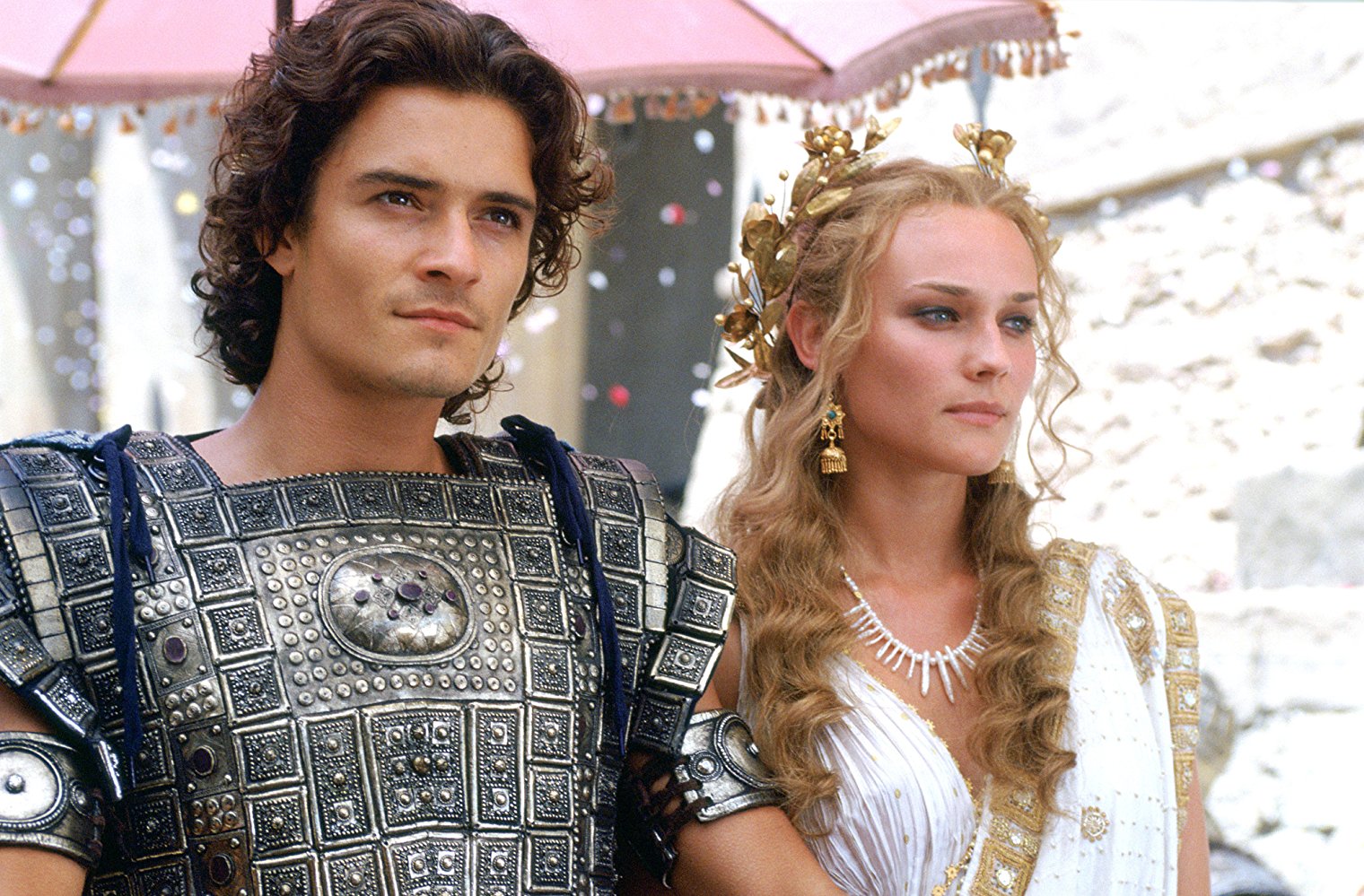
In Ancient Greece, a peace treaty has finally been agreed between Sparta’s King Menelaus (Brendan Gleeson) and Priam (Peter O’Toole) of Troy. Priam’s sons Hector (Eric Bana) and Paris (Orlando Bloom) are in Sparta to seal the treaty – only for Paris to fall in love with Menelaus’ unloved wife Helen (Diane Kruger). When they elope – despite Hector’s fears for the harm it will cause Troy’s people – Menelaus’ ambitious brother Agamemnon (Brian Cox) sees his chance to cement his hold over the last corner of the Mediterranean by conquering Troy. But to do so he’ll need the help of the greatest warrior in Greece, Achilles (Brad Pitt), who cares only for his legend and hates Agamemnon. 

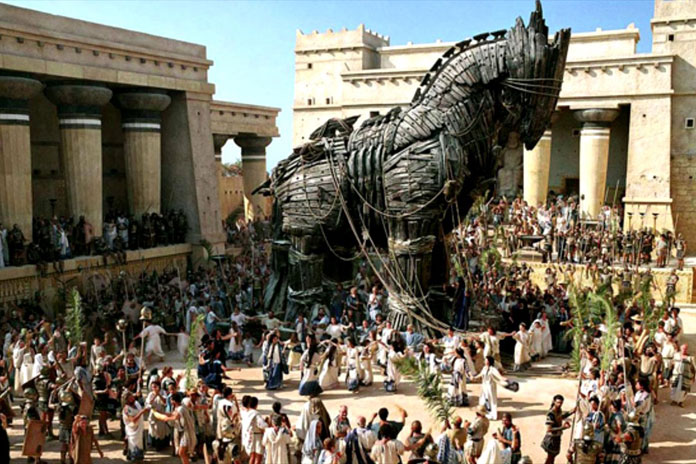
Directed with an old-fashioned grandeur by Wolfgang Petersen, mixed with an unflinching look at the blood and guts of war, Troy is a grand, cinematic epic that looks fantastic. The production and costume design are spot-on, and there is a great mixture of the “real” and the “special effect” in what you see on screen. It’s also got some cracking battle and fight choreography. The sword fight choreographers worked overtime on this one. The film embraces the grace and style of Achilles – he’s not the largest or strongest, but he has a pace, speed, intelligence and ruthlessness that allows him to duck, sway and constantly be one step ahead of his opponents. It doesn’t shy away from the brutality of his violence, and the camera never forgets the fallen.

It’s a film that understands the impact of war. It makes us care about many of the characters – and frequently shocks us with senseless, sudden deaths, or devotes time to the grief of those they leave behind. Our hero Hector has an almost tortuous-to-watch lengthy build up to his final fight – and then the camera gives us a moment or two when he is fatally wounded to see the light start to go from his eyes before Achilles delivers the killer blow. It’s a film that moves the viewer, that excites us with action while letting us grieve the cost of war.

The script is also a reasonably decent adaptation of elements of Homer, remixed with a modern (God-free) twist – as if this was the “true” story legend has been spun from. The script is put together by Game of Thrones’ David Benioff, and has his recognisable mix of epic scope and noble principles, clashing with realpolitik.

So why was Troy rejected by so many people? Why was it so misunderstood on release? It’s a mis-sold and partly mis-cut story struggling to embrace its own implications. Maybe I’m reading stuff into it, but I feel like this is a different film than the marketing or filmmakers seem to have understood. 

Firstly, Achilles is (at least for the first two thirds) effectively the film’s villain. He has no interest in people, only a sociopathic wish to be remembered as a great warrior. He’s ruthless in combat and slaughters indiscriminately. He’s temperamental and emotionally stunted. Contrast him with Eric Bana’s Hector: a devoted family man, who values the lives of the people of Troy first and foremost. Hector is effectively reimagined from the source material as a very modern man – the audience surrogate, the hero we can relate to, compared to the greedy, rapacious Greeks.

The struggle the film has is its biggest star plays Achilles – and it doesn’t want to compromise his box office appeal. So it tries not to draw too much attention to this contrast, and avoids passing too much judgement on Achilles. So we struggle when Achilles and Hector fight – anyone with any sense is surely rooting for the guy with a wife who just wants to see his kid grow up, rather than the sociopath, even if he is played by a super-star. All the characters hammer home our distress at Hector fighting Achilles, by the fact all of them reckon he’s got no chance. There are moving farewells for Hector with his father, wife and son. Hard to sympathise with Achilles when he slays the film’s most sympathetic character and drags him in the dirt right?

Achilles only starts to develop humanity (and become a modern hero) when he hits rock bottom after killing Hector – and is shamed first by Priam’s humbling, controlled pain (a tour-de-force from Peter O’Toole) then by his slowly developing love for Briseis. From this point , Achilles fights specifically to protect others – and finally puts aside his longing for immortal fame to try and save Briseis from the slaughter of the sack of Troy. The film’s slightly muddled unwillingness to condemn Achilles earlier, and its desire to celebrate him at the end, muddies the water. But there is a clear character arc slowly developing of Achilles becoming a humbler, more humane man.

As Achilles doesn’t look that good opposite Hector, the film turns Agamemnon into a ruthlessly ambitious, vain and greedy tyrant (played with a lip-smacking, roaringly enjoyable style by Brian Cox). Agamemnon (like many of the Greeks) is a modern politician – he wants to fashion the Greek city states into a single nation (sure one under his control, but it’s a more modern idea). The film, however, uses him to make Achilles desire for lasting fame feel more sympathetic. We all hate hypocritical politicians and cowardly bullies, right? And we all prefer the romance of the individual fighter uninterested in worldly affairs, right? Ergo, says the film, if we don’t like Achilles because we prefer Hector, we can also like Achilles a bit more if we don’t like Agamemnon. It’s clever structure in a way – but because the film doesn’t completely commit to it, it gets a bit lost in the telling.

The film’s attitude to Agamemnon is reflected in its favouring of Trojans over Greeks. While the Greek commanders squabble, or engage in political chicanery, the Trojans have an old school nobility. The film is enamoured with Priam. He’s played by Peter O’Toole in his grandest style (and O’Toole, though he can’t resist a bit of ham here and there, is very good). But Priam is in fact a naïve idiot, who makes a mess of everything. He’s incapable of accepting the realities of the world – his decisions lead to disaster at every turn. He may be overtly noble, honest and full of integrity – but like Ned Stark in Game of Throneshe’s completely out of his depth in Agamemnon’s ruthless world. Achilles may call him a “far better king”, but by any modern standard, Priam is in fact a terrible king, who makes all his decisions based on his regard for the Gods, rather than a claim appraisal of the situation.

These two reasons are why the film struggles. The film despises the Greeks but wants us to love Achilles – while at the same time having him kill without compassion, including our main audience surrogate character. It wants us to aspire to the romantic ideals of Priam and the Trojans – even while it demonstrates time and again that these ideas are hopelessly misguided, and completely wrong. It goes part of the way to accepting these contradictions, but it can never quite bring itself to villainise Brad Pitt, or condemn the noble Peter O’Toole.

I like to watch it my own way, balancing these contradictions – and I think if you do that (like watching the TV show The Tudors if you accept what the show can’t: that Henry VIII is the villain) then the film is really rewarding, full of interesting ideas and packed with cracking scenes.

It also allows some wonderful performances. Brad Pitt is, I suppose, an odd choice for Achilles in many ways – and he seems a bit bound in by his 1950s-Hollywood-Epic-Transatlantic accent. But he really looks the part, and I don’t think he’s afraid to let Achilles look bad – and he sells his conversion into a more heroic figure. Eric Bana is terrific as Hector – warm, engaging, hugely admirable. He has a world-weary tiredness to him – while Pitt’s Achilles is as cold as marble, Bana’s Hector looks like he has the cares of the world on his shoulders, tired already of the violence and horror he has had to endure.

There are tonnes of excellent supporting performances. Sean Bean in particular is so good as the wry and infinitely wise Odysseus you will be wishing they had made an Odyssey sequel so you can see more of him. Cox and O’Toole are rather good (bless, they are clearly enjoying themselves) as flip sides of the same coin. Byrne is affecting as gentle Briseis. Brendan Gleeson makes a fiercely bullying Menelaus. I’m not sure Saffron Burrows has ever been better than here. James Cosmo and Nigel Terry shine in smaller roles.

Poor Orlando Bloom struggles with a part that is hugely difficult – Paris is basically a spoilt coward. The film makes great play of Helen (a pretty good Diane Kruger in a near impossible part as the most beautiful woman, like, ever) being attracted to Paris precisely because he’s more of a romantic, and not interested in violence – but he tends to come across more as a thoughtless playboy, who lands everyone in trouble. It’s tricky for Bloom as this is the purpose of the film – and in many ways he’s very good casting for it – but that’s partly because he’s not the most persuasive of actors. He has a slight redemption arc – but I’m not sure Bloom as the presence to really sell it. 

I can’t believe how much I’ve actually written about this– but, for all its faults and its confused structure  I actually rather deeply love it. Maybe it’s tied in too much with my love for Greek myths. Maybe I love these all-star character actor epics. But I think it’s a film that puts a lot at stake for its characters – and really makes you invest in them – and that draws some fine performances from its cast and frames them all in a brilliant vista. It’s crammed with some terrific scenes. It never fails to entertain me. It’s almost a go-to film. I’ve seen it dozens of times and yet it never tires for me. I love it. In many ways it’s one of my filmic (forgive me) Achilles’ heels.

Gods of Egypt (2016)

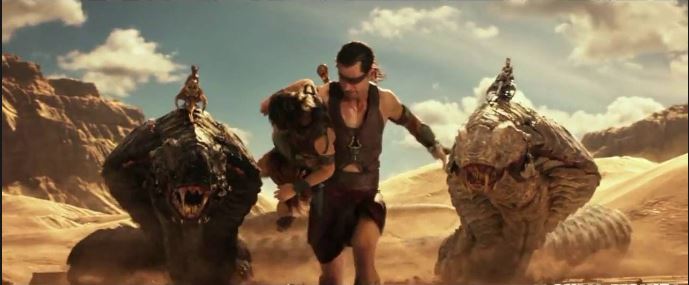
Just your standard Giant Meets Boy Gets Chased by Female Assassins Riding Giant Worms Story. Really didn’t anyone learn anything from Dune?

Director: Alex Proyas
Cast: Nikolaj Coster-Waldau (Horus), Gerard Butler (Set), Geoffrey Rush (Ra), Benton Thwaites (Bek), Chadwick Boseman (Thoth), Elodie Yung (Hathar), Courtenay Eaton (Zaya), Rufus Sewell (Urshu), Bryan Brown (Osiris)

Oh good lord where to begin. It’s not so much that this is a terrible film – although it is. It’s not offensive or unpleasant. It’s just a film that is almost impossible to take seriously whatever. It’s a fat, bloated, overblown mess where the plot makes almost no sense, the design is totally ridiculous, the acting bored or unengaging, and the directing totally lacking any charisma. It’s a film you can only laugh it, except for the fact that it’s so lamentably badly that it’s not even that funny. There is so little joy in the making of this bloated fart of a picture, that even as a joke it falls flat.

As far as I can tell, in a fictionalised ancient Egypt the Gods live among men. Horus’ coronation as the new king is interrupted by his uncle Set who seizes the throne, removes Horus’ eyes and sets about turning the realm into a dictatorship. He has some sort of overall plan but I’m really not sure what it was. Something to do with immortality or something. The film barely cares so neither should you. Set is a baddie. Horus is supposed to be a goodie, I guess, but he is such a humourless, arrogant, cold and (above all) boring God you probably won’t give a toss about him.

The film is a disaster almost from start to finish. In a decision that guarantees giggles every few minutes, the Gods are all 9 feet high, making the humans look like chippy midgets. Poor forced perspective hammers home this ridiculousness every few seconds. If this didn’t make the Gods silly enough, they also have some bizarre metal “battle modes” they transform into, which along with some piss poor special effects makes them look like refugees from Mighty Morphin Power Rangers. The colours are bright and primary and the sets all have the sheen of CGI, lacking any substance. The design decisions cross swiftly from daring into dumb. If you ever wanted to see a flying chariot pulled by winged scarabs or to see mix and match female hitmen ride giant worms chasing a giant and his normal sized friend, well hallelujah your day has come, this is the film for you.

The script, such as it is, is a loosely connected series of incoherent events. The acting is simply awful. Coster-Waldau completely lacks the big screen presence to carry the movie, his upper crust arrogance from Game of Thrones here comes across as insufferable and dull. Thwaites comic relief is about as funny as a hernia and his quest to save his true love has all the drama of running to catch a bus. Boseman aims for wisdom and grace but delivers camp and affectation in a truly terrible performance. Butler does at least have a bit of charisma, even though Set is such a poorly defined character he’s impossible to get interested in. Various other actors chip in autopilot performances for the cash. The female characters are little more than props. Geoffrey Rush needs a new agent: seriously how much money does he need?

The biggest problem though is it isn’t quite ridiculous, campy or shite enough to be a camp classic. Instead it’s just boring. It doesn’t have the sort of cosmic sweep or visual splendour to give you something to look at. Instead it’s loud, boring and stinks like animal droppings. That’s the worst thing of all: not even as a camp classic will this be remembered. Simply crap.