Category: Political satire

Citizen Kane (1941)

Orson Welles changes film history as Citizen Kane

Director: Orson Welles

Cast: Orson Welles (Charles Foster Kane), Joseph Cotton (Jedediah Leland), Dorothy Comingore (Susan Alexander Kane), Agnes Moorehead (Mary Kane), Ruth Warwick (Emily Monroe Norton Kane), Ray Collins (Jim W Gettys), Erskine Sanford (Herbert Carter), Everett Sloane (Mr Bernstein), William Alland (Jerry Thompson), Paul Stewart (Raymond), George Coulouris (Walter Parks Thatcher), Fortunio Bonanova (Signor Matiste), Harry Shannon (Kane’s father)

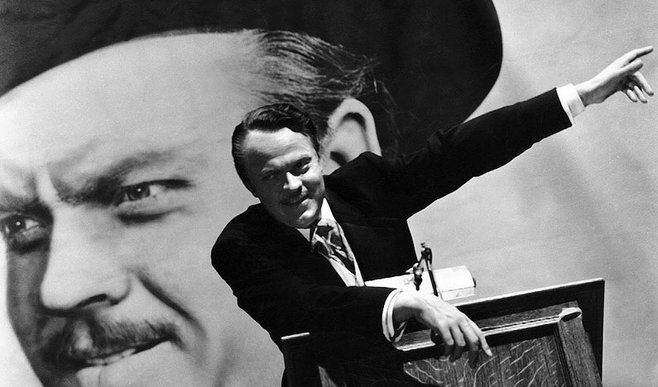
Writing about Citizen Kane is rather like writing about the Mona Lisa. Both are works of art so famous and influential that you are intimately familiar with them even if you’ve never seen them. But what makes them such constant delights is that, leaving everything else aside, the Mona Lisa is beautiful to look at – and Citizen Kane is hugely enjoyable to watch. Welles’ masterpiece – frequently hailed as the greatest film ever made – is about as close to perfection as you can get.

Entire books have been written about seemingly every aspect of the film’s creation. Welles’ original intention was to call the film American. It’s a fitting title. Citizen Kane is perhaps the finest film ever made on the corruption that ambition, money and power bring to the American spirit. Kane starts out as a pioneering idealist, but his fatal flaw his is need for power. That need to seize control of everything extends from buying all the art he can find in Europe to controlling the lives of all around him. It’s the mentality that will force his second wife into an opera career she is hopelessly unsuited for. It will eventually leave him sitting alone in his huge mansion, surrounded by wealth but bereft of friends. A large part of the American Dream is about “making it big” – and few make it bigger than Kane, and have so little to show for it at the end.

The film is a character study of ambition and power, using a framing device of the late Kane’s final word: “Rosebud”. What did he mean? Will finding out provide the key to understanding this powerful, elliptical man? A reporter (William Alland) aims to find out by interviewing key people from Kane’s life. From their recollections, the story of Kane’s life slowly comes together in a non-linear style. Charles Foster Kane (Orson Welles) as a young child inherits one of the world’s largest gold mines. Coming of age, Kane decides to use his wealth to become a press baron. He builds a news empire and runs for Governor – but the public revelation of his affair with amateur singer Susan (Dorothy Comingore) ruins his campaign. He builds a mansion on a man-made mountain, Xanadu, but is isolated and friendless in the echoing rooms of his own mausoleum.

You can argue the same thing happened to Welles himself. Citizen Kane is his own mausoleum, the only time in his life when everything went right. Also, probably the only time Welles’ attention stuck to something long enough to deliver. Welles memorably called working on a film set “the biggest electric train set any boy ever had”, and the entire film is saturated in his creative glee at trying so many new tricks. Citizen Kane bought to the forefront so many methods of film-making, its influence has been so pervasive on film today, that it’s hard to see how revolutionary it appeared at the time.

Welles worked with cameraman Gregg Toland to push the film into a whole new visual language, deeply influenced by German expressionistic film. It’s a beautiful film to look at, and each shot is covered with meaning, Welles’ eye for the theatrical image matched with Toland’s genius for visual language.

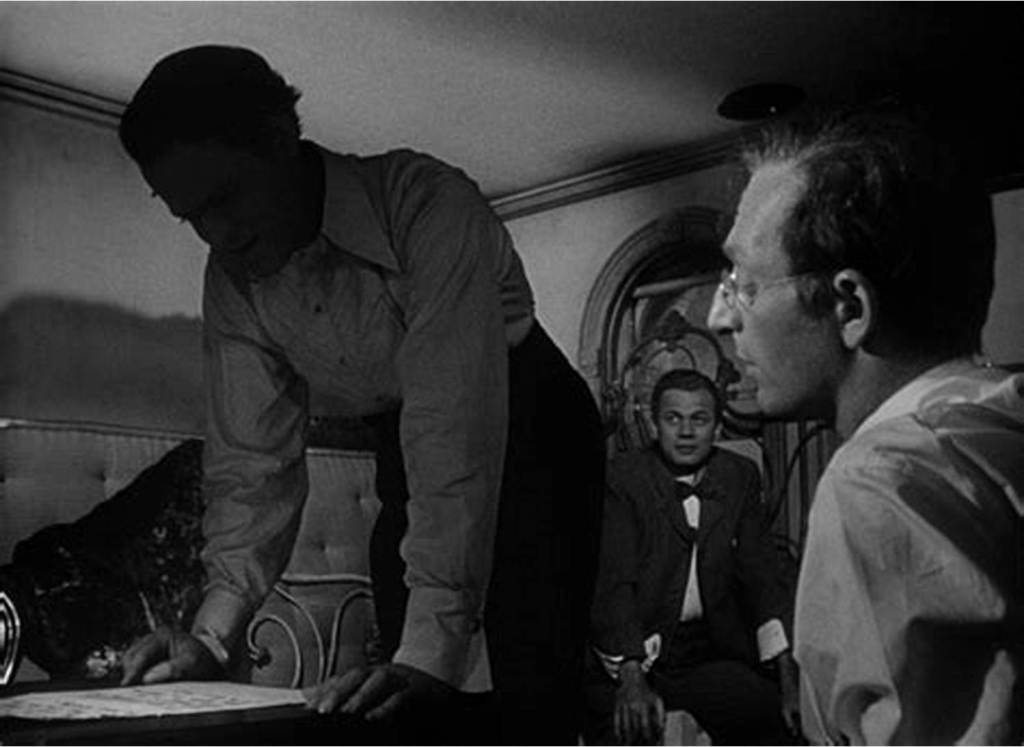
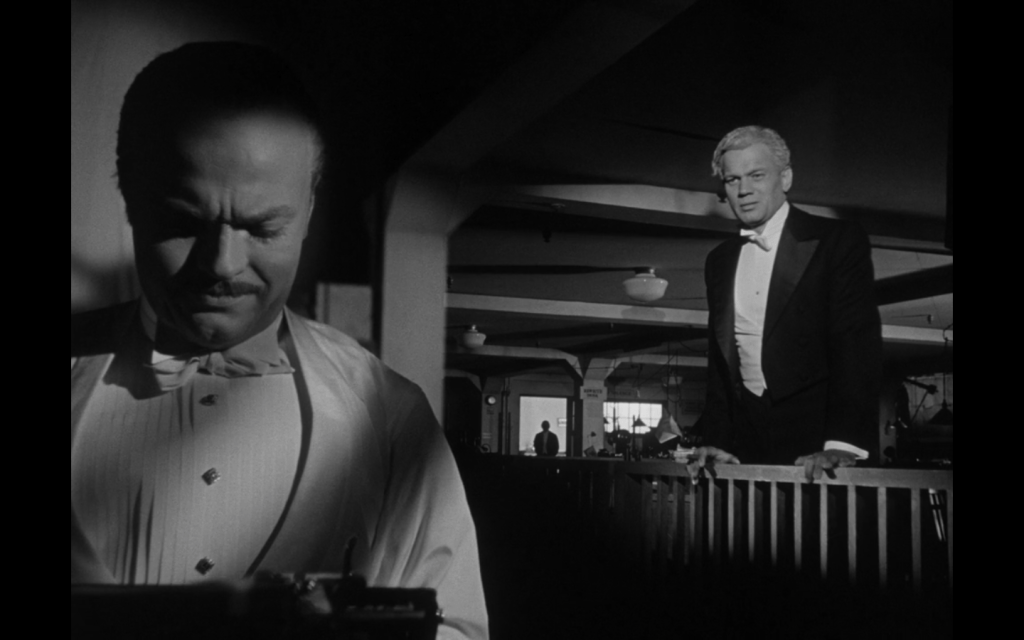
Citizen Kane is rarely thought of as a noir film, but it’s possibly the most noirish film you’ll ever see. Watching it again I was struck with how often shadows dominate the screen. Faces are frequently obscured, most famously in the projection room scene, where Thompson receives his instructions to find out what “Rosebud” means. But at key moments, faces disappear into black – while preparing his “Statement of principles” that will fill the front page of Kane’s first edition at the Inquirer, his face is lost in murky darkness. We hear what he is saying, but what is he thinking at this moment? It’s impossible to tell. Long shadows and inky black segments fill the frame frequently – it’s a film that gives a true feeling of darkness and unknowability at its heart.

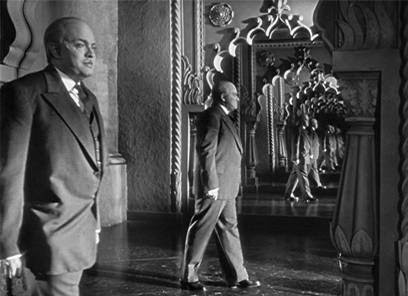
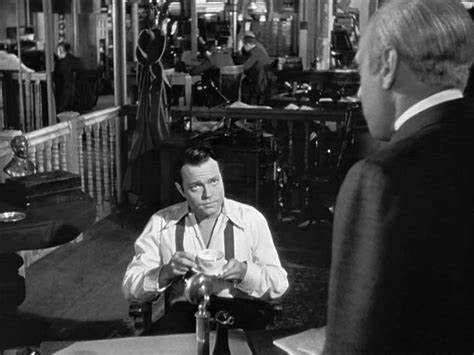
This is mixed with the theatrical flourish of its constant deep focus. Almost unheard of at the time, every shot of Kane is in perfect focus. It makes for visual compositions inspired by theatre, and ripe with dramatic meaning. Kane’s parents and his guardian William Parks Thatcher (George Coulouris) organise the future of the young Kane in the foreground, while we see the child playing outside in the show through a window. The deep focus turns Xanadu into a museum of lost chances and dreams, and the Inquirer newspaper office into an increasingly dark corridor of ambition, with people’s fates decided in foreground while we see them trapped in the background.

If that wasn’t enough, Toland uses angles Hollywood films hadn’t dreamed of. For some scenes, trenches were dug into the set and the camera placed in it, allowing the camera to stare up, with the actors towering over us. Citizen Kane is often claimed to be the first film where ceilings needed to build for the sets, as Toland’s angles and camerawork frequently made them visible. It’s not completely true, but it speaks to the visual impact of the film. Nothing really like this had been widely seen before. And I’ve not even mentioned the soaring, swooping tracking shots that pass through signs and buildings, the sort of inspired movement of the camera so many directors before had avoided in favour of stationary recording of the story. It’s visionary stuff.

The same was true for the film’s sound and music. Welles used his experience from radio to turn the soundscape of the film into something truly different. In radio, all cuts are managed by sound, but film had traditionally used only visuals to mark edits. Here, sound is used as often as visuals. When Kane runs for Governor, the sound and vision cut seamlessly from Leland on the stump for Kane to Kane finishing the same speech at a cavernous rally. Early in the film, the words “Happy Christmas” are skilfully cut together to leap forward years. Bernard Herrmann’s spare but perfect score, rather than laid over every scene, only comes in (as on radio) where emotional or transitional change is needed.

But then this is a film that uses editing as a way to tell story that few films before had tried. The sequence showing the collapse of Kane’s marriage to President’s niece Emily Monroe Norton (Ruth Warwick) is the perfect example. Over about two minutes of screen time we see several short scenes, all set at the breakfast table. Each scene shows a progressive step in their relationship collapsing, from loving exasperation to annoyance to anger to mute loathing. The scenes are no more than 20-30 seconds each, but the film perfectly moves from one to the other. The music slowly changes from a romantic waltz to a cold discordant rhythm. Transitions are marked by wipes. In each scene the actors move further apart at their breakfast table, the dialogue becomes harsher, sharper and more confrontational as the room they sit in becomes grander. In a few moments, an entire marriage story is told. It’s quite simply marvellous. The sequence is bookended by matching camera movements, gliding in and then out from the room.

You could speak for pages and pages (as indeed people have) about what a marvel Kane is. Welles’ vision and willingness to push the boundaries created an environment where all his collaborators worked to achieve their best, set free from the restrictions of more traditional moviemaking to stretch themselves as artists in a way rarely allowed. But it’s easy to forget what a marvellous story Citizen Kane is, what an entertaining and brilliantly constructed film it is and how every scene has something that delights and enthrals.

There’s controversy over who wrote the script. Welles and Herman J Mankiewicz are credited – although arguments have been made that each deserved the lion’s share. Whoever did create it, the script is quite simply superb. Economic, but packed with wonderful lines and some extraordinary speeches (Mr Bernstein’s speech about a powerful memory of a young woman he saw once from a distance is quite simply one of the best small-scale speeches you’ll see). Every scene is brilliantly assembled, and gives fabulous material to an extraordinary cast of actors.

It makes for a compelling character study, wrapped into a series of brilliantly done vignettes. Each set of recollections – from Thatcher, business manager Mr Bernstein (Everett Sloane), old friend Jedidah (Joseph Cotton) and ex-wife Susan (Dorothy Comingore) – makes for a fabulous series of self-contained scenes, each gaining richer and deeper meaning with every subsequent reflection that follows. There are so many sensational scenes I hardly know where to begin: you could write an essay about each one. Thatcher’s serio-comic reflections of the roguishly cheeky Kane are wonderful. Bernstein’s memories of the chancer coming good – with a brilliantly playful celebration scene – wonderfully entertaining. Jedidah and Susan’s far more tainted reflections of the man’s flaws make for wonderfully constructed drama, presenting a corrupted and bullying Kane. In every scene there is a beautiful moment of dialogue or drama which sticks in the memory.

The acting is equally good. Cotton settles into the groove many of his finest roles would fit into – the never-quite-grew-up schoolboy, who slowly realises his hero has feet of clay. Comingore is wonderfully fragile and then increasingly bitter as Kane’s ill-used second wife, forced into a humiliating career because Kane won’t be married to a failure. Sloane is charmingly loyal, with beautiful moments of profound sadness, as Bernstein. Coulouris is brilliantly funny as the exasperated Thatcher. Ray Collins’ is smooth and unabashed as Kane’s political rival. Agnes Moorehead is tinged with sadness and ambition for her son as Kane‘s mother.

But at the heart of Citizen Kane – in every sense – is Welles. His handpicked crew was some of the best in the business – but it was Welles’ inspiration, his willingness to imagine techniques and approaches un-attempted before, that encouraged them to their finest work here. With the magnetic force of personality that was his hallmark, he inspired everyone to give their very best. And he led from the front. The film is a triumph of drama, tragedy and comedy, directed with sublime grace. Welles the actor is perfectly cast, the part almost a riff on his own cult of personality, the mix of pride and overweening ambition and little-boy cheek crossed with self-destructive laziness. Welles’ performance is faultless in the film, taking Kane from the smirking chap happy to lose a million dollars a year (“at the rate of a million dollars a year I’ll need to close this place…in 60 years”) to the bloated old man, trashing his wife’s room after she walks out. Perfect.

The only tragic note about Citizen Kane is that this wasn’t the first in a career of non-stop genius from Welles. Instead, flaws in his own personality, combined with his ability to make enemies and lack of ability to focus on the task in hand, increasingly consumed Welles, making him eventually a lost great, a man wandering from film set to film set, taking on small roles for cheques that might one day help him make a film. But he’ll always have Kane, the sort of film that is a marvel which can never, ever disappoint. With every scene a classic, every moment compelling, every beat in it perfectly judged, its influence stretching to almost every film made since the late 1940s – it deserves its place as the greatest film of all time.

Being There (1979)

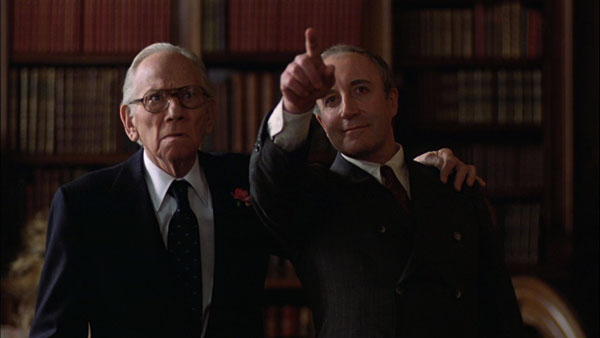
Peter Sellers is a void in the satirical Being There

Director: Hal Ashby

Cast: Peter Sellers (Chance, the gardener/Chauncey Gardiner), Shirley MacLaine (Eve Rand), Melvyn Douglas (Ben Rand), Richard Dysart (Dr Robert Allenby), Jack Warden (The President), Richard Basehart (Ambassador Vladimir Skrapinov), David Clennon (Thomas Franklin), Fran Brill (Sally Hayes), Ruth Attaway (Louise)

In movies honesty and simplicity often hide a deeper truth – a more pure view of the world, unaffected by cynicism. Being There takes these ideas and inverts them. What if we were so desperate to see a higher meaning in the words of the unaffected, that we kidded ourselves that even their blandest utterances carried deep meaning. It’s the central idea of Being There, proving again that a delusion only works when those affected are also those most invested in sustaining it.

Chance (Peter Sellers) is a child-like innocent. He works in the garden of “the old man” (implied to be his father). He has never in his life left the confines of his self-contained home. He can’t read, he can’t write. His meals are prepared for him by the old man’s staff. Apart from gardening his only other interest is television – and even that is a mute, hypnotic interest with Chance meekly watching anything screened in front of him. When the old man passes away, Chance (of whom there is no record at all) is asked to leave the house by the old man’s lawyers. He finds himself in a modern 1970s world, but still dressed (and with the manners) of a 1930s gentleman.

Accidentally hit by the chauffer driven car of Eve (Shirley MacLaine), the younger wife of wealthy businessman Ben Rand (Melvyn Douglas), Chance (his name mistakenly overheard as Chancey Gardiner) finds himself in the home of Ben where his manners, dress and polite comments about gardening are interpreted as being deep, intellectual musings on society and the economy. In a few days Chance is advising the President (Jack Warden) and his opinion is being solicited by the media. Will anyone notice that Chance is a harmless but basically empty man?

Being There is not just a hilarious satire of the capacity of the rich and powerful to persuade themselves of things. It’s also a satire on the Capraesque notion of the innocent seeing a truth that the rest of us can’t see. It throws in more than enough social commentary on the edges as well – Chance is revered because he looks right: well-dressed, courtly manners, softly spoken, polite and above all white. The film gets a few pointed blows in on this that look more and more central to the film the older it gets. Seeing Chance’s earnest musings on gardening being interpreted as deeply meaningful economic commentary on the television, the woman who bought him up in the old man’s house – a black servant Louise – announces “It’s for sure a white man’s world in America. Look here: I raised that boy since he was the size of a piss-ant… Shortchanged by the Lord, and dumb as a jackass. Look at him now! Yes, sir, all you’ve gotta be is white in America, to get whatever you want.”

And she’s right. Interpreted by the rich, white, entitled men of America as one of their own, it never occurs to them that Chance might be something else. And his statements carry such bland emptiness – precisely because Chance is merely stating genuine gardening tips – that it becomes easy to invest them with whatever depth they like, because they have no depth themselves. While in Capra, Chance would stumble upon some of the corruption at the top or make these people rethink their lives, here he drifts through, barely understanding what is happening around him, allowing these powerful men to interpret him as something that reassures them about their own lives.

In the 1970s the film was seen as a satire on the television generation. But watching it today – despite Chance’s mute, unengaged smile while watching TV – this isn’t about a mindless cabbage potato being seen as a sage. He’s a completely empty vessel that can have meanings poured into him – and then can all stick because not for a single second is Chance trying to get anything out of it. He would be as happy returned to the street as he is in the palaces of the mighty.

The film works due to the success of Peter Seller’s performance. Seller’s had pitched long and hard for the role: he had always believed himself a void beneath the mad-hat comic personas he had inhabited, and believed himself uniquely placed to understand the neutrality of Chance. That’s what he brings here. It takes true skill to play a character as blank as this one. Chance never responds to the situation he is in – and seems to have no understanding at all of the situation. He’s completely genuine and honest – exactly what gives his comments weight to people, because he is not even remotely trying to add any weight to them – and meekly accepts all the things that happen to him. He is honest on every question he is asked – that his only interests are gardening and TV – and sits quietly, smiling, until finally saying or doing things he has frequently copied from TV.

Seller’s restrains himself utterly in the role and eventually his very tame, sweet blankness makes him endearing. The performance would fall apart if even for a split second there was a tip of hat or wink to the camera. There’s none of that. Compare Chance to say Forrest Gump. Gump is the quintessential example of the cliché man who really understands the world better than all of us. Chance is the reality, a simple man, harmless but incapable of really engaging with the world. In Hal Ashby’s skilled and restrained hands this becomes crucial to the awe he is treated with by the rich. He’s a mystery we get no answers to and someone we know as little about at the end as we did at the start. But yet Sellers is mesmeric.

Melvyn Douglas’ provides a superb (Oscar-winning) performance as Ben Rand. How much does Rand really believe in Chance? He’s charismatic, determined and driven – but also nearing the end of his life. Does he want to believe in his faith in Chance, because it makes him feel better? Is Chance almost a sort of advance satire of movements like scientology – faiths that make rich people feel better about themselves, because it affirms their views and place in the hierarchy? It’s possible – and why not when they can craft an idea of Chance that is far superior to their nervy (and literally impotent) President (Jack Warden in a smart little turn).

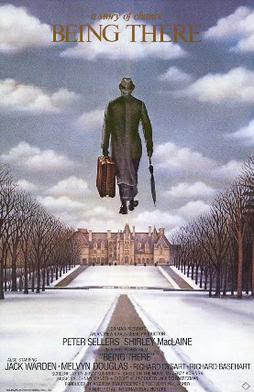
Ashby at time overplays his hand a little. The final image – a benign Chance literally walking on water on the Rand estate lake – is famous, but its meaning is unclear. Does it imply that Chance is some form of second coming? Or does the naïve and clueless Chance simply walk across water because he doesn’t understand that he can’t? I feel the latter myself – the idea of him being a Jesus figure is so out of keeping with the film, I see it as a final physical representation of his own lack of knowledge about the world. Some hated the final flourish (visually wonderfully done as it is) – although not as much as the bizarre outtake of Sellers cracking up that plays over the credit (Sellers in particular loathed this, believing it shattered the magic of his performance and cost him an Oscar).

Being There isn’t perfect – it’s too long and Shirley MacLaine gets rather a thankless part as the wife who becomes infatuated with Chance (more could perhaps have been got out of her seeing the truth of Chance, rather than being as arrogantly deluded as the rest). Moments have dated less well than others. But it’s got a sharp idea at its heart – and its satire of the rich, Hollywood sentimentality and society feels sharper every day. Rather fittingly as well the film has an autumnal quality about it in Ashby’s coldly reserved shooting: Sellers and Douglas both died shortly after its release, the book’s author Jerzy Kosinski would be plagued after its release with accusations of plagiarism and Ashby’s (after a drug fuelled but successful 1970s) career would collapse almost immediately after its release. But it’s a smart, mysterious, witty and profound film that gains greater meaning with age.

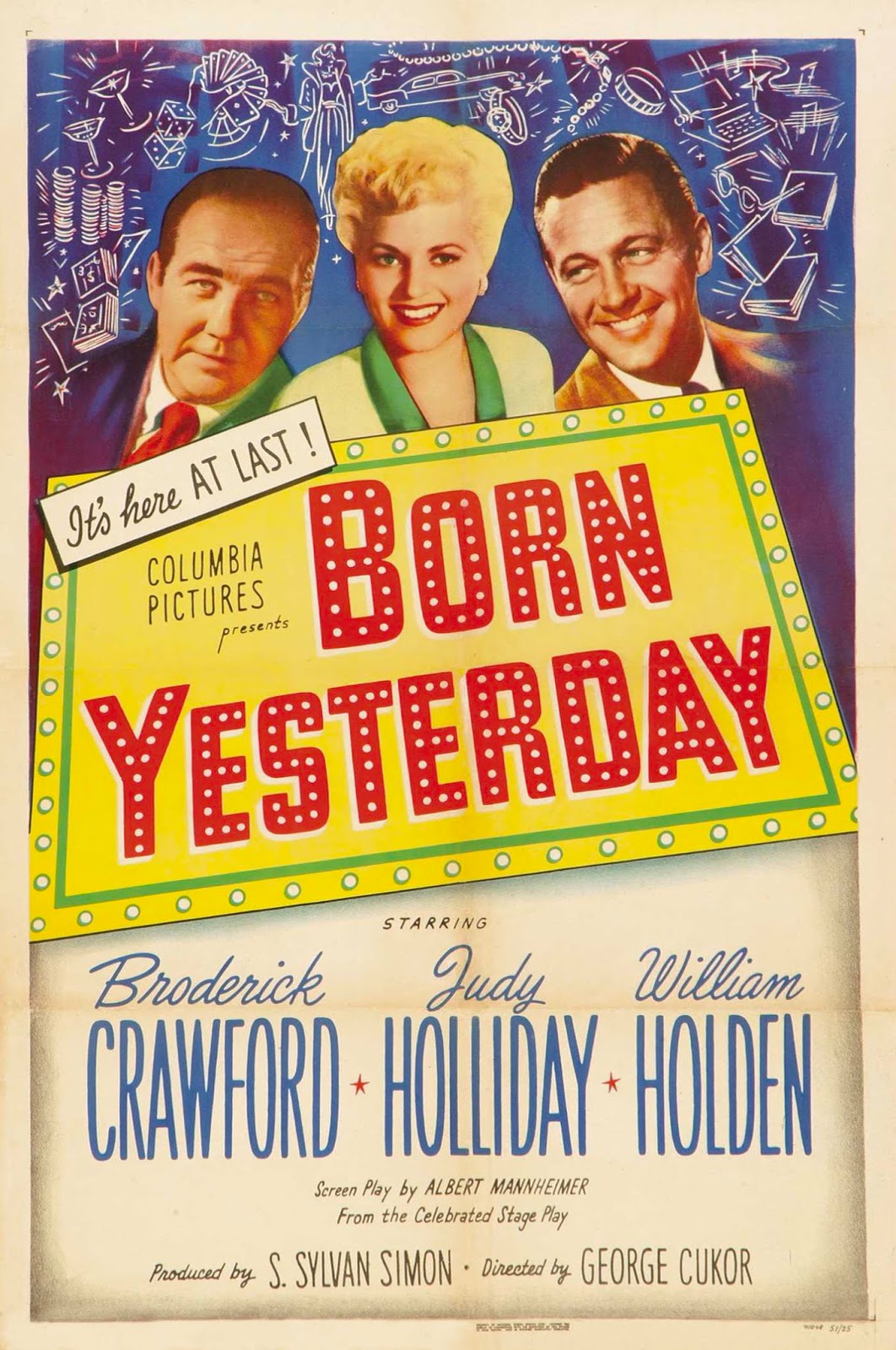
Born Yesterday (1950)

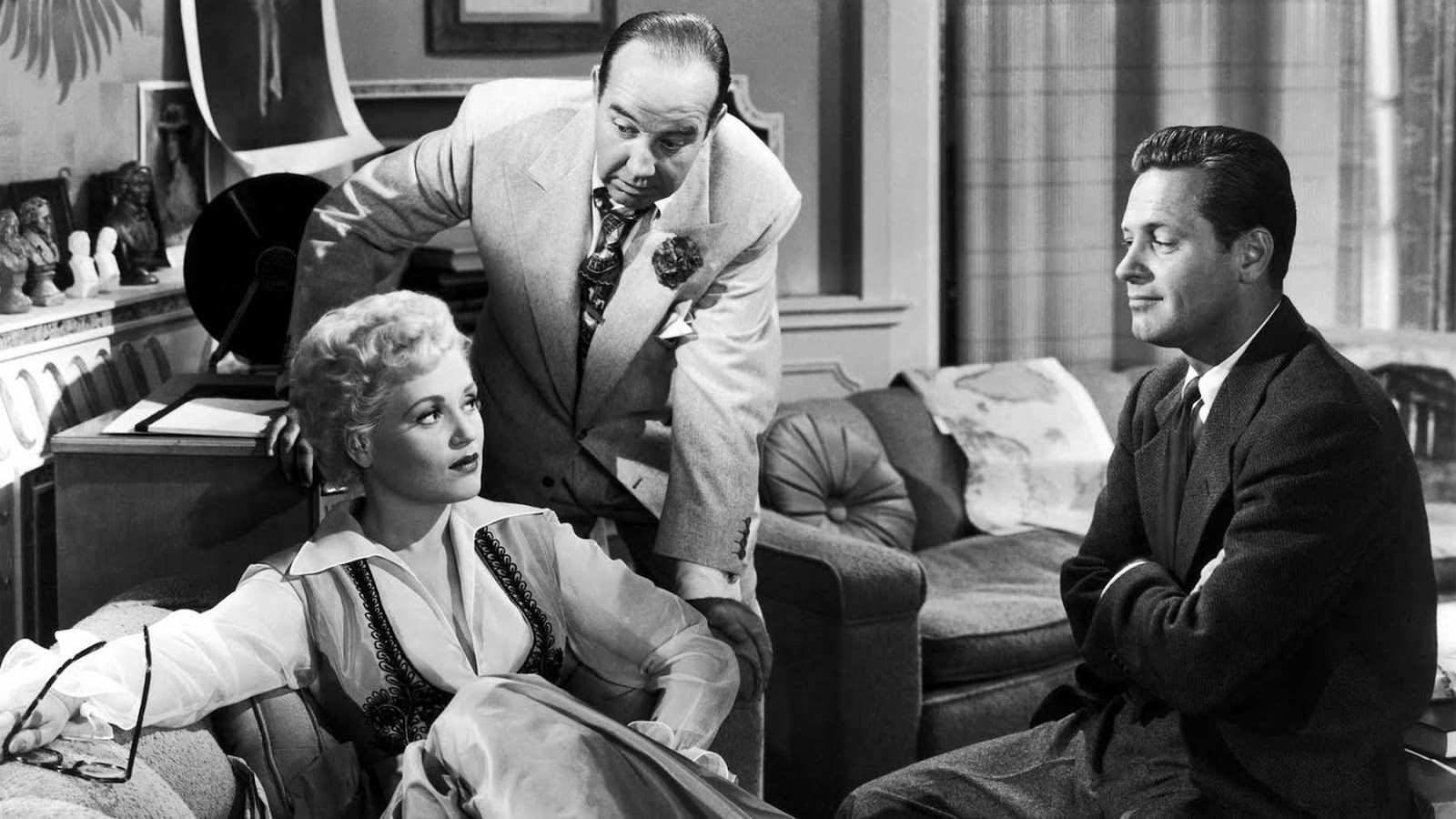
Judy Holliday gets a tutorial in class from William Holden – much to the chagrin of Broderick Crawford – in Born Yesterday

Director: George Cukor

Cast: Judy Holliday (Billie Dawn), Broderick Crawford (Harry Brock), William Holden (Paul Verrall), Howard St John (Jim Devery) Frank Otto (Eddie), Larry Oliver (Congressman Hedges)

Perhaps George Bernard Shaw should have tried to copyright the Pygmalion concept. After all no end of films and plays have tried their best to replicate the magic of having one working class classless type (usually the woman) learning how to use their own natural intelligence effectively by a wiser tutor (usually the man). Born Yesterday is a near text-book example of this – she’s as ill-informed as a young baby so might as well have been “born yesterday” y’see – that offers very little in the way of surprises, but a lot in the way of charm – most particularly from Judy Holliday who carries the entire the film with aplomb.

Harry Brock (Broderick Crawford) is a corrupt, uneducated businessman who has arrived in Washington to buy up a few congressmen. Brock may be a boreish bully, but he’s worried that his mistress, former Chorus-girl Billie Dawn (Judy Holliday), is so brash and ill-educated that she will show him up in front of his new political contacts. So he hires investigative journalist Paul Verrall (William Holden) to educate her. But Paul and Billie have an immediate romantic frisson – and as she learns about politics, literature and the state of the world Billie starts to realise that maybe all those shares she holds in her own name (for tax purposes) in Brock’s dodgy dealings might give her the chance to put his wrongs right.

Born Yesterday was an adaptation of Broadway hit that had made Judy Holliday a star. Written by Garson Kanin, bullying Harry Brock was allegedly based on Colombia Pictures head Harry Cohn. He clearly didn’t care when he smelt a hit – and even confirmed some suspicions by ordering Kanin to do re-writes of the rewritten script for no extra payment. Cohn had been deeply uncertain about bringing the unknown Holliday along for the ride (she had made only three small appearances beforehand) so Cukor cast her in a key role in Adam’s Rib (where Hepburn generously ceded many scenes to her) to prove Holliday could make it on the big screen.

Thank goodness she did make it to the film, as Holliday makes the film. Winning the Oscar – famously beating Bette Davis and Anne Baxter in All About Eve and Gloria Swanson in Sunset Boulevard – Holliday is superb in the role. Billie Dawn may be brassy, may be load, she might have the sort of screeching Brooklyn accent that sometimes feels like nails on a blackboard – but she’s not dumb. She’s smart – as she shows by repeatedly beating Harry with ease at games of gin rummy – she’s capable and she cares. She just hasn’t learned any better, and having spent her life being told that her opinions don’t matter, she’s decided to not mention them.

But Holliday shows Billie is a woman fast – and eager to learn – and a week or so with Paul won’t turn her into a genius, but she’s more than sharp enough to work out what’s wrong about her life and her sugar daddy, and to give her the oomph to do something about it. Holliday demonstrates this endearing growth of engagement and curiosity with a superb lightness – her comic timing is faultless – and a touching sweetness. 

The script gives Billie a hilarious tendency towards malapropism and her wide-eyed innocence and desire to do her best works wonderfully in getting us onside. While she is often the source of jokes she is never the butt of them, and Holliday makes clear her decency and sharpness is innate. She’s far from a dumb blonde – although she certainly looks and sounds like it – and watching her apply good-old fashioned Hollywood liberal ideas to confound boreish businessmen is good fun.

Her co-stars give sterling performances. Broderick Crawford channels his Oscar winning turn from the year earlier as corrupt bullying Willie Stark in All the King’s Men as the loud, bullying and dim Harry Brock. Throw-away lines suggest he has killed in the past – and at one point he strikes Billie – but he’s always a comic blusterer rather than a real threat. William Holden generously cedes much of the ground to Holliday as her Henry Higgins, although unlike that guy he’s humble, supportive and pleasingly democratic (quite the year for Holden, having also played a similar supplicant role in Sunset Boulvard).

Cukor directs with his usual lack of flash, quietly setting the camera in place and letting the actor’s go about their business meaning, for all the location shooting in Washington, this still feels very much like a Broadway piece. Cukor does skilfully manage to smuggle a lot under the censor wire – not least that Billie is clearly Harry’s mistress – and keeps a fine romantic tension between Billie and Paul, even if having the pair of them kiss early on does undermine some of the “will-they-won’t-they” magic.

But then basically this is a very straight forward film that just looks to entertain. There are some dirty dealings in Washington – but it’s all sorted out very easily and we are reassuringly told that there are only a very few bad apples in this barrel, and we can trust in the decency of our leaders. It’s no surprise who ends up with who, and no real revelations in character. The most surprising character in many ways is Harry’s disillusioned, self-loathing lawyer played by Howard St John, constantly on the verge of alcoholic self-disgust.

The film is really a showcase for its star though – and Holliday delivers with a terrifically entertaining performance that hammers home even more the sad fact that she passed away at 43 with only a handful of films to her name. Pygmalion Goes to Washington it maybe, but this is still a lovely epitaph to a talented actress.

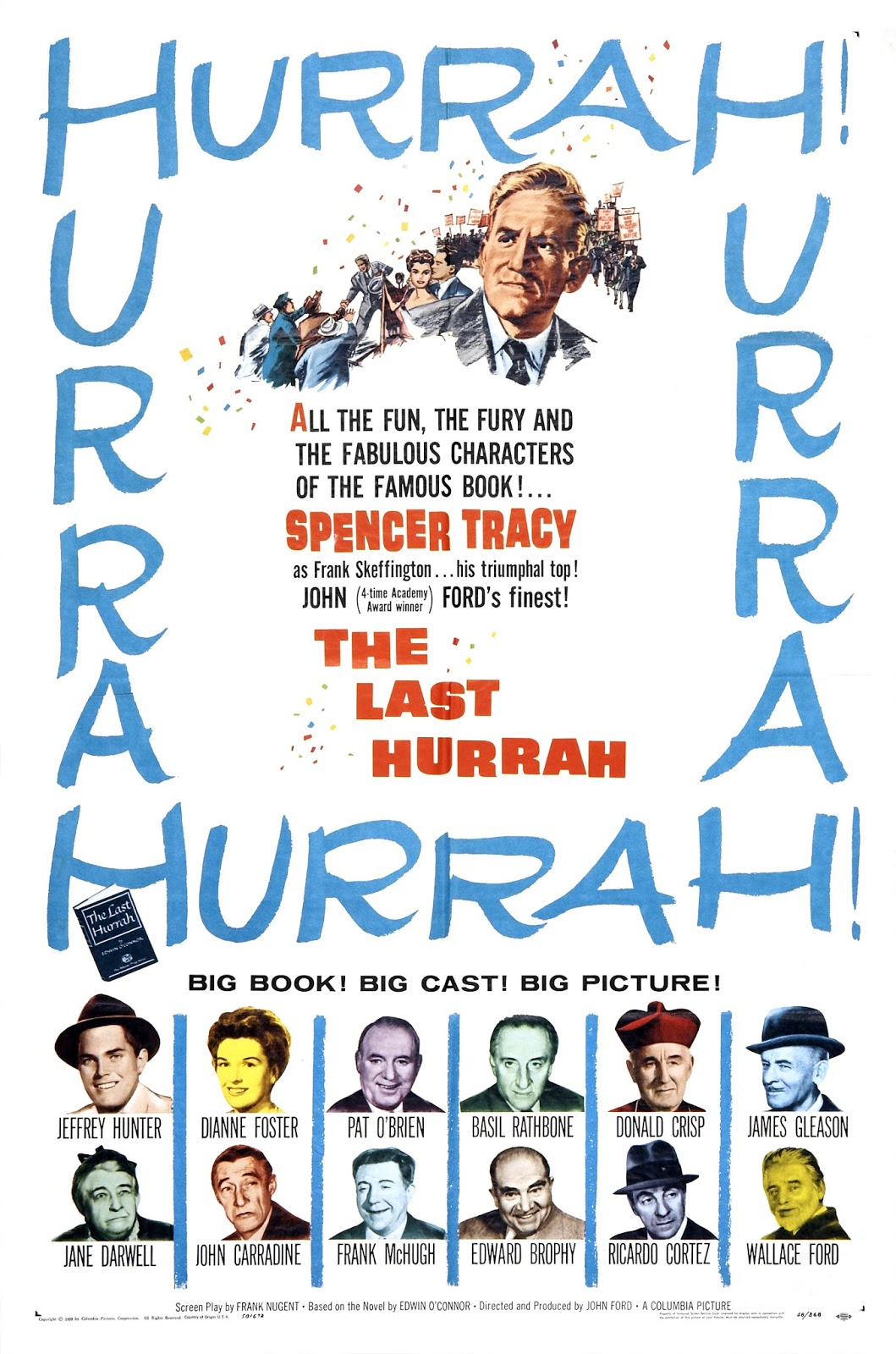
The Last Hurrah (1958)

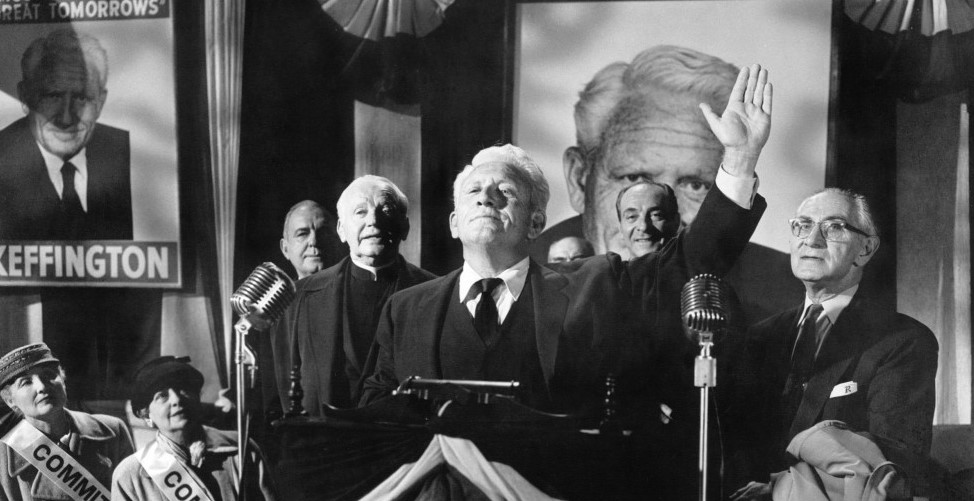
Spencer Tracy runs for office in John Ford’s toothless satire The Last Hurrah

Director: John Ford

Cast: Spencer Tracy (Major Frank Skeffington), Jeffrey Hunter (Adam Caulfield), Dianne Foster (Maeve Caulfield), Pat O’Brien (John Gorman), Basil Rathbone (Norman Cass), Donald Crisp (Cardinal Martin Burke), James Gleason (“Cuke” Gillen), Edward Brophy (“Ditto” Boland), John Carradine (Amos Force), Willis Bouchey (Roger Sugrue), Ricardo Cortez (Sam Weinberg), Wallace Ford (Charles J Hennessey), Basil Ruysdael (Bishop Gardner)

Mayor Frank Skeffington (Spencer Tracy) is running for a fifth term of a “New England city”. Skeffington’s roots lie in the town sprawling Irish population, and has successfully played the game of machine politics all his life. He’s alienated the members of the towns traditional elite – who can trace their ancestors all the way back to the Mayflower – but he’s loved by the regular people of the city. But is Skeffington going to find himself out of touch with a political world starting to embrace populism and the power of television?

John Ford’s adaptation of a hit novel by Edwin O’Connor, is one of his rare “present day” pictures. But it’s a bit of a busted flush. What should have been an exploration of a tipping point in American politics, totally fails to successfully land any of the points it could make. It’s a film that doesn’t understand the Kennedy-esque world America was moments away from embracing, and looks with such ridiculously excessive sentimentality at old-school politics it manages to tell us nothing about the corruption and dirty deals of this sort of machine politics. Effectively it’s a film that takes two long hours to tell us almost nothing at all. 

The film adores two things – and it’s not a surprise in a Ford film – the past and the Irish. Anything from yesteryear is covered in a halo, with the parade of old-school Hollywood character actors from the Ford rep company taking it in turns to denounce and condemn anything and anyone less than 40 years old. Every young person in the film is either a feckless idiot – Skeffington and Cass’ sons are a playboy and an embarrassing moron – or, like Jeffrey Hunter’s Adam Caulfield (Skeffington’s nephew covering the election for the local paper) is there merely to provide doe-eyed adoration. 

As for the Irish, the film loves the grace and charm of this old immigrant community. Skeffington’s Irish political machine is sanitised beyond belief. In the real world these sort of organisations operated on a system of back room deals, intimidation and careful arrangements to deliver set quotas of votes on polling day. Sure many of these politicians also delivered a number of social reforms – as Skeffington does – but any suggestion that any of Skeffington’s dealings could ever be described as dirty are roundly dismissed. Here it’s all about what Skeffington could do for other people, and no mention of the endemic corruption in many politicians like this. Instead Skeffington is presented with nothing but rose-tinted sentimentalism, a respectful widower, a kind man, whose actions are often more about other people than politics.

Former Boston mayor James Michael Curley – who Skeffington was clearly based on – was imprisoned for corruption. No chance of that happening to Skeffington who only uses intimidation and back-street savvy to fight the causes of orphans and widows (literally) and takes nothing at all from the public purse (although he still lives in a lovely big home). By contrast his elite opponents are the sort of scowling, greedy, penny-counters you might find in a Frank Capra film, shameless bankers and newspaper types who care nothing for truth and justice and only their own selfish needs.

Perhaps that’s why Skeffington’s opponent McCluskey (an early Kennedy substitute with his perfect family life, war record and lack of actual accomplishments) is portrayed as such an empty suit, a mindless, grinning yes-man who has nothing to say and no goals to meet. Ford’s contempt for him – and for the new word of television – drips off the screen. The TV shot we see McCluskey shooting is a farcical mess, poorly shot, edited and delivered with stilted artificiality by McCluskey and his tongue-tied wife. Not only is it not particularly funny, the presentation of this just shows how out of touch Ford was with modern America. Two years after this, Kennedy would win an election largely off the back of his ability to present a dynamic image on TV. Skeffington even crumbles in the election due to his traditional, press-the-flesh campaign not competing effectively with TV slots. How can that look even remotely convincing when Ford shows his rival has no mastery of the new media at all? That in fact he’s worse at making TV than Skeffington proves to be?

What exactly was Ford going for? By failing to criticise anything at all about the old-school politics and pouring loathing on the new politics, he ends up saying very little at all. Skeffington is a twinkly angel, but we never understand why so many in the church and the city oppose him – other than the fact I guess that he is Irish. Donald Crisp’s cardinal promises at one point near the end to reveal why he always opposed Skeffington – only to be hushed. If anything bad ever happened, Ford ain’t telling us making this one of the most dishonest of his tributes to Old America.

None of this is to criticise much of the acting, which is great. Spencer Tracy dominates the film with his accustomed skill and charisma, his Skeffington both a twinkly charmer and a practised flesh-presser who manages to subtly pitch and adjust his character depending on his audience and whose physicality helps to assert his dominance in every scene. Pat O’Brien does fine work as his fixer and Basil Rathbone is suitably sinister as a his principle financial opponent. Ford also puts together some memorable shots – especially a long walk Skeffington takes past a victory parade – and scenes, but the film is an empty mess. And, with its extended final twenty minute coda, goes on way too long.

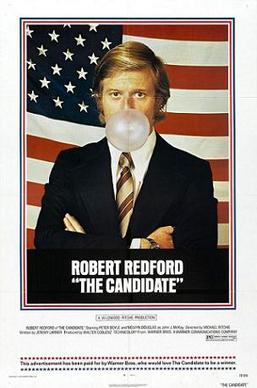
The Candidate (1972)

Robert Redford as a political puppet in The Candidate

Director: Michael Ritchie

Cast: Robert Redford (Bill McKay), Peter Boyle (Marvin Lucas), Melvyn Douglas (Former Governor John J McKay), Don Porter (Senator Crocker Jarmon), Allen Garfield (Howard Klein), Karen Carlson (Nancy McKay), Quinn Redeker (Rich Jenkin), Michael Lerner (Paul Corliss), Kenneth Tobey (Floyd J Starkey)

Bill McKay (Robert Redford) has it all – the looks, the charm, the ideals, and he’s the son of former California governor John McKay (Melvyn Douglas). Who else could stand a chance as the Democratic candidate against long-time incumbent Senator Crocker Jarmon (Don Porter)? McKay is reluctant to run – but he’s promised by Marvin Lucas (Peter Boyle), election specialist, that he has no chance of winning so sure, he can say whatever he wants. But Lucas has another plan, to turn the good-looking, charismatic McKay into his ideal candidate – workshopped, bland, generic and with as wide (and shallow) an appeal as possible. And as the election goes on, McKay turns from not caring, to not wanting to get humiliated, to wanting to win. What price idealism in a political game like this one?

Today, The Candidate looks considerably less fresh and inventive than it seemed in 1972. Back then it caught the wave of an America becoming increasingly disillusioned with its leaders and elections. Then, the idea of mass media manipulating focus-grouped candidates into something pliable, bland and uncontroversial to appeal to as many people as possible, seemed revelatory. Today, when even the optimistic The West Wing chronicles how even the good guys are obsessed with being on message and putting together political ideas into simple, repeatable soundbites with image as everything, The Candidate hardly looks ground breaking.

It won an Oscar for its screenplay, but it looks behind the times now – or even telling us only what we know already. So politics is all about image? Well big news there. In its Faustus-like structure, with McKay being corrupted away from his initial principles into the sort of cookie-cutter candidate focus group organisers dream of, it should be compelling. It isn’t really, part of the problem being that, even with his ideals, McKay is not really an interesting character.

He’s a character that can almost be defined as “looks like Robert Redford”. That’s what makes him appealing – the script spends no time at all on establishing any political or social ideas in McKay early-on beyond a vague wish to “do good” with his low-key law consultancy representing only the poorest. There is a half-hearted attempt to add some daddy issues, with the son determined to never become the principle-free politician his father (a blithely uncaring Melvyn Douglas) is. But these don’t really come into shape. Perhaps that’s the point? What makes McKay so appealing to Lucas from the start is he looks like a Kennedy, but has no real personality or ideas of his own.

He is, basically, a weak person who is quickly shuttled from place to place, told what to say and what to do and willingly converted one step at a time into an even greater non-entity. McKay clings to the idea of his political videos being about an idea, but quickly accepts “ideas don’t work” in these short pieces and allows them to be turned into puff pieces praising his youth and vigour. The film does get some fun out of the emptiness of campaigning – the slogan “McKay: The Better Way” means nothing at all – not to mention McKay becoming so dependent taking direction he can’t even do a broadcast without asking if his jacket should be buttoned or unbuttoned. But it lacks a real oomph.

Perhaps that’s because the film doesn’t really have a plot or characters as such. Every person in the film is there to fill an objective, no more and no less. Even Lucas, the arch manipulator, is little more than a cipher to represent spin doctors (years before the term was coined) for whom the competition and battle is all that matters and principles count for nothing. Ritchie shoots the film with a sort of sub-Altmanesque observational style with overlapping dialogue, but never really immerses the viewer in the quick-moving world of politics, instead serving up a series of mediocre images and scenes that serve as sketches or statements (Campaign ads are empty! Politicians are pre-packaged! They don’’t answer questions!) that eventually become a bit wearing.

Without this sense of narrative, events drift by and character developments just seem to happen with no logic. Redford supplies no real character to the part, unable to convey a sense of growing corruption and ambition in his performance. So when McKay starts doing things – like the mistress he takes during the course of the campaign – it just feels like the film has a nihilistic loathing for politicians rather than the ability to make any actual points that carry weight. 

It’s a disappointment as this is a good idea, and could have really worked if the writers and directors had allowed the film to have some heart alongside its cold cynicism, or even had allowed some clear story to play alongside. Instead we simply watch McKay becoming even more empty and artificial – taking part in a debate with his rival on air, in which he skilfully never answers a single question but parrots quotes from his briefings – only addressing at the very end that all this leaves us with politicians good at winning elections but with no idea about how to run the country. While it is one of the first films of its type, you feel it has long since been surpassed.

Jojo Rabbit (2019)

Taika Waititi directs and is an imaginary Hitler in his coming-of-age/Nazi Germany satire Jojo Rabbit

Director: Taika Waititi

Cast: Roman Griffin Davis (Johannes “Jojo Rabbit” Betzler), Thomasin McKenzie (Elsa Korr), Scarlett Johansson (Rosie Betzler), Taika Waititi (Adolf Hitler), Sam Rockwell (Captain Klenzendorf), Rebel Wilson (Fraulain Rahm), Alfie Allen (Lt Finkel), Stephen Merchant (Deertz), Archie Yates (Yorki)

A comedy set in Nazi Germany? Well if there is one thing you need to get right, it’s the tone. Taika Waititi’s comedy about a boy with an imaginary friend who just happens to be a version of Adolf Hitler more or less does so – although I’d argue it’s less a comedy and more of a terrifying condemnation of the horrific powers of indoctrination. But that sells a lot less well in trailers doesn’t it?

Set in late 1944, the boy in question is Johannes (Roman Griffin Davis – a revelatory performance) a ten-year old who wants to be a passionate Nazi but is undone by his own underlying sweetness. Not that it stops him believing everything he’s told by the regime and its theories around Jews, re-enforced by his imaginary best friend, a childishly stroppy version of Adolf Hitler (played by Waititi himself). Nicknamed Jojo Rabbit after his failure to kill a rabbit on a Hitler Youth indoctrination camp, then later blowing himself with a grenade meaning he can no longer qualify for military service, Jojo sees his dreams of becoming the ultimate Aryan fading away. Things become even more conflicted when he discovers his secretly anti-Nazi mother Rosie (Scarlett Johansson) is hiding a teenage Jewish girl Elsa (Thomasin McKenzie) in the walls of his late sister’s bedroom.

Waititi’s film returns to his affectionate roots of coming-of-age stories but in an entirely different setting – here the child must grow up by learning to reject the vile ideologies that have been hammered into him by the system. Waititi shoots the entire film from the perspective of the child’s view of the world, meaning the horrors of the war are kept largely at a distance from us (until a sudden and terrible event brings them overwhelmingly into frame). The Nazi world around Jojo looks like some glorious Enid Blyton summer, the colour of which only gradually disappears from the film as event proceed. It’s a neat visual way of capturing the child’s innocence.

This also means many of the characters are seen from Jojo’s perspective. Most obviously Adolf Hitler (the imaginary one), played with gleeful comic gusto by Waititi, is far from the actual dictator but is a sort of ten-year-old’s idea of what he might be like, childish, oddly innocent in places, prone to strops – but also has enough darkness in him (which emerges more and more as the film goes on) to show that he is still part of the hateful ideology the real Hitler promoted. Similarly, Jojo’s first impression of Elsa is shot and framed like some sort of creepy horror film – matching the ideas that have been indoctrinated into him by the regime that the Jews are a near-Satanic threat.

That indoctrination is a big part of the film’s primary themes. An early sequence at a Hitler Youth camp is less funny – even if it does have moments of brash comedy and some good jokes – more horrifying for the mantra of violence, race hate and slaughter that the regime is preaching almost every second that its representatives appear on screen. It’s actually chilling seeing this group of impressionable kids succumbing so completely to the excitement of this relentless onslaught of propaganda. The passion that the Nazis inspire is wonderfully caught by Waititi in the credits, with Leni Reifenstahl footage beautifully recut to the Beatles singing in German – it’s hard to miss the parallels. (The film makes some neat use of modern music, with David Bowie also popping up).

Jojo however is still a sweet, kind, generous boy under the surface – however much he has swallowed the constant message from his government that he should aspire to being a cold eyed killer. Waititi’s message is that there is still hope in the roots of next generation, however much the current generation does it’s best to mess that up. It’s something that his mother – exquisitely played by an Oscar-nominated Scarlett Johansson with a wonderful sense of playfulness hiding an intense sadness – clings to desperately, knowing the sweet boy she loves is still largely there, however twisted he is by a cruel ideology.

It’s the relationship with Elsa that helps bring that out, with Thomasin McKenzie wonderful as an initially hostile young girl, determined to never be a victim, who softens and thaws as she senses the kindness in this boy. Her hiding is all part of Rosie’s own defiance of the regime and its oppression, the horrors of which – from random searches to executions – slowly begin to creep into the film. 

If there is a problem with the film, it is that the darker elements of this film – and there are many – often play a little awkwardly against the more comedic and even farcical elements. Waititi as an actor gets the tone right – but others, particularly Rebel Wilson as an oppressive Nazi – head too far into unfunny, tonally flat farce. Sam Rockwell does a decent job as a German army officer, even if his obvious bitterness for the war effort and contempt for Nazism makes him an unlikely candidate to be running an indoctrination camp, but even he veers sometimes too far onto the side of flat farce. Other than Waititi, only Stephen Merchant as an officious Nazi official – including a running joke of continuous Heil Hitler greetings – gets the balance right between comedy and darkness.

It’s a balance the film doesn’t always make very successfully – but it’s balanced by the warmth that it feels for Jojo, the excellence of Griffin Davis and McKenzie’s performances, and the moments of genuine shock and trauma that surprise the viewers and head the film openly into very darker territory. Less a comedy and more a plea to allow children to be children, not victims of the views and desires of adults, it’s a thought provoking film.

Primary Colors (1998)

John Travolta and Emma Thompson are definitely not the Clintons in Primary Colors

Director: Mike Nichols

Cast: John Travolta (Governor Jack Stanton), Emma Thompson (Susan Stanton), Adrian Lester (Henry Burton), Billy Bob Thornton (Richard Jemmons), Kathy Bates (Libby Holden), Larry Hagman (Governor Fred Picker), Stacy Edwards (Jennifer Rodgers), Maura Tierney (Daisy Green), Diane Ladd (Mamma Stanton), Paul Guilfoyle (Howard Ferguson), Kevin Cooney (Senator Lawrence Harris), Rebecca Walker (March Cunningham), Allison Janney (Miss Walsh), Mykelti Williamson (Dewayne Smith)

In 1998, America was engrossed in what seemed like a never-ending series of scandals around Bill Clinton, with Clinton facing impeachment. The news was filled with Clinton-Lewinsky Scandal catch-ups seemingly non-stop. Surely in the middle of that, a film that charted earlier scandals about Slick Willie would be a hit? Well Primary Colors proved that wrong. A thinly veiled portrait of the Clinton run for the White House, based on a novel written by Joe Klein who followed the Clintons on the campaign, it tanked at the box office. Possibly due to audiences having Clinton-fatigue – but also perhaps because it’s a stodgy, overlong and slightly too pleased-with-itself piece of Hollywood political commentary.

The film sticks pretty close to real-life timelines. John Travolta is Arkansas Governor Jack Stanton (Travolta does a consistent impersonation of Bill Clinton both vocally and physically during the whole film), who’s running for the Democratic Presidential nomination, supported by his (perhaps) smarter, ambitious wife Susan (Emma Thompson, doing a neat embodiment of Hillary without impersonation). Eager young black political operator Henry Burton (Adrian Lester) is recruited to help run the campaign – and finds himself increasingly drawn into the secrets of the Stantons, not least Jack’s persistent infidelities that seem to go hand-in-hand with his empathy and genuine passion for helping people. As scandal builds on scandal, the campaign to run for President becomes ever more unseemly.

Primary Colors asks questions that, to be honest, are pretty familiar to anyone who has ever seen a Hollywood film about politics. We’re presented with a Clinton-Stanton who wants to help America to re-educate itself in a modern world, who weeps with emotion when hearing a man recount his struggles with literacy (a fine cameo from Mykelti Williamson), who wants to rebuild America’s economy and build opportunities for all. And at the same time, he can’t keep it in his pants, is quite happy to dodge as much as possible the consequences of his actions, and is blithely disinterested in the impact his infidelities have on other people. Essentially the film wants to ask: at what point does a man’s personal behaviour and morals start to outweigh his good intentions?

It just takes a long time to ask it. A very long time. Primary Colors is a film that could easily be half an hour shorter, and you would miss very little. It’s a stodgy, overlong, smug drama that takes a gleeful delight in how clever it’s being making a film about the Clintons that-isn’t-about-them. It’s weakened as well by using an overly familiar device of putting a naïve and well-meaning audience surrogate character at its centre. We’ve seen this growth of disillusionment before, but Adrian Lester (in a break out role) fails to make Henry Burton a really interesting character – he’s little more than a cipher that we can project our views onto, and Lester is too reserved an actor to make him a character we can effectively invest in as a person. Instead he becomes a largely passive observer that more interesting characters revolve around.

Those characters being largely the Stantons themselves. John Travolta does a very good impersonation of Clinton, but he offers very little insight into the sort of person Clinton is, his motivations or his feelings. Like the character, the role is all performance and you never get a sense of how genuine his goals are and how much ambition is his main driver. As scandals pile up, Travolta is great at capturing Clinton’s sense of hurt that anyone would question his morals (even as his actions display his fundamental lack of them), but the role is short on depth. 

Emma Thompson gets less to play with as Hillary. In fact, she disappears from the second half of the film, after an affair plotline between her and Lester was cut completely from the film (something that makes certain scenes, where actors are clearly responding to this non-existent plotline, amusing to watch). But she manages to make the role something a little more than impersonation, delivering a whipper-sharp, ambitious woman who has buried her resentments about her husband’s betrayals under a wish to achieve a higher goal.

The rest of the cast deliver decent performances, but the stand-out is Kathy Bates as a long-time Stanton friend turned political fixer, who sees her idealisation of the Stantons turn to bitter disillusionment. Bates at first seems to be delivering another of her custom-made “larger than life” roles, but as the stuff hits the fan she layers it with a real emotional depth and complexity. It’s a caricature role that she turns into something real, a woman who feels genuine pain at seeing her deeply held political convictions and ideals being slowly disregarded by her heroes.

But then we get her point. Don’t we all feel a bit like that when we think back about Bill Clinton? The more we learn about his affairs and sexual scandals – and the more that #MeToo develops our understanding of how powerful men can abuse their power to take advantage of star-struck young women – the less sympathetic he seems. The film too suffers from some really out-of-date views of male sexuality. Billy Bob Thornton’s political fixer exposes himself early on in the film to a female worker, but this is shrugged off as “banter”, as opposed to a criminal offence – and the film largely avoids giving any air time to Stanton’s principal victim, the teenage daughter of a black restauranter whom he may or may not have impregnated. Stanton uses his power to gain sexual favours – one of his earliest acts is casually picking up a gawky English teacher who’s giving him a guided tour of her school (a funny cameo from Allison Janney) – but this is largely categorised as a personal weakness that doesn’t impact his suitability for the Presidency, something that feels more and more uncomfortable.

However, Primary Colors’ real problem is that it is overlong and a little bit too pleased with its intricate reconstruction of semi-true events. Although there are funny lines and decent performances, the film lacks any real zip and it gives no real insight into modern politics (other than perhaps deploring the compromises politicians must make) or the Clintons themselves. Instead it settles for telling us things we already know at great length and making safe but empty points about modern America. Far from exploring a Faustian pact where we accept deep personal failings in politicians because we believe that, overall, they could be a force for good, instead Primary Colors is all about turning shades of grey into obvious clear-cut moral choices.

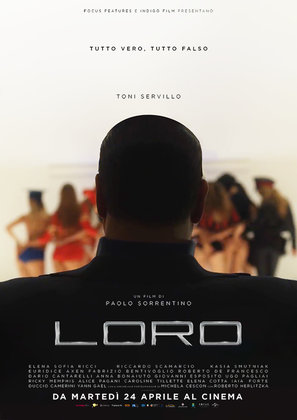
Loro (2018)

Toni Servillo stands out as Berlusconi in Sorrentino’s scattergun satire

Director: Paolo Sorrentino

Cast: Toni Servillo (Silvio Berlusconi/Ennio Doris), Elena Sofia Ricci (Veronica Laria), Riccardo Scamarcio (Sergio Morra), Kasia Smutniak (Kira), Euridice Axen (Tamara), Fabrizio Bentivoglio (Santino Recchia), Roberto De Francesco (Fabrizio Sala), Dario Cantarelli (Paolo Spagnolo)

No one films decadence like Paolo Sorrentino. Many of his films have gone overboard to demonstrate Italy’s shallowness, corruption and greed. Loro feels like the subject he has been building towards his entire career: the heart of the whirlwind himself, Silvio Berlusconi. Sorrentino’s film is about Berlusconi, but it’s as much about the Italy he has created and the impact on Italians themselves. Its title translates as “Them” – and the film juggles with the idea of which “them” it’s referring too.

The film follows the career of Berlusconi from 2006 to 2009, as a he deals with the aftermath of losing power and the boredom of having very little to do in his palatial mansion. All around him – like flies around honey – the newly rich try everything to gain Berlusconi’s attention, throwing lavish prostitute-and-drugs parties. But what does Berlusconi want? Is it more of the same, is it a return to power, is it a chance to do good, is it a chance to make amends, is it a return to the spotlight? Who is Berlusconi?

Sorrentino’s film follows his usual style, and makes full use of his dynamic and electric directorial style. Boy this guy loves to keep the camera on the move, and he combines it with some snappily filmic editing that creates a series of scenes that fit sharply together. Sorrentino really can cut the hell out of a picture, and his style lends itself perfectly to depicting the extreme hedonism at the centre of the lives of many people whom he makes films about. His fast cut editing style, dynamic camerawork and use of modern music stringing it all together make for a perfect visual language for the shallowness he sees in large parts of modern Italy. But this approach doesn’t always engage the viewer, leaving them watching the technique instead – and that’s arguably what happens here.

A large chunk of the first half of the film centres around Riccardo Scamarcio’s Sergio Morra, a fictional “businessman” from Southern Italy who uses attractive women and drugs to land lucrative government contracts from ageing officials. Just in case we are in any doubt, it’s made clear very quickly that Morra is unbelievably shallow, venal, corrupt and interested only on what he can take from his country. His life is one of unalloyed selfishness, centred around drug-fuelled orgies (filmed very well by Sorrentino of course!). Morra builds a partnership with Berlusconi’s fading mistress (extremely well played with more than a hint of tragedy by Kasia Smutniak) focused solely on getting as close as possible to power. Almost all of the first 45 minutes (and yes that is too long!) is centred around establishing Morra’s vileness and his empty world. It’s as clear a portrait of modern Italy captured in one man as you can wish for, but its constant unpleasantness and prolonged sex and drugs with little plot gets more than a little wearying after a while. We get it Paolo!

But Sorrentino wants to make a clear point here: Berlusconi’s Italy has given rise to people like this, people who have an interest only in what they can take from the country, people who think being able to throw the most lavish party, having the most money, making the loudest noise makes them “better” than regular people. It’s these people interpreting the image of Berlusconi as giving them a green light for greed. When we promote puffed up egotists and fun-lovers as our leaders, then grasping venal imbeciles like Morra with no sense of morality or decency see that as an invitation to join them at the top table. 

After this introduction to Morra, when we finally meet Berlusconi himself it’s surprising how different he seems. Yes he’s a casual, shallow, rather grandiose figure – but in the hands of Toni Servillo, Sorrentino’s regular collaborator, he’s a more complex person than you might expect. Bored and a little depressed at home, Berlusconi also sees himself as far more than just a party animal turned politician. He’s a man, for all his shallowness and greed, who needs to believe that he is there for the good of the people. But what the film doesn’t quite do is “nail” him – perhaps because he is unnailable – but the film doesn’t feel like it lands a true blow. Or even makes a really clear point about the presidency of this man. Sorrentino’s anger is in every frame, but I’m not sure he really puts together a convincing – or completely engaging – argument about this.

Servillo’s performance as Berlusconi is the true highlight of the film, a complex mystery of a man who wants to be decent, but not enough to change or to actually carry out selfless acts. Sorrentino sees him as a salesman at heart – the salesman who sold himself as the corrupted answer to all Italy’s problems – and the film’s highlight is probably a sequence when Berlusconi girds his tired salesman’s loins to cold-call a random ageing woman, plucked from the phone book, to flog her a flat in an apartment block he hasn’t even started to build yet. It’s a neat capturing of what energises this man behind the fixed smile – and a sign as well of how little reality matters to this peddler of dreams. You can see why business partner Ennio Doris (played also by Servillo, making Doris a neat facet of Berlusconi’s own personality) pushes him to get back to selling and blagging to rebuild his confidence.

Sorrentino grounds most of the film in the growing disillusionment of Berlusconi’s wife Veronica, expertly played by Elena Sofia Ricci. Smart, quick-witted but too ready for too long to sacrifice her principles for the comfort of marriage to the loaded Silvio, Veronica becomes, if not exactly a conscience, at the very least a voice for sanity in Berlusconi’s world. In a film where the majority of the characters are gilded fronts like Berlusconi or soulless obscenities like Morra, she is the closest thing we have to a decent person. 

Veronica’s growing sense of discomfort at the “me-first”, power and money above everything world that Berlusconi has created draws the viewer’s attention to the other “them” the film deals with. Yes, we have the party-loving elite here, but the other them are the people we hardly see – the regular Italians, the ordinary citizens. These intrude rarely into the film, but tellingly they dominate the final sequences of the film which deal with the aftermath of the L’Aquila earthquake. As firefighters rest from their labours in the ruined city – including saving a statue of Jesus Christ from a ruined church – the camera pans across their exhausted, sweaty faces staring wearily, while the word “Loro” remains on screen. 

It’s in that final shot that Sorrentino’s film really seems to land. Because amongst all this partying and greed which has dominated – and often exhausted the viewer – we are finally reminded that the people really paying the price are the regular people, whose needs are not monitored, who are readily and easily forgotten. Sorrentino’s film may drift too often in really making a point or feeling like it nails Berlusconi. But when it makes points like this it really works.

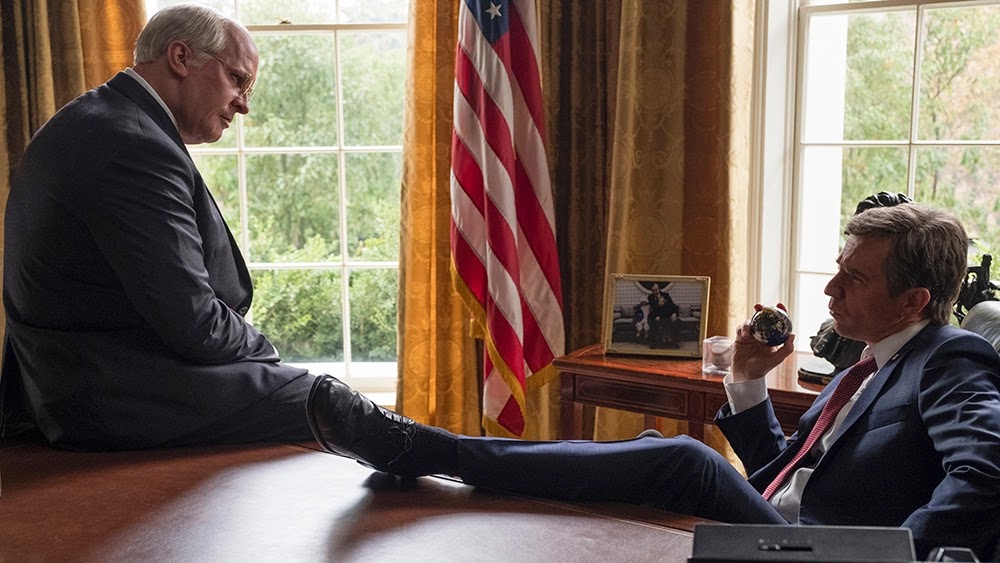
Vice (2018)

Christian Bale slaps on the make-up as Dick Cheney in Vice

Director: Adam McKay

Cast: Christian Bale (Dick Cheney), Amy Adams (Lynne Cheney), Steve Carell (Donald Rumsfield), Sam Rockwell (George W Bush), Alison Pill (Mary Cheney), Lily Rabe (Liz Cheney), Jesse Plemons (Kurt), Tyler Perry (Colin Powell), Justin Kirk (Scooter Libby), LisaGay Hamilton (Condoleezza Rice), Eddie Marsan (Paul Wolfowitz), Bill Camp (Gerald Ford), Don McManus (David Addington)

There is a film to be made about the turmoil of the Bush presidency. It’s not this film. Adam McKay’s flashy, clumsy, cartoonish, smug, tedious, overlong, arrogant and polemical film quickly outstays its welcome, drowning any legitimate ideas and theories it has under a wave of high-minded, angry shouting at the viewer, frequently mistaking flash and bombast for actual political insight and producing the sort of heavy-handed, angry political commentary that wouldn’t look out of place in a cheap student review. And flipping heck I’m on the liberal left!

Anyway, the film follows the career of Dick Cheney (Christian Bale under an impressive pile of make-up) from his early wash-out days. Told by his wife Lynne (Amy Adams) to buck his ideas up or lose her, Cheney becomes an intern for Congressman Donald Rumsfeld (Steve Carell), rising through the ranks due to his ruthless efficiency and loyalty, becoming Chief of Staff under Ford and Secretary of Defence under Bush. So he’s a natural choice for the inexperienced George W Bush (Sam Rockwell) to balance the presidential ticket. In return, though, Cheney wants control over a few areas – energy, foreign policy, defence etc. etc. – that the lazy Bush has no interest in overseeing. So a quiet, backroom politician changes the office of the Vice President to become the most powerful man in the world. Boo hiss.

McKay’s intention with this film is to reveal the hollowness, greed and utter lack of integrity in its subject. Well he never lets us forget this aim – I don’t think I’ve ever seen a film that so openly hated its lead character, which so completely refused to see any redeeming qualities in him whatsoever. Christ, even Downfall took a few minutes to show Hitler was generally kind to those who worked for him. The film is so unrelenting in its loathing for Cheney that it starts to feel like a being shouted out for over two hours by an “it’s the end of the world” fanatic on a street corner. This does not make for good entertainment.

The film has no subtlety whatsoever. Not for a single second does it even consider the remote possibility that anyone in the Republican party might, perhaps, just maybe, even if it was only some of the time, believe that they were doing something for a principled reason, even if it was a principle those on the left don’t agree with. Instead, all the characters are shown as selfish, greedy and corrupt, using ideology solely to gain power and then using power only to enrich themselves. It’s the sort of lazy political views that turn people off liberals – the idea that anyone who doesn’t share a liberal viewpoint is by definition evil. Some of us grew out of this kneejerk assumption that everyone who doesn’t agree with us is self-serving and cruel. Not McKay. 

On top of which, McKay’s film is made with the overt flash and brio that is the hallmark of the hack director using the tools of cinema with no understanding of their proper use. Wonky camerawork, cutting between timelines, throwing in newsreel footage, breaking the fourth wall, using strange camera angles, chucking in cameo actors to amusingly comment on events (Alfred Molina and Naomi Watts principally) and editing it with flash don’t make you a great director. They make you someone who has seen a lot of films and lot of techniques, but has no understanding of how to use them to craft an overall effect, instead thinking that if you throw all of them at the wall at once, you’ll be a master craftsman.

The film is full of studenty bits of invention that must have seemed oh-so-clever on paper in McKay’s script. Forty minutes in, with Cheney’s career looking over with the end of the Bush presidency, McKay starts running the credits – only to snap back into the film with the fateful phone call from Dubya. It’s clever and raises a quick chuckle, but doesn’t add anything to a sense of turning point in Cheney’s life. It’s followed by a clumsy metaphor of moments being like tea cups balanced on top of each other (inevitably these are later shown tumbling down) to represent how key moments of history build on each other. The real nadir is a moment when Dick and Lynne fall back into cod-Shakespearean dialogue in the bedroom as they discuss a possible vice presidency. ‘We don’t have Shakespeare’s psychologically insightful dialogue’ (I paraphrase) says the voiceover, before this skin-crawling hand-in-mouth sequence that shows McKay knows as much about Shakespeare as he does subtle political commentary.

Ah yes the voiceover. Perhaps not knowing how to marshall his childish political points in actual scenes and dialogue, McKay uses a voiceover from Jesse Plemons’ ground-forces marine to spell out as bluntly and crudely as possible the basic and trivial points it wants to make. The damn film already feels like being hectored by a crank, so why not make it feel even more like a polemic by having a character bitterly explain why everything is wicked and evil at you? The narration bores – and joins the general feeling of the rest of the film, that it goes on forever and ever and ever and never, ever, ever says something really interesting or revealing.

The performances are a mixed bag. Bale gives a decent turn as Cheney, capturing his mannerisms and conveying a sense of dark ambition, but it’s a role he could play standing on his head. Amy Adams turns Lynne into a Lady Macbeth, in a reheat of her performance from Paul Thomas Anderson’s The Master. Every other performance is a crude cartoon – Carell’s Rumsfeld a putty-faced joke, Sam Rockwell’s Bush (an impossibly generous Oscar nomination) a cartoonish buffoon. Everyone else coasts through it, patting themselves on the back.

There is an argument to be made that Cheney’s legacy is far from good, and it’s certain that we are paying a heavy price for interventions in Iraq. Many of the policies were less than savoury and left a less than positive benefit. But this film hammers these points home with all the charm of a ranting, drunk politics student who has read one book and watched a lot of YouTube videos. With McKay’s soulless, clumsy, look-at-me direction layered on top, this is a flat out terrible film. Save yourself what feels like much more than its two hour run time. In fact I’ll summarise it for you: CHENEY IS EVIL AND HORRIBLE AND HE (LITERALLY) HAS NO HEART. There you go. You don’t need to see it now.

The Favourite (2018)

Olivia Colman is at the centre of a complex rivalry in The Favourite

Director: Yorgos Lanthimos

Cast: Olivia Colman (Queen Anne), Emma Stone (Abigail Hill), Rachel Weisz (Sarah Churchill, Duchess of Marlborough), Nicholas Hoult (Lord Robert Harley), Joe Alwyn (Colonel Lord Masham), Mark Gatiss (Lord Marlborough), James Smith (Lord Godolphin)

Looking around the cinema, I couldn’t help but wonder how many of the audience were expecting The Favourite to be a Sunday night-style costume drama about Queen Anne. Goodness only knows what they made of this skittishly filmed, acidic, sharp-tongued, very rude drama about squabbles in the court of Queen Anne. The Crown it ain’t.

In 1708, the court of Queen Anne (Olivia Colman) is dominated completely by her head of household, chief advisor, secret lover and domineering best friend Sarah Churchill, Duchess of Marlborough (Rachel Weisz). But Sarah’s control over Queen Anne is set to be challenged by the arrival in court of seemingly charming, but in fact ruthlessly ambitious, cousin Abigail Hill (Emma Stone), a former aristocrat who has fallen on hard times. Soon Sarah and Abigail find themselves in the middle of a bitter, ruthless clash for control over Anne – who, seemingly weak-willed and disinterested in government, in fact takes an eager pleasure from the rivalry of the two women.

The Favourite is a brilliant, acerbic, very dark comedy that treats its period setting with a hilarious lack of reverence. It’s a frequently laugh-out loud comedy, with its often foul-mouthed dialogue just on the edge of being anachronistic (a trait that also comes into the hilarious non-period dancing). It takes a moment to tune up, but leans just enough on the fourth wall to work. Lanthimos’ film doubles down on the insane pressure bowl of Anne’s courts, turning the court of the 1700s into a bizarre, semi-surreal state where you have no idea what insanity you might see around the corner – from racing ducks, to rabbits roaming free, to a naked man being pelted with oranges. 

But then this is the sort of bizarreness that stems from the top, and Olivia Colman’s Queen Anne is a domineering eccentric. In a film-career-making performance from Colman, her Queen Anne is part infantalised puppet, part needy insecure lover, part bitter control freak. Anne will change from scene to scene from a furious, knee-jerk rage to a weeping vulnerability. Her interest in actually ruling the kingdom has been largely beaten out of her, but she still needs to feel that she holds the power. With her body raddled with gout, Anne alternates between demanding independence and being wheeled from place to place. Colman’s performance bravely skits between temper tantrums and a desperate, panicked loneliness and sadness – it’s a terrific performance.

A woman as uncertain and unhappy in herself as Anne is basically pretty ripe for control and manipulation. History has not been kind to Sarah Churchill, who is often seen as a ruthless, power-hungry manipulator only out for what she can get, obsessed with the power her role brings her. This film takes a different, more interesting slant, thanks in part to Rachel Weisz’s superb performance. Weisz plays Churchill as a strong-minded, hard to like woman, who has a genuine bond with Anne, but honestly believes she is better suited to execute the powers of royalty than her lover. But that doesn’t stop her having feelings for her – or priding herself on refusing to lie to Anne about anything (from her appearance to her behaviour). But this doesn’t stop Sarah from ruthlessly bullying Anne or threatening her – though she’s equally happy to climb into bed with her when required.

But Sarah Churchill here is doing the things she is doing because she honestly believes that it is what is best for the kingdom and (by extension) Anne, and the moments of shared remembrance between Anne and Sarah have a genuine warmth and feeling to them. Which makes her totally different from the ruthless Abigail, played with a stunning brilliance by Emma Stone. Abigail doesn’t give a damn about anything or anyone but herself: something the rest of the servants in the household seem to recognise instinctively as soon as she arrives, but a danger Sarah doesn’t detect until too late. Abigail’s every action is to promote her own wealth and prestige, and she’ll do whatever it takes to do that, from crawling through the mud for herbs to crawling between the sheets to pleasure Anne at night. Stone’s Abigail is ruthless, self-obsessed, uncaring and on the make in another terrific performance.

The film focuses in large part on the see-sawing fortunes of these two rivals for the role of favourite – with Anne as the fulcrum in the middle. The film is split into eight chapters, each of which is opened by a quirky quote from the chapter itself. It neatly structures the film, and also gives it a slight off-the-wall quality. The film is packed with electric scenes, as the women wear the trousers in the court (often literally, in Sarah Churchill’s case), riding and shooting in their spare time and slapping down the assorted politicians and lords desperately trying to promote their interests on the edge of the court. This battle of wits and wills is a fabulous, increasingly no-holds barred, rivalry that motors the film brilliantly.

Lanthimos loves every moment of scheming and double crossing the film supplies. He shoots the film with a selection of low-angle and fisheye lenses, which make the palace settings seem as imposing, large and domineering as possible – and also distorts the world just as the feud between the two women is doing. The film looks fabulous, with its intricate design and it’s candle lit lighting. Lanthimos’ court always looks gloomy and secretive, with only a few spots of orange warmth.

Lanthimos also understands that there is very little room for sentiment or feeling here, and the flashes of it we get are never allowed time to really grow. That’s not a negative of course, as this sharp comic drama is also an arch commentary on some of the selfishness and distortion of events that lies under politics (sound familiar?), with the interests of the ordinary people of the realm raising very little interest from any side on the political divide. And Anne is such a bizarre character, so pulled between pillar and post, so desperately unhappy so much of the time, so utterly spoilt the rest, that you understand how she has become such a chew toy for court faction, and why she is happy to tacitly encourage this world where her every whim is played to for advantage.

I laughed out loud several times during The Favourite. It’s obvious to say that it feels like a film for the #metoo era – but it certainly has three fabulous, brilliant, hilarious and strangely heartfelt performances from its three female leads, three of the best actresses in the business. Wonderfully directed, beautifully written and fabulously designed, this is properly fantastic cinema.