Category: Relationship film

From Here to Eternity (1953)

From Here to Eternity (1953)

Glorious romance goes up against military discipline in this sweeping, entertaining Oscar-winner

Director: Fred Zinnemann

Cast: Burt Lancaster (First Sergeant Milton Warden), Montgomery Clift (Private Robert E. Lee Prewitt), Deborah Kerr (Karen Holmes), Donna Reed (Alma Burke/Lorene), Frank Sinatra (Private Angelo Maggio), Philip Ober (Captain Dana Holmes), Mickey Shaughnessy (Sergeant Leva), Harry Bellaver (Private Mazzioli), Ernest Borgnine (Staff Sergeant James “Fatso” Judson), Jack Warden (Corporal Buckley)

Dominating the 1953 Oscars, From Here to Eternity is exactly the sort of sweeping, highly-professional studio epic Hollywood at its best produced in its Golden Years. Everything turned out pretty much right, with iconic imagery and characters, and skilled production and acting turning a soapy story into something quite profound. From Here to Eternity is entertainment-as-art, a sharply intelligent film that sails along smoothly. It feels like a generational progression from Casablanca – it may not quite hit those heights, but it deserves to be in the same conversation.

It’s 1941 at Pearl Harbour and three soldiers discover going their own way, rather than conforming to rules and expectations, causes no end of trouble. Private Prewitt (Montgomery Clift) is repeatedly hazed by his comrades (with the support of his CO) for refusing to join the boxing team. A champion boxer, Prewitt retired after accidentally blinding an opponent and nothing will persuade him to go back. His only comfort is with local social club ‘hostess’ Lorene (Donna Reed). First Sergeant Warden (Burt Lancaster) is persuaded to try for officer – because otherwise he risks prison for his love affair with the CO’s unloved wife Karen (Deborah Kerr). Private Maggio (Frank Sinatra), Prewitt’s only friend, is a loyal wild-card who can’t stick to the rules and is targeted by brutal stockade sergeant “Fatso” Judson (Ernest Borgnine).

From Here to Eternity sounds like a great big soap, a sort of 1980s glossy TV mini-series made before its time (it was later remade exactly as that). It’s got that in its DNA, but is made with such luscious, professional, old-school Hollywood excellence it becomes something special. Superb craftsmen work in every position to produce a classic melodrama with touches of romance, thriller, war drama and tragedy. With excellent performances across the board (Sinatra and Reed both won Oscars, while Lancaster, Clift and Kerr were all nominated), FHtE tells emotive, empathetic stories about genuine characters trapped in situations beyond their control.

The film is a masterclass in adaptation. The original novel – a popular tome of its day – tells a story crammed full of sex, STDs, homosexuality, bad language and violence across its 800+ pages. No wonder it was a hit – and no wonder, under the Production Code, it was thought impossible to adapt it into a film. Screenwriter Daniel Taradash carefully reworked and ‘hinted’ at several things that could not be explicitly said (for example, no one calls Lorene a prostitute, but you’d have to be pretty dense not to realise she is doing more than pouring drinks in that bar). Restraint, as it often did, demanded invention and bought out the best (and subtle work) in people. The film’s requirement to focus on dialogue and character rather than controversy hugely works to its benefit.

Zinnemann was the perfect director for the material. Drawing wonderful performances from the actors, he also keep the film intimate, drawing us closer to the characters over scale, despite the temptations of the film’s location shooting in Hawaii (Zinnemann pushed strongly against shooting in technicolour and widescreen). The film also fits perfectly with one of Zinnemann’s key pre-occupations: the struggle of principled men (most strikingly Prewitt) in a society that demands them to say or do something against those principles. Just as the townspeople wanted Marshal to run and the Tudor court wanted More to swear allegiance, so our characters buck against conforming with the roles they are expected to play.

You can see why the military – after supporting the project – were less happy when they saw the film. The individual is championed at the cost of the machine. Prewitt’s principles are praised, while his regiment is hopelessly corrupted by his incompetent and careerist commander. The hazing is endemic, and supported from above – and no one even notices or cares that Fatso is also abusing his position to brutalize Maggio. The CO is so useless – as well as ruining his wife’s life, rendering her infertile and cheating on her all over town – that the company is effectively run by First Sergeant Warden, the only NCO with the courage of his principles. Under pressure from their army sponsors, the film does see the chain of command cashier the CO (a scene Zinnemann hated) – but the sympathy is with the individual rather than the system.

From Here to Eternity is also a highly effective romance. Its most famous image will always be the clinch between Lancaster and Kerr, kissing and embracing while the turf washes up around them. But the film is also realistic – its why it remains so effective. Warden and Karen are made as miserable by their growing love as they are happy (they even comment on this). Relationships are never an easy ride, and demand constant dedication. Lorene and Prewitt’s relationship is far from rose-tinted, with the two of them constantly forced apart by their own mistakes and choices.

It’s melodrama told with emotional intelligence and realism – and Zinnemann gets great performances from great actors. Lancaster brings immense strength and purpose to Warden, but also a concealed vulnerability and decency. Kerr – revitalising her career after a string of “good wives” – brilliantly conveys Karen’s desperation and misery, along with her wary hope her life could change. That moment on the beach, the surf washing around them as they make-out is a rare moment of relaxed happiness. Other than that, its one tough conversation after another – stolen moments in bars or cars, where the two of them confront the difficulty of their situation, but also their need for each other. That’s old school romance for you – unavoidable, but never-endingly difficult and even a little painful.

Sinatra (in the role that changed his career – and the debate around how he got the role inspired that horse’s head in The Godfather) brings charm, cheek and tragedy to Maggio. How did Maggio end up in this man’s army? He’s quietly fun loving, but bucks the rules like almost no other character in the film. Sure he’s an upstanding guy – the only one who sticks by Prewit and defends him – but he can’t follow a simple order. Mostly because he’s not really disciplined enough. Plus he makes enemies – worst of all Borgnine’s bruising sergeant. He’d be so much happier running a bar for soldiers than he ever is being a soldier himself.
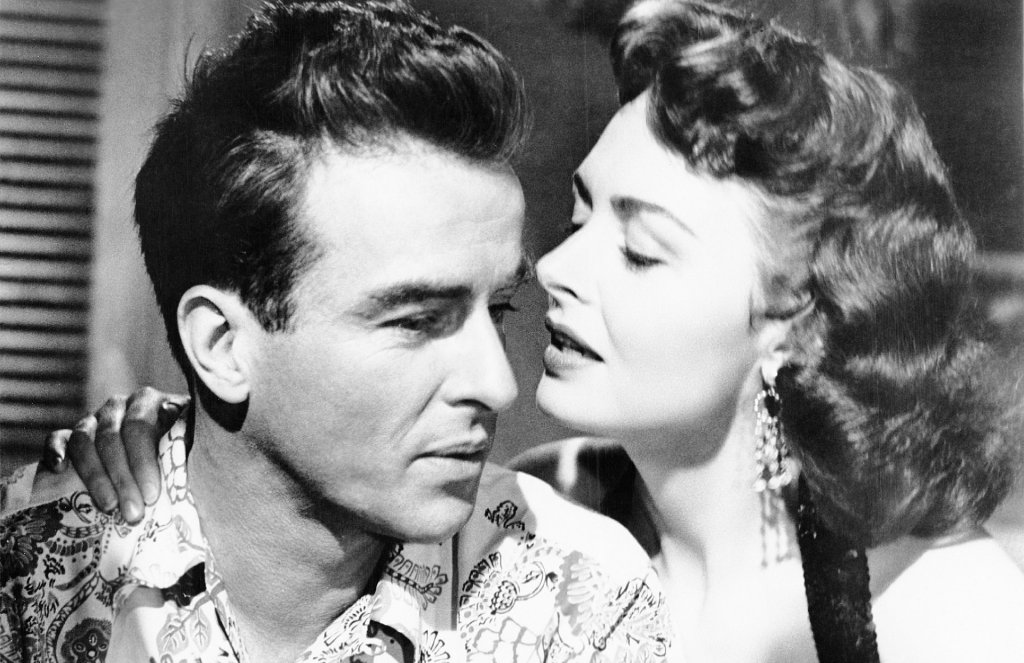
This makes him very different from Clift’s Prewit. Clift gives one of his finest performances as this fully-realised tragic hero. Prewit is a man of principle who, for the best reasons, makes choices that have a terrible impact on him. He’ll stand by his decision not to box, even though it opens up a bucket load of unpleasantness for him and Maggio. If that leaves him with one friend and no supporters, so be it. He may not look like a boxer (the studio wanted a more muscular lead), but he is every inch the emotionally conflicted, guilt-plagued and confused GI, stubborn but profoundly sincere, with the strength of character to stand alone, but the vulnerability to need affection from Lorene (and respond like a lovesick kid when he thinks she has spurned him). It’s a complex, mature and excellent performance.

All these events are eventually dwarfed by the outbreak of war. If there is one thing that Zinnemann will accept is bigger than the individual, it’s world war. The film quietly counts down to the attack on Pearl Harbor (without the characters realising it), sneaking us peaks at calendars and reports to let us know how close we are to the fateful day. When it comes, it reveals the characters of the people we’ve been following. Warden takes command in a way his CO never could. Prewit, hiding out with Lorene (Reed by the way is marvellous, her investing Lorene with a real world-weary sadness), decides its his mission to return from AWOL, despite the dangers this will cause him. The attack is grippingly but simply filmed.

From Here to Eternity is a complex film, made with real professional skill, and a rewarding character study. Zinnemann gets the tone right at almost every single point and draws out brilliant performances from a very strong cast. As an example of Hollywood Studio film making, it’s hard to beat.
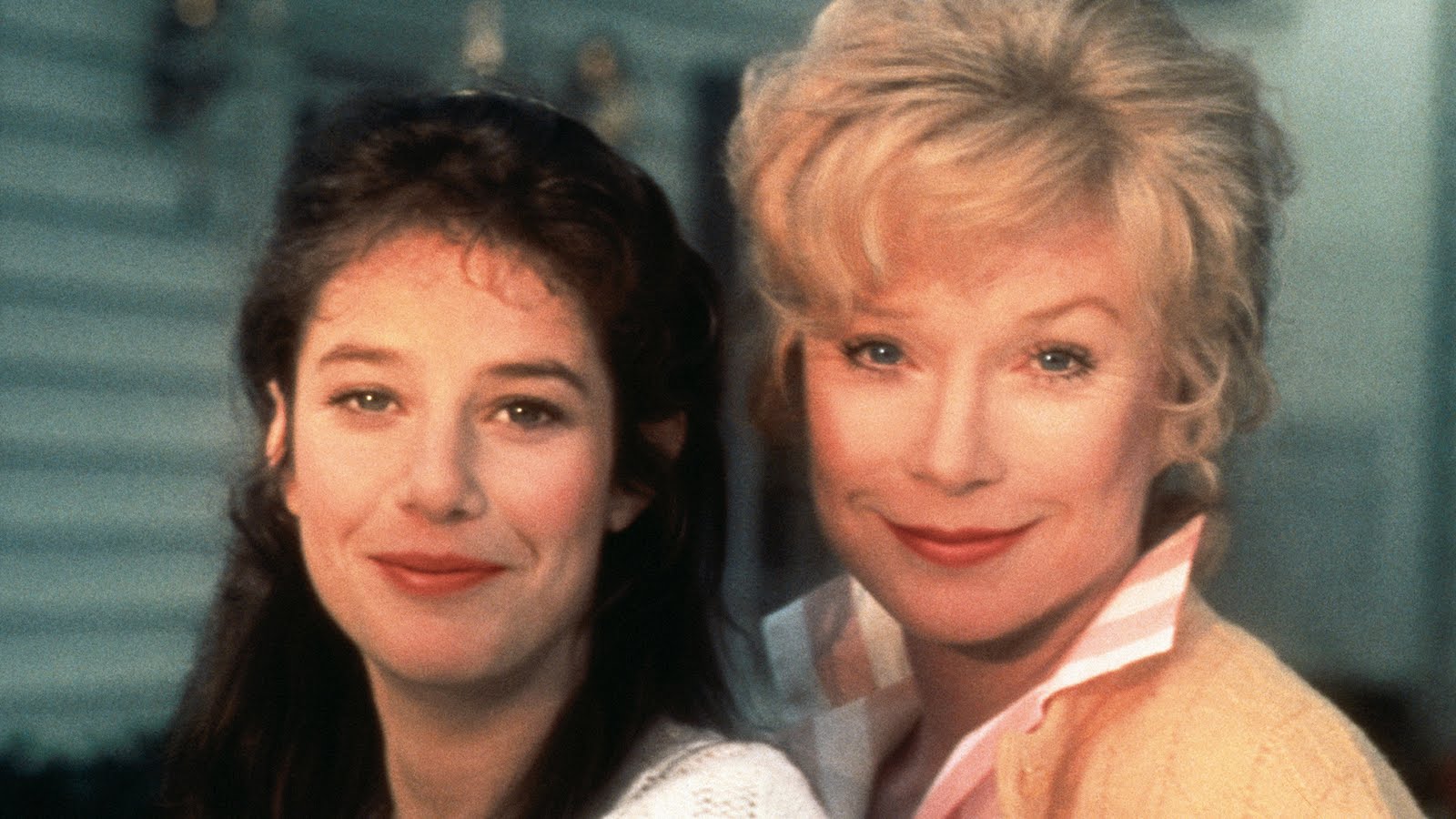
Terms of Endearment (1983)

Debra Winger and Shirley MacLaine are tempestuous but loving mother and daughter in Terms of Endearment

Director: James L Brooks

Cast: Shirley MacLaine (Aurora Greenway), Debra Winger (Emma Greenway-Horton), Jack Nicholson (Garrett Breedlove), Jeff Daniels (Flap Horton), John Lithgow (Sam Burns), Lisa Hart Carroll (Patsy Clark), Danny De Vito (Vernon Dalhart)

Spoilers: If you can spoil one of the most famous tear-jerkers of all time.

I think its fair to say 1983 was a weak year at the Oscars. The finest film of the year, Ingmar Bergman’s Fanny and Alexander, was a four-hour Swedish saga (and arguably a TV series anyway), wasn’t nominated. The most lasting films of the year, Flashdance, ScarfaceWar Games and Return of the Jedi, were never Oscar bait. Terms of Endearment motored through to hoover up five Oscars – beating out The Big Chill (cut from a similar soapy cloth), The Dresser (a British stage adaptation), The Right Stuff (a slightly cold Mercury programme saga box office flop) and Tender Mercies (a low-key character drama about a Country-and-Western singer that won Robert Duvall an Oscar). By any measure that’s not a list for the ages.

And Terms of Endearment had the added bonus of being the second biggest hit of the year, after Jedi (yes, I know!). It’s a surprise, as this sort of female led drama rarely scoops the big prize – so at least it makes a pleasant change. Terms spools out a collage of scenes (there are sometimes time jumps of years between scenes), chronicling the lives of over-protective, domineering mother-and-free-spirit Aurora (Shirley MacLaine) and her daughter, defiant, at times highly-strung, Emma (Debra Winger). The two have a difficult, though loving relationship, often depending on each other for emotional support – especially in their relationships: Emma’s with feckless philandering English Professor ‘Flap’ Horton (Jeff Daniels) and Aurora’s with playboy retired astronaut Garrett Breedlove (Jack Nicholson). But both come together when tragedy and illness strike.

Watching Terms of Endearment today, it’s often hard to see what the fuss was about. Although it wasn’t the first film to jerk tears via last-act illness (see Love Story), this started a wave of films where illness to a key member of the family (usually a mother) has a devastating, tear-jerking (but often eventually heart-warming) effect on the rest of the family (especially young children). Terms of Endearmentprobably does this better than those that followed, but watching it today its hard not to see it as something a little more familiar than it might have felt at the time.

Brooks’ background was in TV (he had several successful shows on his resume, from The Mary Taylor Moore Show to Taxi – so he certainly knew what the masses liked) and this, his first film, often feels like a cut-down mini-series. It matches exactly the sort of soapy, family saga of several TV epics of the time, and Brooks shoots the film with an unfussy, visually flat series of TV angles (aside from his skill with actors, his directing Oscar is a travesty). With each scene effectively standing alone – its collage effect means the film covers at least 14 years minimum with often only the age of the children any indication that time has passed – it also has a slightly bitty air of something assembled for cutting into episodes or advert breaks.

Not that there is anything particularly wrong with this. But, it does mean the film feels like it meanders along through a series of small crises, designed to be easily digestible. The film has a whimsical lack of directness – not helped by its overbearing (and dated) musical score. It relies strongly on sparky dialogue delivered by a cast who all look like they are having a good time (although, allegedly, they really weren’t with Winger and MacLaine in particular barely on speaking terms when the cameras weren’t rolling).

The main dramas are romantic. Aurora doesn’t quite know how to respond to her feelings for gnarled playboy Garrett. An early date between them hilariously contrasts her ludicrously over-formal clothes and his scruffy indifference. Its a difficult dance between two people who, for various reasons, are scared of commitment. But then Emma has made her own mistakes. She’s married Flip (is there a worse name in cinema?) for independence, but really they have nothing in common – and Flip’s eye quickly goes roving. Emma responds in a way her mother would understand: a potentially ‘first strike’ affair with John Lithgow’s meek bank manager (Lithgow and Winger have a wonderful scene at a diner, where he is almost too scared to touch her hand). You can see both mother and daughter teeing themselves up to make the same mistakes: the generations never learn from each other.

At the heart of the film is the mother-daughter relationship. But for me, this often lacks focus and never really coalesces into something that feels real or emotionally coherent. Now you could say that’s like life – and that’s a fair point – but several of the events feel heightened (particularly those featuring Aurora) and the characters are mutually dependent when the story demands it, and barely in touch when the opposite is needed. It’s easy to feel some connecting thread is being lost in those massive time-jumps. I found it hard to escape the feeling several times that people behave like this in the movies but never in real life.

But then, you get the final thirty minutes which revolves around the cancer diagnosis and eventual death of Debra Winger’s character. Here is where Brook’s flat, unobtrusive style comes into its own, his simple, restrained staging of these scenes making them surprisingly moving and affecting – especially considering the artificiality of some of what we’ve seen so far. For the first time, emotion, truth and earnestness – without too much blatant heart-string tugging – comes into play, and these simple scenes of two mothers saying goodbye to their children and each other end up having real emotional impact – as do the slightly stunned scenes of grief of those left behind.

It’s a shame then that most of the rest of the film before that doesn’t quite connect with me. The film was festooned with Oscars, but naturally the person most responsible for it working – Debra Winger – missed out. Winger is superb here, the only character who feels genuinely true, tender and also flawed in natural ways. She is slightly impulsive but also frightened of change, a character who can shout and rage but also is weak and dependent on emotional bonds. She’s totally believable and I would have loved to see more on her troubled relationships with her kids, and how her eccentric mother has impacted her ability to form bonds with her kids. The film doesn’t go there.

The Oscar went through to Shirley MacLaine who gives a big, showy performance as Aurora – and nabs the “Oscar Clip” moment as she bellows at nurses to give her daughter her medication. MacLaine’s Aurora never for one moment feels like a real person, but instead a novelistic invention of an eccentric mother, thrown on screen. MacLaine plays her to the hilt, but it’s a performance that feels mannered. But she gets the film’s fun moments – and gets to spark off Jack Nicholson who coasted to another Oscar as the sort of horny scoundrel he would play again and again for the much of the next thirty years on screen.

Terms of Endearment has enough in it that, if you like this sort of thing, you’ll love it. Perhaps it does mean more to mothers-and-daughters. I found it at times overly twee and laboured. But I can forgive it a fair bit for how effectively it displays grief – and how brilliant Debra Winger is in it. Over honoured? Sure. But, for its genre, a high point.

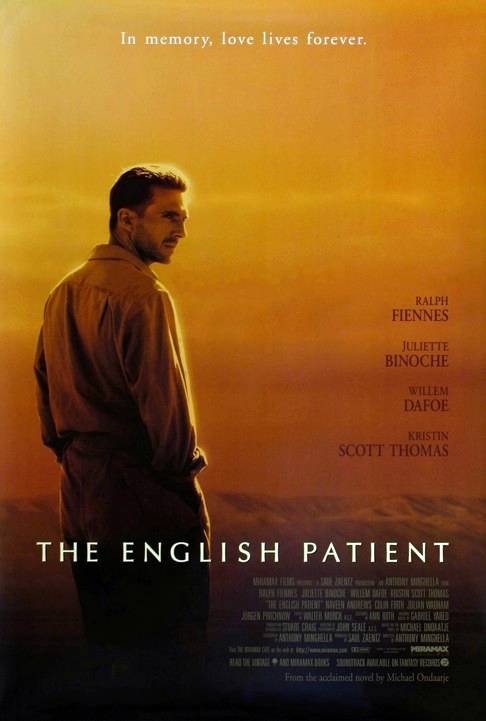
The English Patient (1996)

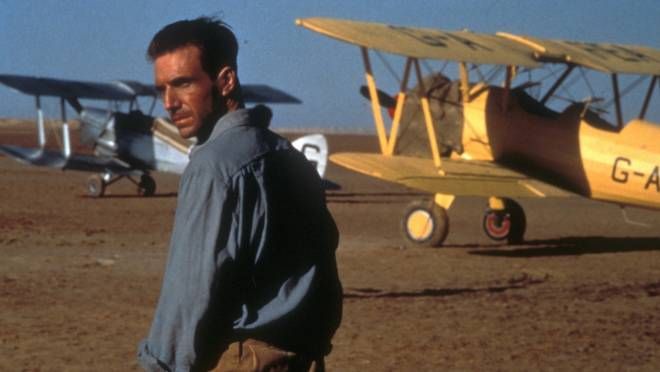
Ralph Fiennes excels as the tragic The English Patient

Director: Anthony Minghella

Cast: Ralph Fiennes (Count Almasy), Juliette Binoche (Hana), Willem Dafoe (David Caravaggio), Kristin Scott Thomas (Katherine Clifton), Naveen Andrews (Kip), Colin Firth (Geoffrey Clifton), Julian Wadham (Maddox), Jurgen Prochnow (Major Muller), Kevin Whatley (Sergeant Hardy), Clive Merrison (Colonel Fenelon-Barnes), Nino Castelnuovo (D’Agostino)

Sweeping, luscious, beautiful and an epic translation of an almost unfilmable novel into something supremely cinematic, The English Patient swept the board with nine Oscars at the 1996 Academy Awards. The English Patient has sometimes had a rocky reputation (not helped by an episode of Seinfeld where Elaine was famously non-plussed by the film). Like some of Minghella’s later work, it’s almost too well made for some to get past, looking like prime award bait. I didn’t “get it” the first time I watched it. But I – and the naysayers – were wrong: The English Patient is rich, rewarding and throbbing with a very British sense of repressed emotion and slow embracing of dangerous passions.

Adapted from Michael Ondatje’s multiple-award-winning novel, it unfolds across two time frames, hinging on a plane crash in the Sahara in 1942 that opens the film and leaves its pilot, Hungarian Count Almasy (Ralph Fiennes), hideously burned beyond recognition. The entire film is both an epilogue to that crash and a prologue explaining how we got there. In 1945, Almasy asserts he remembers nothing, even his own name. In what we later learn is a bitter irony, he is mistaken for an Englishman due to his perfect English. He is nursed through the final days of his life in an abandoned Italian monastery by a Canadian nurse Hana (Juliette Binoche), who has lost nearly everyone she loves in the war. Through Almasy’s memories, we see his life before the war as part of an international society of cartographers. In particular, the love affair that grows between him and Katherine Clifton (Kristin Scott-Thomas), the wife of another member of the society – an affair that will have life-shattering repercussions.

Appreciation for Minghella’s film must start with his ingenious screenplay. The English Patient, a book that moves eclectically between multiple timelines, shifting perspective frequently, and delivers its story in almost impossibly rich prose, should have been unfilmable. Minghella creates something which is both a mirror of the book’s intention, but also a cinematic text. You could use this as a teaching tool for adaptation (bizarrely one of the few Oscars it didn’t win was for Screenplay!). Working in close partnership with editor Walter Murch, Minghella’s film effortlessly cuts back and forth between at least three timelines, but never once confuses or jars. With (according to Murch) over 40 time transitions (that’s one almost every 3-4 minutes, fact fans), this could have been a jarring, impossible to follow mess. Instead, narrative clarity is its watchword.

But the film also succeeds because it’s the apex of Minghella’s ability to combine luscious, poetic story-telling with acute emotion and passion. It shouldn’t be a surprise that someone who showed such understanding of grief in Truly, Madly, Deeply acutely understands how joy and pain can go hand-in-hand in love. Perhaps one of the reasons people found this a difficult film is that Almasy and Katherine are not a traditional romantic pairing. Both guarded, sometimes even cold and distant people, they are tentative, perhaps even scared, of the deep bond they immediately feel. A bond that burns all the more brightly because of the compromises and barriers in their emotional lives.

Almasy is distant, aloof, a man easy to know but impossible to understand. Katherine has a very English reserve behind a certain patrician warmth, playful at times but very aware of duty. What’s fascinating – and moving – about the film, is that these two people actually have a huge groundswell of passion between them. They are besotted with each other, but for reasons ranging from background to their own fears of emotional involvement, struggle to admit it to each other. They fling themselves at each other in romantic couplings with an almost animalistic longing. They make each other laugh. They allow themselves to speak of deep feelings, experiences and thoughts that they would not express to others. And they are also able to hurt each other through resentments, distances and shunnings in a way no one else could.

It’s a decidedly unconventional romance – compare it to, say, the next year’s Oscar winner Titanic with its far more conventional love story – but it works wonderfully. The slight air of repression also means that the confessions of deep-rooted feelings – Scott Thomas’ reveal of a gift she has never parted from, or Fiennes’ face twisted in emotional anguish – carry huge impact.

It also helps that the film is set in the sort of grand vistas that David Lean would be proud of. While you can certainly argue (with some justification) that The English Patient is a picture postcard film, its perfect visuals of the desert, the stunning beauty of so many of its shots, add to the extraordinary luscious old-fashioned 1930s romance of its setting. It could all be taking place in a world of von Sternbergesque romanticism.

Minghella’s film also interweaves skilfully the 1945 story line, revolving around Juliette Binoche’s Hana. Binoche won a deserved Oscar for a sensitive, vulnerable performance as a woman terrified of emotional commitment (sound familiar?), scared anyone she grows close to is doomed to die. Her romance with bomb disposal expert Kip (a strikingly delicate performance from Naveen Andrews, with just enough hints of anti-colonial tension mixed in) seems ready to fit this trope, but instead develops in unexpected ways. It also contributes perhaps the film’s most sweepingly romantic moment when Kip uses a pulley system, a flare and a bit of muscle to give Hana a sweeping up-close look at some Renaissance frescos. But while our flashback romance has the foreboding of doom to it, this one instead shows us the hope of a life restarting.

The English Patient also makes some striking points about the insane foolishness not just of war, but nationalism and Empire. The cartographers are a pan-European group who come together as equals, disregarding all concerns of nation. Instead they find a freedom to behave – intellectually, emotionally and sexually – in a way they never could “at home”. They represent a chance of being free to make our own choices, rather than dictated by arbitrary borders. Problems of nationhood are what will bring disaster. Colonialism is viewed equally critically: Kip gets sharp digs in at Kipling and also makes clear that his status as an Indian officer in the British Army is one of uncertainty.

Minghella’s film also works because of the mastery of the performances. Fiennes is in nearly every scene (many of them under a layer of make-up), and the role is a perfect match for the surface coldness in his performance style, which hides his wit and sensitivity. Cheated of the Oscar, Fiennes has rarely been better – his clipped romanticism mellowing in the 1945 section as a gentler but broken man. Scott-Thomas is perfectly cast – I’m not sure any other film has used her skills better – as a woman who compromised on happiness at the wrong time, and now cannot express herself.

The English Patient is a romance of slow moments, of inferred passions, which only at a few points before the end flower into something intimate. But it carries a huge emotional force, precisely because of this. Its technical work is faultless – Gabriel Yared’s score is a sumptuous mix of inspirations – and the acting superb (as well as the stars, Firth is marvellous as a decent but dull man cuckolded, Dafoe adds a layer of unpredictability as a 1945 houseguest and Whatley is the picture of working-class decency in a rare film role). The English Patient is Booker-prize film-making in its depth, richness and the work it asks you to put in, mixed with a David-Lean-meets-Mills-and-Boon pictorial loveliness, where each frame is a sun-kissed example of pictorial perfection. Mixed together, it makes for a sumptuous and deeply emotional package that I find more and more rewarding with every viewing.

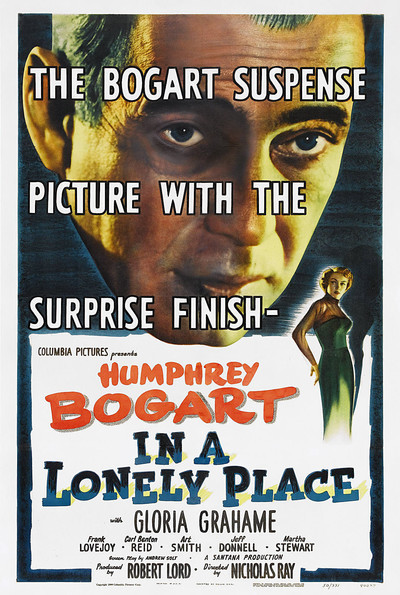
In a Lonely Place (1950)

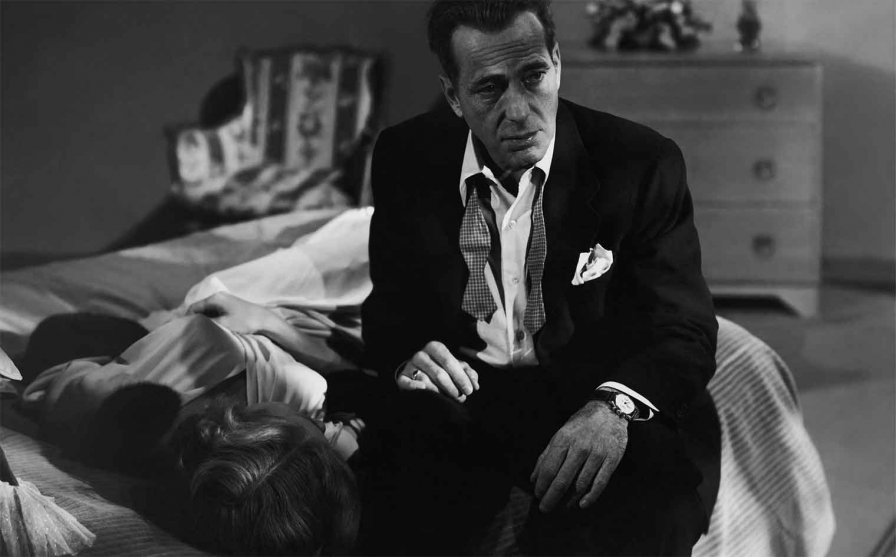
Humphrey Bogart struggles with a dark capacity for rage In a Lonely Place

Director: Nicholas Ray

Cast: Humphrey Bogart (Dixon Steele), Gloria Grahame (Laurel Gray), Frank Lovejoy (Sergeant Brub Nicolai), Carl Benton Reid (Captain Lochner), Art Smith (Mel Lippman), Martha Stewart (Mildred Atkinson), Jeff Donnell (Sylvia Nicholai), Robert Warwick (Charlie Waterman)

Hollywood: it’s a dark town. When movie makers turn their lens on themselves you’ve just as likely to see the dark underside of showbusiness, as you have a celebration. In a Lonely Place was made in the same year as Sunset Boulevard, and it’s even darker and less hopeful than that movie. It focuses on a person with a certain level of kudos, that has led others to overlook his deep personal flaws. In a Lonely Place reveals itself as a quite ahead of its time in its unflinching look at why people find themselves drawn into potentially abusive, controlling relationships with people who talk endlessly about how much they love you even while they try and control every aspect of your life. Overlooked at the time, it’s seen more and more as a classic.

Dixon Steele (Humphrey Bogart) is a successful screenwriter but has gone a few years since his list hit. Hired to adapt a plot-boiler he’s so contemptuous of the synopsis he invites a waitress at his favourite restaurant, Mildred (Martha Atkinson), to his flat one night to describe the story to him. Becoming as bored with her as he is with the cliched plot, he sends her home. When she is murdered later that night, Dixon is number 1 suspect. He’s alibied by his neighbour, aspiring actress Laurel Gray (Gloria Grahame) and the two start a relationship. But the pressure from the investigation and his writing assignments bring Dixon’s barely controlled rage more and more to the surface – with Laurel slowly fearing that he could be capable of anything if pushed to it.

It would be expected for a movie of this period – say something like Suspicion where of course Cary Grant is just misunderstood not a would-be killer – for all this to simmer and then resolve itself as a terrible series of errors (mostly of course from the woman). In a Lonely Place doesn’t do this. Instead, from the start we are given no reason to doubt Dixon’s capacity for near-murderous rage. Practically the first thing we see him do is assault a producer – albeit avenging an insult to an alcoholic actor friend. His first resort is violence. It’s something he’ll resort to time and time again, his capacity for anger joined with a self-pity that makes preemptive violence more likely.

It bleeds into the relationship with Laurel, which at first is all goodness and light. The two of them are well-suited, and an excellent tonic for each other: she’s a combination of muse and amanuensis, helping Dixon turn out his script; he opens doors in Hollywood she has spent years pushing against. But Dixon’s possessiveness, resentment and suspicion become clearer, accentuated by Laurel’s reserve and caution to emotional commitment. The relationship becomes tortured as Dixon resents any trace of suspicion against him, alternating with desperately possessive pleading for love. Any deviation from his idea of their relationship is seen by him as an act of betrayal.

Then there’s that temper. It’s there all the time, a sadistic streak that suggests a damaging lack of empathy. Dixon – while vaguely sorry for Martha’s death – is also perfectly happy discussing her demise with a clinical academic interest. He’s unphased by crime scene photos. He feels no guilt about not driving her home. Later, at the house of his friend (one of the detectives) he theorises how the crime was committed with an animation that turns into unsettling excitement. After a row with Laurel he drives a car (with both of them in it) with reckless fury and then nearly beats to death someone whose car he clips. Dixon follows these moments with futile half-apologies – anonymous flowers for Martha’s family, anonymous cheques to pay for car damages. But he never addresses his deep psychological problems.

This relationship becomes one ripe with the unspoken capacity for violence. Gloria Grahame is excellent as a careful, guarded woman who opens herself romantically, only to become terrified that the man in her life could just as easily kill her as kiss her. It’s a tension we feel too. Making breakfast, Dixon may talk about how they will be together always– but his vulnerable voice underlines his own doubts, and his furious insistence that they marry ASAP carries the capacity for fury if denied.

As Dixon, Humphrey Bogart gives one of (if not the) greatest performances of his career. Playing a character who, with his dark rages, allegedly had similarities with himself, his Dixon is a bleak figure. Capable of wit and charm, Bogart also makes him a cruel, seedy and sinister in his excitement at murder, while never preventing us finding him vulnerable and weak in his fear at being abandoned. But not sympathetic enough for us to worry he may end things by murdering Laurel. He’s never sympathetic – his late, motiveless, slapping around of his decent agent ends our chance of finding him that for good – but he’s understandable.

And he lives in a dysfunctional town. Where Hollywood intrudes on the action, Ray makes clear it is dark, unsettling, alien and unfriendly town – a truly lonely place. There are no confidantes or friends: only colleagues and potential rivals. You are only as good as your last credit: when your last few credits are poor, you’re no-one. On the other hand, rage and misbehaviour will be tolerated if you can produce the goods. It’s not a place for humanity or goodness.

Ray’s overlooked classic is a beautiful fusion of film noir and Hollywood insider movie. With superb performances from the two leads, it also feels way ahead of its time in looking at abusive relationships. Abusive partners don’t arrive twirling moustaches. They seem decent, loving and passionate – its only when you start to disappoint them they start to turn angry, controlling and abusive. By the time the film’s end come – and it’s a bleak one – you’ll be hard pressed to find some hope in it. But you will certainly find some great film-making.

The Social Network (2010)

Andrew Garfield and Jesse Eisenberg bring the making of Facebook to life in Fincher’s modern American classic

Director: David Fincher

Cast: Jesse Eisenberg (Mark Zuckerberg), Andrew Garfield (Eduardo Saverin), Justin Timberlake (Sean Parker), Armie Hammer (Cameron Winklevoss/Tyler Winklevoss), Max Minghella (Divya Narendra), Brenda Song (Christy Lee), Rashida Jones (Marilyn Delpy), Joseph Mazzello (Dustin Moskovitz), Rooney Mara (Erica Albright), John Getz (Sy), David Selby (Gage)

Nothing has changed our interaction with the world faster than the internet. And nothing on the internet has changed how we interact as much as social media. As it drives changes in the way we relate to other people, it’s a brave film that tries to capture this zeitgeist and turn it into an effective movie. The Social Network is a brave movie – and also a brilliant one, a defiantly modern and far-sighted movie that avoids being the sanctimonious message movie it could have become, by concentrating on personal relationships, drama and, above all, a strong and compelling story.

Its October 2003 and a 19-year old Harvard student Mark Zuckerberg (Jesse Eisenberg) gets dumped by his girlfriend Erica (Rooney Mara). So, he responds like many people today would – but not in 2003 – by writing a series of rude and angry blogs about her. And at the same time, he does something you and I wouldn’t be able to do – he builds overnight a campus website called Facemash that allows users to rate the attractiveness of female students. It’s a sensation – and a scandal.

Off the back of it, Zuckerberg is approached by the Winklevoss brothers (in a skilled double performance by Armie Hammer) to see if he’d be interested in building an elite social network, Harvard Connection, for them. Zuckerberg agrees – but did he independently already have the idea for Thefacebook, an elite social network for Ivy League students? Either way, with funds from friend Eduardo Saverin (Andrew Garfield) he builds the platform which is to become Facebook. Does it all end well? Since the story is framed around Zuckerberg in 2009, sitting in depositions while being sued by both the Winkelvoss brothers (“the Winklevi”) and Saverin, you can guess not.

Fincher’s film reflects its central character in many ways – cool, efficient, tightly wound, juggling intellectualism with simmering tension. It’s vibrant, fresh, razor-sharp, perfectly paced and superbly dramatic. It turns what could have been a terrifically dull story of very clever people typing lines of code into a whipper-sharp story of jealousies, rivalries and suspicions. It also brilliantly veers away from being a polemic. It could easily have made points – as many films have – about the “evils and dangers of that creepy thing the internet” or constantly reminded us how morally superior film-makers are to social media kingpins. It does nothing of the sort. Instead it’s a brilliantly insightful look at the birth of a phenomenon that also makes subtle, intelligent points about some of the behaviours that phenomenon led to. All while keeping us gloriously entertained.

A big part of the film’s success is in Sorkin’s superb script. The material is perfect for him. The character’s intellectualism fits with his pithy turn of phrase, while their perceptions of themselves as victims or on a moral crusade fits with his ability to write morality with empathy. It also helps that he is the master of crackling dialogue. The idea to structure the film around the depositions is also a master-stroke. Not just a reminder of what’s to come, it adds an air of artificiality to everything we see (perfect as well for Sorkin’s smarter-than-life dialogue) – after all, each scene is based on the filtered remembrances of people in the depositions. And all of them remember a subtly different story.

Sorkin and Fincher also manage to avoid having villains in play. It would be easy to make Zuckerberg a villain: many films would have done. But Zuckerberg here isn’t bad – it’s more that he’s tunnel-visioned, selfish and socially inept. Erica (a marvellous turn by Rooney Mara as the first victim of social media bullying) has a point when she says she dumping him not because he’s a geek but because he’s not really a nice person. But Zuckerberg’s actions – his betrayals as some read them – come not from vindictiveness but a shark-like moving forward that leaves people behind him. And he’s also, as the film is keen to show repeatedly, lonely. He has one friend – whom he sacrifices on the altar of his creation – and is ruthless at cutting people out of his life when they fail to meet the standards he has set them.

The film channels the skills of Eisenberg – whose range is not huge – perfectly here, in a role he was surely born to play. Eisenberg crafts his physicality in something hunched, oppressed and sullen while his flat voice is perfect for a man who expresses himself through his creation not his personality. He gives Zuckerberg both a ruthlessness, but also a strange lack of knowledge – constantly surprised that his actions have consequences that leave him alone. He makes him a true lonely god of the internet – the man who invented the biggest social networking centre in the world, but who doesn’t have a friend himself.

But it also makes clear that Zuckerberg lacks the usual flaws of his kind: he’s not interested, it seems, in money, riches, fame or drugs. To him, the prize is to do not to be seen to do. He makes a rich contrast with Sean Parker (a brilliantly charismatic Justin Timberlake), the creator of Napster, who briefly influences him but is primarily interested in the flash and bang that the retiring Zuckerberg isn’t. What he does have is the drive and ruthlessness that his friend Eduardo Saverin (a wonderful performance from Andrew Garfield as a marvellously sweet, but clearly naïve and out-of-his-depth man completely lacking the vision a project like Facebook needs) doesn’t have – and which makes Saverin unsuitable for thinking in the global terms Zuckerberg is.

And the film has little time for the Winklevoss twins. Played with chutzpah in a double role by Armie Hammer (who skilfully distinguishes both of them), Zuckerberg is right when he describes them as rich kids who had everything they ever wanted in life – and seem outraged that they can’t be given the rights to Facebook as well. As he points out they intended to do nothing other than come up with a concept. These rowers – in a witty touch their boat is sponsored by that dinosaur Polaroid – also represent the old elite under siege from new media. The entitled rich, who can’t comprehend that the world is being handed to them on a plate.

The film also makes for an intriguing meta-commentary on the growth of social media. From the trolling of Erica, through the bitter feuds and arguments, the he-said-she-said fighting of the depositions, and the quick shifts between friendship and rivalry, it also manages to capture the world of social media in a nutshell. The atmosphere where actions can explode in people’s perception, where statements you made years ago come back to bite you, where judgement and criticism are constant and the ability to communicate more easily also makes fights easier to start, seem more and more prescient.

Fincher’s film does this marvellously, with a wit and sense of dramatic flair that reminds me of a more grounded Network. Sure the scene at Henley-on-Thames is hand-in-the-mouth agonising for any British person to watch (it is littered with major errors from turn-of-phrase to its understanding of life in Britain), but when every other scene in it is perfectly done it doesn’t matter. Like any victory, Facebook has many people claiming to be its father. You could say the film about this film: superbly directed, a brilliant script and perfectly cast, it’s a triumph.

Fatal Attraction (1987)

Glenn Close and Michael Douglas embark on a disastrous affair in Fatal Attraction

Director: Adrian Lyne

Cast: Michael Douglas (Dan Gallagher), Glenn Close (Alex Forrest), Anne Archer (Beth Gallagher), Ellen Hamilton Layzen (Ellen Gallagher), Stuart Pankin (Jimmy), Ellen Foley (Hildy), Fred Gwynne (Arthur), Mug Mundy (Joan Rogerson), Tom Brennan (Howard Rogerson), Lois Smith (Martha)

It was one of the biggest hits of the 1980s and was said to bring to life every man’s worst nightmare – which as David Thomson rather astutely put it, probably meant “too many men in the 1980s were worrying about the wrong thing”. Dan Gallagher (Michael Douglas) is a successful, middle-ranking lawyer representing a publishing company. He flirts with editor Alex Forrest (Glenn Close). Then one weekend, when his wife Beth (Anne Archer) is away with their daughter, he spends his time sleeping with her. Problem is, Alex won’t accept it was just a brief fling. Soon she’s calling his office, visiting his wife, claiming to be pregnant as part of a swift descent into furious obsession, demanding Dan leave his family for her. It won’t end well.

Fatal Attraction is a film that is going to struggle the more we move into the #metoo era. While in the 1980s audiences could be expected to be reasonably sympathetic to a man who just wants a bit on the side – and then feels oppressed by the moral consequences that follow – today it’s a bit tricky to feel the same. Put bluntly, Dan is a selfish man who is desperate to be seen to be doing the right thing. And while he realises he’s probably made a mistake after his first one-night stand, he still throws himself into a second day of flirting and sex with Alex (out of a sense of social obligation).

But then Fatal Attraction is a deeply conservative film that plays into feelings of fear and anxiety at the idea of the perfect domestic life being assaulted by an outsider. It portrays the damaging impact on Dan and his family as entirely the responsibility of Alex, instead of admitting that clearly both Dan and Alex are to blame for what happens. Sure, Alex becomes a (literal) bunny-boiler (this film is the origin of the phrase) and later a knife-wielding psychopath. But all this spins out of Dan’s selfishness and his fundamental lack of regard for the feelings of either his wife or Alex (both of whom he wants to think of him as being a good guy – which he probably isn’t).

Dan’s “have his cake and eat it” attitude is the real villain here – and while he is, of course, unlucky to hook up with someone as unbalanced as Alex, any perfectly rounded person would be expected to at least match some of Alex’s reactions. She’s right to say that he is shirking his responsibility, right to say that its wrong for him to use her for a bit of fun and discard her, and she’s right to be disgusted at his automatic offer to pay for the abortion he assumes she will agree to.

A more modern version of Fatal Attraction would probably play out a bit more like the TV multi-perspective drama The Affair (where Dominic West and Ruth Wilson’s characters split the narrative between their very different perspectives on a life-shattering love-affair). It would show more sympathy for Alex’s desperation, loneliness and sadness – and really explore what it is that happened in her past that made her react as extremely to rejection and betrayal as this. And it would have greater criticism for Dan’s cavalier attitude to other people’s feelings.

But then a film like that wouldn’t have been a hit. Glenn Close may not have liked the reshot ending – which came out of test screenings that showed audiences really wanted Douglas to kill that bitch – with Alex entering the Gallagher country home with murder in mind. But the final desperate battle between Dan/Ruth and Alex – and the nuclear family being re-cemented in the shedding of Alex’s blood – was what made the film such a hit. Because who wants the complexity of shared responsibility when “The Other Woman” can literally rise from the dead to strike one final blow before being gunned down?

The film also worked of course due to Glenn Close’s fabulous performance in the lead role. Close worked hard to not position Alex – for all the film aims to do this – as a creepy stalker. Instead she invests her with a righteous fury of a woman who feels she has been terribly wronged, whose every attempt at peace-making has been slapped away and responds with justified anger. There is a real fragility in Close – who consulted psychiatrists to understand Alex’s fragile mindset – and she never lets us forget the pain motivating her actions, even as the film becomes ever more melodramatic and turns her character into more and more of a horror film staple.

Opposite her, Michael Douglas is equally good. This was Douglas’ first in a run of roles where he seemed to embody something in the everyday American-man that lived in terror of female independence and sexuality (he would be terrified on screen by Sharon Stone, Kathleen Turner and Demi Moore over the next seven years). Douglas is great though because while he looks the American dream, he conveys this sense of weakness and compromise. He convinces completely as a rather weak-willed man, terrified of being made to face the consequences of his actions. Archer is also first-rate in a surprisingly low-key role as the wronged wife.

Fatal Attraction starts out as a fascinating look at morality and morals in modern America and ends as a slasher film. A more complex film might have lasted better – even if it wasn’t such a hit – but it throws just about enough depth in there, before the madness descends.

Forrest Gump (1994)

Tom Hanks unleashes some cloying charm in Forrest Gump

Director: Robert Zemeckis

Cast: Tom Hanks (Forrest Gump), Robin Wright (Jenny Curran), Gary Sinise (Lt Dan Taylor), Mykelti Williamson (“Bubba” Blue), Sally Field (Mrs Gump), Haley Joel Osmont (Forrest Gump Jnr)

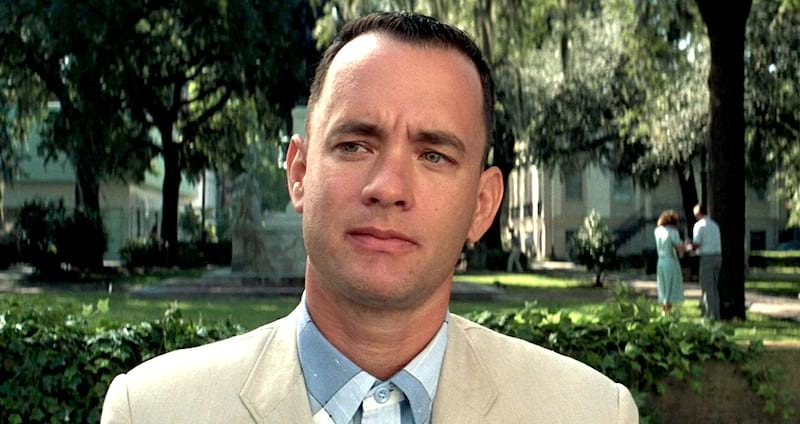
Oh dear God. It’s worse than I remembered. I hadn’t watched Forrest Gump since maybe 1995. I hadn’t liked it much then. But that might just have been my contrariness: sure I was going to find faults in the film that became a cultural phenomenon. Rewatching it today: actually no, I had good taste. This must be one of the worst films to ever win the Best Picture Oscar – and certainly one of the most unsettlingly twee, sentimental, conservative-minded pieces of feel-goodery to ever come out of Hollywood.

You surely know the plot. Forrest Gump (Tom Hanks, who to do him credit plays this one note character with real charm) is a good-hearted man with developmental difficulties (IQ below the 75 mark) who lives through some of the most turbulent times in American history. From racial violence in the 1950s, to Vietnam, the Cold War, the political turmoil of the 1970s, Forrest lives through it all. And largely lets it wash over him, never letting it intrude on his simple, folksy, homespun gentleness. Although that might mostly be because he also doesn’t really understand most of the things happening around him. He’s quite a contrast with the girl he’s loved since their childhood, Jenny (Robin Wright) who embraces everything the modern world brings (protest, politics, drugs) but of course finds her life much less rewarding and happy than Forrest’s “go-with-the-flow” acceptance.

Just writing it down I can feel my stomach turning again. At the time the filmmakers were very keen to promote the film as stridently apolitical. Yeah sure the film never praises, say Kennedy or Nixon, just as it goes out of its way not to state an opinion on either George Wallace or the Black Panthers. But the film is, at its heart, a large, beating, reassuring lump of rank conservatism.

It looks back at America’s past with rose-tinted glasses, portraying a world which would have all better if they had taken a leaf out of Forrest’s book. If we had all been just as uninvolved, decent, kind and stayed at home where we were happy rather than getting engaged in major social and political issues, everything would have been better. Forrest is a celebration of all-American virtues of honesty, bravery and loyalty – but the film is also an implicit criticism of other all-American virtues like curiosity, scepticism and challenging the status quo. Basically, the film celebrates the cosy attitudes conservatives adore and has nothing good to say about more liberal values. Sure, it doesn’t roll out a banner for Nixon – but you can also see this playing well at a Trump rally, with people saying we would be a happier country if we could all be a bit like Forrest.

That’s really tough on the film – and I imagine Zemeckis and co would be rightly horrified about that very idea – but it’s a film that doesn’t once challenge the audience at all. I was reminded throughout of Being There which took a similar concept: a man with low IQ finds himself at the centre of major events. But while that film was a satire – where the characters invest Chance’s gnomic utterings with profound wisdom – this film is a serious drama which encourages the audience to see a “deeper wisdom” in Forrest, to effectively treat him as a sort of prophet. There is a reason bland nonsense like “life is like a box of chocolates” caught on.

The original book was far more of a satire on the shallowness of modern culture. This instead plays like a sort of holy fool pilgrimage, with Forrest’s interaction with historical figures played for laughs. From showing Elvis how to dance, to (in the film’s most cringing moment) inspiring John Lennon with the lyrics of Imagine (another reason to hate Forrest), the film is crammed with gags like this. While the insertion of Tom Hanks into newsreel footage with Kennedy, Johnson and Nixon is impressive (although it has not aged quite so well), it’s not made with any point. This is because Forrest has no real appreciation of what’s happening around him. He’s merely moving from one event from the next – but this lack of engagement and understanding is held up as a virtue. And the very fact that it is, speaks to the film’s underlying conservatism and love for simple, small-town American ideals that shouldn’t be sacrificed to all that uncomfortable social and political change.

The film is particularly harsh on Jenny, decently played by Robin Wright, who is portrayed as someone succumbing to every trend and popular movement of the era. And whom the film consistently punishes for this by showing her emptiness, shallowness and unhappiness, until it finally consigns her to death from AIDS. Just in case we’ve missed the point, Forrest repeatedly urges her to come home – to stop engaging with the wider world and the problems in it and bury her head back into the sands of home, where everything is simple, safe and nothing changes.

The world of Forrest Gump is one where corruption and war mongering don’t matter because it happened a long time ago. A world where racial politics are too distasteful to mention (although since Forrest’s Granddaddy was a leading member of the KKK – a flashback played for laughs – that clearly wasn’t the case). Where the only black people Forrest encounters are the outsider soldier Bubba (who of course dies in ‘Nam – even in serious films, the Black Guy dies first) and his servile family whose names don’t even merit a mention, but who become the grateful beneficiaries of Forrest’s oblivious generosity. But there is no sense here of the dangers and violence of America (bar some nasty jocks at Forrest’s college) – which considering the film has a cameo from George Wallace of all people is really striking.

But then the problems of the world I guess don’t seem that bad if you just don’t think about them and instead go through life with a smile on your face, blissfully unaware of what’s happening around you. The closest the film gets to giving Forrest an opinion on something is when he is asked to speak at a rally against Vietnam – and even then the sound cuts out meaning we can’t hear him (though it seems to have been profound). A wittier film, like Being There, would have made this a moment for satire. Here it seems more like the magic of Forrest’s simplicity mustn’t be shattered for the audience by daring to suggest he actually has a view on something.

The film is a warm and comforting hug, that tells people the past wasn’t that bad and would have been better still if we’d just been nice to each other. That wanting to change the world is dangerous and greater rewards can come from going with the flow. For all Forrest is bereft by Jenny’s death, the film still rewards him with family, home and friends. It’s sentimental, empty, depressing crap. Well made, but simply dreadful. You may not know what’s in a box of chocolates, but you sure as shit will remember after you’ve vomited them all back up after watching this.

The White Tiger (2020)

Adarsh Gourav is a willing servant (or is he?) in The White Tiger

Director: Ramin Bahrani

Cast: Adarsh Gourav (Balram Halwai), Priyanka Chopra Jones (Pinky), Rajkummar Rao (Ashok), Mahesh Manjreker (The Stork), Vijay Maurya (Mukesh “The Mongoose”), Kamlesh Gill (Granny), Swaroop Sampat (The Great Socialist)

“India is two countries in one: an India of light, and an India of Darkness”. It’s an idea that’s at the heart of Aravind Adiga’s Booker-prize winning novel, adapted here as a dynamic (if slightly overlong) film by Ramin Bahrani. Those two India’s are rooted in the country’s deeply ingrained class differences, the new caste system being simple: the haves and the have nots.

Balram Halwai (Adarsh Gourav) is very much one of the have nots. A poor young man, who missed out on his chance of a scholarship because his family needed the income he could bring them from breaking up coal. Balram sees his way out through becoming a driver for the son of the local landlord, Ashok (Rajkummar Rao) and his American-Indian wife Pinky (Priyanka Chopra Jones). With the story being recounted by an older Balram, now a successful businessman, we know he finds a way to improve his life. But at what cost? And how many lives have been sacrificed to get him there?

Bahrani’s adaptation is a sharp, cinematic, electric piece of film-making, that makes superb use of montage and dynamic camerawork, particularly in its scene setting opening acts. Bahrani also engages brilliantly with the central themes of the novel, the all-pervading corruption of modern India (financial and spiritual) and the gulf in class and mindset that exists between the rich and poor. The wealthy upper classes see themselves as nothing less than masters of the rest of the population, who they hire and fire at will and frequently mistreat. Meanwhile, Balram argues, many of the poor cannot escape the mindset of servitude (the “chicken coop” as he puts it), unable to imagine any life other than living on the bottom rung.

It’s an idea Bahrani’s film brilliantly reinforces visually. The westernised wealth of the upper classes – living in gated communities and luxurious hotels, driving western cars with no contact with anyone outside other than servants – is contrasted with the slums and poverty of the rest of the population. Their parts of the city are run-down and crumbling. Many live on the streets. Balram himself lives on a mattress in the basement of his master’s hotel – while Ashok resides in a penthouse. You can’t escape the radical inequality – nor the violence (from slapping of servants to the implied threat of murder of your family if you step out of line) that keeps the system in place.

Part of the fascination of this film is wondering half the time, how much Balram is a willing participant in this system and how much he is longing to cast off its shackles. Sure we know, from the framing device of his later life, where he is heading. But is it his aim from the start? How genuine is his humbleness? As he schemes to have a rival driver dismissed, he talks in voiceover of his sadness – but on screen he merely shrugs and downs some sweetmeats. Does his resentment develop over the film, or is it there from the start – or does he only understand it as he realises he lives in a “chicken coop”?

As in the book its rife for interpretation – and Bahrani doesn’t lay on too think the unreliable narration element of Balram. It’s also helped immensely by Adarsh Gourav’s superb, BAFTA nominated performance in the lead role. He seems genuinely naïve and innocent – the very country pumpkin the other drivers at the hotel mock – but there is always an unknowable quality to him under the affable surface Gourav presents, a ruthlessness and also an anger. Watching both these qualities develop across the film – and questioning how well we know him – is a brilliant tight-rope walk, with Gourav maintaining our sympathies even as his actions become ever more ruthless.

He becomes an embodiment of the divide in India itself, between the mindset of being nothing more than a servant and the developing entrepreneurism in the country (represented both by the side jobs the rest of the drivers carry out as well as Balram’s later business success). It’s also fascinating to see the contrasts in his employers. Rajkummar Rao creates a character who is decent enough to know he’s treating people selfishly, while being lazy and immature enough to not bother to change. His wife, very well played by producer Priyanka Chopra Jones, speaks the language of a free America but is perfectly happy to force others to take the rap for her mistakes.

The film’s energy tails off in its second half as the plot catches up with the traffic accident that opens the film. The second half of the film tends to circle around the same issues of rich vs poor and the abuse of power that the first film explores with greater energy and wit. To be honest, you can tell an act of violence or betrayal is on the way – and the film takes too long to get there. A tighter film at an hour and 45 minutes would have been more effective and maintained the drive of the first half (even if it would have meant sacrificing some good individual scenes here and there).

But when the film is on song it works very well. The ideas it tackles around modern India feel very real and vital – and still carry plenty of relevance today. Bahrani balances the dark humour very well with the moral outrage and has a brilliant lead performance from Adarsh Gourav. It would have been better tighter which would have helped keep its pace and energy up, but this is still inventive and urgent film-making, a fine adaptation of an excellent novel.

The Last Picture Show (1971)

last picture show header
Timothy Bottoms, Jeff Bridges and Cybil Shepherd are making the best of small-time life in The Last Picture Show

Director: Peter Bogdanovich

Cast: Timothy Bottoms (Sonny Crawford), Jeff Bridges (Duane Jackson), Cybill Shepherd (Jacy Farrow), Ben Johnson (Sam the Lion), Cloris Leachman (Ruth Popper), Ellen Burstyn (Lois Farrow), Eileen Brennan (Genevieve), Clu Gulager (Abilene), Sam Bottoms (Billy), Randy Quaid (Lester Marlow), Gary Brockette (Bobby Sheen)

“Anarene, Texas, 1951. Nothing much has changed…” So went the tagline for Peter Bogdanovich’s The Last Picture Show. Change, or rather the lack of it, is the heartbeat of this film. It’s small time (fictional) Texas town isn’t a million miles from the Wild West dustbowls. You feel nothing has really changed for decades, the same faces in the town have just got older. But the tagline suggests that, in many ways, the 1950s were not that different from the progressive 1970s. Sex and scandal lie under the surface of the town, with the inhabitants having little to distract them from boredom other than seducing each other. Unlike the sort of traditional films shown in the picture show – Father of the Bride or Red River – this town is just drifting, a change in America both round the corner but also feeling like something that would slide off the town like water from a duck’s back.

The film largely follows three high schoolers are preparing for graduation. Sonny (Timothy Bottoms) and Duane (Jeff Bridges) are on the town’s useless high school football team (a uselessness no-one will let them forget). Duane is dating Jacy (Cybil Shepherd), a woman just discovering the power of her looks – and Sonny longs for her himself. Instead, Sonny starts an affair with Ruth Popper (Cloris Leachman), the overlooked, lonely housewife of his football coach. Romantic entanglements abound, but life drifts on with the younger generation thinking sometimes of the future, but really repeating the mistakes of the older generation – people like Jacy’s cynical mother Lois (Ellen Burstyn) and the owner of the town’s pool-hall, cinema and diner, the fading conscience of the town Sam the Lion (Ben Johnson).

Bogdanovich’s film was a sensation when it was released, a key part of the New Wave films in Hollywood. It has lasted, in the way other films from the period haven’t, because it has a subtly simple but compelling story, shot as a perfect fusion of French New Wave styles with John Ford and Orson Welles inspired classicism. Bogdanovich’s film buffery is obvious from every frame – not just from the film posters announcing what is being shown at the picture palace, but also from its loving use of French-style realism and lack of glamour, set and framed in the Fordian style, often stressing isolation, intercut with homages to Kane, The Magnificent Ambersons and Touch of Evil.

And in it we have a series of young people who seem to have no idea either where they, or the world is heading. Timothy Bottoms acts with such effortless naturalism, it’s easy to forget he is even acting at all. It’s a perfectly judged performance of a very normal young man, low on aspiration and inspiration, selfish in the way the young are but full of passion and regret. Jeff Bridges is similarly brilliant, playing a not-particularly smart (or particularly successful) school sports star in a performance completely free of any condescension or camera winking, but played with a charming honesty. These are supremely normal young men. Generally decent, well-meaning and naïve, not knowing what it is they want or need from life. They would fit as neatly into 1971, with their dreams, as they do in 1951. Especially as Duane packs off to head to Korea (no real difference from Vietnam).

And a lot of these dreams revolve around sex – and often sex with Jacy. Cybil Shepherd was a sensation on the film’s release, seen as the ultimate late-teen temptress and sexpot. But in fact, Jacy is (in her way) as much of an innocent as the others. She’s a woman only just discovering her own passions and longings. Who doesn’t want to become the jaded figure her mother has become – but working out the easiest way to get what she wants (be that a better boyfriend, better chances or even just some attention) is through using her physical attributes. Her sexual experimentation is, in a way, liberating – and just another attempt to find an answer to her own aimlessness. Sure – encouraged by her mother – she doesn’t invest anything emotionally in these entanglements. But is it really all that different from Sonny’s own using of Ruth Popper?

Ruth Popper is emblematic of the sadder older generation in the town. You can imagine they must have had hopes and dreams – or were once as breezily uncaring – as the younger generation. But they’ve found out, just as they will, that things don’t change. That you can blink and find yourself twenty years down the line, unhappy and lonely in a place you can’t seem to escape.

Cloris Leachman is outstanding as Ruth (she won an Oscar), the only person in the all the film’s couplings that we see expressing tenderness and vulnerability (in a film full of sexual encounters, the most intimate thing we see is her combing Sonny’s hair). She dares to slowly open herself up emotionally to believing in Sonny – to seeing their affair as more than just the booty call it starts as, but as something with a future. From the tearful fragility of her first scenes – her buttoned up matronly appearance, making her look far older than she is – she blossoms into a warmer, excited, person. It makes her inevitable betrayal by Sonny all the more heart-wrenching – along with her self-loathing fury that closes the film.

All the adults are drifting through the same disappointing life. Ellen Burstyn (also nominated) is wonderful as Jacy’s mother, who continually defies expectations. This mother is unfazed by her daughter sleeping with her lover, suggests that she might as well experiment sexually so she can find out it’s not all that and carries a revelation of deep loss and personal tragedy that only comes to light late in the film but is there in the character from the start. Other adults seem equally aware of their pointlessness: the coach is a repressed homosexual, the English teacher seems resigned to teaching Keats to bored students, Jacy’ father is a blow-hard nobody, Sonny’s father is a stranger to him. Only Eileen Brennan (excellent) motherly waitress still seems to have some hope.

Sonny’s surrogate father – and the heart of the film – is local businessman Sam the Lion. Johnson is superb, gifted a surprisingly small number of scenes but which establish both his moral force and his position as a link to a halcyon days past in America that might not really exist. Bogdanovich gives Johnson a knock-out speech (surely what won him the Oscar) – an Everett-Sloane-in-Kane inspired remembrance of a relationship from long ago, where the world seemed full of hope and opportunity, that perhaps get closest to defining the film’s sad reflection on how little those two things actually seem to exist in the present.

But it’s also about the temptation of memory. Bogdanovich’s masterpiece (it was all downhill in his career from here), The Last Picture Show knows only too well how quickly we realise life is a confusing, compromised mess. And the film, for all its old-school Hollywood style, is all about the past being just as a confusing, empty, sex-filled place of loss as the present is. Things have always been like this – and they probably always will. Welcome to Anarene. Nothing has changed.

A Beautiful Mind (2001)

Russell Crowe struggles with reality as Math’s genius John Nash in A Beautiful Mind

Director: Ron Howard

Cast: Russell Crowe (John Nash), Ed Harris (William Parcher), Jennifer Connelly (Alicia Nash), Christopher Plummer (Dr Rosen), Paul Bettany (Charles Herman), Adam Goldberg (Richard Sol), Josh Lucas (Martin Hansen), Anthony Rapp (Bender), Judd Hirsch (Professor Helinger)

There is nothing Hollywood likes more than a man overcoming adversity. Make him a troubled genius and that’s even better. Throw in a supportive wife who bends over backwards to help him and you’ve got the dream Hollywood scenario. You can bet Oscars will follow – and they certainly did for Ron Howard’s A Beautiful Mind, which hoovered up Best Picture, Best Director, Best Adapted Screenplay and Best Supporting Actress (it probably would have also nabbed Best Actor if Russell Crowe’s personal behaviour hadn’t turned him from idol to Hollywood’s most unpopular actor).

The film is a romantically repackaged biography of John Nash (Russell Crowe), a pioneering mathematician whose life was turned upside down by his diagnosis with schizophrenia in the 1960s. Even before then, Nash had become increasingly preoccupied by delusions and fantasies, many of them revolving around “secret government code-breaking work” for a bullying CIA Agent (Ed Harris). Slowly coming to terms with his diagnosis, with the help of his loving wife Alicia (Jennifer Connelly), Nash must learn to put aside the things he knows he are not real, while trying to rebuild his life.

Ron Howard’s film is assembled with his usual assured professionalism. It is never anything less than effective, what it never quite manages to be is inspired. Perhaps because it’s a very standard Hollywood biopic. It effectively presents the life of its troubled genius as something very easily digestible, hitting all the beats of suffering, determination and eventual triumph you could expect when the film starts.

This makes for exactly the sort of middle-brow filmmaking made with absolute professionalism that, if you turn your head and squint a bit, can be made to look like Oscar-winning art. That seems incredibly harsh on the film: but there is really nothing particularly “new” about anything here: in many ways, it could have been made almost exactly the same in the 1940s (and it would probably have won an Oscar then as well).

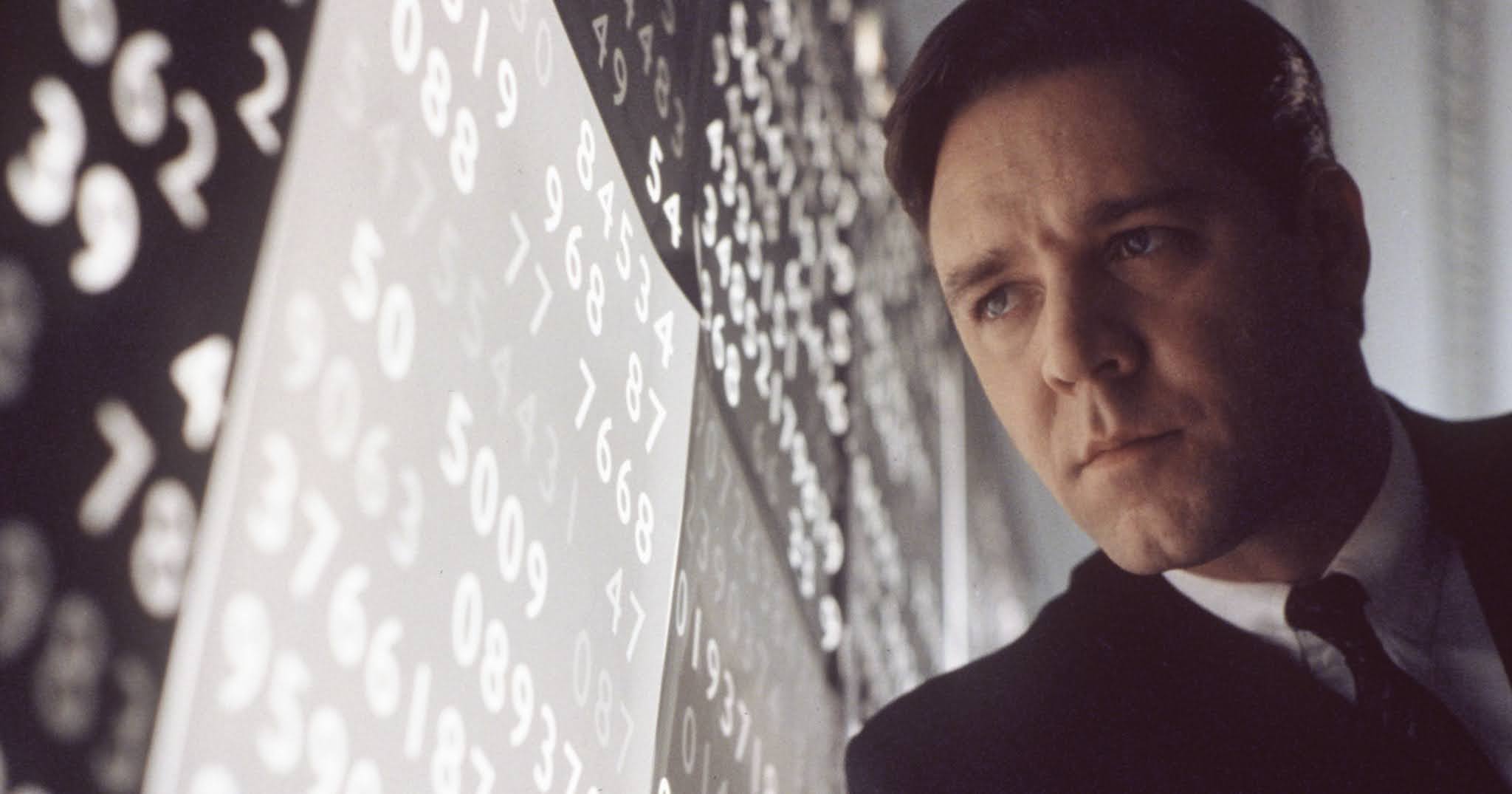
That’s not to say it’s a bad film. Howard’s direction is sharp and exact, and he stages the film very well, drawing very good performances out of the cast. The film is good at immersing us in Nash’s delusions, particularly in the first hour of the film (it’s not until the hour mark that anyone overtly states there is anything wrong with Nash beyond eccentricity and social awkwardness). Howard shoots the fantasies totally straight: in fact if you had managed to avoid knowing what the film is about, you can totally imagine being tricked into thinking it’s a genuine spy thriller.

With that though, the film gives you just enough hints. Take a beat and look at Nash’s CIA actions and they don’t make much sense. A secret code that involves him tearing pages out of thousands of magazines and pinning them up around his office connected with bits of string (standard filmic language for the obsessive nutter)? The CIA injecting a number implant into his arm? A dead drop at a posh house which requires letters to be sealed with wax? The film gives us the hints that Nash is more troubled than just awkward around people, but doesn’t lay it on too thick. And at least one plot reveal that something we have seen was in fact a Nash-delusion the whole time is so skilfully presented that it surprised me (and I know surprised several other people).

The film is also strong on schizophrenia and delusion. Reworking Nash’s real-life auditory hallucinations into visual fantasies (including imagined buildings and people) works really effectively for film. It also really opens up for us the horror of how difficult living with something like this might be. How would you feel if you could never trust the world you saw around you? What if you discovered things that were central to your life turned out to be fantasies? That people you had built relationships with were not real? That’s a traumatic emotional burden, and the film is very strong at building your empathy with Nash.

It’s also helped by Crowe’s very effective performance in the lead. Shy, buttoned-up, physically awkward, his eyes always cast down, body slouched and voice an embarrassed mumble, Crowe brilliantly embodies a nervous outsider whose problems fitting in only magnify his growing dependence on fantasies that place him at the centre of the world. There is a touching vulnerability about Crowe here that so rarely gets seen. A big part of the film’s success is due to his performance.

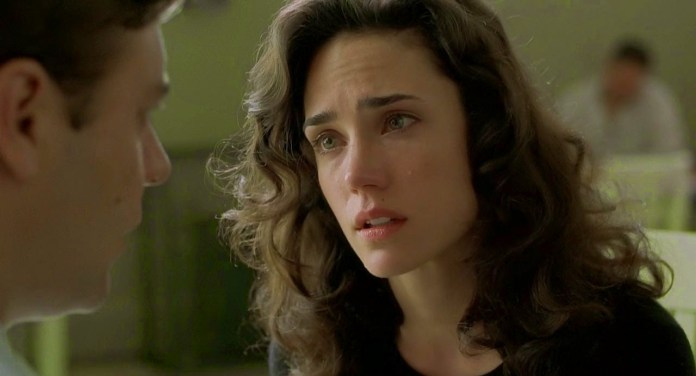
Jennifer Connelly also makes a great deal of her very traditional role as the supportive wife, bringing just the right level of assurance, spark and warmth to the role. Connelly carefully shifts the character from flirtatious confidence to heartbroken but supportive wife. But she doesn’t lose track of Alicia’s own frustrations at living with a medicated, unresponsive husband – even if, of course, any regrets she may have about the way her life turned out are overcome swiftly.

Which of course is completely different from real life where, for all her support, the couple divorced. Nash also had a baby (which he didn’t acknowledge) with a nurse he had an affair with. But these are real life complexities that have no place in a crowd-pleasing biopic like this. Similarly gone are Nash’s possible flirtations with bisexuality, his experiments with drugs or his flashes of violence. Added in are an entirely invented “pen gifting” Princeton ceremony and Nash’s Nobel prize acceptance speech where he gives thanks to his loving wife (in real life no such speech happened and the couple were separated). But that’s not the story this film wants to tell, so truth can go hang.

Perhaps these, post-diagnosis, difficulties are why the final third of the story – which sees Nash casting aside the invasive treatments to overcome the power his delusions have over him through willpower alone – is the least involving part. After all, they had to drop most of the actual real-life events that happened (see above). But there simply isn’t as much drama in watching someone quietly adjust to rebuilding a career in maths as there is in seeing them struggle.

Perhaps as well, because maths is a pretty difficult to bring to the screen. The film falls back into many accepted visual tropes – you’ll see a lot of writing on windows – and explains Nash’s theory of co-operative dynamics with a bar-and-booze based conversation around pulling girls in bars. That’s about as far as engagement with maths and understanding his theories goes – but we take it as read that Nash is a genius because he acts like one, people tells he is and he writes lots of big equations on boards.

A Beautiful Mind offers few real surprises (except for one) and presents a story that Hollywood has basically been making for decades. Things from real-life that don’t fit the story have been cut out, to make this as conventional a film as possible: the troubled genius and the loving wife behind him. It’s very well played (as well as Crowe and Connelly, Paul Bettany is brilliantly charismatic as Nash’s eccentric college roommate) and directed with a professional skill. But it’s also a very safe and even conservative film that has skill but not inspiration.