Category: Relationship film

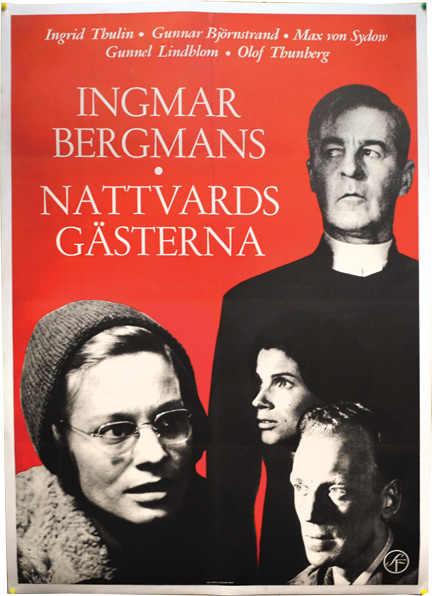
Winter Light (1963)

Winter Light (1963)

Faith is thoughtfully questioned in Ingmar Bergman’s spare, bleak and striking masterpiece

Director: Ingmar Bergman

Cast: Gunnar Björnstrand (Pastor Tomas Ericsson), Ingrid Thulin (Märta Lundberg), Gunnel Lindblom (Karin Persson), Max von Sydow (Jonas Persson), Allan Edwall (Algot Frövik), Kolbjörn Knudsen (Knut Aronsson), Olof Thunberg (Fredrik Blom), Elsa Ebbesen (Magdalena Ledfors)

It would surprise many to hear Bergman held Winter Light in the highest regard among his films. An austere chamber piece, largely set in a cold, naturally lit church, it’s the middle chapter of his thematic trilogy on faith and it serves to correct any sense of hope left remaining from in Through a Glass Darkly. Winter Light – with its lead character a semi-biographical combination of Bergman’s father (himself a Lutheran Pastor) and Bergman himself – begins with a robotic preaching in a Church and ends firing up another such sermon to an empty Church. This is a world where, if there ever was a God, he has long since gone silent and disappeared over the horizon.

You could argue Tomas Ericsson is the most ill-suited priest in the history of cinema. He’s played with a peevish, grumpy lack of hope, inspiration or joy, self-loathing seeping from every pore by Gunnar Björnstrand in what might just be his finest hour. Björnstrand, more comfortable with comedy, struggled with this counter-casting (and his cold, which was written into the script), the bottled-up pressure of the role almost shattering his friendship with Bergman. Following a single afternoon in Ericsson’s life, Winter Light charts his complete disillusionment with his faith, his utter failure to provide spiritual comfort to parishioners and his mix of dependence, indifference and contempt for schoolteacher and some-time lover Märta (Ingrid Thulin), herself a needy, unhappy woman content to play second-fiddle to Tomas’ deceased wife.

Tomas’ faith in God has long since vanished. Winter Light is his own Gethsemane, a parade of painful events and conversations where he waits desperately for some sort of sign or word from the Almighty and is left instead wondering, like Christ, why God has forsaken him. Tomas has become bitter, self-obsessed and self-loathing, going through the motions with a dwindling congregation and unable to muster even the faintest bit of belief in the words that pass his lips.

Winter Light follows up ideas of Through a Glass Darkly (Tomas even talks of a “Spider God”, a destructive force at the centre of a world made of pain). There is an echo throughout of the idea that, if God is love, then letting love into your life (or acknowledging the existence of Love in the world) is proof enough that there is a God, even if he is now silent. If so, Tomas’ rejection of any form of love goes hand-in-hand with his rejection of faith. If he felt love, it was for his late wife – and her death matches the decease of his faith in God. Now he angrily slaps away offers of affection with the same contempt he addresses towards questions of faith.

That offer of love comes from Märta, a mousey teacher trapped under an unflattering hat, the bags under her eyes and spinsterish clothes. She’s played in a performance of sustained, emotive brilliance by Ingrid Thulin. Märta captures her feelings for Tomas – right down to her acknowledgement that she knows he does not love her – in a sprawling, stream-of-consciousness letter (which Tomas has delayed reading – and when he does, he scrunches it into a frustrated ball).

That letter is conveyed to us in a stunning, almost interrupted, seven-minute take where Bergman focuses the camera on Thulin in close-up who delivers the contents of the letter straight to camera. This is a tour-de-force from Thulin, by terms unblinking, honest, self-denying, pained, resigned, hopeful and frustratingly simpering, a masterclass that marks one of Winter Light’s most striking moments of directorial and actorly technique. Few actors could pull this scene off with the grace and emotional commitment Thulin brings to it – and still leave us understanding why Tomas later, with anger frustration, cruelly tells her he has simply had enough of her all-forgiving love.

There is no place for that sort of saintly, Christ-like, love in Tomas’ life. His focus remains his own self-loathing. When meeting with Jonas (Max von Sydow – even more carved from granite than normal, his fixed stillness contrasted with Björnstrand’s twitchy unease), who has come to Tomas for spiritual reassurance to help overcome suicidal thoughts, Tomas can only complain of his own lack of faith. Tomas fails utterly to offer any solace to Jonas, a further mark of his own failure as both a priest and human. Jonas’ suicidal misery at the dread of oncoming Armageddon in the nuclear age, becomes grist to Tomas’ own misery and our priest in turn feels no shame in turning to Märta immediately for reassurance and comfort.

The only person who seems to have considered the nature of faith is disabled sexton Algot (a marvellous performance by Allan Edwall). Algot reflects that the suffering on the cross was not Christ’s true sacrifice – after all that was over in hours. The real suffering was hearing God’s silence on that cross, of the horror of suddenly thinking your life’s work may have been a waste of time, that he evangelised for someone silent or indifferent or worse. It would tie in directly with Tomas’ own doubts – except it’s pretty certain Tomas isn’t listening to him.

Maybe that’s partly the problem. We don’t listen to God, because we no longer expect him to talk. At one point, Tomas asks why God has fallen silent while behind him light suddenly pours through the Church window. Is that a sign of a sort? If it is Tomas doesn’t look and when he does, he doesn’t think. Instead, he contributes to the silence of God – as the closest thing to his vessel he fails to listen, fails to help and focuses only on his own pain.

Winter Light is a gorgeous film, full of striking light and shade by cinematographer Sven Nykvist. It’s also a bleak, grim, hopeless film, the best hope it can offer being God might have been real but he’s long since turned his back on us, just as we’ve turned out back on him. It’s magnified when we reject the thing he might have left for us, love itself. Winter Light is intensely thought-provoking, but rivetingly intelligent in the way the best of Bergman is. Björnstrand is superb and Thulin is extraordinary, in a film that carries worlds of meanings in its spare 80 minute runtime.

Coming Home (1978)

Coming Home (1978)

Emotional but a little too worthy Vietnam message movie, well-directed with great performances

Director: Hal Ashby

Cast: Jane Fonda (Sally Hyde), Jon Voight (Luke Martin), Bruce Dern (Captain Bob Hyde), Penelope Milford (Vi Munson), Robert Carradine (Robert Munson), Robert Gintu (Sgt Dink Mobley), Mary Gregory (Martha Vickery), Kathleen Miller (Kathy Delise)

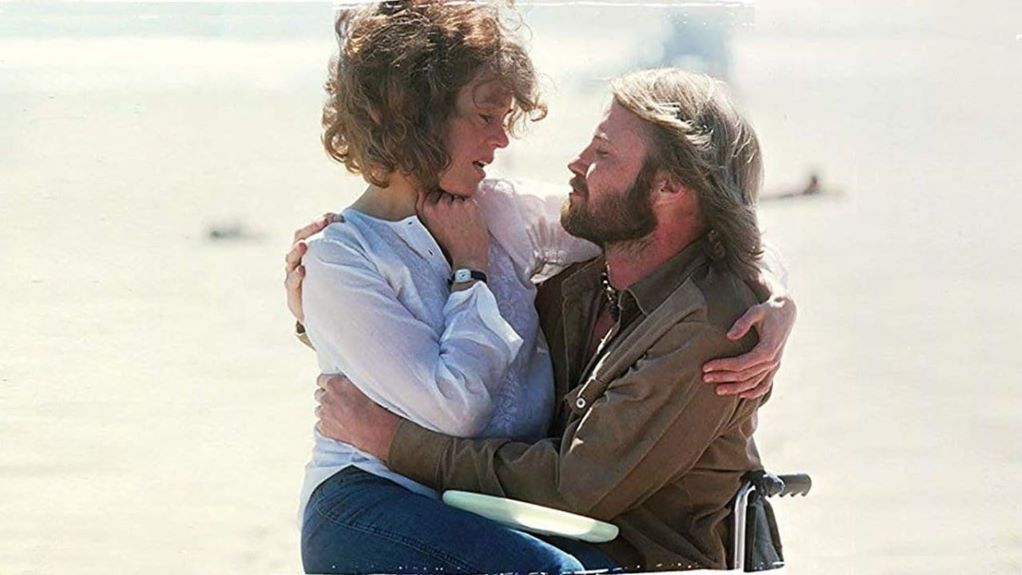
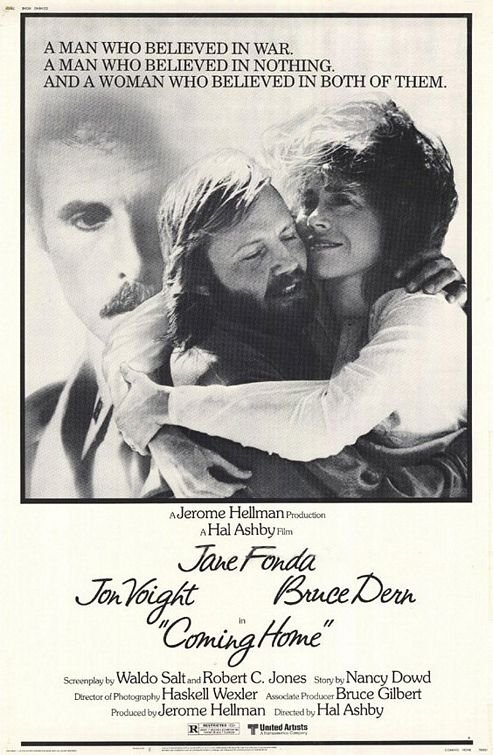
Vietnam is a jagged scar on the soul of America but, more than that, it’s been a literal scar for the veterans. Luke Martin (Jon Voight) was a college athletic star, now returned from the frontlines as an angry paraplegic, struggling with post-traumatic stress. Helping him – eventually – is old school-friend Sally Hyde (Jane Fonda), married to a Marine captain Bob (Bruce Dern) who has himself shipped out to Vietnam. Sally and Luke find themselves growing closer and closer emotionally, as their hostility towards the brutal war grows. But how will Bob – still loved by Sally and himself ever more scarred by trauma – react when he returns from the front?

Coming Home was released in the same year as The Deer Hunter and makes for an interesting comparison. While Cimino’s film is a horrific plunge into the grisly horrors of war, combined with a sort of mesmeric epic poetry, Ashby’s Coming Home is a quieter, more domestic piece, an earnest attempt to explore trauma. There is no doubting the passion of all those involved: but Coming Home is at times a little too earnest. Despite its moments of undeniable emotional impact, its sometimes feels a little too pointedly like a “message” film, worn a little too heavily on its sleeve.

But, saying that, there are many positives. It’s shot with a skilful casualness by Ashby, whose unobtrusive camera makes us a witness to events (at one crucial point it is even half obstructed by a door). Ashby has a poetic sensibility that flies in the face of what could have been its soapy roots. He lets scenes unfold with such ease and gentleness of touch that you only slowly notice how extremely well assembled the film is. There is a whimsical, lyrical sadness about the whole thing – matched with a striking lack of condemnation of people, only for a system that bends and twists human beings into killing machines.

It uses a parade of hit songs, but the songs play not as snippets but as full performances, playing out over several scenes, scenes which at first seem to be directly counter to the lyrics and tone of the song itself. Then you notice the skill with which the film has been edited to the beat of the music, and how much The Rolling Stones, The Beatles, Hendrix, Simon & Garfunkel, Bob Dylan and many others set the tone for a whole era. Coming Home captures this tone, an era of optimism crushed by brutal contact with the cold, dark realities of the world. The songs weave themselves in and out of scenes, capturing an overwhelming sense of a nation lost and confused.

It’s in this framework the relationship between Luke and Sally flourishes as Luke begins finding purpose in his life. Heavily based on the life of Ron Kovic, Jon Voight won an Oscar for his extraordinarily committed performance. From early outbursts of naked fury and pain, wheeling himself around on a hospital bed, his outbursts seemingly only prevented by medication, Voight charts the development of Luke as a humanitarian and compassionate man, committed to helping others overcome their pain and loss.

He also develops an attachment to Sally that transcends physical attraction: the two are kindred spirits. Fonda (effectively the film’s producer), generously takes on the film’s least interesting role as the disengaged, homespun Sally, increasingly horrified by the war’s impact on veterans – and the lack of interest from others (capturing the whole sweep-it-under-the-carpet attitude of the armed services, her military wives’ club refuses to include a report from Luke’s hospital in their newsletter because it’s too depressing). This translates into a deep attraction for Luke, the only other person who truly shares her growing resentment for the war.

Coming Home gained much attention at the time for its frank depiction of sex, with Luke and Sally tenderly overcoming the barriers of his disability. (Although today, their coupling – with Fonda replaced by a body double – culminating in Sally’s first ever orgasm feels a little too obvious in its comparisons with her passionless flings with Bob). But sex is less important than sharing their feelings, from Luke’s talk of dreams where he can still walk to Sally’s doubts about her life choices.

If there is a problem with Coming Home, it’s that the film doesn’t really know what to do with these characters other than showcase their pain. It tends to make sharp jumps – Luke’s recovery from initial rage to tender, thoughtful man feels very swift. And although Penelope Milford is good value as Sally’s best friend, struggling to deal with her veteran brother’s collapsing mental health, her plotline and performance is a little too obviously designed to contrast with Sally’s.

The basic problem with Coming Home is that in its rush to establish the fundamental decency of its characters – and the appalling horror of the war they are wrapped up in – it often avoids drama of struggle. It makes an interesting contrast with Zinnemann’s The Men which turned Brando’s paraplegic veteran’s psychological recovery into an entire movie: here Luke’s finding of a new purpose is as swift as his mood shift is.

The film’s most interesting plotline actually follows Dern’s Bob Hyde. Dern gives the film’s most complex performance as a dedicated solider, struggling with deep denial about his growing disaffection and unacknowledged PTSD, confronting his wife’s infidelity with a mix of anger and desperation to receive a comforting hug from her. Hyde’s discovery of the affair is its most melodramatic moment, but also strangely its most unpredictable – and a film exploring this character’s switch in perspective might just have been a little more challenging.

But Coming Home has plenty to recommend it. Voight has never been better, warm, tender and throbbing with emotion, his closing speech to a roomful of students exhorting them not to fight and choking back tears that taking another life is never worth it, is worth the price of admission alone. Ashby’s film has a poetic sensibility to it and if it sometimes feels a little too self-righteously earnest about its anti-war credentials, and a little too aware of its status as a “message movie”, at least it is a message that needs to be heard.

My Brilliant Career (1979)

My Brilliant Career (1979)

Edgy and very good feminist film about a prickly and difficult woman struggling against a lack of choice

Director: Gillian Armstrong

Cast: Judy Davis (Sybylla Melvyn), Sam Neill (Harry Beecham), Wendy Hughes (Aunt Helen), Robert Grubb (Frank Hawdon), Max Cullen (Peter McSwatt), Pat Kennedy (Aunt Gussie), Aileen Britton (Grandma Bossier), Peter Whitford (Uncle Julius)

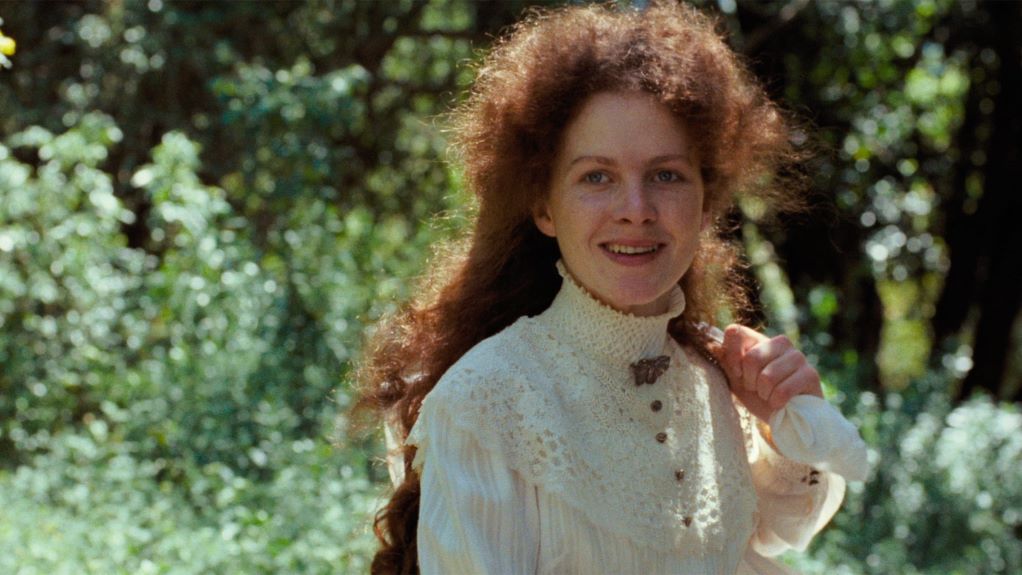
In turn of the century Australia, it’s fair to say women were not awash with choices as Sybylla Melvyn (Judy Davis) discovers. Growing up on a dust covered farm, she dreams of becoming something – an artist, a singer, a writer, a connoisseur of culture, anything rather than spending her life as a wife and mother. She is dispatched by her parents to her wealthy maternal grandmother (Aileen Britton), determined to scrub her up, shave off her rough edges and find her a good marriage. Sybylla resists, but much to her surprise finds herself attracted to old childhood friend, Harry Beecham (Sam Neill). But will Sybylla choose marriage over finding her own path in life?

Adapted from a semi-autobiographical novel by Miles Franklin (the pen name of Stella Maria Sarah Miles Franklin), My Brilliant Career was a feminist watershed in Australian cinema, also one of the first Australian films directed by a woman. Gillian Armstrong was fascinated by a story that, while a period piece, still spoke strongly to a time when women were moving out of stereotypical traditional roles they had been pigeon-holed into. My Brilliant Career is a costume drama that looks at the stark reality for women at the time (wife, mother or “spinster”). And while men could dream of lives of cultural and artistic fulfilment or economic ambition, women faced innumerable barriers.

The frustrations help explain why Sybylla is such a prickly, at times maddening, frustrated woman trapped in a constant stream of situations where her choices are narrow or she cannot decide what she wants. On her parents’ farm, her interest in art and classical music turns her into a sort of freakish bluestocking (or larrakin), her slow plonking of Schumann on the family’s out-of-tune piano sounding to them like sounds from the end of the world. Among the well-off hoi polloi of Australia, she seems scruffy and wild and her knowledge of working-class drinking songs and enjoyment of rough-and-tumble games and dancing lead to raised eyebrows (it’s telling she switches to playing the bawdy tunes of her parents’ local drinking hole on the grand piano of her grandmother’s house – she is an outsider everywhere she goes).

Sybylla is brought to life in a sensational, star-making performance by Judy Davis. Davis isn’t afraid to make Sybylla often difficult and even a little unlikeable. She’s capricious and often infuriatingly vague about what she wants. She has high-blown dreams of an artistic life, with no fixed idea about what that might mean. She is adamantly opposed to marriage, but flirts outrageously. She scorns the uncultured dirt of the poor but finds the fussy exactitude of the rich oppressive. She’s a mass of contradictory and confused impulses, all caught up in her limited opportunities: marry as everyone wants her to do and, even if she loves the man, say goodbye to the ability to make her own choices.

This is captured perfectly in Davis’ shabby impertinence. She makes Sybylla someone never afraid to speak her mind: smutty jokes at dinner tables, blunt refusals of “I’m-doing-you-a-favour” proposals. Davis makes her defiant and difficult, but also strangely vulnerable (she’s very sensitive about her appearance – not surprising considering barely a scene goes by without someone commenting on her plainness, freckles, messy hair or some combination of all three). Davis charges about the screen with a masculine tom-boyishness. She trudges through fields, clambers up trees, drives horse and carts with aggressive pace. She rarely looks comfortable in her clothes. She has a sharp, at times even cruel, sense of humour, never suffers fools and doesn’t allow anyone to talk down to her.

Armstrong’s film however makes clear this is all in the nature of the teething problems of a young woman still mystified about what she wants from life. And who can blame Sybylla at the unattractiveness of the various alternatives put to her (basically a range of glorified servant roles). She is even dispatched to serve as a governess to a group of scruffy farm children, again tellingly the only time she truly embraces the comfort of formal clothes, as if cementing her place as not among the mud. (This sequence does show Sybylla’s social flexibility as, much to her surprise, she forms a bond with these coarse workers.) It’s a situation made particularly difficult when she has two viable suitors thrust at her.

The first she can dismiss with ease – a pompous stuff-shirt played with smackable smugness by Frank Hawdon. The other is far more viable: a kindred-spirit of a sort played by an attractively charismatic Sam Neill. Harry and Sybylla capture in each other the exact qualities the other finds attractive but would cause long-term disaster in marriage. Sybylla is attracted to Harry’s humour and intelligence but would find his settled landowning life restrictive. Harry is drawn to Sybylla’s free-spirited independence but long-term would find it infuriating. Nevertheless, the temptation to marry is strong for both of them.

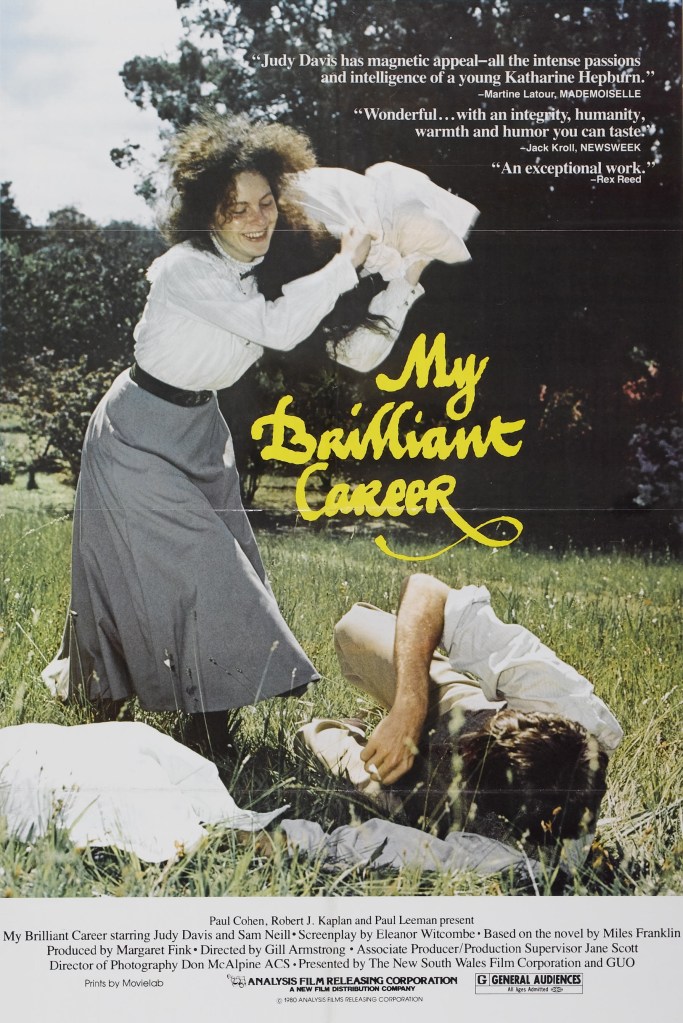
Armstrong’s film expertly builds the unspoken, awkward courtship between these two. They take it in turns to ignore and provoke jealousy in each other. When thrown together they go from surly silence into bawdy flirtation (including an epic outdoor pillow-fight across Harry’s farmland). The question always remains though whether marriage is the right choice for either of them. Not least as it would potentially end Sybylla’s dreams of exploring the world and her place in it.

My Brilliant Career is lusciously designed (by Luciana Arrighi) and beautifully shot (by Donald McAlpine). Gillian Armstrong brings a strong visual eye to the film – there are some superb compositions involving windows and walls creating visual barriers between characters and some terrific transitions (the finest being a cut that visually compares Sybylla’s beside her bed with her mother in her dining room at home). The film builds a wonderfully subtle feminist picture, with several women – Sybylla’s mother who has married for love and found poverty, her aunt (well played by Wendy Hughes) jilted by an unsuitable husband, her great aunt who chose freedom but is deeply lonely – presenting potential life paths that further illustrate the paucity of choice.

It makes for a prickly but eventually very involving film, with a sly wit, very well filmed that gradually makes us care deeply for a character who is initially as irritating and challenging for the viewer as she can be for the characters. With a brilliant performance by Judy Davis, My Brilliant Career is an important milestone in the Australian New Wave and a superb debut for Gillian Armstrong, that mixes strong thematic ideas and beautiful visuals.

Solaris (1972)

Solaris (1972)

Tarkovsky’s search for inner meaning and depth in the framework of space

Director: Andrei Tarkovsky

Cast: Donatas Banionis (Kris Kelvin), Natalya Bondarchuk (Hari), Jüri Järvet (Dr. Snaut), Vladislav Dvorzhetsky (Henri Burton), Nikolai Grinko (Kelvin’s Father), Olga Barnet (Kelvin’s Mother), Anatoly Solonitsyn (Dr. Sartorius), Sos Sargsyan (Dr. Gibarian)

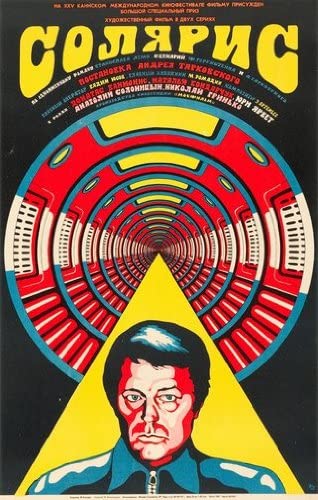
When Tarkovsky saw 2001 he was not impressed, calling it “a lifeless schema with only pretensions to truth”. Tarkovsky thought science fiction was in thrall to machinery and effects, rather than intellectual heft. (By the way, it shows how much Tarkovsky saw himself as a philosopher-poet, that he felt Kubrick a lightweight). Tarkovsky’s aim with Solaris was to present science fiction about people and ideas, rather than technology. Solaris is in equal parts fascinating and frustrating, wilfully slow (as Tarkovsky liked it) but also hypnotic, a film that never quite manages to marry up his stated aim to explore human feelings with his own intellectualist distance as a film-maker.

Adapted from Stanislas Lem’s novel, Solaris is set in an unspecified future and revolves around psychologist Kris Kelvin (Donatas Banionis). Kelvin is sent to a station orbiting the alien world of Solaris, an ocean world that quite possibly might be a gigantic living brain. It’s hard to tell if that’s the case, because contact with the planet has proved impossible over decades. Now the last three scientists on Solaris station are sending back strange reports and Kelvin’s job is to decide if the programme should continue. On the station he discovers the planet has somehow accessed the inhabitant’s dreams and made figures from their subconscious flesh – and he is horrified and then overwhelmed when his late wife Hari (Natalya Bondarchuk) appears on the station, a ghost made real by the strange powers of Solaris. How human is she? And does it matter?

Lem cordially disliked Tarkovsky’s Solaris. He couldn’t understand why the film didn’t exactly follow the book – where were the long chapters of scientific philosophical discussion? He felt it a shallow palimpsest of his work. I like to imagine that infuriated Tarkovsky, a director who prided himself on his intellectualism like few others. Huffily retorting films are different from novels, nevertheless he later claimed Solaris was the least favourite of his films, preferring the pretentious Stalker. But Solaris is ghostly and haunting in a way that the self-important Stalker (for me) never is.

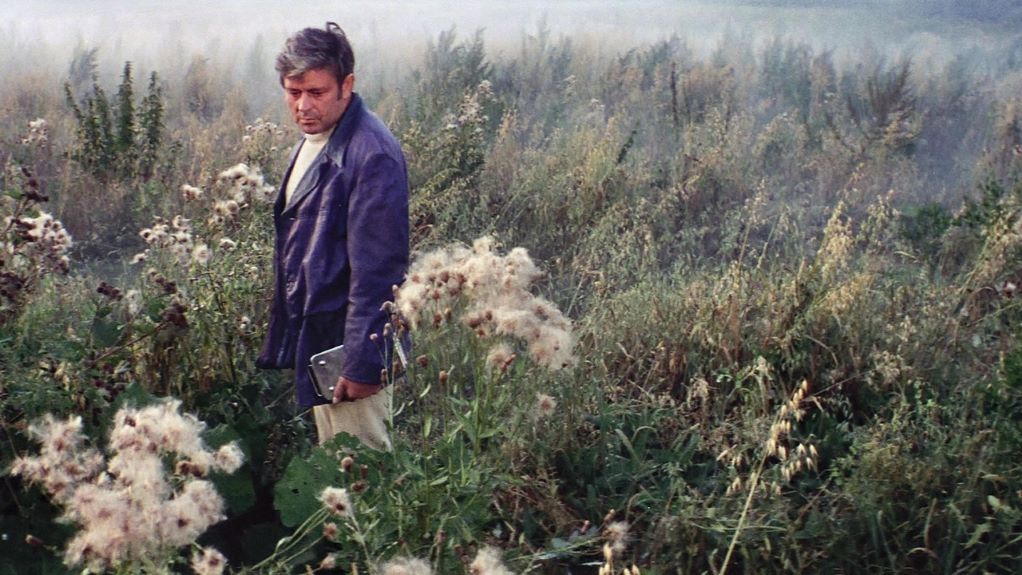
Tarkovsky’s view of man’s exploration of the stars is that it blinds us to the more rewarding search for truth and meaning here on Earth. Not for nothing does the film start with a long, wordless, sequence following Kelvin walking through the grounds of his father’s dacha. Reeds dance in the river, long grass strokes Kelvin’s waist, rain spatters down from the sky.  Nature is a key part of what makes us human – on the station, the scientists affix paper streamers to air vents to replicate the sound of wind among the trees, to make Solaris feel a little more like home. To Tarkvosky space is a boring, featureless mass, and Solaris nothing but a pale shadow of Earth’s glories.

What’s the point of hitting the stars, if we are cold and lifeless ourselves? Kelvin is this at the start of the film, a distant, emotionless man, plagued with regret, barely engaged emotionally with his world. A mysterious child runs around his father’s house – we assume it must be Kelvins daughter (Tarkovsky never confirms) but our hero never takes an interest in her. This will change with the appearance of Hari, exactly as he remembers her – unaged (she died at least twenty years ago) and a strange mix of who she was and his half-remembered memories.

But Kelvin isn’t ready to explore this yet. He puts the ghost in a rocket and shoots her off into space. Pointlessly, as his fellow inhabitants of the station tell him. They’ve tried similar with their own ‘visitors’ – they always reappear when they wake from sleep. And Kelvin can’t do the same again with the second Hari. Especially as this Hari is so distressed at the slightest separation from him, she tears her way through a metal door after he closes it on her.

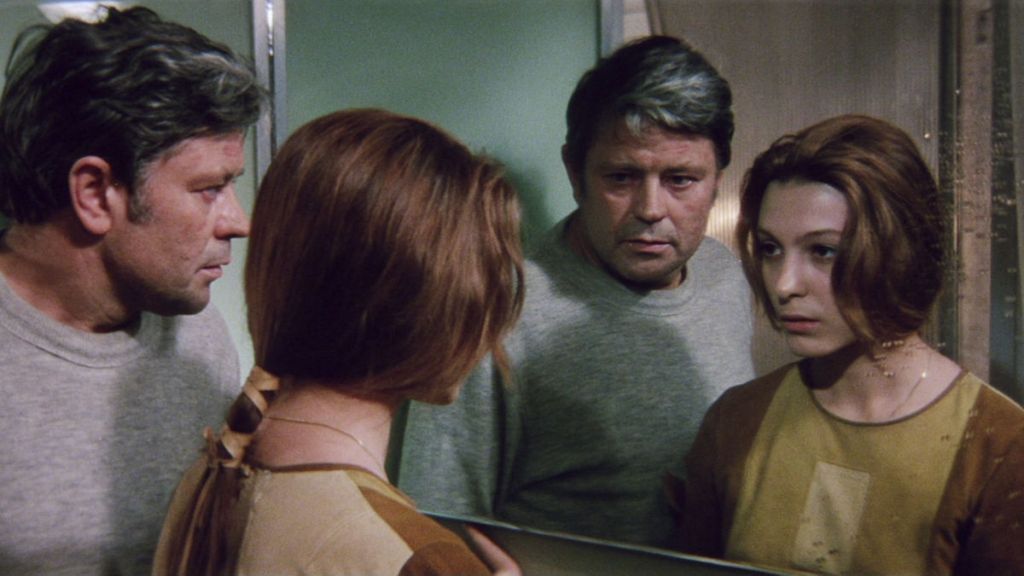
It turns Solaris into Tarkovsky’s real aim: an exploration of what lies within, rather than ethereal dreams among the stars. As Dr Snout says, real exploration would require mankind to find a mirror not a rocket. Solaris becomes about how far Kelvin will go to emotionally connect to a woman who may or not be real and both is and isn’t the person he remembers. How much will he put aside his doubts and reconnect with feelings he has long suppressed? And in Hari’s case, as her self-awareness grows with every minute of her ‘existence’, how much will she change? And, as she is born from Kelvin’s guilt at her suicide, is she always destined to embrace self-destruction?

Solaris (1972 Andrei Tarkovsky) Donatas Banionis and Natalya Bondarchuk

These ideas become the heart of Solaris, unfolding in Tarkovksy’s trademark style. Solaris is awash with long unsettling takes and an eerie lack of music – and even, in places, ambient sound – in which the actors move with a coldness and lackadaisical precision. Solaris is, in many ways, an awkward fit for the director. Tarkovsky is not one to embrace raw emotion. Donatas Banionis remains, throughout, an austere and unknowable figure, whose exact feelings remain at times unconnectable behind his stoicness. Solaris is like a terrible ghost story that looks at the impact of loss with the same professional interest Kelvin as a psychologist has. At times Tarkovksy seems like a philosopher juggling the enigma of humanity, but getting a little bored with the question. Crude as he would find it, an emotional outburst or two would do wonders for Solaris.

But perhaps that would sacrifice part of what makes Solaris as compelling, haunting and lingering as it can be. Because there is a feeling the whole thing is taking place in a drained-out dream that could cross into a nightmare. Hari is beautifully played by Natalya Bondarchuk, carefully balancing the slow flourishing of a shadow into a human, scared and alarmed by the onslaught of emotions she cannot understand. Her slow of a distinct personality, rather than as an extension of Kelvin, contrasts with the cagey uncertainty of the rest of the characters. And makes us wonder how real they might be, since she feels at times the most vibrant.

Tarkovsky’s film uses his style to wonderful effect throughout. His lack of interest in the trappings of the modern world actually adds to its eerie disconnect. Clothing and technology basically look exactly like the 1970s, cars are unchanged, the space station is a grimy wreck. Kelvin’s journey to the space station takes about 45 seconds of screen time – compare to the long, dreamlike drive Burton takes through the city (actually – and clearly – Tokyo). Tarkovsky’s heart is in the poetry of a horse’s movement. It adds to the sense of space exploration as a chimera and the 45 minutes the film takes in its prologue on Kelvin’s father’s dacha reminds us that understanding the world around and inside us is where Tarkovsky feels our aims should be directed.

Solaris ends with a sequence that has stayed with me for decades. Kelvin repeats his long walk through his father’s land, all of it this time in a chilling stillness. Not a gust of air or ripple on the water. He approaches his father’s house to see rain falling inside. A long cut back shows the truth. It’s a close to the theme Lem felt was least engaged with by Tarkovsky: the impossibility of communication between two species so fundamentally different they can only offer a simulacrum of each other’s behaviour.

Tarkovsky is straining for a different type of psychological journey. Solaris offers little in the way of emotional investment – it’s far too restrained, cold and distant for that. Such emotions are placed at the heart of Soderbergh’s remake – but that sacrificed the austere, ghostly haunting of this. Solaris plays like a construct from the planet of our emotions, thoughts and fears, its characters moving in journeys of discover in our world much as Hari does in theirs. It’s unknowability and discordant stillness and jagged long-shots make it unique. It’s one of the Tarkovsky films I always want to revisit.

Au Hasard Balthasar (1966)

Au Hasard Balthasar (1966)

Bresson uses an animal to make a powerful spiritual point in a simple but insightful movie

Director: Robert Bresson

Cast: Anne Wiazemsky (Marie), Walter Green (Jacques), François Lafarge (Gérard), Philippe Asselin (Marie’s father), Nathalie Joyaut (Marie’s mother), Jean-Claude Guilbert (Arnold), Pierre Klossowski (Miller), Jean-Joel Barbier (Priest), François Sullerot (Baker), Marie-Claire Fremont (Baker’s wife)

Robert Bresson valued naturalism in his actors above all things. So much so he would make them rehearse even the simplest actions hundreds of times, to drain all artificiality and performance from it and make it as ‘real’ and controlled as possible. He worked best with non-professional actors, whose lack of training meant there was one less barrier of artifice for him to break down. So, its perhaps not a surprise that one of his best collaborators, in one of his finest films, was such a non-professional he wasn’t even human. He was a donkey.

Au Hasard Balthasar (or Balthasar, at random) also throws in Bresson’s other great strength: a profound, but not overbearing, spirituality, a mark of Christian faith that turned simple stories told on an intimate scale into searching and intriguing metaphors for the human condition. He achieves something quite remarkable here, with a film that places a donkey near its centre but then becomes a meditation on the human condition and our capacity for cruelty and selfishness. And the donkey himself becomes a passive, Christ like figure, undergoing his very own passion on the way to his own Calvary where he will literally die because of – and maybe for – our sins.

Balthasar’s life is one of seemingly random, disconnected movements from one owner to another, all of whose lives loosely entwine. First, the kindly Marie (Anne Wiazemsky) who, as a child, adopts Balthasar and brings him into her home. This blissful life lasts a short time before the donkey is palmed off to farmhands then a baker whose delivery boy Gérard (François Lafarge) is a tearaway and criminal. Gérard treats the animal poorly – largely because he envies Marie’s love for it. They enter into an abusive relationship, while Balthasar is taken on by alcoholic Arnold (Jean-Claude Guilbert) who uses him to guide tourists up the Pyrenees. Balthasar works as a circus animal and a beast of exhausting labour for a miller, while in the background the threat of Gérard and his malign influence on Anne and his abuse of Balthasar lurk.

Perhaps the most striking thing about Au Hasard Balthasar is how readily Bresson embraces the nature of the donkey. Balthasar is never anything other than a dumb animal. He has no insight into what is happening around him. Instead, he stands passively chewing. He only rarely seems to recognise and respond to people. Events happen to and around him, but there is no attempt to show them having any impact on him. He is – and remains – simply a donkey, incapable of anything other than what a donkey can do. Bresson allows not a second of anthropomorphism. Babe this isn’t.

Instead, what happens to this donkey tells us more about the humans he encounters around him. This gives us a stunning insight into humanity and how we treat those below us. To most the donkey is not a person or even a creature, it is just a tool. As the miller says, it will be worked until it can work no more and then it will be euthanised. Gérard sees it as a petty scab to pick, a chance for a bit of casual sadistic fun, tying fire-crackers to its tail and watching its distress. The closest to a companion he has, outside of Marie, is Arnold – and even Arnold works him incessantly and drags him back to servitude from a brief release at the circus.

What Bresson does with this, is invest this donkey’s story with immense spiritual impact. The events that happen to Balthasar parallel the stages of the cross, moments of tenderness from strangers and friends mixed with labours dragging his own cross and the mockery of those who watch him. He’s met with indifference and disregard so many times, that his suffering eventually seems to be providing some sort of chance of retribution for the deeply flawed characters around him, that by treating him well the might save their own souls. Instead, Gérard will drag him over the border carrying smuggled goods and he will, uncomplainingly, suffer the punishment for him.

We can but hope that it is to give Gérard a second chance. But I doubt it. Bresson’s impact with his actors, beating the ‘acting’ out of them gives them a flat naturalness – but also allows us to layer our own feelings on top of them. Gérard is a choir boy with an angelic voice – but he’s also a selfish sadomasochist and a bully, charismatic but naturally cruel. Nevertheless, he has a demonic charm. The baker’s wife willingly covers him his theft and showers him with gifts.

And of course, Marie is drawn towards him with self-destructive yearning. She should love her childhood friend Jacques, but he’s a dull, uninspiring, sap. Gérard is rough, tough, wears a leather jacket and can sing like an angel and (you imagine) cuss like a demon. Their first encounter sees Marie torn between fear, fascination and attraction, as a roadside encounter leads to a sexual encounter in a car that has the whiff of lack of consent. Despite this, Marie returns again and again to Gérard, throwing away parts of her life and family to hang on his arm.

It’s only Balthasar it seems she can connect with. Perhaps because they are both sacrificial figures. Marie’s father loses his farm due to pride and stubbornness. She devotes herself to a bad man and rejects the one who idealises an idea of her. Marie’s motives defy logic to us – but maybe this is because she is closest to the donkey and, like him, content (condemned?) to lead a life where she is buffeted by events and people rather than controlling them.

Bresson plays this all out with a quiet, unfussy, contained camera, playing shots out in controlled takes and carefully selecting moments to cut to Balthasar. He avoids moral judgements but presents actions as they are. After all, shouldn’t a miller work a donkey hard? Shouldn’t a baker need him to walk miles? Don’t we go to the circus or zoo all the time and not think about the animals performing for us? Things are presented as they are and we are not pushed towards one view or another.

Except at the end as Balthasar makes his final sacrifice, lying down on his personal Calvary as Schubert plays on the soundtrack (the film’s only real sustained use of music). Quietly, life drains from this animal as sheep flock around him as if to pay tribute. It’s profoundly simple but somehow intensely moving – as if the pointless culmination of this life somehow sees the donkey transcend into something higher and more meaningful, and eternal symbol of virtue and sacrifice.

It’s what makes Au Hasard Balthasar linger in the memory. Bresson’s signature simpleness and restraint, his deliberate, observatory distance from characters and events leave it open to us to interpret what we will. Maybe it’s just a story about a dumb animal. Maybe it’s a story about all of us, about how we exploit things around us and how we treat each other with selfishness and greed. Eventually Bresson leaves it up to us to decide what we can take from it.

The Red Shoes (1948)

The Red Shoes (1948)

Ballet and obsession go hand-in-hand in this beautiful, triumphant film

Director: Michael Powell, Emeric Pressburger

Cast: Anton Walbrook (Boris Lermontov), Marius Goring (Julian Craster), Moria Shearer (Victoria Page), Robert Helpmann (Ivan Boleslawsky), Léonide Massine (Grischa Ljubov), Albert Bassermann (Sergei Ratov), Ludmilla Tchérine (Irina Boronskaya), Esmond Knight (Livingstone Montague), Austin Trevor (Professor Palmer), Jean Short (Terry), Gordon Litmann (Ike), Eric Berry (Dimitri)

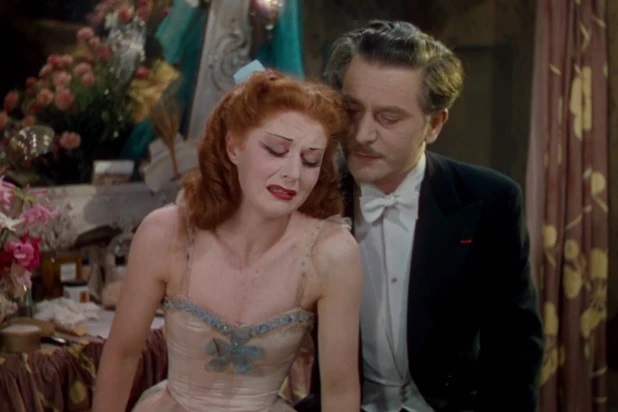
If there was a moment when “ballet” and “obsession” became synonymous in people’s minds, it might just have been the premiere of Powell and Pressburger’s The Red Shoes. The founding text in the cult of en pointe, The Red Shoes mixes technicolour beauty and fairy-tale darkness with an elaborate meditation on the struggle to balance life and art. For many it’s the peak of The Archer’s cinematic artistry. While I don’t place it that high – I have too much fondness for the beauty of A Matter of Life and Death, enjoyment for the bonkers madness of Black Narcissus and too much respect for the pleasures of The Life and Death of Colonel Blimp – there is no arguing that this is vibrant, beautiful filmmaking, two masters firing on all cylinders.

The Red Shoes is the ballet battleground for the conflicting demands of three people. Boris Lermontov (Anton Walbrook) is a Diaghilevish impresario for whom everything is secondary to art, demanding complete obedience from his protégés. Julian Craster (Marius Goring) is a gifted young composer who values life and love over art. Between them is Victoria Page (Moira Shearer), graceful once-in-a-generation ballerina talent who wants to both dedicate herself to Julian but also dance herself into legend with Boris. These three will make and break alliances on and off tour, touring Craster’s Red Shoes about ballet shoes with a mind (and dance) of their own.

On its release The Red Shoes became the most successful British film ever released in America (it even topped the end-of-year box office chart). Its popularity added even greater momentum to the wave of Hollywood musicals that turned into a tsunami. Would Gene Kelly have had the guts to end An American in Paris with a fifteen-minute ballet if Powell and Pressburger hadn’t stuck a 17 minute one in the middle of The Red Shoes first? Where The Red Shoes differs from Hollywood musicals that pirouetted in its footsteps, was it darkness and surprising bleakness, it’s clear, cold-eyed look at the limits of opportunity and the dangers of following your dream.

Because Victoria Page – played with a great deal of honesty and affecting vulnerability by professional ballet dancer Moira Shearer – is severely damaged by doing so. Inveigling her way into Lermontov’s company (despite Lermontov’s distaste at her mother’s forceful pushiness) she proves her spurs by a sensational performance in a small-scale Swan Lake at the Mercury Theatre (dancing to a recording rather than a live band) and is parachuted into a leading role in Lermontov’s productions. Vicky dreams of leaving the sort of mark few do – but she’s also human, unsuited at heart to the fierce, all-consuming obsession Lermontov expects from his stars. Shearer makes her vulnerable, gentle, lacking the force of personality to resist peer pressure.

Pressure is what Lermontov trades in. Played with a vampiric intensity by Walbrook, Lermontov is pale, Germanic and frequently retreats behind sunglasses. He commands there is no God but art and that he alone is its unquestionable high priest. He holds court in his office, where his staff come and go, rotating around his every whim and opinion. He lurks in the shadows at the rear of the theatre during rehearsals, quietly passing judgement. Vicky’s predecessor is dismissed for daring to get married. And there is the constant expectation that should he ask you for a sacrifice, it should be made in seconds.

He doesn’t care for conflict. In fact, any disagreement is met with summary dismissal. It doesn’t matter how much he’s invested in you. As Julian Craster discovers to his cost. Goring does fine work as the enthusiastic young composer (even if he is clearly a little old for the role) who we are introduced to excitedly watching his professor’s new composition for Lermontov only to discover all the melodies are his. While Lermontov is reluctant to do anything to ensure Craster gains the credit for his work (a sign of his own need to control all patronage and praise) he takes Craster on, who proves himself no flash in the plan. But no amount of time invested in Craster matters when the young composer dares to fall in love with Vicky. And even worse, she dares to love him back.

Because love and a life outside of the dance isn’t part of the plan. These ideas are all captured in The Ballet of the Red Shoes, the piece Craster composes for Vicky (the preparation for which is the catalyst for their burgeoning love affair). Based on the Hans Christian Anderson tale of the dancing shoes that had a life of their own, it neatly encapsulates Vicky’s problem. As Lermontov says summing up the story, it’s the tale of shoes that at first delight a young woman and then literally dance her to death. The entire ballet, like the film, is a grim reminder of the horrific price all-sacrificing excellence in the arts can lead to.

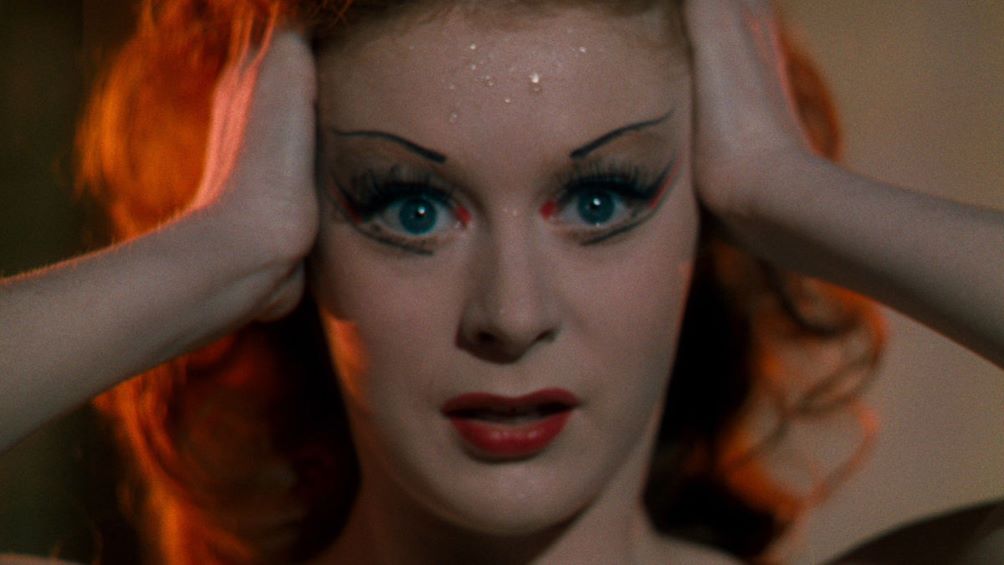
It’s fitting that this story is placed at the heart of such a hugely beautiful and fascinating film. Powell and Pressburger’s film are virtually a by-word for technicolour beauty. Jack Cardiff excels himself here as a photographer (only a reluctance to give this Brit outsider an Oscar two years running surely prevented even his nomination). The Red Shoes is crammed with exquisite imagery, gorgeous photography and striking, unforgettable colours. Hein Heckroth’s sets are magisterial (and Oscar winning), not least in the staging of the ballot that dominates the centre of the film.

The ballet is filmed quite unlike any other dance sequences in films. Powell in many ways breaks the cardinal rules of shooting dances. The ballet is a combination of quick edits and intricate camera moves. It is defiantly non-realistic: despite the setting, it is clearly (with its use of slow motion, super-imposed images and effects like the red shoes lacing themselves onto Vicky’s feet) not a faithful theatrical staging but highly cinematic. It beautifully, subtly suggests that we are at a tipping point between reality and imagination, that Vicky’s identification with the lead role has partially shifted her perception of the whole piece into a fairy tale turned real.

Is that partly why the whole film feels like we are walking in her own personal Hans Christian Anderson story? With Julian as the romantic prince, the theatre as a mix of enchanted forest and mysterious castle – and Lermontov as the beast who may be a prince in disguise or the wolf dressed as granny. It leads into the finales tragic ending, which blurs the line between reality, imagination and trauma into an undefinable mass. Do those red shoes exert a terrible, profound power of Vicky she hardly understands? Or are they just physical representations of her own ability to choose between the demands placed on her?

The Red Shoes is in some ways a traditional melodrama, not to mention another fable of a woman being unable to have both career and family (in the way, of course, that a man can). It is also a slim story, and the ballet – impressive as it is – depends on your relationship to that artform to work or not (I confess I find it drags slightly). But it’s also full of delightful behind the scenes sequences, from rehearsals to design meetings with Albert Bassermann’s Germanic designer to Craster’s coaching of the orchestra.

Visually rapturous, its directed with a great deal of flair and sympathy from Powell who draws some superb performances from his cast of mostly professional dancers. Although Shearer has no real chemistry with Goring, her performance as Vicky is beautifully observed and highly sympathetic and The Red Shoes is blessed with a definitive performance from Walbrook who is powerfully, imposingly domineering as Lermontov. The Red Shoes may at time dress its melodramatic heart in a little too much on-the-nose artiness, but it is also a sensational, ravishing film that lingers as long in the memories as Vicky’s prodigious dance steps.

Atlantic City (1981)

Atlantic City (1981)

A never-was romances a dreamer in Malle’s low-key film, full of neat observations

Director: Louis Malle

Cast: Burt Lancaster (Lou), Susan Sarandon (Sally), Kate Reid (Grace), Michel Piccoli (Joseph), Hollis McLaren (Chrissie), Robert Joy (Dave), Al Waxman (Alfie), Moses Znaimer (Felix)

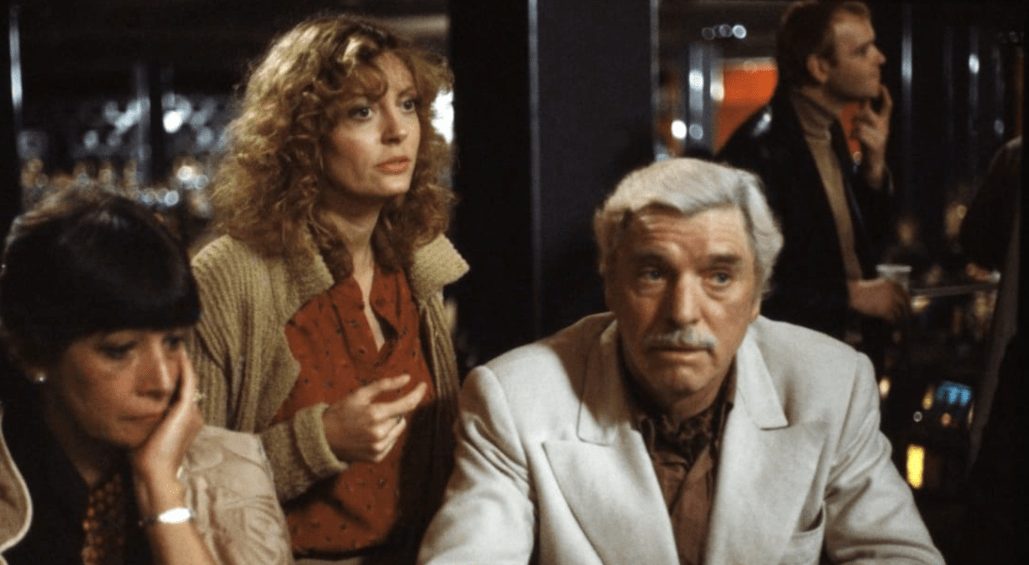
Lou trundles around Atlantic City taking a few cents for bets and wanting anyone who listens to know that back in the glory days of the Boardwalk Empire he was a big shot. Bugsy Siegel roomed with him in the slammer. Meyer Lansky asked his opinions on the latest scores. When he killed someone, he dove into the sea to wash the exhilaration from his body. Not his fault the glory days are gone, and his life has crumbled as much as the worn out city around him. He’s still a player.

Only of course he’s not. Played in a fine autumnal performance by Burt Lancaster, Lou has the front of an ageing star, but is a dyed-in-the-wool loser. He trades on a past that never happened, full of tall stories that only the dimmest and most impressionable would consider believing. He’s essentially a kept servant of Grace (Kate Reid), a former local beauty queen (third place) and spends his nights spying on his neighbour Sally (Susan Sarandon), while she washes away the stench of the hotel fish counter she works in.

When the chance comes to spin a fantasy that means Lou could actually impress and seduce this women, he jumps at it. That chance is Dave (Robert Joy), Sally’s pathetic dweeb of an ex-husband who believes Lou is the perfect to peddle his stolen cocaine around town. Dave winds up dead, Lou pockets the money, impresses the naïve but determined Sally (training to be a croupier) and very firmly considers letting her take the rap when the cocaine’s owners turn up looking for the money.

Both Lou and Sally are dreamers – or fantasists – at the opposite end of life’s scale. Lou dreams big about a past that never was. Sally is dreaming of an impossible future – one of French class, Monaco high-rollers and earning a future as a flash croupier. Really, we know both of their dreams are fantasies. After all it should be clear only losers wind up in Atlantic City. The casinos are dumps and even the criminals are pathetic, easily out-matched by Philadelphia hoods. Louis Malle’s film captures this perfectly in a crumpling city that looks like mouldy leftovers.

Malle’s film is a marvellously structured, low-key but highly effective character study, very well acted and shot with an intelligent, detailed eye. It’s a showcase for Malle’s subtle but intelligent camera work and composition. As Lou serves Grace early in the film, he is kept constantly in the centre of the frame, the camera jerking up and down to match his movements as he fetches and carries for the bed-bound Grace. Dave is frequently shot from above, looking even more pathetic and irrelevant with every shot. This is framing that speaks volume for status and character. The camera fluidly shifts across large spaces – the boardwalk, a casino – to show different interactions in different plains, characters either unaware of each other or using events elsewhere to escape notice.

Grimy and fabulously capturing the collapsing grandeur of a city fallen on very hard times, the setting is the perfect metaphor for the disaster of the character’s lives. None more so than Lou. You can argue Malle’s film may be too sympathetic to Lou – and, indeed, contemporary reviews discussed Lancaster’s inherent dignity mistaking it for the character. Lancaster however is smarter. Lou is a pathetic, sad figure. Look how he delights in puffing himself up as a big shot for the feeble Dave. Watch the childish excitement he takes in the notoriety he collects late in the film. Lancaster perfectly understands the desperate need to dress the part, longing to be something you are not: the grand, well-dressed sugar daddy who solves problems for his moll by unwrapping the elastic band from a roll of dollar bills.

Lancaster never allows this fantasy to be mistaken for reality. When danger comes, Lou almost always freezes or looks to keep himself safe. When he spins his stories of daring or classy confidence, Lancaster shows us a Lou who is replicating behaviours he has seen elsewhere. After completing his first cocaine deal, he has to wash his face in fear in a bathroom – then instantly condescends to an old friend who has been reduced to toilet attendant.

Sally is fooled for a while. But then we know she has a weakness for glamour. After all we’ve seen her indulge the pervy whims of casino trainer Joseph, a lecherous Michel Piccoli. In a clever performance by Sarandon, Sally is naïve enough to be sucked in but guileful enough to just about keep afloat. She tends to trust anyone who oozes confidence. She’s a little star-struck by the idea of Lou perving at her across the window (as if happy that she’s sexy enough to win the attentions of this seemingly classy old guy). But, turned, Sarandon makes clear she’s righteously furious when cheated and far more adept at confidence-tricksterism than the increasingly hapless Lou.

Because when crime comes Lou is out of his depth. But what would you expect from a man who is a live-in cook, dog-walker and sometime-stud for Grace, entombed in her kitsch-nightmare room. Kate Reid is very good as this clear-eyed bully who needs but also despises Lou, who knows all about what an unreliable and cowardly fellow he is deep-down but jealously guards his attentions.

Malle’s film plays out like a sort of noir short story, an adept study of its characters more focused on their damage and flaws than on the crimes at its nominal heart. This is about fantasy and the lies we tell ourselves. Just like Atlantic City kids itself it’s still a gambling mecca, so Lou and Sally believe they still have chances in life. It makes for an intriguing, engrossing film as they lie to themselves and each other, denying the truth until it hits them squarely and unavoidably in their face.

Atlantic City muses on familiar themes, but does so with freshness and intelligence. Perhaps Malle is a little too sympathetic to its characters (Lou in particular), but he is very clear-eyed about the Dennis Potterish fantasy world they are clinging onto and the shabby decline and disrepair that clutters their existence. It makes for a very fine, well-made and fascinating little film, full of sharp observations and wonderfully played beats.

Dance with a Stranger (1985)

Dance with a Stranger (1985)

Hell is other people in this Satresque version of the life of Ruth Ellis

Director: Mike Newell

Cast: Miranda Richardson (Ruth Ellis), Rupert Everett (David Blakely), Ian Holm (Desmond Cussen), Stratford Johns (Morrie Conley), Joanne Whalley (Christine), Tom Chadbon (Antony Findlater), Jane Bertish (Carole Findlater), David Troughton (Cliff Davis)

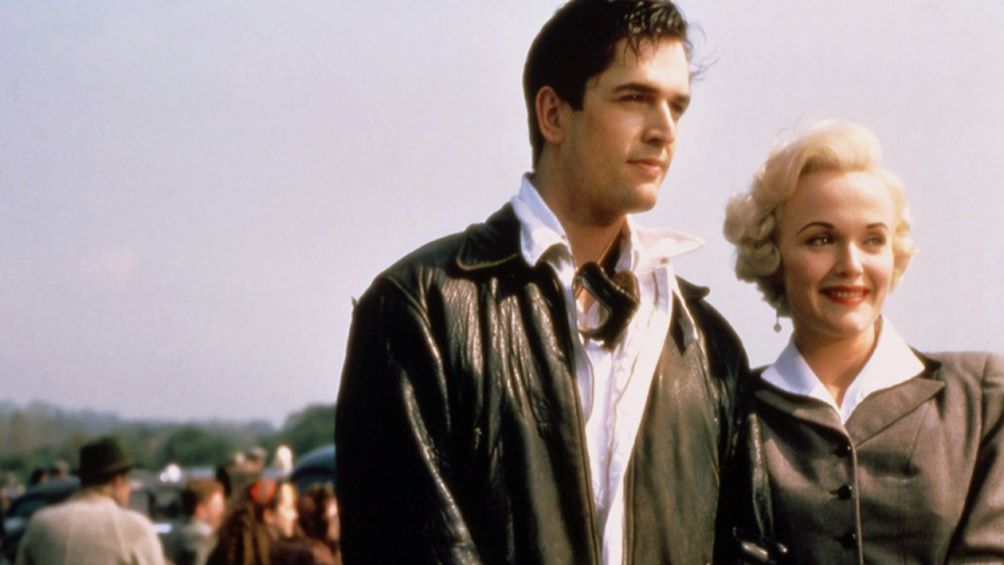
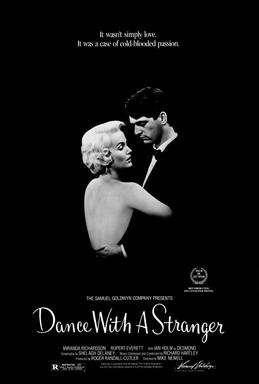
Hell is other people. Dance with a Stranger is the tragic story of how Ruth Ellis (Miranda Richardson in an electrifying screen debut) became the last woman hung for murder in Britain. But it’s also a terrible Satre-like tale of three people stuck a destructive cycle, loathing each other but unable to imagine their lives apart. Ellis is fanatically, obsessively in love with feckless David Blakely (Rupert Everett) who blows hot and cold on her and is nowhere near consistent in his feelings as middle-aged Desmond Cussen (Ian Holm), so besotted with Ruth (who treats him like a benevolent uncle) that he drives her to her assignations and pays rent on the apartment where she sleeps with Blakely.

All three cause each other immeasurable harm in Newell’s cool, bleak, well-made true-crime story that is far less interested in the moments of violence and retribution, than the sad and sorry cycle that leads to them. Tellingly, we never see a single moment of the trial or punishment of Ruth and the film effectively concludes in long-shot as we watch the fatal shooting of Blakely from afar. But who needs the close-up of this inevitable ending, when we’ve had front row seats to the catastrophic relationships that led up to it.

Like many British films, it’s at least partly about class. In 1950s London, we’re still on the cusp of the sort of cultural levelling out of the 1960s. This is a post-war, Agatha-Christie-like London. Blakely and his friends are Waughish Bright Young Things, living on Trust Funds and driving racing cars for fun. Their evenings are spent in drinking clubs aiming for glamour, staffed by those yearning to jump up a notch on the ladder like Ruth Ellis. Such women are of course for dalliances (and casual screws) not for marrying. Ruth’s back-up lover Desmond is an RAF-veteran who misses the war, an overgrown besotted schoolboy and middle-aged bachelor who accepts he is only worth other men’s cast offs.

Blakely’s friends encourage him to mess Ruth around because she’s a working-class strumpet. Ruth is at least partly willing to forgive him because marriage could lift her once and for all out of the working classes. Desmond is of less-interest, because a loveless middle-class marriage of sexual duty simply isn’t as attractive. Neither does Ruth love – or lust after – him the way she does the dynamic, sexy, little-boy-lost Blakely. A man she finds herself so uncontrollably drawn to that, no matter what he does – not turn up, mock her in front of his friends, push her down the stairs or punch her in the face in public – she comes crawling back. Often with Desmond in helpless tow, ignoring his adoration while demanding he drive her to another confrontation with the selfish Blakely.

Dance with a Stranger finds intense sympathy, to various degrees, with all three of its leads. But most strongly it turns Ruth Ellis, who could be a historical statistic, into a figure of real tragedy. Richardson is superb as a woman who is confident, assertive – even arrogantly dismissive – in so many areas of her life except one: her compulsive, obsessive and destructive love for Blakely. Dance with a Stranger charts effectively her mental collapse: from a woman who flirts confidently in a bar, to a quivering, weeping mess standing in the streets staring up at her lover’s window, screaming abuse, smashing up cars and babbling incoherently and inconsolably.

The film charts the same deadly cycle, showing Blakely’s ill-treatment and selfishness having ever more deadly impact on Ruth’s mental well-being. In it all, Blakely isn’t always malicious, more immature and easily led. Everett’s performance is perfect at capturing this playboy uneasiness under a fundamentally weak personality, a man who has been handed everything on a plate and is unable to respond in any adult way to Ruth’s love for him. Nevertheless, his stroppy behaviour gets her fired from her job and his behaviour fluctuates from gifts of framed pictures and promises of devotion, alternated with angry outbursts and emotional and physical violence.

And Desmond Cussen picks up the pieces time and again. Ian Holm is wonderful as this hen-pecked sadomasochist, impotent and all-too willing to debase himself, hurt time and again by seeing Ruth returning time and again to the dismissive Blakely. Holm makes Cussen small, weak, moody and frequently pathetic. He limply follows where she leads and suffers with weary, besotted patience every one of her preoccupied complaints against Blakely. This is man who almost sado-masochistically puts himself in painful situations, can’t be angry with Ruth for more than a few minutes and gets into impotent scuffles with Blakely outside pubs.

But it’s also Cussen who has the gun – and the film at least suggests the possibility that his openness about its location might well have been a factor in Ruth’s later decision to use it. The killing is, deliberately, the least interesting part of the film. What matters is the mental state that led Ruth to this killing. The self-delusion and desperation to believe that she could form a relationship with Blakely, the same obsessive blind-spot that leads to her closing the film writing a condolence letter to Blakely’s mother. Ruth is a victim here as much as him (perhaps more?) a mis-used woman who cannot give Cussen what he wants and can never get what she needs from Blakely.

Newell’s direction is sharp and sensitive and while the film’s cycle of destructive behaviour – Blakely and Ruth row, break-up, Cussen picks up some pieces, rince and repeat – can become overwhelming, it is partly the intention. And it cements the feeling for the audience of being as much trapped in this hell as everyone else. Holm is superb, Everett perfectly cast but Richardson is mesmeric as Ruth, vivid, vibrant, vivacious, vulnerable and victimised in a film that goes a long way to humanise the suffering behind what seem open-and-shut cases.

La Règle du Jeu (1939)

La Règle du Jeu (1939)

Shallowness, selfishness and self-indulgence swirl in Renoir’s masterpiece, that plays like a giant metaphor for Europe in the 1930s

Director: Jean Renoir

Cast: Nora Gregor (Marquise Christine de la Chesnaye), Paulette Dubost (Lisette Schumacher), Marcel Dalio (Robert, Maquis de la Chesnaye), Roland Toutain (André Jurieux), Jean Renoir (Octave), Mila Parély (Geneviève de Marras), Julian Carette (Marceau), Gaston Modot (Edouard Schumacher), Anne Mayen (Jackie), Pierre Magnier (The General), Léon Larive (Chef)

When you are at the top of society, the rules bend to your will. They are, after all, for the little people. Get to the very top and life is all a game anyway – birth, death, marriages they are just movements in a great dance, none need cause you any concern if you don’t let them. Renoir’s masterpiece La Règle du Jeu explores in microcosm a whole fractured society of pampered, myopic focus on immediate pleasures, outweighing real life tragedies. And, whether at the top of bottom of the social ladder, no one seems able to move beyond a blasé and shallow attitude to life.

La Règle du Jeu is set at a weekend shooting party in the French countryside, hosted by Robert, Maquis de la Chesnaye (Marcel Dalio). Robert is married to a German wife, Christine (Nora Gregor) but having an affair with Geneviève (Mila Parély). But that’s fine, Christine is having a half-hearted affair with naïve airman André Jurieux (Roland Toutain). Below stairs, Christine’s maid Lisette (Paulette Dubost) yawns through her boring marriage with stuffy groundskeeper, the German Schumacher (Gaston Modot) by flirting with cheeky poacher-turned-employee Marceau (Julian Carette). Over the weekend, flirtations and affairs simmer to the boil, with Octave (Jean Renoir), a family friend, moving uneasily between parties trying to do the right thing.

The timing of Renoir’s film could not have been better. The story of people, as he put it, “dancing on the volcano” found its way into cinemas in July 1939. Europe was on the edge of the precipice. Within a year France would be literally ripped in two by Hitler. And here was Renoir releasing a blackly dark drawing room comedy, with its characters obsessed about small, shallow and trivial details and utterly ignorant of the world around them. Even worse, when violence and death intrude, it’s brushed under the carpet. It was a film that embodied the head-in-the-sand attitude of France, a country just months away from being steam-rollered by the Nazi war machine.

It wasn’t until 1959 that it was rediscovered and took its place as one of the great films. Renoir creates both a delightfully dark and droll comedy of manners, but also a rich and overwhelming metaphor for global chaos. Everything here is magnificent surface, with everyone pretending they are fine, upright citizens while flitting in and out of each other’s beds and never letting anything like morals or genuine emotions intrude. The game demands life be played as lightly as possible.

Everyone seems to know everything, but it’s all a joke. Robert is sleeping with the imperiously bitter Geneviève – so he seems less bothered about his wife Christine’s affair with airman André. Renoir’s film opens with André’s return from a cross-Atlantic flight. The media swarm around him, but André retreats into a funk when he sees Christine is not there to greet him. Even would-be heroes in this film are insular and self-obsessed. Toutain makes André strangely pathetic (you wonder – as does she at times – what the cultured and daring Christine saw in someone so prone to self-pity and devoid of drive). He whines about an affair which won’t take fire, does nothing to drive it and turns a car accident suicide attempt into a sulky fit of pique. He’s neither a romantic hero or a tragic figure.

But then no-one fills their role. Robert hosts the event, but he’s a strangely winsome, at times insecure figure (Dalio used his personal unease as a Jewish actor cast in a very Aryan role to skilled effect). He both puffs about how he doesn’t care about conventions – willingly inviting his wife’s lover to the weekend – but is also a fussy, eccentric figure who delights in clockwork machines and amateur theatricals. He has a casual, playboy attitude to money and life – everything comes easy, so he values very little. He doesn’t like conflict, preferring to let people off the hook, partly why he’s keen to end his relationship with Geneviève as he can’t bear the idea of Christine finding out.

Christine, played with a very effective awkwardness by Nora Gregor, feels surprisingly out of place among this social mileu. She’s consciously aware of her German background, looks uncomfortable in fine clothes, doesn’t enjoy social events and seems less assured than her bolshy, irreverent maid Lisette. She seems less like a Countess than Geneviève, played with cool austere sharpness by Mila Parély. Christine shrugs off the arrival of her lover André (to the respect of all) but on discovering her husband’s parallel affair seems unsure how to deal with it: she goes from bouncing mutual jokes about Robert with his lover, to considering half the household as potential elopement mates. Renoir felt Gregor was uncomfortable in the role – but her discomfort works superbly.

At the heart of this weekend retreat – and the film itself – is a brutish, extended hunting sequence. Renoir, who loathed the killing of animals, knew that nothing speaks more about the nature of man than how he treats those weaker than himself. The hunt is machine-like in its rounding up of birds, rabbits and other animals to be blazed down by the rich and powerful, with the carcasses chucked into the back of a van and never thought of again. Renoir shoots a single rabbit death with intense sympathy, the creature halting then curling itself vainly into a ball in its death throws. It reminds us queasily not only of the blood baths in fields like this only 20 years earlier, but also the carnage to come. It also foreshadows the death the film ends on, the victim falling as pathetically as the rabbits.

This same hunting party is also the catalyst for a string of disasters. Marcel Dalio’s Robert spontaneously affronts the tiresomely officious Schumacher (an unbending, unsympathetic Gaston Modet, rigid in his Prussian militarism) by not only shrugging his shoulders at the actions of charming poacher Marceau (a Hancock-ish Julian Carette, as charmingly amoral as anyone in the film) but actually hiring him. Needless to say, Marceau is less grateful and more delighted at the opportunities for shamelessness this presents him with and instantly attempts to seduce the maid Lisette (a coquetteish Paulette Dubost), setting him on a collision course with Schumacher. All stemming from Robert’s blasé indifference to rules and the contempt for hierarchy only those at the top can afford.

Renoir brings all these events together in a series of masterful sequences. This is a film that frequently shifts in tone and transition. The film moves so comfortably between storylines, from upstairs and downstairs, that it’s unfocused and meandering narrative reflects its themes and delivery. Above all, Renoir yet again demonstrates his mastery of marrying film and theatre. La Règle du Jeu could be a classic piece of farce, but is constructed with the skill of a master cineaste.

Much of the final act of the film is taken up with a truly sublime sequence, edited and shot to perfection, that sees all plotlines and entanglements intermingle in a dinner party. Renoir’s camera roves and tracks through the house. Events and characters play out in the back of scenes, while our focus is elsewhere. Figures at the edge of the frame suddenly seize the camera’s attention. We’ll move rooms and characters we left five minutes ago will march in continuing arguments. It’s a breathtaking display of planning, narrative and cinematic panache, expertly directed.

Renoir himself, as Octave, is the closest thing we have to either an audience surrogate or master of ceremonies. Of course, he’s neither of these things: he’s a clumsy bear of a man (even dressing as a dancing bear for the amateur theatricals), who tries to do the right thing out of stubbornness and masochistic pride. He pushes André and Christine together even though he loves Christine – in fact he sets at it with more energy than either of them. He fantasises about himself as a conductor, and that’s what he wants to be: controlling the dance rather than playing the tune. But he’s clueless, clumsy and ineffective and his actions inadvertently push a man to his death.

That death ends the film. Renoir triumphantly doesn’t make this epic or even tragic – it’s a clumsy case of mis-identity, the victim of one of these unhappy lovers settling accounts and picking the wrong person. But the game goes on: everyone pulls together to re-establish the status quo and stress it was an all accident, no one should feel bad, these things happen and everyone back to your drinks. Master and servant come together to keep the status quo ticking over and nothing is allowed to intrude on life. It’s a stage-managed ending that allows nothing to be learned and nothing to change.

After all, the rules mustn’t be changed when everyone is comfortable with them. La Règle du Jeu is a masterful metaphor for an entire society where shallowness, selfishness and self-indulgence win out over duty and decency. Everyone we see is preoccupied only with their own desires, from the whimsy of Robert to the flirtations of Lisette, the self-pity of André and Octave’s desire to influence the narrative. It whirls round and round like a merry-go-round until someone falls off and dies. The volcano is primed to explode, but the dance goes blithely on.

Summer with Monika (1953)

Summer with Monika (1953)

Bergman’s early kitchen-sink drama, as idealism turns sour after a seemingly blissful Summer

Director: Ingmar Bergman

Cast: Harriet Andersson (Monika), Lars Ekborg (Harry), John Harrysone (Lelle), Georg Skarstedt (Harry’s father), Dagmar Ebbesen (Harry’s aunt), Åke Fridell (Monika’s father), Naemi Briese (Monika’s mother), Åke Grönberg (Harry’s friend)

Summer with Monika is, in many ways, the story of two shots. The first follows Monika (Harriet Andersson) as she strips down and runs across the rocks to the sea during her summer escape from the dullness of life with Harry (Lars Ekborg). It’s the shot that excited a generation of sweaty-palmed gentlemen watching the bizarre exploitation-cut of the film released in the US. The second made auteurs the world over swoon: returned from that summer and trapped in the cramped apartment, childcare life of her parents, Monika goes for an illicit drink with her lover, accepts a cigarette and then turns to stare straight down the camera at us, the shot held for a long minute as all light fades around her, as if challenging us to object to what she is obviously about to do.

Summer with Monika (largely thanks to the first shot) remains Bergman’s most watched film in America. In Stockholm, the children of two working-class families meet in a café and go on a date. Harry works joyless shifts, bullied by bosses and the other staff, in a glass shop. Monika sleeps in the living space of her tiny apartment, where her parents are frequently drunk and indifferent. The two of them chuck it all in to run away to the countryside in Harry’s father’s boat. At first its idyllic, but they can never quite escape the burdens of modern life. When they return, Monika’s pregnancy, a rushed marriage and a tiny apartment sees any dreams they had of youthful freedom drain away.

Bergman’s film feels like the advance guard of the British Kitchen Sink drama. Our two young heroes are full of dreams for a perfect, bohemian life totally different from their parents that neither of them really have the initiative to deliver on. Harry is, at heart, a timid individual – to timid to even smash a glass when he quits his job, instead pushing it as near as he dares to the edge of a shelf and glancing round in fear when it falls. Monika is full of desire for something but even she seems unsure what this is, other than knowing it’s not this.

Together they head into what they want to think – and desperately tell each other – is a perfect summer of utter freedom going where the water takes them in a boat. And at points it is perfect. They drift, relax in the sun, make love. Monika strips down and runs towards the water. The two have a sharp sexual longing for each other. It’s all wildly different from sitting in Harry’s house and hurriedly buttoning their clothes up when they hear his father arrive home early. They have no responsibilities, no requirements, nothing.

From their first meeting together, there is the feeling that they are trying too hard. Both of them wants to see the other as an escape from their own lives. On an early date they watch a classic Hollywood romance at the cinema, but while Monika stares rapt at the screen, Harry seems less engaged – she dreams of a romantic future, he’s basically happy with one where he has Monika. While she wants to plan no further than the next hour, Harry won’t let his mind move on from his long-term dream of becoming an engineer (and the years of study it will require).

They rush together in an impulsive summer, as if trying to hide the fact from themselves that deep down they are unsuited and incompatible. Monika wants to be a free spirit, Harry might enjoy a holiday but always sees himself as taking a place in the world at large. But for a few moments they can enjoy the freedom. Together they flee from a crowded pier to dance alone on a romantic abandoned one. Monika sunbathes on the small boat while Harry steers it. They vow to be together forever, but this romantic moment feels like what it is: a fantasy.

Bergman won’t let us wallow in this romantic fantasy. The drift along the coastline takes place in a tiny boat, with only two suitcases worth of possessions. A fellow tourist attacks their boat, forcing them to defend it (the aftermath is their last moment of passion – before this they were arguing over Harry’s bad dancing). They have very little money for food: they start running out, leading to arguments, scavenging and eventually Monika stealing a roast from a farmhouse after she is caught rifling through the outhouses. She eats this like a savage, tearing flesh from the joint with her teeth and berating Harry for failing to help her (he was off gathering wild fruit – a clear reminder that he is a dutiful but far from exciting hunter-gatherer).

When they return though, it is not to a freedom Monika imagined but the world of her parents. Oppressive, full of responsibility, lacking in joy, every hour spent responsible for a child. Harry starts his training and is rarely seen outside of a suit. Monika is ill-suited to domesticity and bemoans the fact it’s forced upon her. She’s young and she wants the freedom she thought she had been promised – and having her sleep disturbed by a baby in a one-room apartment ain’t it.

And so, we get that defiant stare down the camera. Harriet Andersson is quite extraordinary in this role. It’s arguably the challenging glare that really fired the sexual pistons of the American distributors who re-cut the film into a 60-minute exploitation film (with added insert boob shots of someone else). It’s the stare of a woman who is determined to get what she wants from life and challenges us to judge her. Andersson makes Monika both passionate and challenging, but also vulnerable. She wants tenderness and love, but not at the cost of being trapped in a world where decisions are forced upon her. She’s young and selfish, but also honest and strangely gentle.

Bergman’s work here explodes the simplicity of romantic narratives. Instead, it fits wonderfully with that Kitchen Sink realism, where hopes are worn down by the realities of life and people cling to moments of freedom hoping they will last forever and translate into eternal realities. As Harry (Lard Egbork is very good as this young man constantly trying his best) and Monika increasingly argue, they become more-and-more identical to her parents. Youth eventually gets crushed by the truth of life and dream-like cruises on small boats become long years of childcare and professional training. Heartfelt, challenging and very sad it’s a key early Bergman work.