Category: Romance

Moulin Rouge! (2001)

Nicole Kidman and Ewan McGregor make a love story for the ages in Luhrmann’s electric Moulin Rouge!

Director: Baz Luhrmann

Cast: Nicole Kidman (Satine), Ewan McGregor (Christian), Jim Broadbent (Harold Zidler), Richard Roxburgh (Duke of Monroth), John Leguizamo (Henri de Toulouse-Lautrec), Jacek Koman (The Unconscious Argentinian), Caroline O’Connor (Nini), Kerry Walker (Marie), David Wenham (Audrey)

It’s 20 years old now and I still don’t think there has been anything quite like Moulin Rouge! Believe me it’s not for want of trying. Baz Luhrmann’s hugely inventive, uniquely stylistic musical is cinematic marmite: either loved or reviled (not sure I’ve ever met anyone who had a meh attitude to it). One of the pioneering inventors of the juke-box musical, Moulin Rouge! mixes pop songs with inspiration from opera to Greek myth and comes up with something Spectacular, Spectacular.

It’s the turn of the century, and Christian (Ewan McGregor) arrives in Paris looking for truth, inspiration and above all: love. Arriving at Montmartre, he and courtesan Satine (Nicole Kidman) fall in love. Satine is the star at Harold Zidler’s (Jim Broadbent) Moulin Rouge and also the star of Zidler’s planned stage show. She has been promised to his wealthy backer the Duke (Richard Roxburgh). With Christian commissioned to write the script, can he and Satine hide their love from the Duke and make sure the Show Goes On? Or will tragedy strike?

Fast paced and electric, Moulin Rouge! could inspire motion sickness, especially in its opening 15 minutes which throw us deep into its unconventional medley of styles, tones and inspirations. Did that first 15 minutes lose a lot of people? You can imagine it as the earliest scenes featuring Christian’s meeting with Toulouse-Lautrec and the other Bohemians are by far its weakest. If your irritation grows at these shrill scenes (crudely over-acted with an overbearing Keaton-ish energy), I can well imagine thousands of viewers checked out in Luhrmann’s music inspired Moulin Rouge can-can musical with its explosion of rap, Nirvana, Lady Marmalade and insanely quick cutting. It’s a statement opening – and throws you straight into its heightened reality. A tone that continues for much of the opening 40 minutes.

Luhrmann leaves nothing in the locker room here. Only a director of such exuberance, playfulness – but also deep skill and understanding of high and low culture – could have balanced it as well as he does. Go with it and you’ll love it. It’s pure operatic entertainment. Luhrmann’s master-stroke is to shoot a period musical in the style of the high-velocity music-video pop that excited people in 2001 – finally you get a sense of why the Moulin Rouge and can-can seemed so exciting and sexy back then. It’s a night-club of 1999, thrown into 1899.

But what makes the film work after that initial explosion of energy – and I’ll agree that the first 15 minutes tries too hard to grab your attention – is that Luhrmann mixes the styles up so effectively. There is everything here, from Busby Berkeley numbers to heartfelt love ballads to dreamy duets to a sexual tango to a classic theatrical set-piece, tinged with a spot of tragedy. Every musical number seems inspired by a different genre and style of musical theatre. And the use of modern pop music is fun, entertaining and mines the emotional connection we all feel for the best pop songs.

It’s an MTV pop musical, mixed with Gene Kelly, lashes of camp, cheeky humour and finally tragedy and suffering. It’s got a million cuts in it, but Luhrmann successfully makes the film darker, slower and more intimate as the film progresses. From the electric dynamism of the opening, this becomes an increasingly personal tragedy revolving around five key characters. It never loses that sense of showmanship – Zidler’s planned production is an overblown Bollywood inspired extravaganza that delights in recreating the joy and brashness of that genre – but the final hour is a more adult, foreboding movie with plenty of heart.

Moulin Rouge! is all about Luhrmann’s gadfly brilliance to discover inspiration from a host of sources, pulling it together into something brilliantly original, from the plot – which is inspired by La Boheme by way of Orpheus and Eurydice – to brilliant montage songs like the Elephant Love Song Medley, which takes snippets from nearly every popular love song you’ve ever heard. Very few films can switch so effortlessly from cheeky, end-of-the-pier humour to gut-wrenching tragedy. It’s energy effectively and brilliantly applied, and that comes from the director (who was, of course, inexplicably not among the films eight Oscar nominations).

Luhrmann also gets the actors to perform with the sort of energetic, fully-committed exuberance the film needs. The principals go at every single scene with no hesitations at all – bless them, none have any concern with appearing silly at all. McGregor reveals a sweetness and earnestness (as well as very strong singing voice) he hadn’t shown before. Kidman was an absolute revelation as a woman hiding doubt, insecurity and fear under an exterior of pure confidence. Broadbent’s comedic brilliance is matched with his dramatic flair. Roxburgh is hilarious, and also vile, as the selfish Duke. Luhrmann recognises their strength – after the first 10 minutes every scene features at least two of these performers.

Things have clearly been cut here and there. Motivations and even characterisations of some of the other members of the Moulin Rouge troupe change from scene-to-scene. Sometimes it tries too hard to be inventive. But it works so often that it hardly matters. And the remixes of the songs for performance are outstanding. The “Like a Virgin” Busby Berkely number is hilarious, the “Roxanne Tango” breath-takingly influential. “The Show Must Go On” is powerfully doom-laden and “Your Song” beautifully romantic. “Come What May” – the only original number – is an iconic ballad.

There’s not been anything quite like Moulin Rouge! – and Luhrmann has never managed to match it again since. Electric, dynamic, exciting, heartfelt, moving and above all extremely joyful, it has some brilliantly judged performances from its lead actors. There hasn’t been anything like it since – and I’m pretty sure we won’t see it’s like again.

Heat and Dust (1983)

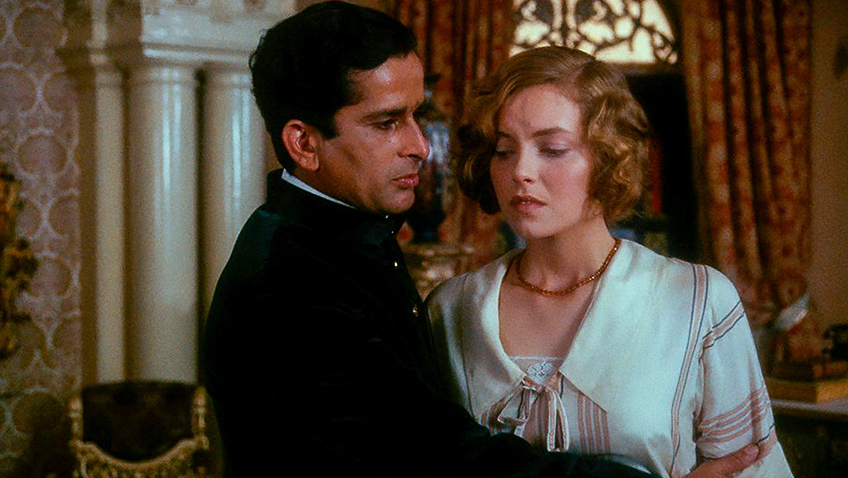
Shashi Kapoor and Greta Scacchi in a love across the divide in Heat and Dust

Director: James Ivory

Cast: Julie Christie (Anne), Greta Scacchi (Olivia Rivers), Shashi Kapoor (The Nawab), Christopher Cazenove (Douglas Rivers), Nickolas Grace (Harry Hamilton-Paul), Zakir Hussain (Inder Lal), Julian Glover (Crawford), Susan Fleetwood (Mrs Crawford), Patrick Godfrey (Dr Saunders), Jennifer Kendal (Mrs Saunders), Charles McCaughan (Chid), Madhur Jaffrey (Begum Mussarat Jahan), Barry Foster (Major Minnies)

Adapted by Ruth Prawer Jhabvala from her Booker-prize winning novel, Ivory-Merchant’s production of Heat and Dust is much like the source: precise, admirable and both faintly enigmatic and intriguingly slight. In 1982 Anne (Julie Christie) travels to India to discover more about the life of her great-aunt Olivia (Greta Scacchi). In 1923, Olivia lived in Satipur as wife to local official Douglas Rivers (Christopher Cazenove). The Nawab (Shashi Kapoor) is the local Indian prince, a charismatic man who may or may not be in league with local bandits. Enthralled by India, bored by British India but deeply in love with Douglas, Olivia still finds herself drawn to the Nawab. Scandal is round the corner.

Heat and Dust is a delicate, well-mounted adaptation, but it never quite engages as much as it should. Perhaps this is because its central plot – a white woman is fascinated by India – is a familiar trope in both novels and films of the Raj. It does take a different approach by intercutting between the present and the 1920s. This presents intriguing opportunities to show ways India has changed physically (the homes of the British Raj have become offices) but also ways it has remained the same culturally.

This carries across in the contrasting stories of two women, both of whom become intrigued by their surroundings and romantically entangled with Indian men. While Olivia is (eventually) disgraced and ostracised by her community, Anne has the freedom to make her own choices. Both women find themselves drifting into life-changes through male seduction. Perhaps this is one of the points of the film in the end – that women, no matter the timeline, are people that things (or men) happen to, rather than being the true owners of their own lives?

It seems the case with Olivia, who never feels in full control her own life, but instead moves inexorably towards a destiny she can’t really influence. Charmingly played, with a sparkle and playful innocence by Greta Scacchi in her film debut, Olivia’s motivations are almost deliberately obscured. Although Ivory uses a device at first of Olivia’s letters being dramatised by Scacchi addressing the camera, this device is swiftly dropped. The letters remain a presence, but we never hear from them. Instead most of Olivia’s actions are narrated by her friend Harry (Nickolas Grace), now an old man. It places a distance between the viewer and Olivia, making her actions harder to understand.

But then that is part of the enigma. India is a land of heat and dust, where normal rules don’t apply and people (particularly those from the West) find themselves reformed by. Olivia has no time for the stuffy, racist British population (especially the frightful woman). But she’s drawn to the Nawab partly because he’s a fusion of East and West, an Indian exotic with the charm of an English gentleman. For his part the Nawab, very well played by Shashi Kapoor, plans a seduction but his motives are as hard to read as Olivia. Is it attraction or revenge on the British for their contempt?

Perhaps it’s a film where we look for deep meaning and motivations, but it is in fact about how we don’t necessarily make grand decisions about our lives, but make a series of in-the-moment decisions. Both Anne and Olivia never seem to proactively make decisions, but instead events largely occur to them. Although this can make for a film sometimes lacking in energy, it does avoid making things obvious for the audience. Even if that can be frustrating when characters remain almost deliberately oblique.

What’s also oddly frustrating about the film is its more modern section. The commentary comparing the present and the past promises much but actually adds little. Anne is a curiously uninvolving character, played with a sweet tenderness by Julie Christie. Anne is hardly proactive and there is very little narrative drive behind her exploration of the past. Strangely the issues the more modern section deals with – including digs at Western cultural tourists – end up feeling less relevant than the issues of race and empire in the 1920s.

And its unfortunate that the 1920s plot line, although well staged and managed, seems extremely familiar – with echoes of A Passage to India and The Jewel in the Crown for starters. While it’s well acted (as well as those mentioned, Christopher Cazenove is very good) and creates an enigmatic atmosphere, you often feel you’re seeing something done better elsewhere. It starts as an investigation into the past, but becomes something more freeform, as if in the heat and dust of India, plans come to nothing. But its air of enigma and portrayal of characters buffeted by small events doesn’t come together into a compelling story or a rich insight into India.

The English Patient (1996)

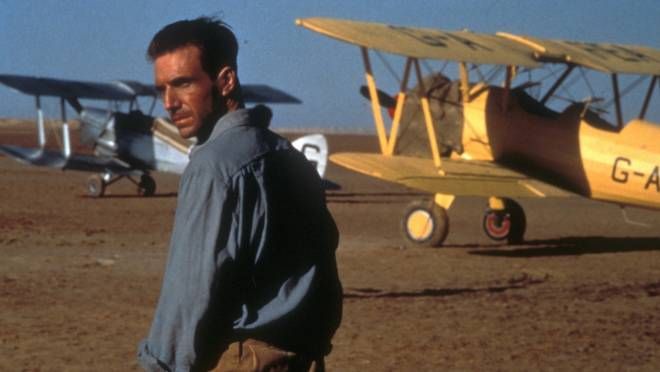
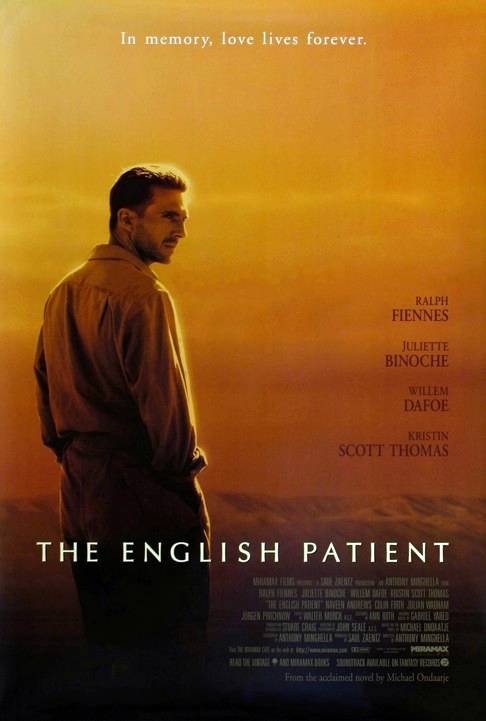
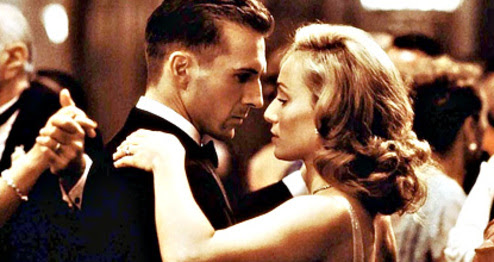
Ralph Fiennes excels as the tragic The English Patient

Director: Anthony Minghella

Cast: Ralph Fiennes (Count Almasy), Juliette Binoche (Hana), Willem Dafoe (David Caravaggio), Kristin Scott Thomas (Katherine Clifton), Naveen Andrews (Kip), Colin Firth (Geoffrey Clifton), Julian Wadham (Maddox), Jurgen Prochnow (Major Muller), Kevin Whatley (Sergeant Hardy), Clive Merrison (Colonel Fenelon-Barnes), Nino Castelnuovo (D’Agostino)

Sweeping, luscious, beautiful and an epic translation of an almost unfilmable novel into something supremely cinematic, The English Patient swept the board with nine Oscars at the 1996 Academy Awards. The English Patient has sometimes had a rocky reputation (not helped by an episode of Seinfeld where Elaine was famously non-plussed by the film). Like some of Minghella’s later work, it’s almost too well made for some to get past, looking like prime award bait. I didn’t “get it” the first time I watched it. But I – and the naysayers – were wrong: The English Patient is rich, rewarding and throbbing with a very British sense of repressed emotion and slow embracing of dangerous passions.

Adapted from Michael Ondatje’s multiple-award-winning novel, it unfolds across two time frames, hinging on a plane crash in the Sahara in 1942 that opens the film and leaves its pilot, Hungarian Count Almasy (Ralph Fiennes), hideously burned beyond recognition. The entire film is both an epilogue to that crash and a prologue explaining how we got there. In 1945, Almasy asserts he remembers nothing, even his own name. In what we later learn is a bitter irony, he is mistaken for an Englishman due to his perfect English. He is nursed through the final days of his life in an abandoned Italian monastery by a Canadian nurse Hana (Juliette Binoche), who has lost nearly everyone she loves in the war. Through Almasy’s memories, we see his life before the war as part of an international society of cartographers. In particular, the love affair that grows between him and Katherine Clifton (Kristin Scott-Thomas), the wife of another member of the society – an affair that will have life-shattering repercussions.

Appreciation for Minghella’s film must start with his ingenious screenplay. The English Patient, a book that moves eclectically between multiple timelines, shifting perspective frequently, and delivers its story in almost impossibly rich prose, should have been unfilmable. Minghella creates something which is both a mirror of the book’s intention, but also a cinematic text. You could use this as a teaching tool for adaptation (bizarrely one of the few Oscars it didn’t win was for Screenplay!). Working in close partnership with editor Walter Murch, Minghella’s film effortlessly cuts back and forth between at least three timelines, but never once confuses or jars. With (according to Murch) over 40 time transitions (that’s one almost every 3-4 minutes, fact fans), this could have been a jarring, impossible to follow mess. Instead, narrative clarity is its watchword.

But the film also succeeds because it’s the apex of Minghella’s ability to combine luscious, poetic story-telling with acute emotion and passion. It shouldn’t be a surprise that someone who showed such understanding of grief in Truly, Madly, Deeply acutely understands how joy and pain can go hand-in-hand in love. Perhaps one of the reasons people found this a difficult film is that Almasy and Katherine are not a traditional romantic pairing. Both guarded, sometimes even cold and distant people, they are tentative, perhaps even scared, of the deep bond they immediately feel. A bond that burns all the more brightly because of the compromises and barriers in their emotional lives.

Almasy is distant, aloof, a man easy to know but impossible to understand. Katherine has a very English reserve behind a certain patrician warmth, playful at times but very aware of duty. What’s fascinating – and moving – about the film, is that these two people actually have a huge groundswell of passion between them. They are besotted with each other, but for reasons ranging from background to their own fears of emotional involvement, struggle to admit it to each other. They fling themselves at each other in romantic couplings with an almost animalistic longing. They make each other laugh. They allow themselves to speak of deep feelings, experiences and thoughts that they would not express to others. And they are also able to hurt each other through resentments, distances and shunnings in a way no one else could.

It’s a decidedly unconventional romance – compare it to, say, the next year’s Oscar winner Titanic with its far more conventional love story – but it works wonderfully. The slight air of repression also means that the confessions of deep-rooted feelings – Scott Thomas’ reveal of a gift she has never parted from, or Fiennes’ face twisted in emotional anguish – carry huge impact.

It also helps that the film is set in the sort of grand vistas that David Lean would be proud of. While you can certainly argue (with some justification) that The English Patient is a picture postcard film, its perfect visuals of the desert, the stunning beauty of so many of its shots, add to the extraordinary luscious old-fashioned 1930s romance of its setting. It could all be taking place in a world of von Sternbergesque romanticism.

Minghella’s film also interweaves skilfully the 1945 story line, revolving around Juliette Binoche’s Hana. Binoche won a deserved Oscar for a sensitive, vulnerable performance as a woman terrified of emotional commitment (sound familiar?), scared anyone she grows close to is doomed to die. Her romance with bomb disposal expert Kip (a strikingly delicate performance from Naveen Andrews, with just enough hints of anti-colonial tension mixed in) seems ready to fit this trope, but instead develops in unexpected ways. It also contributes perhaps the film’s most sweepingly romantic moment when Kip uses a pulley system, a flare and a bit of muscle to give Hana a sweeping up-close look at some Renaissance frescos. But while our flashback romance has the foreboding of doom to it, this one instead shows us the hope of a life restarting.

The English Patient also makes some striking points about the insane foolishness not just of war, but nationalism and Empire. The cartographers are a pan-European group who come together as equals, disregarding all concerns of nation. Instead they find a freedom to behave – intellectually, emotionally and sexually – in a way they never could “at home”. They represent a chance of being free to make our own choices, rather than dictated by arbitrary borders. Problems of nationhood are what will bring disaster. Colonialism is viewed equally critically: Kip gets sharp digs in at Kipling and also makes clear that his status as an Indian officer in the British Army is one of uncertainty.

Minghella’s film also works because of the mastery of the performances. Fiennes is in nearly every scene (many of them under a layer of make-up), and the role is a perfect match for the surface coldness in his performance style, which hides his wit and sensitivity. Cheated of the Oscar, Fiennes has rarely been better – his clipped romanticism mellowing in the 1945 section as a gentler but broken man. Scott-Thomas is perfectly cast – I’m not sure any other film has used her skills better – as a woman who compromised on happiness at the wrong time, and now cannot express herself.

The English Patient is a romance of slow moments, of inferred passions, which only at a few points before the end flower into something intimate. But it carries a huge emotional force, precisely because of this. Its technical work is faultless – Gabriel Yared’s score is a sumptuous mix of inspirations – and the acting superb (as well as the stars, Firth is marvellous as a decent but dull man cuckolded, Dafoe adds a layer of unpredictability as a 1945 houseguest and Whatley is the picture of working-class decency in a rare film role). The English Patient is Booker-prize film-making in its depth, richness and the work it asks you to put in, mixed with a David-Lean-meets-Mills-and-Boon pictorial loveliness, where each frame is a sun-kissed example of pictorial perfection. Mixed together, it makes for a sumptuous and deeply emotional package that I find more and more rewarding with every viewing.

The Last Picture Show (1971)

last picture show header
Timothy Bottoms, Jeff Bridges and Cybil Shepherd are making the best of small-time life in The Last Picture Show

Director: Peter Bogdanovich

Cast: Timothy Bottoms (Sonny Crawford), Jeff Bridges (Duane Jackson), Cybill Shepherd (Jacy Farrow), Ben Johnson (Sam the Lion), Cloris Leachman (Ruth Popper), Ellen Burstyn (Lois Farrow), Eileen Brennan (Genevieve), Clu Gulager (Abilene), Sam Bottoms (Billy), Randy Quaid (Lester Marlow), Gary Brockette (Bobby Sheen)

“Anarene, Texas, 1951. Nothing much has changed…” So went the tagline for Peter Bogdanovich’s The Last Picture Show. Change, or rather the lack of it, is the heartbeat of this film. It’s small time (fictional) Texas town isn’t a million miles from the Wild West dustbowls. You feel nothing has really changed for decades, the same faces in the town have just got older. But the tagline suggests that, in many ways, the 1950s were not that different from the progressive 1970s. Sex and scandal lie under the surface of the town, with the inhabitants having little to distract them from boredom other than seducing each other. Unlike the sort of traditional films shown in the picture show – Father of the Bride or Red River – this town is just drifting, a change in America both round the corner but also feeling like something that would slide off the town like water from a duck’s back.

The film largely follows three high schoolers are preparing for graduation. Sonny (Timothy Bottoms) and Duane (Jeff Bridges) are on the town’s useless high school football team (a uselessness no-one will let them forget). Duane is dating Jacy (Cybil Shepherd), a woman just discovering the power of her looks – and Sonny longs for her himself. Instead, Sonny starts an affair with Ruth Popper (Cloris Leachman), the overlooked, lonely housewife of his football coach. Romantic entanglements abound, but life drifts on with the younger generation thinking sometimes of the future, but really repeating the mistakes of the older generation – people like Jacy’s cynical mother Lois (Ellen Burstyn) and the owner of the town’s pool-hall, cinema and diner, the fading conscience of the town Sam the Lion (Ben Johnson).

Bogdanovich’s film was a sensation when it was released, a key part of the New Wave films in Hollywood. It has lasted, in the way other films from the period haven’t, because it has a subtly simple but compelling story, shot as a perfect fusion of French New Wave styles with John Ford and Orson Welles inspired classicism. Bogdanovich’s film buffery is obvious from every frame – not just from the film posters announcing what is being shown at the picture palace, but also from its loving use of French-style realism and lack of glamour, set and framed in the Fordian style, often stressing isolation, intercut with homages to Kane, The Magnificent Ambersons and Touch of Evil.

And in it we have a series of young people who seem to have no idea either where they, or the world is heading. Timothy Bottoms acts with such effortless naturalism, it’s easy to forget he is even acting at all. It’s a perfectly judged performance of a very normal young man, low on aspiration and inspiration, selfish in the way the young are but full of passion and regret. Jeff Bridges is similarly brilliant, playing a not-particularly smart (or particularly successful) school sports star in a performance completely free of any condescension or camera winking, but played with a charming honesty. These are supremely normal young men. Generally decent, well-meaning and naïve, not knowing what it is they want or need from life. They would fit as neatly into 1971, with their dreams, as they do in 1951. Especially as Duane packs off to head to Korea (no real difference from Vietnam).

And a lot of these dreams revolve around sex – and often sex with Jacy. Cybil Shepherd was a sensation on the film’s release, seen as the ultimate late-teen temptress and sexpot. But in fact, Jacy is (in her way) as much of an innocent as the others. She’s a woman only just discovering her own passions and longings. Who doesn’t want to become the jaded figure her mother has become – but working out the easiest way to get what she wants (be that a better boyfriend, better chances or even just some attention) is through using her physical attributes. Her sexual experimentation is, in a way, liberating – and just another attempt to find an answer to her own aimlessness. Sure – encouraged by her mother – she doesn’t invest anything emotionally in these entanglements. But is it really all that different from Sonny’s own using of Ruth Popper?

Ruth Popper is emblematic of the sadder older generation in the town. You can imagine they must have had hopes and dreams – or were once as breezily uncaring – as the younger generation. But they’ve found out, just as they will, that things don’t change. That you can blink and find yourself twenty years down the line, unhappy and lonely in a place you can’t seem to escape.

Cloris Leachman is outstanding as Ruth (she won an Oscar), the only person in the all the film’s couplings that we see expressing tenderness and vulnerability (in a film full of sexual encounters, the most intimate thing we see is her combing Sonny’s hair). She dares to slowly open herself up emotionally to believing in Sonny – to seeing their affair as more than just the booty call it starts as, but as something with a future. From the tearful fragility of her first scenes – her buttoned up matronly appearance, making her look far older than she is – she blossoms into a warmer, excited, person. It makes her inevitable betrayal by Sonny all the more heart-wrenching – along with her self-loathing fury that closes the film.

All the adults are drifting through the same disappointing life. Ellen Burstyn (also nominated) is wonderful as Jacy’s mother, who continually defies expectations. This mother is unfazed by her daughter sleeping with her lover, suggests that she might as well experiment sexually so she can find out it’s not all that and carries a revelation of deep loss and personal tragedy that only comes to light late in the film but is there in the character from the start. Other adults seem equally aware of their pointlessness: the coach is a repressed homosexual, the English teacher seems resigned to teaching Keats to bored students, Jacy’ father is a blow-hard nobody, Sonny’s father is a stranger to him. Only Eileen Brennan (excellent) motherly waitress still seems to have some hope.

Sonny’s surrogate father – and the heart of the film – is local businessman Sam the Lion. Johnson is superb, gifted a surprisingly small number of scenes but which establish both his moral force and his position as a link to a halcyon days past in America that might not really exist. Bogdanovich gives Johnson a knock-out speech (surely what won him the Oscar) – an Everett-Sloane-in-Kane inspired remembrance of a relationship from long ago, where the world seemed full of hope and opportunity, that perhaps get closest to defining the film’s sad reflection on how little those two things actually seem to exist in the present.

But it’s also about the temptation of memory. Bogdanovich’s masterpiece (it was all downhill in his career from here), The Last Picture Show knows only too well how quickly we realise life is a confusing, compromised mess. And the film, for all its old-school Hollywood style, is all about the past being just as a confusing, empty, sex-filled place of loss as the present is. Things have always been like this – and they probably always will. Welcome to Anarene. Nothing has changed.

Film Stars Don't Die in Liverpool (2017)

film stars dont die in liverpool
Annette Bening and Jamie Bell as an unconventional couple in Film Stars Don’t Die in Liverpool

Director: Paul McGuigan

Cast: Annette Bening (Gloria Grahame), Jamie Bell (Peter Turner), Julie Walters (Bella Turner), Kenneth Cranham (Joe Turner), Stephen Graham (Joe Turner Jnr), Vanessa Redgrave (Jeanne McDougall), Frances Barber (Joy Hallward), Leanne Best (Eileen)

In 1981, Oscar-winning actress Gloria Grahame (Annette Bening) is performing The Glass Menagerie in Lancaster as part of a UK tour. When she collapses backstage seriously ill, she asks her former lover, young Liverpudlian actor Peter Turner (Jamie Bell), to come to her aid. Peter takes her back to his parents (Julie Walters, Kenneth Cranham) in Liverpool. The two had met a couple of years ago – Grahame the fading star, Turner the would-be actor – and age hadn’t prevented their relationship flourishing into a passionate romance. The film cuts between what pulled them apart in the past, and the present day, where Turner discovers Grahame has been diagnosed with terminal cancer and has at best a few months to live.

Film Stars Don’t Die in Liverpool is based on Turner’s book and is directed with just the right stylistic flourish by Paul McGuigan. Fundamentally a straight-forward (even rather conventional) narrative, McGuigan doesn’t crowd out the action and emotion, but skilfully intercuts past and present together (for instance, characters walk through doors in 1981 and emerge in their memories of 1979). This is pretty subtly done throughout (although the glorious, sun-kissed past and the rain drenched Liverpool present isn’t particularly subtle!) and allows the film to focus on its main strengths – the acting.

The success of the film rests on the chemistry – and skill – of the two leads who both give wonderful performances. Annette Bening excels in nearly a career-best role, as a star clinging to the remnants of her career. Outwardly displaying glamour and confidence – complete with a soft-toned movie star voice – it’s a brilliant study of inner fragility and uncertainty. She carefully reveals a Gloria Grahame who is deeply insecure and fragile.

Bening brings a lot of empathy to the role of a slightly lonely woman who has spent years avoiding questions around her own health, terrified that it could make her unemployable. It’s a fear that has a tendency to make her brittle and defensive. And of course, that’s only added to by her knowing that she is ageing in a young person’s profession. Even jokes about age expose her self-doubt and fear. (Peter drops an early clanger when she tells him after their first date she dreams of playing Juliet with the RSC: “You mean the Nurse?” he says without thinking. She throws him out.)

It’s one of the nice things about the film that the only person who really has a concern about age – or ever seems to mention it as an issue – is the older woman. Nobody else in the film questions the relationship between these two on age grounds (all the doubts raised are based on background and, above all, Grahame’s track record with marriage – four and counting). It’s purely an obsession of Grahame’s – because she doesn’t want to be reminded of her own mortality and, unconsciously, the far younger Turner is a constant reminder of this. And Grahame isn’t really that old anyway: certainly not at heart, her vibrancy being one of the first things that attracts Peter to her.

Peter’s feelings though are heart-breakingly genuine, shown in Bell’s wonderfully compassionate performance. McGuigan frequently allows long reaction shots to study the emotional impact of events on the characters, and no-one benefits from this more than Bell whose face is frequently a picture of conflicted, tortured emotion, of grief that he’s only just managing to hold in. Bell is terrific.

The film charts a romance that starts with a blissful freedom, but ends with a very true and heartfelt declaration of love. The past – saturated with cleanliness and colour as it is – is full of fun, romance and semi-surreal early encounters stuffed with expressive dancing (a great reminder that Bell can really move!) and watching Alien. The time the two spend in New York is similarly golden tinged. What draws it to a close is illness – and Grahame’s fears of how it will affect Turner as well as not wanting to live her last few months being nursed by her lover like an invalid.

It’s an involving romance and relationship piece, and it also gives time to how important families can be. Turner’s parents (lovely work from Walters and Cranham) are supportive and caring of Grahame – and his brother (edgy work from Graham) is only frustrated that they put her before their own interests. It makes quite a contrast with Grahame’s family, a mother who seems more interested in herself (Redgrave at her grand damest, showily quoting Shakespeare) and bitchy, jealous sister (a prickly Frances Barber).

But it’s mainly a film about the two leads and while it doesn’t reinvent anything about biopics or romances (or tragic stories of loss), it tells its story neatly and cleanly and allows scope for the acting to do a lot of the work. Bening and Bell more than rise to the challenge.

Rebecca (2020)

REBECCA
Lily James and Armie Hammer do their best in an overblown Rebecca the swops Gothic chills for lovely costumes and locations

Birector: Ben Wheatley

Cast: Lily James (The second Mrs de Winter), Armie Hammer (Maxim de Winter), Kristin Scott Thomas (Mrs Danvers), Keeley Hawes (Beatrice Lacy), Ann Dowd (Mrs Van Hopper), Sam Riley (Jack Favell), Tom Goodman-Hill (Frank Crawley), Mark Lewis Jones (Inspector Welch)

Hitchcock’s film version of du Maurier’s novel casts a long shadow. Few have taken up the challenge to film it since – and Ben Wheatley’s is the first film version in nearly 80 years. But you can be pretty certain that, unlike Hitchcock’s, this one probably won’t be being watched 80 years from now.

In Monte Carlo, a young woman (Lily James) meets and falls in love with rich Cornish landowner Maxim de Winter (Armie Hammer), a widower on holiday. They marry and return to his seat at Manderley. However, on arrival the second Mrs de Winter finds that she is living in the shadow of Maxim’s deceased first wife, Rebecca. This feeling is encouraged by the passive aggressive manipulation of Rebecca’s devoted housekeeper Mrs Danvers (Kristin Scott Thomas). Slowly, the second Mrs de Winter starts to worry that even her sanity starts to be slipping.

Wheatley is a director with a love of thriller and horror, and he really should be a natural fit to take on du Maurier’s gothic creepiness. But Wheatley feels almost constrained by the period title and beauty. This is a film that totally misses its gothic beats, instead settling for being a lusciously filmed costume drama. It has only a few traces of the unsettling psychology or air of ghostly possession that the story requires, and even those are chucked in haphazardly and then forgotten in order to make way for a pretty sunset or generic shot of Lily James looking sad in the rain.

The inescapable feeling on watching this is that Wheatley actually wants to turn the story into a more conventional romance. The age difference between Maxim and the second Mrs de Winter has been almost removed.  With Armie Hammer too young and Lily James too pretty, there is no ambiguity to Maxim’s feelings or motivations, nor any power imbalance to their charming, sunlit courtship, filled with carefree drives and charming beach picnics. Gone are the suspicions (for both the second Mrs de Winter and us) as to what a rich, sophisticated older man could see in a shy, unremarkable, average-looking girl who’s employed as little more than a servant.

It also removes much of the vulnerability and uncertainty Mrs de Winter should feel, by bringing her onto more equal terms with her husband. From du Maurier’s vision of an innocent woman feeling out of her depth as she’s plunged into an alien world, unable to break through the hauteur of a distant, older husband, we instead get far more of a conventional whirlwind romance that sours when the couple return home.

It’s not really the fault of the two leads, who give sterling work. Lily James has just about the right vulnerability to her, even if she’s still got a bit more spark than the quiet, demure character needs. But James has a fabulous sense determined earnestness to her, an eagerness to do the right thing and not let anyone down (her greater dignity and strength also pays off in sequences where Mrs de Winter takes on a stronger position in the marriage).

As Maxim, Armie Hammer has the right sort of authority and conveys the distance and coolness of the character, even while he is clearly too young and at times seems a bit hampered by his accent and setting. (Like some American actors, he at times struggles to fully comprehend the issues of class within the film.) Perhaps the main weakness to the casting is, by playing up his charm and romanticism, you never really think for a moment that this is a bloke who might have murdered his wife. It also makes him never feel like the sort of chap who could honestly ever have though about dispatching his new wife. It again strips out much of the darkness and dread of the original.

Needless to say, Kristin Scott Thomas has a ball as Mrs Danvers, the obsessed and bitter housekeeper, a part that hardly pushes her to her limits but which she delivers more than enough in. Wheatley pays homage to several of Hitchcock’s shooting decisions around the character, and the conveying of her menace is probably the film’s most successful beat.

However, the film fails at too many other important points. The sense of the previous Mrs de Winter haunting the home is lost completely. Too often the creepiness and psychological fear the film is aiming for gets lost, with periodic bursts of Cornish singing used too obviously to suggest unsettling menace. One very successful sequence set in a room of mirrors just serves to flag up how painfully absent the sense of threat and fear are from the rest of the film. To be honest, it’s a film that needs more darkness, more shadows. Instead everything is lit with all the prestige handsomeness of Merchant Ivory and Sunday dramas. Why did Wheatley go for this visual approach? Did he feel that it was expected from the lovely locations and luscious costumes?

And the costumes and the sets do look lovely. The shooting colours are vibrant and beautiful. It’s very grand and charming and it turns a haunting novel with dark deeds at its heart into something safe and neutered.

 The final product is what happens if a combination of styles are thrown together in a way that service not the story, but how each element of it could be best presented. When the film wants to show off the set and costumes, it’s bright and beautiful. At the few times it wants to suggest ghostly intimidation, we get some chanting and a few darkened rooms and billowing curtains. Neither plays well off the other and the film ends up feeling professionally mounted but workmanlike. It’s a shame as Wheatley could have really made something of this. But it feels like he has been forced into a prestige costume drama straightjacket.

Shanghai Express (1932)

Marlene Dietrich is on a train full of mystery and danger in Shanghai Express

Director: Josef von Sternberg

Cast: Marlene Dietrich (Shanghai Lily/Madeline), Clive Brook (Captain Donald Harvey), Anna May Wong (Hui Fei), Warner Orland (Henry Chang), Lawrence Grant (Reverend Carmichael), Eugene Pallette (Sam Salt), Gustav von Seyffertitz (Eric Baum), Louise Closser Hale (Mrs Haggerty), Emile Chautard (Major Leonard)

The fourth collaboration between von Sternberg and Dietrich, completed when they were in the middle of – was it an affair, an infatuation or something half-way between obsession and resentment? Who knows. Either way, Shanghai Express is one of the their finest collaborations, a triumph of von Sternberg’s mastery of style and Dietrich’s charisma and appeal, brilliantly shot with some iconic images. The biggest hit of 1932, it’s also a loopy part-thriller, part-romance but with a sort of eerie dream-like logic and that mixes peril and jaunt. It’s a fascinating picture.

Its 1931 and China is in the middle of a civil war. Boarding a train bound for – you guessed it – Shanghai, is a veritable smorgasbord of ex-pats and mysterious travellers. First among them – and reviled by all but one of the other passengers – is infamous “coaster” ‘Shanghai Lily’ (Marlene Dietrich), a woman who (as she says) needed to go through more than one man to get that nickname. The only person in first class who can stand her is Chinese “coaster” Hui Fri (Anna May Wong). The man who has the most cause to resent her though is army physician Captain Donald Harvey (Clive Brook). The two of them were deeply in love, but misunderstandings came between them and he’s nursed a grudge ever since. The rest of the train carry their own petty prejudices – but all these are put in perspective when the train is hijacked by rebel leader General Chang (Warner Orland), who holds Donald hostage to get the release of his right-hand man from the Chinese. What will Shanghai Lili aka Madeline do to save the life of the love of her life?

Clocking in at a slim and efficient 82 minutes, Shanghai Express still manages to have a languid, patient pace to it, taking its time to establish places, relationships and stakes. Part of that also comes from the film being set in a sort of imaginarium idea of China, born entirely out of von Sternberg’s brain. With his long-standing disinterest in realism, von Sternberg’s film is a sort of fever-dream image of China. So it’s kind of fitting the film plays out like a dream, right down to its own pace. At times it rushes swiftly on, at others the stakes hardly seem to matter as the characters move freely around while in supposed captivity and barely consider their lives at risk. At the end of the film, the train arrives (despite the violence en route, the fact its late gets the most comment) and the characters simply get on with their lives.

Perhaps its all part of von Sternberg’s deconstruction of these Europeans and Yanks, whose only engagement with this foreign country is that it should be made as much like the West as possible. Most of the characters on board – with the exception of the women – are selfish, pompous, lecherous, prejudiced, greedy or some combination of all of the above. While they wear an air of respectability, it doesn’t take long to shake them from it. And their judgement of others is swift and irreversible. Even Donald, our nominal hero, fits this bill – he frequently rushes to judgement and pig-headedly sticks there, regardless of logic and experience.

In among this, it’s the women who emerge as the only characters who demonstrate pluck, loyalty, empathy and decency. Anna May Wong’s looked-down-on courtesan goes through a torrid time – demeaned on the train then assaulted by the lecherous Chang not once but twice (the second time an off-screen rape that none of the Western characters ever feel the need to comment on). Despite this, she’s one of the few who acts to defend someone other than herself, and her actions are (eventually) what brings liberation for the passengers (again not that they, or anyone else from the West, thanks her for it). It’s a neatly reserved performance from Wong (perhaps the best in the film), her eyes conveying an only thinly concealed contempt for those around her.

The closest thing she has to a confidante is of course Shanghai Lily herself. This is the perfect role for Marlene Dietrich, a woman who is both imperious and fragile, proud but willing to debase herself to save the man she loves, cold and knowing but also strangely naïve and romantic. As with much of her best work, what she does so brilliantly here is to bring together a host of contradictions that really shouldn’t make sense (except perhaps as some sort of sexual fantasy of von Sternberg’s?) and make it the most charismatic and arresting part of the film. Dietrich is not the most accomplished of actors – but she is an accomplished presence and undeniably charismatic.

Lily proves that she may be a hard-nosed player of the game, but that she’s more than capable of loyalty and faith to those she loves. She has no hesitation when asked to put herself in the way of danger for them. It’s a shame Dietrich doesn’t have a more charismatic scene partner than the rather bland Clive Brook (who ends up looking very forced as a romantic lead – you end up wondering what on earth this woman sees in him). But Dietrich’s movie-star magnetism holds much of the plot of the film together and provides much of its emotion.

She’s also of course beautifully filmed by von Sternberg – one late shot (with lighting pointing upwards in almost a spotlight triangle, creating a truly striking and erotic image of her smoking against a train door) has rightly become iconic, but the film is packed with them. Von Sternberg, working closely with photographer Lee Garmes (Oscar-winning) perfectly uses light and shadow to frame Dietrich with an alluring exoticism that compels the focus.

It’s all part of the film’s beauty and the skills behind its shooting. It starts with a series of flourishing tracking shots through busy train stations (something it returns to later on). Scenes that coat the film in smoke, with just backlighting, while soldiers and passengers move in front like a lantern show are extraordinary. The images make superb use of ultra-dark blacks to introduce frequently gorgeous images. With von Sternberg’s setting that only just touches realism in the faintest way possible, it makes for a wonderfully framed exotic fever dream – just as the film itself oscillates between action and languid romance in its pacing.

Shanghai Express is almost impossible to categorise. A romance with thrills in the middle, an action film where urgency is often off the table, a mystery that travels with an almost pre-ordained certainty towards its goal, it truly has a dream-like logic. And I guess if it’s all von Sternberg’s dream, it makes sense that it’s most striking scenes see Dietrich, perfectly lit, with smoke stroking itself around her. After all her charisma is at the film’s heart.

The Dig (2020)

THe Dig header
Ralph Fiennes plays an amateur digger who makes a huge discovery in the poetic The Dig

Director: Simon Stone

Cast: Carey Mulligan (Edith Pretty), Ralph Fiennes (Basil Brown), Lily James (Peggy Piggott), Johnny Flynn (Rory Lomax), Ben Chaplin (Stuart Piggott), Ken Stott (Charles Phillips), Archie Barnes (Robert Pretty), Monica Dolan (May Brown)

One of the greatest archaeological finds in British History, the Anglo-Saxon burial ship in Sutton Hoo revealed vast treasures and cultural insights that are very rarely glimpsed. Land-owner Edith Pretty (Carey Mulligan), a widow with a young son Robert (Archie Barnes), hires self-taught excavator Basil Brown (Ralph Fiennes) to investigate the curious mounds on her land. Brown discovers one of them holds the buried ship. But the dig is taken from his control by the British Museum, led by Charlie Phillips (Ken Stott): professional archaeologists who want to ensure the work is ‘done properly’. With tensions of class and profession, everyone must race against time to complete as much of the work as possible before the outbreak of the Second World War.

On the surface, The Dig is a charming, heart-felt reconstruction of a fascinating moment of archaeological history, mixed with engaging (but familiar) stories of a working-class amateurs being patronised by upper-class professionals. However, Stone’s film manages to have a richer second layer. With war approaching, and mortality constantly on the mind of most of the characters, it’s also a subtle investigation of legacy, the past and death itself.

Stone’s film develops this with its rich, poetic filming style. Beautifully shot in a series of gorgeous hazy hues, with dynamic use of low-angles and wide-angle lenses, Sutton Hoo is given an almost mystical beauty. Stone also makes extensive use of playing dialogue over images not of the conversation, but smaller moments in character’s lives, from casual meetings to cleaning shoes, that as such take on a profounder meaning. It’s a visual representation of how our legacy is often a snapshot of images and relics, moments that stay in the memory even when events (or conversation in this case) has moved on. It’s subtly done, but carries a beautiful impact.

Then of course, it’s not surprising legacy in on the mind. Each of the characters is at a tipping point in their own lives. Edith Pretty – so consumed with quiet grief over the loss of her husband that she is desperate for there to be something on the other side – is struggling with her own health, aware she will shortly leave her son an orphan. Her cousin Rory prepares for service in the RAF – service she fears will shortly leave him dead (the dangers of the airforce are clearly shown when a trainee pilot crashes and drowns near to the dig).

This connection to the briefness and intangibility of life pushes people to address their own choices. After all they are all standing in the grave of a man considered so important at that the time, a ship was dragged several miles to honour him – and today we have no idea who he was. Married archaeologist couple Stuart and Peggy Piggott confront an amiable loveless marriage (he’s gay, she’s falling in love with Rory) that shouldn’t define their lives. Basil has dealt with quiet grief at a childless marriage, and sees his work in astronomy and archaeology as his legacy.

These ideas are gently, but expertly, threaded together with a reconstruction of the key issues around the dig. Needless to say, the academics – led by Ken Stott at his most pompous – have no time for Basil’s home-spun methods. Basil’s predictions of the Anglo-Saxon tomb are constantly dismissed until he literally digs the ship up. Immediately he is benched to clearing soil (and only on Edith’s insistence is he allowed to remain at all) and later his name will be scrubbed out of the official record. It’s always the way with Britain – and a sign of how tenuous our legacies can be.

The personal stories are not always as well explored. The film has its flaws, not least the sad miscasting of Carey Mulligan as Edith. In reality, Edith was in her mid-50s when the ship was discovered. The film was developed for Nicole Kidman, but with her withdrawal Mulligan (twenty years too young) was drafted in. Sadly, nothing was changed to reflect this: meaning the characters years of spinsterhood before marriage lose impact (seriously how old can she have been when she married? She’s got a 12 year old son!). A softly underplayed romantic interest between Edith and Basil is also rather unsettling considering the vast age difference between them. (It’s better to imagine it as a platonic bond).

It’s still more engaging than the rather awkward love triangle the film introduces late on between the married Piggotts and Edith’s (fictional) cousin Rory. It’s fairly familiar stuff – the closeted gay Piggott, the growing realisation of this by Peggy and the obvious charm and gentle interest of Rory – and more or less pans out as you might expect, although at least with a dollop of human kindness.

The film’s other delight is the acting. Ralph Fiennes is superb as the taciturn Basil, a dedicated self-taught man who knows what he is worth, but struggles to gain that recognition. Fiennes not only has excellent chemistry with Mulligan and Barnes, he also suggests a quiet regret in Basil as well as a fundamental decency tinged with pride. For all that she is miscast, Mulligan does very good work as Edith while Chaplin, James and Flynn make a lot of some slightly uninspired material.

The Dig is at its best when asking quiet and gentle questions about life and when it focuses on the platonic romance between Basil and Edith. Directed with a poetic assurance by Simon Stone, it doesn’t push its points too far and gets a good balance between fascinating historic reconstruction and more profound questions of mortality.

Morocco (1930)

Morocco header
Marlene Dietrich and Gary Cooper romance in the heat of Morocco

Director: Josef von Sternberg

Cast: Gary Cooper (Legionnaire Tom Brown), Marlene Dietrich (Mademoiselle Amy Jolly), Adolphe Menjou (La Bessiere), Ulrich Haupt (Adjutant Caesar), Eve Southern (Madame Caesar), Francis McDonald (Sergeant), Paul Porcasi (Lo Tinto)

Josef von Sternberg was one of the greatest directors of early cinema – and Marlene Dietrich was his muse. Or was he her Svengali? Either way, they first worked together on German film The Blue Angel and such was the impression made by Dietrich, Hollywood was desperate to get her and von Sternberg together for a new picture that would channel her star power into ticket sales. Morocco is the picture they come up with, a romance tinged with heartbreak set in French occupied-Morocco around a Foreign Legion troop passing through town.

Dietrich was Amy Jolly, a woman of uncertain and shady past, new in town and making a living as a night club singer. There here routine encompasses everything from erotic singing in top hat and tails (complete with a bisexual vibe – you can tell this is pre-Code Hollywood?) to an apple selling singing routine. She’s loved by La Bessiere (a rather bland Adolphe Menjou), a stuffed shirt rich guy. But her heart belongs to man’s-man legionnaire Tom Brown (Gary Cooper), a toughened old soldier with a girl in every barracks town. Who will Amy end up with? Will she follow her heart or her head? Can she bear to live the life of a soldier’s mistress amongst the camp followers?

Writing it all down, there are probably few mysteries about the resolution you get from Morocco, which even at its 90 minute run time feels like an impossibly slim piece of fluff. But that hardly really matters when von Sternberg shoots the film with a romantic flourish and with Dietrich and Cooper as such compelling leads. It’s odd to think, looking at it now, that Morocco was acclaimed as one of the greatest films ever made on release (it’s not even the best or most lasting Dietrich/von Sternberg Hollywood collaboration of which there were five more to come).

But it lasts in history because it introduced Dietrich to the wider world. Von Sternberg took control over every aspect of her image to best present her to the world – including a torturous 45 takes of her first line (because after all the first line was the one that will make the first impression on an audience). Von Sternberg and cinematographer Lee Garmes choose lighting methods and angles that would enhance her features, and shot huge parts of the film to favour her (much to the annoyance of Gary Cooper, who resented von Sternberg’s shunting of him to the sidelines).

Von Sternberg was determined that Dietrich would make an impression: and she certainly did with her cabaret act, still probably the film’s highlight. Dressed in a striking male garb, her rendition of When Love Dies is sold on her confidence, sexual allure and tinge of bisexuality (viewers were scandalised and titalated that the routine ended with Dietrich playfully kissing a woman in the audience) to make a lasting impact. Von Sternberg lets the tension build as well by holding the camera calmly on Dietrich (in drag) while the audience at first boo before silencing and then being swept up in her performances. This is the approach taken for the rest of the film – and its rather weak plot – focusing on the a magnetic quality, the indefinable star quality some people have to just make you watch them.

It’s recognised by von Sternberg, who builds the film around her. It’s tempting to see Adolphe Menjou – the jilted would-be husband, in awe of the star – as a von Sternberg self-portrait, dressed as he is to resemble the director. But von Sternberg felt so confident over his control of Dietrich and her career, I suspect there is actually far more of him in lothario Tom Brown, the sort of man who may love a woman but also very much likes her to submit her will to his own. Brown may have his moments of decency – he wants Amy to have the best chance in life, which is clearly with La Bessiere rather than him – but he’s also an at times ruthless opportunist and adventurer, with a string of broken hearts behind him. Interestingly, considering their later films and her reputation, Dietrich’s Jolly is actually a fairly passive figure throughout the film, to whom events happen and who never feels in charge of her destiny. Perhaps more than a little of life drippling through to the screen?

Saying that the film has some bite in it, with the dialogue from Jules Furthman often rich, rough and ready, creating characters who speak at times bluntly but with a sort of urban poetry. Sadly, the dialogue scenes are often frequently the dullest in the film. Von Sternberg was still at the time a natural director of silent film, not the talkies. Hollywood itself had still not really learned how to do record dialogue and do camera movements at the same time, so most of the dialogue scenes are visually flat and rather forced (not helped by the storyline itself being often less then enthralling).

Where Morocco really comes into its own is when it falls back on visuals. As a director of pictures, von Sternberg is outstanding. The camera perfectly captures the bustle of the Moroccan market town. There is a beautiful sequence where Amy raises through a seemingly never-ending row of soldiers to try and find Tom. The Morocco in this film may bear almost no resemblance to the real Morocco – it’s clearly a Hollywood fantasy land – but it also looks at no time like it was shot on a Hollywood backlot. Tom Brown’s slow and sad browse through Amy’s dressing room, before deciding he should leave for her own good is hauntingly well done in near total silence, matched with beautifully empathetic camera moves. The final imagery, as our heroes head out into the sands of Morocco, is marvellous, a perfect collection of shots and reactions leading to an image for the ages.

And Morocco is a film of images strung together with a rather dull plot and a very stilted scenes of dialogue. Marlene Dietrich is at the centre of many of these images. This was her only Oscar nomination – but it’s not her finest performance. She’s still learning her craft and – above all you feel – still very much an elaborate prop for von Sternberg. The more they became something like equals the stronger the pictures would become. Gary Cooper was unhappy on the film – but actually his performance is remarkably strong and assured, dripping sexuality (von Sternberg also works a lovely little scene that pokes fun at Cooper’s height).

Morocco seems like a landmark of cinema that is of greater academic interest at times than it is dramatic. But when the dialogue fades away and the film is able to relax into the series of arresting images that make up most of it, it’s still a marvellous and intriguing work.

Atonement (2007)

Atonement (2007)

Moderately successful literary drama, that succumbs to tricksy showboating

Director: Joe Wright

Cast: James McAvoy (Robbie Turner), Keira Knightley (Cecilia Tallis), Saoirse Ronan (Briony Tallis, aged 13), Romola Garai (Briony Tallis, aged 18), Vanessa Redgrave (Older Briony Tallis), Brenda Blethyn (Grace Turner), Juno Temple (Lola Quincey), Benedict Cumberbatch (Paul Marshall), Patrick Kennedy (Leon Tallis), Harriet Walter (Emily Tallis), Peter Wight (Inspector), Daniel Mays (Tommy Nettle), Nonso Anozie (Frank Mace), Gina McKee (Sister Drummond), Michelle Duncan (Fiona)

The past is a foreign country. Sadly, it’s not always the case that they do things differently there. Instead, it can be a land of regrets and mistakes that we can never undo. Events that once seemed so certain, end up twisting our lives and shaping our destinies. A single mistake can mean a lifetime of never being able to atone. These are ideas thrillingly explored in Ian McEwan’s novel Atonement, one of the finest in his career. The same ideas carry across to this handsomely mounted adaptation, which looks gorgeous but often tries too hard to impress.

In 1935, the Tallis family owns a grand country house. Precocious Briony Tallis (Saoirse Ronan) is on the cusp of her teenage years, and believes she understands the world perfectly. A budding writer, her imagination, curiosity and romanticism overflow. But her youthful mis-interpretation of the romantic interactions between her sister Cecilia (Keira Knightley) and the housekeeper’s son Robbie Turner (James McAvoy)ends in a tragically mistaken accusation that destroys Robbie’s life. Five years later, Robbie serves as a private during the British retreat from Dunkirk, Cecilia is a nurse in London and Briony is training to become the same – their lives still shaped by those misunderstandings on that fateful night.

Atonement is a film I’m not sure time has been kind to. Released in 2007 to waves of praise (including Oscar nominations and a BAFTA and Golden Globe for Best Film), it has the classic combination of literary adaptation, period beauty and big themes. But re-watching it (and it’s the third time for me), the film rewards less and less. Instead, my overwhelming feeling this time was it was a tricksy, show-off film that – despite some strong performances, in particular from McAvoy and Ronan – strained every second to demonstrate to the viewer that Joe Wright belonged with the big boys as a cinema director.

Constantly, the emotional impact of the film is undermined because nearly every scene has an overwhelming feeling of being ”Directed”. Wright pours buckets of cinematic tricksiness and flair into the film – so much so that it overwhelms the story and drowns out the emotion. With repeat viewings this overt flashiness becomes ever more wearing. Scenes very rarely escape having some directorial invention slathered on them. Direct-to-camera addresses where the background fades to back (giving the air of a confessional). Events unspooling (and at one tiresome moment played in reverse) to illustrate time reversing to allow us to see events from a different perspective. Other visual images seem cliched beyond belief: a divine flash of light behind McAvoy while he struggles against death in Dunkirk or, worst of all, Nurse Briony talking about never being able to shed the guilt from her childhood actions while vigorously washing her hands.

Perhaps most grinding of all is the (Oscar winning) score from Dario Marinelli which hammers home the questionably reality of some of the scenes we are watching (or at least the creative filter that Briony is placing over them) by building in excessive typewriter whirs and clicks into its structure. It hammers home one of the film’s key themes: that at least part of what we are watching is based solely (it is revealed) on the recollections of the much older Briony, now a respected novelist. That perhaps, some of the events are her creative interpretation, wishes or even flat-out invention. This is a neat device, but perhaps one that could have worked better with a framing device to place it into context. Instead the reveal feels tacked on at the end – for all that this is the same approach McEwan takes in the novel (with greater effect).

But then, for all the film faithfully follows the structure of the novel (in a respectful adaptation by Christopher Hampton), too often its warmth and feeling get lost in the showy staging. Although part of the tragedy is that Robbie and Cecilia’s relationship is destroyed before they even get a chance to explore it fully, the chemistry between the two of them isn’t quite there and the film doesn’t quite communicate the bond between them being as deep as it would need to be. So much of this in the book was communicated through interior monologue – and the film refuses to take a second away from its flashiness to compensate for this by allowing the relationship between the two to breathe.

Instead Joe Wright prioritises his directorial effects. For all that his over five-minute tracking shot through the beach of Dunkirk is hugely impressive and dynamic – and it really captures a sense of the madness, despair, fear and confusion of the evacuation – this isn’t a film about Dunkirk. It is a film about a relationship – and using the same flair to make us fully buy into, and invest in, this relationship would perhaps have served the film better. It’s striking that, in the long-term, the most impressive scenes are the quieter ones: Benedict Cumberbatch’s chilling house guest’s subtly ambiguous conversation with Briony’s young cousins, or Robbie and Cecilia meeting in a crowded café after years and struggling to find both the words and body language to communicate feelings they themselves barely understand. In the long term, scenes like this are worth a dozen tracking shots – and demonstrate Wright has real talent behind all the showing off.

But the film is striking, looks wonderful – as a mix of both The Go Between and a war film – and in James McAvoy’s performance has a striking lead. McAvoy’s career was transformed by his work here – boyish charm with a slight air of cockiness under his decency, turned by events into fragility, vulnerability, fear and an anger he can’t quite place into words. Knightley gives one of her best performances – although, as always, even at her best she hasn’t the skill and depth of a Kate Winslet. Or a Saoirse Ronan for that matter, who is outstanding as the young Briony – convinced that she is right and that she understands the world perfectly, but as confused and vulnerable as any child thrown into a world that in fact she doesn’t comprehend.

Atonement has its virtues. But too often these are buried underneath showing off, ambition and tricksiness. Sadly this reduces its effect and leaves it not as successful a film as it should be.