Category: Romantic comedy

The Lady Eve (1941)

Henry Fonda is bamboozled by Barbara Stanwyck in the delightful The Lady Eve

Director: Preston Sturges

Cast: Barbara Stanwyck (Jean Harrington), Henry Fonda (Charles Poncefort Pike), Charles Coburn (“Colonel” Harrington), Eugene Pallette (Horace Pike), William Demarest (Muggsy), Eric Blore (Sir Alfred McGlennan Keith), Melville Cooper (Gerald), Janet Beecher (Janet Pike)

In the 1940s, Preston Sturges hit a rich vein of form that led to him making some of the finest comedies in Hollywood history. Perhaps the greatest of that run of hits was the hilariously heartfelt The Lady Eve, a comedy that is as much a rich, twisted romance as it is a fast-paced screwball comedy of long cons and deception. Played to the hilt by a perfectly selected cast, Sturges’ dialogue zings in every scene, making this timeless entertainment.

Charles Poncefort Pike (Henry Fonda) is the young heir to a brewery fortune (the most famous brand being “The Ale That Won for Yale”). Naïve and shy, Charles is a passionate ophiologist (that’s snake-expert to you and me) who is just returning from a year-long expedition in the Amazon. On the cruise ship taking him back home, Charles is the target of every single woman on the boat – and also for a pair of expert con artists, Jean (Barbara Stanwyck) and her father “Colonel” Harrington (Charles Coburn). At first it’s his money they want, but Jean surprises herself by falling hard for Charles on the voyage – only to be stung when Charles coldly rejects her after learning the truth about her. So Jean decides on revenge, disguising herself as ex-pat aristocrat “Lady Eve” and proceeding to win over Charles’ upper-class New York family, and seduce Charles all over again.

Not a single opportunity for comedy is missed in Sturges fast-paced, beautifully done film. As well as some truly wonderful word-play and verbal comedy, the film is crammed with vintage sight gags (Charles’ struggles with an overly affectionate horse is a hilarious highlight) and keeps up a series of perfectly judged running gags (one of the best of which falls to William Demarest’s befuddled bruiser-turned-valet Muggsy). But the comedy works because it’s invested in characters who feel real – despite all the absurdity – and demonstrate real emotions alongside all the comic invention. It has a story that you care deeply about it, all while you are laughing your head off.

Because deep down this is a romance between two very unlikely people. Barbara Stanwyck radiates wit, intelligence and incredible sex appeal as Jean, a role that seems all surface but actually contains a huge amount of depth and shade. She may well be a sort of con-woman with a heart, but the creeping onset of love surprises (and almost confuses) her as much as it might throw off an audience. Not that that ever stops her from being (usually) two steps ahead of everyone around her, a nature that suits perfectly for her revenge act in the second half, where she aims to teach Charles a little humility. Stanwyck’s comic timing is perfect, but it’s the human heart she gives the character that works, and makes us warm to her.

It also makes a superb contrast with Henry Fonda as Charles. Riffing on his screen-image for upright purity (he’s Honest Abe for goodness sake!), Fonda creates a man who is sweet, honest, naïve – but also has an inverted sense of snobbery that comes from being convinced you are usually right. For all his innocence, Charles is surprisingly abrupt when he dismisses his romance from Jean, and his slightly priggish self-satisfaction is evident when he proudly presents his (feeble) card tricks to the card sharps he finds himself on board with. Fonda also proves himself a surprisingly deft physical comedian, a key running gag being Charles’ continual prat falls (a neat metaphor for him both figuratively and literally falling in love with Jean).

Together these two power a lightening-fast series of comic masterpiece scenes from Sturges. But the director is also confident enough to throw in other beats: a stationary single shot of Jean cradling Charles for several minutes (after a semi-pretend shock at discovering his pet snake) sizzles with sexuality. Later Stanwyck delivers Jean’s joy at finding love a heartfelt wonder, which she neatly inverts to heartbreak on her rejection. Her father, played with a delightful wryness by Charles Coburn, has no problem with fleecing people (although of course “Let us be crooked, but never common”) and delights in his ingenuity (cheating) with the cards, but he also has the humanity to warn his daughter about the sometimes unforgiving purity of decent folk.

And those decent folk are quite snobby. The second half of the film gets a gleeful energy from throwing the knowing Jean in amongst a group of upper-class rich snobs, who will believe anything that comes out of someone’s mouth with a British accent. It’s certainly been working for years for “Sir Alfred”, a conman sponger played with twinkling glee by Eric Blore. Jean’s almost deliberately ludicrous story (arrival on a submarine and a hilariously convoluted backstory) gets lapped up – and of course seduces Charles all over again. No wonder he keeps falling over.

The final act – with a deliciously funny final line that deserves to be more famous than it is – makes for a superb cap to what is a marvellously sparkling comedy. It also manages to avoid sentimentality or mawkishness – not a sudden surprise, considering it’s stuffed with people pretending to be what they are not. Sturges’ direction is sharp – even if visually he isn’t the most imaginative director in the world – but the main thing that gives this such zip is the dialogue and the acting. Stanwyck is simply sensational, Fonda just about perfect, and the whole thing is a delight. Surely one of the greatest classic Hollywood comedies of all time.
The American President (1995)

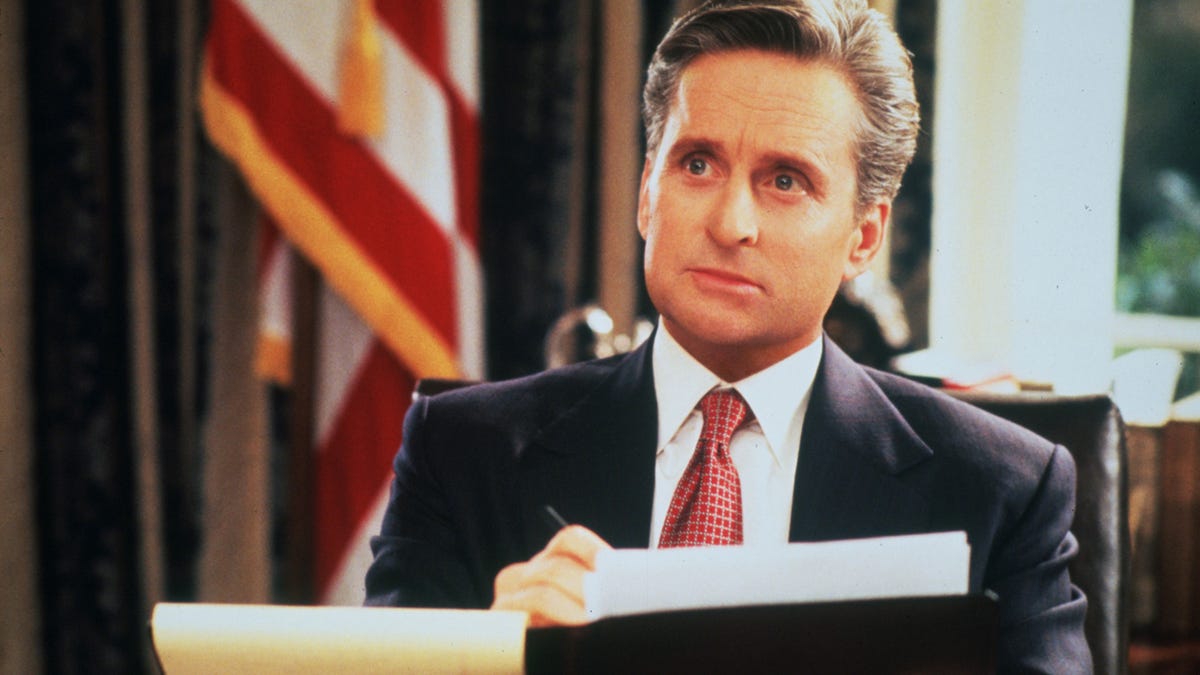
The buck stops with Michael Douglas in Aaron Sorkin’s dress rehearsal for TV, The American President

Director: Rob Reiner

Cast: Michael Douglas (President Andrew Shepherd), Annette Bening (Sydney Ellen Wade), Martin Sheen (AJ MacInerney), Michael J Fox (Lewis Rothschild), Richard Dreyfuss (Seantor Bob Rumson), David Paymer (Leon Kodak), Samantha Mathis (Janie Basdin), John Mahoney (Leo Solomon), Anna Deavere Smith (Robin McCall), Nina Siemaszko (Beth Wade), Wendie Malick (Susan Sloan), Shawna Waldron (Lucy Shepherd), Anne Haney (Mrs Chapil)

Taken solely on its own merits, The American President is a charming, witty romantic comedy which makes some shrewd (liberal-tinged) comments about American politics. But no-one is ever going to take The American President on its own merits. Because this Sorkin-scripted bundle of joy is so clearly a dry-run for The West Wing, it’s hard to watch it without spotting the roots of it here: everything from shared characters to scraps of dialogue. Perhaps only M*A*S*H stands with this film as so dwarfed by its spin-off.

President Andrew Shepherd (Michael Douglas) is a widower, raising his daughter Lucy (Shawna Waldron). Heading into the third year of his first term, he’s got a domestic agenda dominated by his new crime bill (although Shepherd won’t risk increasing gun controls). Charming, articulate and passionate – he’s also lonely. But his life changes when he falls for environmental lobbyist Sydney Ellen Wade (Annette Bening), their courtship seeing them fumble through “boy-meets-girl” when boy just happens to be the most powerful man in the world. Will the President’s popularity survive him dating someone outspoken and passionate? Or will it be a tool for his Republican rival Senator Bob Rumson (Richard Dreyfuss) to hit him on everything from family values to patriotism?

It’s impossible not to enjoy The American President. Sorkin’s playful, articulate and smart dialogue is of course an absolute triumph. The cast are extremely well-chosen. Few actors look as damn Presidential as Michael Douglas, not to mention carrying with them an air of impassioned authority and commanding bonhomie. Annette Bening is spot-on as exactly the sort of feisty and intelligent woman that would attract a liberal minded President, but turn off pundits and regular people. Martin Sheen was obviously so comfortable with Sorkin’s dialogue style that promotion to the President seemed inevitable (seriously it’s very odd watching the film and seeing Sheen not being treated like the President!). Michael J Fox’s entire career was revitalised by Sorkin tapping into the frantic, fast-paced comic energy that is the actor’s forte.

Rob Reiner’s direction is fresh, relaxed and perfectly complements the dialogue. We get a few West Wing style walk-and-talks (does this make Reiner the inventor of it?). The film superbly balances romantic comedy with serious political discussion on military intervention and proportional response (“the least Presidential thing I do”), the environment and gun control. It also gets a neat idea of the shady, and dirty, business of generating votes in the House – and the deals that need to be done to secure legislation. Reiner gets great stuff from the actors (Sorkin didn’t question his casting, since so many of them ended up in The West Wing) and keeps the momentum up beautifully.

The film has a lovely Capra-esque feel to it. Sorkin is even witty enough to lean on this by having Sydney discuss Capra openly with a White House security guard – also a lovely moment to establish Sydney’s genuineness and openness, as compared to the jaded I-don’t-care attitude of her colleague. There is a real feel in it – and of course this optimism carries across to The West Wing – that good people in the right place can change the world. That decency and compassion can trump (so to speak) the cynicism of Washington insiders. (The idea appeals to everyone – what is Donald Trump but a nightmare version of a plain-speaking man in Washington who says what he thinks?).

Balanced with some lovely comedy, it works extremely well. Along with the debate, Sorkin has a great feeling for the absurdity of the Leader of the Free World trying to work out how he can behave like a regular Joe and ask a girl out on a date. Simple ideas, from sending flowers to the etiquette of having someone stay over, are laced with difficulties. The film gets a wonderful sense of how the public eye can unjustly tear people apart – all drummed up by Dreyfuss’ eminently hissable villain.

There is some great chemistry between Douglas and Bening. Douglas is at possibly his most charming and authoritative here, effortlessly selling the lightness but also the powerfully effective speeches Sorkin crafts for him (his final press conference speech that effectively closes the film is a barnstormer). Bening, as well as being perfectly cast, walks a neat line between serious professional and girlish crush, that comes across extremely well.

It’s hard though, for all the film’s romantic charm, not to look at it through the filter of The West Wing. It’s both a first pass, and a historical curiosity. Sorkin recycled many of the ideas touched upon here (most noticeably Sheen’s President would spend an entire episode discussing proportional responses) and also expanded several characters. Douglas’ teacher turned President, widely read and with a liberal outlook, is a clear forerunner of Bartlett. Sheen himself plays a character who is all but Leo. Fox plays a character combining elements of Josh and Toby. Anna Deavere Smith is a CJ without those distinctive touches Allison Janney bought to the role. Names, plot developments, concepts are all recycled. Stylistic flourishes in the writing match.

The American President isn’t as good as The West Wing of course – few things are. But as a boiled down, Hollywood version with a romantic twist, it’s still pretty damn good.

Groundhog Day (1993)

Bill Murray lives the same day over-and-over again. It’s Groundhog Day!

Director: Harold Ramis

Cast: Bill Murray (Phil Connors), Andie MacDowell (Rita Hanson), Chris Elliott (Larry), Stephen Tobolowsky (Ned Ryerson), Brian Doyle-Murray (Buster Green), Marita Geraghty (Nancy Taylor), Angela Paton (Mrs Lancaster), Rick Ducommun (Gus), Rick Overton (Ralph), Robin Duke (Doris)

Few films are so well known they’ve become a shorthand. But mention “it’s like Groundhog Day” to anyone, and they know exactly what you mean. That’s a tribute to the film’s brilliant concept – but also its superb execution. Never mind just comedies, this is one of the smartest and best films to come out of America in the 1990s, so good it doesn’t seem to have aged a day. Groundhog Day is an enduring classic and quite wonderful.

Phil Connors (Bill Murray) is a misanthropic weatherman on a Pittsburgh news network. Every February, he is dispatched to the small town of Punxsutawney to cover “Groundhog Day”, an annual festivity where a local groundhog is used to predict whether winter will last six more weeks. Phil makes no secret of his contempt for the event, the town, its inhabitants and indeed everything else. After being trapped in the town by a snowstorm he failed to predict, Phil wakes up the next day – to find it’s Groundhog Day again! When the same thing happens the next day, Phil realises he is trapped living the same day in the small town over and over again – and no matter what he does during the day, he will always wake up in his hotel bed at 6am on Groundhog Day. What will he use the never-ending time for? Personal advantage? Or just maybe, becoming a better man?

Groundhog Day works because its concept is gloriously simple, and yet endlessly intriguing. Who can’t relate to the idea of a prolonged déjà vu? And anyway, don’t most of us feel at some points life is a never-ending treadmill (one of the town’s residents, asked what he would do, stuck in the same place every day where nothing you did mattered, replies “That about sums it up for me”)? Whole books have been written about the film’s philosophical roots – from Nietzsche to Buddhism – and the time loop’s duration. The film invites this because it keeps these concepts gloriously unexplained.

Imagine how much less powerful (and funny) the film would have been if Ramis had caved to studio pressure to either include a scene explaining why the time-loop was happening or providing a definitive answer for how long Phil spends in it. Hilariously, studio execs settled on a short period of time measured in months – others have gone for anywhere between decades to millennia. It’s certainly long enough for Phil to learn by heart the complete biographies of the entire town’s population, know the timeline of every event in the day to the second, and master everything from the piano (to Beethoven-like proficiency), to French and ice sculpting. There is a magic about not knowing the answer to these questions, that make the story brilliantly charming.

It also helps that the film remains, at heart, not science-fiction (which explanations would tip it towards) but a Capra-esque morality tale. The time-loop is, essentially, a second-chance over-and-over again for Phil to become a better person: to change from being a selfish misanthrope into a kinder, generous soul. That’s a story everyone can relate to, and becomes more and more heartfelt as the film continues (culminating in its uplifting conclusion). It also has the Capra touch of a heartless professional from the big city discovering (eventually) a warmth and truth in small-town America where the people are straight-forward and unaffected.

Which makes the film sound tediously feel-good. It escapes this completely because of three reasons. Firstly, initially Phil uses his new super-power of 24-hour immortality for what most of us would do – gain and greed. No consequences ever. Theft is child’s play when you know the exact second bank staff will be looking the other way. Easy to seduce a woman when you can ask her a series of questions on one circuit, then use her answers to pick her up on the next one. You can do whatever you want, confident the next day you’ll wake up in your hotel bed to I Got You Babe.

Even on his journey to eventual self-improvement, Phil only begins to change after exhausting all other options, including repeated attempts at suicide, to try and break the loop. And Phil, for all his charm, is not a good guy for a long time. His attempted seduction of producer Rita (a charmingly winning Andie MacDowell) over a never-ending series of first dates constantly fails, because no matter what happens, she eventually sees through his lack of decency (Phil’s attempts to recapture moments of spontaneous genuineness in later circuits fail completely).

Secondly, the film is brilliantly, gloriously funny – even with repeat viewings. Ramis’ brilliant shooting and structuring of the film focus on its repetition. We see the same shots and sets, hear the same music cues, the film is edited to stress repetition. Few things in comedy are as funny as anticipation and watching characters fly in the face of all the social conventions we deal with everyday. Seeing Phil’s different reactions to the same stimulus each time never fails to raise a laugh. Knowing the events almost as well as Phil, we eagerly await unexpected reactions. The script – by Ramis and Danny Rubin – is packed with brilliant lines, wonderful set-ups and is superbly structured. The first loop establishes all the settings and situations Phil will spend the rest of the film continually interacting with, and the film allows us to often be in on the joke with Phil (making us like him more).

Thirdly, and perhaps almost most importantly, the film could never have worked without Bill Murray in the lead role. For all the pull for Lost in Translation, this is surely Bill Murray’s finest performance, and stands comparison with the best work of Jimmy Stewart and Spencer Tracy, laced with that classic Murray touch. There is no other actor who can present a character so grouchy, deadpan, cynical and selfish but still make us love him. And – for all the terrible things Phil does in this film – you never stop liking him. His comic timing is exquisite (his varying reactions from frustration, confusion, glee and despair at his predicament spot on) but he also taps brilliantly into moments of genuine heart, loss and despair. Murray has spoken of how the theme of redemption spoke very strongly to him – and he plays perfectly a man so selfish that only after he has exhausted all other eventualities – including death – does he start to become a better man. It’s one of the greatest film performances of the 1990s, and the film is impossible without him.

Groundhog Day is pretty much perfect. The town of Punxsutawney is presented to us at first much like Phil sees it – old-fashioned and twee, populated by well-meaning but dull residents – but over the course of the loop, like Phil, we learn to embrace it. It perfectly mixes a glee at breaking the rules and embracing your inner misanthrope, with learning to develop and improve. It’s both hilarious and heart-warming, with every scene a classic and every performance spot-on. It has a timeless (!) quality about it, and its focus on telling a rollicking good story, full of heartfelt emotion and fabulous jokes, means you can add as much or as little spiritual depth to it as you like. It’s a modern It’s a Wonderful Life that might even be better.

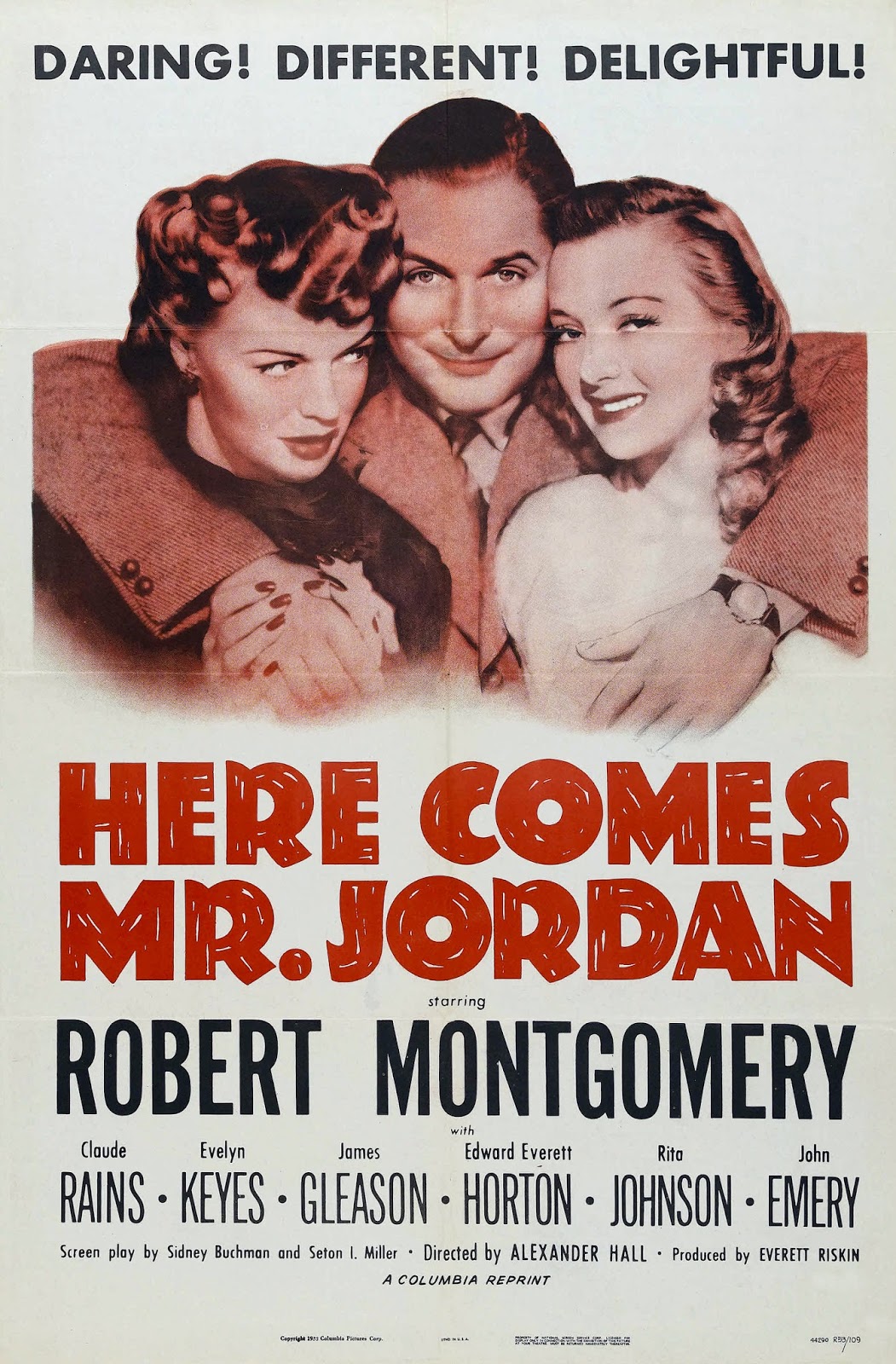
Here Comes Mr Jordan (1941)

Edward Everett Horton, Robert Montgomery and Claude Rains deal with death, admin and body swops in Here Comes Mr. Jordan

Director: Alexander Hall

Cast: Robert Montgomery (Joe Pendleton), Evelyn Keyes (Bette Logan), Claude Rains (Mr Jordan), Rita Johnson (Julia Farnsworth), Edward Everett Horton (Messenger 7013), James Gleason (Max “Pop” Corkle), John Emery (Tony Abbott), Donald MacBride (Inspector Williams), Don Costello (Lefty), Halliwell Hobbes (Sisk)

One of the best things about the Hollywood Studio system is that created an environment where middle-brow talents could suddenly lift themselves up to create something very special. That’s certainly the case with Here Comes Mr Jordan, the career high spot for its director and its main stars. It’s the sort of product of Classic Hollywood where everything comes together perfectly and delightfully.

Joe Pendleton (Robert Montgomery) is a boxer with a shot at the title. An amateur pilot, Joe flies his own one-man flight to New York for the match. On the way, his plane crashes. An officious Angel, Messenger 7013 (Edward Everett Horton), collects his soul – only to find on arrival in heaven that Joe was meant to survive the crash and live for another 50 years. Unfortunately, by the time the mistake is found out, Joe’s body has been cremated. Head Angel Mr Jordan (Claude Rains) has no choice other than to find Joe another body on Earth. So Joe winds up in the body of millionaire Bruce Farnsworth, recently murdered by his wife Julia (Rita Johnson) and secretary Tony Abbott (John Emery). In his new body, Joe decides to correct Farnsworth’s wrongs, returning his embezzled money to investors and helping to free the father of Bette Logan (Evelyn Keyes), who took the blame. Joe also wants to retrain for a boxer – recruiting, much to his confusion, his old coach Max Corkle (James Gleason) – and he and Bette begin to fall in love. But Joe’s destiny, it turns out, is to be the champ – and he can’t do that in Farnsworth’s body. How will Mr Jordan clean this mess up?

Here Comes Mr Jordan is a delight, a hilarious musing on reincarnation and afterlife, in which the next world is as weighted down by bureaucracy and red tape as much as this one. With neat, unobtrusive direction from Alexander Hall (who never hit the jackpot like this again), the film keeps its comic balls up in the air beautifully, while throwing in some neat observations around life, death and fate. The script bubbles with lovely bits of invention, from the Afterlife to a bureaucratic organisation to Joe’s inhabiting of Farnsworth’s body (after trying a few other bodies on first), while still appearing to himself (and we the viewers – a neat idea that the film invites us not to think about too much as Joe’s mannerisms and physicality must be completely different from Farnsworth) unchanged from his original body.

Around this the film gets some neat pot shots at big business corruption. In some ways this is a little like A Matter of Life and Death mixed with Capra. As in Capra, the humble, kind-but-not-super-smart regular Joe is the one who takes a long-hard look at the corruption and greed of Big Business and Corporate America and decides “there has to be a better way”. The kind of guy who solves major business problems simply by doing the right thing and listening to his heart. Counterbalancing that is Joe’s ongoing obsession with continuing his boxing career, from his determination to get a body that’s “in the pink” (a phrase that drives Mr Jordan up the wall) to roping in his ageing butler into a series of vigorous workouts.

A large part of the charm of Joe Pendleton lies in the brilliantly dry, witty, sweet but still a little selfish qualities that Robert Montgomery (Oscar nominated) brings to the part. Playing the part with a homespun Brooklyn honesty and simplicity, Montgomery also has a childish delight in finding he can pass unobserved as this new man (particularly funny after his initial terror that he will be “found out” any second), while his boxing obsession has an endearing genuineness to it. Montgomery, as well as getting the light comedic tone spot on (no surprise that Cary Grant was the first choice for the role – although he could never have played the working class Joe as well as Montgomery does he) he also builds a very sweet and charming romance with Evelyn Keyes (also in a career best role), who is ill-treated but defiantly assured of the importance of doing the right thing as Bette.

The whole cast is quite superbly assembled, seasoned pros, doing their thing with aplomb. James Gleason was Oscar-nominated as Joe’s befuddled manager, trying to wrap his head around incarnation. Gleason also gets some of the finest gags, as Corkle tries to interact with Mr Jordan, who remains invisible to the living – but also brings a genuine warmth and tenderness to his feelings for Joe, who he clearly sees as a son. As Mr Jordan, Claude Rains is smoothness personified, playing the entire film with a relaxed grin on his face, gleefully mixing in an obsession with ensuring the “rules” are followed, while offering a dry reaction to events such as murder. As his underling Edward Everett Horton brings his patented A-game of flustered middle-man.

Mr Jordan grins so much through the film it’s easy to forget that he’s basically the Angel of Death. Reasonable and supportive, Jordan is also blithely unaffected by death and murder. The film, among the jokes and the general air of a fairy tale, has a little vein of darkness. In his introduction Jordan is overseeing the collection of souls from some of the battlefields of World War II. Later he calmly informs Joe of Farnsworth’s murder taking place even as they speak. The film doesn’t hesitate to shy away from the details of Farnsworth’s killing – or from two further murders. It’s a little nugget of darkness in amongst the charm, and a reminder that this comedy on death and the afterlife took place while the world was tearing itself apart. No wonder death can sometimes not be as big as a deal to everyone as it is today (especially to the Angel of Death).

Because the film has a more Capraesque belief that what matters is not who we are but what’s inside. Joe will appear as Farnsworth to everyone, but eventually what people will respond to (he is told by Jordan) is the person inside not the outward appearance. The potential that Joe may have to move to a new body to fulfil his destiny of becoming the champ, doesn’t meant that he and Bette need to necessarily be apart if his heart remains the same. While the film does suggest (I feel darkly!) at one point that Joe may forget who he was originally the longer he is in a new body, the more it stresses the point that the basic qualities of his decency won’t be lost.

Its ideas like this – combined with expert telling and superb Classic Hollywood grace and skill in its shooting, directing and acting – that give Here Comes Mr Jordan a little bite, along with its comic impact. Nominated for seven Oscars it won two – and it stands to be remembered in what was a glory year for Hollywood. You might expect something rather slight – but this delightful comedy is as thought provoking as it is playful.

My Man Godfrey (1936)

Carole Lombard and William Powell flirt, fight and buttel in My Man Godfrey

Director: Gregory La Cava

Cast: William Powell (Godfrey), Carole Lombard (Irene Bullock), Alice Brady (Angelica Bullock), Gail Patrick (Cornelia Bullock), Jean Dixon (Molly), Eugene Pallette (Alexander Bullock), Alan Mowbray (Tommy Gray), Mischa Auer (Carlo), Pat Flaherty (Mike)

My Man Godfrey is one of the most beloved of all screwball comedies. It’s also the only film in history to be nominated in every acting category and the directing and writing categories at the Oscars and still not get nominated for Best Picture (proving comedy was devalued even then). Today it still carries a heck of a comedic wallop, splicing this in with an ever more acute and profound social commentary. It’s a gem of Golden Era Hollywood.

With New York in the midst of the Great Depression, affluent socialites the Bullock sisters – snob Cornelia (Gail Patrick) and ditzy, scatter-brained Irene (Carole Lombard) – are in hunt for a “forgotten man” so they can claim victory in their scavenger hunt. In a rubbish dump – turned home for the unemployed – they find the well-spoken Godfrey (William Powell). Godfrey is having none of the condescension of Cornelia, but finds the honesty and kindness of Irene more touching agrees to help her win the prize – whereupon he promptly admonishes the upper-class crowd at the Waldorf for their lack of concern for the working man. Ashamed, Irene offers him the job of Bullock family butler, which Godfrey accepts. But as he navigates the eccentric family, is Godfrey also hiding secrets of his own, secrets that suggest he is much more than he seems?

My Man Godfrey is a very funny film, centre-piecing the fast-paced comedic delivery of the era, the script never going more than a minute without a killer line or brilliant piece of comedic business. It’s helped as well by the casting, with every actor being perfectly selected for their roles, and each of them bringing their absolute A-game. Not least the partnership of Powell and Lombard – divorced in real life but still close – who spark off each other wonderfully and keep the will-they-won’t-they question beautifully balanced throughout the whole film. 

La Cava’s film – wonderfully directed with imagination and visual chutzpah – matches this up with an extremely neat, but not too preachy, line in social commentary. The self-obsessions and petty concerns of the Bullock family are frequently contrasted with the poverty and struggles of the working man, while the families’ lack of concern for the struggles of the vagrants and down-and-outs only a taxi ride away from their mansion home is striking. Godfrey frequently points up this lack of empathy in this ‘classless’ country (which is in fact defined by class), stressing he found more decency and kindness at the rubbish dump than he did in the palaces of the mighty. 

Sure Godfrey’s secret may well be that he is from loaded stock himself – but has given it all up in shame and self-disgust – but that only makes him all the better an observer of the whims of the rich treading on the poor. In fact My Man Godfrey could well be the film for today. The scavenger hunt dinner – a brilliantly directed, frenetic scene that looks years ahead of its time in its technical accomplishment – really captures this. The guests haw and shout over each other, clutching with an ironic glee their examples of poverty (from everyday objects to a goat to, of course. the ‘forgotten’ man, who has as much value as the goat to them). We get more of it at the posh clubs and cocktail parties the Bullock frequent, the guests (while not cruel) being as blasé and oblivious of their fortune as they are of the suffering in the rest of the city.

But that makes this sound like a civics lessons, whereas the film is first-and-foremost a comedy. It has a terrific performance from William Powell as Godfrey. Powell makes the part a mix of Jeeves and Wooster: the intelligence and calm of Jeeves with the warmth and tendency for scrapes of Wooster. Powell is brilliant at balancing the wry observer quality of Godfrey, while never sacrificing his warmer, generous soul. And also brilliantly suggests his wonderful judgement of situations and characters, without ever making him smug or a know-it-all. It’s a quite exquisite performance of unflappility covering emotional depth.

Lombard sparks off him very well as Irene, allowed to frequently head further over the top as Powell grounds Godfrey in normality (Lombard was a famously electric performer, and the outtakes reel for the film frequently show her screwing up her fast-paced dialogue with copious swear-words). Today the more ditzy Irene sometimes comes across as a more tiresome, less believable character – she is so obviously a narrative construction rather than someone who could be real that it becomes harder to connect with her (or to imagine Godfrey might find her attractive). But Lombard’s energy and drive carries the film through and the film highlights her electric qualities in several show-stopping scenes.

The entire Bullock household is in fact spot in, with gorgeous performances. Alice Brady (Oscar-nominated) is the quintessential disapproving society mother, archly self-obsessed. Eugene Pallette is wonderfully funny as the exasperated father of the household, barely able to understand either his family or his investments. Gail Patrick is a delight as Irene’s manipulative sister, proud and selfish. Mischa Auer (Oscar nominated surely off the bag of his extraordinary gorilla impersonation) is very funny as Angelica’s “protégé”, a preening, talent-free musician and freeloader who spends most of his scenes eating. Jean Dixon is smart and sassy as the maid Molly. There isn’t a bum note in this ensemble.

La Cava directs all this with great skill, framing the action with a beautiful sense of composition, pace and style. You know you are in save hands with the opening scene that show the credits appearing like neon bill boards during a slow, continuous tracking shot along the New York riverside. With dialogue that glides beautifully from humour to pathos, and delivery that creates comic archetypes that feel like real people, it’s a film that gets nearly everything right – which is why it’s still a classic today.

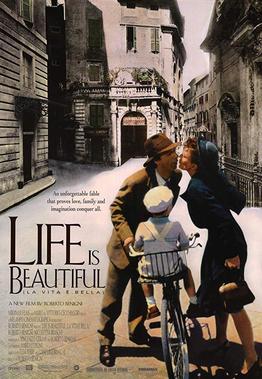
Life is Beautiful (1998)

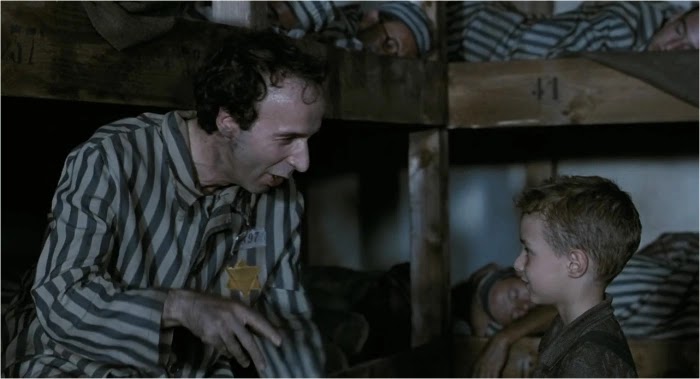
Roberto Benigni uses humour to hide the horrors of the Holocaust from his son in Life is Beautiful

Director: Roberto Benigni

Cast: Roberto Benigni (Guido Orefice), Nicoletta Braschi (Dora Orefice), Giorgio Cantarini (Giosue Orefice), Giustino Durano (Uncle Eliseo), Horst Buchhoolz (Dr Lessing), Marisa Paredes (Dora’s mother), Sergio Bustric (Ferruccio)

How can we confront the dark facts of our past? It’s a question that perhaps feels more relevant with each passing day. History is full of horrors and terrible deeds. And it’s easy to think of those who lived through terrible events as merely victims, a single homogenous mass of the suffering. Life is Beautiful however tries to look at perhaps the most terrible of events, the Holocaust, with an eye that acknowledges the terror but also suggests that love and hope can exist alongside the worst parts of humanity.

In Tuscany in 1939, Guido Orefice (Roberto Benigni) is a sharp-witted, if accident-prone, waiter who dreams of setting himself up as a bookshop owner. He falls in love with Dora (Nicoletta Braschi) and, after a courtship involving “accidental” meetings, comic interludes and finally Dora leaving her engagement party (where she is due to marry a brutish bully), they marry. A few years later they have a son, Giosue (Giogio Cantarini). But the war has gone against Italy, and now Guido and Giosue, as Jews, are arrested and sent to a concentration camp. There Guido does everything he can to try and protect his son from the horrors around him, by pretending the camp is an elaborate game to win a tank, with points won if he can hide from the guards and not cry. Guido spins his own forced labour, and danger of execution, to Giosue as part of the same game.

Directed by and starring Roberto Benigni, Life is Beautiful was Benigni’s statement that events as terrible as the Holocaust cannot drive hope and love from a father’s heart, and that both tears and laughter can come from the same beautiful place in the human spirit. It’s been called a comedy about the Holocaust, but that’s unfair. Guido may use comedy and try to turn everything that happens to them into a camp an elaborate game for his son – but that’s to stop a 5-year-old child from being traumatised. For us watching, we know the terrible place Guido and his son are in – and we know the appalling things that are happening around them.

Life is Beautiful is really two films, and only one of them is a comedy. The first half is a Chaplain-esque love story, a clumsy but good-hearted and comic scruff-pot winning the heart of a decent and loving woman. It’s full of the sort of slapstick and comic routines you could expect from the masters of classic American silent comedy. It hits every expected beat, from our hero being the sort of wily but honest and kind little guy we can root for, to all his opponents being sharp-suited bullies while his love is charming and tender. For the first half of the film there is little that, really, stands this film out from the ordinary. Benigni is a charming performer – with just the right mix of bashfulness and bombast – but it’s nothing you’ve not seen before.

But then that half of the film exists to give the second half of the film its power. As soon as the time-jump happens, it’s like watching the Little Tramp wander into a horrific tragedy. From the moment Guido closes the shutters on his shop – to reveal the words “Jewish Store” graffitied across it – the sunny Tuscan world around our heroes grows darker and darker. 

Benigni deliberately avoided a sense of realism to his Holocaust imagery – he felt only documentary could really do it justice, so avoided making his death camp look or feel anything like a real camp – but the audience is more than capable of filling in the blanks. The second half of the film, with Guido and his son in the camp, is not funny at all. But that doesn’t stop Guido busting a gut to entertain his son at every moment – or prevent us building a deep emotional connection with a father who is suppressing his own pain and fear in order to try and protect his son. The father who knows the business of this camp is death, who knows that Dora has also been arrested and placed in the women’s camp. Who knows their only hope is to pray the war ends before they die. It’s bleak stuff, and the fact that Guido keeps up a front of humour doesn’t make the film a comedy.

It’s why it the second half of the film carries such impact. Not only have we invested in the comedic warmth of these characters in the first half, but seeing them trying to keep hope alive in their own way in the bleakest of situations is completely moving. Sure there are funny moments – the most notable being Guido’s improvised interpretation of the guard’s explanation of the camp rules into an explanation of the rules of the game he is trying to get his son to believe in – but really it’s not a comedy because we know too well the dangers that surround them.

Sure the film is sentimental and in many ways manipulative. It would be hard pressed to not create emotional moments from such material, and from the sacrifices of Benigni’s character. But it still works and the film has a few shrewd moments of personal insight, not least from the introduction of Horst Buchholz’s German doctor. Dr Lessing knows Guido from his days as a waiter in Tuscany – but encountering him in the camp waiting tables at the officers’ mess, it doesn’t even begin to occur to him that Guido’s position has changed or his family’s lives are in mortal danger. The dehumanising of this extermination system doesn’t just turn people into murderers, it turns decent people into thoughtless observers.

Life is Beautiful does carry a real emotion wallop towards its end. It was famous as “the Holocaust comedy”, but it uses comedy and the conventions of Hollywood romance to build our empathy for characters who then find themselves in a Holocaust movie. And it treats the Holocaust itself with a deep reverence and respect, never making the deaths of millions anything like a joke. Sure, you could argue that it still downplays the terrors of the Holocaust – but then we know the background so well, do we need the gaps all filled in? And while you might say hope from such a terrible setting is not the message that should come out, sometimes it feels like the message we need.

Top Hat (1935)

Astaire and Rogers dance Cheek to Cheek in Top Hat

Director: Mark Sandrich

Cast: Fred Astaire (Jerry Travers), Ginger Rogers (Dale Tremont), Edward Everett Horton (Horace Hardwick), Erik Rhodes (Alberto Beddini), Helen Broderick (Madge Hardwick), Eric Blore (Bates)

It’s got the sort of plot PG Wodehouse would consider a bit far-fetched. Due to a series of misunderstandings and mistaken identities (that the script executes quite a few linguistic gymnastics to keep in place, since a few words from someone would sort it all out in seconds), Dale Tremont (Ginger Rogers) falls in love with Broadway star Jerry Travers (Fred Astaire) but believes that he is in fact West End producer Horace Hardwick (Edward Everett Horton) who is married to her best friend Madge Hardwick (Helen Broderick). So, thinking Jerry is a cad, she decides to run away to Venice with her boyfriend, Italian dress designer Alberto Beddini (Erik Rhodes) – only for a confused and infatuated Jerry to follow.

Of course the entire thing revolves around Dale having never met Madge’s husband, and Madge never for a minute questioning the description of her husband (despite the resemblance he clearly bares to Jerry in how Dale talks to him) – or when Madge later “introduces” Dale to Jerry, not saying a word that could suggest they’re not married. But that’s classic farce here, and the light comedy works an absolute charm with mistakes, confusion and jealous clashes occurring at every moment. Top Hat is a superb piece of witty light froth, with some cracking lines and some great comic set pieces. 

And of course, its main attraction is some superb dancing from Astaire and Rogers in probably the highlight of their long collaboration with each other. The grace and skill of these two has to be seen to be believed – as does the natural synchronicity with which they move together. With Sandrich’s camera calmly and carefully tracing the lines of Astaire and Rogers’ movements, the viewer is invited to sit back and enjoy some of the finest dancing you are ever going to see. With music from Irving Berlin – and the songs are endlessly catchy – it makes for a perfect combination.

This is the film where Astaire first used top hat (of course!) and cane as part of a dance number. The play-within-a-film musical number “Top Hat, White Tie and Tails” is perhaps one of the finest displays of tap dancing in the movies, in which Astaire moves from moments of stillness into explosions of energy, mixing cane taps with foot taps, ending in a superbly funny sequence where Astaire uses his cane as a “tap powered machine gun” to playfully shoot out the chorus line behind him. It’s a set-piece that makes you believe that Hardwick’s West End show really is the smash hit you keep hearing it is.

That’s then followed by a parade of no-less than three superb dances that chart the progress of Dale’s and Jerry’s relationship – from flirtation in “Isn’t it a Lovely Day”, full of side-by-side steps that lead into a growing physical looseness, to the grand ballroom “Cheek to Cheek” which uses every inch of a huge Venice hotel set to see the two lovers come back together again after confusions (and which ends with the famous slap of Astaire by Rogers for making her fall in love with him, with Astaire’s dreamingly happy “She loves me!” after she departs). Finally the two come together for a final duet dance – after of course all the confusion has been cleared up – which is yet another triumph of two dancers working in perfect partnership. You can’t help be swept up in the excitement of watching these two masterful performers push themselves to the limits.

That’s not to overlook that the film also operates because of the charm of the two leads. Astaire is a dreamy, compulsive, slightly naïve man, passionate about the things he cares about. Rogers is a bit harder-edged, but increasingly find herself both drawn to Jerry and appalled at the guilt in believing she is falling for her friend’s husband, her shame mixed with her strong emotional attachment.

But then she also interprets some of Helen’s seeming ease with the idea of her husband flirting with another woman as a (surprisingly modern) go-ahead for all the flirting that follows. Certainly Helen doesn’t seem fussed at the idea of her husband contemplating playing away (for all that she later punches Horace for not telling her truth). Perhaps that’s because she recognises her husband is as camp as Christmas, with Edward Everett Horton living in like a bickering old married couple with Erik Blore as his equally camp butler Bates. These two bicker cattily comment on everything from each other’s clothes to their manners. 

Mind you Dale’s other love interest is an equally preening – and malapropism-prone Italian dress maker (Determined that “Woman shall wear my dresses no more!” after one particular moment of stress) played with wit by Erik Rhodes. It’s possible that with a lead as un-traditionally masculine as Astaire, it was thought best to make every other man in the film even less masculine than him. Either way, the film has a surprisingly modern air of sexual freedom in it, where husband swopping seems not entirely out of the question, and the Hardwick marriage (seemingly a marriage of convenience) might as well be an open one. Don’t often get that from a 1930s musical.

Astaire was critical of the script itself at first – it’s basically an exact rewrite of The Gay Divorcee, the Astaire and Rogers film from the previous year – but everything settles into one of the most triumphantly enjoyable and funny films the pair worked on, with Astaire at his most graceful and Rogers at her most dynamic. And the dancing is a joy that will last forever.

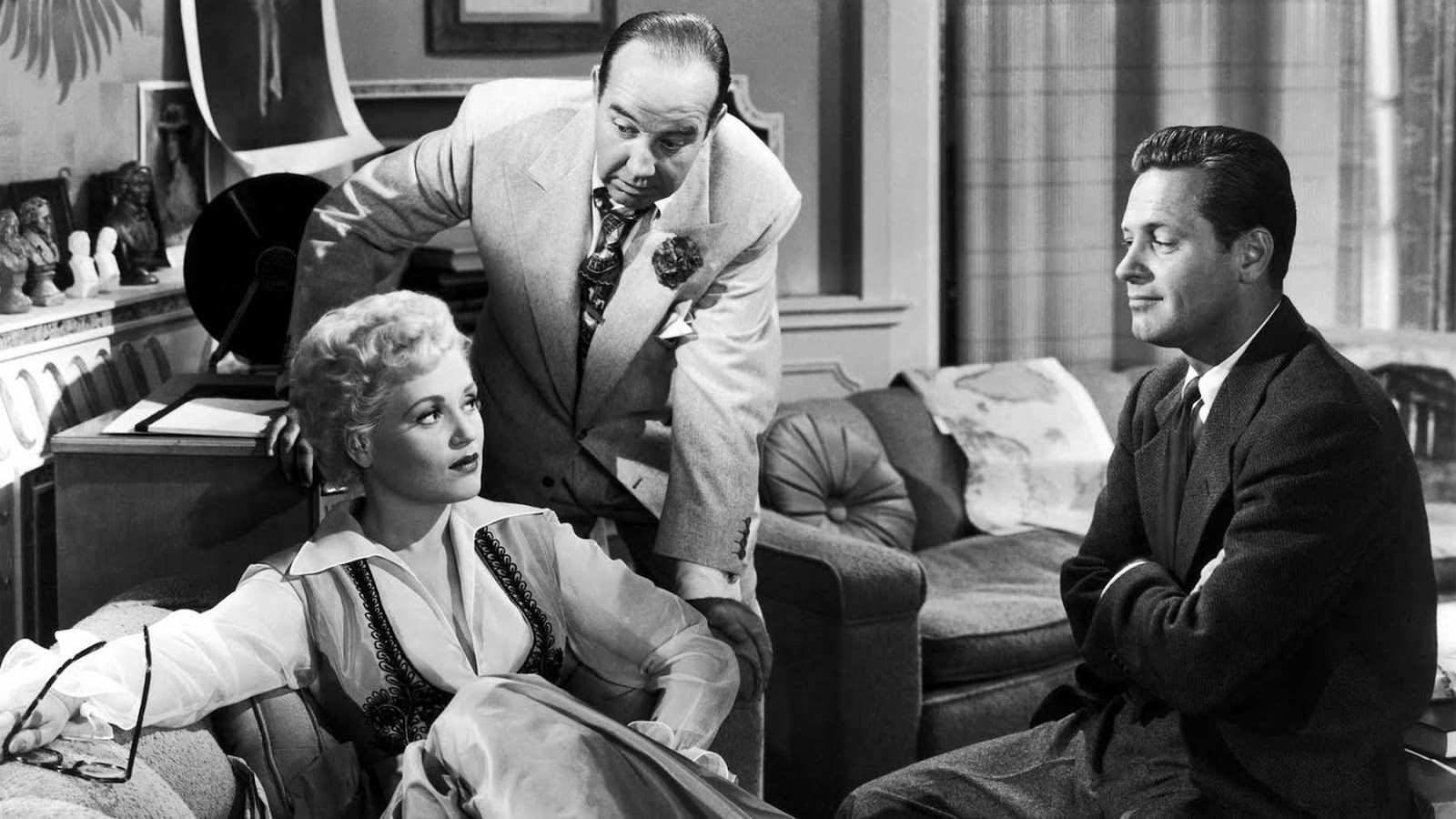
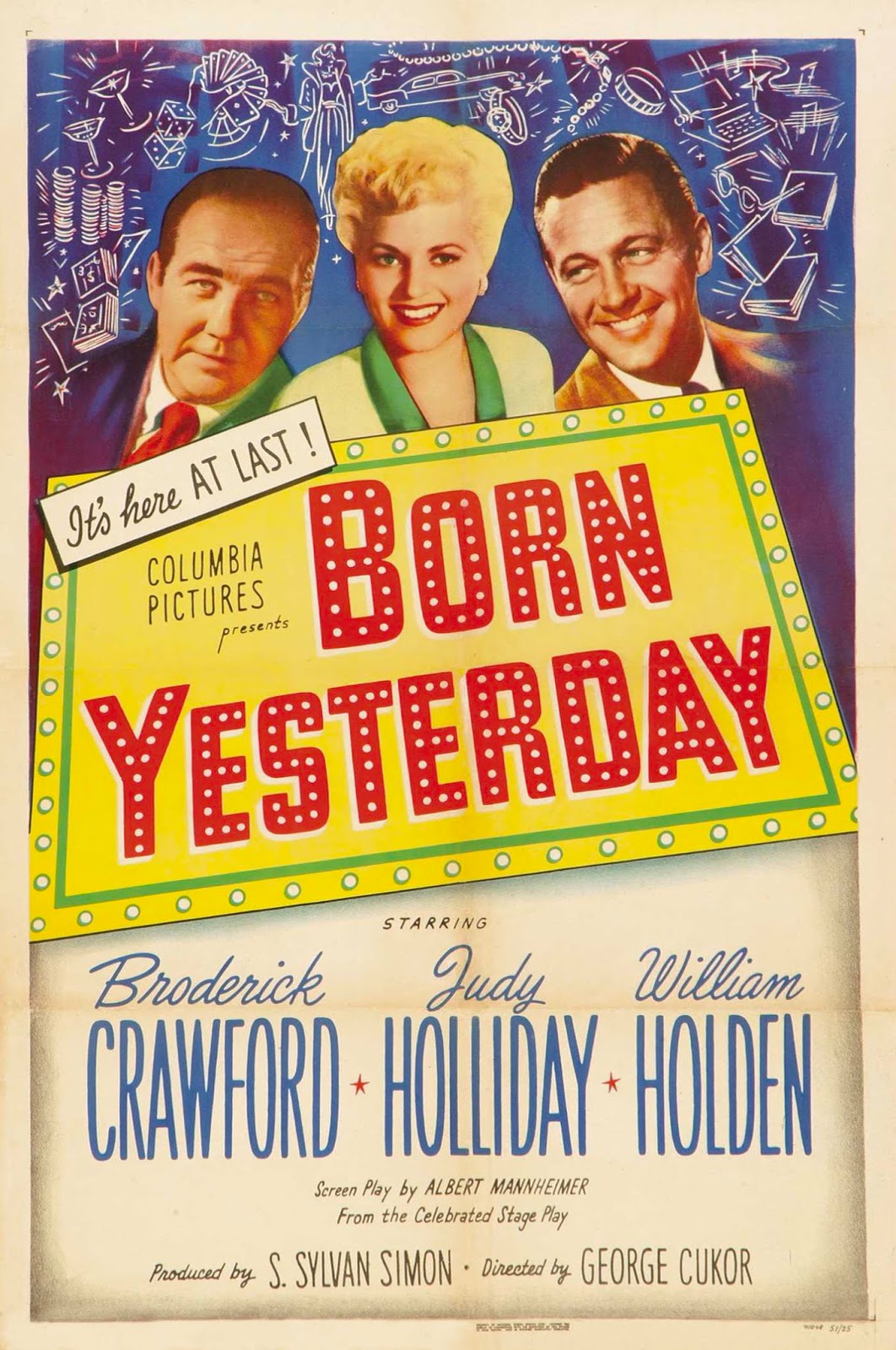
Born Yesterday (1950)

Judy Holliday gets a tutorial in class from William Holden – much to the chagrin of Broderick Crawford – in Born Yesterday

Director: George Cukor

Cast: Judy Holliday (Billie Dawn), Broderick Crawford (Harry Brock), William Holden (Paul Verrall), Howard St John (Jim Devery) Frank Otto (Eddie), Larry Oliver (Congressman Hedges)

Perhaps George Bernard Shaw should have tried to copyright the Pygmalion concept. After all no end of films and plays have tried their best to replicate the magic of having one working class classless type (usually the woman) learning how to use their own natural intelligence effectively by a wiser tutor (usually the man). Born Yesterday is a near text-book example of this – she’s as ill-informed as a young baby so might as well have been “born yesterday” y’see – that offers very little in the way of surprises, but a lot in the way of charm – most particularly from Judy Holliday who carries the entire the film with aplomb.

Harry Brock (Broderick Crawford) is a corrupt, uneducated businessman who has arrived in Washington to buy up a few congressmen. Brock may be a boreish bully, but he’s worried that his mistress, former Chorus-girl Billie Dawn (Judy Holliday), is so brash and ill-educated that she will show him up in front of his new political contacts. So he hires investigative journalist Paul Verrall (William Holden) to educate her. But Paul and Billie have an immediate romantic frisson – and as she learns about politics, literature and the state of the world Billie starts to realise that maybe all those shares she holds in her own name (for tax purposes) in Brock’s dodgy dealings might give her the chance to put his wrongs right.

Born Yesterday was an adaptation of Broadway hit that had made Judy Holliday a star. Written by Garson Kanin, bullying Harry Brock was allegedly based on Colombia Pictures head Harry Cohn. He clearly didn’t care when he smelt a hit – and even confirmed some suspicions by ordering Kanin to do re-writes of the rewritten script for no extra payment. Cohn had been deeply uncertain about bringing the unknown Holliday along for the ride (she had made only three small appearances beforehand) so Cukor cast her in a key role in Adam’s Rib (where Hepburn generously ceded many scenes to her) to prove Holliday could make it on the big screen.

Thank goodness she did make it to the film, as Holliday makes the film. Winning the Oscar – famously beating Bette Davis and Anne Baxter in All About Eve and Gloria Swanson in Sunset Boulevard – Holliday is superb in the role. Billie Dawn may be brassy, may be load, she might have the sort of screeching Brooklyn accent that sometimes feels like nails on a blackboard – but she’s not dumb. She’s smart – as she shows by repeatedly beating Harry with ease at games of gin rummy – she’s capable and she cares. She just hasn’t learned any better, and having spent her life being told that her opinions don’t matter, she’s decided to not mention them.

But Holliday shows Billie is a woman fast – and eager to learn – and a week or so with Paul won’t turn her into a genius, but she’s more than sharp enough to work out what’s wrong about her life and her sugar daddy, and to give her the oomph to do something about it. Holliday demonstrates this endearing growth of engagement and curiosity with a superb lightness – her comic timing is faultless – and a touching sweetness. 

The script gives Billie a hilarious tendency towards malapropism and her wide-eyed innocence and desire to do her best works wonderfully in getting us onside. While she is often the source of jokes she is never the butt of them, and Holliday makes clear her decency and sharpness is innate. She’s far from a dumb blonde – although she certainly looks and sounds like it – and watching her apply good-old fashioned Hollywood liberal ideas to confound boreish businessmen is good fun.

Her co-stars give sterling performances. Broderick Crawford channels his Oscar winning turn from the year earlier as corrupt bullying Willie Stark in All the King’s Men as the loud, bullying and dim Harry Brock. Throw-away lines suggest he has killed in the past – and at one point he strikes Billie – but he’s always a comic blusterer rather than a real threat. William Holden generously cedes much of the ground to Holliday as her Henry Higgins, although unlike that guy he’s humble, supportive and pleasingly democratic (quite the year for Holden, having also played a similar supplicant role in Sunset Boulvard).

Cukor directs with his usual lack of flash, quietly setting the camera in place and letting the actor’s go about their business meaning, for all the location shooting in Washington, this still feels very much like a Broadway piece. Cukor does skilfully manage to smuggle a lot under the censor wire – not least that Billie is clearly Harry’s mistress – and keeps a fine romantic tension between Billie and Paul, even if having the pair of them kiss early on does undermine some of the “will-they-won’t-they” magic.

But then basically this is a very straight forward film that just looks to entertain. There are some dirty dealings in Washington – but it’s all sorted out very easily and we are reassuringly told that there are only a very few bad apples in this barrel, and we can trust in the decency of our leaders. It’s no surprise who ends up with who, and no real revelations in character. The most surprising character in many ways is Harry’s disillusioned, self-loathing lawyer played by Howard St John, constantly on the verge of alcoholic self-disgust.

The film is really a showcase for its star though – and Holliday delivers with a terrifically entertaining performance that hammers home even more the sad fact that she passed away at 43 with only a handful of films to her name. Pygmalion Goes to Washington it maybe, but this is still a lovely epitaph to a talented actress.

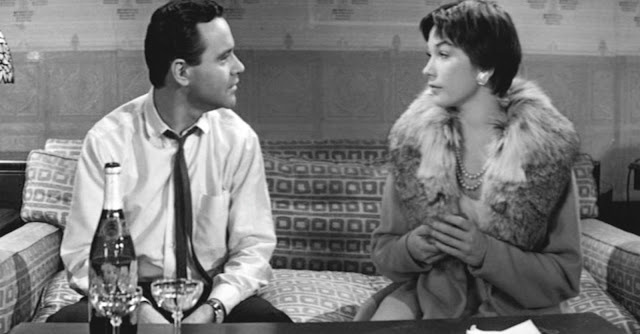
The Apartment (1960)

Jack Lemmon and Shirley MacLaine in an unusual relationship in the brilliant The Apartment

Director: Billy Wilder

Cast: Jack Lemmon (CC “Bud” Baxter), Shirley MacLaine (Fran Kubelik), Fred MacMurray (JD Sheldrake), Ray Walston (Joe Dobisch), Jack Kruschen (Dr Dreyfuss), David Lewis (Al Kirkeby), Edie Adams (Miss Olsen), Hope Holliday (Mrs Margie MacDougall), Joan Shawlee (Sylvia), Naomi Stevens (Mrs Mildred Dreyfuss)

How do you get ahead in business (without really trying)? Well a good way of going about it might be just farming your New York apartment out so your bosses can take ladies who aren’t their wives there. It works for CC Baxter (Jack Lemmon) – known to all his superiors as “Buddy” – who makes his apartment freely available on rotation to a host of executives as bolt holes for their mistresses. Just arrange a start and finish time, pick up the key from under the mat, and Baxter will keep out of the way. However, things get complex for Baxter when the Head of Personnel, Sheldrake (Fred MacMurray), demands exclusive use of the apartment – and when it turns out his mistress is none other than Fran Kubelik (Shirley MacLaine), the lift attendant Baxter himself has fallen in love with.

The Apartment is a brilliant mix of bitter social satire and comedy. It’s striking that the film is remembered as a sort of dark romantic comedy, as I think I’d be hard pressed to think of a film with as bitter a view of America and its values. Baxter and Kubelik make for a sweet couple (eventually) but the pair of them are in awe of the American dream. This working dream is however a complete fake, one in which the rich and powerful take what they want and those at the bottom bend over backwards to assist them, praying that the next big job or the next big marriage is round the corner. 

Wilder’s film skewers the ambition and manipulation behind the American dream. Baxter, a down-trodden schmo, works in an office where hundreds of workers sit in lines entering data like worker ants. (The sequence was Wilder’ visual tribute to King Vidor’s 1928 The Crowd). Acclaimed French art director Alexander Trauner (thegenius behind Les Enfants du Paradise) created the effect with intelligent use of false perspective (those at the back are little people made to look far away), and Baxter’s office is a triumph of capitalist indifference made flesh. The big wigs (the only ones with individual offices) are interested only in getting what they want and value nothing more than the keys to the executive bathroom.

It’s Mad Men before its time. A drunken Christmas party is a picture of debauchery, a hotbed of drinking and sex. Kubelik can hardly operate her lift without getting her bottom pinched by an executive. At the apex is Sheldrake the personnel manager, brilliantly played by Fred MacMurray as a heel who thinks he’s reasonable. Sheldrake is the personification of selfish indifference, interested only in getting what he wants all the time. He strings along both Kubelik and Baxter with empty promises (of marriage and promotion), constantly with the fixed smile of the uncaring professional, glancing at his watch during illicit dates with Kubelik and interested in Baxter only as long as he can gain access to his apartment.

As the owner of that apartment, Jack Lemmon is superb as the nebbish Baxter. No one could look or sound more like a struggling nobody like Lemmon, the film brilliantly playing on his relatable every-dayism. With his head jutting forward, his voice and manner always too eager to impress, to ingratiate, he’s the American dreamer ground down by the reality of having to get ahead. It works so brilliantly due to Lemmon’s charm, even though many of the things Baxter does in the film are slightly unpleasant. He’s ambitious, but only because he feels like it’s the only chance he has. But deep down Baxter is kind, he’s playing the role that he thinks he needs to play to make a success of life – so you never stop kind of loving him, even as he enables cheating spouses and good-time girls (at least one of whom is a not-even veiled spoof of Wilder’s bette noir, Marilyn Monroe).

But Baxter is one of us, he’s a down-trodden, a bit clueless and so his good intentions are constantly misdirected. So we care about him, just as we care about Kubelik, wonderfully played by Shirley MacLaine. She’s sweet and endearing, full of quirky charm and endearing sparkiness. But it covers the pain of all misused mistresses, constantly being strung along by their lovers with the promise that yes, eventually, they will leave their wives. The film heads into dark territory with the impact this has on Kubelik but even after all this, she still gives Sheldrake yet another chance. Because, in Wilder’s world, it’s hard to turn your back on how the world works.

It’s the same rules of the world that leave Baxter sitting outside his apartment in the rain, waiting for his boss to “finish”, or spend the night walking the streets or being stood up at the theatre because his prospective date is his boss’ mistress. But despite all this, the film is funny, partly because the set-up is in itself funny and Wilder laces the cynicism with plenty of humour (acidic or otherwise). There are hilarious misunderstandings – all of Baxter’s neighbours think he is the ultimate party animal – and relatable comedy of the lonely, with Baxter’s TV dinners and imaginative use of tennis rackets to strain spaghetti.

The film also throws together a neat romantic plot between Baxter and Kubelik that’s underplayed, endearing and feels truthful. Many people have criticised the ending as feeling tacked on and betraying the coldness of the film’s social satire. But I think it’s there throughout – this is a film that has a fury for the cruelty of capitalism and people like Sheldrake, but no end of affection for the real people who are trapped at the bottom of it. Baxter and Kubelik are never the film’s targets and always the film’s heart. Their eventual happy ending – with the film’s famous closing line of “shut up and deal” – might seem like it flies in the face of the acid of the film, but that’s to overlook the heart that underpins all their interactions.

The Apartment is a near perfect mix of both comedy and drama, dealing with deep and dark themes with an assured and gentle touch, with a wonderful script by Wilder and IAL Diamond. With its two lead roles filled with a brilliant aplomb by Lemmon and MacLaine, plus superb support from MacMurray and Oscar-nominated Jack Kruschen as Baxter’s next-door neighbour, it’s still a superb treat.

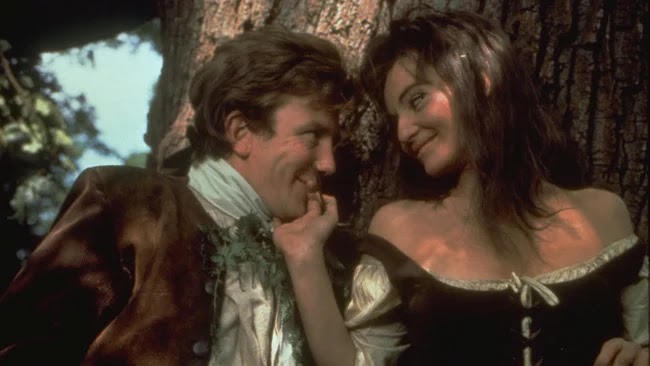
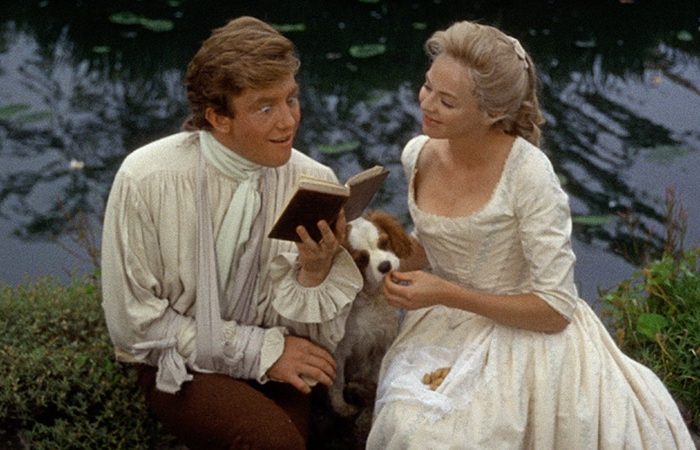
Tom Jones (1963)

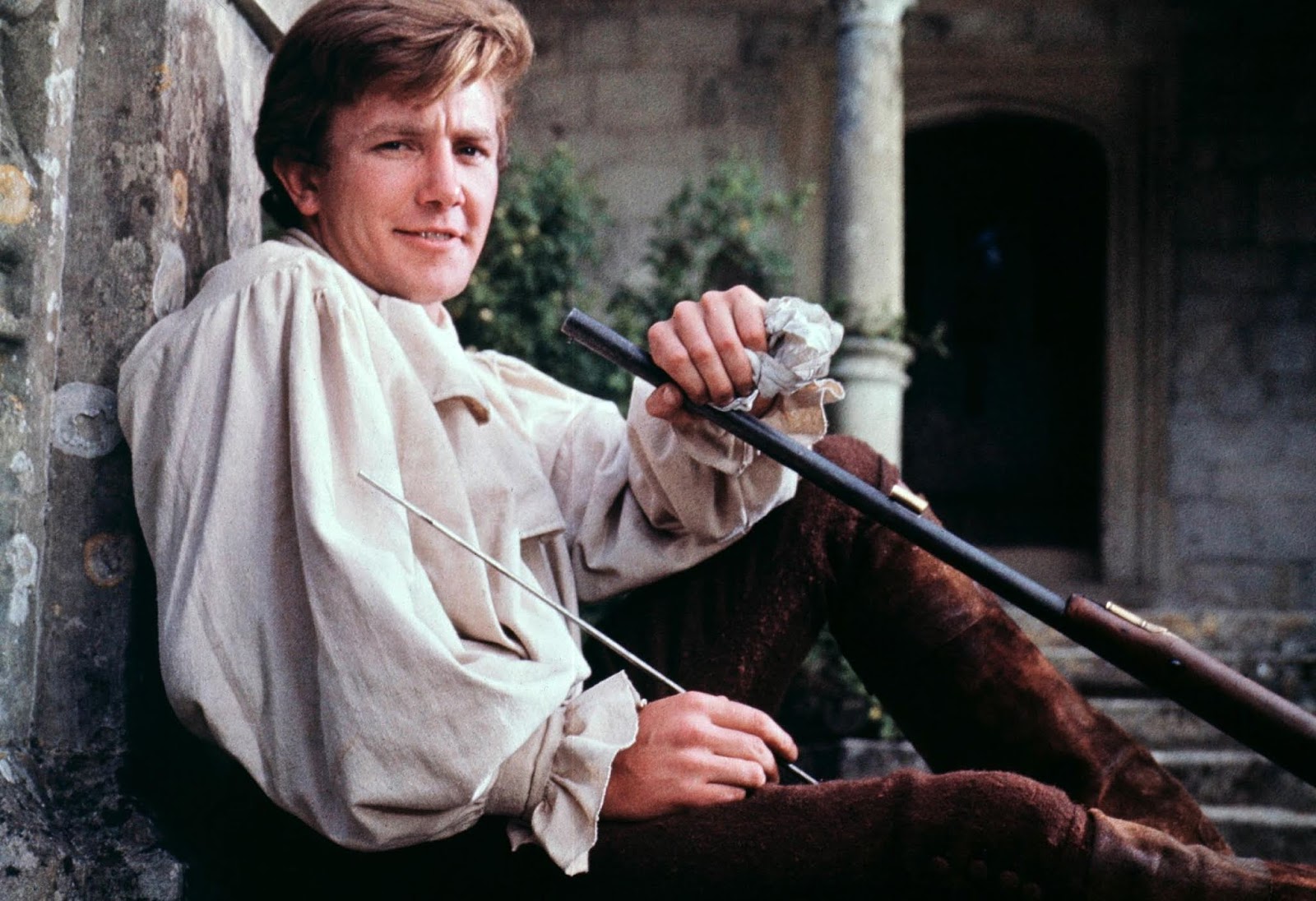
Albert Finney flirts with Diane Cilento (among many, many others) in Oscar winner Tom Jones

Director: Tony Richardson

Cast: Albert Finney (Tom Jones), Susannah York (Sophie Western), Hugh Griffith (Squire Western), Edith Evans (Miss Western), Joan Greenwood (Lady Bellaston), Diane Cilento (Molly Seagrim), George Devine (Squire Allworthy), David Tomlinson (Lord Fellamer), Rosalind Atkinson (Mrs Millar), Wilfrid Lawson (Black George), Rosalind Knight (Mrs Fitzpatrick), Jack Macgowan (Patridge), Freda Jackson (Mrs Seagrim), David Warner (Blifil), Joyce Redman (Mrs Waters/Jenny Jones), Rachel Kempson (Bridget Allworthy), Peter Bull (Thwackum), Angela Baddeley (Mrs Wilkins), Julian Glover (Northerton)

In early 1964, America was at the height of Beatlemania. Everything about Swinging Sixties London was the height of cool, so what better way to reflect that at the Oscars than naming Best Film of the previous year as being Tom Jones, the film that turned Henry Fielding’s work into the epitome of the era’s vibe. Watching Tom Jones today is a cruel reminder that generally nothing dates as hard or as fast as cutting-edge film techniques, and that time is often not kind to comedy. But Tom Jones was the first truly British film to lift Best Picture since Olivier’s Hamlet in 1948, so it was a sign of the short-lived all-conquering cool of British culture.

Adapted with a frenetic style from Henry Fielding’s novel, the film follows the trials and tribulations of Tom Jones (Albert Finney), adopted by Squire Allworthy (George Devine) after he is found abandoned on Allworthy’s bed as a baby. Growing up, Tom is a roisterer and rodgerer (especially keen on rodgering) but fundamentally decent, in love with Sophia Western (Susannah York) and the target of jealous rumours from his cousin Blifil (David Warner, looking a bit lost in his film debut). Banished as a result of Blifil’s schemes, he journeys to London encountering adventures along the way, not least a night of bliss with a Mrs Waters (Joyce Redman) who may (or may not) be his mother. Will Tom be able to prove his innocence, win the love of Sophia and escape his destiny of being “born to hang”?

Tony Richardson came to Tom Jones fresh from directing several searching, morally complex kitchen-sink dramas – and basically seemed determined to cut loose with this film by having fun. What he comes up with is an explosion of multiple different styles, from silent film to sped-up Benny Hill chases. Not a single editing or camera trick is unused, with the film stuffed to the gills with fades, wipes and freeze frames. Richardson basically used every single trick in the book. He was also lucky to have a perfectly judged score from John Addison (winning an Oscar).

It makes for a frenetic and fast-paced film, in love with its own 60s cool of anarchic comedy, sexual liberation and tongue-in-cheek lack of reverence all washed down with a bucket load of thigh-slapping bawdiness. It’s a film that’s inordinately pleased with itself, using Fielding’s interventionist narration style as the licence to break the fourth wall frequently and introduce a dryly hammy voiceover from Michael MacLiammóir. All of this was seen as the height of daring film-making back in the day – especially since Hollywood expected literary adaptations to be treated with reverence rather than as a high-brow Carry-On. But it’s dated badly.

Its smug, overbearing sense of zeitgeist cool comes across terrifyingly passé today, and the film’s daring use of every single cinema style makes it tonally feel like a complete mess. Richardson will segue from farce straight to an immersive hunting sequence where we are invited to feel every moment of the blood lust and violence, straight to a pastoral sequence showing the courtship of Tom and Sophia in glorious countryside.

Richardson himself – despite winning Best Director for his very self-consciously flashy work – also had mixed feelings about the film, recutting it shortly after its Oscar win into a shorter version which remains the version most people have seen today. He said of it that it “felt incomplete…and botched in much of its execution…whenever someone gushes to me about Tom Jones, I always cringe little inside”.

It’s a fair assessment of a film that is all flash – and way too much of it – and so little substance that it frequently becomes trite, smug and unpleasant to watch. John Osborne’s script (which apparently he submitted than refused to redraft) is in all honesty a mess (much of it was rewritten on set while the narration was a post-production addition to make it all make sense), with barely any quotable lines, and whatever skill the film has is all in the telling and the editing. 

Did Richardson take the whole thing as a lark and then work out later on that comedy is harder than it looks? The entire film was a complete mess on set – several errors were in fact left in the film (such as Western falling off his horse due to Griffith’s drunkenness) and then turned into jokes through the voiceover. There is a slight air from all involved that this isn’t proper film-making, that this is just one to flog for a bit of cash. Its Oscar win is inexplicable, but can be chalked up to a horrendously weak year at the Oscars.

Albert Finney goes through the entire film on autopilot – little matter than it made him a star – and he seems a curious choice for a young lover, throughout the film he channels instead a sort of horny Arthur Seaton. Finney thought the entire thing bosh and a waste of his talents – an attitude that does come across on the screen. Lightness is not always Finney’s strength, and his distant disengagement with the film becomes more striking with every viewing. 

Many of the rest of the cast mug shamelessly. Hugh Griffith bizarrely landed an Oscar nomination for a performance of gurning over-the-top mania. The film had three nominations for Best Supporting Actress: Edith Evans emerges best, although she could play this domineering Mrs Western standing on her head; Diane Cilento brings an attractive lightness to buxom Molly while Joyce Redman is good value and gets the film’s most famous sequence, a slobbery eating sequence with Finney where food is consumed in a very suggestive way as foreplay. Arguably the best supporting roles come from Joan Greenwood as the sexual but cruel Lady Bellaston and George Devine as the decent Squire Allworthy (the only character who isn’t some sort of caricature).

Tom Jones is most of all a memento of a particular brand of fast-paced, technique heavy, manic sixties comedy. It made a lot of money and won a lot of awards, so led to a torrent of similar films from bawdy Hogarthian costume dramas to sex comedies in modern London with naïve but well-endowed young men. Richardson and co. should have credit for catching this vibe first – but it makes for an odd experience today, like a slightly uncomfortable museum piece.