Category: Silent film

The Racket (1928)

The Racket (1928)

Silent crime drama has some real moments of interest, before it gets bogged down in stagy framing

Director: Lewis Milestone

Cast: Thomas Meighan (Captain James McQuigg), Louis Wolheim (Nick Scarsi), Lucien Proval (Chick), Marie Prevost (Helen Hayes), G. Pat Collins (Patrolman Johnson), Henry Sedley (Spike Corcoran), George E. Stone (Joe Scarsi), Sam De Grasse (DA Welch), John Darrow (Dave Ames)

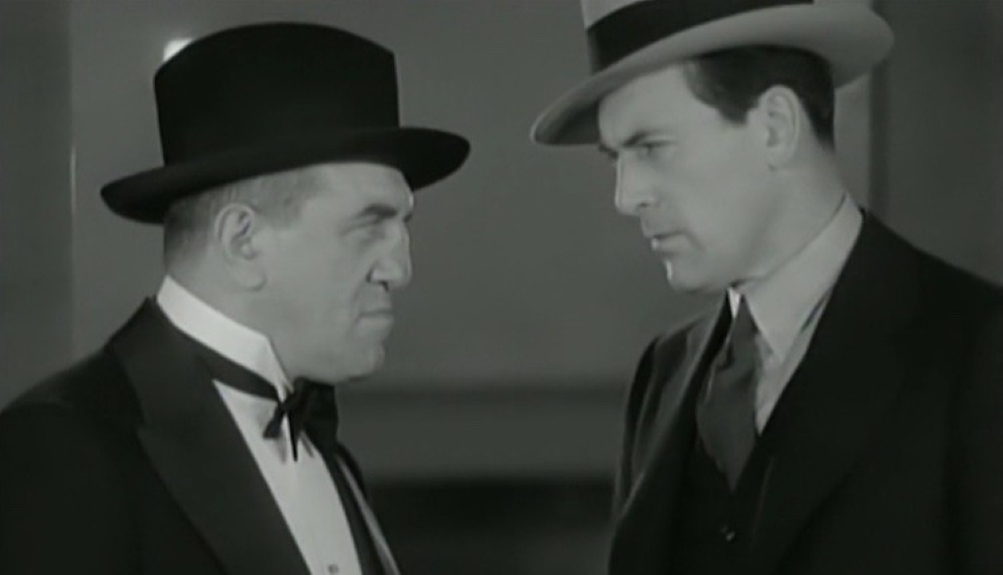
In an unnamed city that-could-be-anywhere (but is definitely Chicago), the corrupt political machine is under the thumb of “The Big Man”. And he’s in cahoots with Caponeish gangster Nick Scarsi (Louis Wolheim), a kingpin pedalling Prohibition-breaking booze and knocking off opponents when and where he pleases. In this bent city, the only straight shooter is police Captain James McQuigg (Thomas Meighan) – and he’ll do everything within the law’s power (but no further) to bring down Scarsi. Banished to the sticks of the 28th Precinct, he gets his chance when Scarsi’s feckless kid brother Joe (George E. Stone) is arrested for a hit-and-run but leaves his girlfriend Helen Hayes (Marie Prevost) to take the rap. Can she help McQuigg bust the case?

Interestingly, The Racket only survives today because a copy was among the films in Howard Hughes’ personal collection. Hughes produced this late silent film – and also a talkie remake in 1951 starring Roberts Mitchum and Ryan. The Racket was adapted from a work-a-day Broadway play that gave Edward G. Robinson a big break as the snarling Scarsi and was one of the first Oscar nominees for Best Picture. Directed by Lewis Milestone it’s a strange mixture of the inventive and the mundane, surprisingly daring in its subtle cynicism about government, with intriguing opening half giving way to a final hour that feels trapped by its stage roots.

It starts with a (silent) bang – literally. Milestone’s camera tracks two assassins overlooking a deserted street, watching a target late at night. As thee unwitting figure walks along, they take their shot and miss, their target ducking for cover into a doorway – where he meets Scarsi and we discover this was (literally) a warning shot. We have to wait for the next scene to discover the target isn’t a gangster (as we assume), but a Police Captain called McQuigg. It’s a tense and intriguing opening, well shot and edited, that sets up a personal struggle between two men that the film doesn’t always deliver on (a Cagney-era film would have made these two childhood friends, turned rivals on different sides of the law).

The first act of The Racket follows in this vein, with a series of fast-paced, tense sequences which will culminate in Scarsi’s defiant murder of a rival in front of a roomful of witnesses and McQuigg’s being despatched to the sticks for rocking the boat far too much for “The Old Man’s” taste. Milestone throws in a large-scale street battle between Scarsi and a rival gang, with bullets (and bodies) flying, cars crashing and an army of McQuigg’s cops charging into settle the peace. A retaliatory hit attempt at Scarsi’s club may see Milestone fail to find the sort of sultry tone Sternberg found for nightclub scenes during Marie Prevost’s singing, but his quick cutting from Scarsi’s face to the various hitmen gathering at tables builds tension well and he introduces a truly imaginative shot, from under a table, focused in close-up, on Scarsi’s gun and his target in long-shot. The invention continues at the resultant funeral, where rows of gangsters face each other, a cross fade revealing their black hats all hide pistols.

It’s a shame the invention dies out as we arrive at McQuigg’s 28th Precinct over one-long-night, and the film hues extremely close to the one-location ins-and-outs of its Broadway roots. Exclusively taking place in the Precinct reception and McQuigg’s next-door office, the film turns becomes much less visually interesting, more stationary and theatrical as characters enter and exit and the world of the film shrinks with only the odd montage of newspaper headlines reminding us of the bigger picture. Considering the expansive world earlier, it also introduces logic gaps – McQuigg doesn’t recognise Scarsi’s brother despite having clearly seen him earlier and (even more baffling) half his cops don’t even recognise Scarsi himself. With just this second act, it’s hard to imagine The Racket would have stood out from the crowd at all, as the action becomes increasingly stunted and theatrical.

What helps is the performance of Louis Wolheim as the thuggish Scarsi. Wolheim had an excellent line in smug brutality – his looks really helped here, his broken nose (he was contractually banned from repairing it) giving him a thuggish look. Wolheim is full of simmering potential violence, something he exploits well when during a striking bit of business he fans his coat while talking with one of McQuigg’s cops (leading us to expect a gun) only to produce a wodge of cash for a bribe attempt. It’s a striking performance of menace and potential violence, far more interesting than Meighan’s strait-laced, formal playing as McQuigg.

Scarsi is also at the heart of the one of the film’s more interesting subtexts. He’s fixated on McQuigg (who he seems obsessed with as a worthy rival) and constantly talking about how women are ‘poison’ to him. With his closest confidante Chick (Lucien Proval) a fey figure, it’s hard not to read a homoerotic context into the macho Scarsi. I doubt any of that is intended, but it makes for interest today.

Just as its interesting to see The Racket be so subtly negative about elected officials. The authorities running the big city are utterly corrupt, everything managed for the benefit of the unseen “Old Man”. The DA lacks any scruples, elections are openly fixed (Scarsi owns half the precincts), and anyone inconvenient can be judicially murdered. The film concludes with a brief paean to the government by professional that on paper reads as praise, but after what we’ve seen is almost certainly intended as a subtle dig at how utterly corrupt all these professionals are.

It’s an interesting, surprisingly bitter and cynical ending – our hero even spends the last few moments mostly with his head in his hands – that restores interest in The Racket right at the final beat. Too much of the second act feels trapped by its stage roots, but Milestone creates several touches of visual and cinematic interest, Wolheim is great and it’s opening acts of gang violence may be dwarfed by the sort of action we’d see only a few years later in The Public Enemy but still provides excitement today.

Die Nibelungen (1924)

Die Nibelungen (1924)

Wagnerian epic is crammed with gorgeous, dramatic imagery and relentless pace

Director: Fritz Lang

Cast: Paul Richter (King Siegfried of Xanten), Margarete Schön (Kriemhild of Burgund), Hans Adalbert Schlettow (Hagen of Tronje), Theodor Loos (King Gunther of Burgund), Hanna Ralph (Queen Brunhild of Isenland), Rudolf Klein-Rogge (King Attila), Bernhard Goetzke (Volker of Alzey), Rudolf Rittner (Margrave Rüdiger of Bechlarn), Georg John (Mime the Goldsmith/Alberich the Dwarf/Blaodel)

Fritz Lang wanted to create a film that would help a shell-shocked Weimar Germany start to feel proud of its heritage and culture. He would do this with a film of the legend of Siegfried. It’s not really Lang’s fault that this Aryan feel-good stuff, coupled with Lang’s flawless visual compositions dripping with power and authority, would turn into the wet dreams of the Nazi party Lang fled Germany to escape. Die Nibelungen has unfortunate associations, but it stands as a towering pinnacle of Lang’s visual artistry. An adaptation of the legend, not the Wagner operas, Lang created something both mystic but also subtly questioning the idealistic figures it celebrates.

He would do all this in two (epic of course) films, totalling almost five hours. In the first Siegfried, the hero (Paul Richter) overcomes dragons and murderous dwarves to gain powers of almost (that almost is key) total invulnerability, strength and invisibility. Powers he puts to the test to win the weak King Gunther of Burgundy (Theodor Loos) the hand of Brunhild (Hanna Ralph) by invisibly aiding Gunther best this Valkyrie at a series of challenges. He even takes on Gunther’s form to help lead Brunhild to the bridal bed. Brunhild however discovers the truth from the loose lips of Siegfried’s wife (and Gunther’s sister) Kriemhild (Margarete Schön). Brunhild’s tricks Gunther and his loyal heavy Hagen (Hans Adalbert Schlettow) to murder Siegfried via a spear in his one weak spot. In Kriemheld’s Rache, Kriemheld plots the destruction of everyone who conspired in the death of her husband, via a marriage with the warlord Attlia the Hun (Rudolf Klein-Rogge).

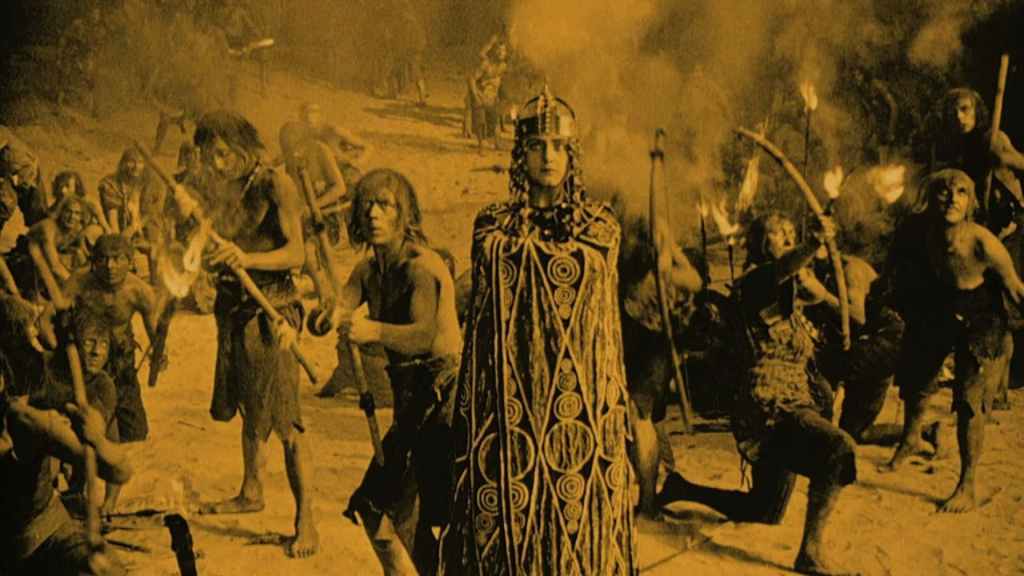
The first thing that strikes you about Die Nibelungen – aside from its surprisingly electric pace – is the powerful, undeniable beauty of nearly every single frame. Lang composed each image as if it was a painting, from Siegfried introduced in steaming smoke at the forge, to the formalist imperialism of the castle of Burgandy and the rigid order and symmetry of its soldiers. Locations, from grand castles to mystic forests, underground caverns full of scheming, wicked creatures are superbly bought to life. There is a martial power Lang’s composition of so many of these images, their perfect angles and symmetrical blocking: parts of Die Nibelungen are some of the greatest pageantry displays in movies.

There is a wonderful sense of overblown, geometric, artificiality in all this – Lang deliberately creates a world larger than life and full of the unworldly and impossible. Buildings tower over crowds, courts that hold thousands to view events of grand importance, sieges of burning halls that fill the frame, staircases up impossibly high buildings. The sort of world of medieval excess where Gunther and Kriemheld disembark from a boat by walking across a bridge of shields created by half-submerged knights. Power and magnificence come from every frame.

It’s matched with an impressive creation of the bizarre and magical. Of course Siegfried kills a giant, animatronic dragon (strangely it’s obvious – even then surely – fakeness works in a film where everything is a heightened, from the emotions to the buildings to the costumes). Siegfried trains in something not far off from Vulcan’s forge and the forest feels like a sort of fairy-tale wonderland. Lang pioneered cross-fades and double exposures to make extraordinary effects, as Siegfried disappears under a veil of invisibility and jumps impossible distances. There is an extraordinary shot where Brunhild, still in the midst of her Valkyrie-like super-powers, seems to jump straight into the camera lens at full force. A beautiful edit sees a tree seem to reform itself into a skill in front of the eyes of the grieving Krimhild.

But Die Nibelungen places its world of power and magical forces in an increasingly costly human world of realpolitik and conspiracy, where its mystical but naïve and simple hero is out of step. Even before then, Siegfried’s status as a hero is subtly questioned. The dragon he kills seems a peaceful, inoffensive creature for all is scale, sitting placidly when Siegfried attacks and stabs it in the eye. Lang introduces a lovely touch where it’s dying tail flick will send the leaf that shields a crucial spot of Siegfried’s back from the torrent of invulnerability-granting dragon’s blood he bathes in. Siegfried is easily manipulated by the dwarf Albereich (a Gollum-like, uncomfortably antisemitic in appearance) before a large dose of luck allows him to defeat his opponent and gain the treasure of Nibelungen.

At the court of Burgundy, for all his courage and blunt honesty, Siegfried is at sea among the subtle power dynamics. The kingdom is ruled by chronically indecisive weakling Gunther (a snivelling Theodor Loos), easily manipulated by Wagnerian-costumed Hagen (an imposingly arrogant and faintly psychotic Hans Adalbert Schlettow). Siegfried’s main acts are to trick and then break the resistance of Brunhild (a dynamic Hanna Ralph) while impersonating the weakling – hardly acts to brag about, which doesn’t stop Siegfried doing exactly that to his wife who then blurts it out to Brunhild in a fit of pique. This isn’t a hero covering himself with glory, just as even the formally idealistic Brunhild (much to her later self-disgust) is reduced to scheming and plotting revenge, a far cry from the noble actionee she prided herself on being.

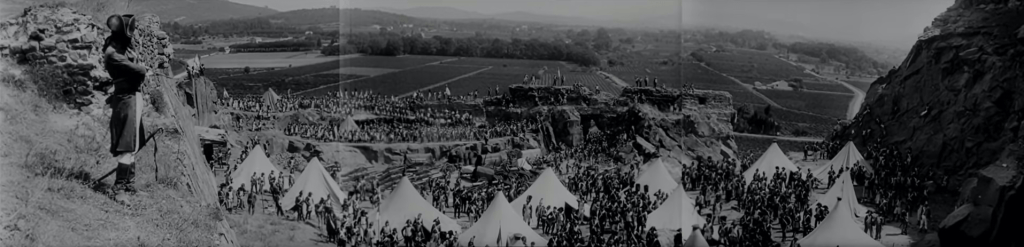
It’s not a surprise to find Part 2 heads into a Götterdämmerung as Kriemhild’s obsessive, destructive desire for revenge against Hagen (her husband’s murderer) meets with Gunther’s own stubborn-short-sighted protection of his controlling vassal. Nearly half of Part 2 is dedicated to the prolonged siege of the King and his followers by the massed armies of Kriemheld’s new husband Attila the Hun, her manipulations of him helped a great deal by Hagen’s arrogant, impulsive violence against Attila’s people. This extended battle sequence is astounding in its scale, violence and excitement – you can see the influence it had on The Two Tower’s Helm’s Deep – and is shot with the same visual mastery as the more stately first half, even as it seeks into bloody desperation.

It must be stated that Die Nibelungen does feature more than its share of clumsily presented racism. As mentioned, the hook-nosed, gold-obsessed, murderous dwarf Albereich is a painful antisemitic stereotype. Rudulf Klein-Rogge is caked under layers of make-up as the ugly, Slavic Attila while his Hun army resemble crouching Orc like figures, frequently ripe for the sword edge of the relentless German soldiers. It’s the uncomfortable flip side of the Aryanism idealism and romantic framing given to Siegfried, that these un-German figures are painted so monstrously.

But Die Nibelungen’s subtle criticism of the flaws in its German leads – it would go some to call them heroes – balances this out. From the flawed, empty-headed, foolishness of Siegfried to the increasingly sadistic, unrelenting cruelty of Kriemheld (Margarete Schön’s performance is excellent, going from sweetly retiring to unblinking fanaticism over the course of the film) the Germanic characters are compromised, weak and cruel: Hagen and Gunther are no one’s ideas of admirable figures. Compared to them, for all his clumsy racist appearance, Atilla feels like a reasonable figure, loving his family, caring for his people and refreshingly free of vindictiveness and cruelty.

It makes for an intriguing complex undercurrent in a film which, of course, the Nazis interpretated entirely on surface-appearance as a celebration of Aryan super-might. Or at least they did for Part 1 – even they couldn’t kid themselves that Part 2 didn’t quite fit that bill. Today Die Nibelungen provokes the same interesting thoughts. But above all it’s a visual marvel from a gifted film director, a truly painterly masterpiece that, for all its great length, never flags and offers a new marvel, camera trick or miraculous composition with every frame. This is silent cinema at its best.

Napoleon (1927)

Napoleon (1927)

Gance’s monumental film takes the breath away, packed with innovation, invention and drama

Director: Abel Gance

Cast: Albert Dieudonné (Napoléon Bonaparte), Edmond Van Daële (Maximilien Robespierre), Alexandre Koubitzky (Georges Danton), Antonin Artaud (Jean-Paul Marat), Abel Gance (Louis de Saint-Just), Gina Manès (Joséphine de Beauharnais), Vladimir Roudenko (Young Napoléon), Marguerite Gance (Charlotte Corday), Yvette Dieudonné (Élisa Bonaparte), Philippe Hériat (Antoine Saliceti), Max Maxudian (Barras), Annabella (Violine Fleuri), Nicolas Koline (Tristan Fleuri)

There is a marvellous quote from Victor Hugo when he wrote about the young life of the most famous Frenchmen who ever lived: Déjà Napoléon perçait sous Bonaparte. Which roughly translates as ‘already Napoleon was bursting through Bonaparte’ – or to put it another way, the man was already being consumed by the legend. That idea dominates Abel Gance’s extraordinary, epic, retelling of the Young Napoleon’s life, an origins story that sees a young man become increasingly distant and legendary before our eyes. Gance’s film may be resolutely old-fashioned in its historiographical approach, but is revelatory in its cinematic flair and invention, with almost every scene demonstrating Gance pushing the medium in new directions.

Napoleon was planned as only the first of no-less-than six films that would cover the cradle-to-grave story of the man who defined his whole era. Such was Gance’s ambition through, that even across five hours he felt he had only scratched the surface of the first 27 years of Napoleon’s (Albert Dieudonné) life from his childhood education (snowball fights and all) at Brienne – where he is seen as a Brutish Corsican outsider – via the French revolution, his failed attempt at revolution in Corsica, his successful siege of Toulon and promotion to General at 24, nearly losing his life in The Terror, Thermidor and his crushing of the Vendemaire uprising, marriage to Josephine (Gina Manès) and the beginning of his campaign in Italy.

Gance unfolds this in a film brimming with cinematic verve and invention. Much like its lead character, it is a seismic and larger-than-life (literally so in its most famous innovation, the three frame wide-screen effect achieved for its final twenty minutes). Napoleon practically defines the notion of historical epic, reproducing many at historical events at a 1:1 ratio. At its centre is a magnetically hypnotic (almost literally) performance from Albert Dieudonné (so enamoured with the role, he was buried in his costume) juggling the impossible by suggesting some of the many shades of this fascinating figure, part revolutionary, part tyrant, part romantic, part war-monger.

There is something truly striking and original in every frame of Napoleon. Gance presents a picture of the famous general more than touched with an old-fashioned Great Man theory of history, but still suggests he is almost two men in one. He is Bonaparte, the slightly-chippy, awkward young man who clumsily woos Josephine (barely sure where to do with hands, tugging shyly at his sash), struggles to get noticed in a map-making office and finds it challenging to make friends, either at school (where he is a painfully serious outsider) or as an adult. But he is also Napoleon, the totem of history who Gance frequently frames as almost communing with a historical version of himself.

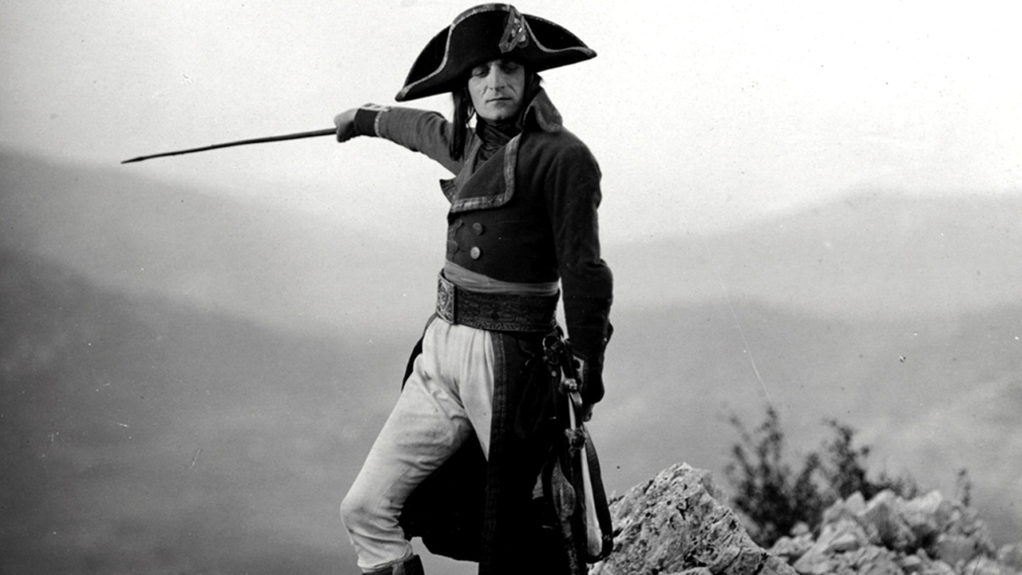
This Napoleon bursts from the awkward Corsican shell of Bonaparte. Gance frequently frames him almost confronting the camera, light shimmering around him to form halos, with a piercing stare that freezes people into place. He comes to identify himself with the flag and the revolution. So much so that, in his escape from Corsica, he will be borne across the seas by a tricolour jerry-rigged into a sail and visualise himself being hailed by the executed ghosts of the revolution as its natural heir. Indeed, the film ends with Napoleon atop a mountain starring into a montage of his future achievements, as if he was bending history around him.

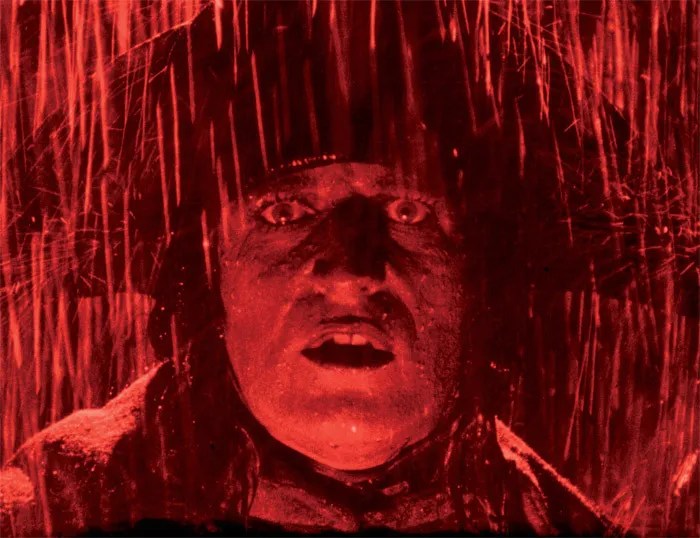
Which isn’t to say Gance sees him as a constantly sympathetic figure. While there is no question he is a force of nature – he controls the frame, frequently centred and when the camera moves (such as the careering gallop that takes him to Italy) he is always at the eye of its propulsive tracking shots – he is also an imposing, even scary figure, distant and cold. In dyed red frames, he looks positively demonic, such as when he looms forward out of the rain in Toulon, his face filling the frame to demand relentless attack. His self-identification with the revolution becomes monomaniacal.

Gance re-enforces his distance from normal human reaction by returning constantly to the Fleuri’s, a working-class family who shadow the Great Man (Violine loves him hopelessly and her father and brother worship him) but whom he never notices. It’s part of him being crafted into marble before us – with all the terrifying lack of human understanding that suggests. Throughout he’s shadowed by an eagle, a visual representation of his mystical, greater-than-human nature, a bird of destiny that drives him relentlessly on. He’s contrasted constantly with other would-be leaders: the itchy Marat, the empty windbag Danton and (most noticeably) the curiously ineffectual Robespierre, an uncharismatic man who can’t control a crowd, is lost behind darkened glasses, follows the orders of others and is comically dwarfed by an eagle statue not elevated by it.

Gance’s history has a slight school-book Victorianism to it. He’s very proud of “historical” facts – quotes and events are frequently branded with the on-screen phrase “(Historical)” so we can see his behind-the-scenes research – and has more than a little love for irony. Of course, the final island covered in school-boy Napoleon’s geography class is “St Helena”! Of course, the English sailor who spots him escaping from Corsica (and is refused a request to sink his ship) is Nelson! The film is littered with cameo appearances from later Napoleon rivals and allies. There is also a darker irony playing here: we know that when Napoleon is praised by the ghosts of the revolution that, far from protecting it, he will in fact become its final destroyer.

But what really singles out Napoleon is it’s intense, cinematic inventiveness. It’s an explosion of unique, fascinating images packaged into a single film. Gance reinvented the wheel multiple times on this one, not least on his of ghostly images and cross-fades. To achieve this – such as the ghostly appearance of the Great Revolutionaries in an otherwise empty Assembly Hall, he re-exposed the same film multiple times (sometimes as many as twenty) to achieve the effect. The same for Napoleon’s schoolyard fights, a single sequence with the screen split into nine squares each showing a different moment in time achieved by covering different parts of the frame for each exposure.

Gance’s camera is strikingly mobile, his editing frequently thrilling and thought-provoking. The famous sequence of Napoleon’s escape from Corsica is superbly intercut with the clash in the Assembly that will lead to the execution of the Gironists. The swaying of the ship is increasingly echoed by the swaying and eventually full-blown swinging of the camera in the Assembly room. Both events merge together through cross-fades. The camera whips through some scenes with real pace and aggression – witness the fast-paced tracking shots that follow Napoleon to Italy.

That’s matched as well with imaginative scenes of quiet beauty. The young Napoleon quietly communing with his pet eagle. The marvellous “shadow marriage” Violine conducts with a cardboard doll of Napoleon, positioned to cast a full-length shadow on the wall. There are moments of black humour – the coffin Robespierre and Saint-Just keep the death sentences they’ve passed in – and moments of soaring, lyrical inspiration such as the first singing of the Marseilles which takes on a mystical quality. To achieve this, Gance pushed the camera places it had never been before, patenting new techniques and devices to achieve frames, angles and cross-fades never seen before.

The most stand-out being the astonishing three-frame wide-screen effect. Perfectly mapped, with the small distortion in the joins almost adding to the power, this creates Panavision decades before Hollywood had even coined it. It creates awe-inspiring vistas of Napoleon’s Italian army – although the battle scenes Gance shoots are often cruel and dirty, with bodies twisted and crushed by the violence of war – but it also allows Gance to present three different images side-by-side, something he exploits to maximum effect in the closing moments that presents a giddyingly cut (it’s Eistensein-influence is clear) montage of past moments in the film that have led up to the Napoleon we see standing on a mountain before us starring into the future.

For Gance through, it is a future that wouldn’t come. Napoleon was not a success – perhaps people couldn’t quite process the scale of it, perhaps the money-men were terrified that Gance had spent the budget of six films on one and still hadn’t got round to Austerlitz, Borodino and Waterloo. The film was butchered and tinkered with for decades before it was reborn. And what a relief, because this is a stunning epic, which (for all its narrative simplicity) has something to wonder at in every frame. An extraordinary film, which everyone should see at least once.

Dr Mabuse, der Spieler (1923)

Dr Mabuse, der Spieler (1923)

Lang’s crime drama is a sprawling silent mini-series, still gripping today

Director: Fritz Lang

Cast: Rudolf Klein-Rogge (Dr Mabuse), Bernhard Goetzke (State Prosecutor von Wenk), Aud Aged Nissen (Cara Carozza), Gertrude Welker (Countess Dusy Told), Alfred Abel (Count Told), Paul Richter (Edgar Hull), Robert Forster-Larringa (Spoebri), Hans Adalbert von Schlettow (Georg), Georg John (Pesch), Karl Huszar (Hawasch), Grete Berger (Fine)

In a world before television, there were only two places for long-form stories – and Fritz Lang wasn’t a novelist. His four-and-a-hour epic Dr Mabuse der Spieler is really a sort of gargantuan mini-series, a rollicking action-adventure about a conscience-free conman wiling to go to any lengths to get the things he wants. It’s pulled together as a pacey, episodic yarn – each reel is basically an individual act (or episode) and filmed with such visionary vividness that it remains compelling today. Whether you decide to settle in for the long haul or split its parts and acts over a series of nights (and why not, the film was released in two parts, months apart) it won’t fail to entertain.

It was based on Norbert Jacques novel, a publishing sensation (so much so this was rushed into production while Jacques novel was still being serialised). At its heart: Dr Mabuse (Rudolf Klein-Rogge), practically the dictionary definition of an omnipotent, amoral villain. Mabuse is a practiced liar, master-of-disguise, ruthless murderer, conman and has such demonic will power he is capable of extraordinary levels of hypnotic control, whose gang of acolytes switch between terror and outright worship of him. He can manipulate the rich into handing over their money as easily as he can the collapse of businesses on the stock exchange. No one knows who this malign spider is. But State Prosecutor von Wenk (Bernhard Goetzke) will make it his business to know.

Lang’s film is a gorgeous mix of the sort of urban realism he mastered in M and little touches of mystical realism more reminiscent of The Cabinet of Dr Caligari, wrapped up in the sort of action that inspired everything from The Sting to Mission: Impossible. It’s opening section is a brilliant example of both. Essentially a twenty-minute prologue to introduce Mabuse’s nefarious genius, it sees our anti-hero masterfully execute a plot mixing heist, disguise, manipulation and brazen self-confidence to make a fortune on the stock exchange. The theft of a secret commercial contract from a train involves the sort of disguises and split-second timing (to throw the contract from a train passing over a bridge into a car passing under it) which would make Ethan Hunt’s heart race.

It’s a perfect entrée to our villainous lead, Mabuse. First introduced rifling through photos of the many expert disguises he will effortlessly assume during the film – he becomes everything from banker to magician, psychologist to hypnotist, tramp to member of high society – Mabuse has no moral code what-so-ever other than the accumulation of things. That ranges from wealth, to an obsessive desire for ownership over attractive women (and his desire for Gertrude Welker’s Countess Told eventually contributes to his undoing) to simply the having power over the wills of weaker men. Rudolf Klein-Rogge is magnetic as this monster of the dark, ruthlessly calm but equally wild-eyed, unflappable but willing to go to any lengths.

Spieler is often translated as “gambler” – but it’s German meaning is richer than that and many have commented a better translation might well be “player”. Mabuse is certainly that. He is a master actor, who can be lose himself in different roles, undetectable to others. He weaves elaborate games around his victims, where only he knows the rules (and, often, only he knows a game is even being played). Other people are pawns to moved and gambled with. He’s a monster, but one born from disillusion of the end of the First World War, part of the hedonistic self-regard of dissolute Weimar. We can see touches of this environment throughout Lang’s film, in its hedonistic gambling dens and the casual thoughtlessness of the rich. Mabuse flourishes because he is the rash an age has come out in. (Retrospectively, you can detect the shadow of Hitler in this ruthlessly power-mad monster who hides in plain sight but demands absolute control).

Mabuse is “the Great Unknown” and the natural target of methodical if uncharismatic von Wenk, played with a stolidness by Bernhard Goetzke, balancing Klein-Rogge’s larger-than-life portrayal perfectly. The duel between these two moves from gambling rooms to elaborate houses, from the streets to the jails of the city, taking in chases, bombs, shootings, kidnappings and all sorts of attempted moves and counter-moves, culminating in a shoot-out that surely inspired countless Hollywood gangster movies.

Through it all Lang directs with astonishing freshness and invention. Dr Mabuse der Speiler throws a slice of cinematic visual inventiveness into almost every scene. Lang makes extensive use of superimpositions, cross-fading, location shooting, fast-paced editing and brilliantly evocative lighting to create a world both highly realistic and also dancing to the tune of its demonic lead. Some of this has become such a part of cinematic language that it’s unlikely to draw comment from modern viewers today – we are unlikely to be wowed by night-time footage of Wenk pursing Mabuse in a car, but to viewers at the time such scenes of photorealism taken in darkness were unheard of.

There is plenty that will continue to thrill audiences. Lang’s visual portrayal of Mabuse’s hypnotic powers is superb. In his first confrontation with von Wenk (both men are disguised at the time – this really is a game of move and counter-move), Mabuse attempts to implant a hypnotic suggestion in von Wenk. Lang demonstrates with an astonishing use of lighting which slowly concentrates the light into a small pool on Mabuse’s face before his face seems to grow to fill the frame (technical effects like this were a small miracle in 1923). On a second attempt, the hypnotically suggestive words are imposed on the screen as a set of animated letters which loom over von Wenk and later seem to be almost leading him (in his car) to the clifftop Mabuse has suggested he drive off. It’s a superb way of showing the power of Mabuse, building on the intimidating cross-fade from our stock-exchange opening that briefly shows Mabuse’s face super-imposed over the clutter-filed room.

Lang mixes this imaginative dynamism with some superbly done realist scenes that help make Dr Mabuse der Spieler a gripping crime thriller. That stock-exchange opening is followed by car chases and murders – one character is dispatched in the streets after dark with a brutal suddenness. Lang creates a series of locations, all perfectly detailed but instantly recognisable, from the distinctive look of each gambling den (from art deco lined walls to a strange rotating gambling pit filled with cards and erotic dangers) to the objet d’Art packed rooms of Mabuse’s mark Count Told (a gloriously ineffective Alfred Abel – unrecognisable from the world controller he would become in Metropolis) to the white-lined jails and careful detailed offices of von Wenk’s police headquarters.

Dr Mabuse der Spieler uses these real locations to constantly remind us that, underneath the Moriarty genius of its lead, this is also a tragedy of real people caught in the web of an uncaring spider. Mabuse cares nothing for his underlings, sacrificing them as readily as pawns. None more so than Cara Carozza, beautifully played by Aud Aged Nissen, a seducer in love with Mabuse who dedicates her life to him, at the cost of her own. She makes a dark mirror for Countess Told, drawn into Mabuse’s web but drawing strength from her admiration of Cara who is, in her own way, deeply principled. Mabuse’s victims are prodded, pushed and outright shoved into punishing and often self-destructive behaviours, their lives flourishing or ending according to his whims.

As a sort of epic mini-series, Dr Mabuse der Speiler is sublime entertainment. Each act follows its own clear arc and the culmination in a brutal shoot-out throws in a nightmare of surrealist imagery at its close as a crucial character tips, under pressure, into madness and delusion. (This series of horrors, the ghosts of fallen characters arising to torment him, is a masterclass in ghostly horror). It gripped audiences then and its surprisingly brisk pace and pulpy sensibility still do now.

Steamboat Bill Jnr (1928)

Steamboat Bill Jnr (1928)

Keaton struggles to win his father’s approval in this brilliantly fast-paced farce

Director: Charles Reisner (& Buster Keaton)

Cast: Buster Keaton (William Canfield Jnr), Ernest Torrance (William Canfield Snr), Marion Byron (Kitty King), Tom McGuire (John James King), Tom Lewis (Tom Carter), Joe Keaton (Barber)

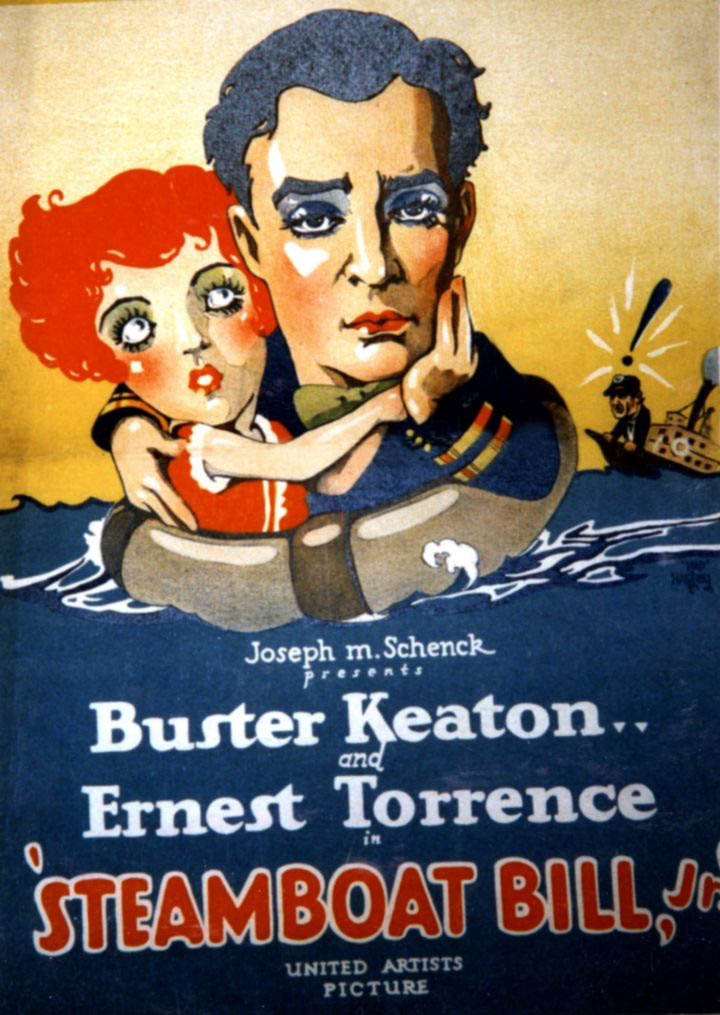
Steamboat Bill Jnr was meant to be a return to glory after the box-office disappointment of The General. Unfortunately for Keaton it shared all the traits of his previous film. An artistic triumph, today seen as one of the great silent comedies: but at the time an expensive misfire that hammered the final nail into Keaton’s filmmaking independence. Before he was swallowed by the MGM machine, Steamboat Bill Jnr was the last pure Keaton film, the last display of the master’s gravity defying stuntwork and all-in physical gag commitment.

Keaton is the forgotten son of paddle steamer operator William “Steamboat Bill” Canfield (Ernest Torrance) whose craft, the Stonewall Jackson, is being put out of business by the cutting-edge steamer The King named after its wealthy owner JJ King (Tom McGuire). William Jnr is a disappointment to his manly father: he’s clumsy, polite, decent has a pencil moustache (but not for long) and plays the ukelele. What kind of son is that? Worst of all, he falls in love with Kitty King (Marion Bryon), daughter of Steamboat Bill’s love rival. Can his son prove his worth when disaster piles on disaster and a cyclone hits the town?

Steamboat Bill Jnr is Keaton at his best. Although it has a romance plotline, this wisely plays second fiddle to the sort of role Keaton was born to play: slightly naïve and foolish sons, who are disappointments to their father. With his sad sack, impassive face and earnest, try-hard determination, Keaton was guaranteed to win the sympathies of the masses and Steamboat Bill Jnr is the fine-tuned ultimate expression of this classic Keaton role. He’s horrendously unlucky – he seems destined to trip over and activate vital levers or if he opens a door it will inevitable send someone tumbling off the boat – and at every turn well-meaning attempts to win his father’s favour backfire. It’s a superb exploration of a key theme in Keaton’s life and work – the struggle to win the regard of a domineering father in his own line of work, something Keaton had faced in his own life.

But despite that, like all the best Keaton heroes, he never, ever gives up. Adversity is milk-and-drink to him and, despite everything, his ingenuity and determination always wins out. He may look like a clueless, slightly ridiculous college kid adrift on a boat, walking around in his over-elaborate uniform: but the final reel, which shows him hooking up the boats systems via ropes and pulleys so he can control it singlehandedly proves it certainly wasn’t lack of attention that lay behind his mishaps.

And what’s really wrong with being a clearly middle-class kid who hasn’t spent much time on boats? It’s not like he’s a dandy or a layabout – he just doesn’t fit the mould his father expects – that of a flat-capped, oil-stained, tobacco chewer (and who knows not to swallow it!) never happier than when getting his hands dirty. Ernest Torrance is very good as this exasperated working-man, whose ideas of what counts as “manly” are very narrow (barely extending beyond the mirror) and sees any deviation in his son as highly suspicious metropolitan laxness.

Perhaps he feels his son looks too much like his puffed-up, slightly dandyish rival JJ King (an effective Tom McGuire). There is more than a touch of class warfare between these two, as well as a romantism that values the run-down-but-reliable Stonewall Jackson (right down to its Civil War era name) and the overly-polished-can’t-trust-it King. There are echoes (and not just in the names) in the generational family feud of Our Hospitality­ – not least in the fact that marriage seems destined to eventually bring the two families together in something approaching love and harmony.

Marion Byron gives a decent performance as Kitty – even if the film has little interest in her beyond love-interest device, including the inevitable moment where she becomes convinced Keaton’s character has let her down and decides to snub him. This snubbing takes place in a very funny scene of missed meetings and attempted evasions on the street; although this scene is itself a shadow of father and son meeting at the station, the son writing he will be recognisable by his white carnation, a flower everyone arriving at the train seems to be wearing (not helped by Keaton losing his).

Eventually matters proceed to blows and the arrest of Canfield Snr (and an attempted break-out foiled by the son’s inability to get his father to trust him) before the town is blown away in one of the great Keaton set-pieces. Rain and bad weather peppers the final thirty minutes of the film – including an exquisite sight gag when Keaton steps into a puddle and disappears up to his waist – and erupts into a cyclone that rips buildings apart, blows others across fields and raises the waters to wreck the paddleboats and wash other buildings out to sea.

And this storm is the centrepiece of another peerless display of Keaton’s physical determination and courage in the name of comedy. He gets trapped in a hospital bed blowing through the streets (after the building rips away to reveal him, a stunning in camera trick). He walks at almost 45 degrees against the wind. And, most famously, he stands in the perfect spot for the window of the façade of a house to save him when it falls on top of him. For this final stunt – insanely dangerous by any standards – even Keaton would later reflect on the suicidal risks he took. Either way, it’s a brilliantly elaborate set-piece (a riff on another set-piece from an earlier short) and a clear sign no-one did better than Keaton.

And no-one did. Watching Keaton bound like a squirrel up and down a paddle boat and dive into the flooded river, you know you are watching someone who really understand both the beauty of visual imagery and the peerless excitement of reality on film. Steamboat Bill Jnr combines this with a strong story, full of characters to root for and stuffed with sight gags (from a parade of hats stuffed on Keaton’s head, to a shaving from his father Joe) that make you laugh time and again. It’s a tragedy that this, one of his finest comedies, would also be his last where he had creative control.

Modern Times (1936)

Modern Times (1936)

Chaplin’s silent swansong, is a funny but quietly impassioned attack on corporate greed

Director: Charles Chaplin

Cast: Charles Chaplin (The factory worker aka The Tramp), Paulette Goddard (The Gamin), Henry Bergman (Café owner), Stanley “Tiny” Sandford (Big Bill), Chester Conklin (Mechanic), Al Ernest Garcia (President of Electro Steel), Stanley Blystone (Gamin’s father), Richard Alexander (Cell mate)

As cinema entered Modern Times of its own, Chaplin had a profound sense that he needed to move with those times. The legendary comedian, whose Tramp persona had made him (possibly) the most famous man in the world, was a silent comedian starting to be left behind by sound. There is a rich relish in the fact that Modern Times, a joke-packed criticism of the coldness of modern industry, is both Chaplin’s last silent and first sound movie, a dipping of the toe in modern times and a valedictory swansong for the past. It’s a film that bridges the ‘modern’ and classic of cinema.

Chaplin is an assembly line-worker eventually driven to a nervous breakdown by the relentless, fast-paced monotony of his work (not to mention a death-defying encounter with the internal workings of the factory machines). Sent to recover in a hospital, he emerges into to find there is little in the world that a dreamer and romantic like him can understand. Again and again, things go wrong. He’s arrested for picking up a red flag in a union march, fired as a night watchman in a department store for helping starving thieves, hopeless as a factory repair man and struggles with tongue-tied silence as a singing waiter. But he and a young ‘Gamin’ (Paulette Goddard), both hope for a better life.

Modern Times has a deceptive structure. It’s easy, at first glance, to see is as four two-reelers thrown together: mini-films in the factory, prison, department store and café. But what Chaplin has created here is a picaresque fable, with the Tramp in the middle. (Only one sequence, with the Tramp as a repairman in a factory, feels superfluous repeating some jokes from the opening act). A morality tale of the modern era, where the big bosses and machines are indifferent to those on the bottom rungs, continually punctuated by the police riding up to bear away the innocent on the slightest pretext. It’s a masterclass of subtle repetition, with moments of contentment forever snatched away.

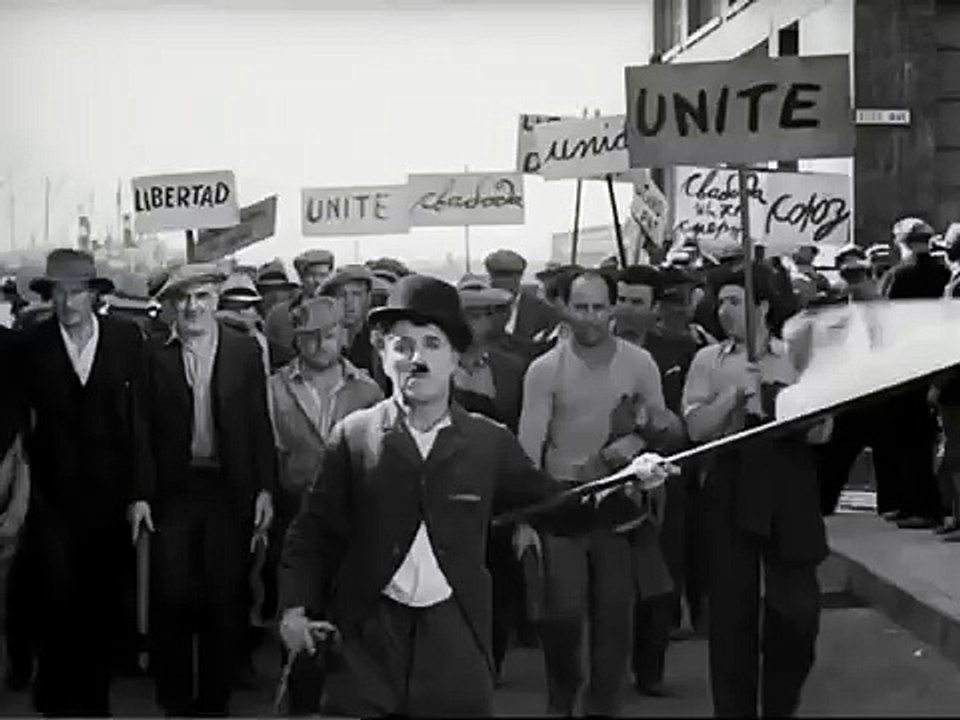
Chaplin’s most subtly political work became his most controversial. In a way few other films of the 1930s did, Modern Times engages with the conditions and politics of the Great Depression. Housing for the poor is ramshackle, with walls literally held up by mops. The factory alternates exploiting its workers at ever dizzying production speeds with ruthlessly laying them off the moment a slight economic downtown takes place. Union movements are ruthlessly stamped out: when the Tramp accidentally joins a march, he is arrested while the Gamin’s father is shot by police crushing another march. Poverty is ever-present – the Gamin ‘steals’ unwanted food to feed others, laid off factory-workers rob stores for food and when the factories are re-opened there is an almighty struggle from the desperate to get through the gates and claim a few hours of work.

Unsurprisingly Modern Times was condemned as possibly communist and suspiciously anti-American: Chaplin, turning a mirror on conditions in America started to be seen more-and-more by many as a suspicious alien (after all, he’d never taken on American citizenship). Nobody wanted to hear the funnyman turn prophet and many were suspicious of the comedian who used jokes to sweeten the bitter pill (even if, as per many of Chaplin’s messages, it was a rather naïve and simplistic one). It didn’t matter that Modern Times boils down to a plea for a universal love and understanding, it was somehow a creeping sign of the political dangers in ‘modern times’.

Today, distanced from the Red Scare, Modern Times looks far more like what it actually is: a pathos-filled, liberal eye on the working classes that champions the dreamers and the little guys over the corporations and the system. And who better as a hero for that than The Tramp? After all, this was a figure who had struggled against the odds for decades. Modern Times would see that struggle on multiple fronts: against the system, against the machines (literally so, as they swallow him up) and against a way of life that seems to be betting against him.

Even cinema was betting against the Tramp. Chaplin knew he couldn’t put off converting to sound forever. But he also knew the Tramp was a universal figure – and a large part of that was his silence. He never speaks in Modern Times – and when he sings, it’s in garbled, funny-voiced nonsense that effectively keeps him as a universal mute. It’s The Tramp’s final victory lap.

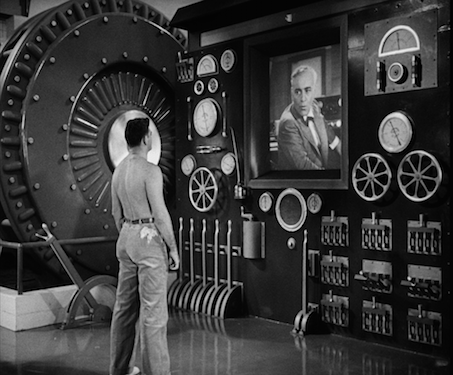
Chaplin’s comic timing remains masterful, and Modern Times is awash with marvellous, balletic set-pieces. Most famous is the opening factory sequence (which owes more than a debt to Fritz Lang’s Metropolis and feels remarkably prescient of Orwell’s 1984 with its Big Brotherish boss), a crazed ballet of repetitive, fast-paced movement on the production line – culminating in the legendary sequence of him being sucked into the very gears of the machine. The factory cares so little about the men there, that a machine designed to feed them as they work is dismissed as impractical rather than inhumane – though it gives us a great set piece of Chaplin assaulted by this machine with soup, custard pies and morsels rammed into his face by a mechanical arm.

The comic invention continues through the prison sequence. It’s a sign of the sting under the surface of Modern Times that the highlights of this sequence come about due to the Tramp (accidentally) being high on a mountain of cocaine. Foiling a jail break through coked-up bravado – another wonderfully done sequence, timed to perfection and filmed in one-shot – the Tramp’s reward is not being allowed to stay (and get the roof and food he needs) but early release. (Modern Times finds time, before he goes, for a final pop at ineffectual, superior middle-class do-gooders, lampooning a crusading priest’s wife as coldly distant and the subject of a cheeky gaseous gag).

Modern Times develops into a sweet fairy-tale romance with the introduction of the Gamin. Paulette Goddard gives a radiant performance, full of confidence and comic vibrancy – she becomes the first female lead given near-equal treatment by Chaplin. The department store sequence is grounded with their relationship, from the Gamin taking the opportunity to sleep in a beautifully prepared bed. Their time in the shop at night is full of wonder at the comfort and luxury – that they never see in their own homes – and culminates in a beautifully shot roller-skating sequence, with Chaplin circling balletically on the floors of the shop. (Tellingly though, he does so on the edge of precipice marked danger – Modern Times never forgets that danger lies just round the corner).

It’s the Gamin who lands them a job at a bustling café – awash with spoiled, rich customers – via her dancing ability (there is a fabulously simple transition that sees her pirouetting on the streets to ending the dance in glamourous clothes in the café). Even this moment of happiness is foiled by the law – illogically chasing the Gamin for past vagary offences rather than leaving her to work. But it’s made clear that they are a partnership: fitting the humane message of Modern Times that our best chance of being saved is sticking together.

Modern Times is shot by Chaplin with a striking, sprightly inventiveness. There are signs throughout of Chaplin’s overlooked visual and editorial skill, transitions that are hugely cinematic, storylines that are communicated with maximum efficiency and clarity. As well as the influences of Lang, Chaplin shows a debt to Eisenstein with a striking early visual cut that sees a crowd of sheep (with one black sheep in the middle) cut to a crowd of workers emerging from a subway into the factory. Modern Times pushes its humane message with a gentle persistency, but never lets it dominate the comic and emotional force of the film. Chaplin is an entertainer with a social conscience – but he is an entertainer first of all – and Modern Times is never anything less than charming and funny, even when it is spikey.

Faust (1926)

Faust (1926)

Murnau’s gorgeous masterpiece is a technical wonder and a painterly visual treat

Director: FW Murnau

Cast: Gösta Ekman (Faust), Emil Jannings (Mephisto), Camilla Horn (Gretchen), Frida Richard (Gretchen’s mother), William Dieterle (Valentin), Yvette Guilbert (Marthe Schwerdtlein), Eric Barclay (Duke of Parma), Hanna Ralph (Duchess of Parma), Werner Fuetterer (Archangel)

It’s a story that has fascinated for generations: is any deal worth your soul? Murnau’s breath-taking Faust myth throws in an extra wager: can evil corrupt a man so absolutely that not a single trace of good can be left? That’s the opening deal Mephisto (Emil Jannings) makes with his Archangel (Werner Fuetterer) counterpart. Their battleground? Faust (Gösta Ekman), an elderly alchemist, who has lived a life of faith and good works.

Faust was (until Metropolis) the most expensive German film ever made. Like Metropolis it was designed to help Weimar challenge Hollywood as the centre of the filmic universe. Murnau had direct control and several versions were made for distribution to key markets around the world. Faust was filmed over a huge period, partly for the all the multiple re-takes needed for those different versions, but also due to Murnau’s quest for perfection. Throw in cutting-edge special effects and luscious sets and you had Murnau’s own Faustian pact for success.

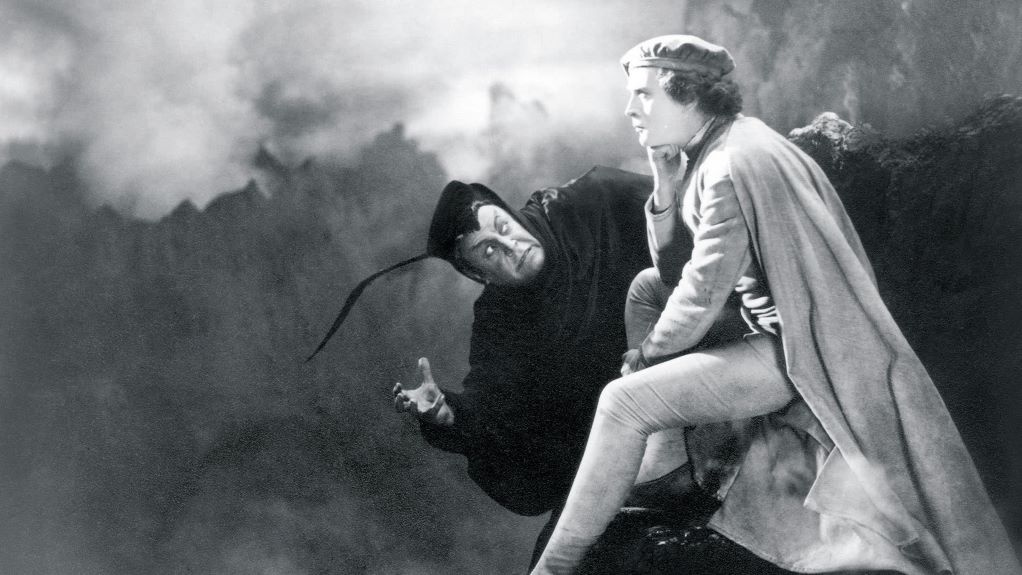
The film – as carefully restored today – that emerged is a work of expressionist genius jammed, particularly in its opening and closing acts, with a series of striking images balanced between fantasy and horror. Murnau used models, double exposure and transitional editing tricks to gorgeous, revelatory effect and crafted stunning images of supernatural horrors. Faust’s opening shot shows the horsemen of the Apocalypse riding through the clouds before a confrontation between a giant, satyr-like Jannings with huge wings and a similarly winged Archangel with flaming sword (the actors were strapped into stunning giant wings and Janning’s porcine like make-up is particularly demonic).

From there Murnau plays the first of his games of scale by showing Mephisto towering, mountainous, over Faust’s town, unleashing a black cloud of plague. Mephisto’s powers are demonstrated with a host of cinematic tricks: circular light then fire engulfs Faust when he summons him, Mephisto’s eyes are pinpricks of burning light (created by damaging the negative), he appears at every turn Faust makes and later shifts size, appearance and even duplicates himself while performing magic (always with gusts of terrible smoke).

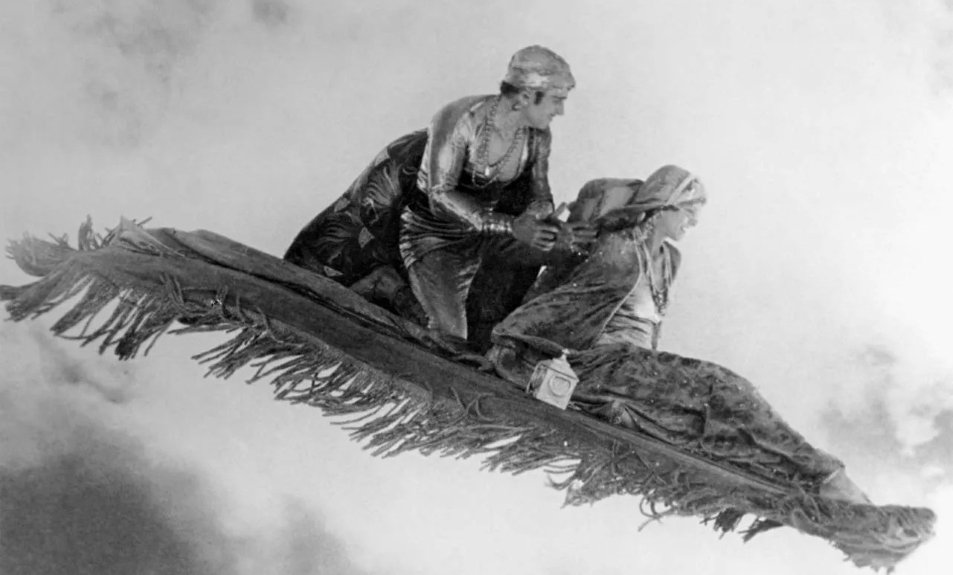
The cinematic tricks continue as Faust is taken on a sort of magic carpet ride across Europe, Murnau’s camera dizzyingly flying over a series of highly realistic models of towns, forests, mountains and storming seas. The launch of this flying carpet is achieved by a miraculous double exposure shot that shows Mephisto and Faust flying out of a small window (standing upright on a cape) in one uninterrupted shot. The dizzying array of effects and visual imagination help us immediately understand why Faust is so tempted to harness the powers of this seemingly scruffy beggar (though Mephisto soon translates himself into a sharply dressed courtier).

It also ties in with extraordinary beauty of Murnau’s expert use of light and shadow. Faust is introduced as an old man, lecturing on astronomy to a room full of rapt students, lit by the glow of his astrolabe. Faust’s rooms are a light tunnel of instruments and books. His town turns from a thriving market, to a towering collection of shadowy buildings, holding a mass of swarming, panicked humanity, running in fear of the plague. Pools of light frame action: twice in the film, Murnau captures dying figures in perfectly composed outlines of light against a sea of black, the first (a priest) lying dead at his altar while smoke drifts up past the light he rests in.

Faust could almost be seen as a film about light. Murnau’s camera is continually artfully framed around painterly compositions with streaks of shadow and light. But it is also a thematic issue. Mephisto uses fog and smoke to power his magic, as if trying to obscure the light that represents the good. In Murnau’s world, light is frequently offers the possibility of hope – even the film’s closing fire offers a chance of redemption. Smoke becomes an obstruction, allowing evil to flourish.

Faust frames its hero initially as man using evil in desperation for the greater good against the plague. Faust is played Gösta Ekman, a Swedish actor in his thirties flawlessly made-up (the make-up is extraordinarily convincing) as the wizened alchemist before Mephisto restores his youth. Ekman is equally convincing in both roles, his angry rejection by the townspeople driving his descent into gred. Opposite him Jannings is a viciously cruel ball of scheming greed, under a surface of joviality.

Needless to say – after all this is a morality tale – it is the allure of sex that eventually brings Faust down. He surrenders his virtue for a night of passion with the beautiful Duchess of Parma. (The cruel Mephisto, having given Faust the sort of entrance to the court of Parma that inspired Disney’s Aladdin’s entry into Agahbar, maliciously murders the Duke after stealing his wife). Murnau’s Faust is all about the awful temptations of worldly pleasures over the hard graft of good works.

Faust also understands that temptation can come in reclaiming the moments we have lost. Faust longs for the sort of excitements he never had as a young man – too many books not enough bonks – but also for the simplicity of youth, where the possibilities of the future and happiness of home were everything. Faust’s middle section – and its weakest, an oddly farce-tinged dark-romantic-comedy – revolves around Faust’s courtship of Gretchen (Camilla Horn – in a part originally intended for Lillian Gish). Murnau raises the possibility that Gretchen’s feelings for Faust are controlled by Mephisto – via a magic necklace – but this idea is largely forgotten, possibly because Murnau’s film needed something uncorrupted by the Devil.

That incorruptible is what powers the final act of Faust as consequences – many caused by Mephisto, who cheats and abuses Faust’s trust and subtly works to destroy the lovers while bringing them together – come home to roost for its characters. Murnau’s film is very strong on the brutality of medieval justice – burnings and public executions are only moments away – but also on the spiritual strength from true love. Love is of course the answer, in Faust’s sentimental resolution, but there are worse answers to the question of what makes us human.

Faust returns to its heights in the torch-lit terror of its final section and the raw emotionalism of Ekman’s desperate, guilt-ridden performance, forcing his way through an enraged crowd hoping-against-hope that he can save the day. Faust is at its finest when centring Murnau’s extraordinary technique, a series of technical and visual marvels that makes you fall in love with cinema. At times it works best as a collection of extraordinary visuals and concepts – and I could do without some of that long middle act between Faust and Gretchen – and some of the acting is sometimes a little too broad. But it’s an extraordinary and unique piece of cinema – and a startling visual expression of the power and temptation of evil.

Metropolis (1927)

Metropolis (1927)

Lang’s sometimes flawed science fiction epic is one of the most influential films ever made

Director: Fritz Lang

Cast: Brigitte Helm (Maria/The Machine), Alfred Abel (Joh Frederson), Gustav Frölich (Freder), Rudolf Klein-Rogge (Rotwang), Fritz Rasp (The Thin Man), Theodor Loos (Josaphat), Heinrich George (Grot), Erwin Biswanger (11811/Geogry)

It’s 1927 and for too long Hollywood had held sway over the movies. But there were plans in Germany to change that. The booming Weimar film community, arguably the artistic hub of World Cinema, felt they had a shot at claiming the sort of global success Hollywood had made its own. No expense would be spared to bring Fritz Lang’s science-fiction spectacular, Metropolis to the screen. It was met with such a muted reaction, that the original epic cut was sliced to ribbons, parts of the film lost for all time, and for decades it lived only in a mutilated form. But it was visionary and extraordinary enough to inspire virtually every single science fiction film that followed it.

Metropolis is a sprawling future city state, run by Joh Frederson (Alfred Abel). In it the rich live a gilded life in mighty skyscrapers, with private gardens, luxurious apartments and raucous parties. Beneath them – literally so – are the workers, living a Morlock-like life of drudgery in the factories and power stations that keep the lights burning. But all that could change: below ground Maria (Brigitte Helm) preaches hope for change, above ground Frederson’s son Freder (Gustav Frölich) falls in love with Maria and rejects his father’s way for the life of a prole. Frederson has a scheme of his own: to use a robot (Helm again) built by old friend (and one time rival for the affection of his late wife) the one-handed scientist Rotwang (Rudolf Klein-Rogge) to replace Maria and sow discord among a potential worker’s rebellion. But does Rotwang and his creation have a game of their own?

Lang had a brief to create a film that would be a box-office hit in America. No stone was left unturned in creating his epic. Metropolis took a staggering 17 months to film, running almost three times over its initial budget. It’s extended shooting schedule was a godsend for many of its extras, struggling to make ends meet while the Weimar Republic thrashed through the after-effects of hyperinflation. It’s a magnificent monument to Lang’s superb visual styling, marrying shadow filled expressionism with sweeping epic magnificence.

Metropolis’ strengths all lie in its stunning, inventive and breath-taking design work. That has been so inspiring, it has permeated vast swathes of our culture. Filmic visions of imposing, neon-lit, skyscraper packed modern Babels (Frederer’s headquarters is an art-deco reimagining of Brueghel’s Tower of Babel) all find their roots here: from Burton’s Batman to Scott’s Blade Runner. Any robot in the movies can chase its lineage back to Rotwang’s man-machine, as any mad scientist ancestor is  Rotwang (from Dr Strangelove to Back to the Future’s Doc Brown). It’s the film that invented steam-punk, with its piston-filled machines, staffed by boiler-suited workers (it’s inspiration for a zillion music videos is not surprising). Everywhere you look in Metropolis it might feel like you are seeing something familiar, when in fact you are witnessing its original generation.

Metropolis is a cat’s cradle of differing moods and designs, woven masterfully into a whole. Frederson controls the city from a penthouse suite, while his immediate staff and family live in swish, very 1920s apartments. This contrasts sharply with the industrial-punk of the factories, cathedrals of technological movement, full of gears, levers and men performing tasks with a robotic, convey-belt repetition under a series of clocks. There are real cathedrals, legacies of an old world, where God has been left behind by the new Gods of work and efficiency. Under the ground, the workers live in personality free tenement blocks and chiselled out caves, which echo churches. Rotwang works in a laboratory part Frankenstein’s layer, part bizarre lecture theatre, all seemingly housed in a ramshackle house that wouldn’t look out of place in a Hans Christian Anderson fairy tale.

A fairy tale is perhaps what Metropolis is, underneath all the astonishing technical sheen and directorial mastery. We follow a hero who exiles himself to live among the poor, eventually becoming their champion, with a damsel-in-distress he must rescue from a crazed wizard. The wizard even produces a magic imposter, who threatens to bring disaster. Metropolis’ plot often proceeds with the illogical progression of a fairy tale, with characters frequently making veering changes in allegiance or unveiling dastardly schemes that appear from nowhere or make little sense.

It’s similar in Metropolis biggest weakness: it’s simplistic plot, wrapped up in a casually naïve politically theory that attempts to find a balance between left and right, but essentially boils down to “why can’t we all just get along”. It’s loud proclamation that “The Mediator Between the Head and the Hands Must Be the Heart” is so vague that it allowed the film to be embraced by the left as a proto-socialist film supporting worker’s rights and the right as a film that revealed the workers as a mob and the fate of the world best left in the hands of elites who know what they are doing.

It’s part of the simplistic view the film largely takes of character and story, which frequently feels like an after-thought behind the film’s sumptuous production values and Lang’s expressive camera work. It’s also not helped by some of the acting which, particularly in the case of Gustav Frölich’s hand-claspingly camp performance, mines the depths of silent-movie ostentatiousness. Saying that Brigitte Helm is chillingly, wickedly artificial and physically disjointed as the fake Maria (a far cry from her more simpering ‘good’ self) and Abel underplays effectively as Frederson. Klein-Rogge’s insane glare and conflicting lusts also make a strong impression.

But none so strong as Lang’s mastery of visual symbolism. Freder’s terrified vision of the ‘heart machine’ that sits at the centre of the city’s power, transformed into a terrible Moloch with workers literally fed into its gaping, firey maw. Those same workers from the film’s opening with Lang’s brilliant visual conceit of shuffling, shoulder-drooping figures lurching into a gigantic elevator that lowers them into the ground. Rotwang’s birth of the fake Maria is a masterclass in light and cross-cutting, as is the simmering eroticism of the fake Maria’s dance at an orgiastic night-club, the screen filling with the slathering faces of the man she has enchanted.

It mixes with the Gothic power Lang brings the film in its closing sequence, seemingly inspired by mystery plays with their deep-rooted sins bubbling to the surface to condemn those alive today. There are echoes back to this in Freder’s dreams of Metropolis as a modern Babylon (hammered home, once, by the lost scene of a monk preaching in the cathedral) and in Maria’s Joan of Arc like status among the working classes – a mantle taken to its logical conclusion by her metallic replacement who leads a doomed insurrection. Again, all these concepts and influences are effortlessly held together into one magnificent whole by Lang’s fluidic, beautifully paced direction.

Metropolis lives today as a monument to creative science fiction film-making – it is the most ambitious and most influential science-fiction film ever, except perhaps 2001 and (in a very different way) Star Wars. It may be politically simple and its story may veer in unplanned directions and strange cul-de-sacs, but as a piece of visionary cinema it is nearly unparalleled. Even its existence today as a reconstructed, corrupted version of itself (after hours of footage were considered lost for decades) doesn’t not dim or diminish its mastery.

The General (1927)

The General (1927)

Keaton’s masterpiece, less of a comedy and more an inspiration for hundreds of action films

Director: Buster Keatson & Clyde Bruckman

Cast: Buster Keaton (Johnnie Gray), Marian Mack (Annabel Lee), Glen Cavander (Captain Anderson), Jim Farley (General Thatcher), Frederick Vroom (Southern General), Charles Smith (Mr Lee), Frank Barnes (Annabel’s brother), Joe Keaton (Union General)

The General frequently features in the lists of greatest comedies of all-time. It’s a bit of a misnomer: while The General has its fair share of jokes, it’s really a sort of action film. A Mad Max: Fury Road with gags, the greatest chase you’ll ever see and one of the most dynamic stunt spectaculars ever made. It’s Keaton’s apogee, one of the most influential and greatest films ever made. If you’ve ever seen a stunt-filled epic, you’ve seen something that takes inspiration from the tireless physical tricks Keaton pulled here and the stunning, cinematic grace he films it with. The General is a classic that is instantly, and constantly, rewarding.

Keaton plays Johnnie Gray, a respected engine driver of the South with two loves in his life: Annabel (Marian Mack) and his steam engine The General. He’s about to propose to Annabel when the Civil War breaks out. She wants him to enlist: he tries his best but is rejected, unbeknownst to him, because the army considers him more valuable as a train driver. Mistakenly seen as a coward by Annabel, she vows never to speak to him again. A year later The General is hi-jacked by Union soldiers as part of a surprise offensive. Johnnie gives chase in a second engine, The Texas, unaware Annabel is aboard the kidnapped General. The wild chase takes Johnnie North then South again to bring Annabel home and report to the Confederate army the approaching attack.

The General was the most expensive film Keaton’s company had ever made. No expense was spared in bringing two period-accurate engines to the screen, with everything shot in location (in Oregon, admittedly, due to the Tennessee not being keen on staging a Civil War Keaton comedy) and all executed in perfect period detail. The film contained the most expensive single shot ever mounted – costing a whopping $42,000, it would show a real bridge collapse and hurl a real engine into a real river (Keaton filmed in long shot, with real horses moving around near the bridge, to stress this was a real stunt not a model). Despite all this, the film was a box-office disappointment.

Why? Well frankly, I’m not sure the world was ready for something that promised itself as being a comedy set during what was still a raw scar in the American psyche. The marketing material also promised more laughs than you can shake a stick at – a misrepresentation of a film that is more a stunt-filled poem than a slapstick riot. For those expecting The Navigator, The General was a disappointment. For us today, it is one of the great American films, a piece of cinematic mastery.

The General is for a large chunk of its run-time (almost 40 of its just under 80 minutes) a glorious chase, in which every sequence show-pieces invention at high-speed. The majority of the stunt filled tricks were executed by Keaton himself, surely at some considerable risk to life and limb. As you watch him bound over railway carriages, dive through port holes, sprint alongside steaming trains or sit atop the hurling railway sleepers to remove obstructions, you can only marvel at his physical dexterity and commitment.

Keaton’s character is also subtly, and impressively, different from his other roles. These were often defined by their haplessness – would-be detectives and empty-headed heirs. But within his professional sphere, Johnnie is a master. He knows the capabilities of engines and dynamics of the railroad better than anyone. He is relentless and endlessly inventive in overcoming myriad problems just as he can use his knowledge to place near-insurmountable barriers in the way of his pursuers.

The opening of the film stresses the respect people hold him in – he’s hero-worshipped by children, greeted warmly by all and has no doubts about asking Annabel to marry him. Sure Johnnie can get pre-occupied and miss the bigger picture – a few times, he is almost left behind by the steaming train while resolving problems on the line – and away from the train, especially when he joins the soldiers in the film’s finale, he suffers from the same clumsy, cluelessness as Keaton did fighting to defend his ship in The Navigator. But he’s also brave, indefatigable, ingenious and relentless. He’s more of a model for every action hero maverick since than you could imagine.

And those stunts! Keaton was a master film-maker, framing the action to accentuate its speed, scale and reality. The camera runs alongside the train, demonstrating its speed by showing objects move by. The action is frequently framed in medium and long shot to demonstrate its scale and the grandness. This goes for Keaton bounding across carriages and for simple gags, such as the famous shot of a forlorn, jilted Johnnie sitting on a drive rod of the moving train, lifted up and down as it shunts forward. The complexities of this chase are always made clear and camera angles are key to the various attempt each train makes to stop the other. This is placed above the standard comedic reaction close-ups audiences expected – but make for a richer, more rewarding film.

In fact, watching the film, you can grow to admire Johnnie so much you start to wonder what he sees in Annabel. Perhaps Keaton, to an extent, wondered the same. Annabel is kidnapped, tied up, caught in a bear trap, tossed around in a sack and doused in engine water. Is this woman being partially punished by the film? After all, it’s her demand that Johnnie turn his life upside down to fight in (what we know) will be a brutal war – and her kneejerk condemnation of him – that sets events in motion. Does she need this humbling to learn her lesson? It perhaps helps her and Johnnie become an ever more effective partnership on their flight back South, setting traps and keeping the engine going (with the odd comic misunderstanding, one of which sees Johnnie running down then back up a hill to reboard the train) that leads to their eventual reconciliation.

Interestingly, what’s less comfortable with The General today is its avoidance of the core issues of the civil war. Slavery never rears its head, and the film takes a largely sympathetic view of the romantic Southern gentlemen vs the nefarious Northerner, with their under-hand schemes. Peter Kramer, in an excellent BFI book, lays out a compelling argument that The General exposes, especially through its final battle sequence which sees real people die and a hapless Johnnie charging into heroics like a lost child, the dangerously blind embrace of violence in the South and a subtle criticism of a horrific war that led to so many needless deaths. While there might be beats of that under the surface here (especially if you are familiar with the shocking death toll of the war), it’s not enough to overcome the generally sympathetic view of the Confederacy and its leaders.

But politics is not at the heart of Keaton’s film. The appeal for him, just as for Johnnie, was that engine and, by extension, the glory of the chase. Only someone who loved trains as much as Keaton could have made such a guilty pleasure of plunging one thirty feet to its doom on camera. And in Johnnie Flynn he created a genuinely little-guy hero, a character who shared his dynamism and pluck and, above all, his love for all things mechanical.

The General isn’t a comedy really – there are few real belly laughs in it, and the film is played straight by all and sundry, devoid of reaction shots. Its laughs come in shock at its audacity, its epic scale and from how much it causes you to invest in the trials and tribulations of its lead character. It’s an action film that you embrace with fervent love, because it’s pure, unadulterated, cinematic beauty. It’s a masterpiece.

Go West (1925)

Go West (1925)

Keaton meets his finest leading lady – a cow – in this adorably charming comedy

Director: Buster Keaton

Cast: Buster Keaton (Friendless), Howard Truesdale (Ranch owner), Kathleen Myers (Ranch owner’s daughter), Ray Thompson (Ranch foreman)

Keaton had been unconvinced by Seven Chances, the theatrical farce he’d been asked to film that saw him chased left, right and centre by women. Perhaps his reaction to playing a somewhat cold man pursuing and pursued by ladies persuaded him to try something completely different. What if he could make a film where he removed the “romantic” girl from the equation altogether? Could Keaton make an affecting comedy where his character’s strongest bond is to a cow?

Go West is Keaton back to his best, a glorious Western spoof (a happy return to the grounds of Our Hospitality). Keaton is Friendless, a hard-working guy adrift in the cut-and-thrust of the world. So much so that, visiting New York, he is literally trampled by bustling crowds. He heads out West to try his luck, becoming a ranch hand on a farm. There he finally meets someone who sees him as a friend – ‘Blue Eyes’, a cow who like him is an outcast from the herd. For the first time both of them has a friend – but what will Friendless do when Blue Eyes is to be packed off to a Los Angeles slaughterhouse?

You would never think that a man and a cow could be as sweet as they are together in this film. Keaton spent almost a month with the cow who plays Blue Eyes, going everywhere with her, feeding her and spending weeks with her. By the time they came to filming, the cow followed him without the slightest hesitation and never once seemed anything less than completely comfortable in his presence. Keaton (half) joked he never had a better leading lady than Blue Eyes – and his earnest, gentle and sincere playing of this friendship between man and beast gives Go West its heart.

Taking a gentle pop at DW Griffith again – Friendless and Blue Eyes both share names with leading characters from the director’s Intolerance – Keaton creates a film that many have called his one excursion into pathos but, for me, is all about creating character and story and having it service comedy. The laughs come faster for me in Go West than a farce like The Navigator because Keaton invests real warmth into this unlikely screen partnership. You invest in their story – these two outsiders, lonely and illtreated on the ranch, who find themselves as unlikely soul mates – and once you have that investment, you laugh along with their exploits.

Keaton also creates a variation on his usual character. Friendless is stoic but unlike other Keaton characters, he’s not bumbling or naïve, instead he seems to have accepted that he has no place in the world of men. Unlike other Keaton characters, he’s got an impressive ability to teach himself new skills rather than relying heavily on imitating others and reading instruction manuals. Friendless, slowly, picks up the skills of a ranch hand himself. Sure, he bungles his first attempts – his hilariously poor saddling of a horse (the saddle almost on the horses’ rump) being a case in point – but give him time and he’ll get there.

He’ll even win odd moments of respect. He gets two bulls back into the pen through skilful, unfazed, use of a red handkerchief (two ranch hands look on in grudging respect). He improvises an elastic string for his tiny pistol which works surprisingly well. He spots a cheat in a card-game and then skilfully disarms him (by placing his finger in the way of the trigger). In the film’s closing act – where a herd of bulls walk wildly around Los Angeles – he’s able to herd them back together with a great deal of skill, cunning and improvisation. He’s he’s undeniably good at the things he does – and gets better.

Go West has several great jokes, many of them initially based around Friendless’ place as an outsider. Selling his remaining goods to a pawnbroker in the films opening, he forgets to remove his shaving kit and mother’s picture from a desk: of course, the pawnbroker immediately charges him for taking the goods (making his money back in moments). On the ranch, Friendless inevitably times his arrival at the daily meals with everyone else finishing up and leaving the table, forcing Friendless to leave as well (he doesn’t eat for days on this ranch). His clumsy attempts at ranch life leads to several pratfalls of inevitable high-standard.

But it all starts to change as he forms a friendship with Blue Eyes. He’ll bend over backwards to help her. He’ll stay up all night with a gun to protect her from wolves. He’ll strap antlers to her head to help her ward off bulls. He’ll shave a brand (thank goodness he grabbed that shaving kit) into her back to save her from the fire. And he’ll raise what money he can to try and buy her and, when that fails, he’ll jump on a train to travel with her to save her.

It leads into the film’s action packed third act. It starts with a classic Keaton piece of business. Trying to earn the money to buy Blue Eyes, he buys into a rigged poker game. Calling the dealer on cheating, the ranch hand pulls a gun and orders Keaton “When you say that – SMILE”. Will cinema’s most famous stony-faced comic finally crack a grin? It’s a lovely in-joke – and Keaton’s two fingered mouth push grin the perfect response, as his ingeniously shrewd solution to prevent violence. Jumping on a train from here (this is another classic train sequence from a Keaton film) he dodges bullets from an attack from outlaws and ends up the only man on board with an army of cows.

The final sequence – a series of sight gags as cows invade shops, Turkish baths and street stalls in Los Angeles before Keaton dons a red-devil suit to lead them back into a holding pens in a perverse twist on Seven Chances – is sometimes overlong, but offers plenty of delights. But none match the sweetness and innocence of that friendship between man and cow. Keaton’s chemistry with Blue Eyes – and his understanding that the beauty of silence makes animals as legitimate characters in many ways as humans – shines out. It gives the film a real heart and tenderness that grounds all the jokes in something real, as well as providing the film with real stakes (because, after all, Blue Eyes is in danger of being turned into one).

Go West is often overlooked in the Keaton CV but, despite being a fraction overlong, it’s a warm, tender and sweet story packed with excellent gags. This isn’t manipulative pathos – instead this is Keaton using humanity to deliver a unique sort of pure romance. This is possibly one of the finest films about friendship ever made – and Blue Eyes stands with Balthasar as one of the greatest animal actors on screen.