Category: Social issue films

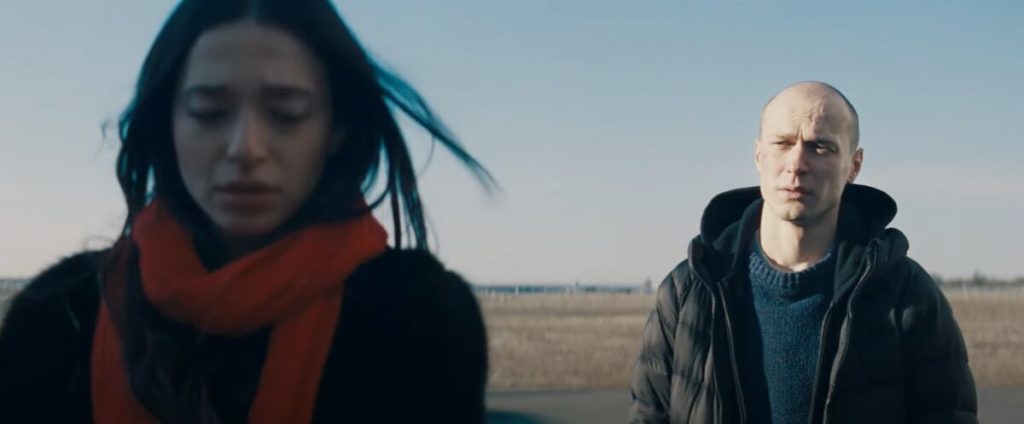
I’m Still Here (2024)

I’m Still Here (2024)

Subtle, low-key but powerful condemnation of oppression with a fabulous lead performance

Director: Walter Salles

Cast: Fernanda Torres (Eunice Paiva), Selton Mello (Rubens Paiva), Guilherme Silveira (Marcelo Rubens Paiva), Antonio Saboia (Adult Marcelo Rubens Paiva), Valentina Herszage (Vera Paiva), Maria Manoella (Older Vera Paiva), Luiza Kosovski (Eliana Paiva), Marjorie Estiano (Older Eliana Paiva), Barbara Luz (Nalu Paiva), Gabriela Carneiro da Cunha (Older Nalu Paiva), Cora Mora (Maria Beatriz Facciolla Paiva), Olívia Torres (Older Maria Beatriz Facciolla Paiva), Pri Helena (Zezé), Fernanda Montenegro (Older Eunice Paiva)

In 1970 Brazil was controlled by a military dictatorship who tried to hide their unjust and violent methods from the public eye. Many people were taken from their homes to never be seen again, such as Rubens Paiva (Selton Mello), a former congressman and political opponent. Now working as a civil engineer, he is taken from his home by plain clothes military officers to help with unspecified enquiries. His wife Eunice (Fernanda Torres) is later also arrested, along with her teenager daughter, questioned and imprisoned for over a week then released with no word of Rubens fate. Eunice is left, bereft of answers as to what has happened to her husband, holding their family together, struggling for decades to try and get some sort of news of her husband’s fate.

Walter Salles’ heartfelt film captures the struggle of a whole nation to find answers in the story of one family – a story that achieved national fame in Brazil. And one personally known to Salles, who was himself (as a kid) a guest in the Paiva’s home and knew Rubens, Eunice and their children. His determination to tell this story with the dignity and truth it deserves is a major part of I’m Still Here’s success. It also gains real power from the focus it gives to the enduring difficulty of calmly, methodically rebuilding your families life in the face of terrible tragedy. As the title says, in many ways I’m Still Here is about persisting in the face of oppression, not letting your family collapse, to not just accept the new life forced on you, to carry on and not crumble.

It does this by keeping the film surprisingly low-key. I’m Still Here deals in subtle intimidation, the velvet glove, more than it does the iron fist. The threat of approaching oppression is signalled subtly by the military helicopters flying loudly over Eunice’s head while she swims in the film’s opening. Her older daughter is part of a general stop-and-search out with friends that carries more than an air of possible violence. When the military police arrive, dressed informally, it’s not clear at first they are there to arrest Rubens. They are scrupulously polite and deferential and only show flashes of firmness (insisting no one else leave the home). The dictatorship’s method is to hide its brutality behind a screen of everyday politeness.

Salles condemns it using the same weapons, where the film’s underplaying helps it carry even more emotional force. There is very little in the way of either triumphal emotional beats or show-stopping speeches and no moments of horrific violence. Instead, this is a film where the triumph is dealing with your pain in such a way to protect what you can of your children’s innocence and defend what you have left. Fernanda Torres’ exceptional performance works on the basis of its quietness, its refusal to exhibit the wild emotional volatility others expect, but is full instead of the resolute determination to carry on in the face of everything life has to throw at you.

Torres’ performance is a masterclass in the small and subtle. This is a mother putting on a front of normality, only sharing a few words with her older daughters because the sheer danger of what is happening is not for ‘the ears of the little ones’. She is determined to protect as much normality for her young children as she can, and if this means she must hide in her husband’s office to shed a few tears before returning to fix her daughter’s doll and prepare her children for bedtime, she will. Because collapsing into grief and guilt is exactly what the dictatorship wants: it wants people cowed and scared, so Eunice will smile in the face of overwhelming adversity and pain.

It’s telling that I’m Still Here’s focus is less on Eunice’s campaign – of which we see very little: a few meetings, a photoshoot and a final reveal – and instead the quiet drama of salvaging a personal life from a world upside down. With her husband disappeared, Eunice literally cannot access their shared bank account (even when it is whispered to her that Rubens is dead, she still would need a formal death certificate to do this), with most of their savings tied up in a huge track of land Rubens had planned to develop. Suddenly their house, near to the beaches of Rio, can no longer be an open-doored haven: the location of a key that can lock their car gate turns from being forgotten to being essential. Throughout these quiet obstacles, you feel Fernanda Torres’ Eunice eternally stamping down the immense pressure to simply scream her pain and frustration out for all to hear.

There is a true nobility in this lowkey bravery. Only moments of horror creep in, such as the murder of a family pet. It feels particularly noble since, along with Eunice, we have seen a glimpse of the horrors. I’m Still Here’s prison sequence sees Eunice and her daughter escorted to a military facility with black bags over their head, for days of relentlessly focused interrogation in rooms devoid of daylight. For over a week Eunice only gains information about her daughter from snatches of clues from a sympathetic guard and listens from her cell to screams in a prison where even frequent washing can’t remove all the blood from the floor. This dictatorship hides its brutality, but only slightly, and if some of its agents seem polite they still unquestioningly follow cruel orders.

I’m Still Here flourishes in its focus on the everyday work to hold things together, that it almost doesn’t need its two codas one set in 1996 the other in 2014. But these briefer moments do provide true moments of power: the first seeing Eunice finally getting a copy of her husband’s certificate and the final featuring a powerful cameo from Fernando Montenegro (Torres’ mother) as an aged Eunice who, suffering from Alzheimers, finally lets a flash of her pain cross over her face. And while they seem at times to be gilding the lily, their presence re-enforces the courage involved in simply carrying on and preserving in the face of oppression, even over the course of many decades.

It’s that power that makes I’m Still Here, a quiet and unflashy film told with remarkable restraint, as effective as it is. Directed with a subtle but heartfelt hand by Salles, it also allows Fernanda Torres the room for a restrained but deeply moving performance that throbs with humanity. It’s quietness and calm in the face of oppression makes it a powerful indictment of dictatorship.

Hard Truths (2024)

Hard Truths (2024)

Leigh encourages us to take a deeper, more considered look at the people around us

Director: Mike Leigh

Cast: Marianne Jean-Baptiste (Pansy), Michele Austin (Chantelle), David Webber (Curtley), Tuwaine Barrett (Moses), Ani Nelson (Kayla), Sophia Brown (Aleisha), Jonathan Livingstone (Virgil)

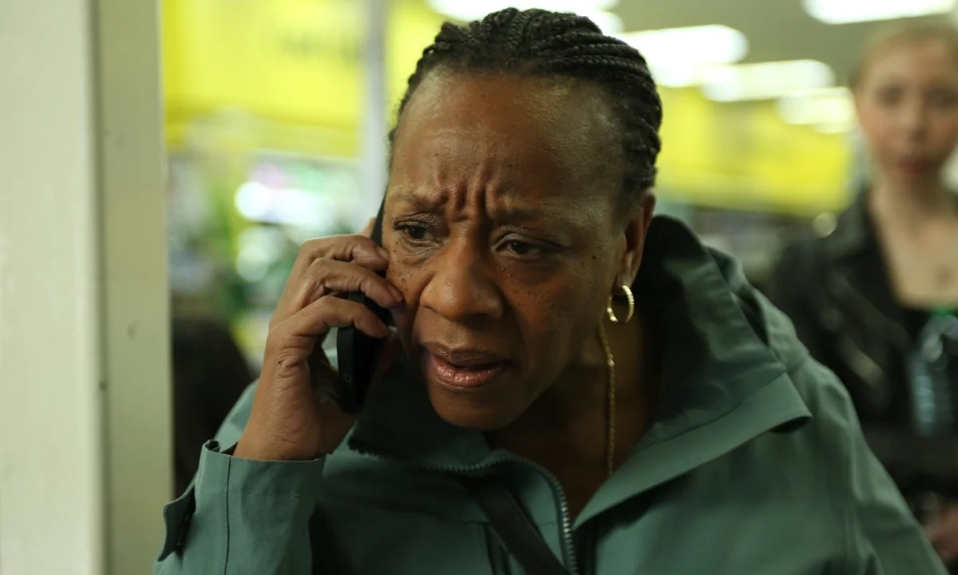
Sometimes the world all gets too much for all of us. But it’s pretty much always too much for Pansy (Marianne Jean-Baptiste). A stay-at-home wife to plumber Curtley (David Webber), mother to shy, unambitious Moses (Tuwaine Barrett), pretty much everything enrages Pansy, who responds to virtually everything around her with unbridled rage and accusatory rants. She’s completely different to her sister Chantelle (Michele Austin), a motherly hairdresser with two ambitious daughters Kayla (Ani Nelson) and Aleisha (Sophia Brown) with whom she has a warm loving relationship. What made one sister easy-going and the other someone who could literally pick a fight in an empty room?

The sharpest part of Mike Leigh’s small-scale, but deeply engaging, family story is encouraging us to take a longer look at a person who, at first, is almost unbearable. To find in them vulnerabilities and fears that makes us understand and feel sorry for them. But, make no mistake, Pansy is a tough person to spend time with. Brought to life in an astonishing, visceral, deeply raw performance by Marianne Jean-Baptiste, most of the film’s opening half hour is spent establishing Pansy’s kneejerk aggression which she uses to deal with everything around her.

Jean-Baptiste launches into these furious rants with the sort of all-consuming energy that feels like you’ve been punched back in your seat, while her all-in commitment even raises a chuckle or two at the unadjusted fury of Pansy’s words. Every encounter ends in Pansy either letting rip or almost deliberately escalating everyday moments into confrontations. She tears a strip off a shop assistant in a furniture store, seemingly for no reason. She confronts a shopping till assistant and two other people in a supermarket queue. She begins a slanging match with another driver over a parking space. At dinner she barely gets a fork-full of food into her mouth, so intent is she on condemning the rest of the neighbourhood while her husband and son keep their heads down and silently eat the meal she prepared. Compared to Chantelle’s warm home life and bubbly, chatty interaction with her customers, our sympathies lie with those who have to deal with Pansy.

But the brilliant thing in here, and in Jean-Baptiste’s fragile desperation and terror just under the surface, is that Leigh’s film unpacks this to make clear it stems from an inability to deal with the world: a fear that has turned Pansy into someone who instinctively attacks first before when she feels threatened (which is all the time). Pansy clearly suffers from some sort of deep anxiety mixed with OCD. She’s terrified of germs, barely able to touch items she hasn’t personally cleaned. Her house is antiseptic, devoid of personal items. She seems totally at a loss with how to talk to people, interpreting every approach as an implicit threat and is deeply lonely under her aggression. This is the anger of someone who is scared literally all the time, who can’t deal with the pressures of the world and has retreated into a defensive cocoon to drive everyone away.

Jean-Baptiste’s performance grows, deepens and peels away layers of Pansy to become richer and richer as Leigh’s perfectly placed, deceptively slight film gently spreads itself out. Pansy is convinced the world is dangerous, certain that everyone hates her, only married her husband (who gives her no emotional support what-so-ever and silently expects meals when he gets home) because she was afraid of dying alone. She can’t sit in a room without cleaning it, can’t bring herself to put on dentist goggles someone else might have used and is nearly paralysed with fear at the thought of touching a bunch of shop wrapped flowers. To her the world is a continuing, never-ending, terrifying struggle and it has turned Pansy into a woman constantly desperate and scared. Worst of all, Pansy knows this isn’t ‘normal’, that things which incapacitate her with fear don’t even cause other people to bat an eye – and she doesn’t understand why she is like this. This emotion pours out of Jean-Baptiste in a riveting, hugely affecting second act, playing out like a deeply moving emotional breakdown.

The catalyst is the mother’s day commemoration she and Chantelle share for their mother, a woman Chantelle remembers with deep fondness and love: but whom Pansy remembers only as a woman who expected Pansy to sacrifice her own education and interests to look after Chantelle and bring money into the home. Pansy references a childhood love of mathematics that was never encouraged – the sort of natural skill you can imagine someone somewhere on a spectrum like Pansy is would have had a real passion for – which for her summarises how opportunities were never meant for.

Our sympathies slowly, but noticeably shift. Pansy can’t do what the rest of do, put aside or forget the things that upset us. Hard Truths suggests sometimes we do that too easily: Chantelle’s daughters experience tough, unpleasant days at work but come together for drinks to say how great their careers are. Others deal with painful encounters – like the bullying Moses endures – by retreating into silence. Pansy though is aware she cannot deal with situations, cannot understand herself or why she is the way that she is – and, it’s clear, doesn’t like herself either. More and more we agree with Chantelle, who can’t understand why she married the unsupportive, monosyllabic Curtley (who treats his eager apprentice with dismissive disinterest and barely acknowledges Chantelle’s family showing its not fear of Pansy that keeps him sullen and silent at home).

It’s a masterful part of this wonderful, small-scale but deeply heart felt film from Leigh. Jean-Baptiste’s performance is one of the ages, but Michele Austin gives a highly emotive performance with a charm that hides an inner steel. It’s a beautifully assembled, wonderfully acted, highly intelligent film from an accomplished director who encourages the viewers to look as closely at characters – their complexities and virtues as well as their flaws – with the same patience and regard as he has spent his career doing.

The Teacher’s Lounge (2023)

The Teacher’s Lounge (2023)

A series of minor thefts leads to a school spiralling out of control in this intense, small-scale drama

Director: Ilker Çatak

Cast: Leonie Benesch (Carla Nowak), Eva Löbau (Friederike Kuhn), Anne-Kathrin Gummich (Dr. Bettina Böhm), Rafael Stachowiak (Milosz Dudek), Michael Klammer (Thomas Liebenwerda), Kathrin Wehlisch (Lore Semnik), Leonard Stettnisch (Oskar Kuhn)

Schools can be like whole societies in microcosm, with attention grabbing events having earth-shattering consequences in these tiny worlds. New teacher Carla Nowak (Leonie Benesch) finds this out the hard way when she takes matters into her own hands to solve a spate of petty thefts in the staff room, before the blame is pinned on students. Setting a trap, to her surprise she captures on film evidence that the thief is the school’s popular administrator Mrs Kuhn (Eva Löbau), mother of Carla’s star-pupil Oskar (Leonard Stettnisch). Events quickly spiral out of control, as Mrs Kuhn denies the charges and Carla’s attempts to be even-handed and fair leave her isolated at the centre of a storm pitting teachers, students and parents against each other.

The Teachers Lounge is a gripping ‘everyday’ thriller, where events on a small scale capture wider conflicts that rock whole societies. The events themselves seem small – petty theft and arguments over invasions of privacy – but Çatak’s film demonstrates they have shattering impacts on those involved. Loss of reputation, of jobs, the damaging impact on a promising child’s education, the shattering of harmony in a small community – it all explodes due to a few spur-of-the-moment decisions, building on each other so delicately that you are suddenly surprised to find it’s a crisis.

What’s really painful about The Teacher’s Lounge is how scrupulously honest and moral everything Carla tries to do is. What she’s not prepared for, is other people not playing by the same rules. Privately confronting Mrs Kuhn (having caught her distinctive blouse going on camera) with an offer to stop stealing and she’ll say no more about it, she’s amazed and totally shaken by the complete unwillingness to admit any guilt. When the matter is raised with the headmaster, Carla is dumbfounded by Kuhn’s aggressive denial and furious counter-accusation of invasion of privacy. Her cause is passionately taken up by Oskar, accusing Carla of ruining his mother’s life for no reason.

At the film’s heart is a wonderful performance of repressed tension from Leonie Benesch. Carla is a good teacher, but also a slightly distant, perhaps little-too-professional person. She engages more comfortably with the children because the ‘rules’ are clearer. With her fellow teachers, she never seems relaxed. She isn’t willing, as they are, to support (or cover up) for colleagues regardless of the situation. She judges each situation on its own merits – and Benesch superbly shows through her tense frame and strained voice how stressful this is – and adjusts her views and opinions as the situation develops. To everyone else this isn’t a positive but a huge negative, her refusal to follow an agreed line a sign of her flaky lack of loyalty to the team. (Her controversial filming is entirely caused by her mistrust of her colleagues, after watching one of them shamelessly empty an honesty box).

Çatak’s film shows how fragile the rules holding society together can be under pressure. Carla’s compassionate, thoughtful teaching focuses on developing her young students’ empathy and morality. She respects their views and asks for honesty in return. When arguments arise in class, she encourages discussion and consensus building. A jolly welcoming clapping-and-singing routine she practices every morning is about bringing the class together as a group. All of this flies out of the window as events unfold, showing how fragile these precious democratic conventions are.

The control of the teachers in the school turns out to be unbelievably fragile. Carla’s students stop co-operating with her lessons, effectively forming a union. The school newspaper – older students full of idolism about being the next Woodward and Bernstein – trap Carla into a Gotcha interview and misrepresent her opinions, fuelling the crisis (and leading to a near mutiny over a ban of the school newspaper). Carla, naturally, is blamed by her colleagues for the interview.

These fragilities and small-scale repression is just one way Çatak uses the setting to illustrate larger issues. Just under the school’s surface, there is a strong ‘us-and-them’ atmosphere. Both teachers and students demand internal loyalty to their sides. The thefts have already motivated heavy-handed members of staff to pressure (in private meetings) students to inform on their classmates. Carla objects to this but lacks the strength to end it – just as she later objects but does not obstruct a forced search of the boy’s wallets for stolen cash. It becomes more and more clear that Carla’s more considerate, diplomatic way of proceeding simply hasn’t got a chance of getting heard.

There is an uncomfortable air of casual assumptions being swiftly made. The first student suspect is the son of Turkish immigrants (the father’s job as a taxi driver all but used as evidence that the boy is likely guilty). Some of the staff simply can’t believe a boy from his background could have ready cash on him. An unbearably uncomfortable meeting with his parents – who at one point are instructed to speak German – is rife with tension. No wonder Carla is so uncomfortable with her Polish roots being discussed, that she asks a colleague with a similar background to only speak to her in German. Of course that contributes even more to the untrusted sense of distance Carla accidentally gives off to her fellow teachers.

This makes it even more heartbreaking to see Carla’s world slowly collapse in on itself as her attempts to treat everyone’s view points and demands fairly and equally ends with her attacked by both her colleagues and students. With her ever tense, bewildered decency getting ever more crushed Leonie Benesch is excellent in Çatak’s wonderful small-scale morality tale about society today, where the loudest and most strident voices win out. If you were her, you’d be finding an excuse to scream in a classroom as well.

Cry Freedom (1987)

Cry Freedom (1987)

Highly earnest, well-meaning, but tragically mis-focused biopic that doesn’t have the impact it wants

Director: Richard Attenborough

Cast: Kevin Kline (Donald Woods), Denzel Washington (Steve Biko), Penelope Wilton (Wendy Woods), Alec McCowen (High Commissioner David Aubrey Scott), Kevin McNally (Ken Robertson), Ian Richardson (State Prosecutor), John Thaw (Jimmy Kruger), Timothy West (Captain De Wet), Josette Simon (Dr Mamphela Ramphele), John Hargreaves (Bruce Haigh), Zakes Mokae (Father Kani), John Matsikiza (Mapetla), Julian Glover (Don Card)

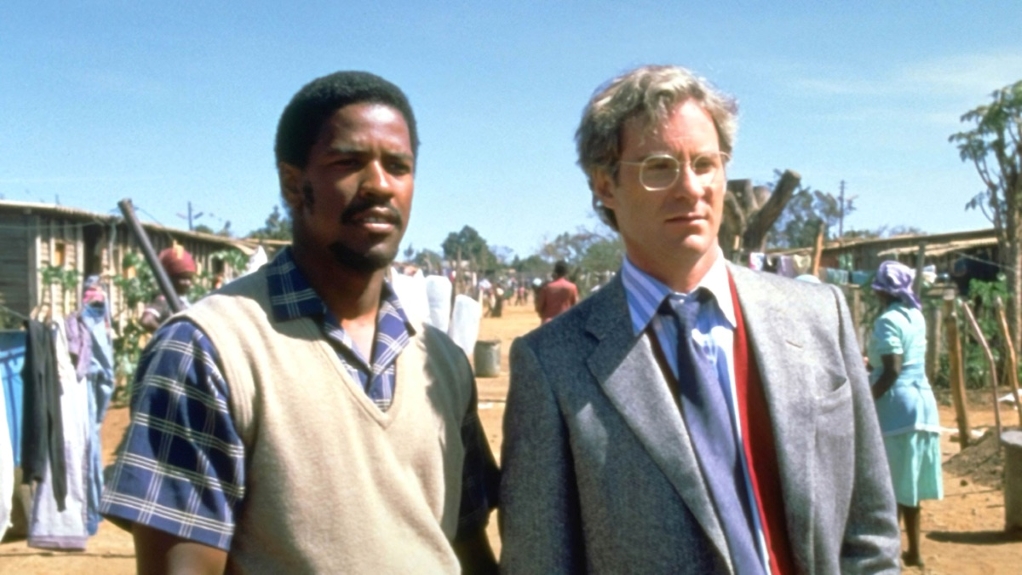
Steve Biko (Denzel Washington) was a leading anti-Apartheid campaigner, driving the Black Consciousness Movement in the repressive racist state of South Africa. Biko called for Black people to organise themselves and rejected the paternalistic concern of hand-wringing white liberals. Biko was ‘banned’ in 1970s by South Africa’s (in)justice department (meaning he could not be in physical proximity with more than one other person at a time) but didn’t let this stop him campaigning – until he was eventually arrested and murdered in custody in August 1977. His story came to international attention with the reporting Donald Woods (Kevin Kline), the white liberal newspaper editor who befriended Biko, later also banned and eventually fled in disguise from South Africa.

All of this makes very ripe ground for Richard Attenborough to make another socially conscious, unreservedly liberal film, very much in the style of Gandhi. Unfortunately, while Gandhi combined epic sweep and drama with its schoolboy history, Cry Freedom is a deathly serious film, straight-jacketed by recreating events as reverentially as possible and focuses itself in all the wrong places. Cry Freedom is the Biko biography in which Biko becomes a supporting character to exactly the sort of white liberal he rejected having African stories filtered through. Admirable as Donald Woods’ efforts to find justice for Biko was, does it feel like he deserved the focus of over half the film? It’s as if Attenborough had decided to frame Gandhi solely from the perspective of Martin Sheen’s journalist rather than the Father of India himself.

Following the trend of many films of the 80s and 90s, Cry Freedom believes that the only way the regular cinemagoer can relate to a minority group is through the filter of a complacent white person having their eyes opened to how unjust everything is. In carefully following this cliché, Cry Freedom does do a decent job. Woods is patronisingly certain of his liberal views, even while he sometimes fails to even acknowledge his live-in Black maid who unquestioningly calls him ‘master’.

Back-slapping himself on writing the odd sympathetic editorial and convinced one of the big problems of South Africa is the danger of anti-white racism, he’s exactly the sort of hero you get in this genre: the guy who assumes, because the system has always worked for him, it will work for everyone. When he resolves to support Biko, he immediately assumes a friendly pow-wow with Justice Minister Jimmy Kruger (a terrifyingly amorally, avuncular John Thaw) will sweep away all the problems (it, of course, makes things immeasurably worse for everyone).

Cry Freedom largely re-creates the oppressive policies of South Africa, through seeing a white character become a victim of the very persecution, bullying and terrorising the Black community has spent its whole life suffering. (With the big exception that Donald Woods never seems to be in danger of being dragged off the streets and beaten to death in a police cell). It feels like a tone-deaf way of exploring these issues. Particularly as Donald Woods’ eventual escape from South Africa is staged and filmed with a singular lack of energy over nearly an hour of screen time, with interest slowly drained out as Attenborough uninventively turns it into an identikit version of any number of bog-standard behind-the-lines Great Escape shenanigans you’ve seen done a million times better before.

Attenborough, to be fair, saves his energy for the re-staging of the brutal repression inflicted on the Black community. Cry Freedom’s opening and closing sequences – a brutal slum clearance in East London and a restaging of the shockingly violent crushing of the 16 June 1976 Soweto uprising (where indiscriminate police automatic weapons fire killed and injured hundreds of children) – are shot with exactly the sort of humanitarian outrage and cold-eyed recognition of the horrors of conflict that Attenborough bought to Gandhi and A Bridge too Far.

It’s not hard to wonder if this is more the sort of film Attenborough wanted to make, but that funding demanded a white lead so as not to panic mainstream cinema audiences. It makes large parts of the film feel like a missed opportunity. A real immersion in the actual day-to-day lives of Black South Africans – not just the beatings, but the unending, casual racism and oppression – would have created a film of even more power. (The fact the film suddenly ends with a flashback to Soweto – an event not central to the plot at all – makes you wonder if Attenborough suddenly realised that, without it, Cry Freedom would have barely shown a Black face for its last twenty minutes).

But too much of the rest of Cry Freedom feels too dry, reserved and lifeless. Even Biko himself falls into this trap. Denzel Washington delivers a very fine performance, full of the sort of effortless charisma and magnetic leadership that makes you believe that so many would follow him and using wit and moral certainty to stand up to the various bullying policeman he encounters. But too much of Biko’s dialogue with Woods is full of the sort of dialogue designed to inform and educate the audience, rather than create good story-telling. Too many scenes in Cry Freedom’s opening hour feel like a South African politics seminar, no matter how much energy Washington gives the dialogue.

It’s part of the feeling the whole film carries: a very serious political ethics class, mixed with an all-too familiar story of a white man learning first hand just how tough his Black friends have had it for years. Attenborough so clearly means well, it feels almost cruel to knock him and his film: but Cry Freedom feels like a film with a lot of blood, sweat and tears invested in it, which then fails to have the emotional heft it really needs and spends a lot of time telling the wrong person’s story.

Nickel Boys (2024)

Nickel Boys (2024)

Beautiful and emotional film, with a unique filming style, at times too overtly arty but truly striking

Director: RaMell Ross

Cast: Ethan Herisse (Elwood), Brandon Wilson (Turner), Aunjanue Ellis-Taylor (Hattie), Hamish Linklater (Spencer), Fred Hechinger (Harper), Jimmie Fails (Mr Hill), Daveed Diggs (Adult Eldwood)

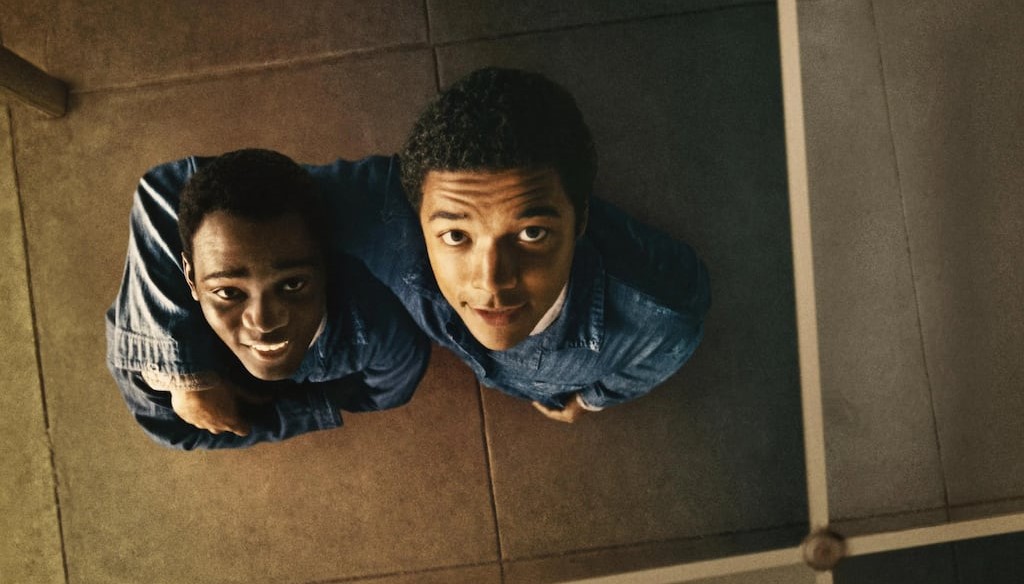
In the Deep South of America in the 1960s, a Black American couldn’t afford a wrong-place-wrong-time situation. That’s what happens though to teenager Elwood (Ethan Herisse). A star student, who firmly believes in civil rights and the power of moral action, he accepts a lift to college in what turns out to be a stolen car and is sentenced to an indefinite time in a Louisiana reform school, the Nickel Academy. Despite its lofty claims, the school is a bastion of racism where the black ‘students’ are housed in shabby huts and subjected to beatings, violence and exploitation as slave labour with almost no chance of leaving. The desperate efforts of his grandmother (Aunjanue Ellis-Taylor) to get his release are doomed to failure and his only friend is cynical Turner (Brandon Wilson). Decades later, an adult Elwood (Daveed Diggs) reacts as shocking news reports of unmarked mass graves of Black inmates are found at the site of old Nickel Academy.

Nickel Boys is adapted by RaMell Ross (making his fiction debut) from a Pulitzer Prize winning novel by Colson Whitehead, itself a fictionalisation of a real-life scandal. Dealing with challenging, difficult subject matter, its remarkable what a poetic, sensitive and subtle film Ross has created. Nickel Boys is a sad, lyrical, deeply tragic film which immerses us in the POV of its lead characters, making us feel the same hopelessness and powerlessness they do in a system designed to make them suffer.

Ross shoots Nickel Boys almost exclusively in POV, initially solely from Elwood’s perspective then switching back-and-forth between him and Turner. The older Elwood is shot as if the camera is strapped to his back (like the weight of the world). Ross commits to an extraordinary degree to this unique look-and-feel, with the camera focusing with the same roaming as a head turn, sometimes frustrating us by looking at the ‘wrong’ thing. What it does, above all, is forces us into the shoes of these boys: we see the sights exactly as we see them, their abusers stare into our eyes, we are made to feel as trapped in this small world as they are.

Ross opens Nickel Boys with its most extraordinary and beautiful sequence – one so perfectly constructed, it’s worth the price of admission alone – as we watch through Elwood’s eyes his growing up through a series of vividly remembered memories, our only glance of him brief reflections. This is a parade of truly striking images: a sidesways horizon with an arm stretched out (Elwood lying on his side); tinsel sprinkling down at us from the tree his grandmother is decorating; hazy soft-focus as a half-asleep Elwood witnesses his parents last-night in town; segregated bus journeys; his first encounters with civil rights; the aggressive searching of himself and another boy by a police officer; and his unjust arrest and imprisonment. It’s a breath-taking sequence, a virtuoso and deeply moving exploration of childhood impressions and contrasting memories.

The rest of Nickel Boys doesn’t quite match this glorious opening, but Ross uses the POV to take a surprisingly brave side-swipe in what we see and don’t see. The film becomes a tour-de-force of half looking, with the horrors of the Nickel Academy largely off-screen and ripe for our interpretation. In that, Nickel Boys would make an astonishing companion piece to The Zone of Interest which similarly took an unusual perspective on atrocity, as something on the edge of our visual and aural perception. When Elwood is beaten, the camera pulls away and cuts to extreme close-ups of black-and-white photos of Nickel Academy students to a cacophony of disjointed sound from Elwood’s thrashing.

Ross turns Nickel Boys into a sensory experience, one of acutely captured sounds and gorgeous imagery. The world of our two protagonists drifts interminably on, from eeking out their labour for the family and friends of the Academy’s staff – and Ross’ film makes clear this is unpaid convict labour – to seeing their ‘education’ ignored. The Black boys are kept at the margins of the grounds, never touching the privileges of the white boys with their football games – the only sport available to them is boxing, and there the school’s Black champ is ordered to take a dive to fix the betting ring among the staff (and ‘disappears’ when he, possibly mistakenly, fails to do so).

In this world Elwood is clinging to the hope that he can make a difference: by keeping a detailed log of the abuses and crimes, he might be able to escape. Elwood is a firm believer in civil rights – in one of the film’s most striking moments he runs across a busy street because he (and us – the visual deception is uncanny) mistakes a cardboard cut-out of his hero Martin Luther King as the real thing. His hope is only dented by the growing despair of his grandmother (a deeply heartfelt performance by Ellis-Taylor) and their swindling by their crooked lawyer.

By contrast, Turner is coldly cynical, convinced they have no chance of escaping the Nick alive. Turner’s bitterness – at one point he holds back Elwood’s precious letters for reasons he barely understands, but linked perhaps to his jealousy at never having any himself – is a sharp counterpoint to Elwood’s optimism, the two finding their contrasting viewpoints draws them closer together.

The legacy of events continues to be felt years later, with Elwood still haunted by his memories, struggling to adjust with his survivor’s guilt. A beautifully judged scene in a bar sees the adult Elwood encounter a fellow survivor (an extremely striking performance by Craig Tate) which not only sees Elwood deeply uncomfortable at this vivid reminder of his past – Tate’s Chicken Pete is fragile, alcoholic and not-all-there – but deeply disconcerted to find Pete has almost no memory of foundational events in Elwood’s life. It’s an affecting reminder that we are seeing one experience, and that the memories of each survivor would be radically different.

Nickel Boys has its flaws. At nearly two hours and twenty minutes, its running time dilutes its impact. Despite fine performances by Ethan Herisse and Brandon Wilson, the POV shooting at times makes it harder to personally engage with their characters, so focused is the film on sharing their experience at the cost of their reactions (which, naturally, we rarely see). Ross is a little too in love of documentary-style montages, which slow the pace rather than enrich the experience and can dilute the impact. A tighter, less at-times wilfully artistic film might have actually carried more force.

But it’s also a film full of deep sensory impact, that builds towards a shocking and deeply affecting climax that causes us to re-interpret much of what we have seen. And for large chunks, the film’s unique filming style creates a movie full of poetic wonder that places us firmly into the experience of living in a racist, unjust system like this one. For that alone, Nickel Boys deserves to be commended as a thought-provoking, striking film, one that leaves a real impact on the viewer.

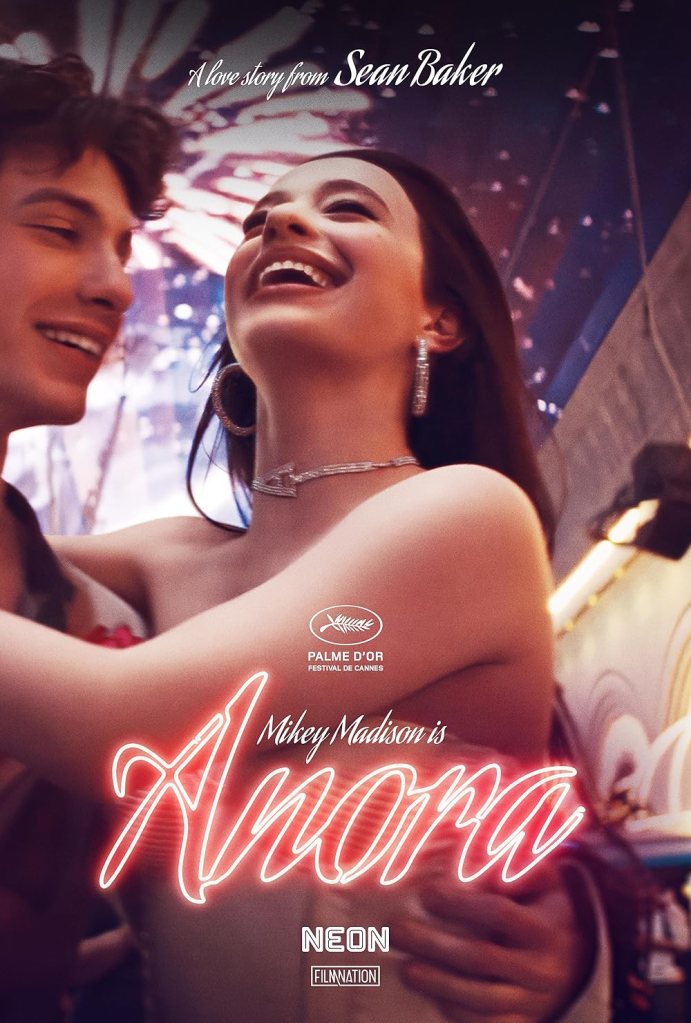
Anora (2024)

Anora (2024)

Superb mix of tragedy, farce and social commentary laugh-out-loud-funny then suddenly deeply moving

Director: Sean Baker

Cast: Mikey Madison (Anora “Ani” Mikheeva), Mark Eydelshteyn (Ivan “Vanya” Zakharov), Yura Borisov (Igor), Karren Karagulian (Toros), Vache Tovmasyan (Garnick), Aleksei Serebryakov (Nikolai Zakharov), Darya Ekamasova (Galina Zakharova), Lindsey Normington (Diamond), Ivy Wolk (Crystal)

Who doesn’t love a Cinderella story? A plucky young woman comes from nothing to find a life of love and riches she never dreamed of is at the heart of dozens of fairy tales. And films for that matter: it’s impossible to not think about Pretty Woman when watching Anora. In fact, you could argue the at-times surprisingly charming, laugh-out-loud funny but cold-eyed realism of Anora is a Pretty Woman corrective, as if Richard Gere woke up a few days later, introduced Julia Roberts to his friends and family and immediately wondered what the hell he had done.

Not just that but Mikey Madison’s beautifully performed force-of-life Ani (real name Anora, but she doesn’t like it) feels far more like a high-end-stripper-and-occasional-sex-worker than Julia Roberts. She’s 24-years-old, living in Brighton Beach and working in a glossy Manhattan strip club. One night the manager asks her to entertain Ivan (Mark Eydelshteyn), the dissolute, immature son of an extraordinarily wealthy Russian oligarch, because she can speak Russian. Ivan is taken with Ani, paying her $15,000 for a week as his girlfriend that peaks (after a hedonistic stay in Las Vegas) in a marriage proposal. Eloping, Ani returns home believing her life has changed forever. That illusion is shattered when Ani’s godfather Toros (Karren Karagulian), and heavies Garnik (Vache Tovmasyan) and hired muscle Igor (Yura Borisov) turn up at their home (really, of course, Ivan’s parent’s home) under strict instructions that the marriage must come to end. Over a long 24 hours of exasperation, farce and slow realisations our Cinderella story collapses.

Anora is a brilliant film, superbly directed by Sean Baker. You’d expect a film of cold-eyed social realism – and there are elements of this in Anora – but it’s also a hugely loveable, charming, surprisingly hilarious and deeply felt film, perfectly paced as its story develops across a series of events that beautifully lead into each other. A lot of its success comes from Mikey Madison’s extraordinary performance, one of those star-making force-of-nature roles where you start off liking her and end up loving her. Madison is warm but prickly and spikey, vulnerable but determined, worldly but naïve, someone who fights her corner to the end but can’t see any change at forming her own future. Madison embodies all this perfectly, switching from wide-eyed naïve delight at her luck, to spitting, incandescent fury when defending her rights, to an increasingly desperate disillusionment mingled with self-disgust as her dreams collapse around her.

Similar to his previous films, Baker presents the world of sex work with understanding and compassion. There is nothing leering about the lens of Anora, even as it opens with a pan (sound tracked to a disco remix of Take That’s Greatest Day) along a row of dancer. Baker understands the professional drudgery of exotic dancing, the hard work and effort needed to give each client the best experience. Ani is a master of ‘put the client first’ patter, her sing-song Brooklyn accent filled with awe at their dull lives, helping her clients believe they are special. What’s striking about Anora is this a world Ani needs to be ‘saved’ from as such – she’s comfortable with her profession, is good at it and understands it’s limits – but it one where she has subconsciously learned her value as a person is directly related to her body and what she is willing to do with it, complex feelings that return at the film’s conclusion with shattering impact.

What she doesn’t truly understand perhaps is people in the long-term. So swept up and impressed with Ivan’s ostentatious wealth, she misses all the clues to his true character. Anyone who still moves around his apartment by letting his feet slide across the floor, who doesn’t know where the water in the house is kept, plays video games obsessively and hurls himself into sex with the rabbit-like intensity of a horny teenager is about a million miles away from the app developer she first imagines he is. Ivan – very well played by Mark Eydelshteyn – might be sweet, excitable and full of joie de vivre, but he’s also staggeringly immature, extremely selfish and barely thinks about anyone other than himself. Or maybe Ani does notice, but she’s so used to being part of a perverse service industry, she assumes this is normal. Ivan may profess to love Ani, but he is the grasping, self-obsession of a spoilt teenager who no-one has ever said no to.

Baker’s care and regard for his characters is beautifully done – in fact what’s striking about Anora is how characters who at first feel peripheral and marginal are organically grow, emerging over time as crucial figures. In fact, what’s striking about it is that it becomes very much a film about class: about the have and have-nots and how all of us – from put-upon fixer to stripper – have more in common with each other than with the super-rich, to whom everyone else are nothing but staff, there to meet their needs. There is only a small degree of difference between the cleaner Ivan teases while she cleans his floors and Ani who he teases while she allows him to get his end away in bed.

This become clear when the film enters it’s hilarious second act, as Ivan’s godfather Toros (a side-splitting performance by Karren Karagulian as man on the verge of a nervous breakdown) can barely hide his resentment at being Ivan’s dogsbody – while still terrified at how his super-powerful parents could ruin Toros’ life in seconds (and clearly wouldn’t think twice about it). Such is their power, Toros leaves his own child’s christening to clean up Ivan’s mess – and its clear he’s been doing this his whole life (his first appearance is easy to miss, ordering Ivan’s drunken friends to get off the sofa at the debauched New Year’s party he throws). Equally good is Vache Tovmasyan as the increasingly bemused Garvik, medicine addled and slowly losing his composure over one never-ending night.

What these characters have in common – along with Yuro Borisov’s Igor, hired muscle like Ani valued only for his physicality – is that to their employers they are less people and more items of furniture or household utensils. Ivan is no different from his tyrannical parents, who may deplore their son’s selfish wastefulness but have never done anything to stop it. Anora’s tragedy (among the comedy) is watching (and Mikey Madison does this beautiful in a series of micro reactions) Ani release only the thinnest slither of affection makes her any different from Ivan’s cleaner. To Ivan, she’s a status symbol – an attractive woman, great in bed who his hangers-on can be impressed by, a tool for rebellion, marrying her the ideal fuck an immature teenager can imagine for the parents he fears and resents.

Baker’s film unfolds all this with astonishing skill, but also an overwhelming energy and joy – and I have to stress again, that Anora’s middle section is hilariously funny, much more so than many conventional comedies – but also an empathy that eventually lands with a devastating and surprising force. Mikey Madison’s extraordinary performance deeply invests in Ani, understanding how her spiky exterior hides a vulnerable interior she rarely exposes. Every performance is outstanding – kudos also to Yuri Borisov who so subtly draws Igor’s quiet decency under his thuggish exterior, that his growing prominence in the film feels completely natural.

Anora is a film that deconstructs the reality of Cinderella stories. But it’s also a film that feels very much about the world today, where all of us have our lives directed and influenced by the super-wealthy in ways we have become so used to, we don’t even notice it anymore. It’s more obvious with strippers, cleaners, fixers and hired muscle. But if Ivan’s parents sank a business, how many families would be drowned in the waves? Under the heartfelt characters, the superbly paced drama, the farce and the emotional moments, Anora captures a universal truth about our modern age that all of us, like Ani, have tried to close our eyes against.

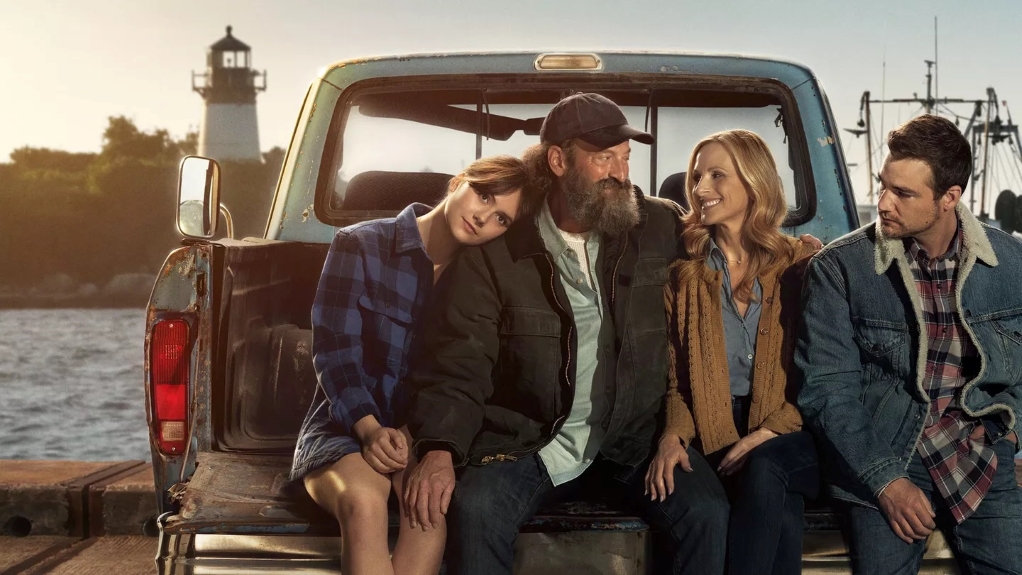
CODA (2021)

CODA (2021)

Surprise Oscar-winner is reassuring, unsurprising feel-good fare, charming but crammed with familiar beats

Director: Sian Heder

Cast: Emilia Jones (Ruby Rossi), Marlee Matlin (Jackie Rossi), Troy Kotsur (Frank Rossi), Daniel Durant (Leo Rossi), Eugenio Derbez (Bernardo Villalobos), Ferdia Walsh-Peele (Miles), May Forsyth (Gertie)

Ruby Rossi (Emilia Jones) feels like she has been working her whole life. The only hearing person in a deaf family, she’s both translator and interpreter. She works early morning shifts on their fishing ship with her father, the imposing-but-playful Frank (Troy Kotsur), and older brother Leo (Daniel Durant), and butts heads with her former-beauty-queen mother Jackie (Marlee Matlin). After graduating from high school, Ruby assumes this will be the rest of her life: until music teacher Mr Villalobos (Eugenio Derbez) helps her discover her gift for singing and, suddenly, a new future of Berkle Music College is possible. But can she balance the conflicting demands of her family and dreams?

CODA is an eminently likeable, thoroughly unchallenging film. If someone dumped a pad down in front of you and asked you to guess, sight unseen, what its main plot beats would be, pretty much anyone who has ever seen a movie would nail 90% of them. But it’s a well-told, charming small-scale story, with a positive perspective on disability and tugs heartstrings with the assured skill of a master. In the end it doesn’t really matter that nothing in it is remotely surprising, challenging or unexpected, because it delivers exactly the emotional response the viewer is likely to want from it.

It’s a film about communication. The Rossi’s need Ruby’s ability to hear, and her ease with spoken English, to navigate the world around them in the fastest, smoothest way. Ruby, meanwhile, is struggling to communicate her own passions, after a lifetime of adapting herself to her family. Unlike them, she wants more than a life on the docks. This guilty conflict with the family she adores ironically makes her constantly avoid communication both with her family and her music teacher (investing his personal time and money in her) about the pressure slowly crushing her.

These increasingly conflicted desires and choices form the film’s heart. Will Ruby make her own life, or stay with her family for as long as they need her? It’s not helped by the fact that her talent (out of all the talents in the world) is one her family can’t fully share in, meaning they struggle to understand her dilemma. (Her mother outright sees Ruby’s singing as nothing more than teenage rebellion – stating if her parents were blind, Ruby would have embraced painting). On top of which, Ruby’s genuinely loving (but insular) family have been her whole world for as long as she can remember.

The Rossis are vibrant and warm-hearted with a salty sense of humour and a stubborn independent streak. Jackie and Frank are so infatuated with each other (even after decades of marriage) they frequently engage in noisy sex (much to the embarrassment of Ruby, when a visit from a would-be boyfriend is interrupted by some extremely loud, bed pounding coitus from next door). They delight in teasing each other – from Leo and Ruby’s inventive sign-language insults for each other to the hilariously intentionally explicit sign-language safe-sex lecture Frank gives Ruby and her prospective boyfriend. But they are also a tight-team, seeing themselves as having to fight for their place in the world and discussing problems with the low income of the fishing business as a unit.

CODA is keen to establish the Rossis not as victims or people the audience should feel sorry for, but as a warm and loving family of everyday working-class Americans, who just happen to be deaf. It’s part of the film’s challenging of perceptions around disability. Frank continues a fishing business started by his father, which he intends to hand to his son, and (eventually) steps up to become a leader in his community. Jackie is a chippy, opinionated woman who still loves the glitz and glamour of her old beauty pageant days while getting stuck into managing the family’s new business interests. All of them are vibrant and romantic, sexual people, confident in themselves and who they are, far from the passive recipients of charity and help that so many disabled people in film have been.

But CODA dodges more challenging questions around disability. It never really engages with the implication that the Rossi family have got so used to having a full-time, free translator, that they have become disconnected from the world around them. I can’t help but feel there is a germ of a more interesting film here about the family (however inadvertently) allowing themselves to be cut off from others. They have let their ability to lip-read slip, filter all their communication with anyone outside the family through Ruby, and have grown so used to her manning the radio for their fishing business that they can’t run the boat effectively without her (leading to inevitable coastguard trouble).

It’s also had a knock-on effect in the fishing community: the other fishermen have clearly never had to really build a relationship with the Rossi’s (after decades, no one on the docks has learned even the most rudimentary sign language or any communication techniques like moving lips clearly when speaking). Jackie is outright resentful of the hearing wives of the other fishermen and neither she nor Frank can imagine actually running a business without Ruby’s to handle literally all the verbal communication involved. The closest the film comes to addressing this is Leo angrily telling Ruby the family aren’t helpless – they managed before she was born and they will if she leaves. But the film doesn’t want to explore the implication that the Rossis allowed themselves to slip into a comfort zone that ultimately proves isolating and even damaging for them.

CODA does get some good material from their struggle to engage with music (even if this is an uncomfortable cliché for some in the deaf community). There are well-staged moments, such as the Rossis attending Ruby’s graduation concert, where we “hear” what they hear (nothing) and need to judge the performance, like they do, from the reactions of those around them. A scene where Frank finally appreciates part of his daughter’s skill by feeling the vibrations of her singing is done with real emotional force. However, it cheats by feeding this into an off-stage conversion where the family switch (overnight) from hesitant to “all-in” for a classic last-minute-dash to get Ruby to her audition.

That’s representative of CODA shifting away from more complex, challenging themes and issues for a heart-warmingly positive tale, familiar from dozens of movies past. Saying that, Heder does a good job pulling together the familiar elements, and Troy Kotsur (Oscar winning) and Marlee Matlin both give emotionally rich performances as the parents. Ruby is excellently played by Emilia Jones – who spent months learning sign language in order to perform the part and improvise with the other actors. But CODA feels like a gentle, consensus film full of pleasant moments and reassuring insights that love will overcome, which perhaps explains why it won an Oscar in a year of more divisive films. There is nothing in it that could possibly rile you up or shake your faith in the decency of ordinary people. CODA is a film designed to wrap around you like a comfort blanket.

Mississippi Burning (1988)

Mississippi Burning (1988)

Earnest drama about racism, whose narrative perhaps focuses on less important issues and people

Director: Alan Parker

Cast: Gene Hackman (Agent Rupert Anderson), Willem Dafoe (Special Agent Alan Ward), Frances McDormand (Mrs Pell), Brad Dourif (Deputy Sheriff Clinton Pell), R. Lee Ermey (Mayor Tilman), Gailard Sartain (Sheriff Ray Stuckey), Stephen Tobolowsky (Clayton Townley), Michael Rooker (Frank Bailey), Pruitt Taylor Vince (Lester Cowans), Kevin Dunn (Agent Bird), Badja Djola (Agent Monk)

In June 1964 three civil rights workers – two white New Yorkers Andrew Goorman and Michael Schwerner and a black Mississippian James Chaney – were arrested, released and then murdered by Neshoba County law officials working alongside KKK white supremacists. An FBI investigation (codenamed Mississippi Burning) revealed the crime, arrested the criminals and managed to convict several (but not all) of them on the federal charge of violating civil rights (convinced the state charge of murder would lead to acquittal from racist juries). Mississippi Burning fictionalises this true-life atrocity into a hard-hitting thriller, mixed with the conventions of crime drama.

It’s directed by Alan Parker in the style of Midnight Express, pulling no punches in chucking the vileness of the KKK up on screen. During the course of Mississippi Burning we see Black people chased, beaten, flung out of moving cars onto the street, lynched and a praying child kicked in the face by a KKK thug. Rightly, the murderers are a vile parade of bullies, cowards and knuckle-dragging monsters portrayed by a group of actors (Dourif, Rooker, Sartain and Vince among them) used to going all-in on portraits of the scum of humanity. It’s a tightly directed, intense film – with a repetitively pounding score by Terry Jones – with Oscar-winning photography by Peter Biziou capturing the flame-lit night-time atrocities these repulsive people execute on innocents.

Mississippi Burning is undoubtedly well-made, with a very earnest message behind it. It’s impossible to fault its rightful disgust at the appalling injustice and racism, but you can’t help but feel it’s focusing its heroic lens on the wrong part of the story. It drew fire at the time for its fictionalisation of almost every element – wisely so in its portrayal of the initial crime, where their names and exact nature of their murder are altered – and the way this pushed the FBI (an organisation that had in many cases actively worked against civil rights) into a traditional heroic role, while reducing the Black people to passive recipients of beatings or kind words from whites. It’s hard not to feel today that, for all the skill of the film, the impact of those decisions have magnified the film’s flaws over time.

At heart, Mississippi Burning uses the conventions of a mis-matched buddy-cop investigative drama to add narrative drive to a social issues film. The two FBI agents are played so well by Gene Hackman and Willem Dafoe, you barely notice both are stock roles straight out of central casting. Hackman gives such energy and life (with a lovely touch of shame that his own past conduct, as a Southern sheriff was presumably only a degree better than the people he’s investigating) to his role as no-nonsense, veteran maverick who understands the streets, that he transforms this cliché into a real person. Similarly, Dafoe plays the by-the-book, stuffy superior who has too learn rules-bending sometimes break the case, with such commitment you forget how role familiar it is.

The personal narrative of the film revolves around whether these chalk-and-cheese investigators will overcome their initial iciness – they address each other formally throughout the film and butt-heads frequently on the conduct of the investigation – to become a team which feels odd for a film where the other stakes (violent institutional racism) are so large. In many ways an alternative cliché – two disconnected investigators investing more in a case based on the injustice they see and the witnesses they talk to – might well have served it better and also reflected contemporary complaints that the FBI was more interested in the letter than the spirit of the law. Mississippi Burning does, at times, address this by having characters explicitly ask if the FBI would even lift a finger if two of the victims weren’t white. But seeing as the film generally considers raising the question the same as engaging with it, it doesn’t go anywhere.

The film requires the agents to undertake mis-steps in order to educate the audience (would Dafoe’s character really be as ignorant about the nuances of segregation as he frequently is here?) and blunder about for much of the early acts, most notably Dafoe’s public conversation with a Black man in a diner, that inevitably leads to the poor man kidnapped and beaten by the KKK. But on the whole, the FBI are presented as noble straight-shooters, aghast at the state of affairs in the South, rather than a body run by the morally-ambiguous J Edgar Hoover.

It also means Mississippi Burning relegates its Black characters to passengers and passive victims, reliant on white people for protection and vindication. While it would be false to claim the system in the South didn’t leave Black people largely powerless, the film’s failure to introduce a single memorable character giving voice to the Black perspective of a series of crimes that happened to them feels more and more uncomfortable as the film ages (particularly as the film’s hopeful ending very much places racism as a problem in the past, not a dilemma America continues to face).

The film’s real conscience (and the victim given most development) is instead Frances McDormand as the wife of Dourif’s vile racist sheriff. Parker’s film subtly indicating her lack of racism early (she consoling touches the arm of a Black man), and McDormand (who is excellent) brings real force to her pained, frightened longing to do the right thing. She contrasts neatly with the committed vile cowardice of Dourif, Rooker’s swaggering bullying and Stephen Tobolowsky’s Hiterlian racism as a KKK Grand Wizard. Parker successfully makes these guys so repulsive, that when Hackman’s Anderson gets free reign to intimidate, rough-up and bully them back it carries real satisfaction. But the film making the most developed victim of the film’s KKK a white, gentile feels more like filmmaker concerns that otherwise the bulk of the likely audience may otherwise have trouble relating to the bulk of the victims.

Mississippi Burning tries to be hopeful. This extends to some slightly forced moralising – the suicide of one character is attributed to guilt at the crime, rather than the more likely guilt at having ‘betrayed’ his fellow KKK – and a general sense that Mississippi is on the road to peace, feels a bit of a stretch for a region that had decades of continued unrest ahead. Saying that, in its sometimes clumsy way, you can’t doubt its power and its righteous disgust at racism. It’s well directed and has some excellent performances – Hackman and McDormand were both Oscar nominated – but it feels like a film that only focuses on part of an overall picture and not always the right part.

Scenes From a Marriage (1974)

Scenes From a Marriage (1974)

Bergman’s compelling, emotionally charged film is an intense, impressive and surprising tale

Director: Ingmar Bergman

Cast: Liv Ullman (Marianne), Erland Josephson (Johan), Bibi Andersson (Katarina), Jan Malmsjö (Peter), Gunnel Lindblom (Eva), Barbro Hiort af Ornäs (Mrs Jacobi), Anita Wall (Journalist)

A loving couple sit with an interviewer to discuss how happy their relationship is. Ten years later, years after their divorce, they meet in their old weekend cottage for an assignation away from their new partners. Along the way, they’ll lie, fight, cheat but also show time-and-again few people know them better than they do each other. Based on his own marriages and relationships (not least his relationship with Liv Ullman), Bergman’s Scenes from a Marriage is a fascinatingly intimate and intense portrait of the contradictory impulses we feel towards the people we know best: how we can, in the same moment, love them, hate them, want to be a million miles away from them and also yearn to take them in our arms and tell them everything.

Skilfully cut down from a six-part TV series – the episode titles become ‘chapter headings’, each signifying a time shift – it becomes a series of intense, almost real-time, conversations between middle-brow professor Johan (Erland Josephson) and successful lawyer Marianne (Liv Ullman). From their ten-year anniversary, their happy-but-functional relationship is shattered when Johan leaves for the (unseen) Paula, heading into divorce, Marianne’s growth in sexual confidence, her little acts of revenge over Johan and their later affair. At all times they prove capable of ripping emotional wounds into each other, but also remaining strangely dependent on love and affection from each other.

It would be easy to say that Scenes of a Marriage is a theatrical piece – it came, originally, from a play Bergman was working on and well over two thirds of its running time features Josephson and Ullman alone on screen. But if the close-up is the language of cinema, Scenes from a Marriage may be the most cinematic film every made. Shot in a cooly observational style by Sven Nykvist, vast swathes of Scenes from a Marriage plays out in searing close-up, the camera studying every inch of the emotional angst its two characters are putting themselves through. Bergman knows exactly how to build the punishing tension in these scenes, frequently climaxing in visceral outbursts.

It is a film about what we say and what we chose not to say and what we decide to hear. The conversation between the couples is framed by their careful considerations: when to hold fire and when to let rip; when to listen and when to choose not to hear. And it’s clear that, when we are first introduced to them, they have mastered the art of not saying anything at all. Smilingly parroting cliches to their interviewer, they later smugly compare themselves to their feuding friends Karatina and Peter (excellent cameos from a searing Bibi Andersson and a provocative Jan Malmsjö). But their conversation never touches on deeper issues (Bergman’s called this chapter ‘The Art of Sweeping Things Under the Carpet’) and their sex life has dwindled to timetabled functionality.

It’s clear they are aware of this growing distance themselves. Johan shares his poetry with a colleague (an expertly reserved cameo from Gunnel Lindblom), complaining Marianne considers it little better than spiritual masturbation and yearns for an expressive freedom he feels is impossible in his marriage. Marianne meanwhile speaks to a client, Mrs Jacobi (a tragic Barbro Hiort af Ornäs), whose story of a lifetime trapped in a loveless marriage with children she never really wanted clearly strikes Marianne as a chilling vision of her own future.

That doesn’t stop Marianne responding with shocked subservience that tips into desperate pleading when Johan announces he wants to leave her. Bergman stages this scene beautifully, with the ridiculous logic people sink into in tragic break-ups. Johan eats a snack meal prepared by Marianne, guiltily confessing his affair, but there is something very real about Marianne’s stunned reaction which sees her planning his packing (because he’s useless at it) and continue their bedtime preparation before she starts pleading him to stay. Just there is something very real in Johan’s reaction: having steeled himself for a fight, her subservience enrages him until he is cruelly tearing verbal lumps out of her. This is the sort of searing emotional up-and-down that rings true, one allowing shock to humiliate them the other transforming shame into defensive, accusatory blame.

But Scenes from a Marriage is a film that utterly understands how much we change under circumstances. Separation is not good for Johan: his new lover doesn’t interest him, his career stalls and he tips into self-pity. Marianne, once the shock and fear of separation passes, discovers she likes her freedom. Her wardrobe shifts to more form-fitting and revealing clothes, she embraces the opportunities of singledom and repays Johan’s desertion with a seduction of him she deliberately doesn’t follow-through on. They now talk more honestly than ever before – and it’s a blistering, verbally and physically violent exchange rammed full of resentment and petty cruelty.

To do this stuff you need actors at the top of their game and who completely trust each other. Bergman certainly has this with his two stars. Josephson’s self-contented smugness moves through arrogant selfishness to desperate vulnerability, his expressive face sometimes puppy-doggish, sometimes drowning in bear-like fury. Ullman is, of course, exceptional. Her masterful ability to react, to let thoughts and emotions play fleetingly across her face was made for Bergman’s close-up film-making and she takes Marianne on a fascinating journey, from near-submissive home-maker to vibrantly confident women of the world while never letting the vulnerability and doubt be too far from her eyes. It’s an extraordinary performance, searing and tender, as raw as knife-edge.

These two play absorbingly off each other, their conversations gripping minefields of repressed then hugely expressed emotions. Their collaboration, guided by Bergman’s close (but not intrusive) camerawork is extraordinary. Fashioned from Bergman’s experiences of relationships, Scenes from a Marriage is, however, strangely hopeful. One of its key themes is that, even when they hate each other, this couple know and trust each other more than anyone else. In times of crisis and pain they always turn to each for a consolatory word or comfort.

There is something strangely warm about their relationship, despite its turmoil, and the film is refreshing in saying friendship and love doesn’t have to end with divorce, but can transform itself into something else, perhaps even something better. Perhaps it’s that strange note of hope that makes Scenes of a Marriage so influential to a generation of filmmakers. It refuses the simple moral standpoints of judgement and suggests the decision to no longer be together (or even faithful to each other) need not be the end all, but instead a bump in a longer journey: that a relationship (and even a love) doesn’t end when a marriage does.

They Shoot Horses, Don’t They? (1969)

They Shoot Horses, Don’t They? (1969)

Savage satire on the cruelty of entertainment, heavy-handed at times but also ahead of them

Director: Sydney Pollack

Cast: Jane Fonda (Gloria Beatty), Michael Sarrazin (Robert Syverton), Susannah York (Alice LeBlanc), Gig Young (Rocky Gravo), Red Buttons (Harry Kline), Bonnie Bedelia (Ruby Bates), Michael Conrad (Rollo), Bruce Dern (James Bates), Al Lewis (“Turkey”), Robert Fields (Joel Girard), Severn Darden (Cecil), Allyn Ann McLiere (Shirl), Madge Kennedy (Mrs Laydon)

Wheeling out the desperate for entertainment was a mainstay of TV for much of the early noughties with the Simon Cowell factory repackaging human lives for entertainment. But it’s hardly a new phenomenon. During the Depression in 30s America, the country was gripped by a new craze: dance marathons. In exchange for prize money and (perhaps!) a shot at stardom, regular people came off the streets to dance (or at least move around the dance floor) for as long as possible (with short breaks every hour). These shows went on and on, hour after hour, day after day for months at a time, with the audience paying to pop in and gawp.

It doesn’t take much to see how class comes into this. The competitors are the unemployed and out of luck, attracted as much by regular food and a roof over their head. The audience are rich and comfortable, tossing sponsorship bones towards the manufactured ‘stories’ that take their fancy. The event is controlled by a manipulative, alcoholic MC (Gig Young) spinning stories and drama for the crowd. As days turn to weeks the contestants become ever more haggard, drained and physically and emotionally shattered: cynical Gloria (Jane Fonda), homeless Robert (Michael Sarrazin), aspiring actors fragile Alice (Susannah York) and distant Joel (Robert Fields), retired sailor Harry (Red Buttons) and bankrupt farmers James (Bruce Dern) and his heavily pregnant wife Ruby (Bonnie Bedelia).

Pollack’s viciously nihilistic satire throws all these into a hellish never-ending treadmill of physical movement and psychological torture that leaves each character washed out, drained, doused in sweat with sunken, sleepless eyes. You can clearly see the links from They Shoot Horses to Rollerball all the way to The Hunger Games. It’s a grim look into part of the human psyche that, ever since the Colosseum, takes pleasure out of watching the suffering of others for entertainment. The crowded audience – eating popcorn and cheering on their favourites – are as indifferent to the sufferings of the contestants as the organisers with their quack medical teams.

Designed to gain the maximum sense of claustrophobia – once we enter the hall for the dance competition, we never see the outside again for virtually the whole film – the film constantly grinds us down with the exhausting relentlessness of the show. Pollack intercuts this with brief shots of Robert being questioned by the police – moments we eventually realise are flashforwards, making it clear tragedy is our eventual destination. A siren that sounds like nothing less than an air raid warning is repeatedly heard, warning competitors any brief respite they have is coming to a close. The actors become increasingly shuffling, wild-eyed and semi-incoherent in their speech and actions, grimly embodying characters acting on little sleep, in situations of constant strain.

But then that’s entertainment! Part of the thrill for the crowd – whipped up by Gig Young’s showman, a man who oscillates between heartless indifference and flashes of sympathy for his stars (hostages?) – is watching them push on through never-ending pressure. It’s clear to us as well – from their desperate, fixed determination to complete any physical challenge set and the relish with which they consume any food given – that the contestants will tolerate anything just to have, for a few weeks, a taste of something they couldn’t hope to get living on the streets.

Their desperation doesn’t even enter into the moral calculations of those running the show. In fact it’s something that makes them easier to manipulate. Part of the MC’s calculations is creating a relatable story of suffering for the chosen few ‘leads’ any one of which can lead to a triumphant feel-good ending. Potential love-matches are pushed together, sentimental favourites are promoted. Alice’s fine clothing is quietly destroyed by the team running the show because it doesn’t fit a narrative of penniless dreamers. The participants are crafted into “characters”: the ageing Harry as the “Old Man of the Sea”, Gloria and Robert – thrown-together, last-minute partners –as star-cross’d lovers (despite their extremely tense personal relationship).

It all gets too much for the contestants. Serious medical conditions are not unusual – the frequent refrains from the (so-called) medical staff that “we’ve got a dead one” before exhausted, unresponsive contestants are slapped or thrown into ice baths to revive them speaks volumes. When a contestant does indeed die, the event is quietly hushed up for the audience with another feel-good fantasy of noble retirement. Those desperate for a shot at stardom – something they have no hope of getting from a show designed to turn them into drained-out zombies for the entertainment of the masses – are reduced to quivering messes. None more so than Alice – played with a heart-rendering fragility by Susannah York channelling Streetcar Vivien Leigh – who begins the film confidently performing a Shaw monologue and it ends it barely connected to reality.

York’s fine performance is one of several in the film. Young won an Oscar as a MC Rocky, the consummate showman who sometimes surprises us with flashes of humanity (which he clearly drowns with the bottle) before his professional ruthlessness kicks in. Red Buttons is excellent as the rogueish Harry who realises he’s out of depth far-too-late, Bedelia and Dern very good as an experienced couple earning a desperate living from marathons. Particularly fine is Jane Fonda who grounds the film with a gut-punch of a performance of barely concealed rage, deep-rooted self-loathing and brutal, angry cynicism as a woman who understands exactly the show she is in but has no choice but to play along, while hating herself for doing it.

They Shoot Horses, Don’t They feel in many ways ahead of its time and for all time – after all, entertainment like this hasn’t died out. Pollack’s film is harshly lit, and his direction is very strong, even if the film does sometimes make its points with a little too much repetitive force. It’s also a film – with its metaphor of suffering horses standing in for suffering people –a fraction too pleased with its own arty contrivance (a slow-mo and sepia tinged opening lays on its symbolism a little too thick, while its flash-forwards yearn a little too much for a French New Wave atmosphere). Michael Sarrazin isn’t quite able to bring depth to the – admittedly deliberately blank Robert – making him an opaque POV character, a role he effectively surrenders on viewing to Fonda.

But despite its flaws, They Shoot Horses Don’t They is a remarkably hard and incredibly bleak film on human nature, which doesn’t let up at all as it barrels to its almost uniquely grim and nihilistic ending. It offers nothing in the way of hope and paints a world gruesomely corrupted and completely indifferent to the thoughts and feelings to the most vulnerable in it. It is ripe for rediscovery.