Category: Social issue films

Nickel Boys (2024)

Nickel Boys (2024)

Beautiful and emotional film, with a unique filming style, at times too overtly arty but truly striking

Director: RaMell Ross

Cast: Ethan Herisse (Elwood), Brandon Wilson (Turner), Aunjanue Ellis-Taylor (Hattie), Hamish Linklater (Spencer), Fred Hechinger (Harper), Jimmie Fails (Mr Hill), Daveed Diggs (Adult Eldwood)

In the Deep South of America in the 1960s, a Black American couldn’t afford a wrong-place-wrong-time situation. That’s what happens though to teenager Elwood (Ethan Herisse). A star student, who firmly believes in civil rights and the power of moral action, he accepts a lift to college in what turns out to be a stolen car and is sentenced to an indefinite time in a Louisiana reform school, the Nickel Academy. Despite its lofty claims, the school is a bastion of racism where the black ‘students’ are housed in shabby huts and subjected to beatings, violence and exploitation as slave labour with almost no chance of leaving. The desperate efforts of his grandmother (Aunjanue Ellis-Taylor) to get his release are doomed to failure and his only friend is cynical Turner (Brandon Wilson). Decades later, an adult Elwood (Daveed Diggs) reacts as shocking news reports of unmarked mass graves of Black inmates are found at the site of old Nickel Academy.

Nickel Boys is adapted by RaMell Ross (making his fiction debut) from a Pulitzer Prize winning novel by Colson Whitehead, itself a fictionalisation of a real-life scandal. Dealing with challenging, difficult subject matter, its remarkable what a poetic, sensitive and subtle film Ross has created. Nickel Boys is a sad, lyrical, deeply tragic film which immerses us in the POV of its lead characters, making us feel the same hopelessness and powerlessness they do in a system designed to make them suffer.

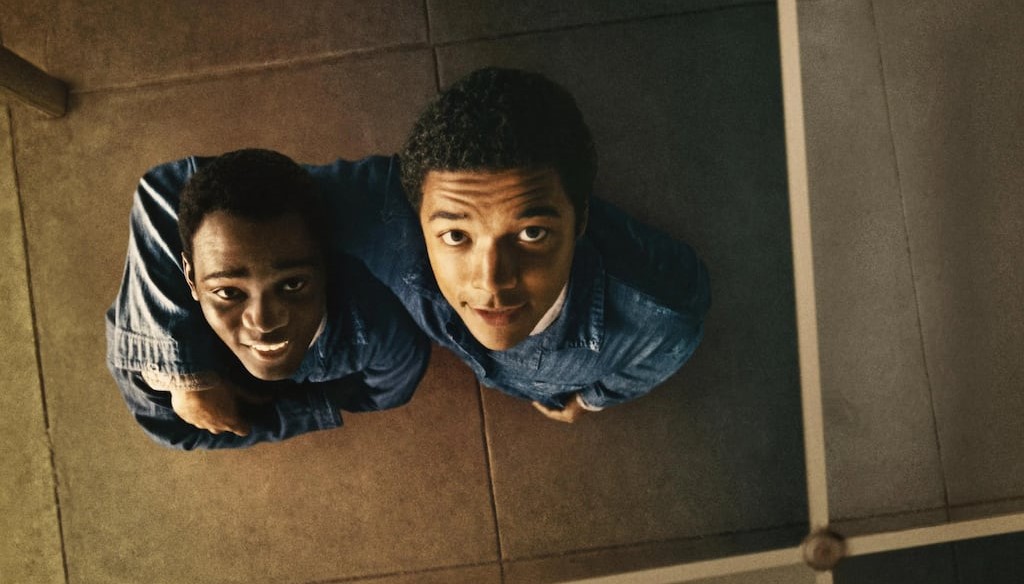
Ross shoots Nickel Boys almost exclusively in POV, initially solely from Elwood’s perspective then switching back-and-forth between him and Turner. The older Elwood is shot as if the camera is strapped to his back (like the weight of the world). Ross commits to an extraordinary degree to this unique look-and-feel, with the camera focusing with the same roaming as a head turn, sometimes frustrating us by looking at the ‘wrong’ thing. What it does, above all, is forces us into the shoes of these boys: we see the sights exactly as we see them, their abusers stare into our eyes, we are made to feel as trapped in this small world as they are.

Ross opens Nickel Boys with its most extraordinary and beautiful sequence – one so perfectly constructed, it’s worth the price of admission alone – as we watch through Elwood’s eyes his growing up through a series of vividly remembered memories, our only glance of him brief reflections. This is a parade of truly striking images: a sidesways horizon with an arm stretched out (Elwood lying on his side); tinsel sprinkling down at us from the tree his grandmother is decorating; hazy soft-focus as a half-asleep Elwood witnesses his parents last-night in town; segregated bus journeys; his first encounters with civil rights; the aggressive searching of himself and another boy by a police officer; and his unjust arrest and imprisonment. It’s a breath-taking sequence, a virtuoso and deeply moving exploration of childhood impressions and contrasting memories.

The rest of Nickel Boys doesn’t quite match this glorious opening, but Ross uses the POV to take a surprisingly brave side-swipe in what we see and don’t see. The film becomes a tour-de-force of half looking, with the horrors of the Nickel Academy largely off-screen and ripe for our interpretation. In that, Nickel Boys would make an astonishing companion piece to The Zone of Interest which similarly took an unusual perspective on atrocity, as something on the edge of our visual and aural perception. When Elwood is beaten, the camera pulls away and cuts to extreme close-ups of black-and-white photos of Nickel Academy students to a cacophony of disjointed sound from Elwood’s thrashing.

Ross turns Nickel Boys into a sensory experience, one of acutely captured sounds and gorgeous imagery. The world of our two protagonists drifts interminably on, from eeking out their labour for the family and friends of the Academy’s staff – and Ross’ film makes clear this is unpaid convict labour – to seeing their ‘education’ ignored. The Black boys are kept at the margins of the grounds, never touching the privileges of the white boys with their football games – the only sport available to them is boxing, and there the school’s Black champ is ordered to take a dive to fix the betting ring among the staff (and ‘disappears’ when he, possibly mistakenly, fails to do so).

In this world Elwood is clinging to the hope that he can make a difference: by keeping a detailed log of the abuses and crimes, he might be able to escape. Elwood is a firm believer in civil rights – in one of the film’s most striking moments he runs across a busy street because he (and us – the visual deception is uncanny) mistakes a cardboard cut-out of his hero Martin Luther King as the real thing. His hope is only dented by the growing despair of his grandmother (a deeply heartfelt performance by Ellis-Taylor) and their swindling by their crooked lawyer.

By contrast, Turner is coldly cynical, convinced they have no chance of escaping the Nick alive. Turner’s bitterness – at one point he holds back Elwood’s precious letters for reasons he barely understands, but linked perhaps to his jealousy at never having any himself – is a sharp counterpoint to Elwood’s optimism, the two finding their contrasting viewpoints draws them closer together.

The legacy of events continues to be felt years later, with Elwood still haunted by his memories, struggling to adjust with his survivor’s guilt. A beautifully judged scene in a bar sees the adult Elwood encounter a fellow survivor (an extremely striking performance by Craig Tate) which not only sees Elwood deeply uncomfortable at this vivid reminder of his past – Tate’s Chicken Pete is fragile, alcoholic and not-all-there – but deeply disconcerted to find Pete has almost no memory of foundational events in Elwood’s life. It’s an affecting reminder that we are seeing one experience, and that the memories of each survivor would be radically different.

Nickel Boys has its flaws. At nearly two hours and twenty minutes, its running time dilutes its impact. Despite fine performances by Ethan Herisse and Brandon Wilson, the POV shooting at times makes it harder to personally engage with their characters, so focused is the film on sharing their experience at the cost of their reactions (which, naturally, we rarely see). Ross is a little too in love of documentary-style montages, which slow the pace rather than enrich the experience and can dilute the impact. A tighter, less at-times wilfully artistic film might have actually carried more force.

But it’s also a film full of deep sensory impact, that builds towards a shocking and deeply affecting climax that causes us to re-interpret much of what we have seen. And for large chunks, the film’s unique filming style creates a movie full of poetic wonder that places us firmly into the experience of living in a racist, unjust system like this one. For that alone, Nickel Boys deserves to be commended as a thought-provoking, striking film, one that leaves a real impact on the viewer.

Anora (2024)

Anora (2024)

Superb mix of tragedy, farce and social commentary laugh-out-loud-funny then suddenly deeply moving

Director: Sean Baker

Cast: Mikey Madison (Anora “Ani” Mikheeva), Mark Eydelshteyn (Ivan “Vanya” Zakharov), Yura Borisov (Igor), Karren Karagulian (Toros), Vache Tovmasyan (Garnick), Aleksei Serebryakov (Nikolai Zakharov), Darya Ekamasova (Galina Zakharova), Lindsey Normington (Diamond), Ivy Wolk (Crystal)

Who doesn’t love a Cinderella story? A plucky young woman comes from nothing to find a life of love and riches she never dreamed of is at the heart of dozens of fairy tales. And films for that matter: it’s impossible to not think about Pretty Woman when watching Anora. In fact, you could argue the at-times surprisingly charming, laugh-out-loud funny but cold-eyed realism of Anora is a Pretty Woman corrective, as if Richard Gere woke up a few days later, introduced Julia Roberts to his friends and family and immediately wondered what the hell he had done.

Not just that but Mikey Madison’s beautifully performed force-of-life Ani (real name Anora, but she doesn’t like it) feels far more like a high-end-stripper-and-occasional-sex-worker than Julia Roberts. She’s 24-years-old, living in Brighton Beach and working in a glossy Manhattan strip club. One night the manager asks her to entertain Ivan (Mark Eydelshteyn), the dissolute, immature son of an extraordinarily wealthy Russian oligarch, because she can speak Russian. Ivan is taken with Ani, paying her $15,000 for a week as his girlfriend that peaks (after a hedonistic stay in Las Vegas) in a marriage proposal. Eloping, Ani returns home believing her life has changed forever. That illusion is shattered when Ani’s godfather Toros (Karren Karagulian), and heavies Garnik (Vache Tovmasyan) and hired muscle Igor (Yura Borisov) turn up at their home (really, of course, Ivan’s parent’s home) under strict instructions that the marriage must come to end. Over a long 24 hours of exasperation, farce and slow realisations our Cinderella story collapses.

Anora is a brilliant film, superbly directed by Sean Baker. You’d expect a film of cold-eyed social realism – and there are elements of this in Anora – but it’s also a hugely loveable, charming, surprisingly hilarious and deeply felt film, perfectly paced as its story develops across a series of events that beautifully lead into each other. A lot of its success comes from Mikey Madison’s extraordinary performance, one of those star-making force-of-nature roles where you start off liking her and end up loving her. Madison is warm but prickly and spikey, vulnerable but determined, worldly but naïve, someone who fights her corner to the end but can’t see any change at forming her own future. Madison embodies all this perfectly, switching from wide-eyed naïve delight at her luck, to spitting, incandescent fury when defending her rights, to an increasingly desperate disillusionment mingled with self-disgust as her dreams collapse around her.

Similar to his previous films, Baker presents the world of sex work with understanding and compassion. There is nothing leering about the lens of Anora, even as it opens with a pan (sound tracked to a disco remix of Take That’s Greatest Day) along a row of dancer. Baker understands the professional drudgery of exotic dancing, the hard work and effort needed to give each client the best experience. Ani is a master of ‘put the client first’ patter, her sing-song Brooklyn accent filled with awe at their dull lives, helping her clients believe they are special. What’s striking about Anora is this a world Ani needs to be ‘saved’ from as such – she’s comfortable with her profession, is good at it and understands it’s limits – but it one where she has subconsciously learned her value as a person is directly related to her body and what she is willing to do with it, complex feelings that return at the film’s conclusion with shattering impact.

What she doesn’t truly understand perhaps is people in the long-term. So swept up and impressed with Ivan’s ostentatious wealth, she misses all the clues to his true character. Anyone who still moves around his apartment by letting his feet slide across the floor, who doesn’t know where the water in the house is kept, plays video games obsessively and hurls himself into sex with the rabbit-like intensity of a horny teenager is about a million miles away from the app developer she first imagines he is. Ivan – very well played by Mark Eydelshteyn – might be sweet, excitable and full of joie de vivre, but he’s also staggeringly immature, extremely selfish and barely thinks about anyone other than himself. Or maybe Ani does notice, but she’s so used to being part of a perverse service industry, she assumes this is normal. Ivan may profess to love Ani, but he is the grasping, self-obsession of a spoilt teenager who no-one has ever said no to.

Baker’s care and regard for his characters is beautifully done – in fact what’s striking about Anora is how characters who at first feel peripheral and marginal are organically grow, emerging over time as crucial figures. In fact, what’s striking about it is that it becomes very much a film about class: about the have and have-nots and how all of us – from put-upon fixer to stripper – have more in common with each other than with the super-rich, to whom everyone else are nothing but staff, there to meet their needs. There is only a small degree of difference between the cleaner Ivan teases while she cleans his floors and Ani who he teases while she allows him to get his end away in bed.

This become clear when the film enters it’s hilarious second act, as Ivan’s godfather Toros (a side-splitting performance by Karren Karagulian as man on the verge of a nervous breakdown) can barely hide his resentment at being Ivan’s dogsbody – while still terrified at how his super-powerful parents could ruin Toros’ life in seconds (and clearly wouldn’t think twice about it). Such is their power, Toros leaves his own child’s christening to clean up Ivan’s mess – and its clear he’s been doing this his whole life (his first appearance is easy to miss, ordering Ivan’s drunken friends to get off the sofa at the debauched New Year’s party he throws). Equally good is Vache Tovmasyan as the increasingly bemused Garvik, medicine addled and slowly losing his composure over one never-ending night.

What these characters have in common – along with Yuro Borisov’s Igor, hired muscle like Ani valued only for his physicality – is that to their employers they are less people and more items of furniture or household utensils. Ivan is no different from his tyrannical parents, who may deplore their son’s selfish wastefulness but have never done anything to stop it. Anora’s tragedy (among the comedy) is watching (and Mikey Madison does this beautiful in a series of micro reactions) Ani release only the thinnest slither of affection makes her any different from Ivan’s cleaner. To Ivan, she’s a status symbol – an attractive woman, great in bed who his hangers-on can be impressed by, a tool for rebellion, marrying her the ideal fuck an immature teenager can imagine for the parents he fears and resents.

Baker’s film unfolds all this with astonishing skill, but also an overwhelming energy and joy – and I have to stress again, that Anora’s middle section is hilariously funny, much more so than many conventional comedies – but also an empathy that eventually lands with a devastating and surprising force. Mikey Madison’s extraordinary performance deeply invests in Ani, understanding how her spiky exterior hides a vulnerable interior she rarely exposes. Every performance is outstanding – kudos also to Yuri Borisov who so subtly draws Igor’s quiet decency under his thuggish exterior, that his growing prominence in the film feels completely natural.

Anora is a film that deconstructs the reality of Cinderella stories. But it’s also a film that feels very much about the world today, where all of us have our lives directed and influenced by the super-wealthy in ways we have become so used to, we don’t even notice it anymore. It’s more obvious with strippers, cleaners, fixers and hired muscle. But if Ivan’s parents sank a business, how many families would be drowned in the waves? Under the heartfelt characters, the superbly paced drama, the farce and the emotional moments, Anora captures a universal truth about our modern age that all of us, like Ani, have tried to close our eyes against.

CODA (2021)

CODA (2021)

Surprise Oscar-winner is reassuring, unsurprising feel-good fare, charming but crammed with familiar beats

Director: Sian Heder

Cast: Emilia Jones (Ruby Rossi), Marlee Matlin (Jackie Rossi), Troy Kotsur (Frank Rossi), Daniel Durant (Leo Rossi), Eugenio Derbez (Bernardo Villalobos), Ferdia Walsh-Peele (Miles), May Forsyth (Gertie)

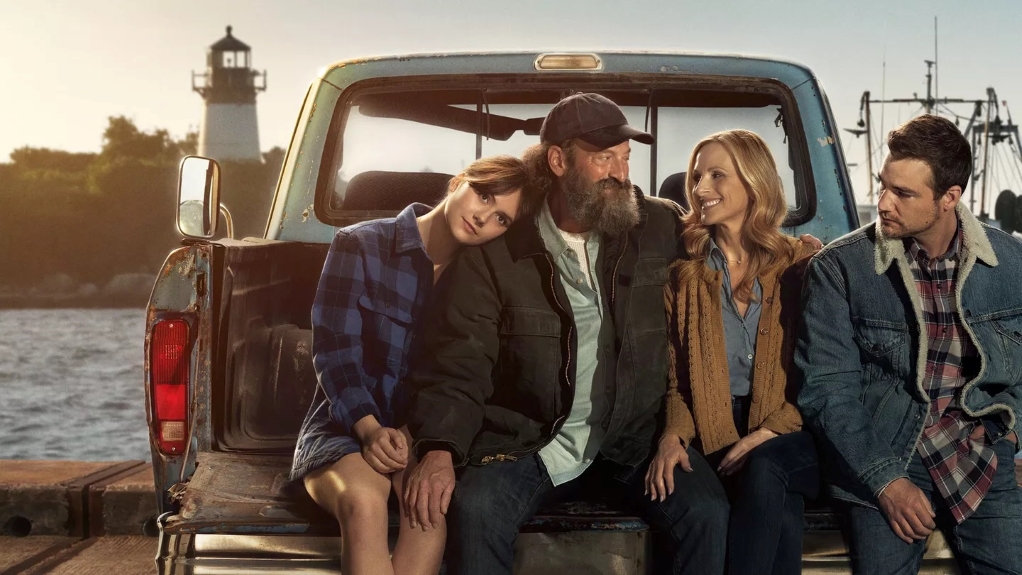
Ruby Rossi (Emilia Jones) feels like she has been working her whole life. The only hearing person in a deaf family, she’s both translator and interpreter. She works early morning shifts on their fishing ship with her father, the imposing-but-playful Frank (Troy Kotsur), and older brother Leo (Daniel Durant), and butts heads with her former-beauty-queen mother Jackie (Marlee Matlin). After graduating from high school, Ruby assumes this will be the rest of her life: until music teacher Mr Villalobos (Eugenio Derbez) helps her discover her gift for singing and, suddenly, a new future of Berkle Music College is possible. But can she balance the conflicting demands of her family and dreams?

CODA is an eminently likeable, thoroughly unchallenging film. If someone dumped a pad down in front of you and asked you to guess, sight unseen, what its main plot beats would be, pretty much anyone who has ever seen a movie would nail 90% of them. But it’s a well-told, charming small-scale story, with a positive perspective on disability and tugs heartstrings with the assured skill of a master. In the end it doesn’t really matter that nothing in it is remotely surprising, challenging or unexpected, because it delivers exactly the emotional response the viewer is likely to want from it.

It’s a film about communication. The Rossi’s need Ruby’s ability to hear, and her ease with spoken English, to navigate the world around them in the fastest, smoothest way. Ruby, meanwhile, is struggling to communicate her own passions, after a lifetime of adapting herself to her family. Unlike them, she wants more than a life on the docks. This guilty conflict with the family she adores ironically makes her constantly avoid communication both with her family and her music teacher (investing his personal time and money in her) about the pressure slowly crushing her.

These increasingly conflicted desires and choices form the film’s heart. Will Ruby make her own life, or stay with her family for as long as they need her? It’s not helped by the fact that her talent (out of all the talents in the world) is one her family can’t fully share in, meaning they struggle to understand her dilemma. (Her mother outright sees Ruby’s singing as nothing more than teenage rebellion – stating if her parents were blind, Ruby would have embraced painting). On top of which, Ruby’s genuinely loving (but insular) family have been her whole world for as long as she can remember.

The Rossis are vibrant and warm-hearted with a salty sense of humour and a stubborn independent streak. Jackie and Frank are so infatuated with each other (even after decades of marriage) they frequently engage in noisy sex (much to the embarrassment of Ruby, when a visit from a would-be boyfriend is interrupted by some extremely loud, bed pounding coitus from next door). They delight in teasing each other – from Leo and Ruby’s inventive sign-language insults for each other to the hilariously intentionally explicit sign-language safe-sex lecture Frank gives Ruby and her prospective boyfriend. But they are also a tight-team, seeing themselves as having to fight for their place in the world and discussing problems with the low income of the fishing business as a unit.

CODA is keen to establish the Rossis not as victims or people the audience should feel sorry for, but as a warm and loving family of everyday working-class Americans, who just happen to be deaf. It’s part of the film’s challenging of perceptions around disability. Frank continues a fishing business started by his father, which he intends to hand to his son, and (eventually) steps up to become a leader in his community. Jackie is a chippy, opinionated woman who still loves the glitz and glamour of her old beauty pageant days while getting stuck into managing the family’s new business interests. All of them are vibrant and romantic, sexual people, confident in themselves and who they are, far from the passive recipients of charity and help that so many disabled people in film have been.

But CODA dodges more challenging questions around disability. It never really engages with the implication that the Rossi family have got so used to having a full-time, free translator, that they have become disconnected from the world around them. I can’t help but feel there is a germ of a more interesting film here about the family (however inadvertently) allowing themselves to be cut off from others. They have let their ability to lip-read slip, filter all their communication with anyone outside the family through Ruby, and have grown so used to her manning the radio for their fishing business that they can’t run the boat effectively without her (leading to inevitable coastguard trouble).

It’s also had a knock-on effect in the fishing community: the other fishermen have clearly never had to really build a relationship with the Rossi’s (after decades, no one on the docks has learned even the most rudimentary sign language or any communication techniques like moving lips clearly when speaking). Jackie is outright resentful of the hearing wives of the other fishermen and neither she nor Frank can imagine actually running a business without Ruby’s to handle literally all the verbal communication involved. The closest the film comes to addressing this is Leo angrily telling Ruby the family aren’t helpless – they managed before she was born and they will if she leaves. But the film doesn’t want to explore the implication that the Rossis allowed themselves to slip into a comfort zone that ultimately proves isolating and even damaging for them.

CODA does get some good material from their struggle to engage with music (even if this is an uncomfortable cliché for some in the deaf community). There are well-staged moments, such as the Rossis attending Ruby’s graduation concert, where we “hear” what they hear (nothing) and need to judge the performance, like they do, from the reactions of those around them. A scene where Frank finally appreciates part of his daughter’s skill by feeling the vibrations of her singing is done with real emotional force. However, it cheats by feeding this into an off-stage conversion where the family switch (overnight) from hesitant to “all-in” for a classic last-minute-dash to get Ruby to her audition.

That’s representative of CODA shifting away from more complex, challenging themes and issues for a heart-warmingly positive tale, familiar from dozens of movies past. Saying that, Heder does a good job pulling together the familiar elements, and Troy Kotsur (Oscar winning) and Marlee Matlin both give emotionally rich performances as the parents. Ruby is excellently played by Emilia Jones – who spent months learning sign language in order to perform the part and improvise with the other actors. But CODA feels like a gentle, consensus film full of pleasant moments and reassuring insights that love will overcome, which perhaps explains why it won an Oscar in a year of more divisive films. There is nothing in it that could possibly rile you up or shake your faith in the decency of ordinary people. CODA is a film designed to wrap around you like a comfort blanket.

Mississippi Burning (1988)

Mississippi Burning (1988)

Earnest drama about racism, whose narrative perhaps focuses on less important issues and people

Director: Alan Parker

Cast: Gene Hackman (Agent Rupert Anderson), Willem Dafoe (Special Agent Alan Ward), Frances McDormand (Mrs Pell), Brad Dourif (Deputy Sheriff Clinton Pell), R. Lee Ermey (Mayor Tilman), Gailard Sartain (Sheriff Ray Stuckey), Stephen Tobolowsky (Clayton Townley), Michael Rooker (Frank Bailey), Pruitt Taylor Vince (Lester Cowans), Kevin Dunn (Agent Bird), Badja Djola (Agent Monk)

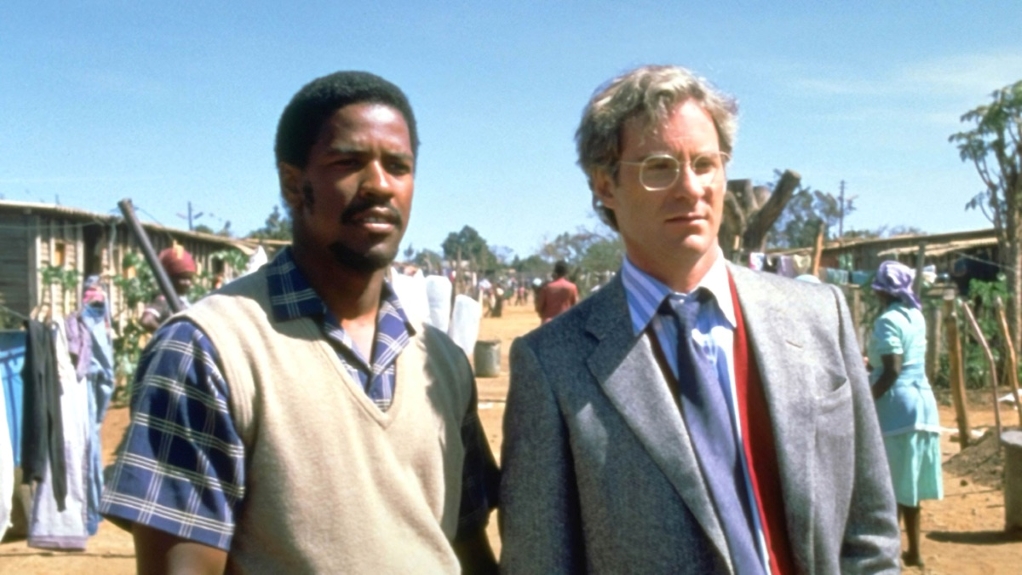
In June 1964 three civil rights workers – two white New Yorkers Andrew Goorman and Michael Schwerner and a black Mississippian James Chaney – were arrested, released and then murdered by Neshoba County law officials working alongside KKK white supremacists. An FBI investigation (codenamed Mississippi Burning) revealed the crime, arrested the criminals and managed to convict several (but not all) of them on the federal charge of violating civil rights (convinced the state charge of murder would lead to acquittal from racist juries). Mississippi Burning fictionalises this true-life atrocity into a hard-hitting thriller, mixed with the conventions of crime drama.

It’s directed by Alan Parker in the style of Midnight Express, pulling no punches in chucking the vileness of the KKK up on screen. During the course of Mississippi Burning we see Black people chased, beaten, flung out of moving cars onto the street, lynched and a praying child kicked in the face by a KKK thug. Rightly, the murderers are a vile parade of bullies, cowards and knuckle-dragging monsters portrayed by a group of actors (Dourif, Rooker, Sartain and Vince among them) used to going all-in on portraits of the scum of humanity. It’s a tightly directed, intense film – with a repetitively pounding score by Terry Jones – with Oscar-winning photography by Peter Biziou capturing the flame-lit night-time atrocities these repulsive people execute on innocents.

Mississippi Burning is undoubtedly well-made, with a very earnest message behind it. It’s impossible to fault its rightful disgust at the appalling injustice and racism, but you can’t help but feel it’s focusing its heroic lens on the wrong part of the story. It drew fire at the time for its fictionalisation of almost every element – wisely so in its portrayal of the initial crime, where their names and exact nature of their murder are altered – and the way this pushed the FBI (an organisation that had in many cases actively worked against civil rights) into a traditional heroic role, while reducing the Black people to passive recipients of beatings or kind words from whites. It’s hard not to feel today that, for all the skill of the film, the impact of those decisions have magnified the film’s flaws over time.

At heart, Mississippi Burning uses the conventions of a mis-matched buddy-cop investigative drama to add narrative drive to a social issues film. The two FBI agents are played so well by Gene Hackman and Willem Dafoe, you barely notice both are stock roles straight out of central casting. Hackman gives such energy and life (with a lovely touch of shame that his own past conduct, as a Southern sheriff was presumably only a degree better than the people he’s investigating) to his role as no-nonsense, veteran maverick who understands the streets, that he transforms this cliché into a real person. Similarly, Dafoe plays the by-the-book, stuffy superior who has too learn rules-bending sometimes break the case, with such commitment you forget how role familiar it is.

The personal narrative of the film revolves around whether these chalk-and-cheese investigators will overcome their initial iciness – they address each other formally throughout the film and butt-heads frequently on the conduct of the investigation – to become a team which feels odd for a film where the other stakes (violent institutional racism) are so large. In many ways an alternative cliché – two disconnected investigators investing more in a case based on the injustice they see and the witnesses they talk to – might well have served it better and also reflected contemporary complaints that the FBI was more interested in the letter than the spirit of the law. Mississippi Burning does, at times, address this by having characters explicitly ask if the FBI would even lift a finger if two of the victims weren’t white. But seeing as the film generally considers raising the question the same as engaging with it, it doesn’t go anywhere.

The film requires the agents to undertake mis-steps in order to educate the audience (would Dafoe’s character really be as ignorant about the nuances of segregation as he frequently is here?) and blunder about for much of the early acts, most notably Dafoe’s public conversation with a Black man in a diner, that inevitably leads to the poor man kidnapped and beaten by the KKK. But on the whole, the FBI are presented as noble straight-shooters, aghast at the state of affairs in the South, rather than a body run by the morally-ambiguous J Edgar Hoover.

It also means Mississippi Burning relegates its Black characters to passengers and passive victims, reliant on white people for protection and vindication. While it would be false to claim the system in the South didn’t leave Black people largely powerless, the film’s failure to introduce a single memorable character giving voice to the Black perspective of a series of crimes that happened to them feels more and more uncomfortable as the film ages (particularly as the film’s hopeful ending very much places racism as a problem in the past, not a dilemma America continues to face).

The film’s real conscience (and the victim given most development) is instead Frances McDormand as the wife of Dourif’s vile racist sheriff. Parker’s film subtly indicating her lack of racism early (she consoling touches the arm of a Black man), and McDormand (who is excellent) brings real force to her pained, frightened longing to do the right thing. She contrasts neatly with the committed vile cowardice of Dourif, Rooker’s swaggering bullying and Stephen Tobolowsky’s Hiterlian racism as a KKK Grand Wizard. Parker successfully makes these guys so repulsive, that when Hackman’s Anderson gets free reign to intimidate, rough-up and bully them back it carries real satisfaction. But the film making the most developed victim of the film’s KKK a white, gentile feels more like filmmaker concerns that otherwise the bulk of the likely audience may otherwise have trouble relating to the bulk of the victims.

Mississippi Burning tries to be hopeful. This extends to some slightly forced moralising – the suicide of one character is attributed to guilt at the crime, rather than the more likely guilt at having ‘betrayed’ his fellow KKK – and a general sense that Mississippi is on the road to peace, feels a bit of a stretch for a region that had decades of continued unrest ahead. Saying that, in its sometimes clumsy way, you can’t doubt its power and its righteous disgust at racism. It’s well directed and has some excellent performances – Hackman and McDormand were both Oscar nominated – but it feels like a film that only focuses on part of an overall picture and not always the right part.

Scenes From a Marriage (1974)

Scenes From a Marriage (1974)

Bergman’s compelling, emotionally charged film is an intense, impressive and surprising tale

Director: Ingmar Bergman

Cast: Liv Ullman (Marianne), Erland Josephson (Johan), Bibi Andersson (Katarina), Jan Malmsjö (Peter), Gunnel Lindblom (Eva), Barbro Hiort af Ornäs (Mrs Jacobi), Anita Wall (Journalist)

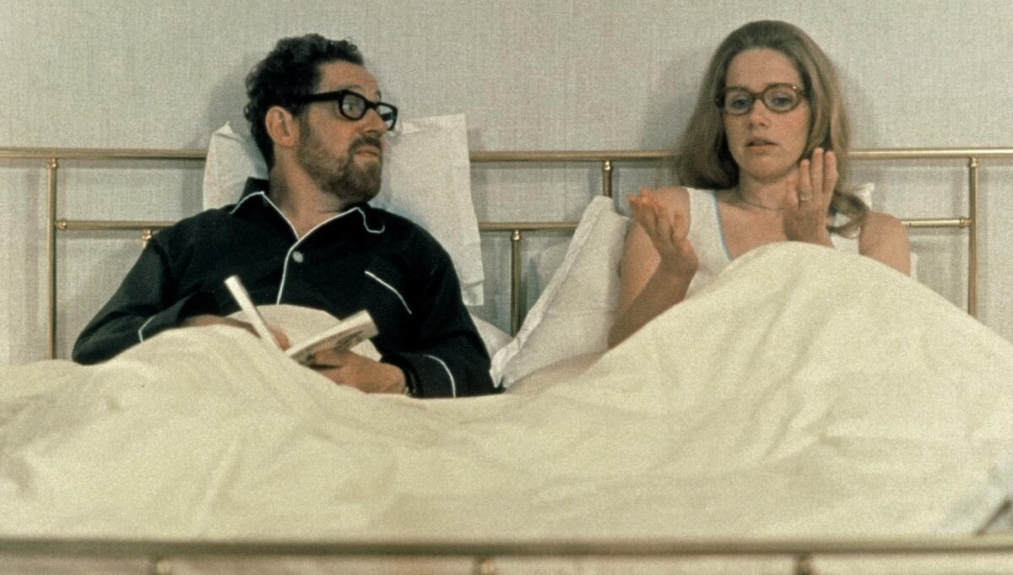
A loving couple sit with an interviewer to discuss how happy their relationship is. Ten years later, years after their divorce, they meet in their old weekend cottage for an assignation away from their new partners. Along the way, they’ll lie, fight, cheat but also show time-and-again few people know them better than they do each other. Based on his own marriages and relationships (not least his relationship with Liv Ullman), Bergman’s Scenes from a Marriage is a fascinatingly intimate and intense portrait of the contradictory impulses we feel towards the people we know best: how we can, in the same moment, love them, hate them, want to be a million miles away from them and also yearn to take them in our arms and tell them everything.

Skilfully cut down from a six-part TV series – the episode titles become ‘chapter headings’, each signifying a time shift – it becomes a series of intense, almost real-time, conversations between middle-brow professor Johan (Erland Josephson) and successful lawyer Marianne (Liv Ullman). From their ten-year anniversary, their happy-but-functional relationship is shattered when Johan leaves for the (unseen) Paula, heading into divorce, Marianne’s growth in sexual confidence, her little acts of revenge over Johan and their later affair. At all times they prove capable of ripping emotional wounds into each other, but also remaining strangely dependent on love and affection from each other.

It would be easy to say that Scenes of a Marriage is a theatrical piece – it came, originally, from a play Bergman was working on and well over two thirds of its running time features Josephson and Ullman alone on screen. But if the close-up is the language of cinema, Scenes from a Marriage may be the most cinematic film every made. Shot in a cooly observational style by Sven Nykvist, vast swathes of Scenes from a Marriage plays out in searing close-up, the camera studying every inch of the emotional angst its two characters are putting themselves through. Bergman knows exactly how to build the punishing tension in these scenes, frequently climaxing in visceral outbursts.

It is a film about what we say and what we chose not to say and what we decide to hear. The conversation between the couples is framed by their careful considerations: when to hold fire and when to let rip; when to listen and when to choose not to hear. And it’s clear that, when we are first introduced to them, they have mastered the art of not saying anything at all. Smilingly parroting cliches to their interviewer, they later smugly compare themselves to their feuding friends Karatina and Peter (excellent cameos from a searing Bibi Andersson and a provocative Jan Malmsjö). But their conversation never touches on deeper issues (Bergman’s called this chapter ‘The Art of Sweeping Things Under the Carpet’) and their sex life has dwindled to timetabled functionality.

It’s clear they are aware of this growing distance themselves. Johan shares his poetry with a colleague (an expertly reserved cameo from Gunnel Lindblom), complaining Marianne considers it little better than spiritual masturbation and yearns for an expressive freedom he feels is impossible in his marriage. Marianne meanwhile speaks to a client, Mrs Jacobi (a tragic Barbro Hiort af Ornäs), whose story of a lifetime trapped in a loveless marriage with children she never really wanted clearly strikes Marianne as a chilling vision of her own future.

That doesn’t stop Marianne responding with shocked subservience that tips into desperate pleading when Johan announces he wants to leave her. Bergman stages this scene beautifully, with the ridiculous logic people sink into in tragic break-ups. Johan eats a snack meal prepared by Marianne, guiltily confessing his affair, but there is something very real about Marianne’s stunned reaction which sees her planning his packing (because he’s useless at it) and continue their bedtime preparation before she starts pleading him to stay. Just there is something very real in Johan’s reaction: having steeled himself for a fight, her subservience enrages him until he is cruelly tearing verbal lumps out of her. This is the sort of searing emotional up-and-down that rings true, one allowing shock to humiliate them the other transforming shame into defensive, accusatory blame.

But Scenes from a Marriage is a film that utterly understands how much we change under circumstances. Separation is not good for Johan: his new lover doesn’t interest him, his career stalls and he tips into self-pity. Marianne, once the shock and fear of separation passes, discovers she likes her freedom. Her wardrobe shifts to more form-fitting and revealing clothes, she embraces the opportunities of singledom and repays Johan’s desertion with a seduction of him she deliberately doesn’t follow-through on. They now talk more honestly than ever before – and it’s a blistering, verbally and physically violent exchange rammed full of resentment and petty cruelty.

To do this stuff you need actors at the top of their game and who completely trust each other. Bergman certainly has this with his two stars. Josephson’s self-contented smugness moves through arrogant selfishness to desperate vulnerability, his expressive face sometimes puppy-doggish, sometimes drowning in bear-like fury. Ullman is, of course, exceptional. Her masterful ability to react, to let thoughts and emotions play fleetingly across her face was made for Bergman’s close-up film-making and she takes Marianne on a fascinating journey, from near-submissive home-maker to vibrantly confident women of the world while never letting the vulnerability and doubt be too far from her eyes. It’s an extraordinary performance, searing and tender, as raw as knife-edge.

These two play absorbingly off each other, their conversations gripping minefields of repressed then hugely expressed emotions. Their collaboration, guided by Bergman’s close (but not intrusive) camerawork is extraordinary. Fashioned from Bergman’s experiences of relationships, Scenes from a Marriage is, however, strangely hopeful. One of its key themes is that, even when they hate each other, this couple know and trust each other more than anyone else. In times of crisis and pain they always turn to each for a consolatory word or comfort.

There is something strangely warm about their relationship, despite its turmoil, and the film is refreshing in saying friendship and love doesn’t have to end with divorce, but can transform itself into something else, perhaps even something better. Perhaps it’s that strange note of hope that makes Scenes of a Marriage so influential to a generation of filmmakers. It refuses the simple moral standpoints of judgement and suggests the decision to no longer be together (or even faithful to each other) need not be the end all, but instead a bump in a longer journey: that a relationship (and even a love) doesn’t end when a marriage does.

They Shoot Horses, Don’t They? (1969)

They Shoot Horses, Don’t They? (1969)

Savage satire on the cruelty of entertainment, heavy-handed at times but also ahead of them

Director: Sydney Pollack

Cast: Jane Fonda (Gloria Beatty), Michael Sarrazin (Robert Syverton), Susannah York (Alice LeBlanc), Gig Young (Rocky Gravo), Red Buttons (Harry Kline), Bonnie Bedelia (Ruby Bates), Michael Conrad (Rollo), Bruce Dern (James Bates), Al Lewis (“Turkey”), Robert Fields (Joel Girard), Severn Darden (Cecil), Allyn Ann McLiere (Shirl), Madge Kennedy (Mrs Laydon)

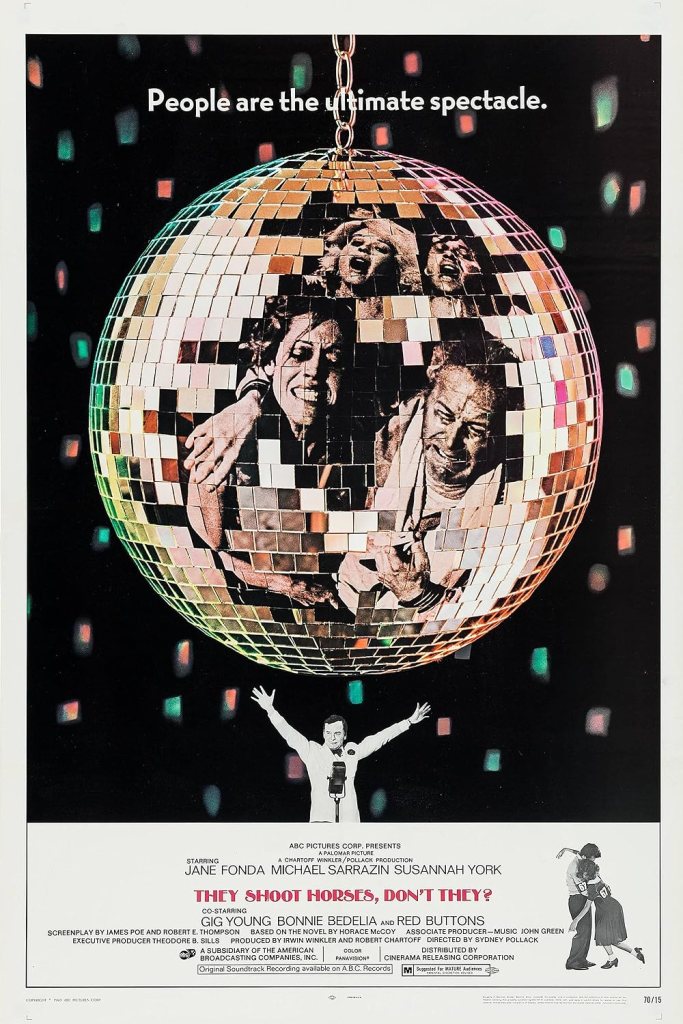
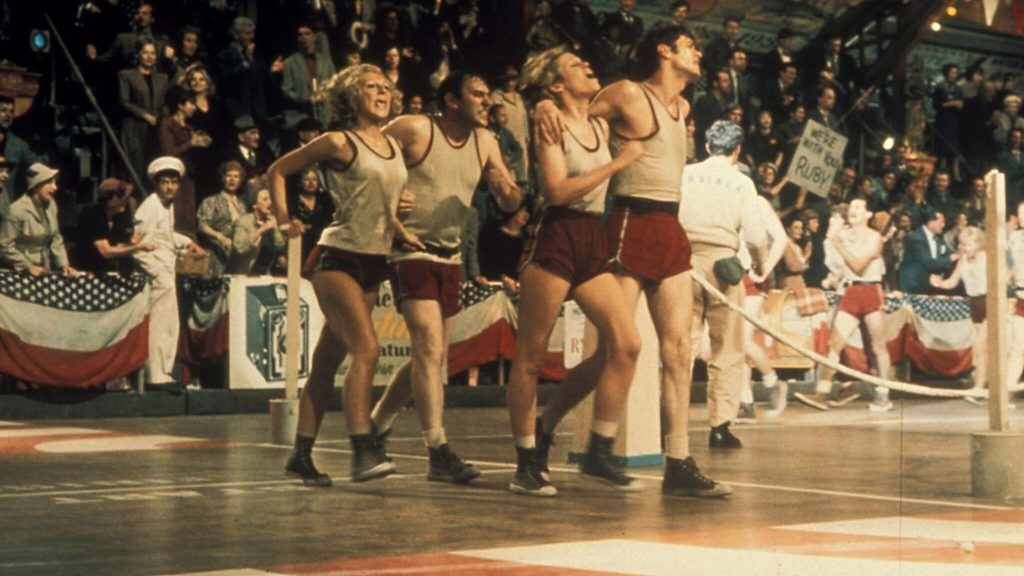
Wheeling out the desperate for entertainment was a mainstay of TV for much of the early noughties with the Simon Cowell factory repackaging human lives for entertainment. But it’s hardly a new phenomenon. During the Depression in 30s America, the country was gripped by a new craze: dance marathons. In exchange for prize money and (perhaps!) a shot at stardom, regular people came off the streets to dance (or at least move around the dance floor) for as long as possible (with short breaks every hour). These shows went on and on, hour after hour, day after day for months at a time, with the audience paying to pop in and gawp.

It doesn’t take much to see how class comes into this. The competitors are the unemployed and out of luck, attracted as much by regular food and a roof over their head. The audience are rich and comfortable, tossing sponsorship bones towards the manufactured ‘stories’ that take their fancy. The event is controlled by a manipulative, alcoholic MC (Gig Young) spinning stories and drama for the crowd. As days turn to weeks the contestants become ever more haggard, drained and physically and emotionally shattered: cynical Gloria (Jane Fonda), homeless Robert (Michael Sarrazin), aspiring actors fragile Alice (Susannah York) and distant Joel (Robert Fields), retired sailor Harry (Red Buttons) and bankrupt farmers James (Bruce Dern) and his heavily pregnant wife Ruby (Bonnie Bedelia).

Pollack’s viciously nihilistic satire throws all these into a hellish never-ending treadmill of physical movement and psychological torture that leaves each character washed out, drained, doused in sweat with sunken, sleepless eyes. You can clearly see the links from They Shoot Horses to Rollerball all the way to The Hunger Games. It’s a grim look into part of the human psyche that, ever since the Colosseum, takes pleasure out of watching the suffering of others for entertainment. The crowded audience – eating popcorn and cheering on their favourites – are as indifferent to the sufferings of the contestants as the organisers with their quack medical teams.

Designed to gain the maximum sense of claustrophobia – once we enter the hall for the dance competition, we never see the outside again for virtually the whole film – the film constantly grinds us down with the exhausting relentlessness of the show. Pollack intercuts this with brief shots of Robert being questioned by the police – moments we eventually realise are flashforwards, making it clear tragedy is our eventual destination. A siren that sounds like nothing less than an air raid warning is repeatedly heard, warning competitors any brief respite they have is coming to a close. The actors become increasingly shuffling, wild-eyed and semi-incoherent in their speech and actions, grimly embodying characters acting on little sleep, in situations of constant strain.

But then that’s entertainment! Part of the thrill for the crowd – whipped up by Gig Young’s showman, a man who oscillates between heartless indifference and flashes of sympathy for his stars (hostages?) – is watching them push on through never-ending pressure. It’s clear to us as well – from their desperate, fixed determination to complete any physical challenge set and the relish with which they consume any food given – that the contestants will tolerate anything just to have, for a few weeks, a taste of something they couldn’t hope to get living on the streets.

Their desperation doesn’t even enter into the moral calculations of those running the show. In fact it’s something that makes them easier to manipulate. Part of the MC’s calculations is creating a relatable story of suffering for the chosen few ‘leads’ any one of which can lead to a triumphant feel-good ending. Potential love-matches are pushed together, sentimental favourites are promoted. Alice’s fine clothing is quietly destroyed by the team running the show because it doesn’t fit a narrative of penniless dreamers. The participants are crafted into “characters”: the ageing Harry as the “Old Man of the Sea”, Gloria and Robert – thrown-together, last-minute partners –as star-cross’d lovers (despite their extremely tense personal relationship).

It all gets too much for the contestants. Serious medical conditions are not unusual – the frequent refrains from the (so-called) medical staff that “we’ve got a dead one” before exhausted, unresponsive contestants are slapped or thrown into ice baths to revive them speaks volumes. When a contestant does indeed die, the event is quietly hushed up for the audience with another feel-good fantasy of noble retirement. Those desperate for a shot at stardom – something they have no hope of getting from a show designed to turn them into drained-out zombies for the entertainment of the masses – are reduced to quivering messes. None more so than Alice – played with a heart-rendering fragility by Susannah York channelling Streetcar Vivien Leigh – who begins the film confidently performing a Shaw monologue and it ends it barely connected to reality.

York’s fine performance is one of several in the film. Young won an Oscar as a MC Rocky, the consummate showman who sometimes surprises us with flashes of humanity (which he clearly drowns with the bottle) before his professional ruthlessness kicks in. Red Buttons is excellent as the rogueish Harry who realises he’s out of depth far-too-late, Bedelia and Dern very good as an experienced couple earning a desperate living from marathons. Particularly fine is Jane Fonda who grounds the film with a gut-punch of a performance of barely concealed rage, deep-rooted self-loathing and brutal, angry cynicism as a woman who understands exactly the show she is in but has no choice but to play along, while hating herself for doing it.

They Shoot Horses, Don’t They feel in many ways ahead of its time and for all time – after all, entertainment like this hasn’t died out. Pollack’s film is harshly lit, and his direction is very strong, even if the film does sometimes make its points with a little too much repetitive force. It’s also a film – with its metaphor of suffering horses standing in for suffering people –a fraction too pleased with its own arty contrivance (a slow-mo and sepia tinged opening lays on its symbolism a little too thick, while its flash-forwards yearn a little too much for a French New Wave atmosphere). Michael Sarrazin isn’t quite able to bring depth to the – admittedly deliberately blank Robert – making him an opaque POV character, a role he effectively surrenders on viewing to Fonda.

But despite its flaws, They Shoot Horses Don’t They is a remarkably hard and incredibly bleak film on human nature, which doesn’t let up at all as it barrels to its almost uniquely grim and nihilistic ending. It offers nothing in the way of hope and paints a world gruesomely corrupted and completely indifferent to the thoughts and feelings to the most vulnerable in it. It is ripe for rediscovery.

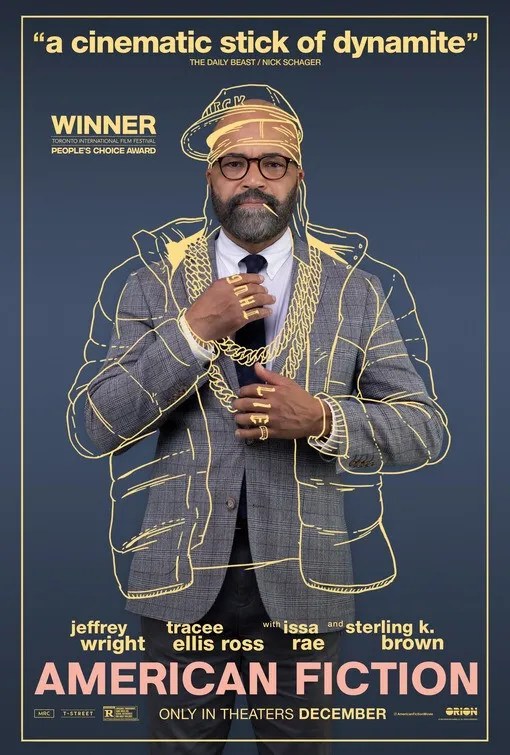
American Fiction (2023)

American Fiction (2023)

Intelligent, challenging satire mixes with moving family drama in this excellent debut

Director: Cord Jefferson

Cast: Jeffrey Wright (Dr Thelonius “Monk” Ellison), Tracee Ellis Ross (Dr Lisa Ellison), Issa Rae (Sintara Golden), Sterling K. Brown (Dr Clifford Ellison), John Ortiz (Arthur), Erika Alexander (Coraline), Leslie Uggams (Agnes Ellison), Adam Brody (Wiley), Keith David (Willy the Wonker), Okrieriete Onaodowan (Van Go Jenkins), Myra Lucretia Taylor (Lorraine), Raymond Anthony Thomas (Maynard)

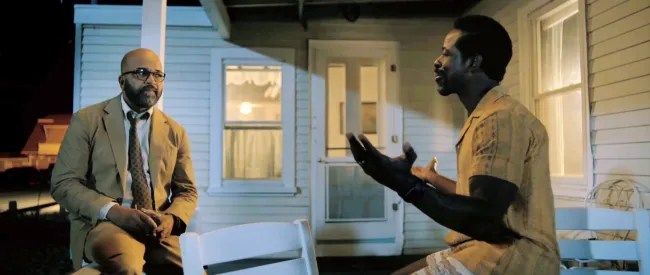
Dr Theolonius “Monk” Ellison (Jeffrey Wright) is fed up. His new book is getting no traction with publishers, who want a “Black book” not the classics-inspired literary novels Monk writes. His family life is at a point of crisis: his mother (Leslie Uggams) has rapidly onset dementia, his doctor sister Lisa (Tracee Ellis Ross) is divorced and tired of being the only child looking after her, his plastic surgeon brother Cliff (Sterling K. Brown) is embracing his coming-out and divorce with drugs and a parade of younger boyfriends. In need of money to pay for his mother’s care, Monk pours his frustrations into writing exactly the sort of book publishers want: My Pafology, a crime-drugs-and-deadbeat filled stereotypical low-brow “Black” novel that he submits as a joke. Needless to say, the liberal white publishers come back with bank-busting advances, wowed by this “authentic Black voice” – much to Monk’s disbelief and self-loathing indignation.

This satire is the flashy clothing American Fiction dresses itself up in. In this impressively confident debut from writer-director Cord Jefferson, it frequently pulls out some whipper-sharp comic lines as it skewers the guilt-ridden pretentions of the liberal white elite, so concerned with being seen to care about embracing Black culture, that they don’t even notice they have effectively ghettoised Black culture into exactly the sort of crime-and-drugs nonsense Monk satirises in his fake novel. It’s a good joke, and the fact that Cord Jefferson’s film wears it a bit thin (the parade of self-congratulatory white people falling over themselves to praise the novel are fundamentally reprising the same joke each time – nothing new is added once you’ve got it the first time) doesn’t change that.

Interestingly, as I sat in an Oxford cinema-screening exclusively filled with white people laughing, I realised American Fiction is its own sort of meta-satire. How many people in the cinema I sat in realised they were proving the point of the film? American Fiction displays to white people a funny sketch about our own concerns to be seen to be saying and doing the right thing. We laugh at these idiots and reassure ourselves that we would never be so utterly unaware about our patronising gate-keeping, while also embodying many of the attitudes the film is skewering. We want to be seen to be right-on and laughing at the right things. It’s a neat way for Jefferson to both entertain and challenge us.

Jefferson’s film is partly about urging us to break beyond our shallow ideas of what “Black America” must be. Monk comes from an affluent middle-class family that, skin colour aside, wouldn’t like out of place in the Hamptons. His background is one of beach-house second-homes, art on the walls, lacrosse sticks in his bedroom and a family where everyone has a doctorate. He even has a devoted housekeeper, expertly played by Myra Lucretia Taylor, who’s both an honorary aunt and also a shrewd commentary on stereotypical Black servants, calling the children “Mr Monk” and “Mr Cliff”.

While Monk writes about the urban ghetto with satiric anger, it’s clear that world is almost totally alien to him. The film itself acknowledges it: in an intriguing exchange, Issa Rae’s author of a more stereotypical ‘Black’ novel (We’s All Lives in the Ghetto) even calls out Monk for us air of class-based judgement around other parts of the Black community, social commentary I would have liked the film to challenge more (The film encourages us to question Monk, a snob and arguably a slight bully, but frequently gives him a pass by contrasting him to the ridiculous and more selfish characters around him). It would have been interesting to see more of the reaction to the book from Black readers, not just white ones eager to show their credentials.

American Fiction though takes on the targets it goes for with a certain aplomb. Publishers, literary prize givers and the overtly-but-dutifully-PC are effectively skewered. It’s also one of the few books that really gives a sense of writing. Monk’s drafting of the novel sees the characters he is bringing life to appear in his study with him, parroting his dialogue and then turning to discuss character, motivation and make suggestions to the author. More of this, giving us more insight into the novel and the assumptions that underline Monk’s writing of it, would have given an interesting extra dimension to the film’s satire.

Jefferson’s clever and vibrant film suckers us in with satire, but really flourishes as a complex family drama. He offers an affecting and compassionate storyline of siblings who have grown apart due to their natural inclination to independence, distance and repressed emotion. (It’s suggested this is a trait inherited from their father, a famed surgeon with a rollcall of infidelities.) American Fiction beautifully sketches very natural portraits of siblings who know exactly how to push each other’s buttons, but also quickly fall back onto a shared language of memories and mutual experience. For all the satire, it’s as a heartfelt, small-scale family piece that the film really excels.

This is partly because it gives such wonderful opportunities to a fabulous array of actors. Jeffrey Wright, so often a supporting player quietly adding depth to a series of under-written franchise films, is excellent as Monk. Wright perfectly captures his hangdog resentments, his bitterness at not getting a fair deal and middle-age ennui. He also brings to life the pre-emptive walls Monk has built up to keep pain (and other people) out, the same intellectual distance that makes his books hard-sells. Combine that with Wright’s expert comic timing – not only his awkwardly uncomfortable shifts into his urban persona, but also his head-in-hands exasperation at the shallowness of the world – and this is a brilliant showcase for a consistently impressive actor.

Equally fine is Sterling K Brown as Monk’s frequently selfish brother Cliff, trying to enjoy life while he can – like Wright, Brown’s comic and emotional touch are spot-on. The film touches on themes of generational homophobia – their increasingly senile mother, sensitively played by Leslie Uggams, is clearly disapproving of his sexuality – but doesn’t hit this beat too hard. Tracee Ellis Ross is a breath of life-filled air as Monk’s sister while Erika Alexander gives emotional weight and depth to a slightly underwritten part as Monk’s new neighbour turned girlfriend Coraline.

American Fiction is frequently stronger when it focuses on crafting this low-key, realistic family drama, refreshingly clear of manufactured drama. What people will remember though is funny (if slightly one-note) satire – Monk even turns his story into exactly the sort of cross-racial appeal movie ready to collect awards, that you could argue American Fiction itself is. American Fiction ends with several alternative endings, each of which just made me feel Jefferson himself wasn’t sure how to end it. But, on the whole, this is a highly promising debut from Cord Jefferson, crammed with excellent dialogue and performances, which casts a fresh and urgent eye on important questions.

The Razor’s Edge (1946)

The Razor’s Edge (1946)

A bubbling soap full of incidents, disguising itself as a meditation on philosophy

Director: Edmund Goulding

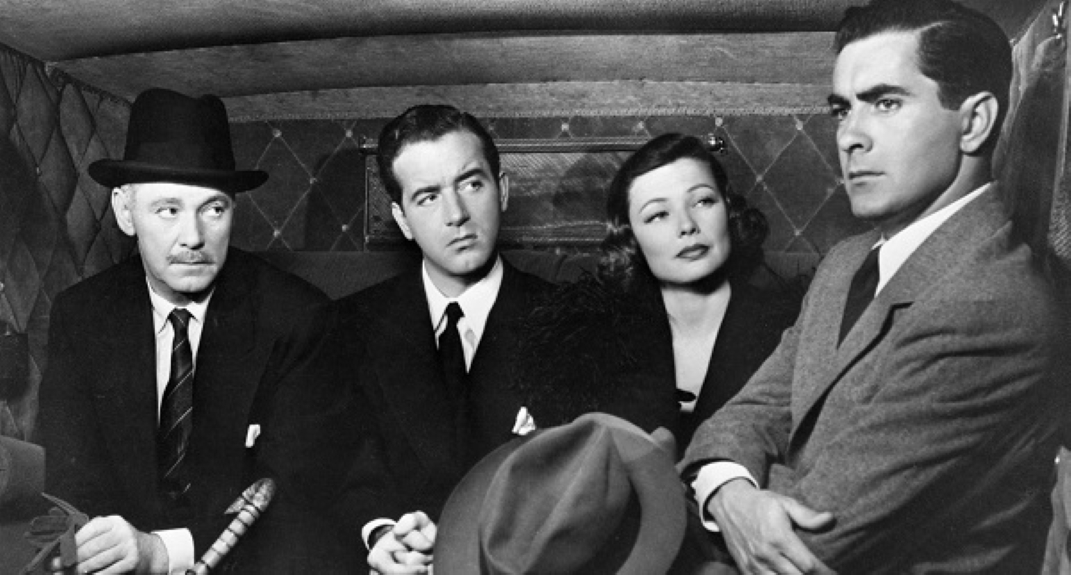
Cast: Tyrone Power (Larry Darrell), Gene Tierney (Isabel Bradley), John Payne (Gray Maturin), Anne Baxter (Sophie MacDonald), Clifton Webb (Elliott Templeton), Herbert Marshall (W Somerset Maughm), Lucile Watson (Louisa Bradley), Frank Latimore (Bob MacDonald), Elsa Lanchester (Miss Keith), Cecil Humphreys (Holy Man), Fritz Korner (Kosti)

“What’s it all about?”: a question asked long before Alfie and it’s the one asked by Larry Darrell (Tyrone Power) as he returns from World War One to Chicago. Suddenly those garden parties and country clubs all look rather empty and shallow. Larry is engaged to Isabel (Gene Tierney), but he’s not interested in office work and domesticity. He wants to live a little bit, to find out what life is about. Doesn’t he owe that to the man who died in the war to save his life? With just $3k a year (over $50k today, which must help), he heads for the artistic life in Paris. After a year apart, Isabel decides it’s for her (£3k a year? What kind of life is that!) and marries a banker so dull he’s literally named Gray (John Payne). Flash forward to 1929 and the Crash has upturned the lives of the Chicago bourgeoisie – perhaps Larry’s inner contentment will mean more after all?

Adapted from W Somerset Maugham’s novel – with Maugham as a character, played by the unflappably debonair Herbert Marshall – The Razor’s Edge is a luscious period piece with pretentions at intellectualism but, rather like Maugham, is really a sort of a soapy plot-boiler with a veneer of cod-philosophy. Not that there’s anything wrong with that – after all the suds in Razor’s Edge are frequently rather pleasant to relax in – but don’t kid yourself that we are watching a thoughtful piece of cinema. It’s closer in tone to Goulding’s Oscar-winning Grand Hotel than it might care to admit.

Our hero, Larry Darrell, should be a sort of warrior-poet, but to be honest he’s a bit of a self-important bore. Played with try-hard energy by a Tyrone Power desperate to be seen as a proper actor rather than action star, Larry has a blissful “water off a duck’s back” air that sees him meet calamity with a wistful smile and the knowledge that providence evens everything out. Be it the break-up of an engagement or the death of close friend, little fazes Larry who has a mantra or piece of spiritualist advice for every occasion. Bluntly, our hero is a bit of a prig whose middle-class spirituality has all the mystical wisdom of a collection of fortune cookies.

It’s no real surprise that the film’s weakest parts are whenever Larry engages with the vaguely defined collection of homilies and mumbo-jumbo he picks up about spirituality. All this culminates in an almost embarrassingly bad sequence in the Himalayas, where Larry stays under the clichéd tutelage of a shoe-polish-covered Cecil Humphrey as a Holy Man whose every utterance is a vague collection of Diet Yoda aphorisms. Larry, with all the self-importance of the financially secure middle class, returns to the West sublimely certain of his own higher contentment and rather patronisingly looking down on the rest of the characters as shallow, grasping bourgeoisie.

The Razor’s Edge’s insight into human spirituality essentially boils down to “step out of the rat race and you’ll be a better man” – again made much easier, since Larry “forsakes” worldly wealth but can still dapperly turn out to a fancy function in a perfect tux. To be honest it becomes a bit wearing to see the other characters treat him like a sage and more than a bit mystifying why Isabel remains stubbornly obsessed with him for her whole life.

But if she wasn’t, we’d lose a large chunk of the appeal of the movie. The Razor’s Edge’s philosophy may be paper thin, but as a soap it’s spot on. And the scheming, manipulative, vindictive, snobby and entitled Isabel is a gift of a part, seized with relish by Gene Tierney. Isabel wants Larry, not so much because of who he is but because he belongs to her, and she can’t believe he was willing to let her jilt him without a fight. The epitome of the self-obsession of the modern age that Larry has rejected, Isabel consistently puts herself first, clings to the luxuries of high living and can barely hide her bored disinterest in the tedious Gray (a perfect role for the solid but uninspiring John Payne). Isabel schemes and attempts seduction of the saintly Larry, and her hissable antics provides The Razor’s Edge with much of its enjoyable thrust.

Because as a soap is where this film is most happy. It’s actually very well staged and shot by Goulding, full of carefully considered camera moves (including a late “wham” line which we don’t see a character react to, leaving their response open to our interpretation) and skilfully using depth of plain to showcase a series of luscious sets and impressively recreated Parisian streets on sound stages. The Razor’s Edge has a lot of very professional Hollywood craft behind it.

Its event-filled sub plots also give a host of excellent scenes and fun dialogue to its supporting cast. Anne Baxter won an Oscar as the tragic Sophie, a bubbly socialite (and old flame of Larry’s) from Chicago, whose husband and baby are killed in a car accident, tipping her into years of alcoholism and (it’s implied) life as a “good-time-girl” in a seedy Parisian bar. Baxter seizes this role for what it’s worth, from initial charming naivety to tear-streaked discovery of her bereavement to fidgety attempts at sobriety after Larry decides to marry her to keep her on the straight-and-narrow (needless to stay, temptation is put in the way of the pacing, smoking, fist-forming Sophie by the blithely shameless Isabel). It’s a very effective and sympathetic performance.

Clifton Webb, at the time Hollywood’s leading waspish figure of camp, has an Oscar-nominated whale of a time as Elliot Templeton, preening but generous socialite, delighting the finer things in life (from fine wines to perfectly stitched dressing gowns) who provides a catty sounding board to Isabel and whose final hours are spent bemoaning being snubbed by a countess. Herbert Marshall delivers a perfect slice of British reserve and gently arch commentary as Maugham (the real Maugham prepared a script which was junked by the studio, ending his Hollywood career there and then), purring his dialogue with his rich, velvet tones.

It serves to remind you that The Razor’s Edge works best as an event-packed piece of social drama, which it swiftly becomes as deaths, tragedy, alcoholism, scheming and feuds pile on top of each other in the second half with the blissful Larry casting a quietly judgemental but kind eye over everything around him. For all its attempts to look into the human condition, this is where The Razor’s Edge is at its best: engaging supporting characters and a hissable villain, all leading to a series of juicy plot developments. For all its literary pretentions, it’s at best a shallow From Here to Eternity.

The Old Oak (2023)

The Old Oak (2023)

Loach’s swansong is a passionate, if slightly out-of-time, call for peace and understanding

Director: Ken Loach

Cast: Dave Turner (TJ Ballantyne), Ebla Mari (Yara), Claire Rodgerson (Laura), Trevor Fox (Charlie), Chris McGlade (Vic), Col Tait (Eddy), Jordan Louis (Garry), Chrissie Robinson (Erica), Chris Gotts (Jaffa Cake)

The OId Oak is likely the swansong for 87-year-old Ken Loach, Britain’s leading independent film-maker and high-priest of left-wing political cinema. It’s an engaging valedictory effort, crammed with fine Loach touches. But it’s a film that feels slightly politically out-of-time, which works better not when making tub-thumbing points but as a simple plea for a love and understanding. There are worse things Loach (who I’ve sometimes found rather trying for all his brilliance) can sign off with.

In a small town near Durham, TJ Ballantyne (Dave Turner) is a former miner and passionate union man now struggling to keep his pub, The Old Oak, alive in the face of mounting costs. World-weary, he is roped into helping Syrian refugees settle in their new homes in the town. Many locals, bitterly feeling the town has been left behind by government, can barely hide their fury at these refugees. But TJ finds they re-ignite in him a desire to make the world a better place, particularly as he forms a fatherly friendship with Yara (Ebla Mari), a passionate young photographer, who doesn’t know if her own father is alive or dead and wants to build links between the refugees and the local community.

The bond between TJ and Yara is at the heart of this gentle film, with Loach drawing beautifully natural performances from Dave Turner (a former fireman union boss) and Ebla Mari. One of Loach’s greatest strengths has always been his ability to poetically draw out hugely endearing relationships. TJ and Yara are a perfect example, two people who recognise loss and isolation in each other. TJ’s purpose in life has gone, never finding anything to replace his union campaigns of the 80s, estranged from his family and going through the motions to keep his pub alive. Yara has lost her home and everything she has known, the only memento of her father being her treasured camera, facing hostility from all around her.

The Old Oak centres this relationship in a passionate cry for empathy between different communities. The refugees arrive lost, isolated, confused and scared, fleeing conditions far harsher than many of the people in the town could understand. Far from having an easy-ride (as many accuse them of, seeing them get free homes and furniture) they desire nothing else but to go home, but are forced to make the best of it here. It’s a perspective that never occurs to many of the townspeople, seeing them only as interlopers not victims with whom their community – that has never really recovered from pit closures – has more in common with than they suspect.

TJ and Yara both recognise this – and want to build bridges not burn them. Much of The Old Oak revolves around TJ’s efforts to convert his disused back room – a shrine to union action when the room was the heart of the mining community – into a food bank to support both refugees and local alike. Loach’s humanitarianism comes to the fore here in the brief stories we hear about the users of this food bank: the small boy who can’t believe the food is free, the sulky teenager who finds care she rarely encounters elsewhere, the proud boy promised his ‘secret’ thathe needs the food bank will be kept. These are real people, with real problems, which Loach excels at bringing to life.

Loach is equally skilled at subtly staging personal pain. The director of Kes hasn’t lost his touch with the staging of deaths of beloved pets. The emotional pull TJ’s dog Mara has over him – much of his life’s meaning coming from tending for this small dog – and the impact of her loss is beautifully played with a raw grief by Dave Turner and staged with maximum emotional impact by Loach without a stroke of sentimental manipulation. Just as the smashing of Yara’s camera in the film’s opening moments by an unpleasant yob, berating the arrival of these interlopers, carries real impact from the gentle desolation on her face. The building of relationships, instigated by mutual pain and a hope for a better future, is The Old Oak’s strongest material.

It’s the political content that never quite pulls itself into focus. Loach’s sympathy for the working-class community is clear. He demonstrates forcefully these communities have been left with almost nothing, lacking hope or purpose and facing lives of underfunded lack of opportunity. No wonder kids bristle when they see refugee children given old bikes and toys for free. Or that locals bristle at seeing houses assigned for free after they have had to scrimp and save to buy theirs. But I wonder if Loach finds himself slightly confused with some of the prejudices and lack of socialistic international brotherly love in some of the working class today.

Loach has always clinged to the idea of the workers of the world uniting. But throughout The Old Oak he tacks away from really facing the racially-based anger and prejudice in some working class circles and avoids tackling where some of this racism and xenophobia comes from. Or facing the fact that it’s more widely shared, on some level, by more people than he might care to think. (He seems more relaxed linking it to old battles – inevitably one of the most hostile is the son of a scab from the mining days.)

The film shows the angry grousing of the many of the regulars, but avoids getting under the skin of why they are angry about this invasion of their space, eventually writing them off as simply lacking true working-class solidarity. While sympathising with the struggles faced by many of the working class, as a consequence of decades of under investment and alienation from the status quo, Loach feels uncomfortable with acknowledging how some of this has fed into prejudice – or how the working-class dreams of Scargill have been corrupted into “us and them” ill-informed ranting.

Instead, Loach wants to fast-track to a picture he’s more comfortable with, showing many of the local community perform sudden 360 turns towards acceptance and brotherly love, with remaining racists written off as bad apples. The creation of an atmosphere where the younger generation are encouraged to feel xenophobic racial hatred – kids beat Yara’s brother outside of the school, filming it to post on YouTube, where it is watched with glee by some of the regulars – is unaddressed. It’s telling Loach seems certain getting everyone together for an old-fashioned socialist sing-along will help solve problems. It feels like a naïve, if touching, idea that doesn’t really ring true.

The Old Oak sometimes feels like a film from a man slightly out-of-step with the times (the many clumsy shots of phones playing YouTube videos adds to this). It’s a film made up of effective scenes – including a heartfelt sequence in Durham cathedral – but not quite drawn together into a satisfying whole, with so many plot developments kept off screen that it starts to feel it hinges on contrivance. It works best as a simple, human plea for love and understanding – but a more accurate understanding, or a willingness by Loach to really turn a harsh eye on the negative side of the working-class communities he has dedicated his life to, seems to have evaded it.

Poor Things (2023)

Poor Things (2023)

Distinctive, challenging and hilarious film that mixes social issues with quotable dialogue

Director: Yorgos Lanthimos

Cast: Emma Stone (Bella Baxter/Victoria Blessington), Mark Ruffalo (Duncan Wedderburn), Willem Dafoe (Dr Godwin Baxter), Ramy Youssef (Max McCandles), Christopher Abbott (Alfie Blessington), Kathryn Hunter (Madame Swiney), Jerrod Carmichael (Harry Astley), Hanna Schygulla (Martha von Kurtzroc), Margaret Qualley (Felicity), Vicki Pepperdine (Mrs Prim), Suzy Bemba (Toinette)

“It’s Alive!” cries Frankenstein as his creation is sparked to life before abandoning it to become a revenging monster. Yorgos Lanthimos’ Poor Things imagines a different creature – nurtured (admittedly as part of an eccentric experiment), maturing at an accelerated rate, discovering physical and intellectual stimulation and deciding they can’t get enough of either of them. Adapted from Alastair Gray’s novel, Poor Things is a vibrant and challenging film that, for all its sex, is a feminism-tinged Frankenstein that says no to societally enforced ideas of shame and conformity.

In Victorian London, Bella Baxter (Emma Stone) is the creature, a stumbling, barely articulate young woman when she is introduced to trainee doctor Max McCandles (Ramy Youssef) by her guardian (her “God”) Dr Godwin Baxter (Willem Dafoe). “Bella” is resurrected corpse – the body of a suicidal pregnant woman, the brain of the child she carried. Developing at an accelerated rate, Bella is both Godwin’s experiment and his surrogate child. But as Bella discovers the pleasures of the body and the wonders of the world around her, she wants to experience life outside of the house. Eloping – with the agreement of her guardian – with roguish lawyer Duncan Wedderburn (Mark Ruffalo), Bella discovers not only sensual pleasures but deeply engaging intellectual pleasures across Europe, determined to become her own woman defined by no-one.

Poor Things is practically a dictionary definition of a Lanthimos epic (fish-eyed lenses, spidery text captions, a jarring mix of period and modern) and is almost impossible to categorise. It is, in turn, serious and thought-provoking, laugh-out-loud funny, uncomfortable and challenging. Shot in a deliberately artificial manner, its cinematography and sets reminiscent of Bram Stoker’s Dracula, it’s Victorian but also a remix of everything from Metropolis to the mansion at the heart of Sunset Boulevard, here turned into a Dr Moreau style den of freakishly spliced animals. It makes for something wildly, unpredictably unique visually, a smorgasbord of the real, the overblown and plain weird.

With a sharp script by Tony MacNamara, crammed with quotable lines (sometimes Lanthimos has a bit too much of an eye on creating GIF moments) Poor Things reinvents itself as constantly as its hero. Opening in rich black-and-white to chronicle Bella’s early years, it explodes into a gorgeously expressive Powell and Pressburger colours as she experiences the world. It superbly mixes the real with the weird, shaping its collection of bizarre characters into living-breathing people while keeping the world around them a melting-pot of styles and genres.

Poor Things has been attacked by some as semi-pornographic or exploitative. In fact, it’s a complex and daring look at female empowerment. On first discovering the pleasures of, well, self-pleasure (with a selection of vegetables), Bella is immediately told such things are not done in polite society. But Bella refuses to see “furious jumping” as shameful, but just a source of pleasure and experience like any other. If she takes pleasure in the act with someone, why should be ashamed? And if she makes all the decisions about what does and doesn’t happen with her body, who should judge her?

Bella is a curious hybrid her whole life: the body and feelings of an adult, with a swiftly developing brain, absorbing understanding of the world around her swiftly. Like a child she lashes out at the rules Godwin and his protégé Max place over her (partly for her protection, partly to continue their psychological development experiment). But this comes from her increasing frustration at having her horizons limited by these men, deciding what and who she can see. Lanthimos takes clear from the start Bella can take as much sensual pleasure in feeling fallen leaves under her body or watching fireworks in the sky as anything else and doesn’t feel she should be denied it.

Poor Things sees Bella demanding, and then making, her own decisions – and to hell with expectations. Whether throwing plates at dinner because she wants to leave or choosing to run away to Europe with caddish Duncan for the experience of it, she shall make her own choices. Decisions being made for her, infuriate her: Max’s refusal to let her leave or Duncan’s decision to take her, unannounced, on a cruise. Bella will talk to who she wants and experience anything she finds curious. If she decides to go on the game in Paris in a high-class brothel (on the basis that she enjoys sex, the hours are short and it pays well) who gives a damn if Duncan is appalled. He doesn’t – for all he might like to think so – own her.

These are complex and challenging ideas, as Bella jokes she has become “the means of her own production”. But Bella believes the only thing in the world should make us ashamed is the suffering of others: witnessing a slum in Alexandria she is moved to tears at the indifference that lets children die in poverty, with only platitudes for these “poor things”. And you can see her point: why flinch at personal misconduct but not even blush at the idea of others dying because of our inaction. That’s why she doesn’t want to be constrained by societies ideal, be that enjoying sex, reading Marxism, dancing all night long or wanting to punch a baby that won’t stop crying in a restaurant.

All these complex ideas are brilliantly captured in Emma Stone’s extraordinary performance. It is, of course, a physical marvel, her body slowly, jerkily, developing, but also a rivetingly complex embodiment of a hugely complex personality, absorbing everything around her, processing it and then shaping it into her own world view. It’s reflected in the gorgeous eccentricity of her dialogue – she is “a changeable feast” of views, peppering her sentences with astute (and funny) unique metaphors “finding being alive fascinating”. She makes Bella determined, naïve, exceptionally wise and insightful, uncertain, kind and unforgiving. It sits perfectly at the heart of a film about a woman refusing to be ashamed and determined to better the world around her. It’s a brilliant creation.

One of many in the film. Godwin, a hideously disfigured famous surgeon, was the subject of his own father’s experiments (Godwin describes with matter-of-fact scientific curiosity a series of repugnant surgical experiments, including the removal of organs to discover if the body needs them – “turns out we do”). Godwin seems at first a blinkered mad scientist, but in Dafoe’s brilliantly layered performance, a humanitarian with a sense of fair play is revealed, who genuinely cares for his creation and refuses to stand in her way. Although she calls him “God” he is far from a messianic tyrant, instead refusing to repeat the mistakes of his own tyrannical parent.

He contrasts neatly with Ruffalo’s rake. Ruffalo has a whale of a time in a ‘leave nothing in the locker room’ performance of comedic excess. Duncan seems at first a threatening rake, but becomes infatuated with the mysterious Bella (something she finds more and more wearing), crumbling from worldly-wise playboy to a spoilt schoolboy whining about things he can’t have. Ruffalo inverts Bella’s development: as she becomes more mature, he degenerates into a dependent child.

Which fits because Poor Things is a Frankenstein-in-reverse story of a woman not being defined by men. Those who try fail, left to choose either to support her or flail against her rights. Lanthimos’ work is striking, original and hugely dynamic, brilliantly mixing striking visuals with searching questions. Why shouldn’t women feel the same lack of shame in their bodies and accomplishments as Bella does? It’s an urgent question – that’s getting lost in discussions about the films. Often as wildly funny as it is freakily weird, its deliberate artificiality and anachronisms help create a film that is a playground of ideas. I’m still working out what I feel about it all now – and how refreshing to have a film as bold as that to consider?