Category: Social issue films

The Menu (2022)

The Menu (2022)

Dark satire is mixed with intelligent character work and a challenge to our assumptions in this intriguing film

Director: Mark Mylod

Cast: Ralph Fiennes (Julian Slowik), Anya Taylor-Joy (Margot Mills), Nicholas Hoult (Tyler Ledford), Hong Chau (Elsa), Janet McTeer (Lilian Bloom), John Leguizamo (Famous Actor), Reed Birney (Richard Liebbrandt), Judith Light (Anne Leibbrandt), Paul Adelstein (Ted), Aimee Carrero (Felicity), Arturo Castro (Soren), Rob Yang (Bryce), Mark St Cyr (Dave)

A dash of Succession. A soupcon of Hannibal Lector. Lashings of The Most Dangerous Game. All these ingredients are mixed to delightfully dark comic effect in The Menu, a sharp and tangy assault on class and modern society which leaves an unusual but satisfying taste in the mouth.

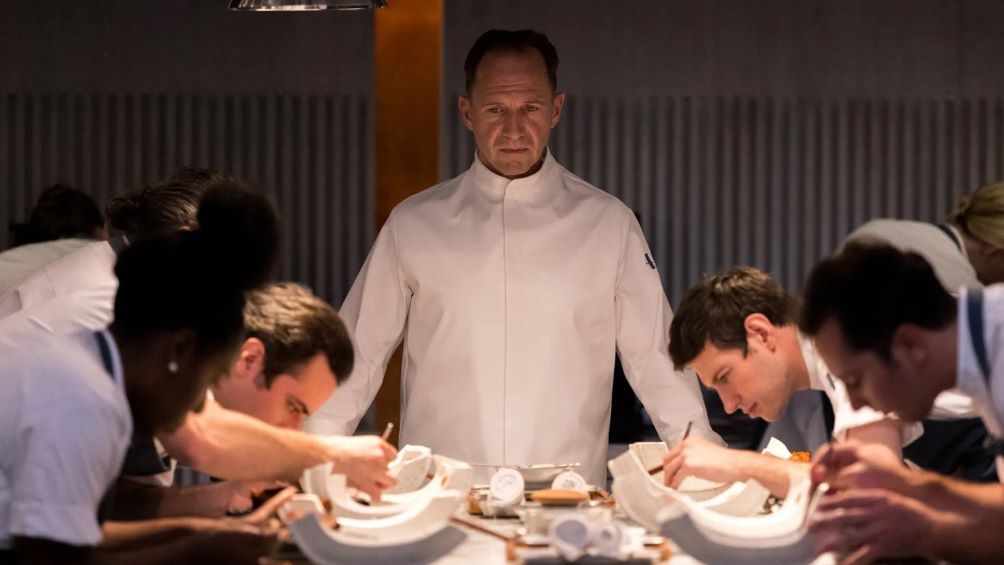
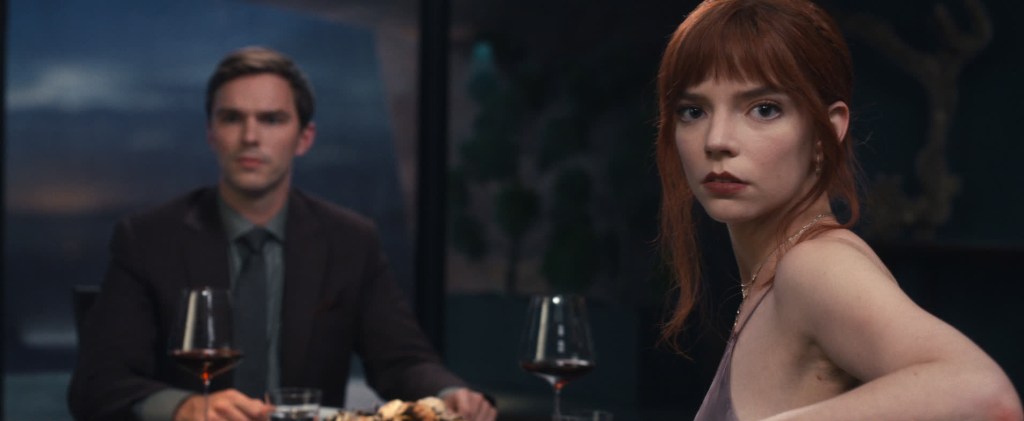
First those touches of The Most Dangerous Game. Julian Slowick (Ralph Fiennes) is a restauranteur so exclusive, his restaurant is based on a private island. Each course, of each menu is part of an overall story that forms the meal. For the story of the meal he is currently preparing, Slowick has selected an exclusive guest list of the rich and famous: businessmen, the rich, movie stars, food critics – the elite, the snobbish, the 1%. And the story he is serving up is one of increasingly grim retribution for this table-load of takers not givers. The only unexpected figure there is Margot (Anya Taylor-Joy), last-minute guest of obsessive food purist Tyler (Nicholas Hoult). How will this unexpected fly in the soup affect Slowick’s plans for the evening?

The Menu in many ways is a revenge satire. Slowick does not hold back in his increasing fury and bitterness at the people he serves without appreciation or gratitude in return. His customers are interested only in food if it costs a lot and is exclusive. They have no interest in his actual skills, in the staff (whose names they do not remember), the food itself or anything beyond their own desires. Many of the customers – most hideously a trio of “bro” investors (played with slapable smugness by Castro, Yang and St Cyr) – flash their jobs and cash expecting these to ensure their every whim is met. To them the world is like dough to be shaped into whatever bread they want it to be.

The film – with glee – exposes the hideous selfishness of the rich customers. A rich couple (Birney and Light) who have attended Slowick’s restaurants several times yet remember nothing about the food or the staff. Janet McTeer’s elite food critic, who practically scratches marks into her pen to mark the restaurants she has closed (she’s accompanied by a fawningly obsequious editor, played by Adelstein). A famous actor (John Leguizamo) who has long-since sold-out and treats his fans with contempt, joined by his spoilt rich-girl assistant/girlfriend (Aimee Carrero). Each of them is deconstructed in turns by Slowick over a series of courses parodying the snobbish bizarreness of high-class dining.

And here is where those touches of Succession make themselves known in the flavour. That series – and Mylod is a veteran (and its finest director) – also presents the ghastly shallowness and greed of the super-rich to expert comic effect. But what that show also does – and what Mylod brilliantly manages here – is make what could be two dimensional monsters sympathetic. The Menu presents these dreadful people with honesty; but, as the punishments – cruelly personal reveals, psychological torture, a finger cut off here, a man hunt there – pile up, you start to wonder if the punishment is too much?

The “bro” investors may be dreadful selfish, arrogant, dick-swinging morons: but they are also immature idiots who have never really grown up. The rich couple might treat places like this elite restaurant as a God-given right, but does that really deserve death? The food critic is harsh and arrogant, but is writing cruel words a mortal sin? The actor loathes himself for selling out his talent to make money and his girlfriend has simply been born into money and never wanted for anything. Do these people really deserve the monstrous ends Slowick has planned for them?

It’s the smartness of The Menu which could easily have invited us to just enjoy the rich and powerful being exposed, humiliated and punished. Instead, this is a smarter, more intelligent dish. The lower-class restaurant staff should be the people we are rooting for. But Slowick runs the restaurant like a cult, the staff near-robotic automatons that follow Slowick’s orders without question, intone their “Yes, Chef!” answers like a religious chant and snap to attention as one. Slowick’s number two Elsa – superbly played by Hong Chau – sums them up: all of them are desperate to become her boss and will follow Slowick to hell and back without a murmour and their heartless, personality free cruelty makes them very hard to root for.

As does Slowick himself. Here comes that sprinkling of Lector. Played with a superb, chilling intensity by Ralph Fiennes at his most coldly austere, Slowick could have been a character who swept us up in his intelligent superiority. But there is not a hint of joy in Slowick, only a vast, bubbling anger and resentment under a coldly precise exterior. Who on earth could look at this near-psychopath and think “I’d love to be him”? Slowick’s service is dryly, terrifyingly funny but you’d certainly not be left wanting to leave him a tip (unless it was your only way of getting out alive).

Instead, we gravitate towards the odd one-out. Anya Taylor-Joy is excellent as Margot, the unexpected guest who finds herself the only person unprepared for by Slowick, who is neither a member of the super-rich, but too free-spirited and independent minded to join the Slowick cult. Dragged along by Tyler – a hilarious performance of over-eagerness, snobbish elitism and stroppy self-entitlement by Nicholas Hoult – The Menu revolves more and more around the dance of death between her and Slowick. Like the audience, Margot is invited to pick a side to sympathise with.

It makes for a rich, lingering dish with an intriguing after taste, far more developed and better cooked than the sloppy revenge saga or re-heated leftovers it could have been. It left me wanting a second course.

She Said (2022)

She Said (2022)

Earnest, well-meaning but not entirely dramatic recounting of the New York Times investigation into Weinstein

Director: Maria Schrader

Cast: Carey Mulligan (Megan Twohey), Zoe Kazan (Jodi Kantor), Patricia Clarkson (Rebecca Corbett), Andre Braugher (Dean Baquet), Jennifer Ehle (Laura Madden), Samantha Morton (Zelda Perkins), Ashley Judd (Herself), Zach Grenier (Irwn Reiter), Peter Friedman (Lanny Davis), Angela Yeoh (Rowena Chiu)

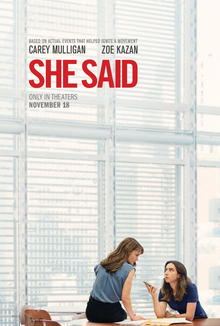
In 2017, the New York Times published revelations about Miramax kingpin Harvey Weinstein that shocked the world. Weinstein had used his position to force his sexual attentions on anyone from aspiring actresses to employees, with a rap sheet of crimes ranging from gropes to rape. It shook Hollywood to its core. She Said is the dramatization of the investigation carried out by reporters Jodi Kantor (Zoe Kazan) and Megan Twohey (Carey Mulligan) who sought out the victims, won their trust and pushed the story through despite threats of legal action.

She Said is a worthy, well-meaning film. It has moments of genuine power and its recreation of the testimony of the victims is tragic and heart-rending. But yet… I didn’t find it dramatic. I was left wondering, why did this true story of journalistic tenacity not carry the same impact as Spotlight or All the President’s Men?

Perhaps it’s because the film doesn’t really cover this story as an investigation. There isn’t the sense of facts slowly emerging to form a horrifying picture, or one small incident ballooning into an earth-shattering scandal. Instead, Twohey and Kantor are certain they have the basic facts from the start, with the film being instead a reveal of how many cases there are, rather than an expose of a wrong. While this is still important, it isn’t necessarily always dramatic and, eventually, She Said starts to feel every minute of its two-hour-plus run time.

The real focus of the film probably should have been the journalists’ determined work to win the trust of the principal witnesses – in particular Jennifer Ehle’s Laura Madden, whose whole life has been partially in the shadow of Weinstein’s assault in the 90s. Kantor – played with an empathetic richness by Zoe Kazan – worked night and day to encourage these women to bring their stories to the public. Instead, the film gets distracted with trying to cover too much, both the famous and the unknown victims, and the peripheral presence of Rose McGowan, Gwyneth Paltrow and Ashley Judd (playing herself) unbalance the movie away from the difficult, challenging – but more dramatically rewarding – work exploring office workers called into meetings to “massage” their gross boss.

It’s a shame the focus gets pulled away from these unknown women, who were little more than teenagers when Weinstein abused them in the 90s, since the sequences where they tell their stories are the ones that carry the most impact. There are superb cameo appearances from a trio of great actors. Ehle is superb as a woman resigned to trying to put things behind her, Morton brilliant as another prickling with rage and resentment, and Yeoh very good as a woman who never really managed to process her trauma. The careful, respectful, but deeply sad recounting of these women’s experiences by this trio are the film’s highlights.

Too much of the rest of the film gets bogged down in editorial procedure and the flat collecting of facts. It’s a bad sign when the film has to continuously state the “danger” the characters are facing while investigating and how every wall has ears. While Weinstein was a horrible man, terrifyingly powerful within his industry, I find it a stretch when (unchallenged) a character fears Weinstein will have him killed. I can’t see Weinstein hiring a hitman or utilising the sort of espionage techniques that would make the FBI jealous.

The film also struggles to get to grips with the depressing limits to any struggle for justice in the field of sexual harassment and assault. It starts by depicting Twohey’s investigation into Trump’s “locker room” pussy-grabbing “banter”, which peters out into a total failure to have any real impact at all. While the film suggests this as a motivating factor for the journalists to “get it right” this time, it doesn’t seem to acknowledge the limits of #metoo. It’s clearly very different to get Hollywood to clean out its house, compared to taking on someone with real power. Equally, the film gives no space to attempting to understand why Lisa Bloom, who represented victims of Bill O’Reilly and Trump, went to town defending Weinstein. There are interesting topics to explore here, but She Said wants to simplify its narrative down to goodies and baddies.

Time is also given over to the journalist’s home lives, none of which adds much to the overall narrative. Kantor’s relationship with a 10-year-old daughter just beginning to understand words like “rape” never quite solidifies into a thematic motivator. Twohey’s struggles with post-natal depression are bravely raised, but effectively disappear from the film (which makes me feel even a feminist film is squeamish about saying anything except motherhood is the dream for all women).

The final arc gets equally slightly bogged down in the fact-checking procedure. At times, the film has a little too much of a documentary feel, as if drama might have got in the way of the message. Despite this, there are some very good performances, with Kazan and Mulligan concealing mounting outrage under professional, dispassionate cool (Mulligan gets an outburst at a harassing bar patron, which does feel like too much of a “for your consideration” moment), even if we get little sense of who they are as people.

She Said is a very worthy look at a seismic news story, which never quite translates its coverage of impactful events into a truly compelling narrative.

Secrets and Lies (1996)

Secrets and Lies (1996)

Hard truths and deep emotion combine with Mike Leigh’s warmth and humanism in this powerful, spectacular film

Director: Mike Leigh

Cast: Timothy Spall (Maurice), Phyllis Logan (Monica), Brenda Blethyn (Cynthia), Claire Rushbrook (Roxanne), Marianne Jean-Baptiste (Hortense), Elizabeth Berrington (Jane), Michele Austin (Dionne), Lee Ross (Paul), Lesley Manville (Social worker), Ron Cook (Stuart), Emma Amos (Scarred girl)

“Secrets and lies. We’re all in pain! Why can’t we share our pain?”. These words come from family photographer Maurice (Timothy Spall), fighting a losing battle against his own pain while doing his best to hold his family together. It’s the mission statement for one of Mike Leigh’s most powerful films, a heart-rending drama that left me tearful. This is as gut-wrenching as Leigh can get, with actors delivering performances that feel ripped from their souls. Despite this, it gets me because this is a hopeful film about the power of love, whose anguish builds from watching what could (and should) be a loving family, failing (almost until the end) to share pain long suppressed due to shame.

That family are the Purley’s. Maurice is a successful photographer with a charming house in suburbia, dotingly maintained by his perfectionist wife Monica (Phyllis Logan). Sister Cynthia, who effectively raised Maurice, remains a working-class single-Mum to 21-year-old Roxanne (Claire Rushbrook). This class difference fuels resentments between Cynthia and Monica.

Unspoken secrets abound. But our first introduction is middle-class black optometrist played by Marianne Jean-Baptiste, Hortense Cumberbatch. (A running joke in the film is everyone’s unfamiliarity with this surname – how times change!). Hortense was adopted and now, with both her parents dead, wants to make contact with her birth mother. That birth mother – to her shock – is Cynthia, who gave birth to Hortense at 15. The relationship between Hortense and Cynthia becomes a catalyst for searing revelations, and shattering of emotional barriers, in the Purley family.

Leigh’s film is a triumph of his quiet, observational, unobtrusive directorial style, grounded on a deep and profound understanding of people and their strengths and foibles. As with his earlier films, the characters were developed after an intensive rehearsal process, with the actors given information only when their characters were. Secrets and Lies takes his approach to everyday life to its zenith, finding levels of tragedy (and warmth) in the simple pain of carrying on that other dramas can only dream of.

It is about how hopes can be both sustaining and damaging. A refrain heard in the movie is “You can’t miss what you’ve never had”. Au contrarie. The film is stuffed with people deep in grief about, or desperate to find, things they’ve never had. Hortense wants to discover where she came from. Cynthia’s life is one of lonely disappointment, resenting the domestic contentment of Maurice and Monica. Maurice and Monica are anguished by their childless marriage, Monica resenting Cynthia for having had the child she longs for. Roxanne wants a stable family, resenting her mother’s clumsy confirmation seemingly everyday that her birth was an accident (even if not a regretted one).

But, in typical British style, no one can talk about any of this. Instead, the Purleys cling to impressions of what the other family members are like. Monica sees Cynthia as a hopeless deadbeat, who can’t care for her children. Cynthia sees Monica as a snob, who stopped Maurice having a child. Roxanne sees Cynthia as constantly disappointed in her, Cynthia sees her as difficult, rebellious young woman unable to look after herself. And Maurice attempts to hold all this together, positioning himself as a jovial head-of-the-family, and whacking down any pain of his own.

Hortense, by comparison, is a model of well-adjusted upbringing. Leigh’s film doesn’t let us see much of her family – we witness her (non-adopted) siblings feuding over an inheritance – but the film constantly enforces the love she got from her parents, from the film’s beautifully staged opening at her mother’s funeral to her smiling reminiscences of parents (flaws and all) who did their best, were honest with her and taught her she was loved. Seen in conversation with her best friend Dionne (a neat single scene cameo by Michele Austin), she’s humane, warm and self-aware enough about her hopes and failings.

But she also has the fixated determination of the middle-classes – the sort of go-getting attitude completely alien to Cynthia, to whom events always happen rather than being something she starts. She disregards the advice of a social worker (a wonderful cameo of rushed professionalism, tinged with just enough genuine care by Lesley Manville) to make contact through social services and instead takes the plunge to contact Cynthia herself.

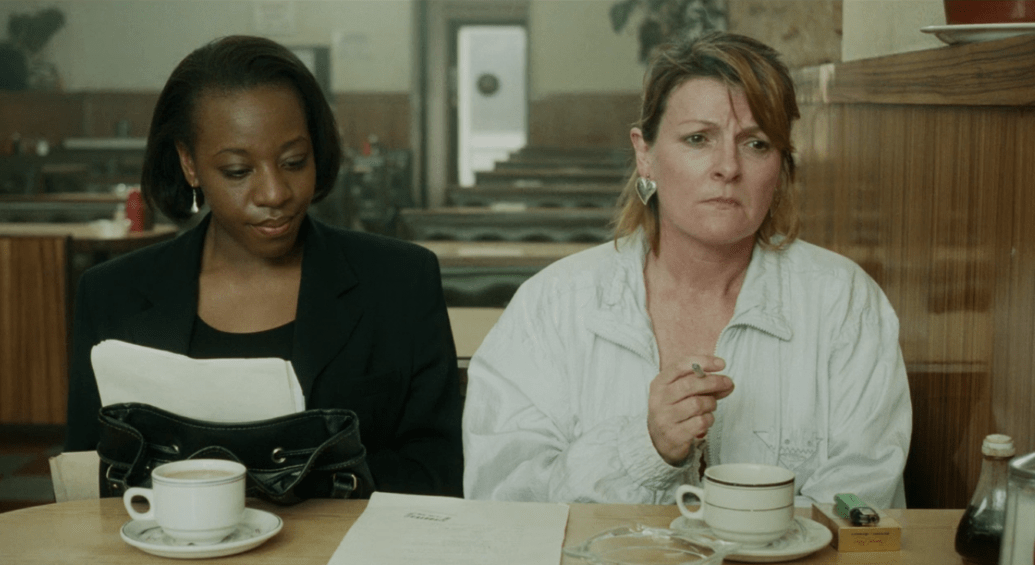
One of Secrets and Lies many strengths is its open-eyed honesty about the joy and pain of adoption. Hortense, as noted, found a loving family through adoption. But still she wants to know, why did her mother not even hold her when she was born? The answer isn’t simple, as Cynthia’s devastated reaction to the question shows: because if she held her, she would never have let go. This is the emotional centre-piece of an emotionally devastating but deeply uplifting scene at the centre of the movie as Hortense and Cynthia meet for the first time.

Shot in a café in a single near-seven-minute uninterrupted take with a stationary camera (a stylistic choice Leigh repeats at a family BBQ later in the film, as we wait for inevitable secrets to flood out), this is an acting masterpiece. Blethyn and Jean-Baptiste (both Oscar-nominated) give extraordinary performances throughout, but achieve the sublime here. Blethyn delivers nearly every line as if it was being pulled out of her soul by pliers, at points convulsed with teary shame unable to look Hortense in the eye: Jean-Baptiste, so assured throughout, is quiet, almost abashed but clinging to a professionalism to help resolve facing emotion head-on (right down to sitting next to Cynthia rather than opposite her).

Emotionally truthful performances run throughout. Spall is superb as a man who is no pushover – he quietly but determinedly shrugs off a drunken former mentor (a neat cameo from Ron Cook) asking to be given a chance – but who will bend over backwards to accommodate those he loves. Logan battens down hysterical guilt and grief under a house-proud fussiness. Rushbrook is a cauldron of resentments under a surly exterior. The relationship between Cynthia and Hortense – beautifully played by both actresses – quickly becomes one of genuine affection, for all their vast differences.

The film builds towards a celebratory BBQ for Roxanne’s birthday – which Cynthia brings Hortense to, claiming her as work friend. Leigh uses a long take as the family eats (we, the audience, constantly awaiting the emotional walls to break) before a devastating sequence as one after another family secrets come tumbling out, shattering emotional reserves, characters clinging to each other for comfort in floods of repressed tears, stunned onlookers open-mouthed.

It’s a scene of huge emotional impact – I cried – as regrets, loss and resentments built from years of understanding tumble out. But it’s hopeful, uplifting almost, because this is not the end. It’s a start. It’s very clear that, having finally said what they are really feeling, the extended family can move in a way that was impossible at the start. That they are closer now than ever. Hortense is the agent of positivity, and Leigh’s film closes with a quiet scene with Roxanne that suggests they have every chance of forming a warm, genuine, relationship.

Secrets and Lies is a superb film, a masterclass observation and domestic near-tragedy, powered by extraordinary performances of lived-in reality from the actors, that carries emotional strength but also has a rich vein of hope running through it. It is one of Leigh’s masterpieces.

The Banshees of Inisherin (2022)

The Banshees of Inisherin (2022)

Director: Martin McDonagh

Cast: Colin Farrell (Pádraic Súilleabháin), Brendan Gleeson (Colm Doherty), Kerry Condon (Siobhan Súilleabháin), Barry Keoghan (Dominic Kearney), Pat Shortt (Jonjo Devine), Jon Kenny (Gerry), Brid Ni Neachtain (Mrs O’Riordan), Gary Lydon (Paedar Kearney), Aaron Monaghan (Declan), Shelia Fitton (Mrs McCormick), David Pearse (Priest)

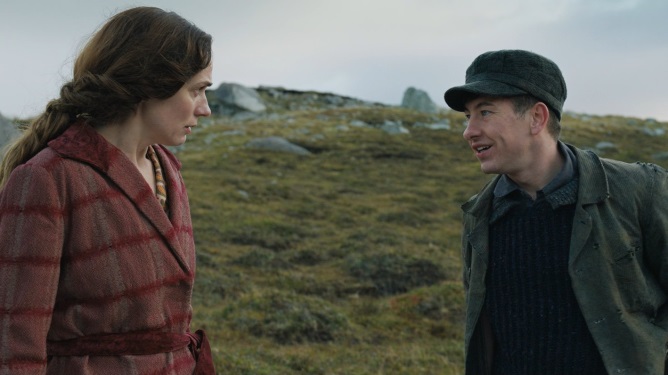
Pádraic (Colin Farrell) and Colm (Brendan Gleeson) are life-long friends on the small Irish island of Inisherin. Until one day, in 1923, Colm bluntly says he won’t speak to Pádraic again as “I just don’t like ya no more”. What on earth has led to this seemingly permanent severance? Did Pádraic do something wrong? The torment of not knowing will create a huge strain on Padraic, who prides himself on “being nice” and can’t understand why the older Colm doesn’t want to chat him. Just as Colm can’t understand why Pádraic can’t leave him alone, especially as he is almost universally agreed to be dull. Eventually this blunt stop to a friendship swiftly escalates out of all control.

McDonagh’s film is packed with the scintillating dialogue you would expect, and he combines it with an intriguing, tragedy-tinged character study where two sympathetic characters tip themselves into destruction through the unwillingness of either of them to compromise. It’s no coincidence that the film is set during the Irish Civil War. Cut off from the mainland on their tranquil island (where life feels like it hasn’t changed for the best part of 100 years), the characters are disturbed from their own civil war, every now and again, by the sound of gunfire and explosions from the mainland. The Banshees of Inisherin can be seen as a commentary on civil wars: don’t they all start, essentially, from someone deciding they have had enough and “just don’t like ya” anymore?

This marvellously rich film boils down a whole country tearing itself apart over what sort of future it wants, into one personal clash over two people’s future. The future increasingly obsesses Colm, a man preoccupied with mortality (who assumes his life can now be counted in years rather than decades), suffering from depression, worried he will disappear leaving no mark. A talented fiddle player, he wants to be like Mozart, remembered decades later – and he can’t do that wasting time every day for hours on end listening to Pádraic talking about his “wee donkey’s shite”.

It’s a perspective on the future, that Pádraic just can’t understand. For him, what does it matter what people you’ll never meet think about you? What matters to him is that the people around him like him and remember him as a “nice fella”. Not in a million years does legacy occur to him: the familiarity of everyday being the same is the most comforting thing, and change a horrific and terrifying thing to be avoided as much as possible.

You can see all this instantly in Colin Farrell’s heart-rending performance as this gentle, fragile but unimaginative soul, heart-broken at the inexplicable loss of his best friend. The film is a striking reminder that, contrary to his looks, Farrell’s best work is in embodying lost souls, the sort of people never ready for the life’s hurdles. Pádraic certainly isn’t, and his attempt to process what has happened defeats him. A man who considers his pet goat his next best friend and is as reliant as a child on his sister, doesn’t have the ability to understand what Colm is driving at about mortality, assuming instead he will stumble across the right words to be welcomed back into Colm’s company. He becomes the unstoppable object, trying to batter down Colm’s wall of silence.

He’s onto a losing battle, as Colm reveals himself to be – either due to his depression or his just not caring any more – the immovable force. Wonderfully played with a tinge of sadness and a depression-induced monomania, by Brendan Gleeson, Colm is a decent guy in many ways but fails to appreciate or consider the effect his actions will have on others. Instead he is focused on achieving at least something notable from his life. It leads to dramatic steps to drive Pádraic away, Colm threatening to cut off one of his fiddle playing fingers every time Pádraic bothers him, a threat he transpires to be more than willing to carry out.

And so civil war breaks out. As well as the parallels with Ireland’s war, I also felt strong echoes of our own poisoned social-media discourse. By his own lights, Colm believes his sudden severing of contact with Pádraic is perfectly reasonable. Many people who have “ghosted” others no doubt feel the same. Colm is reasonable when he explains it, and he still steps in with silent acts of comfort and support when Pádraic falls foul of the island’s brutish police office. But he never considers the traumatic impact this unexplained change will have on Pádraic – or how flashes of kindness can be as cruel as hours of non-acknowledgement.

Radicalism, in civil war and social media, quickly takes hold. What else can you call Colm’s threat to slice off his own fingers (the fingers he needs to live his dream of fiddle-playing legacy)? Just like people blowing hard on Twitter, he needs to deliver or lose face. Pádraic makes angry, passionate condemnations of Colm in the pub, like he’s posting rants online. Things escalate to a point where no-one feels they can step away or backdown.

That’s the tragedy McDonagh identifies here. This one decision of Colm’s – no matter the motives – ends up having disastrous effects on both men. Pádraic changes from a gentle soul to someone capable of wrathful fury and lifelong grudges. Colm literally disfigures himself, guaranteeing he will never achieve the very thing he started this for. Could there be a better parable for the destructive nature of civil combat? Neither Colm or Pádraic are willing to compromise: what if Colm said he would only see Pádraic once or twice a week, eh? Just like Ireland, they burn the world down.

This all takes place in a rich framework, with McDonagh skilfully working in clever, challenging sub-plots. The legend of the banshee, who foretold death and enjoyed watching destruction, is woven throughout, embodied by the sinister Mrs McCormick (a ghostly Shelia Fitton). The most forward-looking person on the island is Pádraic’s sister Siobhan – brilliantly played by Kerry Condon – who finds herself wondering why on earth she stays in such a self-destructive small-world. Barry Keoghan (also superb) plays the universally acknowledged village dunce, who (if you stop and listen to him) quotes French and poetry and (for all his crudeness and lack of social graces) is clearly a man stunted under the heel of his abusive father, the village policeman.

As events escalate and rush out of control – McDonagh’s pacing is very effective here – the film slows for carefully judged moments of emotional power, from the burial of a beloved pet to a character weeping in bed at the painful choices that must be made. McDonagh has created a powerful universal metaphor for the dangers of extreme, definitive choices and a total rejection of compromise by boiling it down to the smallest scale possible.

And your sympathies ebb and flow, due to the beautiful performances from its leads. Farrell is heartbreaking, a memory you carry as he becomes more vengeful. Gleeson is coldly reasonable, even as we grow to understand his crushing sense of mortality and character-altering depression. These two actors power an intelligent and thought-provoking film that achieves a huge amount with subtle and rewarding brushstrokes.

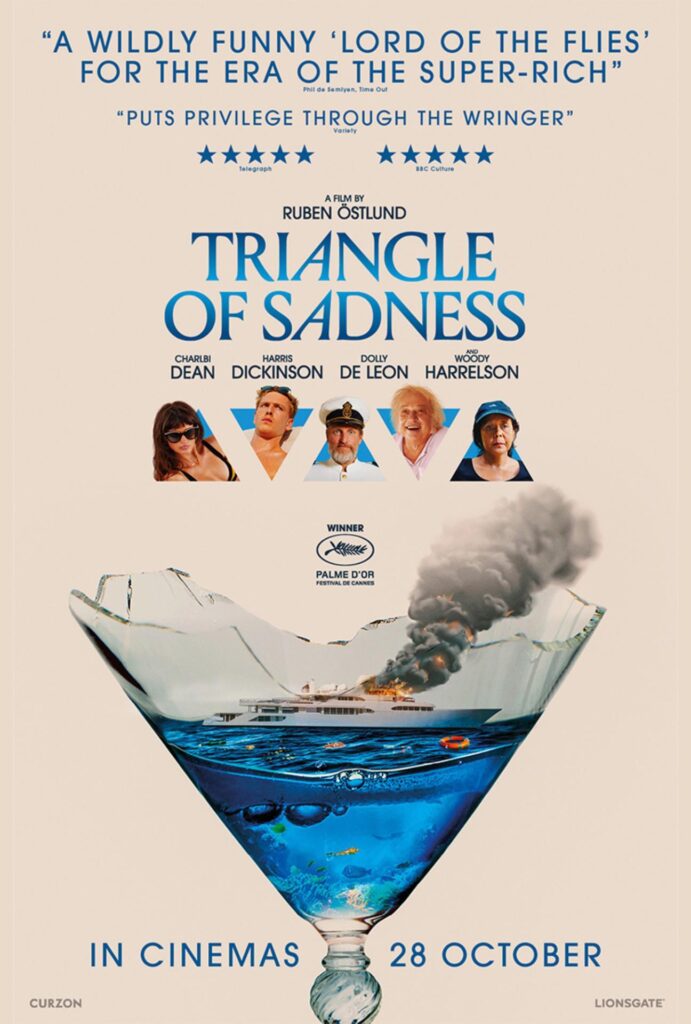
Triangle of Sadness (2022)

Triangle of Sadness (2022)

Östlund’s super-rich satire lines up straight-forward targets to easily knock down

Director: Ruben Östlund

Cast: Harris Dickinson (Carl), Charlbi Dean (Yaya), Dolly de Leon (Abigail), Zlatko Burić (Dimitry), Iris Berben (Therese), Vicki Berlin (Paula), Henrik Dorsin (Jarmo), Woody Harrelson (Captain Thomas Smith), Alicia Eriksson (Alicia), Jean-Christophe Folly (Nelson), Amanda Walker (Clementine), Oliver Ford Davies (Winston), Sunnyi Melles (Vera)

In my review of The Square, Östlund’s previous Palme d’Or winner, I described its targets as “so obvious, the entire film might as well be footage of fish being shot in barrels”. If only I’d known: Triangle of Sadness, his satire on the super-rich, takes this to the Nth degree: it’s an entire film of Östlund spraying machine gun bullets into an aquarium of drugged fish. That’s not to say there ain’t good jokes in here and several of its sequences are cheeky, engaging and funny. It’s well-made and high quality: but it’s also obvious and is in a such a rush to make its oh-so-clever satirical points that it frequently blunts its own impact.

The film revolves around a luxury cruise liner. On board: the self-obsessed, selfish, greedy representatives of the world’s oligarchs. A Russian who repeatedly amuses himself by bragging that he sells “shit” (fertiliser), a Danish app builder who splashes his cash, a married couple of British arms-traders who jovially bemoan how UN restriction on landmines made for tough financial years… you get the idea. Also on board: Instagram influencer supermodel Yaya (Charlbi Dean) and her insecure male model boyfriend Carl (Harris Dickinson). All of them treat the staff like slaves. But when the ship sinks after a storm and an attack by Somali pirates, the surviving passengers find they entirely lack the skills needed to survive on an island, unlike toilet-cleaner Abigail (Dolly de Leon) who rockets from the bottom to the top of the social hierarchy.

Östlund’s film lays into the emptiness, greed and selfishness of the super-rich with glee, even if it hardly tells us anything we don’t already know. The rich are only interested in their own needs and can only see others as tools for their own pleasure: who knew? Wanting to expand his satirical targets even further, Östlund also takes a pop at the social media generation. Apparently, they are shallow and interested only in commodifying their own lives. Who knew? It’s the sort of stuff that makes for a punchy student revue, but you want something a little bit more challenging that moves above cheap shots from a Palme d’Or winner.

In many ways the film’s most interesting section (and most subtle ideas) take place before we even reach the boat. The film’s first chapter exclusively follows Carl and Yaya. Carl auditions for a modelling job where he’s treated like a piece of meat (hilariously they mutter about him needing botox). At a fashion show, staff pleasantly demand three people move out of their seats to make way for VIPS – who immediately ask for one more seat. Everyone shuffles along one (the camera following this with a neat tracking shot), leaving Carl seatless. This is a more subtle commentary on the self-obsessive focus of the super-rich than anything that follows.

Carl and Yaya are in an interesting position: they are both part of the beautiful super-rich and not (they don’t have any money). That early act opener balloons from a disagreement over who pays for a meal into Carl inarticulately arguing for sexual-equality and mutual partnerships that defy gender roles. It’s more interesting than almost anything that follows, because it’s multi-layered and raises genuine issues we all face (to varying degrees).

But the film abandons multi-layered the second it steps foot on the boat. There are fun set pieces. Carl unwittingly gets a pool attendant fired because he’s jealous of Yaya’s admiration for his topless body. The staff on the boat gee themselves up for days of enthusiastic deference with a tip-expectant-group-chant. A Russian lady demands the staff all swim in the sea so they can have as much fun as she is having (and to show how ‘normal’ she is). The film’s most infamous set-piece occurs as a storm coincides with the captain’s dinner (with the fish courses under-cooked due to the aforementioned obligatory staff swim) leading to nearly all the passengers projectile vomiting across the state room, then sliding around the floors of the swaying ship in their own filth.

Amusing as that can be in its guignol excess, it tells you how subtle the film is. The film is awash with obvious, lazy jokes – of course the polite arms trading couple are called Winston and Clementine! To hammer home the social issues the film whacks us over the head with, the Captain (an awkward performance from Woody Harrelson) an alcoholic Marxist spends the storm pissed in his cabin, reading Noam Chomsky and his own anti-capitalist ravings over the ship’s tannoy. This takes up a huge amount of screen-time and manages to be both obvious and not very funny.

The film enjoys taking these pot-shots so much, it ends up feeling rushed when we arrive at the island. If we had seen more of Dolly de Leon’s Abigail earlier in the film (in actuality, the film sidelines her as much as the characters do, barely allowing her more than a minute of screentime in its first hour), the shift in social hierarchy would have carried more impact. If Östlund’s film had more patience to show the passengers expectation that shipwrecked life would be identical to that on the boat, then Abigail taking charge after a few days that would have carried more impact. Instead, Abigail takes command from arrival, and then essentially behaves (in a way I’m not sure the film quite understands) with exactly the same self-entitled greed as the passengers did. She takes the best cabin, establishes a hierarchy, keeps most of the food and turns Carl into a sex toy.

Because we’ve not really seen Abigail earlier in the film, we don’t get a sense of her earlier mistreatment (really, most of the film would have been better told from her point-of-view) or join her satisfaction at the tables being turned. The film also exhausts its commentary on the super-rich leaving it with little to say about in its third act Lord of the Flies set-up. Instead, the film dawdles its way to a conclusion and cliffhanger ending that feels unearned.

It makes you regret the loss of its earlier more subtle commentary on Instagrammers Carl and Yaya (good performances from Harris Dickinson and the tragically late Charlbi Dean) who are drowning-not-waving in a world where they must commodify their bodies but have no power over them, struggling to work-out where they fit in a world. It throws this overboard to go for some (admittedly at times funny) gags about greed and very obvious social commentary. If it had committed to its social underclass uprising earlier – or carried on with its more subtle themes from the opening prologue – it would have been a better film. Instead it’s as subtle and probing as the faceful of vomit it serves up halfway through.

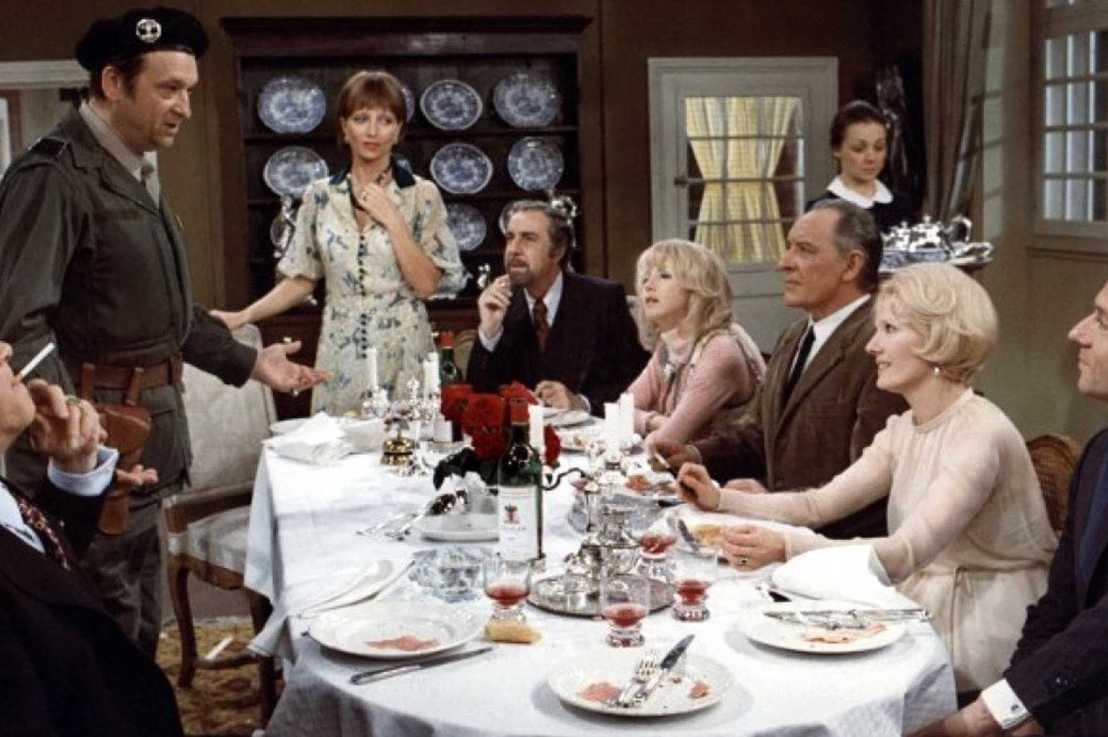
The Discreet Charm of the Bourgeoisie (1972)

The Discreet Charm of the Bourgeoisie (1972)

Dinner dates never happen in Buñuel’s playfully witty, absurdist satire

Director: Luis Buñuel

Cast: Fernando Rey (Rafael Acosta), Paul Frankeur (François Thévenot), Delphine Seyrig (Simone Thévenot), Bulle Ogier (Florence Thévenot), Stéphane Audran (Alice Sénéchal), Jean-Pierre Cassel (Henri Sénéchal), Julien Bertheau (Monsignor Dufour), Milena Vukotic (Inès), Claude Piéplu (The Colonel), Maria Gabriella Maione (Terrorist), Muni (Peasant), Michel Piccoli (Interior Minister), Pierre Maguelon (Brigadier Sanglant), François Maistre (Commissaire Delecluze)

Six very bourgeoisie Parisian friends try to have dinner; but circumstances keep getting in the way. Circumstances that become increasingly bizarre, surreal and absurdist and half of which may or may not be dreams (or even dreams within dreams). This is the jumping off point for Buñuel’s engagingly light and witty, but also profound, intriguing and defying interpretation. The Discreet Charms of the Bourgeoisie. In the hands of a dogmatic artist, it would be heavy-handed trash: in Buñuel’s it maintains a playfulness making it entertainingly (if at times infuriatingly) mystifyingly unreadable.

Those six friends are a shallow, self-obsessed bunch who talk the snobby talk of class and culture, but their knowledge is skin-deep and their lifestyle funded by cocaine smuggling. That cocaine is trafficked into Paris in the diplomatic bag of Ambassador Rafel Acosta (Fernando Rey), representative of the (fictional) Latin American Republic of Miranda. It’s sold by his friends, François Thévenot (Paul Frankeur) and Henri Sénéchal (Jean-Pierre Cassel), and its these three – along with their wives Alice Sénéchal (Stéphane Audran) and Simeone Thévenot (Delphine Seyrig) and Simone’s sister Florence (Bulle Ogier) – who keep trying to have dinner.

Those dinners are constantly interrupted by a series of increasingly outlandish events, that the guests accept with the sort of blasé insouciance this sort of people pride themselves on. Things escalate on successive nights from Henri forgetting he has invited their guests to dinner, to a dead landlord of a country inn, the Sénéchals slipping out to the garden to have sex, a Bishop (Julien Bertheau) who longs to be a gardener, a café that runs out of tea and coffee, an army division on military manoeuvres, their arrest by the police… That’s not mentioning the onslaught of dreams as the characters imagine yet more meals interrupted by murder, terrorism and even their dining room turning into a stage in front of an audience where they don’t know their lines.

If that sounds pretentious… I suppose that’s fair. But the point is that Buñuel never hectors or overplays his hand. Instead, the film is an absurdist light comedy, a whimsical road-to-nowhere (like the country road we frequently see the six characters walking down in cutaways) that, in its structure, aims to expose the shallowness and hypocrisy of an entire class. Our ‘heroes’ are overwhelmingly concerned, time and again, with their own basest needs – mostly food and sex – and are more than happen to call in a chauffeur so they can mock him for not knowing how to drink a cocktail correctly (doesn’t stop him enjoying the cocktail way more than any of them do). They encapsulate a whole class, concerned only with tucking in and making sure everyone can see they are unshaken by events, no matter how outlandish they seem.

Into this mix, Buñuel throws an astonishing and inventive selection of dreams that increasingly dominate the second half of the film. (And in fact, makes you wonder after a while whether everything we’ve seen in the film is some sort of crazy, unlikely fever dream). Buñuel used to joke he slipped in dreams when he needed to expand a films runtime, but it’s wonderful here how often the dreams comment subtly on the characters and their perceptions of each other: and how little they seem to learn or be aware of the implications of this.

The most surreal dream of all is Henri’s fantasy of entering a house – a house with walls painted with false perspective images of other rooms – where the group encounter rubber food and then a curtain sweeps aside to find an expectant audience watching them. Despite the prompts for their lines, the characters flee in sweaty nervous panic. Do they realise the meaning of this exposure of their sense of unbelonging? You can be sure they don’t.

In fact, in a stroke of daring by Buñuel, they are so remote from understanding this that Henri is in fact having a dream inside François’ dream: as if François can only vicariously confront his fear of unbelonging by dreaming about another man dreaming about it. That worry of mockery and isolation in society is then continued in François’ dream, as he dreams of Henri waking from a dream and arriving at a party at a Colonel’s house where the mockery and ignorance of Rafael’s home country becomes so overbearing, Rafael shoots the Colonel dead. As if, again, François can only imagine being pushed to extremes vicariously.

Perhaps he’s simply jealous of Rafael, who is blatantly conducting an affair with his wife. Rafael’s a man of class, obsessed with greed and lust. He’s also a sneaky coward and a creepy opportunist, not above trying to seduce a female terrorist who tries to kill him (and then having her shipped off by his security when she turns him down). Doesn’t make him different from anyone else: the Thévenots are arrogant upper-classes scorning those below them, Florence a shallow, selfish drunk, the Sénéchals full of hedonistic entitlement.

Buñuel’s film gently deconstructs the code and hypocrisies of this society – with its unspoken rules, strange hierarchies and lusts – not with lectures but with the tools of farcical theatre. The film repeatedly feels like a left-field Cowardian drawing room comedy, mixed with Moliere farce. A cheating wife is interrupted by the sudden arrival of her husband, a Bishop borrows the clothes of a gardener so no one believes he is a priest, sudden entrances and exits constantly interrupt scenes. This is all told with a light, revealing wit: with subtle playing and controlled, skilful direction, we learn about these characters depth (or lack of them) while enjoying the frequently bizarre circumstances.

It doesn’t just touch them either. When the characters are arrested, they are released on the orders of the Interior Minister for reasons that we are don’t hear three times because of traffic noise. Outside noise jumps in at several key points to undermine key information and interrupt events – the characters indifference to this as constant as their general ambivalent uncaring coolness to everything else. It’s also funny.

There are also darker dreams, told by soldiers and police officers, haunted by mauled bodies and murderous consequences. A soldier tells a dream of a ghostly encounter of his dead mother, urging him to avenge the death of his parents (its left unclear if this is a false memory or a dream). A policeman sees a vision of his dead body releasing his prisoners – after an interrogation of a young man that sees a piano transformed into an electric chair.

Not to mention a world where suave class and violence sit side by side. Rafael’s readiness to use guns – shooting a wind-up toy of a terrorist from across the street, his apartment littered with hidden firearms – is matched by the Bishop who mixes forgiveness and revenge for the man who killed his father. Much of this taking place in the classiest and most well-observed of environments.

There are excellent peformances across the board, but this is a triumph from Buñuel. It’s a film that defies easy interpretation and understanding, that wraps its insight up in intriguing, unreadable and bizarre dreams and events which strike a magical balance between both possible and impossible. It explores a whole class and its hypocrisies, but does so in a series of light, even playful, scenes which feel more like light-comedy. It’s the work of an inventive master working with the medium in a unique and unrepeatable way, who can be both surrealist enigma and master of farce. You could watch it multiple times, drawing different shades and interpretations every time.

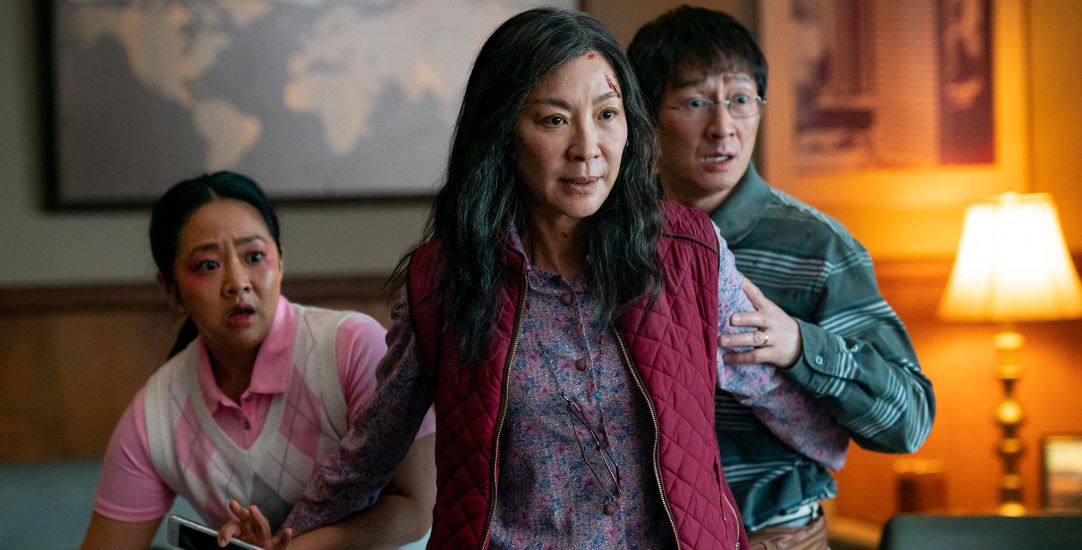
Everything Everywhere All At Once (2022)

Everything Everywhere All At Once (2022)

The multi-verse is at risk of ending – and only a disenchanted woman running a laundromat can save the day in this inventive science-fiction

Director: Dan Kwan, Daniel Scheinert

Cast: Michelle Yeoh (Evelyn Quan Wang), Stephanie Hsu (Joy Wang), Ke Huy Quan (Waymond Wang), James Hong (Gong Gong), Jamie Lee Curtis (Dierdre Beaubeirdre), Tallie Medel (Becky Sregor), Jenny Slate (Debbie), Harry Shum Jnr (Chad), Biff Wiff (Rick)

Evelyn Wang (Michelle Yeoh) has lots on her plate: running her laundromat, completing tax returns for a demanding IRS agent (Jamie Lee Curtis), her waning marriage to goofy husband Waymond (Ke Huy Quan) and drifting relationship with lesbian daughter Joy (Stephanie Hsu), not to mention her fear of the disapproval of her demanding father (James Hong) – its Everything Everywhere All at Once as it is: no wonder she struggles to cope when discovering from an alternate version of her husband that she, and she alone, is the key to saving the entire multi-verse from destruction.

Everything Everywhere All at Once is an endlessly inventive, imaginative and unique spin on everything from science fiction to philosophy, via the struggles of an immigrant family, familial dynamics and love, death and the universe itself. Did I mention it’s got jokes as well? There isn’t anything quite like EEAAO out there, and if the film does lose energy at an inflated runtime of 145 minutes, at least that’s because it must have been a struggle knowing what to cut.

In the mythology of EEAAO, Evelyn lives in just one of a myriad different realities. Every time a decision is taken, a new reality branches off, spawning innumerable different realities. If Evelyn can imagine it, then somewhere in another universe it happened. She should be a film star, a martial artiste, a chef, a blind singer, a pizza sign spinner…there are realities where mankind never evolved or where they evolved with hot dogs for fingers (a joke the film is a way too pleased with and seriously outstays its welcome).

With some technology from the “Alpha” universe – the first universe to discover alternate realities, where Evelyn and Waymond were pioneering scientists – Evelyn can access the memories and skills of her alternates. All she – and others with the right training and equipment – need to do to become experts at anything in seconds is to build a mental link to that reality by performing a highly improbable act. Whether that’s getting four consecutive papercuts, eating a lipstick, swallowing a model frog or – in a comic highlight – Evelyn fighting to stop an opponent shoving an “Employee of the month” award shaped like a dildo up their bottom in public (you’re not going to see that in many movies) – it’s a brilliant comic device that raises belly laughs a plenty.

EEAAO knocks spots off the recent Doctor Strange sequel (that made almost nothing of its parallel universe concept) by not only presenting radically different worlds (in this universe Evelyn is a pinata! Here she’s a rock!), but also exploring how the path-not-taken can have a mesmerising and inspiring/depressing impact. Evelyn – a woman who (justifiably?) believes she has achieved nothing, is both fascinated or heart-broken to see realities where her accomplishments are titanic. EEAO is superbly thought-provoking when it explores the emotional impact of questioning your choices, when you see turning right rather than left could have been the first step on a path of astonishing glory and success and, even, a completely different personality.

This leads into the film’s second half which, after the comic energy of the first, dives into a philosophical debate about the nature of choice. The villain attempting to destroy reality is motivated not by rage or power-lust – but simply by the fact that jumping to a billion realities has persuaded them it all means nothing. Everything is basically a combination of atoms that, with a few pushes and pulls, can turn from one thing to anything else. This nihilistic view of the world – what does it matter killing one person when there are billions of other versions of them, many of them ‘better’ – and balancing it with a more humanitarian view, becomes the film’s key debate.

It’s also rooted in the film’s opening, which is does a marvellous job of exploring universal family questions, while still grounded in the experience of an immigrant family. Evelyn and Waymond, having moved to America in search of their dreams as youngsters – and wound up running a laundromat – struggle to balance their relationship (her growing irritation at his perpetual optimism, his alienation from her cynicism) and, particularly in Evelyn’s case, understanding her more Westernised daughter. Two generations with very different experiences, struggling to understand each other.

On top of which, many of these problems are universal. Generational conflicts: the grandpa who can’t be told his granddaughter is gay, because her mother isn’t sure how he will react. The mother and daughter who have lost the ability to communicate and reduced to saying increasingly cruel things to each other (there is a shocking moment when Evelyn tries to tell her daughter she loves her but instead chastises her for getting fat). Waymond tries to hold things together but is too gentle and ineffective to do anything.

All of this is bundled together in a film stuffed with inventive and hilarious sequences. There are kick-ass fights (one involving Alpha-Waymond and a fanny-pack – bum-bag to us Brits – which has to be seen to be believed), hilarious segues, brilliant parodies of other films (2001, Ratatouille and In the Mood for Love for starters): and then the film will hit you for six with a genuinely heart-breaking moment. I will say there is almost too much good stuff here – ten minutes trimmed from the film would work wonders, and the continued trips back to Hot Dog Hands reality is a joke stretched to absolute breaking point – but better too much than too little.

At the heart of this fabulous work from The Daniels are superb performances, none more so than a career best turn from Michelle Yeoh. Channelling everything Yeoh has ever done in her career into a single film, she of course can handle the astonishing action but also displays an emotional depth and complexity that will break your heart. She’s bitter and trapped, then will shift on a sixpence to agonised guilt and longing. She’s astonishingly good. There is brilliant support from Hsu as her trapped and troubled daughter and Ke Huy Quan (last seen in The Goonies) is heart-breakingly endearing, funny and wonderfully sweet as her good-natured husband (like Yeoh he also plays multiple variants – from confident to cold and distant). James Hong is wonderful as her austere father and Jamie Lee Curtis is having a ball as a bullying IRS agent turned villain’s heavy.

When the major flaw in the film is that it is too damn long, you know you are onto a good thing. There are more ideas in a few minutes here than in the entire runtime of such things as the Doctor Strange sequel. Superbly directed with wit, energy and compassion by the Daniels and with a career-defining role for Michelle Yeoh, Everything Everywhere All At Once is destined to take its place as a year defining cult hit.

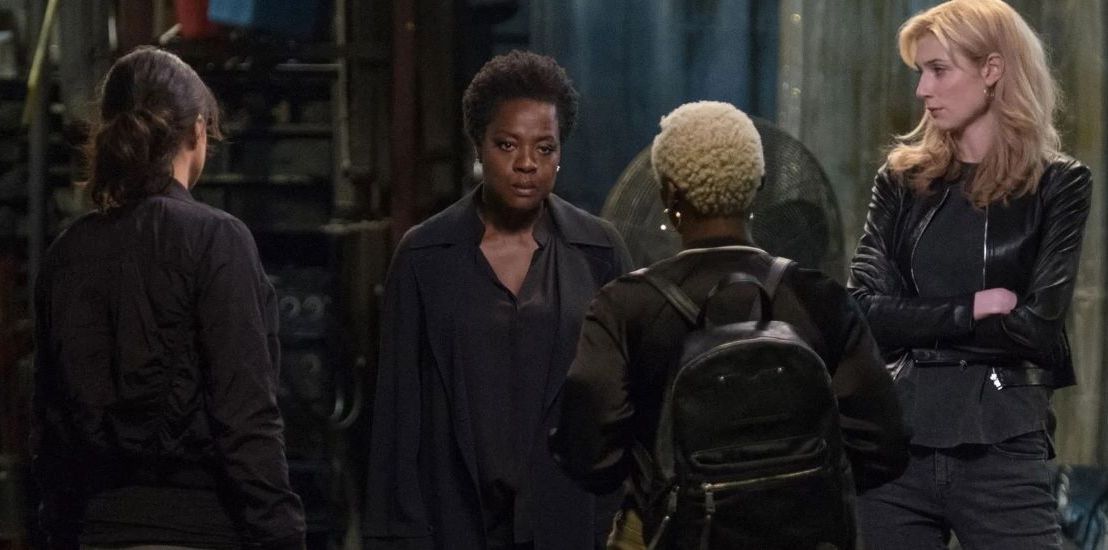
Widows (2018)

Widows (2018)

Sexism, racism and corruption get mixed in with crime drama in McQueen’s electric heist film

Director: Steve McQueen

Cast: Viola Davis (Veronica Rawlings), Michelle Rodriguez (Linda), Elizabeth Debicki (Alice), Cynthia Erivo (Belle), Colin Farrell (Jack Mulligan), Brian Tyree Henry (Jamal Manning), Daniel Kaluuya (Jatemme Manning), Jacki Weaver (Agnieska), Carrie Coon (Amanda), Robert Duvall (Tom Mulligan), Liam Neeson (Harry Rawlings), Jon Bernthal (Florek), Garret Dillahunt (Bash), Lukas Haas (David)

A getaway goes wrong and Harry Rawlings (Liam Neeson) and his criminal gang all wind-up dead and their loot burned up. Their last job was cleaning out the election fund of gangster-turned-electoral-candidate Jamal Manning (Brian Tyree Henry). Manning believes he’s owed a debt by Harry’s widow Veronica (Viola Davis). On the hock for millions, Veronica has no choice but to recruit the widows of Harry’s gang to help her pull off the next job Harry planned: cleaning out the campaign fund of Manning’s electoral rival Jack Mulligan (Colin Farrell).

Adapted from an 80s British TV mini-series, Widows has been run through Steve McQueen’s creative brain, emerging as a compelling, beautifully shot crime drama mixing social, racial and gender commentary with blistering action. It takes a traditionally masculine genre – the crime caper – and places at its heart a group of women motivated by desperation and survival rather than the lure of lucre.

What’s particularly interesting is that none of these women fit the bill of the sort of person you expect to arrange a daring heist. Viola Davis’ Veronica is a retired teachers’ union rep; Elizabeth Debicki an abuse victim, treated terribly by her husband and selfish mother; Michelle Rodriguez a shop owner desperately trying to give her kids a chance, despite her husband’s reckless gambling. Even the driver they hire, played by Cynthia Erivo, is a hairdresser and babysitter. These women are a world away from the ruthless criminals you’d expect to pull off this kind of operation.

It’s probably why they are routinely underestimated and patronised by men. Veronica is advised clear her debt by selling either everything she owns and disappear. As with the rest of the women, the world expects her to put up and shut up. These are women defined by their husbands and the expectation that their needs are subordinate to others’. Debicki’s Alice is all-but pushed into escort work by her demanding mother, while Rodriguez’s Linda is blamed by her mother-in-law for her husband’s death. But these women have a steely survival instinct that makes them determined and (eventually) ruthless enough to take this job on.

Davis is superb as a determined and morally righteous woman, whose principles are more flexible than she thinks. She efficiently (and increasingly sternly) applies her organisational skills to planning the heist, pushing her crew to adapt her own professionalism. Davis wonderfully underplays Veronica’s grief, not only at the loss of her husband but also the recent death of her son (shot by police officers while reaching to answer his phone behind the wheel of an expensive car – in front of a wall of Obama “Hope” posters, a truly striking visual image).

Her co-stars are equally impressive. Debicki has mastered the mix of vulnerability and strength behind characters like this (how many times has she played suffering, glamourous gangster molls?). Her Alice gains the self-belief to push back against those exploiting her. Rodriguez beautifully balances grief at the loss of her husband with fury at the financial hole he has left her in. Erivo gets the smallest role, but makes Bella dry, loyal and sharp. All four of them use the way men underestimate them – seeing them as widows, wives, weak or sex objects – to plan out their heist.

The reversal of gender expectations crosses over with the social political commentary McQueen wants to explore. This sometimes works a treat: the flashback to the shooting of Veronica’s son is shockingly effective. But the film’s dives into the Chicago political scene and the deep class divisions in the city don’t always have the impact they should. There is a marvellous shot – all in one take, mounted on the car bonnet – as Farrell’s Mulligan travels (in a few minutes) from a photo op in a slum back to his palatial family home, emphasising how closely extreme wealth and poverty sit side-by-side in America.

Both candidates are corrupted in different ways. Jamal Manning – a knife behind a smile from Brian Tyree Henry – is a thug talking the talk to line his pockets. Farrell’s Mulligan has more standards – and you wish for more with this fascinating put-upon son part on-the-take, part genuinely wanting to help. His domineering dad – an imperiously terrifying Robert Duvall, who wants to backseat drive his son in office – demeans his son, shouts racial slurs and bullies everyone around him. Politics: your choice is the latest off-spring of a semi-corrupt dynasty or a literal criminal.

But the film doesn’t quite find the room to explore these issues in quite as much detail as you feel it could: it’s a strong hinterland of inequality, but you want more. McQueen however, does have a gift for unique character details that speak volumes: the women’s operation is shadowed by an electric Daniel Kaluuya, as Manning’s calm yet psychotic brother, who listens to self-education podcasts on Black history and shoots people without a second thought. He, of course, underestimates the women as much as everyone else. That’s as much of a political statement as anything else: none of the men in this film seem to even begin to think that they could be in a world which is truly equal.

The film adds a late act reveal that doesn’t quite work – and the film as a whole is trying to do a little too much – but it’s a confirmation of what a gifted and superb film-maker Steve McQueen is. McQueen shoots even conventional scenes in unique and interesting ways – check out his brilliant use of mirrors throughout – uses editing superbly to set tone and is brilliant at drawing the best from talented actors. Widows is crammed full of terrifically staged scenes and gallops along with pace and excitement. It’s a fine example of a great director turning a genre film into something deeper.

Peyton Place (1957)

Peyton Place (1957)

Small-town America is the home of hypocrisy in this ridiculously silly soap opera that spawned…a long-running TV soap opera

Director: Mark Robson

Cast: Lana Turner (Constance MacKenzie), Diane Varsi (Allison MacKenzie), Hope Lange (Selana Cross), Lee Philips (Michael Rossi), Arthur Kennedy (Lucas Cross), Lloyd Nolan (Dr Matthew Swain), Russ Tamblyn (Norman Page), Terry Moore (Betty Anderson), David Nelson (Ted Carter), Betty Field (Nellie Cross), Mildred Dunnock (Elsie Thornton), Leon Ames (Leslie Harrington)

Small-town America: what mysteries lie behind those white picket fences? If the small New England town of Peyton Place is a guide, all sorts of terrible things. Why is Constance MacKenzie (Lana Turner) so afraid of sex and romance? Could her fear that the slightest kiss could turn her would-be-writer teenage daughter Allison (Diane Varsi) into a slut, be rooted in her own mysterious past? Why does Allison’s friend Selena (Hope Lange) fear her drunken and lecherous step-father Lucas (Arthur Kennedy) so much? Why is Mommas-boy Norman (Russ Tamblyn) so shy?

If that all sounds like the set-up for a great-big TV soap… well that’s because it essentially is. Peyton Place was a huge box-office success in 1957, but you can argue it found its natural home when it later mutated into a long-running TV soap. It’s one long onslaught of high-flung, ridiculously OTT events, all filtered through the sort of dialogue punctured by swelling music to hammer home the feelings. Peyton Place is completely disposable – but also strangely enjoyable, rollicking along like all the best soaps do, so full of events that you don’t have time to stop and realise how silly it is.

Adapted from a doorstop popular novel, screenwriter John Michael Hayes faced quite a task. The original was crammed with sex, foul language and everything from murder to teenage pregnancy, illegal abortions, rape and incest. That’s not exactly the sort of stuff the Hays Code dreamed of. Peyton Place: The Movie is almost a triumph in how much of this stuff it manages to cover, all in a very cunning, under-the-radar way. Sure, the rough edges are shaved off (and, of course, not the hint of a cuss word makes it to the screen) but it still manages to tick a lot of those boxes.

It’s all to hammer home the hypocrisy of small-town America. Curtain-twitching busybodies watch every moment, leaping for their phones at the merest hint of scandal: from kisses out of school to teenage kids skinny dipping (bet they can’t believe their luck when an actual murder happens). Peyton Place follows in Picnic’s footsteps (to which it is vastly superior, equally shallow but much less pleased with itself and far more entertaining) in exposing the hypocrisy of 50s America, where everybody goes to church and no-one practices the good-will and love it preaches (and yes, I know the film is set in the 1940s, but no one told the costume or production designers).

Peyton Place was littered with acting nominations (in a year where 12 Angry Men got none, for Chrissakes!). It’s a little hard to understand why, considering every part fits neatly into a trope. Lana Turner is the nominal lead as the frigid clothes-store owner who hides a secret shame (all about that long-lost husband) that gets in the way of her flirtation with the newly arrived schoolmaster (played with smug dullness by Lee Philips). But that’s only because she’s the most famous actor in it. Her performance sets a sort of template for mothers that would be repeated countless times.

The real leads (both Oscar nominated for Supporting Actress) are Diane Varsi and Hope Lange as the two teenagers at the heart of Peyton Place’s ocean of hormones (although, it being a 50s film, a smooch at a booze-free party is the furthest anyone goes). Varsi narrates most of the film as a precocious would-be writer, with several grandstanding scenes wailing at her mother for being so unfair. It’s a broad but engaging performance and she manages to make Allison not quite as wet as she could be. She also gets a shy romance with nervous Norman Page (a gentle Russ Tamblyn, also nominated): Norman is clearly closeted, struggling with his sexuality in a small town (“I don’t know how to kiss a girl” he says) but the film does its best to overlook this.

More engaging is Hope Lange, who gets the juiciest material to play. The film is surprisingly daring in staging her rape by her boorish step-father (a slightly too ripe Oscar nominated Arthur Kennedy, although still the most memorable male performance). Robson’s camera pans up from her being pinned down, to her raised hands and then finally cuts outside. Lange plays the trauma of this – including an unwanted pregnancy, removed by the Doctor in an abortion the film bends over backwards to make an accident-induced miscarriage – with a great deal of vulnerability and empathy, her shame and desperation rather moving.

It makes her the target for gossip. Peyton Place smugly ticks off small-town America for its gossipy meanness – while still peddling a message that, if we just followed the warmth of the best of small-town values, the world would be a better place – ending with Lloyd Nolan’s doctor delivering a pompous ticking-off to the town (from the witness box during a murder case no-less). Peyton Place at heart is a fairly conservative film, that ends with most people discovering their inner-goodness (apart from a few irredeemable harridans), and all wickedness resolved.

It’s directed with workmanlike professionalism by Mark Robson, but it didn’t need inspiration. It’s odd to consider this had nine Oscar nominations, since it feels like the sort of disposable mini-series Netflix throws together every week. Its main claim to fame might be that its quaint small-town smugness, masking a bucketload of scandal, served as the main inspiration for Twin Peaks (though dialled up to a whole other level of weird). It’s overlong, overblown and very silly, but because it doesn’t take itself seriously (unlike heavy-duty message film that year Sayonara, a silly soap that thought it was Pulitzer material) it’s actually ridiculously entertaining, in a totally trashy way.

La Grande Illusion (1937)

La Grande Illusion (1937)

Friendship, class, warfare and change are explored superbly in Jean Renoir’s masterful war film

Director: Jean Renoir

Cast: Jean Gabin (Lt Maréchal), Marcel Dalio (Lt Rosenthal), Pierre Fresnay (Captain de Boëldieu), Erich von Stroheim (Major von Rauffenstein), Dita Parlo (Elsa), Julie Carette (Cartier), Gaston Modot (Engineer), Georges Péclet (Officer), Werner Florian (Sgt Arthur), Jean Dasté (Teacher)

“Cinematic Public Enemy Number 1”. That’s what Joseph Goebbels called Renoir’s La Grande Illusion on its release in 1937. It’s easy to think it’s because of its pacifist stance – the idea that war itself is the Grande Illusion – but perhaps it’s because Renoir’s masterpiece isn’t easy to dismiss as polemic. It’s intelligent enough to present soldiers who believe in fighting a war on different levels, but don’t see that as a reason to hate the enemy. La Grande Illusion is as much about the passing of an era and the important links that bring us closer together rather than tear us apart. And that of course was anathema to a Nazi regime, intent on crushing freedom of any sort in Europe.

Renoir’s film is one of the foundational war films, the first great POW drama. Two French officers are shot down while flying a reconnaissance mission over enemy lines. One is working class pilot Lt Maréchal (Jean Gabin), the other aristocratic Captain de Boëldieu (Pierre Fresnay). Moving from camp to camp, the two finally find themselves in a camp run by the German officer who shot them down, aristocratic Major von Rauffenstein (Erich von Stroheim). Von Rauffenstein and de Boëldieu have more in common with each other than the soldiers on their own side – though von Rauffenstein’s Victorian, romantic view of the world differs from de Boëldieu pragmatic awareness of the advance of change. When Maréchal and fellow prisoner, Jewish officer Rosenthal (Marcel Dalio) plan an escape, will de Boëldieu help them?

La Grande Illusion is a beautifully thought-provoking and gorgeous piece of film-making, a wonderful and hugely influential film. (It inspired, among others, The Great Escape with its tunnel digging escape exploits and Casablanca’s famous La Marseillaise scene). It’s a pacifist film, masquerading as a war film – but one where we never see any fighting. A polemic would have shown us the horrors and slaughter of the trenches. La Grande Illusion shows us men proud to be soldiers, praises their bravery, centres the cavalry-style dignity of the air-force and features just one death. What makes it more pacifist is the lack of anger or rage of its characters, their lack of rancid nationalism.

This is partly because the film explores a war at the cusp of societal change. The nineteenth century era of ‘gentleman’s war’ is passing away, as are the old societal hierarchies. Maréchal and de Boëldieu are on the same side, but when they are shot down it’s striking that they have more in common with their supposed enemies. Invited to a commiseration dinner by the victorious German pilots, the aristocratic de Boëldieu bonds with flying ace von Rauffenstein (they speak in English together, something that immediately separates them from the others, about horse racing) while Maréchal is delighted to find a German working-class pilot was, just like him, a car mechanic in Marseilles. There is no hatred here, just mutual respect.

On arrival in the camp these class differences are magnified. Maréchal (the magnificently charismatic Jean Gabin) fits in far easier with the other French prisoners, all of them either professionals (engineers, teachers and the like) or outsiders, like Jewish officer Rosenthal (a heartfelt Marcel Dalio). Maréchal is inducted, enthusiastically, into their escape attempts (including the tunnel digging) as well as the social events, like the cabaret shows. de Boëldieu is a different case: there is a faint air of distrust (one prisoner even questions whether he should be told about the tunnel), and he gently refuses to take part in any cabaret and indulges the escape attempt through a sense of fair play.

But de Boëldieu is aware his world is moving on. Superbly played by Pierre Fresnay, with a wry, breezy upper-class distance that masks an acute insight, de Boëldieu knows the future belongs to commoners like Maréchal. His world – and his counterpart von Rauffenstein – is one of horse-racing, society dinners and grand houses, where a gentleman never lets a person’s nation affect his perception of them. He takes part in the war as a final grand gentleman’s sport, but also knowing that a glorious death is “a way out” of the difficult social changes that will follow.

It’s an understanding not shared by von Rauffenstein, played by an iconic preciseness by Erich von Stroheim. Von Rauffenstein respects the word of a gentleman (during a search, he tears apart the beds of every prisoner but de Boëldieu, taking his word for it that he has no contraband), sees war as a glorious expression of masculinity but never something that should come between friends. Locked within a neck brace, his posture stiff and his hands forever in trapped in tight white gloves, there is more than a hint of the closet to von Rauffenstein – and his faintly homoerotic attraction to de Boëldieu, who he sees as a natural brother-in-arms is both sad and slightly touching.

Where do de Boëldieu’s loyalties lie though? To his social equal and contemporary with whom he shares a lifetime of upperclass pursuits, or his fellow countrymen with whom he shares nothing? It’s the core of the second act of the film, as Maréchal and Rosenthal plan their escape and ask for de Boëldieu’s help. Goebbels was no doubt also unhappy with the presentation of Rosenthal. Sure, he fits many of the Jewish stereotypes: he’s a rich foreigner whose family has bought up French land. But he’s also decent, kind, shares his food and sheds a tear when Maréchal is released from solitary confinement. Maréchal and the others aren’t above befriending him despite his Jewishness, but here Rosenthal is a hero.

He’s also part of the melting pot of characters who, though they have moments of prejudice, are fundamentally all in it together. A black French prisoner goes more or less uncommented on. In solitary confinement, a distraught Maréchal is bought a harmonica by a friendly German guard, which he then delightedly plays. The French officers join in a mutually teasing relationship with an officious German guard. The various nationalities in the prison camp all muck in on their cabaret show (and escapes – a blackly comic language barrier prevents a departing Maréchal from informing a newly arrived British officer there is an escape tunnel finished and ready to go in the camp). Despite the world is tearing itself apart, but that’s not a reason for people to hate each other.

Indeed, on the run from the prison camp, Rosenthal and Maréchal find refuge on the farm of a German mother, Elsa, and her daughter, her husband having been killed in the war. (War victories get remarkably little airtime in La Grande Illusion – the famous singing of Les Marseillaise after Maréchal announces a French victory is followed in the next scene by the Germans winning it back. In the camp the soldiers grow increasingly cynical about the shortage of promised easy victories). Maréchal and this woman form a romantic bond – with Rosenthal as translator – that again transcends national boundaries. Can you imagine Goebbels being thrilled at that paragon of Aryan maidenhood, falling in love with a lunking Frenchman whose fellows killed her husband?

Neither would he be thrilled by von Rauffenstein’s desperation to save the life of de Boëldieu, the man abetting an escape. Dancing through the POW castle, pipe in hand, literally leading the guards a merry dance, de Boëldieu stage-manages his own death to leave a legacy and avoid facing the future he knows he has no place in. There is a fatalism about de Boëldieu not present in any other character: and certainly not von Rauffenstein who can’t imagine his world is ending.

But life will go on for others. Every character has a longing for life outside of the demands of war. During the cabaret, a French officer dresses (convincingly) in drag: there is something touching about the stunned, longing silence that falls across these men as they stare upon the closest thing to a woman any of them have seen in years. Maréchal plans for a future with Elsa, Rosenthal one of acceptance in his French home. War is an encumbrance, but one people understand is a burden on all regular people.

The film is beautifully made by Renoir, who uses a series of striking long-takes and intricate camera moves to create a feeling of time and place that is completely convincing, but also hugely engaging and immersive. Characters constantly stare out of windows, stressing their isolation, or are framed seemingly encased by their surroundings. Leaving aside the technical achievements and artistry, La Grande Illusion is a heartfelt, complex and moving film that challenges and questions as much as it feels regret for a time being left behind. By avoiding polemic, and stressing simple humanity and the madness of hate, it’s one of the most powerful anti-war films ever made.