Category: Spy thriller

The Hunt for Red October (1990)

The Hunt for Red October (1990)

Shailing into Hishtory! The Hunt for Red October is the finest Tom Clancy adaptation made

Director: John McTiernan

Cast: Sean Connery (Captain Marko Ramius), Alec Baldwin (Jack Ryan), Joss Ackland (Ambassador Andrei Lysenko), Tim Curry (Dr Petrov), Peter Firth (Ivan Putin), Scott Glenn (Commander Burt Mancuso), James Earl Jones (Admiral James Greer), Jeffrey Jones (Skip Tyler), Richard Jordan (National Security Advisor Jeffrey Pelt), Sam Neill (Captain Vasily Borodin), Stellan Skarsgård (Captain Viktor Tupolev), Fred Dalton Thompson (Rear Admiral Joshua Painter), Courtenay B Vance (PO Jones)
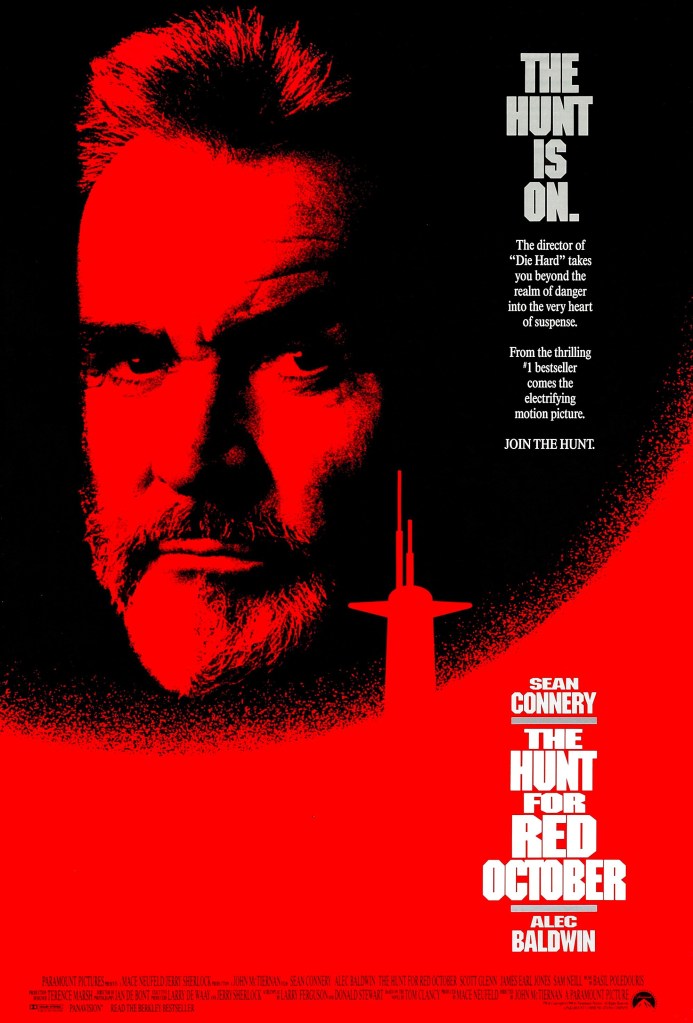
“We shail into Hishtory!” It’s the film that launched a thousand Sean Connery impressions. Only Connery could get away with playing a Soviet submarine captain with the thickest Scottish accent this side of Lithuania. He only took the role – from Klaus Maria Brandauer – at short notice, but he’s a pivotal part of the film’s success. The Hunt for Red October is a superb film, the finest Tom Clancy adaptation ever made and one of the cornerstones of the submarine genre. It expertly mixes beats of conspiracy, espionage, naval adventure and even touches of comedy, into a superbly entertaining cocktail.

Connery is Captain Marko Ramius, the USSR’s finest naval captain, given command of The Red October on its maiden voyage. The Red October is equipped with a technical miracle: a “caterpillar drive” that uses a water powered engine to run silently, making it invisible to sonar. So why is the entire Russian fleet being scrambled to find and sink the submarine? Could it be, as the USSR tells the US, that Ramius has gone mad and plans a nuclear strike? Or is it, as CIA analyst Jack Ryan (Alec Baldwin) argues, because Ramius plans to defect and bring the technological marvel with him?

Of course, we know Connery plans to defect. After all, we’ve already seen him murder shifty political officer Ivan Putin (Peter Firth – to whom alphabetical billing is very kind) and tell his handpicked crew of officers, led by loyal second-in-command Borodin (Sam Neill, so dedicated to affecting a Russian accent it’s as if he felt he needed to do in on behalf of himself and Connery) that there is no turning back. The film’s expert tension – and it rachets it up with all the precision of a well-oiled machine – is working out how. How will Ramius evade the Russian fleet? How will he manage to arrange his defection without communicating with the US? And will he and Ryan – unknowingly working together – persuade the US not to blow The Red October out of the water?

With McTiernan, in his prime, at the helm it’s not a surprise the film is expertly assembled. The parallel plot lines are beautifully intercut. Our two heroes, Ramius and Ryan, face very different obstacles (dodging Soviet torpedoes vs patiently making his case to sceptical superiors mixed with risky long-range travels to far-flung US subs) but somehow seem to be building a bond before they even meet. Ryan is an expert on Ramius and his career, while his thoughtful, good-natured decency is exactly the sort of American Ramius tells his crew they need to meet (as opposed to “some sort of buckaroo” – a word Connery relishes).

McTiernan isn’t just an expert mechanic though. There are lovely touches of invention and magic here. The Hunt for Red October has possibly one of the finest transitions ever. Connery, Neill et al start the film speaking in Russian. Ramius meets with Firth’s Putin (great name) in his quarters to open their orders. The two chat briefly in Russian, then Putin reads from Ramius’ copy of the Book of Revelations. As Firth reads (in fluent, expertly accented Russian), McTiernan slowly zooms in on his lips until he reaches the word “Armageddon” (the same in both languages) – the camera then zooms out and both Firth and Connery continue the scene in English (Firth switching mid-shot from Russian to English without missing a beat). It’s a beautifully done transition, rightly a stand-out moment.

But then it’s a film full of them. Many rely on Connery’s performance, superb as Ramius (this was his career purple patch, where one effortlessly excellent performance followed another). Ramius has a grizzled sea-dog charm and a twinkle in his eye, but he’s also nursing a private grief and pain that motivates his defection. He can be demanding of his men, but also inspires loyalty – that “We Shail into Hishtory!” pep-talk speech is delivered perfectly (and McTiernan makes Soviet sailors singing the Soviet anthem a punch-the-air moment even though (a) we know they are technically the bad guys and (b) we know Ramius is lying through his teeth in his speech). But he is always a commander, Connery investing him with every inch of his movie star cool.

Ramius is also an interesting reflection, in a way, of Ryan. Played with a great deal of young-boy charm by Baldwin (and also wit, Baldwin dropping impersonations of other cast members into the film – including a stand-out Connery), Ryan is brave, determined but also slightly naïve and out-of-his-depth. But like Ramius he respects his “enemy”, is open to negotiation, thinks before he acts and wants to save lives. The two even share similar upbringings. The film triumphantly shows a desk man, spreading his wings and doing stuff he couldn’t imagine: the guy who tells an air hostess in an early scene he can’t sleep on flights due to fear of turbulence, will later have himself dropped into the sea from a perilous helicopter flight, steer a Russian sub and duke it out with the last Soviet hard-liner standing in The Red October’s missile room.

McTiernan shoots Ryan’s conversations like combat scenes: quick reversals and cross shots and even whip pans and zooms. It ratchets up the tension and drama in these sequences – and allows him to play it cooler in the sub shots which (with its more constrained set) where patient studies of tense faces follow sonar reports of the approach of torpedoes or enemy subs. Sound is a triumph in Red October – every ping or sonar shadow is sound edited to perfection, with much of its tension coming from their perfect rising intensity.

It builds towards a superb resolution as several plot threads come together in a dramatic face-off that gives us everything from sub v sub to gunfights, with tragedy and triumph all mixed in. It’s a perfect ending to a film that is a masterpiece of plotting and construction, acted to perfection by the whole cast (Connery and Baldwin, but also Jones, Neill, Glenn – perfect casting as a no-nonsense naval captain – and several reliable players in smaller roles). McTiernan directs with exceptional pace and excitement, it’s sharply scripted and technically without a fault – from its gleaming Soviet sub (with church like missile room) to brilliantly edited sound-design. It’s a joy every time I watch it.

Clear and Present Danger (1994)

Clear and Present Danger (1994)

Tom Clancy’s door-stop thriller is turned into an involving conspiracy thriller that makes masterful use of Harrison Ford

Director: Philip Noyce

Cast: Harrison Ford (Jack Ryan), Willem Dafoe (John Clark), Anne Archer (Dr Cathy Ryan), Joaquim de Almeida (Colonel Felix Cortez), Miguel Sandoval (Ernesto Escobedo), Henry Czerny (Bob Ritter), Harris Yulin (James Cutter), Donald Moffat (President Bennett), Benjamin Bratt (Captain Ramirez), Raymond Cruz (Domingo Chavez), James Earl Jones (Jim Greer), Tim Grimm (Dan Murray), Hope Lange (Senator Mayo)

Tom Clancy’s Jack Ryan has always been the All-American hero (his slimy, besuited CIA rival even frustratedly snarls “you are such a Boy Scout”). Ryan is almost too-good-to-be-true: pure as the driven snow, incorruptible, a success at everything he does and a devoted family man. What chance does someone like that have in Washington? In Clear and Present Danger, Ryan is dragged into the War on Drugs, unwittingly becoming the front man for an illegal military assault team against the Columbian cartels, ordered by a US President on a vendetta for the death of a friend. When the truth comes out, you’ve got one guess who takes it on himself to save the soldiers who are hung out to dry by the suits in Washington.

We know he’ll do the right thing as well, because he’s played by Harrison Ford. Ryan is basically a blank slate as a character, so Ford’s straight-as-an-arrow everyman decency does most of the heavy lifting to establish who he is. As an action hero, Ford has the chops but his real strength is his ability to look frazzled, scared and muddling through – rather like the rest of us would. Ryan gets in some real scrapes here, from dodging missiles in an attack on a diplomatic convoy to desperately fighting for his life in a timber factory. Ford’s strength as an actor is to be both authoritative and also vulnerable – his willingness to look scared but determined works wonders.

Clear and Present Danger also gives plenty of scope for Ford to employ his other major empathetic weapon: the clenched jaw and pointed figure of moral outrage. He does a lot of both here, a central scene seeing Ryan confronting besuited rival Ritter (played by a weaselly, bespectacled Henry Czerny, the polar opposite of Ford’s clean-cut everyman-ness) earnestly telling him he broke the law and is heading to jail (laughed off). There can’t be an actor more skilled at getting you to invest in someone, to both simultaneously worry about him while being confident he will do the right thing. It’s a rare gift, and Clear and Present Danger exploits it to the max.

Ford is the centrepiece – and main strength – of a competent, well-made conspiracy thriller, directed with a professional assurance by Philip Noyce. It makes a good fist of translating Clancy’s doorstop novel – with its huge complexities – to the screen (although you might need a couple of viewings to work out the twisty-turny, backstabby plot, where wicked schemers turn on their own schemes). Noyce has a special gift for keeping dense technical and exposition scenes lively. At one point he cross-cuts a parallel investigation into a fake car bombing between Ryan (who flicks doggedly through textbooks) and his Cartel rival who employs gadgetry and computers. Plot heavy scenes like this are well-shot, pacey and capturing plenty of reaction shots, even if they only feature characters messaging each other on clunky 90s computers or walking-and-talking in shadowy metaphors.

Clear and Present Danger also successful juggles its Washington shenanigans, with parallel intrigue in its Columbia setting. There ruthlessly charming Cortes (played with a wonderful cocksure suaveness by Joaquim de Almeida) is scheming to takeover his boss’ (a blustering Miguel Sandoval) operation. These plot unfold both together and in parallel, allowing for a little bit of neat commentary contrasting the cartels and Washington. The film manages a bit of critique of America’s thoughtlessly muscular intrusion into the affairs of other countries, with a President turning a blind eye after passing on implicit instructions (but still with a boy scout hero who will sort it all out).

Noyce also pulls out the stops for a couple of brilliantly executed scenes. Great editing, sound design and committed acting makes a scene where Luddite Ryan races to print off incriminating evidence from a shared drive while technically assured Ritter deletes the files, edge-of-the seat stuff. Never before has racing to fill a printer with paper seemed more exciting.

That pales into significance with the film’s centre piece, a genuinely thrilling Cartel ambush on a US diplomatic convoy, with Ryan stuck in the middle. With perfect build-up – from James Horner’s tense score to the skilful editing – the attack (with Oscar nominated sound design) is hugely tense, leaves our heroes terrifyingly powerless and is flawlessly executed by Noyce and his crew. It makes the whole film a must watch all on its own.

It’s surrounded by several other well-handled action set pieces, featuring the Marines sent on a covert mission (and then hung out to dry). As the operation leader, Willem Dafoe plays very successfully against type as a (ruthless) good guy, as Clancy’s other regular character, uber-fixer John Clark. Dafoe also has the chops to go toe-to-toe with Ford, and like de Almedia’s charmingly wicked Cartel-fixer also serves as another neat contrast to Ryan’s decency-with-a-fist.

The film is rounded out by a troop of reliable actors. Anne Archer has little to do as Ryan’s supportive wife, but Donald Moffat is good value as the shifty President (communicating both intimidating authority and Nixonian survival instinct), Harris Yulin perfectly cast as a President-pleasing apparatchik and Raymond Cruz as an ace but naïve marine sharp-shooter. Clear and Present Danger has few pretensions to be anything other than an involving thriller – but that also helps make it a very enjoyable one.

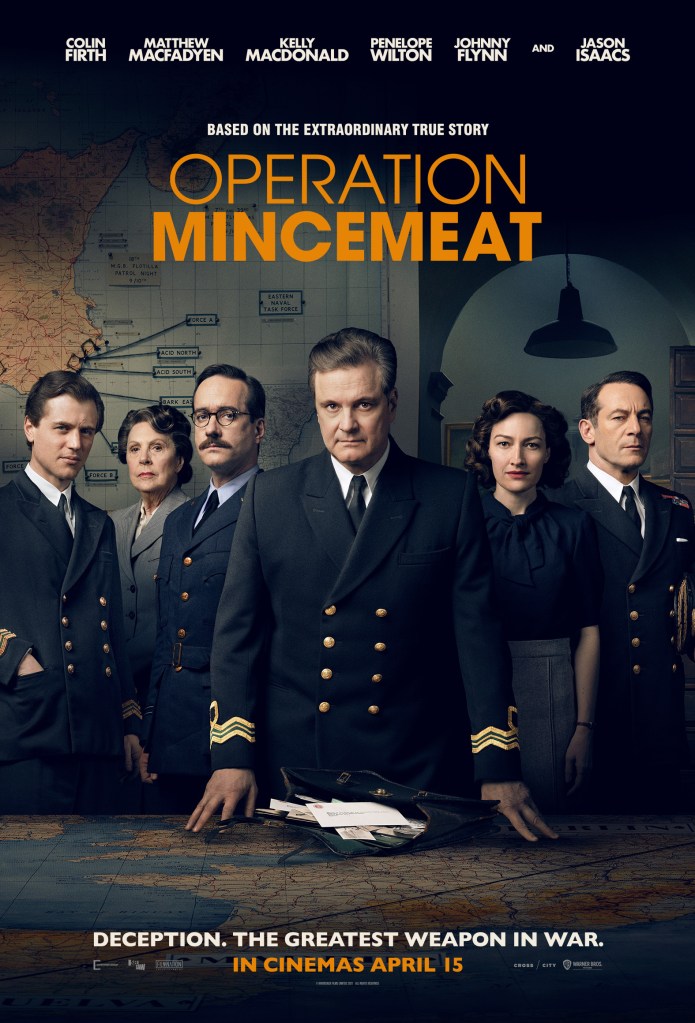
Operation Mincemeat (2022)

Operation Mincemeat (2022)

Wartime heroics get bogged down in bland love-triangles and tedious inventions

Director: John Madden

Cast: Colin Firth (Ewen Montagu), Matthew Macfadyen (Charles Cholmondeley), Kelly Macdonald (Jean Leslie), Penelope Wilton (Hester Leggett), Johnny Flynn (Ian Fleming), Jason Isaacs (Admiral John Godfrey), Simon Russell Beale (Winston Churchill), Paul Ritter (Bentley Purchase), Mark Gatiss (Ivor Montagu), Nicholas Rowe (Captain David Ainsworth), Alex Jennings (John Masterman)

In April 1943 a body washed up on the shore of neutral Spain. It was a Major William Martin, carrying Allied plans to launch a massive invasion of Greece in July 1943. German agents intercepted these plans before they could be returned to the British and the Germans shifted their troops to counter this invasion. Problem for them was, Major Martin wasn’t real, the plans he carried were inventions and the Allies were planning to attack Sicily. Welcome to Operation Mincemeat.

Adapted from an entertainingly written and well researched book by Ben MacIntyre, Operation Mincemeat is about one of the most successful wartime deception plans ever launched. The film is a bit of a deception operation itself. Although it looks like a Boys-Own caper film, with eccentric boffins solving problems and running circles around the Nazis, it’s actually a dry, slow, sombre film that seems embarrassed at even the faintest idea of flag-waving Wartime heroism. Instead, everything is glum, depressing and bogged down in invented details that never convince.

Which is a real shame, because when the film focuses on the things that actually happened it’s both entertaining and informative. To create Major Martin, MI6 needed a body – specifically a military-age male who drowned. That was almost impossible to find in London at the time – and the final ‘candidate’ had to be kept as ’fresh’ as possible for months. The letters he carried included ‘private correspondence’ from one British General to another – a letter that went through almost twenty drafts as the British authorities squabbled about how blunt its ‘personal’ views could be. When the body washed up, a helpful Spanish officer tried to return the papers immediately. When the film is on this material it’s good.

But it feels embarrassed by the idea of enjoying this stuff. After all, war is hell and the idea that we could even for a moment think these eccentrics (nearly all of whom spend their time penning spy stories) might find part of this subterfuge fun is disgraceful to it. So, we are constantly reminded of the horrors of war: the moral quandaries of using a person’s body for an operation, the troubling “wilderness of mirrors” of espionage. All this means that lighter moments – or moments where we could enjoy the ingenuity of the characters – are rushed over as soon as possible.

The other thing the film is embarrassed about are the lack of female characters. As such Kelly MacDonald’s Jean Leslie – who contributed a vital photograph of herself as ‘Major Martin’s’ paramour and the background of this fictional relationship – is elevated to third wheel in the planning. But, in a move that feels bizarrely more sexist and conservative, she also becomes the apex of a love triangle between herself and Firth and MacFadyen’s characters. This tedious triangle takes up a huge amount of time in an overlong film and is fatally scuppered by the total lack of chemistry between any of the participants.

It also means our heroes are forced to spend a lot of time running around like love-sick, horny teenagers, following each other and passing notes in class. At one point Cholmondeley tells Jean about Montagu’s wife with all the subtlety of “I saw X kissing Y behind the bike sheds”. This also means that the matey “all in this together” feeling essential to these sort of caper films (which is what this story really is) is undermined. This ends up feeling rather like a group of people who learn to dislike each other but vaguely put personal feelings aside for the greater good.

The real exciting history clearly isn’t exciting enough. Instead, ludicrous, artificial “improvements” littered through the story. I get that Jason Isaacs’ Admiral Godfrey is turned into a moronic, obstructive bureaucrat for narrative reasons. But the ridiculous shoe-horning in of a link between the Operation and the Anti-Nazi resistance in Germany in the second half of the film feels blatantly untrue even while it’s happening. By the time one of our heroes is being confronted by a German agent in their own home, the film has checked out of reality.

Truth is, this is a bad film, over-long, overly dry and crammed with artificial flourishes. Partially narrated by Ian Fleming (a woefully flat performance by Johnny Flynn, sounding oddly like Alex Jennings), the film attempts to draw links between this and the formation of James Bond but these fall as flat as everything else. MacFadyen gives probably the best performance among some wasted Brit stars. The truth is, a one-hour straight-to-camera lecture from Ben MacIntyre would have been twice as entertaining and interesting and half as long. A chronic misfire.

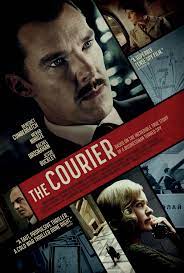
The Courier (2021)

The Courier (2021)

True-life Cold War thrills, as two spies battle to prevent the Cuban Missile crisis

Director: Dominic Cooke

Cast: Benedict Cumberbatch (Greville Wynne), Merab Ninidze (Oleg Penkovsky), Rachel Brosnahan (Helen Talbot), Jessie Buckley (Shelia Wynne), Angus Wright (Dickie Franks), Željko Ivanek (John McClone), Kirill Pirogov (Oleg Gribanov), Anton Lesser (Bertrand), Maria Mironova (Vera)

In October 1962 the world nearly ended, as the USA and the USSR clashed over Soviet missiles in Cuba. The history of this grim month is well known, as the fate of the world hung in the balance. What’s less known is the role Soviet double agent Oleg Penkovsky played in passing information on Soviet capabilities and strategy to the West – and how crucial this was to bringing the crisis to a (world-surviving) end.

The Courier covers – in a pleasingly old-fashioned, Le Carré-ish way – Penkovsky’s (Merab Ninidze) dangerous espionage career, and the relationship he built with British businessman Greville Wynne (Benedict Cumberbatch). Wynne – totally unconnected to the Secret Services – was chosen by MI6 to make initial contact with Penkovsky. He then served as Penkovsky’s courier, carrying secret documents and microfilm back to the West under cover of business trips to the Soviet Union – and the two men became close friends. When the Cuban Missile Crisis increases the risks to Penkovsky, it’s Wynne who pushes for a risky mission to extract him before he is uncovered and killed.

Directed with confident, low-key aplomb by Dominic Cooke, The Courier mixes shady, spy-thriller tropes (secret meetings, scratched signals, one-time pads, secret cameras) with a genuine friendship between two very different people. All taking place in a grim, Soviet environment where the risk of discovery lurks around every corner. Ordinary receptionists and chauffeurs could all be active or potential informants of the KGB, and there is not a single room that cannot be bugged.

It’s a very unusual world fish-out-of-water Wynne finds himself in. Expertly played by Cumberbatch as a stiff-necked people-pleasing fixer (introduced deliberately losing a game of golf to close a business deal with the triumphant winners), Wynne uncovers depths he didn’t suspect in himself. He at first has no interest in spying – or the Soviet Union – and simply wants a quiet life rebuilding trust with his wife (Jessie Buckley making a great deal of a rather thankless part of a woman kept in the dark about her husband’s activities) after a past affair.

He needs brow-beating from MI6 to even carry out his first mission – which he executes with a nervy unease – and reacts with horror at the idea of repeating it. What draws him in is the same quality that will see him take huge risks: his sense of humanity and fair play and the bond of mutual friendship and understanding between him and Penkovsky. Wynne willingly accepts dangers and sacrifices others would blanche at, out of loyalty and a sharply defined sense of right and wrong.

Wonderfully played by Ninidze, The Courier makes clear the huge risks Penkovsky is taking even considering talking to the West. This is a country where a Western spy is executed in the middle of a special staff meeting at his ministry. Whose leader is hell-bent on asserting Russian dominance and devil-take the consequences (sound familiar?). A country taking part in an arms race that could destroy the world, and disregarding the risks that could lead to those weapons being used. A quiet, loving family man, Penkovsky is appalled at the aggressive posturing of his country and how it is endangering his family and millions like them around the world.

It’s the bond between these two men, their sense of duty and their desire to protect, their quiet wit and small acts of thoughtfulness – as well as their capacity for betrayal (Penkovsky of his country, Wynne of his wife) – that draws them together. For Wynne, the selfless risks of Penkovksy create a deep well of respect and admiration, as well as pushing this businessman to develop into a justified-risk-taking moralist with a greater emotional connection to the beauty of life (represented by two contrasting scenes showing the two of them attending a Russian ballet – the second performance moves them both to tears, as if reminding them why they fight).

Around them, shot in a beautifully drained out style that really adds to the sense of terror and danger, plays out a sharp, well-paced spy thriller. Rachel Brosnahan plays Penkovsky’s CIA handler – an invented female agent, allowing the film to take a few shots at the stuffed-shirt unimaginativeness of her superiors – while Angus Wright (all stiff realpolitik) is his MI6 one. The official agencies play a more pragmatic bat, pushing Penkovsky to greater-and-greater calculated risks to improve their access. They also coldly accept any double agent has only a limited shelf-life before discovery, and getting the maximum out of them while they can is essential.

The film’s final act explores the impact of this, as Penkovsky is exposed and Wynne goes to dangerous lengths to try and help him escape. Shifting at this point into something more claustrophobic and hand-held, the film’s final act layers on the grim suffering spies face when uncovered – and includes several moments of genuinely moving suffering.

The Courier is a low-key, efficient, well-made and well-paced true-life espionage story, that feels like the professional, smartly assembled, film-making that often gets squeezed out of cinemas today. Very well acted by a strong cast, every frame has a perfect mixture of 50s/60s style and Cold War paranoia and its final sequence carries a decent emotional punch. A fine retelling of an overlooked story.

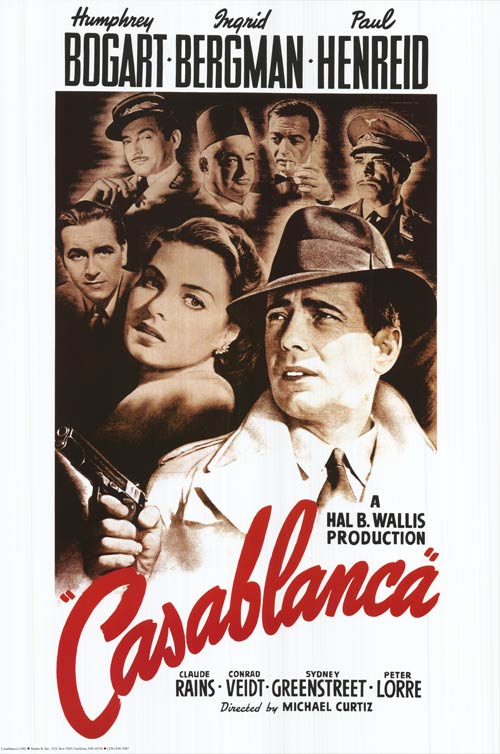
Casablanca (1943)

Casablanca (1943)

Bogart and Bergman are a love story for the ages in the ever-young Casablanca

Director: Michael Curtiz

Cast: Humphrey Bogart (Rick Blaine), Ingrid Bergman (Ilsa Lund), Paul Henreid (Victor Laszlo), Claude Rains (Captain Louis Renault), Conrad Viedt (Major Henrich Strasser), Sydney Greenstreet (Signor Ferrari), Peter Lorre (Signor Ugarte), Dooley Wilson (Sam), Madeline Lebeau (Yvonne), Curt Bois (Pickpocker), SZ Sakall (Carl), Leonid Kinsky (Sascha), Marcel Dalio (Emil), Joy Page (Anna)

For today, for tomorrow and for the rest of your life. That’s the sort of lifespan Casablanca has: to see it is to fall in love with it. That’s what people have been doing for nearly 80 years. There isn’t a more popular “great” movie. This is vintage, top-notch, prime Hollywood product, made by a group of people at the top of their game that has such impact you’ll know most of its highlights without having ever seen the film. No wonder people have been saying since it was released “Play it again” (famously, a phrase you will never actually hear in the film itself).

Casablanca, December 1941. Corrupt Vichy France officials rule the roost, with the city clinging to neutrality. European refugees and American ex-Pats mix with Nazi officers – everyone trying to get those all-important “letters of transit” you need to climb onto a plane and get out of the warzone. Letters like this will cause a world of trouble for American ex-Pat Rick Blaine (Humphrey Bogart), keeping Rick’s Café going as a place where politics are never discussed. But Rick may be forced to choose sides when his lost love Ilsa Lund (Ingrid Bergman) lands back in his life, on the run from the Nazis with her husband Czech freedom-fighter Victor Laszlo (Paul Henreid). Just before the fall of Paris, Rick and Ilsa had a love affair (she thought Victor was dead at the time) and neither of them has got over it. Will Rick take a stand and help Victor flee to continue the fight against the Nazis? Or is this a chance for Ilsa and he finally to be together?

Like many hugely beloved films, Casablanca combines a host of genres into one superbly digestible, hugely enjoyable, package. This is a star-crossed romance in the middle of a war film, with lashings of everything from espionage to gangsters to comedy of manners. In short, there would have to be something wrong with you not to find something to tick your boxes in Casablanca and it’s all brilliantly packaged together by Michael Curtiz into possibly one of the most purely entertaining and crowd-pleasing films ever made.

Casablanca is a superbly written pinnacle of the hard-edged but strangely romantic dialogue of Hollywood at the time, all delivered with more than a dash of humour. There isn’t a scene that doesn’t have a quotable line in it: and all of them delivered by a brilliant actor. Each scene is a master-class in Hollywood professionalism and skill. From our introduction to the streets of Casablanca – capped with the shooting of a Free-French fighter, who collapses to his death underneath a poster of Petain – to the beautifully evocative set (wonderfully shot by Arthur Edeson) for Rick’s café, where we will spend so much of the movie. In swift economy we see how ruthless Rick can be – not lifting a finger to help to petty crook and friend Ugarte (a wonderful cameo from Peter Lorre) – before understanding fully why he’s like that when he responds with something between shock, horror and desperate longing by the arrival of Ingrid Bergman’s Ilsa.

It’s also a film where the stakes are expertly set out. There are jokes about the cold ruthlessness of the Germans, but we are left in no doubt about their danger. (Conrad Viedt is grimly imperious as head Nazi Stasser). The scar on Victor’s face is a constant reminder of the horrors he escaped in the concentration camp (although, as per the time, the film understands these as jails rather than the hell they were). The refugees are putting on a brave face, but there is desperate practising of English and a willingness to trade anything (including their bodies) for letters of transit speaks volumes.

Nearly all of those actors (and Curtiz) are of course refugees and migrants themselves (only Bogart, Wilson and minor-player Page were American). The film gains a sub-conscious depth from this being more than just a story for so many of them. Fleeing from German advance in Europe (or escaping from Nazi persecution) was no theoretical for Henreid, Veidt or the host of great European actors in small roles. You can see that emotion when Victor cajoles the café’s clientele to sing La Marseillaise. The scene never fails to move because of the genuine power of watching real refugees, playing refugees, defiantly singing in the face of the Nazis who ruined their lives (the shots of Madeline Lebeau genuinely tear-stained face or the increasingly moved Spanish guitar player are beyond memorable). You can’t watch this sequence without a lump in your throat.

Mind you can’t watch most of it without that lump. Bogart and Bergman cemented themselves as icons with this passionate love story. It’s grounded, like so many truly affecting romances, on loss and pain rather than joy. Aside from a brief flashback to their time together in Paris – before Ilsa jilts Rick at the train station, rain washing the ink from her note (the sky shedding the tears Rick cannot) – these are two people essentially at loggerheads, because it’s the only way to keep their hands off each other. Rick deeply resents Ilsa, Ilsa can’t even begin to allow herself to think about her lost love for Rick because she fears it will take control of her. Particularly as, in Bergman’s beautifully judged performance, she clearly has a sort of spiritual (as opposed to romantic) love for the noble Laszlo.

It all helped to make Bogart such an icon for generations to come. Bogart is effortlessly cool here, but he’s also incredibly relatable – who, after all, hasn’t had their heart-broken? Watch him sadly starring in the middle distance, befuddled by drink and demanding Sam play As Times Goes By over and over, and it’s no surprise that he’s so torn for so much of the film about what to do. Paul Henreid could never compete with the mix of vulnerability and misanthropic cynicism Bogart effortlessly brings to the part (one of the all-time great performances in the movies).

Bogart is also a perfect encapsulation of what America wanted (and still wants) to be. Minding his own business, but tread on him and he’ll bite back. Not only that, he’ll pick the right side and always make sure he does the right thing. It’s hinted to us that, for all his shady past, Rick has sided with anti-Fascists in Spain and Ethiopia. We even know he had to flee Paris because there was a price on his head. He might “stick his head out for nobody”, but the genius of Bogart is we don’t quite believe him, even while we see him do just that.

The chemistry between him and Bergman – who claimed never to quite understand why the film had such impact – is breath-takingly good. Helped by some of the wittiest and hard-edged dialogue in the movies, they become Hollywood’s own Lancelot and Guinevere. Bergman’s deceptively soft-edged performance, carries inner grit masking her own pain – she also brilliantly manages to show how she could be in love with two men (in different ways) at once. These two characters go through a long dance of denial before finally confessing all: and the iconic ending has the perfect combination of heartfelt longing and sacrifice they both know needs to be made.

But it’s not the only romance in the movie: having almost as much impact is the chemistry between Bogart and a never-better Claude Rains as jovially corrupt Vichy inspector Renault (merrily trading letters of transit for sexual favours and ticking the boxes of his duty while lining his own pockets). Casablanca also has in it one of the greatest love-hate friendships in the movies, between two people who can’t help liking each other, even when they barely have a single interest combined. Sounds like the beginning of a beautiful friendship.

Critical discussion has often revolved around whether Casablanca can be considered a piece of “high art”. It’s hard to imagine Ingrid Bergman’s famous Swedish compatriot directing it. To be completely honest, Casablanca is one of the finest packaged pieces of Hollywood Hokum ever made. And there is nothing wrong with that. It’s a master craftsman of glorious stand-up-and-applaud films in Curtiz, delivering his masterpiece. Casablanca doesn’t have the revelatory flair of something like Citizen Kane. But no other film in existence so brilliantly exploited the Hollywood formula. And it shows how much power, emotion and joy you mine from Hollywood’s narrative and filmic tropes when they were worked with as much skill and passion as you get here.

It’s a film that not only perfectly encapsulates a whole period of Hollywood professionalism, it also establishes the sort of golden rules – a brittle semi-anti-hero, sacrifice, moral complexities and open-endings – that would increasingly dominate Hollywood in the decades to come. Casablanca is a genuine turning point in Hollywood, a perfect summation of the noirs, love stories and adventures that preceded it, but repackaging them with influential insight. It’s also, above and beyond everything else, a bloody brilliant film that, as Nora Ephon said, you can never see enough.

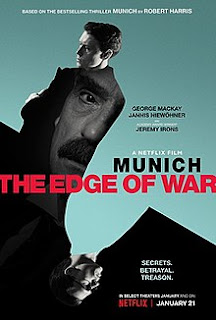
Munich: The Edge of War (2021)

Munich: The Edge of War (2021)

The backstory of history’s most famous empty promise is explored in this solid historical drama

Director: Christian Schwochow

Cast: George MacKay (Hugh Legat), Jannis Niewöhner (Paul von Hartmann), Jeremy Irons (Neville Chamberlain), August Diehl (Franz Sauer), Liv Lisa Fries (Lena), Sandra Hüller (Helen Winter), Alex Jennings (Sir Horace Wilson), Ulrich Mathes (Adolf Hitler), Anjli Mohindra (Joan), Jessica Brown Findley (Pamela Legat), Mark Lewis Jones (Sir Osmond Cleverly)

It’s 1938 and Hitler (Ulrich Matthes) wants the Sudetenland in Czechoslovakia. Will the British and French say no? The danger is, if they do, it will lead to a war only Germany is ready for. War is feared by Prime Minister Neville Chamberlain (Jeremy Irons), who remembers the horrors of the trenches. So, he flies to Munich to make a deal with Hitler. While there, a member of the British legation Hugh Legat (George MacKay) is contacted by an old friend, Paul von Hartmann (Jannis Niewöhner), a German diplomat now extremely disillusioned by the brutal Hitler regime.

Schwochow’s film is a handsomely mounted film version of Robert Harris’ best-selling thriller. Lots of critics called it a “What if” history film, which pretty much suggests people don’t understand what that term means. The film presents a pretty much a faithful (if compressed) version of the Munich talks, rather than some sort of alternative history. What makes it different is the revised angle it takes on Chamberlain – spiced up with a fictional plot about young diplomats trying to bring down Hitler.

Played with an avuncular, praetorian charm by a perfectly-cast Jeremy Irons, Harris book (and this film) presents Chamberlain not as a naïve idiot, duped by Hitler, but a man very much aware of the nature of his opponent, but who felt duty bound to do everything he could to safeguard peace. Chamberlain speaks with real emotion of the loss of a whole generation in the trenches and his fear that Britain is not ready for another war. Sure, Irons’ Chamberlain can also be arrogant and blinkered, convinced of his own cunning shrewdness, but he’s willing to risk his reputation for peace.

What he’s willing to sacrifice of course are the Czechs – and the film doesn’t give a lot of time (if any) to this screwed nation, that saw huge parts of its country split off and handed over to an aggressive power. The film would have been richer with more content around the debates and discussions at the conference and giving more time – as the novel does – to understanding Chamberlain’s strategic thinking. The film implies Chamberlain’s infamous bit of paper was his effort to clarify where blame for eventual war would lie – but it doesn’t allow us to understand more about what Chamberlain initially intended to gain from the conference or when he decided that he was unlikely to win any concessions from Hitler. We never see a moment of the negotiations, which seems a waste for a film that was designed to re-evaluate Chamberlain.

That’s partly because the film, like the book, gives a lot of time to its fictional plot. And like there, never seems to make this seem as vital or interesting as the historical storyline. Perhaps because, while the Munich storyline presents us with something we’ve not seen before, the fictional storyline feels familiar and derivative. George MacKay and Jannis Niewöhner do good work as slightly naïve young men who feel they can change the world, if they find a way to apply pressure at the right moment. But they feel like narrative devices to spice up the history, to throw in a bit of light espionage and peril to stop it being a film about a conference.

But everything feels familiar: clandestine meetings in crowded bars and pubs (surely anyone watching would hear everything?), meetings in parks, document handovers, pacey walks with people looking over their shoulder… It’s all handsomely done but it doesn’t feel fresh. And somehow, since we know (as this isn’t a What if… movie!) that it all end in failure (our heroes spend ages trying to get a copy of the Hossbach memorandum to Chamberlain who basically ignores it immediately) it doesn’t feel urgent enough.

And more interesting personal stories get short-changed. There is more than a hint of sexual chemistry between Hugh and Paul, that the film does more than hint at in performance, but doesn’t explore. Liv Lisa Fries as a young woman both men fall in love with, ends up shifted into a very stereotyped martyr role. There are some interesting ideas touched upon with the growth of a resistance movement to Hitler, but it never quite tells us enough to understand this. And the film shies away from being too bleak in its ending – even though the fates of both our lead characters must surely be a terminal one as they head into the war (given their chosen paths of anti-Nazi resistance cell and the RAF).

I wish the film – just as I felt when reading the book – had dropped most of its standard espionage sub-plot and instead had focused solely on Chamberlain. Especially with an actor as well-suited to the role as Irons. It would have allowed to focus exclusively on re-evaluating and exploring the motivations of those at the conference and the political and military difficulties they faced. Unfortunately, this gets diluted too much, which means we never quite get our perceptions challenged as much as they should. It’s a well-made film, but settles too often for being traditional rather than daring.

Goldfinger (1964)

Goldfinger header
Sean Connery defines Bond forever in Goldfinger

Director: Guy Hamilton

Cast: Sean Connery (James Bond), Honor Blackman (Pussy Galore), Gert Fröbe (Auric Goldfinger), Shirley Eaton (Jill Masterson), Tani Mallet (Tilly Masterson), Harold Sakata (Oddjob), Bernard Lee (M), Martin Benson (Mr Solo), Cec Linder (Felix Leiter), Lois Maxwell (Miss Moneypenny), Desmond Llewelyn (Q), Burt Kwouk (Mr Ling), Richard Vernon (Colonel Smithers), Bill Nagy (Mr Midnight)

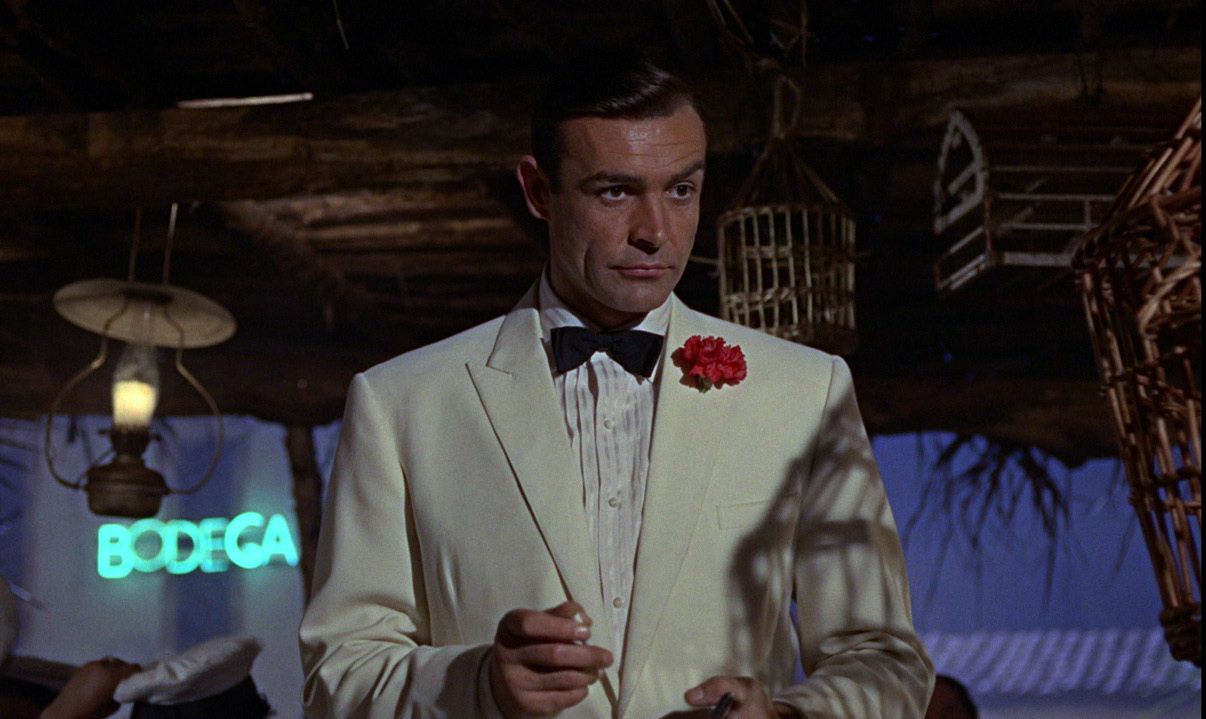
It took three films, but Goldfinger was when they got the James Bond formula spot-on. So spot-on, that all the James Bond films that followed would employ elements introduced here. This is where we got for the first-time: the pre-credits action sequence, Q, a gadget filled Aston Martin, a bizarre assassination tool, a villainous henchman with a bizarre skill, an outlandish scheme and Bond delaying being saved at the end for a few more moments of rumpy-pumpy. It’s Connery at the height of his powers, has a knock-out song, one brilliant sequence after another and marks the moment where Bond wisely severed any connection with the real world, like a laser slicing through gold towards our hero’s crotch.

On vacation in Miami, James Bond (Sean Connery) has a run in with Auric Goldfinger (Gert Fröbe), gold bullion millionaire and card cheat. During this his romance with Jill Masterson (Shirley Eaton) is cut short when she is killed by being covered completely in gold paint (a fatal case of the not-actually-real ailment “skin suffocation”) by Goldfinger’s silent steel-rimmed hatted manservant Oddjob (Harold Sakata). Bond is hungry for revenge when he is tasked by M (Bernard Lee) to find out how Goldfinger is smuggling Gold bullion. He finds out Goldfinger has an even more fiendish plan in the works, involving Chinese agents, a nasty gas, an all-female flying circus headed by Pussy Galore (Honor Blackman) and the US gold reserve at Fort Knox.

Goldfinger was a massive hit and pretty much lands somewhere near the top of any poll of the greatest ever Bond films. That’s because it’s just a massive explosion of cool fun. It’s exciting, funny, perfectly paced and has one scene after another that are so perfect, Bond films for the next fifty years would more-or-less repeat them again and again (taking it even further, A View to a Kill is virtually a remake of Goldfinger and even Quantum of Solace has a homage to death-by-gold-paint). Goldfinger takes place in a heightened reality of thrills and spills – unlike From Russia with Love or Dr No there is not even the slightest pretence espionage might work something like this – and barrels along with such pace and momentum it becomes a thrill ride you don’t want to get off.

The plot is actually rather close to Fleming’s original. Goldfinger’s plan has been tweaked, but the film still finds time for the classic “Bond takes on the cheating villain at a gentleman’s sport”, with Bond duelling with Goldfinger in a round of match-play golf (I like to think this is where Connery’s real-life obsession with the sport began, cunningly swopping the cheating Goldfinger’s ball on the final hole for default victory). But the film adds a playful, tongue-firmly-in-cheek quality. It manages to mix thrills with not taking itself too seriously, becoming a grandly entertaining thrill ride.

The re-working of the elements of the novel for the screen created an indelible template for Bond. Oddjob became a walking icon, his shadow instantly recognisable, invulnerable with a killing method – a steel rimmed hat he throws with Olympian accuracy – that’s a perfect mix of just-about plausible and utterly ridiculous. And also, of course, perfect to playfully imitate a home. What you can’t imitate is bombing around hill roads in a gadget-stuffed Aston Martin, but you can dream. The car chase is not only a show case for cool driving, it also lets you see each of the super-cool enhancements introduced by Q one-after-another (a pattern the series would follow time and again whenever a gadget-stuffed car appeared) and hammers home Bond’s super-cool confidence.

Connery was of course perfect for conveying that. In Goldfingerhe was still interested, clearly enjoying some of the best quips he got as well as just enough acting challenges – from Bond’s sad regret at anger at the death of no less than two Mastersons, to his terror at the prospect of being unmanned by a laser. That sequence has of course gone down in film history – from the striking image to the classic exchange “You expect me to talk?” “No Mr Bond I expect you to die!” – but a lot of it is sold from Connery’s desperate search for the right words to turn that machine off. Connery is cool but still just about vulnerable, cunning, smart and witty but also human. Who wouldn’t want to be so unshakeably cool that he can emerge from a wet suit (with a model seagull on his head!) unzip to reveal a tux, light a nonchalant cigarette while a factory explodes behind him, seduce a woman and then off a killer with a bathtub and a heater (“Shocking!”) – and that’s just the first five minutes!

Every scene in Goldfinger is a doozy. The playful cool of Bond outsmarting Goldfinger in Miami then getting his comeuppance (Connery is so cool in the film btw you forget that Bond is such a staunch conservative, he cheekily disparages the Beatles – that other icon of Swinging Sixties Brit Cool – to Jill as casually as he offs villains). That golf game in Kent (capped by a decapitated statue). Hillside driving with Tilly (with extra dodged bullets). Late night gadget-filled car chase. The first meeting with Pussy Galore (“I must be dreaming…”). Goldfinger’s briefing (his offing of all the attendants makes the whole thing even more funny, since its clearly just Goldfinger enjoying a bit of showing off). Bond dragging a nuclear bomb around an epic Fort Knox set. Oddjob surviving everything but a million volts. Goldfinger earning his wings in the film’s climax. It’s all terrific.

And it all works because it’s got the balance spot-on between cartoon and reality. You can see it come together in Ken Adam’s set for Fort Knox: the inside was all made up (no one would stack gold that high!) but people believed it was the real thing, because it felt like the Fort Knox we shouldhave. Goldfinger is a scowlingly wicked villain, with a little kid’s delight in his own naughtiness. Honor Blackman doesn’t appear until the film is halfway through, but is an assured, forceful, brilliant presence, more than a match for Bond (we’ll gloss over the slightly dated way Bond seems to ‘convert’ her from implied Lesbianism to – well perhaps bisexuality). The briefing sequence with a grumpy, unimpressed Q was so good Desmond Llewelyn would essentially repeat it another 13 times (only OMHSS and Live and Let Die would skip the “Now pay attention 007” sequence between this and TWINE). All of this has the bright, primary colour fun of a rollicking graphic novel.

You can watch Goldfinger about a million times – and anyone who has written a Bond film probably has, it was such a template for the next seventeen films that followed – and it would still thrill, excite and entertain you. Connery’s interest after this went downhill, and the magic wasn’t always recaptured – but this when Bond went from being a cool spy to a cultural phenomenon. Bond became the box-office franchise that would dominate cinemas for decades, the ultimate spy caper that others would be compared to. Goldfinger mixed silliness and seriousness perfectly, thrills and laughs, action and comedy. It’s a superb and hugely influential film. It’s one of the Best Bonds ever: it clearly has the Midas touch.

No Time to Die (2021)

One final mission for Daniel Craig in No Time to Die

Director: Cary Joji Fukunaga

Cast: Daniel Craig (James Bond), Lea Seydoux (Dr Madeleine Swann), Rami Malek (Lyutsifer Safin), Lashana Lynch (Nomi), Ben Whishaw (Q), Naomie Harris (Eve Moneypenny), Jeffrey Wright (Felix Leiter), Christoph Waltz (Ernst Stavro Blofield), Ralph Fiennes (M), Billy Magnussen (Logan Ash), Ana de Armas (Paloma), David Dencik (Dr Valdo Obruchev), Rory Kinnear (Bill Tanner)

Remember when Daniel Craig was cast as Bond? Remember that CraigNotBond campaign, based largely on Craig being blonde? For about five minutes there was doubt about the franchise… and then Casino Royale became one of the best Bond films ever made. Craig is, clearly, one of the greatest Bonds ever, so No Time to Die, his sign-off for the role was always going to be a big movie. It’s at times exciting and gripping, but also a strange beast, partly straining at the confines of the franchise at others desperately trying to service all expectations.

It’s five years after the events of Spectre (you’d assume the less said of that the better, but unfortunately that film is absolutely at the heart of No Time to Die so we can’t dodge it). And it’s five years since James Bond (Daniel Craig) abandoned Dr Madeleine Swann (Lea Seydoux), believing she had been responsible for luring him into a Spectre ambush. Today, Spectre agents steal a biological weapon from MI6. A retired Bond, living off the grid in Jamaica, is recruited by Felix Leiter (Jeffrey Wright) to hunt it down for the CIA but MI5, and their new 007 (Lashana Lynch), are also on the trail. Plots within plots are slowly revealed and it seems all roads lead back to Madeleine and her childhood escape from a scarred killer, the mysterious Safin (Rami Malek). Just when Bond thinks he’s out, they drag him back in…

I have very mixed feelings about No Time to Die. You have to admire the skill and expertise with which it has been made. It looks absolutely gorgeous. The action set-pieces are full of ingenuity and excitement – in particular a duel between Bond and Safin’s agents in a mist-filled Norwegian forest. The opening action set-piece, in a picturesque classic Italian town, with Bond leaping off bridges and bringing out the Aston Martin for one final spin, is a doozy.

But do you remember when Bond was, y’know, escapist fun? Or even really just fun? If there is one thing I’d argue that No Time to Die isn’t, it’s fun. Yes lots of exciting things happen, but it’s also a rather maudlin film. It’s got a weary end-of-days feeling and a slight air of self-importance. Its absurd length doesn’t help puncture this. Unlike almost any other Bond film, I have a hard time imagining watching this again: it’s probably a better film than, say, The Spy Who loved Me, but honestly which one would you rather watch on a Sunday afternoon?

But Daniel Craig is superb: the ultimate expression of his wryly amused but guarded and distant Bond, a man constantly worried about lowering his defences and letting anyone in, hiding pain under an insolent grin but secretly desperate for an emotional connection. It’s clear he is one of the great Bonds. He also feels rooted Fleming. Fleming’s Bond was never a super-hero, but a flawed, lonely man, often muddling through, far more vulnerable and emotional than people remember. No Time to Die has a lot of echoes of Fleming, which is no bad thing.

No Time to Die buries itself in the emotional world of Bond. This is as close as you going to get to a character study of our super-agent. So much so that the action (and even the presence of a Bond villain) feel like only a contractual obligation. I would love it if they had made a final, indie-tinged film on a small budget where we saw Craig’s Bond wrestling with complex feelings and trying to work out what it’s all about. More of Bond playing kids’ games with Leiter in a Jamaican bar, or preparing a child’s breakfast in the morning (scenes where the film literally has its heart). It makes No Time to Die an often poorly structured and ill-focused film (factors that contribute to its length) that’s trying to be about Bond but also be BOND. It’s a circle the film can’t really square.

The Bond franchise has always slavishly followed whatever the latest big trend in cinema was so No Time to Die doubles down in following the Marvel series, by retroactively converting all of Craig’s Bonds into one single Bondverse, with No Time to Die as its Avengers Endgame. Problem is, this was all thought of far too late, feels hideously thrown-together with no thought, and means both this film and Spectre had to bend over backwards to retroactively fill out now crucial back story.

As a result, we get the bloated runtime as the film needs to set up a personal back story, explore an emotional arc, establish a new threat and thread in huge set pieces. The writing and structuring aren’t deft enough to do this as well as Marvel does. The result is something three hours long but still feels hard to follow. Craig’s best film – Skyfall – worked because it was basically a stand-alone entry. The series (and the character) works best as a mission-focused individual.

Many elements of the story introduced here make little or no sense. Safin – in a truly awful performance by a whispering Rami Malek, straining to look intimidating – is possibly the worst, most incoherent Bond villain ever. His motivation makes no sense: at first he seems focused on eliminating only those who murdered his family; his rants about collateral damage in no way squares with his plan to unleash genocide via a bio-weapon. His “we are two sides of the same coin” confrontation with Craig feels like a feeble attempt to recapture the magic of the confrontation with Bardem in Skyfall.  An opening sequence suggests a plot-defining link between him and Swann which has promise but goes almost no-where (when they finally meet again mid-film, she doesn’t even know who he is).

A braver film would have dumped this bio-hazard nonsense and placed issues of family at its heart: a hero uncertain about settling down, the villain a person desperate to find a new family. This would have placed the link between Safin and Swann at its centre, and also allowed an even more intriguing exploration of Bond’s character by contrasting him directly with a villain explicitly focused on the same preoccupations. Instead, the comparison isn’t there and Swann remains an incoherent character – alternately weak and strong as required by the plot. Craig and Seydoux also have no real chemistry and look physically mismatched (Seudoux’s youthful looks make Craig look older than he is). Compare their chemistry with that between Craig and Ana de Armas (in a knock-out guest slot, the film’s most fun moment).

Instead it feels like a film where every single idea has been thrown at the frame and all of them made to stick. Lashana Lynch has some fine charisma, but basically nothing to do as the new female 007 (the part actually feels like a bone the franchise has tossed at diversity – Bond even gets the 007 title back part-way through). There are constantly plots within plots within plots, like a dementedly rushed series of 24. Bond goes AWOL, then AWOL from AWOL, then he’s in then out then in again from MI6. A more tightly structured story would have dared to cut some of the flab, but No Time to Die is only part way towards being the brave break from tradition it needs to be.

Sure, it takes daring decisions: it has a tragic ending and shock deaths punctuate the film. But while it needed to be a smaller, intimate story with a sombre mood, it still throws in ridiculous villains, bases on islands, armies of goons and a world-ending threat. These things honestly don’t really work together and contribute to making the film too long and too sombre to be any fun. It’s a film that’s only part way to being what it wants to be, but still obsessed with being what it thinks it should be. An awkward Frankenstein that I’m not sure will have as much shelf life as its maker’s hope.

Black Widow (2021)

Scarlett Johansson crashes through a film that seems to exist by contractual obligation, Black Widow

Director: Cate Shortland

Cast: Scarlett Johansson (Natasha Romanoff), Florence Pugh (Yelena Belova), David Harbour (Alexei Shostakov), O-T Fagbenle (Rick Mason), Olga Kurylenko (Antonia Dreykov), William Hurt (Thaddeus Ross), Ray Winstone (General Dreykov), Rachel Weisz (Melina Vostokoff)

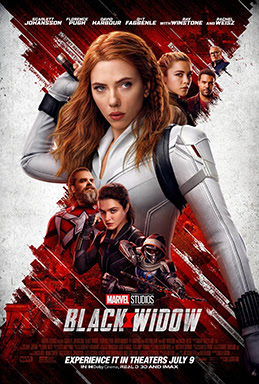
After the events of Captain America: Civil War, Natasha Romanoff (Scarlett Johansson) is on the run, when she receives a mysterious parcel from her “sister” – or rather the young girl she spent a few years with as a “family” of Russian agents undercover in America in the 1980s – Yelena Beloba (Florence Pugh). The parcel contains a drug that can be used to break the mind-control that nasty General Dreykov (Ray Winstone) has over his army of Widows: young girls like Natasha and Yelena, forced to become assassins in a torture chamber/training room called The Red Room. Natasha and Yelena team up to free the other assassins, but they will need the help of their “parents”, Russian super-soldier Shostakov (David Harbour) and genius inventor Melina (Rachel Weisz).

As the credits rolled on this formulaic slice of Marvel adventurism, I couldn’t for the life of me work out why it even existed in the first place. For a film centred around Scarlett Johansson’s Black Widow character, I expected to come out of this epic with some new understanding of her character. Not only do we not learn anything about her at all, we get no additional insight into what makes her tick, no deeper look into her character. We learn nothing about her that we don’t know already: and the film isn’t even smart or profound enough to reflect on the fact that we all know that the character died in the last film we saw her in. Does it exist solely so Marvel can say “Look we made a film about the only female Avenger, so shut up already!”

The film is stuck between being a greatest hits celebration of Johansson’s work elsewhere and providing as much focus as possible for Florence Pugh to take up the mantle in future films. In fact, the focus is so much on Pugh – who is terrific and gets all the best lines – that Johansson becomes a bit of a straight-man in her own damn movie. It’s Black Widow who has to say all the unhip, dull things (“We can’t steal that car!”) while her sister snipes, swears and plays devil-may-care with the consequences. For what should be her moment in the sun, Johansson gets rather short-changed here. But then perhaps she didn’t really care – it certainly never feels that she had anything she was determined to say or do here, other than cash a huge cheque.

The film is framed around a back story of villainy involving the nasty Dollshouse-style assassin school that both sisters were forced to attend, here revealed to still be in operation with a team of brainwashed female assassins. At the centre, like a creepy Charlie with brain-washed Angels, is General Dreykov, played by a barely-even-trying Ray Winstone (his accent is laughably atrocious). Dreykov is such a peripheral figure in the film that he never feels like either a threat or a dark manipulative force and his “plan” is such an after-thought, Winstone has to hurriedly state it for the first time in a final act monologue.

The film is supposed to be about misogyny, and how Dreykov has left a poisonous legacy of abuse of young women for his own ends. This includes forcing his daughter (a thankless mute role under a helmet for Olga Kurylenko) into a killer robber-suit as the sort of uber-assassin. Natasha is plagued with guilt about harming this character in the past – a guilt that would have way more impact on the viewer if we had seen even one bloody scene of them together to establish a relationship. How much more interesting, too, would the film have been if we had seen Kurylenko’s character as the new head of this abusive ring of spies, having taken up her father’s mantle and absorbing his poisonous world view. But no, such nuances are beyond this film.

There are a few moments of emotion and comedy gained from Natasha’s fake family – the parents who are not her parents, the sister who is not her sister. This odd group reunion makes for some laughs, but its noticeable that the main emotional impact is on Pugh’s younger, less settled character rather than the confident, assured Natasha. It’s another major flaw in the film: at the end of the day, I can’t imagine this had any real impact on the character at all. Does Natasha really change her view of herself at the end? No: she talks the talk about having “a new family” but her level of connection with them (certainly with her parents) doesn’t seem to go much beyond patient affection. Again, the real emotional impact is on Pugh’s character who has finally found something to base her life on: this would have worked so much better as an origins story.

Instead, this seems to exist solely to answer a trivia question I’m not sure anyone was asking: “What did Black Widow do in between Captain America: Civil War and Avengers: Infinity War?” If your life really was lacking without the answer to that, this is the film for you. Otherwise, there is little at all to make any of this stand out from any of the other 20+ Marvel films. Its action scenes are cookie-cutter (naturally everywhere Natasha goes, the place is destroyed), the emotional beats are completely unrevealing, the baddie so forgettable you might even miss it when he dies, and we get a few actors (Harbour and Weisz) coasting on a couple of decent lines and bit of comic business. Apart from anything involving Florence Pugh, this film is totally and utterly forgettable.