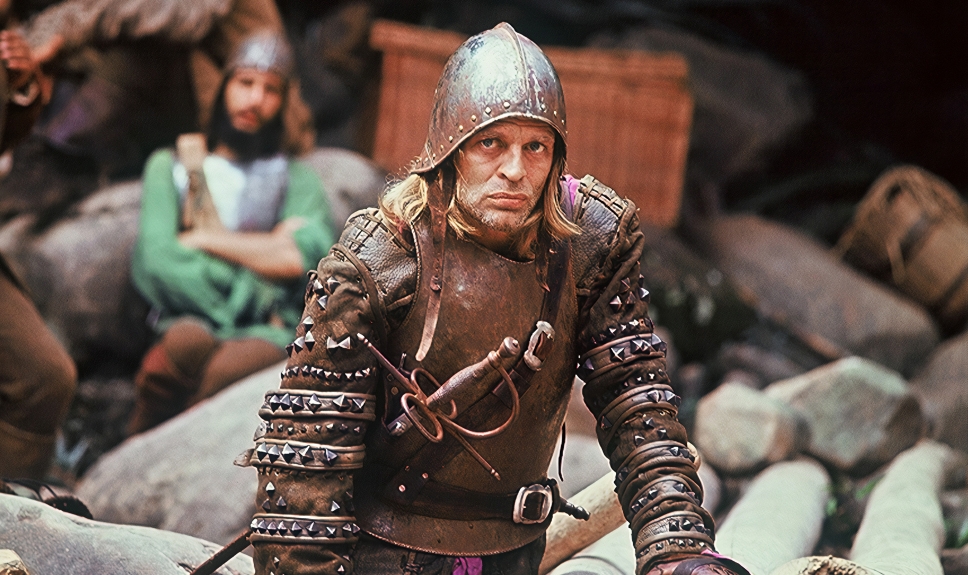
Category: Survivalist film

28 Years Later (2025)

28 Years Later (2025)

Belated sequel successfully compliments gore with thoughtfulness and surprising sensitivity

Director: Danny Boyle

Cast: Alfie Williams (Spike), Jodie Comer (Isla), Aaron Taylor-Johnson (Jamie), Ralph Fiennes (Dr Kelson), Edvin Ryding (Erik), Chi Lewis-Parry (Samson), Christopher Fulford (Sam), Amy Cameron (Rose), Stella Gonet (Jenny), Jack O’Connell (Jimmy)

Following on not quite 28 years since the original (23 Years Later wouldn’t have had the same ring to it), 28 Years Later sees Danny Boyle return to the post-apocalyptic hell-scape that is a Britain over-run by rage-infected, super-fast, permanently-furious, adrenaline-filled humans (don’t call them zombies!). But those expecting a visceral, gut-punch of blood-soaked violence may be in for a surprise. 28 Years Later is a quieter, more thoughtful film, where the battlefield is for the sort of values to embrace in a world gone to hell.

After a viciously terrifying opening set on the day of the original outbreak – in which vicar’s son Jimmy flees, terrified, from his home after a gang of infected literally rip-apart or infect his family sand terrified telly-tubby-watching friends – we flash-forward decades. Britain is now quarantined and nature has reclaimed large chunks of the land. The few remaining survivors live in protected communities, like a group on Lindisfarne, protected by a causeway flooded at high tide. In the community, 12-year-old Spike (Alfie Williams), is taken to the mainland by his father Jamie (Aaron Taylor-Johnson) to claim his first infected kill, while his confused and ill mother Isla (Jodie Comer) sits at home. But Spike will learn things about himself and his father on the mainland – enough for him to decide to risk taking his mother to meet with the mysterious Dr Kelson (a magnetically eccentric and softly-spoken Ralph Fiennes, in a performance that defies all expectations), who lives in isolation and may just know how to cure her.

Boyle’s film is kinetic and vicious at points, but also has a magnetic beauty as his camera flows across a world in some-ways unchanged from 2002 and in others utterly alien. Scavenged supplies are full of technology from the earlier noughties. The remains of things like Happy Eater restaurants are everywhere, and (proving not everything is bad) the Sycamore Gap tree remains standing. Buildings and villages are overgrown with plant-life and trees. Colossal herds of deer – enough to shake the earth – roam the countryside. In many ways the future is once more the green and pleasant land, with the Lindisfarne community sharing supplies and relearning skills like farming and archery (echoing the days of Henry V, with Boyle calling back to this with a series of shots from OIivier’s film, it’s a compulsory skill as the safest way to kill infected).

There is no chance of salvation or change here. That’s made very clear to us, with the Act Two arrival of Edvin Ryding’s scared Swedish soldier who tells us plainly that being stranded on the island is a death sentence. The world has left Britian behind and they way Erik describes it, all iPhones and Amazon deliveries, is as familiar to us as it is utterly incomprehensible to young Spike. This is not a film about fixing, averting or liberating the island. It’s a film about existing in a permanent state where mankind is no longer the apex predator.

Boyle’s film, with an excellent and thoughtful script by Alex Garland, is therefore all about defying expectation. Spike’s journey with his father is less about a terrifying chase from hordes of infected (though there is plenty of that), or him hardening himself in a brutal world. Instead, it’s about Spike’s nagging doubts about his father being confirmed. Aaron Taylor-Johnson is a very good as a man who is brave and protective, but morally weak and desperate for approval. He’s the sort of man who harangues his son into executing restrained infected (even children) and takes every opportunity in between dutiful caring for his wife, to slip off to his girlfriend. A man who brags on their return as if his son was some sort of Hercules, when Spike knew he spent most of his time missing with his arrows and in a constant state of terror.

28 Years Later captures that sinking feeling children can have when they realise beyond doubt that their parents aren’t perfect. Alfie Williams is excellent as a caring boy, who doesn’t see sensitivity and humanity as weaknesses in the way you suspect his father does. Who sees through his father’s need to promote himself and is disgusted by it. And finds himself drawn closer to his sick mother (a carefully vulnerable performance from Jodie Comer) and finding he has more affinity for a world that still has a place in it for decency, where going back to help someone is not written off as foolishness.

It’s a film that raises fascinating questions about the infected themselves. While millions of infected passed away – their rage filled minds unable to carry out basic tasks like eating or drinking – the small percentage who survived, seemed to retain enough of themselves to maintain some sort of life. They move in herds – or, as some of the obese ground-crawlers do, in a bizarre family unit – and they even have leaders. ‘Alphas’ – those who the disease caused to grow to humongous proportions (in every organ) – direct their charges. And they have intelligence: our main Alpha ‘Samson’ enraged at the death of his comrades, holds back from an attack until the moment is right, mourns the loss of a female infected and maintains a relentless pursuit for reasons we’d recognise from thousands of movies.

28 Years Later uses this to force us to ask questions about ourselves and when human life ceases to matter. To Jamie, the infected have ceased to be human and killing them a duty. But Spike is forced to start to ask: what right do we have to decide there are less human than us, these people who were like us perhaps moments before? Beyond self-defence, is killing them as noble as all that? 28 Days and Weeks Later featured the instant slaughter of anyone with even a suspicion of infection. Years questions this like never before. Everyone on this island is a victim, and the infected deserve just as much memoralizing as victims as the uninfected.

It makes for a surprisingly quiet and meditative drama – even if it is punctuated by moments of shocking blood and gore, from heads and spinal cords being ripped out to a blood-spatted TellyTubbies screening in a vicarage – and one that demands you think almost more than it demands you be thrilled. With exceptional performances, especially from Alfie Williams, it’s a different but mature sequel that redefines aspects of the series. And, based on its jaw-droppingly bizarre ending, its sequel will only take this thinking further.

The Exterminating Angel (1962)

The Exterminating Angel (1962)

Buñuel’s unique party-gone-wrong is a fascinating mix of comedy, surrealism and satire

Director: Luis Buñuel

Cast: Silvia Pinal (Leticia, “The Valkyrie”), Jacqueline Andere (Alicia de Roc), José Baviera (Leandro Gomez), Augusto Benedico (Dr. Carlos Conde), Enrique Rambal (Edmundo Nóbile), Luis Beristáin (Cristián Ugalde), Antonio Bravo (Sergio Russell), Claudio Brook (Julio), César del Campo (Colonel Alvaro Aranda), Rosa Elena Durgel (Silvia), Lucy Gallardo (Lucía de Nóbile), Enrique García Álvarez (Alberto Roc)

Imagine a party so good, you couldn’t bear to leave. Sounds great, right? Now imagine a party that wasn’t even that good, but you couldn’t leave anyway. A dinner party with the hoi polloi that locks you into a seemingly never-ending parade of days (or weeks) where you and everyone else were physically incapable of stepping over the threshold of the room you’re in. All of you forced to live in a tiny space, on top of each other, none of you having a clue why you can’t leave or why this is all happening. Imagine that, and you’ve got Buñuel’s The Exterminating Angel, a surrealist-tinged, open-ended mystery of a film that presents its situation and leaves you to make of it what you will.

Returning to Mexico after comprehensively incinerating his nascent re-alignment with Spanish cinema with Viridiana (a film made in Catholic Fascist Spain that mocked both the fascists and the Church), Buñuel creates a haunting elliptical masterpiece by harnessing an idea so compelling it’s been recycled, reframed and reexplored by countless films after.  It’s an idea that has soaked into horror, of being trapped by some unknown force in a single place, unable to break free. It’s also sparked satire with its depiction of the thin veil of smug self-satisfaction over the bourgeoisie that collapses under the strain of covering primitive, violent instincts.

The Exterminating Angel tips us off from the start that we won’t be settling down to watch any old dinner party. As the guests assemble, the staff at the grand town house are practically falling over themselves to flee, as if subconsciously aware there is something wrong in the house. Buñuel throws the viewer off from the start by deliberately repeating scenes – a repetition so on-the-nose, that when watching I actually doubted myself about whether I had just seen what I thought I saw. We see the guests arrive – and make a forlorn call for their coats to be taken – twice in quick succession. It’s so blatant, even Buñuel’s editor gave him a panicked phone call about the ‘error’ just before the film’s opening!

Later the micro-repetitions of scenes, interactions and lines will pile up (it’s a film that rewards constant reviewing) making the whole set-up even more disconcerting. Two characters introduce themselves to each other three times, each time with a different emotional mood (from friendly to outright hostile). The same dinner toast will be greeted with rapture then complete indifference. Two couples will echo the same conversation. Oblique points about freemasonry and current affairs will be made over and over. Is Buñuel suggesting the whole whirligig of the social situation is just a slightly pointless merry-go-round where the same old bullshit happens over-and-over again and essentially means nothing? Sure, the characters notice they are literally trapped in the same room, but really aren’t they just metaphorically trapped in the same old rooms all the time?

Nevertheless, as the dinner party winds down, everyone is far too polite (or far too concerned with appearances) to openly say they feel like its physically impossible for them to cross the threshold and leave. Instead, the hosts quietly grumble that no-one seems to know when to go as the clock ticks into the wee small hours and the middle-class types here settle down in armchairs, on sofas or even on the floor to sleep. Come the next morning, polite embarrassment prevents anyone from saying exactly why they are still here. In fact, everyone promptly makes politely meaningless excuses about why they aren’t quite ready to leave yet: they’ve not had breakfast, nanny will look after their children, they don’t need to be anywhere quite yet.

In fact, I’m not sure anyone openly says they ever feel trapped. It’s like social faux pas everyone is horrified of pointing out. Not a surprise really as everyone here is from the height of professional society: doctors, conductors, army officers, businessmen, society grande dames. None of them wants to stand out like some panicked rube thrown by odd sensations. Instead, everyone slowly settles down into working around this bizarre situation no one wants to talk about. A cupboard is tacitly turned into a toilet. The food is carefully rationed. A water pipe is tapped into so everyone can drink. Sleeping areas are claimed. No one tries to solve the problem, because even acknowledging the problem feels like a cheeky liberty.

It leads into an increasingly fascinating blend of horror, dark satire and surrealist black comedy that Buñuel skilfully builds. A few shots show us the threshold of the room from the next room (a lush ballroom), and there are cuts to a crowd of rubber-neckers outside the house) who also cant enter. But otherwise, it’s all in this one room and as time – and the guests lose all track of that – drags on, the bonds of society both loosen under the polite instincts. Tempers fray, but there remains a formality even as the ravenous guests rip apart (off camera) and cook a sheep that wanders into the room. Some guests take advantage of the proximity to indulge in voyeuristic perversions, but when arguments erupt they are resolved with a Victorian duel mind-set. Only towards the end, as the world really fragments, does the danger of real violence (a suggested lynching of those judged responsible) flare up.

Buñuel would criticise himself later for not going far enough (if you want an idea of relatively tame he later thought it was, he argued cannibalism was one of the things he should have explored). But the fact that much of the behaviour remains grounded, recognisably stuck in a rut of upper-class restraint makes the film more effective. (Or as restrained as a party, where the cancelled ’entertainment’ at the original dinner was an unspecified event involving a tame-ish bear and three sheep, can be). Somehow, if the guests had regressed into the most animalistic behaviour possible, the film might have lost some of its enigmatic quality. As it happens, the fact the guests can never quite escape the trappings of their social rules makes it even more unsettling. It means that threats – such as the ferocity behind the ‘I’ll kill you’ response to a joke about someone being pushed out of the room – carries even more of a shock.

Buñuel throws in the odd surrealistic touch – after all he always claimed a dream sequence was in there when he had run out of ideas. We get two, one revolving about a nightmare of a disembodied hand moving freely around the house (it must be some sort of joke from Buñuel that the hand itself is the least convincing rubbery affair you can imagine) and later a sequence of disconnected images superimposed over a cloud filled sky. The film’s conclusion suggests a deadly, ever-expanding loop, based around the fact the characters suffer but learn nothing from it.

You can argue that The Discreet Charms of the Bourgeoisie, by allowing more physical freedom to its characters, allowed even more surreal, fascinating and intriguing exploration of the repressions, lies and hypocrisies of bourgeoisie life. But The Exterminating Angel has a claustrophobic horror to it, and the pressure cooker bubbling just below the surface of these trapped characters exposes class tensions in superbly unnerving ways. It makes for an expertly executed, shrewdly vicious social satire that lifts a lid on the many petty behaviours that govern so much of our lives. And it’s a mark of genius that you cannot imagine anyone other than Buñuel making it.

Twisters (2024)

Twisters (2024)

It won’t blow away, but theres something reassuringly old-fashioned about Twisters

Director: Lee Isaac Chung

Cast: Daisy Edgar-Jones (Kate Carter), Glen Powell (Tyler Owens), Anthony Ramos (Javi), Brandon Perea (Boone), Maura Tierney (Cathy Carter), Harry Hadden-Paton (Ben), Sasha Lane (Lily), Daryl McCormack (Jeb), Kiernan Shipka (Addy), Nik Dodani (Praveen), David Corenswet (Scott)

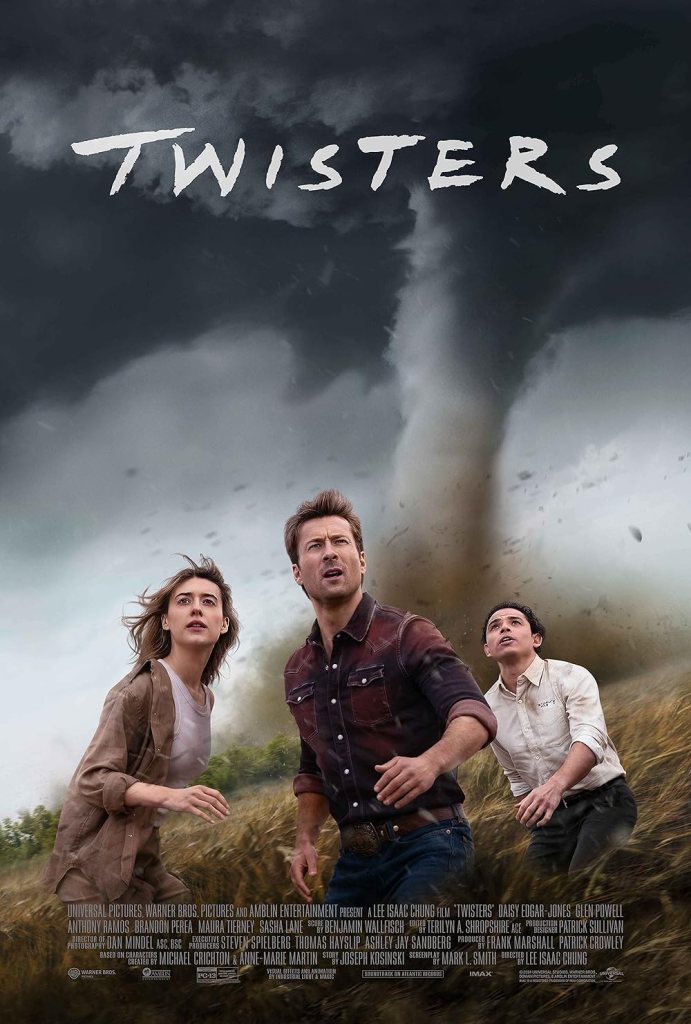
Twisters is perhaps one of the oddest pieces of IP rebooting (as we call it these days) in years: a sideways sequel to a 1996 box-office hit that virtually no one has thought about once since it was in the cinema thirty years ago. Twisters hardly brings in a new breath of air for 2024 compared to what worked at the box-office in 1996: in fact in many ways it’s as predictable as that film was. But yet it gets away with it, because there is an old-fashioned simplicity about it, a pure ‘just wanna entertain you’ vibe throughout, combined with the fact it creates a small group of likeable characters we care about, played by winning performers. Rather like Top Gun: Maverick it takes the ideas that people liked from the first film but delivers them far more effectively with much more charm.

Meteorologist and instinctive twister spotter Kate Carter (Daisy Edgar-Jones) is one of the few survivors of a failed scientific experiment to use a compound foam to reduce the power of tornados, with the deceased including her boyfriend Jeb (Daryl McCormack). Five years later she is called back into the field by her old colleague Javi (Anthony Ramos) who needs her help to test his new tornado radar-scanning technology company. In Oklahoma with Javi’s team, Kate faces her fears, finds that the impact of the storms is leaving a heavy burden on the community and falls into a flirtation with rock-and-roll meteorologist and YouTuber Tyler Owens (Glen Powell) whose cowboy exterior hides his heart of gold.

All this blows itself up into highly entertaining stuff, told with an old-fashioned sense of fun by Lee Isaac Chung. It’s actually a relief to find a modern blockbuster just focused on an entertaining, character-led piece of popcorn fun, rather than blowing pop-culture references, set-ups for future films and homages to hits from yesteryear, straight into your eyes. Twisters never reinvents any wheels at all, but it’s several degrees better than the forgotten film its riffing on and you’ll end up being surprisingly invested in it.

A big part of that is the charming and hugely likeable performances from its two leads. Edgar-Jones is very good at this sort of tough-edged exterior hiding inner-vulnerabilities (the team on Twisters must clearly have binged through Normal People during lockdown like the rest of us). Powell – who is having a moment and then-some – is also an absolute pro at cocksure types like this with unexpected layers. There is a sort of It Happened One Night opposites-attract screwball comedy between these two, who take each other at first for a naïve city-girl and a brainless cowboy only to find (would you believe it!) that first impressions are not always the right impressions.

However, this sort of rom-com, relationship-led stuff is exactly what makes Twisters entertaining and makes you care for it. After all, as Twister showed us, once you’ve seen wind related special effects pile on, you’ve kind of seen them all, it’s just a question of degree. Twisters front-and-centres not so much the gusty action, but the characters at the heart of it. Impressive as Chung’s staging of the blowing away of cars and the ripping up of buildings is, it works because we care about the people at cowering beneath the gale.

That’s because Twisters is told with an old-fashioned heart. There is nothing in it that really surprises you: Daryl McCormack’s prologue boyfriend has ‘doomed’ written all over him the moment he speaks and the only thing that you’ll really puzzle over is how long the post-prologue time-jump will be. Although it’s character and plot developments are well handled and endearingly delivered, there are all unsurprising. Would you believe Kate and Tyler find they have much in common? That Tyler’s blow-hard cowboy storm-chasers turn out to all have Hearts of Gold? That Javi’s loaded, Stetson-wearing tycoon sponsor is a ruthless modern-day Crassus, using the weather forecasts to snap up devastated land for tuppence? It’s just like we can be pretty certain that the twister-diluting experiment that Kate is working on in the film’s opening will come storming back in Act Five.

You could pretty much scribble down all possible plot developments over the course of the film after watching the first twenty minutes, but somehow it doesn’t really matter. Even though everything in this is completely and utterly safe and straight-forward, it’s told with such professionalism and such a sense of fun, it hardly matters. Everything in Twisters is focused on just entertaining you and not forcing you to worry or get stressed about things. Perhaps that’s why the film shies away from the questions asked around why the storms are getting worse (let’s not bring something really depressing like climate change into a breezy opposites-attract thrill ride). To balance that it does more-or-less avoid the storms making moral judgements on who gets killed off in its blustery assaults, unlike so many other disaster movies.

Twisters offers nothing really original or unique, but everything in it seems to come from the heart, like Chung wanted to make the sort of unfussy, well-meaning entertainment vehicles he watched in his youth, when it was all about sitting back, munching popcorn and leaving with a grin on your face that a film just entertained you. And at a time when the cinema seems to be full of easter-egg stuffed, self-satisfied, franchise-building bait there is an awful lot to be said for that.

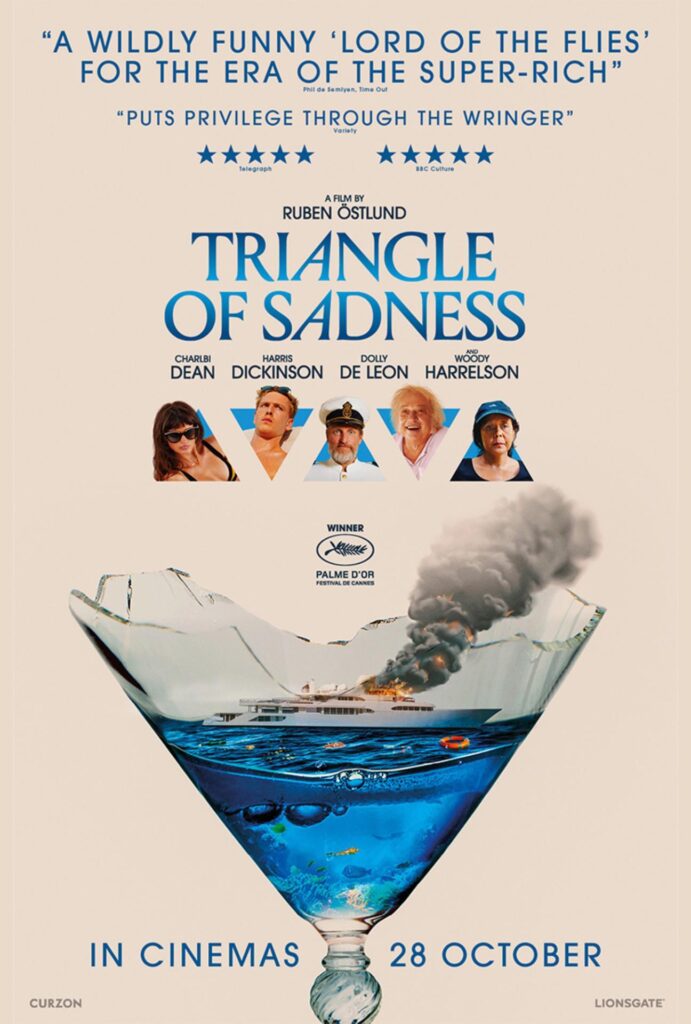
Triangle of Sadness (2022)

Triangle of Sadness (2022)

Östlund’s super-rich satire lines up straight-forward targets to easily knock down

Director: Ruben Östlund

Cast: Harris Dickinson (Carl), Charlbi Dean (Yaya), Dolly de Leon (Abigail), Zlatko Burić (Dimitry), Iris Berben (Therese), Vicki Berlin (Paula), Henrik Dorsin (Jarmo), Woody Harrelson (Captain Thomas Smith), Alicia Eriksson (Alicia), Jean-Christophe Folly (Nelson), Amanda Walker (Clementine), Oliver Ford Davies (Winston), Sunnyi Melles (Vera)

In my review of The Square, Östlund’s previous Palme d’Or winner, I described its targets as “so obvious, the entire film might as well be footage of fish being shot in barrels”. If only I’d known: Triangle of Sadness, his satire on the super-rich, takes this to the Nth degree: it’s an entire film of Östlund spraying machine gun bullets into an aquarium of drugged fish. That’s not to say there ain’t good jokes in here and several of its sequences are cheeky, engaging and funny. It’s well-made and high quality: but it’s also obvious and is in a such a rush to make its oh-so-clever satirical points that it frequently blunts its own impact.

The film revolves around a luxury cruise liner. On board: the self-obsessed, selfish, greedy representatives of the world’s oligarchs. A Russian who repeatedly amuses himself by bragging that he sells “shit” (fertiliser), a Danish app builder who splashes his cash, a married couple of British arms-traders who jovially bemoan how UN restriction on landmines made for tough financial years… you get the idea. Also on board: Instagram influencer supermodel Yaya (Charlbi Dean) and her insecure male model boyfriend Carl (Harris Dickinson). All of them treat the staff like slaves. But when the ship sinks after a storm and an attack by Somali pirates, the surviving passengers find they entirely lack the skills needed to survive on an island, unlike toilet-cleaner Abigail (Dolly de Leon) who rockets from the bottom to the top of the social hierarchy.

Östlund’s film lays into the emptiness, greed and selfishness of the super-rich with glee, even if it hardly tells us anything we don’t already know. The rich are only interested in their own needs and can only see others as tools for their own pleasure: who knew? Wanting to expand his satirical targets even further, Östlund also takes a pop at the social media generation. Apparently, they are shallow and interested only in commodifying their own lives. Who knew? It’s the sort of stuff that makes for a punchy student revue, but you want something a little bit more challenging that moves above cheap shots from a Palme d’Or winner.

In many ways the film’s most interesting section (and most subtle ideas) take place before we even reach the boat. The film’s first chapter exclusively follows Carl and Yaya. Carl auditions for a modelling job where he’s treated like a piece of meat (hilariously they mutter about him needing botox). At a fashion show, staff pleasantly demand three people move out of their seats to make way for VIPS – who immediately ask for one more seat. Everyone shuffles along one (the camera following this with a neat tracking shot), leaving Carl seatless. This is a more subtle commentary on the self-obsessive focus of the super-rich than anything that follows.

Carl and Yaya are in an interesting position: they are both part of the beautiful super-rich and not (they don’t have any money). That early act opener balloons from a disagreement over who pays for a meal into Carl inarticulately arguing for sexual-equality and mutual partnerships that defy gender roles. It’s more interesting than almost anything that follows, because it’s multi-layered and raises genuine issues we all face (to varying degrees).

But the film abandons multi-layered the second it steps foot on the boat. There are fun set pieces. Carl unwittingly gets a pool attendant fired because he’s jealous of Yaya’s admiration for his topless body. The staff on the boat gee themselves up for days of enthusiastic deference with a tip-expectant-group-chant. A Russian lady demands the staff all swim in the sea so they can have as much fun as she is having (and to show how ‘normal’ she is). The film’s most infamous set-piece occurs as a storm coincides with the captain’s dinner (with the fish courses under-cooked due to the aforementioned obligatory staff swim) leading to nearly all the passengers projectile vomiting across the state room, then sliding around the floors of the swaying ship in their own filth.

Amusing as that can be in its guignol excess, it tells you how subtle the film is. The film is awash with obvious, lazy jokes – of course the polite arms trading couple are called Winston and Clementine! To hammer home the social issues the film whacks us over the head with, the Captain (an awkward performance from Woody Harrelson) an alcoholic Marxist spends the storm pissed in his cabin, reading Noam Chomsky and his own anti-capitalist ravings over the ship’s tannoy. This takes up a huge amount of screen-time and manages to be both obvious and not very funny.

The film enjoys taking these pot-shots so much, it ends up feeling rushed when we arrive at the island. If we had seen more of Dolly de Leon’s Abigail earlier in the film (in actuality, the film sidelines her as much as the characters do, barely allowing her more than a minute of screentime in its first hour), the shift in social hierarchy would have carried more impact. If Östlund’s film had more patience to show the passengers expectation that shipwrecked life would be identical to that on the boat, then Abigail taking charge after a few days that would have carried more impact. Instead, Abigail takes command from arrival, and then essentially behaves (in a way I’m not sure the film quite understands) with exactly the same self-entitled greed as the passengers did. She takes the best cabin, establishes a hierarchy, keeps most of the food and turns Carl into a sex toy.

Because we’ve not really seen Abigail earlier in the film, we don’t get a sense of her earlier mistreatment (really, most of the film would have been better told from her point-of-view) or join her satisfaction at the tables being turned. The film also exhausts its commentary on the super-rich leaving it with little to say about in its third act Lord of the Flies set-up. Instead, the film dawdles its way to a conclusion and cliffhanger ending that feels unearned.

It makes you regret the loss of its earlier more subtle commentary on Instagrammers Carl and Yaya (good performances from Harris Dickinson and the tragically late Charlbi Dean) who are drowning-not-waving in a world where they must commodify their bodies but have no power over them, struggling to work-out where they fit in a world. It throws this overboard to go for some (admittedly at times funny) gags about greed and very obvious social commentary. If it had committed to its social underclass uprising earlier – or carried on with its more subtle themes from the opening prologue – it would have been a better film. Instead it’s as subtle and probing as the faceful of vomit it serves up halfway through.

Thirteen Lives (2022)

Thirteen Lives (2022)

A real life rescue attempt that defied belief is bought to the screen with gripping power and skill

Director: Ron Howard

Cast: Viggo Mortensen (Richard Stanton), Colin Farrell (John Volanthen), Joel Edgerton (Dr Richard Harris), Tom Bateman (Chris Jewell), Pattarakorn Tangsupakul (Buahom), Sukollawat Kanarot (Saman Kunan), Teerapat Sajakul (Captain Anand), Sahajak Boonthanakit (Governor Narongsak Osatanakom), Vithaya Pansringarm (General Anupong Paochinda), Teeradon Supapunpinyo (Ekkaphon Chanthawong), Nophand Boonyai (Thanet Natisri), Paul Gleeson (Jason Mallinson)

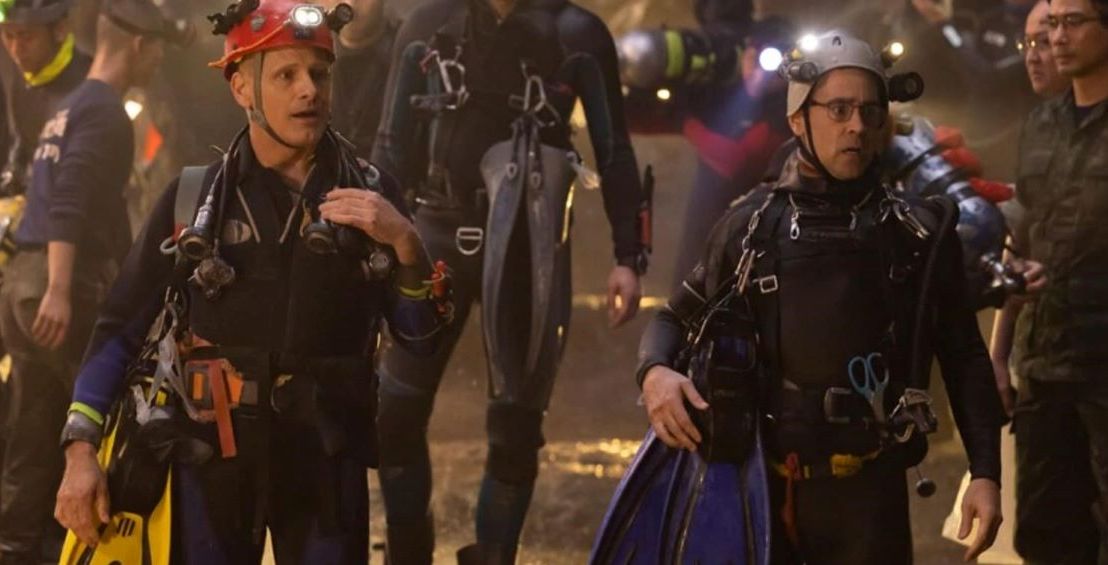
In Summer 2008 one story gripped the world. In Thailand on June 23rd, 12 members of a boys’ junior football team and their coach Ekkapon Chanthawong (Teeradon Supapunpinyo) were stranded underground in the Thum Luang caves by flooding. Rescue attempts would call for an international effort: Thai Navy Seals, American military, the local community and a team from the British Cave Rescue Council pooled talents and knowledge to help save the boys before they drowned, suffocated or starved to death.

It’s bought to the screen in Ron Howard’s gripping true-life disaster film, Thirteen Lives, a scrupulously respectful yet compelling dramatisation reminiscent of his Apollo 13: it wrings maximum tension from a story nearly all of us know the outcome of. Just like that film, it superbly explains the huge obstacles the rescuers faced – the near impossibility of navigating the flooded caves, the onslaught of water, the claustrophobic underwater conditions, the panic-inducing nightmare of swimming through kilometres of tight space for inexperienced divers…

Each of these is swiftly but carefully explained, before Howard focuses on the international effort resolving them. Onscreen graphics – in particular a map of the route through the cave complex, including distances and time spent travelling underwater (over four hours) – help us understand every inch of the journey and its implications. Carefully written scenes avoid the trap of exposition overload while making the dangers of an hours-long swim through dark, flooded tunnels clear.

Howard skilfully goes for show-not-tell where he can. The gallons and gallons of water running down the mountain and into the caves in the monsoon conditions are made abundantly clear. The first expedition of experienced cavers Richard Stanton (Viggo Mortensen) and John Volanthen (Colin Farrell) is staged in careful detail: the sharp currents, confined conditions (some parts of the cave are almost impassable – particularly when dragging two oxygen cylinders), the inability to see where you are going, the hours of oppressive time spent underwater.

In case we in are any doubt of how difficult any rescue will be, we see Stanton take a stranded rescue worker a short distance underwater: the man panics, nearly drowns them both and then nearly kills himself trying to surface. The eventual plan – to sedate each boy and have an experienced rescue diver carry him out – is as carefully explained as is its risk (if the dose is not exact, suffocation or panic induced drowning can and will occur). Howard’s careful, unflashy but captivating filming of the rescue attempt that follows is nail-biting and deeply moving.

Not least, because the film doesn’t shy away from the terrible risks. The accidental drowning of Navy Seal Saman Kunan – tragically volunteering from retirement – is sensitively, heartbreakingly handled. Every character is painfully aware of the dangers: Teeradon Supapunpinyo’s coach begs the families to forgive him for putting their children at risk (the children fall over themselves to praise him for saving their lives, in a heart-rending scene). Tom Bateman’s (fabulous) Chris Jewell breaks down in relief, guilt and a fear after he briefly panics during the rescue (no one blames him for a second – they all know each of them has been seconds away from the same countless times). This is a film that understands heroism is not square jawed machismo, but a grim awareness of the risks and a determination to not let that analysis stop you from helping those in need.

But Thirteen Lives is very pointedly not a white saviour story. It’s a story of teamwork and skills coming together: the British and Australian divers join a rescue effort being led by Thai Navy Seals, supported by local Thai officials. All of them are vitally assisted by a Thai water engineer who travels a huge distance to the site to help, and who brings vital knowledge, but can’t succeed without a local man who knows the terrain and a team of ordinary volunteers.

A triumphalist story would have opened and closed with one of our British heroes – the coolly professional ex-firefighter Stanton perhaps – and had them learning lessons and rising to the challenge. This film starts with the boys’ plans for a birthday party, and closes with the eventual much-delayed party. As soon as it’s revealed they are alive inside the cave complex, the film returns to them time and again and stresses their role was in many ways the hardest of all: trapped, lonely, terrified and slowly starving and suffocating, powerless to do anything. Howard’s film never forgets it is their story, or the courage they showed.

Equally, the film  doesn’t forget the role of ordinary people. Thirteen Lives is full of people unquestioningly making sacrifices, putting themselves in danger or working at the limits of endurance to help. It’s not just the divers who carried the boys out who saved them. It’s the Thai farmers, living in poverty, who willingly agree that their farmlands (and crops) be destroyed by redirected water flow from the mountain to buy the boys time. The Thai volunteers battling for days with sandbags, pipes and eventually bamboo funnels against a never ending waterflow.

In this the British team are another group of (admittedly more prominent and vital) experts, volunteering their skills. Their presence is at first resented by the Thai Navy Seals – do they fear a white saviour story as well? – who feel a personal duty to rescue the children. Such clashes are not glossed over – but Howard’s film demonstrates the growing respect between them. The Seals are superb divers: but less experienced in the caving conditions the British team practically live in. The British are experts, but strangers in this land.

As those divers – this is surely the first Hollywood blockbuster to feature a hero from Coventry – Mortensen and Farrell are superbly committed and human. (There is a British delight to be had from their discussion of the merits of custard creams.) Mortensen is the hardened realist: he is sceptical that the impossible can be achieved and is firm that he won’t allow himself or others to undertake suicidal efforts. Farrell is great as his counterpart, determined to leave no one behind. Both actors spark wonderfully off each other – and their commitment, and that of the rest of the cast,  to filming in these punishing conditions is stunning.

Thirteen Lives is a superb reconstruction of an incredible story, that wrings the maximum drama from an international sensation. It carefully celebrates internationalism and co-operation (its dialogue is largely not in English) and the struggles of the highly professional to find solutions to insurmountable problems. Channelling all Howard’s skills with biography, against-the-odds survival stories and ability to draw committed performances from actors, it’s his finest film in a decade and a worthy spiritual follow-up to Apollo 13.

Nope (2022)

Nope (2022)

Be afraid of looking in Jordan Peele’s puzzling but less enlightening horror suspense film

Director: Jordan Peele

Cast: Daniel Kaluuya (Otis Jnr “OJ” Haywood), Keke Palmer (Em Haywood), Steven Yeun (Ricky “Jupe” Park), Brandon Perea (Angel Torres), Michael Wincott (Antlers Holst), Wrenn Schmidt (Amber Park), Keith David (Otis Haywood Snr), Donna Mills (Bonnie Clayton)

Spoiler warning: Peele loves to keep ALL the plot details on the QT – so I discuss more than he would want, but hopefully not enough to spoil the plot.

Jordan Peele’s previous horror films brilliantly married up genuine chills with acute social commentary. Plot details have often been kept under wraps – after all half the joy of watching Get Out or Us the first time is working out what the hell is going on. Nope continues this trend, but for the first time I feel this is to the film’s detriment. I actually think Nope would be improved if you know going into it that this was Peele’s dark twist on Close Encounters of the Third Kind (with added body horror). Instead, Nope plays its enigmatic cards so close to its chest that it ends up never having a hand free to punch you in the guts.

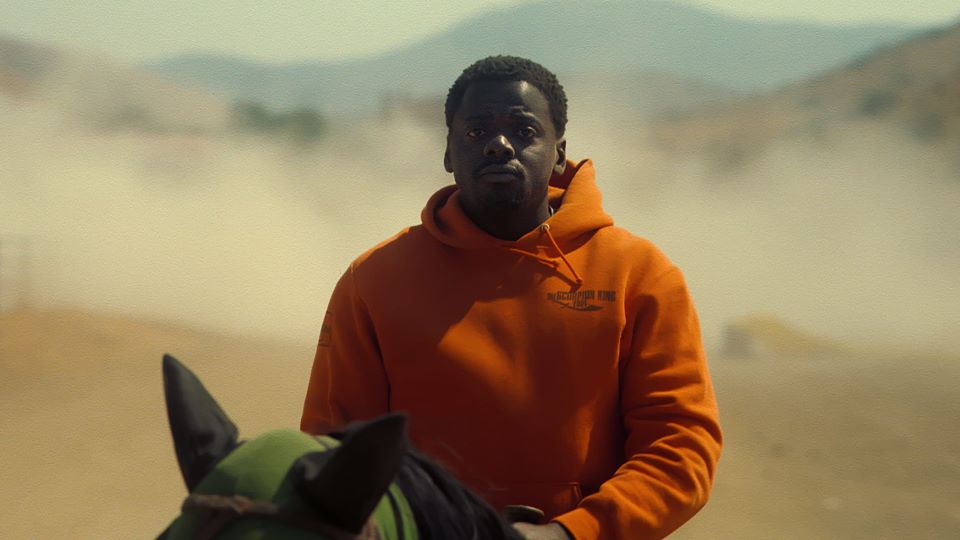
Pensive and guarded Otis Jnr (Daniel Kaluuya) – known, unfortunately, as OJ – and his exuberant wanna-be-star sister Em Haywood (Keke Palmer) are trying (with differing levels of enthusiasm) to keep their father’s Hollywood horse handling business alive after his freak death from a coin falling from the sky (everyone assumes it fell from a plane). The business is struggling, with OJ forced to frequently sell their horses to their neighbour, a former child star turned ranch theme-park owner, Ricky (Steven Yeun). Their lives are altered however when they discover a huge UFO living in a cloud near their ranch, sucking up horses (and other animals) and spitting out any inorganic remains. Seeing this as their path to fortune (and in Em’s case fame) they try and capture the UFO on film.

Nope is all about our compulsive need to look. Nothing draws our eyes like spectacle – and what could be a bigger spectacle than a huge saucer in the sky that eats people? It doesn’t matter if we know we shouldn’t, our eyes are drawn up (now imagine if Peele had been able to call the film Up!). We want to be part of the big event, whether that’s seeing the latest blockbuster at the big screen or rubber-necking at a roadside accident. Nope hammers this point home, when it becomes clear you are only at danger from the saucer when you look directly at it. Spectacle literally kills!

This is all an inversion of the mid-West America that starred at the skies in wonder in Close Encounters. There the Aliens capped the film with a glorious light show with awe and wonder from the humans watching. Here the appearance in the sky is a prelude to sucking you up, digesting you and vomiting out blood and bits of clothing a few hours later. Despite this, Ricky tries to make an entertainment show out of the creature (something he, of course, learns to regret), and OJ and Em find little reason to re-think their attempts to capture the animal on screen.

Peele’s film takes a few light shots at social media culture. Of course our heroes’ first instinct is to reach for their phones (they are looking for that “Oprah shot” that will guarantee fame and fortune). OJ at least is largely motivated by the cash influx his struggling business needs – Em wants the fame. But the film still attacks the shallow “main event-ness” of social media, where having the best and most impressive thing to show off (for a few seconds) is the be-all-and-end-all.

Peele remains too fond of these characters to judge them too harshly. But he has no worries about taking shots at the fame-and-money hungry Ricky, or a TMZ reporter who arrives at the worst possible moment and dies begging to be handed his camera so he can record the moment. Arguably Ricky would have made a more interesting lead: a man chewed up and spat out by the fame machine and angling for a second chance, who thinks he’s way smarter than he actually is.

The film opens with a chilling shot of what we eventually discover was the bloody aftermath of the disastrous final filming day of Ricky’s sitcom from his childhood-acting days, Gordy’s Home. Gordy was a chimp living with an adopted family: until the chimp actor snapped in bloody fury. It sets up a sense of danger, but the plot never quite marries it up with the main themes of Nope. Parallels are thinly drawn with Ricky’s attempt to commercialise this infamous tragedy, but it feels forced: the whole section plays like a chilling short story inserted into the main narrative. And the film never explores in detail the lesson from this bloody tragedy, that we underestimate the dangers animals can pose (despite the film being littered with creatures).

Instead, Peele settles for a stately reveal of his plot. It takes almost an hour for the film’s true purpose to become clear, but it lacks the acute and darkly funny social commentary that made his previous films so fascinating while they took their time showing you their hand. Interesting points are made about how black people are (literally) whitewashed out of Hollywood’s history (the Haywoods claim to be descended from the black jockey featured in the first ever moving film made in America). But it’s a political point that sits awkwardly in a satire (about something else!), and Peele overstretches the opening without making the central mystery compelling enough.

There are, however, fine performances from the actors, Kaluuya’s shuffling physique – slightly over-weight, the troubles of the world weighing him down – is matched with his charismatically sceptical looks. Keke Palmer is engaging and funny as his slap-dash sister, and the warm family bond between these two works really well. It never quite makes sense that someone as publicity-averse as OJ would really want to become a social media sensation, but you can let it go.

There is lots of good stuff in Nope – it’s beautifully filmed and assembled and once it lets you in on its plans, it has a strong final act. But its social commentary isn’t quite sharp or thought-provoking enough – people are shallow and love spectacle and social media, who knew – and neither the mystery or the plot are quite compelling enough. It’s told with imagination and Peele has a fascinating and unique voice: but Nope isn’t much more than a solid story well told.

Wild (2014)

Wild (2014)

Reese Witherspoon finds herself in a film that is more than just Eat, Pray, Hike

Director: Jean-Marc Vallée

Cast: Reese Witherspoon (Cheryl Strayed), Laura Dern (“Bobbie” Grey), Thomas Sadoski (Paul), Michel Huisman (Jonathan), Gaby Hoffmann (Aimee), Kevin Rankin (Greg), W. Earl Brown (Frank), Mo McRae (Jimmy Carter), Keene McRae (Leif)

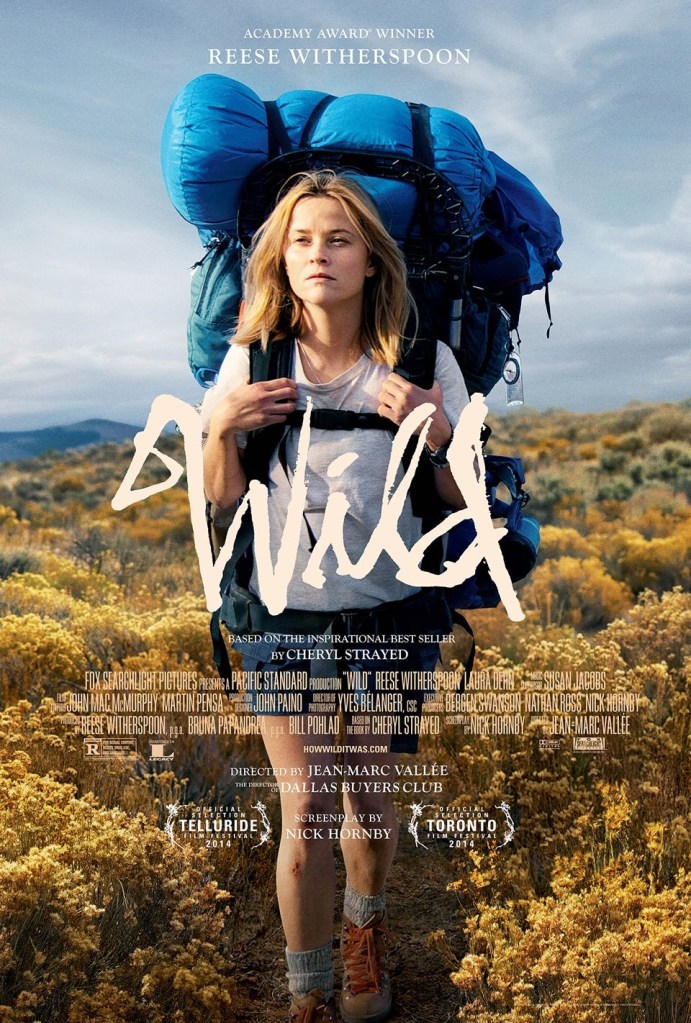
Ever thought tackling a 1,100 mile hike would be a fun adventure? The opening of Wild might change your mind. Gasp as Reese Witherspoon rips out a bleeding toe nail and then throws her ill-fitting hiking boots down a mountain, screaming abuse at them all the way! Want to grab that back-pack now?

In this adaptation of a memoir about loss and self-discovery, Witherspoon plays Cheryl Strayed who (fairly impulsively) decided to hike the Pacific Crest Trail in 1995 to try to find in herself the woman her late mother “Bobbie” (Laura Dern) believed she could be. After Bobbie’s early death from cancer at 45, Cheryl had collapsed – ruining her marriage to Paul (Thomas Sadoski) in an orgy of anonymous sex and heroin addiction. Now she wants to make a new start.

Adapted by Nick Hornby with a good deal of skill and emotional intelligence, Jean-Marc Vallée’s film is an interesting character study via the survivalist genre, mixed with a touching exploration of grief, loss and self-loathing. After throwing us into Day 26 with that bloodied toe-nail, the film rolls back to follow Cheryl’s walk: intercut with powerful memories of her relationship with her mother, each memory activated by different encounters along the way and bubbling into her mind along with a distinctive soundtrack (most especially Simon and Garfunkal’s El Condor Pasa) that reflects the music that reminds Cheryl of her mother.

It could have been a sentimental finding-yourself movie – Eat, Pray, Hike anyone? (I also rather like Reese Witherspoon Finds Herself in a Backpack) – and I won’t lie, there are elements of that. But maybe it caught me in the right mood, maybe because I’ve always fancied testing myself with an epic hike, but I actually found it intelligent, sensitive and just the right side of sentimental.

Wild carefully avoids simple points. It’s a film not about a long journey leading to revelation, but a journey that helps you accept all your past decisions, right or wrong. There is a pointed lack of emotional breakdowns, tearful confessions or flare ups of self-anger and revelation. Instead, it’s about the long grind of starting an internal journey towards contentment. Because trekking 1,100 miles is the long haul: there ain’t any easy ways out or short cuts on this trek.

The film’s principal asset is Reese Witherspoon. Also serving as producer, Witherspoon is in almost every single frame and delivers an under-played but very emotionally satisfying performance. She plays Cheryl as quietly determined, having already hit rock bottom and knowing every step she takes from now is upwards. She meets adversity – aside from the odd flash of frustration – with a stoic will and finds an increasing spiritual freedom in the wild that serves as an escape from the horrific wilderness of her self-destructive years. But she never lets us forget the pain that underpins this journey for Cheryl. It’s a very impressive performance.

The reminders of that pain are distributed through the film, which unflinchingly chronicles Cheryl’s escape from grief in the arms of a parade of sleazy men, anonymous hotel sex and (finally) shooting up heroin on the streets of San Francisco. It ends her marriage to Paul – but not their friendship, in the sort of adult emotional reaction you hardly ever see in a movie. Paul – played with warmth by Thomas Sadoski – may not be able to continue his marriage after discovering his wife’s parade of trust-breaking, but it doesn’t stop him from helping a person he loves who is in need.

All of this is nicely counterpointed by the hike itself. Naturally it’s all slightly episodic, as Cheryl moves from location to location, but Hornby’s script makes these vignettes really work. Vallée’s direction also does a fantastic job of intercutting between the long walk of 1995, and Cheryl’s memories of both her mother (played with a vibrancy that makes a huge impression from limited screen time by an Oscar-nominated Laura Dern) and her own emotional collapse after her death.

I also appreciated that Wild doesn’t shirk from showing the vulnerability of an attractive young woman hiking alone. Some potential predators are revealed to be the opposite: others are exactly what they appear to be. But not every encounter is one of potential danger: far from it.

Cheryl is met time and again by people who only appear to support, share their expertise and help her in her quest. At an early station, a man talks her through the huge amount of equipment she’s bought and advises what she can leave behind (Vallée opens the film with the strenuous effort, including rolling around on the floor, Cheryl has to go through just to put this backpack on). She finds a touch of romance with a handsome musician (a charming Michel Huisman). There’s also comedy, most of all with Cheryl’s encounter with a self-important journalist (Mo McRae), who won’t be convinced that she isn’t a female hobo.

This is all packaged together in a quiet, un-pretentious way that culminates in a thought-provoking monologue about the value of self-acceptance and putting aside regrets. Others would have layered on the sentiment, but here the balance is just right. With Witherspoon at the top of her game, Wild is a well-made and involving road trip that also makes you think.

The Poseidon Adventure (1972)

The Poseidon Adventure (1972)

Our heroes climb up an overturned cruise liner in the film that launched a thousand enjoyable disaster movie clichés

Director: Ronald Neame (Irwin Allen)

Cast: Gene Hackman (Reverend Frank Scott), Ernest Borgnine (Mike Rogo), Red Buttons (James Martin), Shelley Winters (Belle Rosen), Jack Albertson (Manny Rosen), Carol Lynley (Nonnie Parry), Roddy McDowell (Acres), Stella Stevens (Linda Rogo), Pamela Sue Martin (Susan Shelby), Arthur O’Connell (Chaplain John), Eric Shea (Robin Shelby), Leslie Nielsen (Captain Harrison)

New Year’s Eve on the biggest cruise liner in the world and the money men have ordered “Full steam ahead!” into a storm – after all, it would be terrible publicity to arrive late at harbour. Needless to say, it’s a terrible idea, as the Poseidon is hit by a tsunami and flipped upside down. Everyone at the top of the ship is killed, leaving only the party goers in the promenade room alive. Who is going to make it out from the one of the most famous disaster films of all time?

Produced by the Master of Disaster himself Irwin Allen – he personally staked half the budget and made a fortune – the ship’s passenger log is a host of Oscar-winning stars, each balancing soapy plotlines. Gene Hackman is the maverick priest, body pumping with muscular Christianity, who believes God helps those who help themselves. Ernest Borgnine is a grumpy police chief, on a long-delayed holiday with his ex-call girl wife Stella Stevens. Shelley Winters and Jack Albertson are a retired couple heading to Israel to see their grandson for the first time. Red Buttons is an unlucky-in-love fitness freak, Roddy McDowell a plucky steward. Pamela Sue Martin and Eric Shea are two (unbearable) kids travelling to join their parents while Carol Lynley is the ship’s terrified singer.

The Poseidon Adventure cemented the tropes you’d come to know and love in disaster films. The maverick leader, the grouchy contrarian, a plucky pensioner with a vital skill, adorably brave kids, a self-sacrificing nice guy… They’re all in here, the actors playing these cardboard cut-out characters with gusto as they climb up the endurance obstacle course set of an upside-down cruise liner.

Allen’s film takes a while to get going: a quarter of the run time is dedicated to setting up the various character dilemmas. Is a member of the crew a former client of Stevens’ Linda? Will Gene Hackman find new purpose in his faith? Will Red Buttons find love? Neame shoots these opening exchanges with the uninspired professionalism the exposition-filled dialogue demands (there are several variations on “What am I doing on this ship? Let me tell you…” lines). But what makes the best of these films work is when the soapy shallowness manages to make the characters endearing. It’s what happens here: the cast could do these scenes standing on their head, but gosh darn it we end up hoping the Rosens will live to see their grandson at the foot of Mount Sinai.

The film of course “starts” proper with that wave hitting. At which point, Allen (and Neame) knows exactly what works. He makes the stakes clear, the target simple (climb up, get out) and taps into common fears of falling, drowning etc. He knows how to make us thrill at the stunts – that tipping ballroom, with various stuntmen plunging downwards – and throw in the odd moment to remind us how tragic it all is (like Red Buttons sadly laying his jacket across some poor soul).

It also understands that we need to feel smarter than the crowd of extras caught up in the drama. When Gene Hackman earnestly tells everyone their only chance of survival is up, we want to feel that we’d be smart enough to go with him, rather than join the sheeple listening to the literally-out-of-his-depth purser (“What you’re suggesting is suicide!”). Allen knows we need to feel smarter so much he later throws in another group led by a confident-but-wrong authority figure (the ship’s doctor) blithely walking downhill to the flooded aft, ignoring Hackman’s cries that they are striding to a watery grave.

No, we’d definitely be with the plucky stars. After all Hackman can’t be wrong! (Gene Hackman’s priest, for all his bluster, is remarkably unpersuasive – he even only just holds onto authority in the group). The stunt work and production design as the battered stars climb up the overturned ship to the hull are remarkable – not for nothing did this scoop nine Oscar nominations – and while the film is undeniably slightly cheesy, it’s played with an absolute earnest seriousness by the cast (Hackman, to his eternal credit, acts as if his life depended on it – which considering it’s clearly a pay cheque role other actors would have coasted through is admirable).

The set pieces are superb. As the cast is whittled down, the deaths carry a certain weight – again conveyed by the honesty of the grief from those left behind. Shelley Winters bagged the best role – and the most iconic scene – as an overweight old lady with a Chekhov’s skill, performing (at great cost) an act of heroism no one else could manage. (She landed an Oscar nomination, largely for this stand-up-and-cheer moment with a sting). Most get a moment to shine – although Carol Lynley’s pathetic, panicking singer (she can’t swim or climb or hold her breath or run…) who spends her time shrieking tries your patience no end.

The film is so much about the experience of seeing this group of people overcome death-defying climbs, swims and flames that when the survivors stagger into the sunlight, the film abruptly ends. It’s all about the ride, with most of the plot points established earlier settled by someone dying on the way up. But it’s entertaining and lands just the right side of involving. The characters may be artificial, but we still care about them.

The Poseidon Adventure was a massive hit and still the best maritime disaster film made (certainly much better than its belated, lame, remake). Allen cements a formula where swiftly sketched characters, played by recognisable actors, go through endurance tests in front of us via terrifying set-ups and death-defying stunts. It’s grand, old-fashioned entertainment, perhaps taking itself a little too seriously, but giving us lots to gasp and cheer at.

WaterWorld (1995)

WaterWorld (1995)

As the waters rise, the world sinks down – and WaterWorld went down with it in the very average mega-budget sci-fi

Director: Kevin Reynolds

Cast: Kevin Costner (The Mariner), Dennis Hopper (The Deacon), Jeanne Tripplehorn (Helen), Tina Marjorino (Enola), Michael Jeter (Old Gregor), Gerard Murphy (The Nord), RD Call (Atoll Enforcer), Kim Coates (Drifter #2), John Fleck (Smoker Doctor), Robert Joy (Smoker Ledger), Jack Black (Smoker Pilot), Zakes Mokae (Priam)

In 1995 they called it “Kevin’s Gate”. Costner cashed all – and I pretty much mean all – his superstar chips to make Waterworld, a sort of water-logged Mad Max crossed with a Leone Western, starring himself as a nameless mutant with gills behind his ears. You needed to be the Biggest Box Office Star in the World to get that one up and running. But then Costner’s last “all-in” bet had been Dances with Wolves – and that won seven Oscars. What could do wrong?

Waterworld has been pretty much defined – then and now – as the (at the time) most expensive film ever made, which went on to be a damp squip, a box-office stinker. It’s not that: it’s a solid, entertaining-enough B-movie with some neat Dystopian ideas. In 2500, the world has been completely flooded after the polar ice caps melted. Mankind exists in rusted boats and small floating camps on the ocean. Dry land is a myth and actual soil is worth a fortune. Costner’s Mariner ends up protecting Helen (Jeanne Tripplehorn) and her adopted daughter Enola (Tina Marjorino), as Enola has (handily tattooed on her back) a map to the last piece of dryland left in the world. But Enola’s map is hunted by the Smokers, and their maniacal leader The Deacon (Dennis Hopper), who want to claim Dry Land for themselves.

Waterworld largely lives on as a hugely successful stunt show at Universal Studios (I’ve seen it and it is amazing – all the exciting bits of the film, done in about fifteen minutes) that has been running non-stop since 1995 (other shows, based on more successful movies, have long since disappeared). It focuses on all the stuff that’s good about the film. Kevin Reynolds’ can shoot the heck out of action scenes and professional stuntmen really know their business. The best sequences in Waterworld involve pounding action – jet ski chases, the Mariner’s transforming trimaran, jet skis flying over walls and diving under water, stunning boat chases – and they are great.

They also exploit, in their rusted crap-sack props, one of the film’s other triumphs, it’s detailed world-building design. Sure, it owes a heavy-debt to the cobbled-together semi-steam-punk of Mad Max, with rust that covers everything, adapted wet-suits and rags (augmented with various pieces of fishing equipment and light fabrics) that characters wear, the bashed out colours contrasted with the glorious blue of the water. But the film never looks anything less than an outre mad-house. Throw in James Newton Howard’s very effective score – romantic and mournful when required, but then pounding with heroic action beat – and you’ve got elements of a decent movie.

But decent is all it ever is. Because, aside from the novelty of being set on water (a hugely time- and money-consuming expense, that partly explained why the film went zillions of dollars over budget), there isn’t anything that new about the story. A gruff outsider is roped into grudgingly protecting a mother and a daughter, but then his heart-is-melted – just as the villains turn up to snatch the daughter away. The villains are cartoonish monsters (Dennis Hopper seems to be on a mission to counter the water-logged misery of most of the rest of the performers by acting as much as possible), who are either ingenious or incompetent depending on the requirements of the script. The quest for the land-of-plenty is so familiar, you could scribble it down on a postcard in advance.

The question is, why did Costner want to make this? It’s not even a part that showcases him very well. I’ve always found Costner’s mega-stardom a bit of a mystery: once he graduated from more young, naïve parts (such as in The Untouchables), action films more and more exposed his slightly blank sulkiness as an actor. Perhaps due to the pressure of Waterworld (he worked non-stop, six day weeks, mostly on or in the water, for six months), perhaps due to his inability to find any warmth in a role he clearly sees as an Eastwoodish man-with-no-name, he largely comes across as sullen and hard-to-engage with. This is double hard for a film set in a dystopian future, where we really need to understand and relate to the hero in order to get into the world.

The rest of the cast follow his lead – no one, apart from maybe Hopper, really looks like they want to be there and most of them give of a sense of suffering under the constant threat of accidentally drowning. Tripplehorn isn’t helped by playing a dull, functionary, by-the-numbers character although Marjorino does get to have a bit of spark as plucky Enola. None of the characters step out of the formulaic surroundings of the film they have been trapped in.

You can have a bit of fun with the film’s wonky science. The Mariner is introduced pissing into a bucket and converting the piss into drinking water: cool character establishing moment, but since the salt quota of piss is higher than sea water, why not just convert the sea water? (I’m staggered at the idea that, in 500 years, no one has discovered a way to make sea water drinkable). If the polar ice caps melted, they would not flood the world as much as this. Would an oil tanker and fleet of jet skis really have managed to eek out the 235k cubic metres of oil it carried for 500 years? (How do they even convert it into petrol?) Where are all the fish? Why is the Mariner the only one with deep sea diving equipment – especially when he has flipping gills and doesn’t need it?

But hey, it’s only a movie. Waterworld eventually became profitable: but not till after it had cemented itself in the public perception as an uber-stinker. Really, it’s not that different from Avatar in its functional story, it just made a worse job of selling its big-budget effects as must-see moments. Costner’s alleged megalomania on set didn’t help (re-writing scenes, ordering special effects cover his receding hairline, falling out with Reynolds during editing – so much so Reynolds walked out), but really Waterworld isn’t terrible, just a huge lump of soggy okay. But that Universal Stunt Show? It’s the bee’s knees.

Jurassic World: Dominion (2022)

Jurassic World: Dominion (2022)

It squeezes so many characters in, it totally forgets to make room for plot, invention or anything new at all

Director: Colin Trevorrow

Cast: Chris Pratt (Owen Grady), Bryce Dallas Howard (Claire Dearing), Laura Dern (Dr Ellie Sattler), Jeff Goldblum (Dr Ian Malcolm), Sam Neill (Dr Alan Grant), Isabella Sermon (Maisie Lockwood), DeWanda Wise (Kayla Watts), Mamoudou Athie (Ramsay Cole), Campbell Scott (Dr Lewis Dodgson), BD Wong (Dr Henry Wu), Omar Sy (Barry Sembène), Justice Smith (Franklin Webb), Daniella Pineda (Dr Zia Rodriguez)

As I was leaving the cinema, I heard a twelve-year old talking about which of the dinosaurs in the movie was their favourite. Then they said: “it was a bit samey though wasn’t it?”. I’m not sure I can beat that precocious nail-on-the-head judgement. Nothing happens in Jurassic World: Dominion you’ve not seen many times before in the franchise. Underneath the flash, Jurassic World: Dominion is a tired retread, crowbarring in references from better films left, right and centre, all to hide that there are no new ideas here.

Owen Grady (Chris Pratt) and Claire Dearing (Bryce Dallas Howard) have dedicated their lives to protecting human clone Maisie Lockwood (Isabella Sermon) from the grasp of corporations. When she’s kidnapped by foot-soldiers of clearly-evil-corp BioSyn (they even have “Sin” in their name), they pull out all the stops to get her back from BioSyn’sNorthern Italy research compound. Meanwhile, Drs Ellie Sattler (Laura Dern) and Alan Grant (Sam Neill) are investigating genetically modified locusts which are destroying every crop in the Southern USA – except those using BioSyn seed. All roads lead to that Italian compound – where Dr Ian Malcolm (Jeff Goldblum) is employed as a contrarian philosopher – to try and stop BioSyn’s nefarious schemes.

You know what struck me when I wrote that summary? I didn’t use the word dinosaurs. The prehistoric beasties are pretty superfluous. Sure, they down a plane and our heroes dodge them in various places (BioSyn’s compound doubles as a dinosaur refuge). But, seeing as the last film ended with dinosaurs escaping into the wild and becoming part of our everyday lives… this sequel takes the concept nowhere. Bar an opening news report montage (showing, among other things, pterodactyls – yes, I know they’re not dinosaurs – stealing a bride’s bouquet) and a Star Wars style under-ground market where dino-pets and fighting-pit beasties are traded on the black market, Dominion finds almost nothing to do with this.

In fact, Dominion struggles to find anything to do at all. It’s an extremely loosely plotted mess of a film that feels like two vaguely (very, very vaguely) connected plotlines rammed together in a way designed to shoe-horn in as many legacy characters and call-backs as possible. Laura Dern gets the bulkiest (and only plot essential) role among the returning trio. Sam Neill feels dragged along for the ride (Grant serves literally no narrative purpose) and, while Goldblum gets most of the best lines (delivered in his trademark, improvisational oddness), Malcolm merely splits the role of “inside man” with another character so cursorily introduced and vaguely motivated he feels like he was only there because covid made some of the other actors unavailable for parts of the filming.

The legacy framing is so lazy that all three of these characters essentially wear the same costumes as they did in Jurassic Park. Everyone in universe seems to know who they are (Which I find highly unlikely) and the film bends over backwards to introduce clumsy links between them and the characters from the first two Jurassic World films in ways that feel forced.

The film slowly consumes itself with references back to previous films, linked by sequences that feel ripped out from other hits. Owen and Claire’s opening plotline plays out like an odd Mission: Impossible spy thriller, including a Bourne-ish roof top chase (with Owen haring away on his trademark motorbike from killer velociraptors – the film’s only exciting set-piece, and even that is ripped from other films) with Claire transformed into a semi-adept free-runner. The dino-market is essentially Mos Eisley, by way of that Kamono Dragon fighting pit from Skyfall. By the end a host of famous set-pieces from Jurassic Park and Jurassic World are effectively re-staged or openly referenced and props (such as Nedry’s shaving foam can) are reverentially pulled out.

Any interesting ideas raised are swiftly crushed. Maisie’s concern that, as a clone, she isn’t a real person is fascinating, but the film forgets it in seconds. The villain (a neat Steve Jobs parody from Campbell Scott) spends a fortune capturing Maisie – but when she escapes (thanks to a key to her cage being helpfully left on a table in front of her) he makes literally no attempt at all to recapture her. It’s stressed to us that the whole world is looking for Maisie and that if she is found it will be dangerous for her – by the end of the film she’s doing a press conference and no one gives a damn. The moral implications of a ‘mother’ cloning herself and curing her clone child of a life-ending disease in the womb, is thrown on the table and then ignored.

The whole film revolves around ridiculous coincidences. Villains run away and then helpfully return to ludicrously unsafe places, purely because the plot requires it. Stupid decisions are made right, left and centre. Plot armour ruthlessly protects the expected. The dinosaurs are just irrelevant set dressing: we are told no less than three times the Gigantasaurus is “the biggest hunter there’s ever been”: solely to build up an inevitable face-off with the T-Rex. The deadly locust plot is such a naked attempt to motivate shoe-horning in legacy characters, the film doesn’t even bother to explain what it’s about or what the baddies plan was.

At one point Laura Dern says something to the effect of “we shouldn’t live in the past, we should aim for the future”. Imagine if this slightly lumpen rehash of its better predecessors had done the same.