Category: Tearjerker

Shadowlands (1993)

Debra Winger and Anthony Hopkins sublime in the moving Shadowlands

Director: Richard Attenborough

Cast: Anthony Hopkins (CS “Jack” Lewis), Debra Winger (Joy Davidman), Edward Hardwicke (Warnie Lewis), Joseph Mazzello (Douglas Gresham), John Woods (Dr Christopher Riley), Michael Denison (Harry Harrington), James Frain (Peter Whistler), Julian Fellowes (Desmond Arding), Peter Firth (Dr Craig), Roger Ashton-Griffiths (Dr Eddie Monk)

“We can’t have the happiness of yesterday without the pain of today. That’s the deal”. It’s a sentiment that runs through Shadowlands, a beautifully made, deeply heartfelt, incredibly moving tear-jerker based on the (largely) true story of how the man who invented Narnia, CS Lewis (Anthony Hopkins), fell in love very late in life with an American poet Joy Davidman (Debra Winger) only for her to succumb to cancer early in their marriage.

The story had a been a life-long investment from William Nicholson, who had developed the story first into a radio play, a TV drama (with Joss Ackland and a BAFTA winning Claire Bloom) and then a stage play (which won Nigel Hawthorne several awards in the lead role, including a Tony Award) and finally into this film. A wonderfully tender, profound and genuine exploration of the not only grief but the joy and delight that opening yourself up to love can bring you, Nicholson’s Oscar nominated script was brought to the screen by Richard Attenborough.

Looking back over Attenborough’s CV you immediately notice the vast majority of films he directed were massive, all-star, huge scope epics – A Bridge Too Far, Gandhi – which were as much triumphs of logistics and studio managements as they were displays of directing. Shadowlands is one of the smallest scale, most personal films he ever made – and it’s enough to make you wish that Attenborough had allowed himself to make more intimate chamber pieces like this. It’s a wonderful reminder, not only of how skilled he is at pacing and story-telling, but also what a sublime actor’s director he is. Dealing with material that in lesser hands could have become sentimental, Attenborough turns out a film that is realistic, tender, sad but also laced throughout with a warmth and (figurative and literal) Joy.

And of course the involvement of Attenborough also meant the involvement of his regular collaborator Anthony Hopkins. At the start of the 90s Hopkins was in such a run of form he could plausibly claim to be the best actor in the world. In all of this though, Shadowlands might be one of his finest accomplishments. Superbly detailed, perfectly restrained, gentle, tender, hugely vulnerable and intensily scared (under it all) of connecting with the wider world or allowing himself to feel genuine emotions, Hopkins’ CS Lewis is simply exceptional. With all the discipline of a great actor he never once goes for the easy option, but gently allows emotions to play behind his eyes (the eyes by the way that he can hardly bring himself to settle on other people until half way through the film). And those moments where he weeps – three times in the film, and each increasingly more emotional – are simply beautiful in every way from acting to filming.

Lewis is bashful and repressed, so it’s all the moving to see his face start to relax into excitement and joy when he spots Joy in the audience at a lecture he is giving, or him simply enjoying the intelligence and challenge that she brings to her conversation with him. Debra Winger as Joy Davidman matches Hopkins step-for-step, in a sublime performance of prickily New York attitudes at first out of touch in Oxford, but whose humanity shines through. It takes her time perhaps to feel the love Lewis does (but can’t admit too), but when she does start to feel more for Lewis, she has no patience for his repressed unwillingness to acknowledge them. On top of which, Winger is very funny in the role – she has little truck with the sheltered, clubbish snobbiness of some of Lewis’ friends and takes a wicked delight in shocking the stuffy, unchallenged intellectuals.

The chemistry between these two actors is sublime, and the slightly autumnal relationship between the two of them that builds feels wonderfully genuine. Nicholson’s script makes an astute examination of Lewis’ personality and Christianity. Throughout the film, we are brought back again and again to a lecture Lewis gives – with increasingly less and less disconnection – on why God allows suffering and pain in the world. Pleasingly Lewis’ faith in the film isn’t challenged – only his rather pleased-with-itself lack of doubt and his complacent lack of experience. Experiencing love and loss himself, makes him question the views he has held – and leads him to develop a richer, more genuine understanding of the world.

Which all makes the film sound very heavy, and it’s not. It’s a delightfully light done story that never once leans too hard on the tragedy. Instead it punctures several moments with touches of humour (much of it from Joy’s American clashes with high-table Britishness) and moments of sweet affection. The film gains a lot of balance from Edward Hardwicke’s delightful performance as Lewis’ Dr Watson-ish brother Warnie, a bluff ex-army officer turned academic who reveals himself over the course of a film to have a great deal of hidden love, affection and empathy. It also has a delightful performance from Joseph Mazzello as Douglas Gresham, a child performance that brilliantly avoids all cloying sweetness and feels very real as a shy, nervous boy dealing with his mother dying.
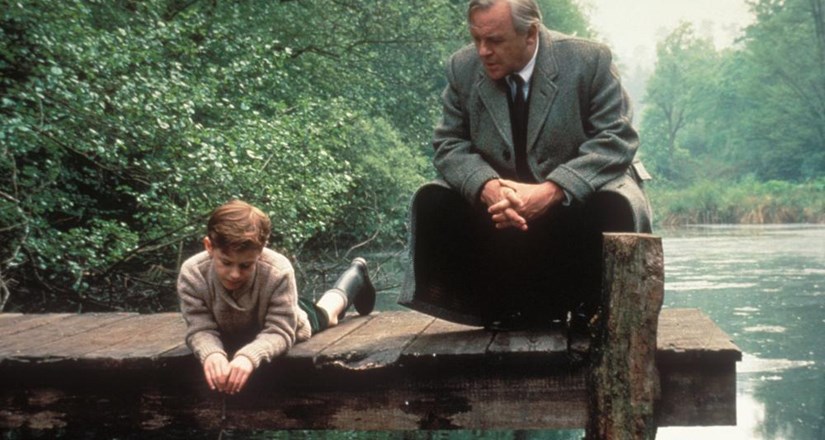
But then, Lewis is also a shy nervous boy (both he and Warnie never really got over the death of their mother as boys – a moment that both wordlessly acknowledge while observing Joy with her son at the hospital), and the film follows him becoming something more than that, a man wh has loved and lost and can deal with it. A neat subplot around James Frain’s difficult working-class student demonstrates his growing ability to relate and empathise with others. A large chunk of the film builds towards Lewis’ tearful outpouring of grief (a scene impossible to watch dry eyed), a reaction that seemed impossible in the opening moments.

But then that’s what the film is saying: We have to accept that the joy of loving people, the wonder and warmth that they bring to our life, will inevitably one day lead to us losing them. Allowing us to experience love and joy is counter balanced by the pain we will feel when they go. It’s a deal – and if it is a deal, it’s the price we pay for having our life enriched. Attenborough’s simply beautiful, romantic film covers all this gently and brilliantly: it’s a film to treasure and hold tight.

The Elephant Man (1980)

John Hurt is sublime as the tragic John Merrick in The Elephant Man

Director: David Lynch

Cast: John Hurt (John Merrick), Anthony Hopkins (Dr Frederick Treves), Anne Bancroft (Madge Kendal), John Gielgud (Francis Carr-Gomm), Wendy Huller (Mrs Mothershead), Freddie Jones (Bytes), Dexter Fletcher (Bytes’ boy), Michael Elphick (Jim the porter), Hannah Gordon (Ann Treves), Helen Ryan (Princess Alexandra), John Standing (Dr Fox)

In the late 19th century, society was swept up in the story of a circus show freak, Joseph Merrick (renamed John here, as per Frederick Treves’ memoirs), saved from a life as a circus exhibit by Treves (a doctor at the London Hospital). Treves introduced him into society and formed a close friendship with him. Merrick died young (27) but his life became a sort of byword for struggling for dignity. The Elephant Man follows this journey.

John Hurt plays Merrick, with Anthony Hopkins as Treves, and the film is a pretty accurate reconstruction of the major events of Merrick’s life. The Elephant Man must have seemed like a strange proposition at the time. Produced by Mel Brooks! Directed by bizarro director David Lynch! About a man grotesquely deformed by nature! But what emerges put those doubts to shame, because this is a beautiful and emotional piece of film-making, guaranteed to put a tear in your eye. It’s an extraordinary and moving film, it’s almost impossible not to love.

In a career made up of playing characters who undergo enormous suffering, it’s fitting that one of John Hurt’s most famous performance sees him utterly unrecognisable under a mountain of make-up. (Acting in this was no fun either – Hurt worked alternate days to deal with the discomfort and stress, telling his wife “They’ve finally found a way to make me hate acting”). But what Hurt does here is extraordinary: under this mountain of make-up, the humanity, sweetness and tenderness of Merrick sings out. He’s a character you feel a total empathy for, with Hurt making him almost a gentle child, an innocent who learns to value himself and his own humanity. It’s mesmeric stuff.

Lynch’s film is all about the place Merrick holds in the world – and it’s not sure shy of showing it is one of exploitation and display. Sure, the circus life for Merrick is horrible under Freddie Jones’ freak-masker (Jones is magnificent here, alternating between weaselly, conniving, vulnerable, self-pitying and loathsome). But he’s plucked from this lower-class hell not for reasons of charity or loving care, but (initially) so that Treves can display him at medical conferences.

Even after demonstrating his sensitivity and artistic richness, Merrick is still rammed into a different treadwheel of society curiosity. Paraded before the rich and famous, his freakish appearance combined with his gentle, otherworldly, politeness and kindness becomes a new show in itself – something Treves himself (in a wonderfully played scene of introspection from Hopkins) slowly comes to realise. Alongside this, Merrick is still seen as fair-game by Elphick’s brutish night porter: if the hoi polloi can watch the freak, why can’t he parade him in front of working class customers at night? All this is intensely moving.

Does Merrick even realise that he is (in some ways) still a freak show, even while he collects photos of his new friends? The film is deliberately unclear: although it is clear that the (eventual) genuine friendship of Treves does lead Merrick to value himself as something more. The famous anguished cry (simply brilliantly played by Hurt) of “I am not an animal. I am a human being” after Merrick is chased into a train station bathroom by a crowd of scared and disgusted passengers is goose-bump inducing in both its sadness and its newfound moral force. From this point on, Merrick makes decisions for himself (for good or ill).

Lynch’s film walks a delicate balance around Merrick’s character and how much his life was a question of being exploited. Although the film does at times shoot Merrick with the slow reveal coyness of a monster movie, it never fails to regard him (and almost demand we do the same) with the utmost sympathy. In many ways, it shoots Merrick the same way people first seem him – a sense of shock followed by a growing appreciation that there is much more to see there than you might first suspect. 

That’s what works so well about Lynch’s inspired direction here – this is a sensitive, haunting and poetic film that wrings untold levels of sadness from Merrick’s life. Lynch reins in his more arty leanings very effectively. In fact, once you get over the film’s bizarre opening of Merrick’s mother being attacked (sexually assaulted?) by an elephant, the film relaxes into a classical style mixed with Lynch’s chilling eeriness and his games with time and mood (the timeline is particularly hard to work out in this film), while his sensitive handling of the macabre is perfect for this film’s storyline. While it’s easy to see this as the least “authored” of Lynch’s film, it’s possibly one of his finest and sets the groundwork for some of his later works, exploring humanity in the bizarre.

He’s helped as well by Freddie Francis’ simply beautiful black-and-white photography which brilliantly captures both the grime and the shine of Victorian London, with an inky darkness. Francis also embraces some of Lynch’s expressionistic style, and shoots the film with a real atmospheric sensitivity. It’s about perfect – and Lynch brings the outsider’s view to London that sees the entire city with a brand new eye. 

There are some sublime performances. Anthony Hopkins’ Treves is a masterclass in contrasted desires. He’s the sort of guy who can grab Merrick like a collector, but still shed a tear when he first sees him. Watching him slowly realise that he has used Merrick just as Bytes has done – within the confines of his Victorian paternalism – and grow to love him as a father does his son (feelings of course never expressed in words) is extraordinary. In the less flashy role, Hopkins powers a lot of the feelings of sadness the audience feel. Alongside him, a host of British legends do brilliant work, particularly Gielgud and Hiller as authority figures who slowly reveal themselves to have huge depths of compassion and understanding.

And what you end up with is a marvellous film. Brilliantly made, wonderfully filmed and hugely emotional with powerful, heartfelt performances from Hurt and Hopkins among many others. It’s extremely beautiful, and stirs the emotions wonderfully. You would struggle to get to the end of the film and not feel overcome with the final few moments, its sadness and the sense of regret. It’s possibly the most heartfelt of Lynch’s films – and also the one I enjoy the most.

Ordinary People (1980)


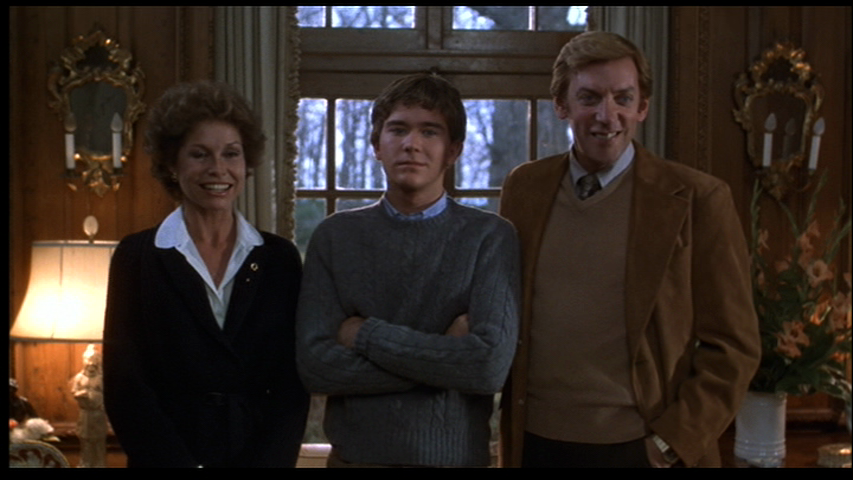
Mary Taylor Moore, Timothy Hutton and Donald Sutherland pose for an awkward picture in family troubles drama Ordinary People

Director: Robert Redford

Cast: Donald Sutherland (Calvin Jarrett), Mary Taylor Moore (Beth Jarrett), Timothy Hutton (Conrad Jarrett), Judd Hirsch (Dr Tyrone Berger), Elizabeth McGovern (Jeannine Pratt), M. Emmet Walsh (Coash Salan), Dinah Manoff (Karen Aldrich), Fredric Lehne (Joe Lazenby), James B Sikking (Roy Hanley)

In 1980, Robert Redford became the first big Hollywood stars to parlay acting success into producing and directing small scale, independent films that otherwise might never have been made. Ordinary People was the first of these – with Redford focusing on staying behind the camera – and it was a big success. It even won four Oscars – best picture, screenplay, supporting actor for Timothy Hutton (despite the fact Hutton is really the lead) and best director for Redford himself (beating out David Lynch for The Elephant Man and Martin Scorsese for Raging Bull). It was a great story for 1980 – the matinee idol turned artist. But is Ordinary People that great a film?

The film covers the emotional collapse of a wealthy middle-class American family after the eldest son Bucky is killed in a boating accident. Younger son Conrad (Timothy Hutton) has had trouble coming to terms with the accident, which he survived, and has only just left an institution after a suicide attempt. His father Calvin (Donald Sutherland) is desperate to try and relate to his son again, while his mother Beth (Mary Taylor Moore) remains emotionally distant attempting to put the accident behind them. Conrad starts seeing psychiatrist Dr Berger (Judd Hirsch), to adjust – but the after effects of Bucky’s death continue to tear the family apart.

Nobody really talks about Ordinary People any more do they? Out of all the 1980s Best Picture winners it’s perhaps the most easy to overlook (except maybe for Terms of Endearment). Why is this? Well truth be told it’s just a pretty ordinary picture. There really isn’t much to it. The story it tells of a wealthy family (only a millionaire like Redford could consider these loaded people ordinary) suffering emotional trauma and psychiatry finding the answer has been told so many times before, and since, that there isn’t anything particularly unique or interesting about it. 

In fact Ordinary People is exactly the sort of small-scale, quiet, middle-brow independent film that awards ceremonies slather over and a few years later (never mind over 30!) people struggle to see what the fuss was about. Redford directs the film with a quiet professionalism – the sort of competent craftsmanship and skill with actors that dozens of other directors could have done just as well. His Oscar for best director is especially galling when you consider the artistry and imagination of Scorsese’s direction of Raging Bull, or the unbearable sadness and tragedy Lynch gave The Elephant Man. It’s the sort of direction a non-famous director wouldn’t even have been nominated for.

This film uses shot-reverse-shot like it’s going out of fashion, most of the scenes are conversations across tables that are weighted down so heavily with meaning you start to lose interest in them. The score uses Pachelbel’s music in such an overwhelming style, it makes that sound as anodyne as much of the rest of the movie. Maybe it’s just because this is such well-trodden ground, but the revelations towards the end of the movie are so blindingly obvious you wonder why it takes so long to get to them (the son blames himself, the mother blames the son and doesn’t love him as much as the dead son, the father wants the two to kiss and make-up). 

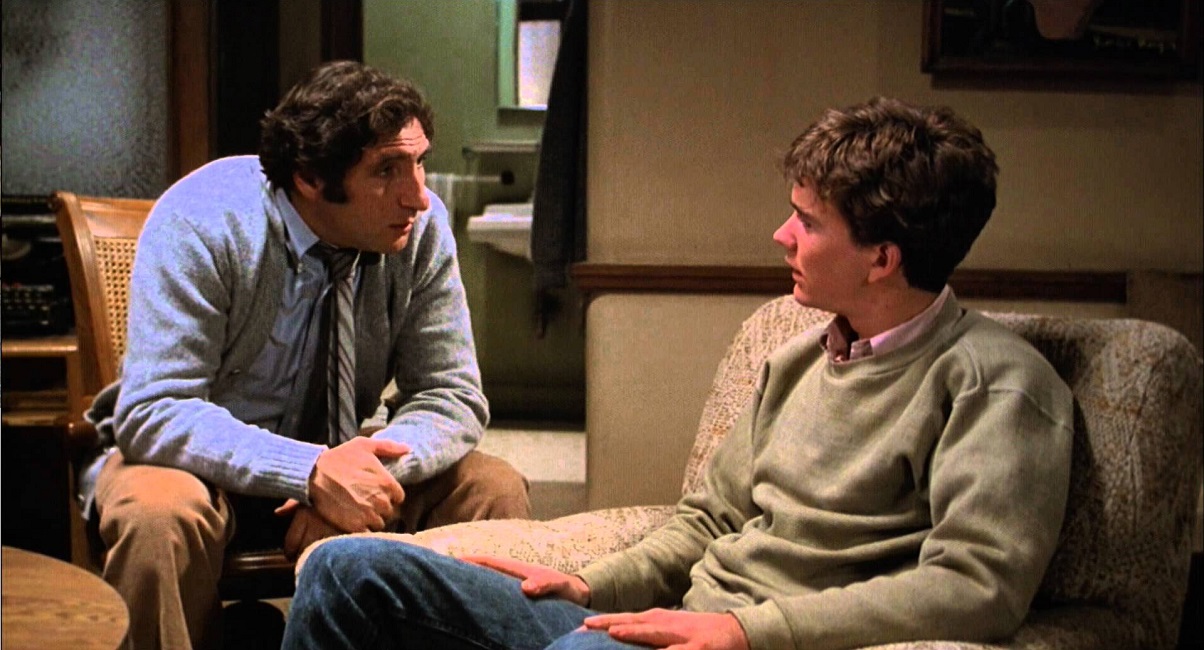
This rotates around a series of psychiatrist scenes which at least have the feeling of actual sessions, even if Judd Hirsch (good as he is here) basically plays the sort of revelation inspiring psychiatrist that only appears in movies. The film has a touching faith in the power of analysis being able to solve all problems, and spends so long luxuriating in scenes like this it virtually forgets to put actual living, breathing characters in the middle of them. With the possible exception of the father, none of these characters feel particularly real – they are just mouthpieces for the plot.

Not that it’s badly acted at all. Timothy Hutton made his film debut here and he brings a real fire and passion to the role, as well as a moving emotional vulnerability and anger directed only at himself. The supporting actor Oscar feels a bit of a cheat, as he’s clearly the lead, but he’s very good here as Conrad, struggling to express himself, bottling up his feelings and lashing out at those around him. It’s a part that feels drawn together from bits and pieces of plot requirement, but Hutton plays it to the hilt – it just doesn’t feel like a really real person, more a collection of sad traits.

Mary Taylor Moore is in a similar situation as a mother so cold and distant from her son, so repressed and controlling her distance starts damaging the entire family. She’s unable to process what has happened so almost wants to pretend nothing has (and blames her son for not doing that same), that it again feels like something from a psychiatric case-study rather than real person. Moore gained particular attention at the time as she was best known for comedy (much like Judd Hirsch, famous for the sitcom Taxi) – so the performance at the time might have looked stronger than it actually was.

The best performance might well come from Donald Sutherland in the least flashy role as the father trying to puzzle out what is going on – and trying to work out his own feelings. It’s the only character that feels less like a construct and more a genuine person, whose answers aren’t easily worked out by a bit of psychology study. Sutherland is low-key, tender, gentle and carries all his emotion on the inside – it’s a subtle and excellent performance, overlooked way too much. 

Redford essentially directed an actor’s film here (it’s all about the big moments of acting) so it’s not a surprise that it seized the attention of the Academy (largely made-up of actors) but really it’s not that far away from a well-made “movie of the week”,  with its obvious beats and not particularly surprising revelations. Perhaps it’s the point that the family’s problems seem a lot more apparent to the viewer than they do to the characters – and there is some interesting development of perceptions, not least from Sutherland’s father who starts to come to profound realisations about his wife and son. 

But Ordinary Peopleis an uninspiring and even rather tame drama, that today looks even more low-key and insubstantial. While it tries to break free from the confines of “social drama” it actually wants to tie everything up with a neat bow psychologically – and despite the fact it has an ending that suggests not everything is perfect, it really concludes with a safe full stop. There is a reason why it’s surely one of the best pictures which has been most forgotten about.