Category: Theatre Adaptation

The Crucible (1996)

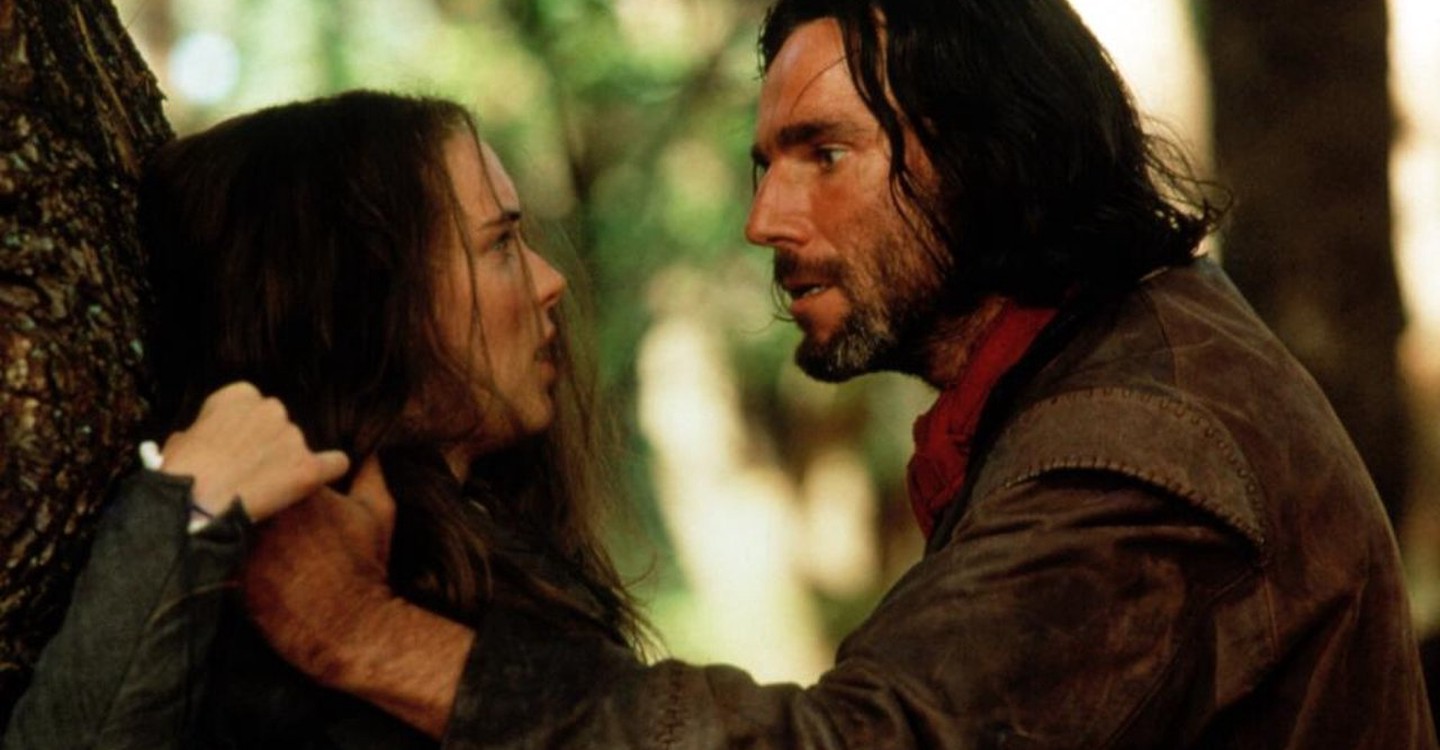
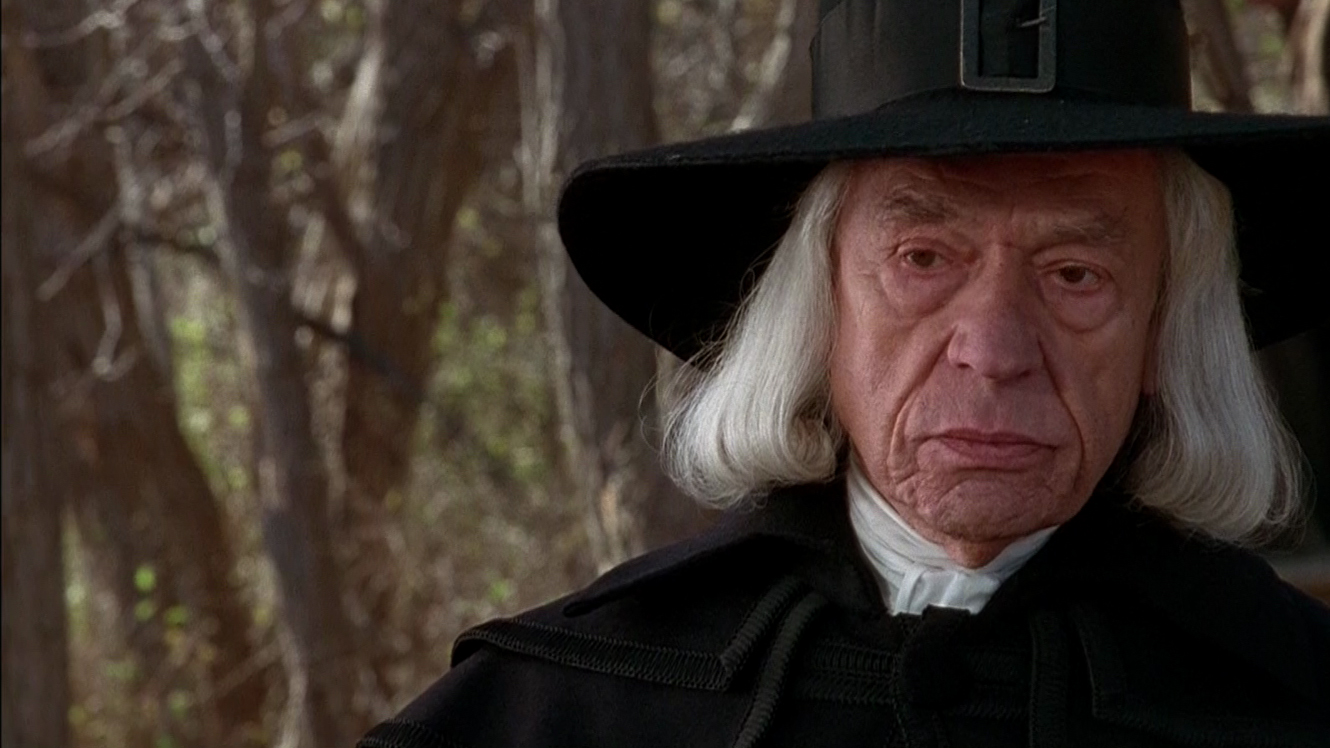
Winona Ryder and Daniel Day-Lewis are swept up in the heated emotions of small-town Salem in The Crucible

Director: Nicholas Hytner

Cast: Daniel Day-Lewis (John Proctor), Winona Ryder (Abigail Williams), Paul Scofield (Judge Thomas Danforth), Joan Allen (Elizabeth Proctor), Bruce Davison (Reverend Samuel Parris), Rob Campbell (Reverend John Hale), Jeffrey Jones (Thomas Putnam), Peter Vaughan (Giles Corey), Karron Graves (Mary Warren), Charlayne Woodard (Tituba), Frances Conroy (Ann Putnam), Elizabeth Lawrence (Rebecca Nurse), George Gaynes (Jude Samuel Sewell), Mary Pat Gleason (Martha Corey)

The Crucible is now so well-known, it’s virtually a shared cultural reference point. Surely we have all studied it at some point at school, or seen it on stage (or both). The play helped “witch trial” become a common short-hand for an increasingly vicious campaign conducted by society against a group within it. The Crucible works so effectively as a play because it is both simultaneously a brilliant recreation of the time it is staging, and a play of universal themes which is for all time.

In Salem, Massachusetts in 1692, the young girls of the village are caught dancing around a fire in the woods late at night by Reverend Paris (Bruce Davison). The next day, some of the girls will not awaken from fits, and rumours of witchcraft spread. Terrified of the blame being pinned on her, the girls’ ring-leader Abigail Willams (Winona Ryder) “confesses” to being tempted by the devil and swiftly accuses other people in the village (often at the prompting of senior villagers keen to remove rivals and resolve old feuds). However, Abigail’s real target is Elizabeth Proctor (Joan Allen), the wife of Abigail’s former lover John Proctor (Daniel Day-Lewis). The accusations quickly spiral into a series of trials based on the girl’s “evidence”, conducted by Judge Thomas Danforth (Paul Scofield).

The Crucible may be one of the finest adaptations of a play ever made. With the script adapted for the film by Arthur Miller itself, the play is effectively opened out and subtly restructured (the original is essentially four acts, each a single scene in a single location) to allow different character interactions, earlier introductions, and to show us things only implied in the original play. Many will complain about the film showing us rather than allowing our imaginations to work, but the film never loses the ideas and themes of the original play and gives it a real emotional force. What the film might sacrifice in the claustrophobia of small rooms, it more than makes up for in getting across a real sense of a community consumed by hysteria.

Nicholas Hytner – in only his second movie – directs with great skill, using a number of low-angle lenses to make ceilings loom over the scene. He mixes this with sweeping shots (beautifully filmed) of the Massachusetts countryside, which looks increasingly windswept and bleak. He really understands how to play the film “straight” – to let its universality speak by grounding it in the Salem countryside, without tipping the hat. His theatrical experience works wonders for the set-piece scenes, which sizzle with tension and brilliance, with Hytner allowing moments where you can almost convince yourself everything is going to be OK.

Miller’s expanded screenplay also allows an even greater sense of the hidden corruption of the trials, and how they are misappropriated by certain members of the village. Far more than even in the play, you get a real sense of old scores being settled, and of odd-balls and eccentrics being targeted. Frances Conroy (pre-Six Feet Under fame) is excellent as Ann Putnam, using accusations to alleviate her own bitterness at the loss of her children, while her husband is a spittle-mouthed bully, shamelessly using the trial as a landgrab (well played by Jeffrey Jones, awkward as it is to see him in a movie – google it).

In this nightmare village of suspicion and accusation, Abigail Williams is the only person who really understands the opportunities and dangers fully. Winona Ryder is often overlooked in this film, but her brilliant expressiveness is perfect for Abigail. She really adds depth and shade to the character – yes she is bitter and angry and ruthless and shameless, but she’s also scared and genuinely in love with John, and you get flashes of doubt and even regret over what she is doing.

The object of her obsession is John Proctor. Daniel Day-Lewis – Miller’s son-in-law – takes on the role and he is of course as excellent as you might expect. Day-Lewis’ key roles are such larger-than-life landmarks in cinema, it’s easy to overlook him playing a role taken on by so many other actors. At first, you almost feel it might be a waste – but he gives it a growing emotional commitment and force. He may be the one sane man in the storm of hysteria, but Day-Lewis doesn’t lose track of Proctor’s inner cowardliness, his corruption, his bitterness. Day-Lewis’ performance repositions the role as a man who has to learn to stand for something. It’s a superb performance.

He’s equally matched by Joan Allen, whose performance as Elizabeth Proctor throbs with dignity, but also a puritan strength of faith that makes it easy to imagine that Proctor would feel overwhelmed by a sense of being weighed in the balance and found wanting. She and Day-Lewis have a beautifully played, hugely emotional scene late on in a windswept field which (like so many other scenes in this production) briefly suggests a hope for the future.

Paul Scofield did so few films that each of his rare performances is to be treasured (this was his last film performance). His Danforth is simply superb, probably close to the definitive performance. It trades a lot on an inversion of Scofield’s most famous performance as Thomas More. Scofield plays Danforth as a man filled with certainty without a trace of doubt, who is married to the word of the law but has no understanding of the spirit of it. In Scofield’s masterful performance, flashes of arrogance and pride intermix with a genuine sense of faith and morality. His Danforth is convinced everything he does is right – a position that allows him to commit many wrongs.

The film is rounded out by several other excellent roles: Bruce Davison is outstandingly weaselly as Samuel Paris, Peter Vaughan has a wily shrewdness as Giles Corey, Rob Campbell is increasingly filled with doubt and anger as Hale, Karron Graves is wonderful as a desperate and scared Mary Warren. Mary Pat Gleason is perfect as the proud Martha Corey, while George Gaynes subtly suggests a man consumed with doubt as Judge Sewell.

“Anybody seeing The Cruciblenow would never dream that it had been a play” said Arthur Miller on this adaptation. He’s right. This must be one of the best stage-to-screen adaptations there has ever been, with all involved totally understanding what made the play great while expanding and deepening the content for film. It’s a marvellous film.

Macbeth (1971)


Francesca Annis and Jon Finch as the murderous Macbeth’s in Polanski’s dark Shakespearean adaptation

Director: Roman Polanski

Cast: Jon Finch (Macbeth), Francesca Annis (Lady Macbeth), Martin Shaw (Banquo), Terence Bayler (Macduff), John Stride (Ross), Nicholas Selby (King Duncan), Stephen Chase (Malcolm), Paul Shelley (Donalbain), Richard Pearson (Doctor), Diane Fletcher (Lady Macduff)

Roman Polanski is always going to be a controversial figure. If he wasn’t also a gifted film maker, his reputation would be even lower than it is. His life has been a parade of misfortunes and misdemeanours. Macbeth was filmed a few years after his wife, Sharon Tate, was brutally murdered by Charles Manson. Hard not to read something into the director’s decision to film Shakespeare’s most infamous murderer. Certainly it was hard for reviewers at the time to disconnect the two. Throw in the fact that the film was made by Playboy Productions’ short lived film-making arm (with Hugh Hefner as Executive Producer) and you’ve got a film ripe for a poor reputation.

However, Macbethis actually a dynamic, well-filmed, surprisingly textually savvy production of this shortest and most intense of Shakespeare’s tragedies. While there is no doubt that this very much Polanski’s personal vision of Macbeth, it’s a fascinatingly dark, grim and horror-inflected production that really gets to grips with the darkness at the play’s heart – and also with the slightly empty, little-boy-lost quality in Macbeth himself (until then a character seen on screen largely as the brooding thane, laid low by his evil wife).

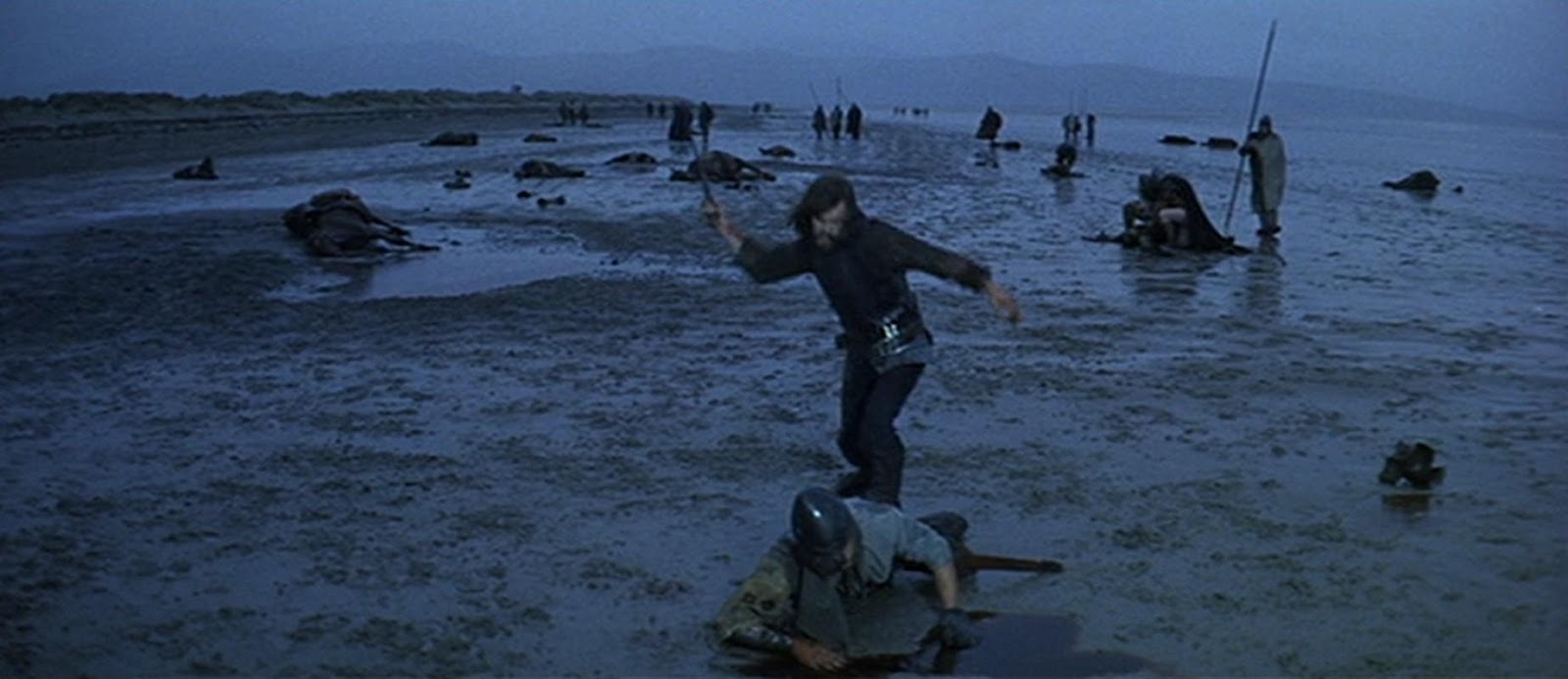
Polanski’s Macbethtakes place in a world where violence is second nature, life is cheap and grim slaughter is around every corner. One of the first acts we see is a soldier checking bodies on the battlefield. Finding a wounded soldier, he breaks his spine with two sickening blows from a flail. That’s just a precursor for the violent mood that will follow. Mangled bodies and bleeding corpses constantly appear, from Duncan’s guards to the twisted corpses of the Macduff children. Even when relaxing at the court, the Macbeths set up a bear baiting (kept off-screen) – the bear’s corpse (along with a few dogs) is later dragged through the palace corridors, leaving a trail of blood. 

Polanski’s Scotland is a savage, medieval, uncivilised place. Macbeth’s castle is a more like an elaborate farm, with wooden huts and mud-stained floors, than a mighty fortress. Every character looks swarthy, run-down and dirty. Colour has been drained out of the film in favour of muted greys and browns. There is precious little hope here, just a terrible onslaught of violence and murder that never seems to stop.

The brutality is constant, and Macbeth is up to his arms in it. Even the murder of Duncan doesn’t pass off without a hitch – the King awakens and has to be dispatched with panicked desperation. Banquo is finished off with a sickening axe thud in the back, his body dropping lifelessly into a stream. Even Macbeth’s faithful factotum Seyton is brutally lynched while trying to prevent his soldiers from deserting Dunsinane. The assault on the Macduff family is hideous in its fierceness: the house is burnt down, the servants (and its implied Lady Macduff) raped, while the children are brutally murdered (thankfully off-screen in most cases). It’s a harrowing slaughter that brings to mind World War II atrocities – and of course Polanski’s own recent tragedy. 

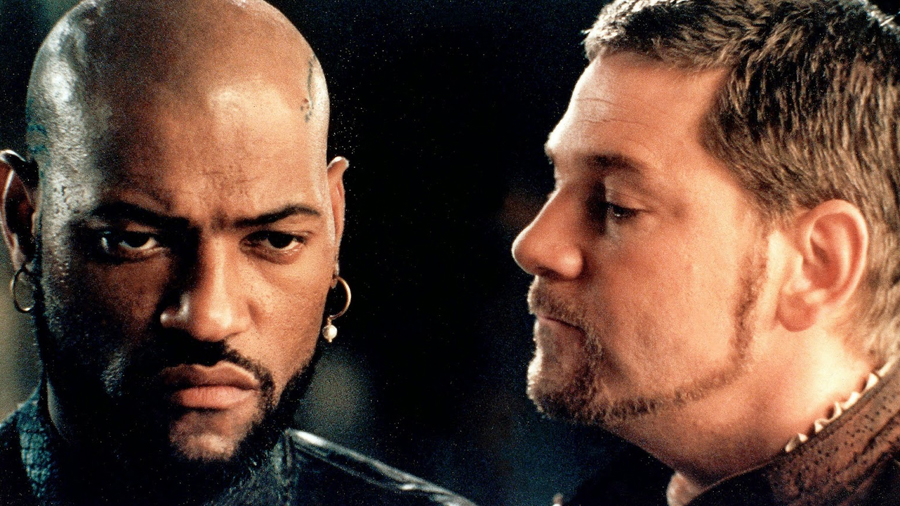
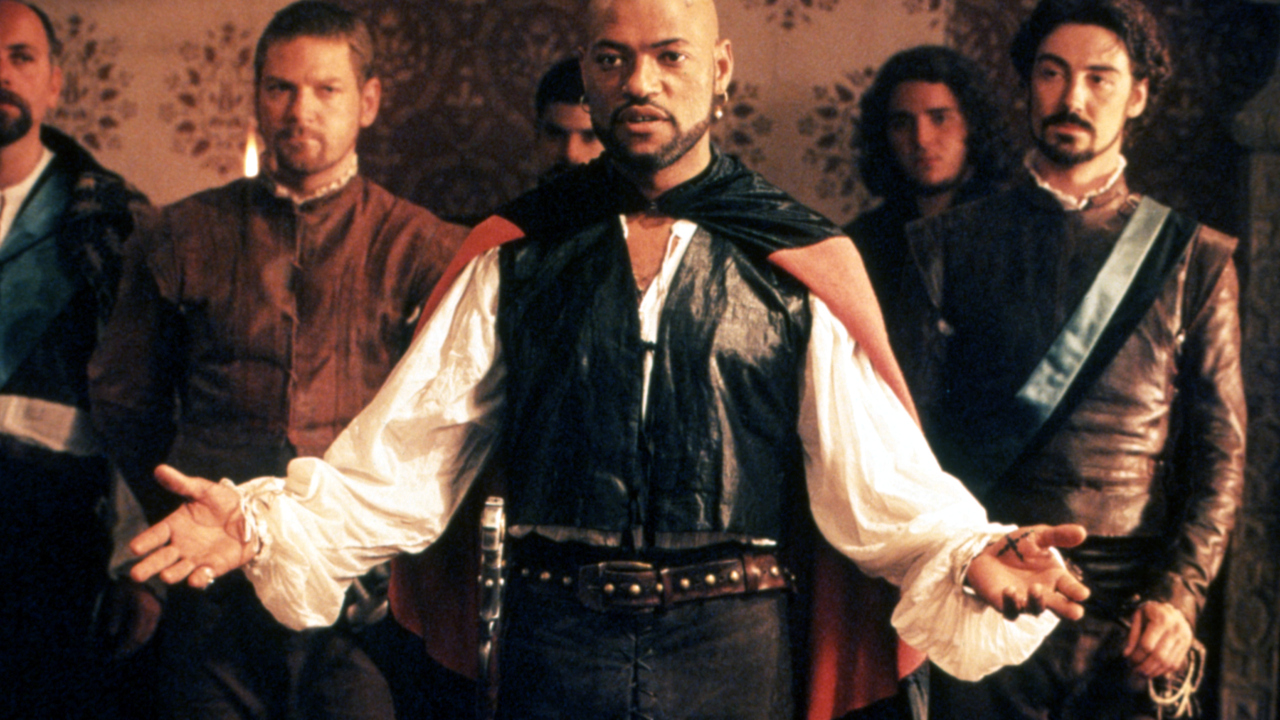
In this world, Macbeth is intriguingly presented as far less of a noble poetic hero than audiences at the time would have expected. Jon Finch’s Thane is low-key and lost, a puppet in the events happening around him. He’s almost like a slightly at-sea kid, who’s stumbled into power and has no idea what to do with it. His poetic soul is revealed as flashes of inspiration in an otherwise empty man. With many of the speeches internalised in voice-over, Macbeth’s sound and fury is deliberately toned down – by the end he seems weary and finished in a way few other Macbeths feel. His isolation throughout the play is complete – he’s incapable of relating to other people.

Similarly, Francesca Annis presents a fresher view of Lady Macbeth than a cartoon villain. While clearly still alluring (there was much controversial, Playboy-related, buzz to her famous naked sleepwalking scene) she’s equally as adrift as Macbeth is, totally unprepared for the psychological impact of murder. Excited and perhaps even a bit turned on by power, she falls apart as the impact of her actions grabs hold – it seems to be happening from the very start, her swooning when seeing the corpses of Duncan’s guards seems genuine rather than forced. Polanski even places her suicide on screen – her despairing leap accompanied by screams of terror from her waiting women.


In this grim world, there is a paganish, primitive feeling. Macbeth is crowned in a strange ceremony that involves him standing bare foot on the stone of scone. The Thane of Cawdor is executed by being hung by a metal chain (he defiantly jumps from the battlements rather than being pushed) while the court stares on. The witches are a crazed harem of naked women of all ages, engaged in bizarre, sadistic ceremonies in a secret subterranean den. The opening shot of the film uses a bright, bleached yellow sun that seems to stretch over a desolate coast-line, where the witches are burying a human hand clutching a dagger. Macbeth’s visions are a series of surreal and disturbing images, while Banquo’s ghost is an increasingly bloody and terrifying image as the scene progresses. There is a sense of strange powers hanging over everything.

And maybe that power is fate. This is also a fatalistic film, which runs with the theory that Shakespeare’s tragedies are almost circular in nature (very much inspired by Polish writer Jan Kott in his excellent book Shakespeare: Our Contemporary) with fate as a machine that traps people into an endless cycle of repetition. This feeling runs throughout Macbeth’s increasingly fatalistic disengagement with the world – the (excellent) sword fights at the end even see him fight with a certainty in advance of the results. The cyclical nature of this world is hammered home at the end, as Donalbain sneaks away from the celebrations of Malcolm’s crowning to consult with the witches in their hovel – hold onto your horses, the cycle is all set to begin again.

The film is also creative in its use of Shakespeare, in particular in its expansion of the character of Ross. Polanski and his co-screenwriter, famed theatre critic Ken Tynan, again followed Kott’s theories by repositioning Ross as the ultimate political opportunist. Helped by John Stride’s expressive performance, Ross is a constant figure of vileness, allying himself eagerly with whoever is on the rise. Ross assists in the murder of Banquo, murders the murderers and aids the destruction of the Macduff family. Overlooked for a chain of office in favour of Seyton, he swiftly reverses his stance and flies to Malcolm (much to Macbeth’s later fury) and then loudly leads the cheers for Malcolm’s crowning. It’s a neat side story, done with camera asides and no dialogue changes, but it adds a lot of interest to the film.

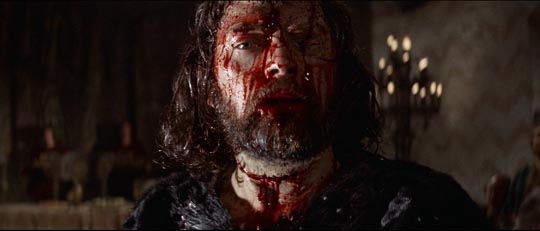
Macbeth ends with a gruelling beheading of Macbeth – and stylish angles gives the impression that we are experiencing Macbeth’s final moments of consciousness as his head is passed around Malcolm’s soldiers. It’s a neat way to end a violent and dark production of the play, shot through with Polanski’s personal awareness of the darkness of the human soul. The film sometimes loses its pace a little bit, and most of the performances leave very little impression – there is a reason why virtually no one in this film had a really established film career. Even the language of Shakespeare isn’t central here: it’s the experience of a brutal, dark and grim world that matters. It’s the images and visuals that stand out. It’s very much Polanski’s Macbeth.

12 Angry Men (1957)


Henry Fonda must win over 12 good men and true in 12 Angry Men

Director: Sidney Lumet

Cast: Henry Fonda (Juror #8), Lee J Cobb (Juror #3), Ed Begley (Juror #10), E.G. Marshall (Juror #4), Jack Warden (Juror #7), Martin Balsam (Juror #1), Jack Klugman (Juror #5), Joseph Sweeney (Juror #9), John Fiedler (Juror #2), Edward Binns (Juror #6), George Voskovec (Juror #11), Robert Webber (Juror #12)

A young man is on trial for murder. The jury retires to consider. On the first vote, only one man (Henry Fonda) questions his guilt. The other jurors are convinced they are right – can Fonda turn them around?

Who hasn’t done jury service and dreamed of being Henry Fonda? 12 Angry Men is perhaps the most compelling courtroom drama ever, for that very reason: hardly any of us are judges or lawyers, but we’ve all got a decent chance of doing jury service. What would we do in this situation? How thoughtful would we be about the evidence? And, of course, that little stab of ego – could we be charismatic and persuasive enough to sway a room of people? I think this is why this film sticks with people and has become such a persuasive part of our popular culture – we all wanna be Fonda.

12 Angry Men is a film that I feel touches perfection. I thought quite heavily about whether I could identify any flaws in it at all: the closest I got at was the shot Lumet throws in of the suspect (a sweet looking kid). I suspect this shot was required so that the 50s audience could be confident that Fonda was crusading for someone who at least looked innocent (although it always makes me think, since so many of the other jurors make snap decisions, why doesn’t at least one of them look at that cute kid and think “he ain’t no killer…”). Aside from that, I don’t think there is a single mis-step in the filming, acting or writing of the film – and how many times can you say that?

Lumet is a director who doesn’t get a lot of public recognition. He subordinates his skills to the requirements of the story, rather than an auteur who imposes his style. This works perfectly for this compelling slow-burn. Lumet’s expert filming quietly lets the actors and dialogue stand front-and-centre, while cleverly using his camera language and shot choices to amp up the tension.

At first, Lumet uses wider and high angle shots, allowing us to get a sense of the room and the characters. But the real effect of this plays out over the rest of the film, as Lumet slowly moves to tighter angles at POV height, until the final sequences are played out over a series of close-ups cutting from juror to juror, at low angles. What this achieves brilliantly is to make the film feel tighter and more claustrophobic – the room feels like it’s actually shrinking in on the jurors as they argue. You can get a sense of it in the videos below, both early and later in the film.

The film also works so brilliantly because it offers a brilliant insight (and critique even?) of the legal system. The one legal professional we see is a bored judge. All references to the unseen lawyers mention either their showmanship or inadequacy. Even the jury system is subtly called into question: several of the jurors are motived more by prejudice and personal experience than by any analysis of the evidence. Others are flawed in other ways; #12 switches sides indecisively three times while #7 is so impatient and bored with the whole process, he follows the direction of the least resistance. Without #8, a decision would have been made with no discussion at all. Even the very process of taking the vote is shown to root many of the jurors down to “sides” and creates an atmosphere of competition that becomes as important as seeing justice done. And in a system of trial by your peers, only #4 in any way identifies himself as sharing the background of the man on trial. Is this a perfect system?

These ideas, though, are skilfully interwoven in the background of a gripping legal thriller. 12 Angry Men is completely objective. We never see the witnesses whose performance is the cause of such analysis. We never see the scene of the crime. We don’t have any confirmation at all that either side is right. It’s a film about the importance of reasonable doubt – and the need to be absolutely certain before sending someone to the chair. Fonda feels that doubt – and persuades the other jurors of it – but we never know if he was right or not. We never know if any of the suppositions in the jury room are true – the important thing is how high the possibility is that they might be true – and how much that affects our willingness to convict.

The film is one brilliant set-piece after another, as each piece of evidence is interrogated. I honestly can’t decide which one I like the most. What makes it work is the variation of how each case is presented. The film is as comfortable with the drama of #8 flinging a replica of the “unique” murder weapon onto the table, as it is with a careful dialogue-led dissection of the eyesight of a key witness. Who can resist Fonda limping around an approximation of the next-door neighbour’s flat to see if he can cover a certain distance within a certain time. It helps that the dialogue is incredibly rich – it has to convey a lot of information, but also manages to sketch out each of the characters so swiftly and carefully that each of them feels real.

And we’ve come all this way and not even mentioned the performances. Again, each viewing gives me a chance to appreciate a new performance: my eye was caught on this viewing by Robert Webber’s seemingly cool and collected advertising man, who has far less certainty than he projects. Needless to say each actor is brilliant. Fonda (who also produced) is the very image of moral authority – as well as a generous collaborator on the movie. Is this his best performance? It’s got to up there – #8 is a humanitarian, but he’s never smug or self-serving, just a man who feels a strong sense of his own obligation.

If Fonda is the superego, Cobb’s #3 (the primary antagonist, if there is such a thing) is the ego – raging, elemental, decisive, unshaken in his beliefs. Cobb’s performance veers the closestto a little too stagy, but it’s a character that demands it. His bluster and swaggering are vital to the character in order to make his later emotional collapse work as well as it does – and #3’s final emotional disintegration really rings true. It’s a ferociously intense performance.

Each actor gets his chance to shine. Voskovec’s sensitive immigrant has a wonderful speech on the responsibility of passing judgement. The most barnstorming speech is Begley’s racist outburst late in the film. It’s beautifully done as this loud-mouthed bully explodes with frustration, then slowly and even rather sadly collapses as he talks on and on, each sentence making him weaker and weaker, more defensive and vulnerable. But it’s never a scene about just one man – the reactions are as well judged as everything else. And I can’t tell you how much I love #4’s “I have [listened to you]. Now sit down and don’t open your mouth again” one-line response which caps the scene.

In fact just mentioning #4 brings on my love of E.G. Marshall’s performance in this film. #4 should be one of the least engaging characters in the film – coldly analytical, professional, assured and clear minded. But he’s always human, never an antagonist, but a respected citizen – the only one of the jurors who is motivated by judgement rather than prejudice. I love his calmness, his cool lack of regard for #3 and #10’s loud-mouthed berating, his patient, studied explanation of his convictions. I adore his calm puncturing and counterview of each point Fonda puts forward, until he is finally won over – and its his winning over which makes the film work. If this thoughtful, intelligent man has doubts, shouldn’t we all?

But I repeat they are all great. Jack Warden’s #7 is totally convincing as (the film’s real villain?) a man indifferent to right and wrong when compared to his own needs. Balsam’s decent but ineffectual #1 is the perfect mediocrity in above his head. Sweeney’s wry, observant and shrewd #9 is a delight (Sweeney was the only member of the original TV play to be retained). Fiedler’s #2 grows in moral force throughout, belaying his quiet appearance. Klugman’s #5 is quietly defiant and conflicted. Binn’s #6 reveals himself as a mild, humble and honourable man.

I think I could watch 12 Angry Men every week of the year. It’s brilliantly filmed (how could I not mention the oppressive rain soundtrack that accompanies the latter part of the film) and wonderfully directed. The script is simply perfect, Reginald Rose expanding and enriching his original TV adaptation. The acting is nearly flawless from all concerned. It’s, quite simply, a great movie. I simply can’t imagine anyone not reflecting on this movie when heading into jury service. It subtly comments on the legal system, but never gets bogged down in this, telling a gripping and compelling story about things we never see. It’s pretty damn near close to perfection.

The Winslow Boy (1999)


Nigel Hawthrone will stop at nothing for justice for his son in faithful literary adaptation The Winslow Boy

Director: David Mamet

Cast: Nigel Hawthorne (Arthur Winslow), Rebeccca Pidgeon (Catherine Winslow), Jeremy Northam (Sir Robert Morton), Gemma Jones (Grace Winslow), Guy Edwards (Ronnie Winslow), Matthew Pidgeon (Dickie Winslow), Aden Gillet (John Waterstone), Colin Stinton (Desmond Curry)

David Mamet surprised those who associate him with macho, alpha-male led drama with this sensitive and faithful adaptation of Terence Rattigan’s play. After his young son Ronnie is sent down from naval college for stealing a five shilling postal order, Arthur Winslow (Nigel Hawthorne, terrific) will stop at nothing to clear his name, supported by his suffragette daughter Catherine (Rebecca Pidgeon, excellent in a difficult role). They recruit Sir Robert Morton (an electric Jeremy Northam) to champion Ronnie’s case, as the scandal rocks the nation.

There can’t be many film adaptations of plays that so completely avoid “opening up” the play. The settings and dialogue of Rattigan’s original are kept largely as is. This means that – just as in the play – all the major dramatic events happen off-stage and are reported in dialogue. The campaign to clear Ronnie’s name? Apart from flyers and newspaper prints in Winslow’s home, you’re not seeing that. Morton’s advocacy of the case in the House of Commons? The smallest of scenes. The crowds outside the Winslow home? A faint echo on the soundtrack. The pivotal court case itself? Not a single shot. If ever a production made Rattigan feel more like Chekov, I’m yet to see it.

This theatricality is not necessarily a bad thing. I’ll admit it may create a film a bit too contained and low key for some. But catch this in the right mood and Mamet’s carefully considered staging brings many of its smaller moments and personal interactions into shape. Would a film full of triumphal courtroom scenes have so perfectly captured anti-climax and confusion that can come after an event that has dominated your whole life comes to an end?

This approach also allows the relationships to come front and centre – in particular the growing attraction between Catherine and Morton, treated lightly and subtly but with huge warmth. Catherine here mirrors the main plot. Her suitors are, in turn: an upright military careerist (whom she loves, but we care little for), a gentle non-entity (whom we like but she is bored by) and the imperious Morton – on the surface someone she shares few opinions with but, subconsciously, recognises a deep kinship with. Like the public reaction to the campaign, the attitudes of these people to Catherine represent the wider reactions happening off-camera. The Morton-Catherine story is a beautiful romance in which not a single word of overt, direct affection passes between the two characters, but volumes are increasingly spoken in each glance.

Mamet’s approach also allows plenty of stagy touches to translate really well to film. The film is clearly divided into acts, and each one returns us to the Winslow home, each time in less pomp than before (by the final scene it’s stripped down to bare essentials). Arthur Winslow is less and less sturdy each time we see him, the character shrinking ever closer to old age and infirmity. Each member of the family increasingly pays heavier prices, as their financial security is sacrificed (though Mamet certainly understands the characters’ very British acceptance of these turns in fortune).

The other major benefit is that the acting comes to the fore. I’m not sure Jeremy Northam has been better than he is here: the one downside of not staging the courtroom scenes is that we will never get to see Northam play them! His Morton is a perfectly pitched imperious upper-class professional, whose exterior hides a compassionate and selfless concern for “right”. The film’s most electrifying moment is his hostile examination of Ronnie, a dynamic verbal assault that rips into the film’s quiet austereness, crackling with tension. Northam is so good, at one point I am sure he muffs a line – but he carries it off with such brilliance (the austere man awkwardly burying his feelings) that Mamet keeps it in (take a look around 2:10 here and make up your own mind!). It’s also a beautifully real moment – the man of words, briefly revealed by them. This scene is, by the way, a masterpiece of unspoken emotions and affection (from both actors).


The other main performers are equally strong. Nigel Hawthorne mixes his cuddly avuncular wit with hints of the monomaniacal obsessiveness that leads Winslow to drain his resources, and strength, in pursuit of justice. While the film doesn’t always acknowledge the sometimes self-destructive effects of Winslow’s passion – and only hints at how much Winslow sees the accusation against his son as a personal affront, as if questioning his son’s honesty is questioning his own – Hawthorne keeps the character morally rigid yet sympathetic and understandable.

Rebecca Pidgeon, the director’s wife, is practically an open target for suggestions she only got the part through nepotism. Such views are unjust. While her accent seems a little forced, her performance as the slightly distant, intellectual, prickly and driven Catherine is spot-on. The crusade begins as her father’s obsession, which she shares. Their characters then evolve so naturally that you only realise at the conclusion that she has become the lead character, and the main driver of the crusade, for quite some time.

I’ve seen The Winslow Boy three or four times now. The first time I saw it I was thrown (disappointed) by its staginess, its surface stateliness. However, since then I’ve grown to appreciate its careful, respectful lack of showiness more and more. It’s an intelligent, well-handled adaptation, crammed with wonderful performances. Yes it’s sometimes a little too “Masterpiece Theatre”, but when it can deliver such stirring, and moving, moments as it does – well you could never refuse it a place in your heart. Let Right Be Done.

Rosencrantz and Guildenstern are Dead (1990)


Tim Roth and Gary Oldman are our bewildered heroes in Stoppard’s classic play

Director: Tom Stoppard

Cast: Tim Roth (Guildenstern), Gary Oldman (Rosencrantz), Richard Dreyfuss (Player King), Iain Glen (Hamlet), Ian Richardson (Polonius), Joanna Miles (Gertrude), Donald Sumpter (Claudius)

The original production of Rosencrantz and Guildenstern are Dead made Tom Stoppard a sensation overnight. It’s a dazzling high-wire act of theatrical and artistic invention that deconstructs both Hamletand the nature of theatre itself.

The events of Hamlet are re-told from the mis-understood perceptions of Rosencrantz (Gary Oldman) and Guildenstern (Tim Roth). Their time is spent in discussions about life and struggling to understand their role in both. Throughout, they are prodded towards understanding they are just plot devices by the Player King (Richard Dreyfuss). This film essentially replicates large chunks of the play, with a few humorous editions and revisions and drops it from its theatrical home onto the big screen.

The acting from Roth and Oldman is terrific. The friendship between the actors really comes across in their chemistry with each other, and both are clearly relishing the script. The characters are a brilliant contrast: Roth’s Guildenstern is the bossy, confident driving force who is not as intelligent or incisive as he thinks he is; Oldman’s Rosencrantz is a sweet, passive savant-like follower with flashes of insight he isn’t quite capable of understanding. Both have excellent comic timing, Oldman in particular making his character completely endearing. They also have an affinity with the language that makes the more reflective passages highly engaging. Even if the film isn’t perfect, you should watch it for these two performances – cast against type (neither of them is thought of as a comic actor, or associated with either Shakespeare or scripts like this) both actors are sensational, surely one of the best pairings for any production.

The rest of the cast is also strong. Richard Dreyfuss (a late addition) is witty, larger than life and also subtly sinister as the Player King. Some of the “clips” of Hamlet we see could have made an excellent production, with Glen, Richardson, Sumpter and Miles all giving very strong performances.

Tom Stoppard directed the film at least partly because he felt if he didn’t no-one would. Clearly his experience with actors throughout a lifetime has really paid off, as judging from the excellent performances. What he doesn’t quite have is either a true sense of filmic pace or a real ease with using the camera. Scenes work individually, but the play feels like a series of sketches. So the scenes with the coin tossing, or the questions game (a link below), or the sequences where the players recreate the plot of Hamlet work very well. But the actual plot (such as it is) of the play doesn’t always quite hold the attention – it’s slow paced and the overall impact never equals the sum of those parts.

The attempts to open the play out also don’t really work. The actors move from location to location in Prague castle and some scenes are shot outside, but it feels like just moving stuff from inside a theatre to outside. Other than that it’s basically a staging of the play exact – without really changing or replacing the meta-theatrical devices of the play with filmic contrasts, it feels much more like the filming of a stage production. Saying that, the changes Stoppard made to the script got a mixed reception, but many of them work quite well: in particular a running joke of Rosencrantz accidentally discovering or inventing concepts as wide ranging as the hamburger and Newtonian physics (only to have these discoveries dismissed or ignored by the impatient Guildenstern) frequently raise a smile.

So it’s a stagy and slightly slow piece with some wonderful scenes but overall can outstay its welcome. It’s very clever of course, but that cleverness is so tightly linked to the nature of theatre that its impact can never be the same in another medium. But it has some wonderful scenes and two brilliant performances in the title roles. If you have any interest in theatre or Shakespeare, or admire either of the two leads, watch it. But maybe take an interval.

A Man For All Seasons (1966)


Paul Scofield ways up a difficult demand from a not-so merry monarch

Director: Fred Zinnemann

Cast: Paul Scofield (Sir Thomas More), Wendy Hiller (Alice More), Robert Shaw (Henry VIII), Orson Welles (Cardinal Wolsey), Leo McKern (Thomas Cromwell), Susannah York (Margaret More), Nigel Davenport (Duke of Norfolk), John Hurt (Richard Rich), Corin Redgrave (William Roper), Colin Blakely (Matthew)

Writing these film reviews is sometimes harder when it’s a film you know so well. I was probably in my very early teens when I first saw this and I’ve seen it dozens of times since. I know all the scenes, all the beats, and I love it. This is a brilliant film, and its depth, richness and intelligence are ingrained. It’s a wonderfully written, played and directed piece that transforms a historical event from a history lesson into an endlessly relevant and affecting parable.

Paul Scofield (simply becoming the man) is Sir Thomas More. With Queen Catherine unable to bear Henry VIII (Robert Shaw) a son, wheels are in motion to ditch the Queen and marry the king to Anne Boleyn (a split second cameo from an unpaid Vanessa Redgrave, making you believe in a moment Anne could split a kingdom). More, however, can’t agree to the divorce – his faith in the Catholic church is non-negotiable, and the church won’t recognise the marriage. So while the rest of the kingdom falls in line, More is arrested and takes refuge in his complete silence – having never spoken of his reasons, he can never be tried for them.

Re-watching this masterful film for the first time in a few years on a newly released, fully restored Blu-ray, I was immediately reminded what a thoughtful, interesting and enjoyable film it is. Having read the play again, I genuinely think (and I’m not alone) Bolt’s script is superior to the original. Several changes have been made, most notably the removal of the “Common Man”, a theatrical device whereby one actor played all the smaller working class roles, while delivering a commentary on the action. It’s a very theatrical device, which Bolt believed wouldn’t work on screen, but its removal also purifies the story, tightens the focus and allows us to focus on More. The commentary on More’s conflicted character is instead provided by Paul Scofield’s superlative performance in close-up. Bolt also removed much of the political background, making the film more of a parable of conscience rather than a “history play”.

The film is a beautiful celebration of old-fashioned Hollywood film making. Fred Zinnemann is sometimes forgotten today, extremely unfairly for a man with a hugely impressive back catalogue. A Man for All Seasons was perfect for a director whose best work saw one man stand alone against a system – be that at Pearl Harbour or the Wild West. Zinnemann was an “actor’s director”, and draws out a series of impressive performances. But his often simple set-ups never feel staged.

He and John Box (production designer) understand the power of claustrophobia, of life and death conversations in small rooms – from Wolsey’s imposing red office that seems an extension of his personality, to Cromwell’s poky office and More’s cell, the sense of being trapped builds throughout the film. By contrast, the final courtroom’s spaciousness only underlines the fact that it’s a fix. Throughout the film looks wonderful and its spare score is a beautiful Tudor-style series of compositions that carry a perfect pitched of awe and doom. It’s so beautiful (and often overlooked) I’ve put a link to the opening here.

 In fact, Zinnermann constructs the film throughout with wonderful beats and telling shots. The first appearance of Henry VIII, his head obstructing the sun, More blinking looking up, is one of the best visual impressions you’ll see of the Icarus nature of the Tudor court. A beautiful cut takes us from More (in a windswept garden, a lovely commentary on the turbulence of his life) wondering if he can find a way to sign the oath, to a shot of the view from behind his prison bars – pages and pages of story told to us in one simple cut. Later, from the same position, we’ll see a whole year pass by in a few moments – simple, unfussy, very effective. The film is packed with small, subtle moments like this that never intrude by themselves, but build to create the effect of the film wonderfully.

And this is a great film, there’s no doubt about that. The story is surprisingly simple, but Bolt and Zinnermann make it feel truly universal: the man against the state, the individual standing for what he believes is right despite all the pressure bought to bear against him. It’s a timeless parable and could be applied to virtually any time or place you could name. It’s also extremely well written: nearly every other line is memorable, the speeches are extraordinary. Every moment of reflection and observation sounds (and is) universal in its application. Its straightforwardness also helps make the story very moving, and it successfully carries out the trick of telling a movie about a saint while making him a living, breathing man we can relate to.

Of course, a large part of its success is due to Paul Scofield’s performance in the lead role. Honed after years of performing the role, it’s again almost hard to talk about individually as Scofield is so central to the film; talking about its success is in many ways to talk about Scofield’s success. Scofield’s performance is one where the actor disappears and the character remains: his More is totally real. You feel throughout not only his dignity and wisdom and his sharply defined sense of private and public morality – but also his warmness, his wit, his benevolent regard for people and those around him. He’s a caring master and friend – but not a push-over; and is adamantine in his decisions. Scofield is also able to show the contradictions of the man: a private man who cannot give up the lure of the limelight. Every beat of the performance is brilliantly observed, a list of highlights would fill a book. He carries the entire film from start to finish and never lets it slip for a second.

He’s helped by some wonderful support (and it’s a testimony to his generosity as an actor that he cedes the screen several times). Robert Shaw’s Henry VIII is a scene stealing tour-de-force. It’s up there with Robert Duvall’s Kilgore as cameos that wrench control of the movie. He’s on-screen for about 12 minutes, but he perfectly captures Henry’s charisma and his childish temper and fury. He’s intelligent (but not that intelligent – I love his sulky response when he is quickly bested by Margaret More in knowledge of Latin) and friendly but not that friendly – the sort of man who literally rips flowers from a tree to show someone how beautiful they are: destruction and excitement combined in one moment. You totally believe that this is a man who could shatter a country in a fit of pique.

Wendy Hillier also deserves notice for what might be the trickiest role in the film as Lady Alice, a woman who lives happily in the shadow of her husband. Ill-educated and lacking any understanding of her husband, it’s a part that could be almost yokel like. But Hillier brings it a world of dignity and fiery defiance, and she brings a completely convincing fury to Alice as she rails against  injustice. The final scene between her and More is a masterclass from both of simple, uncomplicated love that has held two people with very little in common together for a lifetime.

There is literally not a bad performance in this film. Every actor is perfectly cast and completely understands their roles. Nigel Davenport masterfully portrays the pride and dimness that lies under Norfolk’s bluff domineering persona. John Hurt nails Rich’s weakness, selfishness and greed and layers it with a convincing note of underlying self-loathing: a star marking performance. Orson Welles seems to have prepared his whole life for the bloated, corrupt Wolsey. Leo McKern (the only other cast member from the original production) invests Cromwell with a low viciousness and a deadly political savvy that is based exclusively on realpolitik and devoid of decency. Susannah York, Corin Redgrave and Colin Blakely all also excel.

Historically, the character of More has faced far more criticism and scepticism recently. Several historians have bought attention to More’s rigid Inquisition-like Catholicism and his willingness to execute heretics; Hilary Mantel’s equally brilliant Wolf Hall was partly written as a response to Bolt’s presentations of More and Cromwell, lauding the latter at the expense of the former.

But these controversies are not what this film is about – and it’s never trying to be a history lesson. It presents its version of the story on its own terms (very little is ever leaned about the “King’s Great Matter” or the reasons for it) – instead, like The Crucible, it turns a historical event into a deeply moving and profound parable. In doing this it transcends being a simple recounting of events, and instead becomes an independent work of art. Historical accuracy is of no relevance to the audience when viewing Henry IV Part 1: it is of no matter here either, and is something the film never claims. And it’s all the better for it. Still one of my all-time favourites.

Good (2008)

Viggo Mortensen and Jason Isaacs are conflicted brothers in arms in this all too familiar (in every sense) Nazi Germany story

Director: Vincente Amorim

Cast: Viggo Mortensen (John Halder), Jason Isaacs (Maurice Israel Glückstein), Jodie Whittaker (Anne), Steven Mackintosh (Freddie), Mark Strong (Philipp Bouhler), Gemma Jones (Halder’s Mother), Anastasia Hille (Helen Halder), Steven Elder (Adolf Eichmann)

Is there a more overused quote than Edmund Burke’s “All that is necessary for the triumph of evil is that good men do nothing”? It’s virtually become a cliché and can be heard spouted with chin-stroking smugness in everything from Law & Order episodes, opening title cards to crappy action films to the message-boards of the internet. If Good can have any claim to history (and it probably can’t), it can say that it’s the film of the phrase.

Our Good Man is John Halder (Viggo Mortensen). Our Evil is Nazism. Halder is a literature professor in 1930s Germany. He’s written a novel in support of euthanasia: this brings him to the attention of the party authorities, who need intellectual support for their own plans. Halder accepts an honorary rank in the SS – and from there it’s compromise after compromise that leads to the Holocaust. His good and bad angels are his new young wife Anne (Jodie Whittaker), who loves the advantages party membership brings, and his Jewish best friend Maurice (Jason Isaacs), whose situation goes from bad to worse.

It’s a very, very earnest film which wears its heart on its sleeve. Which is the main problem – the film-makers were clearly desperate to “tell it right” and stay true to the original play – but the whole idea comes across slightly outdated, obvious and far too familiar. Whatever point the play had to make when first staged in 1981, has now been said and done to exhaustion. Despite the care and attention, there now isn’t much originality or freshness. As such, it never really rouses any feelings.

The story it tells of its lead’s reluctant seduction into being an active Nazi can probably be charted fairly accurately without watching the film. The plot device of the Jewish friend feels too on the nose and obvious (compelling as Jason Isaacs is in the role), and the betrayals by inaction follow well-established patterns. The few moments of interest are shied away from – when Halder first puts on his SS uniform (to take grudging part in Kristallnacht) his wife is so aroused she performs oral sex on him: it could have been an interesting point about the sexual seduction of power and the brilliant design of Nazi regalia, but the film rushes over it.

I was also not sure about the device of Halder haunted by visions of various figures he encounters lip-synching to scratchy recordings of Mahler songs. You can guess where this going when you see the film, but it’s a device that is a little unclear. It’s meant to signpost moments of Halder’s moral disintegration (Halder flirts with his new-wife-to-be? The music. He accepts SS rank? The music. Congratulations from Goebbels? The music. He abandons his friend? The music.). It’s final reveal, an echo from Halder’s future trip to Auschwitz is interesting but not exactly profound or revealing – and the device is heavy handed in its use in any case. It’s clear Halder is a failed man and this device doesn’t tell us anything about that.

Despite the film’s predictability and lecturing, it does have good moments. Many of the scenes of Nazi brutality are shot with an affecting simplicity (I admired the cold, POV shooting of Halder’s visit to the arrival point of a camp implied to be Auschwitz), and much of the acting is on form. Mortensen holds the film together well as the deluded moral weakling blown by every wind; he avoids any temptation for histrionics and is happy to make his character detestable in his weakness (this is a film that challenges us to accept that we would probably be as cowardly as Halder is). This in turn gives more freedom for fireworks from Isaacs, who delivers a passionate and intense performance of angry powerlessness. Whittaker is impressive in a shallowly written part as Halder’s ambitious young wife. Mark Strong’s cameo as a suave party big-wig is great, as is Steven Mackintosh’s role as a genial SS officer, moaning about his career.

It’s got its moments but this is a stagy, talky film that tells a familiar old story without panache or originality. It settles for making the same point over and over again. It bravely offers no possible redemption for Halder at all, but his general story is so familiar it never engages as much as it should. Essentially the film’s script could just as easily have had its characters endlessly repeat Burke’s famous phrase – in fact, the one surprise in the film is that neither the quote nor Edmund Burke ever gets name checked. Very, very, very noble but lacks life.

The Lady in the Van (2015)

Maggie Smith and Alex Jennings tearing up the neighbourhood

Director: Nicholas Hytner

Cast: Maggie Smith (Miss Shepherd), Alex Jennings (Alan Bennett), Roger Allam (Rufus), Deborah Findley (Pauline), Jim Broadbent (Underwood), Claire Foy (Lois), Frances de la Tour (Ursula Vaughan Williams)

This screen adaptation of Alan Bennett’s play is entertaining and a feast of good acting, even if not a lot actually really happens in it. Nicholas Hytner directs, as he did with the original National Theatre production, with Maggie Smith also reprising her role as the titular bag lady. Interestingly the theatrical device of two versions of Alan Bennett  (as the narrator) is also carried over from the film, with Alex Jennings playing both Bennett and his “Bennett the Author” persona.

Mary Shepherd (Maggie Smith) is an elderly bag lady who lives out of a broken down van which she insists painting a garish bright yellow. Befriended by ‘neighbour’ Alan Bennett (Alex Jennings) she moves the van onto his drive – and stays for 15 years. The film chronicles their unlikely friendship, as well as Bennett’s conflict with himself over his motives (in this and in everything else) and slowly reveals Mrs. Shepherd’s background.

It’s a witty and entertaining meandering film that oddly feels rather like the biggest budget home movie in the world, a sort of National Theatre party with the action taking place in Alan Bennett’s real home, Hytner himself popping up as an un-named character (as well as appearing on screen at the end with the real Bennett) and its dozens of cameos from British theatre, not least cameo appearances from all the cast of The History Boys (a rather distracting eye-spy game when you notice it). This doesn’t make it not fun – its a delight to see so many great actors at work – it just feels a little odd.

What probably keeps this from being impossibly smug is that it is actually a very acute (and self accusatory) examination of the author himself and the nature of writing. Bennett is not afraid at every point to question his motives and to accuse writers of exploiting those around them for material. Of course this is slightly distanced by the device of the “two” Alan Bennett’s, but this is pretty much essential to dramatise a conversation a man has with himself without using voiceover. Alex Jennings is, by the way, terrific in both roles – a wonderful mimic, but also really understands the psychology of the part and makes the contrasts between the two Bennett’s immediately clear.

Maggie Smith though is the star here and she is a shining one. She brings not only her usual wit and comic timing to the part,but she also is able to demonstrate with a few beats, or a small aside, years of pain and loneliness. She makes a woman who is basically quite unpleasant and difficult, into someone you care deeply about. A late sequence of her playing the piano – music being something she has avoided for years – is deeply moving because of the simplicity and genuine feeling she plays the moment with.

Hytner directs with a smooth unfussiness and a great deal of polish – I’ve always thought he is a natural at film directing, and he resists the temptation for visual flashiness. It goes without saying that he is a superb actors director. The final act of this film however doesn’t quite click into place – the comment on giving Miss Shepherd “the ending she would have wanted” doesn’t quite work and the final conversion with a decreased Miss Shepherd a scene too far. It’s an anecdote rather than a story – and a good anecdote well told – but not something I can imagine wanting or needing to see again.