Category: War film

M*A*S*H (1970)

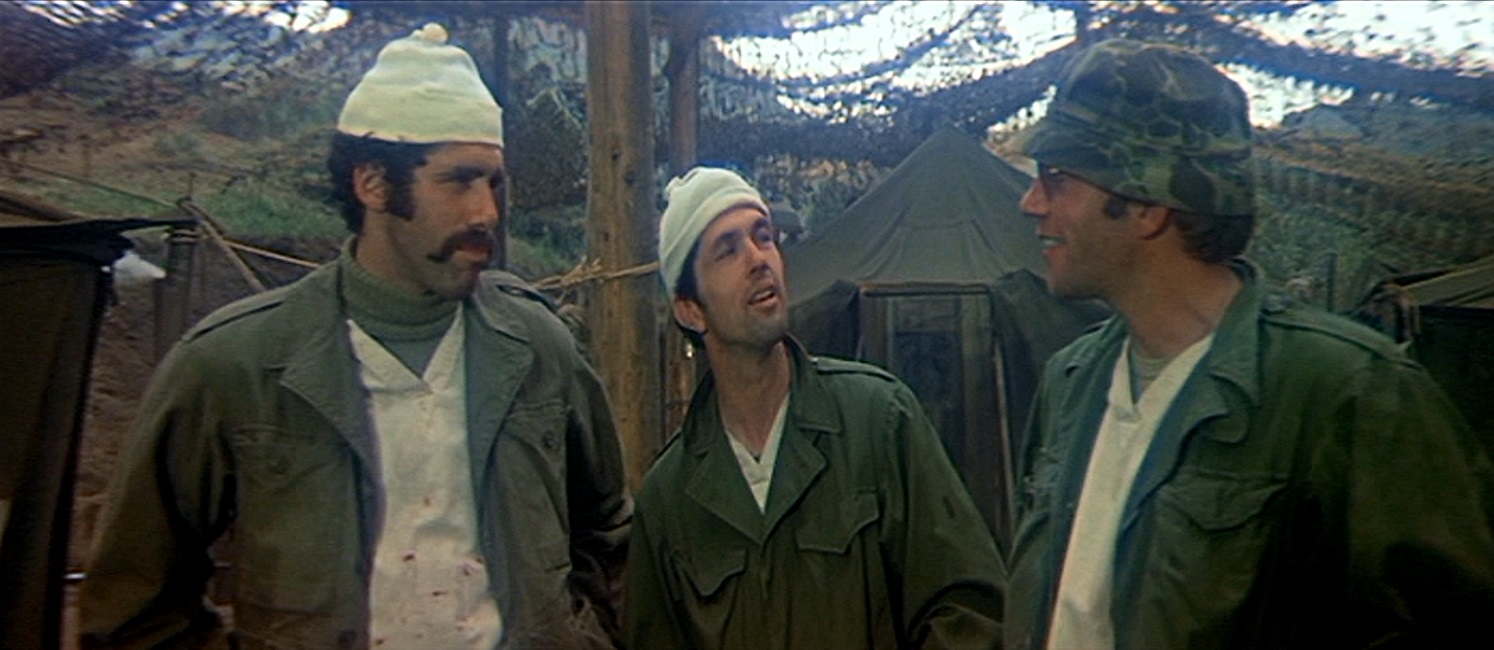
Elliott Gould, Tom Skerritt and Donald Sutherland are three madcap surgeons in Robert Altman’s M*A*S*H  a film that looks less screwball and more misogynist every day

Director: Robert Altman

Cast: Donald Sutherland (Captain “Hawkeye” Pierce), Elliott Gould (Captain “Trapper” John McIntyre), Tom Skerritt (Captain “Duke” Bedford), Sally Kellerman (Major Margaret Hoolihan), Robert Duvall (Major Frank Burns), Roger Bowen (Lt Col Henry Blake), Rene Auberjonois (Father Mulcahy), David Arkin (SSgt Wade Vollmer), Jo Ann Pflug (Lt Maria “Dish” Schneider), Jon Schuck (Captain “The Painless Pole” Waldowski), Carl Gottlieb (Captain “Ugly John” Black)

Robert Altman’s counter-culture M*A*S*H was his first (and probably only) unreserved smash hit, the film where Altman cemented his style as a director. Although set in the Korean War, the film was clearly more about attitudes towards Vietnam. Today M*A*S*H is probably more well known as the filmic spring board for the extremely long-running TV show starring Alan Alda (which, at 11 years, lasted seven years longer than the war it was set in). 

M*A*S*H (like the series) covers the mad-cap antics of the doctors at the 4077thmedicine outpost near the frontlines of the Korean war, a casualty clearing station where young men are patched up and either sent back to the front line or sent home. While the base is a military operation, most of the doctors serving there are drafted civilian doctors rankled by rigid military discipline. The leaders of this prickly bunch are “Hawkeye” Pierce (Donald Sutherland), “Trapper” John (Elliot Gould) and “Duke” Bedford (Tom Skerritt), with their targets ranging from generals to the stiff-backed military figures on the base, specifically the officious but less-competent surgeon Frank Burns (Robert Duvall) and Head Nurse Major Hollihan (Sally Kellerman).

M*A*S*H is the first expression of what became Robert Altman’s signature style as a director. The film has a grimy immediacy that throws the audience into the middle of the action, and is cut with an edgy lack of artifice that at the time was seen as barely competent film-making. That didn’t outrage people as much as Altman’s willingness to allow a lack of conventional discipline in dialogue delivery, with actors overlapping wildly, some dialogue drifting out of earshot or not being captured on screen, no real story being developed through it. It’s a deliberately scrappy, scratchy, almost clumsy film shot with a great deal of artistic discipline (including a spot on The Last Supper parody) but cut and sound-edited with a casual precision that makes it feel extraordinarily experimental.

It infuriated its screenwriter Ring Lardner Jnr (no doubt the Oscar that he received soothed his pain), and Altman’s loose, improvisational style and unwillingness to go for conventional framing and style also alienated his leading actors. Altman and Sutherland (with Gould’s support) each pushed for the other to be dismissed from the film (Sutherland has claimed to have never seen the film, and ton have never understood its success; Gould later apologised by letter to Altman and worked with him several times again) and the whole film’s final style – its influential fly-on-the-wall vibe and nose-thumbing lack of formal discipline – can be attributed completely to Altman’s vision and artistic independence.

The film is important as a key landmark in film-making style and in Altman’s development as a director – but there is no other way of saying it, it has dated extraordinarily badly. For those more familiar with the TV show, its tone is going to come as quite a shock. The TV show is a lighter, sillier, more socially conscious creation (increasingly so in its later years) where the tone was more japery and deadpan silliness. The film is cruel, and its lead characters are swaggering, alpha jocks and bullies, whose meanness and astonishing levels of misogyny are constantly celebrated and rewarded. For those who remember Alan Alda as Hawkeye, Donald Sutherland’s viciousness is coming to come as quite a shock!

Hawkeye and Trapper John’s vileness at frequent intervals is pretty hard to stomach (the less said about the racist, unpleasant Duke the better). The film is really keen to show that all this rampant cruel practical jokery is a survival mechanism against the horrors of war, and the difficulty of dealing with patching young soldiers up to send them back out to die. But the film never really gives us a sense of the war, and the surgery scenes (while effective in their bloodiness and counterpointing the frat house atmosphere of the rest of the film) fail to create that ominous sense of senseless never-ending conflict that the film needs to balance out the vileness of the humour. Further, while Hawkeye and Trapper John are both shown to be dedicated and gifted professionals, they also remain two-dimensional figures, never really shown to have an emotional hinterland that expands their work. They are instead more like Wall Street stockbrokers: excellent at their job, but still a pair of arseholes.

Their attitude to women – and the film’s attitude – is beyond troubling today, it’s flat out offensive. The nurses on station are treated as no more than snacks for the men to enjoy, that they are entitled to pick up as often as they like, and who are barely given any character at all. Sex is as much an entitlement as rations. On his promotion to Chief Surgeon, Trapper John demands (half-jokingly) sex, while Hawkeye “volunteers” a woman to help “cure” another character who fears he has turned homosexual and is considering suicide. Counter culture against the war is celebrated throughout – but it shown in this film to be overwhelmingly a masculine campaign, in which women have no place and no equality. Men can feel the war is terrible, and men can rebel against authority, but women exist only to service their needs.

All of this boils down into a real bad taste in the film’s treatment of ultra-professional Major Hoolihan. Reviled by Hawkeye, Trapper John and Duke for the twin crimes of taking her military career seriously and not being interested in sex with Hawkeye, Hoolihan is systematically degraded and humiliated throughout the film. From having her sex with humourless prig and fellow disciplinarian Frank Burns broadcast around the camp (giving her the nickname “Hot Lips” from her pillowtalk, a title she never escapes) to having the shower tent collapsed around her in front of the whole camp to settle a bet about whether she is a “real blonde” or not – her reaction to which we are misogynistically encouraged to view as hysteria, as dismissed by her commanding officer – it’s tough to watch. The one compliment she gets in the film on being a good nurse is accompanied by her insulting nickname, and by the end of the film she has been reduced to being depicted as an air-headed cheerleader at a football game. Even her credits picture shows her ultimate moment of humiliation. She’s seen as a Blue Stocking, unnatural because she is attractive but not willing to be sexually available to men. This is the sort of treatment that could drive a person to suicide, here treated for laughs. It’s impossible to watch with a smile today.

And it’s the dated part of the film as Hawkeye and Trapper are never questioned for this behaviour – indeed they are celebrated and encouraged throughout as fun, cool guys – when in fact they are the worst sort of jock bullies and their antics the sort of tedious frathouse rubbish that blights too many all-male clubs. They are working class Bullingdon boys, who value nothing, with the film giving them passes because they are great surgeons. Sutherland in particular isn’t charming, he’s creepy and unsettlingly cruel, while Gould at least has a madcap goofiness with touches of humanity. 

Two hours with these arseholes is a long time, and the film just plain isn’t funny enough for what it is trying to do – neither does it convey the horrors of war enough, or the men’s understanding of it. More time shown on the surgeons at least acknowledging the horrors might have helped wonders – but the film assumes that we know what they are feeling and just rolls with it. You could generously say they are cruel in a cruel world. But the film never acknowledges the essential meanness of the humour here, and tries to involve us all in it with no sense of conflict or concern. It’s a troubling film to watch today, its rampant sexist cruelty is offensive and its lack of charm purely unintentional. Time will continue to be cruel to it.

The Wind That Shakes the Barley (2006)

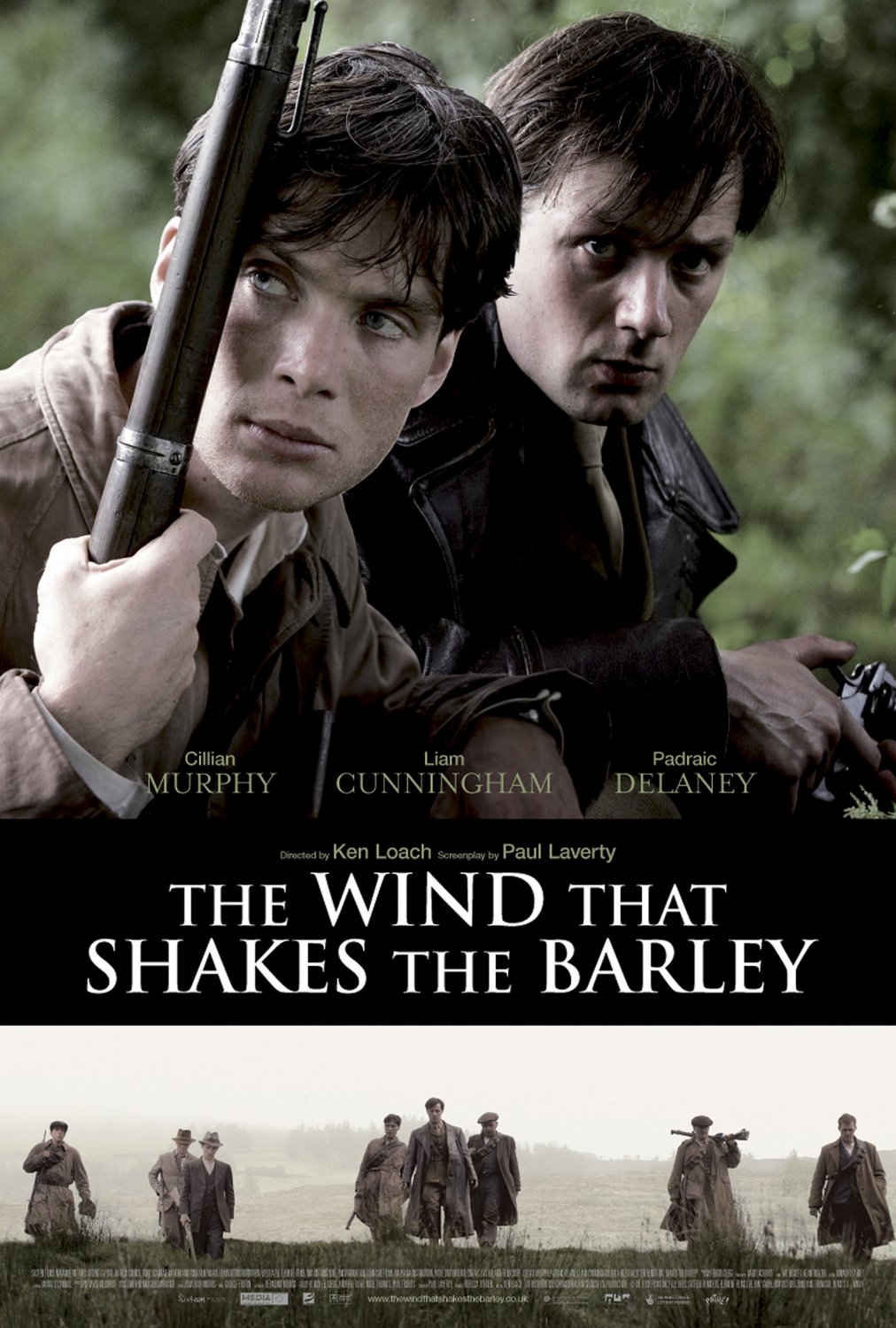
Cillian Murphy and Padraic Delaney take on the British in The Wind That Shakes the Barley

Director: Ken Loach

Cast: Cillian Murphy (Damien O’Donovan), Pádraic Delaney (Teddy O’Donovan), Liam Cunningham (Dan), Orla Fitzgerald (Sinéad Ní Shúilleabháin), Laurence Barry (Micheál Ó Súilleabháin), Mary Murphy (Bernadette), Mary O’Riordan (Peggy), Myles Horgan (Rory), Martin Lucey (Congo), Roger Allam (Sir John Hamilton), John Crean (Chris Reilly)

There are few directors in British cinema who have such impeccable left-wing credentials as Ken Loach. Each of his films is powered by a social and political conscience and chronicles the travails of those on the left, those struggling for the down-trodden and unfortunate, or those on the bottom rungs of society’s ladder. It was perhaps only a matter of time before he made a film about that blistering sore on the British conscience, Ireland (just as he is surely destined to eventually make a film about Palestine). It’s not a surprise that Loach’s film, with its vicious denunciation of British policy in Ireland, was met with a vitriolic response by much of the UK media, just as it was scooping Loach the first of his two Palme d’Ors at Cannes.

The film opens in the immediate aftermath of the First World War. Many of the Irish are in open revolt for independence, with Teddy O’Donovan (Pádraic Delaney) a leading IRA figure in Cork. His younger brother Damien (Cillian Murphy), a doctor, is persuaded to join the cause by his horror at the actions of the British “Black and Tan” troops in Ireland, vicious flying squads empowered to act with impunity. When the war eventually leads to a negotiated peace and the Anglo-Irish Treaty of 1922 that divides Ireland in two as a Dominion in the British Empire, the two brothers are divided. Teddy sees this as a stepping stone to peace for further gains later; Damien sees it as betrayal of the socialist message he and many others fought for, which will change only “the accents of the powerful and the colour of the flag”. A civil war across Ireland is inevitable between the government “pro-treaty” troops (supported by the British) and anti-treaty former-IRA members.

The history of Ireland is one of tragically missed opportunities, of poor British policy decisions throughout the nineteenth century (including delaying emancipation for Catholics, and a refusal to grant any level of Home Rule to Ireland for over 70 years, despite three votes on the issue in Parliament) eventually leading to many “peaceful” political movements in Ireland becoming completely discredited and the bullet seen as the only way to self-government. There is no doubt at all – as the film is not shy showing – that British policy in Ireland was often shameful, brutal, repressive, and helped enforce lasting bitterness and resentment, the impact of which is still felt today.

So, despite the furious backlash against the film as being anti-British in the press, it’s clear that The Wind That Shakes the Barley tells hard truths of the violence on both sides – of ransacked homes, murders, shootings and repression. Loach’s film unquestionably favours the Irish perspective and places their actions within a heroic context, while the British soldiers are nearly to a man foul-mouthed, arrogant, violent louts (although an officer does get a speech saying what do they expect since the black and tans are all bitter ex-front liners from France who have nothing else in their lives to come home to). But it makes a legitimate point, and it’s hard not to agree that British occupation of Ireland was, at best, a mistake and worst case a crime.

Loach’s film is harrowingly well-made, expertly shot by Barry Ackroyd, a testament once again to what a vivid and engrossing director Loach can be. Shoot-outs and violence are shot with icy-cold camerawork, mixed with handheld confusion. Political debates (of which there are many) are shot with passionate intimacy, the camera roving between the faces of those on both sides. The film’s reconstruction of Ireland in the 1920s is brilliantly done, and its engrossing recreation of the guerrilla warfare tactics of the IRA is fabulous. The acting is very good, with Cillian Murphy excellent and passionate in the lead role. Loach’s earnestness, married to his cinematic skill, is clear.

The real problem with the film is Loach’s left-wing politics, not his anti-British-establishmentism. To Loach the real tragedy in Ireland was not the civil war, but the compromise that large parts of the country made to sign the treaty with Britain and turn their back on aiming to turn a poor country into something closer to a socialist one, with collectivised industry, less power to the church and a greater equality between the rich and the poor. Loach’s film is squarely stacked in favour of the left-wing firebrands who continue the fight with the IRA, and firmly against those who support the treaty and look to gradually build a lasting peace.

To Loach, it feels like there is little real difference between the British and the pro-treaty forces. The They are both moral cowards and bullies who are fighting to maintain a status quo. There is no legitimate case made for the treaty. Those who support it in the film – like the increasingly nervous, twitchy pro-Treaty Teddy (as if Loach wanted to show him physically weighted down with guilt) – are either mealy-mouthed and guiltily shifty or hectoring bullies (like the priest who preaches pro-treaty/anti-socialism from the pulpit).

Loach is right that independence was a cause that bought everyone together, and in his argument that that the lack of a unifying idea of what the country would become next would inevitably lead to fracture and collapse. But never once in the film do we hear the voice of the ordinary Irish people, and what they wanted. Inconveniently, when put to the ballot, pro-treaty parties won the election of 1921, so the film has to have Damien (as is often the case with those on the extreme of both ends of politics I find) claim that the people didn’t understand what they were voting for, and if they did they would have agreed with him. The film’s final scene ends at a ruined house, but never once does the film (or Loach) reflect on how this embodies the catastrophic harm simple, everyday people were suffering over this period – and that they may have wanted a chance for the fighting to stop and a shift to peaceful progress towards greater independence rather than die in a ditch for nebulous political goals.

The film’s main enemy is actually compromise. Compromise is what Teddy and his gang accept when they plead for the chance for the fighting to stop, and for the country to settle for 80% of their demands now, and the rest later. Compromise is what Damien won’t settle for, and why he’ll restart a war to the death for his beliefs. Maybe it’s just me, but the art of living seems to be one of compromise and peace is built on agreements and a statesman-like acceptance that complete victory is often impossible without unacceptable loss. It’s a belief the film has no time for, and Loach seems to be advocating that the IRA should have completely rejected the treaty and instead fought to the bitter end (an action that would have probably turned Ireland into a wasteland) in the name of the socialist dream, rather than deal with reality.

It’s that which is the real problem with the film: its hard-headed clinging to the belief that any form of compromise is anathema, that death is preferable to altering your beliefs one iota, that prolonging a bloody civil war is the right thing to do rather than accept any agenda that doesn’t completely match your initial dream. Loach’s faith in his politics is admirable, but The Wind That Shakes the Barley sets out a didactic vision of Irish politics that gives no legitimate argument to the pro-treaty side, and only listens to the socialist wing of the anti-treaty group. It’s a one-sided view of history and, increasingly, a dangerous one.

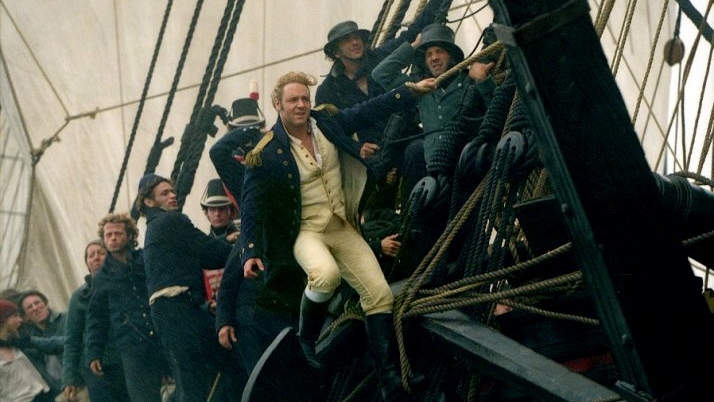
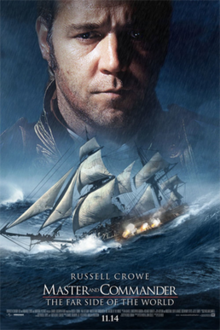
Master and Commander: The Far Side of the World (2003)

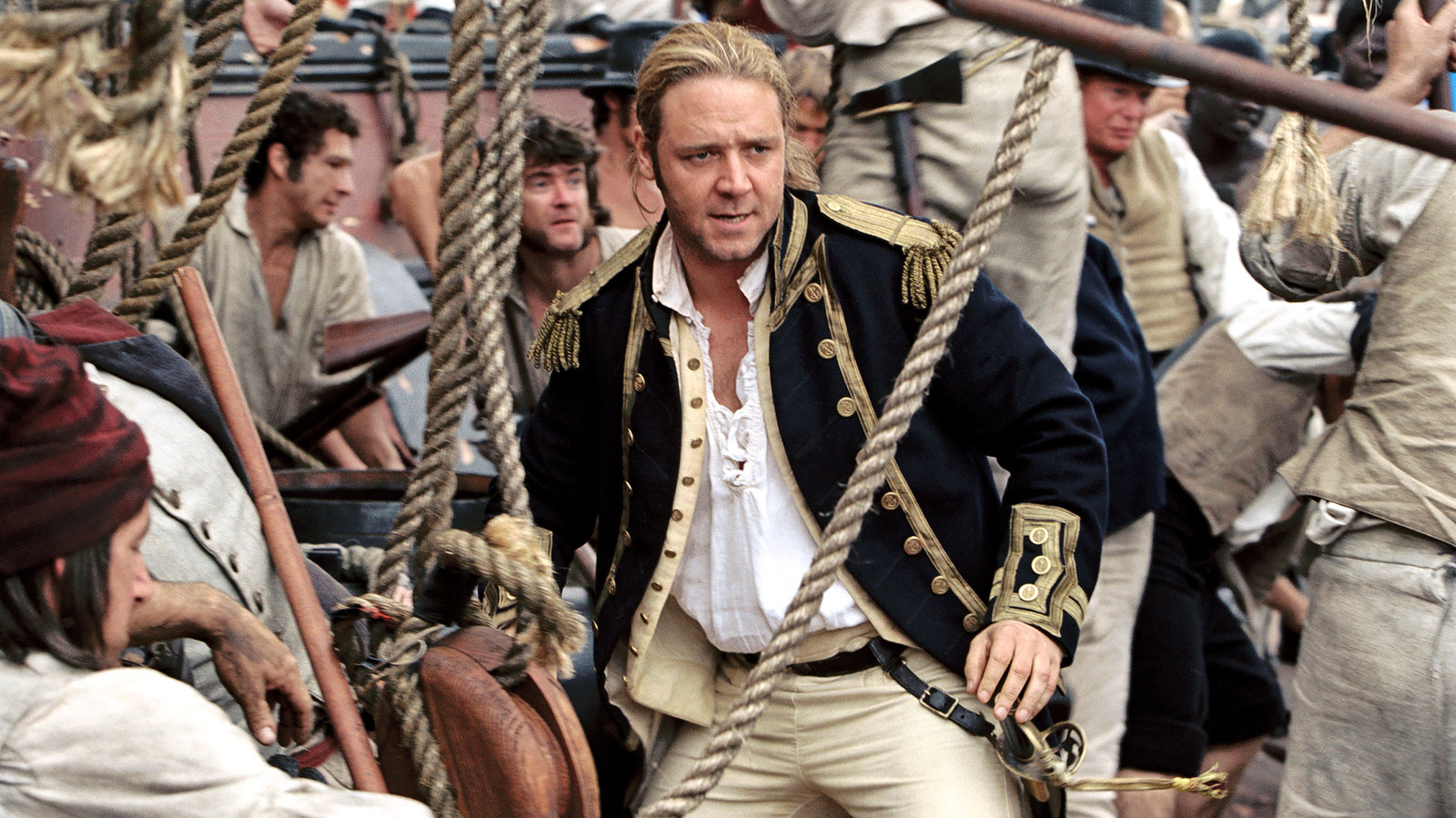
Russell Crowe captains in the marvellous Master and Commander: The Far Side of the World

Director: Peter Weir

Cast: Russell Crowe (Captain Jack Aubrey), Paul Bettany (Dr Stephen Maturin), James D’Arcy (First Lt Thomas Pullings), Robert Pugh (Master John Allen), Max Pirkis (Midshipman Lord William Blakeney), Max Benitz (Midshipman Peter Myles Calamy), Lee Ingleby (Midshipman Hollom), Richard McCabe (Mr Higgins), David Threlfall (Preserved Killick), Billy Boyd (Barret Bonden), Bryan Dick (Joseph Nagle), Joseph Morgan (William Warley), George Innes (Joe Plaice), Mark Lewis Jones (Mr Hogg)

There’s a reason so much of our everyday language comes from naval terms. There was a time when Britannia ruled the waves: and for almost as long we’ve had a history of stories of great fictional sailors. If your archetype is Hornblower, then following close behind is Patrick O’Brian’s 21-novel sequence following the career of Captain Jack Aubrey and his surgeon/spy friend and colleague Stephen Maturin. There have been many, many attempts to bring this series to the screen, but you could never have expected that the eventual film would be as triumphant as this. I saw this film on my birthday years ago – the same day I was thrown a surprise birthday party – and I enjoyed it so much that just seeing that would have been treat enough, even without the surprise party (which was also marvellous).

It adapts elements from several O’Brian books – principally elements of the first, Master and Commander,and the tenth, The Far Side of the World, (hence the unwieldy title). The film throws us into the mid-point of Aubrey’s (Russell Crowe) career, with the captain of the Surprise tasked with protecting British interests in the Southern oceans from the onslaught of the French ship Acheron during the Napoleonic wars. Early skirmishes find Aubrey and the Surprise on the back foot, out-matched and out-gunned by the more modern, sleeker, more powerful French ship (quickly known as “the Ghost” by the crew, stunned at her ability to catch the Surprise on the hop). As well as following Aubrey’s struggle to best the Acheron, the film also explores the complex relationships on board during the dangerous mission, and specifically Aubrey’s close friendship with Stephen Maturin (Paul Bettany), ship’s surgeon, naturalist, sceptic and his confident.

Peter Weir’s film is, I’ll say it here, a masterpiece of both boys-own adventure and action, but also of the intriguingly warm and human relationships (and also the stresses and strains) that come when you throw a group of nearly two hundred men in close confines together for months at a time. It’s also a masterclass in authentic world creation. You can see in seconds the time, effort, research and imagination that have gone into recreating the world, the rules and the structure of the ship and its crew – and it has paid off in spades. There is not a foot put wrong, either in the recreation of the ship described in the books (the early shots of the film, the camera panning through the decks of the ship, capture everything from the geography of the ship to the names of the individual cannons) or the world of the navy. 

Weir’s film is technically superb. The photography is beautiful, the sound and editing totally immersive. Weir understands the detail counts for nothing, if the actual action of sailing, the dramatization of man’s struggle with the wind and water, isn’t engrossing. Not a single sequence in the film that shows the ship at sea – struggling with wind, tides, storms, fog and mist – falls flat. You feel like you are there, being buffeted by wind and rain, living every beat of the dangers the men face from the elements. The professionalism and skill of the sailors is brilliantly captured by the actors – who practically lived as sailors for the months of filming – and, with the music superbly worked to complement the adversity the sailors overcome, the scenes of naval skill are brilliantly done. I love them – it almost makes me want to become a sailor (almost). 

Master and Commander also works as a superb study of men, and brilliantly brings to life the two heroes from the book. Russell Crowe is wonderful as Aubrey, the film expertly using his charisma. Aubrey is a natural leader who adjusts and adapts his style to meet the needs of the men he deals with. He’ll share pun-filled gags at the dining table about his personal encounters with Nelson – but follow it up with a sincere anecdote of Nelson’s patriotism when he sees that something else is needed to avoid disappointing a young midshipman. With some men he’ll take a firm line, with others he will try words of encouragement. He’s an inventive and flexible thinker, able to adapt his plans and ways of working to meet new challenges and shows no pride or rigidity in his planning.

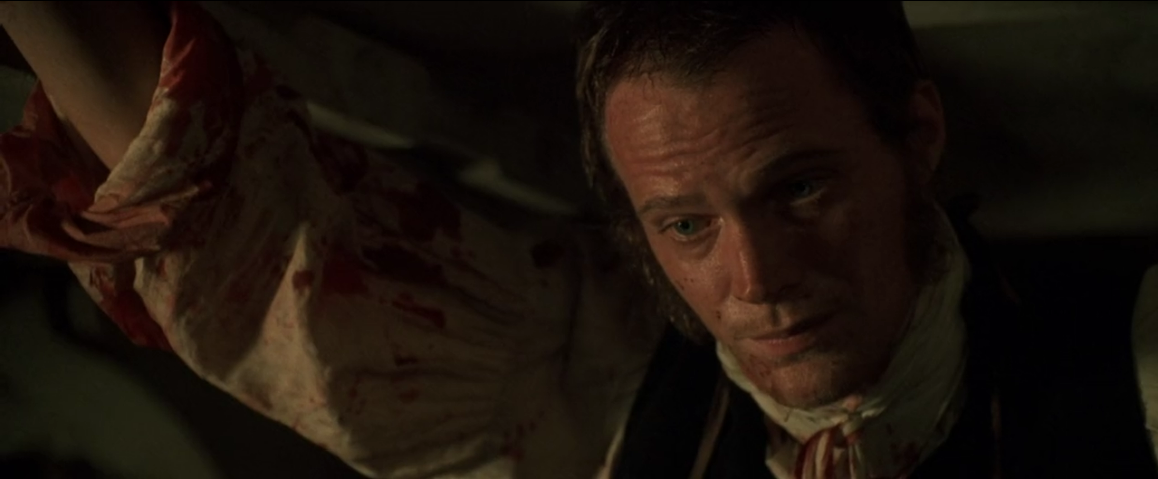
We also find out much about him from his genuine, heartfelt friendship with Stephen Maturin, his intellectual surgeon. Embodied damn-near perfectly by Paul Bettany, in one of those performances that feels like the character has literally walked from the pages of the book. Maturin and Aubrey’s friendship gives the film its heart. Genuinely close, with the one often teasing the other (usually around naval rules and regulations, around which Maturin displays a playful lack of understanding) they also speak freely to each other, and with honesty. When Maturin feels Aubrey is pushing the crew too hard in his obsession to best the Archeron he will speak up; when Aubrey feels the need to remind Maturin that a promised naturalist trip to the Galapagos will need to be cancelled due to the demands of war (“We do not have time for your damn hobbies sir!”) he feels no reluctance to say so. It’s a friendship that bobs and weaves through the tensions that come from almost permanent contact, but it’s a true, very strong bond that sees both men going to great lengths in the film to make sacrifices of the things they hold dearest for the sake of each other. 

And we see a lot of how they think in their shared mentorship of young midshipman (barely a teenager) Lord Blakeney, played with a superb assurance by Max Pirkis. From Aubrey, Blakeney learns the confidence, authority and flexibility needed for command. From Maturin he learns the intellectual curiosity and humanity that broadens and widens his horizons. It’s a reflection that, as a team, the two men make one marvellous man. 

Weir’s film also shows that the pressures of command and responsibility, worn so lightly (it seems at times) by Aubrey, can also crush men. As if in contrast to Blakeney’s growing confidence, the film also throws in Midshipman Hollom (played with tragic weakness by Lee Ingleby), a man approaching his thirties who has missed all the opportunities to become the man he would want to be. Nervous, weak, eager to please but insecure and uncertain of himself – exactly the qualities that automatically alienate sailors yearning to put their faith and trust into a leader – Hollom is a man who can listen to everything Aubrey has to say about becoming a leader, but has not the strength of character to implement it. And, strikingly, the film also shows that this weakness alienates not only the men who look to him for leadership, but also his companions and even (to a degree) Aubrey himself. In a single storyline, the weaknesses and dangers of this self-contained world (and the impact it can have on people) are superbly captured.

The film works alongside all this because its sense of adventure, of derring-do, of gripping, fist pumping bravery, skill and excitement of high-seas adventure grip the audience completely. There has never been a better film made about naval warfare or ships at sea (and there probably never will be). Mix that in with a superb story of personal relationships and men under pressure at sea (and the cast is uniformly brilliant), with sacrifice and also good fellowship at every turn, and you’ve got a simply faultless film. Master and Commander failed to launch a new franchise – and that has to be one of the greatest losses to film history that I can imagine. Weir’s direction is simply superb, Crowe and Bettany are perfect and the film is a brilliant adventure. I could watch it every day and never get tired of it.

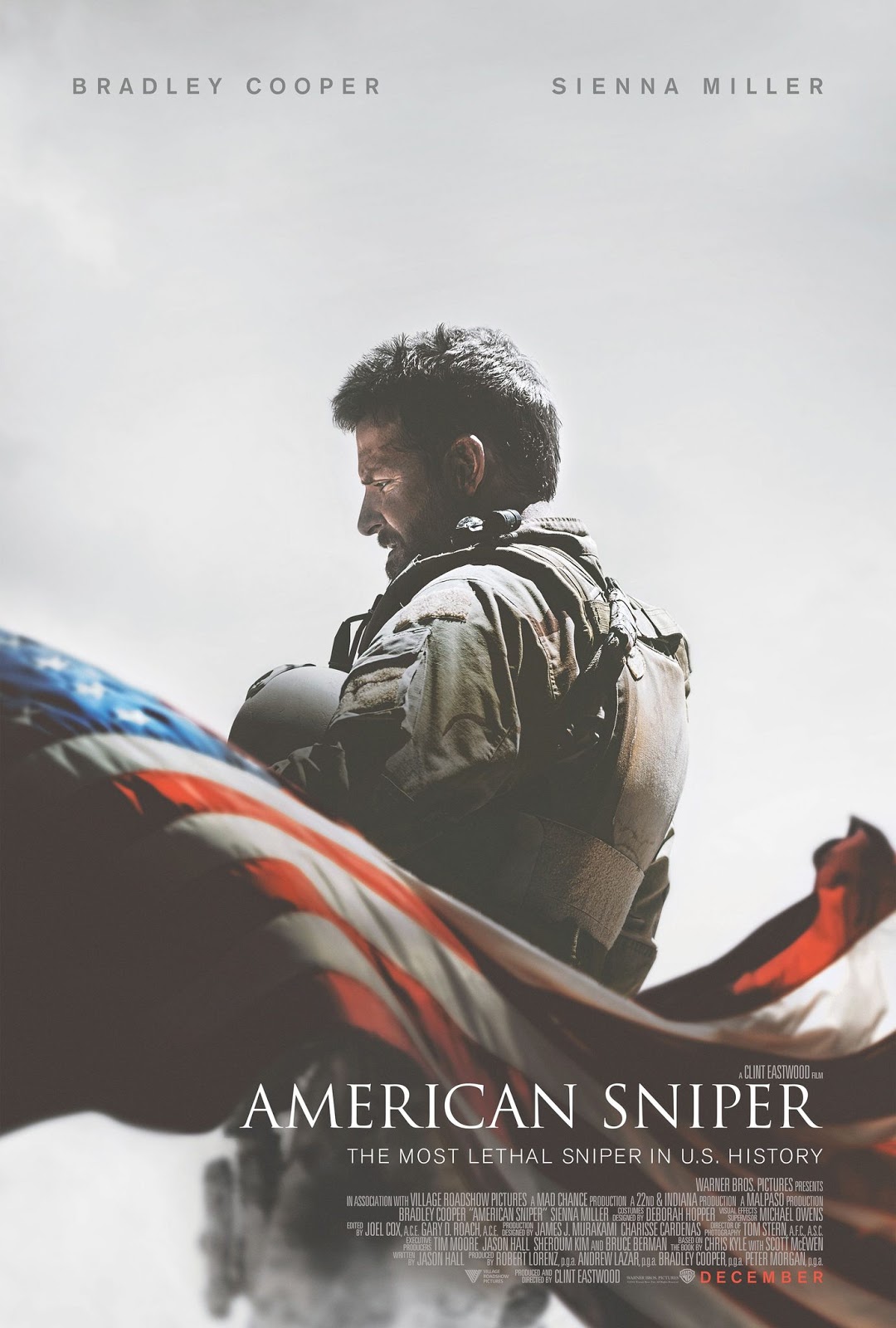
American Sniper (2014)

Bradley Cooper takes aim as the American Sniper in Eastwood’s surprisingly thoughtful war film

Director: Clint Eastwood

Cast: Bradley Cooper (Chris Kyle), Sienna Miller (Taya Kyle), Luke Grimes (Marc Lee), Jake McDorman (Ryan “Biggles” Job), Cory Hardrict (D), Kevin Lacz (Dauber), Navid Negahban (Sheikh Al-Obodi), Keir O’Donnell (Jeff Kyle), Sammy Sheik (Mustafa), Mido Hamada (The Butcher), Eric Close (Agent Snead)

All war films walk a fine line: too far one way, and you glorify the violence of conflict; too far the other way and demean the bravery of the soldiers sent to fight it. It’s a tricky balance, but one American Sniper handles with real confidence, astutely putting together a film that can celebrate the bravery, skill and professionalism of its lead character but deplore the psychological impact killing has on him, while subtly suggesting the war he was fighting was scarcely worth the sacrifice.

Chris Kyle (played by an almost unrecognisably beefed up Bradley Cooper) is a Navy SEAL sniper stationed in Iraq. Kyle’s role as a sniper is to protect the troops on the ground from threats they can’t see, and it’s a job he treats with immense seriousness, believing he has a duty to protect others. Kyle soon builds up an astonishing number of kills (a record for US soldiers), but increasingly the burden of killing from a distance impacts Kyle more and more. Over the course of four tours in Iraq, Kyle becomes distant and withdrawn at home from his wife Taya (Sienna Miller) and children. Only after his final tour does he begin to seek help, finding a new purpose in life in helping other veterans suffering from post-traumatic stress. Which, tragically, leads to Kyle’s death, as he is killed in February 2013 by a veteran whom he was trying to help.

Eastwood directs with his expected unfussy smoothness and American Sniper is one of his finest films, a largely unsentimental, gritty look at the true cost of war physically and emotionally. Eastwood balances respecting Kyle’s skill and deploring the impact using that skill had on him. The film stresses the perverse necessity for empathy the role of sniper demands. Kyle is so good at the role because he will go the extra mile to protect his brothers-in-arms on the ground. The psychological impact is heavy because this man, hard-wired to protect others, has to do so by gunning down hundreds of people. Is it any wonder it has such a huge impact on him?

The sequences set in Iraq have the grimy air of reality to them, with dust, dirt, sweat and glare dominating every frame. Eastwood pulls no punches on the impact of bullets from distance on bodies, the violence of direct combat, the terror of being pinned down by enemy fire or the waste of lives (both civilian and military). While the film celebrates the bravery of frontline soldiers, it’s telling we see very few officers at all, but stay with the grunts, and the film is one of their stories and their choices. The politics behind why the soldiers are even there are barely touched upon and, as the tours tick by, the feeling of being there because they are there permeates the film. There is always another insurgent leader to take out, another target to find, and the soldiers make so little progress towards their actual target (locating al-Zarqawi) that he’s barely even mentioned.

Eastwood still subtly suggests our cause in Iraq hardly helps to win over hearts and minds. The soldiers’ interactions with the population are consumed with tension and violence, usually involving scared soldiers shouting at unarmed people, cable-tying men on the floor and failing to relate to or understand the cultures they are in. Any attempts to do so usually end with poor consequences, and the closest to a bond Kyle forms with someone outside of the soldier circle leads to a tragic ending. It’s not a film that has an affinity with the consequences of war, or the impact it has on lives.

If you have any doubt about that, then watching the slow breakdown of Kyle over the course of the film (manfully shrugged off and denied for as long as possible by the man himself) should shake that. Much of the impact of this comes from the excellent performance of Bradley Cooper, who slowly turns the light, fun and intelligent man we meet at the start of the film into someone sullen, withdrawn and permanently on the edge of anger, unwilling to even to begin to think about the possibility that anything he has seen has had any lasting impact on him. There is even some questioning of the damage extreme masculinity and an unwillingness to be open about your problems has on people (themes that Eastwood has always been far more interested in than he is given credit for). 

In fact, excellently assembled as the sequences in Iraq are (especially the tension around a semi-duel between Kyle and an insurgent sniper known only as “Mustafa”), I could actually have had more time given over at the end of the film to exploring how this man with such a warm empathy in him discovered a new purpose in his life. Kyle’s other heroism – and perhaps the secret to the regard he was held in by so many when he was murdered – was his commitment to helping people any way he could. His refocusing his life to help veterans deal with PTSD and physical disabilities could have been brought out into greater focus. Kyle’s greatest strength was his empathy and he became so open about his own problems, and his struggle to readjust, that it helped inspire many others to do the same – and it’s a plot thread I feel deserved a few more minutes at the end of the film.

It does however make a wise call by ending the morning of the day that Kyle was killed, with him leaving his family to spend a few hours with the veteran who killed him. Kyle had been involved in the development of the film, and it stands as a fitting, honest, tribute to him. Powered by Cooper’s superb performance, well supported by Sienna Miller as the wife who wants him to acknowledge the impact war is having on him, Eastwood assembles a fine war film, that acknowledges the sacrifices and heroism of soldiers, but also deplores the horrors conflict enacts on their psyche. It’s a mature, intelligent and well-handled film and well worth your time and effort.

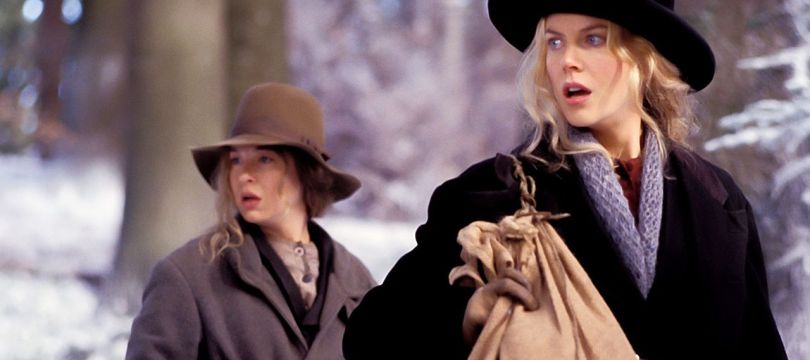
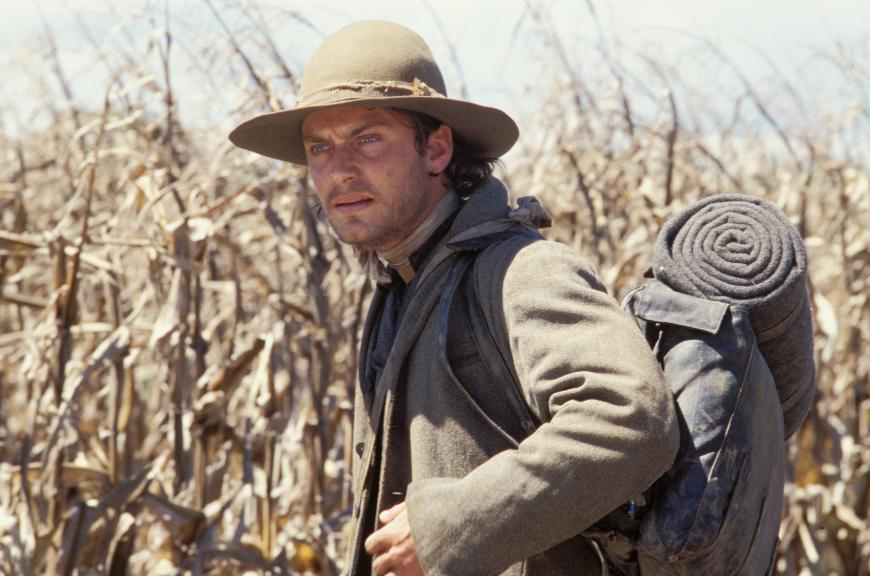
Cold Mountain (2003)

Nicole Kidman and Jude Law are souls in love separated by war in Cold Mountain

Director: Anthony Minghella

Cast: Jude Law (WP Inman), Nicole Kidman (Ada Monroe), Renée Zellweger (Ruby Thewes), Eileen Atkins (Maddy), Kathy Baker (Sally Swanger), James Gammon (Esco Swanger), Brendan Gleeson (Stobrod Thewes), Philip Seymour Hoffman (Reverend Veasey), Natalie Portman (Sara), Giovanni Ribisi (Junior), Lucas Black (Oakley), Donald Sutherland (Reverend Monroe), Cillian Murphy (Bardolph), Jack White (Georgia), Ray Winstone (Teague), Melora Walters (Lila), Charlie Hunnam (Bosie)

There was no difficult novel Anthony Minghella couldn’t adapt for the big screen. Cold Mountain is as beautiful and handsome a film as any he made, and his masterful scripting of a complex story is testament to his skill. So why is Cold Mountain not more loved? Is it because it’s almost too well made, too handsomely mounted, too literary and intelligent? Is it, actually, trying a little too hard? Is it a Cold Mountain itself, a giant structure of beauty but with an icy heart?

Based on Charles Frazier’s novel, set in the final days of the American Civil War, confederate soldier Inman (Jude Law), knowing the war is lost, deserts to return to the woman he loves, Ada Monroe (Nicole Kidman). The two of them have only spoken a few times but they feel a deep personal bond. During the years of war, poverty has hit preacher’s daughter Ada, although she has crafted a life-changing friendship with 18th century trailer trash Ruby Thewes (Renée Zellweger) which has helped her survive. As Inman’s odyssey home leads to him encountering a number of different vignettes that show the despair Civil War has brought to America, Ada struggles to survive and avoid the sinister attentions of home guard enforcer Teague (Ray Winstone).

There is so much to admire in Cold Mountain I want to start there. The photography is beautiful, and the film is assembled with a striking grace and skill. Walter Murch’s editing and sound design is perfect, with each shot of the film being fabulously composed and each carrying a specific message and purpose that contributes to the overall impact. The use of music – a collaboration between T Bone Burnett and Gabriel Yared – is perfect, a series of wonderful period compositions and impactful orchestral pieces. 

Everything about how Minghella captures the feel of the time, the mood of the South heading into war, and the disintegration of social conventions as the war takes hold and lays waste to the land, rings completely true. From the celebrations of the young men at the film’s start, to the increasingly haunted, tragic look of Jude Law’s Inman as he discovers new horrors at every point in his journey, you know war is hell. Minghella ironically opens the film with a catastrophic defeat for the North – but the slaughter disgusts Inman, and his burial under mounds of rubble during an explosion leads to a spiritual rebirths with Inman deciding senseless killing isn’t worth the candle any more. In a war of willing volunteers, how do we respond when these volunteers don’t want to keep fighting?

And why should they, as each of the various vignettes Inman walks through is a wasteland of moral collapse? From a sex-obsessed preacher (an amusing performance by Philip Seymour Hoffman) who has lost his morals to a tragic widow desperately trying to feed her baby (Natalie Portman, effectively stealing the whole show with an intense performance of utter desolation), everything Inman sees shows that nothing is worth all this. The film gets a very good sense of the drive that pushes Inman forward: constantly moving, he’s rarely seen sitting or resting. Each of the Odyssey-inspired stories gives him something to reflect on, or another opportunity for moral and emotional torment , from dragging bodies in a chain gang to avoiding the lustful advances of a group of hillbilly sirens who trap deserters for money.

Meanwhile, things ain’t much better on the homefront, where corrupt bullies like Teague (a slightly too obvious Ray Winstone) are enforcing their own law at the expense of justice. Poverty is also the impact of war, and poor Ada suffers hugely from this, as supplies run low and eventually out. Minghella’s swift and skilful establishment of character shows from the start how Ada is a stranger in a strange land, a middle-class town girl who is completely unsuited for country life and utterly unready to fend for herself when the chips are down without support. 

Is it any wonder in this world, that Inman and Ada cling to memories? Part of the film’s effect depends on how you respond to the romantic bond between these two clinging to a few brief moments (a few exchanges and one immensely passionate kiss on the day of Inman’s departure). It’s an old-fashioned, sweeping, love story and it depends on you relating to that old-fashioned mythic love story. I’m not sure that the film quite sells this as effectively as it could do. Somehow, perhaps because Inman is so insular and Ada a little too difficult to relate to, the passion between them can’t quite carry the sweep that the film demands, even as Minghella skilfully intercuts between them.

Nicole Kidman in particular feels miscast as Ada. Kidman is too intelligent, too determined and strong a performer to convince as a woman who is unable to look after herself and nearly succumbs to fear – she’s just not an actress I can picture cowering in fear in front of an angry rooster. Kidman does her best, but the character never really wins the sympathy that we need for the performance to work. Jude Law has much more to work with as Inman, brilliantly communication a whole world of feeling with very little dialogue. 

What works less well with Law is that his plotline just doesn’t quite grip enough. The vignettes are often entertaining, but feel like episodic sketches, and the sense of a building picture of the despair of the South doesn’t quite come into shape as much in practice as it does in theory. Frankly, after a while, you are ready for Inman’s journey to come to an end and for him to intersect with Ada’s plotline back at Cold Mountain (which is built around a consistent group of characters who engage our interest).

In the home front storyline you’ll be relieved with the entrance (almost an hour into the film) of Renée Zellweger’s blowsy Ruby, a loud-mouthed, trailer-trash woman with a heart of gold and a mastery of farming who effectively saves Ada’s life. It’s a loud, big, Oscar-winning performance from Zellweger that plays with being a little broad, but is skilfully balanced by the slow reveal that this personality is a cover that Ruby uses to hide her own pain. Added to this depth, her heart-warming presence carries such simple pleasure and colour compared to the more muted performances from the leads that you welcome it. 

Because Inman and Ada don’t quite work as a romantic couple. There is something slightly cold about them, slightly hard to relate to. And for all the intense and brilliant construction and filming of the film – and the mastery of Minghella’s writing and direction – it never makes them into the sort of classic romantic couple you care for. You want to connect with it more than you ever really do, and whether that is down to miscasting or the lack of intense chemistry between them I’m not sure, but it means Cold Mountain never becomes the great romantic tragedy it should be. You want a film this good to be as good as it feels – and it never quite is.

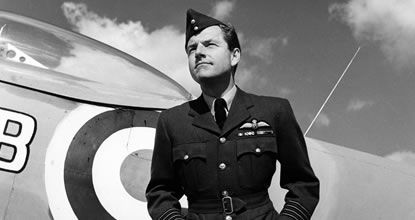
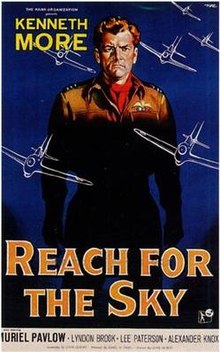
Reach for the Sky (1956)

Kenneth More fights disabilities and the Gerries in Reach for the Sky

Director: Lewis Gilbert

Cast: Kenneth More (Douglas Bader), Muriel Pavlow (Thelma Bader), Lyndon Brook (Johnny Sanderson), Lee Patterson (Stan Turner), Alexander Knox (Dr Leonard Joyce), Dorothy Alison (Nurse Brace), Michael Warre (Harry Day), Sydney Tafler (Robert Desoutter)

There are few stories of the Battle of Britain that captured the public imagination than Douglas Bader, fighter pilot ace whose exploits in the battle – and later in Nazi captivity – were all the more extraordinary because he had no legs. It’s one of the best examples around of good old fashioned British pluck helping overcome something – and Bader is without doubt a stirring hero, whose inspiration was so great he still frequently pops up in longlists of Greatest Ever Brits.

At least part of that continued inspiration is probably connected to this film. In fact Bader himself said his own public persona had been almost completely consumed in the public perception by Kenneth More’s performance of him. Needless to say Bader’s foul mouthed real personality (which left the briefing room littered with f-bombs) and abrasive difficultness (he refused to watch the film for almost ten years after a trivial dispute during its making about whether he would be allowed to double for More in long shots) was largely forgotten.

Indeed, the real Bader is washed away in Reach for the Sky by Kenneth More at his most charming, rogeuish and light. More (by his own admission) was not the actor with the greatest range in the world, but he was perfect for the sort of maverick, plucky, never-say-die Brit Bader was presented as in the film. Reach for the Sky ticks all the boxes of the events in Bader’s life as you might expect. From initial accident, to learning to walk again, to getting back in the sky, More plays it all with a brash bonhomie and British character that makes Bader charming and engaging – rather than the difficult egotist he reportedly was in real life. So much so that you kind of forget that Bader’s initial accident is largely caused by his own arrogance and stupidity attempting a dangerous manoeuvre to show off to a range of new pilots. 

But then that’s because Bader’s ruthless determination to get back in the sky is inspiring. Reach for the Sky isn’t the film that’s going to make you question anything to do with the war or the dangers or costs of the work we do. Putting it simply, this is practically an advert for the British war effort made ten years after the war finished. It actually feels a bit odd that this film hit the cinemas and because a smash hit in the same year as Suez showed Brits that all the Empire-first, Britannia rules the wavesness the film celebrates was a pile of outdated guff. 

But that isn’t to say that what that this film tries to do, it does badly. It lacks the sense of narrative adventure as stuff like, say, The Dam Busters or the importance of working together like Ice Cold in Alex or the bitter cost of war like The Cruel Sea. But as a portrait of a maverick doing his own thing and keeping the British end up its pretty much bang on. There isn’t really room for any other characters in the film’s narrative. It’s nominally narrated by a training colleague of Bader, but he’s barely a presence – the film zeroes in on Bader alone.

It makes for some decent scenes and there is a fair bit of inspirational feeling from watching Bader persevere – while never losing his temper – with walking again or taking up golf with a bullish determination. More’s Bader never shows a flash of anger or bitterness at things that have happened to him, instead carrying on with a jolly “Britain can take it” matey-ness. It makes him an entertaining person to follow around, even if the film itself isn’t particularly dramatic and offers a fairly safe version of an age-old “overcoming all odds” plot. Certainly enough to explain the films continued popularity and lifespan on Sunday afternoon TV. 

And it touches a nerve because, even if he was a fully paid up member of the awkward squad in real-life, what Bader did – and the force of personality required to do it – were extraordinary, the sort of thing only 1 in a hundred could even consider doing. To not only walk again having lost both legs, but to fly – and to become a decorated war hero – is way beyond (thankfully!) the imagining of almost everyone watching the film. And, for all the weaknesses of the film, you can’t ignore or disregard the fact that Bader is an inspiration. More is excellent in a lead role tailored completely to his strengths, and the film has a charming boys-own adventure feel to it. It’s not a smart film, but it’s a crowd pleaser and nothing wrong with that.

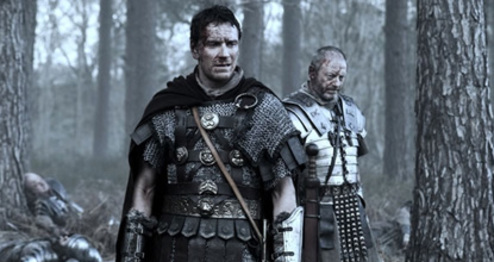
Centurion (2010)

Michael Fassbender surveys the devastation that is Centurion

Director: Neil Marshall

Cast: Michael Fassbender (Quintus Dias), Olga Kurylenko (Etain), Dominic West (General Titus Flavius Virilus), Liam Cunningham (Brick), David Morrissey (Bothos), JJ Feild (Thax), Noel Clarke (Macros), Riz Ahmed (Tarak), Dimitri Leonidas (Leonidas), Ulrich Thomsen (Gorlacon), Imogen Poots (Arianne), Paul Freeman (Gnaeus Julius Agricola), Rachael Stirling (Drusilla), Less Ross (Septus)

It’s an old fable: the “missing” Roman legion, the 9thLegion that allegedly marched to Scotland around 120 AD. We don’t know what happened (if anything) but it usually gets tied into Hadrian’s decision to build his famous wall. Anyway, Neil Marshall’s film tries to plug the gap, with the Legion eradicated on an ill-judged expedition north to settle affairs there once for all. A “ragtag bunch” of survivors (all of whom match expected character tropes) have to run over hostile countryside, led by surviving senior officer Centurion Quintus Dias (Michael Fassbender) to get back to safety and Roman lines.

It’s a Neil Marshall film, so you can expect blood-letting aplenty and high-octane action on a budget. And you more or less get it, mixed with his love for accelerator-hitting chases and against-the-odds action. It’s entertaining enough, but its main problem is that it feels a little too by-the-numbers, as if all the thought about how to make it original and exciting went straight into the look and style of the film – all drained out colours and serious claret – and none at all into storytelling or character.

You sort of end up caring for the characters in a functional way – largely because they are all such familiar types – but their personalities seem to have been designed entirely around the various deaths that have been invented for them. So the enthusiastic meet unjust ends, the likeable fall to cruel chance, the world-weary give their lives for one more stand, the selfish meet justice. At the end, the characters you would basically expect to stumble to the finish line do. It’s a film that lacks any uniqueness.

In fact, what gives the characters life is the professional character actors playing them, all of whom can do what they are doing here standing on their heads and look like they were largely there with an eye on pleasant after-shooting hours in a series of local pubs. It’s hard otherwise to think what attracted them to these cardboard cut-outs and pretty familiar structure.

Not that there is anything wrong with what Marshall does with his film here – it’s a lot of fun when stuff is happening, it’s just that nothing feels like it carries enough weight or originality to survive in the memory. Everything is fine but nothing is really inspired. There is very little sense of Ancient Rome or any other place. The Romans are basically squaddies, an idea that sounds interesting until you remember turning period warriors into versions of modern soldiers is hardly new, while the Brits chasing them are woad-covered psycho stereotypes.

So while it passes the time, Centurion does nothing special with it. It feels like a wasted opportunity – that with a cast this good and a decent premise, plus a nice little historical mystery to pin it onto in order to give it depth, Marshall could have come up with something that was more than the sum of its parts rather than less. Perhaps it needed more time with its ragtag group so they actually became characters rather than plot devices. Perhaps it needed to take more of a rest from its constant chasing to allow quieter moments of reflection and character. Perhaps it’s just a chase film that is never quite compelling enough to make you overlook these things. Either way, Centurion isn’t an all-conquering empire of  film.

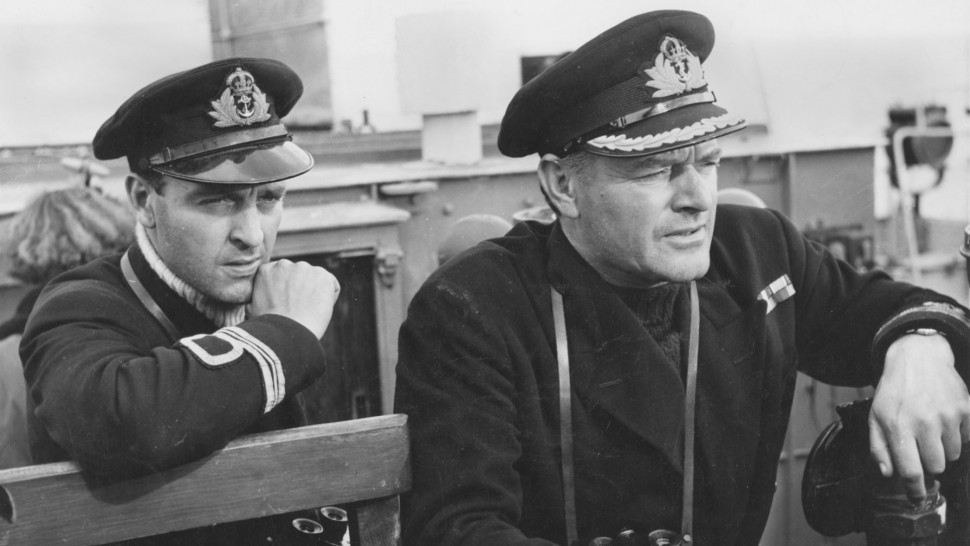
The Cruel Sea (1953)

The Cruel Sea (1953)

Command is a lonely, pressure-filled place in this complex and exceptional war film

Director: Charles Frend

Cast: Jack Hawkins (Lt Commander George Ericson), Donald Sinden (Lt Keith Lockhart), John Stratton (Lt Gordon Ferraby), Denholm Elliott (Lt John Morell), John Warner (Lt Baker), Stanley Baker (Lt James Bennett), Bruce Seaton (PO Bob Tallow), Liam Redmond (PO Jim Watts), Virginia McKenna (WRNS Julie Hallam), Moira Lister (Elaine Morell)

In 1953, The Cruel Sea was a colossal hit at the UK box office. With only a few years separating viewers from the sacrifices and struggles of war, it’s not hard to see why. The Cruel Sea is all about those struggles and sacrifices, about carrying on and doing your duty despite it all. But it’s also a film that understands the impact these have, and that that stiff upper lip is often covering a trembling bottom one. That stoic front is sometimes just that: a front. 

Jack Hawkins plays Lt Commander George Ericson, commanding a corvette on convoy duty in the Atlantic ocean. His mission? Make sure those ships make it through and destroy U-boats wherever possible – and everything else is secondary to that. But of course the real battle is against the cruel sea itself: and everyone sailing on her is at threat at any moment from losing their life. In the mid of this the men deal with losses at sea, losses at home, and the constant pressure of always being ready to do-one’s-duty.

On the surface, The Cruel Sea is pretty much the quintessential 50s British war movie. The upper lips are stiff, the accents are super clipped. Everyone is pulling together, regardless of class. Duty, king and country come before everything. But actually, this is a more complex film than all that. The Cruel Sea drills down into the psychological cost of war, and the impact of putting duty to the war above and beyond the needs of the regular sailor. Protecting the convoys and taking out these u-boats come first, and if that means sacrificing lives then it’s got to be done, regardless of the psychological impact that might have on the guy who makes the call.

Jack Hawkins is that guy, and this role pretty much cemented his niche in mainstream as the gruff, duty bound, slightly distant, quintessential officer type. But Hawkins performance here is that entire impression as a front, hiding his own doubt and guilt. During this film Ericson not only has to deal with his first ship sinking – with a huge loss of men – but also his decision to prioritise sinking a u-boat over saving men from a downed convoy ship trapped in the water. The depth charges he orders lead to the deaths of those men in the water: “bloody murderer!” screams an outraged crewman under his command.

And bloody murderer is exactly what Ericson thinks he is. Its’ the tough – and probably right – decision but the deaths of those sailors don’t sit easy with him. He’s the tough captain who can make the call – but his next shore leave sees him getting guiltily drunk and then tearfully expressing his doubts and guilt to his second-in-command. It’s clear that the pressure of making these calls, of sacrificing lives is something Ericson cannot wear lightly – and Hawkins performance in these moments breaks through the reserve of the 1940s to show a real depth of post-traumatic stress and guilt. Hawkins’ performance is raw, touching and above all real – and you feel he is expressing the survivor guilt of a generation who had all made tough calls during nearly a decade of war.

The Cruel Sea is all about those tough choices, and learning to deal with them. It’s also about that difficult balance between life at sea and life at home. Some families suffer terrible losses, some sailors come home to find loved ones have been killed in the blitz, others find that their wives have failed to stay loyal in the long months they have been away. At sea, there are more than enough pressures and threats, and that cruel sea takes a continuous toll, which is hard to forget. 

The scenes shot at sea have a professional tension and to them, and a really capture that sense that the most noble thing to do is to get on with doing your duty. The officers and men keep a reserve and a determination, as well as aiming to keep their spirits up as much as they can. There is very little patience for those who can’t or won’t put the good of the many first. Stanley Baker’s braggart second-in-command – an insecure stickler for rules, who is clearly both incompetent and cowardly – is treated with contempt and swiftly persuaded to jack it in for a spurious health reasons.

Meanwhile, the rest of the officers are decent, hard-working, determined and put duty and the lives of others in front of their own. Donald Sinden, underplaying (and a world away from the larger than life characters he would go on to play) is excellent as the young officer who grows in statue and authority, as well as having a very sweet romance with Virginia McKenna’s WRNS officer. John Warner and a young Denholm Elliott are equally good as young officers who have to deal with tragedy.

Because dealing with tragedy is what this film is about. The war at sea is long, often boring and punctuated with danger and loss. The opponent is hard to see, and the clashes with them never clean cut or open. For years of campaigning, you can count on one hand the number of direct clashes Ericson and his crew have with visible u-boats. Despite this, each of these attacks carries huge costs. The war at sea is unrelenting, tough and terrible: but also calls for men who are able to put themselves second, no matter the cost. It’s a great look at the mentality of a whole generation: no wonder it was such a hit.

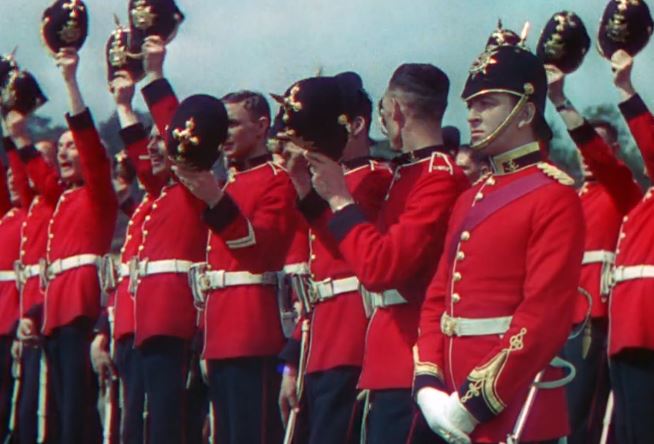
The Four Feathers (1939)

John Clements jacks in the soldier’s life, then has to prove he’s not a coward in The Four Feathers

Director: Zoltan Korda

Cast: John Clements (Harry Faversham), Ralph Richardson (Captain John Durrance), C. Aubrey Smith (General Burroughs), June Duprez (Ethne Burroughs), Allan Jeayes (Geveral Faversham), Jack Allen (Lt Thomas Willoughby), Donald Gray (Peter Burroughs), Frederick Culley (Dr Sutton), John Laurie (Khalifa)

Who doesn’t love a sweeping boys own adventure? The Four Feathers is a prime example of a classic late Victorian adventure story by AEW Mason, where stiff-upper lipped British men do what must be done for honour, Queen and country in the face of hordes of dangerous ruthless natives. Okay, you can see typing that why some of these attitudes can be seen as “troubling today” – and the film’s occasional non-PC stumbles (John Laurie blacks up – as does every other actor playing a speaking African – as radical leader Khalifa, while his army is referred to by an on-screen caption as “fuzzy-wuzzies”). But it’s a product of its time, and its attitudes are really less racist, than the sort of patronising parental colonialism, where the Khalifa has to be stopped as much because he is a danger to his fellow natives as he is the British rulers.

Anyway, putting it’s “of its time” attitudes to one side, The Four Feathers is an endearing, enjoyable and wonderfully made adventure story. After the death of General Gordon (see Charlton Heston’s epic Khartoum) in 1885, war is declared on the Khalifa in the Sudan. However young Harry Faversham (John Clements) resigns his commission on the day of the announcement that his regiment will be shipped out, feeling his obligation to join the army has ended with his father’s death and worried that he will prove a coward. His friends Durrance (Ralph Richardson), Willoughby (Jack Allen), Burroughs (Donald Gray) and fiancée Ethne Burroughs (June Duprez) are singularly unimpressed and all send him white feathers of cowardice. Realising he has led down everyone, Faversham disguises himself as mute, Sangali native (including facial brand – ouch!) and heads out to the Sudan to help his friends and regain his honour: and do they need it, as Durrance is blinded and Willoughby and Burroughs captured by the Khalifa.

The Four Feathers was shot on a huge budget at the time, with extensive on-set location shooting, and it barrels along with an old-fashioned sense of adventure that is hard not to get a little bit swept in. Of course, it’s also easy to question some of the film’s colonialist, white-man’s burden attitudes and also its opinions on what constitutes bravery and nobility (leaving the army because you never wanted to be in it in the first place is seen as yellow-bellied nonsense, which I suppose makes sense for a film made just before World War Two). 

But take it as a product of its own time, and the film works extremely well – easily the best version of the many that have been made of AEW Mason’s book. While epic, it gives us a low-key, dignified lead character who it’s easy to admire and relate to. John Clements plays the role with an expected upper-class stiffness in places, but he’s also a man bursting with desires to be something more than a soldier, then plagued with guilt and self-loathing when he believes he has betrayed all those he is closest to. Clements’ performance anchors the film extremely well, and makes Faversham into an admirable, very human protagonist, pushing himself to insane levels of deprivation and suffering to redeem himself in his own eyes, as much as in his friends.

Those friends are also not painted as arrogant buffoons or cruel, knee-jerk bullies. Ralph Richardson mines a great deal of sympathy from Durrance, a man determined to do his best but (its implied ) living under a deep sense of inadequacy and fear himself, who knows he is second best in most things, especially in love, and who accepts the ill fortunes that befall him with an eventual stoic good-nature. The film’s most successful sequence, features a wordless disguised Faversham, guiding the blind Durrance not only back to the British troops, but also helping him to find some will to carry on living. Its sterling work from Richardson, and his physical intelligence – his initial blindness is almost comically blundering, before the character trains himself to move and act almost as if he still had his sight – makes for further emotional connection.

All this is set in a sweeping, marvellously entertaining, grand-scale by Zoltan Korda. No expense was clearly spared, and the large scale sequences of battles and attacks – as well as the shots of armies moving across the desert wasteland – carry a great deal of scale and impact. The film barrels along with an impressive force, throwing events and actions at us throughout, all while juggling the personal stories of its lead characters. The technicolour shooting of the film has a classic gorgeousness about it, and the film has more than its fair share of decent lines. The film highlights a number of rather stirring battle set pieces, as red coated Englishman fight against overwhelming odds, the sort of thing that we are meant to frown at today but actually remains rather gripping.

The Four Feathers may be dated in places, but as a piece of classic entertainment from its era it’s hard to beat. The action adventure is full of bangs, shots and stiff-upper lipped Brits overcoming trials and tribulations. Faversham is a grounded and relatable character, and his doubts and fears make him admirable, not least because of the great lengths he goes to in order to overcome them. The Four Feathers still entertains today because it feels like exactly the sort of classic Sunday afternoon adventure story that appeals to boys of all ages.

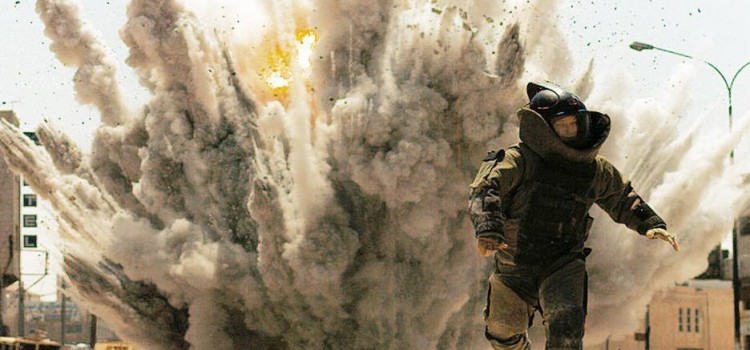
The Hurt Locker (2009)

Danger awaits round every corner in the shocking The Hurt Locker

Director: Kathryn Bigelow

Cast: Jeremy Renner (Sgt William James), Anthony Mackie (Sgt JT Sanborn), Brian Geraghty (Specialist Owen Eldridge), Guy Pearce (Staff Sgt Matthew Thompson), Christian Camargo (Lt Colonel John Cambridge), David Morse (Colonel Reed), Ralph Fiennes (British Mercenary), Evangeline Lilly (Connie James), Sam Spruell (Contractor Charlie)

There have been few wars in history as controversial as the Iraq war. Despite this, it’s hard to think of a film that really has nailed the complex social, political and military causes behind the war – or managed to engage with the deep unease much of the Western world feels for the campaign. While there have been great films about Vietnam, that other opinion-dividing conflict of the last 50 years, there hasn’t been one about Iraq yet – perhaps because the wound is still so fresh. The Hurt Locker gets closest by far – largely because it is a film that makes war its subject, not Iraq; it could just as easily be set in the fields of France as the streets of Baghdad.

After the death of their Staff Sergeant (Guy Pearce) while defusing an IED in Baghdad, Explosive Ordnance Disposal (EOD) unit members Sgt Sanborn (Anthony Mackie) and Specialist Eldridge (Brian Geraghty) are joined by a new team leader Sgt William James (Jeremy Renner). However, they both – particularly the by-the-book Sanborn – grow increasingly concerned about James’ maverick methods and willingness to take personal risks to defuse bombs. Slowly, tensions rise in the team.

The Hurt Locker makes no comment whatsoever on the controversy behind the decision to intervene in Iraq. Instead, its focus is entirely on the psychology of those who go to war, and the sorts of personalities it can attract, from those with a keen desire to do their duty to others who get a certain “buzz” from risk and conflict that they cannot find elsewhere in their lives. As the film’s opening words say, “War is a Drug”. And there are few characters more afflicted by an addiction to that drug than Sgt William James.

Not that James is a villain. One of the film’s many strengths is that he is far from a lunatic. Played with a career-defining charisma and intensity by a then almost-unknown Jeremy Renner, James takes personal risks (defusing bombs without the huge rubber safety suits, turning off his comms to concentrate, returning to bombsites to collect trophies or lost items) but he also shows concern and empathy for his fellow soldiers and (largely) avoids putting them in danger. With the team pinned down by snipers in the desert, he calmly reassures Eldridge and talks Sanborn quietly through taking down the snipers. He develops bonds with people and later in the film shows great compassion and willingness to put himself in danger to save a man unwillingly attached to a suicide vest.

James’ struggles are to deal with the modern world and its shallow obsessions compared to the thrill of putting your life on the line (as the film brilliantly illustrates with a final vignette of James back home at the end of rotation, staring blankly at a wall of cereal boxes in a supermarket). On campaign, he talks dismissively of his child and claims to not know or understand his relationship with his wife. But this is a front – it’s clear his family life is far more settled than he suggests – and is actually more connected to his guilt at enjoying his time on military posting more than he does the neutered warmth of family life. Renner excels at all this complex psychology, crafting a man who is aware of his addiction, can’t combat it but feels a deep guilt for it.

The Hurt Locker is about how this rush of war can be more compelling and life-affirming than hearth and home. It’s also perhaps a commentary on how we ourselves get a rush from watching action and war films – that it’s only a few steps from enjoying watching the excitement of conflict, to enjoying being in the middle of that kind of action. Is James really that bad? Defusing bombs is a difficult and demanding job – and James knows (rightly) that he is one of the best at doing it. And shouldn’t a man enjoy his job? Renner’s glee at a job well done is balanced by guilty awareness that he shouldn’t be enjoying himself as much as this.

Kathryn Bigelow is in her element directing this burst of male testosterone, assembling a film that is gripping, tense and hugely exciting. It’s essentially constructed around a series of set-pieces, each of them more unsettling than the one before. Bigelow’s direction is impeccable, as each of these sequences is both unique in tone and utterly compelling. Bigelow became the first woman to win Best Director at the Oscars – and her acute understanding of men enamoured with the buzz of adrenalin is what gives the film much of its narrative force.

It also helps that the film she has assembled here is a technical marvel, brilliantly shot by Barry Ackroyd with a scintillating display of hand-held cameras, cleverly focused details and immersive story telling. The Hurt Locker is a film both drenched in sun and darkness, with burning yellows and oppressive greys. It’s a film that captures the incredibly alien, heat-stoked insanity of Iraq, and the journalistic style and camerawork make everything we watch feel even more immediate.

In the middle of this, the psychological drama between the maverick James and the cautious, procedure-led Sanborn (played by an equally impressive Anthony Mackie, whose every moment buzzes with frustration and anger at the dangers he sees James inflict on them) plays out wonderfully. Bigelow has an immediate understanding of how the adrenalin and testosterone of combat quickly bubble up into violence and aggression off the battlefield, with these two men often becoming like rutting stags, struggling to place their own supremacy on the team – with Brian Geraghty’s weaker Eldridge the pawn between the two.

The Hurt Locker does what it does so well that it’s easy to overlook its flaws. Its narrative is so pure that you regret it gives barely a second to addressing the issues in Iraq or how the behaviour and attitude of the soldiers there (mostly angry and abusive towards the local population) may be contributing to the problems. It also struggles to add much narrative originality to the story, beyond its set-pieces – in particular James’ friendship with a young Iraqi boy seems like the forced stuff of movie convention in a film that prides itself on reality. When dialogue takes over from action, many of the psychological points it raises have been seen in countless films past. You could argue that the film is largely at its weakest when it tackles any questions of plot at all, and that what Bigelow has really done here is make one of the finest boots-on-the-ground immersions you are going to see.

And if The Hurt Locker is just that then, you know what, that’s fine too. Because when it does this it’s one of the best in the game. Brilliantly assembled, shot and edited (those many Oscars were well deserved) it’s a gripping war film that relies a little too much on some of the conventions of war and combat films, while also focusing very intently on how war affects the psychology of the men at the sharp end. It gives a truly unique perspective of the dangers (in every sense) and is brought to life by a series of fine performances, with Renner and Mackie outstanding. Wonderfully directed, and smashingly tense, it’s a worthy contender in the upper echelons of any list made of great war films.