Category: Western

Winchester ’73 (1950)

Winchester ’73 (1950)

Psychological darkness underpins this dark and exciting Western from Mann and Stewart

Director: Anthony Mann

Cast: James Stewart (Lin McAdam), Shelley Winters (Lola Manners), Dan Duryea (‘Waco’ Johnny Dean), Stephen McNally (‘Dutch’ Henry Brown), Millard Mitchell (Frankie ‘High Spade’ Wilson), Charles Drake (Steve Miller), John McIntire (Joe Lamont), Will Geer (Wyatt Earp), Jay C Flippen (Sergeant Wilkes), Rock Hudson (Young Bull), Tony Curtis (Private)

“The Gun That Won the West” was the proud boast of the Winchester Repeating Arms Company of its rifle ((it can fire several shots before reloading unlike normal rifles). As Winchester 73 puts it, such guns built the West and any Indian would give his soul for one. In Anthony Mann’s complex psychological western, it’s also an instrument of death defining a whole era. Winchester 73 follows the path of one ‘perfect’ repeating rifle, won in a shooting competition by Lin McAdam (James Stewart) but stolen from him and passed from hand-to-hand, seeming to curse everyone who touches it to death.

McAdam has his own mission, searching for the man who killed his father, ruthless criminal ‘Dutch’ Henry Brown (Stephen McNally). These two compete for the rifle, in a Tombstone shooting content refereed by legendary Wyatt Earp (Will Geer) whose orders to keep the peace in this town stop the two of them turning guns on each other from the off. Defeated, Dutch steals the rifle (after getting the jump on McAdam), but he doesn’t keep it long as it moves from owner-to-owner. Meanwhile, McAdam purses Dutch, with faithful friend High Space (Millard Mitchell) in tow, encountering war bands, cavalry troops and Lola Manners (Shelley Winters), a luckless woman tied to a string of undeserving men.

Winchester 73 unspools across 90 lean, pacey minutes and gives you all the action you could desire, directed with taut, masterful tension by Mann. It opens with a cracking Hawkesian shooting contest, with the equally matched McAdam and Dutch moving from shooting bullseyes, to dimes out of the sky to through the hoops of tossed rings. Among what follows is a tense face-off between cavalry and Indians, a burning house siege of Dutch’s ruthless ally ‘Waco’ Johnny Dean (Dan Duryea), a high noon shoot-out and a final, deadly, rifle shooting wilderness cat-and-mouse shoot-out between McAdam and Dutch. It’s all pulled together superbly, mixing little touches of humour with genuine excitement.

However, what makes Winchester 73 really stand out is the psychological depth it finds. Audiences were sceptical of James Stewart – George Bailey himself – as a hard-bitten sharp-shooter out for revenge. But Stewart – deeply affected by his war service – wanted a change and Mann knew there was darkness bubbling just under the surface. McAdam is frequently surly, moody and struggles to express warmth and kindness. He can only confess his fondness for High Spade while glancing down at the rifle he’s cleaning and the most romantic gesture he can give Lola is a gun when they are caught up in a cavalry siege, wordlessly suggesting she save the final bullet for herself. McAdam is driven and obsessively focused, stopping for nothing and no-one on his manhunt, a manhunt High Spade worries he is starting to enjoy too much.

And he’s right to worry. In hand-to-hand combat, Stewart lets wildness and savagery cross his face, his teeth gritted, eyes wild. Scuffling for the rifle with Dutch, there is a mania in his eyes that tells us he is capable of killing with his own hands, a look that returns when he later savagely beats the cocky Waco (it’s even more shocking, as Waco’s ruthless skill is well established, before McAdam whoops him like an errant child). Stewart plays a man deeply scarred by the loss of his father, his emotional hinterland laid waste by a burning need for revenge to fill his soul.

This is the West Winchester 73 sees, one of anger, self-obsession and lies. Seemingly charming trader Joe Lamont (John McIntire, very good) is a shameless card sharp who cheats everyone left-right-and-centre. Waco is perfectly happy to sacrifice his own gang so that he can escape the law – just as he’s perfectly happy to use women and children as human shields and provoke a hapless Steve Miller (Charles Drake), Lola’s luckless lover, into out-matched violence. Steve is hard to sympathise for, having left Lola in the lurch without a second thought when they are caught in the open by a war band (he rides off shouting ‘I’ll get help’ and only returns after finding it by complete fluke).

In this West, a gun is the ultimate symbol. Mann opens every section of the film with a close-up shot of the gun itself, this most prized of possessions, each time in the hands of a new owner. Earp keeps his town strictly gun-free, and both McAdam and Dutch instinctively reach for their holster-less waists when they first meet. (Will Geer does a fine line in avuncular authority as Earp, treated with affectionate patience which becomes quiet fear when he smilingly reveals who he is). The cursed rifle, like Sauron’s ring, seems to tempt everyone and then betray anyone who touches it. Of all its owners, only Dutch and McAdam seem to understand how to use it: and of course, McAdam is the only man with the determination to truly master it.

There isn’t much room for women in all this. Much like the rifle, Lola herself is passed from man-to-man. Played with a gutsy determination by Shelley Winters, she’s first seen thrown out of Tombstone on suspicion of being a shameless floozy, before passing from the useless Steve (who Winters wonderfully balances both affection and a feeling of contempt for) to the psychopathic Waco (few people did grinning black hats better than Dan Duryea). It’s been argued that Lola fills all the traditional female Western roles in one go – hooker, faithful wife, independent women, damsel-in-distress, redemptive girlfriend – and there’s a lot to be said for that. So masculine and violent is this world, women constantly need to re-shape and re-form themselves for new situations.

Fascinating ideas around violence, obsession and sexuality underpin a frontier world where, it’s made clear repeatedly, life is cheap make Winchester 73 really stand out. Led by a bravura performance by James Stewart (who negotiated the first ever ‘points deal’ for this film and made a fortune), with striking early appearances from Rock Hudson (awkwardly as a native chief) and Tony Curtis (as a possibly too pretty cavalry private), it’s both exciting and thought-provoking in its dark Western under-currents

In Old Arizona (1929)

In Old Arizona (1929)

Early Talkie Western has moments of invention, around some awkwardly dated acting and plotting

Director: Irving Cummings, Raoul Walsh

Cast: Warner Baxter (The Cisco Kid), Edmund Lowe (Sergeant Mickey Dunn), Dorothy Burgess (Tonia Maria)

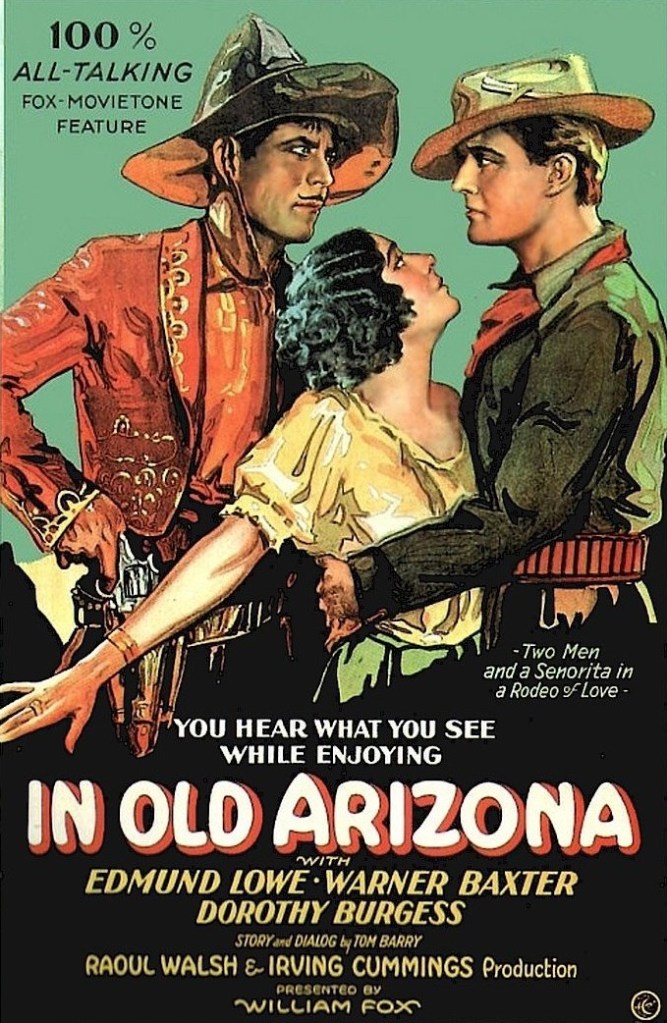
In Arizona, is a public nuisance is plaguing the authorities: The Cisco Kid (Warner Baxter), a charming bandit who holds up stagecoaches, flirts with women and evades the lawmen with a swagger and a smile. But he’s a decent thief: he only takes from those who can afford it (he’ll hand the money back if he finds out otherwise). His Achilles heel is the flirtatiously ruthless Tonia Maria (Dorothy Burgess), a vivacious sexpot who merrily cheats on him left, right and centre. She’s also quite happy to sell him out if she can get her hands on that generous reward money offered by Sergeant Mickey Dunn (Edmund Lowe) – who soon falls for her charms as well.

In Old Arizona was the first Talkie Western – and it stands out from other early Talkies that it’s not set in rigid sets with bolted down cameras, but on location. Imagine the excitement of audiences sitting down to watch a scene in a bustling market, to actually hear the sounds of a church bell ringing (it’s showpiece opening), carriage wheels, passengers bickering and Mariachi bands playing, while the camera tracks through the scene. Of course, much of this was accomplished via synchronised sound, applied after shooting – most of the dialogue scenes are shot with a far more rigid style – but it was still gripping. Never again in film history, would a shot of bacon sizzling (audibly) in a pan attract as much comment as it did with the reviewers of this film.

Other parts of In Old Arizona teeter between sound and silence. As mentioned, when the dialogue kicks in the film falls back on theatrical-front-row framing. All three of the principles – the only actors billed – give performances leaning into the principles of silent acting, with the framing and make-up frequently giving added prominence to their eyes (the main form of communication in silent cinema). Dorothy Burgess, in particular, makes her film debut but finds all her prepared awkward theatrical poses to communicate emotion look increasingly out-of-date (much as she’s clearly enjoying playing this ruthless, faithless schemer).

She’s not alone in this. Warner Baxter lifted one of the first Best Actor Oscars and it’s an entertaining performance, full of swaggering, alpha-male cheek. Baxter makes the Cisco Kid somewhere between a scheming rogue and a Robin Hood. But he also strikes a pose a little too frequently and tends to over accentuate gestures and reactions, a clear hangover of his silent career. He does, however, dance through the dialogue with a rolling Spanish accent, and if the character ends in a slightly awkward territory between camp and ruthless, it’s not really his fault so much as the script. He’s certainly far more entertaining than the wooden Lowe, whose voice is flat and uninteresting.

In Old Arizona quickly turns into two shaggy dog stories, stretched out over about 90 minutes. It’s surprising how little plot there is: it could easily have zipped by in 60 minutes. The first act covers the Cisco Kid’s hold-up of a stagecoach and the aftermath; the second an unwitting game of cat-and-mouse where Dunn is at a serious disadvantage as he has no idea what the Cisco Kid looks like; the third the mutual seduction of Dunn and Maria, their attempt to kill the Cisco Kid for his ‘dead-or-alive’ ransom and the Cisco Kid’s ruthless foiling of their scheme. Each feels like a short story, joined together, so it’s not surprising to find it’s adapted from exactly that from O Henry.

By all accounts O Henry’s Cisco Kid was a far more violent and brutal character than Baxter’s jolly, tuneful, gadabout. Sure, the Cisco Kid can handle himself – there’s a fine little action sequence, where he plays possum to gun down three would-be ransom collectors – but by and large he’s a romantic, and it’s clear he’s genuinely in love with the shallow and unfaithful Maria. This feels like it’s been designed to make her betrayal carry some bite, but since she is so blatantly unfaithful it actually makes the Kid look rather dim and slow on the uptake.

Maria is interesting as a Pre-Code character nakedly open in her sexuality – it’s pretty apparent she’s, at-best, a good time girl. She very smoothly seduces the straight-as-an-arrow Dunn (who up until meeting her, makes a big thing of constantly checking his treasured photo of him and his sweetheart). Dunn is of course not the smartest tool – the Cisco Kid runs rings around him during their first meeting, deftly picking him clean of information while not only giving him no idea who he is, but also making Dunn rather enjoy the company of the man he’s meant to be hunting.

It leads into what feels today a troubling conclusion to In Old Arizona. Primed from so-many Westerns that followed, we expect a gun-on-gun ending between the rivals from opposite ends of the law (and, the film eventually suggests, opposite ends of the moral spectrum – the Kid is loyal and decent, Dunn a hypocritic and treacherous). Instead, it becomes more about the Cisco Kid’s deliberately deadly punishment of a woman who has wronged him. It’s hard not to feel that, selfish as Maria is, she doesn’t quite deserve the fate she meets – or the Cisco Kid’s triumphantly heartless Bondian one-liner afterwards.

It’s an uncomfortable ending to a film that in some areas pushes forward the world of commercial film-making (it’s hard not to credit Walsh for the film’s pacier, on-location sequences with their pre-Fordian landscapes, galloping horses and gun-toting action) but in others still has an awkward foot in both silent cinema and the clumsy world of the early Talkies. There are proto-Western ideas here – the sort of narrative ideas that the likes of Ford and Hawks would later finetune and master – but it feels a little too much like a historical curiosity today.

The Alamo (1960)

The Alamo (1960)

Wayne’s historical epic is a mediocre labour-of-love that takes a very, very long time to get to its moments of interest

Director: John Wayne

Cast: John Wayne (Col Davy Crockett), Richard Widmark (Col. Jim Bowie), Laurence Harvey (Col. William Barrett Travis), Richard Boone (General Sam Houston), Frankie Avalon (Smitty), Patrick Wayne (Captain James Butler Bohham), Linda Cristal (Graciela), Joan O’Brien (Sue Dickinson), Chill Wills (Beekeeper), Joseph Calleira (Juan Seguin), Ken Curtis (Captain Almaron Dickinson), Carlos Arruza (Lt Reyes), Hank Worden (Parson)

John Wayne believed in America as a Shining City on a Hill and he wanted films that celebrated truth, justice and rugged perseverance. To him, what better story of fighting against all odds and to the bitter end for liberty, than the Battle of the Alamo? There, in 1836, a few hundred soldiers and volunteers from the Republic of Texas bravely stood before an army of over two thousand Mexicans to defend the Texas Revolution’s independence from Mexico. Wayne put his money where his mouth was, pouring millions of his own dollars into bringing the story to the screen. Furthermore, he’d direct and produce himself, convinced only he could protect his vision.

The end result isn’t quite the disaster the film has gained a reputation for being – nor is Wayne’s directorial efforts as useless as his detractors would like. But The Alamo is a long, long slog (almost three hours) towards about fifteen minutes of stirring action, filled with pages and pages of awkward speechifying, hammy acting and painfully unfunny comedy. While a bigger hit than people remember, Wayne lost almost every dime he put in (he said it was a fine investment) and even a muscular series of favour-call-ins that netted it seven Oscar nominations (including Best Picture!) couldn’t disguise that The Alamo is a thoroughly mediocre film that far outstays its welcome.

Wayne collaborated closely with his favourite writer, James Edward Grant. Both had a weakness for overwritten speeches and there is an awful lot of them in The Alamo’s opening half as we await the arrival of the Mexicans. Wayne gets several speeches about the glories of the American way such as (and this is cut down) “Republic. I like the sound of the word…Some words can give a feeling that makes your heart warm. Republic is one of those words” or a musing on duty that takes up a solid five minutes (it’s ironic Widmark’s Bowie refers to Harvey’s Travis as a long-winded jackanapes, since Wayne’s Crockett has them both beat).

There is only so much portentous, middle-distance-starring talk one can take before you start twitching in your seat, even for the most pro-Republican viewer. With complete creative control, there was no one to tell Wayne to pick up the pace and trim down these scenes. So enamoured was Wayne with Grant’s dialogue, whole scenes are taken up with the Cinemascope camera sitting gently in rooms watching the actors pontificate about politics, strategy and duty at such inordinate length you long for the Mexicans to damn well hurry up.

For a film as long as this, there is an awful lot of padding. The first hour shoe-horns in an immensely tedious romantic sub-plot for the increasingly-long-in-the-tooth Wayne (who had been playing veterans for almost 15 years by now) with Linda Cristal’s flamenco-dancing Mexican. We know she’s a hell of a dancer, since we get several showcases for her toe-tapping skills as Crockett’s Tennessee volunteers wile away the evenings. There is a sexless lack of chemistry between Wayne and Cristel, re-enforced by Crockett’s gentleman-like rescuing of Cristel from a lecherous officer, and the whole presence of this sub-plot feels as like a box-ticking exercise to appeal to as many viewers as possible as does the casting of young heart-throb Frankie Avalon in a key supporting role.

This is still preferable to the rather lamentable comic relief from a host of Wayne’s old muckers, playing a collection of Good Old Boy Tennesse volunteers. These jokers swop wise-cracks, prat-falls, good-natured fisticuffs, but (inevitably) also drip with honour and decency. Chief among them is Chill Wills as Beekeeper, a scenery-chewing performance of competent comic timing that inexplicably garnered Wills an Oscar nomination. Wills made real history with an outrageously tacky campaign for the golden man, shamelessly publicly pleading for votes and including a full-page Variety advert (‘The cast of The Alamo are praying harder than the real Texans prayed for their lives in the Alamo for Chill Wills to win!’) that even Wayne denounced as tasteless.

Wayne believed the real Oscar nominee should have been Laurence Harvey as ram-rod stickler-for-form Colonel Travis, commander of The Alamo. He’s probably right (if you were going to honour anyone here), as Harvey’s abrasive style and stiff formality was a good fit for the role and he turns the brave-but-hard-to-like Travis into the most interesting character. He’s more interesting than Widmark’s rough-and-ready Bowie, who looks uncomfortable: he would have been better casting as Crockett. That role went to Wayne, after investors said his presence in a lead role was essential for the box office (reluctant as Wayne was, he still cast himself in the most dynamic, largest role).

There are qualities in The Alamo – and they are largely squeezed into the final thirty minutes as the siege begins in earnest. This sequence is very well done, full of well-cut action and shot on an impressive scale. The money is certainly up-on-the-screen – The Alamo built a set only marginally smaller than the actual Alamo and recruited a cast of actors not too dissimilar from the size of the actual Mexican army. (The only nominations The Alamo deserved were related to production and sound design, both of which are impressive). The relentless final stand is undeniably exciting – whether it’s worth the long wait to get there is another question.

The Alamo largely avoids vilifying the Mexicans. Their commanders may be little more than extras, but Wayne’s was aware that in the Cold War, allies were crucial so the film is littered with praise for the bravery, courage and honour of the Mexicans as battle rages (‘Even as I killed ‘em, I was proud of ‘em’ one volunteer muses). However, in many ways, The Alamo is incredibly simplistic and naïve about American history – especially the ‘original sin’ of slavery, the banning of which in Mexico was one of the main reasons for the Texans revolt. It’s hard not to feel it’s a bit rich for Wayne to make a big speech about freedom, when Crockett and co were literally laying down their lives for the Texan Republic’s right to keep slaves. The only slave in the film is so overwhelmingly happy with Bowie, he literally refuses his freedom and lays down his life to protect his master.

But then that’s because The Alamo is a proud piece of propaganda, celebrating a rose-tinted view of American History that avoids complexity and celebrates everyone as heroes. It’s not the disaster you might have heard about. It has its moments. But its still a dull, tedious trek.

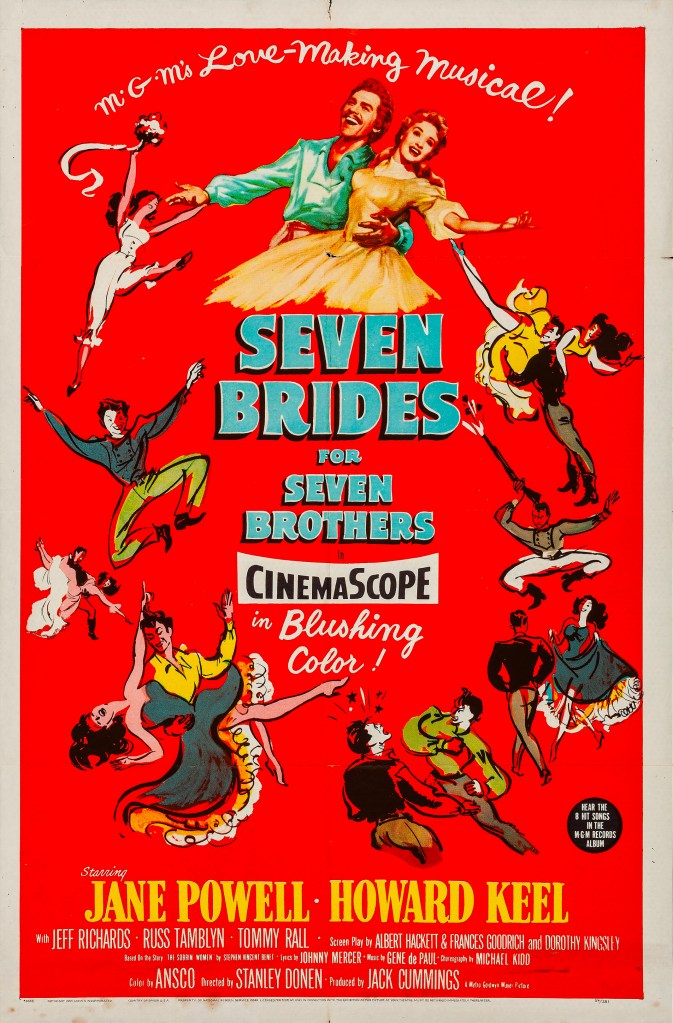
Seven Brides for Seven Brothers (1954)

Seven Brides for Seven Brothers (1954)

Gentle fun from more innocent times, in an impressively high-kicking Western musical

Director: Stanley Donen

Cast: Jane Powell (Milly), Howard Keel (Adam), Jeff Richards (Benjamin), Julie Newmar Dorcas), Matt Mattox (Caleb), Ruta Lee (Ruth), Marc Platt (Daniel), Norma Doggett (Martha), Jacques d’Amboise (Ephraim), Virginia Gibson (Liza), Tommy Rall (Frank), Betty Carr (Sarah), Russ Tamblyn (Gideon), Nancy Kilgas (Alice)

Glance at any list of odd things to adapt into a musical, and you might well find The Rape of the Sabine Women. You’ve got to admire the idea of shifting a Roman legend of horny menfolk grabbing armfuls of women from the Sabine tribe to carry them to Rome to make homes and babies, into… a primary-coloured, hi-kicking, cosy Western musical. Sure, parts of Seven Brides of Seven Brothers look rather awkward today but there is an innocent sense of good-fun (not to mention a sweet lack of sex in any frame) about the whole thing that still makes it rather charming today.

Out in Oregon in 1850, the Pontipee brothers are rough-living guys out in the sticks, who can’t imagine needing a woman in their lives, except maybe to cook and clean. That certainly seems to be what oldest brother, Adam (Howard Keel), has in mind when he marries Milly (Jane Powell). She is shocked to discover he sees her role solely in the kitchen and the laundry. Milly decides she’s not having this, pushing the brothers to clean up their home and acts. Much to their surprise, the brothers like clean living and fall in love with six more women in town (and they with them!). Shame they’re so inept at courtship they decide (much to Milly’s shock) the best way to get a wife is to grab a woman and bring them back home, just like those ‘sobbin’ women’ of yore.

You can see the trickier content there, but Stanley Donen’s film is so good-natured you can imagine its makers being baffled that anyone today could have an issue with it. We can address an elephant in the room: the kidnapping scenes – the Pontipee brothers throwing blankets over the women’s heads, chucking them over their shoulders and making for the hills – play uncomfortably today when framed for laughs. But these are men who, when they arrive home, are gosh-darn-it furious with themselves for not grabbing a priest so they could marry these women at once and immediately sleep in the cold barn to preserve the ladies’ dignities. Seven Brides for Seven Brothers is really a sort of fairy tale rather than a dance-filled Stockholm Syndrome drama, the beauties falling in love with the (not very beastly) beasts.

Take that mindset, and Seven Brides for Seven Brothers is gentle fun, more focused on its bright primary colours and superb dance sequences than any look at gender roles. Choreographed by Michael Kidd, the film is stuffed with imaginative showpieces showcasing the skills of its mostly professional-dancing cast. A pre-barn-raising dance turns into a competitive barn dance, with dancers throwing themselves into a myriad of possible positions, leaping over planks and swinging partners in wild circles (the film uses every inch of the Cinemascope framing – God alone knows what the 4:3 version Donen also had to shoot looks like). Every time the film kicks into dance mode, you are generally in for an impressively athletic treat.

The cast (except, noticeably Jeff Richards) are all strong dancers – or in the case of Russ Tamblyn so athletic it hardly matters – allowing Kidd to push the dance envelope. His choreography also conquers his initial concern: how believable would it be for rough-tough woodsmen like this to confidently trip the light fantastic at the drop of a hat? Its solved, in many cases, by using the sort of everyday jobs (like woodcutting in one single-take sequence) these boys would be doing as the framing device of the choreography. That and a wittily done sequence where Milly teaches her new brothers-in-law some basic dance steps only for them to find they actually enjoy kicking their heels.

Its one of several witty sequences, that serve to generally puncture for laughs the masculinity of this clan of brothers. Milly’s arrival, finding her new brothers-in-law are all strangers to the razor and the bath, then finds her tour of the house has to work around an on-going fight between these lads which her new husband all but ignores. By the time Milly is flipping over the dinner table after the brothers dive into her prepared meal with all the grace of a bunch of frat boys on a night out, you’re with her. In fact, Seven Brides could be a sort of Taming of the Shrew in reverse, where our heroine trains decency, politeness and basic interpersonal skills into the men. And, since Jane Powell’s firm-but-fair Milly is the most unfairly put-upon person in the film, we instantly side with her.

Instead, it’s Howard Keel’s (with his distinctive gloriously low voice) Adam who needs to be made to see sense: first to understand there is more to marriage than a servant-with-benefits, and secondly that other people’s feelings need consideration. Much of the drive for this change is Milly – the importance of her character being the main reason writer Dorothy Kingsley was recruited to bulk up her part from Albert Hackett and Frances Goodrich’s earlier drafts. Similarly, the seven brothers switch from punch-first braggarts to figures reminiscent of Snow White’s dwarfs in their eagerness to please Milly (even, during the barn-raising sequence, they politely back away from all provocations from the jealous townsmen until they are finally pushed too far by the townsmen’s rudeness to others).

In this framework, we are never in doubt that their brides-to-be are, in fact, not unhappy at being carried away by these men. There is no sense of danger in Seven Brides: no doubt that it’s not all going to turn out well. A large part of this gentle tone is due to Stanley Donen’s warm, witty direction. (Donen was heartbroken the budget wouldn’t stretch to Oregon location shooting, although the backdrops used throughout are hugely impressive). It generally looks like a film everyone had huge fun making – and that warmth, along with the brightly coloured shirt humble-pie-ness of it all, has meant it remains all jolly good fun today.

Stagecoach (1939)

Stagecoach (1939)

Iconic action adventure, a very exciting chase film with a strong script and characters

Director: John Ford

Cast: Claire Trevor (Dallas), John Wayne (The Ringo Kid), Andy Devine (Buck Rickabaugh), John Carradine (Hatfield), Thomas Mitchell (Dr Josiah Boone), Louise Platt (Lucy Mallory), George Bancroft (Sheriff Curly Wilcox), Donald Meek (Samuel Peacock), Berton Churchill (Gatewood), Tim Holt (Lt Blanchard), Tom Tyler (Luke Plummer), Chris-Pin Martin (Chris), Francis Ford (Billy Pickett)

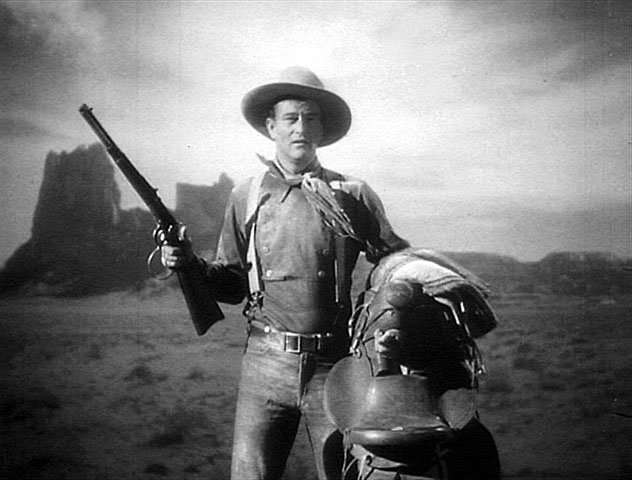
It might be the greatest star entrance of all time. Before Stagecoach, John Wayne was a minor leading man from a never-ending stream of oats-and-saddles B-movies. But, after one shot – a superb fast-paced zoom (so fast, the focus slips at one point) into the stoic face of Wayne, Winchester rifle twirling – that wasn’t going to be the case anymore. Stagecoach was Ford’s return to the Western – and he was bringing a friend along for the ride. After it, both director and star would become synonymous with the genre and Wayne would remain Hollywood’s Mayor-in-all-but-name.

Of course, that shot alone didn’t make Wayne a star (but, as you can imagine Andy Devine’s Buck wheezing “it sure helped, didn’t it”). What cemented the deal was what the hugely entertaining thrill ride Stagecoach is, a rollicking journey through Monument valley, crammed with just about anything you could want, from gun-battles and stunts to class commentary and arch dialogue. Like some sort of JB Priestley play, a regular smorgasbord of folks climb into a stagecoach to travel from Tonto to Lordsburg, facing a parade of dangers from Geronimo’s Apaches along the way – not to mention their own personality clashes and business to take care off in Lordsburg. All aboard!

We’ve got prostitute Dallas (Claire Trevor), run out of town by ‘blessed civilisation’ – much like drunken surgeon Dr Boone (Thomas Mitchell) – hoping for a new life. Army wife Lucy Mallory (Lucy Platt) trying to find her missing husband, escorted by Southern gent turned gambler Hatfield (John Carradine); both are more than a little uncomfortable sharing a carriage with a lady of the night. They probably wish the carriage had more people like bank manager Gatewood (Benton Churchill), although they might change their mind if they knew he was an embezzler. Sheriff Curly Wilcox (George Bancroft) is trying to catch escaped prisoner The Ringo Kid (John Wayne), who is himself keen to get to Lordsburg to take down the Plummer gang who killed his father and brother.

All of these well-drawn characters – including the timid whisky salesman (whose name no-one can remember) Peacock (well played by the suitably named Donald Meek) – are bought vividly to life by a strong bunch of actors working with a well-constructed script by Dandy Nichols, crammed with sharp lines and wit. It’s packaged together by Ford into a film that’s lean, plays out at a whipper-cracker pace and juggles several plots, threats and character motivations all at once.

You can see Ford’s mastery of story-telling throughout Stagecoach. The opening fifteen minutes is a superbly efficient piece of lean scene-setting which, in a series of tightly-focused, engaging scenes, brilliantly introduces the principle characters, their motivations and the twin dangers of the Indians on the road and the Plummers in Lordsburg all in perfectly digestible chunks. In addition, Ford carefully introduces the class commentary that greases Stagecoach’s wheels: from the unconcealed loathing and disdain Dallas is treated with by the town’s worthies (including the appalled revulsion of Hatfield and the marginally less strident disdain shown by Lucy) to the unquestioned bluster of blowhard fat-cat Gatewood, whose blatantly transparent lies and increasing nervousness draws no where near the level of suspicion it should do.

But then most people are too worried about catching sin-by-touch from Dallas. Stagecoach never outright states her profession, but only the naïve Ringo Kid seems unaware she’s on-the-game. At the first stop on the journey, Ford orchestrates a perfectly constructed scene of micro-aggressions and class structure, where Ringo guiltily utterly misreads as snobbery about his own jailbird past. (Hatfield is so committed to keeping the distance between himself and Dallas, he won’t even let her borrow his water glass as he does Lucy, tossing Dallas the canteen to drink straight from instead). Similar disdain also meets Dr Boone, whose utter refusal to even slightly moderate his drinking (he spends the first day getting sozzled) disgusts the elite passengers, right up until his skills are needed during a medical emergency. (At this point Hatfield starts treating him as the fount of wisdom).

Ford’s sympathies are, like so often, with the tough little-guys out in the West, who judge people by who they are and what they do rather than where they come from. Claire Trevor is perfectly cast as Dallas, never a victim but always full of patient defiance, all-to-used to the snubs from others. But we respect Dallas because it’s clear – from the start – she’s kind, considerate and decent. When the chips are down for Laura, it’s Dallas and Boone (not self-appointed guardian Hatfield) who step-up to save her, and never once does it cross their mind to hold Lucy to account first.

Just the same is, of course, The Ringo Kid. Stagecoach was possibly the last time Wayne could plausibly be called ‘the Kid’ – he looks older than his 32 years already – and he fills the part with a sincere honesty, courtesy and straight-forwardness that would become integral to Ford’s films, while still making the Kid the rough-and-tumble hero you want to be. The Ringo Kid may be a jailbird, but treats people according to their personal merits, sticks to his word, unhesitatingly protects people (that iconic introduction is him warning the coach of danger ahead) and won’t do anything he isn’t unwilling to do himself. It’s people like that – and Thomas Mitchell’s Oscar winning (Mitchell had key roles in half the best picture nominees that year, so had to win for something!) Doc Boone who turns himself into a master surgeon by force-of-will alone – who form the backbone of Ford’s West.

This all sits alongside some truly sensational action-adventure. Most of Stagecoach is a long build-up to its two action sequences that end the film: the running attack across the wide-open desert sands from the Apache and Ringo’s fateful duel with the Plummers. The eight-and-a-half minute chase would be the highlight of any film, a dynamic, pulsating masterclass of tight editing and tracking shots that fills the screen with electric pace and energy. It also has some of the most iconic stunts of all time, executed by Yakima Canutt Wayne’s long-term stunt consultant. From Canutt-as-Ringo jumping from pair-of-horses to pair-of-horses in front of the coach galloping at full-speed, to Canutt-as-Apache leaping from horse, to coach horses to falling and bring dragged under the coach (a stunt homage by Raiders of the Lost Ark’s truck chase) their visceral thrill is made even more exciting by Ford’s camera speeds making them look like they took place at even faster pace than the 45-miles-an-hour the horses were galloping at.

Ringo’s final duel with the Plummers gets a different approach, a long, steadily paced build-up that culminates in a very low camera watching a ready-for-action Wayne move towards us like a striding mountain. Stagecoach is also a masterclass in visual imagery and camera-use – so much so Orson Welles literally used it as such in prep for Citizen Kane, screening it over 40 times. Not just in action and editing, but also the brilliance of placement. Stagecoach’s low-ceilinged sets and striking shadows are a clear influence on Kane. A superb shot of Dallas from down a corridor, framed in light strewn from an open doorway, is a wonderful piece of visual poetry and there are gorgeous visual flourishes throughout, from the black cat that crosses the Plummer’s path to the wonderful vistas from Ford’s first trip to Monument valley.

All of this comes together into a film that is a wonderfully entertaining character study, wrapped up with a series of knock-out set-pieces, with romance, comedy and social commentary thrown in on top. It’s perhaps one of the most purely ‘entertaining’ Westerns ever made and one of Ford’s finest fusions of artistic brilliance and popcorn chewing thrill-rides.

Yojimbo (1961)

Yojimbo (1961)

Kurosawa’s dust-filled samurai actioner is a very Japanese Western and huge fun

Director: Akira Kurosawa

Cast: Toshiro Mifune (“Kuwabatake Sanjuro”), Eijirō Tōno (Gonji), Tatsuya Nakadai (Unosuke), Seizaburo Kawazu (Seibei), Kyū Sazanka (Ushitora), Isuzu Yamada (Orin), Daisuke Katō (Inokichi), Takashi Shimura (Tokuemon), Hiroshi Tachikawa (Yoichiro), Yosuke Natsuki (Farmer’s Son), Kamatari Fujiwara (Tazaemon), Atsushi Watanabe (Coffin maker)

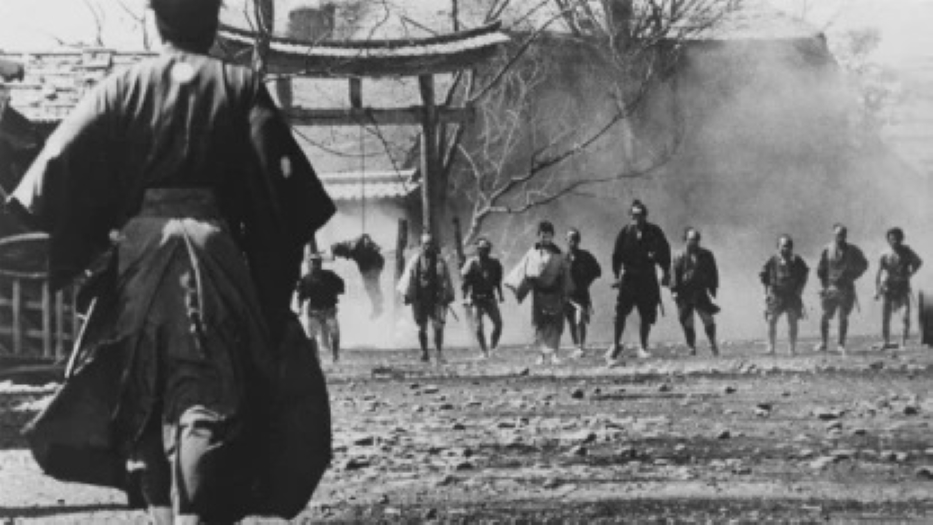
An unknown stranger arrives in a dust-filled border town and finds himself stuck in the middle of a long-running feud between two gangs with only his wits and skill with his weapon for any advantage. If you had any doubt about the influence American Westerns had on Akira Kurosawa, look no further than Yojimbo. Perhaps the most purely enjoyable movie Kurosawa ever made, Yojimbo can also lay claim to being one of the greatest Westerns ever made, given greater depth with Kurosawa’s subtle social satire on Japanese samurai culture. This is Kurosawa at his best: stripped-back and dynamic with a weight behind the fun.

Our unnamed samurai is (Toshiro Mifune), now a wandering ronin. The gangs: on one side Seibei (Seizaburo Kawazu) the town’s long-term boss, whose ruthless wife Orin (Isuzu Yamada) is the power behind a throne she intends to pass to their timid son Yoichiro (Hiroshi Tachikawa). On the other: Ushitora (Kyū Sazanka), Seibei’s former number two furious at being passed over as heir apparent, backed by his brothers, dim but strong Inokichi (Daisuke Katō) and would-be gunslinger Unosuko (Tatsuya Nakadai). The rivalry has bought the town to the edge of ruin and our unnamed samurai – giving himself the spontaneous pseudonym “Kuwabatake Sanjuro” (literally “Mulberry Field aged Thirty”) – use his wit and ingenuity to play both sides against each other to get rid of them.

The Western influences in Yojimbo are immediately obvious. The town looks like a Fordian dustboal frontier towns, Kurosawa delighting in the widescreen, windswept streets the site of so many slow-burn face-offs. Rivals meet on main street, facing each other at opposite ends, like High Noon. Seibei operates out of a worn-out brothel, Sanjuro stays in a saloon run by a weary old-timer, a local sheriff is a hopelessly inept foreluck-tugger, Sanjuro has the same gruff excellence with a sword as John Wayne and Alan Ladd had with a gun. By the time Unosuko turns up clutching the town’s only gun and preening like Jack Palace in Shane, it’s impossible to miss we are in the Old Japanese West.

This is a town in total breakdown, where the coffin-maker makes a huge income creating piles of tombs for the rival gangsters who fall in constant duels. Both gangs are in, their way, pathetic. Far from intimidating, Seibei (a hilariously whiny Seizaburo Kawazu) is a puffed-up old man, easily brow-beaten by his wife. Unosake has more swagger and guts, but he’s as cluelessly inept as Seibei. Both gangsters have crews stuffed with fighters but lack almost anyone with any actual skill. When the gangsters are first manipulated into facing-off, they posture and feint at each other like blow-hard school bullies then seem relieved when the arrival of a local official leads to a sudden ceasefire.

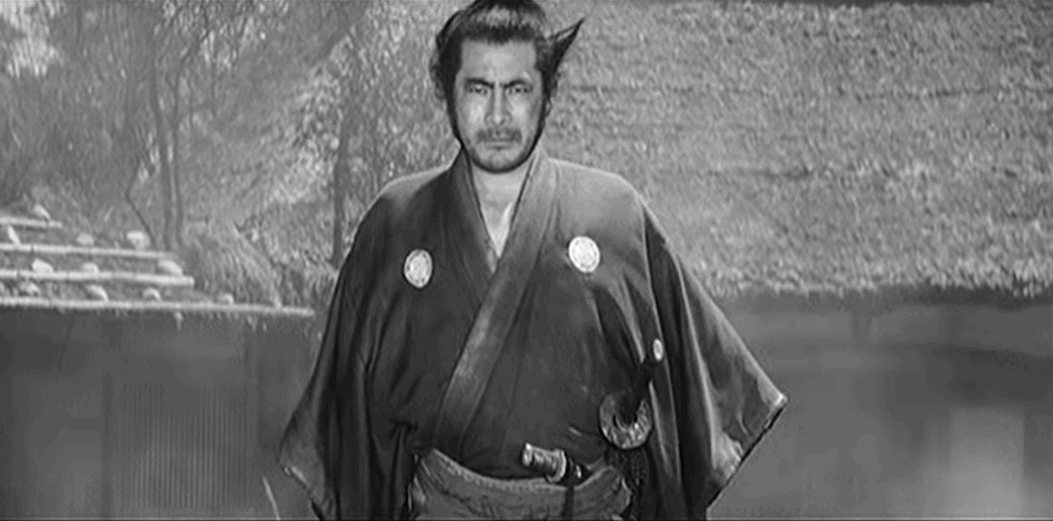
Parodying the old Samurai class, Sanjuro is a million miles from the sort of elite honour-bound soldier we expect. In one of his finest performances, Toshiro Mifune is scruffy, cynical and works very hard to give the impression he’s more interested in his immediate needs than any higher purpose. Mifune is gruff, constantly scratching or chewing: he’s a prototype Clint Eastwood (and Yojimbo was ripped off by Leone for A Fistful of Dollars, leading to a Toho Studios legal case), a morally ambiguous figure who does the right thing when it coincides with his own interests. His motives are unknowable. Why does he set-out to destroy both gangs? Is it sympathy for the mess of the town, or is it because he sees a chance to make a quick buck from the mess? Is it because he’s bored (and eventually annoyed) and does it for his own amusement?

The brilliance of Mifune’s shaggy-dog performance is that it could be all or none of these things. Sanjuro does just one, unmistakeably, decent, selfless thing in the film: saving Ushitora’s unwilling mistress and her downtrodden family. What does it get him? Their near suicidal deference and ostentatious gratitude drives him nearly to distraction and leads to a near-fatal beating. But it really rankles Sanjuro because it’s possible he despises the idea of decency in himself, an intriguing insight into what could be unknown darknesses in his past. Does he know selfless acts can become the only chink in your armour?

Aside from that, his mastery of the situation is hugely entertaining. Never mind two steps, he seems a marathon ahead of the rest. Provoking a pointless early clash with Ushitora’s heavies, he bests them in seconds with a series of lightning fast sword strokes (Star Wars Mos Eisley-based Kenobi swordplaywas clearly inspired by this), establishing in seconds he’s the alpha both sides need to compete over. When action kicks in, Sanjuro is unmatched by the Dickensian collection of street thugs both sides have amassed, his swift reflexes and expert slices reducing even a hideously outnumbered fight into a curb-stomp clash. You can see Kurosawa’s influence over Leone here: clashes in Yojimbo have long build-ups and explosive, sometimes violently bloody outcomes (an arm severed here, a spray of blood there, characters bleeding out).

But Sanjuro’s other skill is his ability to appraise rivals instantly. None of them disappoint in their transparent greed and shortsightedness. Kurosawa visually embodies Sanjuro’s shrewdness by frequently having him climb up a tower platform on the main street to literally look down on the results of his manipulations. No one can match him. Orin – a pleasing twist on her Throne of Blood role as an ineffective Lady Macbeth by Isuzu Yamada – thinks she’s smart enough to double-cross him, but her brains only look impressive matched against the mediocrities of the town. Daisuke Katō’s Inokichi – so dim he can’t even count with the aid of his fingers – literally believes anything he’s told by the last person who spoke to him. Only Tatsuya Nakadai’s smug Unosuke is in anyway threat, but he’s a preening show-off whose only qualification for being the toughest guy in town is because he owns the only gun (which he can’t help fetishistically stroking at every opportunity).

The gun is another sign of a culture at crossroads – the major threat to Sanjuro comes not from any human, but from a distance-killing tool that could wipe out his vastly superior tactical and fighting ability in a second. Yojimbo is showing us a Japan tipping over the edge into a future where ruthless gangs, with more brawn than brain, will drive towns like this into the ground – but our hero, a symbol of a bygone age of heroics, isn’t traditionally heroic either: he’s a scruffy, self-interested loner, who despises nobility. Our other samurai, Seibei’s pet-trainer, is hardly a great advert for samurai either, peddling his skills for cash and huffily walking out when his value is not recognised.

All this is wrapped up in a film that is undeniably hugely entertaining. The action, when it comes, is truly exciting. Mifune is superb, charismatic, likeable with a wry charm and scruffy smile. Kurosawa’s dust-blown pseudo-western is brilliantly assembled, and its wry social satire on an increasingly disorganised Japan falling into chaos (with a golden age that wasn’t that golden behind it) never buries the thrills and spills of his masterfully constructed action drama. Yojimbo is certainly his most purely entertaining film, stripped back and avoiding the overindulgence and bombast of his less successful films. It’s a treat.

The Right Stuff (1983)

The Right Stuff (1983)

Patriotic heroism subtly retold as shrewd satire – no wonder the film bombed

Director: Philip Kaufman

Cast: Sam Shepard (Chuck Yeager), Scott Glenn (Alan Shepard), Ed Harris (John Glenn), Dennis Quaid (Gordon Cooper), Fred Ward (Gus Grissom), Barbara Hershey (Glennis Yeager), Kim Stanley (Pancho Barnes), Veronica Cartwright (Betty Grissom), Scott Paulin (Deke Slayton), Charles Frank (Scott Carpenter), Lance Henriksen (Wally Schirra), Donald Moffat (Lyndon B Johnson), Levon Helm (Jack Ridley), Mary Jo Deschanel (Annie Glenn), Scott Wilson (Scott Crossfield), Kathy Baker (Louise Shepard), David Clennon (Liaison man), Jeff Goldblum (Recruiter), Harry Shearer (Recruiter)

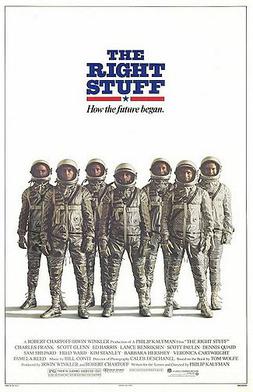
During the Cold War, the US and Russia had to fight with something – from proxy wars to chess, but most famously with Space: the competition to go further, faster and higher among the stars. The Right Stuff focuses on the Mercury Seven pilots at the centre of the US response to Soviet success including Alan Shepard (Scott Glenn), John Glenn (Ed Harris), Gus Grissom (Fred Ward) and Gordon Cooper (Dennis Quaid), a mix of the cocksure and the confident. But in a space programme where a monkey is an acceptable “pilot” for this human cannonball, do any of them have “the right stuff”? Could any of them match the skill of legendary test pilot Chuck Yeager (Sam Shepard) – one of the guys who scorned this astronaut programme for being “spam in a can”?

The Right Stuff, adapted from Tom Wolfe’s book, seemed destined to become a patriotic smash-hit. Despite its eight Oscar nominations (and four wins) it was, in fact, a catastrophic bomb. Perhaps that was because it subverted its patriotism so well. The Right Stuff is, in fact, a subtle, anti-heroic satire (told at huge length) masquerading as a patriotic yarn. It’s marketing avoided that meaning those most likely to enjoy didn’t go and see it, and those who went for that felt alienated. While largely respecting the astronauts, it suggests space race triumphalism was a sort of mass hysteria, with limited results, inflated into something mythic by political expediency, media spin and industrial might. Not the happy, flag-waving message Reaganite America expected or wanted.

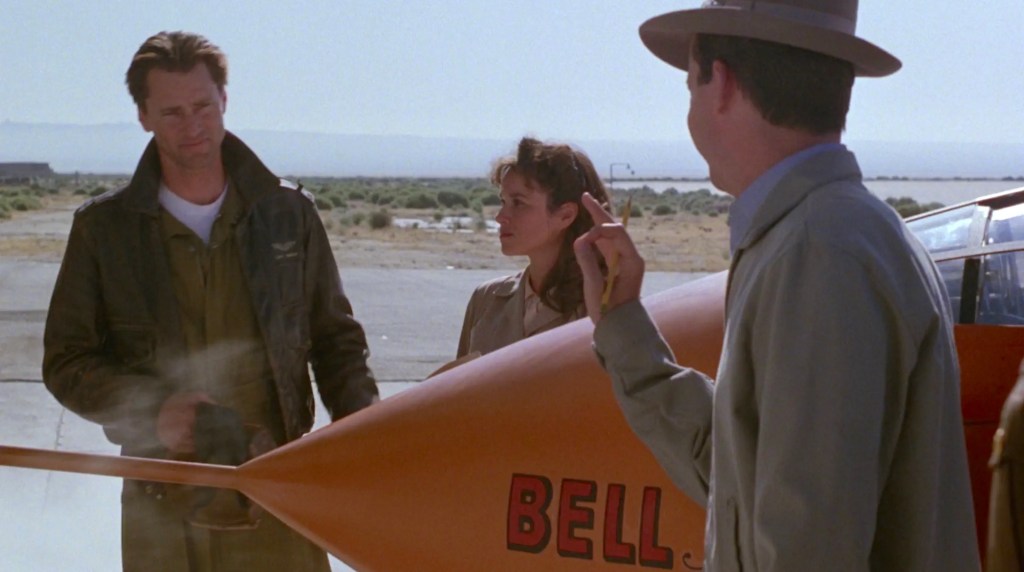
Kaufman’s sympathy instead lies with an older, “truer” America. The Right Stuff is an intensely nostalgic film: but for a completely different time. It is in love with Frontier America, where men-were-men and the daring proved themselves in taming the frontier, in this case the sky itself. Our tamer is Chuck Yeager, played with a monosyllabic Gary-Cooper-charisma by Sam Shepard. Yeager is the last of the cowboys (even introduced riding a horse in the desert), taking to the skies like an old frontiersman hunting down that “demon” who lives at the sound barrier.

This is the sort of America The Right Stuff celebrates, and Yeager is the guy who has it. Unlike the Mercury programme, Yeager isn’t interested in showbiz and self-promotion (his reward for breaking the sound barrier? A free steak and a press embargo), just the quiet satisfaction of having done it. It’s the old, unflappable, quietly masculine confidence of a certain kind of American tradition and it’s totally out of step with the world the media is now celebrating with the astronauts. Instead, these effective passengers in the rocket will be hailed as the great pilots.

Kaufman’s film is a long, carefully disguised, quiet ridicule of many of the aspects of the Mercury programme. It’s conceived, in a darkened room, by a group of politicians so clumsy they can’t even work a projector. It’s head, Lyndon B Johnson (Donald Moffat on panto form) is a ludicrous figure, at one point reduced to an impotent tantrum in a car when he doesn’t get his way. The NASA recruiters are a comedy double act – Goldblum and Shearer sparking wonderfully off each other – who first suggest (in all seriousness) circus acrobats as pilots and then fail to identify Yuri Gargarin. The programme begins with a series of failed launches that travel tiny distances before exploding, culminating in one attempt ending with an impotent pop of the cap at the top of the rocket.

NASA is slightly ramshackle and clueless throughout. Far from the best and brightest, Kaufman is keen for us to remember that many of the scientists fought for the Germans in the war, that decisions were often made entirely based on what the Russians have just done, that the astronaut recruitment tests are a parade of bizarre physical tests because no one has a clue what to test for, and that the final seven selected aren’t even the best just the ones who persevered through the tests and (crucially) were small enough to fit in the capsule. That doesn’t stop the media – played by a San Francisco physical comedy troop – from turning them overnight from jobbing pilots to superstars.

The astronauts status is frequently punctured. Scott Glenn’s granite-faced Shepard is strapped into the cockpit for hours on his first flight, until finally he begs to pee (followed by a montage of coffee being slurped, hose pipes blasting and taps dripping) before being instructed to release his bladder into his suit, meaning he heads into space sitting in a puddle of his own piss. Dennis Quaid’s cocksure Cooper has an over-inflated idea of his skills and is prone to dumb, blow-hard statements (arriving at Yeager’s Air Force base he non-ironically states he’ll soon have his picture up on the deceased pilot’s memorial wall). Fred Ward’s Gus Grissom is a slightly sleazy chancer – controversially The Right Stuff presents him as panicking on re-entry from his first mission, blowing his hatch and sinking his ship, something he categorically denied (and was later proved not to have done).

Even John Glenn, played with a sincerity and decency by Ed Harris (if this had been a hit, Harris’ career of playing hard-heard would have been totally different), is subtly lampooned. So straight-laced he literally can’t swear (his attempt to say ‘fuck’ never gets past a strained Ffff), he’s introduced via a ludicrous TV quiz show and his square-jawed morals frequently tip into puritan self-importance. Undergoing physical tests, Kaufman even cuts from his grimacing face to a grinning chimp on the same test (and who will beat him into space). Compared to Yeager, who can correct a plane on a desperate nose dive and beat the skies into submission (and has the only outright heroic refrain in Bill Conti’s Oscar-winning score), none of them have that right stuff.

Do they get it? In a way: but their triumph is establishing their character, not their skills. Kaufman uses Yeager to point us towards this (his seal of approval is vital for the film): after Grissom’s debacle, he defends him in the bar and praises their courage in essentially sitting on top of a massive bomb.
Tellingly, the astronauts’ most courageous moment in the film isn’t in the cockpit at all: it’s Glenn supporting his stammering wife’s refusal to go on air with LBJ, despite the pressure from NASA bigwigs – and the other astronauts uniting in fury when Glenn is threatened with being dumped from the next flight. The others become more noble through maturing and casting aside fame’s temptations.

In a way they prove their spurs, even if Kaufman’s film makes clear none of them can match Yeager’s traditional values. The film ends with Yeager, maverick to the last, undertaking an unauthorised test flight in a desperate attempt to keep funding for his jet programme going. Even with this final flight – dressed in a bastardised version of a space suit – Yeager shows he’s not lost it, a man so undeniably superhuman in his American resilience that even a bit of fire won’t slow him down.

The Right Stuff celebrates Yeager, but he’s the B-story – and the film frames him as a forgotten figure, left behind by a world obsessed with the bright and shiny. The Right Stuff has to centre the astronauts but it doesn’t focus on the missions (which, apart from Glenn’s, barely receive any screen time – certainly not compared to the time given to Yeager’s flights) or the glory, only quietly implies there was a slight air of pointlessness about the whole thing – that the space race was perhaps just a dick-waggling competition between superpowers. It makes for interesting – if overlong – viewing, but as punch-the-air entertainment, no sir. No wonder it bombed.

Go West (1925)

Go West (1925)

Keaton meets his finest leading lady – a cow – in this adorably charming comedy

Director: Buster Keaton

Cast: Buster Keaton (Friendless), Howard Truesdale (Ranch owner), Kathleen Myers (Ranch owner’s daughter), Ray Thompson (Ranch foreman)

Keaton had been unconvinced by Seven Chances, the theatrical farce he’d been asked to film that saw him chased left, right and centre by women. Perhaps his reaction to playing a somewhat cold man pursuing and pursued by ladies persuaded him to try something completely different. What if he could make a film where he removed the “romantic” girl from the equation altogether? Could Keaton make an affecting comedy where his character’s strongest bond is to a cow?

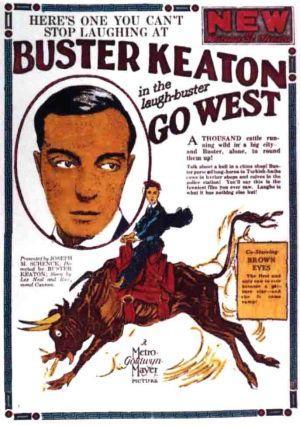
Go West is Keaton back to his best, a glorious Western spoof (a happy return to the grounds of Our Hospitality). Keaton is Friendless, a hard-working guy adrift in the cut-and-thrust of the world. So much so that, visiting New York, he is literally trampled by bustling crowds. He heads out West to try his luck, becoming a ranch hand on a farm. There he finally meets someone who sees him as a friend – ‘Blue Eyes’, a cow who like him is an outcast from the herd. For the first time both of them has a friend – but what will Friendless do when Blue Eyes is to be packed off to a Los Angeles slaughterhouse?

You would never think that a man and a cow could be as sweet as they are together in this film. Keaton spent almost a month with the cow who plays Blue Eyes, going everywhere with her, feeding her and spending weeks with her. By the time they came to filming, the cow followed him without the slightest hesitation and never once seemed anything less than completely comfortable in his presence. Keaton (half) joked he never had a better leading lady than Blue Eyes – and his earnest, gentle and sincere playing of this friendship between man and beast gives Go West its heart.

Taking a gentle pop at DW Griffith again – Friendless and Blue Eyes both share names with leading characters from the director’s Intolerance – Keaton creates a film that many have called his one excursion into pathos but, for me, is all about creating character and story and having it service comedy. The laughs come faster for me in Go West than a farce like The Navigator because Keaton invests real warmth into this unlikely screen partnership. You invest in their story – these two outsiders, lonely and illtreated on the ranch, who find themselves as unlikely soul mates – and once you have that investment, you laugh along with their exploits.

Keaton also creates a variation on his usual character. Friendless is stoic but unlike other Keaton characters, he’s not bumbling or naïve, instead he seems to have accepted that he has no place in the world of men. Unlike other Keaton characters, he’s got an impressive ability to teach himself new skills rather than relying heavily on imitating others and reading instruction manuals. Friendless, slowly, picks up the skills of a ranch hand himself. Sure, he bungles his first attempts – his hilariously poor saddling of a horse (the saddle almost on the horses’ rump) being a case in point – but give him time and he’ll get there.

He’ll even win odd moments of respect. He gets two bulls back into the pen through skilful, unfazed, use of a red handkerchief (two ranch hands look on in grudging respect). He improvises an elastic string for his tiny pistol which works surprisingly well. He spots a cheat in a card-game and then skilfully disarms him (by placing his finger in the way of the trigger). In the film’s closing act – where a herd of bulls walk wildly around Los Angeles – he’s able to herd them back together with a great deal of skill, cunning and improvisation. He’s he’s undeniably good at the things he does – and gets better.

Go West has several great jokes, many of them initially based around Friendless’ place as an outsider. Selling his remaining goods to a pawnbroker in the films opening, he forgets to remove his shaving kit and mother’s picture from a desk: of course, the pawnbroker immediately charges him for taking the goods (making his money back in moments). On the ranch, Friendless inevitably times his arrival at the daily meals with everyone else finishing up and leaving the table, forcing Friendless to leave as well (he doesn’t eat for days on this ranch). His clumsy attempts at ranch life leads to several pratfalls of inevitable high-standard.

But it all starts to change as he forms a friendship with Blue Eyes. He’ll bend over backwards to help her. He’ll stay up all night with a gun to protect her from wolves. He’ll strap antlers to her head to help her ward off bulls. He’ll shave a brand (thank goodness he grabbed that shaving kit) into her back to save her from the fire. And he’ll raise what money he can to try and buy her and, when that fails, he’ll jump on a train to travel with her to save her.

It leads into the film’s action packed third act. It starts with a classic Keaton piece of business. Trying to earn the money to buy Blue Eyes, he buys into a rigged poker game. Calling the dealer on cheating, the ranch hand pulls a gun and orders Keaton “When you say that – SMILE”. Will cinema’s most famous stony-faced comic finally crack a grin? It’s a lovely in-joke – and Keaton’s two fingered mouth push grin the perfect response, as his ingeniously shrewd solution to prevent violence. Jumping on a train from here (this is another classic train sequence from a Keaton film) he dodges bullets from an attack from outlaws and ends up the only man on board with an army of cows.

The final sequence – a series of sight gags as cows invade shops, Turkish baths and street stalls in Los Angeles before Keaton dons a red-devil suit to lead them back into a holding pens in a perverse twist on Seven Chances – is sometimes overlong, but offers plenty of delights. But none match the sweetness and innocence of that friendship between man and cow. Keaton’s chemistry with Blue Eyes – and his understanding that the beauty of silence makes animals as legitimate characters in many ways as humans – shines out. It gives the film a real heart and tenderness that grounds all the jokes in something real, as well as providing the film with real stakes (because, after all, Blue Eyes is in danger of being turned into one).

Go West is often overlooked in the Keaton CV but, despite being a fraction overlong, it’s a warm, tender and sweet story packed with excellent gags. This isn’t manipulative pathos – instead this is Keaton using humanity to deliver a unique sort of pure romance. This is possibly one of the finest films about friendship ever made – and Blue Eyes stands with Balthasar as one of the greatest animal actors on screen.

Cat Ballou (1965)

Cat Ballou (1965)

Zany western comedy, a little dated, but with almost enough good jokes

Director: Eliot Silverstein

Cast: Jane Fonda (Cat Ballou), Lee Marvin (Kid Shelleen/Tim Strawn), Michael Callan (Clay Boone), Dwayne Hickman (Uncle Jed), Nat King Cole (Sunrise Kid), Stubby Kate (Sam the Shade), Tom Nardini (Jackson Two-Bears), John Marley (Frankie Ballou), Reginald Denny (Sir Harry Percival)

In a town out West in Wyoming, Cat Ballou (Jane Fonda) is to be hanged as a notorious outlaw. How did she end up here? Let Nat King Cole and Stubby Kaye tell you as they recount ‘The Ballad of Cat Ballou’. This young, would-be school-teacher ended up on the gallows after a feud over her father’s (John Marley) land with Sir Harry Percival (Reginald Denny). Percival has a brutal hired gun, Tim Shrawn (Lee Marvin). So, Cat hired her own gunman, the legendary Kid Shelleen (Marvin again) who has become an equally legendary drunk. After the death of her father, Cat, Kid and her friends and love interests form a gang to bring Percival’s corporation down.

Cat Ballou stems from an era when audiences were not quite ready for the violent, nihilistic Western revisionism that would spawn the likes of McCabe and Mrs Miller and The Wild Bunch, but could no longer take the Ford/Wayne style Western seriously. Instead, it takes its inspiration from Swinging Sixties comedy, playing like Tom Jones or a Dick Lester Beatles movie. It’s zany, tongue-in-cheek, daubed in primary colours and nothing in it is meant to be taken particularly seriously, not even the bullets. It’s a fast-paced entertainment and if it looks rather dated today, at least it has its moments.

It’s most notable as the film that won Marvin the Oscar for his double performance as the drunk, shambling Kid Shelleen and the Marvinesque heavy Tim Strawn (with missing nose). Marvin revelled a chance to showcase his comic skills – and even have his stereotypical role as a bruising, violent killer as a contrast. Kid Shelleen doesn’t turn-up until almost a third of the way in, but all the film’s most memorable moments involve him. Slurring, scruffy, stumbling and only able to shoot straight when a little bit pissed (in an early shooting test he literally can’t hit a barn door), Marvin offers not only a red-eyed piece of comedy acting just this side of hammy, but also a neat jokey commentary on the truth behind an army of Western heavies (Cat is hugely disappointed to find the stories she’s read of Kid’s exploits, in no ways matches the mess she sees before her).

Marvin, rather graciously, always claimed of his Oscar “that half of this belongs to a horse somewhere out in San Fernando Valley”. It’s a touchingly modest reference to the film’s closing sequence – the inevitable rescue attempt on Cat – where Kid turns up pissed, riding a horse that seems as drunk as him (a neat shot, that took much careful animal wrangling, shows both Kid and his horse leaning lopsidedly against a wall, the horse with its legs drunkenly crossed). But Marvin’s performance works because it nails the tone of the film in a way no-one else really does.

That’s arguably true of Jane Fonda, who seems either slightly bemused or mildly contemptuous of the role she’s ended up in. When the film throws in moments close to tragedy, she reacts with more emotional realism than a zany comedy can support. She’s not willing to surrender herself to the moments of farce or flirtation, not helped by the dull or forgettable performances of her love interests. Callan lacks charisma or flair as outlaw Clay Boone, Dwayne Hickman overeggs as Boone’s comedic partner-in-crime Uncle Jed while Tom Nardini tries hard but lacks grace as Jackson Two-Bears. Fonda is also stuck in the only role where she can’t corpse at the drunken antics of Marvin.

The film bounces along, from its animated opening, via a series of comedic twists on Western tropes (a dance, a fight, a train robbery etc). Personally, I’ve never really been a fan of zany comedies, and my mind wasn’t changed here. Mixed with its very 60s view of the West, all colour splashed checked shirts, the try-hard craziness of Cat Ballou can start to wear cynical modern viewers like me down.

Which isn’t to say there isn’t a good joke here or there, or that Marvin isn’t worth the price of admission. Silverstein directs with a professional smoothness that leaves the actors to get on with it (perhaps a little too much). The darker moments of the film don’t always marry up successfully with the tone – Cat’s reaction to the death of her father is from a different movie altogether – but generally it glides along, helped with some catchy tunes well sung by Cole and Kaye as a ballad-touting Greek Chorus.

Cat Ballou might actually be best enjoyed by taking a leaf out of Kid Shelleen’s books: get a couple of whiskies inside you and you’ll find the accuracy of your laughter jumping up several notches.

Our Hospitality (1923)

Our Hospitality (1923)

Keaton’s feature-length debut is a masterpiece of comic invention and slapstick stunt thrills

Director: Buster Keaton (& John G Blystone)

Cast: Buster Keaton (Willie McKay), Joe Roberts (Joseph Canfield), Natalie Talmadge (Virginia Canfield), Ralph Bushman (Clayton Canfield), Craig Ward (Lee Canfield), Monte Collins (Parson), Joe Keaton (Train engineer), Jack Duffy (Train conductor)

It starts with a dark and stormy night. If that sounds like cheap melodrama that’s kind of the point. Keaton’s first feature length comedy would be different from his joke-crammed shorts. This would be plot-led comedy, a drama full of jokes. As part of that, Keaton started the film with a storm-filled, joke-free, DW Griffith-inspired opening salvo that sees the lead character’s father dead in Intolerance inspired opening. With its gun flashes and bodies, we know in this film bullets kill.

The father is John McKay and he dies along with James Canfield in a deadly exchange. It’s part of a long-running feud betwixt McKays and Canfields (any similarity to the legendary Hatfield-McCoy feud is entirely deliberate), and the rest of the Canfields swear revenge on McKay’s baby son-and-heir. Twenty-one years later, Willie McKay (Buster Keaton) has grown up in New York, ignorant of the feud. When he returns to his father’s ranch, he finds himself in the awkward position of having fallen in love with Virginia Canfield (Natalie Talmadge), daughter of his newly discovered deadly enemy Joseph Canfield (Joe Roberts). How will matters be resolved?

With a great deal of laughs and a breath-taking series of stunts. Our Hospitality is early Keaton but already it cements his legend of comic invention and physical daring as well as his dynamism and imagination as a filmmaker. Our Hospitality is crammed with comic bits of pieces that Keaton would go on to explore and finetune in even greater detail in later films, but also culminates in a (admittedly slightly tongue-in-cheek) but still surprisingly gripping action sequence as our hero battles to survive a mountainous waterfall and save his love from toppling.

The film neatly divides into four acts, each subtly different in tone but all unified by Keaton’s creativity. Stone-faced and implacable, Keaton never mugs or goes overboard for the laugh but trusts that, with the intimacy of the camera, the smallest inflection or slightest turn of the head will raise a chuckle. He’s also charmingly innocent, refreshingly resourceful and rather brave – a perfect combination for a little guy (it helps, as always, that Keaton is literally a little guy) we root for.

That charm powers a lot of the film’s second act, a long incident-filled train journey McKay takes to the South. Keaton was fascinated by the comic potential of early technology – watching Willie, po-facedly, cycling with an early peddle-free bike, his feet alternately propelling the bike and lifted in the air is hilarious (the Smithsonian even asked if it could display this perfect replica) – and he deliberately set the film in 1831 to introduce a Stephenson-style rocket train, pulling its open carriages behind it. This vehicle not only looks hilariously ramshackle and strangely incongruous, it also opens an ocean of possibilities.

It is, for starters, hilariously slow – Willie’s dog has no problem keeping up with it. Its tracks have been laid with a rigid rule-following lack of imagination – at one point they ride up over a fallen tree log, the train and carriages bumping over it. The train is forced to stop by a donkey that refuses to leave the line (eventually the engineer simply drags the tracks around the donkey). There is an on-going feud between the Engineer (played by Keaton’s father Joe) and ticket-master about who is actually in charge of the train. At one point it veers off the tracks and down a road (everyone comments about how much more smoother this is) and later gets separated from the carriages at a junction, requiring Keaton gymnastics to bring it together. By the time it trundles into the station – and note how beautifully the train is filmed – you’ve had more comic invention than most other comedies.

During this journey Willie falls in love with fellow passenger Virginia (played, a little awkwardly, by Keaton’s wife Natalie Talmadge), little knowing she is a Canfield. The Canfields swiftly discover his identity: Willie asks one of her brother’s directions to his ranch, and the brother guides him there, all the while darting away at every opportunity to try and borrow a gun to take his revenge.

Most of the second act, which gives the film its title, revolves around Willie’s invite from Natalie to dinner at the Canfield house. Southern gentility declares the Canfields cannot take revenge on Willie while he is their guest – as soon as Willie realises this he does everything he can to remain in the house, as the (literal) instant he steps outside the door, guns come out. (Keaton also gets a lot of comic mileage from the cumbersome one-shot guns, which Willie frequently pinches to discharge to give himself a few precious moments to move outside while various Canfield’s reload).

When Willie eventually flees the house – disguised as a lady – it leads into a glorious, action-packed chase scene. Scaling mountains and cliffs, shot with a vertigo inducing brilliance (in reality Keaton placed the camera on its side and made it appear with his genius physicality that he was climbing rather than crawling). There are falls into rapids, Willie is dragged behind a racing train carriage and finally bobs and floats down a rapid (including one shot, kept in the film, where Keaton’s rope snapped and he was literally washed head first down a river). It culminates in an athletic, stunt-filled, precarious balance on a log suspended over a waterfall (a brilliant backdrop shot makes this feel impossibly high), swinging desperately on a rope to save Virginia from falling.

Our Hospitality is awash with comic energy and genius touches of business but it’s also an impressively ahead-of-its-time in the skill of its plotting and structure – you could pretty much remake it exactly today (but with words) without changing a detail, and it would still be a hit. But it wouldn’t be a legend because the only thing you wouldn’t have is Keaton. And he’s the lodestone that balances the whole thing.