Category: World War II

The Wooden Horse (1950)

The Wooden Horse (1950)

One of the first POW films, setting a template for stiff-upper-lip derring-do

Director: Jack Lee

Cast: Leo Genn (Peter Howard), David Tomlinson (Philip Rowe), Anthony Steel (John Clinton), David Greene (Bennett), Peter Burton (Nigel), Patrick Waddington (Senior British Officer), Michael Goodliffe (Robbie), Anthony Dawson (Pomfret), Bryan Forbes (Paul), Dan Cunningham (David)

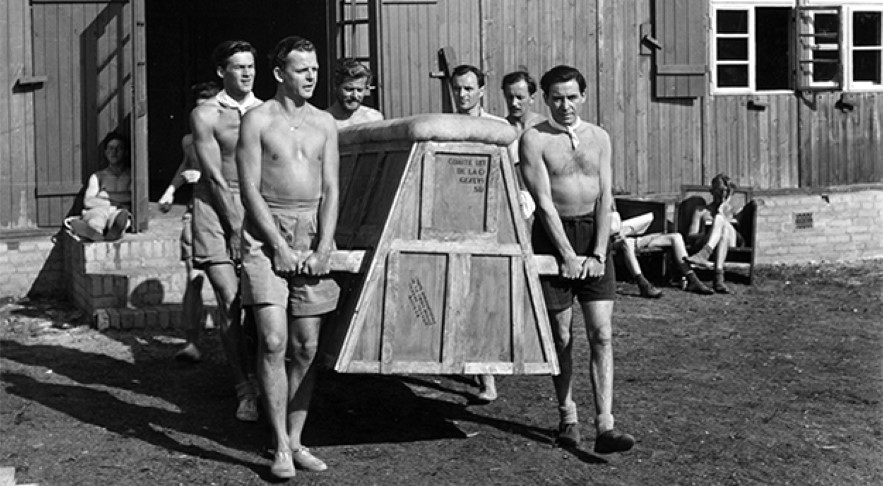
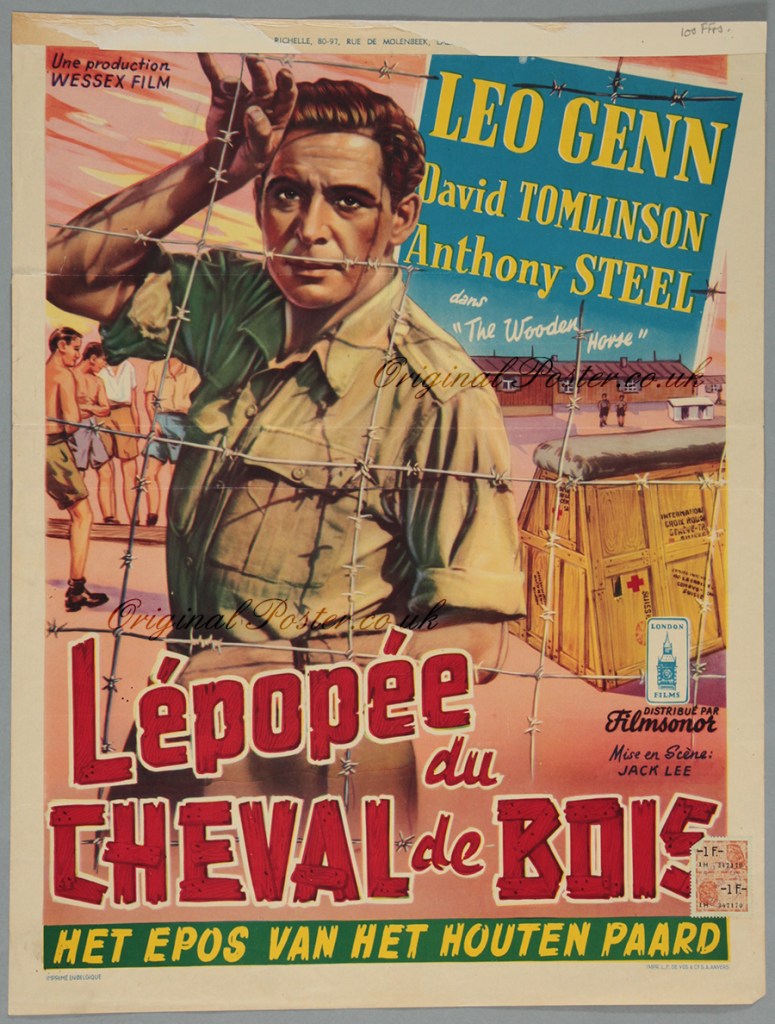
One of the most popular of WW2 movies sub-genres is the POW escape movie. The Wooden Horse was one of the first of these, showcasing the sort of barmy, off-the-wall scheme that British POWs spent their tedious years dreaming up. Based on an autobiographical novel by former POW Eric Williams – here fictionalised as Peter Howard (Leo Genn) – inmates of Stalag Luft III built a pommel horse to aid their escape. The scheme? Hide a man underneath the horse to dig a tunnel, while the guards are distracted by a never-ending stream of men jumping over it for hours and hours on end.

The Wooden Horse dramatizes this with a stiff-upper-lip ‘well done Old Chap’ Britishness, shot with a low-key documentary realism (the film blew a huge portion of its budget on location shooting). It’s almost defiantly low-key, about a world away from Steve McQueen jumping over a fence on a motorbike or the sort of emotive struggles with war pressure in The Cruel Sea. Even the escape itself is a grinding, repetitive task taking place over months moving an infinitesimal distance every day as the parade ground tunnel edges closer and closer to the fence. This low-key attitude extends to the cast, led by Leo Genn, who eschew dynamics for calm, quiet unflappability. (Ironically, despite its documentary realism, Peter Butterworth – one of the original members of the escape attempt – was told on auditioning he wasn’t believable as a POW.)

The film is split neatly into two halves. The first covers the escape plan itself and lays out a structure that became familiar from countless POW films that followed: the plan is carefully detailed, senior officers humph and finally flick the thumbs up, a parade of fellow inmates chip in expertise (from forgery to ingenious distractions), a staged accident of flipping the horse over tricks the Germans into thinking nothing is going on, the tunnel caves in, a man is left stranded in the tunnel longer than is safe… It’s all in here, while our heroes bluffly and bravely work out the logistics of smuggling soil away and mastering various French identities to make their escape.

The second half follows two of our heroes – Leo Genn’s stoic Howard and Anthony Steele’s matinee idol Clinton – as they shred their nerves moving through Europe aiming for the port of Lübeck and a ship to Norway. This is the marginally less interesting part of the film, although it conversely does feature the film’s most interesting moment as a visibly sickened Clinton is forced to kill an ordinary German guard, very different from the usual boys-own adventure attitudes you expect.

However, most of the rest of the second half is just a little too dry and documentary, despite the best efforts to play up the paranoia and tension of a life on the run in occupied territory. Lee directs with a methodical, unflashy style, while ongoing clashes with producers on the budget, which eventually saw the film completed months later by the producer and a hurriedly put-together rather abrupt (and incongruous) ending in a Swedish restaurant, which seems to lean into the beginnings of an anti-Soviet Cold-War era consensus. Some of the dramatic tension drains out of a film which actually might have benefited from a little more melodrama, among the muttered, patient conversations in alleyways and the almost-agitated debates about which resistance groups to trust.

The camp-escape half works best, probably because the ingenuity of seeing the prisoners work out the logistics of converting their pommel horse into the perfect escape weapon and overcoming the minutia of camp life remains very entertaining. There is even a certain amount of wit in the bonhomie and cheek of the escape, which the film doesn’t shy away from, from the plan depending on the willingness of hungry POWs hurling themselves over a wooden horse for hours at a time to the boarding school air of bored over-familiarity that permeates the sleeping quarters. Lee also mines some tension out of a late-night inspection of the sleeping quarters, which only just misses discovering the mountains of soil that has been hidden precariously in the ceiling.

The Germans themselves are presented fairly sportingly – The Wooden Horse doesn’t give us an obvious villain and, as noted, presents its only slain German as a tragic figure. The Germans are even fairly sporting, solemnly carrying away the offending horse with a hurt dignity after the escape – presumably the poor War Horse is to be confined to solitary – while the POWs give this hero a rousing cheer. The Wooden Horse avoids the set-up of many similar films, which often presents both a token ‘Worthy Opponent’ and a token ‘Unrepentant Nazi’ among the Germans. Instead, they are exclusively presented as straight-forward professionals – again perhaps with an eye on the emerging 1950s anti-Soviet consensus that was starting to form in Europe.

The mood of sporting endeavour around the whole film – as well as the stiff-upper-lip pluck of the imprisoned Brits – helped guide the POW film towards its natural development as a Boy’s-Own adventure story with a sense escape as the ultimate sporting adventure (though even The Great Escape throws in more than enough tragedy). The Wooden Horse sometimes lacks in drama, so swept up is it in a sort of documentary realism (it’s hard not to argue with the producers that the put-upon forbearance of John Mills might have been a better choice for the lead than the rather too smooth Leo Genn), but as an early example of a much-loved genre it offers more than enough entertainment.

Ashes and Diamonds (1958)

Ashes and Diamonds (1958)

Wajda’s masterpiece of subtle but stinging Soviet criticism and one of the great European films

Director: Andrjez Wajda

Cast: Zbigniew Cybulski (Maciek Chełmicki), Ewa Krzyżewska (Krystyna), Wacław Zastrzeżyński (Szczuka), Adam Pawlikowski (Andrzej), Bogumił Kobiela (Drewnowski), Stanisław Milski (Pieniążek). Ignacy Machowski (Waga)

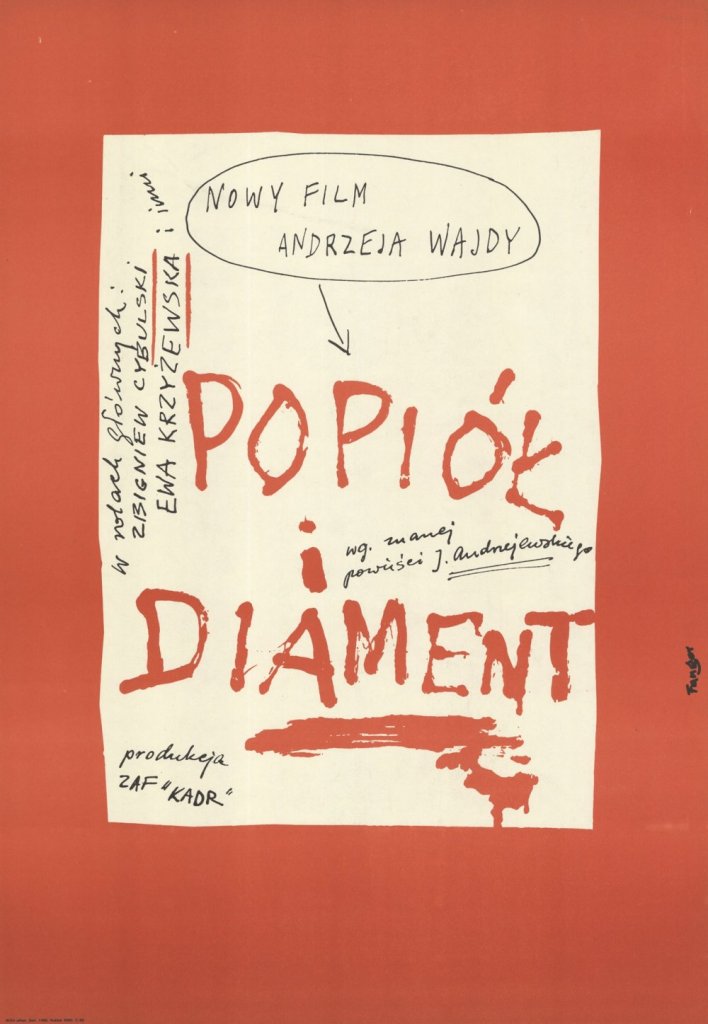
When the dust settles from the chaos of uncertain, terrible times what will we it leave behind: ashes or a diamond? It’s a question Poland is asking on the final day of the war, 8th May 1945 –what fate will come under Soviet rule? Wajda’s War Trilogy comes to its end and, even considering the quality of the first two films in the series, Ashes and Diamonds is a quantum leap in filmmaking, an extraordinary mix of realism and poetic ambiguity. Wajda captures this turning point in Polish history with a series of encounters between a group of characters in a single location on one night. Ashes and Diamonds can lay claim to being one of the greatest films from Eastern Europe in the twentieth century, a breathtakingly rewarding mix of subtle messaging and tragedy.

Home Army fighters – those paying attention to Wajda’s earlier work will be well aware the Polish government strongly disapproved of these forces loyal to a democratic Polish government – Maciek (Zbigniew Cybulski) and Andrzej (Adam Pawlikowski) attempt to assassinate communist leader Szczuka (Wacław Zastrzeżyński). Instead, they accidentally murder two regular workers. They are ordered to take a second attempt on their target after he attends a celebration with a host of Polish and Soviet dignitaries at a local hotel. But triggerman Maciek is torn, trapped in a cycle of war that has killed his friends, uncertain about whether to continue in the crusade that has consumed his youth or explore a life he glances at with barmaid Krystna (Ewa Krzyżewska). Will Maciek complete his mission or accept Poland’s future lies not with the ‘liberating’ Soviets?

Wajda’s restructuring of Jerzy Andrzejewski’s novel is the culmination of the entire War Trilogy’s style: a careful criticism of Stalinism, buried behind ambiguous characters and images that provide enough of an interpretative fig-leaf that the Polish authorities could convince themselves his work was politically acceptable.  Nearly everything in Ashes and Diamonds is subtly open to interpretation, carefully hiding its message in plain sight: the war is bringing ashes to Poland, not diamonds. Certainly, today, that’s the only interpretation you could take from Wajda’s extraordinary ending: our assassin writhing in painful, fearful death-throws on a rubbish heap while the hotel guests dance slowly and hypnotically into a doorway bathed in light. The beautiful ambiguity though is clear: look, Wajda could say to his political masters, they’re heading into the light while the Home Army soldier literally dies in a pile of rubbish. How more pro-Soviet can you get?

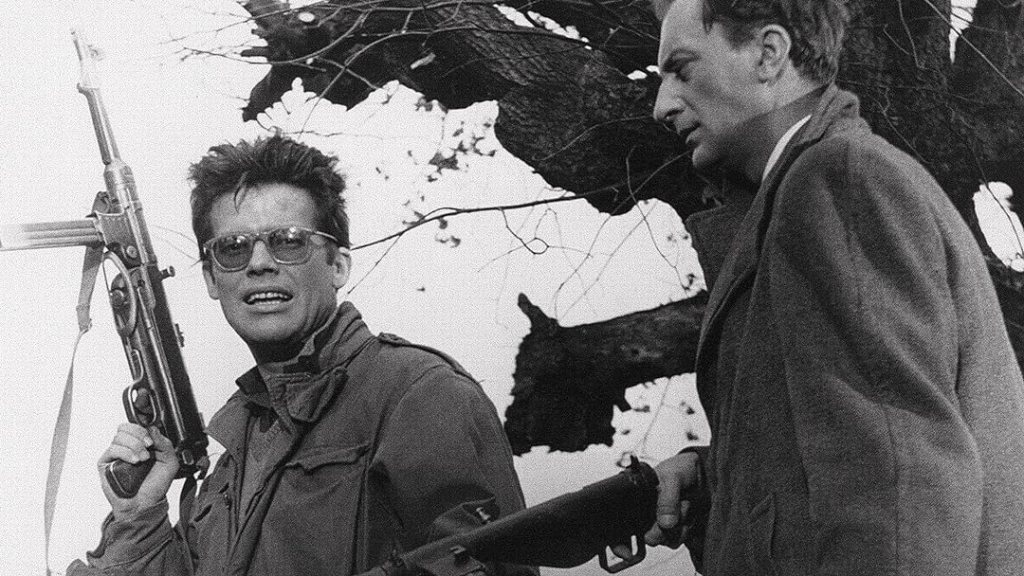
The entire film is a sad poem to a lost Poland with Wajda carefully guiding our sympathy towards Maciek. On paper, there’s plenty to admire in Szczuka, clearly an honest, competent politician – but he’s also uncharismatic and dull, who we may respect but never love. All our sympathies are captured by Zbigniew Cybulski’s extraordinary performance as Maciek. Inspired by James Dean and Marlon Brando (having binged their films while studying in Paris), Cybulski effectively wears his own clothes and gives Maciek the sort of anti-authority cool Dean made his own. Our sympathies lie immediately with this young man turned reluctant warrior, angry and scared.

Cybulski’s performance isn’t just attitude. He makes clear Maciek is deeply traumatised by the things he’s seen and done. Those dark glasses he wears – which make him look both older, cooler and more cocksure (he looks noticeably younger and more vulnerable without them) – are a legacy of damage to his eyesight from the sewers of the Warsaw Uprising. There’s an odd childish vulnerability to him – he’s spooked by ants crawling across his machine gun during their opening botched assassination – along with a surly resentment at the never-ending demands of this war. But he’s also iconoclastic and passionate about the vision he’s been fighting for. All of this is beautifully captured by Cybulski.

Maciek is at the centre of this pained reflection on all that has been lost in the war. Wajda presents this lingering sense with a series of strikingly unforgettable images. Maciek and Andrzej toast their fallen comrades with burning shots of vodka, each lit like a candle as they remember another name. Flames mark death and loss throughout: the innocent man accidentally machine-gunned by Maciek falls with his jacket burning from point-blank gunfire, fireworks fill the sky when Maciek carries out his assassination.

And where is the Church in all this? Ashes and Diamonds come back time and again to the great spiritual guide in Polish lives (before Socialism). The early assassination takes place outside a countryside Church, its locked door failing to save the victims. It’s an ominous sign for a world where God may have fallen silent, or perhaps never spoke at all. In another brilliant touch of Wajda ambiguity, Maciek and Krystyna walk through a bombed-out church, encountering a giant crucifix hanging upside down. This is not only an extraordinary image – the thorns from Jesus’ head either seeming to visually skewer the lovers or pull them in – but also a confirmation or lament for how little God can help Poland. Maciek clearly doesn’t care, since he happily uses altar decorations to fix Krystyna’s shoe. Faith doesn’t matter in this world.

All people have to belief in is what they can muster in themselves. Perhaps that’s why Maciek has filled his life with the longing to keep the good old cause going. He’s lost so much, he can’t actually believe there is anything else he could really do. For all his flirting at the bar, brimming with cocksure cool, does he ever really believe he has any choice but to continue with what he has committed to do? Wajda frames Maciek in his final moments of choice, huddling under stairs, shadows seeming to box and cage him in.

He’s as trapped as the rest of Poland is. Szczuka is a decent man, but he’s also a Socialist fanatic horrified to hear his son fought for the ‘reactionary’ Home Army. Meanwhile, his Soviet paymasters carefully nuzzle themselves into control over the Polish authorities, Wajda presenting them always with a careful political neutrality. Cunningly, all criticism of them is placed in the mouth of a journalist who speaks nothing but the truth about the freedom-crushing Soviets – but he’s made a drunkard sleazeball (more than enough for the censors to dismiss his words).

Ashes and Diamonds is also a beautiful piece of filmmaking, crammed with Wellesian light and shadow. Despite mostly being a film about waiting and decision making, it’s also full of pace, energy and a sense of a world steamrolled out of existence. It has one of the legendary endings, not only the long, lonely death of our hero but also the hypnotic, slow dance of the Polish authorities, disappearing into the sunlight, unknowingly marching into a future that will extinguish them.

Wajda manages to communicate all this in a film which, thanks to its need to slip everything past the censors, is extraordinarily supple and subtle, never over-playing its hand and spreading its humanity. There are no real villains here, only a series of people at a turning point of history, presented with careful even-handedness, but in way that never intrudes on the obvious sympathies of the film. With extraordinary direction and a superb, era-defining performance from Cybulski, it’s a masterpiece of World Cinema.

Kanał (1957)

Kanał (1957)

Wajda’s war-epic is a brilliantly filmed, unsettling critique of the truth behind national myths

Director: Andrzej Wajda

Cast: Teresa Iżewska (Daisy), Tadeusz Janczar (Jacek “Korab”), Wieńczysław Gliński (Lt. Zadra), Tadeusz Gwiazdowski (Sgt. Kula), Stanisław Mikulski (Smukły), Emil Karewicz (Lt. Mądry), Maciej Maciejewski (Gustaw), Vladek Sheybal (Michał, the composer), Teresa Berezowska (Halinka)

By 1957, Wajda was working under a very different Polish government from the one in place for his debut feature A Generation. With the fall of Stalinism came an easing on restrictions and controls. Wajda could address themes he couldn’t touch before, helping make Kanał perhaps even more controversial than A Generation, as it explored Polish sacrifices during the Second World War and, by implication, asked what the point might have been. Focusing on the final days of the 1944 Warsaw Uprising – a revolt against the German occupiers which the Soviets effectively stood by and watched the Wehrmacht crush – Kanał gives a Polish National myth a tragic human face of futile effort.

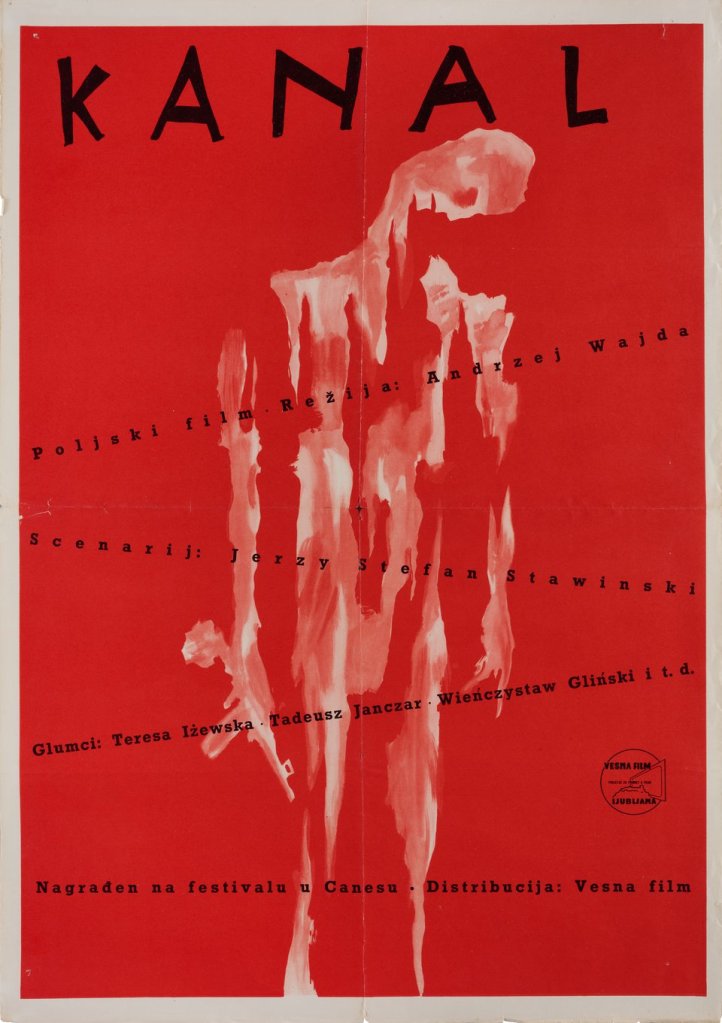
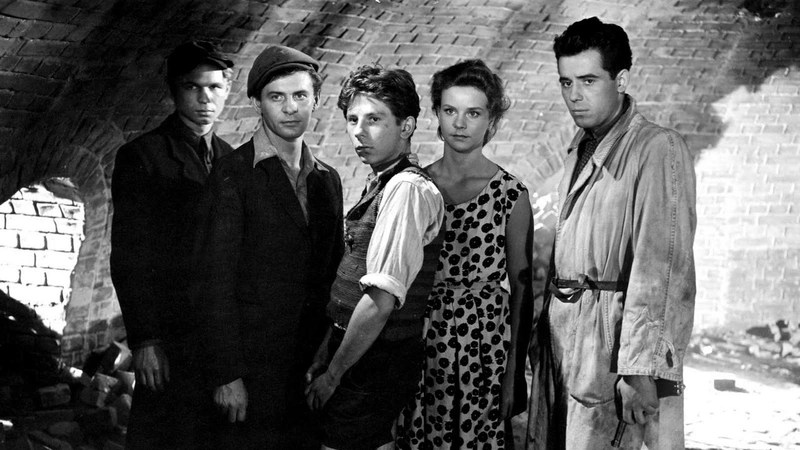
Not quite what Wajda’s bosses in the Polish Film Industry expected. Perhaps the title should have tipped them off: Kanał translates as Sewer, hardly suggesting a heroic tribute to national sacrifice. Starting on the 54th day of the Warsaw Uprising, the Home Army forces are beaten, clinging to a few streets. Introducing a unit commanded by Lt Zadra (Wieńczysław Gliński) in a long tracking shot through a devastated city, an unseen narrator bluntly tells us in the opening moments everyone we see is about to die. But not in a last charge against the Germans: instead it will be in the sewers, while attempting to escape, waist deep in shit, lost in the dark and stumbling into dead ends, madness, exhaustion and booby traps.

For many Poles this didn’t fit with the idea of the Warsaw Uprising being a heroic, necessary battle for the nation. It’s rather like in the 1950s, a British film studio had made a film about the Battle of Britain in which the pilots got tanked up on booze then took to the skies to be pointlessly shot down by the Luftwaffe over the channel. At least Wajda this time could present the Home Army – who, following the government line, A Generation had condemned as bourgeoise, fusspot cowards – as heroes. And Kanał is mercifully free of blunt political messaging: no one has time for any of that when they are simply desperate to survive.

What it’s also free of though is any tangible achievements from the Polish Resistance forces. Zadra’s unit holds onto a trashed district, under heavy fire, taking more and more casualties for about a day before being ordered to withdraw through a city pounded by shells through desperate civilians. During the entire course of Kanał the Poles inflict three casualties on the Germans: one tank is hit (but not destroyed), one unmanned motorised mine is stopped and one German soldier who falls into a defensive trench is beaten to death with a stone. Other than that, this is a one-sided curb-stomp where the Germans are hardly even seen and the Poles take huge casualties without even the most basic, morale boosting minor victory.

Kanał’s first half, which covers the war up-top is gritty, immediate and a truly scintillating piece of brutal combat. Wajda’s cinematic confidence is clear from the start with that long Wellesian tracking shot introducing all the characters as they move from one ruined district to another. His combat scenes take place on a wasteland of smashed buildings and have a panicked pointlessness to them – confused and desperate soldiers responding rather than planning anything proactive. The one undeniably heroic act we see – Jacek’s (Tadeusz Janczar, once again Wajda’s complex sacrificial lamb) taking down of the motorized mine – sees him near-fatally wounded, reducing him to a limping, slowly dying passenger for the rest of the film.

The atmosphere behind the lines is already tipping into desperation: number two soldier Mądry (a swaggering Emil Karewicz) is bedding young fighter Halinka (a fragile Teresa Berezowska) openly, while composer Michal (Vladek Sheybal, excellent as a haunted outsider) attempts to call through to his wife and children on the other side of the city, only to listen in on their deaths over a phone line. Any sense of chain of command is crumbling, and the soldiers are already hardened to death and destruction: retreating through the city, none of them can muster even a flicker of interest in a desperate mother begging for news of her lost child.

That’s nothing though compared to the bleakness of the film’s second half as the unit piles into the sewer. Here, time and space start to lose all meaning. The film’s timeline becomes as unclear for us as it does for the characters as they trudge through this Dantean sludge (Wajda makes sure we don’t miss the point, in a slightly clumsy touch, by having Michal quote the poet at length). With limited light, no real idea where they are going, low motivation and toxic gases being stirred up from the excrement they are crushing under their feet, slowly sanity slips, people revert to their worst instincts and selfish, unheroic decisions are made.

There is little to build a national myth on here. An incoherent colonel is left to die in the mire. Mądry and record keeper Sgt. Kula (a comradely Tadeusz Gwiazdowski) decide their own lives are more important than those of the company. Zadra clings to his duty, but lost and confused utterly fails to maintain any duty of care to his men. Michal, teetering already with the loss of his family, disappears into his own world. Their guide Daisy (a brilliantly humane Teresa Iżewska) abandons her duty in what we already know is going to be a futile attempt to keep Jacek alive. There is no dignity or final heroic act of death, with people meeting the end with stunned silence, clumsy tiredness or panic.

And over it all is the statement Wajda implies: since the Uprising achieved nothing but the massacre of its fighters, to a Wehrmacht driven out months later with ease by the Soviet forces, what was the point? That, however much the Communist state chose to praise the bravery of the soldiers, was it brave or foolhardy to single themselves out as targets in a one-sided battle that achieved nothing? Watching the fighters of the Uprising wade through excrement towards a lonely, uncelebrated death with nothing to show for it, makes you consider the complex feelings that lie behind National myths of sacrifice. And it’s a powerful and haunting message for this mesmerising sophomore effort.

A Generation (1955)

A Generation (1955)

Wajda’s striking debut is full of politically-enforced lies but is masterful film-making

Director: Andrzej Wajda

Cast: Tadeusz Łomnicki (Stach Mazur), Urszula Modrzyńska (Dorota), Tadeusz Janczar (Jasio Krone), Janusz Paluszkiewicz (Sekuła), Ryszard Kotys (Jacek), Roman Polanski (Mundek)

Few European countries felt the brunt of the Second World War more than Poland. Invaded by the Nazis and the USSR (it’s often forgot Britain and France went to war in 1939 to defend Polish, something even we seem to have forgotten by 1945 when we allowed the country to be smothered in the Soviet embrace), it faced atrocities from both dictatorships which left lasting scars on the nation. It’s events (and legacy) was the subject of the first three films by legendary Polish director Andrzej Wajda, the title A Generation capturing the impact it had on the entire country.

A Generation follows a group of young men drawn into the resistance movement against the German occupying forces. They include the increasingly political Stach (Tadeusz Łomnicki) and the hesitant, anxious Jasio (Tadeusz Janczar), both of whom are inducted into a resistance cell by the impassioned Dorota (Urszula Modrzyńska). As Warsaw burns during the Jewish Ghetto Uprising of 1943, the newly minted fighters take to the streets in solidarity – and at cost.

It’s a simple summary, but that only tells half the story. There are subtleties to A Generation that can be hard to pick-up on for those not born Polish. When Wajda made A Generation, Poland was in the grip of Stalinism. It’s a film not made under artistic freedom, but by an artist pushing against the boundaries of what censorship would allow him to say. Among a great deal of truth in A Generation there are also thumping great lies. Lies that surely must have hurt Wajda, whose father was murdered (along with thousands others) by the Soviets at Katyn (a war crime A Generation, by necessity, pins on the Germans).

Stalinist thinking dictated very clear lines. The resistance heroes in the film are The People’s Guard. This was a pro-Soviet force, that believed only the Soviet Union could save Poland from the Germans. The Home Army (the largest resistance group, loyal to the Polish government-in-exile in Britain) are portrayed as bourgeoisie, reactionary, scared to fight and only marginally better than collaborators. (In real life, Stalin allowed the Home Army to be massacred by the Germans in the Warsaw Uprising of 1944 – Soviet tanks effectively sat outside the city and watched – then shipped thousands of survivors to death in the gulags).

Stalinist thinking also permeates the films characterisation and opinions. Many of the characters frequently feel functional and under-developed, quietly placing the movement ahead of themselves – classic Stalinist thinking, where the individual only serves as a cog in a greater machine. Stach’s work-place mentor waxes lyrical about a wise, kind old man with a beard – Karl Marx of course – while outlining how their Home Army supporting factory boss is ruthlessly exploiting the working classes for profit. Comments about the holocaust are kept to a minimum – Stalin hardly being known for his tolerance either – with Wajda going as far as he can by praising the Jews bravery as fighters. Arguably the most developed character in the film – Tadeusz Janczar’s twitchy Jasio – is only allowed to be a more complex hero because, all his doubts, fears, bravado and individual pride, eventually lead him to the ultimate sacrifice (in the film’s most iconic moment).

If A Generation is so politically compromised, why watch it today? Because it is also a superbly striking debut from a master film-maker – and it’s important to remember, that even with its lies and political obfuscations, the Polish authorities were hardly happy with it at the time anyway. Inspired by Italian neo-realism, Wajda gives the film a lived-in, on-the-streets quality that helped revolutionise Polish cinema. Quite simply, no Polish film had ever looked like this before – it was the first to break free from its hermetically sealed studio bubble. From its opening tracking shot through the poverty-stricken streets of Warsaw’s Wola district, to its extensive location shooting in run-down factories and cobble-lined streets, A Generation embraces realism, employing several non-actors.

Mud, rain and ill-lit locations fill out the frame in a grim, sharply realist view of war. Wajda frequently shows bodies hanging from lamp-posts, while gun battles between Germans and partisans have a frighteningly random intensity to them (perhaps helped by the fact that budgetary issues meant it was cheaper to fire real ammunition on set). The film pioneered the use of squibs for gunshots (condoms filled with fake blood, then burst). Warsaw burns in the background of shots that foreground everyday life, such as fun-fares and solidly proletarian workers working happily.

The partisans huddle in sewers, drink in shanty late-night bars and work in dirty, noisy factories. Wajda’s film fully embraces the style de Sica and others introduced (and fascinatingly was doing this in parallel with Satyajit Ray’s Pather Panchali and Aparajito thousands of miles away). A Generation might keep many of its characters lightly sketched – Stach and Dorota are invested with youthful fire by Tadeusz Łomnicki and Urszula Modrzyńska which goes a long way to round-out their essentially blandly communist personalities, Donata in particular fervent and stoic in her socialism – but it makes the stakes for their struggle with Fascism grippingly real and dangerously immediate.

Wajda also, successfully, gambled that if he made the two leads reasonably acceptable symbols of Stalinist thinking he would be allowed greater scope with the third. Tadeusz Janczar’s performance as Jasio is fabulous – a fighter disgusted by killing, who kills a German with a panicked firing of an entire clip then brags how much he let him have it, whose escape from the Germans during the Uprising could be interpreted either as a noble distraction to allow others to escape or a blind panic that ends fatally. Either way, Jasio is a fascinatingly rich, contradictory character.

Wajda’s film is a powerful mission statement of his dynamism with the camera and his ability to walk a fine-line between political demands and genuine drama (though his later films would be made under a marginally more liberal government). While it must never be forgotten while watching it that it presents a slanted, false version of history, it still captures an essential truth of its haphazard chaos and savage violence. When Stach weeps when seeing teenagers not much younger than him preparing to join the People’s Guard, it hits a deeper truth about the horrors of the twentieth century on Poland that blasts through any political compromise Wajda was forced to make.

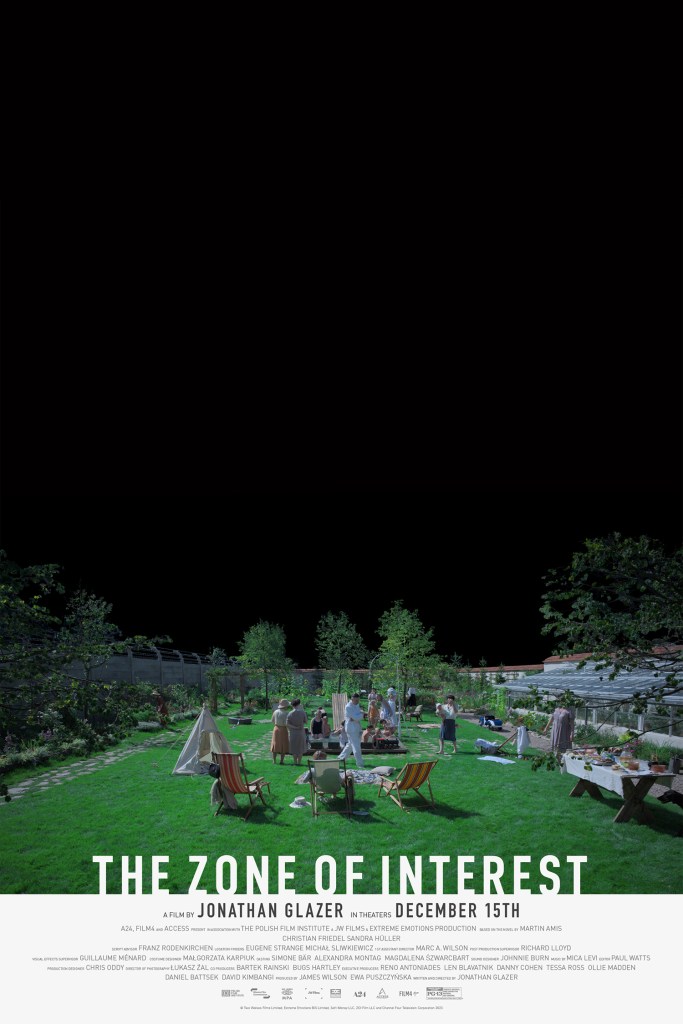
The Zone of Interest (2023)

The Zone of Interest (2023)

Chilling Holocaust film, its unseen horrors only overheard give it supreme power

Director: Jonathan Glazer

Cast: Christian Friedel (Rudolf Höss), Sandra Hüller (Hedwig Höss), Ralph Herforth (Oswald Pohl), Daniel Holzberg (Gerard Maurer), Sascha Maaz (Arthur Liebehenschel), Freya Kreutzkam (Elenore Pohl), Imogen Kogge (Linna Hensel), Johann Karthaus (Klaus Höss), Lilli Falk (Heidetraut Höss), Louis Noah Wite (Hans-Jurgen Höss)

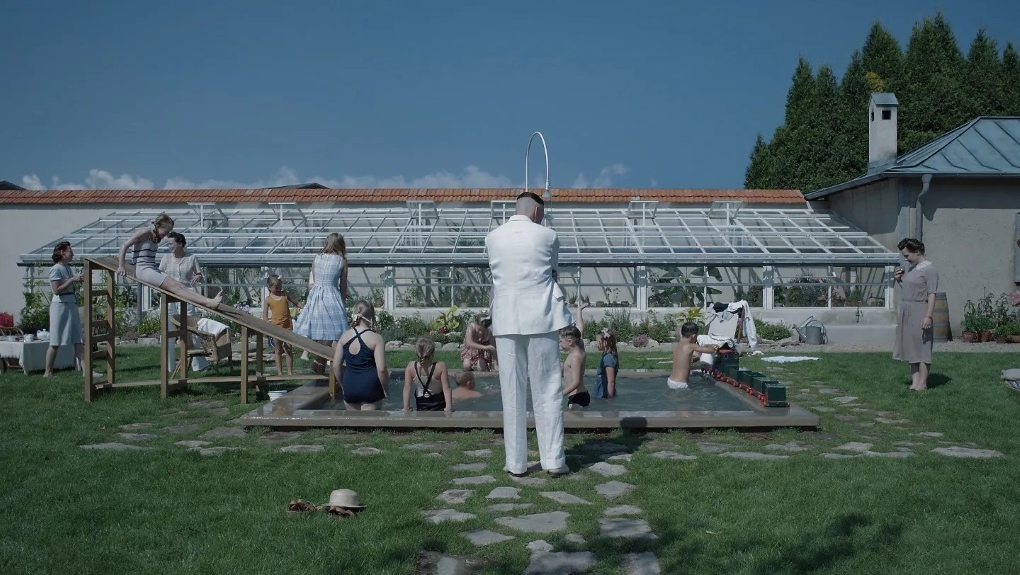
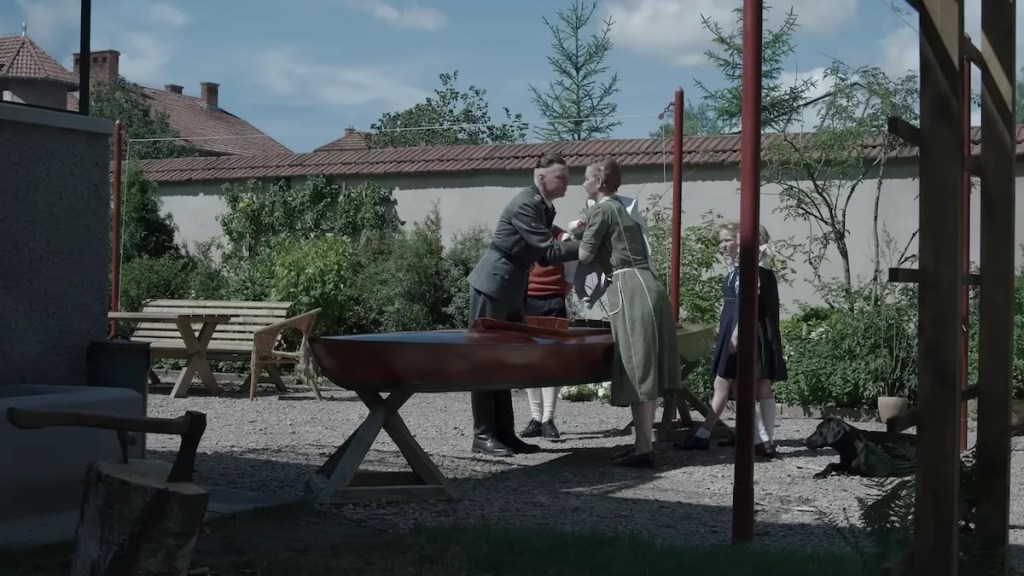
A family enjoys the delights of a summer day beside the river. They laugh, splash each other with water and amble home to their villa, next to where father works. They tune out the all-too-familiar sounds of that workplace to enjoy a family dinner. They are living the dream, out of the city, with a home and beautiful, landscaped garden. The family is Rudolf Höss’. The workplace is Auschwitz. The sounds are of the unimaginable horrors that make their life possible.

Jonathan Glazer’s Holocaust movie is unlike any other ever made. Taking a Martin Amis novel as inspiration, Glazer creates a hauntingly observant film where the plot is simple (Höss works at Auschwitz, the family enjoys a series of everyday events, Höss gets re-posted, his wife remains in their home, Höss later returns to continue his work) but every single frame implies never-seen horrifying events. While the family are indifferent to the distant sounds of trains arriving, industrial churn, gunshots and screams, we can’t be. The only thing that separates the Höss’ heaven of their intricate garden and charming home from the hell of Auschwitz is a single wall.

Glazer’s film never leaves the house for the camp, meaning what we hear is our only clue to what is happening. The Zone of Interest uses sound like almost no other film I’ve seen. Sound designer Johnnie Burns creates an overwhelming soundscape that suggests horrors. The low rumble of industrial sound, the background hum of screams and cracks of gunshot, ignored by the family as white noise. It’s brilliant and sickeningly immersive that never for an instant lets you forget where we are. Glazer complements this with half-seen sights, the most striking the steam of a train arriving visible over the wall of the house, that add to our grim knowledge of what’s happening out of shot.

Glazer lets events play out with a chilling naturalism. Shot on concealed digital cameras with no artificial lighting, there is very little studied here at all. Instead, everything plays out with a terrifyingly low-key sense of reality. Conversations are at times mumbled, movements have a mix of casual and procedural and everything is kept determinedly undramatic. What emerges is the mundane, character-less nature of the Hösses. These people are evil in the sense that the wickedness of their deeds hasn’t even crossed their minds. Two sociopaths who pride themselves on their respectability, presiding over an industrial killing machine.

The film brilliantly balances a lack of overt events with acres of horrific implication. Fishing with his children, Höss steps on a half-seen jaw-bone and suddenly plucks them from the lake, running home with them to practically bleach them clean with the servants left to scrub the bathroom – it’s never stated that human remains are being washed from them, but the look on the face of these servants speaks volumes. (Höss later records a coded memo chastising his team for their lack of care, like a middle manager furious at an untidy storage room.) Hedwig’s mother wakes at night with her room flooded with red light. Opening a curtain to investigate, the camera sees her look of horror, a handkerchief covering her nose, while we only see the faint reflection of flames on the window. Moments like this fill the film, the implications of horrors out of shot.

At its heart, Zone of Interest brings startlingly to life Rudolf Höss, a man who admitted to murdering millions but wanted it known he did not tolerate overt cruelty to his victims. Played with a precise blankness by Christian Friedel, you realise if Hitler had charged him with organising the Reich’s stationary he would have gone about it with the same commitment and passion-free precision as he does mass murder. Does Höss have any idea, deep down, of his vileness? As he carefully, obsessively marches around the house every night shutting off lights and closing doors, is he subconsciously trying to defend his family and shut out reality, bury his knowledge of his evil in household procedure, or is he just as obsessive about this as he is in everything else?

His wife, played with a middle-class, aspirational coldness by Sandra Hüller, seems to have convinced herself she can enjoy all the benefits of the life of an Auschwitz camp commandant, without needing to think seriously about where it comes from. She tries on luscious clothing, brought to her from the camp, and obsessively tends and cares for her garden. Not that it stops her from lashing out at her servants like a petty tyrant. So devoted to her home is she, she refuses to leave it on Höss’ transfer back to Berlin, believing it to be the perfect place to raise her children.

It’s the children that subtly bear the brunt. As the film progresses, the damage to them becomes more and more clear, especially after Höss is reassigned and his attempts to control the environment are ignored by his successor. The daughter who cannot sleep at night, constantly walking the house. The younger son who overhears the forced drowning of a victim and mimics the guard’s cruel authoritarian “humour”. The older son who locks his brother in the greenhouse and mimics the hissing noise of gas. The Höss family are laying the roots to destroy their family in their obsessive desire to build a blinkered perfect home for them.

There is only one note of true kindness in The Zone of Interest. During his research, Glazer discovered a young Polish girl made it her mission to leave fruit at night for the inmates, hidden throughout the camp. Glazer captures this with thermal imaging cameras (eager to maintain his “rule” of no artificial light), giving this girl a sort of mystical, fairy-tale quality (we once even see her while hearing Höss read to his children at night). However, even this act of kindness is corrupted – the forced drowning is caused by a fight over an apple, presumably left by this child.

The Zone of Interest does lose some of its impact when it follows Höss to Berlin – it’s a film that flourishes best as a claustrophobic piece, focused on the house and its grounds. You could argue that The Zone of Interest is effectively a short film, expanded into feature length, making the same point over again. But, on reflection, part of the point is the power of the thudding repetition of that message, the overwhelming impact of people indifferently carrying on in the face of pure evil.

Does Höss realise this on some level? The Zone of Interest concludes with Höss dry-retching on the stairs – he’s such a shell he doesn’t even have enough in him to vomit up – before seeming to stare right out at us into the darkness. Glazer then finally takes us into the camp – to see the museum it is today, quiet, still, tended to with care by the staff. Höss’ life’s work is to create a memorial to his barbarity, where dedicated staff will make sure the picture of evil remains unblemished by dirt. It’s the first-time sound really drains out of the film and it makes for a powerful moment.

The Zone of Interest really lingers with the viewer. Glazer’s subtle and unflashy work builds the film into a powerful experience piece that leaves a lasting impact. It’s a film that grows even more powerful as you unpack the subtleties of its exploration of the banal nature of cruelty and the lasting impact of inhumanity on ourselves and others. A truly unique and important film.

Murphy’s War (1971)

Murphy’s War (1971)

This heavy-handed anti-war Don Quixote story is far from a success

Director: Peter Yates

Cast: Peter O’Toole (Murphy), Siân Phillips (Dr Hayden), Phillipe Noiret (Louis Brezan), Horst Janson (Captain Lauchs), John Hallam (Lt Ellis)

In the dying days of World War Two, the merchant ship Mount Kyle is sunk in the Venezuelan Orinoco by a German U-Boat. Surviving the machine-gunning murder of the crew is Irish engineer Murphy (Peter O’Toole), who is treated at a Quaker mission by Dr Hayden (Siân Phillips). Murphy at first seems happy to be out of the war: but that changes, after the murder of fellow survivor Lt Ellis (John Hallam) by u-Boat captain Lauchs (Horst Janson), hunting the survivors. Murphy, assisted by Frenchman Louis (Phillipe Noiret), decides to take revenge, kitting out a crashed bi-plane to launch a series of increasingly obsessive attacks on the u-Boat with Murphy succumbing to a vendetta.

Peter Yates takes an action-adventure novel and adjusts into an anti-war epic that becomes increasingly shrill as it reaches its nihilistic ending. This shift led to several clashes between Yates and the film’s producer Michael Deeley, who was looking for a box-office hit with a charismatic star. While Yates’ film is complex in its eventual structure, the overall impact of the film is confused and blunted, its sympathies mixed and logic often flawed. It has its moments but doesn’t quite work.

As part of its anti-war set-up, Yates believed it was essential to humanise the German sailors (after all, he wanted the viewer to feel unease at Murphy’s destructive crusade). Unfortunately, creates a dissonance in the film. The first thing the German sailors do is ruthlessly machine-gun the Mount Kyle’s sailors as they tumble into burning waters. Graphically shown is every beat of the fear, as charred machine-gunned bodies fill the frame while the Germans show not a moment of regret (indeed we next see them celebrating the Captain’s award of an iron cross). The captain murders Lt Ellis with a face filled with regret, but his execution involves bullets causing Ellis’ body to jerk in its graphic death throws. How are we supposed to sympathise with them after that?

The focusing on such brutality fits the anti-war hell the film wants to lay out. But it fatally undermines the film’s aim to sure Murphy’s campaign to destroy the u-Boat as an obsessive and destructive campaign. With no reason given for the brutal war crimes committed by the u-Boat (for good measure they also machine gun the Quaker settlement, killing many of the villagers), its hard not to feel that actually Murphy has a point and that these guys deserve punishment. Would a throwaway line about a secret German mission or a need to hide have hurt the film?

The film can’t have it both ways. It can’t luxuriate in the destruction and murder war soldiers commit and then ask us to sympathise with these same soldiers when their death is threatened by another obsessive soldier on a quest for revenge. In a better developed film this sort of clash of sympathies might feel more natural. Instead, the Germans are either monstrous or sympathetic depending on the needs of the scene while Murphy himself makes an awkward shift late on from a guy with righteous anger into a destructive figure we are invited to condemn.

This is a particular shame as there is a lot in Murphy’s War to admire. Yates directs with an assurance and sense of epic scale. The Venezuelan scenery is shot with a real beauty by Douglas Slocombe and the film is edited with a professional excellence by future-Bond-director John Glen. The film’s first half hits a “boy’s own adventure” tone very effectively – making the later shift into 70’s anti-establishment nihilism more awkward – with inventive sequences as Murphy, McGiver-like, reassembles the downed biplane and jerry-rigs some home-made bombs.

A big part of any success is the charismatic performance of Peter O’Toole, who tears into the role of this Irish rebel with relish. Mixing insouciant wit with a bitter irony that slowly gives away to a sociopathic gleam as obsession takes hold, this is an excellent performance. O’Toole manages to make a character who is, in many ways, slightly incoherent work effectively. After all this rebel we hear condemning war with counter-culture cool, who fights to the bitter end; a guy who expresses indifference for his colleagues but goes to unimaginable lengths to avenge them. These contradictions don’t feel naturally developed, but ideas that are put in place to ease the plot.

Saying that, the film has some interesting beats as Murphy collapses more and more into Don Quixote like obsession, tilting at his underwater windmill. (Yates clearly had a passion for this angle as he would make two attempts to make a film of Don Quixote before finally making a TV version in 2000). O’Toole is perfect for this increasing severing from reality and as his Sancho Panza, Phillipe Noiret contributes a warm, humane performance as reluctant Louis, who silently acquiesces in a campaign he clearly feels is misguided and delusional. Equally good is Siân Phillips, balancing exasperation and affection for Murphy, finally unable to brake through his walls of aggression.

There are good ideas and moments in Murphy’s War but its poor-plotting (its story is also strikingly slight, with the preparation of the biplane and its test flight filling an elongated stretch of the film) and jumbled mix of adventure and anti-war sentiments eventually fatally undermine its effectiveness. Despite fine work from Yates and a charismatic and highly watchable performance from O’Toole it’s, at-best, an interesting failure.

1900 (1976)

1900 (1976)

Bertolucci’s bloated, self-indulgent and simplistic film is a complete mess

Director: Bernardo Bertolucci

Cast: Robert De Niro (Alfredo Berlinghieri), Gerard Depardieu (Olmo Dalco), Dominique Sanda (Ada Fiastri Paulhan), Donald Sutherland (Attila Mellanchini), Laura Betti (Regina), Burt Lancaster (Alfredo Berlinghieri the Elder), Stefania Sandrelli (Anita Foschi), Werner Bruhns (Ottavio Berlinghieri), Stefania Casini (Neve), Sterling Hayden (Leo Dalco), Francesca Bertini (Sister Desolato), Anna Henkel (Anita the Younger), Ellen Schwiers (Amelia), Alida Valli (Signora Pappi)

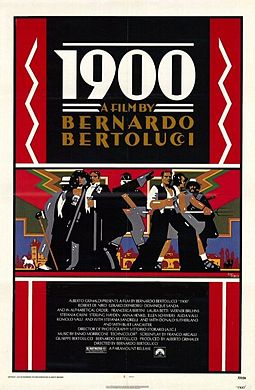
After The Conformist and Last Tango in Paradise, Bertolucci could do anything he wanted. Unfortunately, he did. Perhaps the saddest thing about 1900 is that you could watch The Conformist twice with a decent break in-between during the time it would take you to watch it– and get a much richer handle on everything 1900 tries to do. Bertolucci went through a struggle to get his 315-minute cut released: perhaps the best thing that could have happened would have been if he had lost. Not only would the film be shorter, but it would be remembered as a lost masterpiece ruined by producers, rather than the interminable, self-indulgent mess we ended up with.

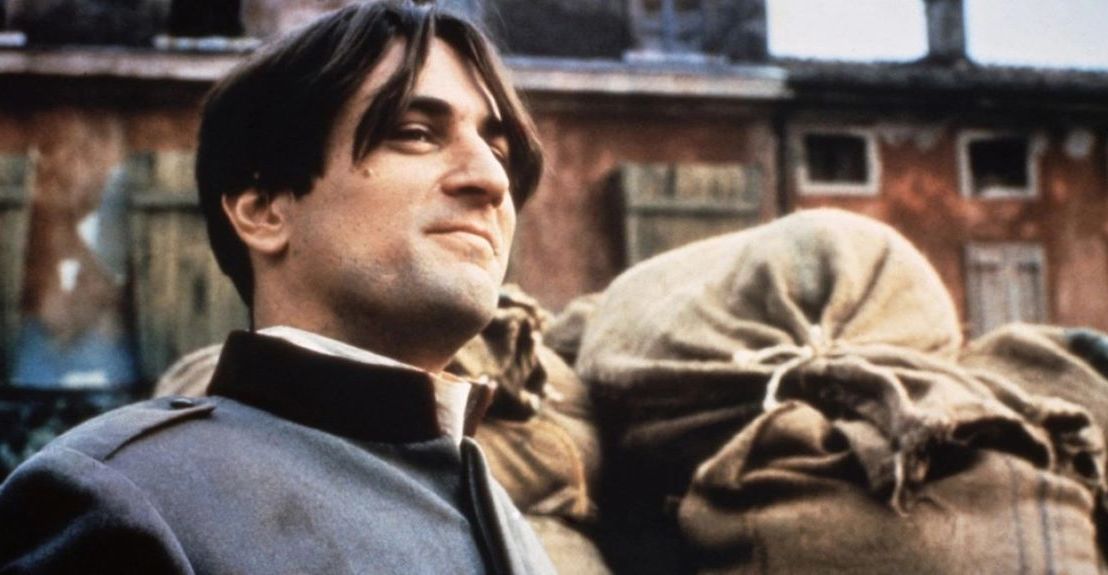
1900 – or Twentieth Century to literally translate its title Novecento – follows the lives of two very different men. Born minutes apart in 1901, Alfredo (Robert De Niro) is the grandson of the lord of the manor (Burt Lancaster), while Olmo (Gerard Depardieu) is the grandson of Leo (Sterling Hayden), scion of a sprawling dynasty of peasants. They grow up as friends, Olmo becomes a socialist and Alfredo an indolent landlord and absent-minded collaborator with the fascists, embodied by his psychopathic land agent Attila (Donald Sutherland). Their small community becomes a symbol of the wider battle between left and right in Italy.

In many ways 1900 is an epic only because it is extremely long and beautifully shot in the Bologna countryside by Vittorio Storaro. In almost every sense it fails. It offers nominal scale in its timeline, but its attempt to become a sweeping metaphor for Italy in the twentieth century falls flat and it focuses on a small community of simple characters, many of whom are ciphers rather than people. All of Bertolocci’s communist sympathies come rushing to the fore in a film striking for its political simplicity. It never convinces in its attempt to capture in microcosm the forces that divided Italy between the two world wars, nor invests any of its characters with an epic sense of universality.

Instead Bertolucci presents a world of obvious questions and easy answers. Every worker is an honest, noble salt-of-the-earth type, working together in perfect harmony to fight for rights. Every single upper-class character is an arrogant, selfish layabout, caring only about their back-pockets and the easy life. Bertolucci suggests fascism only arose in Italy as a means for the rich to control the poor, and never allows for one moment the possibility that any working-class person was ever tempted to take their side. It never rings true. (Bertolucci skips a huge chunk of the fascist 30s and 40s, possibly because this fantasy would be impossible to sustain if he actually focused on the history of that era.)

Bertolucci uses his two protagonists to make painfully on-the-nose comparisons between working class and rich with De Niro’s weak-willed Alfredo always found wanting compared to Depardieu’s Olmo. Even as children, Olmo is braver, stronger and smarter. Olmo has the guts to lie under the moving trains (Alfredo runs), Olmo stands up for what he believes in (Alfredo looks away), Olmo puts others first Alfredo whines about his own needs. Hell, Olmo even has a bigger cock than Alfredo (something they discover comparing penises as children and re-enforced when as young men they share an epileptic prostitute and she ‘tests’ them both).

The upper classes hold all the power but can do nothing without the working class. During the 1910s, a strike by the workers on the Berlinghieri leaves the clueless rich unable to even milk their moaning cows (they buy milk instead). Sterling Hayden’s peasant patriarch is a manly inspiration to all, while Lancaster’s increasingly shambling noble is literally and metaphorically impotent (Lancaster’s role is like a crude commentary on his subtle work in The Leopard). At one point he even pads around barefoot in horseshit to hammer home his corruption. (Incidentally this is the only film where you’ll ever see a horse’s anus being massaged on camera to produce fresh shit to be thrown at a fascist.)

For the rich, fascism is the answer. Continuing to shoot fish in a barrel, Bertolucci scores more easy hits by presenting our prominent fascist as an out-and-out psychopath. Played with a scary relish by Sutherland – in the film’s most compelling performance – no act of degradation is too far for Attila. Along with his demonic partner-in-crime Regina (a terrifyingly loathsome Laura Betti), he routinely carries out acts of violence, horrific murder and child-abuse, even literally headbutting a cat to death while ranting about the evils of socialism.

The poor meanwhile are all good socialists. Olmo, decently played by Depardieu, and his wife Anita (an affecting Stefania Sandrelli) rally the workers to stand against charging cavalry and protect their rights. Bertolucci even has Depardieu flat-out break the fourth wall for a closing speech, spouting simplistic platitudes direct to camera about the inherent wickedness of the landowner. Depardieu at least seems more comfortable than De Niro among this Euro-pudding (every actor comes from a different country and the soundtrack is a mismatch of accents and dubbing, not least Depardieu himself). Rarely has De Niro looked more uncomfortable than as the empty Alfredo, a role he fails to find any interest in, like the rest of the actors never making him feel like more than a device.

Bertolucci, stretching the run-time out, also embraces numerous tiresome excesses. Rarely does more than 20 minutes go by without a sex scene or a sight of someone’s breasts or sexual organs. From children comparing penises, to Depardieu performing oral sex on Sandrelli (just outside a socialist meeting), to De Niro and Depardieu getting hand-jobs from a prostitute, to Sanda dancing naked and high on cocaine or the revolting exploits of Attila and Regina, nothing is left to the imagination. As each goes on and on Bertolucci ends up feeling more like a naughty boy than an artist, so praised for his sexual licence in Last Tango that he feels more is always more. The excess doesn’t stop with sex either: at one point a worker silently cuts his ear off in front of a landowner to make a point about his stoic nobility.

1900 eventually feels like you’ve stumbled into a student debating club, where a privileged student drones on at great length about the evils of the rich, while quaffing another glass of champagne. It has moments of cinematic skill – some of its time jump transitions, in particular a train passing through a tunnel in one time and emerging at another, are masterful – but it’s all crushed under its self-indulgence. From its length to its sexual and violence excess, to its crude and simplistic politics delivered like a tedious lecture, everything is crushed by its never-ending self-importance.

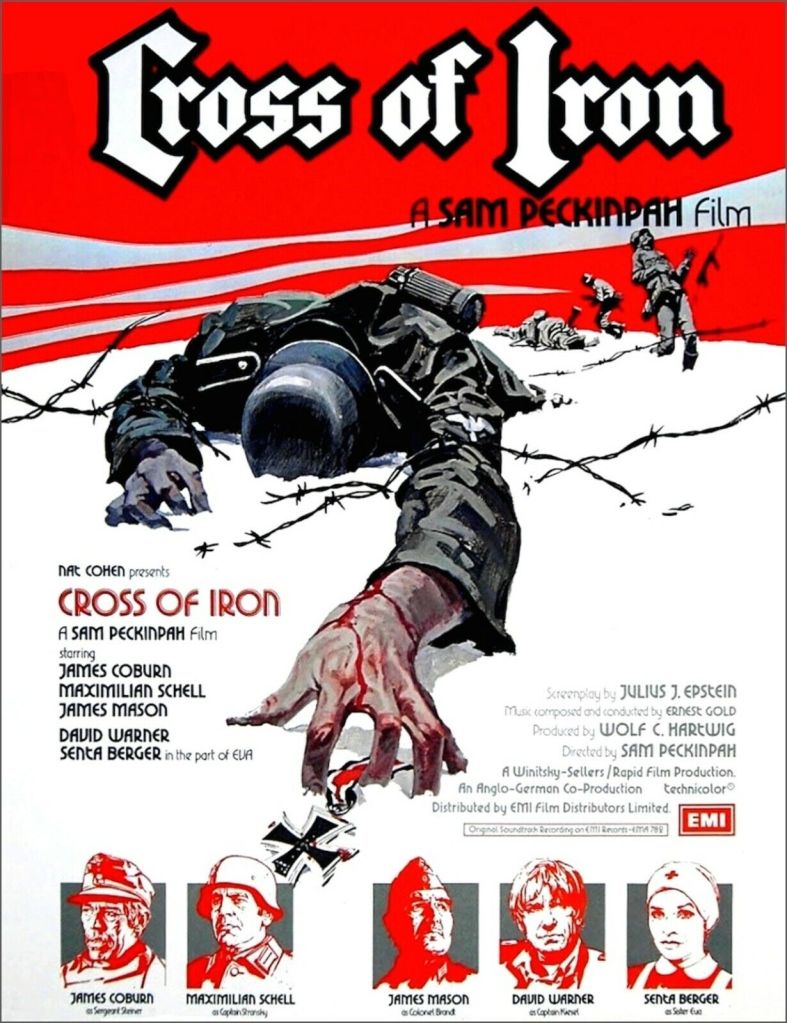
Cross of Iron (1977)

Cross of Iron (1977)

Grim war film, full of blood and horror, but lacking the depth it needs to really make an impact

Director: Sam Peckinpah

Cast: James Coburn (Sergeant Rolf Steiner), Maximilian Schell (Captain Stransky), James Mason (Colonel Brandt), David Warner (Captain Kiesel), Klaus Löwitsch (Krüger), Vadim Glowna (Kern), Roger Fritz (Lt Triebig), Dieter Schidor (Anselm), Burkhard Driest (Maag), Fred Stillkrauth (Reisenauer), Michael Nowka (Dietz), Arthur Brauss (Zoll), Senta Berger (Eva)

If War is Hell, it makes sense that Sam Peckinpah eventually bought it to the screen. Cross of Iron is, perhaps surprisingly, his only war film. But, in a sense, Peckinpah’s grim explorations of the brutal realities of violence made all his films war films. And what better setting for his grim eye than the gore and guts of World War Two’s Eastern Front. If war has any rules they fell silent in this hellish clash where no quarter was given and no decency could be found.

Sgt Steiner (James Coburn) knows this. A grizzled soldier, who despises war, Nazism and officers, he fights through the horrors of the front to protect his men. As the Wehrmacht flees, crushed by the late 1943 advance of the Russian army, the only hope is the vain chance of staying alive. But Steiner’s new commander, Captain Stransky (Maximilian Schell) has other ideas: a Prussian elitest, he’s here for an Iron Cross and the fact he’s inept, cowardly and inexperienced isn’t going to stop him. The clash between Steiner and Stransky will leave a trail of futile bodies in its wake.

Cross of Iron may well just be the grimmest war film this side of Come and See. Shot on location in Yugoslavia, Peckinpah films the Eastern Front as a muddy, chaotic mess where no one seems to have the faintest clue why they are there or where they are going. Soldiers huddle in shallow trenches, officers sit in dusty, crumbling bunkers, the sound of machine guns and the explosion of artillery forms a constant backdrop. Battles are smoky, horrific events with bullets flying, ripping through bodies that explode in squippy mess. Bodies are strewn across the battlefield. Even in the progress to the front lines, tanks absent-mindedly roll over bodies left ground into the muddy dirt.

Peckinpah brings his unique eye for violence to bear. Violence frequently takes place in slow motion, bodies twisting and turning in a crazed dance that seems to go on forever as bullets rip through them. The camera never flinches from the blood of war and the films throws us right into the middle of brutal firefights, tracking through smoky, muddied fields full of bodies. The soundtrack is punctuated by distant artillery gun fire. There is no heroism and the sole focus is staying alive. The soldiers have no interest in politics, no passion at all for the war – only one of them, the smartest dressed, is a Nazi. It’s simply something they vainly hope to survive to see the end of. Even the grizzled veteran Steiner hates the killing, hates the violence, hates the waste.

It makes us loath even more Maximilian Schell’s puffed-up braggart Stransky, a man born wearing an officer’s uniform but hopelessly ill-suited for it. Under fire at his first attack, Stransky is hopeless, reduced to bluntly stating the obvious (“My phone is ringing!”) and confusedly rambling about attacking, withdrawing and counter-attacking all in the same breath. Schell was born to play Prussian primma donnas like this, and he gives Stransky a real cunning and survival instinct. Despising Nazism – he sees himself as above the crudeness of the party – he’s a born manipulator, skilfully deducing the sexuality of his aide to blackmail him, but also a rigid stickler for the rules unable to comprehend a world where he isn’t on top.

He’s the antithesis of Steiner, who has everything Stransky wants: respect, glory, guts. Coburn is, to be honest, about ten years too old for the role (his age particularly shows during his brief respite in a base hospital, where he has a convenient sexual fling with Santa Berger’s nurse), but he’s perfect for the hard-as-nails humanitarian, who hides under the surface deep trauma at the horror he’s seen. Steiner is the natural leader Stransky wants to be and has the Iron Cross Stransky wants. Worst of all, Steiner doesn’t give a shit about the medal, when it’s the be-all-and-end-all for Stransky.

Stransky is so out of step, even the veteran front-line officers think he’s despicable. Colonel Brandt (a world-weary James Mason) scoffs “you can have one of mine” when he hears of Stransky’s dreams while his cynical aide Kiesler (a scruffy, shrewdly arch David Warner) takes every opportunity to show his disgust. Stransky is ignored by the soldiers and is rarely filmed away from his bunker, where he reclines on his bunk like an emperor and avoids any trace of conflict.

So, he knows nothing of the horrors of Steiner’s war. We however do. Cross of Iron opens with a successful raid on a Russian encampment. One of the victims, a young soldier his body torn apart by a mortar, is met with barely a reaction by the soldiers (“We’ve seen worse” says Steiner). Another captured Russian boy is later released by Steiner – and promptly machine-gunned in front of him by advancing Russian soldiers. Caught behind the lines, Steiner’s men are picked off one-by-one despite his desperate efforts to keep them alive.

Cross of Iron went millions over budget – largely due to Peckinpah’s chronic alcoholism (he binge drank every day while shooting and spent days at a time unable to work) – and as a result the ending is abrupt and overly symbolic. (Peckinpah and Coburn had about an hour to cobble it together and shoot it before the filming wrapped up). Peckinpah throws in some clumsy fantasy sequences (especially during Steiner’s fever dreams in hospital) and overly heavy-handed reaction shots from Coburn, overlaid with quick cuts to various horrors or shots of lost friends, which over-stresses the horror of war.  Much as Cross of Iron skilfully shows the grimness of conflict, it doesn’t balance this with real thematic weight and depth like, say, The Wild Bunch does.

It’s part of Cross of Iron’s flaws. Under the surface, I’m not sure that Cross of Iron has much more to say, other than war is hell. And with Peckinpah’s work here, there is a sort of satanic, indulgent glee in all that mayhem and slaughter, the bodies riddled by bullets. Peckinpah is a sadistic preacher, the sort of sermoniser who is so keen to tick off the evils of the world, that he doesn’t want to miss a thing. The film feels a little too much at times as a grungy, exploitation flick yearning for art.

But it still has a visceral impact that makes it stand out as grizzled war-film, helped by a granite performance by Coburn, with just enough vulnerability beneath the growls. A tough watch and a flawed film, that lacks the real insight and psychological depth it needs, but with some compelling – and shocking – moments.

Indiana Jones and the Dial of Destiny (2023)

Indiana Jones and the Dial of Destiny (2023)

Is there a place for Indy in the 2020s? The nostalgia-tinged would-be epic doesn’t provide an easy answer

Director: James Mangold

Cast: Harrison Ford (Indiana Jones), Phoebe Waller-Bridge (Helena Shaw), Mads Mikkelsen (Jurgen Voller), Antonio Banderas (Renaldo), John Rhys-Davies (Sallah), Toby Jones (Basil Shaw), Boyd Holbrook (Klaber), Ethann Isidore (Teddy Kumar), Karen Allen (Marion Ravenwood), Shaunette Renée Wilson (Mason), Thomas Kretschmann (Oberst Weber), Olivier Richters (Hauke)

Okay let’s get the elephant out of the room: It’s better than The Kingdom of the Crystal Skull. Yes folks, we have a new fourth-best Indiana Jones film. Is that something to celebrate? Indiana Jones and the Dial of Destiny makes some of the same errors as the previous valedictory effort, but at least it learned a few things and it’s been made by people who clearly love Indy. But they loved it too much, creating an often overblown, hellishly overlong, everything-but-the-kitchen-sink film which never just jump when it can flip, spring, bounce then explode at the end of it.

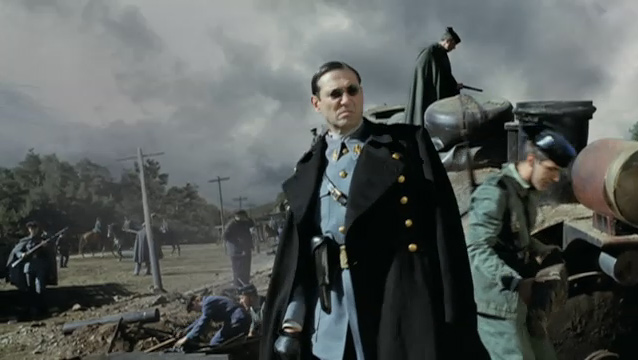
It opens with a (younger) Indy (Harrison Ford) battling Nazis in the dying days of the Second World War, trying to save a train full of precious artefacts. After defeating them, we flash forward to 1969 with Indy now a retiring archaeology professor to disinterested students in New York’s Public University, out of a place in an era where man has stepped on the moon. Grouchy, separated and fed-up, Indy’s life gets disrupted one more time when his god-daughter Helena Shaw (Phoebe Waller-Bridge) turns up on the hunt for Archimedes’ Dial. Indy knows about this dial as it was also the obsession of Nazi physicist Jurgen Voller (Mads Mikkelsen), last seen on that train in 1945 and now the brains behind the NASA moon landings. Indy and the unscrupulous Helena end up in a duel with Voller to find the dial – the prize being what Voller believes is a chance to change history.

Back in the day, Raiders of the Lost Ark was largely made so Spielberg and Lucas could show they could make an action-packed, crowd-pleaser quick and cheap. Today The Dial of Destiny is one of the most expensive films ever made (lagging only behind assorted Avengers films, the recent Star Wars trilogy and various other franchise entries). So much mony to make something less than half as good.

What this has allowed is Mangold and co to act like kids given the keys to their parents’ car. The Dial of Destiny is an explosion of Indy ideas, all rammed into the film willy-nilly. It’s made by people who feel this is their only chance to make an Indy film and don’t want to miss the opportunity to include every idea they’ve ever had.

We end up with a film that feels both far too long and yet strangely rushed. The Dial of Destiny would be immeasurably improved if about twenty minutes (at least) had been cut from its run-time and its poorly sketched thematic ideas condensed down. Its narrative structure has one too many quests, with Indy and Helena forever searching for a thing that leads to a thing that leads to yet another thing. An entire sequence, involving a pointless cameo from Banderas as a one-legged diver, would have been better slashed to ribbons or cut altogether. Every single one of the mega-budget chase sequences go on at least 2-3 minutes too long, straining the interest.

At the same time, the film manages to feel rushed. Ideas are presented and then taken nowhere at all. We see Indy tipping most of a bottle of whisky into his coffee in the morning – this suggested alcoholism never rears its head again. Voller is working in partnership (it seems) with the CIA, but their motives for this are never explained and Voller calmly ditches them part way through the film. Indy is framed for murder, but this plot thread is judicially abandoned by the time we get to the end. John Rhys-Davies literally pops up to drive Indy to an airport and make a trailer-friendly speech.

Most strikingly, all the films blaring action and endless bangijg stuff buries the most interesting plot thread of a tired, depressed Indy who no longer knows his place is in the world. The film solves Shia LaBeouf’s toxic unpopularity by having Mutt die in Vietnam, giving Indy a burden of guilt and grief. This is an Indy who has fallen from his Princeton heights, as ancient to his students as the artefacts he lectures about. It’s a thread though that the film only intermittently remembers, so crowded out is it by overlong chases, so that when the film’s conclusion returns to it as a major motivator for Indy it feels forced.

In any case, the film’s action set-pieces peak with the 1945 opening section with a digitally de-aged Ford and Mikkelsen facing off on a speeding train. I think the de-aging effect is very well done (though Indy speaks with Ford’s current 80-year-old voice), and this sequence has a sort of nostalgic charm to it and at least it feels of a piece with the originals. Not that its perfect: it’s overlong and overblown of course – a castle explodes, Indy runs over the top of a speeding train – and looks like something created with blue-screens and digital effects rather than in reality. (It’s also clear a digitally de-aged Ford head has been placed on a stunt double at key points.)

But it’s a bright-spot. There are others: Harrison Ford, again, is perfect for the role – crusty, resigned but still with the glamour of excitement in his eyes. He and the film don’t back away from his advanced age – Indy looks more vulnerable than ever – and Ford sells the moments he’s allowed in the film’s breakneck speed to reveal Indy’s emotional turmoil. He also has a great chemistry with Phoebe Waller-Bridge, who effectively channels Han Solo as an immoral adventurer who learns about decency. Mikkelsen’s mastery makes him an impressive villain.

I’ve been really hard on this film. It is fun I promise. I laughed and at times I was thrilled. But it is too much. Even the settings of the chases offer a sensory and time overload: a chase around a ticker-tape parade in New York onto a subway (with Indy on a horse) has an overload of visual details. A chase through the streets of Marrakesh goes on forever – and is over-built with our heroes chasing Voller while also being chased by Helena’s gangster-former-fiancee. film culminates in a final sequence which is just about not as silly as aliens – but by any other score is incredibly silly.

Essentially The Dial of Destiny is undermined by fan love. Mangold is a good director but doesn’t know where to stop. The film leans into nostalgia too hard but, above all, it offers far too much bang for your buck. The film is frequently at its most effective in its quieter, character-driven moments. Like Crystal Skull, it mistakes bigger for better. It’s still a more entertaining and a better film than Crystal Skull – but, somehow, its excessive overindulgence makes you feel strangely disappointed.

A Matter of Life and Death (1946)

A Matter of Life and Death (1946)

A pilot is stranded between Earth and…somewhere else in this brilliant romantic fantasy

Director: Michael Powell, Emeric Pressburger

Cast: David Niven (Peter David Carter), Roger Livesey (Dr Frank Reeves), Raymond Massey (Abraham Farlan), Kim Hunter (June), Marius Goring (Conductor 71), Robert Coote (Bob Trubshaw), Kathleen Byron (Officer Angel), Joan Maude (Chief Recorder), Abraham Sofaer (Judge/Surgeon), Richard Attenborough (Pilot)

In the final days of World War II, a plane glides across the Channel in flames. The crew has bailed out, leaving only their skipper behind. Unknown to them, he’s not got a parachute – and is facing a choice between jumping or crashing to certain death. With only moments left to live, when is there a better time to fall in love? Quoting poetry and embracing what life he can in his final moments, Peter Carter (David Niven) falls in love with American radio operator June (Kim Hunter), the last person he expects to talk to. It’s stirring, sweeping, hugely romantic – and then Peter jumps at 50,000 feet.

So that’s it, right? Wrong. Peter washes up on the shores of Britain, not dead and practically on June’s doorstep. Happy ending? Perhaps not: at the end of a huge escalator linking our world to another (maybe the next?) Peter was expected. His “conductor” (Marius Goring), a French fop executed during the Revolution, whose job it was to take his soul “up” lost him in the fog. Now a man who isn’t supposed to be alive is walking around on Earth falling in love. Can it be allowed? Or will Peter need to head up that staircase? Or is all of this in fact in Peter’s head, a product of a head injury diagnosed by Dr Frank Reeves (Roger Livesey)? Either way, Peter faces two trials: life-saving surgery on Earth and a tribunal in that other place to decide whether he stays on Earth or not.

When released in America, AMOLAD was renamed Stairway to Heaven – a title rightly hated by Michael Powell. Part of the magic – and there is a lot of magic realism here in the most beloved of all British filmic fables – is the film’s carefully measured ambiguity. The film superbly doesn’t give any answers. The two worlds are clearly, visually distinguished and when Goring’s Conductor and others descend to Earth to freeze time and converse with Peter, their appearance is always foreshadowed with the same symptoms (smells and headaches) Frank diagnoses as part of Peter’s condition.

The beauty of AMOLAD is how wonderfully gently it explores the struggle of two nations – here represented by Peter and June – to emerge from the trauma of war and return to everyday life. From a world where death lies around every corner – where your plane can plummet to fiery doom in moments – they must readjust to one of romantic picnics, amateur theatricals and games of table tennis. Peter’s struggle to survive his surgery is a beautiful metaphor for returning to a life full of hope, possibility and looking forward rather than backward.

It’s why the visual impact of the film is so important. “Heaven” is shot in crisp black-and-white. As the Conductor says when travelling down to Earth, “one is starved of Technicolor up there”. This Heaven is a place of peace, but also of bureaucratic efficiency. Arrival lounges are staffed with decent but practical Angels (Kathleen Bryon is marvellous as the first of these we meet – and there is a fabulous shot from Powell that frames her in front of a clock, making the edges of its face appear like a halo around her head). There are rules and paperwork – in fact a whole city of clerks and arrival lounges. What it doesn’t have is the warmth and passion – the colour – of Earth. Down here, everything is in luscious, gorgeous Technicolor. Up there life is restful, but monochrome.

Jack Cardiff’s photography of AMOLAD – combined with Powell’s astute visual eye – crafts one of the most ravishing films you’ll ever see. Blues, oranges and reds practically pour off the screen into your eyes. Filters add a golden hue to much of what we see. The ramshackle details of locations – Frank’s cluttered library with its piles of books, June’s country-house-base – see every single detail captured in painterly beauty, colours popping out. Only Peter’s surgery room feels like a bridge between ”Heaven” and Earth, cooler filters stressing their blues and cool icey whites.

This is what Peter is fighting to stay in. A world of colour, of joy and poetry. Perhaps “Heaven” is just his imagination of what the afterlife could be like. It resembles the military operations he has spent the last few years emersed in. It’s filled with the historical generations he taught at university. Familiar faces up there fight his corner and represent him at the great trial to decide his fate. His surgeon on Earth shares the face of his judge in “Heaven”. Powell and Pressburger don’t lean too far either way – it’s all gloriously left open to our imagination.

And who, in 1946, wouldn’t want to believe in a heaven as reassuringly welcoming as this. (On a side note it’s refreshing to see a film from the 40s that depicts such a racially diverse after life). One where all are equal and questions of colour and creed are left aside. “Heaven” is packed with soldiers from all across the world – and the sheer volume of uniforms up there reminds us of the trauma down here.

AMOLAD is all about the world we might decide to live in after the trauma of war. It’s also about forging lasting bonds between two nations bought together to fight. No one feels more English than David Niven: and AMOLAD is, arguably, his finest performance. He makes Peter a man of casual wit and lightly worn intelligence, but with hints of the burdens he has carried across years of war. He’s the best of us Brits – and now he has fallen in love with the best of America. June, wonderfully played by Kim Hunter, is practical, brave and grounded. Their love (and the life they could spend together) becomes the battleground at the heavenly trial.

On the one side: a prejudiced revolutionary American (played with gusto by Raymond Massey) – on the other the perfect embodiment of English decency. There could have been no better choice of actor for this than the glorious Roger Livesey. Livesey’s Frank Reeves becomes a mix of English eccentric, master surgeon and Prospero-like magus. It’s no coincidence that among his hobbies is a large camera obscura with which he observes events on his village streets with a protective, grandfatherly care. His study is lined with books, his knowledge is infinite and he is always open to Peter’s tales of heavenly staircases and visitations from mysterious conductors. Then as his advocate in “Heaven” it is he who has the clear sight and judgement to focus the jury not on what divides us, but what unites us – what makes us all human, not what drives us apart.

AMOLAD is about what brings us together. It’s open about the flaws of Britain – the first trial jury is awash with Boers, Indians and other victims of Empire – but also a celebration of its virtues. It celebrates the melting pot of America – the second trial jury is made-up of an incredibly diverse selection of American citizens – and is a hymn to personal freedoms. Farlan picks up on what divides Britain and America – cricket vs American dynamism – but what unites us is our desire for life. So what does it matter if Brits can be austere or Americans so brash they raid a coke dispenser on arrival in “Heaven”. We’re still cousins.

All this helps capture the film as a universal fable, of love being discovered in the magical boundaries between worlds (its no coincidence we see Midsummer Night’s Dream being rehearsed by an American cast under a British vicar). This is a quiet, decent struggle about emerging from the horrors of war into the chance of a new world of love. It’s a struggle for Peter and June that is both very personal and hugely universal.  Powell and Pressburger’s film captures this perfectly in a film that’s sublimely directed and never-endingly rich in dialogue and visuals. It perfectly offers up a universal fable that speaks to the heart. It’s perhaps why this is their most beloved – and finest – hour.