Category: World War II

Escape to Victory (1981)

Escape to Victory (1981)

The sort of odd movie pitch that could only have been made in the 80’s: it’s a POW film – but with footballers! And Stallone in goal! Cult nonsense, but fun.

Director: John Huston

Cast: Sylvester Stallone (Captain Robert Hatch), Michael Caine (Captain John Colby), Pelé (Cpl Luis Fernandez), Max von Sydow (Major Karl von Steiner), Bobby Moore (Terry Brady), Osvaldo Ardilles (Carlos Rey), Paul von Himst (Michel Fileu), Kazimier Deyna (Paul Wolchek), Hallvar Thoresen (Gunnar Hilsson), Mike Summerbee (Sid Harmor), Russell Osman (Doug Cluire), John Wark (Arthur Hayes), Daniel Massey (Colonel Waldron), Tim Pigott-Smith (Major Rose), Carole Laure (Renee)

It’s possibly the most bizarre idea in movies. An old-school, boy’s-own-adventure about POWs starring a Panini sticker album’s worth of footballers, led by Michael Caine and Sylvester Stallone playing the Germans (actually represented by a team of ringers from the New York Cosmos) in a ‘friendly’ football match in Paris. Oh, and it’s directed by John Huston. Who thought this one up?

Needless to say Escape to Victory is a cult hit. Caine plays professional footballer John Colby, his career interrupted by internment in a POW camp, challenged to an exhibition match by football-mad Major von Steiner (Max von Sydow). When von Steiner’s bosses turns the game into a propaganda vehicle, Colby is under intense pressure to pull out. When he refuses – not wanting to put his players lives at risk, some of whom (the Eastern European ones) have been rescued from labour camps – instead he is asked to accommodate a daring escape plan, led by American Robert Hatch (Sylvester Stallone) who joins as ‘trainer’ and back-up goalie. With the match scheduled, a plan is formed: the team will escape at half time. But will the players abandon the game, or will sporting pride kick in?

Well, what do you think? The whole film is a build up to the game. Are they really going to leave it at 4-1 to the Germans? The pedestrian opening two thirds of the film can pass you by. You certainly feel it passed John Huston by (if you ever want to see a great director do a pay cheque movie, watch this). The film settles into familiar rhythms of both genres (sports and POW movies) mashed together. For the latter; forgers, escape committees, roll-calls, daring escape attempts over and under wire, muttered attempts to board trains with fake papers are all dutifully ticked-off. Nothing unusual: the interest is all in the sports film.

And if you are going to make a sports film – crammed with training montages – who else would you hire than a dream list of footballers to perform them. And no footballer was more of a God-like figure than Pelé. Welcome to the only film the Greatest Player Ever made (as soon as he opens his mouth, you’ll see why). Alongside him England’s legendary World Cup winner Bobby Moore, charming Argentinian Ossie Ardilles (not trusted with a line), several other internationals from across Europe and (filling out the numbers) half a dozen players from Ipswich Town (though, to be fair, John Wark might just be the best actor). Most of the best parts involve watching these stars go through their paces.

Michael Caine – who only took the film so he could say he had genuinely played with Pelé – anchors all this reasonably well (even though, at 47, he looks noticeably out-of-shape considering he’s playing an international footballer at the peak of his career). The role of Colby is no stetch for him, but Caine conveys carrying responsibility rather well, and there is some decent material as he butts heads against the unhappy upper-class officers who want him to tell the Germans to shove it.

The officers – decent performances from Daniel Massey and Tim Pigott-Smith among others – point out the Germans won’t give them a sporting chance. But, this is the sort of film where boy’s own pride kicks in, and we get a classic ‘let’s show em’ attitude. This culminates, of course, in the half-time planned escape attempt being aborted as the players protest “We can win this!” and the side head back out for the second half (and, of course, glory).

It’s a big shout as our heroes take a heck of a drubbing in the first half. (This despite Caine’s ahead-of-his-time coaching advice to make the ball do the running, which sounds like tika-taka seventy years early – was Escape to Victory required viewing in Spanish football academies?). To the disappointment of von Steiner – our token ‘Good German’ played with his customary professionalism of von Sydow – who gave his word it would be a fair game, his superiors hire “a very good referee” who will “make no mistakes”. German tackles fly in un-punished, a dubious penalty is awarded and Pelé’s ribs are broken in a filthy foul forcing the team to play with ten men. Those dirty, cheating Germans! Thank goodness Bobby Moore scores to give them a chance.

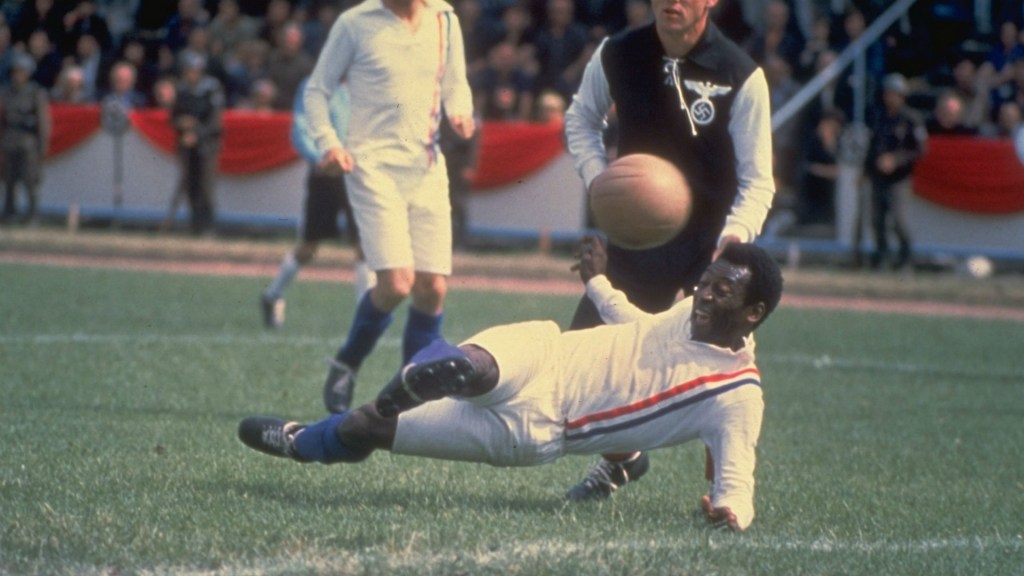
Every star player gets their moment in the spotlight, most of all Pelé who scores with a trademark bicycle kick. (I wonder if Pelé counted this one in his career goals record?) It’s a breath-taking piece of skill – von Steiner even proves his “Decent German” credentials by rising to applaud (to the fury of his fellow officers). Our heroes pull it back to 4-4 before having a goal disallowed for a false off-side (mind you it feels less inexplicable in an age where VAR chalks off goals for offside elbows). Then of course the Germans are awarded a penalty as the last kick of the game after a fair tackle by Ardiles.

And so, we come to Stallone. Perhaps the most inexplicable thing in this, the Italian Stallion at least convinces as a man who knows nothing about football. Looking trim, Stallone handles most of the POW and escape stuff (and a token romance subplot with a French resistance fighter) but of course space had to be made for him in the game. So, he plays as keeper (the team’s first choice keeper volunteers for Caine to break his arm so Stallone can be released from lock-up to play in the film’s most difficult to watch moment). Stallone wanted to score the winning goal, but was told that was unlikely for a keeper, so instead he saves the penalty to preserve the moral victory. Stallone mumbles his way through the film, feeling bizarrely out of place, but he was the big star.

Escape to Victory is a truly bizarre thing. But it’s got a fun football game in it and as sort of exhibition match it’s a bit of a treat. And watching it shortly after the passing of Pelé, it feels almost like a rather lovely tribute.

The Conformist (1970)

The Conformist (1970)

Freud mixes with politics in Bertolucci’s stunning political-psychological thriller, one of the greatest films ever made

Director: Bernardo Bertolucci

Cast: Jean-Louis Trintignant (Marcello Clerici), Stefania Sandrelli (Guilia), Dominique Sanda (Anna Quadri/Minister’s Lover/Prostitute), Gastone Moschin (Manganiello), Enzo Tarascio (Professor Luca Quadri), Fosco Giachetti (Colonel), José Quaglio (Italo Montanari), Pierre Clémenti (Lino Semirama), Yvonne Sanson (Guila’s mother), Milly (Marcello’s mother)

At age 29, Bertolucci made one of the greatest films of the 20th century. The Conformist is a film of uncertain illusions, half-seen shadows dancing on the wall of a cave. Each viewing unfolds new perspectives and interpretations. But each is rewarding, such is the magisterial grace the story is told with, and the radiant beauty of the film itself (a clear, massive, visible influence on Coppola’s Godfather films).

In 1938, a young Fascist Marcello Clerici (Jean-Louis Trintignant) is commissioned by Mussolini’s government to arrange the assassination of his former philosophy professor, dissident intellectual Luca Quadri (Enzo Tarascio) in Paris. Marcello longs for a “normal life”, obsessed with the fear that personal flaws, rooted in childhood trauma, will expose him. He marries the unexpected woman – the garrulous and ingenuous Guilia (a superb, guileless Stefania Sandrelli) – and joins the Fascists. But he is shaken by his fascination with Quadri’s wife Anna (Dominique Sanda).

Bertolucci’s film is nominally a political thriller. It exposes the brutality of fascism, but its alleged heroes are ineffective, bourgeoise left-wing dissidents. But really this is a Freudian deep dive into the character of Marcello and how he has sought to “conform” his whole life.

The Conformist is like sitting in on a prolonged psychotherapy session, Marcello’s past, present and future stripped down to their components, with the viewer invited to theorise how they assembled in the way they have. The film’s non-linear structure is crucial for this – and Bertolucci was vocal on the vital wisdom of editor Franco Arcalli. The narrative was reconstructed around the day of the assassination and Marcello’s car journey to it – with flashbacks inspired by events along the way.

The film is a revue of Marcello remembering his recruitment, the days before his marriage and the childhood trauma of sexual awakening and murder that haunts his inner fears. Most of all we see unspool the events that directly brought him to sitting in this car, on this day, driving towards the site of an assassination. These component parts shift and rearrange themselves to form new patterns about how we understand Marcello and the choices he makes.

The film’s theological pivot is Marcello and Quadri’s discussion of Plato’s cave (read about it here), where men chained in a cave understand the world only from the shadows of objects outside which they watch on its walls. But there are no easy conclusions. Are the fascists the chained men? Or has Marcello chained himself away and only interprets the world through shadows? Is Marcello so disjointed he can only interpret emotions based on his understanding of shadows of them?

Or is this pushing us to consider we are watching a film: a thing made of light and shadows. Imagery constantly reminds us of this fact. Light streams through trees, pillars and windows like light from a projector. Views outside of train windows resemble back projection. Marcello watches a radio performance from a recording booth, the window of which literally resembles a cinema screen. Constructed realities are the language of this medium – and Marcello is perhaps applying the same phraseology to his life. He builds a narrative, just as we all do, making himself bland and forgettable.

Marcello dreads the discovery not only of his crime, as a 13-year-old, of shooting and killing a seductive chauffer (played by Pierre Clémenti), but also the sexual longing it awakened in him. This horror of homosexual yearnings – and fear at being caught for murder – has, perhaps, led to a reflexive desire to hide in the crowd: to conform. Understanding this leads to us seeing Marcello, for all his coldness, as a strangely tragic, repressed figure, hiding from himself and others. His face is often obscured, or seen behind glass and mirrors. He’s always slightly distant from us.

This void is beautifully captured in Trintignant’s compelling performance. He bottles genuine emotions within himself, that at rare moments are released like small explosions. He clings to a hat that hides his face and seems barely aware of his desires. Sensuality and nakedness fascinate and alarm him. Fascism is a large, empty illusion he clings to. In the film’s only touch of heavy-handedness Italo, who recruits him, is blind. You feel something for Marcello, but are also repelled by his studied artificiality. His whole life is a carefully framed pose, like those he strikes when handed a gun before stroking his hair (a repeated gesture) and running off to find his hat.

The one thing that seems to affect him is the fascination – attraction seems too strong a word – he feels for Anna Quadri. Laying the groundwork for the sudden impact she has on Marcello, Dominique Sanda appears twice earlier as unconnected characters (both prostitutes). Anna, smart, bisexual, knowing herself and others far more than anyone else, sees straight through Marcello. How much is her seduction of Guilia an attempt to titillate and neutralise Marcello? At one point, she seductively touches the laughing Guilia, while staring at the door where Marcello (and the camera) stand in the shadows, knowing he is watching. Does Marcello long for her sexually, spiritually or because it feels like he should do? Answers are myriad.

These are expanded by the constructed beauty of Storaro’s photography. Bertolucci’s mastery of camera movements is clear (there are tracking shots of breathtaking grace, including a long drift along wind-blown leaves that Coppola outright pinched) and he knows when to use angles that unsettle (including a Dutch angle that suddenly, stunningly rights itself) or feel voyeuristic. Storaro’s shoots with ravishing beauty that subtly colour codes emotions, moods and locations and stresses the constructed nature of film narratives.

Italy is a land of imperious, grandiose Fascist architecture: towering modernist rooms, cold marble and neo-classicism, shot with whites and striking starkness. Paris is awash in softer – but also cold and damaging – blues that feel more natural but unsettling. Moments where Marcello touches on his longings (or at least persuades himself he does) drip with yellows. It looks gorgeous, but also fits with themes of invented kaleidoscopes, being re-shaken to construct a world.

The film builds towards a scene of genuine horror. The assassination is a bleak nightmare in the snow. You can never forget the image of Sanda – her face contorted with panic, desperation and hate – clawing and screaming at the window of Marcello’s car while he just sits. Is he torn between indecision and fear, or does he feel nothing? Your ideas will change, but your horror at Anna’s desperate, hand-held-shot, futile flight through the woods like a deer pursued by hounds never will.

The film’s final coda re-opens mysteries. Marcello discovers things that make him question if his life of conformity (and the price he has paid for it) was even necessary. The final shot sees him sitting, a flame behind him, starring at a wall (of course!) before turning to – well to look at us? Or is he looking, at last, at the world he has only studied from it shadows? It’s unclear. Deliberately so.

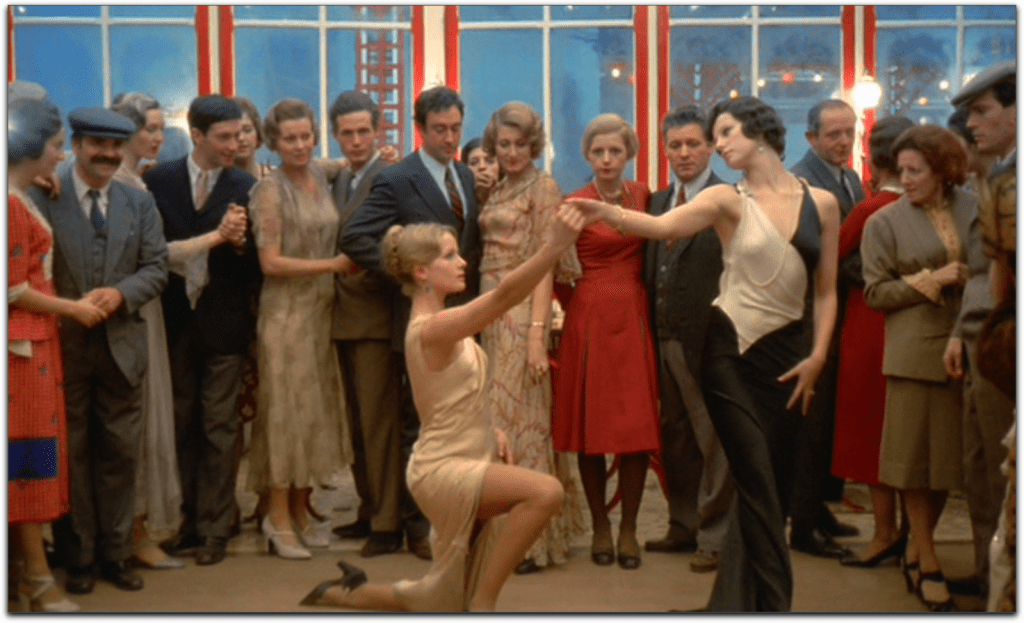
What’s clear is that The Conformist is crammed with truly extraordinary images (from that haunting assassination to a beautiful Brueghelesque late-night dance between Anna and Guilia, everything sticks with you) and challenging ideas that carry no easy answers. Bertolucci’s film invites deep examination and analysis and presents possible suggestions, but no answers. It’s what makes it an extraordinary classic, a fascinating study of psychology and humanity.

The Grand Budapest Hotel (2014)

The Grand Budapest Hotel (2014)

Luscious visuals, hilarious gags mix with an air of sadness and regret in Wes Anderson’s masterpiece

Director: Wes Anderson

Cast: Ralph Fiennes (M. Gustav), Tony Revolori (Zero), F. Murray Abraham (Mr Moustafa), Mathieu Amalric (Serge X), Adrien Brody (Dmitri), Willem Dafoe (Jopling), Jeff Goldblum (Deputy Kovacs), Harvey Keitel (Ludwig), Jude Law (Young Writer), Bill Murray (M. Ivan), Edward Norton (Inspector Henckels), Saoirse Ronan (Agatha), Jason Schwartzman (M. Jean), Léa Seydoux (Clotilde), Tilda Swinton (Madame D), Tom Wilkinson (Author), Owen Wilson (M. Chuck)

I wrote recently I could forgive the flaws I’ve found in Kurosawa’s work, for the majesty of Seven Samurai. I can totally say the same again for Wes Anderson. He is a director I’ve sometimes found quirky, mannered and artificial – but God almighty he deserves a place in the pantheon for directing a film as near to perfection as The Grand Budapest Hotel, a delight from start to finish, as beautiful to look at as it is whipper-snap funny, as heart-warming to bathe in as it is coldly, sadly bittersweet. After three viewings I can say it is, without a doubt, a masterpiece.

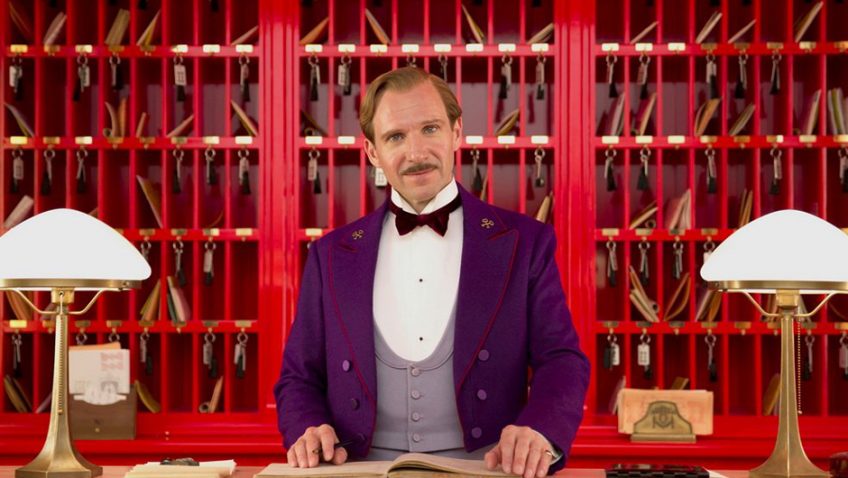
Like many Wes Anderson films, its storyline is eccentric, halfway between fantasy and absurdity. In 1932, in an opulent hotel, The Grand Budapest, concierge Monsieur Gustav (Ralph Fiennes) is the pinnacle of his trade: precise, fastidious, perfectionist, he can fix anything anywhere – opera tickets, the perfect table placement and a night of passion at any time for the elderly widows who visit his hotel. When one of them, Madame D (Tilda Swinton) dies leaving him a priceless painting, Boy with Apple he suddenly finds himself framed for her murder. Only his ingenuity, and the dedicated help of his protégé, best friend and surrogate brother/son, lobby boy Zero (Tony Revolori) will save him.

You can’t escape on the first viewing that The Grand Budapest Hotel is an extraordinarily funny film. Crammed with superb one-liners, it’s a showcase for a breathtakingly, blissfully funny performance from Ralph Fiennes whose comic timing is exquisite and whose mastery of the perfectly structured monologue of flowery language is as spot-on as his ability to deliver a crude punch-line. Anderson fills the film with clever sight-gags, bounce and a supreme sense of fun. You’ll laugh out loud (I frequently do, and I remember most of the gags) and wind back to watch them again.

But what lifts this is the wonderfully evocative, elegiac piece this beautiful film is. For all its comic zip, it unfolds in a romanticised past already a relic in 1932. We can’t escape the rise of Fascism that fills the film. Jack-booted soldiers accost and hunt Gustav and Zero. Adrien Brody’s furious heir to Madame D looks like a Gestapo officer, and his vicious heavy Jopling (Willem Dafoe so weathered, he looks like he’s been beaten by a carpet duster) has a stormtrooper menace. En route to Madame D’s funeral, Zero is nearly dragged off the train to be lynched by fascist thugs for being an immigrant and The Grand Budapest is taken over by this dreadful movement, filled with Mussolini-inspired ZZ insignia and blackshirts.

Under the jokes, the world Gustav represents has already died and been buried. We are never allowed to forget we are marching, inexorably, towards a very real-world war that will rip apart this fictional country and leave millions dead. Gustav’s gentile old-school charm ended with 1920s: and he sort of knows it. Fiennes, under the suaveness, conveys a man who falls back into potty language when he can no longer maintain his assured confidence that a straight-backed, polite assurance will solve any problem or a poetic reflection will allow them to put any unpleasantness behind them. Those days are gone and it makes for a deep, rich vein of sadness just under the surface.

It’s particularly acute because it’s made clear this is a memory piece. Anderson constructs the film like a memory box. It has no less than three framing devices. It opens and closes with a young woman in 2014 visiting a monument to a great writer, the author of the book The Grand Budapest Hotel. From there we flash back to the author (a droll Tom Wilkinson) in 1985 recounting how he met the man who inspired the novel, before heading again to a flashback to the 1960s where the young author (Jude Law) meets the man we discover is an older Zero (F Murray Abraham) who recounts the story we then watch. Each layer of the film descends deeper into Anderson’s artificial, carefully structured visual style, with its heightened sense of reality.

Old Zero – beautifully played by F. Murray Abraham – is introduced as a man of acute loneliness and sadness, who tells us early on the woman his young self loves, Agatha (a radiant Saoirse Ronan) will die and shuffles around the nearly abandoned The Grand Budapest (now a concrete nightmare of Communist architecture) with only his memories for comfort. No matter how jovial and bright the events of the 1930s are, we can’t forget that these are the reflections of a man full of regrets.

When old Zero’s narration turns to remembering Agatha, the lights around him dim: Agatha even enters the narrative almost by the side door: Gustav is arrested and imprisoned before she appears, along with a series of flashbacks-within-flashbacks to Zero and her meeting and her first meeting with Gustav, as if Zero had to steel himself to remember her (as reflected in Abraham’s tear-stained face). Later, when remembering the fates of Gustav (his best friend) and Agatha (the love of his life) he almost draws a veil over it (even their final scenes in flashback play out in monochrome). There is a deep, moving sense of humanity here, a powerful thread of grief that adds immense richness.

But don’t forget this is also a funny film! Anderson is an inventive visual and narrative director at the best of times, and here every single beat of his playful style pays off in spades. The entire 1930s section of the film (the overwhelming bulk of the narrative) plays out in 4:3 ratio, which to many other directors would be restrictive, but seems a perfect fit for a director who often composes his visuals with the skill of an expert cartoonist. The frame is frequently filled in every direction when within the grandeur of the hotel, but then feels marvellously restrictive for Gustav’s prison cell or the train compartments that seem to constantly carry Zero and him to disaster.

Anderson’s wonderfully precise camera movements also reach their zenith here. His camera is deceptively static, often placed in a series of perfectly staged compositions that places the characters at their heart, frequently looking at us. But then the camera will turn – frequently in a fluid single-plain ninety degrees to reveal a new image of character. There are Steadicam tracking shots that are a dream to watch. It’s combined with some truly astounding model shots (parts of the set are not-even-disguised animated models and miniatures, adding to the sense of fantasia) and the detail of every inch of the design (astounding work from Adam Stockhausen and Anna Pinnock) is perfection. The film is an opulent visual delight.

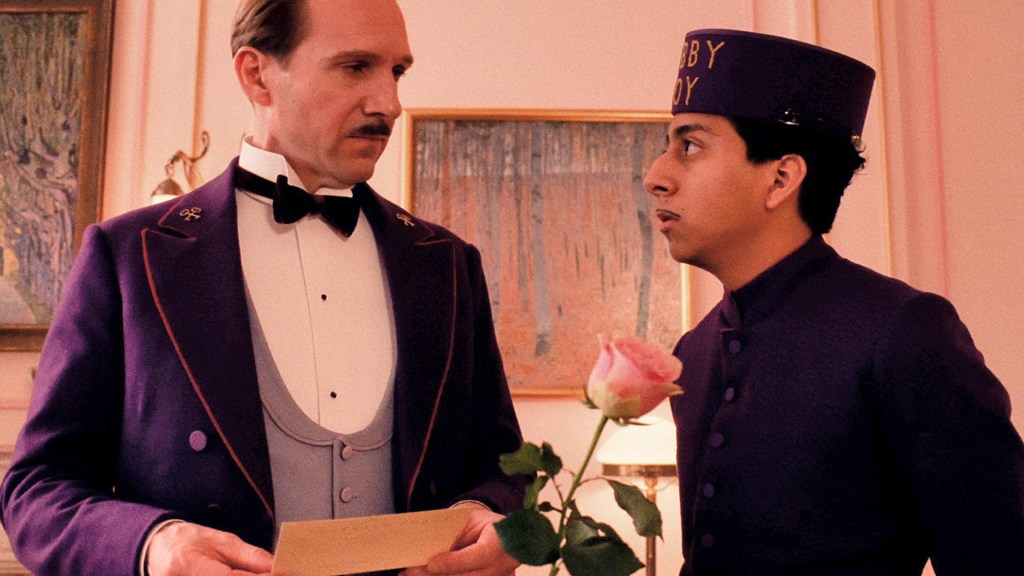
It’s a film of belly laughs and then moments of haunting sadness. But also, a wonderful celebration of friendship. The bond between Gustav and Zero is profound, natural and deeply moving – grounded, fittingly, in adversity from the agents of a hostile, oppressive state – and carries real emotional force. Newcomer Tony Revolori is hugely endearing as naïve but brave Zero, making his way in this new world (fitting the theme, he left his homeland after his family was destroyed by war) and sparks superbly with Fiennes and Ronan.

There is a wonderful beating heart in The Grand Budapest Hotel, amongst the farce, perfectly timed gags and cheekiness, that makes it a rich film you can luxuriate in. Anderson’s direction is faultless, Fiennes is a breathtaking revelation, both hilarious, affronted, decent and fighting the good fight. Gorgeous to look at, thought-provoking and laugh-out loud funny it’s a dream of a film.

The Great Dictator (1940)

The Great Dictator (1940)

The Little Tramp takes down Hitler in this iconic satire on the dangers of over-mighty strong-men

Director: Charles Chaplin

Cast: Charles Chaplin (Jewish barber/Adenoid Hynkel), Paulette Goddard (Hannah), Jack Oakie (Benzino Napolini), Reginald Gardiner (Schultz), Henry Daniell (Garbitsch), Billy Gilbert (Herring), Maurice Moscovich (Mr Jaeckel), Emma Dunn (Mrs Jaeckel), Grace Hyle (Madame Napolini), Carter de Harven (Bacterian ambassador), Bernard Gracey (Mr Mann)

They were born four days apart and had the two most famous moustaches of the 20th century. There the similarities end. One became the world’s most beloved comic, the other its most reviled bogeyman. Chaplin and Hitler were bound together in people’s minds for a decade before Chaplin turned his revulsion at Hitler into satire: The Great Dictator sees him play both a version of his Little Tramp (here reimagined as a Jewish barber) and a version of the Fuhrer (as a temper-tantrum-throwing, hatred-spewing, lunatic). But it also sees Chaplin effectively playing himself, capping the film with a famous humanitarian appeal to the audience for a little peace and understanding.

The Great Dictator is, just about, a comedy. A Jewish barber (Chaplin) serving in the front lines for Tomania during World War One, saves the life of officer Schultz (Reginald Gardiner) but loses his memory. In a veterans’ hospital for 20 years, he emerges into a radically different Tomania, now an anti-Semitic, fascist dictatorship ruled by the barber’s doppelganger Adenoid Hynkel (Chaplin again). Hynkel rants and raves about racial purity and Tomanian expansion and his stormtroopers march through the Jewish ghetto. The barber is saved from death, first by Hannah (Paulette Goddard) and then by Schultz, now a senior leader in the new Tomania. But, as Hynkel eyes up an invasion of neighbouring Osterlich, what role can the barber play in stopping his plans?

Chaplin said later, if he had known the horrors Hitler’s regime would perpetrate, he would never have made the film. That would have robbed us of one of the sharpest, most astute satires of power-hungry radicalism ever made. But Chaplin made his stinging assault on Hitler – painting him as both ludicrous and insanely dangerous – at a time when Hollywood was still nervously appeasing Germany to keep access to its film market, before the true horrors were known.

Chaplin’s film is chilling enough with what it does know. Its depiction of bullying stormtroopers is deeply unsettling, for all they are also comic buffoons. These jackbooted bullies march into the ghetto, swiftly escalating from daubing “Jew” on shop windows to beating and shooting innocents. Hynkel casually orders the execution of thousands and day-dreams of a world where Jews are no more. We see Jews brutalised. Chaplin doesn’t pull punches in demonstrating fascism is a dangerous cancer in the world, or that the likes of Hynkel are appalling in their ruthless heartlessness.

That makes it a mark of genius that Hynkel is also the centre of a ridiculous farce painting him as inept, childish and laughable. Chaplin achieves this by masterfully channelling Hitler’s mannerisms – no less than you would expect from the most gifted physical comedian in history. We are introduced to Hynkel at a Nuremberg-style rally, delivering a speech in a hilarious mix of gobbledegook and random German words (“Werner Schnitzel!”) delivered with a perfect parody of Hitler’s physicality. (Marking the film’s careful balance between jokes and seriousness, this includes a spit-flecked rant against “Der Juden”). His grandiosity is further punctured with coughing fits and clumsiness.

That’s nothing to what we see of Hynkel off-stage. Prone to carpet-chewing rants, prat-fall prone with the manner of a bitter, insecure teenager, Hynkel is a bully elevated into a position of power, clinging to the trappings of office to give him a feeling of personal worth. Residing in a presidential palace that’s a perfect parody of Speer’s grandiose architecture, Hynkel is both laughable and deeply dangerous. Chaplin gets this mixture of the sublimely ridiculous and terrifying in every scene: most notably in Hynkel’s famous dance with an inflated globe. He bounces and cavorts with this like a romantic lover (appropriately themed to Wagner) – but it all grows out of his near sexual excitement at the idea of conquering and purifying the world of Jews (and brunettes).

The Great Dictator bursts that globe, but it also bursts the bubble of puffed-up strong men in a way that’s still highly relevant today. Hynkel and fellow dictator Napolini (a perfect capturing of Mussolini’s mannerisms, mixed with a “mamma-mia” accent from Jack Oakie) are both buffoons, who can’t even co-ordinate shaking hands in between their ludicrous salutes. These buffoons have the power and coldness to kill millions, but are both idiots. Napolini’s state visit is a hilarious game of one-up-manship, from Hynkel’s feeble attempts to intimidate Napolini in his office, to the two of them pathetically pumping their barber chairs higher and higher (to insane levels) to try and look the tallest. They even engage in a childish food fight while bickering over who will have the right to invade Osterich. Vanity, childishness and homicidal nation-destroying all hand-in-hand.

To counter his brilliant deconstruction of Hitler, Chaplin deployed his Little Tramp character in a new guise, here re-imagined as a Jewish barber, but with the same mix of good intentions and bumbling clumsiness. There is classic Chaplin business – his shaving of a client perfectly in time to Brahm’s Hungarian Dance No 5 is pretty much perfection – but also darker material. The Barber is saved from lynching, nearly gets roped into a suicide attack on Hynkel and winds up in a concentration camp. This is the Tramp’s war: his decency used to point-up the hideousness of Hynkel even more.

And, in case we miss the point, Chaplin plays a third character in the final five minutes. With Hynkel in prison (mistaken for the Barber), the Barber-as-Hynkel takes his place to speak to Tomania. He’s got the Barber’s soul, Hynkel’s appearance… but his words are Chaplin’s. Talking direct to camera – just as the Barber glances at the fourth wall throughout – Chaplin makes an impassioned plea for peace, like the curtain speech of a classical actor. He was begged not to do it (it later lead to him being denounced as a Commie) – but Chaplin was making the film to make this point. It was all very well to make Hynkel look stupid, but equally important to put forward an alternative vision, one of hope and faith in mankind’s decency. The speech may be on the nose (probably a little too much), but Chaplin delivers it with the intensity of someone who passionately believes every word he is saying – and at least it serves as a culmination of themes and ideals the entire film espouses among the jokes, rather than a blast from the blue.

The Great Dictator is over-long (at over two hours), and some of its comic moments are more successful than others. But the sequences that deconstruct Hitler are almost perfect (and feature superb support from Daniell and Gilbert as lupine Goebbels and cry-baby Goering parodies) and the film balances hilarious farce, biting political wit, and an earnest despair at the horrors of dictatorship with just the right touch of hope.

Chaplin’s genius combined with his passion created a landmark, brave film. Few others could have balanced its tonal shifts with such deft skill and perhaps no other performer could have been both so funny and so appallingly destructive. Hitler banned the film, but succumbed to curiosity and arranged a private screening. No one knew what he thought of it – but he watched it twice.

Watch on the Rhine (1943)

Watch on the Rhine (1943)

Dialogue heavy, drama light, war-time propaganda, that was already dated by the time it was released

Director: Herman Shumlin

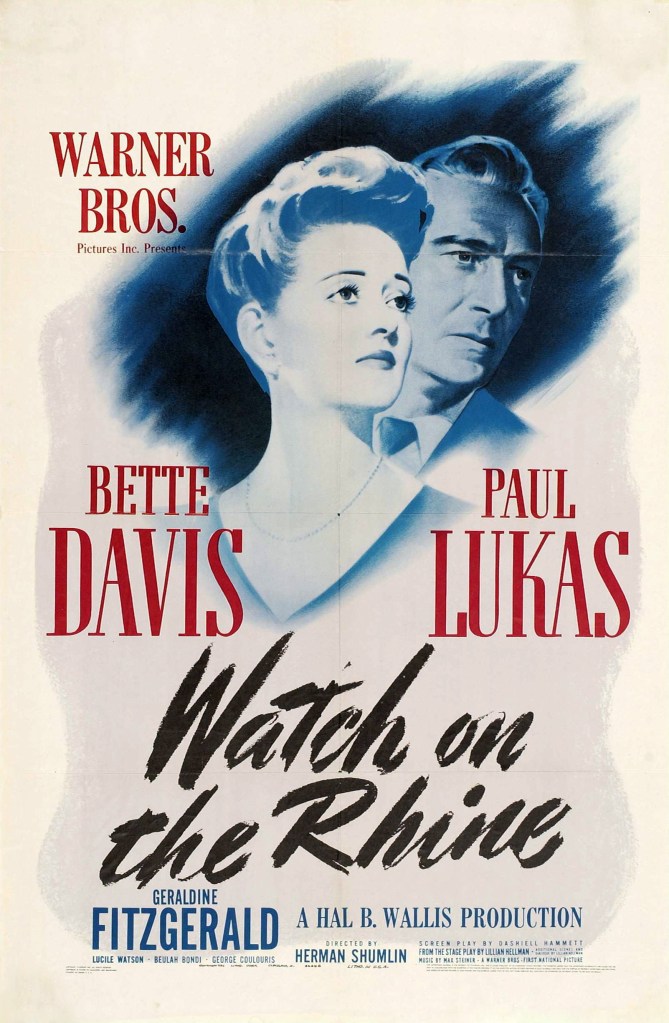
Cast: Bette Davis (Sara Muller-Farrelly), Paul Lukas (Kurt Muller), Lucile Watson (Fanny Farrelly), Geraldine Fitzgerald (Countess Marthe de Brancovis), George Coulouris (Count Teck de Brancovis), Beulah Bondi (Anise), Donald Woods (David Farrelly), Donald Buke (Joshua Muller), Henry Daniell (Baron Phili von Ramme), Kurt Katch (Blecher)

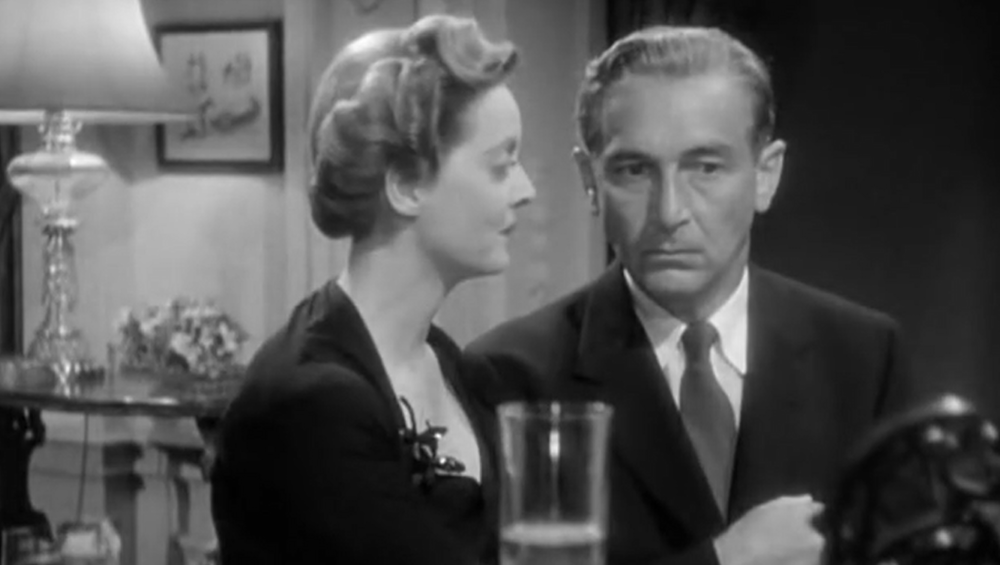
In 1940, dedicated anti-fascist campaigner Kurt Muller (Paul Lukas) arrives in the USA with his American wife Sarah (Bette Davis) and their children. They are welcomed by Sarah’s mother Fanny (Lucille Watson), but soon discover that America has little understanding of the dangers of Nazism – and that there is in danger in their refuge. Fanny’s other houseguest is Romanian diplomat Teck de Brancovis (George Coulouris) – whose wife Marthe (Geraldine Fitzgerald) is quietly in love with Sarah’s brother David (Donald Woods) – and he has every intention of selling Muller out to the Nazi embassy if he doesn’t pay him thousands of dollars. Can the Mullers escape?

Watch on the Rhine is adapted from a play by Lilian Hellman. Hellman was otherwise engaged and unable to write the script, so her long-term lover Dashiel Hammett came on board to open up the one-set play into a movie, with Hellman providing some additional speeches. Their best efforts can’t hide the fact this is a painfully worthy, preaching-to-the-choir propaganda piece. It’s packed with on-the-nose (if well-written) speeches and horrifically slow in its pacing and plotting.

First staged in early 1941, the original play did at least serve a clear purpose. It preached about the dangers and evils of fascism to a nation watching Europe tear itself apart. It was a heartfelt cry to understand that Hitler and his cronies were wicked men determined to let all the liberties America held dear burn. Its characters speechified at length about the conditions in Europe, the loss of freedom and the wickedness and danger of a political movement many in America felt was basically someone else’s problem.

This would have carried some real power as a rallying cry if the play had been bought to the screen in 1941. But, by 1943, American soldiers were already fighting Nazi forces in Africa and Italy: it hardly felt necessary to cry for intervention. Even by 1943, it was a period piece, looking back at a moment in time when fashionable types went to the German embassy for fancy dinners with black-shirted diplomats. And certainly, viewing it now, even its 1943 perspective looks slightly naïve and uninformed, in light of the horrors we now know were taking place.

Shorn of its original purpose to educate, the film comes across as a mix of heavy-handed propaganda (“This is why we fight!” it might as well be saying) and civics lesson.  It’s because, frankly, there is very little drama at all to take the place of the political lecturing. It’s fair to compare the film to Casablanca – another film that calls for action, released after a point when action had been taken. That could have been a propaganda piece: instead it’s a fast-paced, drama packed mix of romance and conspiracy thriller where Paul Henreid (remarkably similar to Lukas’ character here) struggles to gain the papers to escape from Vichy with a life-and-death urgency this film never musters.

Although Watch on the Rhine eventually works in a blackmail plot, where Muller’s plan to return to Europe and take on the leadership of the anti-fascists is threatened by George Coulouris’s smarmy diplomat, it takes so long to get to this (nearly an hour of screen time) your attention may well already have been lost.

Watch on the Rhine was directed – rather flatly, in one of his only two films – by it’s original Broadway director Herman Shumlin (heavily assisted by cinematographer Hal Mohr). The cast included several actors recreating their roles, including Lukas, Coulouris and Lucille Watson. Obviously, this left it short of heavyweights for the box office so the studio bought in Bette Davis to play Muller’s wife, expanding the role heavily (and insisting, against her protests, that she get top billing). Davis – exhausted after working intensely on Now, Voyager – took the part out of commitment to its message, but struggled with both Shumlin and serious personality clashes with Lucille Watson over their wildly differing politics.

Shumlin was unable to rein Davis in and Watch on the Rhine features one of her more melodramatic performances. Almost every scene features her staring off into the middle distance, voice trembling (not helped by Max Steiner’s music swelling magnificently practically every time she speaks). It’s a performance that never quite rings true, especially when compared to the underplaying from Lukas, who won the Best Actor Oscar for his low-key, restrained performance. He is quiet and genuine – and his pain and desperation when driven into a terrible moral choice is moving – but it’s hard to shake the feeling this fine performance was rewarded more for the words from his lips (especially since he beat Bogart in Casablanca). Watson was also nominated, playing the sort of role beloved by awards ceremonies, an eccentric old snob with a hidden heart of gold.

Watch on the Rhine is a rather dull civics lesson full of worthy speeches and very short on drama. It also has some of the most irritating child actors you will ever see (already infuriatingly precocious, the kids communicate their German background with stilted, precise accents). Even in 1943, its moment had passed and it never manages to create any dramatic point compelling enough to make you want to rewatch it. A film less worthy, and more willing to indulge in espionage thriller, would have been a distinct improvement.

The Men (1950)

The Men (1950)

Brando makes his film debut in this earnest but realistic drama about paraplegic war veterans

Director: Fred Zinnemann

Cast: Marlon Brando (Ken Wilocek), Teresa Wright (Ellen), Everett Sloane (Dr Brock), Jack Webb (Norm), Richard Erdman (Leo), Arthur Jurado (Angel), Virginia Farmer (Nurse Robbins)

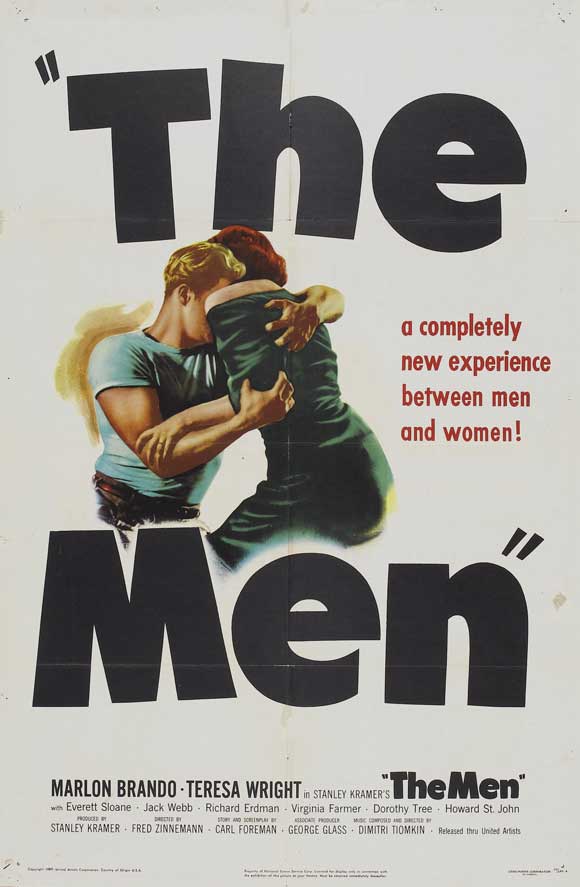
The Men opens with a thoughtful dedication to the two wars many soldiers have fought: the first with weapons, the second “with abiding faith and raw courage” against the physical and emotional consequences of the first. Fred Zinnemann’s documentary-influenced The Men takes a careful look at how the impact of that second war at a paraplegic veterans hospital. Ken Wilocek (Marlon Brando, in his film debut) is a former college sports star now confined to a wheelchair and struggling to adjust. His fiancé Ellen (Teresa Wright) is still eager to marry – but are either of them ready for the difficulties Ken will have adjusting his life?

The biggest strength of The Men – aside from its realist lack of flash – is how it avoids easy answers to big questions. Sure, Carl Foreman’s script has a tendency to lean into a mix of relationship drama and information film. But in looking at Ellen and Ken’s wedding night (and, in a neat visual metaphor of a misfiring champagne bottle, their likely sex lives), The Men is coldly realistic. Ellen might be largely presented as a picture-perfect ideal woman – but even she is freaked out by Ken’s squeaky wheelchair, twitching leg, implied impotence and the thought of what she has let herself in for.

That’s as nothing to the self-loathing fury – directed into rage at Ellen – Ken feels. This man who defined himself by machismo and physicality, who labours for weeks to stand upright so he can get married at the alter (it’s a sign of the film’s avoidance of easy solutions that, despite this, Ken still falls over at the alter) suddenly realises that he will always be partially dependent on his wife for simple tasks. He’ll never be the provider he expected to be – and he’ll never be able to fulfil some of his wife’s sexual needs. A proud man, no wonder the realisation throws him into depression.

It’s moments like this when Zinnemann’s film is at its strongest. It’s a film surprisingly frank and (for the time) daring about the emotional and physical consequences of war injury. Everett Sloane’s impassioned doctor is introduced warning wives and mothers about the consequences of paraplegia and the difficulties emotionally, physically and (he all but says) sexually they will have – but he might as well be talking direct to the camera informing the audience.

ZInnemann’s film, in a dispassionate but respectful way shows the process of rehabilitation, its strengths and its weaknesses. From physical training to the difficult emotional adjustments. The film used several real-life veterans – including Arthur Jurado in a key role as a Latino paraplegic holding onto optimism – and worked closely with hospital medical staff (some of whom appear as themselves). There is a solid sense of respectful realism about the whole thing. (You can feel the hand of producer Stanley Kramer.)

He’s also helped hugely by a powerful, committed and complex performance from Brando in the lead role. Making his first film, Brando astounded Zinnemann and the crew with his commitment. Effectively Brando “learned” to be paraplegic, forming deep friendships with the veterans (far more allegedly than with his fellow actors). His performance is a searing collection of contradictions. Ken is boyish, eager and lets excitement flash across his face when playing sports or driving an adjusted car for the first time. But he’s just as apt to be surly, resentful and bitter, to snap at those trying to help him and furious at the failings his own body have forced on him.

It comes to a head at that disastrous wedding night. Brando struggles with a growing realisation of his dependence and helplessness and his face flares with the pained recognition that this is in no way the wedding night be imagined. Throughout much of the film he is desperate to cling to any chance of recovery – from imagining sensation in his legs to furious workouts to build his upper body strength to help him pretend he still has fully functioning limbs. It’s a fabulous performance, a slice of realism and humanity, underplayed with an everyday casualness.

It does mean Teresa Wright at times looks a little more actorly as Ellen. To be fair to Wright, her part is saddled with the most conventional plot arcs and scenes, of romantic devotion mixed with sudden doubts. (It’s not helped by Dimitri Tiomkin’s overly emphatic themes for her character, that do their best to do all the work for the audience). Her scenes tend to have the air of the infomercial about them, as Ellen debates disabilities with Dr Brock and her doubting parents. Foreman’s dialogue also tends to lean a little too much into “I’ll love you Ken, no matter what” territory.

The Men is at its weakest when it looks at societal integration. For all the quality of Brando and the low-key sensitivity of Zinnemann’s direction, this ends up being a lighter, less impactful version of Wyler’s astounding The Best Years of Our Lives. Brando plays a combination of Dana Andrews’ and Harold Russell’s characters from that film, but The Men never hits the same heights of universal experience and pain as that film does. (Teresa Wright basically plays the same role here as she did opposite Dana Andrews). It’s just a little too low-key, a bit too documentary.

When away from the medical, there is a lack of inspiration and poetry from The Men. It gains a lot from Brando’s performance, but without him it would feel more like a Government infomercial. When it hits drama, for all its daring, it never manages to fully turn itself into something more than a traditional romance-against-the-odds. It has its heart in the right place, but it feels like a companion piece to better films than a classic in its own right.

The Last Metro (1980)

The Last Metro (1980)

Passion, privacy, tension and terror all come to head in Truffaut’s stately theatrical occupation epic

Director: François Truffaut

Cast: Catherine Deneuve (Marion Steiner), Gérard Depardieu (Bernard Granger), Jean Poiret (Jean-Loup Cottins), Heinz Bennent (Lucas Steiner), Andréa Ferréol (Arlette Guillaume), Paulette Dubost (Germaine Fabre), Sabine Haudepin (Nadine Marsac), Jean-Louis Richard (Daxiat), Maurice Risch (Raymond Boursier)

The curtain parts and we are introduced to a magic world of imagination and drama play out before us on stage. But how can the actors immerse themselves in this, while such huge drama plays out in the real world? It’s the dilemma of the Montmatre theatrical troupe in Paris during the Occupation. With war raging with all its complex moral choices and dangers, how can you focus on the art within – or for the matter process the complex emotional entanglements in an already claustrophobic profession only made worse by the perils of Nazi occupied Paris and their pet collaborators.

Truffaut’s film is called The Last Metro as it recalls a period during the occupation when hundreds of thousands of people crowded into Parisian theatres to stay warm at night before rushing to catch the final train home before the curfew. The Montmatre Theatre is run by Marion Steiner (Catherine Deneuve), a film star turned stage actor struggling to keep the theatre going in the absence of her Jewish theatre-director husband Lucas (Heinz Bennett) – who, unknown to anyone else, is hiding in the theatre basement. Bernard Granger (Gérard Depardieu) is her new lead actor for their latest Ibsenesque production: but his presence will stir powerful feelings in the embattled Marion.

Truffaut’s film steers away from his other more famous work – the sort of vibrancy and romance of earlier films like Jules et Jim or The Four Hundred Blows or the inventive playfulness of Day for Night. Instead, The Last Metro is a more formal, classically shot, interior piece that revels in small moments and touches of emotional investment so subtle and glancing some viewers might not even notice them. It’s also – surprisingly for cinema’s leading cineaste – a film deeply in love with the mechanics and backstage drama of theatre, subtly contrasting the claustrophobia and intensity of such spaces with the oppressive world-shrinking and glance-over-your-shoulder anxiety of occupation.

It’s also a superb character study, with a quite brilliantly complex and compelling performance from Catherine Deneuve. A starlet with a double burden – not only keeping the theatre alive, but also her husband – Marion is a woman pulled so hard and so overwhelmingly in so many competing directions, it’s taking every ounce of her control to hold herself together. Facing financial pressures, censorship pressures and the constant fear that a single wrong word could see her theatre ripped away from her and her husband discovered and killed, she maintains a cold and professional veneer that rarely, if ever, slips.

So little does it, that Bernard – played with an effortlessly underplayed grace and charm by Gérard Depardieu that belies his Rugby-player bellicosity – is, for the most part, blissfully unaware of Marion’s growing, unspoken, attraction to him. A love she seems hardly able to acknowledge herself, not least because it feels like an even deeper betrayal now of her husband, hiding out in the basement and utterly dependent on her, than it would in peacetime.

Lucas – a wonderful Heinz Bennent – is himself teetering on the edge of falling apart from the sustained effects of acute cabin pressure. Never leaving the damp theatre basement – apart from surreptitious trips to the stage late at night – Lucas’ attitude to his enforced imprisonment moves from a larkish boys-own adventure into an increasingly bitter resentment. Directing the show from afar – a drain has been hooked up so he can listen in on rehearsals – he provides late night feedback to Marion to accompany the detailed handwritten notes he ‘left behind’. Mapping out future productions on his cell walls, Lucas avoids the suspicion that the constant pressure of concealing him has tipped their relationship from romance to one of anxiety-ridden responsibility.

It contrasts with the play the company is performing: where, in typical Ibsen style, the lead is a tragedy tinged woman, suffering memory loss, who falls into a deep but mutually painful love with her son’s tutor. Even from the rehearsals, Marion begins to feel some bleed of this dramatic relationship into her real world: she asks Bernard to not touch her during rehearsals, as if worried that this moment of physicality could lead to consequences she cannot control.

Touch is a key sensation in The Last Metro – as if moments of physical contact and intimacy carry even more weight in a world where no one can be trusted and every word must be carefully watched. Bernard uses a repeated routine of palm reading to try and seduce (with mixed results) a series of women (most notably lesbian production designer Arlette – strikingly played by Andréa Ferréol – who, in a lovely flourish, he describes as longing for “like a warm croissant”). Physical contact – the light caress of a face and hands – is crucial to the film. Truffaut’s camera zooms in on moments where hands take each other, either in longing, understanding or – in a sequence where Marion journeys to Gestapo headquarters – with the threat of imminent violence.

Closing distance is particularly important in a period where all contact must be carefully judged and measured. Collaborators, like powerful press chief Daxiat, will use the smallest slight or word out of place to justify pulling your world down. Played with a hissable vileness by Jean-Louis Richard, Daxiat is a pompous, self-important, two-faced and vindictive man parroting Nazi slogans and revelling in his power to destroy careers. But, small man though he is, the Occupation gives him power – when Bernard angrily confronts him for his rudeness about Marion in his review, its Bernard who Marion is furious at for his recklessness.

It’s because hanging over every moment – and constantly playing in Deneuve’s expressive eyes – is the dread of what will be found if her theatre is searched or how doomed her husband will be if it is closed. Finding a play that passes muster with the censors and pleases the masses is literally a matter of life and death.

Truffaut echoes the claustrophobia of occupied France in his shooting of the cramped backstage world – and he and Suzanne Schiffman in their screenplay add to this with their look at backstage politics and affections between actors, stagehands and crew. Even the outside is shot like an interior – and Truffaut never bothers to make the locations feel like anything other than sets, as if the whole world is a claustrophobic theatre – with extensive use of mid and close-up shots and subtle tracking shots that maintain the theatrical effect.

It does make for a film that can feel stately and a little too heritage – and its undeniable you miss some of the energy of Truffaut’s other films (you can’t imagine his idol Hitchcock ever shooting a frame of The Last Metro­ – or what he would have made of its luxurious pace). Its subtle energy is sometimes so easy-to-miss that it can be easy for parts of the film to pass you by. Plotlines – such as Bernard’s support of the resistance – sit awkwardly at times within the framework, and the film’s boiling down of Vichy France to (essentially) one bad apple told a story about Occupation that was very pleasing to the French self-image (no wonder if was a massive hit).

The Last Metro is at times a little too in-love with its cultural heritage and the quiet professional skill of its making. But, it counter-balances this with some involving and subtle work from all its principles and director: and in Denevue (especially) and Depardieu it had two of the greatest actors in French cinema at the top of their game. Multi-layered and demanding, it’s a film that makes you work from its newsreel opening to its fourth-wall, metatextual ending, riffing on romantic entanglements, art, burdens and the oppression of occupation. Perhaps too knowingly prestige to be great, but still an essential watch.

Operation Mincemeat (2022)

Operation Mincemeat (2022)

Wartime heroics get bogged down in bland love-triangles and tedious inventions

Director: John Madden

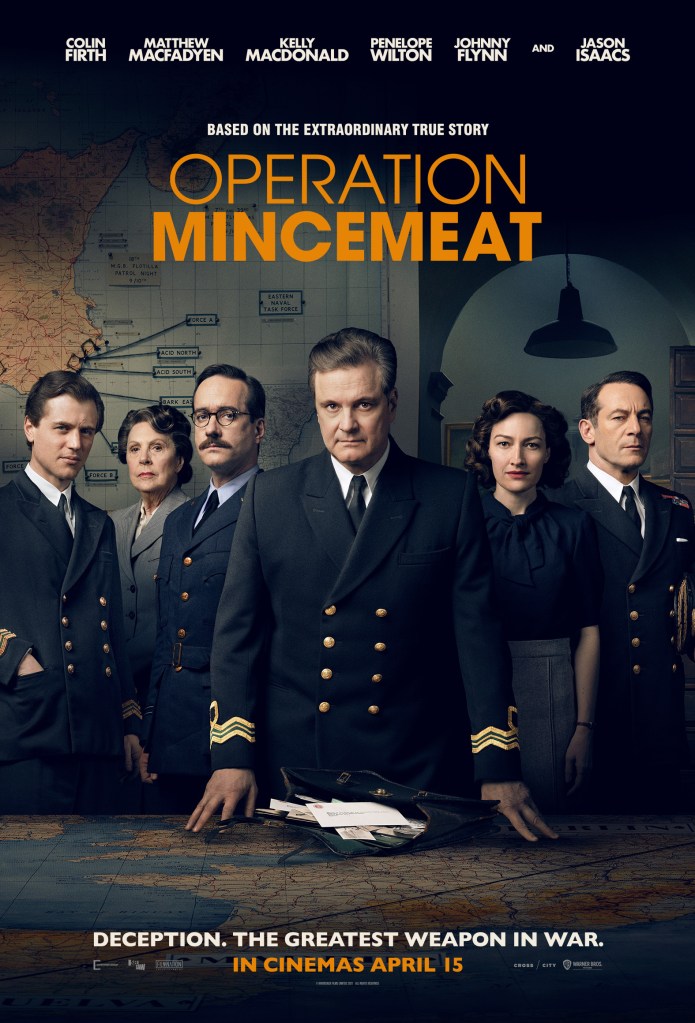
Cast: Colin Firth (Ewen Montagu), Matthew Macfadyen (Charles Cholmondeley), Kelly Macdonald (Jean Leslie), Penelope Wilton (Hester Leggett), Johnny Flynn (Ian Fleming), Jason Isaacs (Admiral John Godfrey), Simon Russell Beale (Winston Churchill), Paul Ritter (Bentley Purchase), Mark Gatiss (Ivor Montagu), Nicholas Rowe (Captain David Ainsworth), Alex Jennings (John Masterman)

In April 1943 a body washed up on the shore of neutral Spain. It was a Major William Martin, carrying Allied plans to launch a massive invasion of Greece in July 1943. German agents intercepted these plans before they could be returned to the British and the Germans shifted their troops to counter this invasion. Problem for them was, Major Martin wasn’t real, the plans he carried were inventions and the Allies were planning to attack Sicily. Welcome to Operation Mincemeat.

Adapted from an entertainingly written and well researched book by Ben MacIntyre, Operation Mincemeat is about one of the most successful wartime deception plans ever launched. The film is a bit of a deception operation itself. Although it looks like a Boys-Own caper film, with eccentric boffins solving problems and running circles around the Nazis, it’s actually a dry, slow, sombre film that seems embarrassed at even the faintest idea of flag-waving Wartime heroism. Instead, everything is glum, depressing and bogged down in invented details that never convince.

Which is a real shame, because when the film focuses on the things that actually happened it’s both entertaining and informative. To create Major Martin, MI6 needed a body – specifically a military-age male who drowned. That was almost impossible to find in London at the time – and the final ‘candidate’ had to be kept as ’fresh’ as possible for months. The letters he carried included ‘private correspondence’ from one British General to another – a letter that went through almost twenty drafts as the British authorities squabbled about how blunt its ‘personal’ views could be. When the body washed up, a helpful Spanish officer tried to return the papers immediately. When the film is on this material it’s good.

But it feels embarrassed by the idea of enjoying this stuff. After all, war is hell and the idea that we could even for a moment think these eccentrics (nearly all of whom spend their time penning spy stories) might find part of this subterfuge fun is disgraceful to it. So, we are constantly reminded of the horrors of war: the moral quandaries of using a person’s body for an operation, the troubling “wilderness of mirrors” of espionage. All this means that lighter moments – or moments where we could enjoy the ingenuity of the characters – are rushed over as soon as possible.

The other thing the film is embarrassed about are the lack of female characters. As such Kelly MacDonald’s Jean Leslie – who contributed a vital photograph of herself as ‘Major Martin’s’ paramour and the background of this fictional relationship – is elevated to third wheel in the planning. But, in a move that feels bizarrely more sexist and conservative, she also becomes the apex of a love triangle between herself and Firth and MacFadyen’s characters. This tedious triangle takes up a huge amount of time in an overlong film and is fatally scuppered by the total lack of chemistry between any of the participants.

It also means our heroes are forced to spend a lot of time running around like love-sick, horny teenagers, following each other and passing notes in class. At one point Cholmondeley tells Jean about Montagu’s wife with all the subtlety of “I saw X kissing Y behind the bike sheds”. This also means that the matey “all in this together” feeling essential to these sort of caper films (which is what this story really is) is undermined. This ends up feeling rather like a group of people who learn to dislike each other but vaguely put personal feelings aside for the greater good.

The real exciting history clearly isn’t exciting enough. Instead, ludicrous, artificial “improvements” littered through the story. I get that Jason Isaacs’ Admiral Godfrey is turned into a moronic, obstructive bureaucrat for narrative reasons. But the ridiculous shoe-horning in of a link between the Operation and the Anti-Nazi resistance in Germany in the second half of the film feels blatantly untrue even while it’s happening. By the time one of our heroes is being confronted by a German agent in their own home, the film has checked out of reality.

Truth is, this is a bad film, over-long, overly dry and crammed with artificial flourishes. Partially narrated by Ian Fleming (a woefully flat performance by Johnny Flynn, sounding oddly like Alex Jennings), the film attempts to draw links between this and the formation of James Bond but these fall as flat as everything else. MacFadyen gives probably the best performance among some wasted Brit stars. The truth is, a one-hour straight-to-camera lecture from Ben MacIntyre would have been twice as entertaining and interesting and half as long. A chronic misfire.

Casablanca (1943)

Casablanca (1943)

Bogart and Bergman are a love story for the ages in the ever-young Casablanca

Director: Michael Curtiz

Cast: Humphrey Bogart (Rick Blaine), Ingrid Bergman (Ilsa Lund), Paul Henreid (Victor Laszlo), Claude Rains (Captain Louis Renault), Conrad Viedt (Major Henrich Strasser), Sydney Greenstreet (Signor Ferrari), Peter Lorre (Signor Ugarte), Dooley Wilson (Sam), Madeline Lebeau (Yvonne), Curt Bois (Pickpocker), SZ Sakall (Carl), Leonid Kinsky (Sascha), Marcel Dalio (Emil), Joy Page (Anna)

For today, for tomorrow and for the rest of your life. That’s the sort of lifespan Casablanca has: to see it is to fall in love with it. That’s what people have been doing for nearly 80 years. There isn’t a more popular “great” movie. This is vintage, top-notch, prime Hollywood product, made by a group of people at the top of their game that has such impact you’ll know most of its highlights without having ever seen the film. No wonder people have been saying since it was released “Play it again” (famously, a phrase you will never actually hear in the film itself).

Casablanca, December 1941. Corrupt Vichy France officials rule the roost, with the city clinging to neutrality. European refugees and American ex-Pats mix with Nazi officers – everyone trying to get those all-important “letters of transit” you need to climb onto a plane and get out of the warzone. Letters like this will cause a world of trouble for American ex-Pat Rick Blaine (Humphrey Bogart), keeping Rick’s Café going as a place where politics are never discussed. But Rick may be forced to choose sides when his lost love Ilsa Lund (Ingrid Bergman) lands back in his life, on the run from the Nazis with her husband Czech freedom-fighter Victor Laszlo (Paul Henreid). Just before the fall of Paris, Rick and Ilsa had a love affair (she thought Victor was dead at the time) and neither of them has got over it. Will Rick take a stand and help Victor flee to continue the fight against the Nazis? Or is this a chance for Ilsa and he finally to be together?

Like many hugely beloved films, Casablanca combines a host of genres into one superbly digestible, hugely enjoyable, package. This is a star-crossed romance in the middle of a war film, with lashings of everything from espionage to gangsters to comedy of manners. In short, there would have to be something wrong with you not to find something to tick your boxes in Casablanca and it’s all brilliantly packaged together by Michael Curtiz into possibly one of the most purely entertaining and crowd-pleasing films ever made.

Casablanca is a superbly written pinnacle of the hard-edged but strangely romantic dialogue of Hollywood at the time, all delivered with more than a dash of humour. There isn’t a scene that doesn’t have a quotable line in it: and all of them delivered by a brilliant actor. Each scene is a master-class in Hollywood professionalism and skill. From our introduction to the streets of Casablanca – capped with the shooting of a Free-French fighter, who collapses to his death underneath a poster of Petain – to the beautifully evocative set (wonderfully shot by Arthur Edeson) for Rick’s café, where we will spend so much of the movie. In swift economy we see how ruthless Rick can be – not lifting a finger to help to petty crook and friend Ugarte (a wonderful cameo from Peter Lorre) – before understanding fully why he’s like that when he responds with something between shock, horror and desperate longing by the arrival of Ingrid Bergman’s Ilsa.

It’s also a film where the stakes are expertly set out. There are jokes about the cold ruthlessness of the Germans, but we are left in no doubt about their danger. (Conrad Viedt is grimly imperious as head Nazi Stasser). The scar on Victor’s face is a constant reminder of the horrors he escaped in the concentration camp (although, as per the time, the film understands these as jails rather than the hell they were). The refugees are putting on a brave face, but there is desperate practising of English and a willingness to trade anything (including their bodies) for letters of transit speaks volumes.

Nearly all of those actors (and Curtiz) are of course refugees and migrants themselves (only Bogart, Wilson and minor-player Page were American). The film gains a sub-conscious depth from this being more than just a story for so many of them. Fleeing from German advance in Europe (or escaping from Nazi persecution) was no theoretical for Henreid, Veidt or the host of great European actors in small roles. You can see that emotion when Victor cajoles the café’s clientele to sing La Marseillaise. The scene never fails to move because of the genuine power of watching real refugees, playing refugees, defiantly singing in the face of the Nazis who ruined their lives (the shots of Madeline Lebeau genuinely tear-stained face or the increasingly moved Spanish guitar player are beyond memorable). You can’t watch this sequence without a lump in your throat.

Mind you can’t watch most of it without that lump. Bogart and Bergman cemented themselves as icons with this passionate love story. It’s grounded, like so many truly affecting romances, on loss and pain rather than joy. Aside from a brief flashback to their time together in Paris – before Ilsa jilts Rick at the train station, rain washing the ink from her note (the sky shedding the tears Rick cannot) – these are two people essentially at loggerheads, because it’s the only way to keep their hands off each other. Rick deeply resents Ilsa, Ilsa can’t even begin to allow herself to think about her lost love for Rick because she fears it will take control of her. Particularly as, in Bergman’s beautifully judged performance, she clearly has a sort of spiritual (as opposed to romantic) love for the noble Laszlo.

It all helped to make Bogart such an icon for generations to come. Bogart is effortlessly cool here, but he’s also incredibly relatable – who, after all, hasn’t had their heart-broken? Watch him sadly starring in the middle distance, befuddled by drink and demanding Sam play As Times Goes By over and over, and it’s no surprise that he’s so torn for so much of the film about what to do. Paul Henreid could never compete with the mix of vulnerability and misanthropic cynicism Bogart effortlessly brings to the part (one of the all-time great performances in the movies).

Bogart is also a perfect encapsulation of what America wanted (and still wants) to be. Minding his own business, but tread on him and he’ll bite back. Not only that, he’ll pick the right side and always make sure he does the right thing. It’s hinted to us that, for all his shady past, Rick has sided with anti-Fascists in Spain and Ethiopia. We even know he had to flee Paris because there was a price on his head. He might “stick his head out for nobody”, but the genius of Bogart is we don’t quite believe him, even while we see him do just that.

The chemistry between him and Bergman – who claimed never to quite understand why the film had such impact – is breath-takingly good. Helped by some of the wittiest and hard-edged dialogue in the movies, they become Hollywood’s own Lancelot and Guinevere. Bergman’s deceptively soft-edged performance, carries inner grit masking her own pain – she also brilliantly manages to show how she could be in love with two men (in different ways) at once. These two characters go through a long dance of denial before finally confessing all: and the iconic ending has the perfect combination of heartfelt longing and sacrifice they both know needs to be made.

But it’s not the only romance in the movie: having almost as much impact is the chemistry between Bogart and a never-better Claude Rains as jovially corrupt Vichy inspector Renault (merrily trading letters of transit for sexual favours and ticking the boxes of his duty while lining his own pockets). Casablanca also has in it one of the greatest love-hate friendships in the movies, between two people who can’t help liking each other, even when they barely have a single interest combined. Sounds like the beginning of a beautiful friendship.

Critical discussion has often revolved around whether Casablanca can be considered a piece of “high art”. It’s hard to imagine Ingrid Bergman’s famous Swedish compatriot directing it. To be completely honest, Casablanca is one of the finest packaged pieces of Hollywood Hokum ever made. And there is nothing wrong with that. It’s a master craftsman of glorious stand-up-and-applaud films in Curtiz, delivering his masterpiece. Casablanca doesn’t have the revelatory flair of something like Citizen Kane. But no other film in existence so brilliantly exploited the Hollywood formula. And it shows how much power, emotion and joy you mine from Hollywood’s narrative and filmic tropes when they were worked with as much skill and passion as you get here.

It’s a film that not only perfectly encapsulates a whole period of Hollywood professionalism, it also establishes the sort of golden rules – a brittle semi-anti-hero, sacrifice, moral complexities and open-endings – that would increasingly dominate Hollywood in the decades to come. Casablanca is a genuine turning point in Hollywood, a perfect summation of the noirs, love stories and adventures that preceded it, but repackaging them with influential insight. It’s also, above and beyond everything else, a bloody brilliant film that, as Nora Ephon said, you can never see enough.

The Diary of Anne Frank (1959)

The Diary of Anne Frank (1959)

Reverent adaptation of the most famous diary ever written, that drains it of any sense of life or drama

Director: George Stevens

Cast: Millie Perkins (Anne Frank), Joseph Schildkaut (Otto Frank), Shelley Winters (Petronella Van Daan), Richard Beymer (Peter Van Daan), Gusti Huber (Edith Frank), Lou Jacobi (Hans Van Daan), Diane Baker (Margot Frank), Ed Wynn (Albert Dussell), Douglas Spencer (Kraler), Dodie Heath (Miep Gies)

Few personal stories have had such a huge impact on so many people’s lives than Anne Frank’s diary. This literary marvel, written by a teenager who mixed profound insight with teenage obsessions, was a world-wide sensation when it was published after the war. The diary covers the over two years Anne, her family and their friends spent in hiding in a secret annexe in her father’s warehouse in Amsterdam. For Jews hiding from the barbaric persecution of the Nazi occupying forces, every day was a struggle between trying to lead as normal a life as possible and the terror of discovery and deportation to a concentration camp. Of course, we know, tragically, they were discovered – and only Anne’s father Otto survived the war.

Otto discovered the diary when he returned to Amsterdam after the liberation of Auschwitz. Moved by the diary’s mix of maturity and youth, Otto had it published first for friends and then more widely. At various points, parts of the diary were edited to remove more “personal” content (Anne wrote freely at points on her growing sexuality and was sometimes less than kind to the other occupants of the annexe). More modern editions have embraced a less edited, fuller diary that really allows us to see what a brilliant, challenging, sometimes judgemental, fully rounded teenager Anne was. The Diary of Anne Frank hails from an era that framed a more sanitised diary. The worst you can say for it is that I think there is a good chance the real Anne Frank would have found it a bit dull.

Adapted from a Pulitzer Prize winning play by Frances Goodrich and Albert Hackett, George Steven’s film is reverent, noble and very worthy. It also frequently lacks any pace or life, and is so concerned with being life-affirming that it filters out nearly all sense of tension or conflict that these eight people felt (which they often did living, as they did, in a few small rooms for over two years, with very little food). The film also centres a romantic relationship between Anne and Peter – one that, according to Anne’s own diary, was already coming to an end at their discovery (in reality, she felt they had little in common other than living in the annexe together).

But Stevens’ film is so concerned with framing someone as fascinating as Anne as a secular saint that it removes much of the vibrancy that gives the diary such impact. It also doesn’t help that Stevens shoots the film in a luscious black-and-white, in detailed sets – but also in the widest possible cinemascope. This does allow for some lovely shots – an image of Anne and Peter kissing in a monochrome shadow, before a door opens to bathe them in light is striking – but it sacrifices the most essential fact of the setting: its cramped smallness.

The widescreen frequently makes the annexe seem larger than it is

Who decided that a location defined by its claustrophobia and smallness was best captured in super-widescreen, I don’t know. But the wide angles make the annexe look a heck of a lot larger than it actually is (I’ve been there, I know it was more cramped than this!) and Stevens frequently frames the whole cast in shots which makes the annexe look positively cavernous.

The lack of claustrophobia has a serious impact on the story’s sense of drama. It also helps to filter out the tension. The script removes, or minimises, most of the key personal tensions in the annexe. We have moments of disagreement, but generally the inhabitants are shown to get on extremely well, with Anne herself practically perfect. This doesn’t really square with the diary, which is pretty open in Anne’s difficult relationship with her mother (with whom she felt no affinity), the clashes with the Van Daans and Mr Dussell (not their real names – Dussell basically translates as idiot, which gives a better impression of Anne’s difficult relationship with this unwanted roommate) or her later arguments with her father. Instead, things are smoothed out and nothing that could detract for a moment from the optimistic and hopeful message of the film is allowed.

The film also replicates several changes that the play made for dramatic effect. This most especially affects the character of Dussell (real name Fritz Pfeffer). In real life a respected dentist and pillar of the Jewish community, Dussell/Pfeffer here is a complacent, panicking imbecile, utterly ignorant of the Jewish faith and claims to have lived his whole life in Amsterdam with no idea he was a Jew. The real-life Pfeffer had in fact fled Germany to escape Nazi persecution. Played with a self-satisfied whininess by Ed Wynn (a famous TV comic, Oscar-nominated here for showing he could do drama), Dussell/Pfeffer is a joke. Pfeffer’s family cut ties with the Franks after the play was released.

Wynn’s nomination reflects how the broader performances in this film gained the most attention. Shelley Winters won an Oscar for her role as the blowsy Mrs van Daan – both van Daans are larger-than-life and obsessed with their status. More restrained and effective performances come from Gusti Huber as Anne’s shy and nervous mother and above all by Joseph Schildkraut as her wisely patient father. Richard Beymer gives an effective performance as a young Peter, straining against the leash of being stuck in a sort of suspended childhood.

As Anne, Millie Perkins looks the part in many ways – apart from the fact she is clearly too old. But there is something a little neutered and frankly a little too perfect about her performance. Her voice has a flat American twang to it that makes much of her voiceover a little wearing to listen to, especially as the tweeness is dialled up. I’m not sure she has the presence for the role – although she is not helped by the sanitised, earnest script.

Criticising The Diary of Anne Frank feels almost sacrilegious, like criticising the lives of the real people who went through something unimaginable to try and survive in a world of horror. But Stevens’ film is straining so hard to be reverent – and shaves the edges of its characters so much – that it turns them and their story into something much more easily digestible than it should be. It becomes a feelgood story, rather than something vibrant and alive. And that vibrancy is what has made Anne Frank live for so long after her murder. To create a film that captures so little of that, instead turning her into a conventional romantic heroine, just feels like it misses what made her unique.