Category: World War II

Brief Encounter (1945)


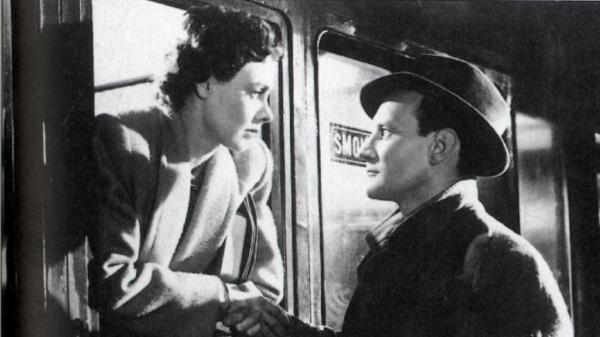
Love and life at a crossroads: Celia Johnson and Trevor Howard in one of cinema’s greatest love stories

Director: David Lean

Cast: Celia Johnson (Laura Jesson), Trevor Howard (Dr Alec Harvey), Stanley Holloway (Albert Godby), Joyce Carey (Myrtle Bagot), Cyril Raymond (Fred Jesson), Everley Gregg (Dolly Messiter)

Brief Encounter is often hailed as one of the most romantic films ever made. This is astonishing really, as it’s actually a film about an affair where two married people with young families toy seriously with the idea of walking out on these families to run off together. Put like that, you can imagine thinking, how could I sympathise with this situation? The film’s magic is that you do.

Laura Jesson (Celia Johnson) is a middle-class woman, married to loving but dull husband Fred (Cyril Raymond) with two young children. Every Thursday, Laura travels to Milford for the day for shopping and a trip to the cinema. One day she meets Alec Harvey (Trevor Howard), a married doctor who works one day a week at the Milford hospital. Enjoying each other’s company they agree to meet again, but quickly find their ease and comfort with each other developing into a deeper relationship – with infidelity on the cards.

Brief Encounter in many ways gets close to a perfect film. Its impact on people seems to be pretty near to universal. Perhaps because the film speaks to a certain universal truth: who hasn’t, at some point in their life, found themselves attracted to someone they shouldn’t be, and who hasn’t been tempted at some point to throw their life up in the air and embrace something new and exciting? The film carefully presents these temptations in a totally non-judgemental and empathetic way, and acknowledges the romance and enticement of the forbidden.

The film also perfectly captures the magical discovery of falling in love, the tingling excitement of every second spent in the company of that new found love-interest. It’s there throughout Johnson and Howard’s interactions: their smiling eagerness, the way their eyes light up and body language opens out when they speak to each other (compare to how closed off they are when speaking to anyone else). There is a relaxed pleasure about it – an innocence and spring-time joy that makes you forget that this is a couple toying with shattering their families in a passionate affair. There is a reason the film is set in a train station – it has a transient, chance-meeting sense about it, with the station being a “neutral” ground far away from both characters’ homes where it is easier for them to pretend to be “other people” – it removes many of the possibilities for the film’s would-be affair to be perceived as sordid or wrong.

The plot also hinges effectively on fleeting moments of chance that cause either joy or pain (usually the latter). Most obviously we have Doll’s interruption of their final moments – enough to make any of us scream at the screen – but their very first meeting is caused by the random chance of a piece of grit flying up at the right place at the right time. The relationship is only unconsummated due to Alec’s friend returning to a flat early (and his sneering contempt for Harvey’s planned adultery is the only scene where a third party shatters the illusion of a perfect romance that could cause no harm to anyone). The lovers encounter friends and have to concoct unconvincing spur-of-the-moment reasons for why they’re together. It’s this constant feeling of chance and chaos around the edges of the drama that provides the sense of danger that keeps this relationship alive and empathetic.

Laura and Alec are grown-up and intelligent adults, aware of the consequences of their actions, and the film keeps this constantly at the forefront. Part of the reason we can “relax” into this would-be affair is that we have already seen at the start that the relationship will end, meaning we can simultaneously root for this meeting of hearts and minds, while knowing that no one (other than the couple themselves) will be hurt. Imagine if the film had opened with Fred’s tear-stained face? Would all the romantic boat rides and illicit kisses on a country bridge still have made us feel warmly towards Laura and Alec?

Watching this film again, I actually started to think about how Lean developed as a director from these smaller scale, script-led Coward films to the sweeping, grandiose epics that he is best remembered for today. In Brief Encounter his command of mise-en-scene is so complete – and in Celia Johnson he has such an expressive actor – that the dialogue in voiceover (for all of Johnson’s excellent delivery) often feels superfluous; it tells us nothing that simply looking at the picture hasn’t already communicated. 

Look at the scene after Laura flees Alec’s borrowed apartment: Johnson’s stunned, panicked, guilty face is the camera’s focus, as we follow her, head down, moving fast through the streets without aim or direction, the score swelling behind her. Later she sits smoking on a park bench. Her conflicted emotions of guilt, shame and shock that she should do such a thing are clear, not just from the acting, but also the construction of the scene. Although the score helps, you could watch the scene silent and know exactly what was happening and what Laura was thinking about. But the film continues with Laura’s voiceover as she details everything her face is telling us. Take a look at the sequence here (64minutes and 42 seconds in):

Was it at points like this that Lean started to move towards his later films, where the language of cinema took the place of the language of speech? Later he would place so little information about the real Laurence of Arabia in that film’s script that nearly everything is interpreted from O’Toole’s expressive face. I think you can see the roots of it here – brilliant visual touches that capture the immediate intimacy between Alec and Laura, or the way the camera holds itself steadily on Laura while she prepares her evening make-up and calmly lies for the first time in her life to her husband. In the entire construction of this film, its detailed and perfectly paced building of a sense of Greek tragedy around a slim story, you see a master film-maker, a genius of visuals and compositions. You don’t need the extra explanation, it’s all there on the screen for us. 

Camera choices are sublime: look at the staging of Alec/Laura’s final meeting: first time round, the camera moves lightly past them, focused on Holloway and Carey’s characters. Despite that, we get an overwhelming sense that something important is happening just out of shot – reinforced when Dolly interprets them. Flash forward to the end of the film, as the scene is restaged – now Dolly practically forces herself into the frame (in one great shot, the camera watches Alec leave through the door before Dolly literally walks in front of the shot to sit down at the table). The careful, comfortable composition of Alec and Laura sharing the frame together – and the way she never does so with her husband (until the very end of the film) alone tells us visually as much about the relationships as any dialogue could.

What is fascinating is that this is remembered by so many people as being about the control of emotions. Watching it again, I remembered how far this was from the truth. Alec and Laura speak their feelings for each other with an almost wild abandon once the floodgates are open – Alec’s expression of devotion while they dry off in the boat house is as frank and heartfelt a declaration of love as you are likely to hear. Laura’s emotions – her joy and her pain – are not only written across her face, but spilled out across the screen in voiceover. The characters button this up when with others, but alone they are as high on love as a pair of first-date teenagers. Throughout, the writing of their dialogue is spot-on – from their initial slight shyness to the way their lines interlock and complement each other. Again, compare how Laura talks with Alec – naturally, freely, each line developing smoothly from the other – with how she communicates with everyone else in the film (haltingly, distant, talking at cross purposes, subject matter changing from line to line). I could do without chunks of the voiceover, but the dialogue is sublime, both in its style and its construction.

You can’t go far wrong either when you have actors as good as this, with such chemistry. Celia Johnson gives one of the most perfect, iconic performances in the history of cinema. Does she strike a wrong note once? I’ve already waxed lyrical about her expressiveness – but watch her in every scene, you always know what she is thinking. Her understanding of Laura is complete, and she brilliantly shows throughout the torn loyalties between the life she has and the one she could have – between making herself happy and doing “the right thing”. The film is really her story and Johnson creates a character I can’t imagine someone not relating too. Her voice is in a way ripe for parody with its crisp 1940s tones, but along with her beautifully expressive eyes under the surface of that stiff-upper lip sharpness, there are wonderful beats of emotion and desperation.

Trevor Howard is equally good as Alec Harvey – it’s amazing to think this was only his second film role. Harvey is a character we are slightly distanced from in comparison with Laura – it’s arguable that, since the film is delivered through Laura’s voiceover, we only see him (except in the opening moments) as Laura perceives him. Howard has a charm, a gentleness and an honour about him that make him a man we can relate to, but the actor also brings an edge of danger to him that make him a plausible would-be adulterer. Early in the film it’s Alec who makes the running, pushing for dinners and bunking off work for cinema trips. It’s he who sets up the possibility of consummating the relationship, and makes the first formal declaration of affection. In fact you can see, in that slight edge that Howard gives it, why some have plausibly argued that Harvey could be a serial seducer. But that’s subtext – like Johnson, Howard is perfect.

Brief Encounter is one of those films that rewards constant reviewing. It’s a brilliantly told, tightly structured and beautifully shot story that is also deeply moving and emotional, because it feels so real. It’s possibly one of the best expressions on film of falling in love, and all the excitement and danger that it brings. Perhaps that is why it moves us, and continues to have such appeal – all of us have had that excitement of spending every moment you can with someone else, of sharing everything with them. It’s an addictive and exciting feeling, and this film captures it perfectly. It also moves us because, deep down, we like sad tragic endings – they have real impact when we have related so strongly to the characters, and they stick with us. Because, you always remember when you have been heartbroken – and seeing it so vividly brought to life by Celia Johnson in a truly great performance helps to make this film permanently rewarding.

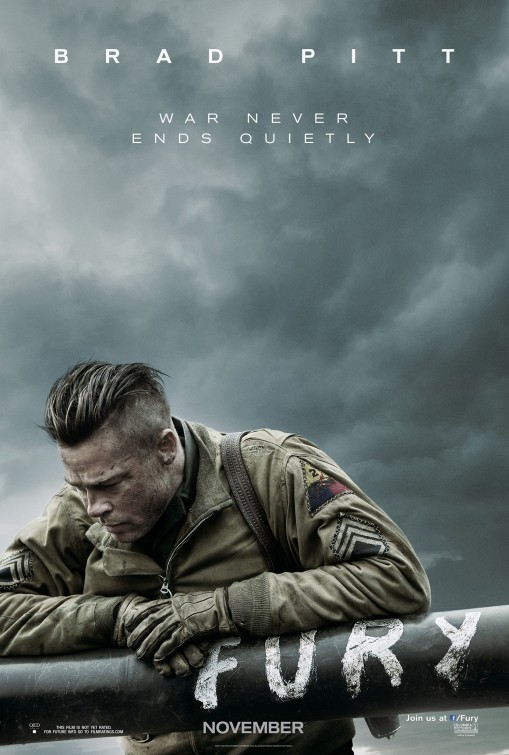
Fury (2014)


Brad Pitt and his boys saddle up – but sadly not on a war against cliche

Director: David Ayer

Cast: Brad Pitt (Sgt Don “Wardaddy” Collier), Logan Lerman (Norman Ellison), Shia LeBeouf (Boyd “Bible” Swan), Michael Peña (Trini “Gordo” Garcia), John Bernthal (Grady Travis), Jason Isaacs (Captain Waggoner)

The Second World War. How many times has it been placed on screen? And  how hard is it now to tell an original story about the conflict? This film proves it is, in fact, very hard indeed. Norman (Logan Lerman) is a young clerk sent to join a tank crew as a replacement machine gunner. He joins the crew of the tank Fury led by “Wardaddy” (Brad Pitt), a famed veteran whose crew are a tightly loyal crew of old hands: Logan’s reluctance to fight quickly makes him a target for anger. But when they are sent on a mission to hold a crossroads, will he prove himself?

There isn’t much original in this rather dull remix of elements from other war films – most notably The Dirty Dozen, Saving Private Ryan and elements of Inglorious Basterds, with Pitt in particular essentially offering a second version of the same Nazi-hating wild guy he played in Tarantino’s film. As a result, there is almost nothing in here that you haven’t seen in several – often much better – Second World War films before. Nothing seems fresh, nothing seems original and as a result nothing is ever particularly exciting or engaging.

Added to that, this “coming of age in a time of war” drama is undermined by the fact that none of its characters are particularly sympathetic, engaging or likeable. The film wants to partly show that constant conflict and war has dehumanised its principle characters– and we see the effect it starts to have on  young Norman – but that doesn’t change the fact that the tank crew we are saddled with for the course of the movie are boorish, unpleasant, swaggering, bullying assholes. The small amount of shading added to them doesn’t change that, and it’s pretty hard to feel anything at all when they start getting killed off late in the movie.

The final confrontation scene also flies in the face of logic – one broken-down tank takes on 200 German soldiers? Why don’t the troops outflank it? More to the point, as everyone involved acknowledges the war is nearly over, why bother with the risk – what is at stake? Why the kamakazi final stand? Never are the stakes clearly explained – instead it’s just lazy “men gotta do” action rubbish. Ayer may feel that he making a point with Norman’s character about innocence shattered by conflict, but it’s a pretty murky point that’s been made many, many, many times before, and I don’t think he is swift in criticising or condemning some of the terrible things Wardaddy and his soldiers do in this film, despite their undoubted efficiency at combat. But like many films of this genre, slap the label Nazi or SS on anyone and it justifies any level of violence directed at them.

I’ll give the film a nod for some good photography and some impressive sound and visual effects. In terms of showing tank warfare, this is pretty impressive, and the deadly firepower of these weapons is brought very well to life. The characters may not be engaging, but this is decently acted – even if many of the scenes rely too heavily on grandstanding performing. Brad Pitt is good enough to even sway some interest in a 2D character he could play in his sleep: quieter scenes of reflection allow us to think that there is more to Wardaddy than a love of fighting.

But this is a dull and empty film and it builds towards things you’ve seen done better elsewhere.

Good (2008)

Viggo Mortensen and Jason Isaacs are conflicted brothers in arms in this all too familiar (in every sense) Nazi Germany story

Director: Vincente Amorim

Cast: Viggo Mortensen (John Halder), Jason Isaacs (Maurice Israel Glückstein), Jodie Whittaker (Anne), Steven Mackintosh (Freddie), Mark Strong (Philipp Bouhler), Gemma Jones (Halder’s Mother), Anastasia Hille (Helen Halder), Steven Elder (Adolf Eichmann)

Is there a more overused quote than Edmund Burke’s “All that is necessary for the triumph of evil is that good men do nothing”? It’s virtually become a cliché and can be heard spouted with chin-stroking smugness in everything from Law & Order episodes, opening title cards to crappy action films to the message-boards of the internet. If Good can have any claim to history (and it probably can’t), it can say that it’s the film of the phrase.

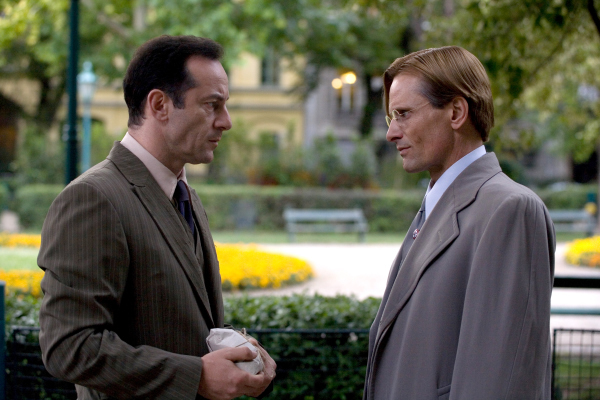
Our Good Man is John Halder (Viggo Mortensen). Our Evil is Nazism. Halder is a literature professor in 1930s Germany. He’s written a novel in support of euthanasia: this brings him to the attention of the party authorities, who need intellectual support for their own plans. Halder accepts an honorary rank in the SS – and from there it’s compromise after compromise that leads to the Holocaust. His good and bad angels are his new young wife Anne (Jodie Whittaker), who loves the advantages party membership brings, and his Jewish best friend Maurice (Jason Isaacs), whose situation goes from bad to worse.

It’s a very, very earnest film which wears its heart on its sleeve. Which is the main problem – the film-makers were clearly desperate to “tell it right” and stay true to the original play – but the whole idea comes across slightly outdated, obvious and far too familiar. Whatever point the play had to make when first staged in 1981, has now been said and done to exhaustion. Despite the care and attention, there now isn’t much originality or freshness. As such, it never really rouses any feelings.

The story it tells of its lead’s reluctant seduction into being an active Nazi can probably be charted fairly accurately without watching the film. The plot device of the Jewish friend feels too on the nose and obvious (compelling as Jason Isaacs is in the role), and the betrayals by inaction follow well-established patterns. The few moments of interest are shied away from – when Halder first puts on his SS uniform (to take grudging part in Kristallnacht) his wife is so aroused she performs oral sex on him: it could have been an interesting point about the sexual seduction of power and the brilliant design of Nazi regalia, but the film rushes over it.

I was also not sure about the device of Halder haunted by visions of various figures he encounters lip-synching to scratchy recordings of Mahler songs. You can guess where this going when you see the film, but it’s a device that is a little unclear. It’s meant to signpost moments of Halder’s moral disintegration (Halder flirts with his new-wife-to-be? The music. He accepts SS rank? The music. Congratulations from Goebbels? The music. He abandons his friend? The music.). It’s final reveal, an echo from Halder’s future trip to Auschwitz is interesting but not exactly profound or revealing – and the device is heavy handed in its use in any case. It’s clear Halder is a failed man and this device doesn’t tell us anything about that.

Despite the film’s predictability and lecturing, it does have good moments. Many of the scenes of Nazi brutality are shot with an affecting simplicity (I admired the cold, POV shooting of Halder’s visit to the arrival point of a camp implied to be Auschwitz), and much of the acting is on form. Mortensen holds the film together well as the deluded moral weakling blown by every wind; he avoids any temptation for histrionics and is happy to make his character detestable in his weakness (this is a film that challenges us to accept that we would probably be as cowardly as Halder is). This in turn gives more freedom for fireworks from Isaacs, who delivers a passionate and intense performance of angry powerlessness. Whittaker is impressive in a shallowly written part as Halder’s ambitious young wife. Mark Strong’s cameo as a suave party big-wig is great, as is Steven Mackintosh’s role as a genial SS officer, moaning about his career.

It’s got its moments but this is a stagy, talky film that tells a familiar old story without panache or originality. It settles for making the same point over and over again. It bravely offers no possible redemption for Halder at all, but his general story is so familiar it never engages as much as it should. Essentially the film’s script could just as easily have had its characters endlessly repeat Burke’s famous phrase – in fact, the one surprise in the film is that neither the quote nor Edmund Burke ever gets name checked. Very, very, very noble but lacks life.

The Desert Fox (1951)


James Mason rides into action as a sympathetic Nazi

Director: Henry Hathaway

Cast: James Mason (Field Marshal Erwin Rommel), Jessica Tandy (Lucie Rommel), William Reynolds (Manfred Rommel), Cedric Hardwicke (Dr Karl Strölin), Luther Adler (Adolf Hitler), Everett Sloane (Gen. Wilhelm Burgdorf), Leo G. Carroll (Field Marshal Gerd von Rundstedt), George Macready (Gen. Fritz Bayerlein), Richard Boone (Capt. Hermann Aldinger), Eduard Franz (Col Claus von Stauffenberg)

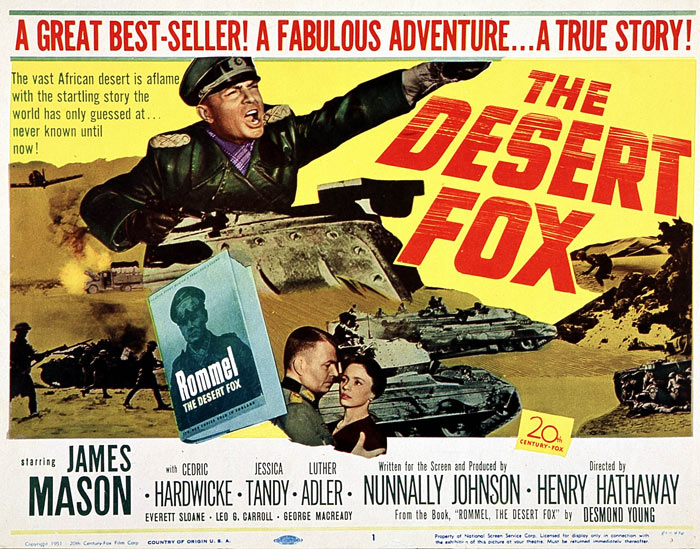
It’s pretty astonishing when you think about it that less than six years after World War II ended, Hollywood produced a film about one of Germany’s leading generals which painted him in a largely positive light. Even more of a surprise is that this was a box-office hit. But then this film was designed to be a step towards reconciliation – especially with one eye on the Cold War and the need for Germany as an ally.

James Mason (brilliant in one of his most iconic roles) plays Rommel, with the film beginning just as the tide of war turns in Africa at El Alamein. Of course, this allows a lot of talk of Rommel being a noble fighter and brilliant general, without having to awkwardly show him chasing the Sixth Army across Africa! From his defeat to Montgomery (unseen but often referenced), Rommel slowly loses his faith in Hitler, realising the Fuhrer cares little for the lives of his soldiers. Gradually he becomes closer to the conspirators of the July 1944 bomb plot to assassinate Hitler. When it fails, he is given the choice: suicide and a hero’s funeral or execution as a traitor for him and his family.

The film is notable for opening with an exciting James Bond-style action sequence, a 1941 raid by British commandos on Rommel’s HQ (codenamed Operation Flipper), designed to grab the viewer’s attention – and to provide the action in a war film that otherwise has virtually no combat in it. It’s a terrific opening that immediately establishes the importance Rommel holds. The Desert Fox was one of the first films to use this device of an action prologue to open the story – the sort of thing James Bond has since mastered.

From there, Hathaway’s journalistic film (much of the World War II footage is reused from newsreels) is very smoothly and professionally directed, turning the last few years of Rommel’s life into a classic morality tale. Whether this is completely true or not (more recent research on Rommel suggests he was a much more enthusiastic early supporter of the Nazi party than suggested here), there seems little doubt that he was at the very least sympathetic to the July 1944 bomb plot. Rommel here is a man who sees the light too late – and pays a heavy price.

Nunnally Johnson’s well-researched and tight screenplay focuses on conversations and political manoeuvering, with Rommel presented as apolitical and straight shooting, clumsily working through debates he lacks the political sophistication to understand. Johnson’s script also provides excellent opportunities for sparkling cameos. Leo G. Carroll is particularly good as Rommel’s frustrated and cynical superior, but there are also stand-out performances from Everett Sloane as a lackey from High Command and a memorable cameo of controlled ranting extremity from Luther Adler as Hitler.

The film, though, is carried by James Mason’s subtle and sympathetic performance. Mason has the charisma, his upper class manner perfect for the military man, but he isn’t afraid to play both positive and negative. So we get his arrogance and wilful blindness, showcased in scenes where is passionate defence of Hitler is as much an attempt to persuade himself as others. But we also see his loyalty to his men and the tenderness of his relationship with his wife (played well by Jessica Tandy). Mason’s performance is compelling and soulful.

It’s not a perfect film. There are some slightly clumsy links at the start back to the source book written by Brigadier Desmond Young, who served in North Africa. Young cameos at the start in reconstructions of his meeting-at-a-distance with Rommel and his post-war research. Narration from the book is a worked into the film – and having heard the real Young speak, its mid-Atlantic tone is rather jarring. The narration often serves as a transition from event to event, but this is never completely smooth, meaning there are some odd jumps.

But it’s a very decent, very professionally done piece of film making. Its version of Rommel isn’t seen as the whole story today (there is a whole historiographical argument about the “Rommel Myth” of the man as an apolitical soldier or willing accomplice), but it’s very consistent within the film. Very well acted and scripted and very professionally directed, it’s a political film cunningly disguised as a war film, which does a very good job of creating the atmosphere of Nazi Germany and in re-creating historical events and has an excellent lead performance from James Mason.

Hacksaw Ridge (2016)


Andrew Garfield embodies true heroism in Mel Gibson’s war drama

Director: Mel Gibson

Cast: Andrew Garfield (Desmond Doss), Vince Vaughn (Sergeant Howell), Sam Worthington (Captain Glover), Luke Bracey (Smitty Riker), Teresa Palmer (Dorothy Schutte), Hugo Weaving (Tom Doss), Rachael Griffiths (Bertha Doss), Ryan Corr (Lieutenant Manville).

There is a slight odour hanging over Hacksaw Ridge. Few Hollywood superstars fell as hard and as far as Mel Gibson has done in the past few years. As such, the fact that this film has been such a critical and commercial hit is being seen as redemption. While I’m not sure any film could really be that, it’s certainly a clear expression of many of the things that made him a successful superstar – a  carefully made blockbuster that tells a simple story, in a way that mixes sentiment and violence, built around a hero it is impossible not to admire and respect.

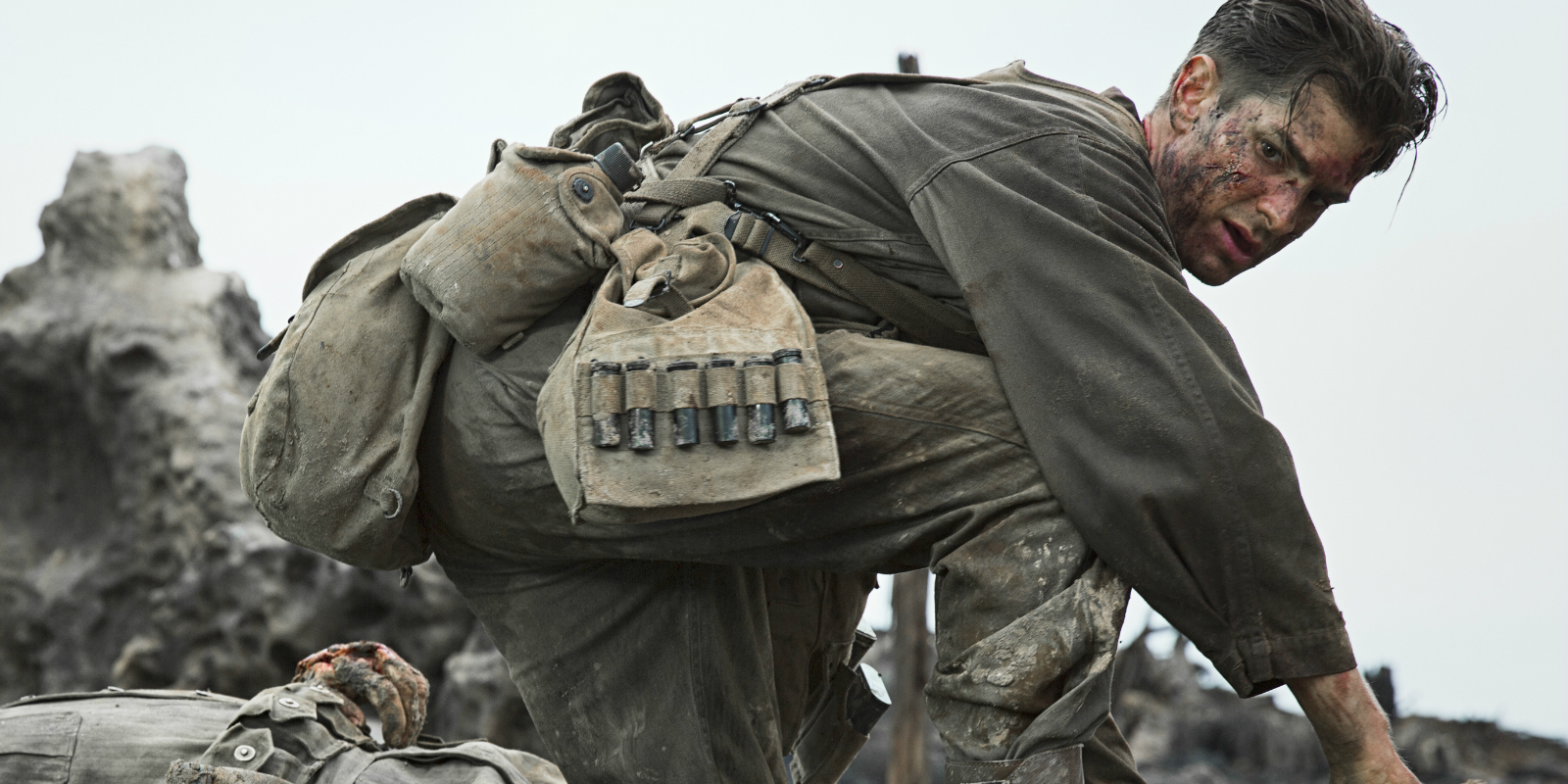
Desmond Doss (Andrew Garfield) is a young Virginian, deterred from violence early in his childhood, who volunteers for service in the Second World War, willing to do everything he can to support the war effort except hold a rifle and take a life. Instead, inspired by his fiancée (a nurse) he wants to serve as an army medic – to do his bit for his country, while standing by his principles. Needless to say his decision is not greeted warmly by his army comrades – but  at the Battle of Okinawa, as his unit goes into service, he proves his heroism saving lives during the Battle of Hacksaw Ridge.

Firstly, before going any further into the merits of the film, Andrew Garfield’s performance in the lead role is extraordinarily good in its simplicity, straightforwardness and aw-shuckscharm. Never once does his guilelessness and honesty ever become wearing – instead (and Gibson’s direction helps) he is a man you immediately root for, who you can respect without him feeling perfect. It’s a terrific performance, respectful and admiring but also real. Gibson’s camera showcases his heroism in an unfussy way, avoiding too many directing flourishes – which makes these scenes of life-saving all the more inspiring. A perfect match of actor and role.

There are also plenty of fine supporting performances – Hugo Weaving is very good as Doss’s  shell shocked father, barely able to understand his emotions, with Rachael Griffiths similarly good as his caring mother. Sam Worthington gives perhaps a career best performance as Doss’ captain. Even Vince Vaughan, while sometimes trying too hard as a gruff sergeant, quickly settles into giving one of his finest performances. Teresa Palmer is very sweet as Doss’ fiancée. In fact, there is not a bad performance in it.

But what of the film? Perhaps only Mel Gibson could direct a film that is simultaneously a celebration of pacifism and an endorsement of righteous war. This is perhaps one of the most visceral war films you are likely to see, with bullets ripping bodies in half, the camera unflinchingly recording every injury in gory detail. Say what you like about Gibson, but as an ‘experience’ film maker he is extraordinarily good – he knows how to immerse the audience in ways few others do. He also brilliantly shows both the terror of combat and the courage of soldiers. His staging of the war is tense and gripping, without being sensationalist. In fact, I don’t hesitate to place its depiction of war up there with Saving Private Ryan, combining the savagery of combat with the uplifting courage of a man who only went there to save lives.

Surprisingly one of the strengths of Gibson’s film-making is that he is a very simplistic story teller. His films are morality tales of right and wrong. His heroes, be they William Wallace or Jesus Christ, have overcome burdens to build peaceful homes before a call of duty shatters their world. In a way, that makes Desmond Doss a perfect match for him. The structure of the film, and the familiar beats in the first half of the film, ticking off influences on Doss’ life with a straightforwardness bordering on cliché, all work because they are presented with a guileless genuineness. Gibson successfully establishes a character who feels like an ordinary man who goes on to place himself in an extraordinary position.

Gibson’s simplicity as a story-teller has its drawbacks in the presentations of the antagonists in the film. The Japanese are presented as little better than a faceless horde, a fanatical band of killers, consumed with ruthlessness and lacking all sense of moral decency. Of course, that is to be expected from seeing the film solely from the Western side. But it sits slightly uncomfortably in a film that want to endorse Doss’ values. There are touches of even-handedness – a moment where Doss treats a terrified Japanese soldier in a bunker, or references to a few of the enemy that he lowered off the cliff (although Gibson isn’t afraid to have a soldier bluntly state “They all died” when asked what happened to them). But in a film that claims pacifism is something to admire, showing one half of the conflict as almost universally unfeeling monsters doesn’t always sit right.

This conflict between pacifism and righteous war, is one the film struggles with throughout. If anything it wants to have its cake and eat it too. It wants us to acknowledge the principle of pacifism as a good thing. But it’s also almost scared of being accused of presenting any idea that might be accused of detracting anything from the heroism of the generation that fought the Second World War.

How Doss squared his moral beliefs with helping the men alongside him to carry on killing is none of my business. It’s certain Doss is a far wiser, braver and kinder man than I could ever hope to be, and his actions were genuine, decent, honest and in keeping with his personal morality. I don’t understand his thinking, but that doesn’t matter and the film knows it doesn’t  matter, that we don’t need to completely understand to respect. The film wisely avoids any hokey scenes where Doss explains his convictions. It presents what Doss did as a fact, and says to us “here it is”. The man was involved in a hellish war, but he did what he believed was the right thing to do, and he saved dozens of lives doing it. If we can celebrate the actions of the men on the Normandy beaches fighting Nazism, or the pilots of the Battle of Britain, then we certainly can salute Gibson for bringing to the world’s attention this honourable, decent, brave and above all genuine man.

For all his faults, this film proves Gibson is a first rate filmmaker. Here,  he has made a moving war film that, although it seems to be trying to be many things to many people, still manages to contain a moral message and highlights a man who deserves to be remembered. It may have confusion at its heart about its true attitude towards war – but I believe it does have that heart in the right place, is trying to send a positive message to the world, and is a highly impressive and compelling piece of filmmaking.

Anthropoid (2016)


Jamie Dornan and Cillian Murphy plan to remove The Butcher of Prague

Director: Sean Ellis

Cast: Cillian Murphy (Jozef Gabčík), Jamie Dornan (Jan Kubiš), Anna Geislerová (Lenka Fafková), Harry Lloyd (Adolf Opálka), Toby Jones (Jan Zelenka-Hajský), Charlotte Le Bon (Marie Kovárníková), Alena Mihulová (Mrs Moravcová), Bill Milner (Ata Moravec), Vaclav Neuzil (Josef Valcik), Andrej Polak (Jaroslav Svarc), Sam Keeley (Josef Bublík)

Reinhard Heydrich, Head of the SD, Reichs-Protector of Bohemia and Bavaria (the new German name for Czechoslovakia) and the architect of the Final Solution, was the only leader of the Nazi party to be assassinated by Allied forces during the Second World War. In revenge for his death, German soldiers destroyed the town of Lodz, executing the entire adult male population and sending the rest of the population to concentration camps. The reprisals eventually numbered over 5,000 people.

This film covers the build-up and planning of the assassination (code-named Operation Anthropoid), the assassination itself and the eventual fates of the assassins. It begins with Jozef Gabčík (Cillian Murphy) and Jan Kubiš (Jamie Dornan) parachuting into Czechoslovakia, with orders to plan and execute the assassination of Heydrich. With the assassination at the half way point of the film, the second half then focuses on the immediate aftermath and the fates of those involved.

Anthropoid was a box-office disappointment when released. Personally I think a large part of this was connected to its terrible title. Anthropoidis a word that means nothing to people watching and gives you no idea what the film is about – it sounds more like a sci-fi film than anything else. It’s also a film without big-name stars, with a fantastically downer ending, and about an event many people have not heard of. It’s a shame though, as this deserved an audience.

It’s a tense, tightly structured film, sharply directed, that has events as its primary momentum over character. The characters in the film are primarily defined by their purpose within the plot. Saying that, there is scope allowed for characterisation. Cillian Murphy’s Gabčík begins the film as a man who believes himself willing to sacrifice anything for the cause. However, when the losses begin to happen, he is the man who most quickly succumbs to anger and sentiment. Conversely Jamie Dornan’s Kubiš begins as hesitant about the taking of lives, but becomes the most effective soldier among the group.

The film is actually fairly even-handed in its portrayal of the resistance members, not afraid of showing that they were not always a unified group willingly sharing a purpose. Many of the members of the resistance are hesitant about the effect the plan will have on their already decimated ranks. Others, such as Harry Lloyd’s Opálka seem almost obsessively dedicated to their duties as soldiers, at the expense of any other considerations. Even the eventual traitor is shown to be motivated at least partly by fear for the fate of his family. Similarly the film is not afraid to show the somewhat haphazard planning of the assassination, or its bungled execution (expertly reconstructed).

There is a definite mood shift after the assassination. If the first half of the film is a subdued men-on-a-mission tale, the second half is a brutal depiction of the onslaught of retribution. Ellis’ direction is crisp, taught and unflinchingly truthful, recording the actions of the police state with honesty and no sensationalism – from doors kicked in to some brutal torture scenes (the torture of one character in particular is tough to watch, without ever being graphic). The final stand of the assassins in the church is similarly brilliantly filmed and difficult to watch, a blazingly tight and bloody display of gunplay and violence, in which doomed men determine to take as many of the enemy down with them as they can.

However, as it goes on, I think the film becomes so seduced by the courage and bravery of its characters, that it stops questioning the value of their actions. From the start, many members of the Czech resistance are shown to question the worth of the plan when balanced against likely reprisals. This is an issue the film loses sight of in its second half. It is not completely surprising, considering the immense bravery of the assassins during their final stand, that the film doesn’t wish to undermine this by probing the reasoning behind their actions. But it’s a point that needs to be made and the film, in the end, dodges it: was killing Heydrich worth sacrificing 5,000 innocent Czechs in return? I’d argue probably not. The allies at the time certainly decided it wasn’t – no other attempt would be made to assassinate a leading Nazi during the war – and the question needed to be asked more in  this film. Killing Heydrich didn’t stop anything he had set in motion and had little overall impact on the outcome of the war.

Instead the film ends on a note of optimism, stressing Heydrich’s vileness and the fact that the successful assassination made the Czechs more recognised as members of the Allies. It is understandable, considering the tragic ending of the film, that its makers didn’t want to end with any doubt about the righteousness or value of their actions. And there is no doubt that Heydrich deserved his fate. But the film avoids truly addressing the collateral damage to the Czech population. It’s a single question mark over other an otherwise gripping and tense dramatisation.