Destroyer (2018)

Nicole Kidman goes way-against-type as a bend the rules cop in Destroyer

Director: Karyn Kusama

Cast: Nicole Kidman (Detective Erin Bell), Sebastian Stan (Chris), Toby Kebbell (Silas), Tatiana Maslany (Petra), Bradley Whitford (DiFranco), Jade Pettyjohn (Shelby Bell), Scoot McNairy (Ethan), Toby Huss (Gil Lawson)

There are few things that pique the interest of reviewers and viewers more than a celebrated Hollywood star going well against type, looking rough, playing tough and letting those shades of grey flow freely. That’s the cheap interest in Destroyer, Karyn Kusama’s engaging, well-made thriller which showcases the sort of way-against-type performance by Nicole Kidman that practically demands the poster scream “Kidman as you’ve never seen her before!”. Of course this all serves to obscure that Kidman is a damn fine actress and a committed performer, and she gives it everything in this grimy, underworld thriller of compromised cops and ruthless robbers.

Erin Bell (Nicole Kidman) is a detective with a shady past: an undercover operation with an FBI Agent Chris (Sebastian Stan) which went wrong 15 years ago. In the present day, the body of a John Doe in Los Angeles opens up links to this case from the past, causing Erin to start a rogue investigation into her old undercover days and the gang members she knew back in the day, specifically her long-held grudge against the psychopathic Silas (Toby Kebbell).

Destroyer gives us a familiar story – the cop with the dodgy past, gone to seed, playing against the rules, tired of life, with a shattered family background, investigating what could be one last case that has devastating links to the past – but presents it from a slightly new angle by making the protagonist a woman. This calls for a terrific performance from Nicole Kidman, who is bashed up, run down, grouchy, seedy and above all immensely damaged. Kidman’s skill at a performer is evident in every scene, creating a character who cannot escape from the burdens of her past, who rejects all help and who is unable to live with the burden of some sort of unspecified guilt.

Much has been made of Kidman’s roughed up, broken nosed, run down, alcoholic appearance (the film gets a lot of mileage over close ups of her ravaged, aged, alcoholic’s hands), but her commitment to the role transcends any deliberate slumming. She is completely believable as the sort of rough-and-tumble, rule breaking cop. The make-up also means that the flashback scenes to a 15-years younger Erin are immediately clear – and give us a clear indication of how far she has fallen since her more hopeful days.

The film is all about the burden of the past, and the film constantly flashes back and forth between the present day and Erin’s time undercover. The film carefully and slowly unveils the exact reasons for Erin’s guilt and why she has become the person she is, but the burden of it hangs over every scene in the present and is visible in Kidman’s eyes in every scene. It brings these themes to life extremely well and weaves an engaging story, even if everything in it seems like a collection of familiar events from other films.

In fact that is the film’s biggest weakness, right there. Many of the events, characters and themes in it feel like they have been plucked from a range of noir thrillers, thrown up into the air, and then reassembled into a new patchwork. As impressive as Kidman’s character is, it’s familiar to us from any number of hard-boiled cops past. The film’s structure – of Kidman going from contact to contact to get closer to Silas – basically allows for a series of actors to give performances that, for all their skill, end up feeling like a random collection of stock characters. None more so than Silas himself who, despite Toby Kebbell’s best efforts, is a totally forgettable rent-a-psycho. But then you can say the same for Tatiana Maslany’s aged junkie and, for all his slimy excellence in the role, Bradley Whitford’s sleazy money launderer. Other characters feel the same as well, from Kidman’s troubled teenage daughter, her would-be gangster boyfriend, Erin’s put upon ex-partner or her wearily understanding partner. These people all seem, to various degrees, to be stock caricatures rather than characters.

What really makes the film work is the dynamic, often hand-held, kinetic energy of Karyn Kusama’s direction. Jittery, immediate and very real, Kusama makes a number of these stock situations – from shoot outs to roughing up suspects – look at least new and exciting. The two main shoot outs in the film are extremely excitingly done and make for gripping set pieces, with the added originality of seeing the main players being women. 

But the film itself is just a little too obvious and stock for it to really stand by itself, for all the quality of the direction and the excellence of Kidman. There are some moments that work brilliantly with the unexpected twist of having a woman in the lead role and seeing Kidman throw herself into a gunfight with a heat-packing disregard for her own safety is all the more electric for it. But it’s still a little too predictable and familiar – for all the fact that there is a decent semi-twist towards the end that reveals not all is as we thought at the start – which perhaps doesn’t make it a film for all time.
Jules et Jim (1962)

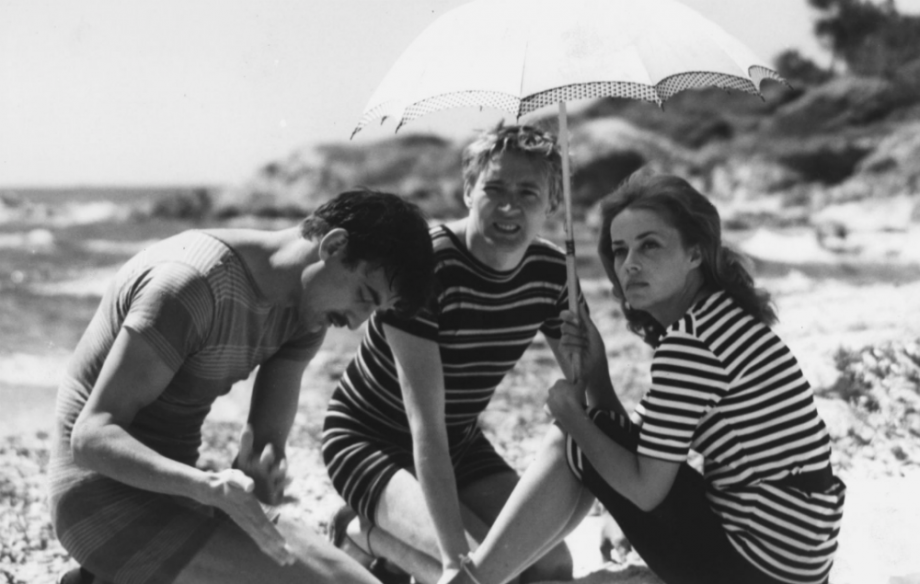
The film that launched a thousand menages: Jules et Jim

Director: François Truffaut

Cast: Jeanne Moreau (Catherine), Oskar Werner (Jules), Henri Serre (Jim), Vann Urbino (Gilberte), Boris Bassiak (Albert), Marie Dubois (Thérèse), Michel Subor (Narrator)

Of all the films of the French New Wave, Jules et Jim was the one that really captured the global imagination. Its success rode came not only from its embracing of the new French style, but also from the way it captured some of the mood starting to build across the world in the 1960s. Truffaut’s third film, it turned its then 29-year-old director into one of the most renowned directors in the world. Filmed with verve and imagination, it still holds up brilliantly today as well.

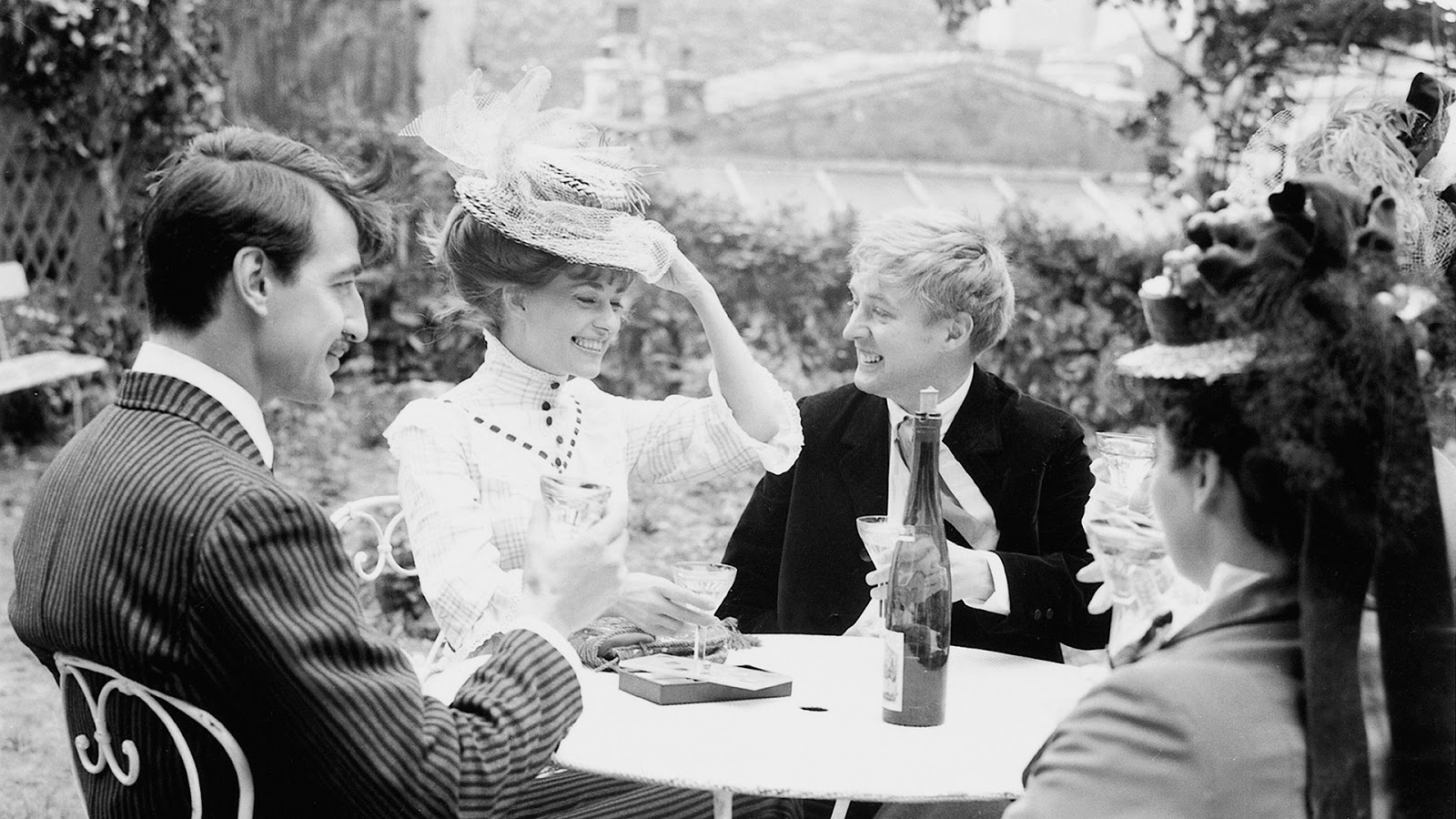
In Paris in the years before the First World War, French bohemian Jim (Henri Serre) and shy Austrian writer Jules (Oskar Werner) become best friends. They share everything – the arts, sport and occasionally women – and the bond between them is unshakeable. When both men meet Catherine (Jeanne Moreau), a free-spirited, extremely bohemian young woman, they both fall in love – although the infatuated Jules is the first to admit it. Both men fight for their countries in the Great War and return to civilian life: Jules marries Catherine and they have a daughter. But home life cannot keep Catherine bound down, and a visit to Jim throws the three of them into a curious but warm menage-a-trois. But can such bliss last forever?

Truffaut’s film is playful, vibrant and overflowing with style. While other French New Wave films prior to this had focused on sending the camera out into the streets and capturing the lives of everyday Parisians, Truffaut’s film mixes this with period trappings. Utilising the dynamic camera work of his peers, Truffaut throws in carefully selected newsreel footage and still photography. But all this material is edited with modern forcefulness, Truffaut using a range of freeze frames, wipes, dolly shots and several other editing and camera tricks to make this period story feel astonishingly fresh. The film is fast paced and brilliantly made, and Truffaut’s camera roves like an engaged but playful observer – a feeling added to by the use of a subtly wry narration.

According to legend, Truffaut found a copy of Henri-Pierre Roché’s semi-autobiographical novel in a charity bin and fell hard for the book. It’s a mark of Truffaut’s ability to judge the time he lived in, that he saw how clearly this story of bohemian free love in the 1920s would speak so strongly to the atmosphere of the 1960s. It’s a story that feels more dated today – and at times it’s hard not to feel a little bit annoyedby the very knowing, arty, exhibitionism of its characters, and the way they are very consciously living life as a performance – but it chimed like a bell back then. And the slight air of artificiality about many of the characters throughout gives even more of a jar of real emotion when they respond naturally to tragic and upsetting events.

Truffaut’s film – blessed with a simply sublime score from Georges Delerue, which captures the tone of the film perfectly – becomes a brilliant exploration of the freedom and imprisonment that comes from living your life for every new experience, and never settling. All three of the characters, to various degrees, refuse to settle for convention but are constantly striving for a marvellous new experience. Even the character least affected by these feelings, the more sensitive and weaker Jules, is willing to adapt and change his life constantly just so he can remain part of this circle and keep Catherine (with whom he is besotted) in his life.

Ah yes Catherine. Jeanne Moreau gives the sort of performance here that seems to define an entire generation. Again, today, Catherine’s constant striving for new experiences and addiction to the buzz of infatuation comes across at times as (to be honest) selfish. But she is also an electric figure, overflowing with life and joie-de-vivre. Moreau’s every scene is breathtakingly eye-catching – and Truffaut recognises this with carefully timed freeze-frames where the camera seems to soak in her beauty and dynamism as much as Jules and Jim. Moreau’s performance is truly iconic, like a force of nature, almost impossible to categorise – she is loving, selfish, brave, scared, flirtatious, bashful – and impossible to repeat.

It’s also clear why someone as unpredictable and all-consuming as Catherine gains the ever-lasting devotion of two close friends. Truffaut brilliantly captures both the hopeless devotion of these two men to this woman, and also the slight tinge of unspoken sexual bond between each other. Both men delight early in the film in each other’s permanent company, of this fact being recognised by all, and write each other poetry and stories. The film implies the fascination and longing both men have for Catherine, but also suggests that the strongest, most lasting bond is the one between the two men. Perhaps it is this that makes them so willing to settling into their menage – and certainly why, as Catherine’s interest in first one then the other waxes and wanes, it is each other’s company that they start to long for.

Of course that doesn’t mean that Jules doesn’t stay devoted to Catherine, a woman who gives him days of sunshine mixed with weeks of polite warmth. Oskar Werner is brilliantly sweet, gently naïve and vulnerable as Jules, filled with wit and tenderness but one of life’s passengers. He’s a man who follows rather than leads, or moves between the two other people in his life following the lead of first one or the other. The stronger willed Jim, played with a hardness and worldly realism by Henri Serre, is the one who both has the strength of character to hold Catherine longer and the will to turn away from her (even if for a short time).

The first half of the film is a marvellous explosion of relaxed joy, of pre-war innocence and youthful exuberance. It’s truly a young person’s film – and Truffaut’s  dynamic filming, inventive framing and giddy editing really captures this – and the film progresses much as life does into a middle age still clinging to the freedom of youth (like Europe attempting to recapture the innocence before the Great War) before beginning the descent towards the horrors to come of the 1930s. The film’s tragic conclusion has the sadness of a world lost, touched with the ridiculousness that seems inevitable for its exhibitionist characters. It makes for a marvellous and breathtakingly giddy ride, that (even if it looks at time dated in its very 1960s vibe) still carries a great deal of delight, joy and above all fun. Truffaut’s greatest achievement and most famous film still makes for a quite a calling card.

Star Wars Episode 1: The Phantom Menace (1999)

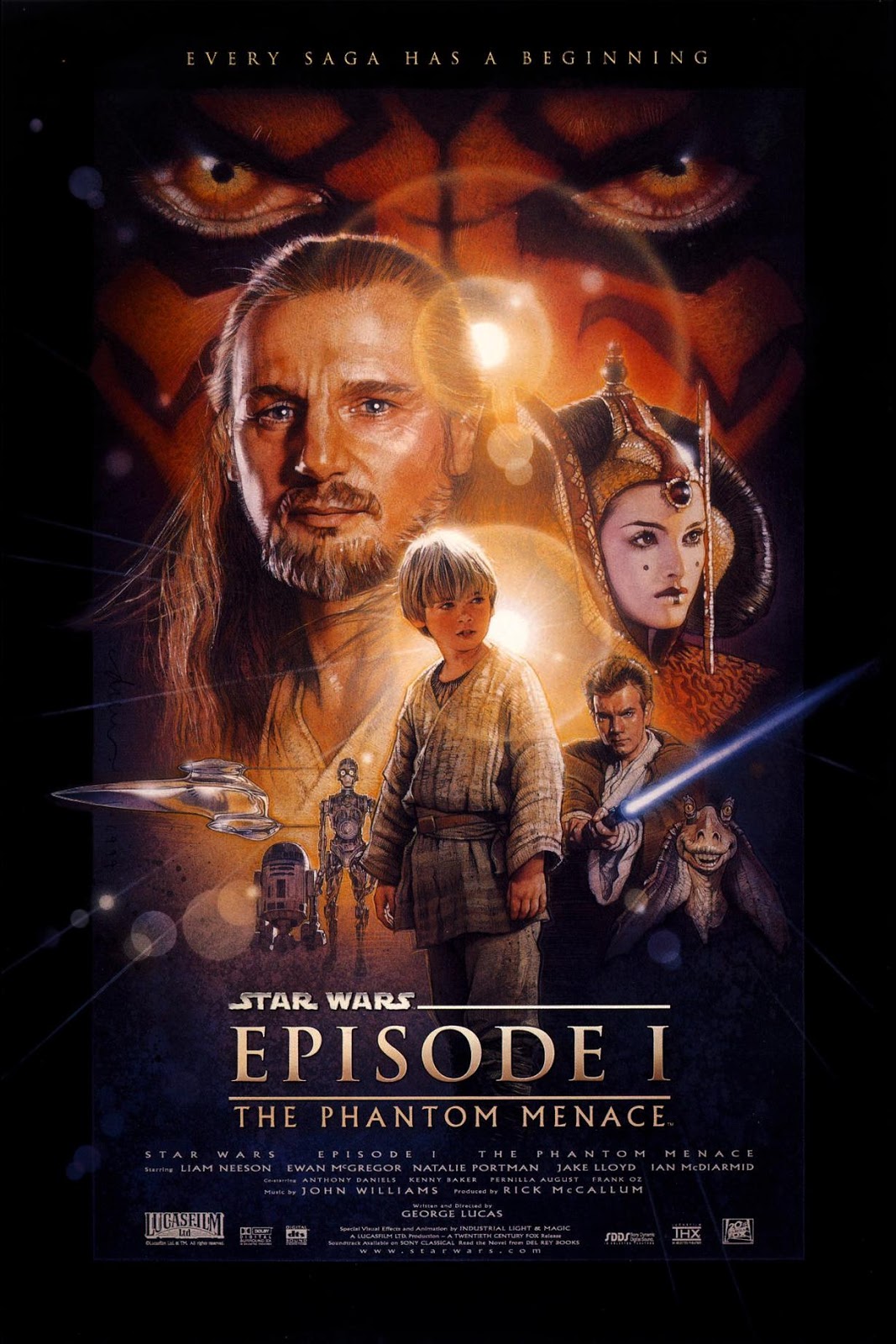
Jedi vs Sith – where did it all go wrong in The Phantom Menace?

Director: George Lucas

Cast: Liam Neeson (Qui-Gon Jinn), Ewan McGregor (Obi-Wan Kenobi), Natalie Portman (Queen Padmé Amidala), Jake Lloyd (Anakin Skywalker), Ian McDiarmid (Senator Palpatine), Anthony Daniels (C-3PO), Kenny Baker (R2 D2), Pernilla August (Shmi Skywalker), Frank Oz (Yoda), Ahmed Best (Jar Jar Binks), Oliver Ford Davies (Sio Bibble), Hugh Quashie (Captain Panaka), Samuel L Jackson (Mace Windu), Ray Park (Darth Maul), Terence Stamp (Chancellor Valorum), Kiera Knightley (Sabé), Silas Carson (Nute Gunray/Ki-Adi-Mundi), Brian Blessed (Boss Nass), Ralph Brown (Ric Olié)

Has there ever been a more disappointing film than The Phantom Menace? I don’t think any film has ever opened to so much hype and fan expectation. The Second Coming could have trouble competing with the expectations piled onto this first Star Wars prequel. Everyone thought it would be the film of the year. Until they saw it. No one thought it would be the film of the year after that.

Of course you should have sensed a disturbance in the force the second you read the opening crawl. The first sentence “Turmoil has engulfed the Galactic Republic” sounds promising right? Well let that expectation die as we hit the second sentence “The taxation of trade routes to outlying star systems is in dispute”. Not exactly a flight for the Empire with the Death Star plans is it? Perhaps only a multi-millionaire like George Lucas could have expected a storyline based around a tax dispute would get the pulses racing. 

But then this is a jumping off point for a seriously shambolic film experience. Phantom Menace is a total mess, an incoherent, poorly scripted, farce of a film, a terrible stumble through a dashed off storyline that makes no sense. Anyway, Naboo is a planet under siege from the Trade Federation. Jedi knights Qui-Gon Jinn (Liam Neeson) and Obi-Wan Kenobi (Ewan McGregor) are sent to negotiate but things quickly turn to violence and they need to flee the planet with its 14 year old (?) elected (??) Queen (???) Padmé Amidala (Natalie Portman). On the planet of Tatooine they encounter a 9 year old slave Anakin Skywalker (Jake Lloyd) with a natural instinct for the force. Qui-Gon wants to train him, while the Galactic Republic tries to resolve the siege of Naboo.

That’s sort of the story – but even writing it down seems episodic and vague. But then that’s everything in the film. Nothing is really clearly explained, and we are never properly introduced to who all the sides are in this film and what they might want. There is a complete lack of any real narrative sense at all. The antagonists and protagonists of the film are hard to define. In fact they are frequently a pile of two dimensional yawns. It’s pretty hard to care about any of them. I guess you feel a bond with Obi-Wan, but that’s based on old films – watch this and Obi-Wan is a do-nothing whiner. 

But all the characters are infected by this. George Lucas is completely unable to bring any characterisations to these people, his lines constantly falling flatly or crappily to the ground, while the actors themselves struggle to find anything to engage it. Harrison Ford famously told Lucas on the first film that “you can type this shit but you can’t say it” – and that’s pretty much nailed on for this film. There is not one single vaguely memorable line in this film. Rather you are struck every second with feeble lines that sound like they might have had depth (“There’s always a bigger fish!”) but when analysed for a second make no sense whatsoever. It’s no wonder Neeson seriously considered quitting acting after this film.

Yes these two characters will get it on in the next film. Yuck.

There isn’t a single character in the film to really invest in. There is no equivalent to your Han Solo, the witty outsider to puncture some of the grandaeur. Instead every character is a flat, po-faced, non-personality who spend all their time in the film very seriously going about their business, never explaining anything. The Jedi are particularly affected by this, written as serious stick-in-the-muds constantly lecturing and ticking off other characters. Qui-Gon Jinn makes a tedious lead character, who constantly gets in the way of the relationship building we need to see between Obi-Wan and Anakin. Because we know where the film series is going, spending time on Qui-Gon feels like wasted time. The backstory is to see the relationship build between Obi-Wan and Anakin – instead they hardly speak in the film, and we instead spend ages on Qui-Gon. It’s poor story-telling and wastes a film showing us unimportant back story rather than spending time on the core stuff. It’s bad enough that we have to waste one third of the prequel series on Anakin Skywalker: The Wesley Crusher Years (seriously has anyone, even a child, ever loved a film where a brattish, super kid is the hero? You won’t be shouting Yiipppeeee…)

Lucas isn’t a director of actors, he’d say the same. But he is supposed to be a master of visuals and special effects. This is a film where everything you could possibly imagine has been thrown at the screen. Each frame is full of complex business, every single section crammed with special effects. There is a lot going on visually all the time, but all of it comes across like an explosion in a colouring book. Unlike the effects of the original trilogy, nothing really feels real or carries any real weight. Instead you see every special effects shot in the film and see frames filled with clutter and shiny, computer generated weightless nonsense. Worst offender is the hideously overextended pod race sequence, like a particularly dull Formula One race, which carries no real stakes (as we all know the result) and, for all the high speed camera work and editing feels not one iota as thrilling as the speeder chase in Return of the Jedi.

On top of this, most of the interventions into the Star Wars backstory makes the original trilogy worse. This is the film that gave us midichlorians, some sort of magic alien thing that lives in blood and gives the Jedi the ability to use the force. The reaction to this midichlorian nonsense, undermining the mystique of the force into something that could measured like a top trump was so negative that it was mentioned at most once in the two sequels. Other areas got similarly scathed, not least turning Anakin Skywalker into the worst form of “gifted child”. I’m not even going to touch on the icky fore-knowledge we have about the fact that Anakin and Padme are going to get it on in the future, something that is hideous to think about.

The most hated character in film history?

Lucas also fudged the new stuff he introduced in the film. The worst element: of course it’s poor old Jar-Jar Binks. I genuinely feel sorry for Ahmed Best, an actor whose career never recovered, who is just doing here what he was told to do. But Binks is the most irritating character possibly ever conceived for a hit blockbuster. An idiotic, comic creation designed for the kids who falls over, trips up, says stupid things and steps in shit he does nothing useful for the whole course of the film and tries to entertain kids who were way more interested in Darth Maul. Binks is almost irredeemable, every sentence enough to send everyone’s teeth on edge. 

Lucas trumpeted how much Binks was setting the trend of being the first major computer generated character. Lucas was incapable of guiding the actors to respond (or even look at) the correct spaces where Binks was standing. And Lucas was so pleased with it, he never stopped to think. Binks makes no sense. Like the rest of the Gungans he’s a joke. There is literally no reason at all for the Jedi to take him anywhere with them, particularly as he constantly gets in the way, causes trouble and offends people. Even in the “desperate” final battle, Binks prats about – compare him to the moments of tragedy and sacrifice given to the Ewoks in Jedi and you’ll see how bad this is.

Yes Watto loves Money. What? What’s the problem?

And of course he and the Gungans are shocking racist caricatures in their Jamaican accent. If you had any doubts that Lucas had no one saying no to him on anything, this film is stuffed with pretty shocking racist characters. Binks is terrible, but the villains of this place are the money obsessed Trade Federation, all with Japanese accents. On Tatooine, Anakin is kept by a greasy, fly ridden, money obsessed, big nosed, fly-covered alien Watto who looks, sounds and acts like a children’s version of The Eternal Jew. Did no one watching the film take a second and say “hang on this looks a bit dodgy…”

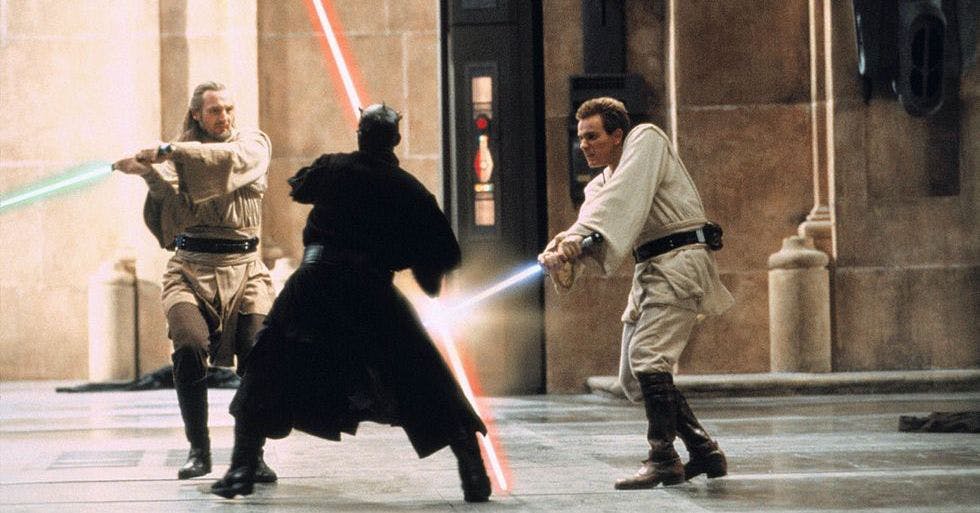
All of this nonsense finally comes together in a grand final battle which sums the whole film up, in a sequence where the tone shifts and changes all the time with no sense of a single person doing so intentionally. We have the Gungans comically fighting the droids in a series of awful little vignettes. We have the Queen chasing through the palace in a poorly explained subplot. We have a 9 year old child accidentally flying a ship into space and accidentally blowing up the baseship (Anakin saves the day without even realising it, the one thing that could make the child even more irritating than he already is). And we have the Jedi fighting Darth Maul in a battle that looks impressive at first but is in fact overly busy and overly choreographed. 

The Phantom Menace has few reasons to like it at all. You get bored with the story. You don’t invest in the characters. You don’t engage with the events. You don’t feel your pulse racing. The plot drifts from planet to planet with very little logic at all. The dialogue is terrible. The story telling is abysmal. The direction is flat. The film throws in moments that crap over the original trilogy. Lucas made is wait for decades – but then seems to have produced a film that he didn’t really want to do. It’s a truly dire film.

Mary, Queen of Scots (2018)

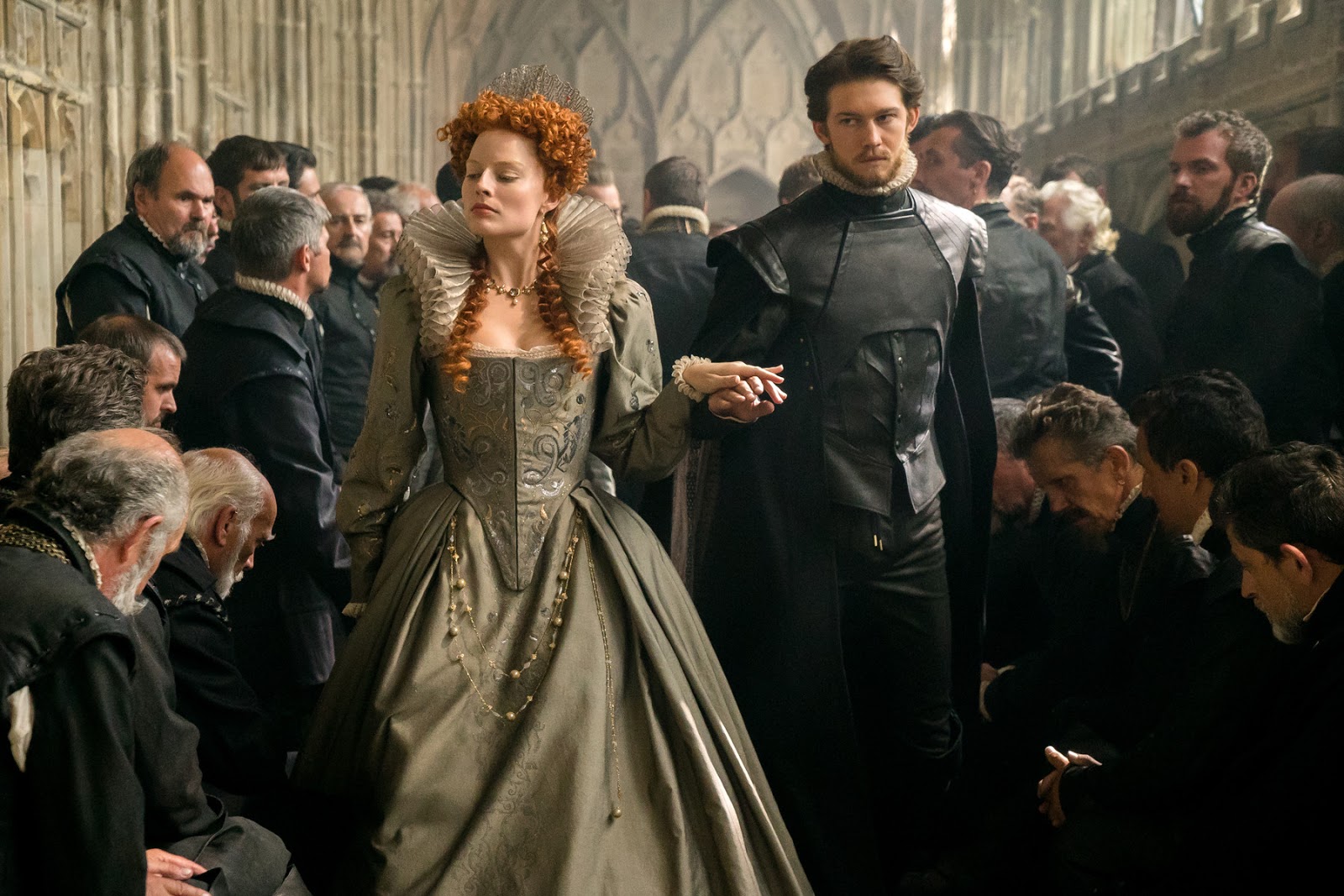
Margot Robbie as a particularly dense version of Elizabeth in misfire Mary, Queen of Scots

Director: Josie Rourke

Cast: Saoirse Ronan (Mary Queen of Scots), Margot Robbie (Elizabeth I), Guy Pearce (William Cecil), David Tennant (John Knox), Jack Lowden (Lord Henry Darnley), Joe Alwyn (Lord Robert Dudley), Gemma Chan (Elizabeth Hardwick), James McArdle (Earl of Moray), Martin Compston (Earl of Bothwell), Ismael Cruz Cordova (David Rizzio), Brendan Coyle (Earl of Lennox), Ian Hart (Lord Maitland), Adrian Lester (Lord Randolph), Simon Russell Beale (Robert Beale)

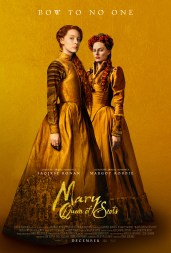
Mary Queen of Scots posterThe history of the Tudors has been mined so often by film and theatre that there can hardly be any hidden stories left to tell, barely any twists that can be unveiled or reimaginings that haven’t already been imagined. Mary Queen of Scots certainly fails to find any new angles on its oh-so-familiar tale, and even its attempt to rework events and characters keeps banging its head on those damn, unchangeable real events that spoil the story it seems to want to tell.

And it’s a familiar story. Mary (Saoirse Ronan) returns to Scotland from France after the death of her husband. Naturally many people aren’t keen to see this Queen, not least her half-brother the Earl of Moray (James McArdle) who was running the country, and protestant firebrand anti-feminist John Knox (David Tennant). But Mary is plugged in, sharp and savvy and she’s going to rule the country her way – and also put forward her claim for the throne of England currently held by her cousin Elizabeth I (Margot Robbie). It seems all is set for Mary’s success – until fortune begins to turn with her marriage to drunken playboy Henry Darnley (Jack Lowden). Conspiracy, murder, exile and execution are on the cards.

Mary Queen of Scots is a mess. For starters, Beau Willmon’s script does the near impossible of turning one of the most electric periods of British history into something stodgy, dull and hard to follow. Perhaps wrapped up in his House of Cards background, a show where there is a never ending stream of betrayals, counter crosses and twists for twists’ sake, Mary Queen of Scots is the same. The film is a constant parade of betrayals in Scotland, as lords shift and move sides from scene to scene with such swiftness, such lack of explanation, such lack of exploration of character and motivation, that you end up not only confused by ceasing to care. Decent actors like James McArdle and Ian Hart struggle through with ciphers (Hart literally changes sides every single scene). Martin Compston is given a confused character design as Bothwell that makes Mary’s third husband a hero until he makes a left-field heel reversal and becomes a bullying rapist. What a mess.

It’s even worse in England, where poor Guy Pearce’s every scene is a never-ending stream of exposition and historical context. Every single scene in England at the court drags and claws itself into nothingness, simply a load of dry, dense, uninvolving dialogue with characters whom we are never given any real reason to invest in. Just as the Scottish lords are ciphers who do whatever the plot requires them to do, with no time invested in developing their characters, so it’s the case with the English lords. There are many, many, many people to keep on top of but virtually no characters to invest in.

Willmon’s script also falls wildly in love with Mary herself, desperate to turn her into some genius politician and master of realpolitik, who we are frequently told is playing the game of courtly politics with aplomb and genius. “She’s out-manoeuvred us” one character constantly bemoans. However, the problem Willman has is that he eventually has to deal with the fact that the real life Mary made hideous, disastrous, stupid decisions. And since those decisions are basically the building blocks of the story (who she marries, who she trusts, who dies, where she goes, who she abandons etc etc.), there is no way around them. You are left with a film that tells you all the time how smart your lead character is, while most of the things she does are foolish.

Not least the marriage to Lord Darnley. Jack Lowdon gives a very good performance as a feckless, arrogant weakling. But surely only the densest woman alive could fail to see that Darnley is a hideously inappropriate husband? The film gets round this by stressing his charm and, in one hilariously misjudged scene, his intense skill at cunnilingus as being the thing that pulls the wool over her eyes. (After this first soft focus bit of oral play, Mary bashfully asks Darnley if he would like some “satisfaction” as well. No that’s fine he sweetly says – she really should be suspicious by then.) The film tries to course-correct by having Mary realise literally five minutes into the marriage that she has made a terrible mistake. But she doesn’t learn from it, as the rest of her life is a series of disastrous decisions, promoting the wrong people, snubbing others, leaving her son (the SINGLE MOST IMPORTANT PERSON IN THE COUNTRY) behind when she runs away… need I go on.

As well as trying to make Mary a genius, it also balances by trying to make Elizabeth an idiot. I swear there is not a single scene in this film where Elizabeth is not in tears about something. She shows no judgement whatsoever, struggles with her hormones, blindly follows the advice of her counsellors, spends half the movie making paper roses and stroking horses rather than running the kingdom. On top of which, this film which wants to make a point about the sexism women face dealing with a world of men, turns Elizabeth (the greatest queen England ever had) into a hormonal idiot, blindly led by men and obsessed with the idea of having children (even longingly trying to make her shadow appear pregnant) because, you know, deep down the ladies just be wanting babies. 

Now Saoirse Ronan and Margot Robbie do decent jobs with the versions of these people they play, even if none of this rings true. Josie Rourke does a decent job directing the film visually, with its Game of Thrones inspired look and feel (Edinburgh castle is turned into some sort of bizarre Dragonstone structure, half hewn out of a mountain). But its story is, to put it bluntly, really, really BORING. You are never given any reason to care about most of these characters, so the constant stream of betrayals and side shifting eventually becomes utterly unengaging. Every time you get near to thinking Mary is smart, she has to do a terribly dumb historically inspired real event, that actually makes her look even more stupid than she was. Mary Queen of Scots is a stodgy, dense, dull mess of a film that ends up being drier and less interesting than the sort of high-Hollywood epics from the 1970s it’s trying to update.

The Spy Who Came In From the Cold (1965)

Richard Burton lands in Cold War trouble in classic Le Carre adaptation The Spy Why Came In From the Cold

Director:  Martin Ritt

Cast: Richard Burton (Alec Leamas), Claire Bloom (Nan Perry), Oskar Werner (Fiedler), Sam Wanamaker (Peters), George Voskovec (East German Defence Attorney), Rupert Davies (George Smiley), Cyril Cusack (Control), Peter van Eyck (Hans-Dieter Mundt), Michael Hordern (Ashe), Robert Hardy (Dick Carlton), Bernard Lee (Patmore)

Spy stories fall into two camps. You get the wham-bam blast of James Bond and then you also get the grimy, isn’t-this-a-damn-dirty-trade stories that John Le Carré helped to turn into a major alternative. The book that really kicked off Le Carré’s career was The Spy Who Came in From the Cold, a slim, brilliantly written story of spies working exclusively in shades of grey. The book was a smash, the film was inevitable, and a damn fine film it turned out to be.

Richard Burton plays Alec Leamas, a former head of Berlin Station for the British Secret Service, who is recruited by the services’ leader Control (Cyril Cusack) as part of an elaborate scheme to discredit the cunning and dangerous head of the Stasi office in Berlin, Hans-Dieter Mundt (Peter van Eyck). Leamas will go through a pretence of disgraced dismissal, alcoholism, jail time and half a dozen other indecencies to attract the attention of the East German defector recruiters in the UK. But will the relationship he develops during his disgrace with librarian and idealistic communist Nan Perry (Claire Bloom) endanger the whole mission?

The Spy Who Came in From the Cold is shot in a grimy, gloomy black-and-white which is completely appropriate for the morally questionable escapades its characters get up to. Like Le Carré’s novel, the ends justify any means here, and questions of morality and justice are best benched. Characters who can’t let themselves to forget justice are doomed in this film. Genuine shows of real emotion and feeling are generally signs in this film that a person is doomed.

Martin Ritt’s literate script captures the style and tone of Le Carré extremely well – this is still one of the best, truest and most faithful capturing of Le Carré on the screen – and his direction also has a wonderful mixture of shabby kitchen-sink realism and classic Hollywood film noir class that makes for a brilliantly involving package. The pace of the film holds pretty well, beautifully carrying us through a parade of agents recruiting Leamas for the East Germans (each of which are dismissed with a shocking curtness by the next one along), and the final court room trial of Mundt (with its intricate exploration of the complex plotting of the novel) is extremely involving.

The film also has the benefit of a number of terrific performances, led by Richard Burton in the lead. By this stage of his career, Burton was already felt by many to be lost to serious acting in favour of big budget, Liz Taylor-starring pictures and Hollywood entertainment. But he rouses himself here to give one of his best ever performances. Leamas is a shabby, beaten down, little man (despite being played by Burton!) whose chippiness, dissatisfaction and aggression make him perfect as a possible defector. Ritt’s camera often focuses on Burton’s unflinching stares, his eyes seem to bore into the person he’s talking to, little oceans of anger and resentment.

Burton’s Leamas is deep down sick and tired of the world of spying, its betrayals and lies, and sickened with self-disgust at his own involvement in it. Burton skilfully underplays the role throughout, largely ignoring any temptation for grandstanding or big acting moments – instead he is as compromised, grey and lost as the rest of the film, in a superb performance of cynical disaffection. Bunched up, his grand voice dialled down, his eyes flickering with resentment – a great performance.

Claire Bloom is rather affecting as Nan (hilariously, her name was changed from Liz in the book as the producers feared she would be confused with the rather more famous Liz in Burton’s life) and Oskar Werner gives the film a major burst of energy just as it is flagging from one interrogation of Leamas too many, as a chippy, eager, sharp Stasi officer, who is determined to see justice done. The rest of the cast are filled out with some classy Brit character actors, who excel from suave (Robert Hardy) to seedy (Michael Hordern), while Cyril Cusack brings “Control” to cynical life and Rupert Davies gets to the be the first actor to play George Smiley on screen (even if he is only really an extra here).

Spy is a film of atmosphere. Frequently it trusts the viewer to catch up the plot as they go. Leamas actions are not always explained until late on – and we are constantly suspecting that we are only seeing half the story. Its a film that plays its cards close to the chest. This might alienate some, but it’s a true representation of Le Carre – and fits perfectly with the weary sense Leamas has of not being in control of his own life.

But what Ritt does so well is keeping that tonal sense of there always being another shady, compromising twist around the corner. All is never what it seems, and the film ends with an especially bleak series of footnotes as we find out just how ruthless both sides are prepared to be in this soulless chess game of Cold War politics. It’s the moments like this that Spy Who Came in From the Cold really nails. For Le Carré fans the film is a must: for those less interested in the world of espionage, they may find it takes a little too much time.

Blue Collar (1978)

Yaphet Kotto, Harvey Keitel and Richard Pryor are working joes who want to stick it to the man in Blue Collar

Director: Paul Schrader

Cast: Richard Pryor (Zeke Brown), Harvey Keitel (Jerry Bartowski), Yaphet Kotto (Smokey James), Ed Begley Jnr (Bobby Joe), Harry Bellaver (Eddie Johnson), George Memmoli (Jenkins), Lane Smith (Calrence Hill), Cliff DeYoung (John Burrows), Lucy Saroyan (Arlene Bartowski), Chip Fields (Caroline Brown)

America doesn’t really have a director like Ken Loach. It’s one of the points raised on Indicator’s excellent (and essential) blu-ray release of Paul Schrader’s near Marxist drama about blue-collar car workers in Detriot. There aren’t many (or indeed nearly any) American films I can think of that take the stance of the working man like this one – or as angry, pissed off, furious and, in the end, as lacking in hope as this one. Which makes it sound like the sort of film you’d run a mile from actually seeing. Well you’d be wrong: this is a blistering, intelligent, witty drama crammed with brilliant scenes and great performances. On so many levels it’s something really quite special. It’s a shame no one saw it (I blame the publicity campaign – I mean look at that rubbish poster that basically suggests you are in for Pryor stand up routine).

In a car factory in Detriot, our heroes work in varying jobs on the production line. All of them are unhappy with their lot and feel they get precious little support (or concern) from the union that runs the shop floor. Zeke (Richard Pryor) is furious at the lack of equality and opportunity, as well as defrauding the inland revenue with a (literally) childish scheme to try and make ends meet. Jerry (Harvey Keitel) is drifting through his life, unable to afford the dentistry bills to give his daughter the braces she needs. “Smokey” (Yaphet Kotto) is an angry proto-anarchist who just wants to stick it to the man. When the three of them realise there is a safe (probably) full of cash in the union office, they decide to steal it. However, rather than cash, they find the safe full of accountancy records of the union’s dodgy money laundering arrangements with organised crime. The men decide to offer to sell it back to the union – and open up for themselves a world of trouble…

Blue Collar is a hard to categorise film. It’s a brilliant hotch-potch of several genres. It opens like a workers film, crammed with an angry wit (the opening half hour is very funny) with several scenes that acutely skewer the petty clashes of working life as well as the corner-cutting financial desperation of men trying to make ends meet. The opening scenes have the edge of a raw black comedy to them, mixed with observational realism. Then the film subtly changes over, becoming first through near-caper (the hilariously bungled attempt to steal the safe), into politics as the union and the men begin to shift alliances, into a straight classic 1970s conspiracy thriller (complete with late car chase and an outre death for one of the characters) before finally wheeling back round into a tub-thumbing condemnation of the “divide and conquer” plans of the ruling classes. 

That’s a lot for any one film to try and squeeze into a less-than-two-hour runtime, but Schrader manages it with aplomb, juggling this mix of styles and genres with such effective skill that you almost don’t even notice as the film grows increasingly darker and more dangerous as it progresses. The eye it has for the rhythms of factory life seems perfectly judged, and the mixture of hacks, place men, agitators and uncaring union men feels absolutely perfect. It also brilliantly captures, in his dialogue, the natural force (and crudeness!) of working men’s conversation, with a brilliant ear for the semi-articulate astuteness and poetry it can reveal. 

Schrader builds the pressures up in the film subtly and brilliantly, so that it seems both sudden and perfectly natural as the three men begin to buckle and turn on each other. This is where the Marxist message of the film starts to come in: even when working men have the whip-hand, their superiors will find a way to make them turn on each other, to make them unable to throw off the shackles that bind them as they are unable to work together. On top of this Schrader throws in a brilliant analysis of everyday racism and racial tension (all the union reps and their foremen are of course white), and there is an unspoken edge of racial divide in every conversation – indeed racism is just one of many weapons, the film argues, used to turn working men against each other. This really comes out in the film’s final scene, where two characters who had only warmth and affection for each other at the start are driven to turn on each other with an onslaught of racist fury.

Of course that clash probably carries a lot of its force from the fact that the three leads couldn’t stand each other on set. Pryor, Keitel and Kotto were each told that they were effectively playing the lead in the film and were unaware until signing on of the presence of the other actors. This billing tension was fuelled by their incompatible working methods: in particular Keitel, a theatre trained actor, preferred multiple rehearsals before takes while Pryor, a stand up comedian, preferred minimal or no rehearsal – and usually peaked on the second or third take. Throw in the drugs (that Pryor certainly was indulging in) on set and the three actors reached the point where they could barely stand to be in the same room together (one of the film’s best sequences, a single shot where they sit on the sofa for a long take and plan their next move, was only filmed because the three actors arrived separately, didn’t speak until the camera rolled, and then immediately left).

Did this edgy fury boil over into their performances and give them an extra fire? Certainly I don’t think any of them were better than they were here. Kotto has such an electric, bubbling fury to him, an anarchist’s delight at danger, that he feels like a force of nature. Keitel hadn’t been so gentle, reserved and bemused by the world for years, as an oppressed everyman. But the real electricity comes from Richard Pryor is a goddamn revelation as Zeke. What Schrader did so brilliantly here was to capture all the fire, energy and angry of a typical Pryor stand-up performance and channel it into a dramatic structure. An early Zeke rant against the unions is essentially a Pryor stand-up performance, and Pryor’s whole performance buzzes with an improvisational energy.

Zeke is the film’s key character. At first he seems the weakest and most desperate of the three men, the one most likely to fall into the role of victim. But as the events take hold of the three men, his character deepens and develops to reveal a shrewdness, a realism and even a coldness that the other men don’t possess. Unlike them, he sees events not as a chance to make a quick buck but as a genuine moment to change his life for the long term. And, underneath this, an understanding that as a black man opportunities for him are going to be few and far between. An electric confrontation between him and Jerry late in the film on Zeke’s porch hums with his fury driven realpolitik, Zeke’s understanding that opportunities are there to be seized and that sometimes the price paid is high.

Blue Collar gave Schrader a break-down when he made it. But its’ a masterpiece of political cinema, largely because it never really feels like a political film. Instead it feels above all like a domestic drama of friendship marred that explodes into a thriller., But it’s the understanding of the social situation of these men, of the reasons behind their actions and the intelligent analysis behind it, that makes it really work. It also gives you characters who feel real and in whom you invest, blessed as well (for all their clashes) with three career-best performances from the leads. It’s a brilliant film and in a just world should be seen as a landmark piece of film making.

The Front Runner (2018)

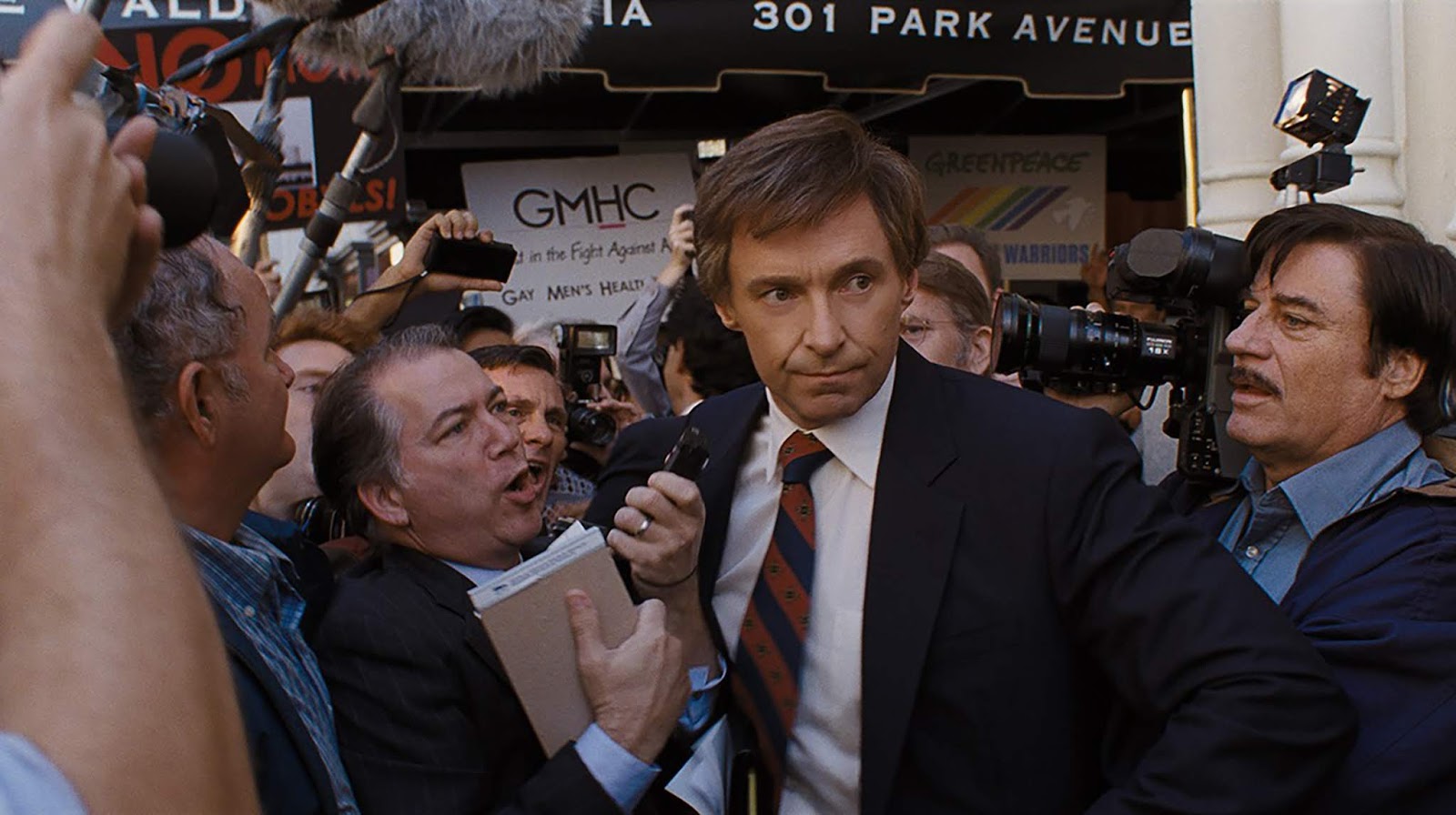
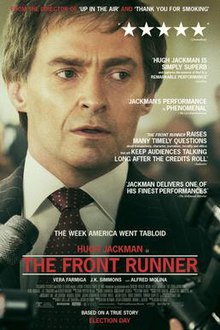
Hugh Jackman in the centre of a media scrum in misfiring biopic The Front Runner

Director: Jason Reitman

Cast: Hugh Jackman (Gary Hart), Vera Farmiga (Lee Hart), JK Simmons (Bill Dixon), Alfred Molina (Ben Bradlee), Sara Paxton (Donna Rice), Mamoudou Athie (AJ Parker), John Bedford Lloyd (David S Broder), Spencer Garrett (Bob Woodward), Steve Coulter (Bob Kaiser), Ari Garynor (Ann Devroy), Steve Zissis (Tom Fiedler), Bill Burr (Pete Murphy), Mike Judge (Jim Savage), Kevin Pollak (Bob Martindale)

In the 1988 Democratic primaries, Gary Hart (Hugh Jackman) was the man to beat: a telegenic liberal with an attractive programme of policies and a forward-thinking vision for America. No one could beat Hart. Except for Hart himself. A man with a history of affairs, he became embroiledin a sex scandal after an ill-advised friendship (the film is coy on taking a stance on whether this friendship was sexual or not) with a young woman, Donna Rice (Sara Paxton). Angrily denying anything was going on, Hart unwisely challenged journalists to follow him: which the Miami Herald did, soon finding Hart had skipped campaign events to invite Rice to come and stay with him at his Washington home for a long weekend… Cue a media snowstorm and an imploded campaign.

Reitman’s film is a pretty decent chronicle of this early media sex scandal. I say pretty good because it does what it sets out to do with a solid observation of the facts and a general even handedness between Hart and the media. However it never really quite sparks into life, and Reitman’s attempt to make this story into something with huge relevance for how the modern media has developed, and how the world of politics has led us to Trump, just doesn’t really work. 

What the film instead becomes is a slightly dry but enjoyable enough docu-drama, that covers a period of history that should feel tumultuous and should create a sense of setting the table for the future but doesn’t. The idea that it was only at this point that American politicians suddenly had interest from the press in their personal lives is nonsense for anyone who had even a passing knowledge of the careers of Kennedy and Nixon. The film’s attempt to make us sympathise with Hart is also undermined by the high-handed arrogance with which he treats even the slightest inquiry into his personal life from anyone, be it press to members of staff who simply want an explanation of why their leader consistently demonstrates such astonishing poor judgement.

This is despite a decent performance of charisma from Hugh Jackman, possibly better than Hart deserves. The film does demonstrate – amidst its general sympathy for Hart – his willingness to throw Donna Rice under the media bus and his stubborn refusal to acknowledge any wrong-doing on his own part. I can’t say I actually really felt much sympathy for him over the course of the film, which I’m not sure was the film’s intention.

Neither did I really feel the film really skewered journalism. I think it wants to lay a suggestion that this was the first descent on a slippery slope, where gutter press, personality led journalism led to only egotists of mediocre talent wanting to take on the challenge of running the country. Or rather, that we get the politicians we deserve. While you could say there is some merit in this, I’m not sure this film manages to present that fully (Hart’s behaviour is at least partly self-destructive and would have been in any era) or that it really establishes that we are living in the shadow of times like this. And the investigation into Hart’s lies and evasions is hardly gutter press journalism. Neither does the film make a real case for Hart being some sort of potential great leader: while he has some decent, liberal, ideas he’s also short-tempered, lacks focus and has a tendency to snap at or cold shoulder underlings.

A bit of spin in the movie is got out of Jack Kennedy’s numerous affairs not being covered by the press. And while that is true, this seems less because of a natural shyness of the press, but rather because Kennedy was more astute at making friends in the fourth estate, and more willing to share parts of his life outside politics with them for stories (essentially, he made news for the press, making them more willing to keep quiet about his adulteries, while Kennedy avoided doing anything too blatant that the press would find impossible to ignore). Hart’s real problem was less that he was in a more censorious or gutter press era, and more that he was inept at press (and people) management, treating those around him with high handed contempt, mixed with challenges and threats. The film could almost be a textbook on how not to use the media.

It’s telling Hart’s only real relationship with a reporter in the film is with a young, impressionable (and fictional) Washington Post journalist (played very well by Mamoudou Athie). Hart comforts him through a mild panic attack during a flight and they develop a friendship, which I think the film wants us to think the journalist betrays by asking Hart the difficult questions about his lack of faithfulness and proclivity for affairs (all pretty well documented historically). I’m not sure that is the case. Surely, by this stage almost any thinking human beingin the States was asking these questions, and by putting them to the candidate, surely this journalist was simply doing their job? The “tragedy” of Hart was his incompetence at working with people, rather than his questionable private activities being brought to light.

The film struggles with all these themes and I don’t think it really successfully tackles any of them. The case it tries to set out doesn’t really work and, despite some fine observational moments of politics in action and a good performance from Jackman, it never really takes flight as it should. It’s a decent effort but a misfire.

45 Years (2015)

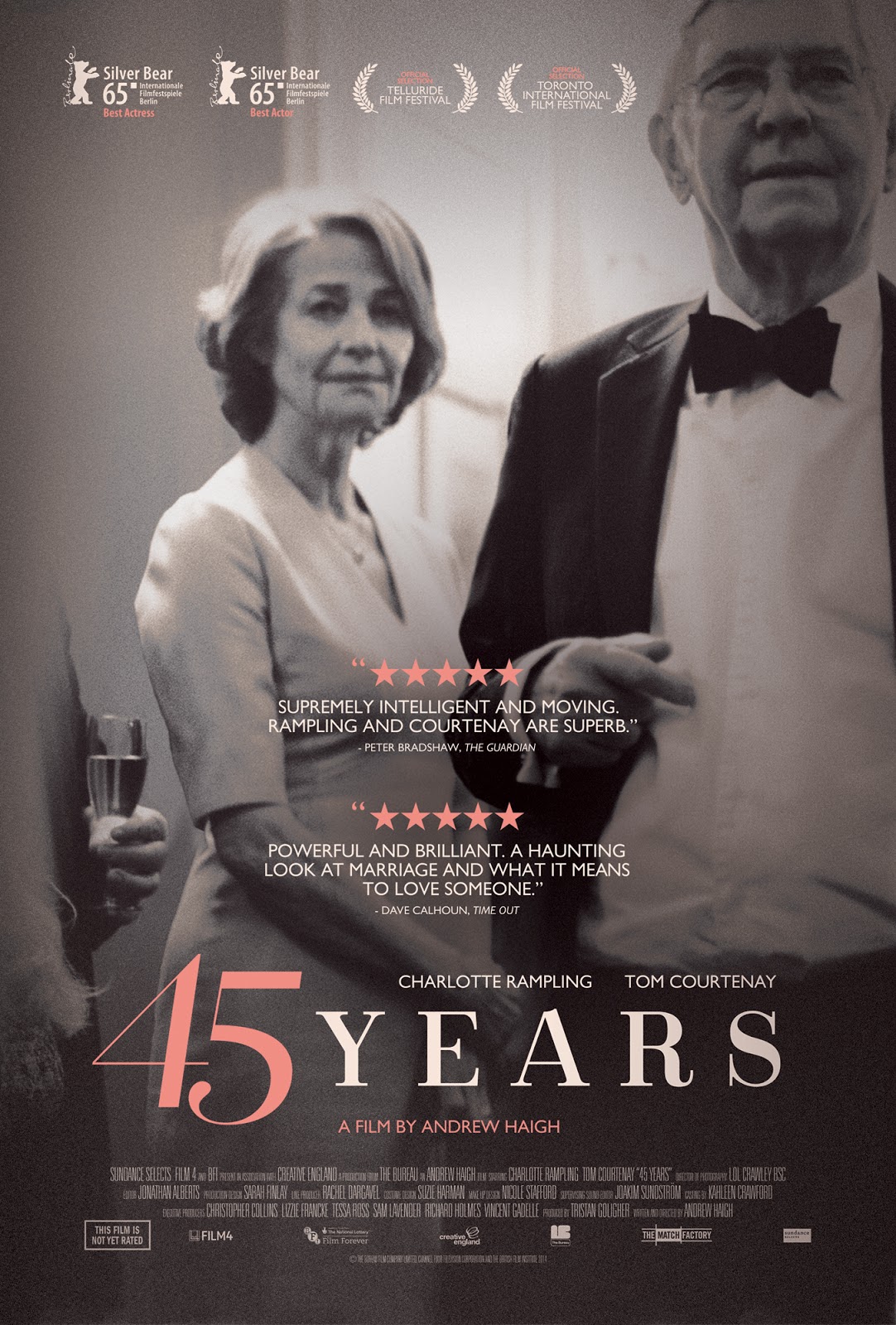
Tom Courtenay and Charlotte Rampling excel in a successful marriage suddenly going wrong after 45 Years

Director: Andrew Haigh

Cast: Charlotte Rampling (Kate Mercer), Tom Courtenay (Geoff Mercer), Geraldine James (Lena), David Sibley (George), Dolly Wells (Charlotte)

What would you do if you found out, after 45 years, that there were huge things you never, ever, knew about the partner you had shared your life with? That the very basis of your marriage is completely different than you believed? How would that change everything you remembered before that? How could that change where your marriage may go in the future?

That’s the situation Kate Mercer (Charlotte Rampling) a retired teacher in a quiet country house outside Norwich finds herself in. Five days before their 45th wedding anniversary party, her husband Geoff (Tom Courtenay) receives a letter from the German police notifying them the body of a girl who died 50 years ago, Katya, has been found. Katya had been lost falling into a crevasse on a climbing holiday with Geoff. Geoff is profoundly shaken and distracted by the news – and over the next week, it emerges his relationship with Katya was far more profound and important to him than he has ever mentioned to Kate (and in fact he has never mentioned Katya to her before).

Counter as it runs to spoiler territory, I’ll say off the bat that Geoff did not murder Katya (the obvious, knee-jerk, twist we expect from years of films). Instead this is a far more complex and engaging story about the impact profound, emotional revelations can have on relationships that seem as strong and long-lasting as between Geoff and Kate. The film follows a single week as long since buried feelings, emotions and resentments begin to simmer and burst out – and as Kate begins to question everything she has ever understood about her Geoff and her life.

And how shocking would that be if you learned things about the person you loved that suddenly made them feel like a completely different person? And how could you ever begin to compete the with the romantic image your partner has in their head of someone who died 50 years ago, before they ever met you, but whom you start to feel everything you have ever done or said has been quietly, maybe even subconsciously, judged against?

45 Years is a hugely intelligent, acute and engrossing film. Virtually a two hander, it relies on the actors – shot by Haigh with an intimacy that immediately establishes their own long running and secure relationship – the film is a series of carefully structured conversations, many of which have the surface appearance of normality that hides far deeper emotional currents of angry, loss, grief, doubt and resentment. The film brilliantly taps into our own fears of having secrets kept from us, of being betrayed in some way – even if the betrayal is far more complex than expected.

And it understands completely that time here is not a healer. Instead, like some sort of monolithic ghost, Katya invades Kate and Geoff’s life. For Geoff it brings back a flood of feelings that he had long since repressed and pushed to one side. For Kate, these age old events have all the pang of newly discovered revelations. For them both Katya’s death may as well have been a few days not fifty years ago. Suddenly, her memory begins to permeate every inch of their home and every second of their (previously) happy marriage.

All this is played with expert compassion and humanity by Tom Courtenay and a possibly career-best Charlotte Rampling. Rampling (famously cheated of a BAFTA nomination like Courtenay but honoured with an Oscar nomination) mines untold depths of vulnerability, emotional doubt and insecurity that solidifies into barely acknowledged feelings of anger, pain and resentment. The final sequence of the film – set at that celebration party we were waiting for – rests on her brilliance at wordlessly reacting as she slowly processes the things that she has discovered in the last few days, and how they have changed her perception of both her, her husband and the decisions she and he have made in their lives.

Tom Courtenay is equally good as Geoff, becoming increasingly distant, withdrawn and anger, but (in that very British way) trying to pretend nothing has changed. He throws in flashes of carefree fun and moments of trying to jolly on, but it’s never really real. The two actors are also brilliant at suggesting the lived in comfortableness of a long term relationship, every scene of theirs having a careful short hand of intimacy. Two sublime performances.

The whole thing is brilliantly packaged by Andrew Haigh’s subtle and careful direction into something that haunts the imagination long after it finishes. It’s the sort of film you’ll be desperate to discuss with people as soon as it finishes, to try and understand and interpret what you’ve seen in it. That final sequence is a perfect pay off for everything you’ve seen before, a brilliant sequence of uncertainty and hesitation. Fabulous film making and a very good film.

Shadowlands (1993)

Debra Winger and Anthony Hopkins sublime in the moving Shadowlands

Director: Richard Attenborough

Cast: Anthony Hopkins (CS “Jack” Lewis), Debra Winger (Joy Davidman), Edward Hardwicke (Warnie Lewis), Joseph Mazzello (Douglas Gresham), John Woods (Dr Christopher Riley), Michael Denison (Harry Harrington), James Frain (Peter Whistler), Julian Fellowes (Desmond Arding), Peter Firth (Dr Craig), Roger Ashton-Griffiths (Dr Eddie Monk)

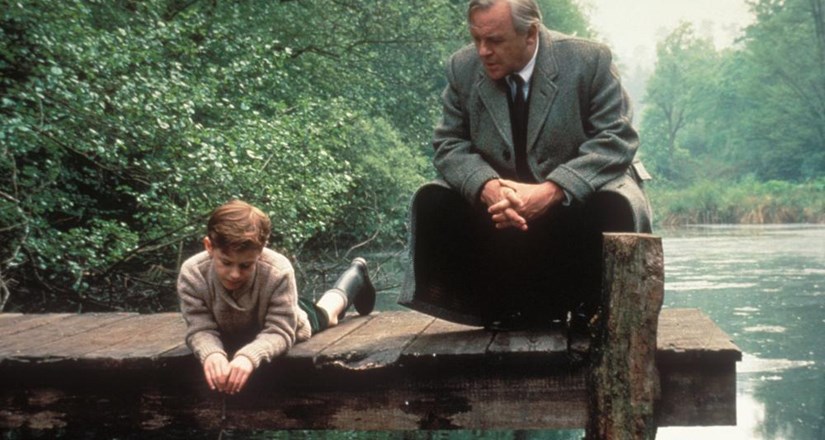
“We can’t have the happiness of yesterday without the pain of today. That’s the deal”. It’s a sentiment that runs through Shadowlands, a beautifully made, deeply heartfelt, incredibly moving tear-jerker based on the (largely) true story of how the man who invented Narnia, CS Lewis (Anthony Hopkins), fell in love very late in life with an American poet Joy Davidman (Debra Winger) only for her to succumb to cancer early in their marriage.

The story had a been a life-long investment from William Nicholson, who had developed the story first into a radio play, a TV drama (with Joss Ackland and a BAFTA winning Claire Bloom) and then a stage play (which won Nigel Hawthorne several awards in the lead role, including a Tony Award) and finally into this film. A wonderfully tender, profound and genuine exploration of the not only grief but the joy and delight that opening yourself up to love can bring you, Nicholson’s Oscar nominated script was brought to the screen by Richard Attenborough.

Looking back over Attenborough’s CV you immediately notice the vast majority of films he directed were massive, all-star, huge scope epics – A Bridge Too Far, Gandhi – which were as much triumphs of logistics and studio managements as they were displays of directing. Shadowlands is one of the smallest scale, most personal films he ever made – and it’s enough to make you wish that Attenborough had allowed himself to make more intimate chamber pieces like this. It’s a wonderful reminder, not only of how skilled he is at pacing and story-telling, but also what a sublime actor’s director he is. Dealing with material that in lesser hands could have become sentimental, Attenborough turns out a film that is realistic, tender, sad but also laced throughout with a warmth and (figurative and literal) Joy.

And of course the involvement of Attenborough also meant the involvement of his regular collaborator Anthony Hopkins. At the start of the 90s Hopkins was in such a run of form he could plausibly claim to be the best actor in the world. In all of this though, Shadowlands might be one of his finest accomplishments. Superbly detailed, perfectly restrained, gentle, tender, hugely vulnerable and intensily scared (under it all) of connecting with the wider world or allowing himself to feel genuine emotions, Hopkins’ CS Lewis is simply exceptional. With all the discipline of a great actor he never once goes for the easy option, but gently allows emotions to play behind his eyes (the eyes by the way that he can hardly bring himself to settle on other people until half way through the film). And those moments where he weeps – three times in the film, and each increasingly more emotional – are simply beautiful in every way from acting to filming.

Lewis is bashful and repressed, so it’s all the moving to see his face start to relax into excitement and joy when he spots Joy in the audience at a lecture he is giving, or him simply enjoying the intelligence and challenge that she brings to her conversation with him. Debra Winger as Joy Davidman matches Hopkins step-for-step, in a sublime performance of prickily New York attitudes at first out of touch in Oxford, but whose humanity shines through. It takes her time perhaps to feel the love Lewis does (but can’t admit too), but when she does start to feel more for Lewis, she has no patience for his repressed unwillingness to acknowledge them. On top of which, Winger is very funny in the role – she has little truck with the sheltered, clubbish snobbiness of some of Lewis’ friends and takes a wicked delight in shocking the stuffy, unchallenged intellectuals.

The chemistry between these two actors is sublime, and the slightly autumnal relationship between the two of them that builds feels wonderfully genuine. Nicholson’s script makes an astute examination of Lewis’ personality and Christianity. Throughout the film, we are brought back again and again to a lecture Lewis gives – with increasingly less and less disconnection – on why God allows suffering and pain in the world. Pleasingly Lewis’ faith in the film isn’t challenged – only his rather pleased-with-itself lack of doubt and his complacent lack of experience. Experiencing love and loss himself, makes him question the views he has held – and leads him to develop a richer, more genuine understanding of the world.

Which all makes the film sound very heavy, and it’s not. It’s a delightfully light done story that never once leans too hard on the tragedy. Instead it punctures several moments with touches of humour (much of it from Joy’s American clashes with high-table Britishness) and moments of sweet affection. The film gains a lot of balance from Edward Hardwicke’s delightful performance as Lewis’ Dr Watson-ish brother Warnie, a bluff ex-army officer turned academic who reveals himself over the course of a film to have a great deal of hidden love, affection and empathy. It also has a delightful performance from Joseph Mazzello as Douglas Gresham, a child performance that brilliantly avoids all cloying sweetness and feels very real as a shy, nervous boy dealing with his mother dying.

But then, Lewis is also a shy nervous boy (both he and Warnie never really got over the death of their mother as boys – a moment that both wordlessly acknowledge while observing Joy with her son at the hospital), and the film follows him becoming something more than that, a man wh has loved and lost and can deal with it. A neat subplot around James Frain’s difficult working-class student demonstrates his growing ability to relate and empathise with others. A large chunk of the film builds towards Lewis’ tearful outpouring of grief (a scene impossible to watch dry eyed), a reaction that seemed impossible in the opening moments.

But then that’s what the film is saying: We have to accept that the joy of loving people, the wonder and warmth that they bring to our life, will inevitably one day lead to us losing them. Allowing us to experience love and joy is counter balanced by the pain we will feel when they go. It’s a deal – and if it is a deal, it’s the price we pay for having our life enriched. Attenborough’s simply beautiful, romantic film covers all this gently and brilliantly: it’s a film to treasure and hold tight.

Erin Brockovich (2000)

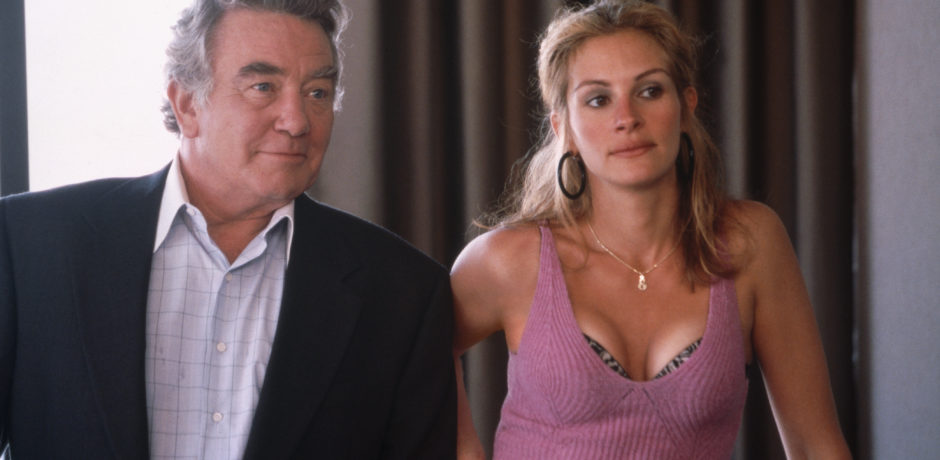
Albert Finney and Julia Roberts battle for justice in the caperish Erin Brockovich

Director: Steven Soderbergh

Cast: Julia Roberts (Erin Brockovich), Albert Finney (Edward L Masry), Aaron Eckhart (George), Marg Helgenberger (Donna Jensen), Tracey Walter (Charles Embry), Peter Coyote (Kurt Potter), Cherry Jones (Pamela Duncan), Scarlett Pomers (Shanna Jensen), Conchata Ferrell (Brenda), Michael Harney (Pete Jensen)

When Steven Soderbergh was being celebrated as the Great White Hope of arty American movie making back in the late 80s, it would probably have amazed his fans if you’d told them that 10 years later he would be directing a Julia Roberts star vehicle. But that’s what he pulled off to great effect in Erin Brockovich

Telling the true story of Erin Brockovich (Julia Roberts), the film follows her life from 1993 when she is struggling to make ends meet while bringing up three small children. After losing a court case – largely due to her brassy foul-mouthedness – she pressures her lawyer Ed Masry (Albert Finney) to give her a clerical job at his law firm. There she finds herself engaged with a simple real estate case involving PG&E, a major gas and electric company. Discovering the company has been polluting the water of the town of Hinkley in California – and left many residents with crippling health problems – Brockovich works to uncover the truth and to gets Masry to agree to build a legal case. She also finds her mouthy down-to-earthness allows her to connect with the people of Hinkley, and she soon becomes determined to get them justice.

The big thing that Erin Brockovich was about when it was released was Julia Roberts. In 2000, it was hard for heads not to be turned by seeing America’s Sweetheart wearing clothing so revealing and provocative it made her Pretty Woman character look reserved. And she swears! Frequently! The film was a triumph for Roberts, turning her from a romantic comedy queen into a serious actress. Roberts won every single Best Actress award going, up to and including the Oscar. And Roberts is very good indeed in the role. Few films have used her effervescence and warmth as a performer so well. You can’t help but side with Julia Roberts when she is firing on all cylinders, no matter what the situation – whether she is a brassy, chippy working mother, a Hollywood actress or a New York City prostitute, you find yourself on her side. 

But, looking back at the film now, this role essentially plays to all of Robert’s strengths. While it looks on the surface like a radical departure for Roberts, the film is basically very much in her wheelhouse. In fact, the whole film is almost a writ-large version of that shop scene in Pretty Woman (still one of the best scenes of modern cinema) stretched over the course of a whole movie. Julia Roberts is treated badly by snobby people, she doesn’t let it get her down, and then she returns with a triumphant flourish that puts the snobs in their place. 

That’s the whole game from Roberts: this is very much the type of performance she gave in Pretty Woman, Notting Hill and My Best Friend’s Wedding repackaged and given a novel appearance by being placed in a drama rather than a comedy. But all the little acting touches that would be familiar to you from those movies are there. There is nothing wrong with any of this, but the film in fact reinforces rather than refutes the idea that Julia Roberts (like Cary Grant) is largely a personality actor. She has a very skilful and impressive collection of acting touches, but they are pretty consistently the same across films. She performs with brilliant, luminous presence here – and commits fully to the part – but it’s more like the ultimate expression of the roles she played in the 1990s. It’s not a surprise looking back that she’s not had a hit like it since.

The rest of the film is an enjoyable mix of comedy and touches of tragic sadness. Soderbergh packages the film as a very safe entertainment, and its’ entertaining. The real Erin Brockovich claims the film is 98% accurate to what happened to her – which perhaps just makes you think that the clichés of film hew closer to real life than you might expect. Soderbergh doesn’t really have much to say here beyond big corporations and snobbery being bad and to never judge books by their cover. But it doesn’t really matter as the whole thing is presented with a confident, brassy buzz as if it is channelling Brockovich straight into celluloid.

It works all the time because you care about Erin, and you enjoy her company. It touches on some issues around sexism in the work place – although Erin is looked down as much for her working class roots as her sex – but there are elements there showing she is clearly judged by her appearance, and even the big firm lawyer brought in help fund the case can’t resist saying when he sees her “I see what you mean about a secret weapon”. Not that Erin herself isn’t ashamed to use her assets – when Ed asks how she can get people to allow her access to such confidential papers, she deadpans “they’re called boobs, Ed”.

That gives you an idea of the general comedic tone of the movie. It’s matched with a fairly predictable domestic plot-line. I suspect Soderbergh was probably making a bit of a point by turning Aaron Eckhart’s (very good in a nothing role) gentle biker, next-door neighbour, childcare provider and boyfriend into the sort of pleading “Honey please come home for dinner” non-entity that the woman often plays in films like this while her husband crusades. The film does manage to mine a bit of quiet sexual agenda from its otherwise fairly bubbly surface. It also draws attention to the way the film basically sets up Erin’s primary romantic relationship being not with a boyfriend, but with herself as she discovers the sort of person she has the potential to be.

There’s that Pretty Woman parallel again. The film is basically a dreamy re-invention saga, presented with a cool flourish. Roberts is excellent in a role that has become a calling card. She’s also got quite the double act with Albert Finney, who is brilliant as the put-upon, slightly haggard, slightly twinkly Masry who finds his own passion for justice reignited. Finney tends to get overlooked in this film, but he is superb and gives the best pure performance in the film. Soderbergh directs with a professional glossiness, and supplies plenty of heart-tugging victims (Helgenberger is very good as the main victim we see) mixed with punch-in-the-air, she’s proving herself better than them moments from Julia Roberts. It’s a very fun film, and genuinely entertaining. But like Roberts’ performance, it’s presenting old tricks in a new way, not reinventing the show.