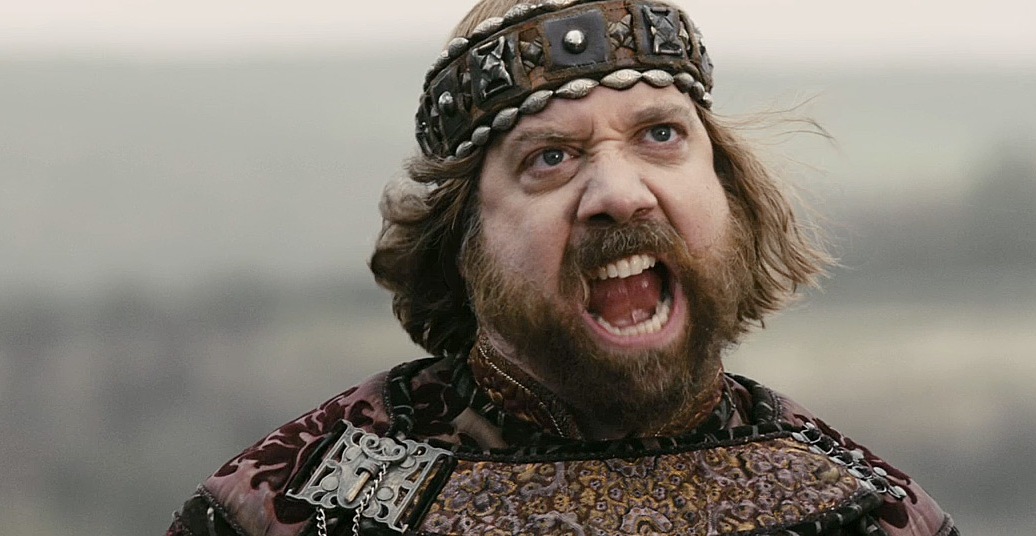
Ironclad (2011)

James Purefoy carries a big sword in nonsense medieval blood bath Ironclad

Director: Jonathan English

Cast: James Purefoy (Thomas Marshall), Brian Cox (William d’Aubigny), Derek Jacobi (Reginald de Cornhill), Kate Mara (Lady Isabel), Paul Giamatti (King John), Charles Dance (Archbishop Stephen Langton), Jason Flemyng (Becket), Jamie Foreman (Jedediah Coteral), Mackenzie Crook (Daniel Marks), Rhys Parry Jones (Wulfstan), Aneurin Barnard (Guy), Vladimir Kulich (Tiberius)

Let’s just take a moment to enjoy the fact that the most expensive film ever made entirely in Wales was directed by a guy called English. After that, you can enjoy the guilty-pleasure hack and blood nonsense of this sort of proto-Game of Thrones,which bears almost as much resemblance to British history as George RR Martin’s souped up re-tread with extra dragons.

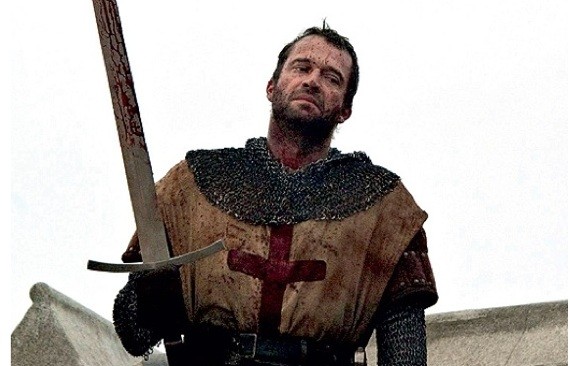
Anyway, King John (Paul Giamatti) has signed Magna Carta – as always that document which gave the barons some say in the government is here reimagined as some sort of manifesto for a socialist revolution – but now Rome has told John that he doesn’t need to stick to it after all. So John hires (honestly) a load of Viking warriors to take out his enemies. Yes that is just as silly as it sounds. Before we know it, the barons need to take control of Rochester Castle, a stronghold which is apparently the key to the south of England. So Baron William d’Aubigny (Brian Cox) puts together a “Dirty Dozen” (well Dirty Half Dozen, it’s a British budget after all) to defend the castle, led by Templar knight Thomas Marshall (James Purefoy). Let the siege begin!

If that doesn’t give you an idea of the way the film mixes and matches parts of British history into some sort of heady brew, I don’t know what will. We got King John! We got Magna Carta! We got Templar knights! We got Vikings! All of this is frozen into a hyperviolent mixture of historical epic and “men on a mission” war film, with added limbs flying off left, right and centre. Most of it is delivered at an absurdly energised pace. At least all involved seem aware that they are making a stoopid B movie, rather than some sort of genuine historical epic.

Criticising the history of the supposed historical epic seems completely superfluous, so instead sit back and enjoy the skill with which Jonathan English apes Neil Marshall in his blood letting and imaginative slaughter. Sure, he hasn’t got Marshall’s narrative skill or his ability to carve human interest out of even the most basic cardboard characters. But he still manages to present what we see with enough sense of action and adventure. Ridiculous as it might feel that a tiny group of men holds off an entire legion of King John’s troops, you sort of go with it as the film is shot with enough sense of ragged viciousness that you don’t notice the gaps in the tiny budget (less than a single episode of Game of Thrones). 

The actors all know they are in something rather silly as well. It’s a bizarre mixture of people, from Hollywood star character actors to B-movie stalwarts to Brit TV stars to slumming classical actors. James Purefoy grounds the stuff with his usual commitment and charisma. Just as well he does as Paul Giamatti clearly rocks up in the spirit of a lark, hammily overacting to such a ludicrous degree that he sounds like John Adams on a bad acid trip. It’s a surprise they don’t turn him on the walls of Rochester Castle and let him chew through the defences. Between these two hardly anyone else gets a look in, although Brian Cox does well as the brave leader of the castle who suffers a particularly brutal death involving mutilation and imaginative use of a catapult. 

Some typically subtle restrained work from Paul Giamatti

There are some impressive set pieces and some very stirring bits of head mashing, limb slicing violence but the overall plot is completely bog standard, as if with all that investment they either didn’t have time to put a story together or felt that they needed to make something that would appeal as much as possible to the lowest common denominator in order to recoup the costs. But at least there is a nice sense of growing comradeship between this hardy gang fighting against the odds and the film gets some sense of honour and duty being causes worth dying for against tyrants. I mean, it’s not there in spades, but it’s there.

And if you like this sort of B movie hack and dash stuff you’ll probably actually rather like this. Heck I’ve seen it twice, and I found the second viewing actually rather good fun in particular, especially as I knew going into it the entire film was an absolutely absurd pile of nonsense designed to just let you watch blood spray across the screen and heads depart bodies. Roll with it – put your critical facilities on hold and forget the history – and you will rather enjoy its earnest B movie antics.

Avengers: Endgame (2019)

Time to got to work: Avengers: Endgame caps off a 22 film series

Director: Anthony and Joe Russo

Cast: Robert Downey Jnr (Tony Stark), Chris Evans (Steve Rodgers), Mark Ruffalo (Bruce Banner/Hulk), Chris Hemsworth (Thor), Scarlett Johansson (Natasha Romanoff), Jeremy Renner (Clint Barton), Don Cheadle (Rhodey), Paul Rudd (Scott Lang), Karen Gillan (Nebula), Bradley Cooper (Rocket), Gwyneth Paltrow (Pepper Potts), Josh Brolin (Thanos), Zoe Saldana (Gamora), Danai Gurira (Okoye), Brie Larson (Carol Danvers), Chadwick Boseman (T’Challa), Benedict Cumberbatch (Dr Stephen Strange), Tom Holland (Peter Parker), Evangeline Lilly (Hope van Dyne), Anthony Mackie (Sam Wilson), Elizabeth Olsen (Wanda Maximoff), Chris Pratt (Peter Quill), Sebastian Stan (Bucky Barnes), Rene Russo (Frigga), John Slattery (Howard Stark), Tilda Swinton (Ancient One), Robert Redford (Alexander Pierce), Linda Cardellini (Laura Barton), Tom Hiddleston (Loki), Tom Vaughen-Lawlor (Ebony Maw)

So this really is it. For now. As Dr Strange says at one point “we are into the Endgame now”. Avengers: Endgame is Act Two of the Marvel Cinematic Universe’s ten-years-in-the-making finale. It’s also a sequel that, for me, enriches and improves the “bangs before brains” Infinity War. Where that film played too hard to the fanboy wet dream of seeing X teaming up with Y and lots of bashing, Avengers: Endgame focuses more on the intelligent character work and decent acting and writing that has underpinned what has turned what used to be the preserve of geeks into a franchise now almost universally beloved across the world.

The film picks up almost immediately after über-Baddie and misguided-humanitarian Thanos (James Brolin) has successfully used the powers of the infinity stones (a series of mystical macguffins that have been omnipresent in the series so far) to wipe out half of the population of the universe to save it from overpopulation, including dozens of our heroes. Those that remain – predominantly the original roster from the first Avengers film – must work together to find a way to overturn this destruction that Thanos has wrought. But more sacrifices are inevitable along the way.

Avengers: Endgame is a film that the less you know about where it is going, the more you are likely to enjoy its twists and turns. Viewers who may have been anticipating a series of increasingly brutal smackdowns between the Avengers and their nemesis Thanos will however be disappointed. This is not a film of acative avenging: it’s a film where our heroes cope with the burden of unbearable failure, survivor guilt, PTSD and are desperate to try anything to try and make amends. Surprisingly, for the biggest budget entry in the whole cannon, this feels like a smaller-scale, character driven film which carries far bigger (and realistic) stakes than several films earlier in the franchise.

For the opening two hours of this three hour epic, there is actually precious little in the way of action. Instead we explore individual reactions and struggles of each of our heroes. Some have slumped into depression. Some are struggling to move on. Others have shut down and focus on their work. Some have managed to put their past failure and loss behind them to rebuild their lives. Others have embraced the darkness altogether to extract a revenge upon the world that they feel has taken everything from them. It’s a real change of pace from the high octane action and smart banter of the first film. This feels more earned, more invested and more designed to engage our brains and emotions rather than pound us into joyful submission with its bangs and crashes.

In fact it builds back into what has made this franchise so successful and so beloved. It turns these heroes into people, rather than just monoliths of action. Way back in the day, when making the first Iron Man film, Kevin Feige said if they got the film right the name “Tony Stark” would become as famous as “Iron Man”. It sums the aims of the franchise up – that these should be real people to us rather than just comic book cartoons. If we think of Chris Evans, we think of him as being “Steve” not Captain America. Jeremy Renner is as well-known as Clint Barton as “Hawkeye”. If Scarlett Johansson is addressed as Natasha we don’t blink an eye in the film, in the way we would if she was called “Black Widow”. The Hulk can be calmly addressed as Bruce or Ant Man as “Scott” and we never think it strange. In fact it would feel odd to have them calling each other by their cartoon names. It’s normalised the personalities behind the badges and masks.

And that works so well because the writing, when it works, focuses on making these characters feel real – and the actors they have brought on board to fill out the roles have excelled at adding depth and shading to the roles. Chris Evans will probably forever by the noble, dedicated humanitarian Steve Rodgers and rightly so as he has turned this potential stick-in-the-mud into a person we deeply respect and love. He’s terrific here, marshalling a plot arc that brings his time in this crazy franchise to an end with a neat bow that feels fitting and fair (even if it’s got some logic gaps).

Robert Downey Jnr also does some excellent work in his final sign off from the series. The role here plays to all the strengths Downey Jnr has brought to the role:  the smartness, the intelligence, the slight smugness, the charisma. But also the vulnerability and longing to be genuinely loved and to build a family around him. The desire to protect people. The nobility under the off-the-cuff exterior. Downey Jnr’s departure was well advertised and again it works a treat here.

But then the whole cast are marvellous. Hemsworth gets to stretch his comic muscles even more than his regular ones, and balances marvellously a plot about a hero who has lost his way. Scarlett Johansson gets some of her meatiest material as Natasha, unable to fully take on board what has happened but determined to make amends. Jeremy Renner has some of the film’s darker material – and confirms that he has always been the heart of the team – with a plot line that hinges on the loss of his family. Mark Ruffalo’s Bruce Banner is presented in an intriguing new light that both delights and feels like a real rounding up of his character arc.

The eventual plan to underdo the work of Thanos revolves, it’s not a spoiler to say, around Time Travel. With a run, jump and leap the Russo Brothers acknowledge every cliché of time travel lore from dozens of films (Rhodes and Lang at one point hilariously name check virtually every time-travel-based film ever as back-up for their concerns about the mission) before basically throwing it all out of the window by making up its own rules (since, hey, time travel is impossible anyway so why not say all that “you could kill your own grandfather” stuff is bollocks?).

The time travel allows us to fly back into the plots and events of several other Marvel films, principally the first Avengers film, Guardians of the Galaxy and (hilariously considering it might be the worst one) Thor: The Dark World. This flashback structure works extremely well, with our heroes woven neatly into the events of films past – as well as allowing for “unseen” moments from those films to be staged here for the first time.

For a film that, up until now, has dealt with the pain of loss it also makes for a playful series of missions (or at least until one of them turns out to carry huge personal cost) that contrasts really well with the first half. The missions focus on a “heist” structure also gives us the chance for our heroes to work through the demons, often with the help of several (deceased) characters from past films living again (Rene Russo in particular gets easily her best ever scenes in the series as Thor’s mother in the past urging her son to come to terms with his guilt).

All this intelligent and emotional character work, mixed with sequences that are focused less on action and more on adventure and capery means that when we get the inevitable battle scenes at the end of the film – and I don’t think it’s a spoiler to say most of the film’s final act returns us to the action beats that governed Infinity War – actually feel really earned. Having reminded ourselves why we loved many of these characters in the first place, seeing them fight for good and do incredibly cool things while doing it suddenly feels both really earned and also hugely entertaining. Investment in these action scenes grows from the detailed work earlier.

It’s also a testament to the Russo Brothers direction. I will say right away that while I found part of Infinity War lacking in personality and identity behind the camera, I think I massively overlooked how effortless the Russo brothers make balancing all these plot lines, characters and events seem. Never once does the film seem to dip or droop the ball, and I don’t think there are many directors who could even begin to manage what they achieve here: a fusion of popcorn action with character study, which juggles 20-40 characters at various points. My hat sirs.

Avengers: Endgame is a delightful film. I went into it sceptical after Infinity War left me a little cold, but I needn’t have been so concerned. This is a film that, on its own merits, is almost a sort of masterpiece. Have you ever seen a film that juggled so much – not least the crushing expectation of its fans – and delivered so superbly? Chalk that up as another success for the Russos just turning in a film that the huge fanbase loved. Avengers: Endgame isn’t Citizen Kane – but just as the Russos couldn’t make a film as great as that, you can’t imagine Orson Welles would ever have managed to direct a film like it.

Trumbo (2015)

Bryan Cranston is the put-upon idealist Trumbo under the scornful eye of Helen Mirren

Director: Jay Roach

Cast: Bryan Cranston (Dalton Trumbo), Diane Lane (Cleo Trumbo), Helen Mirren (Hedda Hopper), Louis CK (Arlen Hird), Elle Fanning (Nikola Trumbo), John Goodman (Frank King), Michael Stuhlbarg (Edward G Robinson), Alan Tudyk (Ian McLellan Hunter), Adewale Akinnuoye-Agbaje (Virgil Brooks), Dean O’Gorman (Kirk Douglas), Stephen Root (Hymie King), Roger Bart (Buddy Ross), David James Elliott (John Wayne), Christian Berkel (Otto Preminger)

Hollywood loves to make movies about itself. It particularly loves to make movies where Hollywood is seen to be working on a higher moral plane. Trumbo is a film about the Hollywood Ten – the ten major screenwriters, directors and actors in Hollywood whom the industry blacklisted in the 1940s because of their sympathy for communism. Their leading light was Dalton Trumbo (Bryan Cranston), a rich screenwriter who finds himself imprisoned and unemployable. Trumbo encourages the writers to group together and write under pseudonyms for cheap film studios – although the right-wing in Hollywood continues to persecute them. Trumbo cannot reveal his identity as a writer – even after winning two Oscars – until 1960 when Kirk Douglas gives him a credit for Spartacus.

Trumbo is a very earnest, straightforward and rather bland re-tread of a key moment in Hollywood. It’s made with very little imagination, and remixes the world of 1940s politics into something that bears more resemblance to the political situation now than it does to the time. That’s not to defend the House Committee on Un American Activities (HUAC), the Congress Committee that led the campaign against communist subversion in Hollywood. Their persecution of communists flew in the face of American ideals of free speech, and their ruin of the lives of innumerable actors, writers and directors not found to be ideological pure is appalling.

But this is a film that simplifies its politics into a world of good and bad. It also works hard to try and whitewash Hollywood. Watch this film and you would believe it was Congress that had worked overtime in order to ban certain Hollywood creatives from working. Not so: the black list was put forward by the movie studios themselves and endorsed by the various guilds. Famous actors and directors, such as Humphrey Bogart and John Huston, furiously dropped their support for the Hollywood Ten after feeling they had been deceived by the Ten about their Communist associations. The film mentions none of this of course, running with a Hollywood-vs-Congress story line and crowbarring in people like McCarthy and Nixon who had very little to do with HUAC.

The main Hollywood figures campaigning against the Black List are either faceless Motion Picture Alliance for the Preservation of American Ideals types, or lip-smacking, practically mustachio-twirling gossip columnist Hedda Hopper (played with ludicrous OTT camp wickedness by Helen Mirren). John Wayne is the only recognisable Hollywood “legend” shown on the side of these guys – and, while he does get mocked for his non-war-record early on by Trumbo, he is quickly shown to be a moderate pushing for forgiveness for those who repent (and is noticeably absent from the villainy of the organisation later in the film) – Hollywood doesn’t want to be too harsh on one of its own.

Roach’s political simplicity also affects the actors who found themselves in an impossible position. As Michael Stuhlbarg’s Edward G Robinson points out, writers can work under a pseudonym, actors can’t. I was reminded of when Elia Kazan won an honorary Oscar and several famous Hollywood actors refused to applaud him, as Kazan had “named names” (or rather confirmed names HUAC already knew) when pulled before the committee. Robinson here is rammed into the same position, denounced as a snitch and a traitor for confirming the names of the Hollywood Ten when many of them are already in prison. As at the Oscars, I’m not sure it’s our place to judge. It’s cosy to assume “I would have told them no” but who can say if we would have or not? And can we really judge those who decided they didn’t want to go to the wall for a communist cause they didn’t believe in (as Kazan and Robinson didn’t, being more left-wing sympathisers than Stalinists like Trumbo)?

It’s another part of the film’s simplicity that Communism is not of course interrogated any further. Watch this film and the political views of Trumbo and his colleagues come across as nothing more than a more idealistic version of Obama-ism. In reality, Trumbo was a Stalinist who pushed for non-intervention in World War II until Russia was attacked by Hitler. This is not mentioned or explored in the film at all. In fact, the complexity of these idealists climbing into bed with a regime soaked red with blood that was suppressing freedom across large chunks of the globe isn’t even raised. Roach wants to tell a story about good-old-fashioned-Hollywood-democrats being persecuted by nasty right-wingers.

Away from the film’s simplicity it’s nothing special. Roach does competent work and there is the odd good scene. Trumbo himself is basically a rather selfish arsehole, who judges everyone around him and frequently ignores his put-upon family. Cranston does a decent job as Trumbo – but you can’t help but feel his generous Oscar nomination was in part a recognition for his work on Breaking Bad. Dean O’Gorman and Christian Berkel get some of the best scenes as Kirk Douglas and Otto Preminger working with Trumbo on Spartacus and Exodus. Bizarrely, the film totally avoids diving into the themes of Spartacus– or exploring what Trumbo was thinking about when he wrote “I’m Spartacus”, that paen to unity from the pen of a man abandoned by everyone, surely a hugely personal line not in the original source material – and instead skirts only on the surface, ticking off events. It kinda sums the film up: a solid enough to watch, but basically forgettable, that never engages with the inner lives of the men it claims to understand.

First Man (2018)

Ryan Gosling as an unreadable Neil Armstrong in the engrossing but cold First Man

Director: Damien Chazelle

Cast: Ryan Gosling (Neil Armstrong), Claire Foy (Janet Armstrong), Jason Clarke (Ed White), Kyle Chandler (Deke Slayton), Corey Stoll (Buzz Aldrin), Pablo Schreiber (Jim Lovell), Christopher Abbott (David Scott), Patrick Fugit (Elliot See), Lukas Haas (Michael Collins), Shea Whigham (Gus Grissom), Brian d’Arcy James (Joseph Walker), Cory Michael Smith (Roger Chaffee), Ciaran Hinds (Robert R Gilruth)

About halfway through this film, it struck me: Neil Armstrong is a not particularly interesting man who experienced the most interesting thing ever. It’s a problem that First Man, an otherwise exemplary film, struggles with: Armstrong himself, put bluntly, is unknowable, undefinable and, in the end, an enigma I’m not sure there is much to unwrap. Which is not to detract one iota from Armstrong’s amazing achievements, or his legendary calmness under pressure or his courage and perseverance. It just doesn’t always make for good storytelling.

First Man charts the years 1961-1969. During these years of professional triumph, Armstrong has success as test pilot, an astronaut on the Gemini programme (including command of Gemini 8, carrying out the first docking in space then saving his own life and the life of his pilot with his quick thinking when the mission nearly encounters disaster) and then the Apollo programme and his own first steps upon the moon. But Armstrong’s life is dogged by loss and tragedy, first his five-year old daughter to cancer, then a string of friends in accidents during the hazardous early days of the NASA space programme, including the deaths of Gus Grissom, Ed White and Roger Chaffee in the Apollo 1 fire. Armstrong becomes a man burdened with these losses.

There is very little to fault in the making of First Man – in fact it’s further evidence that Chazelle is a gifted filmmaker with a glittering future of great movies ahead. There are two things this film absolutely nails: the supreme majesty and awe of space and the terrifyingly rickety nature of the spacecraft we send men up into it in. 

Helped hugely by a superb score by Justin Hurwitz, which makes extensive and beautiful use of a theremin, the film captures the sense of mankind’s smallness, our vulnerability, in the face of the overwhelming vastness of space. Mixing goose-bump inducing wailing solos with orchestral sweep, and encapsulating the feeling of how small and lonely man in space is, the score goes a long way to match up with the visuals in creating a sense of space. The Oscar-winning visual effects – mixing computer graphics with some ingenious practical effects – never intrude but bring out the gritty reality of tin cans in space. 

Chazelle also really understands the impact of being so far beyond anything we can imagine, and his moon landing sequence is a thing of beauty. He expertly uses a number of close ups in the confined, claustrophobic campaign and largely eschews exterior shots (most of which only use the perspective of the crew’s view from the tiny windows, or of the cameras mounted on the side of the spacecraft). The moon landing follows suit, as we are thrown in alongside Armstrong and Aldrin as the lunar landing module takes its place on the moon – until the hatch opens with a whoosh of air (and sound) escaping the picture. And with that whoosh, the camera flies out of the hatch and switches – in an astonishing visual trick – from wide screen to IMAX shot to give us our first view of the vastness of space filling the frame. Suddenly, space fills the entire screen and the shocking beauty of the moon is a beautiful touch. We get as close as we can visually to experiencing the switch for Armstrong from confined spaces and beeping switches to vast panoramas and all-consuming silence.

And we really feel the switch, because Chazelle has so completely immersed us into the dangers and insecurities of the space programme. The spacecraft are repeatedly shown as alarmingly shaky, screwed together (the camera frequently pans along lines of bolts inside the cabins), thin, tiny, vulnerable capsules that shake, groan, whine and seem barely able to survive the stresses and strains they are put under. Any doubts about the risks the astronauts are under are dispelled in the opening sequence when Armstrong’s X-15 rocket twice bounces off the atmosphere and the internal cockpit around him glows orange under the extreme heat. But it’s the same on every flight we see – these craft don’t look safe enough for a short hop to the Isle of Wight, let alone hundreds of thousands of miles to the moon and back.

And that’s clear as well from the danger that lurks around every corner of the space programme. Death is a constant companion for these pilots and can come at any time. Armstrong himself escapes only due to a combination of luck and skill. When luck disappears, death follows swiftly for many of his co-pilots. Off-screen crashes claim the lives of three of his friends. Chazelle sensitively handles the horrifying Apollo 1 fire (news reaches Armstrong of the death of several friends, including his closest Ed White, while wining and dining politicians at the White House), and the terrible cost of this tragedy hangs over every single second of the moon programme. Fate or chance at any moment could claim lives. This grim air of mortality hangs over the whole film, a melancholic reminder of the cost of going further and faster to expand mankind’s horizons.

This grief also runs through Armstrong’s life and shapes him into the man he becomes. The death of Armstrong’s daughter at the start of the film sets the tone – the shocking loss of a child at such a young age is tangible – and it seems (in the film) as if this was the moment that led to Armstrong hardening himself against the world. He weeps uncontrollably at the death of his daughter, but later deaths are met with stoic coolness. Armstrong in this film is a cool enigma, who by the end of the film treats concerned questions from his children about whether he will return alive from the moon mission with the same detachment he shows at the official NASA press conference. “We have every confidence in the mission” he tells these two pre-teens, “Any further questions?”

It’s the film’s main problem that in making Armstrong such an unreadable man, who buttons up and represses all emotion, that it also drains some of the drama and human interest from the story. While you can respect Armstrong’s professionalism and coolness under pressure, his icy unrelatability makes him hard to really root for over the course of two hours. The film also strangely only sketches in the vaguest of personalities for the other astronauts (Aldrin gets the most screentime, but is presented as an arrogant, insensitive blowhard) so we hardly feel the loss of the deaths. Its part of the attitude towards Armstrong as a man chiselled from marble, so lofty that the film doesn’t dare to really delve inside his own inner world or feelings but builds a careful front around him to avoid analysis.

It’s not helped by Ryan Gosling, whose skill for blankness makes him somewhat miscast here. Try as he might, he can’t suggest a deeper world of emotional torment below the calm surface, no matter how soulful his eyes. It’s a role you feel needed a British actor, who could really understand this culture of repressed stiff-upper-lipness. Indeed Claire Foy fares much better as his patient, loyal wife who holds her composure (more or less) for the whole film under the same pressures of grief as Armstrong. Gosling just can’t communicate this inner depth, and his blankness eventually begins to crush the film and our investment in its lead character.

First Man in almost every other respect is a great piece of film-making and another sign of Chazelle’s brilliance. But it’s never as dramatic as you feel it should be. Armstrong’s life doesn’t carry enough event outside his moon landing experience, and the film can’t make an emotional connection with the man, for all the loss and suffering it shows for him. For a film that is so close to so perfect on space and the Apollo programme it’s a shame – but makes this more a brilliant dramatized documentary than perhaps a drama.

Wild Rose (2019)

Jessie Buckley sings up a storm in kitchen sink drama disguised as uplifting fable Wild Rose

Director: Tom Harper

Cast: Jessie Buckley (Rose-Lynn Harlan), Julie Walters (Marion Harlan), Sophie Okonedo (Susannah), Jamie Sives (Sam), Craig Parkinson (Bar singer), James Harkness (Elliot), Janey Goodley (Barmaid)

How do we find a balance between our dreams and the cold realities of our responsibilities? What do you do when your dream, what feels like the one thing you’ve been put on earth to do, never seems to come any nearer? And at what point does fixating on these dreams stop being naively exciting and start becoming selfish, as you ignore your children and others depending on you?

Rose-Lynn (Jessie Buckley) is released from prison back into her home in Glasgow. An immature screw-up, with a total lack of application but blessed with a blunt charm, Rose-Lynn has made a disaster of everything she has touched and has an almost non-existent relationship with her two young children who have effectively been raised by their grandmother Marion (Julie Walters). Rose-Lynn lands a job as a domestic cleaner thanks to a family friend, but her dream remains to go to Nashville and become a country singer. Her singing on the job is overheard by her wealthy employer Susannah (Sophie Okonedo) who decides to support her dream – but the temptation of her dream starts to sabotage her commitment to the relationship she is starting to build with her children.

Wild Rose on the surface (and in the marketing material) looks like an uplifting film about a young woman chasing her dream in the face of overwhelming odds. But it’s actually more like a 60s kitchen sink drama, spliced with country music. Rose-Lynn is a working-class single mother who had her two kids before the age of 18, who dreams of a better life but refuses to engage with her responsibilities in the real world. She basically is a dumb teenager who has never grown up, and has never given up on her fantasy of becoming a star. Like a sulky teenager, she rejects anything that feels like too much hard work – from learning a musical instrument to writing her own songs – and seems to believe just rocking up in Nashville with no plan and no contacts will magically land her a music career.

In actuality, Rose-Lynn is a rather selfish dreamer, with a self-destructive streak powered by laziness and a chippy resentment that cause her to frequently do her best to wreck opportunities. Pushing to get her security tag removed, she still heads out drinking until the last possible minutes of her curfew. Getting an opportunity to visit the BBC Radio studios, she prepares by getting drunk on the train. She miraculously escapes being fired the first day on her cleaning job, despite drinking from her employer’s drinks cabinet and dancing around her house not working the instant she is left alone. On top of which, she persistently lies or tells half-truths to everyone around her, and continually fails to deliver on commitments.

Your reaction to the film will be totally governed by your reaction to this character. So just as well she is played with such radiance and joie-de-vive by Jessie Buckley. A bombshell of a talent, Buckley manages to keep this character just the right side of charming. Her failures come not from cruelty or even conscious selfishness, but from a lack of maturity and just plain not growing up. She’s not ready to be a mother and not ready to deal with responsibility. But she’s still charming, she’s enthusiastic, she loves life and she wins friends easily. It just makes it all the more frustrating that she is such a screw-up.

You can see why her mother (a marvellous performance of caring but long-suffering frustration by Julie Walters) still loves her, even while she is beyond disappointed about the mess Rose-Lynn seems determined to make of her life. Her two children – adorable little moppets – are frequently shunted to one side, and the film walks a fine line between Rose-Lynn’s obvious love for them and also her (unspoken) resentment that their very existence acts as an anchor on her following her dream (the dream she is manifestly unprepared for).

Into all this turmoil steps Sophie Okonedo as her middle-class wannabe bohemian employer Susannah. This is surely the oddest character seen in films for a while, a sort of middle-class saviour who offers a world of opportunity to Rose-Lynn (who has withheld the truth about everything from her background to her family). Rather than doing what a real person would do and fire Rose-Lynn on her first day, Susannah not only encourages her singing but milks her upper-middle-class uni contacts to land an Rose-Lynn an interview with BBC Radio 2 legend Bob Harris (making a bizarre cameo as himself) and then goes further by offering to throw a fundraiser for Rose-Lynn to go to Nashville. Why does she do all this? Who knows, it’s all required for the plot in order to artificially bring to head the clashes in Rose-Lynn’s life between her dream and her family.

But then that’s the nature of the film, which hinges on narrative contrivances and clichés delivered with a solid level of commitment from the cast. In truth, this clash between what we should do and what we want to do is something we’ve seen many times before. The film seems determined to have its cake and eat it by reaching a conclusion that both these things are equally important and that (I guess) we need to find a balance between them. It makes for a slightly odd ending, or series of endings – just when we think it’s going to wrap up, another scene follows giving us another coda.

But then I guess it’s not clean, just as life isn’t. The real focus anyway is less Rose-Lynn’s dream and more about whether she can grow up enough to look after her children and stop being such a screw-up. In that sense it’s a hopeful film – as you would expect of course – but it feels like the film should pick a side, not least in saying that sometimes your dreams of being a professional footballer, or actor, or singer might be something you need to put aside at some point when it’s clear they are never going to happen. But then who really wants to think that?

Loro (2018)

Toni Servillo stands out as Berlusconi in Sorrentino’s scattergun satire

Director: Paolo Sorrentino

Cast: Toni Servillo (Silvio Berlusconi/Ennio Doris), Elena Sofia Ricci (Veronica Laria), Riccardo Scamarcio (Sergio Morra), Kasia Smutniak (Kira), Euridice Axen (Tamara), Fabrizio Bentivoglio (Santino Recchia), Roberto De Francesco (Fabrizio Sala), Dario Cantarelli (Paolo Spagnolo)

No one films decadence like Paolo Sorrentino. Many of his films have gone overboard to demonstrate Italy’s shallowness, corruption and greed. Loro feels like the subject he has been building towards his entire career: the heart of the whirlwind himself, Silvio Berlusconi. Sorrentino’s film is about Berlusconi, but it’s as much about the Italy he has created and the impact on Italians themselves. Its title translates as “Them” – and the film juggles with the idea of which “them” it’s referring too.

The film follows the career of Berlusconi from 2006 to 2009, as a he deals with the aftermath of losing power and the boredom of having very little to do in his palatial mansion. All around him – like flies around honey – the newly rich try everything to gain Berlusconi’s attention, throwing lavish prostitute-and-drugs parties. But what does Berlusconi want? Is it more of the same, is it a return to power, is it a chance to do good, is it a chance to make amends, is it a return to the spotlight? Who is Berlusconi?

Sorrentino’s film follows his usual style, and makes full use of his dynamic and electric directorial style. Boy this guy loves to keep the camera on the move, and he combines it with some snappily filmic editing that creates a series of scenes that fit sharply together. Sorrentino really can cut the hell out of a picture, and his style lends itself perfectly to depicting the extreme hedonism at the centre of the lives of many people whom he makes films about. His fast cut editing style, dynamic camerawork and use of modern music stringing it all together make for a perfect visual language for the shallowness he sees in large parts of modern Italy. But this approach doesn’t always engage the viewer, leaving them watching the technique instead – and that’s arguably what happens here.

A large chunk of the first half of the film centres around Riccardo Scamarcio’s Sergio Morra, a fictional “businessman” from Southern Italy who uses attractive women and drugs to land lucrative government contracts from ageing officials. Just in case we are in any doubt, it’s made clear very quickly that Morra is unbelievably shallow, venal, corrupt and interested only on what he can take from his country. His life is one of unalloyed selfishness, centred around drug-fuelled orgies (filmed very well by Sorrentino of course!). Morra builds a partnership with Berlusconi’s fading mistress (extremely well played with more than a hint of tragedy by Kasia Smutniak) focused solely on getting as close as possible to power. Almost all of the first 45 minutes (and yes that is too long!) is centred around establishing Morra’s vileness and his empty world. It’s as clear a portrait of modern Italy captured in one man as you can wish for, but its constant unpleasantness and prolonged sex and drugs with little plot gets more than a little wearying after a while. We get it Paolo!

But Sorrentino wants to make a clear point here: Berlusconi’s Italy has given rise to people like this, people who have an interest only in what they can take from the country, people who think being able to throw the most lavish party, having the most money, making the loudest noise makes them “better” than regular people. It’s these people interpreting the image of Berlusconi as giving them a green light for greed. When we promote puffed up egotists and fun-lovers as our leaders, then grasping venal imbeciles like Morra with no sense of morality or decency see that as an invitation to join them at the top table. 

After this introduction to Morra, when we finally meet Berlusconi himself it’s surprising how different he seems. Yes he’s a casual, shallow, rather grandiose figure – but in the hands of Toni Servillo, Sorrentino’s regular collaborator, he’s a more complex person than you might expect. Bored and a little depressed at home, Berlusconi also sees himself as far more than just a party animal turned politician. He’s a man, for all his shallowness and greed, who needs to believe that he is there for the good of the people. But what the film doesn’t quite do is “nail” him – perhaps because he is unnailable – but the film doesn’t feel like it lands a true blow. Or even makes a really clear point about the presidency of this man. Sorrentino’s anger is in every frame, but I’m not sure he really puts together a convincing – or completely engaging – argument about this.

Servillo’s performance as Berlusconi is the true highlight of the film, a complex mystery of a man who wants to be decent, but not enough to change or to actually carry out selfless acts. Sorrentino sees him as a salesman at heart – the salesman who sold himself as the corrupted answer to all Italy’s problems – and the film’s highlight is probably a sequence when Berlusconi girds his tired salesman’s loins to cold-call a random ageing woman, plucked from the phone book, to flog her a flat in an apartment block he hasn’t even started to build yet. It’s a neat capturing of what energises this man behind the fixed smile – and a sign as well of how little reality matters to this peddler of dreams. You can see why business partner Ennio Doris (played also by Servillo, making Doris a neat facet of Berlusconi’s own personality) pushes him to get back to selling and blagging to rebuild his confidence.

Sorrentino grounds most of the film in the growing disillusionment of Berlusconi’s wife Veronica, expertly played by Elena Sofia Ricci. Smart, quick-witted but too ready for too long to sacrifice her principles for the comfort of marriage to the loaded Silvio, Veronica becomes, if not exactly a conscience, at the very least a voice for sanity in Berlusconi’s world. In a film where the majority of the characters are gilded fronts like Berlusconi or soulless obscenities like Morra, she is the closest thing we have to a decent person. 

Veronica’s growing sense of discomfort at the “me-first”, power and money above everything world that Berlusconi has created draws the viewer’s attention to the other “them” the film deals with. Yes, we have the party-loving elite here, but the other them are the people we hardly see – the regular Italians, the ordinary citizens. These intrude rarely into the film, but tellingly they dominate the final sequences of the film which deal with the aftermath of the L’Aquila earthquake. As firefighters rest from their labours in the ruined city – including saving a statue of Jesus Christ from a ruined church – the camera pans across their exhausted, sweaty faces staring wearily, while the word “Loro” remains on screen. 

It’s in that final shot that Sorrentino’s film really seems to land. Because amongst all this partying and greed which has dominated – and often exhausted the viewer – we are finally reminded that the people really paying the price are the regular people, whose needs are not monitored, who are readily and easily forgotten. Sorrentino’s film may drift too often in really making a point or feeling like it nails Berlusconi. But when it makes points like this it really works.

A Star Is Born (2018)

Bradley Cooper and Lady Gaga excel in A Star is Born, truly one from the heart

Director: Bradley Cooper

Cast: Lady Gaga (Ally Campana), Bradley Cooper (Jackson Maine), Sam Elliott (Bobby Maine), Dave Chappelle (George “Noodles” Stone), Andrew Dice Clay (Lorenzo Campana), Anthony Ramos (Ramon), Rafi Gavron (Rex Gavron), Greg Grunberg (Phil), Ron Rifkin (Carl)

The story of A Star is Born is practically a staple of Hollywood. Bradley Cooper’s film is the fourth version (after 1937, 1954 and 1976) and re-packages the action to the country and western scene. Cooper injects the film with a real seam of emotion and complex, challenging humanity – represented above all by Cooper and Gaga’s searing, heartfelt, beautiful performances.

Jackson Maine (Bradley Cooper) is a famous country singer, and a self-destructive, if charming, alcoholic. One day, by chance, he stumbles into a bar and overhears a performance by Ally (Lady Gaga), a soulful artist rejected on multiple occasions for a record deal because of her slightly unconventional style and looks. Jackson and Ally form a deep connection and he invites her to perform with him. Their bond grows and Jackson is proud as her career starts to flourish. But this rise is matched by his own increasingly damaging alcoholism and drug addiction which puts his health and their happiness at risk.

A Star is Born brilliantly refocuses the story as a beautiful relationship drama. In previous versions, the man slumps into destructive behaviour due to resentment at the female protégé’s increasing success. Here though, Jackson – despite flashes of jealousy – remains supportive and proud of his wife, and she devoted to him. What Cooper has structured here is a story about the damage of depression and alcohol – and how they can shatter and destroy a person regardless of events in their life.

It also means we get a fresh perspective on an otherwise predictable drama. Having Jackson remain proud and supportive – and increasingly guilt-ridden by the impact his behaviour has on Ally – means we can also remain invested in him. Similarly, it’s hard not to share his feeling that Ally loses something of her beautiful soul as her manager crafts her into a manufactured pop icon. It’s the intrusion of the rest of the world into this couple that puts strain on their relationship, not internal tensions. 

It’s a film in many ways that starts with a happy ending. The early, romantic meetings are beautifully done, the first performance of Shallow (Ally’s song) on stage plays like the fist-pump ending of any number of Cinderella stories. Her protective attraction matched with his old school chivalry in their early relationship is deeply romantic and shows what could be between them. Cooper sprinkles the film with happy endings – you’ll be begging the film to stop at any number of them – and barely a scene goes by that won’t have you choking back tears or watching through your fingers in pained horror at how badly things can go wrong.

It helps that for both leads this was clearly a deeply personal project. Both produce sensational performances. Cooper has talked about his struggles with both alcoholism and depression – and he brings all this deep rooted pain to bear here. Jackson is, in many ways, a wonderful man – caring, supportive and loving – but struggles with demons he can’t control. Cooper’s fragility, his suffering, his gut wrenching guilt and sadness are played beautifully in a performance that truly comes from the heart, and that leaves you wanting to give him a hug.

Lady Gaga is his match in a performance of tender innocence, of gentle humanity and earnestness. Again you sense the story of an unconventional person, with crippling self doubt, more than speaks to her. Gaga’s emotional bravery and commitment here is extraordinary, and you feel again she is showing in this film something very personal and tender to her. The chemistry between the two actors is electric – it’s rare to see two such performances complement each other so perfectly.

These two actors play off each other beautifully, with scenes that are at times hard to watch in their scarring emotional truth. At the same time, the investment of the audience is absolute in this loving relationship. The film also has some excellent performances in the support, not least from Sam Elliott as Jackson’s frustrated, but fundamentally loving, brother.

A Star is Born shocked me. It’s not the film I was expecting, or the story I anticipated. Instead it’s an entertainment industry parable, a love story, a film about the destructive unpredictability of depression and how sometimes love can’t conquer all. With some graceful direction from Cooper and above all his emotional honesty – and the truth of his and Gaga’s performances – this becomes a film that tugs on the heart strings until heart strings break. Beautifully made and wonderful.

The Miseducation of Cameron Post (2017)

Re-education classes turn out to be not for the good in The Miseducation of Cameron Post

Dir: Desiree Akhavan

Cast: Chloë Grace Moretz (Cameron Post), John Gallagher Jnr (Reverend Rick), Jennifer Ehle (Dr Lydia March), Sasha Lane (Jane Fonda), Forrest Goodluck (Adam Red Eagle), Marin Ireland (Bethany), Owen Campbell (Mark), Kerry Butler (Ruth Post), Emily Skeggs (Erin), Quinn Shepherd (Coley Taylor)

In 1993 teenager Cameron Post (Chloë Grace Moretz) is dispatched to a church-run sexual re-education camp after she is found to be in a same-sex relationship with a classmate. At the camp, her quietly cynical attitude quickly finds her aligned with the sceptical students Jane (Sasha Lane) and Adam (Forrest Goodluck) as they push up against the regime installed by Dr Lydia Marsh (Jennifer Ehle). How dangerous is the world of sexual re-education for its students?

Not surprisingly, the answer is very. The Miseducation of Cameron Post is a rather self-consciously indie film that sets up easy targets and then happily spends 90 minutes knocking them down. It’s often made with sensitivity, and has an excellent performance from Chloë Grace Moretz as its lead, a character you really root for, but this is a fairly empty viewing experience.

The film does get a lot of material out of the awful, cringing re-education programmes. It lands some blows against the hypocritical nature of the organisation, with at least one of the teachers (John Gallagher Jnr’s earnest Rick) also barely suppressing his homosexuality – and it re-enforces the cruelty of forcing people into becoming something they are not. But this is hardly news to any right-thinking person, and it doesn’t always make for good drama.

This is partly because Cameron herself never feels isolated in this re-education camp. She almost immediately falls in with like-minded rebel friends, and several of the other students are openly struggling with doubts. While the film perhaps wants to show that this sort of social engineering is never going to work, it does mean that our heroine never really feels at a disadvantage. You can’t help but feel a more effective film would isolate Cameron among people professing they are true believers (even if it turns out later they’ve been pretending), and show her struggling against conformity and clinging to her individuality. Instead, there seems no threat or any danger at all that she will ever drink the Kool Aid here at this camp – not for one second do you feel any chance that she is going to conform.

It makes for a major weakness for the film. It also makes Jane and Adam rather boring characters. They don’t challenge Cameron’s viewpoint at all, but merely echo her inner views with an added spice of rebellion. It makes for uninteresting scene constructions, and it’s not helped by the lack of chemistry between the three characters. By contrast, her relationship with roommate Erin, who is desperate to overcome her sexuality, makes for a far more interesting dynamic. Two characters with very different inner struggles, trying to find a common ground but frequently failing. Emily Skeggs is also heartbreaking as Erin, a young woman deeply unhappy and seemingly destined to remain so.

But there isn’t enough of this sort of thing. Nor is the viewer really challenged to consider the viewpoints of those running the camps. Jennifer Ehle, as the doctor running the camp, is a domineering Nurse Ratched figure, in a role which needed more shades of grey. She’s never a woman honestly doing what she believes is best, just a bully enjoying the power. John Gallagher Jnr’s conflicted worker doesn’t come into focus as a fully rounded human being, and his torment is touched on but his reasons for the decisions he has made are never explored.

It all contributes to a disappointing viewing experience. The film is too often shot with a self-conscious indie coolness, which gets on your nerves after a time, with its constant moody fall backs and gloomy set-ups. But it’s also a film that is taking a bit too much delight in making rather obvious and safe points over and over again, and failing to invest itself with enough drama to make for a compelling story. It’s a disappointment.

The Cruel Sea (1953)

The Cruel Sea (1953)

Command is a lonely, pressure-filled place in this complex and exceptional war film

Director: Charles Frend

Cast: Jack Hawkins (Lt Commander George Ericson), Donald Sinden (Lt Keith Lockhart), John Stratton (Lt Gordon Ferraby), Denholm Elliott (Lt John Morell), John Warner (Lt Baker), Stanley Baker (Lt James Bennett), Bruce Seaton (PO Bob Tallow), Liam Redmond (PO Jim Watts), Virginia McKenna (WRNS Julie Hallam), Moira Lister (Elaine Morell)

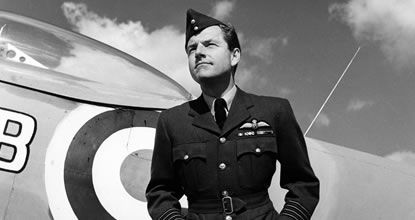
In 1953, The Cruel Sea was a colossal hit at the UK box office. With only a few years separating viewers from the sacrifices and struggles of war, it’s not hard to see why. The Cruel Sea is all about those struggles and sacrifices, about carrying on and doing your duty despite it all. But it’s also a film that understands the impact these have, and that that stiff upper lip is often covering a trembling bottom one. That stoic front is sometimes just that: a front. 

Jack Hawkins plays Lt Commander George Ericson, commanding a corvette on convoy duty in the Atlantic ocean. His mission? Make sure those ships make it through and destroy U-boats wherever possible – and everything else is secondary to that. But of course the real battle is against the cruel sea itself: and everyone sailing on her is at threat at any moment from losing their life. In the mid of this the men deal with losses at sea, losses at home, and the constant pressure of always being ready to do-one’s-duty.

On the surface, The Cruel Sea is pretty much the quintessential 50s British war movie. The upper lips are stiff, the accents are super clipped. Everyone is pulling together, regardless of class. Duty, king and country come before everything. But actually, this is a more complex film than all that. The Cruel Sea drills down into the psychological cost of war, and the impact of putting duty to the war above and beyond the needs of the regular sailor. Protecting the convoys and taking out these u-boats come first, and if that means sacrificing lives then it’s got to be done, regardless of the psychological impact that might have on the guy who makes the call.

Jack Hawkins is that guy, and this role pretty much cemented his niche in mainstream as the gruff, duty bound, slightly distant, quintessential officer type. But Hawkins performance here is that entire impression as a front, hiding his own doubt and guilt. During this film Ericson not only has to deal with his first ship sinking – with a huge loss of men – but also his decision to prioritise sinking a u-boat over saving men from a downed convoy ship trapped in the water. The depth charges he orders lead to the deaths of those men in the water: “bloody murderer!” screams an outraged crewman under his command.

And bloody murderer is exactly what Ericson thinks he is. Its’ the tough – and probably right – decision but the deaths of those sailors don’t sit easy with him. He’s the tough captain who can make the call – but his next shore leave sees him getting guiltily drunk and then tearfully expressing his doubts and guilt to his second-in-command. It’s clear that the pressure of making these calls, of sacrificing lives is something Ericson cannot wear lightly – and Hawkins performance in these moments breaks through the reserve of the 1940s to show a real depth of post-traumatic stress and guilt. Hawkins’ performance is raw, touching and above all real – and you feel he is expressing the survivor guilt of a generation who had all made tough calls during nearly a decade of war.

The Cruel Sea is all about those tough choices, and learning to deal with them. It’s also about that difficult balance between life at sea and life at home. Some families suffer terrible losses, some sailors come home to find loved ones have been killed in the blitz, others find that their wives have failed to stay loyal in the long months they have been away. At sea, there are more than enough pressures and threats, and that cruel sea takes a continuous toll, which is hard to forget. 

The scenes shot at sea have a professional tension and to them, and a really capture that sense that the most noble thing to do is to get on with doing your duty. The officers and men keep a reserve and a determination, as well as aiming to keep their spirits up as much as they can. There is very little patience for those who can’t or won’t put the good of the many first. Stanley Baker’s braggart second-in-command – an insecure stickler for rules, who is clearly both incompetent and cowardly – is treated with contempt and swiftly persuaded to jack it in for a spurious health reasons.

Meanwhile, the rest of the officers are decent, hard-working, determined and put duty and the lives of others in front of their own. Donald Sinden, underplaying (and a world away from the larger than life characters he would go on to play) is excellent as the young officer who grows in statue and authority, as well as having a very sweet romance with Virginia McKenna’s WRNS officer. John Warner and a young Denholm Elliott are equally good as young officers who have to deal with tragedy.

Because dealing with tragedy is what this film is about. The war at sea is long, often boring and punctuated with danger and loss. The opponent is hard to see, and the clashes with them never clean cut or open. For years of campaigning, you can count on one hand the number of direct clashes Ericson and his crew have with visible u-boats. Despite this, each of these attacks carries huge costs. The war at sea is unrelenting, tough and terrible: but also calls for men who are able to put themselves second, no matter the cost. It’s a great look at the mentality of a whole generation: no wonder it was such a hit.

Dark River (2017)

Ruth Wilson and Mark Stanley make for one unhappy family in Dark River

Director: Clio Barnard

Cast: Ruth Wilson (Alice Bell), Mark Stanley (Joe Bell), Sean Bean (Father), Joe Dempsie (David), Esme Creed-Miles (Young Alice), Dean Andrews (Matty)

British Independent film can be a grim place. Clio Barnard is undoubtedly a gifted film-maker and visual stylist, and infuses her work with a striking poetic lyricism – but blimey Dark River is hard going. And not just because it’s a grim film about grim subject matter – it’s a film that feels likes it’s trying way too hard at almost every point. 

Alice Bell (Ruth Wilson) returns to her family’s farm after 15 years, on the death of her father (Sean Bean). A victim of her father’s continued sexual abuse, Alice finds the farm still haunted by memories – and feels threatened by her violent, depressed brother Joe (Mark Stanley) who resents being left to care for the farm and their dying father alone. Both siblings make legal claims for ownership of the farm – and the dispute and tensions swiftly escalate.

Dark River makes no secret of its historic child abuse plotline. But this narrative development seems to have become so common in grounded, grim dramas like this that it’s hard not to view almost everything you see as a walking cliché. Appalling as Alice’s experience has been, this film doesn’t show us anything that we haven’t seen hundreds of times before in a storyline like this. All the expressions of trauma, the style of shooting, the silent dread – it’s all been done before. It already feels tired here and lacking any form of originality.

It doesn’t help that the film is slow-paced, and determined to create an arty atmosphere. For all the beauty of the gloomy Yorkshire dales and rain-drenched sheep, you can’t help but feel the film is wallowing in all its Bronte inspired poetic grimness. Every second of the film seems to be designed to hammer home the “grim up north” feeling, in an attempt to add an amount of poetic weight to a story that feels slight, predictable and all-too-familiar.

Meanwhile, the central conflict of Alice’s determination to turn the farm around and claim ownership of it never seems to ring true. Every second on the farm she feels uncomfortable and haunted by memories: her brother even says she can’t step foot inside the farm house. Why does she want to stay here? Why does she fight so hard to claim possession of it? It never really makes sense.

The struggle between the siblings feels equally forced, remarkable as the film’s understanding of Joe’s drunken inarticulacy and ill-expressed emotional turmoil can be. The true emotional reasons behind their fury never click, as we never get a sense of any real relationship between them either past or present. For all the haunting, ghost-like presence of Sean Bean as the dead father (who appears as a constant vision or half-memory) that sense of the past, and the unspoken tensions don’t quite click into place, leaving the film reliant on the language of cliché.

The film’s main asset is the extraordinary performances of the lead cast. For all the clichéd and familiar scenes and story structure they encounter, Ruth Wilson and Mark Stanley are both exceptional. Wilson’s Alice is a heartbroken, vulnerable and confused figure only just able to understand the emotional trauma her father has left her with. Mark Stanley matches her as an angry young man, furious at the world, prone to dangerous outbursts, an inarticulate mountain of rage with no direction. The scenes between these two throb with an emotional strength and truth that the rest of the film can hardly match.

Dark River is very well made and striking in its visual language with some very strong performances. But it’s also overly familiar and trying too hard to be both important and artistic. You’ll quickly find yourself drifting away from it as it goes on, admiring it but never truly engaging with it.