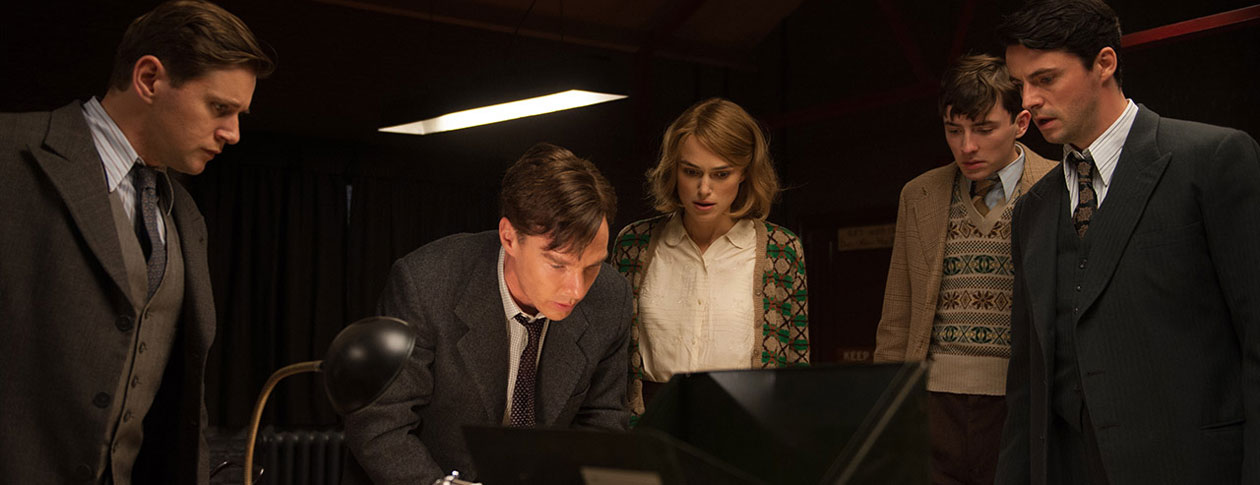
The Core (2003)

The Only Way is Down for our heroes in super silly Sci-fi disaster The Core

Director: Jon Amiel

Cast: Aaron Eckhart (Dr Josh Keyes), Hilary Swank (Major Rebecca Childs), Delroy Lindo (Dr Edward Brazzleton), Stanley Tucci (Dr Conrad Zimsky), Tchéky Karyo (Dr Serge Leveque), Bruce Greenwood (Commander Robert Iverson), DJ Qualls (“Rat”), Alfre Woodward (Dr Talma Stickley), Richard Jenkins (Lt General Thomas Purcell)

Dr Josh Keyes: “Even if we came up with a brilliant plan to fix the core of the Earth, we just can’t get there”

Dr Conrad Zimsky: “Yes, but – what if we could”

If you have any doubts about the type of film you are going to watch, then that tongue-in-cheek dialogue exchange (and the words can’t capture the playful, I-know-this-is-crap wink that Stanley Tucci tips practically to the camera) should tell you. The core of the Earth has stopped rotating. Which basically means all life on Earth is going to end in the next few months. Unless, of course, we can restart the rotation of the Earth’s core. So time to load up a team of crack scientists into a ship-cum-drill, made of metal that doesn’t buckle under pressure (this metal is, by the way, literally called unobtainium by the characters) so that they can sprinkle nuclear bombs through the centre of the Earth to kickstart the rotation of the planet and blah, blah, blah.

It’s perhaps no surprise that The Core was voted the least scientifically accurate film ever made by a poll of scientists about 10 years ago. Nothing in it makes any real sense whatsoever, and it’s all totally reliant on the sort of handwave mumbo-jumbo where you can tell getting an actual logical explanation was going to be far too much hard work, so better to roll with a bit of technobabble and prayer. Questions of mass, physics, pressure are all shoved aside. The film sort of gets away with it, with a leaning on the fourth-wall cheekiness – no fewer than three times in the film the impossible happens with a “what if we could” breeziness, as a character pulls out a theory or discovery with all the real-world authority of the fag-packet calculation.

But then scientific accuracy is hardly why we watch the movies is it? And this is just a big, dumb B-movie piece of disaster nonsense, which throws in enough death-defying thrills, predictable sacrifices and major landmarks being wiped out topside to keep the viewer entertained. In this film Rome and the Golden Gate Bridge both get taken out by spectacular disasters. Beneath the surface, the characters go through the expected personality clashes and learn the expected lessons.

The script (most of which is bumpkous rubbish) really signposts most of this personal development. Will Zimsky and Brazz rekindle their respect and overcome decades of rivalry? Will Serge, on the mission to save his wife and kids “because it’s too much to think about saving the whole world”, have to pay the ultimate sacrifice? Will Major Childs finally get the courage and determination to take command and make the hard calls? I won’t tease the fate of Mission Commander Bruce Greenwood, but he is called upon so often to reassure Childs that one day she will be ready to take command, alongside other mentoring advice, that the only surprise is that he lasts as long as he does.

So why is hard to not lay into The Core? Because, not that deep down at its core, it knows it’s a silly film. The script has enough awareness of its cliché and scientific silliness that it almost doubles down on it. And the actors play it just about right: for large chunks of it they perfectly hit the beats of sly archness that suggest just enough respect to not take the piss, but enough self-awareness of what they are making. But these are all very, very good actors and when the serious moments come, it’s remarkable how much they can shift gear – with the grisly death of one character (while the others powerlessly try and save him) played with an almost Shakespearean level of tragedy by a distraught Eckhart and Lindo. Later, as three characters juggle over who will go on a suicide mission to keep the mission on track, the bubbling emotions of shame, relief, pride, respect and buried affections are genuinely rather affecting. Its moments like this that makes me kind of love this big, dumb, stupid film.

But it remains stupid. Topside, Alfre Woodard and Richard Jenkins bumble through roles they could play standing on their heads. A hacker – Rat – is as clichéd and full of techno-nonsense as any of the science, which is even more painfully obvious to us now that we’re all so much more tech-savvy than we were in 2003. Events happen because, you know, they can. Discoveries and scientific conclusions are made because the script needs them. But the film knows this, it doubles down on it and it accepts that every problem is just a “But what if we could!” away from being solved. Stupid, but strangely loveable.

Red Eye (2005)

Rachel McAdams is on the flight to hell with only Cillian Murphy for company in Red Eye

Director: Wes Craven

Cast: Rachel McAdams (Lisa Reisert), Cillian Murphy (Jackson Rippner), Brian Cox (Joe Reiset), Jayma Mays (Cynthia), Jack Scalia (Charles Keefe), Robert Pine (Bob Taylor), Teresa Press-Marx (Marianne Taylor)

Are there any two things in the world we are more unsettled by than plane flights and the possibility that the strangers we meet might turn out to be nutters? Well Red Eye taps into both of those terrors with an effective B-movie of fast-paced brutality, which plays out almost in real time. Lisa Reisert (Rachel McAdams) is catching the red eye flight home to get back to her job managing a five-star hotel in Miami. At the airport bar she meets handsome, charming stranger Jackson (Cillian Murphy), and then finds herself sitting next him to on the plane. Just as things seem to be going well for romance, Jackson reveals he’s a terrorist and he wants Lisa to change the room booking of the Director of Homeland Security so his team can take him out – and if she says no, hitmen will take out her beloved father Joe (Brian Cox). But there may be more to Lisa than Jackson bargained for.

Craven’s film is an extremely efficient, sharp, lean little thriller with a cracking idea at its heart. It’s such a whipper cracker of an idea – the stranger on a plane who turns dangerous – that once the claustrophobia of the flight is removed in the final quarter, the film never quite gets its energy back. It’s Lisa’s mid-flight powerlessness, the self-contained, claustrophobic lack of escape, that makes the first three quarters of the film so compelling. Because as soon as Lisa realises that there is something wrong, there is nothing she can do and nowhere she can go to escape. And Jackson has manoeuvred the situation so she looks like the untrustworthy, awkward one while Jackson seems (outwardly) reasonable and friendly – cutting off any chance of help from fellow passengers.

These sequences in the plane work so well because they are so tightly directed, written, edited and played. Rachel McAdams is very good as a woman who at first seems self-occupied and slightly distant, then weak and vulnerable, before becoming resourceful and courageous. She’s well matched by Cillian Murphy as the smooth, in-control terrorist who begins to crumble as his plans turn against him.

It’s another decent structural twist in the film as it’s Rippner’s own arrogance and pride that eventually proves his undoing, as he drops enough information amongst his hubristic brags and threats for Lisa to work out how she can gain the upper hand. Before that she already shows plenty of invention to try and communicate her situation to the other passengers – and the tension of these cat-and-mouse games of evasion is portrayed perfectly.

It’s not a perfect film. The final quarter too quickly turns Murphy’s character into a psychotic version of his near namesake, Jack the Ripper, while the final cat-and-mouse hunt between these two characters in a new location doesn’t have the same tension as the plane setting. Similarly, the plot hinges on McAdam’s character falling victim to a past sexual assault – and how that event has shaped her later life – that today seems a little uncomfortable in its perfunctory treatment in the story. But these are blemishes – Red Eye is largely a sleek little thriller that makes its points with a nail-biting B-movie meanness. Craven sure knew how to put something like this together.

Scott of the Antarctic (1948)

Scott of the Antarctic (1948)

Captain Scott’s tragic end is bought to life with low-key hero worship

Director: Charles Frend

Cast: John Mills (Robert Falcon Scott), Diana Churchill (Kathleen Scott), Harold Warrander (Dr Edward Wilson), Anne Firth (Oriana Wilson), Derek Bond (Captain Laurence Oates), Reginald Beckwith (Lt Bowers), James Robertson Justice (PO “Taff” Evans), Kenneth More (Lt Teddy Evans), Norman Williams (William Lashly), John Gregson (Tom Crean), James McKechnie (Dr Edward Atkinson), Barry Letts (Apsley Cherry-Gerrard), Christopher Lee (Bernard Day), Clive Morton (Herbert Ponting)

There are perhaps few more controversial figures in historical discussion than Robert Falcon Scott. The great polar explorer was, for most of his career, and for a long period after his death in 1912, a national hero, the man who – with stiff-upper-lip bravery – gave his life struggling against the elements to conquer the South Pole. Scott’s reputation only began to be questioned in the late 1970s, with a series of biographies culminating in a near-vicious – but compelling – anti-Scott argument laid out by Roland Huntford in his book Scott and Amundsen. Scott’s many flaws – both personal and in planning – set a new landscape for seeing his achievements as carrying too high a cost, especially in an atmosphere where the extreme sacrifice was seen as something to be avoided if at all possible, rather than an everyday fact of life for post-war generations.

In this context, watching this Ealing Studios 1948 Scott biopic – one of the biggest box-office hits of its year in the UK – is an interesting experience. While the film’s tone and its depiction of Scott are essentially fairly heroic, the film flirts at points with the errors and misjudgements that led to Scott leading himself and his companions into an icy immolation in a tent eleven miles away from a depot that could have given them a chance to survive.

Frend’s film is very well made and beautifully shot – so perfectly does it capture the look and feel of the Antarctic, and the extreme cold, that you overlook the fact that at no point can you see the actors’ breath – and it covers the main points of the expedition very well. It’s in some ways, today, almost hilariously stiff-upper lip, with the expedition members marching dutifully (and with a self-deprecating smile) to certain death, and the ladies at home speaking with such cut-glass primness you have to keep checking that Celia Johnson isn’t in the film.

There are some strong performances, not least from Mills (a very close physical likeness for Scott himself). Mills was the perfect choice for this role –overflowing with a sense of duty, but with a slight edge of idee fixe pride where it’s clear that he’s not willing to budge from anything to do with his mission. Harold Warrander also makes a strong impression as an artistic spirited scientist, Dr Wilson, who quietly hides his premonitions of disaster and later feelings of regret due to a sense of personal loyalty to Scott. Reginald Beckwith, James Robertson Justice and Kenneth More also give decent performances.

But the main appeal is the glorious technicolour look of the film. The film used no fewer than three photographers and brilliantly mixes together painted backdrops, studio locations and some genuine location footage with skilful and glorious aplomb. The technicolour tinge to the shots is wonderful – watching it in high definition, it’s like a series of polar expedition photos brought skilfully to life. The film in fact apes several of the famous photos from the expedition with such beauty that you feel like they could be printed and framed.

The plot however is more concerned with checking off the events of the expedition – from its conception, through its financing and recruitment, initial excursions and the final (futile?) march to the pole and the death march home. Frend’s film is clearly largely intended to be hagiographic – the men are by-and-large totally committed to the journey, there is nary a cross word between them, and the film never really questions the point or purpose of the journey – or if it was worth the lives of five men to achieve it.

However, there are moments where the film leans towards a more interesting criticism of Scott’s planning and leadership. The funding campaign is largely a disaster, bailed out only by a last minute donation. Scott ignores advice from famed explorer Nansen to take dogs (man hauling is of course more noble) and places far too much faith in motor sledges (he is shown ruefully staring at one after it breaks down). Equipment – not least the vital fuel canisters kept at depots – is shown to be inadequate. The dogs perform extremely well – far better than the horses. The film doesn’t avoid the grisly fate of the horses either – I’ve never understood Scott defenders who claim it would have been cruel for Scott to take dogs to the pole, but never question the working to death and shooting of ponies in conditions they were totally unsuited for. 

The film skirts around the moral responsibility Scott bore for the death of the men who entrusted their lives to his planning. It does show – faithfully – the final depot being placed one degree less further south than originally planned (a shortfall that would contribute heavily to dooming the men later on). But as first Evans then Oates pass away, the film focuses on the tragic loss rather than the planning, preparation and “cut to the wire” contingences Scott was working with that contributed to this (not least his last minute decision to expand his polar party to five from the original number of four, sending three men back to base – with all rations and provisions having been packaged for two teams of four). 

The film is less interested in this, more keen on showing the heroic progression of events. It gives us moments, but the main purpose of the film is to sing the praises of Scott. This means, for me, the film becomes more and more deficient as time goes on and the histographical debate around Scott becomes all the richer and more engaging. For all the qualities of the film itself technically, it doesn’t have anything to contribute towards this and just offers up the straight printing of the legend.

For me, by the way, Scott is almost the ultimate expression of Edwardian amateurness, taking on the most challenging environments of the world with a superb confidence in a “special role” for the British in history. While Huntford’s personal dislike for Scott stings too much, there are legitimate points to be made about Scott’s poor planning, his obsessive disregard for learning from his mistakes and his refusal to engage with or embrace the sort of Inuit techniques that Amundsen learnt from. And, at the end of the day, while you could say Scott was unlucky compared to Shackleton, whose equally disastrous expedition at least saw all his men return alive, the fact remains that Scott’s old-school, old-fashioned, Britain-shall-prevail-attitude led not only to his own death but the deaths of four other people in hellishly cold conditions thousands of miles away from their families. Say what you like for his bravery, but don’t forget the price that others also paid for it.

The Da Vinci Code (2006)

Tom Hanks and Audrey Tautou stumble through the dire The Da Vinci Code, possibly one of the dullest films ever made

Director: Ron Howard

Cast: Tom Hanks (Robert Langdon), Audrey Tautou (Sophie Neveu), Ian McKellen (Sir Leigh Teabing), Jean Reno (Captain Bezu Fache), Paul Bettany (Silas), Alfred Molina (Bisoph Aringarosa), Jürgen Prochnow (André Vernet), Étienne Chicot (Lieutenant Jérôme Collet), Jean-Yves Berteloot (Remy Jean), Jean-Pierre Marielle (Jacques Saunière)

In 2003 the world went a little crazy. Maybe it was all the buzz of conspiracy that seemed to be everywhere. Maybe people wanted a bit of escapism from the misery of our post-9/11 world. Or maybe there is just no accounting for taste. But inexplicably, a staggeringly poorly written thriller by a hack author, peddling a tired old conspiracy, became one of the most popular books of all time. Yup, ladies and gentlemen, it was a time of silliness, paranoia and poor taste. It was the time of The Da Vinci Code.

When the curator of the Louvre (Jean-Pierre Marielle) is found dead in the museum, with his body covered with bizarre self-inflicted wounds and symbols, visiting Professor of Symbology from Harvard Robert Langdon (Tom Hanks) is called in to consult. Langdon quickly finds himself the main suspect and on the run, aided only by the victim’s granddaughter Sophie (Audrey Tautou in a truly thankless part of continual question asking, devoid of any agency). Following a trail of bizarre clues, Langdon ends up investigating a conspiracy that leads to the heart of the Catholic Church – could the Church be founded on a lie? Could Jesus Christ have in fact been married to Mary Magdalene? Could she have been his intended heir? Did she have a child? Has a secret society run (at various times) by the Knights Templar, Leonardo Da Vinci and Isaac Newton worked since the dawn of time to protect the secret? Of course they haven’t, but that’s not going to stop the film.

Okay let’s get the main event out of the way. This is a terrible film. But it’s not terrible for the reason you might think. I mean, sure, it’s poorly scripted bobbins, with poorly developed ciphers for characters, and it peddles a conspiracy theory which is total, illogical nonsense from top to bottom. But that’s not the main reason. The main reason this film is terrible is that it is so unbelievably fucking boring.

The film is an utterly faithful, practically scene-by-scene reproduction of Dan Brown’s book. And it immediately reveals how little Brown knows about how to write a good thriller. The film has two or three action “set pieces” or moments of tension – at least, they would be tense, if only there were any stakes to the situation, or the characters’ motivations or the peril they’re in made the slightest bit of sense. They don’t. You’ll barely remember the car chase, or any of the moments where the heroes are held at gunpoint. None of the characters have any definable personalities, other than what they are invested with by the actors playing them. But then that’s no surprise from a novel where the lead character is defined solely by being brainy, having a Mickey Mouse watch (such a character!) and (film rights pleading ahoy) looking like Harrison Ford.

Just like Dan Brown’s turgid original, this film quickly turns into a series of scenes where characters fling exposition at each other to whizz us through a series of sub-par brainteasers and anagrams, which are only solvable with information the characters have but the audience doesn’t (hardly making it a fun thing to play along with). You’ll find yourself wishing for those anagrams back though, once they move on to spunking the novel’s bizarre conspiracy theory into our ears. The low point of this is when Ian McKellen’s polio-suffering billionaire historian (a billionaire historian! Who has a private plane! Of course he does…) tees up a handy PowerPoint presentation he just happened to have sitting around ready, and regurgitates all the mystic mumbo-jumbo that the film tries to pass off as fact.

I’m sure I don’t need to recap the nonsense of this film, but seeing it boiled down from the book is a real reminder that Brown clearly read widely but with no depth. For starters, most of his understanding of everything from the church, to the Templars, to the history of Europe is bogged down in inaccuracy and misinterpretation. By the time the film is claiming that Isaac Newton’s discovery of gravity angered the church you’ll have lost all ability to take anything the film says seriously (for the record, the Catholic church didn’t have a problem with gravity, and even if they did, as an Anglican living in a Protestant country, Newton wouldn’t have given a damn anyway).

None of the film’s (or book’s) ideas are even that original – it was all spewed forth in a book called Holy Blood, Holy Grail (several characters here have names that are anagrams of the writers and editors of these books) in 1982. The idea of Jesus having a whole line of secret descendants is arrant bollocks. The idea of a secret society working to protect this secret is even more stupid (it was revealed after the publication of Holy Blood, Holy Grail to be a total hoax, swallowed whole by that book’s writers). There is not a shred of reality here – rather, it’s typical paranoia and anti-establishment bollocks repackaged as dark reveal.

This is before we even touch on the – heaven help us – “art analysis”. The dark hints of conspiracy in The Last Supper by Da Vinci boil down to: (a) there is no Grail in this painting, (b) the bloke to the left of Jesus looks a bit like a girl so must be Mary Magdelene (“a hint of bosom” McKellen tells us playfully), (c) there is an inverted triangle between Christ and this man/woman – so surely a sign of the female dominance! The fact that the painting shows only 12 disciples and Jesus – meaning that if Mary was there, it should show 14 people not 13 – isn’t considered worth mentioning. But then that’s par for the course for the film’s bullshit clues “discovered” in works of art to support the film’s bullshit, anti-Catholic agenda (the church being staffed in this film exclusively by shadowy, Bond-villain types, with a ruthless agenda for extremist Catholicism and murderous Albino hit-monks they dispatch at will). Give me a break.

But if the film had packaged this all up in a gleefully silly, high energy story, it could still have been an entertaining watch. Unfortunately, it’s completely and utterly boring. It goes on (and on) for almost two and a half hours, and in between unengaging lectures and tedious dialogue scenes it drags like you wouldn’t believe. It’s almost impossible to get engaged in anything at all, and it’s really not helped by the flat, dimly lit, for-the-money direction from Ron Howard. There is no zip or fun about the film whatsoever, as if the book’s massive popularity made the producers worried that if they treated the book like an action adventure yarn, or a fun bit of nonsense, then it might offend people. Instead they treat this nonsense with a deathly reverence usually reserved for Biblical epics that’s fatal for the viewing experience of the entire film. 

It’s supremely dull, very self-important, and for all the hard work of an interesting cast of actors (who do their very best) it’s a complete, yawn-filled, pile of stinking crap. As the man said: “Holy Blood? Holy shit.”

Picnic at Hanging Rock (1975)

Three girls go up a rock and are never seen again in Peter Weir’s masterpiece Picnic at Hanging Rock

Director: Peter Weir

Cast: Rachel Roberts (Mrs Appleyard), Anne-Louise Lambert (Miranda St Clair), Dominic Guard (Michael Fitzhubert), Helen Morse (Mlle de Poitiers), Margaret Nelson (Sara Waybourne), John Jarratt (Albert Crundall), Wyn Roberts (Sgt Bumpher), Karen Robson (Irma Leopold), Christine Schuler (Edith Horton), Jane Vallis (Marion Quade), Vivean Gray (Miss McGraw), Martin Vaughan (Ben Hussey), Kirsty Child (Miss Lumley), Jacki Weaver (Minnie)

Is there any film as haunting and elliptical as Picnic at Hanging Rock? An impenetrable puzzle shrouded in mystery and wrapped in an enigma, it’s the ultimate “mood” film, where everything you understand in the film has be teased out from its sidelines and the unspoken motivations. It’s not going to be for everyone: Peter Weir tells a story on the feature-length Blu-ray documentary (longer than the film) of the response of one US distributor when he saw the film: “[He] threw his coffee cup at the screen at the end of it because he had wasted two hours of his life – a mystery without a goddamn solution!” That’s a fair comment – but accept that this mesmeric film is somewhere between mystery, hynoptic trick and ghost story and you’ll find treasure in it.

Based on Joan Livesey’s novel (which many believed to be true – a fate that also faced the film when it was released), on St Valentine’s Day 1900, a group of girls from a finishing school head to the Hanging Rock in Victoria for a picnic. Three of them (and one of their teachers) walk up to the rock and simply seem to disappear. The subsequent search by the authorities is baffling – and the impact on those left behind is brutal. 

There is barely any real plot in Picnic at Hanging Rock but it’s not a film about that. It’s all about the mood, the creeping sense of menace, and the general uneasy dream nature of the story. Everything follows a woozy dream-like logic – and the atmosphere is built upon by the use of panpipe music and skilful use of classical music. Weir’s film is a masterpiece of ghostly, unsettling spookiness with the rock itself as some unknown mystical source at its centre – the first shot of the film shows it slowly appearing in the mist, as if it has somehow been transported there from some fantasia land outside of the normal.

Weir’s film became the most influential film of Australian cinema, and its tone set many of the key thematic points followed by later films of what became known as the “Australian New Wave”. It explores uneasy balances in Australia between the wildness of the country – and indigenous people’s beliefs and culture – and the social structures from the British residents who had claimed the land. Picnic also explores the beginnings of a split between long-standing Australian residents and those clinging to the upper class Brit lifestyle of the motherland. Weir’s film – with its brilliant photography – lingers on the nature surrounding the rock. Not only the rock itself, with its odd formations and strange structure, but also the animals and the environment about it. There is something unknowable, wild and untamed about these surroundings – something mankind can’t control or understand.

Weir shoots the film with a lush impressionism – everything has a hazy unreality about it – and the dreamy nature of the film is built on with the dark hints of sexual feeling bubbling under the surface. The girls are all on the cusp of discovering their own sexuality – and there are plenty of open suggestions of same-sex crushes, of growing awareness of their sexual natures among the girls. It doesn’t stop with them either – the adults are equally drawn towards unspoken desires (left very much open to interpretation). Weir gets some perfect visual representations of the stonking repression forced on top of all these feelings, not least a wonderful shot which shows several of the girls standing in a line tightly doing up each other’s corsets.

And that perhaps, it’s hinted, is what happens on the rock when the girls disappear. Trance-like, they walk towards a gap in the rock and seem to disappear. What drew them there? Lead girl Marian (a perfect performance of ethereal other-worldliness from Anne-Louise Lambert) even seems dimly aware in the opening scenes that she is bring drawn towards something. The only girl who isn’t drawn towards the mystic is more repressed, dumpy Edith – whatever the force is that calls the other girls, it leaves her panicking and screaming. What’s going on? Something dark, sinister – and you can’t help but think sexual.

And what does that mean for those left behind? A mess. Rachel Roberts (a late casting replacement for Vivien Merchant, and famously awkward around the girls on set) is very good as the distant, draconian headmistress of Appleyard Academy (basically a sort of finishing school for posh girls). The regime she runs at the school is a mixture of oppressive and discriminate, with punishments handed out according to Mrs Appleyard’s personal feelings about the students rather than any reflection of their own behaviour. Part of the film’s story is the fracturing of her own personality that happens as response to the disappearance – her collapse slowly into a sort of paranoid insanity, powered by drink. What dark secrets is she hiding? (The film hints that she has more knowledge than she should have of at least some of the darker events of the story, but never reveals how much or indeed why.) 

But then the whole cast are dealing with problems they scarcely seem to understand. There is a curious – perhaps homosexual bond – between Dominic Guard’s repressed English teen and John Jarrott’s earthy, ultra-Aussie outbacker (a very good performance from Jarrott in a character that could easily have fallen into stereotype). Perhaps that’s why Guard’s character is drawn constantly back to the rock – and also why he too seems to have such an overwhelmed reaction to it.

The sole character in the film who feels most capable of expressing their emotions is the school’s French teacher Mlle de Poitiers. Played exquisitely by Helen Morse – she gives the warmest, most engaging performance in the film – she is the only character who seems able to get in touch with her emotions, unfiltered by too much repression. Perhaps it is no coincidence that as a “double foreigner” (French among the Brits in Australia) she is less affected by the rules around her. Either way, she becomes a perfect audience surrogate, as slowly horrified and confused by the actions she sees around her in the college as the viewer is. Morse is fabulous in these scenes, from a burst of emotion when reunited with a character she thought lost, to quietly watching Mrs Appleyard’s disintegration late in the film.

But the real star is Weir’s masterful direction of the mood of this film. Like that distributor said, there isn’t any plot as such – vital events happen off screen, and there is the distinct feeling that you are only being told half the story – but despite that, the film is compelling. So much is conveyed in the mood, the tensions, the style of the film that you are invited to bring your own interpretation to events. That makes it a continually rewarding piece of cinema – it invites you to make your own answers. 

This juggling of atmosphere to make something so enigmatic is so crucial to the film’s success that the recent mini-series remake effectively continued the trick (with a few extra insights into Mrs Appleyard), and contained arguably even fewer answers over its 5 hours than this did in 2. But Weir’s brilliantly made, beautifully shot, eerily unforgettable film rightly takes its place as (perhaps) the greatest Australian film ever made: it’s a film that is about Australia, and about the tensions, confusions and mysteries of that country. Brilliant.

Network (1976)

Peter Finch rants and raves in media satire masterpiece Network

Director: Sidney Lumet

Cast: Faye Dunaway (Diana Christensen), William Holden (Max Schumacher), Peter Finch (Howard Beale), Robert Duvall (Frank Hackett), Wesley Addy (Nelson Chaney), Ned Beatty (Arthur Jensen), Beatrice Straight (Louise Schumacher), Jordan Charney (Howard Hunter), William Prince (Edward Ruddy), Lane Smith (Robert McDonough), Marlene Warfiedl (Laureen Hobbs)

Is there any movie ever made that has been more prescient than Network? So spot-on was its vision of television becoming pushed to extremes by its obsession with ratings that when it was screened a few years ago for a group of teenagers in America, they allegedly didn’t realise it was meant to be a satire. I’m also pretty sure you would have to go a long way to find a better written movie – it’s no surprise that this has been converted into a successful play, it’s basically one already.

In the 1970s, UBS is a struggling TV network trying to find a niche among the giants. Its news show is losing its timeslot in the ratings – which is bad news for its respected anchor Howard Beale (Peter Finch). Informed he will be fired due to falling ratings, Beale goes on air and casually announces he will blow his brains out live on air next week. When this sends the ratings rocketing, the network sends him back on air, encouraging him to speak his mind more rather than just report the facts. When Beale suffers a full blown breakdown, his anti-establishment rants touch a public nerve and Beale becomes a ratings smash – with the news show taken over by ambitious Diana Christensen (Faye Dunaway), Head of Entertainment, who turns it into a bizarre light entertainment show, with the increasingly unhinged Beale the main entertainment. It’s perfect for everyone – so long as the ratings hold…

Network could so easily have become a shrill, OTT satire. Writing down the plot summary there, it even reads like that – a big, stupid, pleased-with-itself film that hits its points hard and where every character is a grotesque caricature. But that’s not the case here. This is a brilliantly written film – Paddy Chayevsky is surely one of the greatest writers in film history – a fiercely intelligent piece of satire, which most importantly crafts its characters with empathy and understanding. Some of them may be larger than life, and some of them may do things that are just this side of heightened reality, but at heart they all feel real. The film is shot through with heart and a sense of realism that underpins the razor sharp satire.

And that satire is all around the world of television. So astonishingly prescient is the film about the rise of reality TV, ratings obsessed and lacking in real soul, that many of its jokes pass by almost unrecognised today. Respected news producer Max Schumacher’s throwaway line about an hour of network TV drama being made up of films of car chases (and crashes) from the police? Done to death already. The idea (again unthinkable in the 1970s) that a news anchor could litter the air with their own opinions on the news and current affairs – half the anchors in America now run their shows like editorial pieces. The concept that the public could be entertained by watching someone clearly not completely normal, throwing crazed statements at the camera – it could only be a fantasy right? A TV network completely in thrall to its corporate masters, following the line from the bosses? Yup surely that could never happen.

What Chayevsky does so well is turn these into masterpieces of rhetoric. Some of the greatest speeches ever written in film appear here, and they work because not only do they showcase some superb writing, but also every moment is crammed with ideas and real genuine feeling. Howard Beale may well be as mad as hell and not going to take it any more – but he articulates his reasons for feeling this with an acute emotional reality. Schumacher’s paens to the changing world of television, and his own lost place in it, are beautifully done. Diana’s ratings obsessed spewing of TV related facts and figures is sharply underpinned by our awareness all the time of the emotional reality of her near-inevitable emotional breakdown (surely only a few years at most down the line).

Given these lines, the acting is extraordinary (it won three of the acting Oscars in 1967). There isn’t a duff beat or performance in this film, and the delivery of the high-blown dialogue is simply outstanding, brilliantly directed by Lumet who was always a highly skilled director of actors. In fact, Lumet is often easy to overlook here, but his understanding of the material, and handling of its message and delivery, is a big reason for why it never becomes overbearing or trying. Away from the leads, he also gets superb performances from Duvall (chilling and on the verge of rage in every scene as the corporate suit who really calls the shots), Beatty (who had basically one speech, worked a day, and got an Oscar nomination) and Straight as Schumacher’s wife (who went one better than Beatty and won the Oscar for her one scene – the shortest Oscar-winning performance ever at just a few minutes).

Peter Finch won a posthumous Oscar for his role in this film – ill health restricted his “mad as hell” speech into only two takes (an extraordinary thought when you watch it). Beale is a gift of a part, an intelligent, compelling piece of showmanship – but Finch’s gift is to make the part feel real and human under the genius dialogue. The early scenes showcase Beale clearly struggling with depression, under the smiles, and already starting to crack. I love the way Lumet often frames Finch during these scenes – in group scenes he’s often to the edge of events, and he only slowly comes to the fore to gain a close up. Heck most of his first outburst on television is only seen by us on a viewing monitor in the control room (only the viewer seems to be listening by the way – the technicians are either gossiping or mechanically going through the motions of running the live broadcast, including countdowns to commercials).

Finch basically steals the movie, because you can’t shake from your mind his delivery of scenes like this one:

It’s even harder to believe that so many actors turned down the role – perhaps worried that it would seem like a pantomime role. One of those actors was William Holden – and thank goodness he did, because his grounded, bitter, crumpled, but still idealistic Max Schumacher is one of the film’s highlights. Holden gives one of his greatest performances – often overlooked under the flashy roles of Finch and Dunaway – making Schumacher the still centre of the film and, by its end, something approaching its powerless voice of conscience. 

Faye Dunaway (also Oscar-winning) makes a great deal of the demonic role of Diana Christianson, the representative of the next generation of TV producers, concerned only with ratings over morals. It’s probably the least “real” of the characters, but Dunaway finds the vulnerability and fragility carefully hidden under Diana’s chilly self-confidence and ruthlessness. 

It’s Diana who drives the film, overseeing the transformation of the news hour into a bizarre variety show (including a soothsayer, amongst a host of eccentric magazine feature slots) where Beale is bought on to rant about the emptiness of our world and the horrors of our soulless age like some sort of dancing bear, his inevitable fainting fits greeted by roars of applause. (“What are you?” asks the warm up man of the studio audience “We’re mad as hell and we’re not going to take it anymore!” they delightedly cheer back).

The film runs a particularly dark streak alongside this with Diana’s plan to build a solid hour of entertainment every week from an embedded camera crew following the exploits of a gang of radical Marxist black-pantherist terrorists. The film gets a lot of slightly more obvious satirical material from this – the terrorists quickly lose their Marxist principles in hilarious fights around things like negotiating syndication rights – but its vision of television turning real-life horrors (repackaged) into entertainment for the masses is only a few degrees shy of where many channels have ended up today. 

That’s the whole film – sharply intelligent about where the world is heading, but balancing this with a genuine sense of humanity and emotional intelligence around its characters. If Chayevsky’s screenplay – or Lumet’s direction – hit us over the head with the points the film was trying to make, we’d quickly switch it off. Instead it makes its points with wit and a sense of reality that makes it both horrifying and entertaining. But then it would always have its place in film history with that dialogue and the acting it inspires from the cast. Most of the actors give their best ever work here, and the script is one of the finest around. As for the view of television – well, if we haven’t reached where Network was by now, it’s surely only a few minutes in the future.

The Prince of Egypt (1998)

Animated DeMille epics in the rather brilliant The Prince of Egypt

Director: Brenda Chapman, Steve Hickner, Simon Wells

Cast: Val Kilmer (Moses), Ralph Fiennes (Ramesses II), Michelle Pfeiffer (Tzipporah), Sandra Bullock (Miriam), Jeff Goldblum (Aaron), Danny Glover (Jethro), Patrick Stewart (Pharaoh Seti), Helen Mirren (Queen Tuya), Steve Martin (Hotep), Martin Short (Huy), Ofra Haza (Yocheved)

When Dreamworks Studio was put together by three Hollywood mega hotshots (Katzenberg, Spielberg and David Geffen), Jeffrey Katzenberg, former head of Disney, finally got the chance to make his animated version of The Ten Commandments. The Prince of Egypt was the first project under the Dreamworks animation label – and it was intended to beat Disney at its own game. It succeeded – so well that many people think it actually is a Disney film. Is that a good thing?

Anyway, the story should be familiar. In Ancient Egypt, Moses (Val Kilmer), the child of Jewish slaves, is adopted by Pharaoh (Patrick Stewart) as a baby after being found in the bulrushes. Moses grows up as brother to Ramesses (Ralph Fiennes) the future Pharaoh – until the shock of finding out his heritage leads him to flee Egypt. But an encounter with the burning bush (voiced again by Kilmer) gives him a new mission – back to Egypt to demand of Ramesses “Let My People Go”. Will he succeed? Well: There Can Be Miracles (When You Believe).

It helps you to believe in miracles when a film looks as gorgeous as this one does. The animation is amazing, not just because of its quality and richness, but the imagination of its images. From the framing of Pharaoh and later Rameses around the Egyptian architecture around them, to an extraordinary dynamic shot of Moses throwing his sandals from the room when encountering the burning bush, to the haunting interpretation of the killing of the firstborn, it’s brilliant. 

It doesn’t stop there either, with the final parting of the Red Sea awe-inspiring in its scale. But the film does equally beautiful work with the smaller, more intimate moments: each character feels real and lived in, and the film perfectly captures smaller moments of affection, love and hurt with genuine emotional force. It’s a terrifically well-made film.

And of course it has a classic story – it’s literally stood the test of time. So imaginative are the visuals – and so impressive is its scope and scale – that it almost dwarfs the DeMille style it’s quietly apeing. In fact, I’d worry whether it is a film that will have greater appeal to movie-lovers and parents than perhaps it does to children. There isn’t much in the way of humour – even the film’s nominal comic characters, a pair of cynical Egyptian priests (and near con artists) voiced by Steve Martin and Martin Short, are on the side of the oppressive baddies. There are a few decent songs in there – I rather like the Les Miserables style oomph of “Deliver Us” – and the film makes great use of the beautiful voice of the late Israeli singer Ofra Haza. But there is no getting around that this is a serious piece of film-making, with nary a comic camel in sight.

But this is no bad thing at all, and I think it stands The Prince of Egypt in good stead as it’s a film you’ll like more the older and more mature you are watching it. Not least the wonderfully complex relationship it explores between Moses and Ramesses – these two wild young men start as carefree kids (the first thing we see them do is smash up a temple building site in the film’s most cartoonish sequence, a sort of Wacky Races chariot drag race), and each become dramatically changed by responsibilities. Moses ascends to a higher plane of responsibility and humanity – but Ramesses finds himself forced into defending to the death a system of government he seemed at best disinterested in as a young man.

The film actually carries a great deal of sympathy for Ramesses. It’s in many ways a tragedy of the brother relationship between these two princes of Egypt getting shattered by events. But Ramesses is a lonely, almost needy figure, who needs Moses’ affection and respect. Ralph Fiennes mines a lot of vulnerability for this man struggling to fill his father’s shoes, who just wants Moses to chuck this whole prophet business in and go back to being his only friend. Ramesses becomes a complex, vulnerable and rather sad man – unable to deal with the pressure of his role and desperate to revitalise a lost connection with Moses, the hatred he eventually feels for his former brother born almost exclusively from rejection. 

Moses isn’t quite as interesting a character – he’s more of a waster who becomes a stand-up guy – but the film successfully builds an aura about him. It struggles a bit more with those Old Testament morals: we are meant to condemn Pharaoh’s slaughter of the Jewish firstborn that opens the film, but God’s massacring of the the Egyptian firstborn (for all Moses’ discomfort with it) is presented as being primarily the fault of the Egyptians’ stubbornness.

But then that steers us into theological territory, which no animated epic for kids can really manage to set new ground with. Instead, let’s focus on the many things the film does right. First and foremost that striking visual imagery and beautiful animation, and the depth and shading it gives to the characters. The all-star cast do extremely well – even Jeff Goldblum is fairly restrained – and it’s got some great songs. It deserves to be shown as often as The Ten Commandments on the television.

The Spy Who Loved Me (1977)

Bond finds himself in another pretty pickle in The Spy Who Loved Me

Director: Lewis Gilbert

Cast: Roger Moore (James Bond), Barbara Bach (Anya Amasova), Curd Jürgens (Karl Stromberg), Richard Kiel (Jaws), Caroline Munro (Naomi), Walter Gotell (General Gogol), Bernard Lee (M), Desmond Llewelyn (Q), Lois Maxwell (Miss Moneypenny), Geoffrey Keen (Frederick Gray), Robert Brown (Vice-Admiral Hargreaves), George Baker (Captain Benson), Michael Billington (Sergei Barsov), Vernon Dobtcheff (Max Kalba), Nadim Sawalha (Fekkesh)

Roger Moore had made two Bond films before he made The Spy Who Loved Me – but this is the one when he finally hit upon the formula that works for him. It’s also probably the moment where the Bond films became – once for all – comedy adventure capers. It was but a few more degrees from here until Bond was telling a tiger to “sit” or racing past a double-taking pigeon in the middle of St Mark’s Square. And the public loved it. For better or worse, Moore’s Bond here helped define the franchise for a whole generation.

Anyway, the story. It’s eerily familiar in many ways to Thunderball and You Only Live Twice: a power-crazed lunatic (Karl Stromberg) running a secret organisation wants to destroy the world. His plan? To capture one American and one Soviet submarine and use them to fire nuclear missiles at the nation’s two capitals, to kickstart a nuclear war, leaving only his underwater kingdom intact. Just as well then that an over-keen Stromberg (Curd Jürgens) first captures a British sub, meaning James Bond (Roger Moore) is called in to investigate. Bond will work with the USSR’s finest agent – Anya Amasova, Triple X (Barbara Bach) – to find out what’s going on and why.

TSWLM is a lot of fun, possibly the ultimate expression of what a lot of people think Bond is. It’s hugely silly, rather exciting and has almost no connection with reality whatsoever. Moore goes through the whole thing with his eyebrow forever arched, tipping the wink at the audience – “You do know, dear boy, this is all dreadfully silly stuff”. Sometimes in Bond this humour gets a bit much – but here it’s pretty much pitched perfectly. And Moore looks like he is having the time of his life.

The film is crammed with action set pieces in striking locations: the Alps! The pyramids! A converted oil tanker base! Nothing is left to the imagination, and everything is thrown at the screen. It gets the sense of excitement right from the pre-credits sequence, with Bond’s high-speed ski chase across the alps from Russian would-be hitmen. Fools – what chance did they have? I don’t know what I like most about this scene: is it the wild ski stunts? The way music and camera action combine so well? The fact that it’s crystal clear Moore probably spent precisely zero days on location for this sequence? What am I talking about, it’s got to be that insane parachute jump at the end – with the camera leaving it just long enough for you to start to think “is Bond going to get out of this one?”. (Spoilers he does.)

That’s almost nothing compared to the famous Lotus-turned-submarine car chase, which pretty much set the standard for all the car-based action (not to mention gadget filled cars) that would follow in the franchise. The idea of a car that turns into a submarine: it’s both brilliant and so overwhelmingly silly that, like Bond at its vibrant best, it seems to transcend class and logic into a higher plane of excitement.

And all this with a plot that is almost staggeringly stupid. Jurgens has a lot of arch, naughty fun as scheming monomaniac (with subtle webbed hands) Stromberg, a pompous arsehole and a great villain. Of course he wasn’t a physical threat – hence the invention of Jaws, surely the most popular henchman ever invented for Bond. Jaws is a lunking, vicious but strangely endearing brute – it’s hard to put your finger on why he’s strangely likeable, maybe it’s just the totally absurd idea of a hitman whose killer tools are metal teeth. Maybe it’s because Richard Kiel has such a dorky sense of humour – and is as good at the glance at the camera as Moore himself is.

Of course it is a dated film – and it’s always the women that show it. If this set a lot of good Bond archetypes, then it also helped to cement a few bad ones. Anya Amasova is (allegedly) the greatest agent Russia has. Not that you would know it, as she stumbles in this film from moments of staggering incompetence and stupidity to victimhood and damsel-in-distress. There is a hint of character development – Bond offs her boyfriend in that alpine chase literally without a backward glance – but that’s soon forgotten by the end under Bond’s charms. The poor woman can’t even drive stick (“That’s reverse, let’s try again shall we” says Bond with smackable smugness) and by the end of the film she’s bikini-clad and being rescued by Bond. It says a lot when the strongest thing about her character is that her name isn’t an innuendo.

But you can let it go, because the rest of the film is such good fun. Everything is nonsense of course, and you could steer a submarine through the plot holes. If Stromberg only needs two submarines to start his evil plan, why on earth does he grab a third one at the start of the final act? (Just as well he does, of course, as otherwise Bond would never get on board his base.) Stromberg is ruthless enough to eliminate three underlings and to set up a nuclear war to wipe out the world – but those captured submarine crews he keeps alive, imprisoned, with a small guard, next to the armoury on his base. Ooops. His plan is almost effortlessly undone with a radio message from Bond. But never mind. It doesn’t matter.

The point is that this is all great fun and basically set the tone for the next ten years of Bond films – until Dalton shifted gears. Moore is really good in it, as a sort of ringmaster of silliness – and he’s clearly enjoying it wildly. The Spy Who Loved Me is his best film – and for all its dumbness, its leaning into cheap humour, its ludicrous plot and sexist attitudes, it’s still up there at the top of the franchise. Because for a lot of people, all those negatives are exactly what they now expect from Bond.

Becket (1964)

Peter O’Toole and Richard Burton make unlikely friends (and then enemies) in Becket

Director: Peter Glenville

Cast: Richard Burton (Thomas Becket), Peter O’Toole (Henry II), John Gielgud (Louis VII of France), Donald Wolfit (Bishop Gilbert Foliot), Martita Hunt (Empress Matilda), Pamela Brown (Eleanor of Aquitaine), David Weston (Brother John), Sian Phillips (Gwendolen), Felix Aylmer (Archbishop of Canterbury), Paolo Stoppa (Pope Alexander III), Gino Cervi (Cardinal Zambelli)

Burton and O’Toole in the same movie? There must have been a few late night benders on that shoot… You suspect actually that the backstage fun might have been just a little more sprightly and engaging than the movie itself, a lavish 1960s Hollywood Prestige film of English history. Based on Jean Anouilh’s semi-satirical play, it translates the clash between Church and State under Henry II into a very personal conflict between two men who each feel the other has let them down. 

Thomas Becket (Richard Burton) is a Saxon who has risen high in the service of Henry II (Peter O’Toole) at a time when all the top jobs are held by Normans. Becket and Henry do everything together: hunting, hawking, whoring, you name it, the two of them are inseparable. But while both are sharply intelligent men, Henry is basically lazy and principally interested in enjoying life, while Becket always has a slight streak of responsibility for his people and their rights. But despite this, the two men both have England’s interests at heart and a strong friendship. So when Henry makes Becket Archbishop of Canterbury, it should work a treat, right? Well wrong, because Becket quickly begins to feel his loyalty is to the Church and God, not to Henry – and soon a debate over the legal rights of the church has blown up into a full scale clash between the two former friends. Will no one rid Henry of this turbulent priest?

Becket is a fairly sharply written, waspish play about the love/hate relationship between two men, but its themes and ideas are basically secondary to the showcasing opportunities it gives to its two lead actors. That’s pretty much what happens with this film: for all the ups and downs of the plot, the thing that really lifts this film are those two performances. Take that away and you essentially have a stately period pace, flatly and unimaginatively filmed with the look-at-the-scenery-and-costumes steadiness of other films of this genre and time. So it’s just as well that both leads are clearly having a whale of time.

Burton invests Thomas Becket with a quiet authority and a growing sense of something that, if it’s not morality, is at least a sort of moral certitude. Burton’s Becket is not the straightforward good-guy: his stances are always governed at least partly by his own pride and ambition. His defence of the Church is partly motivated by the need to secure his position, and in his career beforehand he constantly shows that he is won’t let doing the right thing damage his position at the court. But there are also touches of genuine faith throughout, and Burton plays the monologues imploring God for guidance with earnest conviction. Alongside this, he plays Becket with a great deal of wry observance and subtle wit that makes this kaleidoscopic character constantly fascinating: you never quite know what he is thinking.

Burton’s restraint also allows O’Toole more room in the more expansive role of Henry II. The powerful king – proud, controlling, intelligent and bombastic – was always a perfect role for O’Toole: indeed he would play it again four years later in another play adaptation, The Lion in Winter (becoming one of the few actors to get two Oscar nominations for the same character). O’Toole roars through the film, bringing immense energy and humour to Henry’s many scenes of intense speechifying. But what O’Toole does so well is balance this with a genuine sense of vulnerability, a genuine pain at losing Becket’s friendship. For all the power and control, O’Toole understands that Henry is essentially a very lonely man with only one man anywhere near his equal. O’Toole’s sharply intelligent, dynamic performance is a real treat.

And it feeds into the underlying theme of the film: this sense of unrequited love between the two men. Henry, for all his egotism, is clearly in love on some level with Becket: a fact that Becket seems aware of, but doesn’t quite return with the same intensity. And in fact, to double Henry’s pain, it feels like the friendship is one partly driven by Henry’s position rather than something genuine between the two men – Becket is always more guarded and more critical as a companion. Though of course that is fair enough: Henry is, however good-naturedly, a supreme ruler who cares little for the welfare of the Saxons under his rule, happy to help himself to attractive women from the peasantry if he wants them. But then perhaps it’s Becket’s very distance, his certain level of speaking truth to power, that makes him so appealing to Henry: when Becket is around, Henry has competition for smartest guy in the room.

There is a lot going on between the two leads, so it’s not surprising that much of the rest of the film doesn’t get a look in. For the other performers, John Gielgud landed an Oscar nomination for his two scenes (barely five minutes) as an arch and manipulative King of France, while Donald Wolfit is all puffed-up pomposity as Becket’s church rival. But the film is only focused on the two men and their political rivalry, so the context is always sketched in quickly, and the energy drops out of the film noticeably when they are apart. The film wants to frame the rivalry so much as a personal one that it doesn’t develop another interest in the political issues – so when scenes are obliged to focus on this, you feel the film starting to drag.

But that might also be because Anouilh’s play is famously historically inaccurate. For starters, Becket wasn’t Saxon, so his early lack of social standing makes no sense. The Constitutions of Clarendon (historically the reason for the falling-out in the first place) don’t merit a mention. Henry’s wife Eleanor of Aquitaine is presented as a shrew rather than one of the most intelligent women of the era, while Henry is also shown to be on poor terms with his mother, again contrary to the truth. 

But that stuff all stems from the play, and in the end it hardly matters as the film is positioning itself as the tale of a friendship turned sour between two men. O’Toole and Burton are sublime, and if the direction and film-making around them is pretty pedestrian (although the film looks great and has an impressive score) it doesn’t really matter in an actors’ piece like this. Most of what is good from the play is carried over to the film, and the dialogue and speeches are often very strong. It’s a very stately and rather overlong play that doesn’t really keep the momentum up. But it’s still enjoyable, still has plenty to admire and even if it’s overlong and dry, it gives you performances that really sing.

The Guernsey Literary and Potato Peel Pie Society (2018)

Will Lily James and Michiel Huisman find true love in The Guernsey Literary and Potato Peel Pie Society? You have one guess.

Director: Mike Newell

Cast: Lily James (Juliet Ashton), Michiel Huisman (Dawsey Adams), Glen Powell (Mark Reynolds), Jessica Brown Findlay (Elizabeth McKenna), Katherine Parkinson (Isola Pribby), Matthew Goode (Sidney Stark), Tom Courtenay (Eben Ramsey), Penelope Wilton (Amelia Maugery)

Every so often I get challenged to write a really short review. The Guernsey Literary and Potato Peel Pie Society is the sort of film where I could almost write a review that was shorter than the film’s title. Look at the poster – everything you are now expecting from this movie, it completely delivers. It’s as warm, unthreatening, comfortable and familiar as Sunday dinner at your Gran’s.

In 1948, novelist Juliet Ashton (Lily James – so winning you overlook the fact that she’s clearly too young for the part) receives a chance letter from Dawsey Adams (Michiel Huisman), a farmer in Guernsey. Adams tells her about the book club that sprang up between himself and other islanders during Guernsey’s occupation by the Nazis, where reading books gave them a chance to escape the horrors of the occupation. Leaving her slightly put-out American fiancée (Mark Reynolds) in London (one guess as to what romantic pairing we’ll end the film with, by the way) she heads to Guernsey to meet the group and write an article about them – and finds herself swept up in a mystery around missing member of the club Elizabeth McKenna (Jessica Brown Findley). 

It’s a film that virtually writes itself, the sort of predictable Sunday-afternoon, British film where the 1940s look impossibly glamourous and everything turns out wonderfully happily in the end. You won’t be challenged by anything in it, you can simply sit back and enjoy it. Everyone involved in the film does clearly understand what they are making here though: it’s light, fluffy and unchallenging but it’s professionally made and everyone gives it their all.

Perhaps it’s a sign of how much the film is pitching for the Downton Abbey audience that it has no fewer than four actors from that show in key roles. Lily James is radiant and charismatic as Juliet – sweetly earnest and also with a determination to wrestle out a truth once she senses a story. It doesn’t take a genius to guess that she is going to be won away from her dull Yankee pilot (Glen Powell in a totally thankless role of blandness) by the earthy, romantic, caring and intellectually stimulating charm of Game of Thrones’ Dario Naaheris, Michiel Huisman (the sort of role an actor can play standing on his head but he’s still very good).

Penelope Wilton does some good work as a widow clinging to happier memories that she can’t bear to see affected by harsher truths. Jessica Brown Findley has little to do, but to be honest it’s not a problem as the part is such a straight re-tread of her Lady Sybil role from Downton she could probably do it in her sleep. The last Downton alumnus, Matthew Goode, is rather funny as Juliet’s sweet but good-naturedly exasperated publisher. For the rest of the cast, Katherine Parkinson oscillates between comic timidity and soulful sensitivity and Tom Courtenay gives a playful old man performance which can’t have stretched him.

Not being stretched is what the film is all about. Even the mystery at the film’s centre isn’t particularly gripping or – even when the truth is revealed – something that really has much impact on anything. And it’s hardly the focus anyway. It’s really a film that wants you to enjoy the photography and landscapes, and to root for the two leads to fall in love with each other. It wants you to feel little else, and carefully avoids getting you to invest your emotions in other aspects of the story so you can’t get upset. It’s the sort of film that you could call “lovely”, that passes an hour or two perfectly well, and at the end of it you’ll tell people it was fine. Then you’ll never think about it again. Ever.