If… (1968)

Malcolm McDowell as contemptuous bitter student Mick Travis in counter-culture classic If…

Director: Lindsay Anderson

Cast: Malcolm McDowell (Mick Travis), Richard Warwick (Wallace), David Wood (Johnny), Christine Noonan (The Girl), Robert Swann (Rowntree), Peter Jeffrey (Headmaster), Arthur Lowe (Mr Kemp), Mona Washbourne (Matron), Ben Aris (John Thomas), Robin Askwith (Keating), Robin Davis (Machin), Rupert Webster (Bobby Phillips), Geoffrey Chater (Chaplain), Anthony Nicholls (General Denson), Graham Crowden (History Master)

Lindsay Anderson’s If…emerged in the late 1960s, at a time of furious counter-culture reaction to the establishment. Only a few months before its release, Paris had been torn by student riots against everything from the government to class discrimination, which had sparked over a month of protests and strikes that consumed every part of society. If… was released in the midst of the aftermath to this event – and managed to capture the mood of Europe with an astonishing prescience.

In an unnamed English public school, “College House” is run by the senior prefects (“Whips”) who impose a harsh discipline upon the rest of the students. The head of house (Arthur Lowe) is an easily manipulated weakling, the school headmaster (Peter Jeffrey) is a well-meaning but distant figure, most of the staff are either bizarre, creepy, disinterested or all three. Mick Travis (Malcolm McDowell) and his friends Wallace (Richard Warwick) and Johnny (David Wood) are three persecuted lower sixth formers, who (particularly Mick) have a burning resentment for the structures and traditions for the school: a resentment that slowly builds towards outright rebellion.

Lindsay Anderson’s background was Cheltenham College followed by Oxford. Only someone so thoroughly grounded in the background of private education as that could surely have produced a public school film as furious as this one. The entire film is like a kick in the teeth. Anderson understands the cruel traditions and oppressive rules of public schools completely, and the entire film is awash with moments like this that govern school life. There is not a single, solitary moment where there appear to be any positives at all in the life at the school, or any educational benefits (the school is proudly focused on turning out “gentlemen”). 

Anderson shoots all this with a careful eye for the surreal and flights of fancy. Much has been made about the black and white sequences that pepper the film. The natural light in the chapel caused the colour stock to be over-exposed, forcing Anderson to shoot the scenes there in black and white. However, Anderson loved the effect, and filled the film with scenes shot in monochrome to unsettle the audience and make them question the nature of what they are seeing. And that’s something you need to do with If…, as the film walks a fine tightrope between what is real and what is imagination.

While the film starts off grounded in a reality of cruelty and traditions, as it progresses it develops into something unusual and perverse. An extended sequence where Travis and Johnny skip school and head into town, steal a motorbike, drive to a country café and Travis seduces a Girl (Christine Noonan) becomes ever-more hyper real. Is the Girl even real? The speed of her seduction certainly seems to owe more to the boys’ adolescent fantasies of attractive women than any reality. In fact, the use of Noonan’s character (as sex object) is both a dated moment and an expression of the boys’ immaturity and fantastical longings.

The film is building of course towards the final act of rebellion: a firearms-laden shoot-out after the rebel boys discover a secret cache of automatic weapons on campus (this is in itself unlikely) and then proceed to machine gun visiting dignitaries and their oppressors from the roof of the school, who in turn return fire with their own machine guns. How much of this is real and how much is a flight of fancy from the students and from the film makers? It’s unclear – there is no consistency in the filming of this sequence. When does reality in the film start to cross over to fantasy? There are plenty of moments where this could be happening.

It comes down to the title of the film. If – is this Kiplingesque title suggesting the possibility of such things happening, or such things coming to pass in certain situations, rather than an actual reality? Anderson’s fury at the ghastliness of the class system in this country, and the institutions that promote it (the army, politicians and the church get the same short shrift) suggest a fantasy of bringing the whole system down in a violent outburst. It’s a fantasy, initially grounded in reality, that suggests a poetic realism with lashings of the surreal (most famously the reveal of the schools bullying and vile chaplain as living in a large drawer of a desk in the Headmaster’s office).

The film’s fury and counter-culture joy has the perfect lead actor in Malcolm McDowell, whose simmering, edgy anger as an actor, and chippy rage with a sneering sense of defiance, are perfect for Travis. I’m not sure if McDowell ever topped this first performance, one where he burns through every frame and brilliantly seems to embody every single cog in the system that wanted to thumb its nose at the boss (to mix some metaphors). Anderson and McDowell are clearly working in perfect sync in this film (they collaborated three more times on spiritual sequels). It’s a beautiful performance of simmering resentment and fury at the hypocrisy around him.

The film’s exploration of the injustice of the school doesn’t feel outdated at all. The brutality of fagging and caning plays is like a darkly twisted version of Tom Brown’s Schooldays. Robert Swann is particularly good as leading Whip Rowntree, a hypocritical patrician, and memorable sequences capture the eccentric inadequacy of the teaching, the drilling of school rules into new students (brainwashing them into continuing the pattern in the future) and the arbitrary cruelty of the Whips. Peter Jeffrey’s liberal but distant and ineffective Headmaster is a perfect Thomas Arnold parody, a man with grand ideas but no knowledge of the actual school he is running, who claims to understand the boys but knows nothing about them.

However, interestingly, it’s the rebellion itself that seems rather dated today. In the 1960s, it was easier to whole-heartedly invest our sympathies in the counter-culture rebellion of Mick and his friends – but it’s harder today, with our climate of school shootings in America (there was one the day before I watched this film), to root for our heroes carrying out an indiscriminate shooting, for all the vileness of the institutions Travis is taking on. Of course this sequence is shot with a surreal eye (and I’m not sure any of it is meant to be an expression of something that is literally true, just spiritually true), but it’s a little uncomfortable today.
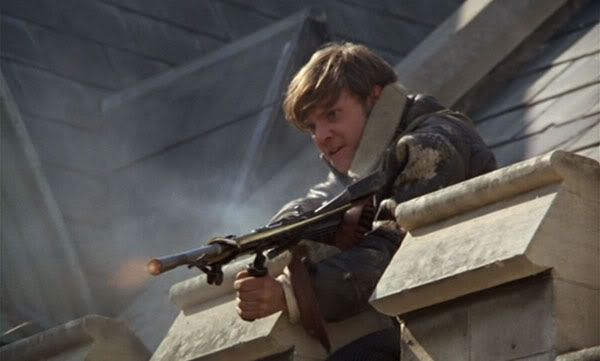
But at the time, this gut punch of a picture by Anderson wouldn’t have been troubled by these doubts. It’s a brilliantly directed film, that burns with a genuine fury against the institutions it is addressing. There is virtually nothing sentimental or kind about the film – it’s entirely about kicking against the tracks. Nothing in the school is redeemable or decent, everything is corrupt and twisted. It’s a sneering, burning, angry shout of a movie that manages to avoid preaching to the audience and instead presents its hellish vision of class in this country with a witty grace. If… is a film that perfectly captures the mood of the time and understands the “small world” culture of public schools like few others: it’s an essential classic.

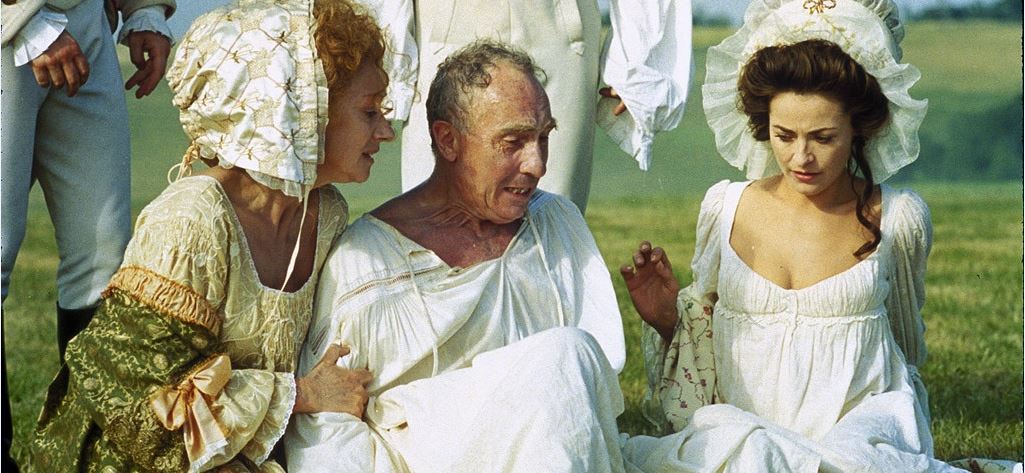
The Go-Between (1971)

Julie Christie enlists young Dominic Guard to pass notes in classic adaptation The Go Between

Director: Joseph Losey

Cast: Julie Christie (Marian Maudsley), Alan Bates (Ted Burgess), Dominic Guard (Leo Colston), Margaret Leighton (Mrs Maudsley), Michael Redgrave (Older Leo Colston), Edward Fox (Hugh, Viscount Trimingham), Michael Gough (Mr Maudsley), Richard Gibson (Marcus Maudsley), Roger Lloyd-Pack (Charles)

“The past is a foreign country. They do things differently there.”

It’s a classic line from JP Hartley’s masterpiece novel of youthful disillusionment and trauma, The Go-Between. This film version perfectly captures the novel’s wistful reflections on a past that seems bright and glowing to the young boy caught up in the centre, while carefully and subtly suggesting the darker currents and temptations that lie under the surface. 

In 1900, 12-year-old Leo Colston (Dominic Guard), a middle class boy, spends the summer at the country house of his wealthy school friend. There he finds himself increasingly drawn to the glamour and kindness of the family, who do their best to make Leo feel at home – particularly Marian (Julie Christie), the daughter of the house. Leo also befriends local farmer Ted Burgess (Alan Bates) and finds himself recruited to carry letters between Marian and Ted, little understanding what the messages and arrangements between the two may mean, and what it might mean for her engagement with the decent Viscount Trimingham (Edward Fox). 

The Go-Between is a perfect Chekovian tragedy, which brilliantly captures the hypocrisy and dangers of the final days of the Victorian era. Of course it bubbles down to sex – and there is tonnes of it beneath the surface in the quietly built passion between Marian and Ted. But it’s also class as well – the primary reason why Marian’s affair with Ted remains so illicit is because the farmer (as the younger family members make abundantly clear) is socially unacceptable.

Class weaves itself into every part of the film. The Maudsley family work over time to make Leo feel as comfortable as possible in the house as they are all aware of the social gap between them. The Maudsley family treat Leo as almost a sort of social obligation, quietly buying him new clothes (as he ‘must have forgotten to pack’ the correct clothing for the scorching summer heat) and making much of him at the local cricket game. But Leo can never really forget that he falls somewhere in the middle between the Maudsleys and Tony, and finds himself out of place with both. This awkwardness is perfectly captured in Dominic Guard’s bashful performance.

Class is also lies under Marian’s affair with Burgess – and she seems to know it can never last. Indeed, she has every intention it seems of marrying Trimingham. Trimingam and her father, it’s implied, are even aware of the affair and expect it to burn out. It’s Mrs Maudsley who seems most threatened by the social possibilities of the affair – while the men expect the normal order to reassert itself, Mrs Maudsley (Margaret Leighton, who brilliantly simmers at the edge of the whole film before dominating its closing scenes) seems far more aware of the dangers that love and attraction have.

But it’s a story where the real victims turn out to be those outside the family. Ted Burgess (expertly played by Alan Bates, who made a living of playing son of the soil types like this) winds up feeling like an innocent, a bashful teenager who barely seems to know where to look when Marian accompanies him on the piano while he sings at the celebration after the village cricket match (Mrs Maudsley is appalled at this point). And Ted (constantly described as a lady-killer by Maudsley and Trimingham, despite all evidence to the contrary in his manner – further signposting their awareness of the affair) constantly feels like the weaker partner in the relationship, besotted with the lady of the manor.

As that lady, Julie Christie gives an intriguing performance (even if she is slightly too old for the part). Christie’s Marian is strangely distant, despite her many acts of kindness towards Leo. To what extent is she merely using the boy, winning him over with affection to manipulate him later to deliver her messages? How much does she care for the boy? She understands her relationship with Ted can never be – and is more than prepared to marry Trimingham – but how much is that a defence mechanism against her true feelings? We get only a half suggestion, as Leo does, of how she may really feel. It’s subtly left open for most of the film. 

The film uses a neat device of intercutting moments of the story with the far older Leo (Michael Redgrave, whose voice is perfect for the moments of narration) revisiting the locations of the story again. Everything is in contrast to the bright, luxurious summer of 1900 as the older Leo heads around windswept and rainy locations. Unlike the past, the present day finds the soundtrack drained out by sound effects and ambient noise. It’s a quiet reminder of the foreboding doom that lies over the story – and the film makes good business from the suggestion of trauma that has affected Leo resulting from the events of 1900, and how it has shattered and reshaped his life.

Losey’s direction is a perfect capturing of the languid heat of that 1900 summer, and he perfectly frames events and action for maximum impact. It’s a film made of small looks, quiet asides and suggestions to the audience played from the perspective of a child, where we need to interpret the things we see to get a full understanding of what’s really happening and its implications. Harold Pinter’s script is equally strong, perfectly capturing the mood and feel of Hartley’s novel.

The Go-Between is an excellent film, stuffed with good performances (in addition to those mentioned, Edward Fox and Michael Gough are both excellent), and beautifully shot and filmed. It’s an intelligent and very faithful adaptation of the book that still manages to make the book more cinematic, with the intercutting between past and present giving us a sense of Greek tragedy, and the interrelations between the characters staged with subtly and intrigue. A wonderful adaptation of a great novel.

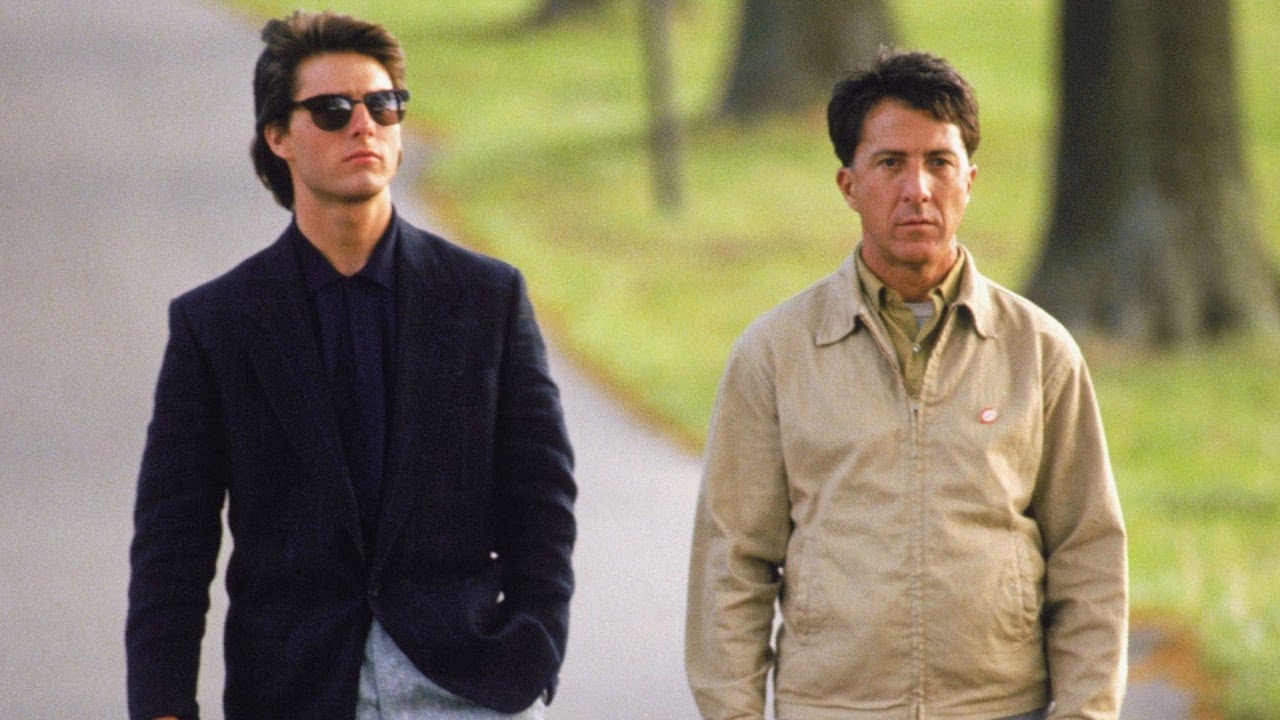
Rain Man (1988)

Tom Cruise and Dustin Hoffman go on a road journey of personal discovery in Rain Man

Director: Barry Levinson

Cast: Dustin Hoffman (Raymond Babbitt), Tom Cruise (Charlie Babbitt), Valeria Golino (Susanna). Jerry Molen (Dr Bruner), Ralph Seymour (Lenny), Michael D Roberts (Vern), Bonnie Hunt (Sally Dibbs)

Rain Man poster1988 wasn’t a vintage year at the Oscars, so perhaps that explains why this functional film ended up scooping several major awards (Picture, Director, Actor and Screenplay). Rain Man is by no means a bad film, just an average one that, for all its moments of subtlety and its avoidance of obvious answers, still wallows in clichés.
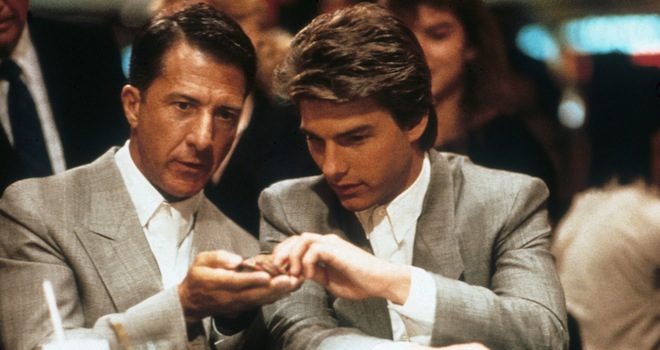
Charlie Babbitt (Tom Cruise) is a cocksure car dealer (he’s Cruise to the max) whose latest deal is spiralling down the toilet when he hears his father has died. Charlie had long since cut all links to his father, so he’s not surprised to be left only a car. But he is intrigued the money has been placed into a trust – and is shocked and furious to discover he has an autistic brother Raymond (Dustin Hoffman) he never knew about. After essentially kidnapping Raymond in order to claim his share of his father’s fortune, the two end up in a cross country road trip where Charlie slowly learns more about Raymond and their shared past and begins to soften in his view of his brother.

Rain Man is basically the sort of movie where two characters go on a road trip and have a personal journey of discovery, offering the sort of twists and character developments that are only really going to be surprising to someone who has never seen a movie before. But despite that, it does do something interesting, avoiding the standard Hollywood cliché of Raymond discovering depths or learning to overcome part of his condition: he is basically the same at the end of the film as at the beginning.

Instead all the change and journey is in Charlie Babbitt. The film carefully and unobtrusively develops Charlie over the course of the film so that he evolves away from the selfish, greedy yuppie we first encounter, who seems incapable of building emotional links with the people around him. Instead, as he learns to care (in every way) for another person, he also discovers reserves of love and a yearning for connection in himself that he never knew he had before. 

This all sparks off his interaction with Raymond – and his growing acceptance of Raymond for who he actually is, rather than who he wants him to be. This happens slowly – and Charlie can intermix tenderly teaching Raymond to dance with using him to count cards in Las Vegas – but you can plainly see the difference in his character from his reactions when he says hello to his girlfriend earlier (flirtatious but distant) with how he greets her when they reunite later in the film (warm, loving and open). It’s a gradual but very natural development shift that is the real heart of the film.

This works due to a terrific performance from Tom Cruise. Cruise has possibly never been better than he is here. His role is not about glamour or flash, but about carrying the narrative and emotion of the story. Cruise is sensational, quietly carving out a gradual and intelligent character development over a period of time that avoids all the flashy tricks and obvious “emotional” moments you expect. Cruise isn’t afraid to be unlikeable either at points in the story.

That’s what the real emotional connection with the viewer is in this story, and that’s the real arc that the film captures. However it’s Dustin Hoffman who attracted the real plaudits for his performance as the autistic Raymond. Interestingly Hoffman was initially tapped for the role of Charlie, but quickly worked out Raymond was the flashier part. 

Hoffman’s performance is a masterpiece of virtuoso transformation, and his capturing of the quirks and mannerisms of an autistic man are perfectly done. He convinces utterly. But, by the nature of the character, there is no real emotional or character work here. The performance is one that is largely a collection of extremely successful mannerisms. It’s rather like watching an expert juggler successfully juggle twenty things for over two hours. Hoffman doesn’t drop a single thing, but it’s a series of actor tricks rather than a complex acting performance of emotion and character. 

Rain Man did give an insight into autism for many in the 1980s for the first time. Its influence may perhaps have been too great – it’s now become almost standard for an autistic savant in movies to be a maths genius with amazing memory – but in the film, it’s carefully structured to serve as a starting point for Charlie to begin to see Raymond as a human being rather than an object. The film itself sets out a similar stall, encouraging the viewers to see those with autism as people with their own feelings – however much they struggle to understand or express these, as Raymond does. 

What it does very well is to subtly and sensitively explore Raymond’s situation. The medical professionals in the film are never demonised (as they so easily could have been) but are as concerned about Raymond as Charlie becomes. Raymond and Charlie discover they have a closer bond that both seem barely able to express – even Raymond seems to become, at least, used to Charlie’s presence enough to let him touch him. The film shows Raymond however can only progress so far – there is no miracle cure, and no out of character outburst of empathy. 

Rain Man works best when it focuses on subtlety – and has an outstanding performance from Tom Cruise – and it has a well filmed simplicity to it. But it is a slight tale, directed with a functional professionalism by Barry Levinson that never really manages to stand out from several other movies very similar to it. It has a certain warmth and emotionality to it, but deep down it’s nothing really that special – just a more subtle version of a story we have seen several times before.

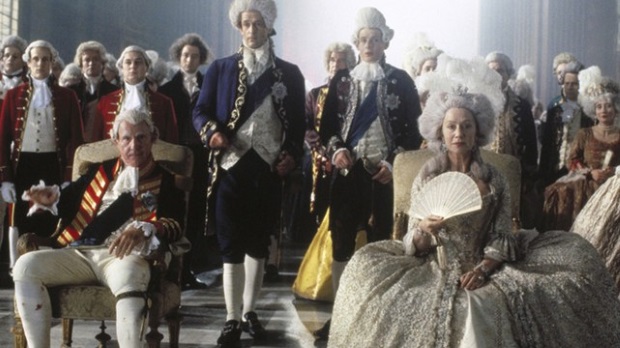
The Madness of King George (1994)

Nigel Hawthorne and Helen Mirren excel in this masterful adaptation of Alan Bennett’s classic play

Director: Nicholas Hytner

Cast: Nigel Hawthorne (King George III), Helen Mirren (Queen Charlotte), Ian Holm (Dr Willis), Rupert Everett (Prince of Wales) Amanda Donohoe (Lady Pembroke), Rupert Graves (Captain Greville), John Wood (Lord Chancellor Thurlow), Geoffrey Palmer (Dr Warren), Jim Carter (Charles James Fox), Julian Rhind-Tutt (Duke of York), Julian Wadham (William Pitt), Anthony Calf (Captain Fitzroy), Adrian Scarborough (Fortnum), Struan Rodger (Henry Dundas), Caroline Harker (Mrs Fitzherbert), Roger Hammond (Dr Baker), Cyril Shaps (Dr Pepys)

Alan Bennett’s The Madness of George III allegedly changed its name for the film adaptation because producers worried American audiences would feel they missed the first two films in the series. It’s not actually true, but it was a lot of free publicity for Nicholas Hytner’s film debut – a marvellous, accomplished and brilliant theatrical adaptation that will always take a firm place on my list of favourite films. It’s an excitingly well-made, hilarious and heartfelt film that captures forever Nigel Hawthorne’s greatest ever performance.

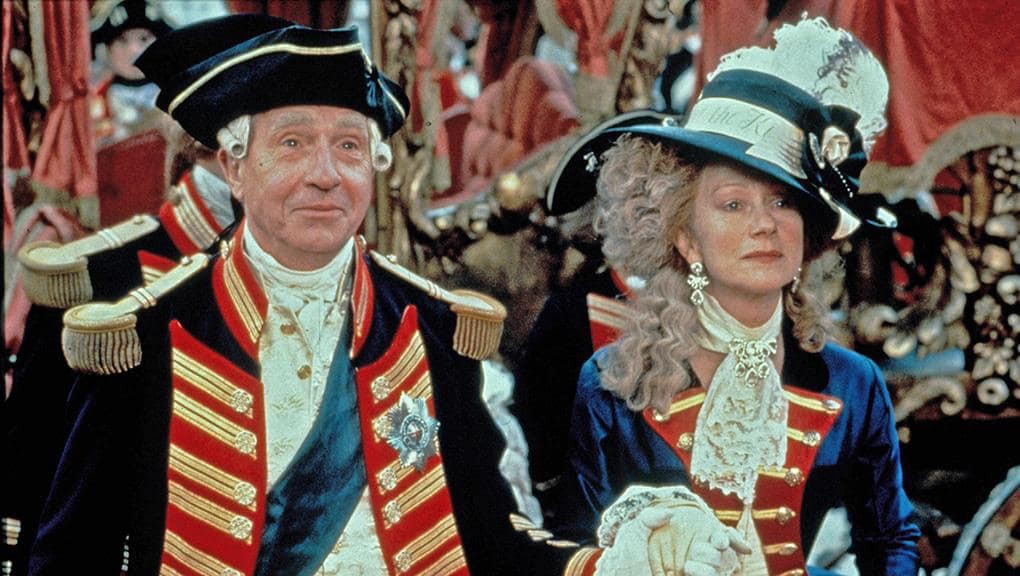
In 1788 King George III (Nigel Hawthorne) is still fuming over the loss of “the colonies” (the film front and centres talk of the plucky United States, to help sell the film in the land of the free) and the behaviour of his ambitious oldest son George (Rupert Everett). Happily married to his wife Queen Charlotte (Helen Mirren), and the father of 15 children, George is a stickler for form and duty. So imagine the shock of his ministers when his behaviour becomes impulsive, irrational and finally obscene. With the king talking non-stop and impossible to control, the Prince of Wales schemes to become Prince Regent. Desperate, the king’s ministers call in Dr Willis (Ian Holm), a professional doctor of the mad, who claims he can (with time) cure the king. But will it be in time to prevent the regency?

Nicholas Hytner has rather charmingly claimed that he knew so little about film-making he didn’t realise the difficulty of many of the things he asked for, and if he had known he would never have asked. He gives much of the credit to the seasoned pros working on the film pulling out the stops to give him what he asked for. The end result is a brilliantly paced, lusciously filmed epic that is both a wonderfully moving personal story of a crotchety but lovable monarch and a witty look at regency politics. Several scenes are shot with an imaginative brilliance, from shots that throw themselves into the middle of scuffles at court with the unbalanced king, to sweeping landscape shots that make it look like the thing cost millions of dollars.

The other advantage of bringing in Hytner (director of the original stage production) was his brilliant understanding of Alan Bennett. Bennett’s script is superb, crammed with sensational lines and brilliant jokes that never get in the way of the humanity. Bennett is always more than radical than his cosy reputation suggests, and King George is a witty deconstruction of the purpose of the Royal family (politicians frequently comment on their pointlessness and George defines it as “smile and wave” and to act as “a model family”). It’s got a great understanding of the frustrating waiting game of long-serving heirs (being Prince of Wales “is not a position, it is a predicament”). The film even lands a cheeky gag at the end with the suggestion that the King’s condition was hereditary.

Hytner’s film uses the trappings of royalty brilliantly, contrasting them to great effect with the later degradation of the king – in an inspired moment, George’s first “enthroning” in the restraint chair Willis uses to condition him into behaving is soundtracked to Handel’s Zadok the Priest. George’s court is an uptight, staid place where people can’t relax (or even sit – George is so adamantly opposed to people sitting in his presence even a heavily pregnant woman is not exempt during an interminable bell-ringing version of Handel). George is a constrained figure – so it’s no wonder his insanity displays itself as an increasingly loose-lipped lack of inhibition.

The question of madness is richly handled. As Willis says, many of the mad consider themselves kings, so what does a king fancy himself as? And how can you tell what is normal for a king anyway? George is an eccentric from the start – and even his recovery at the end is basically eccentricity with an element of self-control rather than a full recovery. The film never shies away from making you invest in the rough treatment the king undergoes to wrestle him back to sanity. The doctors get short shrift, either incompetent or scheming (“When will you get it into your head that one can produce a copious, regular and exquisitely turned evacuation every day of the week and still be a stranger to reason” Geoffrey Palmer’s wonderfully dry Warren tells a toilet-obsessed colleague). 

The film is slightly more confused about Willis. Strongly played, with a twinkly chippiness, by Ian Holm (who is just about perfect) the film can’t quite decide if Willis is responsible for the king’s recovery or not. It’s a battle of wills, but is Willis ahead of his time or as medieval as his colleagues? Does Willis’ aggressive conditioning (punishing bad behaviour with restraints) force the king back into sanity? Or is it George’s love of his wife that provides the final push? Or is the king naturally on an upcycle where madness expresses itself in eccentricity rather than incoherence? It’s not clear (maybe this is deliberate) but Willis’ regime of punishment and reward has a slight air of quackery.

What’s pretty deliberate was Bennett and Hytner’s insistence that only Nigel Hawthorne could play the king. Thank god they did, as Hawthorne is simply brilliant. Cheated of the Oscar in 1994, Hawthorne is compelling. He also conveys the natural authority of a king, and the “grumpy old man” side of the king is mined for brilliant comic effect. But it’s also a beautifully heartfelt and hilarious performance, running the gamut from delight in obscenities to teary fury and fear at the treatment from his doctors and loss of mental control. Such a sublime performance.

And it surely inspired some top work from the brilliant cast around him, many of whom revived their roles from the stage production (chief among these Wadham’s wonderfully dry Pitt).  Helen Mirren is warm, proud and eventually desperate as Charlotte, while Rupert Everett mines the Prince of Wales for all the comic pomposity and childishness he can. Rupert Graves is excellent as a loyal equerry, while John Wood, Jim Carter and Geoffrey Palmer also excel. You’ve rarely seen such a strong cast of British stage notables, and it’s not surprising they were attracted to perform in a script that has as many good lines as this one.

It’s accomplished and luscious, is brilliantly shot and designed, and is packed full of wonderful sequences. It wears its intelligence lightly, with George as a proto-Lear struggling to hold onto his marbles. The characters even sit and read Lear at one point (“Is that wise?” questions Thurlow. “I had no idea what it was about” says the little-read Willis). George may recover his wits in time, but it’s unclear whether this makes him more or less of a human being. In many ways at the height of his insanity, he’s a warmer, friendlier person (if out of control), then he is as his buttoned-up, stickler-for-duty self. 

The Madness of King George is the sort of film all theatre adaptations wish they could be, brilliantly cast, opening out into something that not only feels compelling to watch but also brings out the great depths of the original play. What is monarchy for? How can we tell if the all-powerful are mad or not? What is sanity anyway? All this and with some superb jokes, and a story that really involves you. With Nigel Hawthorne’s simply brilliant performance at the centre, this is one for the ages.

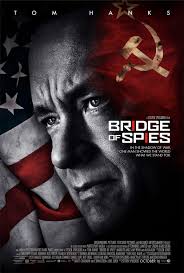
Bridge of Spies (2015)

Tom Hanks and Mark Rylance find common ground in the Cold War in Spielberg’s Bridge of Spies

Director: Steven Spielberg

Cast: Tom Hanks (James B Donovan), Mark Rylance (Rudolf Abel), Amy Ryan (Mary Donovan), Sebastian Koch (Wolfgang Vogel), Alan Alda (Thomas Watters), Austin Stowell (Francis Gary Powers), Scott Shepherd (CIA Agent Hoffman), Billy Magnussen (Doug Forrester), Jesse Plemons (Joe Murphy), Dakin Matthews (Judge Mortimer W Byers)

Steven Spielberg is perhaps best known for his cult block busters – and has indeed directed some of the finest popular adventure movies you are likely to see. But more of his output – particularly in recent years – is focused on intelligent, slightly old-school, handsome, period films that look to shed light on political and social issues of the past. Bridge of Spies falls firmly into this camp, an extremely well-made (if rather dry at times) prestige picture, blessed with a fascinating story and some very fine performances.

In 1957, Soviet agent Rudolf Abel (Mark Rylance) is arrested in New York and put on trial. He’s the most unpopular man in America – except perhaps for the man plucked from a list of New York attorneys to defend him, James B Donovan (Tom Hanks). Donovan doesn’t endear himself to the American public by successfully defending Abel from the death penalty, but he’s proved right when U-2 pilot Francis Gary Powers (Austin Stowell) is shot down over the USSR, and a prisoner exchange is set up for Abel and Powers, with Donovan negotiating the details in a wintery Berlin.

Bridge of Spies has an old-fashioned charm to it – you can totally imagine it popping up on a bank holiday afternoon. It’s what you might call “grown-up entertainment” in the sense that it tells a character-focused story. It’s made with an unfussy assurance that never allows its cinematic excellence to get flashy, and it patiently unfolds an intriguing character study that gives excellent opportunities to some gifted actors. 

It’s also got a vein of wit running through it – you can see the fingerprints of the Coen brothers, brought in to do a polish of the script. They are there in the touches of the absurd as Donovan goes behind the Iron Curtain, mixing with an eccentric group of East Germans pretending to Abel’s family. Their also there in the moments of chill around the East German forces who suppress freedom and endanger lives. But it’s brought to life because Spielberg is such a wonderful, vibrant director.

Spielberg knows where to bring the flash and where to settle and let the camera watch the actors at work. Despite the calm of the general shooting, the film is packed with some wonderful sequences of bravura film-making, told so skilfully and with enough confidence that they don’t need to draw attention to themselves with overly flashy camera work or editing. But sequences such as the one that begins the film with Abel unknowingly being followed through New York, or Powers’ U-2 flight being shot down, or a horrified Donovan watching luckless Germans try to climb the Berlin Wall while he rides a train expelling him from East Germany, are made with a confident, unflashy flair.

It’s a film which has a real understanding of the paranoia and knee-jerk prejudice of the Cold War (on both sides of the curtain, but particularly in America), that mixes this with a note of hope in the essential decency of those on the ground – Roger Ebert described it as like a John Le Carre if it had been directed by Frank Capra – and that’s a good description. Spielberg’s film casts Donovan as the “little guy” who has to do the right thing and struggle to be accepted by his fellow Americans. Donovan’s travails in East Berlin have a Capra-ish quality to them, as his straight-shooting decency and integrity come up against the oblique games and half-truths of professional diplomats and spies. Abel as well is basically a solid, stand-up guy with a very clear moral compass and a dry wit that points out the quirks of both American and Soviet systems.

Tom Hanks is perfect casting as Donovan. He’s much overlooked as a great actor, and Donovan plays to his strengths, using all his integrity and trustworthiness to great effect. His Donovan is an honest broker, a man who believes above all in the cause of justice and has a good-natured confidence that allows him to never be flummoxed or even to show too much impatience with those putting obstacles in his way, even as he works overtime to get his way. It’s a perfect Hanks part played by perfection.

The film also boasts an excellent, Oscar-winning, performance by Mark Rylance as Rudolf Abel. Embracing the movies for the first time, Rylance could probably play Abel standing on his head, and this acting heavyweight turns in a performance full of sparkle and wit. Rylance is softly spoken, with a combination of world-weariness, wry humour and a dry unreadability. Abel however is also a fiercely loyal and decent man – and it’s the contrast and bond that develops between him and Donovan that powers the movie.

In fact you can’t help but miss him in the second half, interesting as Donovan’s patiently done and labyrinthine negotiations between the KGB, Stasi and CIA become. At times this second half becomes slightly drier than the rest – as if Spielberg can’t quite manage to keep the sense of intimidation and danger in place for the whole of these protracted scenes of bluff and double bluff. It’s also probably a fraction too long. It’s not a perfect movie after all – Donovan’s family are a series of bland identities (“Honey stop trying to end the Cold War and come to bed”) and the film’s final coda of Donovan getting the approval of the American people on contrasting train rides is a little too trite in its “ain’t freedom great” tone.

But I really like Bridge of Spies. It’s calm, it’s assured, it’s very well made, it’s very well acted. There is a lot of quality on show here – it practically drips off the show – and it’s made by a director who knows he doesn’t need to wrestle your attention with every shot to keep it. Spielberg is a director so talented that he can excel at making intelligent, grown-up movies that have something for everyone. For all that it’s slightly overlong and can’t quite keep its momentum up, I really like it.

Women in Love (1969)

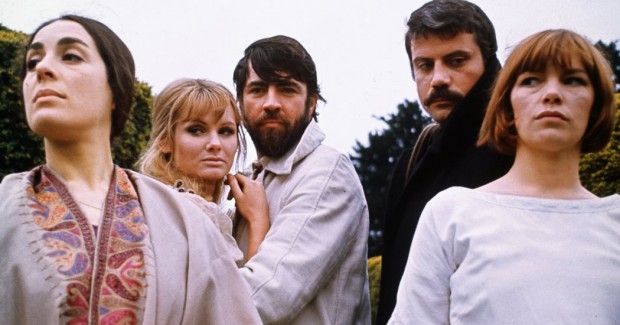
The stars of Women in Love: this publicity still gives only a hint of the simmering (and slightly strange) heightened passions you find therein

Director: Ken Russell

Cast: Alan Bates (Rupert Birkin), Oliver Reed (Gerald Crich), Glenda Jackson (Gudrun Brangwen), Jennie Linden (Ursula Brangwen), Eleanor Bron (Hermione Roddice), Alan Webb (Thomas Crich), Vladek Sheybal (Loerke), Catherine Wilmer (Christina Crich), Phoebe Nicholls (Winifred Crich), Sharon Gurney (Laura Crich), Christopher Gable (Tibby), Michael Gough (Tom Brangwen), Norma Shebbeare (Mrs Brangwen)

DH Lawrence is an acquired taste. While his writing is undoubtedly brilliant, reading his novels today it’s hard to shake off their sometimes histrionic melodrama – their revelling in all that (at the time) shockingly frank discussion of sex and all that Freudian analysis of fractured personalities against an alien industrial world. So perhaps there is a reason why one of the best interpreters of his work for the screen has been someone as melodramatic and envelope-pushing as Ken Russell.

Women in Love is Russell and Lawrence to the max. In a 1920s mining town, two sisters, Gudrun (an Oscar-winning Glenda Jackson) and Ursula (Jennie Linden) want to make their own way in the world. Local school inspector Robert Birkin (Alan Bates) wants to find perfect love and fulfilment. Alpha-male son-of-the-local-mine-owner Gerald Crich (Oliver Reed) isn’t quite sure what he wants, other than to reinvigorate his father’s business. Naturally all four of these characters come together in romantic, intellectual and sexual tangles that lead to a lot more misery than happiness.

Wow this is a difficult picture to write about. How so? Because it is about two-thirds masterpiece to one-third pretentious, hyperbolical nonsense. That’s quite some tight-rope. Russell walks it pretty well, but his problem has always been he loves being a sort of enfant terrible of British cinema too much. Too often he succumbs to temptation and pushes things a little further, to go for the demented camera or editing trick, or to push the sexual content a little bit further. The whole film has a hint of a cocky teenager, jumping up and down to look cool and catch your attention. 

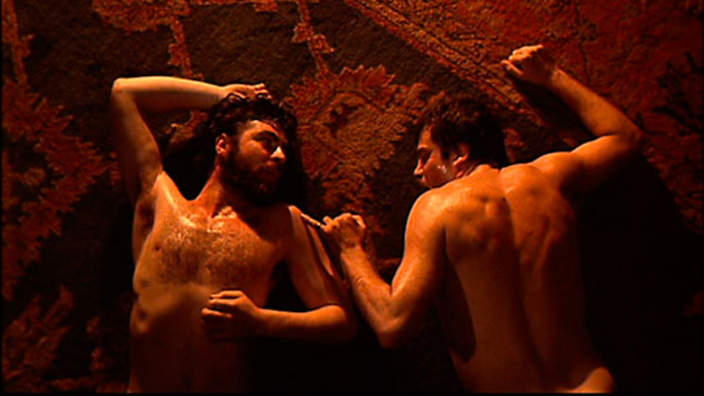
But then on the flipside, sometimes this excess really works (or if you like, sometimes more really is more). Nowhere is this clearer than in the famous naked wrestling scene between Oliver Reed and Alan Bates. It’s a high-blown, tightly edited, single-camera, increasingly artistic sequence that leaves little to the imagination as we wonder how far this nude, willy-waggling, sweaty wrestling turned intimate clinch will go (the final shot sees the characters roll off each other and lie exhausted on a carpet, breathless, in front of a roaring fire). But it works so well because the amped up shooting and content really tells us something about these two characters, their relationship, feelings, viewpoints on life, sexuality – everything. It’s a great scene and it’s a sign of how good this film can be.

And then you get other moments where you sigh and roll your eyes and almost want to say “yeah Ken we get it…”.  As Robert and Ursula roll off each other after an intense sexual encounter in the woods, we cut immediately to two bodies found drowned in a lake, their bodies locked together in exactly the same position. Yup sex ‘n’ death. Gerald and Gudrun have sex, intercut with shots of Gerald’s mother. Other moments ape up stuff that was already pretty ridiculous in the book to the max: Birkin, after a bash on the head, runs naked into the countryside and smears himself with grass and mud and rolls in the dirt. For about three minutes.

But then this is the sort of film where Glenda Jackson tames some bulls by performing a bizarre dance. Why does she do this? Who knows (certainly not the characters). But then the film is full of moments like this. But what kind of makes it work, even when it is so ridiculously over-the-top and dated in its filming, is that there is a smartness in it. It is a film that does, underneath it all, have some profound thoughts about love and relationships.

It manages to bring together the themes that intrigued Lawrence with a bit of coherence. What do we want from life? It focuses overwhelmingly on the men of the story, and in particular Alan Bates (excellent) as Birkin. Made up to look like Lawrence, Birkin also carries a lot of the prose of the novel debating what makes us happy, whether we need equally strong bonds in our life with men and women, and what constitutes our completeness as human beings. 

The film does this to a certain extent with the female characters as well – although we see them almost completely from the perspective of the men (which is interesting – maybe they were worried about making a film called Men in Love…). That’s possibly why Gudrun’s confused desires for Gerald never quite come into focus. Marvellous as Glenda Jackson is – surely an actress born to play this sort of part, marvellously passionate but strangely unknowable, vulnerable but harsh and even a little cruel – it’s hard to understand how Gudrun’s feelings change for Gerald. Maybe she doesn’t know herself. 

Gerald and Gudrun seem to be characters who don’t understand what they want (Gerald even expressly says it). That’s part of the point of the film (and Lawrence’s book) – a yearning, like both these characters have, for freedom and something different from previous generations, but unable to really put their finger on what this is. Gudrun wants a strong, dynamic man – but she also wants freedom and artistic fulfilment, and can’t find this with Gerald.

The film juggles these themes, of people struggling to reach an expression of (or to understand) their desires. Russell understands this – and for all the highblown eccentricity of some of the shooting, he sticks with a brilliant understanding of these personalities and themes. It remains a very caring movie that understands and relates to its characters. It has a lot of heart under the madness of Russell’s shooting.

And it’s superbly acted. Bates and Jackson are both marvellous, as is Jennie Linden in a (to be honest) rather thankless part as the second sister. But it’s a revelation of what a fine actor Oliver Reed could have been, if he had not decided to become a professional drunk. Reed drips charisma and intensity and he gives Gerald a real frustrated, sensual depth – a confused sexual fear mixed with a determined machismo. It’s a brilliant performance. The rest of the cast are also good, even if Eleanor Bron is (partly deliberately) overdone as Birkin’s first lover.

Women in Love is very dated in its style, but still a fascinating and intelligent piece of filmmaking that engages with and juggles with ideas. Despite all its overblown Russell excess, I actually really liked it, it stuck with me and I’ve been thinking about it since it finished. I’d actually like to see it again and see if it unlocks even more for me – and blimey it even makes me want to read Lawrence again, which after The Rainbow I never thought I’d say…

Mission: Impossible 2 (2000)

Tom Cruise joins forces with his ego to take on Mission: Impossible 2

Director: John Woo

Cast: Tom Cruise (Ethan Hunt), Thandie Newton (Nyah Nordoff-Hall), Ving Rhames (Luther Stickell), Dougray Scott (Sean Ambrose), Brendan Gleeson (John C McCloy), Anthony Hopkins (Mission Commander Swanbeck), Richard Roxburgh (Hugh Stamp), John Polson (Billy Baird), Radé Sherbedgia (Dr Nekhorvich), William Mapother (Wallis), Dominic Purcell (Ulrich)

Okay. I love this franchise. Always have. But every franchise has its misfire right? Its Phantom Menace? Ladies and gentlemen: welcome to this total turkey. Can you believe this was the biggest box office hit of 2000? Has anyone watched it since then? Did anyone like it even then?

Anyway, the plot for what it’s worth, plays like Hitchcock’s Notorious if it had been roughly humped after a drunken dinner by The Fast and the Furious. Ethan Hunt (Tom Cruise) has to recruit the bizarrely named Nyah Nordeff-Hall (Thandie Newton), a society catburgler and sort of hot Raffles. Why? Well of course her ex-boyfriend and rogue MIF agent Sean Ambrose (Dougray Scott) has pinched a deadly virus and we need her to get back into his bed and trust to find out more so MIF can pinch it back before it hits the market. She’ll be ready to deceive a man though because “she’s a woman, she has all the training she needs” – or so says Anthony Hopkins’ half-asleep Mission Commander. 

Mission: Impossible 2barely has a plot though. Rarely has a film looked more like a story loosely written around some pre-determined action set-pieces. Much as I like Tom Cruise, no film looks more like a cocky vanity project than this one. The camera lingers on Cruise’s chiselled torso and general macho physicality like a lovestruck teenager. Remember when the MIF was a team organisation? Not anymore. Cruise is now a one man army, who barely needs the help of his two sidekicks (the job of one is to press keys on a computer, the other flies a helicopter. That’s it).

So the whole film is about making Cruise look good. From punching, to climbing freestyle up a cliff, to flashing the famous grin, to driving cars and bikes really fast, the whole film is blinded by his smile. Poor Thandie Newton and Dougray Scott can only watch as the Cruiser bestrides the film like a colossus, creeping about to find themselves dishonourable graves. Both performers are crushed by the weight of Cruise’s ego and the film’s front-and-centering of it. Newton can barely raise her performance above balsawood. Poor Dougray Scott not only gives an utterly bland performance, but was stuck on the set for so long by production delays he had to pull out of the first X-Men film, giving his role of Wolverine to an unknown West End actor by the name of Hugh Jackman. Ouch.

Perhaps as a reaction to the first film being seen as too confusing (it really isn’t…) the plot is almost laughably simple, verging on pointless. The film homages (rips off) other, way, way better films everywhere you look. So we get flirting-through-racing-fast-cars from GoldenEye. We get the almost the whole plot of Notorious with the woman sent to spy on her former lover by a handler who is now in love with her (the film even has an extended racecourse sequence). “I will find you” Cruise bellows at Nyah at one point like a low rent Last of the Mohicans. It doesn’t help that the film sounds like the writers spent about five minutes on the dialogue: “Damn you’re beautiful” Cruise tells Nyah. Well, be still my beating heart. This shit was penned by the writer of Chinatown for fuck’s sake.

The slight plot could probably be comfortably wrapped up in about an hour, if it wasn’t for the film’s constant (embarrassing) use of slow motion at every conceivable opportunity. I guess it’s meant to add style and depth, but it’s actually crushingly annoying and often gives us laughable moments (none more so than Cruise walking past a flaming doorway in slow motion for no reason). You just want to tell the film to get a bloody move on.

But then that is part of the John Woo style. Hard to believe this style of shooting an action film was once considered cool beyond belief. It looks so pretentiously, artily, self-importantly, thuddingly dull now. There are a huge number of action scenes here but none of them are particularly exciting, and none of them hugely memorable. There is a bit with a bike, a bit with cars, a shoot-out in a base, an infiltration of a big building. Yawn. Perhaps because Ethan Hunt feels less like a human, more like an empathy-free, ego-mad super soldier, it’s hard to care. In every other film, time is invested to make him appear human – here he’s an asshole who forces a woman to give her body for secrets, grins like a lunatic and slaughters people left, right and centre. It’s like he’s been given an arsehole upgrade from the first film (the third film would correct all this). 

The film has no humour whatsoever. It’s po-faced and serious and desperately in love with itself. I keep banging on Cruise, but I think I do blame him. Other than Hopkins, no one in the film can compete with his charisma which feels like a deliberate choice. Every single memorable thing in the film is done by him. No other character is allowed to contribute anything to the resolution of the problem. On top of that every character seems to have a Tom Cruise mask – meaning Tom also gets to play at least three other characters as well. 

John Woo shoots all this with a tedious flashiness that is completely empty. Logic is left lying battered and bruised on the sidewalk. By the time we get to the final resolution, we are desperate for Nyah (who has been used for sex, humiliated and infected with a deadly virus) to tell Cruise to get stuffed. Instead (after watching him gun down a pliant Sean Ambrose, who is never allowed to appear as a worthy adversary) they go on a sun dappled date in Sydney, with Cruise all but turning to the camera to wink. “Don’t you wish you were me?” he seems to be saying. Christ I really don’t.

The Elephant Man (1980)

John Hurt is sublime as the tragic John Merrick in The Elephant Man

Director: David Lynch

Cast: John Hurt (John Merrick), Anthony Hopkins (Dr Frederick Treves), Anne Bancroft (Madge Kendal), John Gielgud (Francis Carr-Gomm), Wendy Huller (Mrs Mothershead), Freddie Jones (Bytes), Dexter Fletcher (Bytes’ boy), Michael Elphick (Jim the porter), Hannah Gordon (Ann Treves), Helen Ryan (Princess Alexandra), John Standing (Dr Fox)

In the late 19th century, society was swept up in the story of a circus show freak, Joseph Merrick (renamed John here, as per Frederick Treves’ memoirs), saved from a life as a circus exhibit by Treves (a doctor at the London Hospital). Treves introduced him into society and formed a close friendship with him. Merrick died young (27) but his life became a sort of byword for struggling for dignity. The Elephant Man follows this journey.

John Hurt plays Merrick, with Anthony Hopkins as Treves, and the film is a pretty accurate reconstruction of the major events of Merrick’s life. The Elephant Man must have seemed like a strange proposition at the time. Produced by Mel Brooks! Directed by bizarro director David Lynch! About a man grotesquely deformed by nature! But what emerges put those doubts to shame, because this is a beautiful and emotional piece of film-making, guaranteed to put a tear in your eye. It’s an extraordinary and moving film, it’s almost impossible not to love.

In a career made up of playing characters who undergo enormous suffering, it’s fitting that one of John Hurt’s most famous performance sees him utterly unrecognisable under a mountain of make-up. (Acting in this was no fun either – Hurt worked alternate days to deal with the discomfort and stress, telling his wife “They’ve finally found a way to make me hate acting”). But what Hurt does here is extraordinary: under this mountain of make-up, the humanity, sweetness and tenderness of Merrick sings out. He’s a character you feel a total empathy for, with Hurt making him almost a gentle child, an innocent who learns to value himself and his own humanity. It’s mesmeric stuff.

Lynch’s film is all about the place Merrick holds in the world – and it’s not sure shy of showing it is one of exploitation and display. Sure, the circus life for Merrick is horrible under Freddie Jones’ freak-masker (Jones is magnificent here, alternating between weaselly, conniving, vulnerable, self-pitying and loathsome). But he’s plucked from this lower-class hell not for reasons of charity or loving care, but (initially) so that Treves can display him at medical conferences.

Even after demonstrating his sensitivity and artistic richness, Merrick is still rammed into a different treadwheel of society curiosity. Paraded before the rich and famous, his freakish appearance combined with his gentle, otherworldly, politeness and kindness becomes a new show in itself – something Treves himself (in a wonderfully played scene of introspection from Hopkins) slowly comes to realise. Alongside this, Merrick is still seen as fair-game by Elphick’s brutish night porter: if the hoi polloi can watch the freak, why can’t he parade him in front of working class customers at night? All this is intensely moving.

Does Merrick even realise that he is (in some ways) still a freak show, even while he collects photos of his new friends? The film is deliberately unclear: although it is clear that the (eventual) genuine friendship of Treves does lead Merrick to value himself as something more. The famous anguished cry (simply brilliantly played by Hurt) of “I am not an animal. I am a human being” after Merrick is chased into a train station bathroom by a crowd of scared and disgusted passengers is goose-bump inducing in both its sadness and its newfound moral force. From this point on, Merrick makes decisions for himself (for good or ill).

Lynch’s film walks a delicate balance around Merrick’s character and how much his life was a question of being exploited. Although the film does at times shoot Merrick with the slow reveal coyness of a monster movie, it never fails to regard him (and almost demand we do the same) with the utmost sympathy. In many ways, it shoots Merrick the same way people first seem him – a sense of shock followed by a growing appreciation that there is much more to see there than you might first suspect. 

That’s what works so well about Lynch’s inspired direction here – this is a sensitive, haunting and poetic film that wrings untold levels of sadness from Merrick’s life. Lynch reins in his more arty leanings very effectively. In fact, once you get over the film’s bizarre opening of Merrick’s mother being attacked (sexually assaulted?) by an elephant, the film relaxes into a classical style mixed with Lynch’s chilling eeriness and his games with time and mood (the timeline is particularly hard to work out in this film), while his sensitive handling of the macabre is perfect for this film’s storyline. While it’s easy to see this as the least “authored” of Lynch’s film, it’s possibly one of his finest and sets the groundwork for some of his later works, exploring humanity in the bizarre.

He’s helped as well by Freddie Francis’ simply beautiful black-and-white photography which brilliantly captures both the grime and the shine of Victorian London, with an inky darkness. Francis also embraces some of Lynch’s expressionistic style, and shoots the film with a real atmospheric sensitivity. It’s about perfect – and Lynch brings the outsider’s view to London that sees the entire city with a brand new eye. 

There are some sublime performances. Anthony Hopkins’ Treves is a masterclass in contrasted desires. He’s the sort of guy who can grab Merrick like a collector, but still shed a tear when he first sees him. Watching him slowly realise that he has used Merrick just as Bytes has done – within the confines of his Victorian paternalism – and grow to love him as a father does his son (feelings of course never expressed in words) is extraordinary. In the less flashy role, Hopkins powers a lot of the feelings of sadness the audience feel. Alongside him, a host of British legends do brilliant work, particularly Gielgud and Hiller as authority figures who slowly reveal themselves to have huge depths of compassion and understanding.

And what you end up with is a marvellous film. Brilliantly made, wonderfully filmed and hugely emotional with powerful, heartfelt performances from Hurt and Hopkins among many others. It’s extremely beautiful, and stirs the emotions wonderfully. You would struggle to get to the end of the film and not feel overcome with the final few moments, its sadness and the sense of regret. It’s possibly the most heartfelt of Lynch’s films – and also the one I enjoy the most.

Sherlock Holmes: A Game of Shadows (2011)

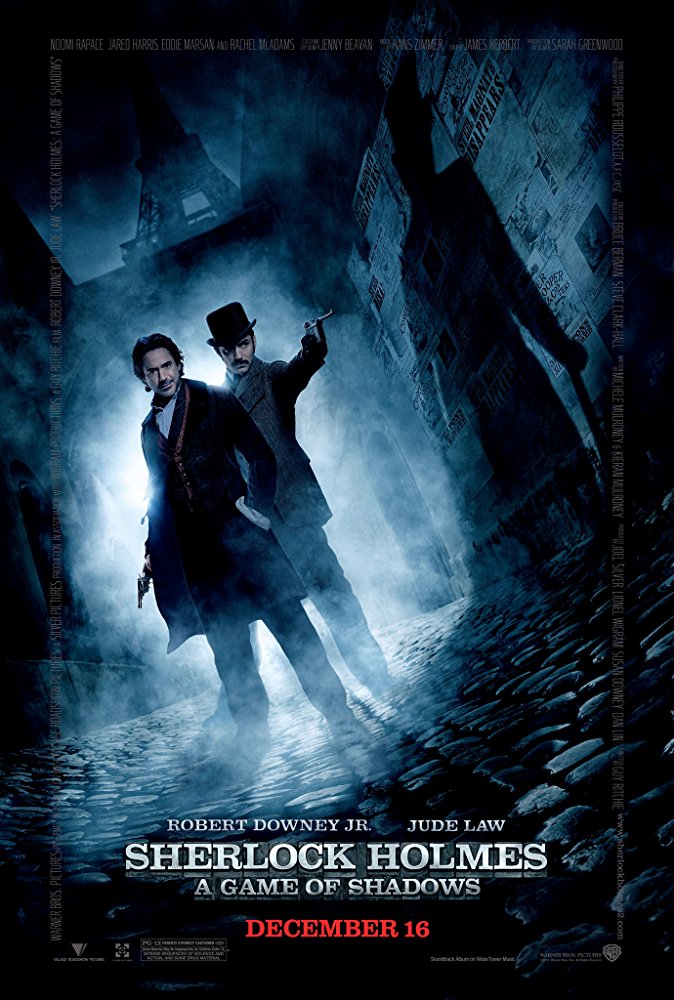
Our heroes are on the run in Sherlock Holmes: A Game of Shadows

Director: Guy Richie

Cast: Robert Downey Jnr (Sherlock Holmes), Jude Law (Dr John Watson), Jared Harris (Professor James Moriarty), Noomi Rapace (Madame Simza Heron), Stephen Fry (Mycroft Holmes), Kelly Reilly (Mary Morstan), Rachel McAdams (Irene Adler), Eddie Marsan (Inspector Lestrade), Paul Anderson (Sebastian Moran), Geraldine James (Mrs Hudson), Thierry Neuvic (Claude Ravache)

Sequels are tricky beasts. You need to work out what people liked about the first film and double down on it, while also expanding the story in new and exciting ways. When I first saw Sherlock Holmes: A Game of Shadows in the cinema, I was very sceptical about whether this film managed that. But actually, viewing it a second time around (and almost seven years later), I enjoyed it a lot more than I remembered.

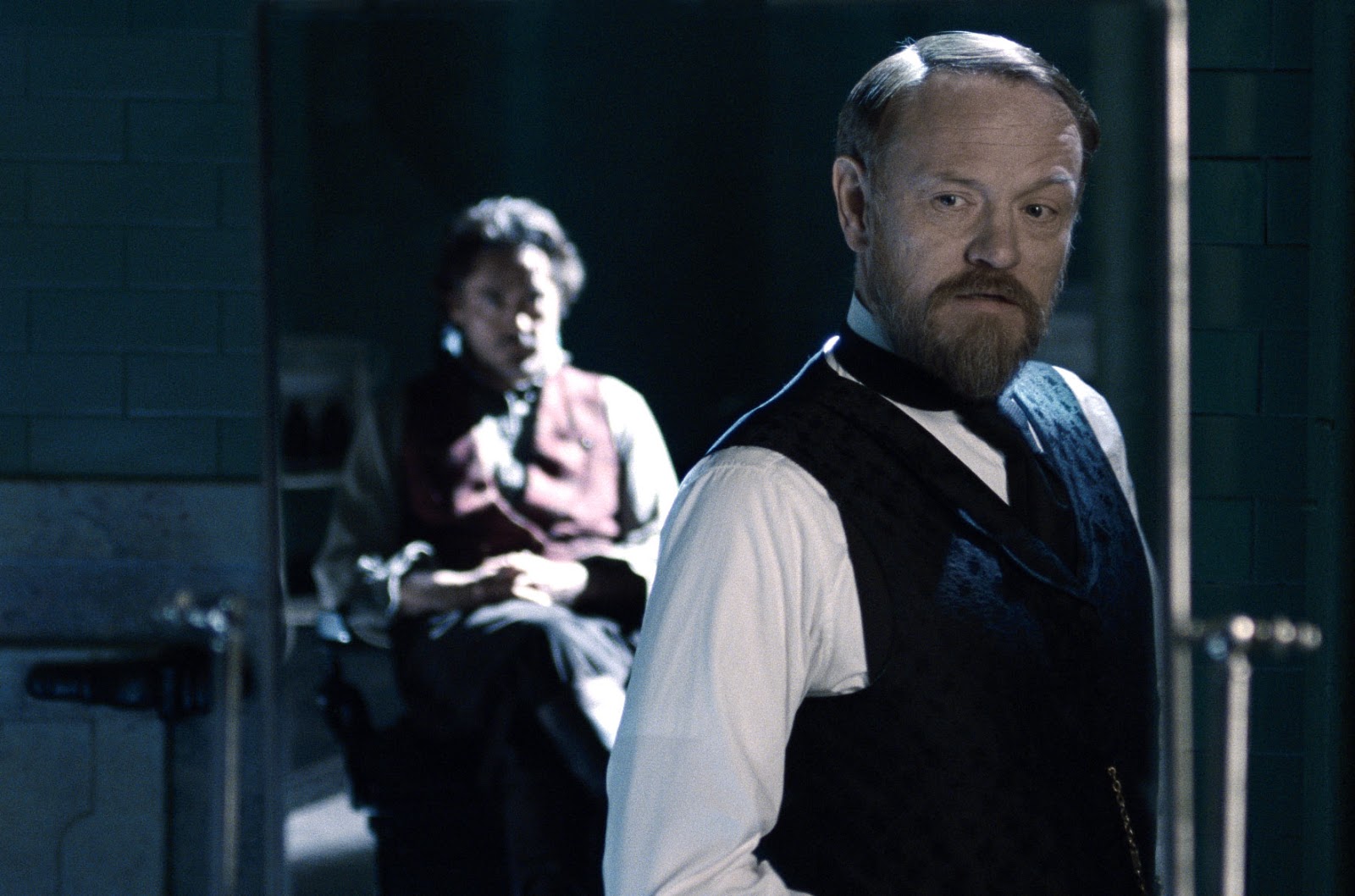
As Watson (Jude Law) prepares for his wedding to Mary Morstan (Kelly Reilly), Sherlock Holmes (Robert Downey Jnr) is consumed into an investigation targeting the “Napoleon of Crime” Professor James Moriarty (Jared Harris). A series of bombings across Europe is being blamed on anarchists – but is it in fact a scheme launched by Moriarty’s military-industrial complex to instigate a world war (from which he can make a profit)? Well what do you think?

Sherlock Holmes: A Game of Shadows doubles down most strongly on the relationship between Holmes and Watson. Recognising that the things from the first film everyone loved was the brotherly banter between these two, the sequel places it front and centre. While the first film felt the need to introduce a traditional love interest for Holmes, this film kills off Irene Adler in the first few minutes (despite this, poor Rachel McAdams has better material here than most of the first film). Instead the true “romantic” relationship of the film is Holmes and Watson, as they banter, bicker and make huge sacrifices to protect each other. 

It’s helped again by Downey Jnr and Law’s excellent performances and their strong chemistry. Saying this, the first half hour of the film thinks it’s funnier than it is, with its intermixing of Watson’s stag night with a series of Downey fights. There is a little too much brashness to it early on, without sufficient grounding in the warmth between the two characters. But once we hit the real action 40 minutes into the film, the balance between comedy, affection and peril is pretty effectively met.

And Ritchie directs some very fine action sequences here. There is an extraordinary sequence of a chase through the forest, which uses an exquisite mixture of hand held cameras, Steadicam, slow motion and half a dozen other tricks to deliver a series of striking and immersive shots. Yes it’s overblown and in-your-face but it works perfectly. The film is crammed with brash, powerful action scenes like this that really strike you between the eyes. 

It also still keeps in touch with the original novels in a nice way. Some of the best dialogue scenes are those between Holmes and Jared Harris’ muscular but serpentine Moriarty (Harris is very good, a far stronger villain than the first film). These scenes use dialogue from the original stories extremely effectively. Meanwhile, its build towards its version of the Reichenbach fall is actually very clever, one that twists on the movie’s “calling card” of Holmes predicting every move of a fight before it begins by having Moriarty pull the same trick (which is in itself a neat scene).

Where the film does fall short amidst all this action and explosions and jokes (some good, some bad) is that we don’t get much in the way of investigation or deduction. There is a bit of sleight-of-hand and a touch of pocket picking, but most of the “deductions” are based on highlighting with the camera or dialogue objects that might as well be labelled “Important Plot Device”. Holmes doesn’t so much as investigate here as charge head first from one combat sequence or dangerous situation to another. There isn’t a lot of patience in his method here – and not a lot of patience in the film itself. But then this film is largely based on The Final Problem, probably one of the least “detective” of the stories in the cannon.

But Game of Shadows is very good fun, has some neat action sequences, is well shot and is more or less entertaining, even if some of the comedy suggests it’s a little too pleased with itself. Sure it loses some of the smaller-scale delights of both the books and original film in its rush to make sure you are wowed. But I enjoyed it a lot more the second time round, since I’d watched the original film more recently and was tuned up into what it was trying to do.

Patton (1970)

George C Scott triumphs as Patton in this excellent World War Two biopic

Director: Franklin J Schaffner

Cast: George C Scott (General George S Patton), Karl Malden (General Omar Bradley), Michael Bates (General Bernard Montgomery), Edward Binns (Lt General Walter Bedell Smith), Lawrence Dobkin (Colonel Gaston Bell), John Doucette (General Lucian Truscott), James Edwards (Sgt William Meeks), Frank Latimore (Lt Colonel Henry Davenport), Richard Münch (General Alfred Jodl), Morgan Paull (Captain Richard Jenson), Siegfriend Rauch (Captain Oskar Steiger), Paul Stevens (Lt Colonel Charles Codman), Karl Michael Vogler (Field Marshall Erwin Rommel), Peter Barkworth (Colonel John Welkin)

Patton was garlanded with eight Academy Awards in 1970, but rarely seems to get a mention when people list landmark best pictures. This is unfair, as Patton is a marvellous, intelligent, professional piece of film-making that rewards re-viewing: not least because, in George C Scott, it has one of those performances you simply must see, an extraordinary melding of actor and real man to such a great extent many people can’t believe they are seeing the real thing when watching newsreel footage of the actual Patton.

Patton is nominally a war film, but it’s actually an intriguing character piece. It follows the career of General George S Patton (George C Scott) during the course of the Second World War. Patton was a soldier’s soldier, a dyed-in-the-wool military man with a warrior’s instinct and a poet’s soul. The sort of man who berated men for not wearing proper uniform, then astounded them with thoughtful reflections on classical history. The film charts his command in Africa against Rommel, the invasion with Sicily (and feud with British counterpart Bernard Montgomery), his benching after striking a soldier suffering from shellshock in a military hospital, and his command of the Third Army during the Normandy invasion, including his pivotal role in the Battle of the Bulge.

With a script co-written by Francis Ford Coppola and Edmund North (later president of the Screenwriter’s Guild), Patton was a warts-and-all portrait of one of America’s most famous generals that came out amidst the country’s growing disillusionment with Vietnam. It was embraced by both sides of the argument because it very skilfully walks a tight-rope: for the hawks, there is enough of the “if we had more like him …” stance. For the doves, the film doesn’t shy away from Patton’s egomania, lack of tact and love of war (he even strongly advocates immediately turning on Russia – ‘cos they’ve already got all the men in Europe anyway – which you can interpret as visionary or insane depending on which side of the fence you are on).

At the centre of everything, George C Scott is quite simply a force of nature as Patton – I don’t think it’s an exaggeration to say this is surely one of the greatest Best Actor winning performances ever. Patton is in nearly every scene, and even the one’s he’s not in he’s the subject of every conversation, and Scott totally dominates the movie. You can’t put your finger on it, but he quite simply becomes Patton. It’s extraordinary, but the actor totally disappears and you feel you are watching some remarkable act of resurrection (fitting since Patton had a profound belief in reincarnation).

Scott’s Patton rages, he shouts, he goes into fits of childish egomania – but he’s also sensitive, intelligent and poetic. He can write a touching letter to the bereaved mother of his adjutant, expressing his sorrow, but also write how tragic it is that he will miss the wars to come. Scott is ramrod in his posture, and more than embraces the theatricality of Patton himself – when an adjutant tells the General sometimes his soldiers don’t know if he’s joking or not, the General softly replies “It’s not important for them to know. It’s important for me to know”.

It’s easy to eulogise over Scott at the expense of all else – but the film is so focused on Patton that he is intrinsically linked with the film’s success. The film is episodic, but every scene tells us something different about the man. Although since the film starts with one of the greatest opening scenes in movie history, we feel like we pretty much know him from the start.

It opens with an enormous American flag, in front of which Patton emerges in full dress uniform to encourage new soldiers to do their duty and, most of all, to “remember that no bastard ever won a war by dying for his country. He won it by making the other poor dumb bastard die for his country.” Scott famously refused to do this scene when told it would open the picture, as he felt nothing else in his performance could emerge from its shadow (they eventually told him it would go later in the film – no word on how he responded when he first saw the film!).

In a nut shell you get the whole movie. Is the giant American flag ironic or does the film really mean it? Patton is both strangely terrifying and also awe-inspiring, charisma, determination and force seeping from every pore of his body. Scott nails every detail of this speech, just as he nails every other part of the performance, while the camera work reinforces his mythic status (or his hubris depending on where you stand) as a symbol of Americana.

Schaffner’s direction of the film is easy to overlook, largely because it is refreshingly unflashy. It’s superbly professional –not a single scene falls flat. He marshals each scene with extraordinary effect, and manages the film’s difficult balancing act of sly satire and hagiography brilliantly. He also, within an epic canvas, works very well with actors – there are a host of great cameos in here, not least from Michael Bates as a preening Montgomery and Edward Binns as an exasperated Bedell Smith. Karl Malden is the only other really major character as Patton’s junior (later commanding) officer and he is perfect as the honest professionalism in contrast to Patton’s flash.

And the film gives us plenty of Patton’s flash. The man who loved war and combat, also loved performing – and does so with abundant skill. But the film isn’t afraid to show his warts: in Sicily he threatens to sack a general who refuses to risk his men’s lives on a risky operation, primarily motivated by Patton wanting to reach Messina before Montgomery. Later, when striking the scared soldier, his actions are tough to watch even as part of you sees his point about other men having been wounded in the line of duty (the playing of the soldier as a teary whiner probably doesn’t help). The film never fails to show that Patton’s worst enemy is his own arrogant lack of thought – he constantly shoots his mouth off with no thought for the impact.

The film is brilliantly constructed. The photography is excellent, the editing superbly marshals a long film of many individual scenes into a story that seems a lot tighter and forward moving than it probably is. Schaffner makes us feel we go on a clear journey with this character – helped as well by Jerry Goldsmith’s excellent score that conveys a great deal with ancient mythic weight, playing off Patton’s own belief in resurrection.

Patton is often forgotten a bit – but it is a great film, well made, brilliantly balanced, wonderfully written and directed. And at its centre: what a performance. George C Scott is simply astoundingly brilliant, completely transformed into the old general. His Oscar (which Scott declined, thinking awards phony) was as well-deserved as these things get. A wonderful film, a true epic, and a marvellous character study of an enigma – it deserves to sit near Lawrence of Arabia in the personal epic stakes (to which it has more than a few similarities).