Churchill (2017)


Brian Cox does his very best Greatest Britain as Churchill

Director: Jonathan Teplitzky

Cast: Brian Cox (Winston Churchill), Miranda Richardson (Clementine Churchill), John Slattery (General Dwight D. Eisenhower), James Purefoy (King George VI), Ella Purnell (Helen Garrett), Richard Durden (Jan Smuts), Julian Wadham (Field Marshall Bernard Montgomery), Danny Webb (Field Marshall Alan Brooke), Jonathan Aris (Air Field Marshall Trafford Leigh-Mallory)
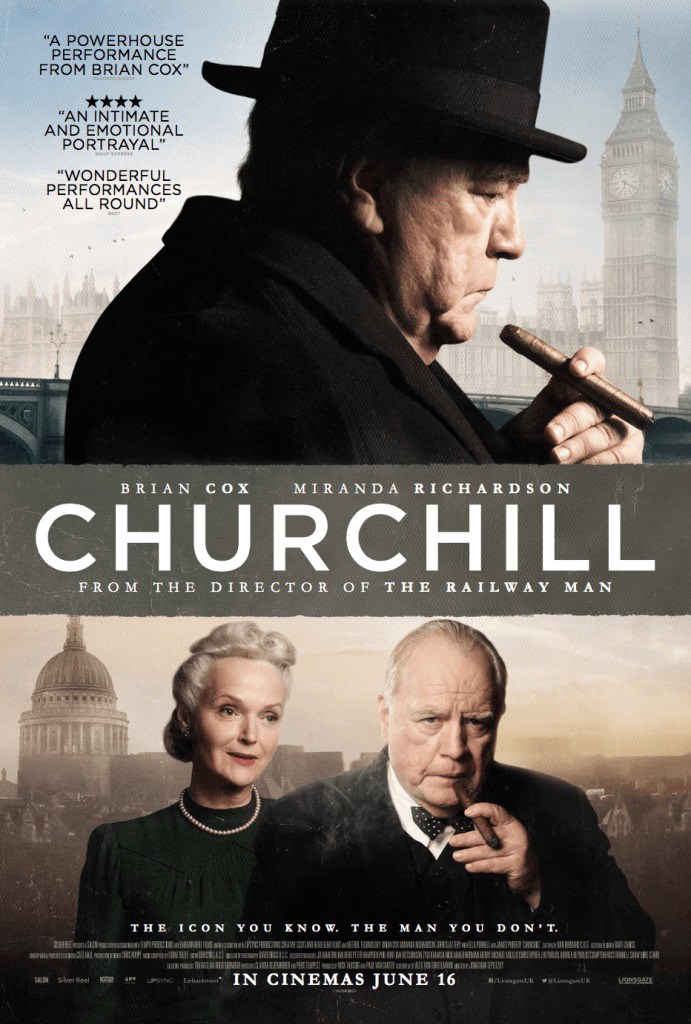
Someone should open a club: The Churchill Club. Every actor who’s played the Great Man gets instant membership. President the late Robert Hardy (seven times!). Other members? You name it: Finney, Gambon, Burton, Spall, Gleeson, Russell Beale, West, Hoskins… Think of a shorter, slightly rotund British character actor and inevitably they’ve had a go. Even the decidedly non-rotund, non-short, non-British John Lithgow aced the role in Netflix’s The Crown. With Gary Oldman also making his pitch this year in Darkest Hour, this film sees renowned character actor Brian Cox join the club. 

1944. Its three days before D-Day and Winston Churchill (Brian Cox) is getting cold feet. Haunted by memories of Gallipoli, he fears that the attack on Northern France will lead to disaster and oceans of blood. Against the advice of his Generals Montgomery (Julian Wadham) and Brooke (Danny Webb), he attempts to push General Eisenhower (John Slattery) to change the plans. As depression takes its grip on him, only his wife Clementine (Miranda Richardson) can get through to him. 

Churchill is a bit of a mess. It’s pretty well acted but highly televisual, shot with a self-conscious flourish that only emphasises its micro-budget. Teplitzky is in love with the cross-fade (or even worse the half fade) – constantly cutting from place to place for brief moments in the middle of scenes, often for lingering shots of actors staring out to sea or walking through fields. The action is often framed oddly, in long shot with full bodies in shot framed between ground and sky. Other scenes are filmed flatly – when Montgomery addresses his army, no amount of slow pans can hide that it consists of about 20 men.

On top of that, every single scene is scored within an inch of its bloody life. Now I love the power of film music, but this goes too far. The score is bland, predictable and unimaginative and just not that interesting to listen to. When it’s dropped heavy-handedly on top of every single scene it makes you want to scream. It’s also often completely misjudged or inappropriate – as gentle romantic piano swells during a key discussion between Churchill and the King, you almost expect them to kiss. 

That’s before we get started on the script, which is instantly forgettable. Alex von Tunkleman wrote a long running column in the Guardian on historical accuracy (or not) in films. Talk about a hostage to fortune, when you try to write your own film… I’ll go into historical issues in a bit, but there are lots of little things that feel wrong from Smuts (Deputy PM Of South Africa!) following Churchill around like some sort of valet too Montgomery addressing the Prime Minister to his face as “Churchill”. Stuff that just doesn’t feel quite right. The script also relies on a fictional “young secretary” who eventually speaks truth to the great man and wins his respect. Von Tunkleman is no writer of snappy dialogue, the film too often feeling like a wonky history lesson than a drama.

Historically the film does explore a different side of Churchill – enough to ruffle the feathers of the millions of Churchill fans out there. It focuses on his depression and self-doubt, within the framework of a period when he was starting to become sidelined by America. It also focuses on his little known opposition (certainly initially) to D-Day (he favoured a second front opened in Europe’s “soft underbelly” of Italy) – although it certainly expands this last-minute opposition for dramatic effect. I’m pretty sure he was on board by this point (however initially reluctant)!

What the film looks like it might do (but never quite does) is really explore some of Churchill’s laws and vulnerabilities – to look at the negatives and see how overcoming (or dealing with these) made him a great man. It touches heavily on Churchill’s depression – the “black dog” – with a desperately worried Churchill retiring to his bed to despair, praying for bad weather to prevent the landing and bawling out his secretary. Churchill is frequently wrong or mistaken, and the film captures much of the frustration his generals had with this talented amateur. It also isn’t afraid to show that, with American muscle driving the war, Churchill was becoming more of a mascot than a major orchestrator of allied strategy.

It’s a shaded portrait, but the film is eventually seduced by Churchill’s magnestism – a King’s Speech style final radio broadcast is all swelling regard, and a coda of Churchill waving his hat on a beach towards France hammers home his legendary status – miles away from its careful look at his growing irrelevance (and his concerns about this) early in the film. For all we have characters constantly stressing to Churchill his time is passing, the film can’t help finishing with a flourish that hammers home his centrality.

Churchill is flat and unimaginative but it does have an energetic, engaging performance from Brian Cox. While not in the first rank of Churchills, he captures the charisma, without slavishly imitating the famous voice. His Churchill, with his depression and doubt, also feels different: a slightly counter-establishment actor like Cox fits nicely with this. It’s an assured, charismatic performance hampered by the material. The rest of the cast feed off scraps though Miranda Richardson is assured as a twinkly level-headed Clementine. Richard Durden also deserves mention as gruffly supportive Smuts, as does James Purefoy as a gentle George VI.

Churchill means well – but fails. It’s aiming to question some of the reverence we have for the past, but ends up falling between stools, in the end too in love with the myth, but too critical to please the die hards. Flatly filmed and woodenly written, too many scenes fade from memory too quickly. Brian Cox (and Winston) deserved better.
Thor: Ragnarok (2017)


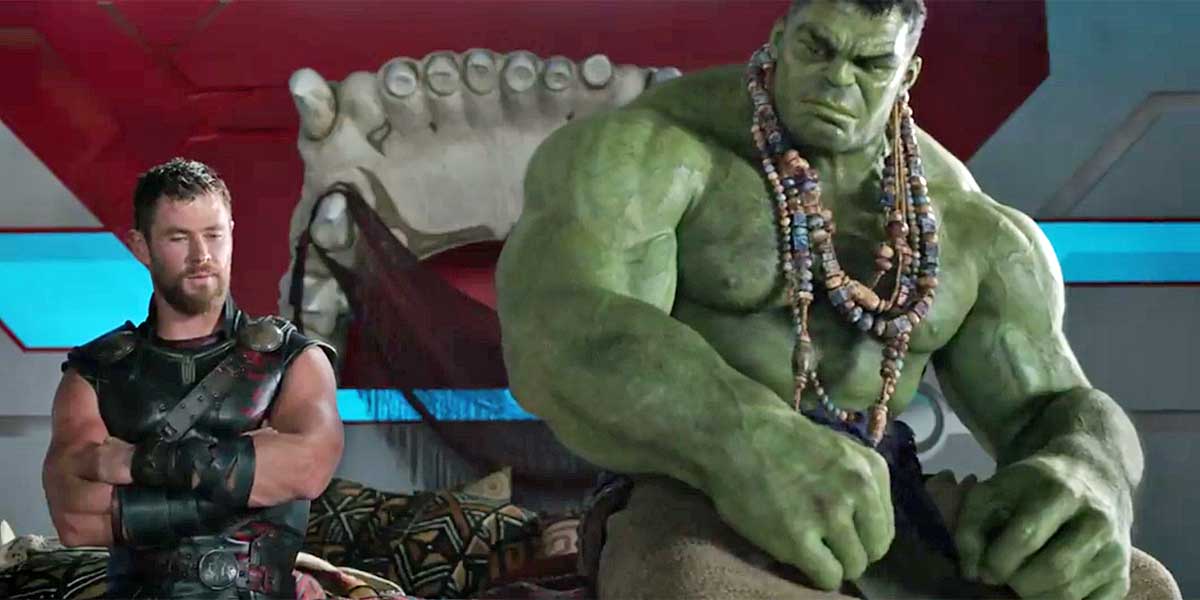
Thor and Hulk: It’s the buddy movie you’ve been waiting for

Director: Taika Waititi

Cast: Chris Hemsworth (Thor), Tom Hiddleston (Loki), Cate Blanchett (Hela), Idris Elba (Heimdall), Jeff Goldblum (Grandmaster), Tessa Thompson (Valkyrie), Karl Urban (Skurge), Mark Ruffalo (Bruce Banner/Hulk), Anthony Hopkins (Odin), Benedict Cumberbatch (Doctor Strange), Rachel House (Topaz), Taika Waititi (Korg)

The Marvel franchise is now on to 17 films. That’s 17 films all in the same universe, with at least three more to come in the next year or so. The weight of franchise backstory has started to feel overbearing, with so many other films to tie into and characters to set up that the individual film itself is left with barely any identity or purpose. How refreshing then to have a film that cuts loose and takes a slightly different tone: a genuine action comedy. Thor: Ragnarok is so tonally different from the other Thor films (let alone the other films in the series) it actually manages to feel like its own beast – it’s as close to a director-led vision as the franchise has got.

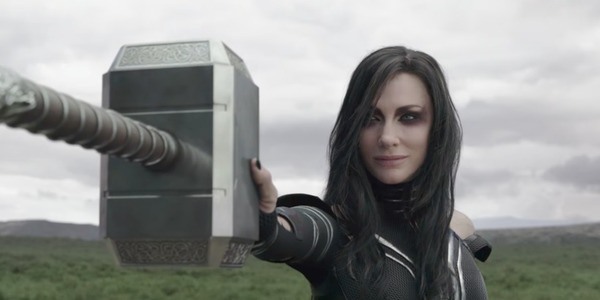
Thor (Chris Hemsworth) has been all over the universe, working to stop Ragnarok (the prophesised end of Asgard). Returning to Asgard, he unmasks his troublesome step-brother Loki (Tom Hiddleston) who has been disguised as Odin (Anthony Hopkins). Travelling to Earth to rescue their dying father, they arrive in time to see his death. Unfortunately, this releases their elder sister Hela, Goddess of Death (Cate Blanchett). While Hela ruthlessly conquers Asgard, Thor is trapped on the planet Sakaar and forced to enter a deadly gladiatorial contest – against his Avenger ally the Hulk (Mark Ruffalo) – all while trying to escape back to Asgard to stop Hela.

Thor: Ragnarok has a plot that ambles at points rather than sprints. But this hardly matters, as its main focus is on entertaining the audience. Waititi creates a sort of punk 1980s wildness, mixed with a fun-loving wit. The result is a film with action, and high stakes – but never takes itself too seriously. It perfectly understands how to puncture grandeur or pomposity of the Asgardian gods with a neat one-liner or a bit of everyday conversational inanity (a lot of the latter comes from Waititi himself, hilariously playing chilled out rock gladiator Korg).

Waititi also allows Hemsworth to let rip with his comic timing rip in a way he’s scarcely been allowed to do since Branagh’s original. It drops the faux-Shakespearean seriousness of Thor: The Dark World, and Hemsworth repositions the character in a more relaxed and charming style. From his opening introduction, undercutting the monologing of a fire demon with a dry series of puns while dangling from a ceiling in chains, he finds a neat balance between seriousness and charisma. Waititi is also (like Branagh) not afraid to let Asgard’s mightiest warrior be the butt of a few sight gags – one laugh out loud moment involving a very strong window is a stand out. Hemsworth demonstrates here he’s a far more accomplished comedian (physically and verbally) than he gets credit for.

This more relaxed Thor is perfect for the rock-and-roll feel of the film. Expertly scored (there is particularly fine use of Led Zeppelin’s Immigrant Song) it has a groovy, 1980s feel. The planet Sakaar is a primary-coloured, odd-alien filled, campy explosion of energy and vibrant punky fun. Said planet is run by the Grandmaster, played by Jeff Goldblum at his most Jeff Goldblumiest ever – if you can picture that you’ve got the tone of the whole planet. This neon lit style is reminiscent of everything from Flash Gordon to The Last Starfighter

The film’s loose comic style also allows a series of fun match-ups, from Thor and Loki (a wonderfully weaselly, fun Tom Hiddleston – still one of the best things in this whole franchise), to Thor and Strange (a lovely cameo from Cumberbatch), Thor and Valkyrie (a neat mixture of drunken self-loathing and female Thor-ness from Tessa Thompson) and lastly Thor and Hulk. The latter provides a lot of the film’s comic gold, the Hulk finally turned into some sort of character with achildish vulnerability and swagger (though the film still finds time for a Hulk penis gag). Waititi also throws in some nice call-backs to previous films – the bunch here set themselves up as the Revengers, while there are multiple references to the mantra used to calm the Hulk in Avengers: Age of Ultron – without making it feel in-jokey. 

There is so much fun in the film, you almost forget the main plot of the film is fairly heavy-going, end-of-the-world stuff. For a Marvel film there is a large body count of recurring characters (at least four bite the bullet here), while Hela’s plot encompasses mass slaughter and destruction. Scenes with Hela are kept short (structurally the film effectively strands her on Asgard to contain her invincibility), so it’s just as well the part is played with such charismatic dryness and imperious arrogance by Cate Blanchett (easily the best Marvel villain since Loki). She’s ably backed up by Karl Urban, adding a lot of complexity to reluctant cowardly turncoat Skurge. Waititi shoots Hela’s rampage of destruction with an exciting dynamism – it’s an action scene that feels different, no mean feat in a franchise that has had so many fights.

In fact most of the action feels very fresh, the fights never out-stay their welcome, and there are some brilliant visual flourishes – the final battle in particular throws in some almost painterly images as Thor and his allies take on Hela’s zombie army. The arena fight between Hulk and Thor is about a million times more interesting than the dull Hulkbuster battle between Iron Man and Hulk in the past Avengers film as Watiti keeps the focus on character rather than pummelling. The film also manages to keep the stakes high – there are always innocent people our heroes fight to protect.

Thor: Ragnarok might well be the most entertaining, fun film Marvel has produced. It’s almost certainly the best Thor film. While The Dark World failed dismally to build on the mixture of earnestness and comedy in Branagh’s original, this one feels like a natural progression of the first, amping everything up into a vibrant, 1980s styled cocktail of action and fun. It’s terrifically entertaining, well paced, anchored in characters we care about, and it just wants to entertain the viewer. You’d have to be pretty cold for it not to succeed.

Les Diaboliques (1955)


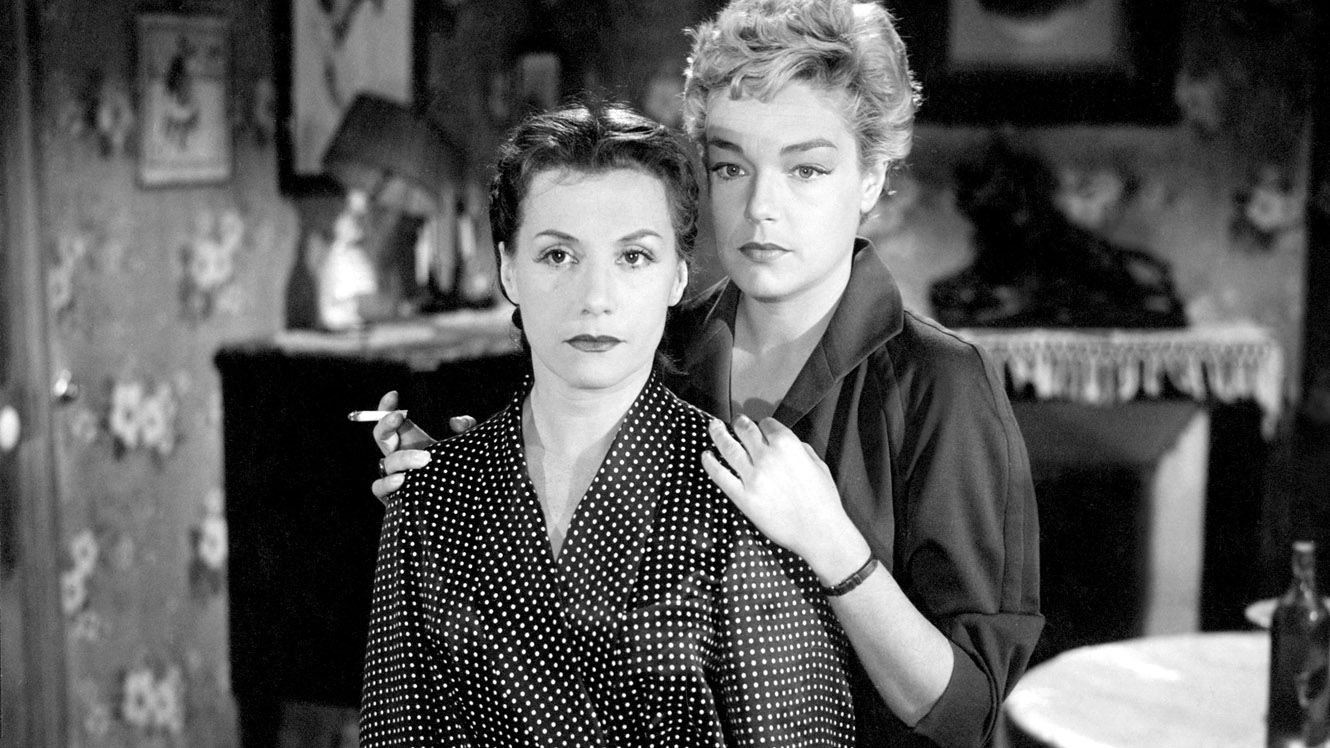
Véra Clouzot and Simeone Signoret plot murder in twisty thriller Les Diaboliques

Director: Henri-Georges Clouzot

Cast: Simeone Signoret (Nicole Horner), Véra Clouzot (Christina Delassalle), Paul Meurisse (Michel Delassalle), Charles Vanel (Alfred Fichet), Jean Brochard (Plantivaeu), Pierre Larquery (Drain), Michel Serrault (Raymond)

Clouzot is one of those fine directors, less prominent today in the list of the great artists of cinema. This might be because, unlike some of his contemporaries, many of his films were unashamed thrillers, Hitchcockian suspense tales, rather than the serious, artistic films we associate with French cinema. Les Diaboliques is the most popular of these films, a part mystery, part horror drama which slowly builds a confusingly terrifying picture of murder, danger and betrayal.

Christina (Véra Clouzot) is the wife of Paul (Michel Delassalle), a sadistic, bullying nightmare of a man. Together they run a boarding school, set up by her inheritance, but their marriage is a disaster. Paul is openly conducting an affair with fellow teacher Nicole (Simone Signoret). Nicole, however, is as disgusted and contemptuous of Paul as Christina – and she eventually persuades her that they should consider ridding themselves of Paul, with a temptingly simple scheme. However, things swiftly go against their plans…

Les Diaboliques is a compelling psychological thriller cum horror story, a creepy slow-burn of suggestion and paranoia that unfolds a bizarre whodunit mystery, which unnerves and constantly leaves you guessing. The story unfolds at a measured, inexorable pace. Clouzot’s camera is a quiet and carefully placed observer, taking in the events that occur in this hellishly cruel school with a calm directness, a cool minimalism that lets them speak for themselves.

And it’s a pretty hellish school. Paul is a brutal tyrant and bully, the teachers and students alternating between fear and loathing for him. He treats his fragile wife (struggling with a heart condition that could end her life at any moment) with a casual disregard and cruelty. Poor Christina is so put-upon and crushed, she seems wearily accepting of her husband’s constant affairs intermixed with cruelty. Even his mistress (an imperiously cold, harshly determined Simeone Signoret) can’t stand him. The whole school seems to have felt the effect of Paul’s personality – its run down, crushed, disheartened. The other teachers are either disinterested, faintly criminal or both. Is it any wonder wife and mistress want to murder him?

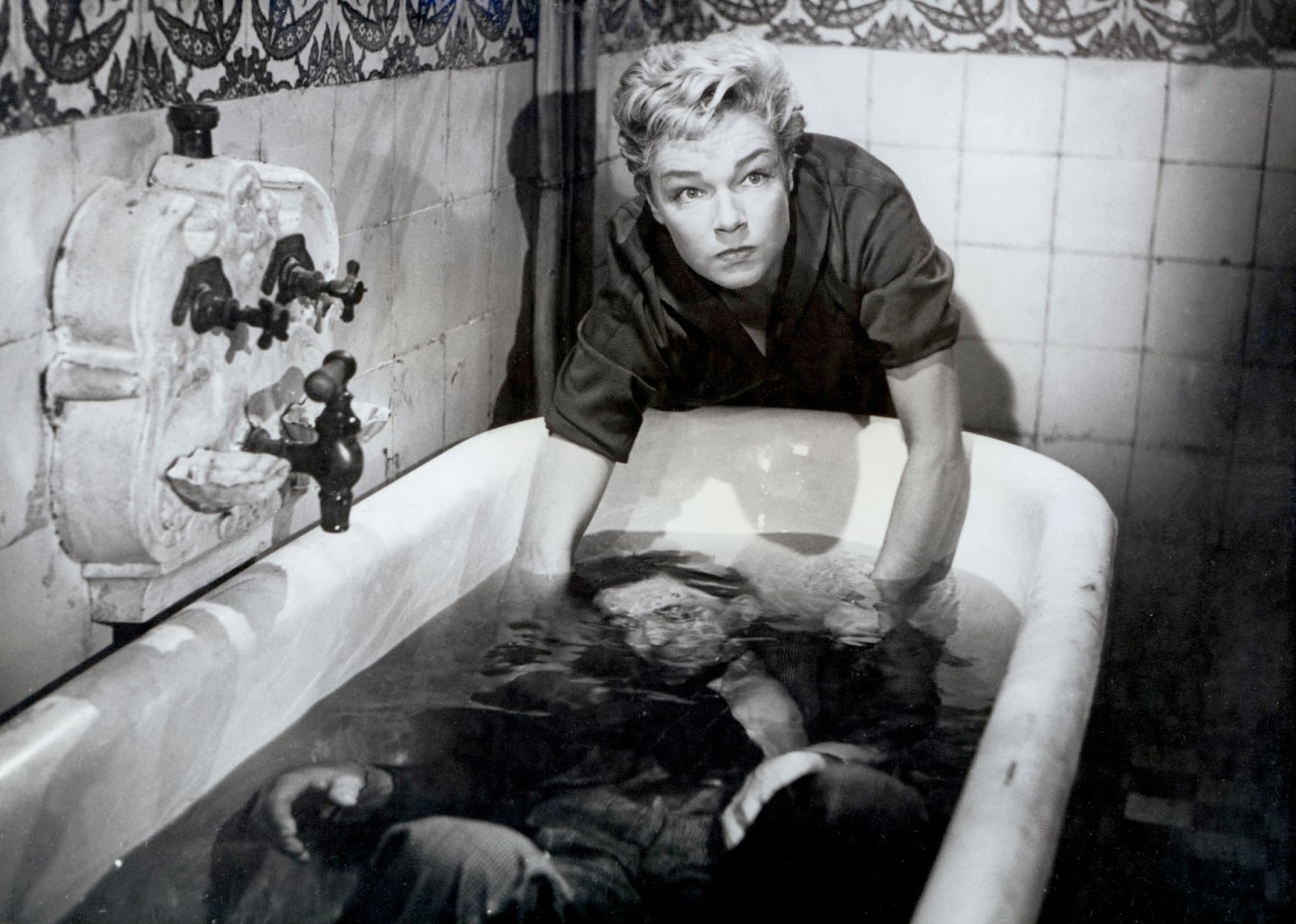
The murder, when it comes (and it’s the best part of half way through the movie) is almost blandly low-key. Clouzot even partly intercuts it with next-door neighbours complaining about the hot water being run late at night, the sound disturbing their radio quiz – unaware that it’s filling the bath so the two women can drown a drugged Paul. The flat where the crime occurs is as low-key and shabby as most of the rest of the film’s locations. 

Fascinatingly, what emerges increasingly are the lesbian undertones to the relationship between Nicole and Christina. Their intimacy is a major part of the build-up to the murder – their conspiratorial closeness seems as much as a careful seduction of Christina by Nicole as it is two like-minded souls coming together (this feeling, by the way, really comes into play as the film reach its conclusion). As events spiral out of control, Nicole becomes more and more of a protective, husbandly figure over the fragile Christina (an intriguing performance of vulnerability from Clouzot’s wife Véra), their physical and emotional closeness making them feel more and more like lovers dispatching a husband, rather than allies of convenience. It’s an intriguing subtext to the film, that I feel will make it of more and more interest as time goes on.

Events certainly do spiral out of control, as the body carefully placed in the swimming pool by the murderers (hoping to give the impression that Paul has accidentally drowned) is never discovered. Is it in the pool at all? Is Paul dead? Or has someone taken the body? A string of increasingly unnerving deliveries and visitations occurs – is Paul somehow speaking from the dead? Or are forces unknown manipulating the killers to disaster? Clouzot lets these events slowly build, avoiding the temptation to sprinkle clues or – more importantly – to give the audience more clues than the characters. We are only ever shown what Christine and Nicole see and only get the information they get.

This is where the film introduces its fourth primary character, retired detective Alfred Fichet. Fichet’s ambling, scruffy, seeming absent-mindedness makes him an eerily accurate forerunner of Colombo (at one point he all but says “just one more thing”). He rolls from place to place, clearly much sharper than he appears – it’s an impressively charismatic performance from Charles Vanel. He manages to work out what has happened (or perhaps what is happening) before the end – but moves too slowly in order to prevent disaster. But he changes the dynamic of the film in an intriguing way – shaking the film up 2/3rds of the way in, a tribute to the invention of its writing.

The final reveal of the plot is tinged with a horrifying terror – shot with an intense, watery fear that is guaranteed to haunt the memory. To say more is to reveal too much of an excellent act four twist. But it’s a sequence that you will find hard to shake from your mind – and one that you later realise the whole film was building towards. It’s what has led many people to call this film partly a horror story.

Clouzot’s film is a fine twisty thriller, even if at times it feels a little too in love with the mechanics of its tricks and plot mechanisms than it is with emotion and character. But it creates some intriguing and effective characters (including some small cameos) and it feels like a film that genuinely teaches us about the casual cruelty and selfishness that drives so many of our actions. There are many, many lies told in the film – even the children at the school casually lie – this is not a film that has a high opinion of the human race. 

Les Diaboliques has been called the greatest Hitchcock film Hitch never made. Hitch might well have brought a bit more flash and punch in its style (Clouzot is not the most inventive user of the camera here, with most shots very safe). But I’m not sure he could have improved its sense of creeping inevitability and grim claustrophobia. It still packs an inventive, clever and intriguing punch even today.

Saturday Night and Sunday Morning (1960)


Albert Finney is an angry young man out for himself in Saturday Night and Sunday Morning

Director: Karel Reisz

Cast: Albert Finney (Arthur Seaton), Shirley Anne Field (Doreen), Rachel Roberts (Brenda), Hylda Baker (Aunt Ada), Norman Rossington (Bert), Bryan Pringle (Jack), Edna Morris (Mrs Bull), Elsie Wagstaff (Mrs Seaton), Fran Pettitt (Mr Seaton)

Whatever people say I am, that’s what I’m not because they don’t know a bloody thing about me! … What I’m out for is a good time – all the rest is propaganda. – Arthur Seaton

The 1960s saw a cultural shift in British cinema. Prior to this, most British films were either Ealing-style comedies or dramas focused on the middle or upper classes. When the working classes did appear, they were usually scamps or “ever so ‘umble”. This all changed in the 1960s with the emergence of “kitchen sink” dramas. The New Wave of British Cinema had arrived – films that looked at the real lives and issues of the working classes, that dared to present the working man (and it generally was men) as a living, breathing human being (warts and all) rather than some sort of latter-day Shakespearean comic turn.

Arthur Seaton (Albert Finney) is a skilled, well-paid worker in a bicycle factory in Nottingham. He’s also your quintessential “angry young man”, contemptuous of his fellow workers, adamantly opposed to being told what to do with his life and only interested in a hedonistic life where he does whatever he wants. As Arthur begins a relationship with aspirant young woman Doreen (Shirley Anne Field), his life is complicated by the wife of a fellow worker, Brenda (Rachel Roberts), whom he’s sleeping with, announcing she’s pregnant.

Saturday Night and Sunday Morning caused such a sensation when it was released. But it’s such a strong capturing of a particular time and moment that it’s hard to look at it today without seeing it as a little bit dated, or finding it hard to work out what all the fuss was about. But Arthur Seaton seemed to capture the mood of generation – and that’s a credit to Alan Sillitoe’s excellent (semi-autobiographical) script, based on his own novel.

Albert Finney gives the part a forceful, primal aggression that seems to capture the spirit of the age. He constantly bubbles with ill-directed resentment, mixed with cynicism and a beery oafishness. He isn’t a “faux” intellectual, like a Jimmy Porter, or a man striving to move up the greasy pole. He’s a chippy, arrogant, slightly lazy man with no interest in self-improvement. He’s also a horrendously selfish character, interested only in his own pleasure – I think it goes without saying his treatment of women doesn’t stand up well. Tied of being preached at about the sacrifices of the war generation (who surround him in the factory), he merely wants to do what he wants, when he wants. Despite his flaws, he seemed to capture the feelings of a post-war generation.

The film was also unique for the themes it addressed. It was pretty much unheard-of for a film to even mention the possibility of abortion. It tackled issues of adultery and pre-marital sex (it’s one of the first films to show a man and woman waking up in the morning in bed together). Its lead character drinks, swears (as much as allowed by the censors) and even takes pot shots at neighbours he doesn’t like with an air gun. All of this of course seems rather tame now – but at the time, it was radical to see someone like this, behaving like this, on screen.

The plot, such as it is, is as aimless in many ways as Arthur himself. Not a lot happens in the film, apart from Arthur constantly pushing to not “let the bastards grind you down”. Of course all the pain in the story actually comes from Arthur’s own actions, not least to Brenda, his occasional mistress. Rachael Roberts is sensational as Brenda – the finest performance in the film – a slightly faded former glamour girl, now older, lonely and whose appeal to Arthur (and his appeal to her) seems as much maternal as it does sexual. Brenda’s a tragic figure, clinging to a fantasy of a life free from her dull husband – but slowly (and sadly) learning that she is looking for something from Arthur he can never give her.

By contrast, Arthur’s other conquest, Doreen, is a far more assured, determined and ambitious woman, closer to his own age. Shirley Anne Field is playful and charming, but in her own way as much besotted with Arthur’s rootless masculinity as Brenda. Unlike Brenda though, she is a determined to get what she wants. Arthur and she eventually seem set to settle down for domesticity on a new-build council estate, a decision Arthur seems to resign himself to (he flings a stone impotently at the new houses, but barely seems to understand why). Even this relationship reinforces Arthur’s emptiness – his aimless rebellion lands him eventually in the very conventional lifestyle he spent the rest of the film pushing back against.

Karel Reisz shoots all this with a documentary realism. Freddie Francis’ brilliant photography gives a new wave, neo-realist romance to the Nottingham streets that reinforces the feeling that we are watching a real slice of life. Of course, today much of this revelatory impact of this is lost – we’ve seen these sort of dramas too many times. Arthur’s rebellion is so ill focused – and his attitudes bordering so heavily on the misogynistic – that it’s a lot harder to sympathise with him today than it would have been back then. However, it captures a moment of history, and a feeling many young people at the time had – that the world they were presented with just didn’t match up with what they wanted from life. A dated classic, but still an important piece of film making.

Star Trek: Nemesis (2002)


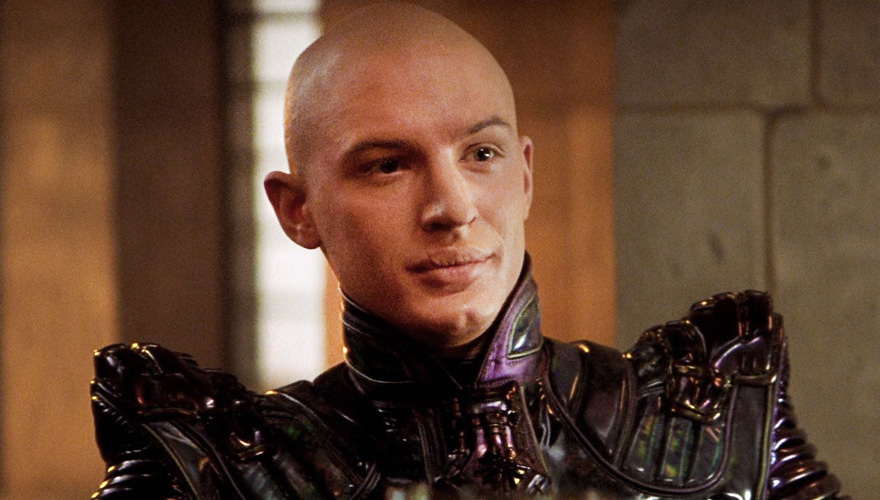
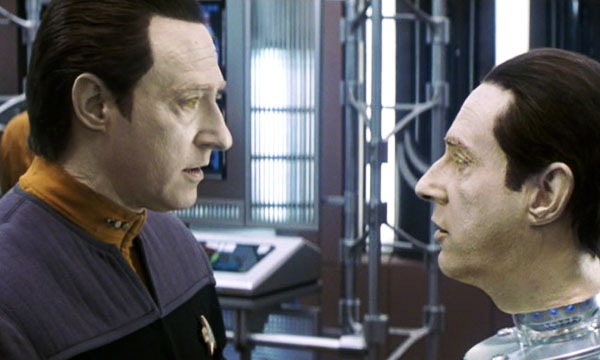
Tom Hardy plays a clone of the young Patrick Stewart in Star Trek: Nemesis. You can tell he’s identical ‘cos he’s got no hair

Director: Stuart Baird

Cast: Patrick Stewart (Captain Jean-Luc Picard), Jonathan Frakes (Commander William Riker), Brent Spiner (Lt Commander Data), LeVar Burton (Lt Commander Geordi LaForge), Michael Dorn (Lt Commander Worf), Gates McFadden (Dr Beverley Crusher), Marina Sirtis (Deanna Troi), Tom Hardy (Shinzon), Ron Perlman (Viceroy), Dina Meyer (Commander Donatra), Kate Mulgrew (Admiral Janeway)

There are few things in the Star Trek franchise with as poor a reputation as Star Trek: Nemesis. It’s as close as the series got to a franchise-killer, a film that bombed so colossally (the first ever Star Trek film to lose money at the box office) that it seemed to end not only the movie series but all planned television projects. Since then, it has been remembered as an incoherent, poorly plotted mess, crammed with terrible writing and direction and shoddy action. Is this memory fair? Well yes and no.

Picard (Patrick Stewart) and Data (Brent Spiner) have their sense of self thrown: first by Data’s discovery of an identical, unadvanced prototype of himself called B-4 (also Spiner) and then by Picard discovering on a mission to Romulus that the new leader of the Romulan Empire is a clone of his younger self, going by the name Shinzon (Tom Hardy). Having assassinated the Romulan government, Shinzon plans to give freedom to his “Reman brothers”, the slave race that raised him from childhood. But he also has sinister aims for the Federation…

This is a horrendously compromised product, cut to ribbons by the studio to get as close as possible to two hours as possible, regardless of the impact on plot or characters. Why? Because it was released at the same time as Lord of the Rings: Two Towers and the plan was all the people who didn’t want to see that would choose Nemesis instead. I won’t start to explain here all the reasons this plan was stupid. Suffice it to say, it didn’t work and meant we ended up with a gutted mess that jumps as quickly as it can to action set-pieces, many inadequately filmed on the cheap.

It also doesn’t help that Stuart Baird was brought on board to direct: a self-proclaimed “non-fan” who proudly announced he hadn’t watched any Trek before. A fresh perspective is great – but come on, if it’s the fourth film with the cast, following 175 episodes, you’d think some respect for the past would be good, right? Instead, Baird seems contemptuous of the whole genre and has no tonal understanding of Star Trek. The actors constantly struggle to keep their characters as consistent as possible, while events and actions keep spinning wildly out of whack. I could start nit-picking Star Trek errors (why is Worf here? Why is Wesley back in Starfleet? What’s happened to Data’s emotion chip? Why does no-one mention Data’s evil brother Lore? Picard was not always bald. Etc. etc. etc.) but I’d be here all day.

Anyway, if they were going to bring a new face on board, could they not have found a better director than Baird? Some of the sequences of this film are so wonkily filmed they look cheaper than they probably were. Any scene involving hand-to-hand fighting is cursed with poor shots and bizarre slow motion straight out of 1970s TV. They all look absurdly slow and cheap. The Romulans are redesigned as ludicrously camp, partly green skinned, heavily made-up softies. Shinzon and the Remans sashay around in noisy rubber costumes like space gimps. Baird has no sense of comic timing and virtually all the overtly “funny” parts of the film fall on their arse. The wedding scene is one long sequence of slightly embarrassing faux-comedy – the sort of thing that will confirm to any sceptic that loving Star Trek is desperately sad.

But the main problem is the plot. Shinzon is a character who should be really interesting: for starters, he’s played by the excellent Tom Hardy. He should be casting a dark light on Picard, with a feeling that these are men only a few degrees apart, or that Shinzon is a kind of renegade son pushing to find his own place in the universe. All lost in the edit. Shinzon’s back story and aims make no sense, and by the end his character degenerates into a motiveless nutter. If he’s all about freeing the Remans (a goal achieved at the start of the film) why does he want to destroy Earth? If his focus is on Picard why does he constantly delay capturing him? What would have worked was if the Enterprise were trying to stop Shinzon destroying Romulus, or if Shinzon’s focus was exclusively on Picard and we had more of a sense of Shinzon being a “dark Picard”. Instead he’s just a nutter with a homicidal plan for Earth which comes out of nowhere.

Badly structured as the Shinzon plot is, at least this has some decent scenes between Hardy and Stewart. However the B-4 plot makes little sense at all, while also providing an unfortunate opportunity for Spiner to play “simple Data”, like an android Rain Man. In terms of where he fits into Shinzon’s plan or the rest of the plot, B-4 makes no sense and provides no real contrast to Data or comment on the Picard/Shinzon relations. He should, of course, be another repeat of the theme of Picard seeing a disagreeable version of himself. But this never comes together. It just gets used for jokes or for Spiner to show-off. Neither option is that appealing.

This thematic material keeps getting constantly lost. It’s cut so badly that it often makes the film empty and unsatisfying. You keep wanting thematic juice: our heroes confronting dark versions of themselves, or the struggle of dealing with your lack of uniqueness in the galaxy. But the film only wants to sketch these in roughly in order to keep moving forward to action scenes. The worst of these is a prolonged car buggy chase on a primitive planet that not only takes ages, it’s desperately dully and makes no real sense at all when you think about (for starters, if the baddies wanted B-4 to be found, why break him up and sprinkle the bits all over a dangerous planet?). 

This means that, despite the title, we never get the sense of there being an actual nemesis in this film. Shinzon never really feels like a reflection of Picard. The film just tells us he’s a baddy, because, hell he just is. You can practically tick off the standard list of villain quirks. Lack of patience? Check. A creepy attitude to women? Check. Killing a subordinate for failing? Check. Any prospect of making him an interesting, different type of character gets pushed out in favour of the simple.

That’s many paragraphs saying what’s wrong. But it’s not all bad. Honestly it isn’t. In fact, there are some nice moments in there. There are some good character beats, and the cast are working hard to make these moments land. In particular, there are some lovely exchanges between Picard and Data, while Geordi gets more to do in this film than most of the last few (including some actual moments exploring his friendship with Data, often lost in the films). Picard feels more like the enlightened explorer and intellectual character from the TV show here than he did in any of the other films. When we are allowed to relax and breathe, the film touches on an elegiac, end-of-an-era quality (see scenes like that below).

Also, as awful as the buggy chase sequence is, the final space battle (while a clear lift from Star Trek II) is exciting and well filmed, and also showcases our characters’ professionalism. The hand-to-hand combat bits are hopeless, and Picard’s final “man on a mission” assault strains credibility. But Data’s final sacrifice is quite moving – especially the quiet moments afterwards where the rest of the cast respond to it. It’s sad because you know more of this warm interplay is on the cutting room floor with the thematic material of the film – leaving this neutered disappointment instead. Which is a shame because there is some decent material here – and some enjoyable moments. There is also a terrific score.

Star Trek: Nemesis is not as bad as you may remember. I mean, it’s a long way short of the best Star Trek films – but it’s got its moments. It’s made by a director who doesn’t understand (or care) about the franchise, but the cast do their best to hold it together. It’s a thoroughly compromised film, ruined by too many people trying to make a film that did too much, and it was clearly intended as a jumping off point for the next film (which never happened), but for all this, there is just about enough to keep a fan entertained – although probably not a non-fan. And if nothing else, this is the last chance to see the cast of one of the best sci-fi shows ever made.

Poseidon (2006)


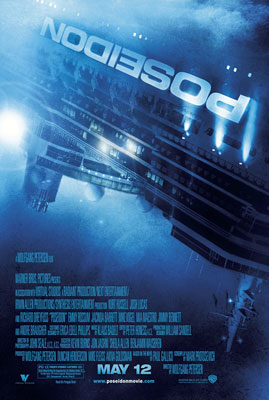
Our characters (such as they are) struggle from cliche to cliche in Poseidon

Director: Wolfgang Peterson

Cast: Josh Lucas (Dylan Johns), Kurt Russell (Robert Ramsey), Jacinda Barrett (Maggie James), Richard Dreyfuss (Richard Nelson), Emmy Rossum (Jennifer Ramsey), Mike Vogel (Chris Saunders), Mia Maestro (Elena Morales), Kevin Dillon (Lucky Larry), Freddy Rodriguez (Marco Valentin), Andre Braugher (Captain Michael Bradford)

In the 1970s the big tent-pole movies were all disaster films. They were the superhero films of their day. They also followed a very clear formula: big stars, big man-made structures, big crashing natural forces sweeping away man’s pride. Lots of death and tear jerking, with sub-plots for each character that could have been pulled out of an episode of EastEnders.

Poseidon is a remake of sorts of The Poseidon Adventure – but with plot and characters changed (not for the better). There is a ship called the Poseidon. It’s hit by a tsunami. It gets overturned, trapping the survivors at the top (now the bottom) of the ship. While most wait to be rescued, our heroes decide to climb down (now up) the ship to the hull to escape. Of course, not all of them will make it!

You notice I didn’t mention any characters there. That’s because what this film laughably calls its characters are so crudely drawn, they barely qualify as human beings, let alone characters. They exist purely to get into trouble. We spend only the most rudimentary time getting to know them before they (and their loosely defined characteristics) start dropping like flies. This is an anti-actor film – literally anyone off the street could play these parts, so disinterested is the film in them.

So we’ve got Kurt Russell as an over-protective father and Emmy Rossum as his semi-rebellious daughter. Will they grow closer together over the film? You betcha. Will Russell learn to accept the place his daughter’s boyfriend has in her life? Of course. Will “I work better alone” professional gambler Josh Lucas learn that he needs other people? Nope. Just kidding of course he does. Will suicidal architect Richard Dreyfuss discover a new love of life? See where I’m going?

In fact it’s so completely predictable you can take a pretty good guess who will make it and who won’t based solely on the opening few minutes. Some of its decisions lack any form of sensitivity. Any character from a remotely racial minority? Let’s just say that their chances are not good (Dreyfuss needs to actually kick Rodriguez’s waiter down a shaft so he doesn’t drag the others down – I thought at first “there’ll be consequences to that” – but nope it’s never mentioned again). Anyway, all the surviving characters are loaded white guys. One of them does need to make “the ultimate sacrifice” to save the others but, again, their identity can be pretty much worked out in the opening minutes. The most unpleasant character in the film? Yup he dies.

In fact you watch the film and feel sorry for the actors. Not only are the characters wafer-thin, but they spend so much time silently underwater or getting soaked, they look like they are suffering a lot for nothing. The focus is entirely on the mechanical progression from set-piece to set-piece, all of which stink of familiarity. So we get the long swim under water (of course someone gets trapped!), the impassable ravine that needs crossing (of course someone is stuck on the other side), the claustrophobic tunnel (of course one of the characters has claustrophobia). There is even a bit where the terminally stupid fucking kid wanders off and needs to be rescued. Is there anything new in this? It’s a re-tread of every disaster film ever.

Wolfgang Peterson directs all this with a professional detachment and disinterest that makes you want to cry that he once made Das Boot. If there is one thing he knows, it’s shooting confined spaces (see not only Das Boot but also Air Force One) and he makes the onslaught of water look pretty good. But this is such a piece of hack work, you despair that he clearly needed the money. The special effects are pretty good I guess (although the CGI ship looks totally dated), but it’s a staid, dead, predictable film.

It only really works in an “it passed the time watching it in two chunks over a couple of breakfasts” way. Because there is literally nothing new, interesting, unique, intelligent, imaginative, dynamic or individual about it, it passes in front of your eyes like a bland wall-paper. Compared to the classic disaster films of the 1970s it’s not fit to lace their explosions. Totally empty, unchallenging rubbish.

Macbeth (1971)


Francesca Annis and Jon Finch as the murderous Macbeth’s in Polanski’s dark Shakespearean adaptation

Director: Roman Polanski

Cast: Jon Finch (Macbeth), Francesca Annis (Lady Macbeth), Martin Shaw (Banquo), Terence Bayler (Macduff), John Stride (Ross), Nicholas Selby (King Duncan), Stephen Chase (Malcolm), Paul Shelley (Donalbain), Richard Pearson (Doctor), Diane Fletcher (Lady Macduff)

Roman Polanski is always going to be a controversial figure. If he wasn’t also a gifted film maker, his reputation would be even lower than it is. His life has been a parade of misfortunes and misdemeanours. Macbeth was filmed a few years after his wife, Sharon Tate, was brutally murdered by Charles Manson. Hard not to read something into the director’s decision to film Shakespeare’s most infamous murderer. Certainly it was hard for reviewers at the time to disconnect the two. Throw in the fact that the film was made by Playboy Productions’ short lived film-making arm (with Hugh Hefner as Executive Producer) and you’ve got a film ripe for a poor reputation.

However, Macbethis actually a dynamic, well-filmed, surprisingly textually savvy production of this shortest and most intense of Shakespeare’s tragedies. While there is no doubt that this very much Polanski’s personal vision of Macbeth, it’s a fascinatingly dark, grim and horror-inflected production that really gets to grips with the darkness at the play’s heart – and also with the slightly empty, little-boy-lost quality in Macbeth himself (until then a character seen on screen largely as the brooding thane, laid low by his evil wife).

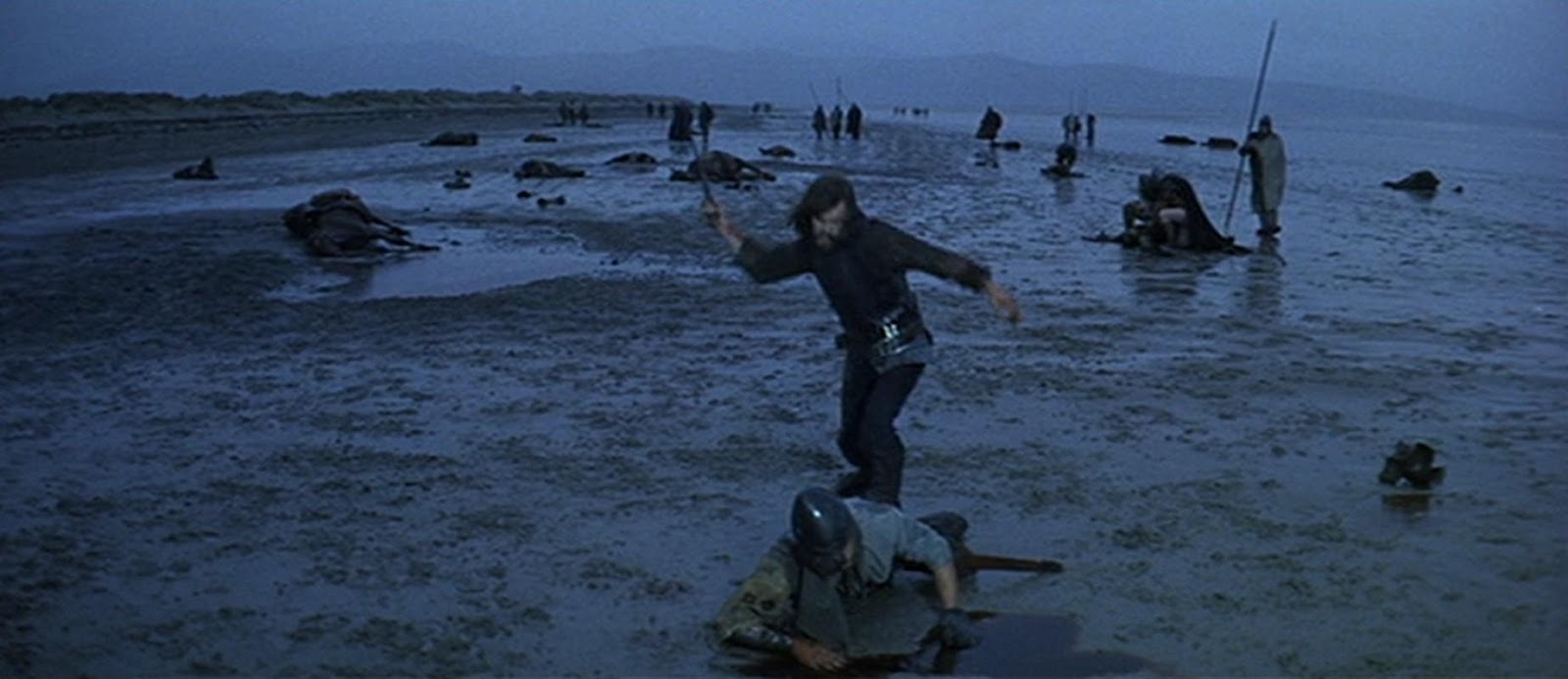
Polanski’s Macbethtakes place in a world where violence is second nature, life is cheap and grim slaughter is around every corner. One of the first acts we see is a soldier checking bodies on the battlefield. Finding a wounded soldier, he breaks his spine with two sickening blows from a flail. That’s just a precursor for the violent mood that will follow. Mangled bodies and bleeding corpses constantly appear, from Duncan’s guards to the twisted corpses of the Macduff children. Even when relaxing at the court, the Macbeths set up a bear baiting (kept off-screen) – the bear’s corpse (along with a few dogs) is later dragged through the palace corridors, leaving a trail of blood. 

Polanski’s Scotland is a savage, medieval, uncivilised place. Macbeth’s castle is a more like an elaborate farm, with wooden huts and mud-stained floors, than a mighty fortress. Every character looks swarthy, run-down and dirty. Colour has been drained out of the film in favour of muted greys and browns. There is precious little hope here, just a terrible onslaught of violence and murder that never seems to stop.

The brutality is constant, and Macbeth is up to his arms in it. Even the murder of Duncan doesn’t pass off without a hitch – the King awakens and has to be dispatched with panicked desperation. Banquo is finished off with a sickening axe thud in the back, his body dropping lifelessly into a stream. Even Macbeth’s faithful factotum Seyton is brutally lynched while trying to prevent his soldiers from deserting Dunsinane. The assault on the Macduff family is hideous in its fierceness: the house is burnt down, the servants (and its implied Lady Macduff) raped, while the children are brutally murdered (thankfully off-screen in most cases). It’s a harrowing slaughter that brings to mind World War II atrocities – and of course Polanski’s own recent tragedy. 

In this world, Macbeth is intriguingly presented as far less of a noble poetic hero than audiences at the time would have expected. Jon Finch’s Thane is low-key and lost, a puppet in the events happening around him. He’s almost like a slightly at-sea kid, who’s stumbled into power and has no idea what to do with it. His poetic soul is revealed as flashes of inspiration in an otherwise empty man. With many of the speeches internalised in voice-over, Macbeth’s sound and fury is deliberately toned down – by the end he seems weary and finished in a way few other Macbeths feel. His isolation throughout the play is complete – he’s incapable of relating to other people.

Similarly, Francesca Annis presents a fresher view of Lady Macbeth than a cartoon villain. While clearly still alluring (there was much controversial, Playboy-related, buzz to her famous naked sleepwalking scene) she’s equally as adrift as Macbeth is, totally unprepared for the psychological impact of murder. Excited and perhaps even a bit turned on by power, she falls apart as the impact of her actions grabs hold – it seems to be happening from the very start, her swooning when seeing the corpses of Duncan’s guards seems genuine rather than forced. Polanski even places her suicide on screen – her despairing leap accompanied by screams of terror from her waiting women.


In this grim world, there is a paganish, primitive feeling. Macbeth is crowned in a strange ceremony that involves him standing bare foot on the stone of scone. The Thane of Cawdor is executed by being hung by a metal chain (he defiantly jumps from the battlements rather than being pushed) while the court stares on. The witches are a crazed harem of naked women of all ages, engaged in bizarre, sadistic ceremonies in a secret subterranean den. The opening shot of the film uses a bright, bleached yellow sun that seems to stretch over a desolate coast-line, where the witches are burying a human hand clutching a dagger. Macbeth’s visions are a series of surreal and disturbing images, while Banquo’s ghost is an increasingly bloody and terrifying image as the scene progresses. There is a sense of strange powers hanging over everything.

And maybe that power is fate. This is also a fatalistic film, which runs with the theory that Shakespeare’s tragedies are almost circular in nature (very much inspired by Polish writer Jan Kott in his excellent book Shakespeare: Our Contemporary) with fate as a machine that traps people into an endless cycle of repetition. This feeling runs throughout Macbeth’s increasingly fatalistic disengagement with the world – the (excellent) sword fights at the end even see him fight with a certainty in advance of the results. The cyclical nature of this world is hammered home at the end, as Donalbain sneaks away from the celebrations of Malcolm’s crowning to consult with the witches in their hovel – hold onto your horses, the cycle is all set to begin again.

The film is also creative in its use of Shakespeare, in particular in its expansion of the character of Ross. Polanski and his co-screenwriter, famed theatre critic Ken Tynan, again followed Kott’s theories by repositioning Ross as the ultimate political opportunist. Helped by John Stride’s expressive performance, Ross is a constant figure of vileness, allying himself eagerly with whoever is on the rise. Ross assists in the murder of Banquo, murders the murderers and aids the destruction of the Macduff family. Overlooked for a chain of office in favour of Seyton, he swiftly reverses his stance and flies to Malcolm (much to Macbeth’s later fury) and then loudly leads the cheers for Malcolm’s crowning. It’s a neat side story, done with camera asides and no dialogue changes, but it adds a lot of interest to the film.

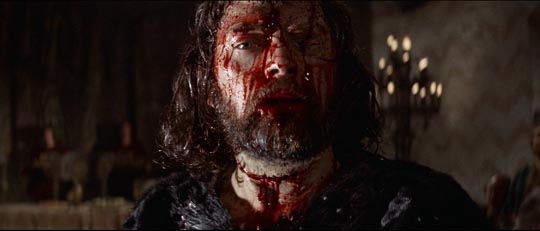
Macbeth ends with a gruelling beheading of Macbeth – and stylish angles gives the impression that we are experiencing Macbeth’s final moments of consciousness as his head is passed around Malcolm’s soldiers. It’s a neat way to end a violent and dark production of the play, shot through with Polanski’s personal awareness of the darkness of the human soul. The film sometimes loses its pace a little bit, and most of the performances leave very little impression – there is a reason why virtually no one in this film had a really established film career. Even the language of Shakespeare isn’t central here: it’s the experience of a brutal, dark and grim world that matters. It’s the images and visuals that stand out. It’s very much Polanski’s Macbeth.

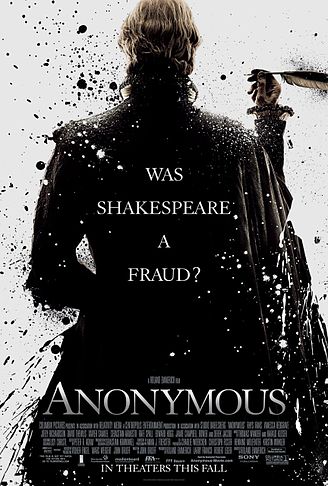
Anonymous (2011)


Did the Earl of Oxford write Shakespeare (spoilers: No of course he didn’t.)

Director: Roland Emmerich

Cast: Rhys Ifans (Edward de Vere, Earl of Oxford), Vanessa Redgrave (Queen Elizabeth I), Sebastian Armesto (Ben Jonson), Rafe Spall (William Shakespeare), David Thewlis (Lord Burghley), Edward Hogg (Robert Cecil), Xavier Samuel (Earl of Southampton), Sam Reid (Earl of Essex), Jamie Campbell Bower (Young Oxford), Joely Richardson (Young Elizabeth I), Derek Jacobi (Himself), Mark Rylance (Henry Condell), Helen Baxandale (Anne de Vere)

Many people would say that, for as long as there has been Shakespeare, there have been arguments about who wrote him. But that would be wrong. Because at the time everyone knew it was Shakespeare. Murmurings grew in the nineteenth century, but it’s only in our bizarre more recent times, when everyone wants to feel that they are smarter than anyone else, that conspiracy theories have taken hold. This film dramatizes one of the most famous conspiracy theories – and takes it to the bonkers extreme, chucking in royal incest, bastard claimants to the throne and blood purity, like it’s desperate to be some sort of poetry-circle Game of Thrones.

Edward de Vere, Earl of Oxford (Rhys Ifans) is a genius. He has written hundreds of plays, despite never (it seems) setting foot in a theatre. When he does one day, he suddenly thinks – hang about I should get these on the stage! Looking for someone to put their name to the work, he approaches a reluctant Ben Jonson (Sebastian Armesto) before credit is high-jacked mid performance by drunken dullard William Shakespeare (Rafe Spall). Oxford continues producing the plays through Shakespeare, carefully using them to influence the crowd to support the Earl of Essex’s (Sam Reid) campaign to succeed Queen Elizabeth (Vanessa Redgrave) and win her away from the influence of the Cecils (David Thewlis and Edward Hogg). 

It’s not often you get a film that is both a stinking, insulting piece of propaganda garbage, but on top of that is also a terrible film full stop. Anonymous is such a film. This mind-numbingly stupid, childishly idiotic film is probably the best case that Shakespeare wrote Shakespeare to come out of Hollywood. Because, after watching this film, you’ll sure as shit be convinced it wasn’t someone as tedious, pompous and arrogant as Edward de Vere, Earl of Oxford. Unbelievably Emmerich and co thought they were making a film that would reset the table of Shakespeare debate. The only thing that will need resetting will be your table after you’ve overturned it in fury.

Our film’s Shakespeare goes crowd surfing in an Elizabethan mosh pit. Seriously.

The Oxfordian theory is yet another garbage “alternative history” that puts forward a candidate claimed to have “really wrote Shakespeare”. The central conceit usually goes something like this: Shakespeare was from a middle-class background, grammar school educated, never travelled and generally lacked the academic chops to write the plays. He was simply too common to be a genius. Ergo someone super smart must have done so instead.

The Oxford theory was put forward at the turn of the last century by (and I’m not making this up) Thomas Looney (yes it is literally a Looney Theory). It argues that Oxford was well travelled, well-educated and known as a poet so must have written the plays and poems. Shakespeare was hired to put his name on the plays because it was too shameful for an Earl to write for the theatre. Of course this doesn’t explain why Oxford had the sonnets released under Shakespeare’s name while allowing his own (not so good) poems to circulate freely – but facts never stopped these people. Oxford also inconveniently died in 1604, before the likely composition (and first performance) of over a third of the plays, but again never mind eh? 

Anyway, I’ll get into the film in a second, but I’ll leave you with this. All contemporary evidence points to Shakespeare being the author of Shakespeare’s plays. All evidence we have indicates he was recognised as the writer by his contemporaries. The much vaunted travel knowledge rests on a few well-known city names and landmarks (who could possibly have known Venice had a bridge called the Rialto? Oh I don’t know, maybe anyone hanging out in taverns in international trading-hub London?) and includes howlers like Bohemia having a coastline and it being possible to sail between Milan and Verona. All evidence of research (far too hard work for the Looneys) into typography and the composition of the plays points to Shakespeare or at least that many of the works were composed after Oxford’s death. I would also add that the bollocks (which this film explores) of Shakespeare not spelling consistently is no great surprise when standardisation of spelling was still over 100 years away. Anyway…

The clueless bumbling playwrights of the time.

Anonymous is well designed. It’s well shot. There are some decent costumes. Rafe Spall is okay as a ludicrously crude, shallow and dumb Shakespeare. Nothing and nobody else emerges from the film with any credit. It’s got the intellectual rigour of a child. It understands virtually nothing about the Elizabethan state. It even turns Elizabeth I (played direly by Vanessa Redgrave and a little bit better by Joely Richardson in flashback) into a hormonal idiot, a sex-obsessed harlot banging out bastards left, right and centre while wailing about how much she needs the man she loves. Even its understanding of theatre is crap. It is crap.

At the forefront of this steaming pile of manure is Rhys Ifans, utterly mis-cast from start to finish as super-genius Oxford. Ifans is bland, disengaged and bottled up, his manic potential completely wasted. Oxford comes across as an arrogant arsehole, talking down to fellow playwrights, ignoring his daughter, soaking up vicarious adulation from the crowd as if it was his right, and merrily putting his full weight behind an agenda stressing government should be left to those born to it, rather than the nouveaux rich Cecils. If an unpleasant prick like Oxford was soul of the age, it’s just as well time has moved on.

This viewpoint is all part of the film’s charmless embracing of the Looney theory that the plays are all a carefully constructed pro-Essex, pro-elitist propaganda machine, designed to manipulate the masses into staying in their place. To make this work, the film plays merry hell with history. Because nothing works better for a film claiming to be “true” history than to change established historical facts to better fit its story. Essex is repositioned as anti-James VI of Scotland, while the Cecils are shown to be advocates for his succession from day one. It hardly seems necessary to say that this was the complete opposite of their positions. The film can’t claim to be telling us the “real story” while simultaneously changing events left, right and centre to better fit its agenda.

Historical fast-and-looseness continues with Elizabeth I. Needless to say, half the male cast are her children – Essex, Southampton and (of course) even Oxford. This allows for lots of icky sex as an unknowing young Elizabeth and Oxford bump-and-grind. Even without the incest, this scene would still be revolting beyond belief. If this film has any claim to fame, it will be remembered as the film where the Virgin Queen performed fellatio on young Oxford (a weaselly Jamie Campbell Bower, dire as ever) while he recited Shakespearean sonnets. I watched this with a group of friends and this scene was met by horrified mass shrieking.

Mother and son share a post-coital moment

The land of the Elizabethan theatre doesn’t fare much better. Shakespeare’s contemporary playwrights are, to a man, plodding mediocrities dumb-founded that a play can be written entirely in verse. Poor Ben Johnson (Sebastian Armesto struggling manfully with a terrible part) in particular gets it in the neck, Oxford haughtily telling him he “has no voice”. Shakespeare is not only an idiot, he’s also money-grubbing, illiterate and (the film heavily implies) even murders Christopher Marlowe when he “works out the truth”. 

But that’s the thing about this film: it really doesn’t give a shit about facts. By the time we reach the Essex rebellion and the film has changed the one categorical fact we have linking Shakespeare to the rebellion (his company performed Richard II privately for Essex’s friends the night before) you’ll have ceased to care. (The film substitutes Richard III instead and claims the hunchbacked king was created as a portrait of Robert Cecil – never mind that the character had already appeared in two plays by this point…) The Tower is the centre of some sort of all-powerful police state that alternates between scarily efficient and ludicrously incompetent depending on the demands of the script.

Amidst this firebombing of history, the film weaves its pointless conspiracy theory. So of course, Oxford is not only the greatest writer ever, but as Elizabeth’s son he’s also the true King of England. He is such a special snowflake genius, he’s even (in the film’s most stupid scene) shown writing and performing (as Puck) A Midsummer Night’s Dream aged 14. In a skin-crawlingly shite scene, Oxford searches for a play to give to Johnson while the camera pans along shelves of masterpieces he has casually knocked out. I would argue the plays have clearly been written by someone with an intimate understanding not only of theatre but the strengths and weaknesses of the company of actors originally performing them – but then this is a film that turns Richard Burbage into a harassed theatre manager, so what would be the point. By the end of the film, the announcement is made that all evidence linking Oxford to the plays will be destroyed and he will be forgotten. So you see the very fact that there is no evidence that this ever happened, is in itself evidence.

I realise I’ve not even mentioned the framing device of this film. The film opens in a Broadway theatre – and rips off the idea from Henry V that we are watching a play performance that becomes ever more realistic. Notable Oxfordian Derek Jacobi (playing himself) even narrates, neatly shitting on the memory of the same function he served in Branagh’s Henry. I love Sir Derek, but honestly a little of that love died during this film as he sonorously intones this lunatic nonsense. He’s not the only one of course – Mark Rylance (another believer) shamelessly pops up for a cameo. Needless to say, at the end of the “performance” the crowd in the Broadway theatre leave in stunned silence. I like to think that, rather than having their perceptions of the world shaken, they were just stunned such an epic pile of fuckwitterey garbage made it to the stage.

Oh Sir Derek. How could you? How could you?

Or the screen for that matter. This is a dire, stupid film, poorly acted and woefully directed by a tone deaf director. Roland Emmerich, hie thee back to disaster porn! Everyone in it is pretty awful, the script not only stinks, it makes no sense, half the scenes are borderline embarrassing. Even if it wasn’t about a pretty distasteful Shakespearean authorship theory, this would still be a truly terrible film, a narrative and performance disaster. The only good thing about it is, the film is so bad, its conspiracy theory so unbelievably ludicrous, its fast-and-looseness with history so plain that, far from re-setting the table for Shakespearean studies, it seems to have fatally holed the Oxfordian theory below the water line. It’s offensive because it wants to peddle its bizarre agenda as true history, while simultaneously changing the historical events at every opportunity. Just fucking awful.

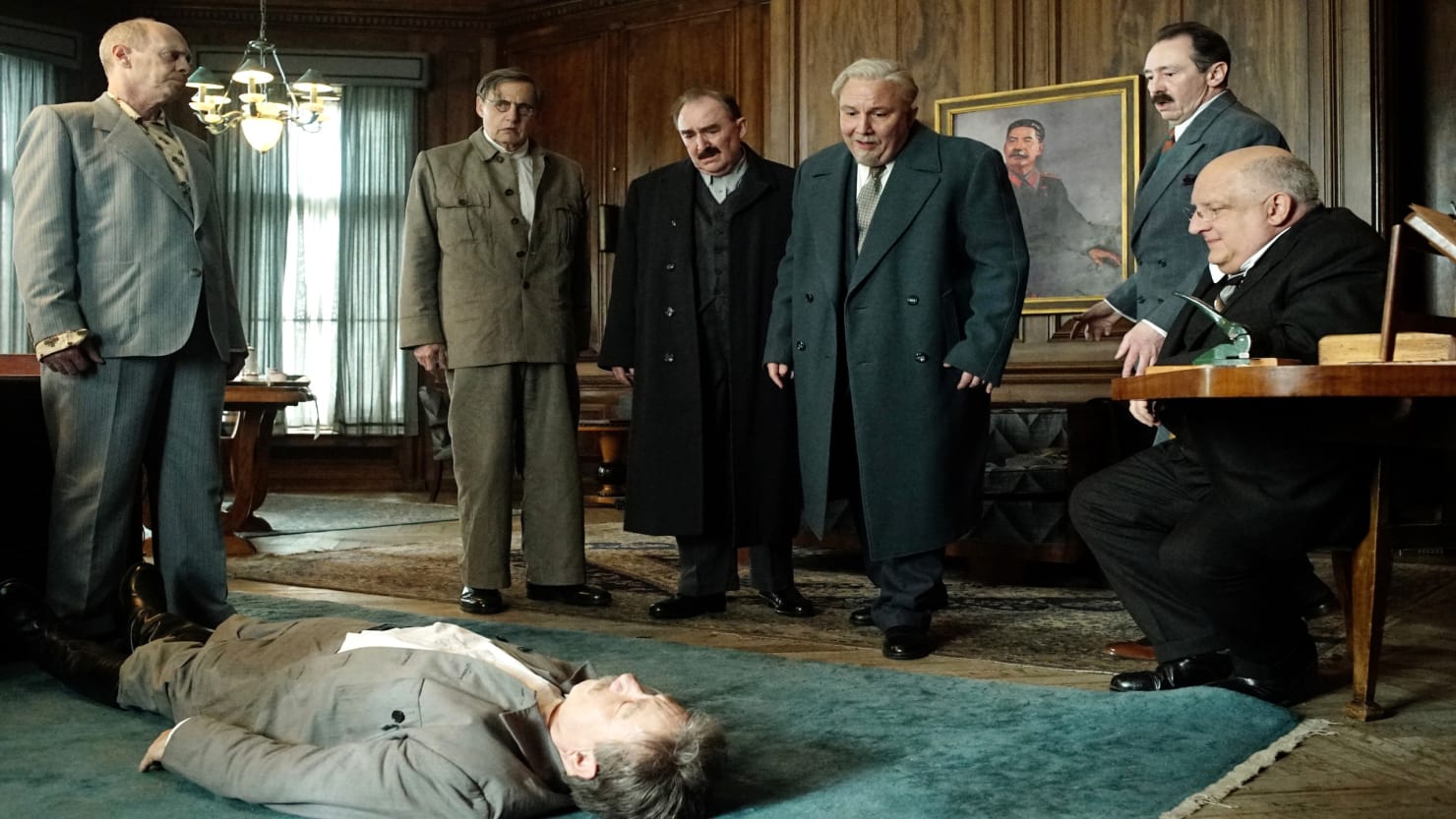
The Death of Stalin (2017)


Hilarious hi-jinks in Soviet Russia as the politburo struggle to deal with The Death of Stalin

Director: Armando Iannucci

Cast: Steve Buscemi (Nikita Khrushchev), Simon Russell Beale (Lavrenti Beria), Paddy Considine (Comrade Andreyev), Dermot Crowley (Lazar Kaganovich), Rupert Friend (Vasily Stalin), Jason Isaacs (Georgy Zhukov), Olga Kurylenko (Maria Yudina), Michael Palin (Vyacheslav Molotov), Andrea Riseborough (Svetlana Stalin), Jeffrey Tambor (Georgy Malenkov), Paul Whitehouse (Anastas Mikoyan), Paul Chahidi (Nikolai Bulganin), Adrian Mcloughlin (Joseph Stalin)

Armando Iannucci is a brilliant television satirist, who spring to wider fame with the success of foul mouthed political satire The Thick of It (re-imagined as Veep in the USA). His sweaty, sweary, fly-on-the-wall style, and characters who embody the panicked agitation of the nakedly ambitious but not-too-bright, was a perfect match for our modern world. Does the style work for the past? You betcha.

In Soviet Russia, a country near paralysed with terror, the ruthless dictator Stalin dies. This starts an immediate scramble to succeed him, with the leading candidates being weak-willed, vain and foolish deputy Malenkov (Jeffrey Tambor), vaguely principled but fiercely ambitious opportunist Khrushchev (Steve Buscemi) and sinisterly sadistic police chief Beria (Simon Russell Beale). Soviet Russia though is a pretty ruthless place for political manoeuvring, with retirement usually coming in the form of a single bullet to the back of the head.

First off the bat, The Death of Stalin is a blisteringly funny film, a real laugh-out loud riot. Why does it work so well? Because it understands that, hand-in-hand with the horror, Stalinist Russia was so completely barking mad that it lends itself completely to black comedy. Imagine The Thick of It, but with Malcolm Tucker executing rather than dismissing terrified ministers. Welcome to the madness. Events that seem crazy are pretty much true: although time has been telescoped, the struggle for the succession did more or less play out like this (with less swearing).

Every scene of this dark farce has a memorable, stand-out line or moment. The sweaty panic of these over-promoted yes-men is brilliantly reminiscent of the sort of panic you can imagine seeing in your office, with the exception that it probably isn’t literally life-and-death. Iannucci completely understands the wild improvisation of the fiercely ambitious in high-stress situations. If you think the ministers of The Thick of It were adrift when confronted with parliamentary enquiries, imagine how their counterparts struggle when faced with the threats of a bullet in the head.

Because that’s the great thing about this film – while still being hilariously foul-mouthed, it actually gives a pretty good idea of what it might have been like to live in Soviet Russia. The characters are constantly having to adjust to who is in favour and who isn’t, what it is permissible to think and say and what isn’t, who is “dead and who isn’t”. Iannucci totally understands human nature doesn’t change – those left alive around Stalin are just the sort of shallow, selfish, weaklings he’s been lampooning in The Thick of It. Most of the ordinary people we see are just desperate to keep their heads down – getting noticed for regular joes in this film is basically a death sentence. 

The opening sequence really gets this idea across. Paddy Considine is hilariously nervy and terrified as a radio producer ordered to send a recording of the live concert they’ve just broadcast (unrecorded) to Stalin. The frantic rush to reassemble the orchestra, fill the audience up again with people from the street, replace the conductor (the original having passed out in terror at the possibility that he may have been bugged questioning Stalin’s musical knowledge) is brilliantly funny – but works because the genuine expectation that doing the slightest thing wrong could lead to immediate execution is completely clear. Especially as the scene is intercut with Beria’s heavies rounding up innocent civilians to disappear into a gulag. 

Iannucci doesn’t dodge the ruthlessness. The film is punctured throughout by executions, often carried out with a black farcical desperation. It doesn’t shy away from the brutality of Beria, whose violence, sadism and pathological rape addiction we are constantly reminded of (and which are even more effectively sinister as he’s played by the cuddly Simon Russell Beale). In turn, a frantic Beria berates the rest of the politburo for their participation in the orgy of killings and show trials Stalin organised. We see people about to be taken to their deaths hurriedly offering terrified goodbyes to their loved ones. The final sequence of the film, as the battle for the succession reaches its end-game, tones down the jokes to give us an alarmingly realistic picture of a coup. Black farce ending in death: it’s as legitimate a picture as any of living in Stalinist Russia.

All of this is presented in a razor-sharp and witty script, and the cast who deliver it are brilliant. In a fantastic touch, the actors (with the exception of Isaacs) use their own accents, which only adds to the crazy fun. The acting is, across the board, fabulous. Russell Beale gives his greatest ever film performance as a grubby, ambitious, not-quite-as-smart-as-he-thinks Beria, with bonhomie only lightly hiding his chilling sadism and cruelty. Buscemi is equally brilliant as Khrushchev, who has the ego and self-delusion to convince himself that he is the only hope for a reformed USSR, while actually being a weaselly political player with naked ambition.

Around these two central players there is a gallery of supporting roles. Tambor gives a brilliant moral and intellectual shallowness to the hapless Malenkov. Friend is hysterical as Stalin’s drunken son, a deluded man-child barely tolerated by those around him. Palin’s cuddliness works perfectly as fanatical Stalinist Molotov. Whitehouse, Crowley and Chadihi are also excellent, while Riseborough does well with a thankless role as Stalin’s daughter. The film may be hijacked though by Isaacs as a swaggeringly blunt General Zhukov, re-imagined as a bombastic, plain spoken Yorkshireman, literally entering the film with a bang half-way through and bagging most of the best lines.

The Death of Stalin is not just a brilliantly hilarious comedy, it also feels like a film that completely understands both the terror and the confused ineptitude of dictatorship. In a world where it is death to question the supreme leader, is it any surprise that his underlings are all such clueless, ambitious idiots? Has anyone else understood the black comedy of dictatorship before? I’m not sure they have. You’ll laugh dozens and dozens of times in this film. And then you’ll remember at the end that when this shit happens, people die. This might be the best thing Iannucci has ever made.

The Last Samurai (2003)


Ken Watanabe and Tom Cruise. I’ll leave you to guess which one turns out to be The Last Samurai…

Director: Edward Zwick

Cast: Tom Cruise (Nathan Algren), Ken Watanabe (Moritsugo Katsumoto), Timothy Spall (Simon Graham), Tony Goldwyn (Colonel Bagley), Billy Connolly (Zebulon Gant), Hiroyuki Sanada (Ujio), Shin Koyamada (Nobutada), Masato Harada (Omura), Shichinosuke Nakamura (Emperor Meiji), Koyuki (Taka), Seizo Fukumoto (Silent Samurai)

Nathan Algren (Tom Cruise) is a legendary but traumatised veteran of the US’s war against the Native Americans. In 1877 he is recruited by the Japanese government to train their new modern army. Japan is a country split between the old and the new, with the samurai leading a revolt against modernisation. After the army is defeated by the samurai, Algren is taken captive. He quickly finds himself enamoured with Samurai culture, not least because of the inspiring charisma and nobility of the samurai leader Lord Katsumoto (Ken Watanabe).

The white man in the noble warrior culture: it’s a narrative structure that never fails. The Last Samurai fits very neatly into a familiar pattern: a story about an exotic non-Western culture, with a white Western character placed at the forefront. Of course the samurai culture is portrayed with a romantic longing, with the charms of its honourable life impossible to resist for our hero, all too familiar with the corruption of our culture. It’s been a pretty standard structure ever since Dances with Wolves. And of course, the white man is left standing as the only witness to the brave sacrifices of the noble-savages-who–weren’t-as-savage-as-we-first-thought.

What this structure does is minimise the entire point of the story. This is supposedly a story about a major shift in Japanese culture – from the old feudal world of the samurai to a more mechanised, modern society. In this cultural shift, some people got left behind, unable to let go of the old ways. It’s a tragedy for that old way of life, but this film muddies that water with its redemption structure for Algren. So by the end of the film, we may be looking at the destruction of the samurai culture and the deaths of most of the characters we’ve spent the film (sort of) getting to know – but hey at least the American lead has found peace and contentment.

So the nominal “last samurai” himself, Katsumoto, becomes a supporting character in his own film, a spirit animal to guide Algren towards a better understanding of himself and of the world. Katsumoto is presented romantically, a noble, kindly, principled man who mixes a love of poetry and flowers and a wry wit with a fanatical ruthlessness in battle. It’s the quintessential “noble savage” of Hollywood lore. All of which is not a criticism of Ken Watanabe, who is excellent – a guy whom you find yourself falling in love with, totally believable as the sort of man others would follow to the death. It’s a standard Hollywood cliché, albeit one presented with commitment.

Having said all that, the film does treat Japanese culture with an immense respect, even if it does so through a romantic lens. It’s also pretty unflinching at the more brutal side of the samurai culture – its expectations of suicide on failure, its pride and unwillingness to compromise. Of course, these are also later embraced as part of its nobility, but at least they are there. The film does also touch on some points of disagreement between East and West – Algren has nothing but contempt for Custer’s ego-driven suicidal last stand, while Katsumoto finds the story enchantingly inspired – but doesn’t allow these to get in the way of the romance. And by the end of the film, there is certainly no criticism for the suicidal charge Algren and Katsumoto lead the samurai into.

The modernising Japanese forces are given far less understanding. Of course, historically, if Japan wished to engage with the modern world and trade, it needed to undergo a certain level of progression from its feudal background. Historically this shift may have been too drastic – a rejection of the past rather than a development – but needless to say, here the modernising Japanese characters are uniformly presented as cowardly, selfish and greedy. Not to be outdone, it also introduces a racist American colonel, with a career of brutal campaigns against Native Americans, to serve as Algren’s nemesis (and to provide a small, audience-pleasing victory when he is killed off in the final battle).

I’m being very hard on The Last Samurai, which, within the confines of the Hollywood predictability it inhabits, is in fact a fairly decent film. Cruise is rather good as Algren, even if his drunken self-loathing is sometimes over played. He’s perhaps not completely convincing as a bitter ex-soldier, but he nails the depression and lost-soul nature of Algren. The Japanese actors are all excellent – there is barely a weak link in the cast, with Koyuki particularly soulful as the widow of a man killed by Algren.

The film is brilliantly shot by John Toll and looks wonderful, and even if it is slightly predictable and directed with a mundane lack of imagination (Edward Zwick is a competent but uninspired director and he creates an epic here in that image) it’s still fine and entertaining viewing. Cruise and especially Watanabe create heroes you care for. The final battle sequence does move, with its final triumph of mechanisation over blind courage. Zwick does have an eye for capturing the warmth and simplicity of the samurai village life, and he and screenwriter John Logan deserve a lot of credit for their research, respect and understanding of Japanese culture (the film was well received in Japan). The Last Samuraiis a clichéd and slightly flawed epic, but it has a nobility and honesty to it. With some excellent performances, it is more than entertaining enough.