The Cider House Rules (1999)


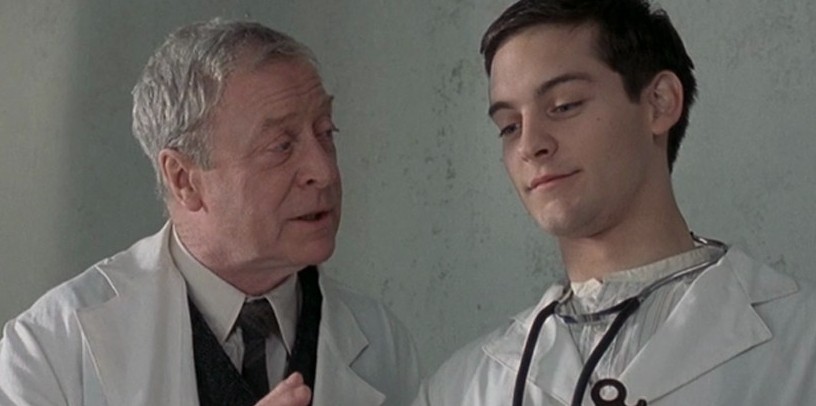
Michael Caine and Tobey Maguire deal with moral dilemmas in this handsome adaptation of John Irving’s Dickensian novel

Director: Lasse Hallström

Cast: Tobey Maguire (Homer Wells), Michael Caine (Dr. Wilbur Larch), Charlize Theron (Candy Kendall), Paul Rudd (Lt. Wally Worthington), Delroy Lindo (Arthur Rose), Erykah Badu (Rose Rose), Heavy D (Peaches), K. Todd Freeman (Muddy), Kieran Culkin (Buster), Jane Alexander (Nurse Edna), Kathy Baker (Nurse Angela), Kate Nelligan (Olive Worthington), J.K. Simmons (Ray Kendall) 

The Cider House Rules is the sort of well-constructed literary adaptation that Hollywood excels at producing: a well-crafted script (Irving adapted his own novel extremely well), juggling serious affairs without hectoring the audience, handsomely mounted, with a Dickensian style and a cast of heavyweight actors delivering performances that speak of their investment in the film.

In a Maine orphanage in the 1940s, Homer Wells (Tobey Maguire) is raised by Dr Wilbur Larch (Michael Caine) as a surrogate son. Larch is a domineering autocrat with a passionate love for his charges, whose humanitarian instincts lead him to perform illegal abortions. Troubled by this – and feeling pressured into succeeding Larch’s as director – Homer leaves with a young woman (Charlize Theron) and her fiancée (Paul Rudd) after she visits for an abortion. Working as an apple picker in their orchard, under Mr Rose (Delroy Lindo), Homer learns important lessons above love and duty.

There are many similar films that feel like dull awards-bait, and the fact that this one avoids that is a major point in its favour. It’s very easy with material like this – cute orphans and tear-jerking speeches – to feel Cider House is a manipulative film (and I guess in a way it is) but it’s put together with such commitment and sincerity I found it genuinely moving. Hallström’s warm and beautifully paced direction creates a marvellous coming-of-age tale with characters whose flaws can be as deep as their warmth is vibrant.

The film also manages to move beyond its ‘coming-of-age’ roots with intelligent (but not too heavy-handed) mulling on the nature of “rules” – both those imposed on us and those we impose on others. Dr Larch (a magnetic performance by Oscar-winner Michael Caine) is a maverick, disregarding the abortion laws as he believes it is better he does abortions rather than someone untrained; he is also perfectly willing to impose his own rules on Homer as testaments to be followed without question. Similarly the “Cider House Rules” written on the wall of the apple workers’ lodgings are rejected outright by the working gang for their own unspoken code of conduct, no more effective than the system it replaces. All the characters are forced to draft their own rules (or principles) they can live with, matching their circumstances and actions.

The film also looks gently at the conflict between our desires and our duties, with Homer and Candy both yearning for freedom from their natural inclinations to have something to serve. This is presented as a struggle without a natural “right or wrong”, even if the apple orchard is a loose Garden of Eden, into which evil is admitted with tragic (and life-changing) consequences. A small criticism would be that the charismatic warmth of Caine’s performance and the family atmosphere of the orphanage are so endearing that it does unbalance the dilemma Homer eventually faces – instead of the audience feeling as torn as Homer about whether he should stay or return, most audience members I think would want him to return to the orphanage forthwith!

Tobey Maguire is so perfectly cast as the naïve in some ways, wordly wise in others, old-boy-young-man that he effectively reprised Homer Wells as Peter Parker a few years later. His sweet face –uncomplicated innocence and charm are in every twitch of his smile – carries the film, and his easy-going desire for a simple life makes perfect sense of the character’s rebellion against Larch’s benevolent dictation. Equally good for me though is Theron as Candy. She is a wonderfully expressive performer: midway through the film she is caught off-guard by an overlong hug from Homer, and a series of conflicted emotions from shock, to guilt, to attraction play across her face.

There is hardly a weak performance in the film, with Hallström drawing excellent work from the young orphans. Amongst the sprawling, Dickensian feeling cast, Caine is marvellous as the part dictator, part humanitarian Larch making a larger-than-life character feel real and grounded. Lindo captures the pride mixed with arrogance of Mr Rose. There are plenty of other excellent performances, not least from Baker and Alexander as two contrasting nurses in the orphanage.

I almost feel slightly guilty for the impact Cider House Rules had on me. In many ways it’s exactly the sort of safe, middle-of-the-road “serious” drama that seems designed to attract the notice of Oscar voters. But it’s told with a great deal of skill and dedication, and delivers so many emotional moments with warmth and feeling, I found myself genuinely moved by it. In fact I felt a bit teary at least twice. This is closely linked to some excellent performances – and a wonderful swelling musical score by Rachel Portman – but despite being the sort of middle brow Hollywood film it’s fashionable (and easy) to attack, I thought this was engaging, moving and thought provoking from start to finish.
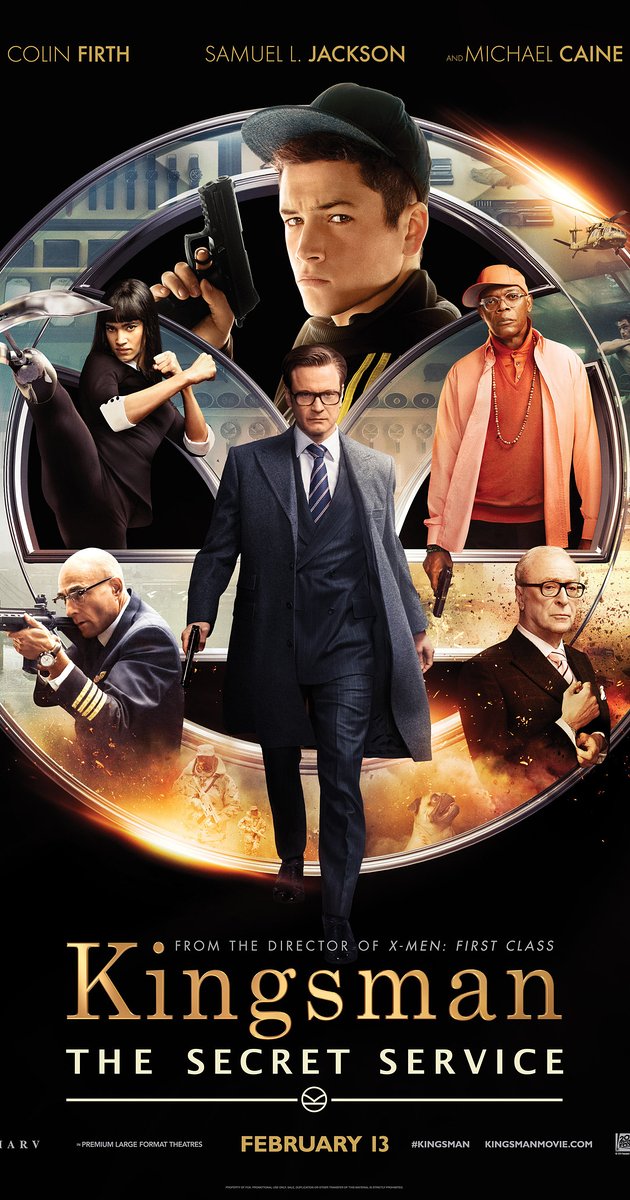
Kingsman: The Secret Service (2014)


Colin Firth means business in super-violent Bond spoof Kingsman

Director: Matthew Vaughan

Cast: Colin Firth (Harry Hart/Galahad), Samuel L. Jackson (Richmond Valentine), Mark Strong (Merlin), Taron Egerton (Gary “Eggsy” Unwin), Michael Caine (Chester King/Arthur), Sophie Cookson (Roxy Morton), Sofia Boutella (Gazelle), Samantha Womack (Michelle Unwin), Geoff Bell (Dean), Edward Holcroft (Charlie Heskith), Mark Hamill (James Arnold), Jack Davenport (Lancelot)

Okay Kingsmen. I’ll hit a beat later on which explores a major problem I had with this movie, but let’s talk about the rest of the film first shall we?

Firstly, Kingsmen is for the most part rather good fun (even if it is too long). It’s an excitable, teenage-focused riff on James Bond films that throws in ultra-violence and foul language alongside the overblown villains, insane plots and super-spy skills (all themselves amped up to 11). “Eggsy” (Taron Egerton) is a drifting, working-class young man from a council estate who is recruited as a candidate for super-secretive espionage firm “The Kingsmen” by Harry Hart (Colin Firth). Bucking against the system, Eggsy must prove himself against the privileged, public-school types he is competing against for a place. Meanwhile, Hart investigates sinister plans from tech billionaire Richmond Valentine (Samuel L. Jackson), aiming at reshaping the world to fit his own insane ideas.

Kingsmen basically has a teenage sensibility, with a “too cool for school” love for swearing and extreme (if comic book) violence. It deliberately sets itself out as a grimy, modernish, street version of Roger Moore’s Bond movies (at one point, Hart and Valentine even discuss “old spy films” – presumably copyright prevented a namecheck for Britain’s finest). The plot (and the cascade of exploding heads, satellites, sinister cross world signals, world leaders in danger etc.) all have the air of the sort of stupidity you found in Moonraker or The Spy Who Loved Me: the joke being that these fantastical elements have been mixed in with a sweary working-class hero and graphic violence. It has a pop-culture knowingness about it which it just (by the skin of its teeth) manages to prevent becoming too smug or self-satisfied.

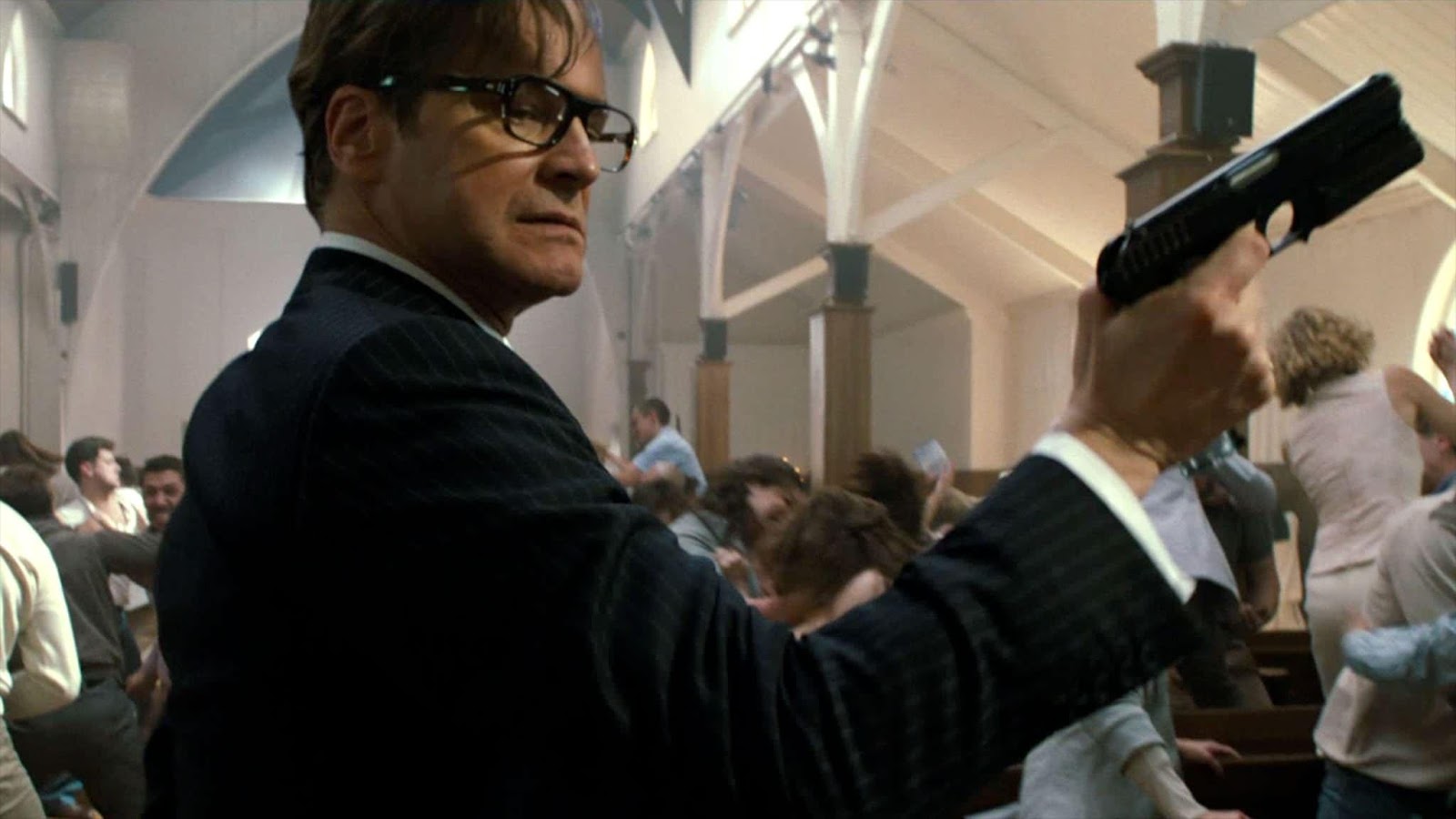
This is partly because it is so well made. The violence and fighting are rather well done in their overblown, excessive excitement. Vaughan shoots it with a loving camera, revelling in the dynamism and speed of his agents (and their ruthless efficiency) in a way that’s very hard not to find entertaining. Some interesting music choices also add an ironic commentary to the killing. Vaughan’s also to be commended for spotting the potential for ass-kicking super-spy in Colin Firth (even if Firth himself probably plays the whole film marginally too seriously). The film’s main set piece a jaw-droppingly violent but slickly made fight sequence in a church is probably the only thing it will be remembered for in ten years time – but is certainly worth remembering. The fighting is fun to watch – it’s a shame it’s not married with a wittier script, as if the wit of the visuals couldn’t be carried across to the dialogue in case we got bored.

Vaughan’s script also wants to fight the corner of the working class – although saying that, since every other working class character in the film except for Eggsy and his Mum are criminals, wannabe gangsters or thugs, it could just as well be fighting the corner of the “deserving poor”. Some rather obvious notes are hit during Eggsy’s training as he clashes with the chinless wonders that populate the Kingsmen candidates. It would perhaps work better if Eggsy himself was a more engaging and sympathetic lead – but as it is, the parts of the film without Firth (and Strong as a Scottish, grumpy Q) do drag a bit, which is unfortunate when your film is already over two hours long. It’s hardly Saturday Night and Sunday Morning but it pushes through its Pygmalion-plot line reasonably well.

For the most part, Kingsmen is stupid, teenage fun. It takes place in a spoof James Bond world of huge bases in mountains and plans to destroy the world that can only be foiled by dynamic acrobatic fighting. If you were a male teenager watching this it would probably be your favourite film ever. It’s probably a little too knowing and isn’t really as charming as it really needs to be to work really well, but it’s entertaining enough. I was happy to leave it like that. And then this happens quite late on in the film:

Now it’s important to remember when watching this, that the video contains all the interactions in the movie between these two characters. Now I suppose you could just say it’s a smutty joke that, like the rest of the movie, takes the elements of a Bond movie (“Keeping the British end up sir!”) and amps them up to 11. But it’s cruder and (in my opinion) too clumsy and sexist for that. Not only that, but it’s the sort of exploitative, sexualised rubbish that makes you suddenly address the entire film’s attitude towards women.

The film has five female speaking roles (at a push). Each of these roles fills a specific stereotyped, trope-based function. One is a victim in an abusive relationship (the mother). Another is a standard “hot action chick” (the villain’s henchperson). Another exists solely to die early on. The character in the clip only exists to provide the hero with anal sex as a reward. None of these characters serve any purpose in themselves, other than how they relate to the male characters of the movie. All of them to varying degrees require protection from a man, or exist purely to service his needs. The cliché of a physically-strong-but-still-really-hot woman being created in place of an actual character is so tired, I’ll just leave it here as I can’t be bothered to type up why this isn’t a good balance.

That leaves Roxy, Eggsy’s fellow candidate. On paper, Roxy is a strong female role – only of course she isn’t. There is the standard hand wave that she is “the best in the class” during training – but she’s also established as the only candidate to have a genuine fear (of heights) that she has to be coaxed through by the hero. Her role in the conclusion is conquering this phobia again. The subtle implication is that Eggsy to some degree sacrifices coming top of the class himself to support Roxy.

I’m sure this is all po-faced political correctness and I’m being the sort of humourless prig sitting among the “20% of offended people” Matthew Vaughn said should basically get a sense of humour. But I mean, come on. The last shot of the film is a woman’s naked bottom rearing towards the camera. And yes I know, I know, I know it’s all riffing on Bond films but at least there the heroine was a presence throughout the film. I actually would have much less of a problem if these two characters had spent at least some time throughout the film together – but jumping straight to anal sex? It’s too much. It also seems to be fighting battles of the 1960s. Overt class consciousness from the rich is terrible – but women? Nope they’re just there for the sexier times.

Leaving everything else aside, it’s not that funny a joke. It’s such a terrible joke it leaves a bad taste in the mouth. So what’s otherwise a decent, fun film chooses to end with its lead character invited to perform anal sex by a complete stranger. And how a film ends tells us something about the film we’ve just watched – and for Kingsmen it’s not good.

Carol (2015)


Rooney Mara and Cate Blanchett in a moving dance of love and romance

Director: Todd Haynes

Cast: Cate Blanchett (Carol Aird), Rooney Mara (Therese Belivet), Sarah Paulson (Abby Gerhard), Kyle Chandler (Harge Aird), Jake Lacy (Richard Semco), John Magaro (Dannie McElroy), Cory Michael Smith (Tommy Tucker), Carrie Brownstein (Genevieve Cantrell)

It’s the way of things that gay love-stories in Hollywood are invariably relegated to a sub plot – often one that has a certain tragical element to it. This is not the case here in Todd Haynes’ superlative romance, which places a lesbian love story at its centre, sensitively building the characters and romantic journey between them.

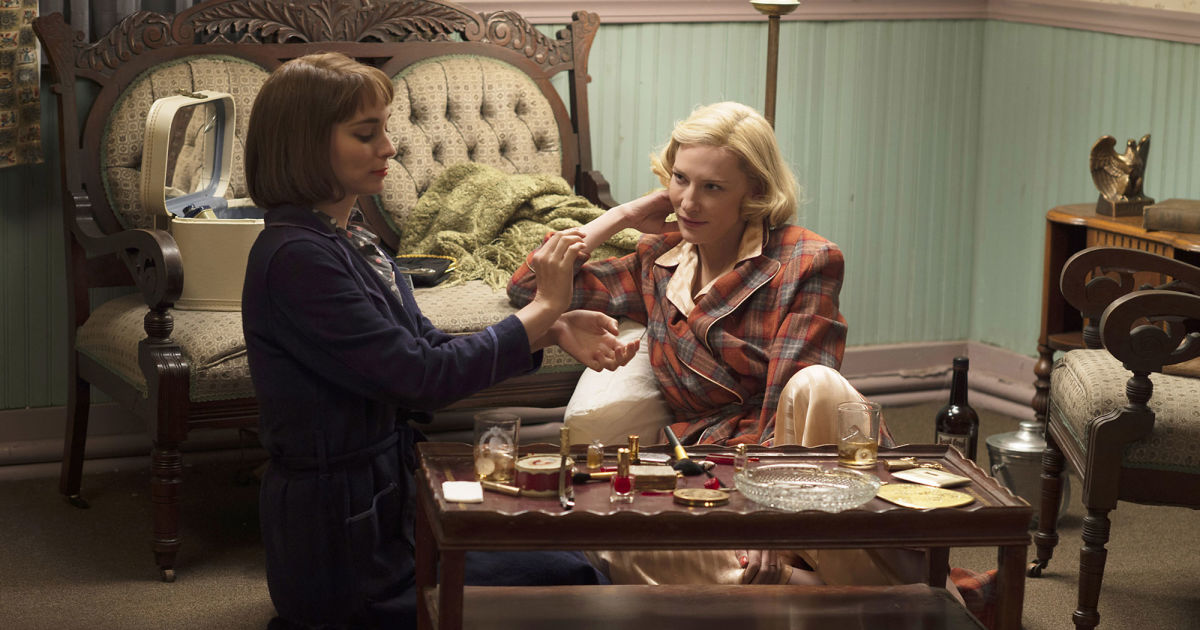
Therese Belivet (Rooney Mara) is a lost department store worker, drifting through life. One Christmas, working on the toy stall, she recommends a toy for the daughter of socialite Carol Aird (Cate Blanchett). A spark of attraction between the two is immediately apparent, and Carol invites Therese first to dinner, then to spend an evening together and finally a Christmas road trip across America, during which their attraction grows and deepens into a flourishing love.

This wonderful love story, almost a twist on Brief Encounter, is a brilliantly done, extremely engrossing and moving romantic film, a film that manages the rare feat in Hollywood movies of not making a homosexual relationship something that requires narrative punishment. Haynes’ luscious 1950s filming style, stressing the aesthetics and manners of the era, combines brilliantly with a subtly murky photography style that darkens and lightens at different points to create an immersive fairy-tale quality. It’s a perfect tapestry for a deeply caring and sensitive story, anchored by a superb script and wonderful performances.

It has now got to the point where it is axiomatic to say Cate Blanchett gives a wonderful performance – she is, after all, one of the best actresses in the world right now. She is quite simply perfectly cast as Carol, her features having the flexibility to appear both cold and distant and soft and caring, a switch she is able to make with the slightest of gestures. Her patrician manner is deconstructed brilliantly. Her character is initially established as an almost predatory figure, a determined and manipulative woman; it’s only over the course of the film that this persona is slowly taken apart, revealing waves of emotion and pain from years of denial, loneliness and a sense of being trapped. Each scene slowly prompts us to reassess and reevaluate her character, and Blanchett handles this journey with astounding skill, revealing a hinterland of pained, self-doubting isolation and desperation to experience real love behind her cool and confident exterior. It’s a performance of phenomenal skill and emotional force.

It’s matched brilliantly by Rooney Mara as the object of Carol’s affections – and it must be said at the very least a co-lead of the film. Therese is a woman sleepwalking through life when we first see her, trotting through the motions of her interactions with others – a clear void in her, waiting for something to happen to her, but clearly with no idea of what that might be. Similar to Blanchett, Mara’s gentle and sensitive exterior deepens over the course of the film as she becomes more assertive to those around her, more of a determiner of what she wants from her own life. Mara’s soulful eyes and gentle face make her a perfect audience surrogate, creating a character whose feelings, doubts, anxieties and growing confidence we become immersed in. The film is in many ways her story, and Mara’s expressive gentleness is vital to our investment in the story.

The road trip at the heart of the movie’s plot is a charming, lyrical dance between two people juggling an unspoken attraction: one of them on the edge of all times of saying it, the other drawn towards an attraction she is still trying to understand and express. Haynes perfectly captures the small playful moments of first love that pepper these scenes, the camera intimately placed to make us part of this growing partnership of equal minds and hearts. Slowly they grow physically closer – both in their ease of body language, and through their slow progress towards sharing hotel rooms and finally (in an achingly romantic scene) a bed.

It’s a film about romantic longing between two people, the instant attraction. Therese’s first glance of Carol is across a crowded room, with the camera panning past Carol in a POV shot and then returning to her, before cutting back to Therese, now seemingly alive with an attraction she doesn’t quite understand. The Brief Encounter structure of the film is established with the film opening with Carol and Therese’s (possible) last meeting in a dinner. We see their interrupted conversation leading to Carol’s departure, leaving after touching a hand on Therese’s shoulder – the camera lingering on Therese’s back and her unseen reaction (and contrasting it with a meaningless similar touch from a male friend). When this scene is replayed later, we see it more from Carol’s perspective – and her pulsating emotion and longing.

The reason these scenes work so well is that the film continually shows Carol and Therese struggling to hide their growing attraction in plain sight, to maintain the balance between expressing their feeling and keeping a plausible deniability. This feeling grows because the film has the patience to take its time with building this relationship– and because we are aware of Therese’s feelings earlier than she is.

The film’s sensitivity extends to the sympathy it feels for all its characters. As useless as many of the men in the story are, they are confused, distressed or lonely rather than malicious or cruel. Carol’s husband Harge could have been a bullying monster, but he actually comes across as a frustrated and deeply hurt man, who understands on some level his wife’s sexual preferences, but is unable to fully comprehend the implications of this. On paper it’s a thankless part, but Kyle Chandler is superb, his Mad Men features perfectly suited to the role of floundering masculine figure. Many of Therese’s would-be suitors are similarly drawn reasonably sympathetically, however laddy, over-keen or dull they may be – Haynes’ film has an understanding that they are products of their time. In a lovely scene Therese talks about homosexuality with one of her male suitors, who can barely countenance its existence, as if she was talking about the man in the moon.

Haynes’s mastery of the aesthetics of the material is present throughout. Haynes increases the feelings of being trapped or surrounded by a number of shots through windows, using mirrors, from the other side of doors – divides that stress the characters’ sense of being trapped and enclosed in their lives. He also carries across just a small teasing touch of the melodrama of 1950s films – though I would argue this is no way a melodramatic film – with a gun making a deliberately misleading appearance, and a few beats that briefly suggest the film is heading in an entirely different direction.

Carol is a wonderful, soulful and entrancing film. It’s about two people showing each other hidden depths about themselves, uncovering truths and building each other’s capacity for love and ability to admit and understand their feelings. It makes this a tender and endearing film, with two characters whose fates we become completely involved with. It also avoids passing any form of judgement over any of the characters. Filled with subtle moments, open to interpretations (even their first meeting is full of code, from the recommendation of a non-gender-conforming train set to Carol’s gloves left invitingly on the counter) that constantly ask us to review how open we feel the characters are being with themselves and others. With brilliant performances by Mara and Blanchett (backed by Chandler and a very sensitive performance from Sarah Paulson as Carol’s former lover), this wonderful film is both profoundly moving and very uplifting.

U-571 (2000)


Matthew McConaughey and Harvey Keitel crack the Engima Code. With lots of guns. And no maths at all.

Director: Jonathan Mostow

Cast: Matthew McConaughey (Lt. Andrew Tyler), Bill Paxton (Lt. Com. Mike Dahlgren), Harvey Keitel (Chief Henry Klough), Jon Bon Jovi (Lt. Peter Emmett), David Keith (Major Matthew Coonan), Jake Weber (Lt. Michael Hirsch), Jack Noseworth (Bill Wentz), Erik Palladino (Anthony Mazzola), Thomas Kretschmann (Capt. Gunther Wassner)


On its release, U-571 was something of a sensational scandal– and in fact gained far more attention than a fairly standard submarine movie probably deserved. Why is that? Because it epitomised the perception in this country of American films taking war achievements from us poor Brits and giving them to Yankee heroes. Was this annoying for a British people all to used (it seemed) to having their war contribution lost in the crush of American films? You betcha.

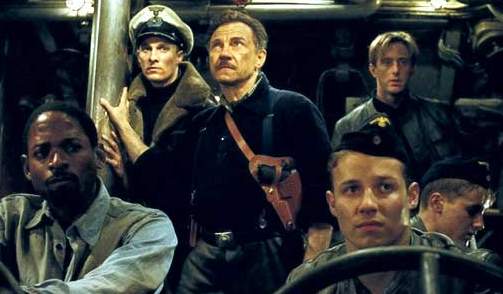
During World War 2, Lt. Andrew Tyler (Matthew McConaughey) is sent to lead a team of American sailors to capture an Enigma machine from a stranded German sub. The Enigma machine, and the inability of the Allies to break it, is losing America (whose involvement in the war has been moved forward for the purposes of this story) the war after all. However, the mission swiftly goes wrong and Tyler is left commanding a rogue bunch of terrified sailors on the captured German submarine, trying to get the Engima machine back to the US Navy before its loss is discovered. All that is missing is Alan Turing reinvented as a hard-boiled Brooklyner totting a machine gun and shouting “I gotta Bombe for ya, ya Kraut Bastards!”.

The movie itself is not too bad, to be honest. although nothing special. The expected clichés of the submarine are all there: the fears about water pressure, claustrophobia, a sequence where the boat sinks inexorably towards the bottom of the ocean, torpedoes in the water, depth charges, “right full rudder”, sonar pings, water gushing from pipes, someone having to undertake a vital repair underwater with limited air supply etc etc. – it’s all been done before, from Enemy Below to Crimson Tide. Saying that, Jonathan Mostow knows how to cut the heck out of a movie and as a result this charges forward with a relentless energy which works rather well and makes this a suitably tense film. Special mention also goes to the sound editing, which won an Oscar for its brilliant creation of the aural impact of everything from depth charges to torpedoes scraping hulls.

Of course the story itself is nothing unique: even the personal plot lines are largely recycled from other movies: will McConaughey’s young XO be placed in a situation where he has to prove his chops as a commander? You bet he will! Keitel is an Old Sea Dog, Paxton is a fatherly Captain, Kretschmann is a cold professional German – but the actors play these well shuffled stock characters with an admirable level of commitment. The film has a great “Dirty Dozen” vibe to it, and does manage to throw in a couple of surprises about character fates. For those of us who love the predictable trotted out with po-faced commitment and energy, it’s hard not to be entertained.

There are some well-done (if unsurprising) scenes as Tyler struggles with his authority over men who don’t have trust in him and are terrified of getting killed. It’s interesting how much the film asks us to invest in essentially willing Tyler (a decent performance by McConaughey) to have the guts to send a man to his death for the good of the ship. Centring this moral dilemma as a crucial qualification for leadership at least means the film does take a honest look at the complexities of command to counter the boys’-own heroics elsewhere. Saying that, the almost pathological mutinous rumblings of Seaman Mazzola against an officer we are told early in the film is “popular with the men” does seem rather sudden – possibly because making Tyler a distant stick-in-the-mud (which he would need to be for the level of rejection from the crew to really work) rather than a regular Joe might have made us less likely to root for him at the start.

Of course all of this seems pretty inconsequential next to the real issue of the film, which is its historical accuracy (or complete lack thereof). To be honest, the fury against the film’s appropriation of British Naval achievements is rather harder to sustain (a) nearly 20 years on and (b) when you see what an agenda-free, entertainment-only movie it is. Perhaps the real insult was that the crew of this mission contained actors like Jon Bon Jovi and the guy who played ER’s Dr Dave. But that doesn’t change the fact that this stuff didn’t happen, and the elements of the story that did certainly didn’t happen like this and were done by completely different people. It’s hard to shake the feeling, even while you enjoy the film, that it gives a false glory to the wrong people. If even a few people came out of it thinking the Americans cracked Engima (or that Engima was cracked like this rather than primarily by maths) it’s certainly a few people too many. 

As a side note, while reading up about the film before this review, I found that one of the screenwriters, David Ayer (now a purveyor of average WW2 films himself with Fury), had this to say about the controversy of the film’s re-writing of history: “[I do] not feel good…it was a distortion, a mercenary decision to create this parallel history in order to drive the movie for an American audience…Both my grandparents were officers in World War Two, and I would be personally offended if somebody distorted their achievements…I understand how important that event is to the UK, and I won’t do it again.”

Dr. No (1962)


Bond sets out his stall in series opener Dr No.

Director: Terence Young

Cast:  Sean Connery (James Bond), Ursula Andress (Honey Ryder), Joseph Wiseman (Dr. No), Jack Lord (Felix Leiter), Bernard Lee (M), Anthony Dawson (Professor Dent), John Kitzmiller (Quarrel), Zena Marshall (Miss Taro), Eunice Grayson (Sylvia Trench), Lois Maxwell (Miss Moneypenny)

It’s hard to believe now, but there was a time when the launch of James Bond novel was nothing more than a little B-picture event – rather than the major cultural landmark it has now become. But James Bond started off as a slightly higher budget B-movie of a character largely unknown to those who don’t read spy fiction.

After the murder of a British agent in Jamaica, James Bond (Sean Connery) is sent to investigate. Arriving in Jamaica, Bond quickly finds himself the target of a series of increasingly outlandish attempts to take his life: from a fake embassy driver to a series of assassins pretending to be blind and a sinister geology professor. Eventually, Bond detects the hands (forgive the pun) of Dr No (Joseph Wiseman), who is experimenting with radioactivity on a nearby island. 

What is striking is how much of the Bond-movie formula is in place here right from the start – or rather, how much the style and tone established here fitted so naturally with the source material and character, meaning it would be used repeatedly throughout the rest of the series. Most striking of course are the music cues, all perfect and immediately cool. Is it any wonder that no-one has felt the need to change the James Bond Theme since? But it’s not just that: Bond’s flirtation with Moneypenny and cheeky-protégé exchanges with M? Check. Exotic locales, car chases, shoot ups and wise cracks over dead bodies? Check. The villain being a suavely charming wannabe upper-class type with a creepy deformity, a vague plan and a ridiculously overblown layer? Check. Wave after wave of heavies attempting to bump Bond off with overblown schemes? Check. The villain monologing rather than killing Bond? Check. It’s all there – the formula was in place, and would remain for the next 60 years.

Of course, it probably wouldn’t have worked without getting the casting of Bond himself right – which they certainly did with Connery. Not exactly a conventional choice for a character Fleming imagined as a mixture of Noel Coward, Cary Grant, David Niven and Christopher Lee, Connery brought to it the earthy violence, the roughness and sense of danger that made you believe he could not only merrily kill a room full of goons, but that he would hardly break a sweat doing it. The film’s writers downplayed the self-doubt, anxiety and fear that Fleming’s book-Bond often displayed, repositioning the character as a serenely cool and charismatic superspy, with Connery granting him an additional charm and sex appeal all rooted in his charisma as a performer. He’s magnetic here – whippet thin, dryly deadpan and ruthlessly violent. He established completely the template the character would follow through the next five actors.

What’s interesting watching this film is how close it is to being a one-man movie cum character study. Bond’s principle love interest, Honey Ryder, doesn’t appear until half way through the film and Dr No himself doesn’t pop up until the final act. Felix Leiter has just a few bare scenes. Instead, the focus is front and centre on Bond himself, and Connery’s perfect mix of suave sophisticate and brutal remorseless brawler. The character’s comfort with sex and violence (often close together) is in every scene – Bond sleeps with at least four women, flirts with a couple more, ruthlessly offs a wave of heavies sent by No, and cold bloodedly guns down defenceless doofus Professor Dent. Perhaps fitting for a film that promoted itself as “the FIRST James Bond film”, it wants us to understand (and above all, enjoy the company of) this guy, with the hope that we will sign up for multiple movies to come (which of course we did).

As a standalone film, Doctor No makes a pretty good fist of things. Its plot avoids a clumsy “Bond: Origins” story, instead throwing us straight into events (despite being the first Bond film, it could basically be watched in any order with Connery’s other Bonds – only his first discovery of SPECTRE has any bearing on the timeline). Its plot is certainly a lot more stodgy and wordy than later films would be – but the balance is Bond actually gets to do quite a bit of investigating. The pace is kept up, even if (as noted) most of the film’s principle characters don’t appear until late in the film.

The rather low budget is clear in the rather rudimentary car chases (back screen projection ahoy!) and fights, which rely heavily on sped-up film to get their impact across. I suspect most of the money went on the glamourous Jamaican location, but that does look fantastic under Ted Moore’s photography. 

The film does though have a certain mastery in its direction, not least in the introduction of its leading characters. The introduction of Bond himself (held off for the best part of 10 minutes) is a lovely example: a camera tracks into a casino, settling on a table before craning up to reveal the lady Bond is playing against. A medium shot of the same table: Bond’s hands can be seen but nothing else. The camera focuses on the lady again and tracks back over Bond’s shoulders – we see the outline of his neck. Several shots of his hands follow flipping over cards – finally he speaks (“I admire your courage Miss uh –“ being the character’s immortal first onscreen words). She retorts and then the camera finally jump cuts to Connery nonchantly lighting a cigarette with practised cool – while the Bond theme gently underplays, swelling throughout the rest of the scene. From here now we cut to Connery’s face every few seconds. It’s a masterful building of tension and aura. Similar skill is also of course shown in the later entrance of Ursula Andress’ Honey Ryder.

Dr No is an extremely enjoyable B-movie, which successfully sets up the tropes that would play out so well in future Bond movies. Ken Adams’ imposing set design for Dr No’s secret base set the tone for the sort of futuristic locations Bond would find himself in, and would only grow in imagination as the film series expanded. It’s not just the visuals – the tone of the series is pretty much there straight away, and if the plot is not always the most gripping and the action not always the most compelling, that would only develop as the series got more and more money pumped its way. Indeed the follow-up, From Russia with Love, would build perfectly on many of the concepts and ideas introduced in this film. Dr No is not in the top 10 best Bond films, but it continues to reward and entertain – and for starting such a huge ball rolling so confidently, it deserves plenty of praise.

Dredd (2012)


Dredd. He is THE LAW!

Director: Pete Travis

Cast: Karl Urban (Judge Dredd), Olivia Thirlby (Judge Cassandra Anderson), Lena Headey (Ma-Ma), Wood Harris (Kay), Domhnall Gleeson (Computer expert), Warrick Grier (Caleb), Deobia Oparei (TJ), Rakia Ayole (Chief Judge)

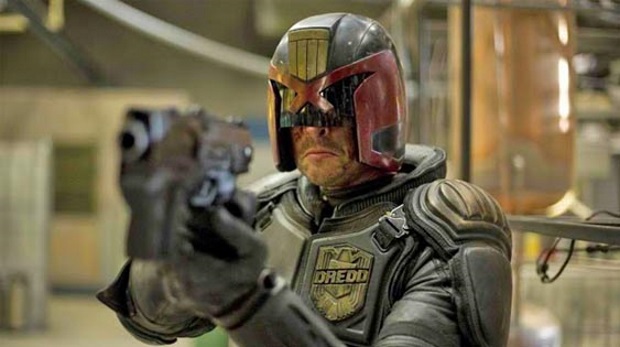
Dredd is the second attempt to bring the brutal post-apocalyptic lawman to the screen, after a disastrous 1990s version starring Sylvester Stallone. Famously, that film gained the undying enmity of the comic book fans by having Dredd remove his signature helmet (and show his face) at every opportunity. Here, Karl Urban dutifully keeps the helmet on at all times.

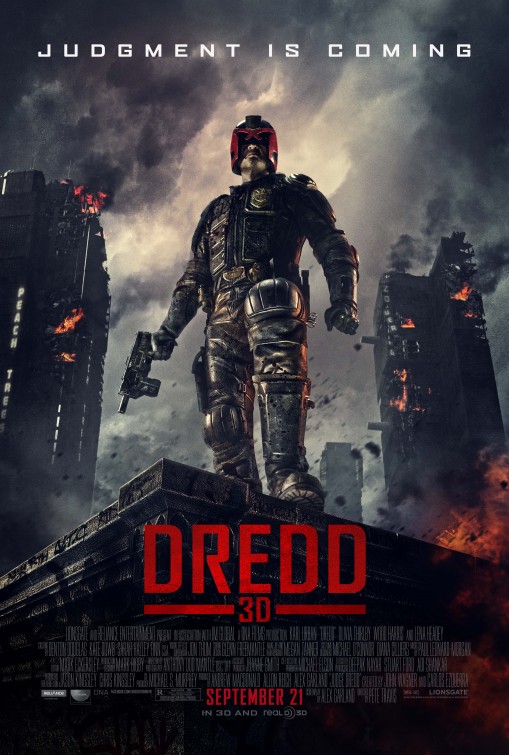
In a future USA, Mega-City One is a sprawling metropolis of 800 million residents and 17,000 crimes a day. To combat crimes, the Judges are a police force with the powers to sentence and execute criminals on the spot. Judge Dredd (Karl Urban) is the most feared and experienced Judge on their books, a man of rigid rules who sees the world in black and white. Given a new psychic recruit, Anderson (Olivia Thirlby), Dredd makes an arrest at Peach Trees, a 200-storey slum building ruled by brutal crime lord Ma-Ma (Lena Headey). After Dredd and Anderson arrest one of Ma-Ma’s key lieutenants, she locks down the building, isolates the Judges, and demands their execution by the residents.

Dredd is a super violent but entertaining siege movie, with the twist being that the siege involves the heroes being locked in with their opponents – the heroes trying first to get out, then to stop their enemies getting in. Now I know very little at all about the source material, but, unlike the Stallone film, this film succeeds as a Dredd movie by simply treating its events as a “regular episode” rather than a ground-shifting, world-at-stake mega-movie. As such, it can focus on the events that are relevant to the immediate, simple story and loosely sketch out the other elements of the future (enough to keep us interested and to understand the context). It focuses on a fast-paced, exciting story and enough character detail and interest to keep you involved. 

The film is snappily directed by Travis with a decent, stripped down script from Alex Garland, and has a good performance at its centre from Karl Urban, who has the collaborative lack of ego to make Dredd, rather than his own performance, the centre of the story, . Urban also manages to make a character who is an imposing and lethal killing machine into someone we also respect for his adherence to a firm moral code. And he adds enough texture to the part to suggest a certain softening in his attitudes towards Anderson (a very effective Thrilby) across the course of the movie. Headey also makes a great enemy, a sort of Cersei Lannister on heroin and acid, a totally remorseless megalomanic.

The film packs a great deal of punch and its design is very impressive. The Peach Trees setting is an imposing vision of a crap-sack future, while also having a very clear navigation for the deadly game of cat-and-mouse Dredd and Anderson play throughout the film. The film doesn’t have much in the way of wit to it – the source material is apparently more satirical, not something that comes across here to be honest – but it does understand the rigidity and certainty of its lead character and it doesn’t flinch from the dark consequences of its hero’s actions. 

I’m no expert on the original but this is rather a lot of simple, unchallenging fun that manages to swiftly establish characters – through neat writing and good acting – that make sense, are complex and feel very true to the tone of the source material. It’s violent and bloody, and yes it has many beats in it that are slightly predictable or twists on many similar “one man against an army” movies we’ve seen, but it has more than enough merit to be worth your time.

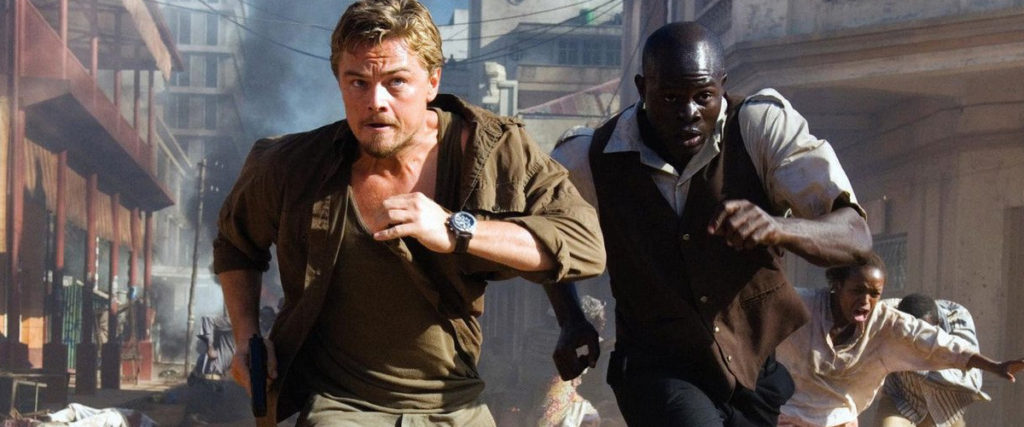
Blood Diamond (2006)


Leonardo DiCaprio and Djimon Hounsou excel in this self important Hollywood message film

Director: Edward Zwick

Cast: Leonardo DiCaprio (Danny Archer), Djimon Hounsou (Solomon Vandy), Jennifer Connelly (Maddy Bowen), Arnold Vosloo (Colonel Coetzee), Michael Sheen (Rupert Simmons), David Harewood (Captain Poison), Basil Wallace (Benjamin Kapanay), Jimi Mistry (Nabil), Kagiso Kuypers (Dia Vandy)

Hollywood films set in Africa often have a difficult conundrum – they want to tell a story about that often troubled continent, but struggle to do so without feeling impossibly worthy – and often need to filter the story through the experience of white westerners in the region. Blood Diamond tries to avoid these traps very hard – but largely ends up falling into them.

In 1999, Sierra Leone is ravaged by Civil War. Fisherman Solomon Vandy’s (Djimon Hounsou) village is attacked by rebels, led by Captain Poison (David Harewood), and his son is taken as a child soldier. Captured Vandy is forced to work at the diamond mines, where he discovers a priceless “Blood Diamond”. After concealing it, Vandy is captured by government troops. Overhearing of the diamond’s existence from a confrontation between Vandy and Poison in prison, Rhodesian arms trader Danny Archer (Leonardo DiCaprio) enlists Vandy to claim the diamond – promising to help find Vandy’s lost family with the help of journalist Maddy Bowen (Jennifer Connolly).

The only thing that elevates this rather shallow film is the excellence of its two lead performers. Both DiCaprio and Hounsou give committed, energised and emotional performances way beyond the clichés and mundane predictability of the rest of the film. DiCaprio has a fairly standard redemption cycle, but invests Archer with an inner pain, a supressed sense of honour and a bitter anger at the world that acts as a shield against opening himself up to affection and friendship. Hounsou takes on the difficult task of effectively representing Africa, but makes Solomon a living, breathing man, a loving father but also a rash man, defensive but burning with emotions.

It’s a shame the rest of the actors aren’t given the time to build these sort of real human portraits out of this stodgy script. Jennifer Connolly in particular is cursed with a lousy part – every third line is either a plot device or a method of communicating facts and figures from the writer’s research. The film is bookended by tedious “G8” meeting scenes where (mostly white) politicians effectively sanctimoniously read the contents of Wikipedia’s Sierra Leone pages at each other. 

The film manages to tick most of the expected boxes of African-set Hollywood films, with poverty, violence, blood diamonds, war lords and child soldiers all mixed in. It’s very clear all involved were of the opinion they were making an “important” film. It’s this “on the nose” seriousness that prevents the film from being a really effective piece of message-film making, not helped by Zwick’s careful but uninspired direction. It’s not a bad film by any stretch, but it is only a competently well-made, average one.

Throughout, messages are heavily delivered and metaphors hammered home (a metaphor about the blood in the soil is whacked over our head at a crucial dénouement). The film overeggs the pudding for its emotional moments – the final scene certainly goes too far. Many of these problems come back to the script, which is so wedded to its research and earnestness, that it keeps getting in the way of the moments when the film tries to come to life. We never really feel we are actually sharing the experience of those most affected by events (even Vandy is really a supporting actor in his what should be his own movie, his experience filtered through the impact it has on Archer).

So this is a flawed film, but it still sort of works – and most of that praise needs to go to the leads, who deserved a far better film. It’s predictable and sanctimonious, keen to be a landmark piece of cinema, but really it’s just another Hollywood “message” piece. DiCaprio and Hounsou sell the hell out of the predictable story and stodgy script, and make it one that keeps your interest throughout, even if it never really hits you with the impact it desired.

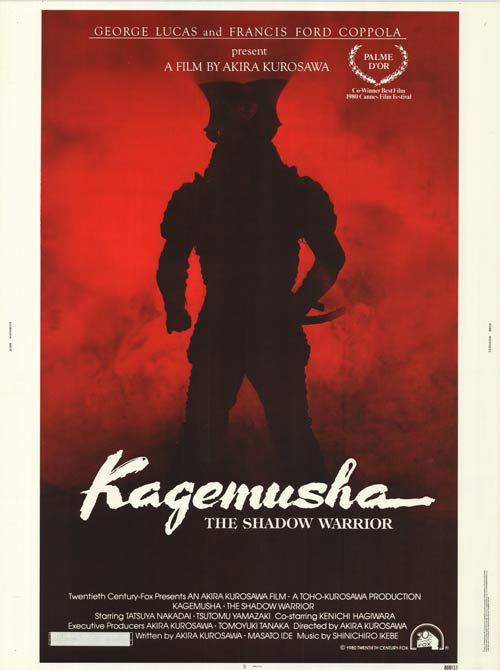
Kagemusha (1980)


Identity, honour and duty all combine in Kurosawa’s samurai epic

Director: Akira Kurosawa

Cast: Tatsuya Nakadai (Takeda Shingen/The Kagemusha), Tsutomu Yamazaki (Takeda Nobukado), Kenichi Hagiwara (Takeda Katsuyori), Jinpachi Nezu (Tsuchiya Sohachiro), Hideji Ōtaki (Yamagata Masakage), Daisuke Ryu (Oda Nobunaga), Masayuki Yui (Tokugawa Ieyasu)

In his late career, Kurosawa made two epic “samurai” films, both sweeping broad canvas stories, crammed with epic visuals and tackling big themes. Kagemusha was the first of these – and Kurosawa himself claimed that the film was a dry run for his real aim: to make an epic Japan-set version of King Lear, which would become Ran. How does it hold up as film in itself?

Kagemusha means Shadow Warrior, and the film follows the life of a convicted criminal (Nakada) saved from crucifixion because of his uncanny resemblance to warlord Shingen (also Nadada). When Shingen is mortally wounded on campaign, the Kagemusha is recruited to pretend to be the warlord, to guarantee the peace and security of the Takeda tribe – whose enemies are kept in check by their fear of Shingen’s reputation. The Kagemusha struggles at first to fill the role, but gradually becomes more and more consumed by the identity of the warlord.

Kagemusha is a beautiful film to look at. It’s totally visually stunning. Kurosawa had spent years planning the film, struggling to raise the cash, he had even attempted suicide when it looked like he would never make another film again. Kurosawa had painted many of the scenes in advance, and his film captures this effect brilliantly in a swirling, breathtaking display of colour and imagery.

Battle scenes take place against blood red or pitch black skies. Armies march in silhouette past a burning sun. The colours of the sects of the Takeda army contrast and dance together. Foliage and bodies intermingle on deserted battlefields, with the camera taking in the destruction of battles with a cool, imposing stillness. A marvellous tracking shot early in the film follows a soldier running through a sleeping army in a castle, each group of soldiers waking and rising behind him as he proceed. Even the still (one shot held for seven minutes) opening shot is brilliantly framed and strangely compelling.

The final battle sequences have a strange, dream-like quality. Kurosawa films charging horses and men, gunshots, but no coming together of these things – we see waves of men going forward, see the guns firing, cut to the shocked reactions of the Takeda generals – we never see men mown down. The imagination alone presents what the generals are seeing – and makes us share their helpless horror. The final image of a body floating past Shingen’s personal banner, abandoned in a blood-stained lake, as the camera pans up and away is brilliant – hammering home the tragic loss of lives for the hubris and pride of a clan leader.

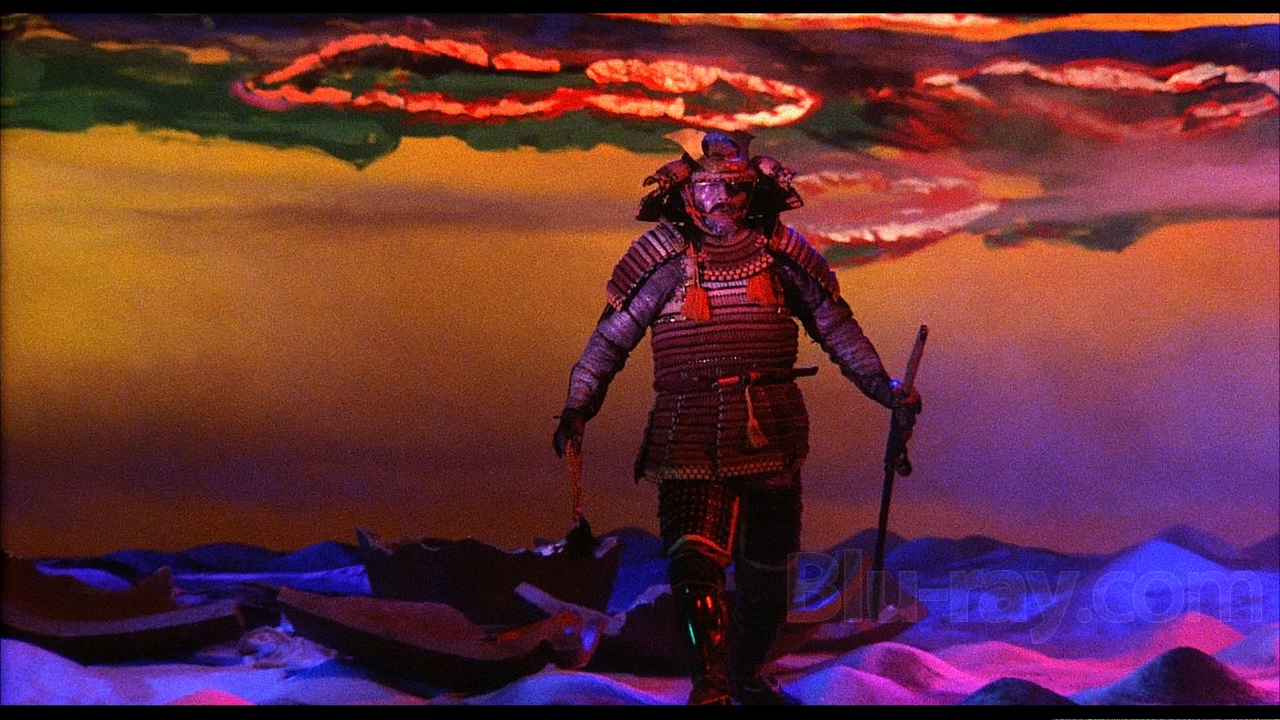
Of course, the most extraordinary use of colour is the Kagemusha’s dream, where he sees himself chased by the embalmed corpse of Shingen. The dream takes place in an explosion of painterly colours, a huge backdrop completely unrelated to anything real. This really ties into your unworldly memory of dreams – while Shingen’s relentless movement forward and his meaningless, unclear emotions (is he angry? Is he looking to take possession of the Kagemusha?) have the terror of a nightmare. The scene ends with the Kagemusha trapped in a pool of water, the motions of the waves breaking his reflection, a neat commentary on his own lack of identity. You’ve not really seen anything like it before.

The Kagemusha’s dream – the colours are beyond striking

In terms of storytelling, Kurosawa also uses some interesting techniques. I was surprised how many key events happen off-screen. Along with the two major battles (the one described above and the one fought under the Kagemusha’s “leadership”, which occurs mostly at night in confusion a distance away) we never see the Kagemusha’s training, Shingen being wounded (instead we see a sniper tell his master how he did it), never see the Kagemusha’s ill-fated attempt to ride a horse. Time seems to slide unclearly throughout the film – years seem to go by in minutes. The whole structure of the film flows in slight fits and starts – it feels rather like (guess what!) a dream, where the logic of events and time never quite holds together. Perhaps fitting in with Kurosawa’s love of visual language, it’s like looking at a series of canvasses by a master-painter – a series of snapshots or moments, or comments on moments, with the viewer left to fill in the gaps.

The film’s visuals are its real strength, but it touches on questions of identity and of leadership. As the Kagemusha, Nakada’s acting style has much of the expressionistic wildness of many of Kurosawa’s leading men, but married with a subtler quietness, making the Kagemusha a lost, gentler soul struggling to define himself within the role of Shingen. Nakada’s Kagemusha is a conflicted contrast to the ramrod certainty of his Shingen – a humanist, who grows to love his position – who perhaps even grows to believe he is Shingen – but has an ease with Shingen’s grandson the warlord never had (“He’s not so scary now!” the boy exclaims – and he is the only character who suspects a change). Is he a better man than the warlord but a worse leader? When unmasked, does he haunt the court because he has grown to care or because he can’t let go of the illusion of being Shingen? 

Kurosawa also explores the Kagemusha’s success as Shingen – expressly linked to his ability to voice key slogans with commitment (“The mountain does not move!”) and sit calmly during battle. Kurosawa seems to be criticising implicitly the deference inherent in much of Japan’s past. These soldiers are devoted to the Kagemusha, but he says and does nothing. When revealed, they reject the same man totally and instead follow with the same dedication the orders of Shingen’s inadequate son (many even while believing it will doom them). Identity is a theme we cling to in the West, but I think for Kurosawa it’s the blankness of our leaders that interests him – the idea that we follow people because of what they represent, rather than what they necessarily are. It’s an idea that feels subservient to the mood of the film, but it’s there.

Kagemusha is a film of wonderful visual style and accomplished cinematic grace. However, the main blockage to calling it a masterpiece (as opposed to just a very, very good movie) is the slight sense of intellectual emptiness at its core. Despite touching some of the monumental themes I’ve mentioned, I’m not sure the film really has that much to say about any of them in. Questions of personal identity and the function of leaders in our society are skirted around but never truly tackled. Considering the epic runtime of the film, its story and ideas are surprisingly simple and transparent, its focus split between those and the inspired visuals. To be fair, Kurosawa never lectures us, which is a comforting change from many mundane filmmakers, but he also doesn’t strike me as having much original to say on his themes – or that he aspires to do so.

That’s always the clash of priorities with Kurosawa: he is at heart a painter and a visualist rather than an analyst, a director telling large stories in broad, beautiful brushstrokes. The Kagemusha always remains a cipher: of course this is part of the point, but the character’s internal struggle and clash still seem rather glossed over, as if mentioning them was the same as actually exploring them. Some of this is intentional, and I suppose could say the film is inviting us to reach our own conclusions without prompting, but it’s hard to shake the feeling that this is a film that hangs out with ideas rather than really getting to grips with them.

Kagemusha, like Rashomon, is a film I’ve have been hard on – and Kurosawa is a director I expect so much from, because he is so overwhelmingly talented. Visually he is up there with Lean, but I feel Lean gets a better balance of depth and images. Kurosawa’s visual language is sublime, but this film is also strangely empty in places, a mighty epic and beautiful piece of cinema that saysthings but isn’t really about things. I don’t feel it truly explores its points, or gives us anything to really think about after.

Saying that, this is a vital and impressive piece of cinema and one of the most beautiful films you are going to see. Kurosawa is not the most profound film maker, but he is more than thoughtful enough compared to most and while he doesn’t claim the potential of some of his ideas, what he offers us is a true artist’s vision, a graceful mastery of the camera and enough feeling to immerse you in the story. He also – and I feel sorry for not dwelling on this earlier – brings out some wonderful performances from his actors: Nakada is superb and there is wonderful work from Yamazaki, Hagiwara, and in particular Ōtaki who is marvellously genial but imposing as Shingen’s closest general. Kagemusha isn’t his masterpiece, but for the vast majority of film-makers it would be.

Quo Vadis (1951)


Peter Ustinov revels in the Status Quo (Vadis) of Imperial Rome

Director: Mervyn LeRoy

Cast: Robert Taylor (Marcus Vinicius), Deborah Kerr (Lygia), Leo Genn (Petronius), Peter Ustinov (Nero), Patricia Laffan (Poppaea), Finlay Currie (St. Peter), Abraham Sofaer (St. Paul), Marina Berti (Eunice), Buddy Baer (Ursus), Felix Aylmer (Plautius), Ralph Truman (Tigellinus), Rosalie Crutchley (Acte), Nicholas Hannen (Seneca)

In the 1950s, epic films were the way for the movie studios to defeat the onslaught of television. What better way to best the creeping presence of the small screen in every home than offering more action, sets, crowds and colour than could ever be squeezed into that small box in the corner of the room? Quo Vadis was the first film that started a wave.

Returning to Rome after years on campaign, Marcus Vinicius (Robert Taylor) falls in love with a Christian hostage, Lygia (Deborah Kerr). Gifted Lygia as a reward by the decadent Emperor Nero (Peter Ustinov), Marcus slowly becomes fascinated by her religion – and more aware of the insanity of Nero. Petronius (Leo Genn), Marcus’ uncle and Nero’s cynical retainer who hides his barbs under double-edged flattery, unwittingly plants in the Emperor’s mind the plan for a Great Fire in Rome. After the mob reacts with fury, Nero kicks off a persecution of Christians that will end in slaughter in the arena…

There is a charming stiffness to some of this film which actually makes it rather endearing. Like many films that followed it, this balances a po-faced reverence for Christian history with a lascivious delight in sex, destruction and violence. This means the audience can be thrilled by Rome burning, entertained by Nero’s decadence, watch Christians mauled by Lions and burned alive – while also being comforted by the triumph of good-old fashioned Christian values and persuaded the film has some sort of higher purpose because it ties everything up with a nice faith-shaped bow.

Of course this all looks rather dated today, but back in 1951 this was the studio’s most successful film since Gone with the Wind and the biggest hit of the year: it started a nearly 15-year cycle of similarly themed religious epics. The money has clearly been chucked at the screen – the sets are huge, the casts sweeping, the staging of the Roman fires and Christian sacrifices very ambitiously put together. Perhaps the only surprise is that the lush, attractive cinematography isn’t in wide-screen – this was the last film of this kind to not be filmed in the widest lens available. 

Despite its nearly three-hour run time, this is quite an entertaining story, laced with enough real history to make it all convincing (even if it telescopes the last few years of Nero’s reign into what seems like a week or so). Despite this, the storytelling does feel dated at times as we get bogged down in back and forth about Christianity (told with an intense seriousness by the actors, mixed with long-distance-stares type performances), and the homespun simplicity of its message lacks the shades of grey we’d expect today (as well as being a little dull) but it just about holds together.

The main problem is the lead performers. Robert Taylor is an actor almost totally forgotten today – and it’s not difficult to see why here. Not only does he speak with the flattened mid-Atlantic vowels recognisible from American leads in historical films from this era (the jarring mixture of accents in the film is odd to hear) but he is an uncharismatic, wooden performer sorely lacking the power a Charlton Heston would have brought to this. Marry that up with his character being a dull chauvinist and you’ve got a bad lead to root for. The relationship between him and Deborah Kerr’s (equally dull) Christian hostage is based on a terminally dated, borderline abusive, set-up: he kidnaps her from her home and wants her to change her faith, she won’t but never mind she loves him anyway without condition and surely her love will make him a good man, right!

Despite the efforts of the leads and some decent supporting actors (Finlay Currie in particular makes a very worthy Peter) the Christian story never really picks up. There are some nice visual flourishes – the recreation of some Renaissance paintings is well-done, and the stark image of Peter crucified is striking – but the Christian story isn’t what anyone will remember from this film. It’s all about the corrupt Romans.

Not only do they have the best lines and all the best scenes, but in Leo Genn and Peter Ustinov they also have the only actors who perhaps seem to realise they are not in a work of art, but a campy popcorn epic. Both actors give wonderfully complementary performances. Genn’s dry wit as the cynical Petronius (whose every line has a cutting double meaning) underpins his wry social commentator to fantastic effect, delivering many of the films laugh-out loud moments. He elevates many of the best lines in a dry but educated script.

Genn’s low-key performance also brilliantly contrasts with Ustinov’s extravagance as Nero, making the emperor a sort-of sadistic Frankie Howerd. Ustinov has enormous fun in the role, cheerfully going up and over the top with Nero’s man-child depravity, bordering on vulnerability and a needy desire to be liked and respected by the people and his underlings. Depictions of his singing are hilarious, his petulant sulking extremely funny. Yes, it’s an absurd performance – more a comic sketch almost – but it somehow works because (a) everything else in the film is so serious and (b) Genn’s world-weary cynicism anchors the character for the first two-thirds of the film, giving Ustinov much freer reign to go over the top. 

So it’s all about the baddies – as was often the way with films of this era. You’ll remember the scenes of Nero holding court, and the archly written dialogue between Petronius and Nero. Ustinov and Genn are, in very different ways, terrifically entertaining (both received Oscar nominations). The Christian message of the film is on-the-nose (to say the least), and the lead actors are more like kindling for the Great Fire than actual characters. It’s a strange film, at times a bloated far-too-serious religious epic, at others a campy tragi-comedy with a dry wit. Yes it’s dated and far from perfect, but it’s also strangely entertaining and even a little compelling.

Moana (2016)


Maui and Moana conquer the seas in this wonderfully fun Disney yarn

Director: Ron Clements, John Musker

Cast: Auli’i Cravalho (Moana), Dwayne Johnson (Maui), Rachel House (Tala), Temuera Morrison (Tui), Jermaine Clement (Tamatoa), Nichole Scherzinger (Sina), Alan Tudyk (Hei-Hei)

Once upon a time, the demi-God Maui (Dwayne Johnson) stole the heart of the island goddess Te Fiti, in order to give it to humanity. But he was attacked by the lava demon Te Kā and lost the heart and his magical fishhook. A thousand years later, Moana (Auli’I Cravalho), the daughter of the chief of her small island, grows to be a teenager who dreams of exploring beyond the reef. When her island’s crops start to fail, the Ocean chooses her to leave the island to find Maui and restore Te Fiti’s heart, in order to restore health to the world.

Moana is a charming, engaging and witty Disney movie, with strong, well-drawn characters, that immerses itself in its Polynesian mythology setting. What works about it – and what always puts Disney above its competitors – is that the film is interested in telling a story about characters who have real concerns and depth. Compare it to other, more stunted, “joke”-focused animations, produced by companies like Dreamworks, to see how far above those films it is. There are very few jokes here that will date (perhaps one about tweeting) – instead it’s a film that recognises its content for the adults doesn’t need to be sly film references or cheeky gags: a strong plot and engaging characters will entertain all generations.

One of the reasons the movie works so well is because Moana herself is a sympathetic, engaging heroine with dreams and aspirations, but who is still deeply respectful of her background. She’s not a rebellious teen, but someone who wants to improve the world around her, and is beautifully voiced by Cravalho. As such, she’s not only a great role model (take note parents!), but someone you end up totally rooting for. It also helps that she has a wonderful chemistry with Maui (very well voiced by a charmingly sparkling Johnson) – the film quietly subverts the expected Mentor/Pupil relationship between the two, as each teaches the other lessons both practical and spiritual.

Moana learns many of the lessons Disney picked up from Frozen. Like that film, it follows a free-spirited, independent-minded young woman not defined by a romantic interest. Its focus is on the lead overcoming a task to save her world. And it is built around an extremely catchy, very good song. How Far I’ll Go, Moana’s signature song (refrains of which are built into many of the other songs), is a sensational, powerful and tear-prickling power ballad about being yourself and following your own heart. It is remarkably easy to sing along with and carries a great message. It’s also got a brilliant popular appeal – I was stunned to see the YouTube video of it has over 141 millionhits (would that this site had so many). Many of the other songs are similarly excellent, especially the extremely hummable You’re Welcome (the songs are brilliantly composed by Lin-Manuel Miranda, Opetaia Foa’I and Mark Mancina).

Its visuals are outstanding, the animation terrific. I also really liked the way Clements and Musker embraced the strengths of silent characters, and the expressiveness animation can bring to characters. The Ocean, a clear character here who influences events, is nothing more than a shaped concentrated wave with no features, but has an expressiveness that makes it one of the wittiest characters in the film (memories of the carpet from Aladdin spring to mind). Similarly, the silent, dim-witted chicken Hei-Hei supplies many of the film’s laugh-out-loud moments. Maui’s body tattoos (wonderfully illustrated), moving and communicating silently with Maui throughout the movie, are terrifically innovative and feel unique.

Moana has a looseness and coolness to it that makes it an enjoyable, perfect viewing for a Saturday night. The storytelling is brilliantly done and the final confrontations are shot with a daring vibrancy that betters many action films. Clements and Musker have a mastery of the material that creates a gripping and involving story and characters. In many ways, it doesn’t do anything too unique or different from past Disney movies, but it tells the story with such charm and imagination that you’ll get totally wrapped up in it.