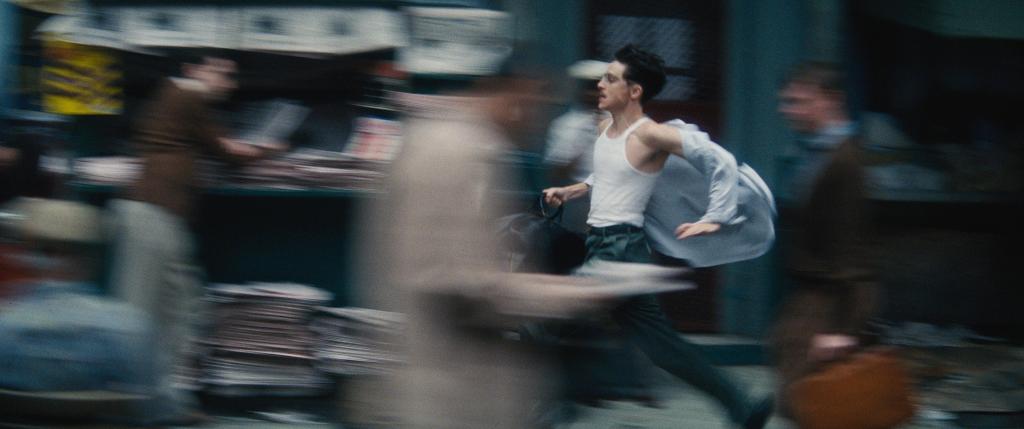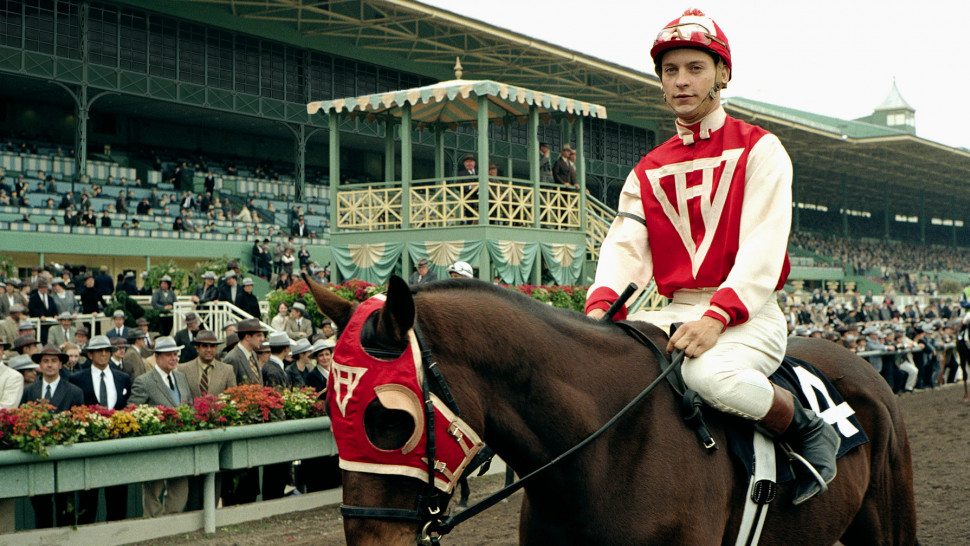
Arrowsmith (1931)

Arrowsmith (1931)

An uninspired prestige drama suddenly turns at the end into an intriguingly subversive drama

Director: John Ford

Cast: Ronald Colman (Dr Martin Arrowsmith), Helen Hayes (Leora Arrowsmith), Richard Bennett (Gustav Sondelius), A.E. Anson (Professor Max Gottlieb), Clarence Brooks (Dr Oliver Marchand), Alec B Francis (Twyford), Claude King (Dr Tubbs), Bert Roach (Bert Tozer), Myrna Loy (Mrs Joyce Lanyon), Russell Hopton (Terry Wickett), Lumsden Hare (Sir Robert Fairland)

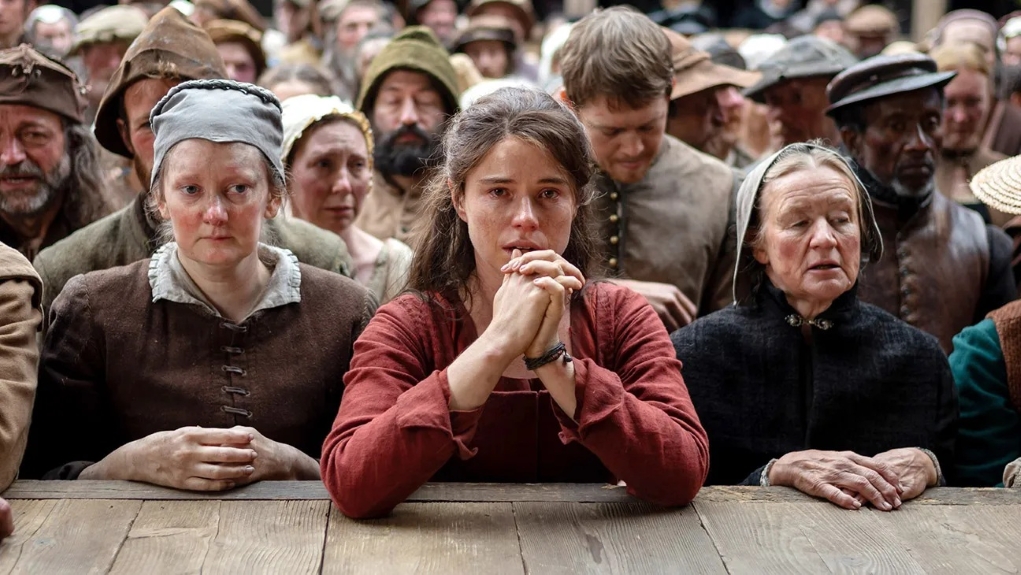
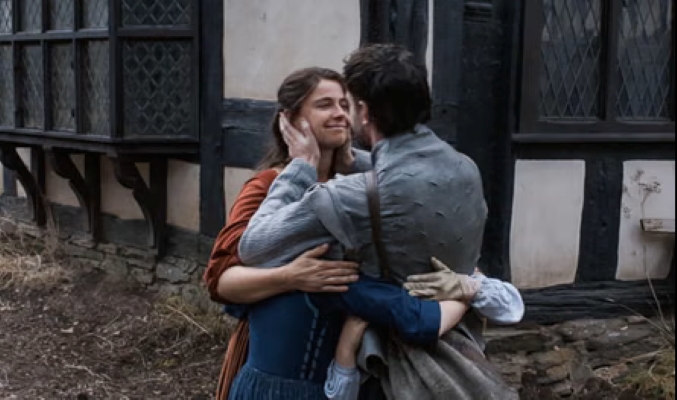
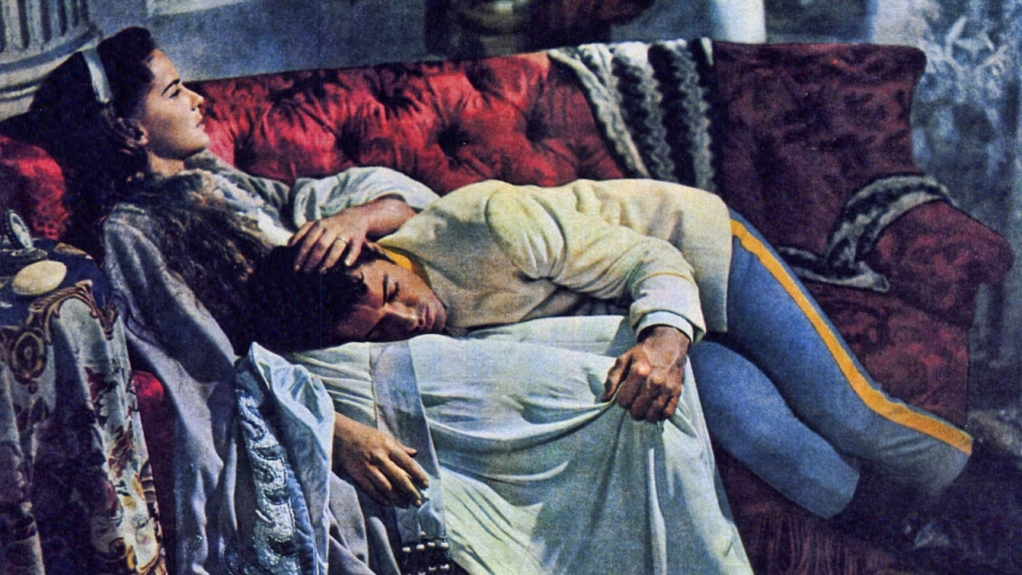
A neat trivia question: what was the first John Ford film nominated for Best Picture? Not many people remember Arrowsmith today – although, since Ford was ordered by producer Samuel Goldwyn to not touch a drop of the sauce while making it, we can be pretty sure he did. Adapted from a hulking Pulitzer-prize winning novel by Sinclair Lewis, it was the epitome of prestige Hollywood filmmaking. It’s a far from a perfect film, but it contains flashes of real beauty and genius – and presents one of the most surprising, subversive visions of infidelity you’ll see in 30’s Hollywood.

Martin Arrowsmith (Ronald Colman) is desperate to be a high-flyer. A scientist and doctor, he’s wants to make his mark – and his mentors such as noted bacteriologist Professor Gottlieb (A.E. Anson) and Swedish scientist Gustav Sondelius (Richard Bennett) think he can. But Arrowsmith postpones his dreams for a spontaneous marriage to Leora (Helen Hayes), before re-embracing science. When plague breaks out in the West Indies, the Arrowsmiths travel there, ordered to test a possible cure on the natives: half will receive the cure, the other a placebo. But temptation and tragedy will be Arrowsmith’s constant companion there.

Arrowsmith is very much a film of two halves (or, in terms of its run-time, two-thirds, one-third). To be honest, much of its first hour is frequently rushed, ponderous and dull, flatly filmed with the air of uninspiring prestige production. Watching it play, it’s hard to connect a film as flat, perfunctory and serviceable as this with Ford’s energy and flair. It’s not helped by the accelerated storytelling. Stuffing in as much of Lewis’s door-stop best-seller as it can (the first fifteen minutes cover as many events as whole movies often content themselves with), the plot barrels along so fast it can leave your head spinning. Scenes either feel like sketches from a larger whole or like narrative cul-de-sacs included to tick a box from the novel.

Arrowsmith feels like a compromised film. I suspect Goldwyn’s aim was to cover the book. But I feel Ford’s interest – if he had one in the film’s opening hour – was the Arrowsmith marriage. On the surface this is your standard loving-husband-supportive-wife pairing. But, underneath, there is a lot more going on here. Everything about their courtship and registry office marriage feels perfunctory. Arrowsmith treats his wife with a fondness that never tips into passion. When she suffers a miscarriage (which prevents her having children), he is sad but moves on remarkably quickly. At one point, Leona discusses the idea of leaving her preoccupied, distant husband who disappears for days on end (you feel she’s only half joking). Arrowsmith calls her ‘old girl’, which feels rather complacent and smug.

You suspect Ford might be hinting that, frankly, Arrowsmith is a self-important shit with grandiose ideas. It’s an idea the film can’t quite push – Ronald Colman’s undoubted charm smooths off Arrowsmith’s rough edges, even while he makes him self-righteous and pompous. But as Leona (Hayes is excellent in subtly suggesting this woman is much more lonely than she admits) watches her house jerry-rigged into a Frankenstein-laboratory (his atrociously poor safety measures will come back to haunt him later) or is left for days alone at home, it’s hard not to feel this is a more complex, strained relationship than the film can openly say.

These half-stated implications lead us into the film’s final act in the West Indies, which almost redeems the slightly confused mish-mash it proceeds. From the opening shot of this sequence – focused on Clarence Brooks’ doctor (notable for treating a Black character as an assured professional) with his patients sitting on a balcony, excluded from the conversation about their health going on down below – it’s impossible not to see Ford’s sympathy more openly lying with the West Indian villagers, whose health is of little interest to the white population and who even our nominal hero (reluctantly) uses as guinea pigs for his cure. This powers us through a half-hour sequence that is by far-and-away the most focused and interesting of the entire film.

This tragedy-laden sequence not only buzzes with an indignation of the unfairness of this system – in which our hero is a semi-reluctant participant – but unleashes the most beautiful, shadow-filled, expressionistic lighting in the film. Ford signposts moments of high emotion by casting people’s bodies in shadow. This mesmerising effect is used brilliantly, combined with shots deliberately echoing each other (most strikingly two contrasting shots of the Arrowsmith home, both framed at low angles with foreground chairs – the second laced with tragedy). Visual imagery reflects, not least the cutting between two cigarettes smoked by the Arrowsmith’s. There is a host of heart-rendering, inventive ideas in visual storytelling: at one point, Arrowsmith’s phone call with a sweating colleague goes dead – we cut to see a shot of the empty phone on the other end bathed in shadow, enough to tell us his interlocutor has literally died mid-call.

This shadow-filled sequence also powers the film’s most subtle moment: possibly the most under-the-wire depiction of infidelity seen in the movies. The original novel made clear Arrowsmith was serially unfaithful. Here, he meets Myrna Loy’s wealthy heiress, to whom he admits an immediate kinship. At night, wordlessly, Ford cuts back and forth between Loy preparing for bed and Colman sitting (bathed in shadow) smoking and possibly waiting. Wordlessly the cuts go back and forth – and then fades to black as we see a shadow approach the door of Colman’s bedroom. You can miss it entirely: but its clear they sleep together. (A late scene with Colman and Loy, with a lingering handhold, feels like proof positive). A late scene of Colman filled with manic energy, in this context feels powered more by guilt and shame.

It’s subtle because we know that in scenes of open emotion and dramatic import we’ve seen faces thrown into shadow. When its repeated here, in an otherwise inconsequential scene, we’re having visually communicated to us something the film can’t openly tell us: Arrowsmith is cheating on his wife. It’s the highlight of a compelling final act, full of drama, tragedy and beautiful filmmaking. When the film leaves the West Indies for its lab-set coda, it returns to flat film-making and sudden, jarring plot developments. But for this half-hour section, it’s a fascinating, oblique, challenging and rewarding film: one of the best short films buried in a large one you’ll see. Arrowsmith may not be a classic, but’s it’s a fascinating film.

On Golden Pond (1981)

On Golden Pond (1981)

Sentimental drama, sickly-sweet, which owes any success it is to its legendary leads

Director: Mark Rydell

Cast: Katharine Hepburn (Ethel Thayer), Henry Fonda (Norman Thayer), Jane Fonda (Chelsea Thayer), Doug McKeon (Billy Ray Jnr), Dabney Coleman (Dr Bill Ray)

The, admittedly luscious, score by Dave Grusin gives you a pretty good idea of what to expect, as Billy Williams’ camerawork drifts over a sun-kissed lake. On Golden Pond is an overwhelmingly sentimental film, just about lifted above its Hallmark Classic material by its legendary cast. Justified residual affection for them made this frequently mawkish, sickly-sweet film a massive box-office hit. Instigated by Jane Fonda, as a late bridge for a final reconciliation with her father Henry, it won him an Oscar 41 years after his last (and only previous) nomination.

Henry Fonda plays Norman Thayer, a curmudgeonly academic on the cusp of his 80th birthday, whose avuncular abruptness covers a fear of death and the slow decline of his wits. Along with his supportive, sparky wife Ethel (Katharine Hepburn) he’s spending this birthday at their summer home on the shore of New England golden lake. They are joined, unexpectantly, by their marginally estranged daughter Chelsea (Jane Fonda) with her new boyfriend Bill (Dabney Coleman) and his thirteen-year-old son Billy (Doug McKeon) in tow. Chelsea and Bill leave for a holiday in Europe, leaving Billy behind. Can Billy and Norman find common ground, and will the presence of this young man help Norman and Chelsea find reconciliation and understanding after years of tension.

If you don’t know the answer, you’ve not seen enough movies. Pretty much every development in On Golden Pond could be jotted down correctly on a pad in advance. Of course, Norman’s hostility will melt slightly as he rediscovers something of his playful youth and vigour in the kid. Of course, Billy’s contempt for the gentle pleasures of Golden Pond will wash away as he embraces the delights of fishing, reading classic novels and playing board games under the increasingly warm surrogate parental eyes of Norman and Ethel. Of course, Chelsea’s ostentatious determination to only refer to Norman by his name will eventually see her calling him ‘Dad’. Of course, Norman will finally allow himself to confess his love for his daughter.

All these inevitable emotional plot developments are hit with assured smoothness in Rydell’s straight-forward film, perfectly packaged for mass appeal. Every character is an archetype: the grouchy old guy with a heart of gold, the loving wife who devotes herself to exasperatingly caring for her husband and smoothing over those he offends, the prickly daughter whose resentment hides her desperate need for her father’s love… You could argue the film’s very predictability is the secret sauce behind its success.

It can be safely consumed as a heart-warming fable. So much so, it’s easy to miss how biased the film is in favour of the older generation. So sentimental is the eye it casts over Norman, so forgiving and sympathetic is it to his quiet raging against the dying of the light, that it effectively gives him a pass for any responsibility for the coldness between him and his daughter, partially born from his domineering expectations and demands of her.

When Chelsea complains to Esther about her father’s coldness, distance and high standards, she’s roundly told she should have seen past this to the love her father buried deep down. (Esther even slaps her for questioning it!). This is a film that firmly states the younger generation should adjust to fit in with the older. Chelsea should pull herself together, stop whining, and get over the fact her Dad never really told her how he feels: that, effectively, the problem they have is her expectations rather than his failures. It’s fitting with a film that, however charmingly it does it, also sees Billy adapting and changing to better fit in with the Thayers rather than any vice versa. God knows what it would make of something like Five Easy Pieces.

The film’s patronising, one-sided view of generational conflict and its soppy sentimentality would make it unbearable, if it wasn’t for the performers at its heart. Henry Fonda, with less than a year to live, takes a cliched character and invests Norman with a richness and depth of personality that is far more than the film deserves. Fonda’s precise diction and ability to turn those blue eyes cold is perfect for Norman’s grouching, but when those same eyes collapse into panicked fear (such as when Norman gets lost in woods he has walked all his life) it’s as moving as his attempt to shrug off his failing memory.

Fonda’s perfectly delivers both the irritation and hidden fear when he stares at photos of himself and his younger family and plaintively asks who they are.  He makes the bond with Doug McKeon’s Billy (also excellent) genuinely rather sweet, these two kindred souls shooting the breeze and catching fish like life-long buddies (Fonda fills Norman here with an almost teenage sense of naughtiness). It’s a rich, charming performance.

He’s expertly supported by Katharine Hepburn, who brings her customary spark, fierce intelligence, take-no-nonsense assurance and dry wit to Esther. Truthfully the role, for which she won a record-breaking fourth Oscar, is almost identical to Guess Who’s Coming to Dinner. Once again, she is the dutiful but loving wife, smoothing over the feathers her husband disrupts and speaking home truths to her disappointed child. Hepburn could probably do this standing on her head, but that doesn’t mean she doesn’t nail it. Jane Fonda, a far more generous performer than she gets credit for, plays Chelsea with such emotional commitment it can’t help but pull some heartstrings. Even Dabney Coleman is restrained and gentle.

Of course, a lot of this success also comes from the deeply blurred lines between truth and fiction that abound in On Golden Pond. It’s no secret to anyone watching that the Norman-Chelsea relationship has multiple parallels with that of Henry-Jane. Jane Fonda had planned the film as a tribute to her father (much to the disappointment of James Stewart who dreamed of playing it), and when the duelling father and daughter quietly reconcile, it’s impossible to not also see the real actors themselves building bridges after a lifetime of disagreements. It’s a greater emotional impact than the actual film itself and surely contributed to its success.

On Golden Pond is less successful on its own merits. An overly sentimental film, with a golden-eyed regard for the dignity and decency of the older generation, where inter-generational conflict is resolved with a few gentle words and a backflip off a diving board. Remove the actors – and the emotional truth behind its making – and you have a very slight, predictable and manipulative movie.

Cat on a Hot Tin Roof (1958)

Cat on a Hot Tin Roof (1958)

Excellent acting almost saves a neutered, inverted version of Williams’ powerhouse play

Director: Richard Brooks

Cast: Elizabeth Taylor (Maggie Pollitt), Paul Newman (‘Brick’ Pollitt), Burl Ives (‘Big Daddy’ Pollitt), Jack Carson (‘Gooper’ Pollitt), Judith Anderson (‘Big Mama’ Pollitt), Madeleine Sherwood (Mae Flynn ‘Sister Woman’ Pollitt), Larry Gates (Dr Baugh), Vaughn Taylor (Deacon Davies)

There is a fun little anecdote of Tennessee Williams running into a crowd of people lined around the block to catch Cat on a Hot Tin Roof at their local multiplexes and loudly begging them “Go home! This movie will set the industry back 50 years!” You can sort of see why Williams was a bit pissed. It’s a miracle really that Cat on a Hot Tin Roof works at all. The studio snapped up this Broadway mega-hit and promptly instructed Richard Brooks to remove all the content that worked with a bunch of New York Times readers, but wasn’t going to fly in a mid-West fleapit. What we end up with is a curious, mis-aligned, neutered work that arguably inverts several of Williams’ points and is reliant on its incredibly strong, charismatic acting to work.

Brick (Paul Newman) is a former College sports star, now adrift in life, trapped in an unhappy marriage with Maggie (Elizabeth Taylor) who he resents and blames for the suicide of close friend Skipper. All Maggie’s attempts to rediscover any love is met with cold, blank disinterest as Brick hits the bottle big-time. Maggie keeps up the front of wedding bliss, as she is determined they will win their share of the inheritance from Brick’s father ‘Big Daddy’ (Burl Ives) who believes he’s merely under-the-weather, but is in fact dying. This news is also being kept from his devoted (but privately barely tolerated by Big Daddy) wife Big Mama (Judith Anderson), while Brick’s brother’s Gooper (Jack Carson) and his wife Mae Flynn (Madeline Sherwood) makes aggressive pitchs to cement Big Daddy’s fortune for themselves.

This simmering Broadway adaptation of a Southern family weighted down by lies (or mendacity as they love to call it), concealments and barely disguised resentments, was a smash hit but a very mixed film. It’s weighed down by both too much respect of the theatrical nature of the play, and too little interest in its actual message. Richard Brooks’ production largely restricts itself to interspersing wider shots with some reaction shots and sticks very much to its ‘same location for each act’ set-up. It’s a surprisingly conservative and safe re-staging of a hit play.

Despite Brooks’ liberal re-writing of the dialogue (of which more later), it remains a very theatrical rather than cinematic piece, largely devoid of imaginative editing or photography. The attempts to ‘open up’ the piece introduced by Brooks feel pointless or add very little (such as witnessing the accident where Brick breaks his leg or travelling to the airport to see the arrival of Big Daddy’s plane). Compared to the inventive and dynamic use of single-location shooting in Lumet’s 12 Angry Men, Cat on a Hot Tin Roof feels considerably more stately and reserved, and is far less successful in using the tricks of cinema to successfully build tension and conflict.

What it shares however with 12 Angry Men is the electric acting. Elizabeth Taylor gives one of her finest performances, her Maggie bubbling with sexual and emotional frustration, reduced to hurling physical and verbal punches at Brick in an attempt to get any sort of emotional rise out of him. She makes Maggie, for all her desperation and confusion, surprisingly sympathetic. Taylor manages to be both selfish and domineering while also showing how broken up Maggie is with shame and guilt. It’s a detailed, intense, passionate performance.

It also works perfectly opposite Paul Newman’s brooding intensity as Brick. This is the handsome, blue-eyed legend inverting his charisma into something insular, at times merely starring in self-loathing into the middle distance as other speak at him, only rarely rising to let rip at others with contempt and fury. Newman is a force of quiet, emotional anger, even if (stripped of his character’s primary motivation) he comes across at times like a spoilt child who never really grew up rather than the tortured man trapped in a lie of a life, that Williams intended (Brooks even frames him at one point with a high-school football of himself behind him, his past literally haunting him).

Burl Ives would certainly have won an Oscar for this, if he hadn’t won that year for The Big Country. Recreating his Tony Award winning role, he’s a whirligig force of nature as Big Daddy, bullishly insistent on getting his own way, shrugging off with irritation his wife’s affection (an effectively unsettled Judith Anderson) and hiding his own fear at oncoming death in a relentless pursuit of the future. Ives also nails Big Daddy’s outstanding late speeches, investing them with a deep sense of melancholy and sadness under the bombast and strength. It’s a great performance. Jack Carson is perfectly, anonymously uninteresting as ‘other son’ Gooper and Madeline Sherwood hits the beats of shrill hostility she’s asked for as his wife Mae Flynn.

That these performances work so well is a tribute to the underlying strength of a play that has been radically, almost disastrously, lobotomised by Brooks into something that flattens, blurs and (at points) radically inverts the intention. Putting it bluntly, Williams’ original used Brick’s unspoken (perhaps even subconscious) homosexual attraction to Skipper as the root cause of his disastrous marriage and booze-laden depression. Maggie, all too-aware of her husband’s sexual orientation, fumes in frustration at his lack of interest in making the inheritance-required babies. Even Big Daddy suspects this massive unspoken secret at the heart of a family. The fact this remains unspoken to the end, that the characters carry on with the fake fiction of the Pollitt dynasty is a damning indictment of the hypocrisy of American family life.

That wasn’t going to wash in Hollywood. No hint of Brick’s homosexuality could be allowed: in fact, Newman’s heteronormative virility is repeatedly stressed (at one point he even embraces Maggie’s dressing gown in romantic longing). It weakens both characters – for all the skill of Newman and Taylor, it makes both characters shallower, two people letting sulks and pride stand between happiness, rather than two people trapped into a doomed cycle. The film resolutely associates happiness with love and duty to the family unit, emphatically not what Williams’ play suggested.

No wonder he was pissed. A daring play about Southern family hypocrisy and buried secrets, where the burden of the family is a deadweight crushing people is turned into a straight (in every sense) celebration of it. It makes the play a conservative, reassuring lie, as much as a mendacity as the characters talk about. So maybe Williams was right to berate that crowd. Still it pissed Brooks off mightily: he pithily retorted it was a bit rich of Williams to kick up such fuss over a film which made him very wealthy. I guess at least there Brooks makes a strong point.

A House of Dynamite (2025)

A House of Dynamite (2025)

Terrifying, compelling and gripping it-could-happen drama about the madness of nuclear war

Director: Kathryn Bigelow

Cast: Rebecca Ferguson (Captain Olivia Walker), Idris Elba (President), Gabriel Basso (Deputy NSA Jake Baerington), Jared Harris (Secretary Baker), Tracy Letts (General Anthony Brady), Anthony Ramos (Major Daniel Gonzalez), Moses Ingram (Cathy Rogers), Jonah Hauer-King (Lt Commander Robert Reeves), Greta Lee (Ana Park), Jason Clarke (Admiral Mark Miller), Malachi Beasley (SCPO William Davis), Brian Tee (SAIC Ken Cho), Renée Elise Goldsberry (First Lady), Kaitlyn Dever (Caroline Baker)

“That’s what $50 billion buys us? A fucking coin toss?” the Secretary of Defence (Jared Harris) plaintively wails as he discovers yet another weakness in the USA’s defence infrastructure. It’s one of many grim realisations filling A House of Dynamite, a relentlessly horrifying look at what might actually happen if a nuclear missile was launched at the United States: and how, in less time than it takes to watch an episode of Friends, the US President (Idris Elba) can go from shooting hoops at a charity event to flicking through menu-style list of world-ending options, being told he has a three minute window to make a decision that could be final for all of us. House of Dynamite makes clear to us all: the fate of the whole world effectively rests on a series of coin tosses we have no influence over.

Bigelow’s intense, brilliantly shot and edited film, plays out the same eighteen-minute scenario from different perspectives. A glitch in the USA’s satellite network misses the launch of an ICBM, somewhere off the coast of Asia, heading for Chicago. Disbelief and panic swiftly sets in at every level of the US administration. Anti-missile defence systems miss (that’s the coin toss, as we’re told it only has a 61% success rate in tests). A decision needs to be taken whether to follow policy and launch a counter-attack before the nuke hits. It plays out from three primary perspectives: Captain Olivia Walker (Rebecca Ferguson), senior officer on duty in the Situation Room; Jake Baerington (Gabriel Basso), deputy NSA covering for his under-anaesthetic boss, begging Russia to stand-down their forces as the US goes to DEFCON1; and finally the President (Elba), out-of-his-depth in a nightmare where he feels powerless and totally unprepared.

Powerless and unprepared become the guiding feelings in US defence, as people slowly release the best cast scenario is only losing 10 million people in Chicago and their worst (most likely) case is everyone dying in a nuclear conflagration. Bigelow’s film, shot with the hand-held intensity of a combat film, grabs you with a vice like grip as it plays out this nuclear nightmare. A House of Dynamite only ever gives us the same information as the fictional administration trying to make impossible choices. Like them we never find out who launched the missile, if it’s the first of a wave or even if it’s fully armed ICBM. All we know is the strike on Chicago quickly becomes inevitable and, with that fact, the world as we know it is over. Bigelow’s film (although it is not as clear in its clarification of US launch policy as it could be) places the system (which offers few choices and no alternatives) as the antagonist.

It also makes clear that nuclear war can happen at a time totally not of our choosing. Here it unfolds on a regular morning. The President is at an inconsequential publicity event, reduced to dialling into a world-shaking video call from a mobile: and he’s barely a month into his administration. The National Security advisor is in an operating studio and his unknown assistant is reduced into running through gridlocked traffic to get into the office. A designated FEMA expert (Moses Ingram) has just been appointed and at first believes the whole thing is a drill. The NSA North Korea expert (Greta Lee) is at a Gettysburg reconstruction with her young son. The Situation Room is undergoing maintenance and the Premiers of Russia and China can’t be raised on the phone.

A House of Dynamite doesn’t land cheap shots: it’s portrait of the members of the administration and the US defence infrastructure stresses their level-headedness and professionalism. Indeed, their competence makes the complete lack of control they have all the more alarming. Tracy Lett’s STRATCOM General keeps a professional level-headedness, even as he dutiful advises sticking to a nuclear policy which will effectively end the world. Rebecca Ferguson’s composed, calm and collected Naval captain finds herself increasingly aghast but only allows herself a few moments of tears after a goodbye phone call to her husband, clutching a toy dinosaur gift from her son. Anthony Ramos’ missile base commander reassures his staff this is what they have trained for: right up until the point where their interceptor missile misses and he slips into near catatonic shock as he realises that life’s training was for nothing.

Politicians are similarly portrayed as decent, but fundamentally unprepared for the situation. Idris Elba’s suave president looks every inch the confident leader, but it’s revealed he’s uncertain, hesitant, terrified of looking weak and his skills of schmoozing the public utterly useless for this situation. Jared Harris’ Defence secretary is only marginally more on-top of his brief (he reveals the nuclear war briefing is less than half an hour because it was seen as so unlikely to happen) and, for all his competence, becomes increasingly distracted at the thought of his estranged daughter (Kaitlyn Dever) facing death in Chicago. Gabriel Basso’s Deputy NSA seems at first absurd, but grows in statue as he desperately tries to salvage global survival.

Bigelow’s film makes clear this is a lose-lose situation. It’s a film about the constricting pressure of panic. Panic leaves assured professionals weeping or vomiting. Superpowers plan world-ending retaliation out of fear that they might be wiped out before they get a chance to fire their nukes. The President becomes overwhelmed, asking the junior aide carrying the nuclear football (Jonah Hauer-King) what he should do. (Hauer-King’s character, acknowledging the way the War Book looks like a nightmare menu, wryly confesses he calls the world-ending options rare, medium and well-done). The Deputy NSA tries everything, including begging, to get Russia to stand down, only for them to refusing to do so until US meet Russia’s own un-meetable conditions.

What we are left with is the realisation that there is no winner here. Many viewers, I feel are missing the point. Who fired the missile, who (or if) America hits back, if Chicago goes up in inferno or not, is not the point. Just firing the starting trigger in this race means you lose, because when the nuclear buttons is pressed by anyone there is no turning back, no way of unringing that bell. This is the chilling message of Bigelow’s compelling film – made all the more chilling as she finds so much humanity in the people forced to make these terrible calls.

What we end up with is a different type of coin toss: one man, in most cases with almost no preparation what-so-ever, making a decision that could go either way on virtually no conclusive information at all, in an impossibly small window, about whether to risk ending the world or not. What A House of Dynamite makes clear is that’s all nuclear deterrent really is: a coin toss for individuals who feel they have to always call heads. That’s possibly the most terrifying about it.

Born on the Fourth of July (1989)

Born on the Fourth of July (1989)

Passionate polemic against Vietnam, with a committed central performance – tough, angry viewing

Director: Oliver Stone

Cast: Tom Cruise (Ron Kovic), Willem Dafoe (Charlie), Kyra Sedgwick (Donna), Raymond J Barry (Eli Kovic), Jerry Levine (Steve Boyer), Frank Whaley (Timmy), Caroline Kava (Patricia Kovic), Cordelia Gonzalez (Maria Elena), Ed Lauter (Commander), John Getz (Major), Michael Wincott (Veteran), Edith Diaz (Madame), Stephen Baldwin (Billy), Bob Gunton (Doctor)

Ron Kovic and Oliver Stone shared the feelings of many of their generation: a deep and abiding feeling of betrayal about the war they were sold in Vietnam. Kovic entered Vietnam a passionate true-believer in the cause; he left a traumatised veteran, paralysed from the waist-down, facing a difficult journey of guilt and discovery that would lead him into a career of anti-war activism. Stone too left Vietnam, wounded and affected with PTSD. The two had collaborated on a screenplay of Kovic’s autobiography in the 70s, before funding fell through: Stone vowed he would make the film when he had the power: the success of Platoon and Wall Street gave him that.

It’s not a surprise, considering the understandable passion that went into it, that Born on the Fourth of July is a polemic. You can argue it’s a heavy-handed and virulent one: but then it’s hard to argue with the catastrophic impact over a decade of American foreign policy decisions had on generations across several countries. Could it have been anything else? Born can be an uncomfortable and relentless watch, and subtlety (as is often the case even in Stone’s best work) can be hard to spot. But is that a surprise when the whole film feels like a ferocious, cathartic cry of pain?

It follows a mildly fictionalised version of Kovic’s life (Kovic’s willingness to adapt his life, drew some fire at the time – particularly as he was considering a run for Congress) starting with his childhood, through his teenage enlistment, the shocking horror of Vietnam, his limited recovery in under-funded veteran hospitals, his growing discomfort with the attempt by some (including his passionately conservative mother) to celebrate sacrifices he increasingly feels were misguided and wrong, culminating in his joining the ranks of the same long-haired protestors he spoke of disparagingly earlier.

Through it all, Kovic is played with a searing intensity by Tom Cruise. Cruise was a controversial choice – seen as little more than a cocky cocktail juggling, jet piloting, superstar (despite measured, subtle turns in The Color of Money and Rain Man). It feels a lot more logical today, now that Cruise’s Day-Lewis commitment to projects is well-known. It’s a raw, open and vulnerable performance with Cruise expertly inverting the cocksure confidence of his persona (and the earlier scenes), to portray a man deeply in denial at his injuries (internal and external), with resentment, anger and self-loathing increasingly taking hold of him.

Kovic is a man who never gives up: be that a misguided (and in the end almost fatal) attempt to defy medical advice that he will never walk again, to embracing the anti-war cause with the same never-say-die attitude he signed up to the military with. What Stone and Cruise bring out, is the huge cost to Kovic of working out the fights worth having: from his student days training days on hand for a wrestling bout he loses, to is military career, to activism, it’s a long, difficult journey.

It’s a performance that understands the crippling burden of guilt. Cruise commits to Kovic’s rage, but always keeps track of the vulnerable, damaged, scared soul underneath. He never allows us to forget this is a man eating himself up, not with resentment at his injury, but guilt at his actions in Vietnam – from being part of a mission that pointlessly machine-gunned women and children, to his own accidental shooting of a fellow marine. As you would expect from Stone, Born’s view of Vietnam is bleak: pointless, disorganised missions, led from the rear by incompetent or uncaring officers, where the only victims are innocent civilians or GIs.

That’s perhaps the key about Born. Kovic is not motivated primarily by his injuries. Those are the results of the risks he chose and, to a certain degree, he accepts them. What motivates him is guilt: throughout he is haunted by the crying of the Vietnamese baby he was ordered to leave in the arms of its deceased mother while also struggling to accept his guilt at his friendly fire killing. These feelings fuel his self-loathing, and his anger rightly develops against the lies he was told that led him to commit those acts.

Stone’s film is unrelentingly critical of the mythologising of armed American intervention, and the assumption (often parroted by those who stay at home) that it can never be anything other than completely righteous. It’s a society where (as happens in the film’s opening) children play at soldiers, watch parades of veterans (the young Kovic fails to clock the flinching of these veterans – one played by the real Kovic – at rifle fire, seeing only what he wants to see) and, as young men, are sold tales of duty, sacrifice and heroism. Kovic is too young and fired-up to notice the reluctant pain of his veteran dad (a superbly low-key Raymond J Barry), clearly struggling with his own trauma.

Much as the film paints one of Kovic’s friends in a negative light – like a young Gecko he heads to college, states all this talk of Communism conquering the world is propaganda bullshit and sets up a burger chain where he brags about fleecing the customers and groping the female staff – it also can’t but admit that when it came to Vietnam, he was right. Similarly, Stone is critical of Kovic’s ambitious, apple-pie Mom (Caroline Kava, in a performance of infuriatingly smug certainty) who won’t hear a word against the war and demands achievement from her son, constantly stressing it must have been worth it.

It’s not a surprise one of Born’s most cathartic moment is when Kovic – Cruise’s performance hitting new heights of unleashed resentment – rails late-at-night at his Mom, calling out her upbringing of unquestioning patriotism and saintly conformity as nothing but an ocean of bullshit. It’s an outpouring that has been welling up since his return, looking for the right direction: snapping at protestors, doctors, his younger brother who dares to oppose the War. Born is about a man coming to terms with why he is so angry and finding the appropriate target: and it becomes the system that sent him on this journey, starting with his mother and onto his own government.

This would be the government that provides shabby hospitals, full of broken-down equipment, whacked out attendants and overworked, underqualified doctors.  Stone’s camera pans along wards piled with rubbish and rats. The conditions here are, in many ways, worse than the Mexican villa where Kovic finds himself struggling to re-adjust, surrounded by other paralysed veterans (among them Willem Dafoe, as a seemingly mentor-like figure with uncurdled rage just below the surface). Stone’s film never once loses its righteous fury at how a generation was let down by its leaders on every level.

So it’s not surprising Born is a fiercely polemic work. And, yes, that does sometimes reduce its interest and make it an unrelentingly grim watch (Stone isn’t interested in putting any other side of the argument in here). But it’s extremely well made (Robert Richardson’s excellent photography uses tints of red, white and blue at key points to brilliantly stress mood) and you can feel the heart Stone (who won a second directing Oscar for this) put into it. Its impact comes down to how much you engage with the passionate, furious argument its making: connect with it and it’s a very powerful film.

The House of Rothschild (1934)

The House of Rothschild (1934)

Old-fashioned historical melodrama with a well-meaning, earnest political message

Director: Alfred L Werker

Cast: George Arliss (Nathan Rothschild/Mayer Rothschild), Boris Karloff (Count Ledrantz), Loretta Young (Julie Rothschild), Robert Young (Captain Fitztoy), C. Aubrey Smith (Duke of Wellington), Arthur Byron (Baring), Helen Westley (Gudula Rothschild), Reginald Owen (JC Herries), Florence Arliss (Hannah Rothschild), Alan Mowbray (Prince Metternich), Holmes Herbert (Roweth)

It’s 1814 and things are looking tight for the international banking house of Rothschild. With the Napoleonic Wars over, partly thanks to Rothshild financial support of Wellington’s armies, Nathan Rothschild (George Arliss) is pitching to underwrite the loans to help restore France. Problem is, now the merde is out of the European fan, many of the Powers-That-Be don’t want to continue working with a Jewish bank. Led by scowling antisemitic Prussian Count Ledrantz (Boris Karloff), the Rothschilds bid is unjustly rejected. Rothschild outmanoeuvres his enemies to win the contract back, but it leads to a series of revenge pogroms in Prussia. Things change though, when Napoleon escapes from Elba. As all roads lead to Waterloo, will Rothschild back the Allied powers or throw in his lot with Napoleon?

The House of Rothschild is a very well-meaning, old-fashioned historical melodrama, that takes a strong stance against antisemitism. It clearly has more than half-an-eye on events in Germany in the 1930s. As the film’s Prussia of 1814 sinks into mobs hurling stones through windows, smashing up shops and chanting for the expulsion of Jewish people, while families flee across the body leaving their possessions behind (all while the self-satisfied, archly cold Ledrantz pushes his agents to provoke the people to yet more outbursts), surely many people would have seen parallels with Hitler’s Germany.

Throughout the film, the accusations of antisemites are pointedly broken down and strongly rebutted or placed into context. Why do the Rothschilds work in money? Because they are literally banned from any other profession. And money is the only tool they have to defend themselves against 2000 years of persecution; persecution that has made the Rothschilds feel a true affinity for their fellow Jewish people. Indeed, Nathan Rothschild feels a duty to stand firm and do anything he can to help his people: and if that means a bit of financial chicanery or applying heavy pressure to the European powers, then so be it. There is a greater good here when lives are at stake.

The scourge of racism is strongly displayed throughout the film. It opens with a prologue as Nathan’s father Mayer (George Arliss pulling double duty, under a pile of make-up and a wig) struggles to hide his justly-earned fortune from being stolen by corrupt tax collectors who call him ‘Jew’ and smugly tell him the amount he owes to the government is whatever they say it is. It’s a ferocious piece of open antisemitism, but it has genteel echoes when Nathan is later snubbed for an invite to a ball to celebrate Wellington’s victory (a victory he largely paid for) since Jewish people aren’t welcome at such events.

The House of Rothschild places its laudable anti-persecution aim into a very traditional, old-fashioned, costume drama that wouldn’t look out of place on the Victorian stage. It was a passion project of George Arliss’ (who cared deeply about its message), but also fit wonderfully well inside his wheelhouse. You can see its deep similarities to Arliss’ Oscar-winning vehicle Disraeli. Just as there, he plays a twinkly elder statesman, with a touch of the rogue but overflowing with decency and honour. Despite being seen as a suspicious outsider, he out-plays his rivals in an international conspiracy while casting an avuncular eye over a love affair in the family: in this case between his daughter (Loretta Young) and gentile British cavalry officer Captain Fitzroy (a fairly wooden Robert Young). Both films end with our hero celebrated by royalty at a grand ball, while cementing a loving marriage with his wife (played again by Arliss’ wife Florence).

Arliss is, of course, very good in a role tailor made for his mix of playful charm and speechifying. Much of the film is essentially dominated by Arliss, who delivers with his customary skill (even if his performance as Mayer is more than a little ripe) and if his performance feels more than a little like Disraeli #2, his comfort in front of the camera and the naturalness he brings to the role help enormously. Under the playful exterior, Arliss also finds a strength and determination, powered by a real moral fury at the injustices, slights and (eventual) violence perpetuated upon his people.

Few other actors get much to play with here. House of Rothschild is heavily fictionalised, from its invented nemesis in Count Ledrantz (Karloff is good value as the scowling racist) to the build-up to the Waterloo campaign. However, for history buffs like me, there is a fair bit of delight in seeing a parade of great European statesmen pop up in cameos. From Tallyrand to Metternich to Lord Liverpool, these powerhouses of politics fill out the margins, even if they barely come to life as characters. If there is an exception, it’s the customary gruff no-nonsense military bearing C. Aubrey Smith gives Wellington (here a man firmly on the side of decency and honour).

The romantic sub-plot is very disposable, despite the best efforts of all involved. It briefly overlaps with the film’s main themes – Rothschild is less than happy with his daughter marrying a gentile, while he suffers a parade of humiliations from Fitzroy’s compatriots – but otherwise provides little real drama. The various conspiracies are largely resolved through some ingenious Rothschild speeches. The film’s main success is always the creeping dread of antisemitic violence, a candle it keeps alive throughout its old-school, costume-drama melodrama, with just small drops of directorial and cinematic invention. It’s the main reason for remembering a film that’s entertaining enough, in a gentle, classic Hollywood biopic way. It never reinvents the wheel, but it’s passionate about the people who find themselves ground beneath it.

Note: Considering all that, it’s particularly sickening to note that footage from The House of Rothschild of Arliss in full Mayer Rothschild make-up was pinched and repurposed for Joseph Goebbels’ vile antisemitic epic, The Eternal Jew.

Of Mice and Men (1939)

Of Mice and Men (1939)

Well-made version of a story that has since become almost excessively familiar

Director: Lewis Milestone

Cast: Burgess Meredith (George), Lon Chaney Jnr (Lennie), Betty Field (Mae), Charles Bickford (Slim), Roman Bohnen (Candy), Bob Steele (Curley), Noah Beery Jnr (Whit), Oscar O’Shea (Jackson), Granville Bates (Carlson), Leigh Whipper (Crooks), Helen Lynd (Susie)

I suspect John Steinbecks’s powerful parable has been rather defanged for many people, after extensive over-exposure in schools across the world. Who hasn’t spent hours in an English class pouring over the struggles and dreams of permanently unlucky Depression-era drifters, scrawny George and muscular-but-childlike Lenny? It’s hard to not feel Of Mice and Men is very familiar the second the credits roll on Milestone’s film – or fail to notice some of its on-the-nose musings (sometimes the kindest thing you can do is kill a frightened, vulnerable dog, rather than let it suffer – I wonder what development plot is being alluded too here…) and while familiarity has stripped Of Mice and Men of some of its power, this is an effective, well-made, version.

George (Burgess Meredith) is the brains of a partnership with childlike muscle man Lenny (Lon Chaney Jnr) as they drift from job-to-job out West, constantly hired on the back of Lenny’s muscle, then escaping from the troubles his lack of understanding of the world causes, through George’s survivalist cunning. They dream of having their own place – and they get a shot at it when aged, one-handed farmhand Candy (Roman Bohnen) offers to chuck his accident-payout dollars into their pot. But Lenny’s inability to cope with the world keeps leading to danger: from his accidental rousing of the ire of small-of-statue rancher’s son Curley (Bob Steele) to his fascination with Curley’s pretty wife Mae (Betty Field). Some dreams are doomed.

Of Mice and Men stays very faithful to Steinbeck, playing out this smalltown tragedy under the low-key, persuasive eye of Milestone who avoids either overplaying the tear-jerking or smothering the story with flashy film-making (there is one dramatic pull-back after disaster strikes, and George flees a barn, the camera heading into a sudden wide-angle, but other than that this is restrained film-making). Instead, the focus is very much placed on the relationship between two very different men who, without even quite understanding it, are mutually dependent halves of a whole.

At first it seems George and Lenny are effectively in a marriage of convenience. The wirey George would struggle to be hired without the loaded-cart lifting Lenny as a sweetener, while Lenny can barely tie his own shoelaces without George’s guidance. Meredith’s snipy, wheedling George feels at first like he can only just master his frustration with Chaney Jnr’s lumberingly sweet Lenny. But Meredith gives full life to a character who, we slowly realise, has a brotherly protective regard for Lenny – and needs the purpose Lenny gives his life, just as much as they both need the reassurance of George’s constantly spun story of their dream farm. This mantra – with Lenny echoing lines like a child’s bedtime story – of the buildings and animals they’ll care for is delivered by Meredith with a careful repetition that constantly flowers into earnest true-belief. We realise George is as much a lost soul as Lenny, adrift and barely able to cope with the world.

Because Depression-era America is a place where dreams go to die. Curley, clutching a few hundred dollars hush money after a farming accident cost him his hand, knows his life is just a countdown until he is kicked off the farm for being unable to work. He’s facing a future not too dissimilar from his euthanised dog, eyed up by the other men as a feeble old-timer who’d be better off snuffing it. No wonder both he and the simple Lenny, living on the bottom rung of life’s ladder, find a companionship with segregated Black farmhand Crooks (a very sensitive performance from Leigh Whipper, a character treated respectfully by Milestone’s film).

George’s natural alliance is with these little guys. Meredith’s George is naïve in his own way, slightly off-the-pace in social situations, tolerated by others, a deep vein of anxiety and worry just under his skin that he is all-too-happy to repress while he focuses on being father-figure and big-brother to Lenny. Meredith makes him chippy but not quite as worldly as he thinks, shrewd but vulnerable and, for all his carefully performance self-confidence, insecure and intimidated by events. He’s a passenger in life who likes to kid himself he’s a driver.

Authority lies elsewhere. Curley, played with a little-man anger and stunted swagger by Bob Steele, makes up for his own (many) insecurities – about everything from his height to what his flirtatious wife gets up to – by treating everyone below him in the farm’s pecking order with contempt. Curley needs to proof his masculinity by beating Lenny – who has all the physical gifts he longs for but none of the gumption to use them. He can only dream of having the relaxed, natural authority of Charles Bickford’s Slim, a man completely confident about himself and his standing in life – this easy assurance stands out in a film full of the jittery, frightened and insecure.

Of Mice and Men’s weakness, as with the book (as even Steinbeck later acknowledged) is Curley’s wife. Betty – played with a shrill energy by Betty Field in a performance she’s not quite strong enough to pull off – is only faintly crafted into a vaguely three-dimensional figure from the sexually charged, selfish flirt she is in the book. Here she has moments of self-reflection – and Milestone’s film briefly explores the isolation of this girl who dreamed of Hollywood but ended up married to an inadequate, angry man on a crappy farm – but remains, at heart, a brassy, selfish woman who precipitates disaster through her actions. It’s a singular lack of empathy in a film that prides itself on its humanitarianism.

Disaster is the inevitable outcome of a Steinbeck Depression-era drama. Milestone’s film finds quiet emotional power – aided a great deal by both Meredith and Chaney Jnr effectively under-playing – in the film’s final moments. You can imagine if this was your first exposure to a very familiar story, being impressed by the effectiveness of so much here. This is particularly so in the film’s powerful ending, directed with admirable restraint and played with a highly effective (and underplayed) emotion by Meredith. If other parts of the film are more well-assembled than really inspired, delivering Steinbeck pretty much as it is on the tin, that still makes for a fine version of a now familiar tale.

The Smashing Machine (2025)

The Smashing Machine (2025)

Johnson goes for Oscar in a mediocre film that arguably shows his limits as an actor not his depth

Director: Ben Safdie

Cast: Dwayne Johnson (Mark Kerr), Emily Blunt (Dawn Staples), Ryan Bader (Mark Coleman), Bas Rutten (Himself), Oleksandr Usyk (Igor Vovchanchyn), Lyndsey Gavin (Elizabeth Coleman), Satoshi Ishii (Enson Inoue), James Moontasti (Akira Shoji)

Mixed Martial Arts is big business today. The Smashing Machine makes a point of stating its stars are internationally known, earning millions of dollars. Making them not too dissimilar from The Smashing Machine’s star (and guiding light) Dwayne “The Rock” Johnson, who achieved both these in MMA’s ‘scripted’ sibling Professional Wrestling. It’s a knowledge the film is banking on, as Johnson plays Mark Kerr a leading MMA fighter from that period in the late 90s when men were willing to have several layers of shit kicked-and-punched out of them for a few thousand dollars and a dream.

Kerr is one of the big draws of MMA, an affable six-foot mountain of muscle who (when not brutally beating others in the ring) is a hulk of likeability. But he’s got problems – for starters a growing reliance on opioid painkillers and a relationship that’s two thirds self-destructive to one-third mutually dependent with girlfriend Dawn (Emily Blunt). The Smashing Machine covers Kerr’s getting clean, the break-up and return of his volatile relationship and his shot at 2000 MMA title in Japan in 2000 that could land him $200k.

The Smashing Machine covers all this in a deliberately distanced, low-key style. It nominally follows sports film structure (triumph, failure, re-build, some level of success), trudging along the Rocky template. But Safdie avoids exploiting the genre’s strengths (the highs and joys and it’s emotional release) in a way that is both admirable and makes The Smashing Machine a less engaging or interesting film than you keep expecting it to be. It’s almost a point-of-pride that the film avoids the obvious, but instead languidly leaves things unsaid, or skims lightly over key plot developments, as it spools out accompanied by an incessant jazz soundtrack. But it’s not always a strength.

What it fails to do is find something sufficiently interesting or compelling to take their place. It has all the surface appearance of raw, true-life drama: the jerky camera-work, jazzy score, muted colours, roughed-up actors – but is constantly too distanced and cautious to be truly raw. It (perhaps admirably) doesn’t want to be seen to exploit Kerr, but by playing down his struggles (or rather, boiling them down into neat little scenes ripe for “For your consideration” Oscar clips), it also makes them frequently feel like not that much of a deal. On top of this, the underlying desperation that could have been there in a film where people submit themselves (effectively) to ruleless cage fights like wage-slave gladiators never gets an airing.

It doesn’t even really explore the dark nature of the ‘romance’ at its heart, a relationship which seems categorically a ‘bad thing’ for both people (a coda reveals they married shortly after reuniting after the ballistic, emotion-packed row that is their final moments here – and separated within six years). This is a relationship where the two are never on an equinox. When Mark is in the depth of addiction, Dawn is both afraid of his drugged-out distance and enjoys his small-boy-like need for her affection. When he’s clean, Mark sermonises sanctimoniously while Dawn doubles down on drinking and pill-popping in front of him (“that’s not nice” Mark chides her, sounding like a disappointed child).

But, despite the disapproval hinted out from all the other characters in the film, The Smashing Machine shies away from really addressing this dangerous relationship, making it feel more like a formulaic awkward-love-story, rather than being braver with a harsh truth. In fact, that passionate heated romance, ends up feeling like somewhere between a rather forced series of contrived, manipulative moments (that have no real pay-off) and a firey acting exercise between two performers who trust each other.

Lack of bravery soaks through the whole film, a muted awkward affair where you feel different hands pulling in different directions (an on-the-nose commentator explains all the MMA action to us, as if a producer watching a late-cut was worried it would otherwise make no sense). It’s part a quiet, off-the-wall, yanging-when-it-could-ying serious character study (the Safdie side perhaps), part an Oscar bait slice of true-life heroism (the Johnson side).

Ah yes, the Oscar bait. Much play was made of how far Johnson was willing to move out of his comfort zone and cast aside the action that made him a star. However, for me, what The Smashing Machine reveals is the limits Johnson is willing to go too as an actor. The Rock doesn’t do vulnerability even when playing a beaten-up drug-addict in a borderline-mutually-abusive relationship (all the head-in-his-hands scenes weeping can’t change this, and Johnson delivers these moments like acting assignments rather than with true emotion). Johnson won’t sacrifice his strength of character to play a truly weak man: Johnson might punch a door apart, he never feels comfortable embodying a man who was at time selfish, self-destructive or foolish. Johnson prefers a Kerr who is always, in some degree, strong (even when whining at a loss, he does it with real commitment).

His partnership with Emily Blunt doesn’t help him: Blunt is far more skilled at creating a nuanced character, someone who weeps with pain at Kerr’s drug use and then later performatively rages at him for being boring when he’s clean. She’s not afraid to explore the darker, less flattering areas in the way Johnson doesn’t want to. Johnson makes the mistake of many in thinking real acting is starring soulfully and having a cry. What he doesn’t do is really commit to transforming his soul and persona: for all the wig, this always feel like a performance as in-control and carefully studied as Johnson himself is. The Smashing Machine shows that even a piece of against-type Oscar-bait is still fundamentally part of the same Johnson-branding exercise, another brick in the persona wall of a determined, charming high-achiever.

You can’t say as much for the film. An average film, lacking spark, energy or interest that can’t make up its mind about whether it wants to be low-key tragedy or a heroic tale of redemption. It says a lot that its most powerful and affecting moments are its closing ones, as we watch the real Kerr shopping in 2025, utterly anonymous, chatting pleasantly with staff who don’t know who he is before he breaks the fourth wall to wave us goodbye. In these minutes, the film clicks with a force nothing else in it manages. Shame you need to wait two hours for it.

A Midsummer Night’s Dream (1935)

A Midsummer Night’s Dream (1935)

Handsomely staged and quietly influential production, full of invention and good ideas

Director: Max Reinhardt, William Dieterle

Cast: James Cagney (Bottom), Joe E. Brown (Francis Flute), Dick Powell (Lysander), Jean Muir (Helena), Victor Jory (Oberon), Verree Teasdale (Hippolyta), Hugh Herbert (Snout), Anita Louise (Titania), Frank McHugh (Quince), Ross Alexander (Demetrius), Ian Hunter (Theseus), Mickey Rooney (Puck), Olivia de Havilland (Hermia), Dewey Robinson (Snug), Grant Mitchell (Egeus), Arthur Treacher (Epilogue)

It says something about Hollywood’s back-and-forth relationship with Shakespeare, that Reinhardt and Dieterle’s film can still make a case for being one of its finest Hollywood Shakespeare films. What’s fascinating about it is how much attitudes towards it have changed over time. Opening to a chorus of sniffs from the critics (“It should never have been filmed!”), horrified about the blasphemy of the Bard on celluloid, the things praised at the time now feel the stuffiest while the elements criticised feel fresh and dynamic. Personally, it’s crazy mix of genres, eras, comedic styles and dramatic tone feels like the sort of thing Shakespeare (a consummate showman who spoke in poetry) might have enjoyed.

It came about because Jack Warner wanted a bit of class. Max Reinhardt, internationally famous avant-garde theatre director, as part of Warner’s power thruple: direction by Reinhardt, music by Mendelssohn, words by Shakespeare! Reinhardt had directed a lavish production at the Hollywood Bowl (which also featured Rooney as Puck and de Havilland as Hermia), that would form the basis of his film, incorporating ballet and impressive visual effects. William Dieterle, was bought in to translate Reinhardt’s vision to film (since it quickly became clear Reinhardt didn’t know how to make a movie).

We get an MND that mixes farcical comedy with a dark, sensuous energy. Athen’s forest was transformed by Hal Mohr’s Oscar-winning photography into a glittering fantasy land, created with a mixture of superimposition and miles of cellophane wrapped around the perfectly-recreated trees to reflect the studio lights in a shimmering dance. But in this, is a fairy world of danger and chaos: Reinhardt’s pioneered the interpretation of Puck (played with malicious gusto by Mickey Rooney) as a fire-lighting child, revelling in the chaos his actions cause. Rooney (or rather his double, as Rooney broke a leg early in production) skips and sways, laughing maniacally, tormenting the lovers (possibly even controlling their words and actions), unleashing dark forces of the night.

The film is full of such dark forces – a surprise to critics who saw Dream as a gentle comedy. The ballet sequences, used by Reinhardt to visually demonstrate Oberon’s and Titania’s power to manipulate the environment around them, feature demonic dancers who wouldn’t look out of place in Faust, creepy music-playing goblins and a constant sense of unknowable power. Victor Jory – highly praised at the time, although his precise, poetic reading feels austere and lacking in feeling today – is a darkly imperious Oberon, with barely a trace of warmth to him. (Anita Louise’s Titania also takes a traditional line, speaking with a slightly irritating sing-song that should serve the poetry but instead drains it of life.)

You suspect, if he could have got away with it, Reinhardt might have allowed a trace of bestiality to enter into Titania’s romance with the transformed Bottom. As it is, he settles for Titania snatching a coronet from the Indian boy (nicely introduced early, to cement the split between the two fairy monarchs) who bursts into tears, increasing the feeling that the fairies are inconsistent, temporary creatures, perfectly willing to drop previously treasured people for whoever else captures their attention.

Lavish spectacle runs throughout a play that feels highly indebted to Raphael and the other Renaissance masters. Reinhardt has no problem switching styles: Theseus’ arrival is staged like an Ancient Roman pageant, before settling into a Renaissance style court while the Mechanicals could have stepped straight out of Brueghel. Again, it’s a playing around with style and location that looks very modern today but short-circuited reverentially literal critics at the time. Reinhardt even plays with the idea of Hippolyta being a less-than-willing partner for Theseus (she appears defiantly restrained in the opening scene), although this is largely benched for later scenes.

The lavish opening also shows the production’s ability to balance comedy and drama. Alongside the traditionalist grandiosity, we have low comedy from both the lovers and mechanicals. In a fast-cut, skilfully assembled array of moments (surely Dieterle’s work), the relationships between the four lovers are expertly displayed and mined for comic energy (particularly Lysander’s and Demetrius’ private competition to sing loudest) as are those between the mechanicals (from Bottom’s enthusiasm to Quince’s frustration at the terminal stupidity of Flute).

The mechanicals are one of the greatest divergence in critical opinion between then and now. To critics at the time it was a jaw-dropping mistake to cast Cagney and a host of film comedians in Shakespeare – surely these were roles for the likes of Gielgud? Everything from their delivery to the posture was lambasted for being crude and too damn American for a genre considered the exclusive preserve of the well-spoken likes of Jory and Hunter. However, the energy and naturalness of these actors – and the consummate comic timing they pull out of their roles – is one of the film’s greatest touches.

Cagney was never afraid to look beat-up or ridiculous, and he revels as an explosive ball of energy as Bottom. He flings himself, with the same energy as Bottom, into over-enunciated voices and grand displays of ‘bad acting’, parodying a host of styles from classical to pantomime to stage comedy. Cagney also makes him sweetly naïve and childishly literal, while his gentle, polite mystification about being treated like a king by the fairies seems rather sweet. The other mechanicals are also genuinely excellent, doing one of the hardest things: making Shakespearean comedy work on screen. Joe E Brown is hilarious as a supernaturally dim Flute, barely able to remember what gender he is playing; Hugh Herbert’s Snout has an infectious nervous giggle he can’t control, Frank McHugh’s Quince parodies directors like DeMille. Each of them contributes to a genuinely funny Pyramus and Thisbe that closes the film.

It’s more funny than the sometimes-forced banter between the lovers, not helped by a far too broad performance by Dick Powell (who later claimed he didn’t understand a word he was saying) that makes Lysander somewhere between a buffoon and an egotist. Olivia de Havilland (perhaps not surprisingly) emerges best here as a heartfelt Hermia, although the quarrel between the lovers is perhaps the least well staged sequence in the film (Reinhardt and Dieterle resort to all four of them at points speaking their lines at the same time, as if wanting to get the scene over and done with).

But MND is awash with other touches of cinematic and interpretative invention, it’s darkish vision of the Fairy world (with superimposition and ballet interjections giving it a darkly surreal touch) as influential as it’s haphazard approach to place and setting. Its comic performances come alive with real energy, devoid of the more stately approach from others. Above all, MND feels like an actual interpretation of its source material, rather than just a respectful staging – and its influence played out over decades of productions to come. Overlooked for too long, it’s a fine and daring piece of film Shakespeare, far better than it has a right to be.

Norma Rae (1979)

Norma Rae (1979)

Heartfelt political drama, with a powerful lead performance, which works surprisingly well

Director: Martin Ritt

Cast: Sally Field (Norma Rae Webster), Ron Leibman (Reuben Warshowsky), Beau Bridges (Sonny Webster), Pat Hingle (Vernon), Barbara Baxley (Leona), Gail Strickland (Bonnie Mae), Morgan Paull (Wayne Billings), Robert Broyles (Sam Bolen)

At their best, Trade Unions remind us we are never stronger than when we work together. That’s never needed more than ever when confronted with the crushing, soul-destroying working conditions of an unfettered industry. Norma Rae was based on the true story of Crystal Lee Sutton, a North Carolina textiles worker who fought tooth-and-nail to gain Trade Union representation for her factory. Fictionalised here as Norma Rae Webster (Sally Field), Norma Rae covers her political awakening and her channelling her inbuilt sense of justice and fairness and her quickness to anger, towards the constructive goal of changing the lives of her and her community.

Martin Ritt’s conventional but heartfelt biopic may not reinvent the wheel when it comes to telling life stories, but throws itself into all-consuming righteous indignation at the staggering unfairness of the American economic model. The factory at the heart of Norma Rae wouldn’t look out of place in a Victorian-set movie. Deafeningly loud, machines whir non-stop, the air full of cotton spores clogging up lungs, breaks sharply controlled (making an emergency personal call is a disciplinary offence), dismissal possible at the slightest whim, pay kept at rock bottom, workers with medical conditions forced to work through under threat of dismissal… the ghastly, oppressive, miserable textiles factory is like nothing more than a workhouse.

And it is a captive workforce because the workers there have no other choice. The entire community lives in the factory’s orbit, with no other opportunities in the vicinity. The town feels only a few steps up from a shanty town in the factory grounds, people living and dying in its shadow. Even the shift supervisors are only a rung or two up from those they manage. No wonder that anyone who takes a job monitoring the other workers is treated like a snitch. There are no prospects, no hope of change and nothing to look forward to: only day-after-day constantly grinding out clothing for minimal wages (that have not kept track with inflation) while the bosses get richer.

Despite this though, everything is set up to keep the status quo going. Many of these Southern workers have swallowed the management kool-aid that anyone arriving from the North talking about unions are commie, anti-American agitators. Particularly when they are New York Jews like Reuben Warshowsky (Ron Leibman). The factory owners do the absolute minimum to meet the requirements of Warshowsky’s legally-entitled inspection, or to ensure the workers rights to vote for representation. Local authorities, such as the Church, collaborate in maintaining the status quo. And Norma Rae doesn’t look-away from how the racism is used. The local preacher can’t decide if he is more at aghast at the idea of a union meeting in his church hall, or that the meeting will be non-segregated. The factory bosses shamelessly peddle the lie that a union is a tool for Black people to take control of the factory and drive white workers out.

But Ritt’s film clings to the hope that good people can change things, with reasoned argument and passion. That’s embodied in Sally Field’s Norma Rae. Previously best known for sitcom The Flying Nun (her character did exactly what the title says), Field seemed left-field casting as a trailer-trash single mother to three children from three different fathers, turned firebrand political agitator. But Field’s performance was an (Oscar-winning) revelation. She makes Norma Rae both a firecracker of perseverance and determination, but also acutely aware of her vulnerability, Field never losing track of the anxiety that makes her resolute stand-taking all the more impressive.

Martin Ritt’s film skilfully and economically sketches out her character from the start, helped by Field’s skilled playing. We are introduced to her impulsively and furiously berating both her supervisor and the factory’s tame doctor after the never-ending noise of the machine leaving her mother deaf, with no thought of her tenuous position. Later she will berate her own shallowness in sleeping with a married men – then infuriate him with accusations of selfish, ill-treatment of his wife. In a few short scenes, Field establishes a character with principles, a sense of honour and a fierce sense of justice but also prone to rash and kneejerk decisions.

Field’s performance soaks in righteous indignation but also has an emotionality under the surface. When arrested, she struggles like a wild animal to avoid putting in the car before taking on a stoic defiance in jail – only to break down in tears after being bailed. Field creates a women fiercely resilient and unshakeably resolute once she has found a purpose, with a strong sense of justice.

These are qualities recognised by Leibman’s visiting union organiser. Norma Rae draws a fascinating and extremely restrained platonic romance between these two who, despite their surface differences, are soulmates in the relentless focus, all-consuming dedication to justice. But both are spoken for: Warshowsky to a fiancé in New York, Norma to the man she has only just married, the decent-but-utterly-ineffectual Sonny (Beau Bridges). Their unspoken, subtle dedication to each other over late-night union work (which never spills out, even during a playful lake swimming session) is a restrained, very effective beat in a movie that keeps its fireworks for politics.

The film highlights the slow grinding of changing minds and energising people to fight for their own freedoms. Ritt highlights, in a series of underplayed meeting scenes, a host of characters sharing their stories, their faces showing them come to the realisation almost in that moment of how shabbily they are treated. He balances this with real moments of showmanship, that carry even more impact due to the underplayed nature of the rest of the movie.

Most famous, of course, is Norma Rae’s impassioned (literal) stand on principle as the management find a dubious reason to dismiss her. (Ritt frequently uses Field’s shorter statue to powerful effect, surrounding her with larger, overbearing men.) Standing on a table, she refuses to budge, clutching a hastily hand-written sign that just states the word ‘union’. In many ways, it’s a bread-and-butter heart-soaring moment, but Field and Ritt expertly sell emotion, from Field’s quivering, emotional determination to the workers slowly one-by-one shutting down their machines in solidarity.

Solidarity is what it’s all about, in a film that is more sympathetic and admiring of organised labour than almost any other Hollywood effort (it would make a fascinating double bill with On the Waterfront). Directed with effective restraint by Ritt with a power-house performance from Field, it’s also interesting to watch at a time when many in America are calling for a return to American industrial life like this but without any call for guarantees for the rights of workers. Norma Rae could be even more relevant in the years to come.