Loving (2016)

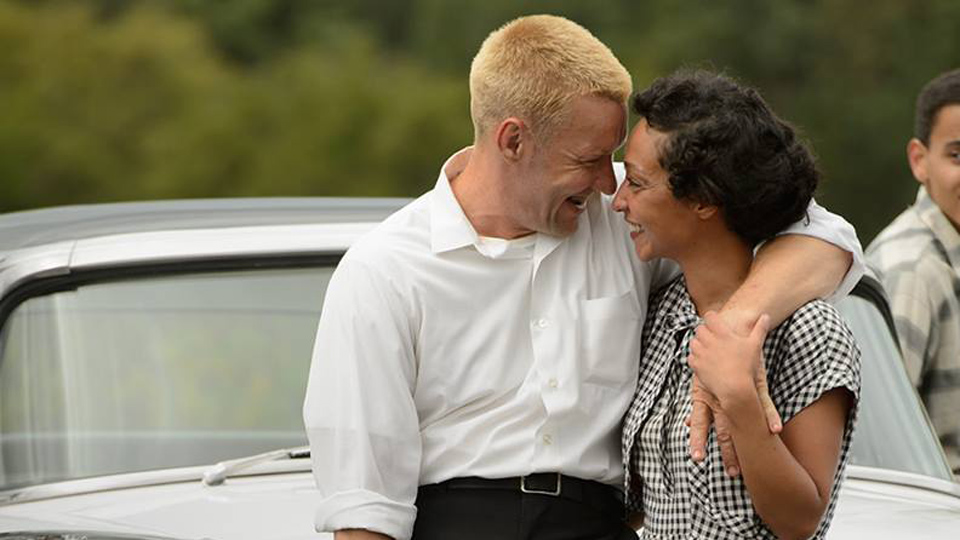
Joel Edgerton and Ruth Negga in a love story that fails to capture fire

Director: Jeff Nichols

Cast: Joel Edgerton (Richard Loving), Ruth Negga (Mildred Loving), Marton Csokas (Sheriff Brooks), Nick Kroll (Bernie Cohen), Michael Shannon (Grey Villet), Terri Abney (Garnet Jeter), Alano Miller (Raymond Green), Bill Camp (Frank Beazley)
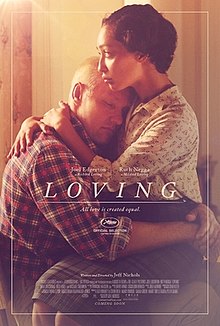
Imagine the idea of the state dictating whom you could and couldn’t marry. This was the predicament Richard and Mildred Loving found themselves in, when the appalling segregationist policies of America in the 1950s saw them arrested for the crime of a white man marrying a black woman. Over time, especially from the 60s onwards, their case was seized upon by Civil Rights movements as a possible cause celebre for repealing many of the worst excesses of laws against mixed-race marriages. But the Lovings themselves remained quiet, private and determined to lead as normal a life as possible, while others fought this battle for them in the court.

Jeff Nichols’ film is full of affection, empathy and regard for these very everyday, normal people. What it is not – for all the skill of Joel Edgerton and Ruth Negga’s performances in the leads – is a film that manages to raise any real interest at all. This is a frequently slow-moving story that manages to drain any drama out of what should be a really dramatic story.

Racial inequality is the sort of topic that desperately should be throwing up rage and anger. Imagine Spike Lee tackling this sort of content. Loving settles instead for being a polite, even rather patronising homage to the quiet lack of drive and energy in Richard Loving (in particular). The sort of film that honours his decision to, essentially, get involved as little as possible in the case, to avoid engaging as much as he can in the wider implications their legal battle has for the nation and to studiously resist any attempts to get either side involved in it.

This may be great for reality, but it’s strikingly poor drama. You feel that a drama that focused instead on those actively campaigning for the rights for equal marriage rights to be recognised, the ones who actually fought these battles in court and brought energy and fire to the debate might be a more interesting film. Instead this settles for being a film about regular, not special people, while around the edges of their lives far more interesting events and actions are constantly taking place. 

There are some things to admire in the making of the film – Nichols’ brings his usual poetic skill to it – but this is a glacially paced, unabsorbing, overlong film that manages to make a scintillating and passionate subject as dull as dish water. Negga and Edgerton both do fine jobs – and clearly really admire the everyday nature of their characters – but these softly spoken, unengaged people to whom events happen, but who never take a stand of any sort of try and shape these events or set the direction of their own life, slowly switches the audience off.

Where is the fire here? Nichols’ film instead tries to become a tribute to the honesty of the working man, to Richard’s everyday values, simple, homespun viewpoints. It hails his lack of education (the film dances around where on the education spectrum Richard would be placed today), social awareness or even opinions as something which somehow makes him more “real” than anything else. This attitude, to be honest, becomes both trying and even a little patronising in its bluntness and sense of importance.

Just in case we are ever in danger of ever forgetting that he is a working man, the film can’t go longer than about five minutes without showing Richard laying some bricks. Mildred gets a little more engagement with the social issues of the 1960s – and the film does a good job of suggesting that she was a woman of considerably more hinterland than her husband, but who loyally followed his lead in the world. But neither of them come into focus as truly engaging characters. And because they are so hard to invest in, because the story and their film gives us so little personality for either of them to latch onto,  in the end you don’t get as fired up by the injustice of their case as you should do.

Instead you are left thinking at the end that this sort of racism is bad because, well, we know it was at the start. Following the story of two basically boring people who were in the right place at the right time to become the face of overturning some terrible laws, doesn’t make them interesting and doesn’t make a story that focuses on their lives at the cost of any of the wider issues or actual battles that were being fought, suddenly interesting either.

Stalker (1979)

What’s it all about? Who knows in Tarkovsky’s Stalker

Director: Andrei Tarkovsky

Cast: Alexander Kaidanovsky (Stalker), Anatoly Solonitsyn (Writer), Nikolai Grinko (Professor), Alisa Freindlich (Stalker’s Wife)

Three men stand outside a room in what looks like a rain soaked, post-industrial wasteland. They debate at great length morality, optimism, fate and destiny. They all decide not to go into the room. There really isn’t any other director like Tarkovsy is there? Perhaps that’s a good thing.

Set in an indeterminate future, Stalker takes its name from the title for guides who – through some sort of sixth sense – are able to guide travellers through “the Zone”, a fenced off area, guarded by the military, that is the site of some sort of extra-terrestrial encounter (a meterorite possibly, who knows?) that gave the Zone magical power. In the centre of the Zone is a room which will grant the innermost desires of all those who enter. Travelling with our Stalker (Alexander Kaidanovsky) are a writer (Anatoly Solonitsyn) and a professor (Nikolai Grinko). Along the journey, ideas around everything from existence to the inner soul is discussed by the three men, each of them approaching from radically different perspectives.

Tarkovsky’s style was a sort of fusing of expressionism and stately filmmaking, mixed in with his own love of extended shots. In a world of cinema where the average shot in a film lasts a few seconds, in Stalker’s 162 minutes there are only 142 shots in total. Tarkovsky’s camera pans and tracks (often slowly) through the wasteland of the Zone, finding moments of great beauty and power in the industrial mess and debris, making fabulous use of the consuming power of water as it washes over and covers everything, invading every space. Tarkovsky’s painterly structure of the film is further aided by his switching between sepia (for most of the scenes outside the Zone) and muted colours (largely for those in the Zone, with a few exceptions). 

However, Stalker is also a long, slow, rather turgid film, immersive in the sense that you will feel you have lived every minute of the never-ending journey that the heroes go on. Which comes to the central problem I have with the film – and with Tarkovsky himself. The director, without a doubt, is an intellectual, straining at the leash with thoughts and ideas that he wishes to throw up into film. But Stalker is a film that suggests intellectualism, and carries all the trappings of deep thought, but in fact seems to throw ideas haphazardly at the screen with very little thought for how these hang together, or what the overall message might be (if any).

Instead we are subjected to a number of – beautifully filmed, with real artistic grace – rambling monologues that positively drip with self-importance and intellectual snobbery. Tarkovsky’s long takes and deliberate refusal to include much in the way of story, drama or character seem designed to make the film feel as much as possible like some kind of allegory. What this is an allegory of it feels Tarkovsky would consider crude to describe. Instead the film is difficult to watch and engage with, precisely because that is (it seems) what makes Great Art in the eyes of its director. When challenged by the Moscow authorities that the film was dull and slow, Tarkovsky argued it should be both duller and slower, to make those who were not of the intellectual level to engage with it leave earlier.

Perhaps he was right, as Stalkerhas become more and more of a critical darling, the further time gets from its first release. Now it seems almost blasphemy to look at the film and wonder if it is about anything at all. Almost a crime to suggest that Tarkovsky’s film is short on answers and easy meanings perhaps because the director himself seems to have little clue on what it is about. Perhaps to say that for all its slowness, length and rambling speeches, at the end of the day the film is making fairly safe and obvious points about the dangers of free will, the dreams for a better world and the terror that could ensue in a world where we can get exactly what we want with no cost. Stalker could be about any of this at all, or could be about nothing. Either way it doesn’t make for compelling viewing.

This is all why Tarkovsky for me remains an acquired taste – and not one I’ve really managed to acquire. There are moments in all his films of haunting beauty, of profound depth. But all of it is undermined by the director’s own self-importance, his pomposity, his delusions of being some sort of Plato. Above all, I find, by his own po-faced lack of humour. Is there anything amounting to a joke in any Tarkovksy film? There certainly isn’t one here, and the earnest self-importance, the frowning condescension you feel behind the camera for the unworthy viewer, strangles the life out of the film and kills any feelings of fondness you might have towards it.

And there are things to admire in here. For all his pretensions at intellectualism, and the cold sense of superiority he delivers them with, it’s impossible to argue that Stalker is not a beautifully made film. The camerawork is sublime, the slow onset of water (both visually and the drips on the soundtrack) gradually dominates the action – what this is suggestive of, of course, isn’t clear but it feels like something to do with both the destructive and cleansing power of water. The film is nominally a science fiction, and moments of thoughtfulness or haunting ideas play at the edges of the film – in particular the influence the Zone may have had on the daughter of the Stalker. 

Tarkovsky’s films though remain cold and deliberately hard watches, and I’m not sure there is as much reward in investing the time in them as many would have you think. Many of the points of Stalker can be grasped very quickly, and while part of the point is that they are delivered at such absurd length and languid pace, I’m not sure that is a recommendation. It’s not a film for actors either, with most of the performances largely comprising delivering slabs of poetry or cod-philosophical speeches to the camera, with scarcely a characterisation in sight.

Stalker is a puzzle deliberately written without an answer, that asks questions that should feel profound but perhaps are less revelatory than the film thinks, all within an extremely long runtime. In a cruel coda, the long time spent shooting Stalker in a pair of abandoned chemical plants would eventually lead to many of those involved – including Tarkovsky, his wife and two of the lead actors – dying of cancer within a few years of the film’s completion.

Tarkovsky is a cold intellectual, who talks of images producing feelings, but frequently produces films that feel like watching elaborate slide shows while being lectured at by a boring philosophy student. He is a master of form, but perhaps is the “Great Director” it’s easiest to disregard – or to feel like watching one of their films is more than enough. Stalker is something both unique in its execution, and painfully familiar in its Arthouse pomposity.

Room at the Top (1959)

Room at the Top (1959)

An ambitious man chooses between a damaging love affair and career in this fabulous kitchen-sink drama

Director: Jack Clayton

Cast: Laurence Harvey (Joe Lampton), Simone Signoret (Alice Aisgill), Heather Sears (Susan Brown), Donald Wolfit (Mr Brown), Donald Houston (Charlie Soames), Hermione Baddeley (Elspeth), Ambrosine Phillpotts (Mrs Brown), Allan Cuthbertson (George Aisgill), Raymond Huntley (Mr Hoylake), John Westbrook (Jack Wales), Richard Pasco (Teddy)

If there is one thing that preoccupied British cinema of the late 50s and early 60s it was class. How was a working class boy from the wrong end of the tracks supposed to pull himself up and make himself some room at the top? That’s certainly one of the many themes that you find in Jack Clayton’s sensational hit, nominated for a string of Oscars, but it’s also as much about how the search for that mystical nirvana that sees you invited for tea and crumpets at the conservative club, also means sacrificing huge shards of your own soul.

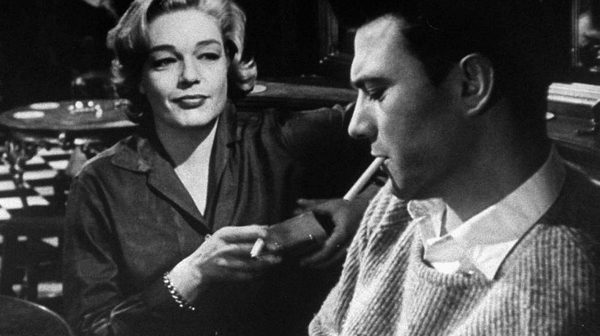
Joe Lampton (Laurence Harvey) arrives in the a Yorkshire town to take on a dreary, poorly-paid post in the Treasurer department of the local council – but has the bonus of being office work that gives him a chance at working his way up to the top. To that end he sets his ambitious cap at Susan Brown (Heather Sears), daughter of major local business magnate Mr Brown (Donald Wolfit). But Joe is also a man of his own passions, which fly in the face of his ambition, and he finds himself drawn towards married older French woman Alice Aisgill (Simone Signoret), who he meets at the local amateur drama club and who encourages him to surrender his ambitions and instead lead a life of contentment and happiness with her. Which possible life will Joe choose?

Perhaps the very first of what became the kitchen-sink genre, Room at the Top is beautifully filmed by Jack Clayton (as you would expect), but also brings the other major strength of this overlooked director to the fore, his ability with actors and to wring all-encompassing tragedy from the most everyday of circumstances. That’s what he does here, creating an almost epic scale of internal struggle for its hero, prickly as he is, drawn between two deeply conflicting goals, that asks what profits a man who gains the world at the cost of his soul?

Because, Room at the Top is that uniquely British film, that shows ambition and desire to better yourself often comes hand-in-hand with the sort of ruthless disregard of your roots, backgrounds and those around you in order to find your own path. Joe Lampton is a former POW, chippy, insecure, bitter, angry and determined to gain the sort of life he deserves. Of course it’s not hard to agree that he is more deserving than some of the tweedy, chinless fools around him and the sneers and condescension he receives from the officer class (his rival for Susan’s affections delights in calling him Sergeant, and reminding him constantly of his superior war record) is more than enough to motivate Joe.

What’s really striking about Joe therefore as how weak the character is. In undoubtedly the finest performance of his career, Laurence Harvey (a difficult and unreadable actor, with a style bridged between minimalism and woodenness) bravely shows both the bullish determination and the fundamental insecurity and weakness of Joe. A character who defines himself solely around what he feels he can achieve, he’s also a man completely unaware of what happiness is and how he to get it – and the thawing of her personality into something warmer and more loving with Alice, only serves to highlight how misguided and weakly he suppresses and kills such feelings in order to seize opportunities in life he feels entitled to.

It’s a rich contrast to Alice herself, a woman who is far braver and more certain about what she wants, and willing to fly against the conventions expected of her if it means she can gain happiness. The novel was adapted to turn Alice into a French ex-pat (married to a brutally cold RAF type played with an imperious selfishness by Allan Cuthbertson) solely so Signoret could be cast in the role – and it’s a match made in heaven. Simply wonderful, Signoret brings the part not only an imperious sexuality, but also a deep and lasting vulnerability under the surface of Euro-chill, a woman who we see opening herself up to the possibility of an affair becoming something truly lasting and deep, who has the courage to understand who and what she wants in a way Joe never can. 

The tragedy is in that inability of Joe to understand his yearnings. Clayton’s brilliantly subtle film demonstrates time and time again, contrasting its romantic freedom laced with passion when Joe and Alice are together with the stilfed, contained suppression and chill that the more buttoned up, angered Joe meets elsewhere. If Joe had the will and strength he would top fighting for the things he should want in order to seize the opportunities he actually wants. His tragedy is that he can’t – and can’t begin to understand himself, or acknowledge his desires, until it is too late.

This was all a deep shock – and carried real power – at the time when Britain was shifting out of post-war hierarchies into the freer 60s, and Room at the Top was a massive hit at the box office. But it made such impact because its attitudes feel so deep and real, and the simple, everyday tragedy it details of two relationships doomed for different reasons, bound together by the self-defeating ambition of its lead character. Because wherever he goes, Joe will have people like Mr Brown (Donald Wolfit is very good by the way, in a role far outside his usual style) constantly reminding him of his oik status, so any victory in inbuilt with failure. Joe’s ambition and intelligence serve largely to blind and deflect him from the things he really wants. A lesson for us all.

The Name of the Rose (1986)

Sean Connery taps into his inner Sherlock Holmes in The Name of the Rose

Director: Jean-Jacques Annaud

Cast: Sean Connery (William of Baskerville), F. Murray Abraham (Bernardo Gui), Christian Slater (Adso of Melk), Michael Lonsdale (The Abbot), Helmut Qualtinger (Remigio de Varagine), Elya Baskin (Severinus), Volker Prechtel (Malachia), Feodor Chaliapin Jnr (Jorge), William Hickey (Ubertino de Casale), Michael Habeck (Berengar), Urs Althaus (Venantius), Valentina Vargas (The Girl), Ron Perlman (Salvatore)

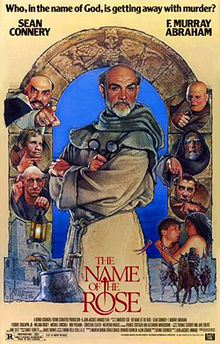
Umberto Eco’s erudite medieval murder-mystery was about the wonderful power of books, as much as murder mayhem in a medieval abbey. A surprise bestseller, the story is a perfect mix of intellectual playfulness and Agatha Christie whodunit, with suspects left, right and centre and bodies piling up faster than you can count. Jean-Jacques Annaud fought for years to bring the book to the screen, and his vision of it might well sacrifice much of the depth of the original (it even cheekily refers to itself as a “palimpsest” of the original novel – something reused but still bearing traces of the original) but brings enough to the table to have its own life.

In 1327, monks and high churchmen assemble at a Benedictine abbey in Northern Italy, famed for its voluminous library. However, all is not well at the Abbey with one monk already dead in mysterious circumstances, and soon many others join him in death, each of the later victims with mysteriously blackened fingers and tongues. The Abbot (Michael Lonsdale) asks renowned Franciscan monk William of Baskerville (Sean Connery) to investigate – and his efforts will reveal the dark truths at the heart of the abbey and place him and his novice Adso (Christian Slater) on a collision course with Inquisitor Bernardo Gui (F. Murray Abraham) who sees not a human hand, but the hand of Satan, in the murders.

Annaud’s film perfectly captures the mud and grime of the medieval world, with its murky visuals of the cold and damp in a building like this in winter. To be fair, the film is helped in its sense of oppressive medievalism by its frequently choppy editing and less-than-obvious camera angles (at times making it hard to tell what is happening), while James Horner’s score may hit its notes hard at points, but does sound like a successful pastiche of choral music of the time and creates an ominous air.

Annaud searched far-and-wide for his ideal cast to populate the monastery – and he seems to have assembled actors based on the closeness of their resemblance to Holbein, Bosch and Brugel grotesques. The monks are a distinctive set of oddball weirdos, often pale of face (non-more so than obese albino Beringar, whose effete campness tips a little uncomfortably into homophobia today), with oddly tonsued facial hair, and prominent facial features. To be honest it makes the movie-stardom of Connery (and Slater) stand out even more, as practically the only members of the cast who don’t look like they could audition for the Addams family. Ron Perlman in particular labours under such carefully applied make-up, matched with a faultlessly committed performance of physical and verbal childishness mixed with animal instinct, it was a shock to find out from other films that he was not hideously deformed!

William of Baskerville, as imagined by Eco, was a mix of William of Occam (him of Occam’s razor) and Sherlock Holmes (hence the Baskerville) – the book even matched almost word for word, Watson’s first description of Holmes from A Study with Scarlet with Adso’s first description of William. (Adso himself is also basically W-atso-n). The film is at its strongest when focused in William’s deductions, his lightening intellectualism and his ability to bring even the smallest fact or note to bear in order to shape a conclusion. The film front-and-centres William’s investigation over and above the other themes of the book (around faith, books and intellectual freedom), but this works for the requirements of a film’s narrative.

t also helps that William is played by Sean Connery in one of his finest performances. Heading into the film, Connery’s career was in a seemingly terminal decline (indeed the Great Scotsman was seen as such box-office poison, a Hollywood Studio pulled their funding after he was cast). Connery had to work hard to persuade Annaud – but thank god he did, as he plays on his fatherly and intellectual strengths here. In real life a committed autodidact, Connery perfectly captures the curiosity and love-of-learning of William, and also invests him with a profound moral sense, shaded by his guilt at past failings and playful understanding of how the moments when we fail to live up to expectations do not mean we are damned. It’s one of Connery’s finest performance – and unarguably changed his career, as he headed into a five year purple patch of increasingly impressive performances. 

Connery’s compelling performance is the real meat of the film, and he creates a character who feels warm, rounded and a perfect mix of contemporary and of-the-period. He’s also well supported by a young Christian Slater as his sidekick novice, who also gets a surprisingly raunchy sex scene. It’s unfortunate the rest of the cast don’t get as much to play with. The rest of the monks are oddballs, or drift out of the film as the plot requires (Michael Lonsdale’s abbot simply disappears, despite hints of a darker role in the plot early in the film).

In particular F Murray Abraham devours most of the impressive set as a lip-smackingly cruel inquisitor who delights in handing out the judgement of God. The film repositions him as a hissable villain, and reduces his impact accordingly, including placing him in an “you’re off the case William!” role. The final, murkily done sequence (featuring fires, heretics punished and a couple of nasty accidents) does tip into the sort of Grand Guignol gothicness that the book itself more or less avoids. But then it’s part of the general boiling down of the novel – making it that palimpsest – and also part of Annaud’s Euro-epic style, with its melting pot of accents and touches of clumsy editing and filming.

The balance of the original novel between ideas and sensation gets more or lost in sensation here – indeed the book that all this murderous behaviour is all about gets rushed over and its impact poorly explained, as are the motives of the eventual killer – but it all still kind of works because it looks more or less perfect and because of that Connery performance. Annaud was probably not quite the director to successfully marry the two parts of the book – and his direction is adequate in many places rather than inspired, with too many awkward handbrake turns – but this is still a film I have enjoyed many times over and will do so again.

The King (2019)

Timothée Chalamet is the war like Henry V in the confused The King

Director: David Michôd

Cast: Timothée Chalamet (King Henry V), Joel Edgerton (Sir John Falstaff), Robert Pattinson (The Dauphin), Sean Harris (William Gascoigne), Thomasin McKenzie (Queen Phillippa), Ben Mendelsohn (Henry IV), Tom Glynn-Carney (Henry “Hotspur” Percy), Lily-Rose Depp (Princess Catherine), Dean-Charles Chapman (Thomas, Duke of Clarence), Thibault de Montalembert (King Charles VI), Tara Fitzgerald (Hooper), Andrew Havill (Archbishop of Canterbury)

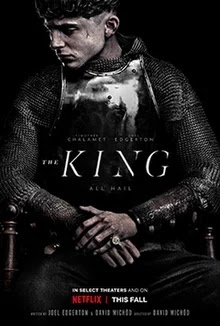
This is a story that is pretty familiar to most people now – after all, Shakespeare’s play has probably been being played somewhere in the world for most of the last 500 years. Edgerton and Michôd collaborated on the story and script of this restaging, or reimagining, of Shakespeare’s epic of the wayward fun-loving prince turned hardened warrior king. Despite being handsomely filmed, and impressively shot, this makes for an odd and unusual film which falls between the two stools, as it is faithful to neither history nor the Shakespeare original.

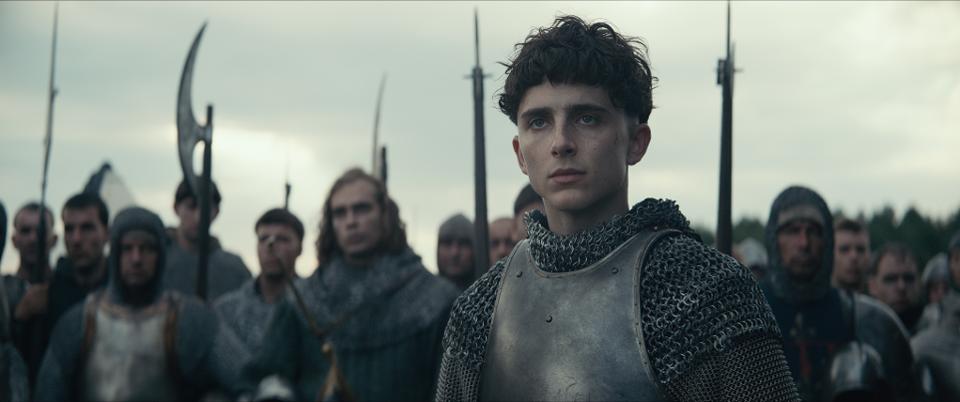
The rough concept remains the same. Prince Hal (Timothée Chalamet) is not just a young man who has fun in the taverns of London, he’s also quite forward looking in his attitudes, and just can’t understand why he should be made to carry on the rivalries of his father, the fearsome Henry IV (a broodingly miffed Ben Mendelsohn) or why he should continue the wars that the council pressures him into. When he becomes king, however, Henry is persuaded by his counsellor William Gascoigne (Sean Harris), that the path to peace for the realm – and safety for his subjects – can only be through unifying the kingdom by war with France. Appointing the only man he trusts – his old drinking companion and famed soldier Sir John Falstaff (Joel Edgerton) – as the Marshal of his armies, Henry heads to France where destiny awaits.

Michôd’s film is at its strongest when it focuses on the visuals and the aesthetic of its age. It’s beautifully shot, with several striking images, from execution courtyards to the battle of Agincourt itself, which takes place in an increasingly grimy field. The battle itself ends up feeling more than a little reminiscent of ideas from Game of Thrones – in fact a few core images are straight rip-offs from the famous “Battle of the Bastards” episode – but it at least looks good, even if there are few things new in it. The costumes and production design don’t feel like they strike a wrong note either with the grimy, lived-in feel.

More of the issues come around the script. The film’s concept of Henry initially as this rather woke modern king – he just wants peace and to give up these tiresome obsessive conflicts of his father – who slowly becomes more colder and ruthless as the film progresses does at least make thematic sense in the film, but it still rings a little untrue. Much as I would like, it’s hard to believe that any prince like this could ever have existed at the time, and so cool and calculating is Chalamet’s performance from the first that he never feels like a genuine, young, naïve princeling whom we can sympathise with early on. 

It makes the film’s arc rather cold, and Hal an even more unknowable character than the film perhaps even intends. There is very little warmth or genuine friendship between Hal and Falstaff, and Hal moves so quickly to the imagining (and enacting) of war crimes during his time in France that his descent towards potential tyrant feels far too sharp to carry impact. Even in the early days of his reign he’s swift to have potential destablisers in his court executed with no mercy. Where is the fall, if he is such a cold fish to start with? And with Chalamet at his most restrained (like the royal baggage and the accent are a straight-jacket around him), how can an audience invest in him? 

And what are we supposed to be making of this anyway, since the film is at equal pains to suggest that the king may be the subject of manipulation and lies that force his hand into war? This Henry, we learn, values truth and honesty highest – but this doesn’t stop him getting pissed when met with counter-arguments from his advisers (even Falstaff) or reacting with cold fury and disavowal when things don’t go his way. It’s a confusing attempt to add an ill-fitting modern morality to a king who essentially in real life spent most of his life at war, and was to die on campaign in France still trying to cement his rights at a young age.

Edgerton and Michôd’s script fails to really square this circle, and all the attempts to have its cake and eat it (the peace loving king still manages to kick arse, including killing Hotspur in single combat thus averting the Battle of Shrewsbury from ever happening) don’t quite pan out. Edgerton writes himself a decent role as Sir John Falstaff, here reimagined as a million miles from the drunken, cowardly knight into a courageous and hardened soldier who has no time for the compromises and deceit of court (in contrast to Henry’s other advisor, the Machiavellian Gascoigne played with a playful archness by Sean Harris). Making Falstaff a respected figure like this rather flies in the face of the logic of why Henry IV is so annoyed about his son spending time with him, but never mind.

It’s not really Shakespeare and it’s not really history. It sticks closest perhaps to Shakespeare in its portrayal of the French as arrogant fops – led by Robert Pattinson going delightfully OTT as the Dauphin – but it never really quite works out what it wants to be. With its Game of Thrones look and feel, and prince who is both great warrior and reluctant warlord, peace-lover and ruthless executor of his enemies, it feels scattergun and confused rather than coherent and whole.

Henry V (1944)

Once more unto the breach with Laurence Olivier as Henry V

Director: Laurence Olivier

Cast: Laurence Olivier (Henry V), Renée Asherson (Princess Katherine), Robert Newton (Pistol), Leslie Banks (Chorus), Felix Aylmer (Archbishop of Canterbury), Robert Helpmann (Bishop of Ely), Nicholas Hannen (Exeter), Ernest Thesiger (Duke of Berri), Frederick Cooper (Nym), Roy Emerton (Bardolph), Freda Jackson (Mistress Quickly), George Cole (Boy), Harcourt Williams (King Charles VI), Russell Thorndike (Duke of Bourbon), Leo Genn (Constable of France), Francis Lister (Orleans), Max Adrian (The Dauphin), Esmond Knight (Fluellen), Michael Shepley (Gower), John Laurie (Jamy), Niall McGinnis (MacMorris), Valentine Dyall (Burgandy)

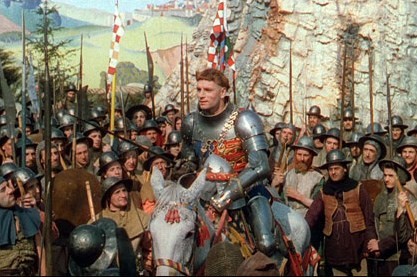
Olivier’s pre-eminence as the leader of the acting profession in Britain for a large chunk of the last century probably found its roots in his imperiously sublime production of Henry V, the first time he directed a film, but also the point where it seemed that Olivier and the country of Britain seemed to be almost one and the same. Filmed as a propaganda piece, heralding the indomitable spirit of the British in the face of foreign wars, Olivier’s film is a triumph that also set the tone for what the public expected from Shakespeare films for decades to come. 

Originally Oliver balked at the idea of directing the film, approaching William Wyler to take the job on. But Wyler, rightly, knew he could never bring the Shakespearean understanding to it that Olivier could, so the soon-to-be Sir Laurence took the job on himself – meaning he directed, co-produced, co-adapted and starred in the film. I’m not sure anyone else could have done it – or invested the entire project with such certainty, such confidence, such power of personality that the entire project flies together into a sweeping, brightly technicolour treat of pageantry and theatre.

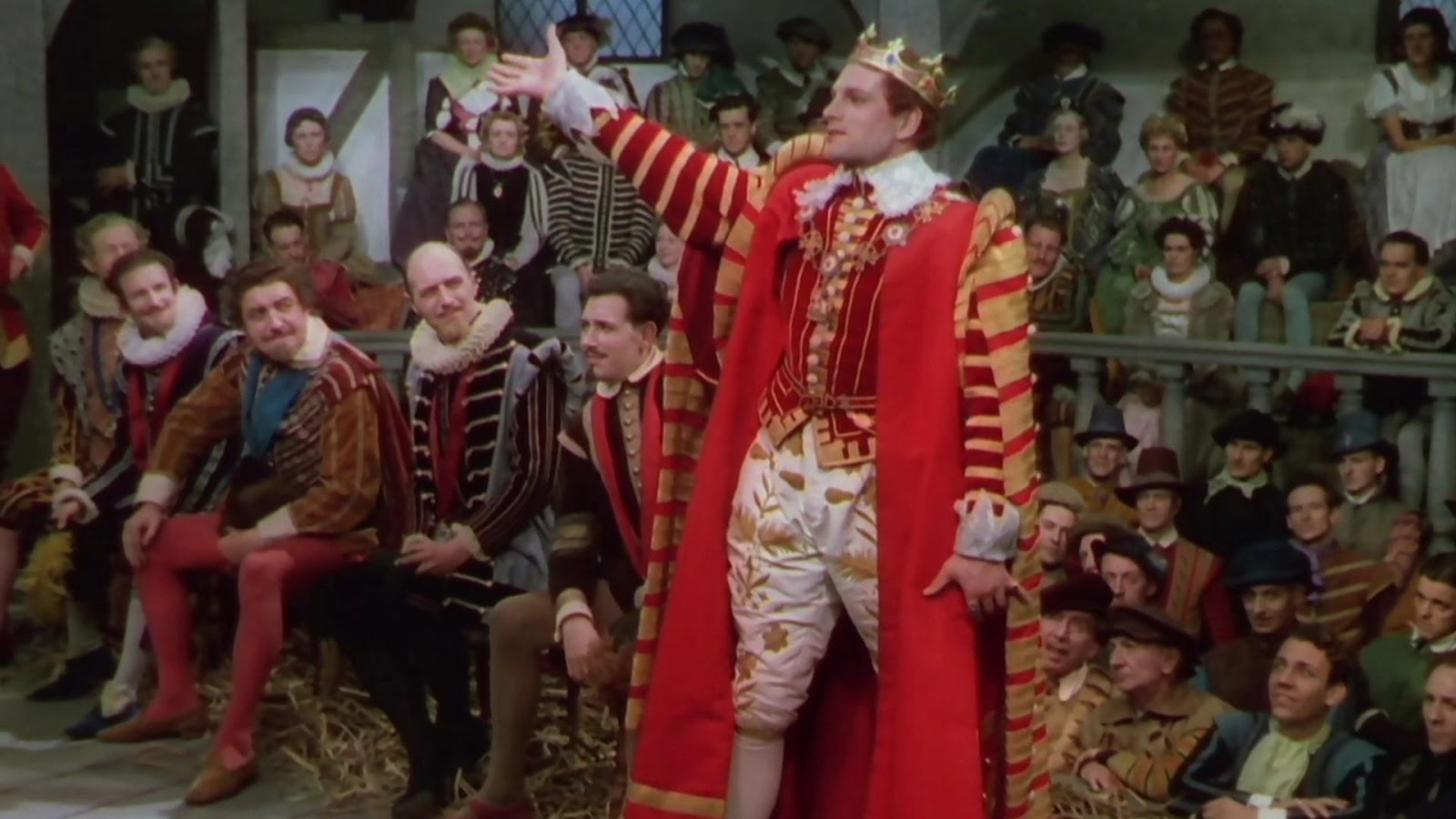
Olivier’s concept for the film is ingenious – and influential. Taking as its cue the words of the chorus (delivered with a archly bombastic confidence by Leslie Banks), the call to “let your imaginary forces work”, the film is set initially in a genuine Elizabethan era staging of Henry V (including unfortunate rain downpour after the first scene).Slowly, it develops over the course of the film from set to cinematic sound stage (still designed with influence from medieval illustrations) and finally into a realistic location setting for the Battle of Agincourt, before turning heel and repeating the journey back until the film ends again in the Globe theatre, with the actors taking their bow (and the female characters now played by fresh-faced boys). It’s marvellously done, and a neat play on the limitations of both film and theatre, and a testament to the powers that imagination can have to expand the world of what we are presented with.

The style of the play develops as we watch it, becoming more natural and restrained as we get closer to Agincourt, then progressing gently back the other way. The opening scenes play Canterbury and Ely’s long-winded legal argument in favour of war for laughs (with neat comic timing by Felix Aylmer and Robert Helpmann), with an avalanche of papers across the stage, Canterbury frequently lost in his exposition and Ely (and even Henry) having to prompt him with precise points. This is a nice set-up for the comic characters of the play, Falstaff’s old retainers here are the very picture of high-spirited, rowdy common folk (though I must say Robert Newton’s high-energy, gurning Pistol is a bit of a trial, even if it perfectly captures the playing-to-the-cheap-seats mania the role seems to require). 

This comic exuberance (and the stuff with Canterbury is genuinely quite funny) gives a perfect counterpoint for Laurence Olivier to perform Henry at his imperious best. Olivier was an actor who invested his Shakespearean delivery with far more naturalism than he is often given credit for, and his Henry here has more than enough true feeling, emotion, determination, courage, bravery and nobility behind his almost sanctified greatness. And of course you get Olivier’s outstanding delivery, that wonderfully rich voice with just a hint of sharpness, delivering the lines not as just poetry, but as true moments of invention. Olivier also has the mastery of the small moments – and Henry doesn’t get much of those – with two particular favourites being the small cough in the wings to clear his throat before entering for his first scene, and that satisfied, exuberant smile at the curtain call at the play’s end. His Henry – the true warrior king of virtue – cemented perception of the character for decades to come.

True, Olivier never touches on Henry’s darker side. Olivier neatly cut anything that could introduce any shades of grey into the character: gone is the summary execution of the traitors at Southampton, cut are the references to naked newborn babes being spitted on pikes before Harfleur, nowhere do you hear the order to execute all prisoners at Agincourt. This is film-making with a purpose, to pushing the message of England, for good, against all. 

As a director, Olivier revelled in the possibilities of cinema, marrying it to theatre. For the large speeches, Olivier invariably starts small and close, and then pans sharply and widely out to turn the cinema into a theatre – also allowing the actors (often to be fair, himself) to not feel restrained by the intimacy of the camera, but to deliver the speeches as intended, larger than life and bursting with impact. Olivier’s confidence with the camera is striking, his film a celebration of sweeping shots, of carefully placed tracking shots, of well-delivered acting. The camera work in the Globe is beautifully done, a series of carefully selected angles and shots. The long panning shot over a model of London leading to the Globe that book-ends the film is beautifully done, and the confidence with which Olivier slowly transitions from artifice to reality is superbly well done.

The style of the piece is extraordinary, with its primary colours like a medieval book brought to life. There is some pleasing comic mileage from the French court, reduced almost to a man to being a bunch of camp moral weaklings. The courting of Princess Katherine (Renée Asherson, in a role intended for Vivien Leigh) has a playful charm to it (even if, as in the play, it’s probably a scene too far after the highpoint of Agincourt). But the heart of it is that long build to the campaign, for Agincourt to be brought to life (at huge expense at the time), a beautiful rendering and explosion of reality after the careful artificiality of the rest of the film, as if we really have got our imaginations working and brought it to life before us as the Chorus instructed.

The film established a regular Olivier company that would work with him on films to come. William Walton’s score seems to capture that mood of England at war and believing it was in the right. The cast – plucked from English theatre by Olivier – give striking performances, from Leo Genn’s stern Constable to Max Adrian’s bitter Dauphin, with Esmond Knight’s pernickety Fluellen leading the way for the English. Olivier is of course at the centre as the master conductor, a man who fitted so naturally into the role of leader that he basically seemed ready to take it on for the whole country, never mind just the film. Is there an actor around who was more suited and natural in positions of authority than Olivier? Who was so easily able to inspire and dalliance with genius? 

Turning Henry Vinto a patriotic celebration of England was what was needed, but turning Shakespeare into something that worked on film, that married the theatrical qualities with the cinematic sweep of the camera was exactly what the Bard needed to find a life on screen. Olivier’s daring was to strip down the play and work out what would work on screen and how to make that come to life. Doing so, he defined Shakespeare films for a generation.

The Beguiled (2017)

Nicole Kidman struggles to resist the charms of Colin Farrell in The Beguiled

Director: Sofia Coppola

Cast: Nicole Kidman (Miss Martha), Kirsten Dunst (Edwina), Elle Fanning (Alicia), Colin Farrell (Corporal McBurney), Oona Laurence (Amy), Angourie Rice (Jane), Addison Riecke (Marie), Emma Howard (Emily)

A remake of Don Siegel’s adaptation of the original novel, The Beguiled throws a feminist slant on a story of a confederate soldier, Corporal McBurney (Colin Farrell) who, in the later years of the Civil War, is found injured in the grounds of a girl’s school, where the women have continued to run the operation while the menfolk are consumed with (and by) the war. The school is run by the distant Miss Martha (Nicole Kidman), with the lead teacher Edwina (Kirsten Dunst) and five students of varying ages. All of the girls and women find themselves entranced (beguiled!) with the deceptively gentlemanly McBurney, whose true aims may be darker than assumed.

Sofia Coppola’s version of the story shifts the attention onto the women of the piece, and their plight and emotional journeys. This is a perfectly legitimate stance to take – and showing effectively a colony of girls and women in the 1860s living some sort of structured commune life is interesting and different – but Coppola’s film has a coolness and distance to it that ironically makes it far less than beguiling than it should be.

Beautifully filmed as the film is, it’s slow pace and meditative tone – as well as the rather obvious points it seems determined to make about male and female relations – actually serve to make the film less engaging than it should be. Wonderfully framed and painterly in its execution, with an effective mix of classical and 1970s style, it still never quite sparks into life.

The cast also struggle to bring a heartbeat to their characters. Nicole Kidman brings her customary reserve and elegance to a woman who has hints of a mysterious past that troubles her to this day, but the role remains distant and difficult to read – more than the film really requires. A clash or seduction between her and Colin Farrell’s corporal keeps promising dynamite but the explosions never really seem to come. Farrell laces his role with charm and a gruff masculinity, but the role misses a sense of his own darkness or manipulative nature until quite late, with the final act revelations making him appear more angry and bitter than the role really requires. It all kind of sums up the film that gets lost in its artifice and fails to uncover its heart.

The film, you could argue, does its best to beguile the audience with McBurney as the film’s character are. We are shown at every angle his vulnerability and tender politeness, and hidden from us for too long are his more manipulative elements. Coppola’s film becomes an intense study instead of sexual feelings and relations within a confined space. From sensual hand washes from Miss Martha, to intense declarations with lonely teacher Edwina, to not-so-innocent flirtations with the pupils, there is more than enough evidence that McBurney’s desire to stay may well be as much linked to seeing the school as having the potential to be his own private harem. The film’s failure in this intense sexual politics is that, while it captures moments of the simmer of attraction, it fails to really establish the danger that McBurney could suggest, as a violent man of action with complete control over a group of women.

Indeed the final moments of the film even suggest that the school itself may be a sort of siren’s bay – although lord knows McBurney is no Odysseys – which I found a rather confusing beat. Effective as the final images, or the film’s last supper betrayals, may be, they don’t carry quite enough wait because the film never quite nails the sexual tension it is aiming for, or the sensual danger it is trying to establish as a theme within the film. 

Other changes make less sense as well. Coppola deliberately changes the race of Edwina, from a mixed-race young woman to someone white enough to be played by Kirsten Dunst. While Dunst’s performance is fine, many of the themes of Edwina’s lack of confidence, her self-loathing, her feeling of having no place outside of the school, of being somehow less than other women are left in place. These themes of course make perfect sense for a mixed race woman in the 1860s who has landed a job through the connections of her father, but they make less sense for an attractive young schoolteacher with a privileged background. Coppola made the change because she felt that she could not do the theme justice, but she misses the fact that the very appearance of the character is the context needed for her to make sense.

The Beguiled is beautiful to observe and has its moments, but it never really comes to light the way it should. Thoughtful and poetic a director as Coppola is, she has created a film here that feels all artifice and no depth, that wants to paint a picture of the life of women in the civil war but never really has the energy and fire to make this come to life in a way to make the audience as engaged as they should be.

Last Christmas (2019)

Emilia Clarke and Henry Golding in a Christmassy romance with a twist

Director: Paul Feig

Cast: Emilia Clarke (Kate), Henry Golding (Tom Webster), Michelle Yeoh (“Santa”), Emma Thompson (Petra), Lydia Leonard (Marta), Peter Mygind (“Boy”), Rebecca Root (Dr Addis), Patti LuPone (Joyce), Ingrid Oliver (PO Crowley), Laura Evelyn (PO Churchill), Rob Delaney (Director), Peter Serafinowicz (Producer)

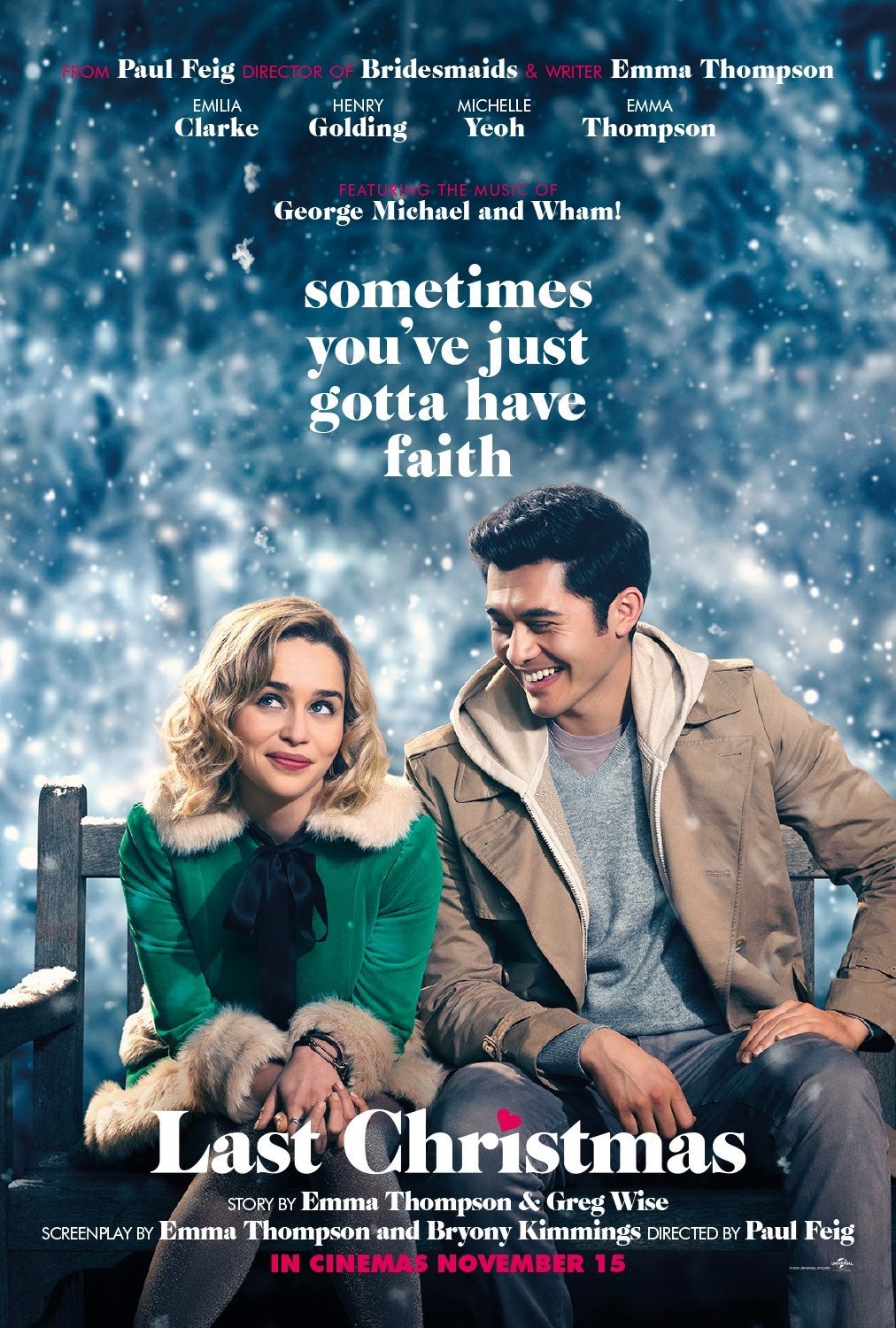
Last Christmas has been savaged by critics and held up by many like it was some sort of embodiment of everything that’s wrong with cinema. Jeez louise guys, take a chill pill why don’t you? Feig’s London based comedy, working with an Emma Thompson script, does exactly what it says on the tin – an It’s a Wonderful Life-inspired Christmassy story, that ticks all the Christmas boxes. It has no pretentions for doing anything else. And there is nothing wrong with that!

Kate (Emilia Clarke) is recovering from a heart transplant last year, and she’s heading off the rails. She takes no responsibility for anything, she’s selfish, lazy, demanding and making a car-crash of her life and health. Working as a full-time Elf in a Covent Garden Christmas store (run by Michelle Yeoh as “Santa”), Kate’s life is heading down the toilet until one day she meets Tom Webster (Henry Golding), an almost supernaturally decent guy, kind, considerate, friendly and caring. With his guidance can Kate start to turn her life around?

Well there is a twist in Last Christmas and, to be honest, it’s pretty easy to see coming. Anyone with half an eye on costumes or numbers of interactions will see it coming and anticipate what they are going to get. But you know, that’s fine. This is a film that knows what it is, a fairly unchallenging rom-com that’s spiced with a little touch of Capra-esque whimsy and a conventional morality tale of a selfish person turning round their life.

There are some good jokes, there are some reasonably charming performances, there is a good sense of fun driving through the whole film and it manages to capture at least a little touch of that Christmas-movie alchemy (a la Love Actually) where you can imagine people happily sitting down to watch it, in a light, fun, unchallenging way, for years to come. Its Feig’s offering for the Christmas movie cannon and it’s a perfectly acceptable entry. In fact its cosy predictability and familiar structure is pretty much a key part of its appeal. Because at Christmastime we don’t really want anything that’s going to stretch us or demand things from us. We kind of want to sit around and watch something a little predictable, a little fluffy but basically well-meaning and fun.

Emilia Clarke does a terrific job as light comedienne in the lead role, a role perhaps far more suited to her quirky, klutzy, off-the-wall charm than years of playing Daenerys Targaryen on Game of Thrones ever was. She throws herself into it here, happy to be silly, and shows both a good skill for pratfalls and also for drawing out a vulnerability from her character as well as being extremely charming. Henry Goulding makes a very good match as a character who could very easily tip over into smugly perfect, but again remains just the right side of charming.

Thompson writes herself a decent role as Kate’s Yugoslavian mother, a typical sort of nightmare domineering mother from films of this time, but laced with a sadness and isolation in the modern world and her adopted country. Moments that show the reaction of the characters to Brexit and the growing hostility to immigrants sometimes lean a little too heavily on the liberal conscience of the audience, but it fits in with the generally gentle, liberal attitudes of the film.

It’s a film that knows it’s a guilty pleasure, but it seems to have been designed to give you a sort of pre-Christmas glow. Catch it in the wrong mood and you will consider it one of the worst things you have seen. Take it in the right mood and you might even be charmed by it.

Knives Out (2019)

Daniel Craig investigates in Rian Johnson’s amusing Christie-pastiche Knives Out

Director: Rian Johnson

Cast: Daniel Craig (Benoit Blanc), Chris Evans (Random Drysdale), Ana de Armas (Marta Cabrera), Jamie Lee Curtis (Linda Drysdale), Michael Shannon (Walt Thrombey), Don Johnson (Richard Drysdale), Toni Collette (Joni Thrombrey), Lakeith Stanfield (Lt. Elliot), Katherine Langford (Meg Thrombey), Jaeden Martell (Jacob Thrombey), Christopher Plummer (Harlan Thrombey), Noah Segan (Trooper Wagner), Frank Oz (Alan Stevens)

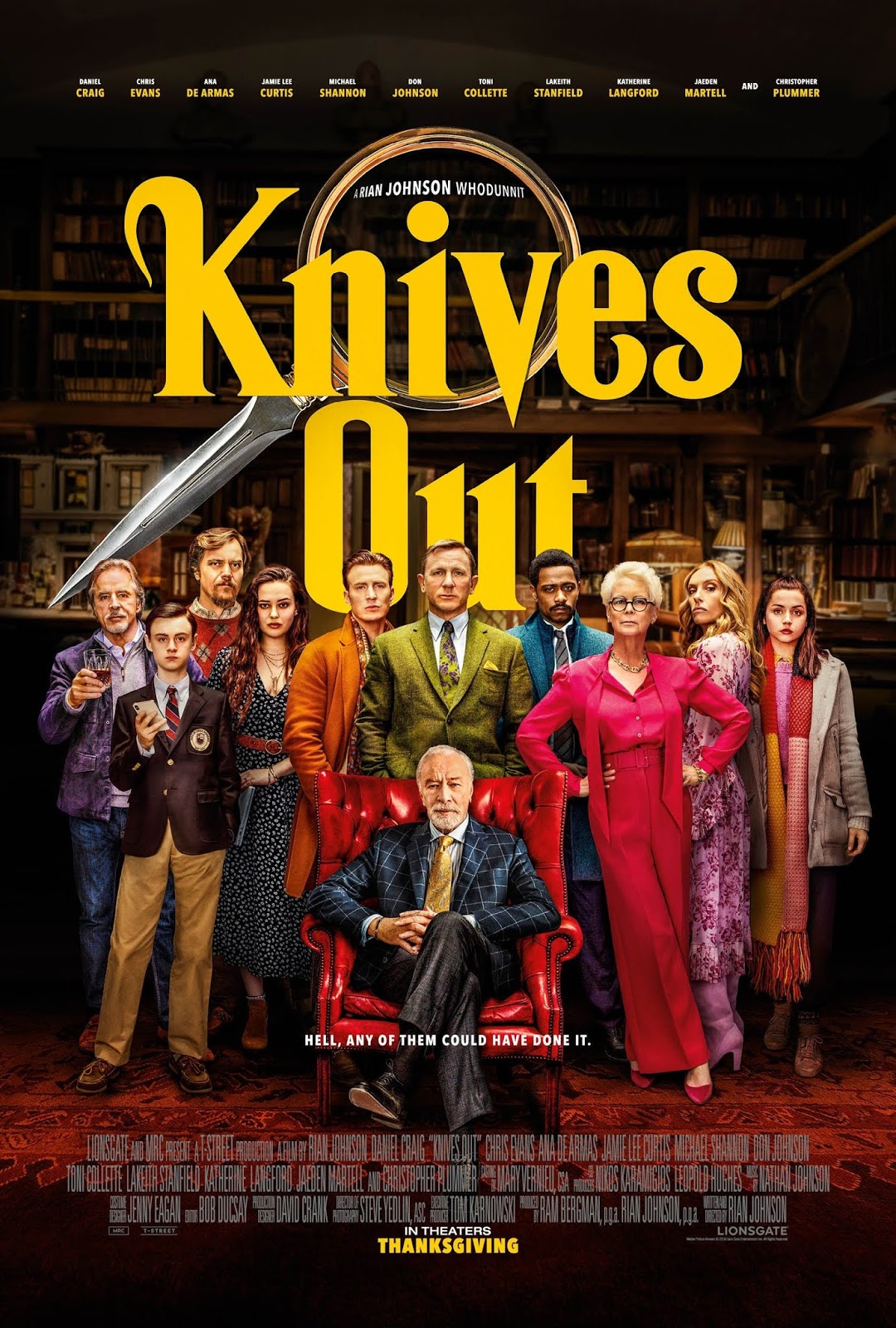
Rian Johnson’s film CV is full of interesting (and affectionate) twists on assorted genre films. While many will be most familiar with his controversial and iconoclastic Star Wars film The Last Jedi, Knives Outfits more neatly in with his imaginative twist on time-travel Looper and, most tellingly, his film-noir high-school thriller Brick. Knives Out plays into Johnson’s love of old-school, all-star, Agatha Christie style murder-mysteries. Johnson even pops up before screenings of the film to beg viewers – like Alfred Hitchcock in his prime – to not give away the twist endings. So I won’t do it here. Rian Johnson’s way too sweet to disappoint.

The murder that leads to the mystery is Harlan Thrombey’s (Christopher Plummer), the film opening a week after his apparent suicide (or was it!?). If everything is so straight forward, then who has anonymously hired “last of the gentlemen sleuths” Benoit Blanc (Daniel Craig) to investigate the death? There seems to be no shortage of motives either: in his last day, Thrombey threatened to expose his son-in-law Richard’s (Don Johnson) affair, cut-off his daughter-in-law Joni’s (Ton Collette) allowance due to theft, fired his youngest son Walt (Michael Shannon) as head of his publishing company and cut Richard and his daughter Linda’s (Jamie Lee Curtis) playboy son Random (Chris Evans) out of his will. On top of that, his live-in-nurse Marta (Ana de Armas) may have secrets of her own. Will Blanc be able to unpick this web?

Going too far into detail around Knives Out would be to spoil the general sense of fun that Johnson’s film manages to create. The film is not a spoof or parody in any way, but a very intelligent reworking of genre tropes and Agatha Christie style plot twists (a distant house, a mysterious killing, a host of suspects, a barrage of motivations, a house crammed with bolt holes, blackmail, muddy footprints, medicine and acting all get a look in), all governed by an eccentric detective bubbling with his own unique methods for solving a case. It’s all told with a brilliant affection, a wonderful twinkle and a great deal of invention and intelligence from Johnson. 

It’s also a film with a brilliantly assembled plot – and a neat reminder of what a strong writer Johnson is, as well as an inspired stylist. The film creates a host of superb characters for the audience to enjoy and puzzle over – each of them of course attracting a wonderful company of actors, a perfect mix of the skilled and wildcard choices, all of whom pay off. It’s also a structurally daring film: it reveals what it leads many to think is its full hand very early in the film, before subtly revealing that there are multiple mysteries wrapped up within the main mystery (“a doughnut within a doughnut” as Blanc puts it in his own unique way).

And interestingly the film more and more revolves around Marta, its seeming Captain Hastings-figure (or Watson as the film prefers to quote). Played with a charming guilelessness and honesty by Ana de Armas (in more ways than one, since all lies cause Marta to vomit, a joke that sounds crass but is executed perfectly throughout), Marta is the eyes we follow the film’s plot through, meaning we discover events as she does. Marta’s decency and honesty also work as a wonderful device to flag up the increasing hypocrisy and mean-spiritedness of Thrombey’s family. 

The Thrombey clan are an extraordinary group of self-obsessed, greedy and selfishly entitled so-and-sos, who seem to be lacking all expected principles. From Jamie Lee Curtis’ domineering elder daughter, who believes she is a self-made-woman but quickly resorts to bullying when she wants something, to Michael Shannon’s softly spoken but bitterly two-faced Walt, to Toni Collette’s seemingly liberal lady of the people Joni, who is actually as lazy and entitled as all the rest. It’s a host of delightful performances, not forgetting Don Johnson who is a revelation as Curtis’ conniving husband and Chris Evans (having a whale of a time) as the waspishly intelligent, smirking playboy.

Each of the family is as convinced of their own virtue as they are indifferent to those around them. Is it any wonder Thrombey wants to be shot of all of them? Even with the good-natured Marta, none of the family seem to have a clue of anything about her (much as they protest she is part of the family), each of them seemingly naming at random some South American country she hails from and each member in turn telling her confidingly that they would have loved to have had her at the funeral, but they were outvoted by the rest. It makes for a perfect collection of suspects for our detective.

Benoit Blanc himself is a fascinating collection of mannerisms and little touches. The name brings to mind the idea of Hercule Poirot, and Blanc has touches of the man’s arrogance and humanity. Craig has a whale of a time with the part, lacing it with a Southern charm and an eccentric swagger. It’s a part though that actually is a bit of a homage to Columbo, with Blanc also encouraging people to underestimate him and not take him seriously, only to suddenly reveal his insight (including in a last act revelation that is so pure Christie that super-fan Trooper Wagner can barely contain his glee). Blanc is in any case a brilliantly deployed near decoy protagonist, one who Johnson is encouraging us to underestimate as much as most of the characters do.

Thrombey’s murder – and Thrombey has a slight air of Agatha Christie to him, not least the fact that he has written the same number of best-selling books as Christie – is the key to it, and hinges on the overcomplex mind of the great murder writer himself. Johnson’s script is superbly playful, brilliantly written and a delight for murder mystery fans, full of wit and invention and also a very genuinely constructed and intelligent murder mystery. A terrific, playful and witty little treat.

Frozen 2 (2019)

The gang are all back together in Frozen 2

Director: Jennifer Lee, Chris Buck

Cast: Kristen Bell (Anna), Idina Menzel (Elsa), Josh Gad (Olaf), Jonathan Groff (Kristoff), Sterling K Brown (Mattias), Evan Rachel Wood (Iduna), Alfred Molina (Agnarr), Martha Plimpton (Yelena), Jason Ritter (Ryder), Ciaran Hinds (Pabbie), Jeremy Sisto (King Runead), Rachel Matthews (Honeymaren)

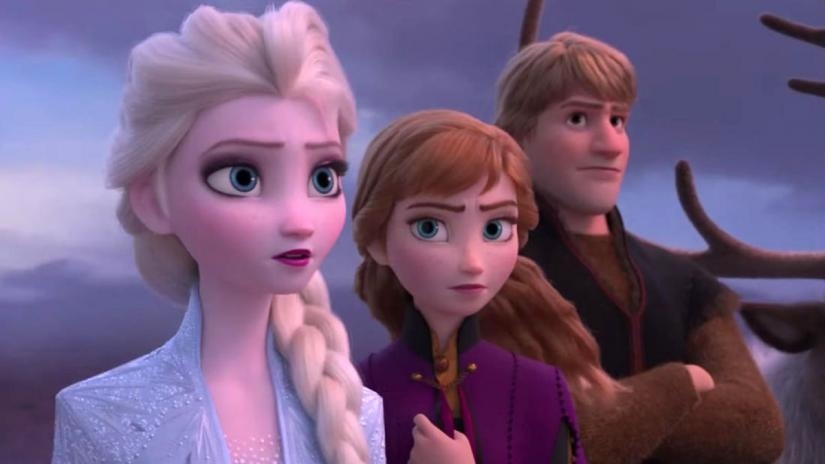
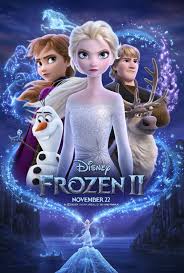
Frozen was a phenomenon, a film that seemed to come out of nowhere and seized the imagination (and the passions) of audiences. Why did it work so well? It’s got a great bunch of characters, a focus on sibling affection that is very easy to relate to (and very different from most romance-based Disney films), a well-rounded bunch of characters (so easy to relate to, they inspired a number of fan in-jokes in a way that only characters in films you really care about can) and of course that song. Frozen II works very hard to double down as much as possible on the things that worked, and to give you the chance to spend more time with these characters. If it fails to match the magic of the first film, it still makes for an entertaining trip to the cinema.

Elsa (Idina Menzel) and Anna (Kristen Bell) are now living together in the kingdom of Arendelle, and all is peace and contentment. Until one day a siren call that Elsa keeps hearing from across the water occurs at the same time as a series of elemental events in the kingdom, each harnessing earth, fire, air and water. The sisters quickly work out that this must be connected in some way with the stories their parents told them of the Enchanted Forest, a magical land near to Arendelle that  disappeared after a mysterious feud between the two kingdoms. Accompanied by living snowman Olaf (Josh Gad), Anna’s boyfriend Kristoff (Jonathan Groff) and his reindeer Sven, the sisters head off to find the cause of the disturbances, solve the mystery of the enchanted forest and save Arendelle. Phew!

Frozen 2 is engaging, fun and has some very good jokes. Its main problem is a plot that feels both sprawling and epic and also muddled and confusing. As the film hits its final act, you may well feel more than a little confused about why events are unfolding like this, what the motivations of certain characters are, why some things happen to characters etc. What the film seems to lack is a compelling unfolding of the plot, and a clear structure of how these events link together to form the overall arc.

As such, we seem to head to several locations and constantly encounter a series of magical creatures, but never really get a firm grasp of how they link together. The film has a series of flashbacks and expands the backstory of the series, but then never really pulls together clearly how the events of the past shaped the present. The moment where this is explained feels rushed and murky, and seems to revolve around a sort of “anti-magic” attitude from a key character in the past that has no context with the rest of the film and never feels really clear. 

The plot may not be the strongest, but where the film really does work is in its sense of humour and its fun script, and the engaging riffs Lee and Buck make on the previous film. Fan humour from the first film – not least the close relationship between Kristoff and Sven – is doubled down on in this film with a series of knowing sight gags. Olaf – far more engaging here than in the first film – has a series of excellent fan gags, peaking in a hilarious showpiece moment where he essentially acts out the entire plot of Frozen for the people of the Enchanted forest (all of whom respond like the fans). It’s a hilarious show piece, and a real sign of the film’s strengths, which are often when it is riffing on the first film.

The film also carries across the other things that worked from the first film. The close relationship between the two sisters is central to most of the film’s development (although it also means that Anna seems to have to protest her devotion in virtually every scene). The sense of outsider and isolation in Elsa is also explored further, with her confusion over being happy where she is but still yearning for something more. The film also threads in a charming B-plot of Kristoff’s attempts to propose to Anna, which provides both charm and several moments of comic gold.

The film does struggle to find a replacement song for Let It Go, although Into the Unknown comes close, another inspiring, story-packed, ballad for Idina Menzel to bring to inspired life again. The song also plays well with the several fans who have seen Elsa become a gay icon, with most of the lyrics leaning on the idea of heading out from the safety of knowing where you are to finding your true self in the “unknown”, answering the siren call of your own desires. Also of course, it’s a belting song which you can enjoy on its own merits!